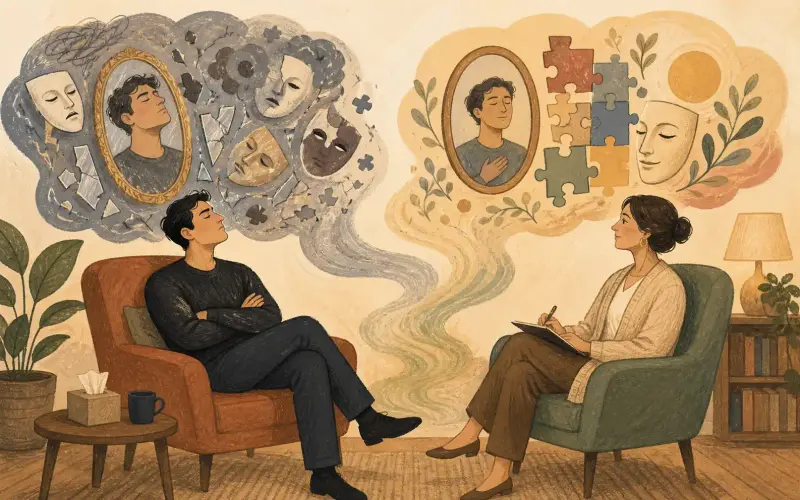
Narcissism in general is a personality trait characterized by a strong sense of self-importance and excessive preoccupation with one's own needs, desires, and achievements, alongside little or no empathy for others. Narcissistic individuals tend to have an exaggerated sense of self-worth and an inflated view of their abilities. As a result, they believe they are special and unique and expect everyone to treat them accordingly.
Narcissistic individuals may also harbor a strong sense of entitlement, believing they deserve special treatment and endless admiration from others. You may find a narcissistic person constantly immersed in fantasies about their success, power, and attractiveness. They may also engage in behavior that reinforces their self-image, such as seeking other people's attention and admiration.
It is worth noting that while a certain degree of self-love or self-confidence is normal and healthy, severe or pathological narcissism can have negative effects on both the individual and those around them. Treatment for narcissistic personality disorder may include medication and lifestyle changes.
Narcissistic Personality Disorder
It is possible to view narcissism as a spectrum, with some people displaying more extreme forms of narcissism than others. In extreme cases, narcissism can become a personality disorder known as narcissistic personality disorder. People with narcissistic personality disorder may struggle to form genuine relationships with others and may experience feelings of vulnerability or insecurity. They may also engage in exploitative or unethical behavior to maintain their sense of superiority and control.
Everyone with narcissistic personality disorder has narcissistic traits, but this does not mean that everyone with the disorder behaves in the same way. There are different types of narcissistic personality disorder, each with distinctive characteristics. By learning to distinguish between these types, you can learn how to deal with someone who has narcissistic personality disorder in a healthier and more constructive way.
To simplify matters, there are two main types of narcissism: overt and covert. Although both types share certain traits, they are also reflected in somewhat distinct behaviors. There are also other, less common and less severe types. Here is a detailed list of all these types:
1. Overt narcissism, also known as agentic narcissism: Overt narcissism is often viewed negatively. At the same time, overt narcissistic personalities are usually charming and likable. Experts believe there are two categories of overt narcissism: adaptive and maladaptive.
Adaptive narcissism leads a person to build their self-confidence to protect themselves. They are natural-born leaders and are often drawn to jobs that offer leadership positions. They crave power and prestige and are prepared to do anything to obtain them.
Maladaptive narcissism means that someone naturally has an elevated view of themselves and believes they are entitled to exploit others. This may lead them to try to control or manipulate those around them. They may become angry or aggressive if someone disagrees with them or tries to set a limit on their behavior.
2. Covert narcissism, also known as vulnerable narcissism: People with vulnerable narcissistic personality disorder often have unrealistic expectations of success. They believe they deserve positive responses from others but do not take the necessary steps to earn this praise. This denial can lead to emotional outbursts and may cause them to experience intense shame. The most common personality trait among people with vulnerable narcissism is playing the victim. People with this type of narcissism commonly experience depression and phobias, envy those around them, and tend to blame others for their failures.
3. Communal narcissism: A common feature of many types of narcissistic personality disorder is the gap between how a person sees themselves and how they behave. People with communal narcissistic personality disorder view themselves as highly noble, yet behave in the opposite way. Although they may become angry when they witness injustice or see someone being mistreated, they do not apply the same level of disapproval to their own behavior.
4. Antagonistic narcissism: Competitiveness is a personality trait associated with many types of narcissistic personality disorder, but it is particularly noticeable among people with this type of narcissism. Their low level of trust in others creates a tendency to view those around them as competitors. They commonly argue with others, create needless hostility, and treat most social interactions as a competition.
5. Malignant narcissism: The symptoms of malignant narcissistic personality disorder are severe and can interfere with a person's quality of life. People with this type of narcissism often display delusions of grandeur and may become consumed by threats that exist only in their imagination. It is not unusual for them to exhibit vindictive or even sadistic behavior, as well as high levels of aggression when interacting with others.
6. Seductive narcissism: People with seductive narcissistic personality disorder are acutely aware of the importance of flattery. Like people with some other types of narcissistic personality disorder, they crave positive attention. You may find them showering another person with compliments to obtain the admiration they desire. If they do not receive enough praise from the person they are targeting, they have no problem dismissing them and moving on to a new target, and so the pattern continues.
Other general signs and symptoms of narcissistic personality disorder may include:
An urgent need to receive admiration and praise from others.
A willingness to exploit others for personal gain.
Little empathy for the feelings and needs of others.
Preoccupation with fantasies of power, success, and attractiveness.
A tendency to exaggerate achievements or abilities.
A belief that they are special and unique and should associate only with people of high status.
An inability to accept criticism and a defensive or aggressive response when challenged.
Of course, none of us is free from personality flaws, and anyone may display one of these behaviors for one reason or another. You should therefore not rush to conclude that you or someone around you has narcissism.
How can you tell whether you have narcissistic personality disorder?
Diagnosing narcissistic personality disorder requires a mental health professional to conduct a comprehensive examination and assessment before reaching a conclusion.
Nevertheless, certain signs and symptoms may suggest that an individual could have narcissistic personality disorder.
As mentioned earlier, it is very important to keep in mind that everyone may display some narcissistic traits from time to time. Narcissistic personality disorder, however, involves a persistent pattern of these traits that may, over time, cause considerable distress to the individual and those around them.
The following behaviors, when they occur together in the same person, may be a sign of narcissistic personality disorder:
Superiority and entitlement
The world of narcissistic people revolves around good and evil. In their minds, there is a defined hierarchy in which the narcissistic person naturally occupies the top position—the only place where they feel safe. Narcissistic people must be the best, strongest, and most capable; they must do things their way and control everyone.
An excessive need for attention and validation
Narcissistic people need attention that can come only from others. No matter how much praise they receive, it never feels like enough because, deep down, they do not believe anyone is capable of loving them.
Lack of responsibility
Although narcissistic people love being in control, they never want to be responsible for the outcome. When things do not go according to their plan or they feel criticized, they place all the blame on someone else.
Narcissistic people cannot clearly see where they end and others begin. They seem to lack maturity and believe that everything belongs to them, that everyone thinks and feels as they do, and that everyone wants the same things they want. If a narcissistic person wants something from you, they will do everything they can to find a way to obtain it through persistence, flattery, demands, or sulking.
Lack of empathy
Narcissistic people have a limited capacity to empathize with others. They tend to be selfish and usually lack the ability to understand what other people genuinely feel. They may openly say that they “cannot read your mood,” or tailor their responses and behavior to what they think the person or situation requires instead of responding sincerely. This lack of empathy makes genuine relationships, especially emotional ones, difficult—if not impossible—with narcissistic people.
Emotional reasoning
Narcissistic people make most of their decisions based on how they feel about something. If they feel bored or depressed, they want to revitalize or end the relationship, start a new business, or try a new sport. They are always looking to something or someone outside themselves to solve their problems and meet their needs, such as alcohol, drugs, gambling, romantic relationships, sports, and other things. They expect you to go along with their “solutions” and may show irritation and resentment if you do not.
Double standards
Narcissistic people's personalities are divided into good and bad parts, just as they divide everything in their relationships into good and bad. They blame you or others for any negative ideas or behavior while taking credit for everything positive and good.
Fear
Fear drives and energizes the narcissistic person's entire life. Most narcissistic people's fears are deeply buried and suppressed. They constantly fear being ridiculed, rejected, or proven wrong. They may worry about their appearance, losing money, or being betrayed. As they grow older, they may become more preoccupied with their appearance and weight. This fear makes it difficult, and sometimes impossible, for a narcissistic person to trust anyone else.
Shame
Narcissistic people do not often feel guilty because they believe they are always right and do not think their behavior truly affects anyone else. They do, however, feel a great deal of shame. Shame is the belief that something about you is deeply and permanently wrong or bad.
Because they cannot understand emotions, lack empathy, and constantly need to protect themselves, narcissistic people cannot truly feel love or connect emotionally with others. They are fundamentally emotionally deprived and lonely, which leaves them constantly in need of affection.
Inability to work as part of a team
Thoughtful, cooperative behavior requires a genuine understanding of one another's feelings. How will the other person feel? Will this action make all of us happy? How will this affect our relationship? These are questions that narcissistic people lack either the ability or the motivation to consider. Any kindness or generosity they show is a calculated strategy that always has an ulterior motive.
Narcissistic Personality Disorder in Men Versus Women
Narcissistic personality disorder is not limited to men or women; it can affect individuals of any gender, and its signs and symptoms generally remain the same.
Nevertheless, some studies suggest that narcissistic personality disorder may be more common among men than women. One possible explanation is that traditional gender roles and society's patriarchal view of both men and women may contribute to the development of narcissistic personality disorder more often in men.
For example, men are often more competitive and aggressive with one another, which may contribute to the development of a sense of entitlement and a need for admiration. In their relationships with the opposite sex, they may disregard their partners' boundaries and belittle their views.
In contrast, some studies suggest that women may be more likely to display certain narcissistic traits, such as a need for attention and admiration, without meeting the full criteria for a diagnosis of narcissistic personality disorder.
This may be because society expects women to be homemakers and nurturing, selfless mothers, which may make it harder for women to fully embrace their narcissistic tendencies.
It is worth noting, however, that these gender differences are not absolute and that anyone may develop narcissistic personality disorder for many reasons that transcend gender, age, and geographical boundaries.
What Causes Narcissistic Personality Disorder?
The causes of narcissistic personality disorder are not fully understood and are likely complex and multifaceted. However, a combination of genetic, environmental, and psychological factors is thought to contribute to its development.
Some potential causes of narcissistic personality disorder include:
Genetic factors: Some research suggests that narcissistic personality disorder may have a genetic component. Studies have found that individuals with a family history of narcissistic personality disorder or other personality disorders may be more likely to develop the condition.
Childhood trauma: Traumatic experiences or family neglect during childhood can contribute to the development of narcissistic personality disorder. Children who do not receive sufficient attention, love, and emotional support from their caregivers may develop a sense of insecurity that can take the form of an excessive need for attention and admiration in adulthood.
Learned behavior: Narcissistic behavior can be learned from parents or other significant people who display such behavior. For example, if a parent displays narcissistic traits while raising a child, the child may learn to imitate these behaviors as they grow older.
Cultural and social factors: In some cultures, narcissistic behavior may be more accepted or even encouraged. In addition, social media and other technologies have made it easier than ever to create an online persona and try to impose it on others, which may contribute to the development of narcissistic personality disorder.
Negative Effects of Narcissistic Personality Disorder
Narcissistic personality disorder can have a number of negative effects on both the person with the disorder and those around them.
Some potential effects of narcissistic personality disorder include:
Social challenges: Individuals with narcissistic personality disorder are often unable to maintain healthy relationships. They may find it difficult to empathize with others or care about their needs and feelings. They may also engage in exploitative or controlling behavior that can damage their relationships.
Problems at work and school: Individuals with narcissistic personality disorder may struggle in work or school settings because of difficulty working with others, a need for excessive praise or recognition, and a tendency to become defensive or hostile when confronted or criticized.
Emotional instability: Individuals with narcissistic personality disorder may experience intense emotions such as anger or shame or envy, which may lead to frequent mood swings and difficulty controlling their emotions.
Addiction: Individuals with narcissistic personality disorder may be more likely to use drugs or alcohol as a way of coping with their emotions or reinforcing their self-image.
Legal and financial problems: Individuals with narcissistic personality disorder may engage in reckless or irresponsible behavior that can lead to legal or financial problems.
Isolation: Because of difficulties with relationships and social interactions, individuals with narcissistic personality disorder may become isolated and lonely.
Negative effects on mental health: Narcissistic personality disorder can also contribute to a number of other mental health problems, such as depression and anxiety.
It is important to note that not every individual with narcissistic personality disorder will necessarily experience all these effects. Some people with narcissistic personality disorder may also be unaware of the negative impact their behavior has on themselves or others.
If you suspect that you or someone you know may have narcissistic personality disorder, it is important to seek professional help.
Treatment for Narcissistic Personality Disorder
Recovering from narcissistic personality disorder is a complex, ongoing process that usually requires help from a mental health professional.
It is important to understand that this is a personality disorder, meaning it is deeply rooted in the individual's thoughts, feelings, and behavior.
Nevertheless, with appropriate support and treatment, individuals with narcissistic personality disorder can learn to manage their symptoms and improve their quality of life.
The following strategies may be helpful in recovering from narcissistic personality disorder:
Psychotherapy: Psychotherapy, or talk therapy, is a common treatment approach for narcissistic personality disorder. A mental health professional can help individuals with the disorder develop insight into their thoughts, feelings, and behavior and learn coping strategies to manage their symptoms. Approaches that may be helpful include cognitive behavioral therapy (CBT), psychodynamic therapy, and group therapy.
Medication: Although there is no specific medication for narcissistic personality disorder, medication can help manage associated symptoms such as anxiety or depression.
Self-criticism: Individuals with narcissistic personality disorder may benefit from engaging in self-reflection and taking responsibility for their actions. This can include acknowledging how their behavior affects others and committing to change.
Meditation: Relaxation practices such as meditation or yoga can help manage the symptoms of narcissistic personality disorder. These practices can help individuals with the disorder become more aware of their thoughts and emotions and develop greater empathy toward others.
Lifestyle changes: Making positive lifestyle changes, such as exercising regularly, eating a healthy diet, and getting enough sleep, can be beneficial. These changes can help reduce stress and encourage the development of positive habits.
In Summary
Living with a narcissistic person in your life can be incredibly exhausting. Understanding the condition better can help you reconsider your expectations and give yourself permission to prioritize your own needs. Although most people with narcissistic personality disorder are unaware that they are narcissistic, it is important to remember that no abuse is acceptable or justified. As the saying goes, “An arrogant person is like a man standing atop a mountain: he sees people as small, and they see him as small.” If you are the person living with the disorder, do not worry. As long as you are alive, you still have the time and opportunity to improve your condition!
Content writer and researcher at Tatmeen, working on Arabic and English articles across mental health and everyday life topics, including relationships, stress, work, habits, and family.
Every Tatmeen article is reviewed by care providers licensed by the Saudi Commission for Health Specialties, so what you read is accurate and trustworthy.
This article builds understanding and does not replace a licensed care provider.
Need someone to talk to?
Tatmeen's licensed care providers are available around the clock, and the app's urgent consultation connects you with one within minutes.
Download Tatmeen to explore care providers and booking options.
Smart matchingFour quick questions suggest the right care provider
Urgent consultationTalk to an available care provider within minutes
Free psychological measuresMore than 20 tests to understand how you are doing
Scan to download
{"data":{"id":"edf5614d-903e-42f3-b958-d907eca2cfc2","slug":"Narcissistic-Personality-Disorder-in-Men-Women","arTitle":"اضطراب الشخصية النرجسية: علاماته وأسبابه وعلاجه لدى النساء والرجال","enTitle":"Narcissistic Personality Disorder in Men and Women","thumbnailAltText":"Crouching person looks down at their reflection on a dark reflective surface","estimatedReadingTime":5,"likesCount":923,"writer":{"id":"f49e2ee4-e68b-4e04-a40b-01d0b0195161","arBio":"كاتب وباحث محتوى في تطمين، يعمل على مقالات عربية وإنجليزية في موضوعات الصحة النفسية والحياة اليومية، مثل العلاقات، الضغوط، العمل، العادات، والأسرة.","enBio":"Content writer and researcher at Tatmeen, working on Arabic and English articles across mental health and everyday life topics, including relationships, stress, work, habits, and family.","user":{"slug":"sultan-almuhasin","arFullName":"سلطان المحيسن","enFullName":"Sultan Almuhasin","publicProfileImageUrl":"https://cdn.tatmeen.sa/public/profile-images/2494102f-7411-4dda-85b1-0c37a1031b3f/c9d25068aaa97c2c1f80123e2d6a27cc7b5a9b1df6a91493df9411b390a60279.webp","publicProfileImage96Url":"https://cdn.tatmeen.sa/public/profile-images/2494102f-7411-4dda-85b1-0c37a1031b3f/c9d25068aaa97c2c1f80123e2d6a27cc7b5a9b1df6a91493df9411b390a60279-w96.webp","publicProfileImage192Url":"https://cdn.tatmeen.sa/public/profile-images/2494102f-7411-4dda-85b1-0c37a1031b3f/c9d25068aaa97c2c1f80123e2d6a27cc7b5a9b1df6a91493df9411b390a60279-w192.webp"}},"arContent":"","enContent":"","productionDocument":{"headings":[{"id":"article-section-narcissistic-personality-disorder","text":"Narcissistic Personality Disorder"},{"id":"article-section-how-can-you-tell-whether-you-have-narcissistic-personality-disorder","text":"How can you tell whether you have narcissistic personality disorder?"},{"id":"article-section-narcissistic-personality-disorder-in-men-versus-women","text":"Narcissistic Personality Disorder in Men Versus Women"},{"id":"article-section-what-causes-narcissistic-personality-disorder","text":"What Causes Narcissistic Personality Disorder?"},{"id":"article-section-negative-effects-of-narcissistic-personality-disorder","text":"Negative Effects of Narcissistic Personality Disorder"},{"id":"article-section-treatment-for-narcissistic-personality-disorder","text":"Treatment for Narcissistic Personality Disorder"},{"id":"article-section-in-summary","text":"In Summary"}],"faqs":[],"beforeSourcesHtml":"","sources":[],"afterSourcesHtml":"","blocks":[{"type":"html","html":"<p class=\"ql-align-right ql-direction-rtl\">Narcissism in general is a personality trait characterized by a strong sense of self-importance and excessive preoccupation with one's own needs, desires, and achievements, alongside little or no empathy for others. Narcissistic individuals tend to have an exaggerated sense of self-worth and an inflated view of their abilities. As a result, they believe they are special and unique and expect everyone to treat them accordingly.</p><p class=\"ql-align-right ql-direction-rtl\">Narcissistic individuals may also harbor a strong sense of entitlement, believing they deserve special treatment and endless admiration from others. You may find a narcissistic person constantly immersed in fantasies about their success, power, and attractiveness. They may also engage in behavior that reinforces their self-image, such as seeking other people's attention and admiration.</p><p class=\"ql-align-right ql-direction-rtl\">It is worth noting that while a certain degree of self-love or self-confidence is normal and healthy, severe or pathological narcissism can have negative effects on both the individual and those around them. Treatment for narcissistic personality disorder may include medication and lifestyle changes.</p><h2 class=\"ql-align-right ql-direction-rtl\" id=\"article-section-narcissistic-personality-disorder\" data-toc-heading tabindex=\"-1\"><span id=\"narcissistic-personality-disorder-1\" aria-hidden=\"true\"></span><strong>Narcissistic Personality Disorder</strong></h2><p class=\"ql-align-right ql-direction-rtl\">It is possible to view <a style=\"background-color:transparent\" href=\"https://www.hakini.net/article/%D8%A7%D9%84%D8%B4%D8%AE%D8%B5%D9%8A%D8%A9-%D8%A7%D9%84%D9%86%D8%B1%D8%AC%D8%B3%D9%8A%D8%A9-%D9%85%D8%A7-%D8%A8%D9%8A%D9%86-%D8%A8%D9%86%D8%A7%D8%A1-%D9%86%D9%81%D8%B3%D9%87%D8%A7-%D9%88%D8%AA%D9%85%D8%B2%D9%8A%D9%82-%D8%A7%D9%84%D8%A7%D8%AE%D8%B1\" target=\"_blank\" rel=\"noopener noreferrer\">narcissism </a>as a spectrum, with some people displaying more extreme forms of narcissism than others. In extreme cases, narcissism can become a personality disorder known as<a style=\"background-color:transparent\" href=\"http://www.hakini.net/article/%D8%A7%D8%B6%D8%B7%D8%B1%D8%A7%D8%A8-%D8%A7%D9%84%D8%B4%D8%AE%D8%B5%D9%8A%D8%A9-%D8%A7%D9%84%D9%86%D8%B1%D8%AC%D8%B3%D9%8A%D8%A9-%D8%A3%D8%B9%D8%B1%D8%A7%D8%B6%D9%87%D8%A7-%D9%88%D8%AA%D8%A3%D8%AB%D9%8A%D8%B1%D9%87%D8%A7-%D8%B9%D9%84%D9%89-%D8%A7%D9%84%D8%A2%D8%AE%D8%B1%D9%8A%D9%86\" target=\"_blank\" rel=\"noopener noreferrer\"> narcissistic personality disorder</a>. People with narcissistic personality disorder may struggle to form genuine relationships with others and may experience feelings of vulnerability or insecurity. They may also engage in exploitative or unethical behavior to maintain their sense of superiority and control.</p><p class=\"ql-align-right ql-direction-rtl\">Everyone with narcissistic personality disorder has narcissistic traits, but this does not mean that everyone with the disorder behaves in the same way. There are different types of narcissistic personality disorder, each with distinctive characteristics. By learning to distinguish between these types, you can learn how to deal with someone who has narcissistic personality disorder in a healthier and more constructive way.</p><p class=\"ql-align-right ql-direction-rtl\">To simplify matters, there are two main types of narcissism: overt and covert. Although both types share certain traits, they are also reflected in somewhat distinct behaviors. There are also other, less common and less severe types. Here is a detailed list of all these types:</p><p class=\"ql-align-right ql-direction-rtl\">1. Overt narcissism, also known as agentic narcissism: Overt narcissism is often viewed negatively. At the same time, overt narcissistic personalities are usually charming and likable. Experts believe there are two categories of overt narcissism: adaptive and maladaptive.</p><ul><li class=\"ql-align-right ql-direction-rtl\">Adaptive narcissism leads a person to build their self-confidence to protect themselves. They are natural-born leaders and are often drawn to jobs that offer leadership positions. They crave power and prestige and are prepared to do anything to obtain them.</li><li class=\"ql-align-right ql-direction-rtl\">Maladaptive narcissism means that someone naturally has an elevated view of themselves and believes they are entitled to exploit others. This may lead them to try to control or manipulate those around them. They may become angry or aggressive if someone disagrees with them or tries to set a limit on their behavior.</li></ul><p class=\"ql-align-right ql-direction-rtl\">2. Covert narcissism, also known as vulnerable narcissism: People with vulnerable narcissistic personality disorder often have unrealistic expectations of success. They believe they deserve positive responses from others but do not take the necessary steps to earn this praise. This denial can lead to emotional outbursts and may cause them to experience intense shame. The most common personality trait among people with vulnerable narcissism is playing the victim. People with this type of narcissism commonly experience depression and phobias, envy those around them, and tend to blame others for their failures.</p><p class=\"ql-align-right ql-direction-rtl\">3. Communal narcissism: A common feature of many types of narcissistic personality disorder is the gap between how a person sees themselves and how they behave. People with communal narcissistic personality disorder view themselves as highly noble, yet behave in the opposite way. Although they may become angry when they witness injustice or see someone being mistreated, they do not apply the same level of disapproval to their own behavior.</p><p class=\"ql-align-right ql-direction-rtl\">4. Antagonistic narcissism: Competitiveness is a personality trait associated with many types of narcissistic personality disorder, but it is particularly noticeable among people with this type of narcissism. Their low level of trust in others creates a tendency to view those around them as competitors. They commonly argue with others, create needless hostility, and treat most social interactions as a competition.</p><p class=\"ql-align-right ql-direction-rtl\">5. Malignant narcissism: The symptoms of malignant narcissistic personality disorder are severe and can interfere with a person's quality of life. People with this type of narcissism often display delusions of grandeur and may become consumed by threats that exist only in their imagination. It is not unusual for them to exhibit vindictive or even sadistic behavior, as well as high levels of aggression when interacting with others.</p><p class=\"ql-align-right ql-direction-rtl\">6. Seductive narcissism: People with seductive narcissistic personality disorder are acutely aware of the importance of flattery. Like people with some other types of narcissistic personality disorder, they crave positive attention. You may find them showering another person with compliments to obtain the admiration they desire. If they do not receive enough praise from the person they are targeting, they have no problem dismissing them and moving on to a new target, and so the pattern continues.</p><p class=\"ql-align-right ql-direction-rtl\">Other general signs and symptoms of narcissistic personality disorder may include:</p><ul><li class=\"ql-align-right ql-direction-rtl\">An urgent need to receive admiration and praise from others.</li><li class=\"ql-align-right ql-direction-rtl\">A willingness to exploit others for personal gain.</li><li class=\"ql-align-right ql-direction-rtl\">Little empathy for the feelings and needs of others.</li><li class=\"ql-align-right ql-direction-rtl\">Preoccupation with fantasies of power, success, and attractiveness.</li><li class=\"ql-align-right ql-direction-rtl\">A tendency to exaggerate achievements or abilities.</li><li class=\"ql-align-right ql-direction-rtl\">A belief that they are special and unique and should associate only with people of high status.</li><li class=\"ql-align-right ql-direction-rtl\">An inability to accept criticism and a defensive or aggressive response when challenged.</li></ul><p class=\"ql-align-right ql-direction-rtl\">Of course, none of us is free from personality flaws, and anyone may display one of these behaviors for one reason or another. You should therefore not rush to conclude that you or someone around you has narcissism.</p><h2 class=\"ql-align-right ql-direction-rtl\" id=\"article-section-how-can-you-tell-whether-you-have-narcissistic-personality-disorder\" data-toc-heading tabindex=\"-1\"><span id=\"how-can-you-tell-whether-you-have-narcissistic-personality-disorder-2\" aria-hidden=\"true\"></span><strong>How can you tell whether you have narcissistic personality disorder?</strong></h2><p class=\"ql-align-right ql-direction-rtl\">Diagnosing narcissistic personality disorder requires a mental health professional to conduct a comprehensive examination and assessment before reaching a conclusion.</p><p class=\"ql-align-right ql-direction-rtl\">Nevertheless, certain signs and symptoms may suggest that an individual could have narcissistic personality disorder.</p><p class=\"ql-align-right ql-direction-rtl\">As mentioned earlier, it is very important to keep in mind that everyone may display some narcissistic traits from time to time. Narcissistic personality disorder, however, involves a persistent pattern of these traits that may, over time, cause considerable distress to the individual and those around them.</p><p class=\"ql-align-right ql-direction-rtl\">The following behaviors, when they occur together in the same person, may be a sign of narcissistic personality disorder:</p><h3 class=\"ql-align-right ql-direction-rtl\"><strong>Superiority and entitlement</strong></h3><p class=\"ql-align-right ql-direction-rtl\">The world of narcissistic people revolves around good and evil. In their minds, there is a defined hierarchy in which the narcissistic person naturally occupies the top position—the only place where they feel safe. Narcissistic people must be the best, strongest, and most capable; they must do things their way and control everyone.</p><h3 class=\"ql-align-right ql-direction-rtl\"><strong>An excessive need for attention and validation</strong></h3><p class=\"ql-align-right ql-direction-rtl\">Narcissistic people need attention that can come only from others. No matter how much praise they receive, it never feels like enough because, deep down, they do not believe anyone is capable of loving them.</p><h3 class=\"ql-align-right ql-direction-rtl\"><strong>Lack of responsibility</strong></h3><p class=\"ql-align-right ql-direction-rtl\">Although narcissistic people love being in control, they never want to be responsible for the outcome. When things do not go according to their plan or they feel criticized, they place all the blame on someone else.</p><h3 class=\"ql-align-right ql-direction-rtl\"><strong>Failure to respect </strong><a style=\"background-color:transparent\" href=\"https://www.hakini.net/article/%D8%A3%D9%87%D9%85%D9%8A%D8%A9-%D8%A7%D9%84%D8%AD%D8%AF%D9%88%D8%AF-%D9%81%D9%8A-%D8%A7%D9%84%D8%B9%D9%84%D8%A7%D9%82%D8%A7%D8%AA-%D8%A7%D9%84%D8%B9%D8%A7%D8%B7%D9%81%D9%8A%D8%A9-%D9%88%D8%A7%D9%84%D8%A7%D8%AC%D8%AA%D9%85%D8%A7%D8%B9%D9%8A%D8%A9\" target=\"_blank\" rel=\"noopener noreferrer\"><strong>boundaries</strong></a></h3><p class=\"ql-align-right ql-direction-rtl\">Narcissistic people cannot clearly see where they end and others begin. They seem to lack maturity and believe that everything belongs to them, that everyone thinks and feels as they do, and that everyone wants the same things they want. If a narcissistic person wants something from you, they will do everything they can to find a way to obtain it through persistence, flattery, demands, or sulking.</p><h3 class=\"ql-align-right ql-direction-rtl\"><strong>Lack of empathy</strong></h3><p class=\"ql-align-right ql-direction-rtl\">Narcissistic people have a limited capacity to empathize with others. They tend to be selfish and usually lack the ability to understand what other people genuinely feel. They may openly say that they “cannot read your mood,” or tailor their responses and behavior to what they think the person or situation requires instead of responding sincerely. This lack of empathy makes genuine relationships, especially emotional ones, difficult—if not impossible—with narcissistic people.</p><h3 class=\"ql-align-right ql-direction-rtl\"><strong>Emotional reasoning</strong></h3><p class=\"ql-align-right ql-direction-rtl\">Narcissistic people make most of their decisions based on how they feel about something. If they feel bored or depressed, they want to revitalize or end the relationship, start a new business, or try a new sport. They are always looking to something or someone outside themselves to solve their problems and meet their needs, such as alcohol, drugs, gambling, romantic relationships, sports, and other things. They expect you to go along with their “solutions” and may show irritation and resentment if you do not.</p><h3 class=\"ql-align-right ql-direction-rtl\"><strong>Double standards</strong></h3><p class=\"ql-align-right ql-direction-rtl\">Narcissistic people's personalities are divided into good and bad parts, just as they divide everything in their relationships into good and bad. They blame you or others for any negative ideas or behavior while taking credit for everything positive and good.</p><h3 class=\"ql-align-right ql-direction-rtl\"><strong>Fear</strong></h3><p class=\"ql-align-right ql-direction-rtl\">Fear drives and energizes the narcissistic person's entire life. Most narcissistic people's fears are deeply buried and suppressed. They constantly fear being ridiculed, rejected, or proven wrong. They may worry about their appearance, losing money, or being<a style=\"background-color:transparent\" href=\"https://www.hakini.net/article/%D9%83%D9%8A%D9%81-%D9%86%D8%AA%D8%B4%D8%A7%D9%81%D9%89-%D9%85%D9%86-%D8%B5%D8%AF%D9%85%D8%A9-%D8%A7%D9%84%D8%AE%D9%8A%D8%A7%D9%86%D8%A9\" target=\"_blank\" rel=\"noopener noreferrer\"> betrayed</a>. As they grow older, they may become more preoccupied with their appearance and weight. This fear makes it difficult, and sometimes impossible, for a narcissistic person to trust anyone else.</p><h3 class=\"ql-align-right ql-direction-rtl\"><strong>Shame</strong></h3><p class=\"ql-align-right ql-direction-rtl\">Narcissistic people do not often feel guilty because they believe they are always right and do not think their behavior truly affects anyone else. They do, however, feel a great deal of shame. Shame is the belief that something about you is deeply and permanently wrong or bad.</p><h3 class=\"ql-align-right ql-direction-rtl\"><strong>Inability to </strong><a style=\"background-color:transparent\" href=\"https://www.hakini.net/article/%D9%85%D8%A7%D8%B0%D8%A7-%D9%8A%D9%82%D9%88%D9%84-%D8%B9%D9%84%D9%85%D8%A7%D8%A1-%D8%A7%D9%84%D9%86%D9%81%D8%B3-%D8%B9%D9%86-%D8%A7%D9%84%D8%AD%D8%A8-%D8%A7%D9%84%D8%AD%D8%A8-%D9%81%D9%8A-%D8%B9%D9%84%D9%85-%D8%A7%D9%84%D9%86%D9%81%D8%B3\" target=\"_blank\" rel=\"noopener noreferrer\"><strong>love</strong></a></h3><p class=\"ql-align-right ql-direction-rtl\">Because they cannot understand emotions, lack empathy, and constantly need to protect themselves, narcissistic people cannot truly feel love or connect emotionally with others. They are fundamentally emotionally deprived and lonely, which leaves them constantly in need of affection.</p><h3 class=\"ql-align-right ql-direction-rtl\"><strong>Inability to work as part of a team</strong></h3><p class=\"ql-align-right ql-direction-rtl\">Thoughtful, cooperative behavior requires a genuine understanding of one another's feelings. How will the other person feel? Will this action make all of us happy? How will this affect our relationship? These are questions that narcissistic people lack either the ability or the motivation to consider. Any kindness or generosity they show is a calculated strategy that always has an ulterior motive.</p><h2 class=\"ql-align-right ql-direction-rtl\" id=\"article-section-narcissistic-personality-disorder-in-men-versus-women\" data-toc-heading tabindex=\"-1\"><span id=\"narcissistic-personality-disorder-in-men-versus-women-3\" aria-hidden=\"true\"></span><strong>Narcissistic Personality Disorder in Men Versus Women</strong></h2><p class=\"ql-align-right ql-direction-rtl\">Narcissistic personality disorder is not limited to men or women; it can affect individuals of any gender, and its signs and symptoms generally remain the same.</p><p class=\"ql-align-right ql-direction-rtl\">Nevertheless, some studies suggest that narcissistic personality disorder may be more common among men than women. One possible explanation is that traditional gender roles and society's patriarchal view of both men and women may contribute to the development of narcissistic personality disorder more often in men.</p><p class=\"ql-align-right ql-direction-rtl\">For example, men are often more competitive and aggressive with one another, which may contribute to the development of a sense of entitlement and a need for admiration. In their relationships with the opposite sex, they may disregard their partners' boundaries and belittle their views.</p><p class=\"ql-align-right ql-direction-rtl\">In contrast, some studies suggest that women may be more likely to display certain narcissistic traits, such as a need for attention and admiration, without meeting the full criteria for a diagnosis of narcissistic personality disorder.</p><p class=\"ql-align-right ql-direction-rtl\">This may be because society expects women to be homemakers and nurturing, selfless mothers, which may make it harder for women to fully embrace their narcissistic tendencies.</p><p class=\"ql-align-right ql-direction-rtl\">It is worth noting, however, that these gender differences are not absolute and that anyone may develop narcissistic personality disorder for many reasons that transcend gender, age, and geographical boundaries.</p><h2 class=\"ql-align-right ql-direction-rtl\" id=\"article-section-what-causes-narcissistic-personality-disorder\" data-toc-heading tabindex=\"-1\"><span id=\"what-causes-narcissistic-personality-disorder-4\" aria-hidden=\"true\"></span><strong>What Causes Narcissistic Personality Disorder?</strong></h2><p class=\"ql-align-right ql-direction-rtl\">The causes of narcissistic personality disorder are not fully understood and are likely complex and multifaceted. However, a combination of genetic, environmental, and psychological factors is thought to contribute to its development.</p><p class=\"ql-align-right ql-direction-rtl\">Some potential causes of narcissistic personality disorder include:</p><ul><li class=\"ql-align-right ql-direction-rtl\">Genetic factors: Some research suggests that narcissistic personality disorder may have a genetic component. Studies have found that individuals with a family history of narcissistic personality disorder or other personality disorders may be more likely to develop the condition.</li><li class=\"ql-align-right ql-direction-rtl\">Childhood trauma: Traumatic experiences or family neglect during childhood can contribute to the development of narcissistic personality disorder. Children who do not receive sufficient attention, love, and emotional support from their caregivers may develop a sense of insecurity that can take the form of an excessive need for attention and admiration in adulthood.</li><li class=\"ql-align-right ql-direction-rtl\">Learned behavior: Narcissistic behavior can be learned from parents or other significant people who display such behavior. For example, if a parent displays narcissistic traits while raising a child, the child may learn to imitate these behaviors as they grow older.</li><li class=\"ql-align-right ql-direction-rtl\">Cultural and social factors: In some cultures, narcissistic behavior may be more accepted or even encouraged. In addition, <a style=\"background-color:transparent\" href=\"http://www.hakini.net/article/%D8%A5%D8%AF%D9%85%D8%A7%D9%86-%D8%A7%D9%84%D8%A7%D9%86%D8%AA%D8%B1%D9%86%D8%AA-%D9%87%D9%84-%D8%A7%D9%84%D8%A5%D8%AF%D9%85%D8%A7%D9%86-%D8%A7%D9%84%D8%A5%D9%84%D9%83%D8%AA%D8%B1%D9%88%D9%86%D9%8A-%D9%87%D9%88-%D8%A5%D8%AF%D9%85%D8%A7%D9%86-%D8%AD%D9%82%D8%A7\" target=\"_blank\" rel=\"noopener noreferrer\">social media</a> and other technologies have made it easier than ever to create an online persona and try to impose it on others, which may contribute to the development of narcissistic personality disorder.</li></ul><h2 class=\"ql-align-right ql-direction-rtl\" id=\"article-section-negative-effects-of-narcissistic-personality-disorder\" data-toc-heading tabindex=\"-1\"><span id=\"negative-effects-of-narcissistic-personality-disorder-5\" aria-hidden=\"true\"></span><strong>Negative Effects of Narcissistic Personality Disorder</strong></h2><p class=\"ql-align-right ql-direction-rtl\">Narcissistic personality disorder can have a number of negative effects on both the person with the disorder and those around them.</p><p class=\"ql-align-right ql-direction-rtl\">Some potential effects of narcissistic personality disorder include:</p><ul><li class=\"ql-align-right ql-direction-rtl\">Social challenges: Individuals with narcissistic personality disorder are often unable to maintain healthy relationships. They may find it difficult to empathize with others or care about their needs and feelings. They may also engage in exploitative or controlling behavior that can damage their relationships.</li><li class=\"ql-align-right ql-direction-rtl\">Problems at work and school: Individuals with narcissistic personality disorder may struggle in work or school settings because of difficulty working with others, a need for excessive praise or recognition, and a tendency to become defensive or hostile when confronted or criticized.</li><li class=\"ql-align-right ql-direction-rtl\">Emotional instability: Individuals with narcissistic personality disorder may experience intense emotions such as <a style=\"background-color:transparent\" href=\"https://www.hakini.net/article/%D9%85%D8%A7-%D9%87%D9%88-%D8%A7%D9%84%D8%BA%D8%B6%D8%A8-%D9%88%D9%83%D9%8A%D9%81-%D9%8A%D9%85%D9%83%D9%86-%D8%A7%D9%84%D8%AA%D8%AD%D9%83%D9%85-%D8%A8%D9%87-%D9%88%D8%A7%D8%AF%D8%A7%D8%B1%D8%AA%D9%87\" target=\"_blank\" rel=\"noopener noreferrer\">anger </a>or <a style=\"background-color:transparent\" href=\"https://www.hakini.net/article/%D8%A7%D9%84%D8%AE%D8%AC%D9%84-%D8%A3%D8%B3%D8%A8%D8%A7%D8%A8-%D9%88%D8%A7%D8%B9%D8%B1%D8%A7%D8%B6-%D9%88%D8%A3%D9%86%D9%88%D8%A7%D8%B9-%D9%88%D8%B7%D8%B1%D9%82-%D8%B9%D9%84%D8%A7%D8%AC-%D9%88%D8%B9%D9%84%D8%A7%D9%82%D8%AA%D9%87-%D8%A8%D8%A7%D9%84%D9%85%D8%B1%D8%B6-%D8%A7%D9%84%D9%86%D9%81%D8%B3%D9%8A\" target=\"_blank\" rel=\"noopener noreferrer\">shame </a>or <a style=\"background-color:transparent\" href=\"https://www.hakini.net/article/%D8%A7%D9%84%D8%AD%D8%B3%D8%AF-%D8%A7%D9%84%D8%AE%D8%B7%D9%8A%D8%A6%D8%A9-%D8%A7%D9%84%D8%AA%D9%8A-%D8%AA%D9%81%D8%B6%D8%AD-%D8%B5%D8%A7%D8%AD%D8%A8%D9%87%D8%A7-%D8%AF%D9%88%D9%86-%D8%A3%D9%86-%D9%8A%D8%AF%D8%B1%D9%8A\" target=\"_blank\" rel=\"noopener noreferrer\">envy</a>, which may lead to frequent mood swings and difficulty controlling their emotions.</li><li class=\"ql-align-right ql-direction-rtl\">Addiction: Individuals with narcissistic personality disorder may be more likely to use drugs or alcohol as a way of coping with their emotions or reinforcing their self-image.</li><li class=\"ql-align-right ql-direction-rtl\">Legal and financial problems: Individuals with narcissistic personality disorder may engage in reckless or irresponsible behavior that can lead to legal or financial problems.</li><li class=\"ql-align-right ql-direction-rtl\">Isolation: Because of difficulties with relationships and social interactions, individuals with narcissistic personality disorder may become isolated and lonely.</li><li class=\"ql-align-right ql-direction-rtl\">Negative effects on mental health: Narcissistic personality disorder can also contribute to a number of other mental health problems, such as <a style=\"background-color:transparent\" href=\"http://www.hakini.net/article/%D9%83%D9%8A%D9%81%D9%8A%D8%A9-%D8%B9%D9%84%D8%A7%D8%AC-%D8%A7%D9%84%D9%82%D9%84%D9%82-%D9%88%D8%A7%D9%84%D8%AE%D9%88%D9%81\" target=\"_blank\" rel=\"noopener noreferrer\">depression and anxiety.</a></li></ul><p class=\"ql-align-right ql-direction-rtl\">It is important to note that not every individual with narcissistic personality disorder will necessarily experience all these effects. Some people with narcissistic personality disorder may also be unaware of the negative impact their behavior has on themselves or others.</p><p class=\"ql-align-right ql-direction-rtl\">If you suspect that you or someone you know may have narcissistic personality disorder, it is important to seek professional help.</p><h2 class=\"ql-align-right ql-direction-rtl\" id=\"article-section-treatment-for-narcissistic-personality-disorder\" data-toc-heading tabindex=\"-1\"><span id=\"treatment-for-narcissistic-personality-disorder-6\" aria-hidden=\"true\"></span><strong>Treatment for Narcissistic Personality Disorder</strong></h2><p class=\"ql-align-right ql-direction-rtl\">Recovering from narcissistic personality disorder is a complex, ongoing process that usually requires help from a mental health professional.</p><p class=\"ql-align-right ql-direction-rtl\">It is important to understand that this is a personality disorder, meaning it is deeply rooted in the individual's thoughts, feelings, and behavior.</p><p class=\"ql-align-right ql-direction-rtl\">Nevertheless, with appropriate support and treatment, individuals with narcissistic personality disorder can learn to manage their symptoms and improve their quality of life.</p><p class=\"ql-align-right ql-direction-rtl\">The following strategies may be helpful in recovering from narcissistic personality disorder:</p><ul><li class=\"ql-align-right ql-direction-rtl\">Psychotherapy: Psychotherapy, or <a style=\"background-color:transparent\" href=\"http://www.hakini.net/article/%D9%85%D8%AA%D9%89-%D9%8A%D8%B3%D8%AA%D8%AE%D8%AF%D9%85-%D8%A7%D9%84%D8%B9%D9%84%D8%A7%D8%AC-%D8%A7%D9%84%D9%86%D9%81%D8%B3%D9%8A-%D8%A8%D8%A7%D9%84%D9%83%D9%84%D8%A7%D9%85\" target=\"_blank\" rel=\"noopener noreferrer\">talk therapy</a>, is a common treatment approach for narcissistic personality disorder. A mental health professional can help individuals with the disorder develop insight into their thoughts, feelings, and behavior and learn coping strategies to manage their symptoms. Approaches that may be helpful include cognitive behavioral therapy (CBT), psychodynamic therapy, and group therapy.</li><li class=\"ql-align-right ql-direction-rtl\">Medication: Although there is no specific medication for narcissistic personality disorder, medication can help manage associated symptoms such as anxiety or depression.</li><li class=\"ql-align-right ql-direction-rtl\">Self-criticism: Individuals with narcissistic personality disorder may benefit from engaging in self-reflection and taking responsibility for their actions. This can include acknowledging how their behavior affects others and committing to change.</li><li class=\"ql-align-right ql-direction-rtl\">Meditation: Relaxation practices such as <a style=\"background-color:transparent\" href=\"https://www.hakini.net/article/%D9%81%D9%88%D8%A7%D8%A6%D8%AF-%D8%A7%D9%84%D8%AA%D8%A3%D9%85%D9%84-%D9%84%D9%84%D8%B9%D9%82%D9%84-%D9%88%D8%A7%D9%84%D8%AC%D8%B3%D9%85\" target=\"_blank\" rel=\"noopener noreferrer\">meditation </a>or yoga can help manage the symptoms of narcissistic personality disorder. These practices can help individuals with the disorder become more aware of their thoughts and emotions and develop greater empathy toward others.</li><li class=\"ql-align-right ql-direction-rtl\">Lifestyle changes: Making positive lifestyle changes, such as exercising regularly, eating a healthy diet, and getting enough sleep, can be beneficial. These changes can help reduce stress and encourage the development of positive habits.</li></ul><h2 class=\"ql-align-right ql-direction-rtl\" id=\"article-section-in-summary\" data-toc-heading tabindex=\"-1\"><span id=\"in-summary-7\" aria-hidden=\"true\"></span><strong>In Summary</strong></h2><p class=\"ql-align-right ql-direction-rtl\">Living with a narcissistic person in your life can be incredibly exhausting. Understanding the condition better can help you reconsider your expectations and give yourself permission to prioritize your own needs. Although most people with narcissistic personality disorder are unaware that they are narcissistic, it is important to remember that no abuse is acceptable or justified. As the saying goes, “An arrogant person is like a man standing atop a mountain: he sees people as small, and they see him as small.” If you are the person living with the disorder, do not worry. As long as you are alive, you still have the time and opportunity to improve your condition!</p><p><br /></p>"}],"inlineCtaSignatures":[],"_experienceAliases":{"v":1,"fields":["html","bodyHtml"]}},"createdAt":"2024-01-08T21:00:00.000Z","updatedAt":"2026-08-11T04:45:02.303Z","disorderGroups":[{"id":"3f3cfe09-2a47-4080-a800-cfe8209e6eee","slug":"personality-disorders","arName":"اضطرابات الشخصية","enName":"Personality Disorders"}],"reviewer":{"arFullName":"فريق تطمين","enFullName":"Tatmeen team","slug":"tatmeen-team","kind":"organization"},"productionArticle":true,"promotionAllowed":true,"preparedCover":{"src":"https://cdn.tatmeen.sa/public/article-lcp/article-lcp-v2/sha256-ec5b9206fe2d7ad68fd153841a2f6027be6e63c29fbfbf7c7842a1241f6c4ebb/363-962bd94a3a090d27b83c2a11cc0ff6204b6ac974c23e147a6b8233d7ebcaaac8.avif","fallback":"https://cdn.tatmeen.sa/public/article-lcp/article-lcp-v2/sha256-ec5b9206fe2d7ad68fd153841a2f6027be6e63c29fbfbf7c7842a1241f6c4ebb/363-b158db8951ccbc3b3a56fd44116d845aae1bd2fd900b77a2052d30f3604339b1.webp","directUrl":"https://cdn.tatmeen.sa/blog-cover/1704816387324-Tatmeen-img-835","isGolden":true,"avifSrcset":"https://cdn.tatmeen.sa/public/article-lcp/article-lcp-v2/sha256-ec5b9206fe2d7ad68fd153841a2f6027be6e63c29fbfbf7c7842a1241f6c4ebb/363-962bd94a3a090d27b83c2a11cc0ff6204b6ac974c23e147a6b8233d7ebcaaac8.avif 363w","webpSrcset":"https://cdn.tatmeen.sa/public/article-lcp/article-lcp-v2/sha256-ec5b9206fe2d7ad68fd153841a2f6027be6e63c29fbfbf7c7842a1241f6c4ebb/363-b158db8951ccbc3b3a56fd44116d845aae1bd2fd900b77a2052d30f3604339b1.webp 363w","phoneAvifSrcset":"https://cdn.tatmeen.sa/public/article-lcp/article-lcp-v2/sha256-ec5b9206fe2d7ad68fd153841a2f6027be6e63c29fbfbf7c7842a1241f6c4ebb/363-962bd94a3a090d27b83c2a11cc0ff6204b6ac974c23e147a6b8233d7ebcaaac8.avif 363w","phoneWebpSrcset":"https://cdn.tatmeen.sa/public/article-lcp/article-lcp-v2/sha256-ec5b9206fe2d7ad68fd153841a2f6027be6e63c29fbfbf7c7842a1241f6c4ebb/363-b158db8951ccbc3b3a56fd44116d845aae1bd2fd900b77a2052d30f3604339b1.webp 363w","width":363,"height":520},"previewTaxonomy":{"groups":[{"id":"3f3cfe09-2a47-4080-a800-cfe8209e6eee","slug":"personality-disorders","arName":"اضطرابات الشخصية","enName":"Personality Disorders"}],"topics":[{"id":"744a0a85-4437-4764-a091-b0fe9fb45e93","slug":"narcissistic-pd","arName":"الشخصية النرجسية","enName":"Narcissistic PD","groupSlug":"personality-disorders","href":"/blog/category/personality-disorders/narcissistic-pd/"}],"tags":[{"id":"ee570756-87e1-41dc-abd5-fa3f85f76a51","slug":"narcissism-npd","arName":"اضطراب الشخصية النرجسية","enName":"Narcissism (NPD)"},{"id":"4b73d511-dca2-47e1-814f-3f1bd48eff06","slug":"personality-disorders","arName":"اضطرابات الشخصية","enName":"Personality Disorders"},{"id":"c2a6e8d3-de9c-435f-8c95-9727e7db14cc","slug":"explainer-awareness","arName":"دليل توعوي / شرح","enName":"Explainer / Awareness Guide"}]},"previewProviderRecommendations":[{"id":"025d770d-f6d4-405b-be1c-d45dde63fbf7","slug":"akila-alomran-7545","arFullName":"عقيله العمران","enFullName":"Akila Alomran","publicProfileImageUrl":"https://cdn.tatmeen.sa/public/profile-images/025d770d-f6d4-405b-be1c-d45dde63fbf7/44a990b9294f02c9810c69a68b8913a6afac0eb30d1b7494155f31b6dde9378b.webp","publicProfileImage96Url":"https://cdn.tatmeen.sa/public/profile-images/025d770d-f6d4-405b-be1c-d45dde63fbf7/44a990b9294f02c9810c69a68b8913a6afac0eb30d1b7494155f31b6dde9378b-w96.webp","publicProfileImage192Url":"https://cdn.tatmeen.sa/public/profile-images/025d770d-f6d4-405b-be1c-d45dde63fbf7/44a990b9294f02c9810c69a68b8913a6afac0eb30d1b7494155f31b6dde9378b-w192.webp","specialization":{"arName":"أخصائي نفسي","enName":"Psychologist"},"profileImageUrl":"https://cdn.tatmeen.sa/public/profile-images/025d770d-f6d4-405b-be1c-d45dde63fbf7/44a990b9294f02c9810c69a68b8913a6afac0eb30d1b7494155f31b6dde9378b-w192.webp","experienceYears":3,"consultantInfo":{"averageRating":{"average":5},"specialization":{"arGeneralName":"أخصائي نفسي","enGeneralName":"Psychologist"}}},{"id":"94765496-dbdf-4631-a01b-7df5f788668d","slug":"abdullrahman-alhamoudi-3045","arFullName":"عبدالرحمن الحمودي","enFullName":"Abdulrahman Alhamoudi","publicProfileImageUrl":"https://cdn.tatmeen.sa/public/profile-images/94765496-dbdf-4631-a01b-7df5f788668d/2d49f6b6493c564afb6f50b6c3634231dff3a5cf8353acfab393d1b2a88037d1.webp","publicProfileImage96Url":"https://cdn.tatmeen.sa/public/profile-images/94765496-dbdf-4631-a01b-7df5f788668d/2d49f6b6493c564afb6f50b6c3634231dff3a5cf8353acfab393d1b2a88037d1-w96.webp","publicProfileImage192Url":"https://cdn.tatmeen.sa/public/profile-images/94765496-dbdf-4631-a01b-7df5f788668d/2d49f6b6493c564afb6f50b6c3634231dff3a5cf8353acfab393d1b2a88037d1-w192.webp","specialization":{"arName":"أخصائي نفسي","enName":"Psychologist"},"profileImageUrl":"https://cdn.tatmeen.sa/public/profile-images/94765496-dbdf-4631-a01b-7df5f788668d/2d49f6b6493c564afb6f50b6c3634231dff3a5cf8353acfab393d1b2a88037d1-w192.webp","experienceYears":9,"consultantInfo":{"averageRating":{"average":5},"specialization":{"arGeneralName":"أخصائي نفسي","enGeneralName":"Psychologist"}}},{"id":"6f037535-1dca-4b50-a8b2-5974b7323286","slug":"salah-althobaiti-9053","arFullName":"صلاح الثبيتي","enFullName":"Salah Althobaiti","publicProfileImageUrl":"https://cdn.tatmeen.sa/public/profile-images/6f037535-1dca-4b50-a8b2-5974b7323286/35b6bd7fad9b1e004c1835803eb9c1b56dcacd380685ec8bff141f0fb888005c.webp","publicProfileImage96Url":"https://cdn.tatmeen.sa/public/profile-images/6f037535-1dca-4b50-a8b2-5974b7323286/35b6bd7fad9b1e004c1835803eb9c1b56dcacd380685ec8bff141f0fb888005c-w96.webp","publicProfileImage192Url":"https://cdn.tatmeen.sa/public/profile-images/6f037535-1dca-4b50-a8b2-5974b7323286/35b6bd7fad9b1e004c1835803eb9c1b56dcacd380685ec8bff141f0fb888005c-w192.webp","specialization":{"arName":"أخصائي نفسي","enName":"Psychologist"},"profileImageUrl":"https://cdn.tatmeen.sa/public/profile-images/6f037535-1dca-4b50-a8b2-5974b7323286/35b6bd7fad9b1e004c1835803eb9c1b56dcacd380685ec8bff141f0fb888005c-w192.webp","experienceYears":6,"consultantInfo":{"averageRating":{"average":4.98876404494382},"specialization":{"arGeneralName":"أخصائي نفسي","enGeneralName":"Psychologist"}}}],"previewCareProviders":[{"id":"09364052-c2a9-4c52-9717-7ce2093b8d0a","slug":"kholoud-alharbi-5221","arFullName":"خلود الحربي","enFullName":"Kholoud Alharbi","publicProfileImageUrl":"https://cdn.tatmeen.sa/public/profile-images/09364052-c2a9-4c52-9717-7ce2093b8d0a/4a0aeb81619e351b77f4323e3605a0a00acc7ca3c82ee7cc5ca2c9e8ef716049.webp","publicProfileImage96Url":"https://cdn.tatmeen.sa/public/profile-images/09364052-c2a9-4c52-9717-7ce2093b8d0a/4a0aeb81619e351b77f4323e3605a0a00acc7ca3c82ee7cc5ca2c9e8ef716049-w96.webp","publicProfileImage192Url":"https://cdn.tatmeen.sa/public/profile-images/09364052-c2a9-4c52-9717-7ce2093b8d0a/4a0aeb81619e351b77f4323e3605a0a00acc7ca3c82ee7cc5ca2c9e8ef716049-w192.webp","gender":"FEMALE","specialization":{"arName":"أخصائي نفسي","enName":"Psychologist"}},{"id":"6f037535-1dca-4b50-a8b2-5974b7323286","slug":"salah-althobaiti-9053","arFullName":"صلاح الثبيتي","enFullName":"Salah Althobaiti","publicProfileImageUrl":"https://cdn.tatmeen.sa/public/profile-images/6f037535-1dca-4b50-a8b2-5974b7323286/35b6bd7fad9b1e004c1835803eb9c1b56dcacd380685ec8bff141f0fb888005c.webp","publicProfileImage96Url":"https://cdn.tatmeen.sa/public/profile-images/6f037535-1dca-4b50-a8b2-5974b7323286/35b6bd7fad9b1e004c1835803eb9c1b56dcacd380685ec8bff141f0fb888005c-w96.webp","publicProfileImage192Url":"https://cdn.tatmeen.sa/public/profile-images/6f037535-1dca-4b50-a8b2-5974b7323286/35b6bd7fad9b1e004c1835803eb9c1b56dcacd380685ec8bff141f0fb888005c-w192.webp","gender":"MALE","specialization":{"arName":"أخصائي نفسي","enName":"Psychologist"}},{"id":"3cc806e8-616b-4884-9f21-a75b378580a2","slug":"aisha-al-hashim-8667","arFullName":"عائشة ال هاشم","enFullName":"Aisha Al Hashim","publicProfileImageUrl":"https://cdn.tatmeen.sa/public/profile-images/3cc806e8-616b-4884-9f21-a75b378580a2/27f523d03be4dcfa1f6a79f70c1773887434e698990d214cd990caec56a44798.webp","publicProfileImage96Url":"https://cdn.tatmeen.sa/public/profile-images/3cc806e8-616b-4884-9f21-a75b378580a2/27f523d03be4dcfa1f6a79f70c1773887434e698990d214cd990caec56a44798-w96.webp","publicProfileImage192Url":"https://cdn.tatmeen.sa/public/profile-images/3cc806e8-616b-4884-9f21-a75b378580a2/27f523d03be4dcfa1f6a79f70c1773887434e698990d214cd990caec56a44798-w192.webp","gender":"FEMALE","specialization":{"arName":"أخصائي نفسي","enName":"Psychologist"}},{"id":"db2ce1a0-9325-4471-b7ce-eb2e811c30a3","slug":"amer-qutub-2441","arFullName":"عامر قطب","enFullName":"Amer Qutub","publicProfileImageUrl":"https://cdn.tatmeen.sa/public/profile-images/db2ce1a0-9325-4471-b7ce-eb2e811c30a3/80580f99bfd7fe2b2a9cf8eed73ab532f5086d1efe053b0aa57358c1ce004261.webp","publicProfileImage96Url":"https://cdn.tatmeen.sa/public/profile-images/db2ce1a0-9325-4471-b7ce-eb2e811c30a3/80580f99bfd7fe2b2a9cf8eed73ab532f5086d1efe053b0aa57358c1ce004261-w96.webp","publicProfileImage192Url":"https://cdn.tatmeen.sa/public/profile-images/db2ce1a0-9325-4471-b7ce-eb2e811c30a3/80580f99bfd7fe2b2a9cf8eed73ab532f5086d1efe053b0aa57358c1ce004261-w192.webp","gender":"MALE","specialization":{"arName":"أخصائي نفسي","enName":"Psychologist"}},{"id":"94765496-dbdf-4631-a01b-7df5f788668d","slug":"abdullrahman-alhamoudi-3045","arFullName":"عبدالرحمن الحمودي","enFullName":"Abdulrahman Alhamoudi","publicProfileImageUrl":"https://cdn.tatmeen.sa/public/profile-images/94765496-dbdf-4631-a01b-7df5f788668d/2d49f6b6493c564afb6f50b6c3634231dff3a5cf8353acfab393d1b2a88037d1.webp","publicProfileImage96Url":"https://cdn.tatmeen.sa/public/profile-images/94765496-dbdf-4631-a01b-7df5f788668d/2d49f6b6493c564afb6f50b6c3634231dff3a5cf8353acfab393d1b2a88037d1-w96.webp","publicProfileImage192Url":"https://cdn.tatmeen.sa/public/profile-images/94765496-dbdf-4631-a01b-7df5f788668d/2d49f6b6493c564afb6f50b6c3634231dff3a5cf8353acfab393d1b2a88037d1-w192.webp","gender":"MALE","specialization":{"arName":"أخصائي نفسي","enName":"Psychologist"}},{"id":"618dba89-5b70-4b46-8304-741b7ac8ecd3","slug":"abdullah-mari-1311","arFullName":"عبدالله مرعي","enFullName":"Abdullah Mari","publicProfileImageUrl":"https://cdn.tatmeen.sa/public/profile-images/618dba89-5b70-4b46-8304-741b7ac8ecd3/6b4a3bfb59f8a304ca79083b32859b46baad2e1d692974a47c02c1f66bd11129.webp","publicProfileImage96Url":"https://cdn.tatmeen.sa/public/profile-images/618dba89-5b70-4b46-8304-741b7ac8ecd3/6b4a3bfb59f8a304ca79083b32859b46baad2e1d692974a47c02c1f66bd11129-w96.webp","publicProfileImage192Url":"https://cdn.tatmeen.sa/public/profile-images/618dba89-5b70-4b46-8304-741b7ac8ecd3/6b4a3bfb59f8a304ca79083b32859b46baad2e1d692974a47c02c1f66bd11129-w192.webp","gender":"MALE","specialization":{"arName":"أخصائي نفسي","enName":"Psychologist"}},{"id":"3b50a5d5-e795-407f-8676-fd7f0e1bb7a0","slug":"abdulaziz-bin-hudayan-4940","arFullName":"عبدالعزيز بن هديان","enFullName":"Abdulaziz Bin Hudayan","publicProfileImageUrl":"https://cdn.tatmeen.sa/public/profile-images/3b50a5d5-e795-407f-8676-fd7f0e1bb7a0/710ff0fe1fb00cdb5042092e27b7910b480a439b02251ecded62d7758eefce95.webp","publicProfileImage96Url":"https://cdn.tatmeen.sa/public/profile-images/3b50a5d5-e795-407f-8676-fd7f0e1bb7a0/710ff0fe1fb00cdb5042092e27b7910b480a439b02251ecded62d7758eefce95-w96.webp","publicProfileImage192Url":"https://cdn.tatmeen.sa/public/profile-images/3b50a5d5-e795-407f-8676-fd7f0e1bb7a0/710ff0fe1fb00cdb5042092e27b7910b480a439b02251ecded62d7758eefce95-w192.webp","gender":"MALE","specialization":{"arName":"أخصائي نفسي","enName":"Psychologist"}}],"previewDownload":{"href":"/download","title":{"ar":"خطوة واحدة لأجلك، ابدأ الآن","en":"One step for you, start now"},"description":{"ar":"حمّل تطبيق تطمين لاستكشاف مقدمي الرعاية وخيارات الحجز.","en":"Download Tatmeen to explore care providers and booking options."},"posterSrc":"/images/home/cta-ar-new-1.webp","videoSrc":"/images/home/cta-ar-new-1.mp4","videoPosterSrc":"/images/home/cta-ar-new-1.webp","videoPosterEnSrc":"/images/home/cta-en-new-1.webp","videoType":"video/mp4","appStoreHref":"https://apps.apple.com/us/app/tatmeen-%D8%AA%D8%B7%D9%85%D9%8A%D9%86/id6473836983","googlePlayHref":"https://play.google.com/store/apps/details?id=com.TatmeenApp.user&hl=en"},"previewRelatedArticles":[{"id":"69a66f7d-5fc4-4796-a070-5139ed0293d9","slug":"narcissistic-supply-hidden-fuel-narcissist","route":"/blog/narcissistic-supply-hidden-fuel-narcissist/","title":{"ar":"الإمداد النرجسي: الوقود الخفي الذي يغذّي النرجسي","en":"Narcissistic Supply: The Hidden Fuel That Powers the Narcissist"},"image":"https://cdn.tatmeen.sa/public/article-lcp/article-lcp-v2/sha256-08a605441621a020131047cd06a54f33d7a52376a742a86c5924b71b25e7ef24/800-5a3565782fd5b6d7f27c7b296779ec7ff474b154c2ce1266635566947e1defdc.webp","directImageFallback":"https://cdn.tatmeen.sa/blog-cover/Tatmeen-1775750820077.webp","arThumbnailAltText":"مصدر طاقة دافئ ينبعث توهجًا خفيًا نحو شكل مظلم بارد","thumbnailAltText":"مصدر طاقة دافئ ينبعث توهجًا خفيًا نحو شكل مظلم بارد","topic":{"label":{"ar":"اضطرابات نفسية شائعة","en":"Common Mental Issues"}},"readingTimeMinutes":5},{"id":"a02a6692-d41c-4115-92cc-308b5112aaf3","slug":"am-i-narcissist-signs-self-reflection-guide","route":"/blog/am-i-narcissist-signs-self-reflection-guide/","title":{"ar":"من الممكن أن أكون نرجسي؟ العلامات والأعراض ودليل للتأمل الذاتي","en":"Could I Be a Narcissist? Signs, Symptoms, and a Self-Reflection Guide"},"image":"https://cdn.tatmeen.sa/public/article-lcp/article-lcp-v2/sha256-1b0de7dda8e86d2add19a7af9485ffe573ee0d18054a84e58a96b8a1af7fb060/800-0d56c6415f1d484c27db355901a770c0b12c8835c37dc00a834bfc118323fd33.webp","directImageFallback":"https://cdn.tatmeen.sa/blog-cover/Tatmeen-1777734991977.webp","arThumbnailAltText":"Person looking into a mirror showing a slightly distorted reflection","thumbnailAltText":"Person looking into a mirror showing a slightly distorted reflection","topic":{"label":{"ar":"اضطرابات الشخصية","en":"Personality Disorders"}},"readingTimeMinutes":5},{"id":"ffcfa63c-448c-41d5-99e6-3dfc6734d098","slug":"Am-I-a-narcissistic-personality-to-those-around-me","route":"/blog/Am-I-a-narcissistic-personality-to-those-around-me/","title":{"ar":"هل أنا شخصية نرجسية لمن حولي؟","en":"Am I Narcissistic Toward Those Around Me?"},"image":"https://cdn.tatmeen.sa/public/article-lcp/article-lcp-v2/sha256-a26cb382b6be9a0ecbb0c420d043d5661caa7e66bdb6340ff316999b37d86eb5/600-088a648bc3d8463423507634a56c5162f0fa0dab1d67ce6d59eccf0dae12b674.webp","directImageFallback":"https://cdn.tatmeen.sa/blog-cover/1706455539767-Tatmeen-88.jpg","arThumbnailAltText":"Two adults seated on a sofa, facing each other and gesturing as they talk","thumbnailAltText":"Two adults seated on a sofa, facing each other and gesturing as they talk","topic":{"label":{"ar":"اضطرابات الشخصية","en":"Personality Disorders"}},"readingTimeMinutes":5},{"id":"6c173279-cece-4e8b-9881-a5b92611e6b4","slug":"effective-treatments-narcissism-options","route":"/blog/effective-treatments-narcissism-options/","title":{"ar":"هل توجد علاجات فعّالة للنرجسية؟ استكشف الخيارات","en":"Are There Effective Treatments for Narcissism? Explore the Options"},"image":"https://cdn.tatmeen.sa/public/article-lcp/article-lcp-v2/sha256-a1c809132c08f621b05f7d562c7fd62027cb9bb69b9ba62194535bf3984891e5/800-064c7ac09804e695ac1da25166c7f188748601cdfe0b93cf8abf90049c02e92a.webp","directImageFallback":"https://cdn.tatmeen.sa/blog-cover/Tatmeen-1777825998480.webp","arThumbnailAltText":"a narcissist patient sitting in the clinic with a a therapist","thumbnailAltText":"a narcissist patient sitting in the clinic with a a therapist","topic":{"label":{"ar":"اضطرابات نفسية شائعة","en":"Common Mental Issues"}},"readingTimeMinutes":5}],"previewRelatedReadStates":{}},"locale":"en","device":"desktop","path":"/en/blog/Narcissistic-Personality-Disorder-in-Men-Women/","readingControls":false,"config":{"public":{"BUCKET_URL":"https://cdn.tatmeen.sa/","APP_BASE_URL":"https://tatmeen.sa","intercomAppId":"ppcnu9e3"}}}