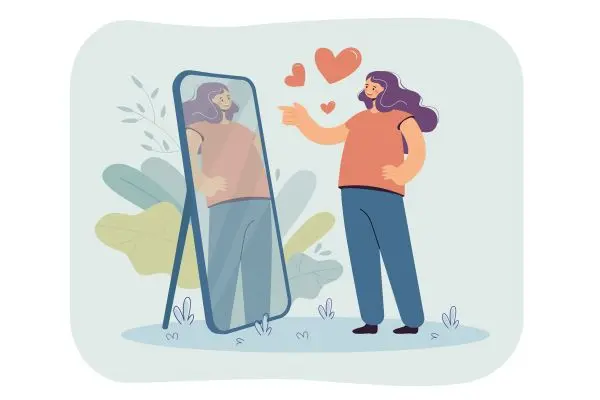
Narcissism is not limited to the extreme personalities we hear about in stories; mild or moderate forms may be more common than we imagine. In fact, there are subtle differences between healthy self-love and excessive narcissism. Therefore, in this article, Tatmeen offers a comprehensive guide to recognizing the signs and symptoms of narcissism along with some self-reflection questions that may reveal how much these traits apply to you or those around you.
Trying to Understand the Concept of Narcissism
The term “narcissism” is derived from “Narcissus” in Greek mythology, reflecting self-love to the point of excessive admiration. According to experts at Tatmeen, narcissism as a disorder is a psychological condition marked by an exaggerated sense of self-importance and a great need for attention and admiration, alongside a lack of empathy for others. Individuals with narcissism often struggle to view situations objectively, and they may inflate their achievements or needs at the expense of those around them.
Is Narcissism Always Bad?
The truth is that there are acceptable, healthy levels of self-love. It’s perfectly normal to feel proud when you accomplish something important. However, when this evolves into ignoring others’ needs and constantly seeking praise—coupled with harsh criticism of others when they fail to show admiration—that’s when narcissism becomes harmful.
Common Signs of Narcissism
A Constant Need for Attention A persistent need for praise or compliments. A narcissist feels extremely happy when recognized, and lacks mood stability when they don’t receive what they believe they deserve.
Focusing on Personal Achievements They inflate their own accomplishments and downplay those of others, believing they deserve special treatment.
Inability to Handle Criticism When their praise is questioned or criticized, they react with intense anger or an extreme defensive response.
Emotional Exploitation They tend to manipulate others and use their relationships to achieve goals or gain admiration.
These indicators can show up in varying degrees. Not all have to be present in one person to classify them as narcissistic. Rather, it depends on the level, frequency, and impact on others.
Other, Less Obvious Symptoms
Extreme Sensitivity to Rejection: They may completely dismiss criticism or become hostile at the slightest remark.
Inability to Apologize: They struggle to admit mistakes, preferring to find excuses or place blame on others instead.
A Simple Self-Test
Before labeling yourself as a narcissist, remember that human personality is complex. However, here are some questions that may prompt you to reflect:
How do you handle criticism? Do you feel anger and get defensive, or do you accept it and try to learn from it?
How great is your need for admiration? Do you notice that you get upset when people don’t constantly praise you?
Do you care about others’ feelings? Or is your focus primarily on your own desires and goals?
How do you react to the achievements of colleagues? Do you find yourself intensely comparing yourself to them or downplaying their successes?
If you notice that your answers lean toward narcissistic behaviors, you may need a session with a specialist to discuss your feelings and uncover the truth, because being honest with yourself is the first step to correcting your behavior. You can easily and confidentially book an online session with Tatmeen because you deserve to be better for yourself and for those around you.
What’s the Next Step?
If you realize that you or someone close to you shows signs of narcissism, it doesn’t necessarily mean change is impossible. On the contrary, there are ways to learn, mature, and grow:
Self-Awareness: Start by reading about narcissism and examining your own behavior. This awareness is the doorway to real improvement.
Seek Professional Help: Consulting with professionals through Tatmeen can offer practical guidance and a safe space for discussion.
Self-Reflective Exercises: Practice putting yourself in others’ shoes. Recognizing the impact of your behavior on those around you is a basic step toward empathy.
Balancing Success and Self-Love: The goal is not to deny your abilities but to regulate your desire for acknowledgment so it remains within healthy limits.
And Finally…
Narcissism is a disorder that requires self-awareness and a genuine willingness to listen to constructive criticism. The aim is not to criminalize self-love but rather to shape it into a balanced form that supports our relationships with others and sustains healthy mental well-being. If you feel that narcissistic tendencies have taken over your behavior, know that the path to change lies open through awareness, learning, and seeking help from specialists. Start your journey with Tatmeen now, and remember that true transformation begins with a willingness to acknowledge the issue and search for solutions.
Frequently Asked Questions
Can narcissistic traits disappear over time without intervention?
Some traits may diminish as a person ages or undergoes significant life experiences, but targeted therapeutic intervention and psychological methods more quickly and effectively address narcissistic behaviors.
How can I cope with fears of being judged by others if I suspect I’m a narcissist?
Talking to a mental health professional can help you understand and manage these fears. Tatmeen offers online sessions that guarantee your privacy and provide practical advice on how to manage your self-image.
Does narcissism make me a bad person?
The presence of narcissistic traits by itself does not define your moral character. Rather, it’s the degree and impact of these traits on others that matter. With awareness and effort to change, you can transform excessive self-love into a healthy confidence that does not harm your relationships.
A writer and researcher specializing in psychiatry, she focuses on mental health and the human emotions we experience but cannot always find the words to name. She writes about us—about humanity and the human experience—and simplifies complex topics to offer content that helps us better understand ourselves and life, ultimately making us feel less alone.
Every Tatmeen article is reviewed by care providers licensed by the Saudi Commission for Health Specialties, so what you read is accurate and trustworthy.
This article builds understanding and does not replace a licensed care provider.
Need someone to talk to?
Tatmeen's licensed care providers are available around the clock, and the app's urgent consultation connects you with one within minutes.
Download Tatmeen to explore care providers and booking options.
Smart matchingFour quick questions suggest the right care provider
Urgent consultationTalk to an available care provider within minutes
Free psychological measuresMore than 20 tests to understand how you are doing
Scan to download
{"data":{"id":"a02a6692-d41c-4115-92cc-308b5112aaf3","slug":"am-i-narcissist-signs-self-reflection-guide","arTitle":"من الممكن أن أكون نرجسي؟ العلامات والأعراض ودليل للتأمل الذاتي","enTitle":"Could I Be a Narcissist? Signs, Symptoms, and a Self-Reflection Guide","thumbnailAltText":"Person looking into a mirror showing a slightly distorted reflection","estimatedReadingTime":5,"likesCount":372,"writer":{"id":"3ab72b74-f26f-4337-9b47-3114b0f90de5","arBio":"كاتبة وباحثة متخصصة في مجال الطب النفسي، تهتم بموضوعات الصحة النفسية وبالمشاعر الإنسانية التي نختبرها ولا نجد دائمًا الكلمات لتسميتها. تكتب عنّا؛ عن الإنسان وتجربته، وتبسّط الموضوعات المعقّدة لتقدّم محتوى يساعدنا على فهم ذواتنا والحياة أكثر، ويجعلنا نشعر بأننا بوحدة أقل.","enBio":"A writer and researcher specializing in psychiatry, she focuses on mental health and the human emotions we experience but cannot always find the words to name. She writes about us—about humanity and the human experience—and simplifies complex topics to offer content that helps us better understand ourselves and life, ultimately making us feel less alone.","user":{"slug":"ayat-alnajar","arFullName":"آيات النجار","enFullName":"Ayat Al-Najjar","publicProfileImageUrl":"https://cdn.tatmeen.sa/public/profile-images/02384455-68fa-40b6-ad05-609fde65cafa/21b9a610dde5dfc6d37af110c23e9c7ab3946be080c281beb000debf4f7d31a6.webp","publicProfileImage96Url":"https://cdn.tatmeen.sa/public/profile-images/02384455-68fa-40b6-ad05-609fde65cafa/21b9a610dde5dfc6d37af110c23e9c7ab3946be080c281beb000debf4f7d31a6-w96.webp","publicProfileImage192Url":"https://cdn.tatmeen.sa/public/profile-images/02384455-68fa-40b6-ad05-609fde65cafa/21b9a610dde5dfc6d37af110c23e9c7ab3946be080c281beb000debf4f7d31a6-w192.webp"}},"arContent":"","enContent":"","productionDocument":{"headings":[{"id":"article-section-trying-to-understand-the-concept-of-narcissism","text":"Trying to Understand the Concept of Narcissism"},{"id":"article-section-common-signs-of-narcissism","text":"Common Signs of Narcissism"},{"id":"article-section-other-less-obvious-symptoms","text":"Other, Less Obvious Symptoms"},{"id":"article-section-a-simple-self-test","text":"A Simple Self-Test"},{"id":"article-section-what-s-the-next-step","text":"What’s the Next Step?"},{"id":"article-section-and-finally","text":"And Finally…"}],"faqs":[{"question":"Can narcissistic traits disappear over time without intervention?","answer":"<p><span style=\"color:#000000\">Some traits may diminish as a person ages or undergoes significant life experiences, but targeted therapeutic intervention and psychological methods more quickly and effectively address narcissistic behaviors.</span></p>"},{"question":"How can I cope with fears of being judged by others if I suspect I’m a narcissist?","answer":"<p><span style=\"color:#000000\">Talking to a mental health professional can help you understand and manage these fears. <u>Tatmeen offers online sessions</u> that guarantee your privacy and provide practical advice on how to manage your self-image.</span></p>"},{"question":"Does narcissism make me a bad person?","answer":"<p><span style=\"color:#000000\">The presence of narcissistic traits by itself does not define your moral character. Rather, it’s the degree and impact of these traits on others that matter. With awareness and effort to change, you can transform excessive self-love into a healthy confidence that does not harm your relationships.</span></p>"}],"beforeSourcesHtml":"<p></p>","sources":[],"afterSourcesHtml":"","blocks":[{"type":"html","html":"<p><span style=\"color:#000000\">Narcissism is not limited to the extreme personalities we hear about in stories; mild or moderate forms may be more common than we imagine. In fact, there are subtle differences between healthy self-love and excessive narcissism. Therefore, in this article, <strong>Tatmeen </strong>offers a comprehensive guide to recognizing the signs and symptoms of narcissism along with some self-reflection questions that may reveal how much these traits apply to you or those around you.</span></p><h2 id=\"article-section-trying-to-understand-the-concept-of-narcissism\" data-toc-heading tabindex=\"-1\"><span id=\"trying-to-understand-the-concept-of-narcissism-1\" aria-hidden=\"true\"></span><span style=\"color:#000000\"><strong>Trying to Understand the Concept of Narcissism</strong></span></h2><p><span style=\"color:#000000\">The term “narcissism” is derived from “Narcissus” in Greek mythology, reflecting self-love to the point of excessive admiration. According to experts at <strong>Tatmeen</strong>, narcissism as a disorder is a psychological condition marked by an exaggerated sense of self-importance and a great need for attention and admiration, alongside a lack of empathy for others. Individuals with narcissism often struggle to view situations objectively, and they may inflate their achievements or needs at the expense of those around them.</span></p><h3><span style=\"color:#000000\"><strong>Is Narcissism Always Bad?</strong></span></h3><p><span style=\"color:#000000\">The truth is that there are acceptable, healthy levels of self-love. It’s perfectly normal to feel proud when you accomplish something important. However, when this evolves into ignoring others’ needs and constantly seeking praise—coupled with harsh criticism of others when they fail to show admiration—that’s when narcissism becomes harmful.</span></p><h2 id=\"article-section-common-signs-of-narcissism\" data-toc-heading tabindex=\"-1\"><span id=\"common-signs-of-narcissism-2\" aria-hidden=\"true\"></span><span style=\"color:#000000\"><strong>Common Signs of Narcissism</strong></span></h2><ol><li><p><span style=\"color:#000000\"><strong>A Constant Need for Attention<br /></strong> A persistent need for praise or compliments. A narcissist feels extremely happy when recognized, and lacks mood stability when they don’t receive what they believe they deserve.<br /></span></p></li><li><p><span style=\"color:#000000\"><strong>Focusing on Personal Achievements<br /></strong> They inflate their own accomplishments and downplay those of others, believing they deserve special treatment.<br /></span></p></li><li><p><span style=\"color:#000000\"><strong>Inability to Handle Criticism<br /></strong> When their praise is questioned or criticized, they react with intense anger or an extreme defensive response.<br /></span></p></li><li><p><span style=\"color:#000000\"><strong>Emotional Exploitation<br /></strong> They tend to manipulate others and use their relationships to achieve goals or gain admiration.<br /></span></p></li></ol><p><span style=\"color:#000000\">These indicators can show up in varying degrees. Not all have to be present in one person to classify them as narcissistic. Rather, it depends on the level, frequency, and impact on others.</span></p><h2 id=\"article-section-other-less-obvious-symptoms\" data-toc-heading tabindex=\"-1\"><span id=\"other-less-obvious-symptoms-3\" aria-hidden=\"true\"></span><span style=\"color:#000000\"><strong>Other, Less Obvious Symptoms</strong></span></h2><ul><li><p><span style=\"color:#000000\"><strong>Extreme Sensitivity to Rejection</strong>: They may completely dismiss criticism or become hostile at the slightest remark.<br /></span></p></li><li><p><span style=\"color:#000000\"><strong>Inability to Apologize</strong>: They struggle to admit mistakes, preferring to find excuses or place blame on others instead.</span></p></li></ul><h2 id=\"article-section-a-simple-self-test\" data-toc-heading tabindex=\"-1\"><span id=\"a-simple-self-test-4\" aria-hidden=\"true\"></span><span style=\"color:#000000\"><strong>A Simple Self-Test</strong></span></h2><p><span style=\"color:#000000\">Before labeling yourself as a narcissist, remember that human personality is complex. However, here are some questions that may prompt you to reflect:</span></p><ul><li><p><span style=\"color:#000000\">How do you handle criticism? Do you feel anger and get defensive, or do you accept it and try to learn from it?<br /></span></p></li><li><p><span style=\"color:#000000\">How great is your need for admiration? Do you notice that you get upset when people don’t constantly praise you?<br /></span></p></li><li><p><span style=\"color:#000000\">Do you care about others’ feelings? Or is your focus primarily on your own desires and goals?<br /></span></p></li><li><p><span style=\"color:#000000\">How do you react to the achievements of colleagues? Do you find yourself intensely comparing yourself to them or downplaying their successes?<br /></span></p></li></ul><p><span style=\"color:#000000\">If you notice that your answers lean toward narcissistic behaviors, you may need a session with a specialist to discuss your feelings and uncover the truth, because being honest with yourself is the first step to correcting your behavior. You can easily and confidentially <u>book an online session with Tatmeen</u> because you deserve to be better for yourself and for those around you.</span></p><h2 id=\"article-section-what-s-the-next-step\" data-toc-heading tabindex=\"-1\"><span id=\"what-s-the-next-step-5\" aria-hidden=\"true\"></span><span style=\"color:#000000\"><strong>What’s the Next Step?</strong></span></h2><p><span style=\"color:#000000\">If you realize that you or someone close to you shows signs of narcissism, it doesn’t necessarily mean change is impossible. On the contrary, there are ways to learn, mature, and grow:</span></p><ol><li><p><span style=\"color:#000000\"><strong>Self-Awareness</strong>: Start by reading about narcissism and examining your own behavior. This awareness is the doorway to real improvement.<br /></span></p></li><li><p><span style=\"color:#000000\"><strong>Seek Professional Help</strong>: <u>Consulting with professionals through Tatmeen</u> can offer practical guidance and a safe space for discussion.<br /></span></p></li><li><p><span style=\"color:#000000\"><strong>Self-Reflective Exercises</strong>: Practice putting yourself in others’ shoes. Recognizing the impact of your behavior on those around you is a basic step toward empathy.<br /></span></p></li><li><p><span style=\"color:#000000\"><strong>Balancing Success and Self-Love</strong>: The goal is not to deny your abilities but to regulate your desire for acknowledgment so it remains within healthy limits.</span></p></li></ol><h2 id=\"article-section-and-finally\" data-toc-heading tabindex=\"-1\"><span id=\"and-finally-6\" aria-hidden=\"true\"></span><span style=\"color:#000000\"><strong>And Finally…</strong></span></h2><p><span style=\"color:#000000\">Narcissism is a disorder that requires self-awareness and a genuine willingness to listen to constructive criticism. The aim is not to criminalize self-love but rather to shape it into a balanced form that supports our relationships with others and sustains healthy mental well-being. If you feel that narcissistic tendencies have taken over your behavior, know that the path to change lies open through awareness, learning, and seeking help from specialists. <u>Start your journey with Tatmeen now</u>, and remember that true transformation begins with a willingness to acknowledge the issue and search for solutions.</span></p>"}],"inlineCtaSignatures":[],"_experienceAliases":{"v":1,"fields":["html","bodyHtml"],"faqs":[0,1,2]}},"createdAt":"2026-05-01T21:00:00.000Z","updatedAt":"2026-06-24T23:50:51.343Z","disorderGroups":[{"id":"3f3cfe09-2a47-4080-a800-cfe8209e6eee","slug":"personality-disorders","arName":"اضطرابات الشخصية","enName":"Personality Disorders"}],"reviewer":{"arFullName":"فريق تطمين","enFullName":"Tatmeen team","slug":"tatmeen-team","kind":"organization"},"productionArticle":true,"promotionAllowed":true,"preparedCover":{"src":"https://cdn.tatmeen.sa/public/article-lcp/article-lcp-v2/sha256-1b0de7dda8e86d2add19a7af9485ffe573ee0d18054a84e58a96b8a1af7fb060/800-7c52971edf2a591bc892724808579e2856d3e6206db186344fb33254885e1511.avif","fallback":"https://cdn.tatmeen.sa/public/article-lcp/article-lcp-v2/sha256-1b0de7dda8e86d2add19a7af9485ffe573ee0d18054a84e58a96b8a1af7fb060/800-0d56c6415f1d484c27db355901a770c0b12c8835c37dc00a834bfc118323fd33.webp","directUrl":"https://cdn.tatmeen.sa/blog-cover/Tatmeen-1777734991977.webp","isGolden":true,"avifSrcset":"https://cdn.tatmeen.sa/public/article-lcp/article-lcp-v2/sha256-1b0de7dda8e86d2add19a7af9485ffe573ee0d18054a84e58a96b8a1af7fb060/400-3a43c223da03a397334965bb55ac01d3ed893da1bc3501ec666035495debcae1.avif 400w, https://cdn.tatmeen.sa/public/article-lcp/article-lcp-v2/sha256-1b0de7dda8e86d2add19a7af9485ffe573ee0d18054a84e58a96b8a1af7fb060/640-cdc9e355109692529471c1a900dddc791b8790dea256e8061b638ab7e7ce39e4.avif 640w, https://cdn.tatmeen.sa/public/article-lcp/article-lcp-v2/sha256-1b0de7dda8e86d2add19a7af9485ffe573ee0d18054a84e58a96b8a1af7fb060/800-7c52971edf2a591bc892724808579e2856d3e6206db186344fb33254885e1511.avif 800w, https://cdn.tatmeen.sa/public/article-lcp/article-lcp-v2/sha256-1b0de7dda8e86d2add19a7af9485ffe573ee0d18054a84e58a96b8a1af7fb060/1200-54c612787ea925b9fe86e2515583c37f853e301db4951a36db4bd94c07f8846e.avif 1200w","webpSrcset":"https://cdn.tatmeen.sa/public/article-lcp/article-lcp-v2/sha256-1b0de7dda8e86d2add19a7af9485ffe573ee0d18054a84e58a96b8a1af7fb060/400-778f4b417428a1de378c0ea75b0b48a7d7e3bd4f4e2cd06d33303cc8c505ddf8.webp 400w, https://cdn.tatmeen.sa/public/article-lcp/article-lcp-v2/sha256-1b0de7dda8e86d2add19a7af9485ffe573ee0d18054a84e58a96b8a1af7fb060/640-7445959f4524294945e7951e0b3262c10fb589d419ee99ee62b139b45f3fb0ab.webp 640w, https://cdn.tatmeen.sa/public/article-lcp/article-lcp-v2/sha256-1b0de7dda8e86d2add19a7af9485ffe573ee0d18054a84e58a96b8a1af7fb060/800-0d56c6415f1d484c27db355901a770c0b12c8835c37dc00a834bfc118323fd33.webp 800w, https://cdn.tatmeen.sa/public/article-lcp/article-lcp-v2/sha256-1b0de7dda8e86d2add19a7af9485ffe573ee0d18054a84e58a96b8a1af7fb060/1200-31991fa8498c44d6d0dee41965c343d73309fd00de4472af35b75bc83b663390.webp 1200w","phoneAvifSrcset":"https://cdn.tatmeen.sa/public/article-lcp/article-lcp-v2/sha256-1b0de7dda8e86d2add19a7af9485ffe573ee0d18054a84e58a96b8a1af7fb060/400-3a43c223da03a397334965bb55ac01d3ed893da1bc3501ec666035495debcae1.avif 400w, https://cdn.tatmeen.sa/public/article-lcp/article-lcp-v2/sha256-1b0de7dda8e86d2add19a7af9485ffe573ee0d18054a84e58a96b8a1af7fb060/640-cdc9e355109692529471c1a900dddc791b8790dea256e8061b638ab7e7ce39e4.avif 640w, https://cdn.tatmeen.sa/public/article-lcp/article-lcp-v2/sha256-1b0de7dda8e86d2add19a7af9485ffe573ee0d18054a84e58a96b8a1af7fb060/800-7c52971edf2a591bc892724808579e2856d3e6206db186344fb33254885e1511.avif 800w","phoneWebpSrcset":"https://cdn.tatmeen.sa/public/article-lcp/article-lcp-v2/sha256-1b0de7dda8e86d2add19a7af9485ffe573ee0d18054a84e58a96b8a1af7fb060/400-778f4b417428a1de378c0ea75b0b48a7d7e3bd4f4e2cd06d33303cc8c505ddf8.webp 400w, https://cdn.tatmeen.sa/public/article-lcp/article-lcp-v2/sha256-1b0de7dda8e86d2add19a7af9485ffe573ee0d18054a84e58a96b8a1af7fb060/640-7445959f4524294945e7951e0b3262c10fb589d419ee99ee62b139b45f3fb0ab.webp 640w, https://cdn.tatmeen.sa/public/article-lcp/article-lcp-v2/sha256-1b0de7dda8e86d2add19a7af9485ffe573ee0d18054a84e58a96b8a1af7fb060/800-0d56c6415f1d484c27db355901a770c0b12c8835c37dc00a834bfc118323fd33.webp 800w","width":800,"height":500},"previewTaxonomy":{"groups":[{"id":"3f3cfe09-2a47-4080-a800-cfe8209e6eee","slug":"personality-disorders","arName":"اضطرابات الشخصية","enName":"Personality Disorders"}],"topics":[{"id":"744a0a85-4437-4764-a091-b0fe9fb45e93","slug":"narcissistic-pd","arName":"الشخصية النرجسية","enName":"Narcissistic PD","groupSlug":"personality-disorders","href":"/blog/category/personality-disorders/narcissistic-pd/"}],"tags":[{"id":"ee570756-87e1-41dc-abd5-fa3f85f76a51","slug":"narcissism-npd","arName":"اضطراب الشخصية النرجسية","enName":"Narcissism (NPD)"},{"id":"475c9ee4-379d-436c-93ab-4c63916e7197","slug":"self-assessment","arName":"تقييم ذاتي","enName":"Self-Assessment"}]},"previewProviderRecommendations":[{"id":"d754a189-f8c9-4aad-b4aa-a5dbd26c0bd7","slug":"talal-alshowaier-8694","arFullName":"طلال الشويعر","enFullName":"Talal Alshowaier","publicProfileImageUrl":"https://cdn.tatmeen.sa/public/profile-images/d754a189-f8c9-4aad-b4aa-a5dbd26c0bd7/74feb27848a47cf43189f6b5951e06a9b87b08269021d5bab765092fc65fce42.webp","publicProfileImage96Url":"https://cdn.tatmeen.sa/public/profile-images/d754a189-f8c9-4aad-b4aa-a5dbd26c0bd7/74feb27848a47cf43189f6b5951e06a9b87b08269021d5bab765092fc65fce42-w96.webp","publicProfileImage192Url":"https://cdn.tatmeen.sa/public/profile-images/d754a189-f8c9-4aad-b4aa-a5dbd26c0bd7/74feb27848a47cf43189f6b5951e06a9b87b08269021d5bab765092fc65fce42-w192.webp","specialization":{"arName":"أخصائي نفسي","enName":"Psychologist"},"profileImageUrl":"https://cdn.tatmeen.sa/public/profile-images/d754a189-f8c9-4aad-b4aa-a5dbd26c0bd7/74feb27848a47cf43189f6b5951e06a9b87b08269021d5bab765092fc65fce42-w192.webp","experienceYears":3,"consultantInfo":{"averageRating":{"average":5},"specialization":{"arGeneralName":"أخصائي نفسي","enGeneralName":"Psychologist"}}},{"id":"8901fc01-b4d9-45d3-89c5-eaa33bcc0c10","slug":"alosaimi-amirah-8059","arFullName":"أميره العصيمي","enFullName":"Amirah Alosaimi","publicProfileImageUrl":"","publicProfileImage96Url":"","publicProfileImage192Url":"","specialization":{"arName":"أخصائي نفسي","enName":"Psychologist"},"profileImageUrl":"","experienceYears":6,"consultantInfo":{"averageRating":{"average":0},"specialization":{"arGeneralName":"أخصائي نفسي","enGeneralName":"Psychologist"}}},{"id":"3cc806e8-616b-4884-9f21-a75b378580a2","slug":"aisha-al-hashim-8667","arFullName":"عائشة ال هاشم","enFullName":"Aisha Al Hashim","publicProfileImageUrl":"https://cdn.tatmeen.sa/public/profile-images/3cc806e8-616b-4884-9f21-a75b378580a2/27f523d03be4dcfa1f6a79f70c1773887434e698990d214cd990caec56a44798.webp","publicProfileImage96Url":"https://cdn.tatmeen.sa/public/profile-images/3cc806e8-616b-4884-9f21-a75b378580a2/27f523d03be4dcfa1f6a79f70c1773887434e698990d214cd990caec56a44798-w96.webp","publicProfileImage192Url":"https://cdn.tatmeen.sa/public/profile-images/3cc806e8-616b-4884-9f21-a75b378580a2/27f523d03be4dcfa1f6a79f70c1773887434e698990d214cd990caec56a44798-w192.webp","specialization":{"arName":"أخصائي نفسي","enName":"Psychologist"},"profileImageUrl":"https://cdn.tatmeen.sa/public/profile-images/3cc806e8-616b-4884-9f21-a75b378580a2/27f523d03be4dcfa1f6a79f70c1773887434e698990d214cd990caec56a44798-w192.webp","experienceYears":2,"consultantInfo":{"averageRating":{"average":4.990990990990991},"specialization":{"arGeneralName":"أخصائي نفسي","enGeneralName":"Psychologist"}}}],"previewCareProviders":[{"id":"09364052-c2a9-4c52-9717-7ce2093b8d0a","slug":"kholoud-alharbi-5221","arFullName":"خلود الحربي","enFullName":"Kholoud Alharbi","publicProfileImageUrl":"https://cdn.tatmeen.sa/public/profile-images/09364052-c2a9-4c52-9717-7ce2093b8d0a/4a0aeb81619e351b77f4323e3605a0a00acc7ca3c82ee7cc5ca2c9e8ef716049.webp","publicProfileImage96Url":"https://cdn.tatmeen.sa/public/profile-images/09364052-c2a9-4c52-9717-7ce2093b8d0a/4a0aeb81619e351b77f4323e3605a0a00acc7ca3c82ee7cc5ca2c9e8ef716049-w96.webp","publicProfileImage192Url":"https://cdn.tatmeen.sa/public/profile-images/09364052-c2a9-4c52-9717-7ce2093b8d0a/4a0aeb81619e351b77f4323e3605a0a00acc7ca3c82ee7cc5ca2c9e8ef716049-w192.webp","gender":"FEMALE","specialization":{"arName":"أخصائي نفسي","enName":"Psychologist"}},{"id":"6f037535-1dca-4b50-a8b2-5974b7323286","slug":"salah-althobaiti-9053","arFullName":"صلاح الثبيتي","enFullName":"Salah Althobaiti","publicProfileImageUrl":"https://cdn.tatmeen.sa/public/profile-images/6f037535-1dca-4b50-a8b2-5974b7323286/35b6bd7fad9b1e004c1835803eb9c1b56dcacd380685ec8bff141f0fb888005c.webp","publicProfileImage96Url":"https://cdn.tatmeen.sa/public/profile-images/6f037535-1dca-4b50-a8b2-5974b7323286/35b6bd7fad9b1e004c1835803eb9c1b56dcacd380685ec8bff141f0fb888005c-w96.webp","publicProfileImage192Url":"https://cdn.tatmeen.sa/public/profile-images/6f037535-1dca-4b50-a8b2-5974b7323286/35b6bd7fad9b1e004c1835803eb9c1b56dcacd380685ec8bff141f0fb888005c-w192.webp","gender":"MALE","specialization":{"arName":"أخصائي نفسي","enName":"Psychologist"}},{"id":"3cc806e8-616b-4884-9f21-a75b378580a2","slug":"aisha-al-hashim-8667","arFullName":"عائشة ال هاشم","enFullName":"Aisha Al Hashim","publicProfileImageUrl":"https://cdn.tatmeen.sa/public/profile-images/3cc806e8-616b-4884-9f21-a75b378580a2/27f523d03be4dcfa1f6a79f70c1773887434e698990d214cd990caec56a44798.webp","publicProfileImage96Url":"https://cdn.tatmeen.sa/public/profile-images/3cc806e8-616b-4884-9f21-a75b378580a2/27f523d03be4dcfa1f6a79f70c1773887434e698990d214cd990caec56a44798-w96.webp","publicProfileImage192Url":"https://cdn.tatmeen.sa/public/profile-images/3cc806e8-616b-4884-9f21-a75b378580a2/27f523d03be4dcfa1f6a79f70c1773887434e698990d214cd990caec56a44798-w192.webp","gender":"FEMALE","specialization":{"arName":"أخصائي نفسي","enName":"Psychologist"}},{"id":"db2ce1a0-9325-4471-b7ce-eb2e811c30a3","slug":"amer-qutub-2441","arFullName":"عامر قطب","enFullName":"Amer Qutub","publicProfileImageUrl":"https://cdn.tatmeen.sa/public/profile-images/db2ce1a0-9325-4471-b7ce-eb2e811c30a3/80580f99bfd7fe2b2a9cf8eed73ab532f5086d1efe053b0aa57358c1ce004261.webp","publicProfileImage96Url":"https://cdn.tatmeen.sa/public/profile-images/db2ce1a0-9325-4471-b7ce-eb2e811c30a3/80580f99bfd7fe2b2a9cf8eed73ab532f5086d1efe053b0aa57358c1ce004261-w96.webp","publicProfileImage192Url":"https://cdn.tatmeen.sa/public/profile-images/db2ce1a0-9325-4471-b7ce-eb2e811c30a3/80580f99bfd7fe2b2a9cf8eed73ab532f5086d1efe053b0aa57358c1ce004261-w192.webp","gender":"MALE","specialization":{"arName":"أخصائي نفسي","enName":"Psychologist"}},{"id":"94765496-dbdf-4631-a01b-7df5f788668d","slug":"abdullrahman-alhamoudi-3045","arFullName":"عبدالرحمن الحمودي","enFullName":"Abdulrahman Alhamoudi","publicProfileImageUrl":"https://cdn.tatmeen.sa/public/profile-images/94765496-dbdf-4631-a01b-7df5f788668d/2d49f6b6493c564afb6f50b6c3634231dff3a5cf8353acfab393d1b2a88037d1.webp","publicProfileImage96Url":"https://cdn.tatmeen.sa/public/profile-images/94765496-dbdf-4631-a01b-7df5f788668d/2d49f6b6493c564afb6f50b6c3634231dff3a5cf8353acfab393d1b2a88037d1-w96.webp","publicProfileImage192Url":"https://cdn.tatmeen.sa/public/profile-images/94765496-dbdf-4631-a01b-7df5f788668d/2d49f6b6493c564afb6f50b6c3634231dff3a5cf8353acfab393d1b2a88037d1-w192.webp","gender":"MALE","specialization":{"arName":"أخصائي نفسي","enName":"Psychologist"}},{"id":"618dba89-5b70-4b46-8304-741b7ac8ecd3","slug":"abdullah-mari-1311","arFullName":"عبدالله مرعي","enFullName":"Abdullah Mari","publicProfileImageUrl":"https://cdn.tatmeen.sa/public/profile-images/618dba89-5b70-4b46-8304-741b7ac8ecd3/6b4a3bfb59f8a304ca79083b32859b46baad2e1d692974a47c02c1f66bd11129.webp","publicProfileImage96Url":"https://cdn.tatmeen.sa/public/profile-images/618dba89-5b70-4b46-8304-741b7ac8ecd3/6b4a3bfb59f8a304ca79083b32859b46baad2e1d692974a47c02c1f66bd11129-w96.webp","publicProfileImage192Url":"https://cdn.tatmeen.sa/public/profile-images/618dba89-5b70-4b46-8304-741b7ac8ecd3/6b4a3bfb59f8a304ca79083b32859b46baad2e1d692974a47c02c1f66bd11129-w192.webp","gender":"MALE","specialization":{"arName":"أخصائي نفسي","enName":"Psychologist"}},{"id":"3b50a5d5-e795-407f-8676-fd7f0e1bb7a0","slug":"abdulaziz-bin-hudayan-4940","arFullName":"عبدالعزيز بن هديان","enFullName":"Abdulaziz Bin Hudayan","publicProfileImageUrl":"https://cdn.tatmeen.sa/public/profile-images/3b50a5d5-e795-407f-8676-fd7f0e1bb7a0/710ff0fe1fb00cdb5042092e27b7910b480a439b02251ecded62d7758eefce95.webp","publicProfileImage96Url":"https://cdn.tatmeen.sa/public/profile-images/3b50a5d5-e795-407f-8676-fd7f0e1bb7a0/710ff0fe1fb00cdb5042092e27b7910b480a439b02251ecded62d7758eefce95-w96.webp","publicProfileImage192Url":"https://cdn.tatmeen.sa/public/profile-images/3b50a5d5-e795-407f-8676-fd7f0e1bb7a0/710ff0fe1fb00cdb5042092e27b7910b480a439b02251ecded62d7758eefce95-w192.webp","gender":"MALE","specialization":{"arName":"أخصائي نفسي","enName":"Psychologist"}},{"id":"d4ffcb6b-90a7-45b6-b941-964866f4564b","slug":"dhaifallah-alhumaidi-1092","arFullName":"ضيف الله الحميدي","enFullName":"Dhaifallah Alhumaidi","publicProfileImageUrl":"https://cdn.tatmeen.sa/public/profile-images/d4ffcb6b-90a7-45b6-b941-964866f4564b/1817171c5828a9b57d6c30d12332cf154e335272548bc90a6e8456d74d356956.webp","publicProfileImage96Url":"https://cdn.tatmeen.sa/public/profile-images/d4ffcb6b-90a7-45b6-b941-964866f4564b/1817171c5828a9b57d6c30d12332cf154e335272548bc90a6e8456d74d356956-w96.webp","publicProfileImage192Url":"https://cdn.tatmeen.sa/public/profile-images/d4ffcb6b-90a7-45b6-b941-964866f4564b/1817171c5828a9b57d6c30d12332cf154e335272548bc90a6e8456d74d356956-w192.webp","gender":"MALE","specialization":{"arName":"أخصائي نفسي","enName":"Psychologist"}}],"previewDownload":{"href":"/download","title":{"ar":"خطوة واحدة لأجلك، ابدأ الآن","en":"One step for you, start now"},"description":{"ar":"حمّل تطبيق تطمين لاستكشاف مقدمي الرعاية وخيارات الحجز.","en":"Download Tatmeen to explore care providers and booking options."},"posterSrc":"/images/home/cta-ar-new-1.webp","videoSrc":"/images/home/cta-ar-new-1.mp4","videoPosterSrc":"/images/home/cta-ar-new-1.webp","videoPosterEnSrc":"/images/home/cta-en-new-1.webp","videoType":"video/mp4","appStoreHref":"https://apps.apple.com/us/app/tatmeen-%D8%AA%D8%B7%D9%85%D9%8A%D9%86/id6473836983","googlePlayHref":"https://play.google.com/store/apps/details?id=com.TatmeenApp.user&hl=en"},"previewRelatedArticles":[{"id":"6c173279-cece-4e8b-9881-a5b92611e6b4","slug":"effective-treatments-narcissism-options","route":"/blog/effective-treatments-narcissism-options/","title":{"ar":"هل توجد علاجات فعّالة للنرجسية؟ استكشف الخيارات","en":"Are There Effective Treatments for Narcissism? Explore the Options"},"image":"https://cdn.tatmeen.sa/public/article-lcp/article-lcp-v2/sha256-a1c809132c08f621b05f7d562c7fd62027cb9bb69b9ba62194535bf3984891e5/800-064c7ac09804e695ac1da25166c7f188748601cdfe0b93cf8abf90049c02e92a.webp","directImageFallback":"https://cdn.tatmeen.sa/blog-cover/Tatmeen-1777825998480.webp","arThumbnailAltText":"a narcissist patient sitting in the clinic with a a therapist","thumbnailAltText":"a narcissist patient sitting in the clinic with a a therapist","topic":{"label":{"ar":"اضطرابات نفسية شائعة","en":"Common Mental Issues"}},"readingTimeMinutes":5},{"id":"0ec2dbdb-b445-404a-b7c7-faace6334f81","slug":"narcissistic_personality_disorder","route":"/blog/narcissistic_personality_disorder/","title":{"ar":"الشخصية النرجسية ما بين بناء نفسها وتمزيق الاخر ","en":"Narcissistic Personality: Building Itself, Tearing Others Apart"},"image":"https://cdn.tatmeen.sa/public/article-lcp/article-lcp-v2/sha256-ff484a53ff7cbf6e9d825dce53ea7eff9994a3d237fb5c62000ecb2441e2be58/600-e99eb45c49df564d7882571cbec05e8b7b53acf6a6914215a93288e4de505a5a.webp","directImageFallback":"https://cdn.tatmeen.sa/blog-cover/1704288643980-%C3%98%C2%A7%C3%99%C2%84%C3%98%C2%B4%C3%98%C2%AE%C3%98%C2%B5%C3%99%C2%8A%C3%98%C2%A9-%C3%98%C2%A7%C3%99%C2%84%C3%99%C2%86%C3%98%C2%B1%C3%98%C2%AC%C3%98%C2%B3%C3%99%C2%8A%C3%98%C2%A9-%C3%99%C2%85%C3%98%C2%A7-%C3%98%C2%A8%C3%99%C2%8A%C3%99%C2%86-%C3%98%C2%A8%C3%99%C2%86%C3%98%C2%A7%C3%98%C2%A1-%C3%99%C2%86%C3%99%C2%81%C3%98%C2%B3%C3%99%C2%87%C3%98%C2%A7-%C3%99%C2%88%C3%98%C2%AA%C3%99%C2%85%C3%98%C2%B2%C3%99%C2%8A%C3%99%C2%82-%C3%98%C2%A7%C3%99%C2%84%C3%98%C2%A7%C3%98%C2%AE%C3%98%C2%B1%C3%82%C2%A0-600x400.jpeg","arThumbnailAltText":"Person points at their reflection in a full-length mirror as hearts float overhead","thumbnailAltText":"Person points at their reflection in a full-length mirror as hearts float overhead","topic":{"label":{"ar":"اضطرابات الشخصية","en":"Personality Disorders"}},"readingTimeMinutes":5},{"id":"f9fe6248-1994-4443-8005-a66fecbb7d9e","slug":"other-side-narcissism-inner-suffering","route":"/blog/other-side-narcissism-inner-suffering/","title":{"ar":"وجـه آخر للنرجسية: معاناة صاحب الشخصية النرجسية من الداخل","en":"The Other Side of Narcissism: The Inner Suffering of a Narcissist"},"image":"https://cdn.tatmeen.sa/public/article-lcp/article-lcp-v2/sha256-2986f8a6eedcd43df43d1bf0fa9a4758fadc7bc2332cdd477573ba8a9fdf0378/800-91034291b120487b7e415c5aceb6637e2895a511127aa70a26dfd81b428bd52d.webp","directImageFallback":"https://cdn.tatmeen.sa/blog-cover/Tatmeen-1777826631868.webp","arThumbnailAltText":"an image of a person split into two halves one half resembles narcissism and the other half resembles inner suffering","thumbnailAltText":"an image of a person split into two halves one half resembles narcissism and the other half resembles inner suffering","topic":{"label":{"ar":"اضطرابات الشخصية","en":"Personality Disorders"}},"readingTimeMinutes":5},{"id":"03743c56-3694-43b0-af8d-d47aaffe8036","slug":"narcissist-lack-empathy-how-they-see-world","route":"/blog/narcissist-lack-empathy-how-they-see-world/","title":{"ar":"الافتقار للتعاطف: كيف يرى النرجسي العالم من حوله؟","en":"Lack of Empathy: How Does the Narcissist See the World Around Them?"},"image":"https://cdn.tatmeen.sa/public/article-lcp/article-lcp-v2/sha256-f0f3a5911ad4938a7f0389c1d8ac03d6404d24e9290703d3c009f7ffb4e0c349/800-60ea520d50df6e3487dfe4b7d70428fe18295730b91055b95d9d179a5ff40a76.webp","directImageFallback":"https://cdn.tatmeen.sa/blog-cover/Tatmeen-1775563724263.webp","arThumbnailAltText":"Stylized eye with a mirror lens reflecting self while surrounding figures remain faint and transparent in slate and gold","thumbnailAltText":"Stylized eye with a mirror lens reflecting self while surrounding figures remain faint and transparent in slate and gold","topic":{"label":{"ar":"اضطرابات نفسية شائعة","en":"Common Mental Issues"}},"readingTimeMinutes":5}],"previewRelatedReadStates":{}},"locale":"en","device":"desktop","path":"/en/blog/am-i-narcissist-signs-self-reflection-guide/","readingControls":false,"config":{"public":{"BUCKET_URL":"https://cdn.tatmeen.sa/","APP_BASE_URL":"https://tatmeen.sa","intercomAppId":"ppcnu9e3"}}}