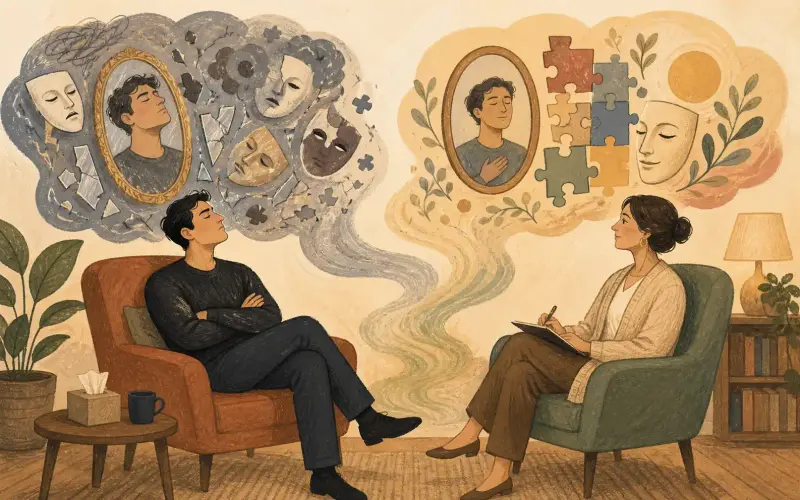
Sometimes narcissism is, before anything else, a story of fragility. As if its bearer puts on armor every morning to hide a deep scratch within. In this article, Tatmeen sheds light on the hidden human side: why some people with narcissistic traits suffer in silence, and how this pain can be turned into gradual healing through deeper understanding and more compassionate boundaries.
What is happening on the inside? Fragility hiding behind the shine
Behind the scene of exaggerated confidence, there is often a fragile self-esteem that is quickly affected by rejection or criticism. Mayo Clinic describes narcissistic personality disorder as an excessive need for admiration coexisting with a fragile self-esteem and troubled relationships. This contradiction explains the intensity of pain when the self-image is shaken.
A duality between grandiosity and fragility
Recent studies show that narcissism is not a single hue; a person may oscillate between grandiosity (a strong front, striving for superiority) and vulnerability (shame, hypersensitivity to criticism). This fluctuation can occur within the same person over time—not only between different people.
Why does this mechanism form? Multiple, blameless roots
A narcissistic personality develops from a complex mix of genetic predispositions, childhood experiences, and patterns of emotional learning. Medical sources indicate that causes are neither singular nor deterministic; rather, biological, psychological, and environmental factors intertwine to shape a pattern that protects the self from shame and loss of worth.
What does this look like in daily life?
A person may live in a state of constant vigilance, taking the measure of their image in others’ eyes; a small success lifts them high, and an offhand remark brings them crashing down. In relationships, closeness and distance can switch rapidly: seeking appreciation, then avoiding intimacy out of fear that their weakness will be exposed. Many do not see this inner exhaustion, yet it is strongly present in the body, sleep, and mood.
Invisible suffering: silent shame and clinging loneliness
Many people with narcissistic traits describe a sense of emptiness when the applause fades, as if self-worth evaporates away from the spotlight. When they encounter criticism—even in a gentle tone—anger or defensiveness may appear, while inside there is fear of collapse. According to the observations of Tatmeen specialists, the goal of therapy is not to shatter the armor, but to help the person build a sense of worth rooted in a warm reality rather than impossible standards.
Why are they misunderstood?
Because outward behavior can look arrogant, others may overlook that this hauteur is trying to hide an old pain. Recognizing this dimension does not justify harm, but it opens the door to kinder change and encourages setting clear boundaries that protect everyone.
From pain to change: realistic therapeutic entry points
The gold standard in addressing personality disorders is psychotherapy; medications are used for accompanying symptoms like depression or anxiety when needed. Cognitive behavioral therapy, along with other approaches centered on building self-awareness and healthier relationships, forms the cornerstone, while the plan is tailored to motivation and readiness.
What happens inside the session?
Regulating affect and shame: learning to calm the body when faced with criticism, instead of withdrawing or attacking.
Building a realistic identity: moving from “I’m either special or nothing” to a wider space that can hold both success and failure.
Improving relationships: noticing patterns of control, jealousy, and the need for admiration, and replacing them with communication that respects self and other.
The experience of therapists on Tatmeen suggests that an effective start is a small, doable step: a preliminary text message or a brief audio session, followed by a clear agreement on goals and expectations. Varied modes of contact (text, audio, video) help those who fear direct confrontation to experience safety gradually.
Gentle guidelines for loved ones—without normalizing harm
Compassion for suffering does not mean accepting harmful behavior. Balance is healthy: Name what hurts and set clear boundaries: I need this way of speaking to stop. We can continue later, calmly.
Avoid public diagnosis: replace You’re narcissistic with speaking about impact: I feel belittled when…
Offer bridges, not traps: suggest seeking professional help and share resources kindly.
Care for yourself: self-support or a guidance session for you is not a luxury but protection from depletion.
Reflective questions to help those who are struggling
How do you handle criticism? Notice your first response: defensiveness, denial, or curiosity. Mere awareness is a turning point.
When do you feel “enough” without applause? If the answer is rarely, this is a valuable area for therapeutic work.
Who is your safe person? A friend or professional who sees you beyond the mirror of admiration—their presence speeds recovery.
And finally..
The goal is not to tear off the mask, but to lighten the weight of carrying it. A narcissistic personality may hide an old thirst for safety and grounded recognition. When we treat this thirst with respect, change becomes possible: a warmer relationship with oneself and clearer boundaries with others. And if you would like a private, quiet space to begin, book a flexible session now with Tatmeen.
Frequently Asked Questions
Can someone with a narcissistic personality change?
Yes, improvement is possible when there is genuine motivation and regular therapy focused on emotion regulation and building realistic self-esteem. The path is often gradual and requires patience and clear boundaries, with professional support to accompany natural setbacks.
Why can apology be difficult for some?
Because admitting fault may threaten their self-image. Therapeutic training helps tolerate shame without collapse and distinguish between “I made a mistake” and “I am worthless,” which makes apologizing and repairing the relationship easier.
How can I encourage a loved one to seek help without conflict?
Tie the invitation to their needs: I think a brief session could ease your pressure and help you at work. Offer flexible, safe options—such as Tatmeen’s text- or voice-based sessions—and avoid blame or diagnostic debates.
A writer and researcher specializing in psychiatry, she focuses on mental health and the human emotions we experience but cannot always find the words to name. She writes about us—about humanity and the human experience—and simplifies complex topics to offer content that helps us better understand ourselves and life, ultimately making us feel less alone.
Every Tatmeen article is reviewed by care providers licensed by the Saudi Commission for Health Specialties, so what you read is accurate and trustworthy.
This article builds understanding and does not replace a licensed care provider.
Need someone to talk to?
Tatmeen's licensed care providers are available around the clock, and the app's urgent consultation connects you with one within minutes.
Download Tatmeen to explore care providers and booking options.
Smart matchingFour quick questions suggest the right care provider
Urgent consultationTalk to an available care provider within minutes
Free psychological measuresMore than 20 tests to understand how you are doing
Scan to download
{"data":{"id":"f9fe6248-1994-4443-8005-a66fecbb7d9e","slug":"other-side-narcissism-inner-suffering","arTitle":"وجـه آخر للنرجسية: معاناة صاحب الشخصية النرجسية من الداخل","enTitle":"The Other Side of Narcissism: The Inner Suffering of a Narcissist","thumbnailAltText":"an image of a person split into two halves one half resembles narcissism and the other half resembles inner suffering","estimatedReadingTime":5,"likesCount":332,"writer":{"id":"3ab72b74-f26f-4337-9b47-3114b0f90de5","arBio":"كاتبة وباحثة متخصصة في مجال الطب النفسي، تهتم بموضوعات الصحة النفسية وبالمشاعر الإنسانية التي نختبرها ولا نجد دائمًا الكلمات لتسميتها. تكتب عنّا؛ عن الإنسان وتجربته، وتبسّط الموضوعات المعقّدة لتقدّم محتوى يساعدنا على فهم ذواتنا والحياة أكثر، ويجعلنا نشعر بأننا بوحدة أقل.","enBio":"A writer and researcher specializing in psychiatry, she focuses on mental health and the human emotions we experience but cannot always find the words to name. She writes about us—about humanity and the human experience—and simplifies complex topics to offer content that helps us better understand ourselves and life, ultimately making us feel less alone.","user":{"slug":"ayat-alnajar","arFullName":"آيات النجار","enFullName":"Ayat Al-Najjar","publicProfileImageUrl":"https://cdn.tatmeen.sa/public/profile-images/02384455-68fa-40b6-ad05-609fde65cafa/21b9a610dde5dfc6d37af110c23e9c7ab3946be080c281beb000debf4f7d31a6.webp","publicProfileImage96Url":"https://cdn.tatmeen.sa/public/profile-images/02384455-68fa-40b6-ad05-609fde65cafa/21b9a610dde5dfc6d37af110c23e9c7ab3946be080c281beb000debf4f7d31a6-w96.webp","publicProfileImage192Url":"https://cdn.tatmeen.sa/public/profile-images/02384455-68fa-40b6-ad05-609fde65cafa/21b9a610dde5dfc6d37af110c23e9c7ab3946be080c281beb000debf4f7d31a6-w192.webp"}},"arContent":"","enContent":"","productionDocument":{"headings":[],"faqs":[{"question":"Can someone with a narcissistic personality change?","answer":"<p><span style=\"color:#000000\">Yes, improvement is possible when there is genuine motivation and regular therapy focused on emotion regulation and building realistic self-esteem. The path is often gradual and requires patience and clear boundaries, with professional support to accompany natural setbacks.</span></p>"},{"question":"Why can apology be difficult for some?","answer":"<p><span style=\"color:#000000\">Because admitting fault may threaten their self-image. Therapeutic training helps tolerate shame without collapse and distinguish between “I made a mistake” and “I am worthless,” which makes apologizing and repairing the relationship easier.</span></p>"},{"question":"How can I encourage a loved one to seek help without conflict?","answer":"<p><span style=\"color:#000000\">Tie the invitation to their needs: I think a brief session could ease your pressure and help you at work. Offer flexible, safe options—such as Tatmeen’s text- or voice-based sessions—and avoid blame or diagnostic debates.</span></p>"}],"beforeSourcesHtml":"<p></p>","sources":[],"afterSourcesHtml":"","blocks":[{"type":"html","html":"<p><span style=\"color:#000000\">Sometimes narcissism is, before anything else, a story of fragility. As if its bearer puts on armor every morning to hide a deep scratch within. In this article, Tatmeen sheds light on the hidden human side: why some people with narcissistic traits suffer in silence, and how this pain can be turned into gradual healing through deeper understanding and more compassionate boundaries.</span></p><h3><span style=\"color:#000000\"><br /> What is happening on the inside? Fragility hiding behind the shine</span></h3><p><span style=\"color:#000000\">Behind the scene of exaggerated confidence, there is often a fragile self-esteem that is quickly affected by rejection or criticism. </span><a href=\"https://www.mayoclinic.org/diseases-conditions/narcissistic-personality-disorder/symptoms-causes/syc-20366662\" target=\"_blank\" rel=\"nofollow noopener noreferrer\"><span style=\"color:#1155cc\"><u>Mayo Clinic</u></span></a><span style=\"color:#000000\"> describes narcissistic personality disorder as an excessive need for admiration coexisting with a fragile self-esteem and troubled relationships. This contradiction explains the intensity of pain when the self-image is shaken.<br /></span></p><h3><span style=\"color:#000000\"> A duality between grandiosity and fragility</span></h3><p><span style=\"color:#000000\"><br /> Recent studies show that narcissism is not a single hue; a person may oscillate between grandiosity (a strong front, striving for superiority) and vulnerability (shame, hypersensitivity to criticism). This fluctuation can occur within the same person over time—not only between different people.</span></p><h3><span style=\"color:#000000\"><br /> Why does this mechanism form? Multiple, blameless roots</span></h3><p><span style=\"color:#000000\"><br /> A narcissistic personality develops from a complex mix of genetic predispositions, childhood experiences, and patterns of emotional learning. Medical sources indicate that causes are neither singular nor deterministic; rather, biological, psychological, and environmental factors intertwine to shape a pattern that protects the self from shame and loss of worth.<br /> </span></p><h3><span style=\"color:#000000\">What does this look like in daily life?</span></h3><p><span style=\"color:#000000\"><br /> A person may live in a state of constant vigilance, taking the measure of their image in others’ eyes; a small success lifts them high, and an offhand remark brings them crashing down. In relationships, closeness and distance can switch rapidly: seeking appreciation, then avoiding intimacy out of fear that their weakness will be exposed. Many do not see this inner exhaustion, yet it is strongly present in the body, sleep, and mood.<br /></span></p><h3><span style=\"color:#000000\">Invisible suffering: silent shame and clinging loneliness<br /></span></h3><p><span style=\"color:#000000\">Many people with narcissistic traits describe a sense of emptiness when the applause fades, as if self-worth evaporates away from the spotlight. When they encounter criticism—even in a gentle tone—anger or defensiveness may appear, while inside there is fear of collapse. According to the observations of Tatmeen specialists, the goal of therapy is not to shatter the armor, but to help the person build a sense of worth rooted in a warm reality rather than impossible standards.</span></p><h3><span style=\"color:#000000\"><br /> Why are they misunderstood?<br /></span></h3><p><span style=\"color:#000000\">Because outward behavior can look arrogant, others may overlook that this hauteur is trying to hide an old pain. Recognizing this dimension does not justify harm, but it opens the door to kinder change and encourages setting clear boundaries that protect everyone.</span></p><h3><span style=\"color:#000000\"><br /> From pain to change: realistic therapeutic entry points</span></h3><p><span style=\"color:#000000\"><br /> The gold standard in addressing personality disorders is psychotherapy; medications are used for accompanying symptoms like depression or anxiety when needed. Cognitive behavioral therapy, along with other approaches centered on building self-awareness and healthier relationships, forms the cornerstone, while the plan is tailored to motivation and readiness.</span></p><h3><span style=\"color:#000000\">What happens inside the session?</span></h3><ul><li><p><span style=\"color:#000000\">Regulating affect and shame: learning to calm the body when faced with criticism, instead of withdrawing or attacking.</span></p></li><li><p><span style=\"color:#000000\">Building a realistic identity: moving from “I’m either special or nothing” to a wider space that can hold both success and failure.</span></p></li><li><p><span style=\"color:#000000\">Improving relationships: noticing patterns of control, jealousy, and the need for admiration, and replacing them with communication that respects self and other.</span></p></li></ul><p><span style=\"color:#000000\">The experience of therapists on Tatmeen suggests that an effective start is a small, doable step: a preliminary text message or a brief audio session, followed by a clear agreement on goals and expectations. Varied modes of contact (text, audio, video) help those who fear direct confrontation to experience safety gradually.</span></p><h3><span style=\"color:#000000\"><br />Gentle guidelines for loved ones—without normalizing harm</span></h3><ul><li><p><span style=\"color:#000000\">Compassion for suffering does not mean accepting harmful behavior. Balance is healthy:<br />Name what hurts and set clear boundaries: I need this way of speaking to stop. We can continue later, calmly.</span></p></li><li><p><span style=\"color:#000000\">Avoid public diagnosis: replace You’re narcissistic with speaking about impact: I feel belittled when…</span></p></li><li><p><span style=\"color:#000000\">Offer bridges, not traps: suggest seeking professional help and share resources kindly.</span></p></li><li><p><span style=\"color:#000000\">Care for yourself: self-support or a guidance session for you is not a luxury but protection from depletion.</span></p></li></ul><h3><span style=\"color:#000000\">Reflective questions to help those who are struggling</span></h3><p><span style=\"color:#000000\"><br /><strong>How do you handle criticism?</strong> Notice your first response: defensiveness, denial, or curiosity. Mere awareness is a turning point.</span></p><p><span style=\"color:#000000\"><strong>When do you feel “enough” without applause?</strong> If the answer is rarely, this is a valuable area for therapeutic work.</span></p><p><span style=\"color:#000000\"><strong>Who is your safe person?</strong> A friend or professional who sees you beyond the mirror of admiration—their presence speeds recovery.</span></p><h3><span style=\"color:#000000\">And finally..</span></h3><p><span style=\"color:#000000\">The goal is not to tear off the mask, but to lighten the weight of carrying it. A narcissistic personality may hide an old thirst for safety and grounded recognition. When we treat this thirst with respect, change becomes possible: a warmer relationship with oneself and clearer boundaries with others. And if you would like a private, quiet space to begin, <u>book a flexible session now with Tatmeen.</u></span></p>"}],"inlineCtaSignatures":[],"_experienceAliases":{"v":1,"fields":["html","bodyHtml"],"faqs":[0,1,2]}},"createdAt":"2026-05-02T21:00:00.000Z","updatedAt":"2026-06-24T23:50:46.974Z","disorderGroups":[{"id":"3f3cfe09-2a47-4080-a800-cfe8209e6eee","slug":"personality-disorders","arName":"اضطرابات الشخصية","enName":"Personality Disorders"}],"reviewer":{"arFullName":"فريق تطمين","enFullName":"Tatmeen team","slug":"tatmeen-team","kind":"organization"},"productionArticle":true,"promotionAllowed":true,"preparedCover":{"src":"https://cdn.tatmeen.sa/public/article-lcp/article-lcp-v2/sha256-2986f8a6eedcd43df43d1bf0fa9a4758fadc7bc2332cdd477573ba8a9fdf0378/800-52e105ce771afcfa615d5c4ad543bf3c9258658267cbdd0273cf53cc1fc426cf.avif","fallback":"https://cdn.tatmeen.sa/public/article-lcp/article-lcp-v2/sha256-2986f8a6eedcd43df43d1bf0fa9a4758fadc7bc2332cdd477573ba8a9fdf0378/800-91034291b120487b7e415c5aceb6637e2895a511127aa70a26dfd81b428bd52d.webp","directUrl":"https://cdn.tatmeen.sa/blog-cover/Tatmeen-1777826631868.webp","isGolden":true,"avifSrcset":"https://cdn.tatmeen.sa/public/article-lcp/article-lcp-v2/sha256-2986f8a6eedcd43df43d1bf0fa9a4758fadc7bc2332cdd477573ba8a9fdf0378/400-832bfa9f68e5b526e848cd00caaacd7ec586af18d1ed8a3e044ce810f5afe4c3.avif 400w, https://cdn.tatmeen.sa/public/article-lcp/article-lcp-v2/sha256-2986f8a6eedcd43df43d1bf0fa9a4758fadc7bc2332cdd477573ba8a9fdf0378/640-dbf6bab3286f9dddafa5772035d2e8c44a033a00e4faad017d4c8040b85e753c.avif 640w, https://cdn.tatmeen.sa/public/article-lcp/article-lcp-v2/sha256-2986f8a6eedcd43df43d1bf0fa9a4758fadc7bc2332cdd477573ba8a9fdf0378/800-52e105ce771afcfa615d5c4ad543bf3c9258658267cbdd0273cf53cc1fc426cf.avif 800w, https://cdn.tatmeen.sa/public/article-lcp/article-lcp-v2/sha256-2986f8a6eedcd43df43d1bf0fa9a4758fadc7bc2332cdd477573ba8a9fdf0378/1200-ecccb1cf861fd1078c4b1bfe85c85d1a1020ceb42b330e28cd6e3d148792ad0e.avif 1200w","webpSrcset":"https://cdn.tatmeen.sa/public/article-lcp/article-lcp-v2/sha256-2986f8a6eedcd43df43d1bf0fa9a4758fadc7bc2332cdd477573ba8a9fdf0378/400-f12304d903d41868299f4327454d29c90fa810801a9a8900e8c47e653b59d669.webp 400w, https://cdn.tatmeen.sa/public/article-lcp/article-lcp-v2/sha256-2986f8a6eedcd43df43d1bf0fa9a4758fadc7bc2332cdd477573ba8a9fdf0378/640-049059697e488058b65dccb7d724f358756e46ad0ad88a00ea2435441234a3d6.webp 640w, https://cdn.tatmeen.sa/public/article-lcp/article-lcp-v2/sha256-2986f8a6eedcd43df43d1bf0fa9a4758fadc7bc2332cdd477573ba8a9fdf0378/800-91034291b120487b7e415c5aceb6637e2895a511127aa70a26dfd81b428bd52d.webp 800w, https://cdn.tatmeen.sa/public/article-lcp/article-lcp-v2/sha256-2986f8a6eedcd43df43d1bf0fa9a4758fadc7bc2332cdd477573ba8a9fdf0378/1200-a20fdb5edb7da5cccc3f2f70e70b79b95955638e907e8510643f7ea3149369c8.webp 1200w","phoneAvifSrcset":"https://cdn.tatmeen.sa/public/article-lcp/article-lcp-v2/sha256-2986f8a6eedcd43df43d1bf0fa9a4758fadc7bc2332cdd477573ba8a9fdf0378/400-832bfa9f68e5b526e848cd00caaacd7ec586af18d1ed8a3e044ce810f5afe4c3.avif 400w, https://cdn.tatmeen.sa/public/article-lcp/article-lcp-v2/sha256-2986f8a6eedcd43df43d1bf0fa9a4758fadc7bc2332cdd477573ba8a9fdf0378/640-dbf6bab3286f9dddafa5772035d2e8c44a033a00e4faad017d4c8040b85e753c.avif 640w, https://cdn.tatmeen.sa/public/article-lcp/article-lcp-v2/sha256-2986f8a6eedcd43df43d1bf0fa9a4758fadc7bc2332cdd477573ba8a9fdf0378/800-52e105ce771afcfa615d5c4ad543bf3c9258658267cbdd0273cf53cc1fc426cf.avif 800w","phoneWebpSrcset":"https://cdn.tatmeen.sa/public/article-lcp/article-lcp-v2/sha256-2986f8a6eedcd43df43d1bf0fa9a4758fadc7bc2332cdd477573ba8a9fdf0378/400-f12304d903d41868299f4327454d29c90fa810801a9a8900e8c47e653b59d669.webp 400w, https://cdn.tatmeen.sa/public/article-lcp/article-lcp-v2/sha256-2986f8a6eedcd43df43d1bf0fa9a4758fadc7bc2332cdd477573ba8a9fdf0378/640-049059697e488058b65dccb7d724f358756e46ad0ad88a00ea2435441234a3d6.webp 640w, https://cdn.tatmeen.sa/public/article-lcp/article-lcp-v2/sha256-2986f8a6eedcd43df43d1bf0fa9a4758fadc7bc2332cdd477573ba8a9fdf0378/800-91034291b120487b7e415c5aceb6637e2895a511127aa70a26dfd81b428bd52d.webp 800w","width":800,"height":500},"previewTaxonomy":{"groups":[{"id":"3f3cfe09-2a47-4080-a800-cfe8209e6eee","slug":"personality-disorders","arName":"اضطرابات الشخصية","enName":"Personality Disorders"}],"topics":[{"id":"744a0a85-4437-4764-a091-b0fe9fb45e93","slug":"narcissistic-pd","arName":"الشخصية النرجسية","enName":"Narcissistic PD","groupSlug":"personality-disorders","href":"/blog/category/personality-disorders/narcissistic-pd/"}],"tags":[{"id":"ee570756-87e1-41dc-abd5-fa3f85f76a51","slug":"narcissism-npd","arName":"اضطراب الشخصية النرجسية","enName":"Narcissism (NPD)"},{"id":"c2a6e8d3-de9c-435f-8c95-9727e7db14cc","slug":"explainer-awareness","arName":"دليل توعوي / شرح","enName":"Explainer / Awareness Guide"}]},"previewProviderRecommendations":[{"id":"d754a189-f8c9-4aad-b4aa-a5dbd26c0bd7","slug":"talal-alshowaier-8694","arFullName":"طلال الشويعر","enFullName":"Talal Alshowaier","publicProfileImageUrl":"https://cdn.tatmeen.sa/public/profile-images/d754a189-f8c9-4aad-b4aa-a5dbd26c0bd7/74feb27848a47cf43189f6b5951e06a9b87b08269021d5bab765092fc65fce42.webp","publicProfileImage96Url":"https://cdn.tatmeen.sa/public/profile-images/d754a189-f8c9-4aad-b4aa-a5dbd26c0bd7/74feb27848a47cf43189f6b5951e06a9b87b08269021d5bab765092fc65fce42-w96.webp","publicProfileImage192Url":"https://cdn.tatmeen.sa/public/profile-images/d754a189-f8c9-4aad-b4aa-a5dbd26c0bd7/74feb27848a47cf43189f6b5951e06a9b87b08269021d5bab765092fc65fce42-w192.webp","specialization":{"arName":"أخصائي نفسي","enName":"Psychologist"},"profileImageUrl":"https://cdn.tatmeen.sa/public/profile-images/d754a189-f8c9-4aad-b4aa-a5dbd26c0bd7/74feb27848a47cf43189f6b5951e06a9b87b08269021d5bab765092fc65fce42-w192.webp","experienceYears":3,"consultantInfo":{"averageRating":{"average":5},"specialization":{"arGeneralName":"أخصائي نفسي","enGeneralName":"Psychologist"}}},{"id":"8901fc01-b4d9-45d3-89c5-eaa33bcc0c10","slug":"alosaimi-amirah-8059","arFullName":"أميره العصيمي","enFullName":"Amirah Alosaimi","publicProfileImageUrl":"","publicProfileImage96Url":"","publicProfileImage192Url":"","specialization":{"arName":"أخصائي نفسي","enName":"Psychologist"},"profileImageUrl":"","experienceYears":6,"consultantInfo":{"averageRating":{"average":0},"specialization":{"arGeneralName":"أخصائي نفسي","enGeneralName":"Psychologist"}}},{"id":"3cc806e8-616b-4884-9f21-a75b378580a2","slug":"aisha-al-hashim-8667","arFullName":"عائشة ال هاشم","enFullName":"Aisha Al Hashim","publicProfileImageUrl":"https://cdn.tatmeen.sa/public/profile-images/3cc806e8-616b-4884-9f21-a75b378580a2/27f523d03be4dcfa1f6a79f70c1773887434e698990d214cd990caec56a44798.webp","publicProfileImage96Url":"https://cdn.tatmeen.sa/public/profile-images/3cc806e8-616b-4884-9f21-a75b378580a2/27f523d03be4dcfa1f6a79f70c1773887434e698990d214cd990caec56a44798-w96.webp","publicProfileImage192Url":"https://cdn.tatmeen.sa/public/profile-images/3cc806e8-616b-4884-9f21-a75b378580a2/27f523d03be4dcfa1f6a79f70c1773887434e698990d214cd990caec56a44798-w192.webp","specialization":{"arName":"أخصائي نفسي","enName":"Psychologist"},"profileImageUrl":"https://cdn.tatmeen.sa/public/profile-images/3cc806e8-616b-4884-9f21-a75b378580a2/27f523d03be4dcfa1f6a79f70c1773887434e698990d214cd990caec56a44798-w192.webp","experienceYears":2,"consultantInfo":{"averageRating":{"average":4.990909090909091},"specialization":{"arGeneralName":"أخصائي نفسي","enGeneralName":"Psychologist"}}}],"previewCareProviders":[{"id":"09364052-c2a9-4c52-9717-7ce2093b8d0a","slug":"kholoud-alharbi-5221","arFullName":"خلود الحربي","enFullName":"Kholoud Alharbi","publicProfileImageUrl":"https://cdn.tatmeen.sa/public/profile-images/09364052-c2a9-4c52-9717-7ce2093b8d0a/4a0aeb81619e351b77f4323e3605a0a00acc7ca3c82ee7cc5ca2c9e8ef716049.webp","publicProfileImage96Url":"https://cdn.tatmeen.sa/public/profile-images/09364052-c2a9-4c52-9717-7ce2093b8d0a/4a0aeb81619e351b77f4323e3605a0a00acc7ca3c82ee7cc5ca2c9e8ef716049-w96.webp","publicProfileImage192Url":"https://cdn.tatmeen.sa/public/profile-images/09364052-c2a9-4c52-9717-7ce2093b8d0a/4a0aeb81619e351b77f4323e3605a0a00acc7ca3c82ee7cc5ca2c9e8ef716049-w192.webp","gender":"FEMALE","specialization":{"arName":"أخصائي نفسي","enName":"Psychologist"}},{"id":"6f037535-1dca-4b50-a8b2-5974b7323286","slug":"salah-althobaiti-9053","arFullName":"صلاح الثبيتي","enFullName":"Salah Althobaiti","publicProfileImageUrl":"https://cdn.tatmeen.sa/public/profile-images/6f037535-1dca-4b50-a8b2-5974b7323286/35b6bd7fad9b1e004c1835803eb9c1b56dcacd380685ec8bff141f0fb888005c.webp","publicProfileImage96Url":"https://cdn.tatmeen.sa/public/profile-images/6f037535-1dca-4b50-a8b2-5974b7323286/35b6bd7fad9b1e004c1835803eb9c1b56dcacd380685ec8bff141f0fb888005c-w96.webp","publicProfileImage192Url":"https://cdn.tatmeen.sa/public/profile-images/6f037535-1dca-4b50-a8b2-5974b7323286/35b6bd7fad9b1e004c1835803eb9c1b56dcacd380685ec8bff141f0fb888005c-w192.webp","gender":"MALE","specialization":{"arName":"أخصائي نفسي","enName":"Psychologist"}},{"id":"3cc806e8-616b-4884-9f21-a75b378580a2","slug":"aisha-al-hashim-8667","arFullName":"عائشة ال هاشم","enFullName":"Aisha Al Hashim","publicProfileImageUrl":"https://cdn.tatmeen.sa/public/profile-images/3cc806e8-616b-4884-9f21-a75b378580a2/27f523d03be4dcfa1f6a79f70c1773887434e698990d214cd990caec56a44798.webp","publicProfileImage96Url":"https://cdn.tatmeen.sa/public/profile-images/3cc806e8-616b-4884-9f21-a75b378580a2/27f523d03be4dcfa1f6a79f70c1773887434e698990d214cd990caec56a44798-w96.webp","publicProfileImage192Url":"https://cdn.tatmeen.sa/public/profile-images/3cc806e8-616b-4884-9f21-a75b378580a2/27f523d03be4dcfa1f6a79f70c1773887434e698990d214cd990caec56a44798-w192.webp","gender":"FEMALE","specialization":{"arName":"أخصائي نفسي","enName":"Psychologist"}},{"id":"94765496-dbdf-4631-a01b-7df5f788668d","slug":"abdullrahman-alhamoudi-3045","arFullName":"عبدالرحمن الحمودي","enFullName":"Abdulrahman Alhamoudi","publicProfileImageUrl":"https://cdn.tatmeen.sa/public/profile-images/94765496-dbdf-4631-a01b-7df5f788668d/2d49f6b6493c564afb6f50b6c3634231dff3a5cf8353acfab393d1b2a88037d1.webp","publicProfileImage96Url":"https://cdn.tatmeen.sa/public/profile-images/94765496-dbdf-4631-a01b-7df5f788668d/2d49f6b6493c564afb6f50b6c3634231dff3a5cf8353acfab393d1b2a88037d1-w96.webp","publicProfileImage192Url":"https://cdn.tatmeen.sa/public/profile-images/94765496-dbdf-4631-a01b-7df5f788668d/2d49f6b6493c564afb6f50b6c3634231dff3a5cf8353acfab393d1b2a88037d1-w192.webp","gender":"MALE","specialization":{"arName":"أخصائي نفسي","enName":"Psychologist"}},{"id":"618dba89-5b70-4b46-8304-741b7ac8ecd3","slug":"abdullah-mari-1311","arFullName":"عبدالله مرعي","enFullName":"Abdullah Mari","publicProfileImageUrl":"https://cdn.tatmeen.sa/public/profile-images/618dba89-5b70-4b46-8304-741b7ac8ecd3/6b4a3bfb59f8a304ca79083b32859b46baad2e1d692974a47c02c1f66bd11129.webp","publicProfileImage96Url":"https://cdn.tatmeen.sa/public/profile-images/618dba89-5b70-4b46-8304-741b7ac8ecd3/6b4a3bfb59f8a304ca79083b32859b46baad2e1d692974a47c02c1f66bd11129-w96.webp","publicProfileImage192Url":"https://cdn.tatmeen.sa/public/profile-images/618dba89-5b70-4b46-8304-741b7ac8ecd3/6b4a3bfb59f8a304ca79083b32859b46baad2e1d692974a47c02c1f66bd11129-w192.webp","gender":"MALE","specialization":{"arName":"أخصائي نفسي","enName":"Psychologist"}},{"id":"d4ffcb6b-90a7-45b6-b941-964866f4564b","slug":"dhaifallah-alhumaidi-1092","arFullName":"ضيف الله الحميدي","enFullName":"Dhaifallah Alhumaidi","publicProfileImageUrl":"https://cdn.tatmeen.sa/public/profile-images/d4ffcb6b-90a7-45b6-b941-964866f4564b/1817171c5828a9b57d6c30d12332cf154e335272548bc90a6e8456d74d356956.webp","publicProfileImage96Url":"https://cdn.tatmeen.sa/public/profile-images/d4ffcb6b-90a7-45b6-b941-964866f4564b/1817171c5828a9b57d6c30d12332cf154e335272548bc90a6e8456d74d356956-w96.webp","publicProfileImage192Url":"https://cdn.tatmeen.sa/public/profile-images/d4ffcb6b-90a7-45b6-b941-964866f4564b/1817171c5828a9b57d6c30d12332cf154e335272548bc90a6e8456d74d356956-w192.webp","gender":"MALE","specialization":{"arName":"أخصائي نفسي","enName":"Psychologist"}},{"id":"d8fb937b-ad65-4b6f-a65b-276ad8258fed","slug":"azza-alharbi-7286","arFullName":"عزه الحربي","enFullName":"Azza Alharbi","publicProfileImageUrl":"https://cdn.tatmeen.sa/public/profile-images/d8fb937b-ad65-4b6f-a65b-276ad8258fed/378a8ab30f4087833263c41fb2c3102028cbe6bb9655172d7b3439ee1d6b0800.webp","publicProfileImage96Url":"https://cdn.tatmeen.sa/public/profile-images/d8fb937b-ad65-4b6f-a65b-276ad8258fed/378a8ab30f4087833263c41fb2c3102028cbe6bb9655172d7b3439ee1d6b0800-w96.webp","publicProfileImage192Url":"https://cdn.tatmeen.sa/public/profile-images/d8fb937b-ad65-4b6f-a65b-276ad8258fed/378a8ab30f4087833263c41fb2c3102028cbe6bb9655172d7b3439ee1d6b0800-w192.webp","gender":"FEMALE","specialization":{"arName":"أخصائي نفسي","enName":"Psychologist"}},{"id":"025d770d-f6d4-405b-be1c-d45dde63fbf7","slug":"akila-alomran-7545","arFullName":"عقيله العمران","enFullName":"Akila Alomran","publicProfileImageUrl":"https://cdn.tatmeen.sa/public/profile-images/025d770d-f6d4-405b-be1c-d45dde63fbf7/44a990b9294f02c9810c69a68b8913a6afac0eb30d1b7494155f31b6dde9378b.webp","publicProfileImage96Url":"https://cdn.tatmeen.sa/public/profile-images/025d770d-f6d4-405b-be1c-d45dde63fbf7/44a990b9294f02c9810c69a68b8913a6afac0eb30d1b7494155f31b6dde9378b-w96.webp","publicProfileImage192Url":"https://cdn.tatmeen.sa/public/profile-images/025d770d-f6d4-405b-be1c-d45dde63fbf7/44a990b9294f02c9810c69a68b8913a6afac0eb30d1b7494155f31b6dde9378b-w192.webp","gender":"FEMALE","specialization":{"arName":"أخصائي نفسي","enName":"Psychologist"}}],"previewDownload":{"href":"/download","title":{"ar":"خطوة واحدة لأجلك، ابدأ الآن","en":"One step for you, start now"},"description":{"ar":"حمّل تطبيق تطمين لاستكشاف مقدمي الرعاية وخيارات الحجز.","en":"Download Tatmeen to explore care providers and booking options."},"posterSrc":"/images/home/cta-ar-new-1.webp","videoSrc":"/images/home/cta-ar-new-1.mp4","videoPosterSrc":"/images/home/cta-ar-new-1.webp","videoPosterEnSrc":"/images/home/cta-en-new-1.webp","videoType":"video/mp4","appStoreHref":"https://apps.apple.com/us/app/tatmeen-%D8%AA%D8%B7%D9%85%D9%8A%D9%86/id6473836983","googlePlayHref":"https://play.google.com/store/apps/details?id=com.TatmeenApp.user&hl=en"},"previewRelatedArticles":[{"id":"ffcfa63c-448c-41d5-99e6-3dfc6734d098","slug":"Am-I-a-narcissistic-personality-to-those-around-me","route":"/blog/Am-I-a-narcissistic-personality-to-those-around-me/","title":{"ar":"هل أنا شخصية نرجسية لمن حولي؟","en":"Am I Narcissistic Toward Those Around Me?"},"image":"https://cdn.tatmeen.sa/public/article-lcp/article-lcp-v2/sha256-a26cb382b6be9a0ecbb0c420d043d5661caa7e66bdb6340ff316999b37d86eb5/600-088a648bc3d8463423507634a56c5162f0fa0dab1d67ce6d59eccf0dae12b674.webp","directImageFallback":"https://cdn.tatmeen.sa/blog-cover/1706455539767-Tatmeen-88.jpg","arThumbnailAltText":"Two adults seated on a sofa, facing each other and gesturing as they talk","thumbnailAltText":"Two adults seated on a sofa, facing each other and gesturing as they talk","topic":{"label":{"ar":"اضطرابات الشخصية","en":"Personality Disorders"}},"readingTimeMinutes":5},{"id":"69a66f7d-5fc4-4796-a070-5139ed0293d9","slug":"narcissistic-supply-hidden-fuel-narcissist","route":"/blog/narcissistic-supply-hidden-fuel-narcissist/","title":{"ar":"الإمداد النرجسي: الوقود الخفي الذي يغذّي النرجسي","en":"Narcissistic Supply: The Hidden Fuel That Powers the Narcissist"},"image":"https://cdn.tatmeen.sa/public/article-lcp/article-lcp-v2/sha256-08a605441621a020131047cd06a54f33d7a52376a742a86c5924b71b25e7ef24/800-5a3565782fd5b6d7f27c7b296779ec7ff474b154c2ce1266635566947e1defdc.webp","directImageFallback":"https://cdn.tatmeen.sa/blog-cover/Tatmeen-1775750820077.webp","arThumbnailAltText":"مصدر طاقة دافئ ينبعث توهجًا خفيًا نحو شكل مظلم بارد","thumbnailAltText":"مصدر طاقة دافئ ينبعث توهجًا خفيًا نحو شكل مظلم بارد","topic":{"label":{"ar":"اضطرابات نفسية شائعة","en":"Common Mental Issues"}},"readingTimeMinutes":5},{"id":"a02a6692-d41c-4115-92cc-308b5112aaf3","slug":"am-i-narcissist-signs-self-reflection-guide","route":"/blog/am-i-narcissist-signs-self-reflection-guide/","title":{"ar":"من الممكن أن أكون نرجسي؟ العلامات والأعراض ودليل للتأمل الذاتي","en":"Could I Be a Narcissist? Signs, Symptoms, and a Self-Reflection Guide"},"image":"https://cdn.tatmeen.sa/public/article-lcp/article-lcp-v2/sha256-1b0de7dda8e86d2add19a7af9485ffe573ee0d18054a84e58a96b8a1af7fb060/800-0d56c6415f1d484c27db355901a770c0b12c8835c37dc00a834bfc118323fd33.webp","directImageFallback":"https://cdn.tatmeen.sa/blog-cover/Tatmeen-1777734991977.webp","arThumbnailAltText":"Person looking into a mirror showing a slightly distorted reflection","thumbnailAltText":"Person looking into a mirror showing a slightly distorted reflection","topic":{"label":{"ar":"اضطرابات الشخصية","en":"Personality Disorders"}},"readingTimeMinutes":5},{"id":"6c173279-cece-4e8b-9881-a5b92611e6b4","slug":"effective-treatments-narcissism-options","route":"/blog/effective-treatments-narcissism-options/","title":{"ar":"هل توجد علاجات فعّالة للنرجسية؟ استكشف الخيارات","en":"Are There Effective Treatments for Narcissism? Explore the Options"},"image":"https://cdn.tatmeen.sa/public/article-lcp/article-lcp-v2/sha256-a1c809132c08f621b05f7d562c7fd62027cb9bb69b9ba62194535bf3984891e5/800-064c7ac09804e695ac1da25166c7f188748601cdfe0b93cf8abf90049c02e92a.webp","directImageFallback":"https://cdn.tatmeen.sa/blog-cover/Tatmeen-1777825998480.webp","arThumbnailAltText":"a narcissist patient sitting in the clinic with a a therapist","thumbnailAltText":"a narcissist patient sitting in the clinic with a a therapist","topic":{"label":{"ar":"اضطرابات نفسية شائعة","en":"Common Mental Issues"}},"readingTimeMinutes":5}],"previewRelatedReadStates":{}},"locale":"en","device":"desktop","path":"/en/blog/other-side-narcissism-inner-suffering/","readingControls":false,"config":{"public":{"BUCKET_URL":"https://cdn.tatmeen.sa/","APP_BASE_URL":"https://tatmeen.sa","intercomAppId":"ppcnu9e3"}}}