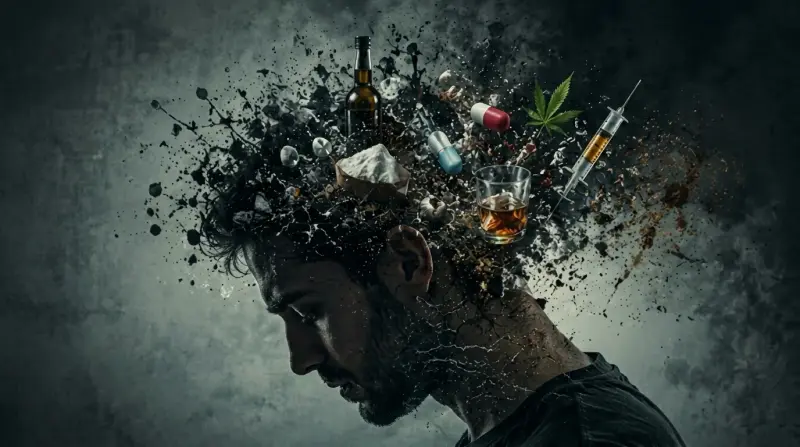
Is addiction simply a matter of weak willpower? The truth is far more complex. Addiction is a psychological condition influenced by a blend of genetic, social, and emotional factors. It’s easy to cast blame on those who use substances or engage in addictive behaviors without considering the circumstances that led them there. In this article, the Tatmeen platform helps you understand the key factors that may contribute to addiction—because we believe that awareness is the first step to prevention and effective treatment.
What Is Addiction and What Are Its Types?
Addiction is a chronic condition in which a person loses control over the use of a substance or a behavior despite its negative consequences. It can take many forms—from substance addiction such as drugs and alcohol to behavioral addictions like gambling or compulsive shopping. Interestingly, behavioral addiction can be just as harmful as substance addiction, trapping individuals in a compulsive cycle that drains their energy and time.
Understanding Addiction as a Psychological Disorder
Addiction stems from a malfunction in the brain’s reward system. Repeated exposure to a substance or behavior triggers the release of dopamine, the "pleasure" chemical. Over time, the brain craves increasingly higher doses of this “reward” to feel balanced. At this stage, the person loses the ability to stop or reduce their behavior despite its damaging effects.
The Role of Genetics in the Development of Addiction
Some people ask: "Is there a biological reason why certain individuals are more vulnerable to addiction?" The answer: Genetics can account for 40–60% of a person’s likelihood to develop addiction. In other words, someone may inherit a genetic predisposition that affects the brain’s reward circuitry.
Inherited impulsivity and tolerance: Some people have a genetic makeup that makes them more impulsive or prone to risky behavior, increasing their susceptibility to addiction.
Environmental interaction: However, genetics is not destiny. Environmental and psychological factors often determine whether this genetic predisposition will be activated.
Genetics Is Not Destiny
Even if someone carries genes that make them more vulnerable to addiction, this does not mean they are doomed to become addicted. Early education, family support, and awareness can prevent genetic risk from developing into a full-blown addiction.
Social and Emotional Environment: The Hidden Trigger
A person’s surrounding environment plays a pivotal role in either encouraging or preventing addiction. From family to society, school to workplace—each setting presents its own risks or protections. Growing up in an environment that encourages drug use or fails to offer healthy alternatives for recreation increases the likelihood of addiction.
Family stressors: Lack of emotional warmth or parental conflict and substance use can put children on a similar path.
Peer pressure: The influence of peers can push someone to try addictive behaviors to gain social acceptance.
Economic stress: Poverty or prolonged unemployment can lead to feelings of despair, making escape through addiction seem like a comforting option.
Psychological Factors
Environmental influences aren't just external—they also include emotional and mental vulnerabilities. When someone lacks healthy ways to cope with stress or emotional pain, addiction can sneak in as a seemingly easy, but ultimately harmful, solution.
Addiction Doesn’t Arise from Nothing: Childhood Trauma as a Prime Example
Childhood trauma is one of the most overlooked yet significant causes of addiction. When children endure experiences such as neglect, verbal or physical abuse, or abandonment, they often develop negative thought patterns and feelings of worthlessness. According to Tatmeen’s experts, this can lead to a strong need to escape painful emotions—making addiction a temporary refuge that turns into a long-term trap.
Long-term impact: Studies show that children exposed to trauma are at higher risk of developing addiction later in life due to the psychological disturbances caused by those early experiences.
Early intervention: Experts recommend addressing trauma as soon as it's identified. The longer trauma remains untreated, the deeper the wounds grow and the more likely they are to evolve into addiction.
Turning Pain Into a Drive for Recovery
The silver lining is that family and community support, combined with psychological therapy, can help individuals overcome trauma and replace addiction with healthier coping strategies. Book your session with Tatmeen today and let us help you restore meaning to your life.
Personality Traits and Psychological Readiness
While some individuals are genetically or environmentally predisposed to addiction, personal traits and coping styles also play a role. For instance, someone who is anxious or socially fearful may be more likely to seek relief through addictive behaviors.
Problem-solving style: Choosing quick fixes like substance use instead of constructive coping alternatives.
Self-esteem: Individuals with low self-worth may turn to addiction as a way to seek pleasure or a sense of identity.
The Role of a Positive Treatment Culture
A supportive, therapeutic culture encourages individuals to speak openly about their struggles and explore healthier ways to face them. Awareness and openness can prevent addiction or stop it in its early stages.
Tatmeen’s Comprehensive Approach to Addiction
Tatmeen emphasizes the importance of addressing addiction from all angles: genetics, environment, trauma, and psychology. That’s why the platform offers consultation sessions with specialists who explore family history, social context, and personality traits. Clients can choose session times that fit their schedule, all with the confidentiality and convenience of online access.
Online sessions: Ensure complete privacy and ease of repeated contact with the therapist.
Integrated treatment plan: Includes individual and (if desired) group sessions to treat the root cause—not just the symptoms—of addiction.
Ongoing care: Regular follow-ups help maintain progress and reduce the risk of relapse even after initial recovery.
An Empathetic, Nonjudgmental Approach
These steps offer individuals deeper insight into the reasons behind their addiction—whether genetic, environmental, or psychological—and guide them toward safe recovery. Tatmeen is built on a core belief: addiction is a treatable illness, not a stigma to be hidden from. Patients receive the compassion and support they need to overcome fear and take the next step toward healing.
If you feel drawn toward destructive behaviors or know someone who may be at risk of addiction, look beyond the surface—what’s the real driver? Uncovering that driver gets you halfway to the solution. Tatmeen’s secure and compassionate online services could be your gateway to a life free from addiction. Book your consultation today and take your first step toward a brighter, addiction-free life.
Frequently Asked Questions
Can someone develop an addiction without any family history?
Yes. While genetics play a role, addiction can also result from challenging life experiences, emotional trauma, or environmental stressors—even without a direct genetic link.
How can I tell if I’m at risk of addiction?
Watch for signs like obsessive thoughts about a substance or behavior, anxiety when you stop, and continuing despite harm. If you notice these red flags, consult a therapist immediately.
How long does addiction recovery take?
Recovery time varies depending on the individual, type, and severity of the addiction. It may take months or even years, especially with professional support like the online therapy provided by Tatmeen. Progress also depends on how committed the person is to treatment.
A writer and researcher specializing in psychiatry, she focuses on mental health and the human emotions we experience but cannot always find the words to name. She writes about us—about humanity and the human experience—and simplifies complex topics to offer content that helps us better understand ourselves and life, ultimately making us feel less alone.
Every Tatmeen article is reviewed by care providers licensed by the Saudi Commission for Health Specialties, so what you read is accurate and trustworthy.
This article builds understanding and does not replace a licensed care provider.
Need someone to talk to?
Tatmeen's licensed care providers are available around the clock, and the app's urgent consultation connects you with one within minutes.
Download Tatmeen to explore care providers and booking options.
Smart matchingFour quick questions suggest the right care provider
Urgent consultationTalk to an available care provider within minutes
Free psychological measuresMore than 20 tests to understand how you are doing
Scan to download
{"data":{"id":"24c0358f-4fe4-4014-ba6c-eb7a6bddd195","slug":"real-causes-of-addiction-truth","arTitle":"هل توجد أسباب للإدمان؟ اكتشف الحقيقة","enTitle":"Are There Real Causes of Addiction? Discover the Truth","thumbnailAltText":"a person clearly suffering from different types of addictions","estimatedReadingTime":5,"likesCount":334,"writer":{"id":"3ab72b74-f26f-4337-9b47-3114b0f90de5","arBio":"كاتبة وباحثة متخصصة في مجال الطب النفسي، تهتم بموضوعات الصحة النفسية وبالمشاعر الإنسانية التي نختبرها ولا نجد دائمًا الكلمات لتسميتها. تكتب عنّا؛ عن الإنسان وتجربته، وتبسّط الموضوعات المعقّدة لتقدّم محتوى يساعدنا على فهم ذواتنا والحياة أكثر، ويجعلنا نشعر بأننا بوحدة أقل.","enBio":"A writer and researcher specializing in psychiatry, she focuses on mental health and the human emotions we experience but cannot always find the words to name. She writes about us—about humanity and the human experience—and simplifies complex topics to offer content that helps us better understand ourselves and life, ultimately making us feel less alone.","user":{"slug":"ayat-alnajar","arFullName":"آيات النجار","enFullName":"Ayat Al-Najjar","publicProfileImageUrl":"https://cdn.tatmeen.sa/public/profile-images/02384455-68fa-40b6-ad05-609fde65cafa/21b9a610dde5dfc6d37af110c23e9c7ab3946be080c281beb000debf4f7d31a6.webp","publicProfileImage96Url":"https://cdn.tatmeen.sa/public/profile-images/02384455-68fa-40b6-ad05-609fde65cafa/21b9a610dde5dfc6d37af110c23e9c7ab3946be080c281beb000debf4f7d31a6-w96.webp","publicProfileImage192Url":"https://cdn.tatmeen.sa/public/profile-images/02384455-68fa-40b6-ad05-609fde65cafa/21b9a610dde5dfc6d37af110c23e9c7ab3946be080c281beb000debf4f7d31a6-w192.webp"}},"arContent":"","enContent":"","productionDocument":{"headings":[],"faqs":[{"question":"Can someone develop an addiction without any family history?","answer":"<p><span style=\"color:#000000\">Yes. While genetics play a role, addiction can also result from challenging life experiences, emotional trauma, or environmental stressors—even without a direct genetic link.</span></p>"},{"question":"How can I tell if I’m at risk of addiction?","answer":"<p><span style=\"color:#000000\">Watch for signs like obsessive thoughts about a substance or behavior, anxiety when you stop, and continuing despite harm. If you notice these red flags, consult a therapist immediately.</span></p>"},{"question":"How long does addiction recovery take?","answer":"<p><span style=\"color:#000000\">Recovery time varies depending on the individual, type, and severity of the addiction. It may take months or even years, especially with professional support like the<u> online therapy provided by Tatmeen.</u> Progress also depends on how committed the person is to treatment.</span></p>"}],"beforeSourcesHtml":"<p></p>","sources":[],"afterSourcesHtml":"","blocks":[{"type":"html","html":"<p><span style=\"color:#000000\">Is addiction simply a matter of weak willpower?<br /> The truth is far more complex. Addiction is a psychological condition influenced by a blend of genetic, social, and emotional factors. It’s easy to cast blame on those who use substances or engage in addictive behaviors without considering the circumstances that led them there. In this article, the Tatmeen platform helps you understand the key factors that may contribute to addiction—because we believe that awareness is the first step to prevention and effective treatment.</span></p><h3><span style=\"color:#000000\"><strong>What Is Addiction and What Are Its Types?</strong></span></h3><p><span style=\"color:#000000\">Addiction is a chronic condition in which a person loses control over the use of a substance or a behavior despite its negative consequences. It can take many forms—from substance addiction such as drugs and alcohol to behavioral addictions like gambling or compulsive shopping. Interestingly, behavioral addiction can be just as harmful as substance addiction, trapping individuals in a compulsive cycle that drains their energy and time.</span></p><h3><span style=\"color:#000000\"><strong>Understanding Addiction as a Psychological Disorder</strong></span></h3><p><span style=\"color:#000000\">Addiction stems from a malfunction in the brain’s reward system. Repeated exposure to a substance or behavior triggers the release of dopamine, the \"pleasure\" chemical. Over time, the brain craves increasingly higher doses of this “reward” to feel balanced. At this stage, the person loses the ability to stop or reduce their behavior despite its damaging effects.</span></p><h3><span style=\"color:#000000\"><strong>The Role of Genetics in the Development of Addiction</strong></span></h3><p><span style=\"color:#000000\">Some people ask: <em>\"Is there a biological reason why certain individuals are more vulnerable to addiction?\"<br /></em> The answer: Genetics can account for 40–60% of a person’s likelihood to develop addiction. In other words, someone may inherit a genetic predisposition that affects the brain’s reward circuitry.</span></p><ul><li><p><span style=\"color:#000000\"><strong>Inherited impulsivity and tolerance:</strong> Some people have a genetic makeup that makes them more impulsive or prone to risky behavior, increasing their susceptibility to addiction.</span></p></li><li><p><span style=\"color:#000000\"><strong>Environmental interaction:</strong> However, genetics is not destiny. Environmental and psychological factors often determine whether this genetic predisposition will be activated.</span></p></li></ul><h4><span style=\"color:#000000\"><strong>Genetics Is Not Destiny</strong></span></h4><p><span style=\"color:#000000\">Even if someone carries genes that make them more vulnerable to addiction, this does not mean they are doomed to become addicted. Early education, family support, and awareness can prevent genetic risk from developing into a full-blown addiction.</span></p><h3><span style=\"color:#000000\"><strong>Social and Emotional Environment: The Hidden Trigger</strong></span></h3><p><span style=\"color:#000000\">A person’s surrounding environment plays a pivotal role in either encouraging or preventing addiction. From family to society, school to workplace—each setting presents its own risks or protections. Growing up in an environment that encourages drug use or fails to offer healthy alternatives for recreation increases the likelihood of addiction.</span></p><ul><li><p><span style=\"color:#000000\"><strong>Family stressors:</strong> Lack of emotional warmth or parental conflict and substance use can put children on a similar path.</span></p></li><li><p><span style=\"color:#000000\"><strong>Peer pressure:</strong> The influence of peers can push someone to try addictive behaviors to gain social acceptance.</span></p></li><li><p><span style=\"color:#000000\"><strong>Economic stress:</strong> Poverty or prolonged unemployment can lead to feelings of despair, making escape through addiction seem like a comforting option.</span></p></li></ul><h3><span style=\"color:#000000\"><strong>Psychological Factors</strong></span></h3><p><span style=\"color:#000000\">Environmental influences aren't just external—they also include emotional and mental vulnerabilities. When someone lacks healthy ways to cope with stress or emotional pain, addiction can sneak in as a seemingly easy, but ultimately harmful, solution.</span></p><h3><span style=\"color:#000000\"><strong>Addiction Doesn’t Arise from Nothing: Childhood Trauma as a Prime Example</strong></span></h3><p><span style=\"color:#000000\">Childhood trauma is one of the most overlooked yet significant causes of addiction. When children endure experiences such as neglect, verbal or physical abuse, or abandonment, they often develop negative thought patterns and feelings of worthlessness. According to <strong>Tatmeen’s</strong> experts, this can lead to a strong need to escape painful emotions—making addiction a temporary refuge that turns into a long-term trap.</span></p><ul><li><p><span style=\"color:#000000\"><strong>Long-term impact:</strong> Studies show that children exposed to trauma are at higher risk of developing addiction later in life due to the psychological disturbances caused by those early experiences.</span></p></li><li><p><span style=\"color:#000000\"><strong>Early intervention:</strong> Experts recommend addressing trauma as soon as it's identified. The longer trauma remains untreated, the deeper the wounds grow and the more likely they are to evolve into addiction.</span></p></li></ul><h4><span style=\"color:#000000\"><strong>Turning Pain Into a Drive for Recovery</strong></span></h4><p><span style=\"color:#000000\">The silver lining is that family and community support, combined with psychological therapy, can help individuals overcome trauma and replace addiction with healthier coping strategies. <strong>Book your session with Tatmeen today</strong> and let us help you restore meaning to your life.</span></p><h3><span style=\"color:#000000\"><strong>Personality Traits and Psychological Readiness</strong></span></h3><p><span style=\"color:#000000\">While some individuals are genetically or environmentally predisposed to addiction, personal traits and coping styles also play a role. For instance, someone who is anxious or socially fearful may be more likely to seek relief through addictive behaviors.</span></p><ul><li><p><span style=\"color:#000000\"><strong>Problem-solving style:</strong> Choosing quick fixes like substance use instead of constructive coping alternatives.</span></p></li><li><p><span style=\"color:#000000\"><strong>Self-esteem:</strong> Individuals with low self-worth may turn to addiction as a way to seek pleasure or a sense of identity.</span></p></li></ul><h3><span style=\"color:#000000\"><strong>The Role of a Positive Treatment Culture</strong></span></h3><p><span style=\"color:#000000\">A supportive, therapeutic culture encourages individuals to speak openly about their struggles and explore healthier ways to face them. Awareness and openness can prevent addiction or stop it in its early stages.</span></p><h3><span style=\"color:#000000\"><strong>Tatmeen’s Comprehensive Approach to Addiction</strong></span></h3><p><span style=\"color:#000000\"><strong>Tatmeen</strong> emphasizes the importance of addressing addiction from all angles: genetics, environment, trauma, and psychology. That’s why the platform offers consultation sessions with specialists who explore family history, social context, and personality traits. Clients can choose session times that fit their schedule, all with the confidentiality and convenience of online access.</span></p><ul><li><p><span style=\"color:#000000\"><strong>Online sessions:</strong> Ensure complete privacy and ease of repeated contact with the therapist.</span></p></li><li><p><span style=\"color:#000000\"><strong>Integrated treatment plan:</strong> Includes individual and (if desired) group sessions to treat the root cause—not just the symptoms—of addiction.</span></p></li><li><p><span style=\"color:#000000\"><strong>Ongoing care:</strong> Regular follow-ups help maintain progress and reduce the risk of relapse even after initial recovery.</span></p></li></ul><h3><span style=\"color:#000000\"><strong>An Empathetic, Nonjudgmental Approach</strong></span></h3><p><span style=\"color:#000000\">These steps offer individuals deeper insight into the reasons behind their addiction—whether genetic, environmental, or psychological—and guide them toward safe recovery. <strong>Tatmeen</strong> is built on a core belief: addiction is a treatable illness, not a stigma to be hidden from. Patients receive the compassion and support they need to overcome fear and take the next step toward healing.</span></p><p><span style=\"color:#000000\">If you feel drawn toward destructive behaviors or know someone who may be at risk of addiction, look beyond the surface—what’s the real driver? Uncovering that driver gets you halfway to the solution. <strong>Tatmeen</strong>’s secure and compassionate online services could be your gateway to a life free from addiction.<br /><strong>Book your consultation today and take your first step toward a brighter, addiction-free life.</strong></span></p>"}],"inlineCtaSignatures":[],"_experienceAliases":{"v":1,"fields":["html","bodyHtml"],"faqs":[0,1,2]}},"createdAt":"2026-05-17T21:00:00.000Z","updatedAt":"2026-09-07T21:05:00.038Z","disorderGroups":[{"id":"04bd234d-c176-4ba1-afb3-9e9c05d0e648","slug":"addictions-and-compulsive-behaviors","arName":"الإدمان والسلوكيات القهرية","enName":"Addictions & Compulsive Behaviors"},{"id":"1e82772d-a1a7-4d29-b475-be9d6b67ae02","slug":"common-mental-issues","arName":"اضطرابات نفسية شائعة","enName":"Common Mental Issues"}],"reviewer":{"arFullName":"فريق تطمين","enFullName":"Tatmeen team","slug":"tatmeen-team","kind":"organization"},"productionArticle":true,"promotionAllowed":true,"preparedCover":{"src":"https://cdn.tatmeen.sa/public/article-lcp/article-lcp-v2/sha256-e9c40a20f21db70f32830fe5725e1f98f6f0106b1d9272637e527e1072d11072/800-90dcca22b1daea275292d39179c83cc802a3ef281cce26aac7d3024a71bbcc7c.avif","fallback":"https://cdn.tatmeen.sa/public/article-lcp/article-lcp-v2/sha256-e9c40a20f21db70f32830fe5725e1f98f6f0106b1d9272637e527e1072d11072/800-adb6417d50257036a47cdda8ee6f6950c20f4bbbffc262ae82f33c2c27835a71.webp","directUrl":"https://cdn.tatmeen.sa/blog-cover/Tatmeen-1779126774931.webp","isGolden":true,"avifSrcset":"https://cdn.tatmeen.sa/public/article-lcp/article-lcp-v2/sha256-e9c40a20f21db70f32830fe5725e1f98f6f0106b1d9272637e527e1072d11072/400-282bfa00018fb40efc0850d8698f7c4237c33832de0da48e316a04c7d21602f9.avif 400w, https://cdn.tatmeen.sa/public/article-lcp/article-lcp-v2/sha256-e9c40a20f21db70f32830fe5725e1f98f6f0106b1d9272637e527e1072d11072/640-852cd6b9ff095f032689e9a457472d6a567576272ce44280d6c843681d7fb1ca.avif 640w, https://cdn.tatmeen.sa/public/article-lcp/article-lcp-v2/sha256-e9c40a20f21db70f32830fe5725e1f98f6f0106b1d9272637e527e1072d11072/800-90dcca22b1daea275292d39179c83cc802a3ef281cce26aac7d3024a71bbcc7c.avif 800w, https://cdn.tatmeen.sa/public/article-lcp/article-lcp-v2/sha256-e9c40a20f21db70f32830fe5725e1f98f6f0106b1d9272637e527e1072d11072/1200-9a3a71ef91a917e1a26080936e4890bf1c04687e6e4c682640fa034564b889a8.avif 1200w","webpSrcset":"https://cdn.tatmeen.sa/public/article-lcp/article-lcp-v2/sha256-e9c40a20f21db70f32830fe5725e1f98f6f0106b1d9272637e527e1072d11072/400-0f2b71315ceb88b39584d2d467ee65fc041006980e89c9264d44a3bd933fb2c8.webp 400w, https://cdn.tatmeen.sa/public/article-lcp/article-lcp-v2/sha256-e9c40a20f21db70f32830fe5725e1f98f6f0106b1d9272637e527e1072d11072/640-bef721cc9c97939053e139ecd2a236f0d8e4e2456dfa0defe4ddd39b300ee6a6.webp 640w, https://cdn.tatmeen.sa/public/article-lcp/article-lcp-v2/sha256-e9c40a20f21db70f32830fe5725e1f98f6f0106b1d9272637e527e1072d11072/800-adb6417d50257036a47cdda8ee6f6950c20f4bbbffc262ae82f33c2c27835a71.webp 800w, https://cdn.tatmeen.sa/public/article-lcp/article-lcp-v2/sha256-e9c40a20f21db70f32830fe5725e1f98f6f0106b1d9272637e527e1072d11072/1200-c922c633f622cf501f3f658a5e77ee1d4d928fdc18c4b162a7587af1095c2722.webp 1200w","phoneAvifSrcset":"https://cdn.tatmeen.sa/public/article-lcp/article-lcp-v2/sha256-e9c40a20f21db70f32830fe5725e1f98f6f0106b1d9272637e527e1072d11072/400-282bfa00018fb40efc0850d8698f7c4237c33832de0da48e316a04c7d21602f9.avif 400w, https://cdn.tatmeen.sa/public/article-lcp/article-lcp-v2/sha256-e9c40a20f21db70f32830fe5725e1f98f6f0106b1d9272637e527e1072d11072/640-852cd6b9ff095f032689e9a457472d6a567576272ce44280d6c843681d7fb1ca.avif 640w, https://cdn.tatmeen.sa/public/article-lcp/article-lcp-v2/sha256-e9c40a20f21db70f32830fe5725e1f98f6f0106b1d9272637e527e1072d11072/800-90dcca22b1daea275292d39179c83cc802a3ef281cce26aac7d3024a71bbcc7c.avif 800w","phoneWebpSrcset":"https://cdn.tatmeen.sa/public/article-lcp/article-lcp-v2/sha256-e9c40a20f21db70f32830fe5725e1f98f6f0106b1d9272637e527e1072d11072/400-0f2b71315ceb88b39584d2d467ee65fc041006980e89c9264d44a3bd933fb2c8.webp 400w, https://cdn.tatmeen.sa/public/article-lcp/article-lcp-v2/sha256-e9c40a20f21db70f32830fe5725e1f98f6f0106b1d9272637e527e1072d11072/640-bef721cc9c97939053e139ecd2a236f0d8e4e2456dfa0defe4ddd39b300ee6a6.webp 640w, https://cdn.tatmeen.sa/public/article-lcp/article-lcp-v2/sha256-e9c40a20f21db70f32830fe5725e1f98f6f0106b1d9272637e527e1072d11072/800-adb6417d50257036a47cdda8ee6f6950c20f4bbbffc262ae82f33c2c27835a71.webp 800w","width":800,"height":447},"previewTaxonomy":{"groups":[{"id":"04bd234d-c176-4ba1-afb3-9e9c05d0e648","slug":"addictions-and-compulsive-behaviors","arName":"الإدمان والسلوكيات القهرية","enName":"Addictions & Compulsive Behaviors"},{"id":"1e82772d-a1a7-4d29-b475-be9d6b67ae02","slug":"common-mental-issues","arName":"اضطرابات نفسية شائعة","enName":"Common Mental Issues"}],"topics":[{"id":"e135b175-04d3-4f95-bedb-db810907de86","slug":"childhood-trauma","arName":"صدمات الطفولة","enName":"Childhood Trauma","groupSlug":"common-mental-issues","href":"/blog/category/common-mental-issues/childhood-trauma/"},{"id":"6d85534a-2f69-44f0-8697-46aa4b20e04a","slug":"drug-addiction","arName":"إدمان المخدرات","enName":"Drug Addiction","groupSlug":"addictions-and-compulsive-behaviors","href":"/blog/category/addictions-and-compulsive-behaviors/drug-addiction/"}],"tags":[{"id":"a1d36353-cbcb-4907-b913-3069289a3514","slug":"addiction-recovery","arName":"الإدمان والتعافي","enName":"Addiction & Recovery"},{"id":"c2a6e8d3-de9c-435f-8c95-9727e7db14cc","slug":"explainer-awareness","arName":"دليل توعوي / شرح","enName":"Explainer / Awareness Guide"},{"id":"ed48558e-5694-415a-9234-3044a5c29fe5","slug":"cognitive-patterns","arName":"الأنماط الذهنية والتشوهات الإدراكية","enName":"Thinking Patterns & Distortions"}]},"previewProviderRecommendations":[{"id":"278d5ac5-30ff-46ad-97be-c67cdd125836","slug":"dr-mohammed-alamari-8085","arFullName":"د. محمد العماري","enFullName":"Dr. Mohammed Alamari","publicProfileImageUrl":"https://cdn.tatmeen.sa/public/profile-images/278d5ac5-30ff-46ad-97be-c67cdd125836/69bdd11cb01784eed010eb9883403fd6ca4e4afcec739dcd6114fd8b85f133a8.webp","publicProfileImage96Url":"https://cdn.tatmeen.sa/public/profile-images/278d5ac5-30ff-46ad-97be-c67cdd125836/69bdd11cb01784eed010eb9883403fd6ca4e4afcec739dcd6114fd8b85f133a8-w96.webp","publicProfileImage192Url":"https://cdn.tatmeen.sa/public/profile-images/278d5ac5-30ff-46ad-97be-c67cdd125836/69bdd11cb01784eed010eb9883403fd6ca4e4afcec739dcd6114fd8b85f133a8-w192.webp","specialization":{"arName":"طبيب أسرة","enName":"Family Physician"},"profileImageUrl":"https://cdn.tatmeen.sa/public/profile-images/278d5ac5-30ff-46ad-97be-c67cdd125836/69bdd11cb01784eed010eb9883403fd6ca4e4afcec739dcd6114fd8b85f133a8-w192.webp","experienceYears":3,"consultantInfo":{"averageRating":{"average":4},"specialization":{"arGeneralName":"طبيب أسرة","enGeneralName":"Family Physician"}}},{"id":"b7aa8f1e-fdae-426f-a1bf-589bc39d71b1","slug":"hussain-alsayegh-0835","arFullName":"د. حسين الصايغ","enFullName":"Dr. Hussain Alsayegh","publicProfileImageUrl":"https://cdn.tatmeen.sa/public/profile-images/b7aa8f1e-fdae-426f-a1bf-589bc39d71b1/ae60ba4216e401d2d512719d2b2c8e6a9d4c9570de1c01e34eb22f7ae1c7a106.webp","publicProfileImage96Url":"https://cdn.tatmeen.sa/public/profile-images/b7aa8f1e-fdae-426f-a1bf-589bc39d71b1/ae60ba4216e401d2d512719d2b2c8e6a9d4c9570de1c01e34eb22f7ae1c7a106-w96.webp","publicProfileImage192Url":"https://cdn.tatmeen.sa/public/profile-images/b7aa8f1e-fdae-426f-a1bf-589bc39d71b1/ae60ba4216e401d2d512719d2b2c8e6a9d4c9570de1c01e34eb22f7ae1c7a106-w192.webp","specialization":{"arName":"طبيب أسرة","enName":"Family Physician"},"profileImageUrl":"https://cdn.tatmeen.sa/public/profile-images/b7aa8f1e-fdae-426f-a1bf-589bc39d71b1/ae60ba4216e401d2d512719d2b2c8e6a9d4c9570de1c01e34eb22f7ae1c7a106-w192.webp","experienceYears":3,"consultantInfo":{"averageRating":{"average":5},"specialization":{"arGeneralName":"طبيب أسرة","enGeneralName":"Family Physician"}}},{"id":"7771d078-cbd9-4acd-aa51-29cc905753c4","slug":"hatim-jafaari-2902","arFullName":"حاتم جعفرى","enFullName":"Hatim Jafaari","publicProfileImageUrl":"https://cdn.tatmeen.sa/public/profile-images/7771d078-cbd9-4acd-aa51-29cc905753c4/874a489ca72b87dacbde76d8496eef84ca341ee8074b9ec54464cd0a56bbdbe6.webp","publicProfileImage96Url":"https://cdn.tatmeen.sa/public/profile-images/7771d078-cbd9-4acd-aa51-29cc905753c4/874a489ca72b87dacbde76d8496eef84ca341ee8074b9ec54464cd0a56bbdbe6-w96.webp","publicProfileImage192Url":"https://cdn.tatmeen.sa/public/profile-images/7771d078-cbd9-4acd-aa51-29cc905753c4/874a489ca72b87dacbde76d8496eef84ca341ee8074b9ec54464cd0a56bbdbe6-w192.webp","specialization":{"arName":"أخصائي نفسي","enName":"Psychologist"},"profileImageUrl":"https://cdn.tatmeen.sa/public/profile-images/7771d078-cbd9-4acd-aa51-29cc905753c4/874a489ca72b87dacbde76d8496eef84ca341ee8074b9ec54464cd0a56bbdbe6-w192.webp","experienceYears":2,"consultantInfo":{"averageRating":{"average":5},"specialization":{"arGeneralName":"أخصائي نفسي","enGeneralName":"Psychologist"}}}],"previewCareProviders":[{"id":"09364052-c2a9-4c52-9717-7ce2093b8d0a","slug":"kholoud-alharbi-5221","arFullName":"خلود الحربي","enFullName":"Kholoud Alharbi","publicProfileImageUrl":"https://cdn.tatmeen.sa/public/profile-images/09364052-c2a9-4c52-9717-7ce2093b8d0a/4a0aeb81619e351b77f4323e3605a0a00acc7ca3c82ee7cc5ca2c9e8ef716049.webp","publicProfileImage96Url":"https://cdn.tatmeen.sa/public/profile-images/09364052-c2a9-4c52-9717-7ce2093b8d0a/4a0aeb81619e351b77f4323e3605a0a00acc7ca3c82ee7cc5ca2c9e8ef716049-w96.webp","publicProfileImage192Url":"https://cdn.tatmeen.sa/public/profile-images/09364052-c2a9-4c52-9717-7ce2093b8d0a/4a0aeb81619e351b77f4323e3605a0a00acc7ca3c82ee7cc5ca2c9e8ef716049-w192.webp","gender":"FEMALE","specialization":{"arName":"أخصائي نفسي","enName":"Psychologist"}},{"id":"6f037535-1dca-4b50-a8b2-5974b7323286","slug":"salah-althobaiti-9053","arFullName":"صلاح الثبيتي","enFullName":"Salah Althobaiti","publicProfileImageUrl":"https://cdn.tatmeen.sa/public/profile-images/6f037535-1dca-4b50-a8b2-5974b7323286/35b6bd7fad9b1e004c1835803eb9c1b56dcacd380685ec8bff141f0fb888005c.webp","publicProfileImage96Url":"https://cdn.tatmeen.sa/public/profile-images/6f037535-1dca-4b50-a8b2-5974b7323286/35b6bd7fad9b1e004c1835803eb9c1b56dcacd380685ec8bff141f0fb888005c-w96.webp","publicProfileImage192Url":"https://cdn.tatmeen.sa/public/profile-images/6f037535-1dca-4b50-a8b2-5974b7323286/35b6bd7fad9b1e004c1835803eb9c1b56dcacd380685ec8bff141f0fb888005c-w192.webp","gender":"MALE","specialization":{"arName":"أخصائي نفسي","enName":"Psychologist"}},{"id":"3cc806e8-616b-4884-9f21-a75b378580a2","slug":"aisha-al-hashim-8667","arFullName":"عائشة ال هاشم","enFullName":"Aisha Al Hashim","publicProfileImageUrl":"https://cdn.tatmeen.sa/public/profile-images/3cc806e8-616b-4884-9f21-a75b378580a2/27f523d03be4dcfa1f6a79f70c1773887434e698990d214cd990caec56a44798.webp","publicProfileImage96Url":"https://cdn.tatmeen.sa/public/profile-images/3cc806e8-616b-4884-9f21-a75b378580a2/27f523d03be4dcfa1f6a79f70c1773887434e698990d214cd990caec56a44798-w96.webp","publicProfileImage192Url":"https://cdn.tatmeen.sa/public/profile-images/3cc806e8-616b-4884-9f21-a75b378580a2/27f523d03be4dcfa1f6a79f70c1773887434e698990d214cd990caec56a44798-w192.webp","gender":"FEMALE","specialization":{"arName":"أخصائي نفسي","enName":"Psychologist"}},{"id":"db2ce1a0-9325-4471-b7ce-eb2e811c30a3","slug":"amer-qutub-2441","arFullName":"عامر قطب","enFullName":"Amer Qutub","publicProfileImageUrl":"https://cdn.tatmeen.sa/public/profile-images/db2ce1a0-9325-4471-b7ce-eb2e811c30a3/80580f99bfd7fe2b2a9cf8eed73ab532f5086d1efe053b0aa57358c1ce004261.webp","publicProfileImage96Url":"https://cdn.tatmeen.sa/public/profile-images/db2ce1a0-9325-4471-b7ce-eb2e811c30a3/80580f99bfd7fe2b2a9cf8eed73ab532f5086d1efe053b0aa57358c1ce004261-w96.webp","publicProfileImage192Url":"https://cdn.tatmeen.sa/public/profile-images/db2ce1a0-9325-4471-b7ce-eb2e811c30a3/80580f99bfd7fe2b2a9cf8eed73ab532f5086d1efe053b0aa57358c1ce004261-w192.webp","gender":"MALE","specialization":{"arName":"أخصائي نفسي","enName":"Psychologist"}},{"id":"94765496-dbdf-4631-a01b-7df5f788668d","slug":"abdullrahman-alhamoudi-3045","arFullName":"عبدالرحمن الحمودي","enFullName":"Abdulrahman Alhamoudi","publicProfileImageUrl":"https://cdn.tatmeen.sa/public/profile-images/94765496-dbdf-4631-a01b-7df5f788668d/2d49f6b6493c564afb6f50b6c3634231dff3a5cf8353acfab393d1b2a88037d1.webp","publicProfileImage96Url":"https://cdn.tatmeen.sa/public/profile-images/94765496-dbdf-4631-a01b-7df5f788668d/2d49f6b6493c564afb6f50b6c3634231dff3a5cf8353acfab393d1b2a88037d1-w96.webp","publicProfileImage192Url":"https://cdn.tatmeen.sa/public/profile-images/94765496-dbdf-4631-a01b-7df5f788668d/2d49f6b6493c564afb6f50b6c3634231dff3a5cf8353acfab393d1b2a88037d1-w192.webp","gender":"MALE","specialization":{"arName":"أخصائي نفسي","enName":"Psychologist"}},{"id":"618dba89-5b70-4b46-8304-741b7ac8ecd3","slug":"abdullah-mari-1311","arFullName":"عبدالله مرعي","enFullName":"Abdullah Mari","publicProfileImageUrl":"https://cdn.tatmeen.sa/public/profile-images/618dba89-5b70-4b46-8304-741b7ac8ecd3/6b4a3bfb59f8a304ca79083b32859b46baad2e1d692974a47c02c1f66bd11129.webp","publicProfileImage96Url":"https://cdn.tatmeen.sa/public/profile-images/618dba89-5b70-4b46-8304-741b7ac8ecd3/6b4a3bfb59f8a304ca79083b32859b46baad2e1d692974a47c02c1f66bd11129-w96.webp","publicProfileImage192Url":"https://cdn.tatmeen.sa/public/profile-images/618dba89-5b70-4b46-8304-741b7ac8ecd3/6b4a3bfb59f8a304ca79083b32859b46baad2e1d692974a47c02c1f66bd11129-w192.webp","gender":"MALE","specialization":{"arName":"أخصائي نفسي","enName":"Psychologist"}},{"id":"3b50a5d5-e795-407f-8676-fd7f0e1bb7a0","slug":"abdulaziz-bin-hudayan-4940","arFullName":"عبدالعزيز بن هديان","enFullName":"Abdulaziz Bin Hudayan","publicProfileImageUrl":"https://cdn.tatmeen.sa/public/profile-images/3b50a5d5-e795-407f-8676-fd7f0e1bb7a0/710ff0fe1fb00cdb5042092e27b7910b480a439b02251ecded62d7758eefce95.webp","publicProfileImage96Url":"https://cdn.tatmeen.sa/public/profile-images/3b50a5d5-e795-407f-8676-fd7f0e1bb7a0/710ff0fe1fb00cdb5042092e27b7910b480a439b02251ecded62d7758eefce95-w96.webp","publicProfileImage192Url":"https://cdn.tatmeen.sa/public/profile-images/3b50a5d5-e795-407f-8676-fd7f0e1bb7a0/710ff0fe1fb00cdb5042092e27b7910b480a439b02251ecded62d7758eefce95-w192.webp","gender":"MALE","specialization":{"arName":"أخصائي نفسي","enName":"Psychologist"}},{"id":"d4ffcb6b-90a7-45b6-b941-964866f4564b","slug":"dhaifallah-alhumaidi-1092","arFullName":"ضيف الله الحميدي","enFullName":"Dhaifallah Alhumaidi","publicProfileImageUrl":"https://cdn.tatmeen.sa/public/profile-images/d4ffcb6b-90a7-45b6-b941-964866f4564b/1817171c5828a9b57d6c30d12332cf154e335272548bc90a6e8456d74d356956.webp","publicProfileImage96Url":"https://cdn.tatmeen.sa/public/profile-images/d4ffcb6b-90a7-45b6-b941-964866f4564b/1817171c5828a9b57d6c30d12332cf154e335272548bc90a6e8456d74d356956-w96.webp","publicProfileImage192Url":"https://cdn.tatmeen.sa/public/profile-images/d4ffcb6b-90a7-45b6-b941-964866f4564b/1817171c5828a9b57d6c30d12332cf154e335272548bc90a6e8456d74d356956-w192.webp","gender":"MALE","specialization":{"arName":"أخصائي نفسي","enName":"Psychologist"}}],"previewDownload":{"href":"/download","title":{"ar":"خطوة واحدة لأجلك، ابدأ الآن","en":"One step for you, start now"},"description":{"ar":"حمّل تطبيق تطمين لاستكشاف مقدمي الرعاية وخيارات الحجز.","en":"Download Tatmeen to explore care providers and booking options."},"posterSrc":"/images/home/cta-ar-new-1.webp","videoSrc":"/images/home/cta-ar-new-1.mp4","videoPosterSrc":"/images/home/cta-ar-new-1.webp","videoPosterEnSrc":"/images/home/cta-en-new-1.webp","videoType":"video/mp4","appStoreHref":"https://apps.apple.com/us/app/tatmeen-%D8%AA%D8%B7%D9%85%D9%8A%D9%86/id6473836983","googlePlayHref":"https://play.google.com/store/apps/details?id=com.TatmeenApp.user&hl=en"},"previewRelatedArticles":[{"id":"e6bea74c-deaa-4d2c-9a50-5f831ed35383","slug":"behavioral-addiction-symptoms-you-may-not-know","route":"/blog/behavioral-addiction-symptoms-you-may-not-know/","title":{"ar":"قد تكون مدمنًا دون أن تدرك: الإدمان السلوكي وأعراضه","en":"You May Be Addicted Without Knowing It: Behavioral Addiction and Its Symptoms"},"image":"https://cdn.tatmeen.sa/public/article-lcp/article-lcp-v2/sha256-5ed8c6a3519251428d18dfd80d9898d5ba2b2db4ef7fe189df8737b2f09543b7/800-cea739664ad9cef98996f0e64bdd9ed2c267e045dbd2337c1504754b56f06f72.webp","directImageFallback":"https://cdn.tatmeen.sa/blog-cover/Tatmeen-1776391892780.webp","arThumbnailAltText":"Man suffering from digital addiction","thumbnailAltText":"Man suffering from digital addiction","topic":{"label":{"ar":"الإدمان والسلوكيات القهرية","en":"Addictions & Compulsive Behaviors"}},"readingTimeMinutes":5},{"id":"a17c78b7-03ae-47c0-90aa-ca4598881bf0","slug":"addiction-recovery-motivation-proven-strategies","route":"/blog/addiction-recovery-motivation-proven-strategies/","title":{"ar":"استراتيجيات مثبتة للبقاء متحفزًا خلال رحلة الإقلاع عن الإدمان","en":"Proven Strategies to Stay Motivated on Your Addiction Recovery Journey"},"image":"https://cdn.tatmeen.sa/public/article-lcp/article-lcp-v2/sha256-957b641f4ee4763946e072c889e89952b7ae53f9415bcf97ca6c678f48088f73/800-154027239cdbb8de6ba6d4a913bb20810c6eb5141fbc3f2b72cb681c757a54d5.webp","directImageFallback":"https://cdn.tatmeen.sa/blog-cover/Tatmeen-1775539257444.webp","arThumbnailAltText":"Single figure climbing a misty mountain path toward a ray of golden sunrise light","thumbnailAltText":"Single figure climbing a misty mountain path toward a ray of golden sunrise light","topic":{"label":{"ar":"الإدمان والسلوكيات القهرية","en":"Addictions & Compulsive Behaviors"}},"readingTimeMinutes":5},{"id":"e3965894-9760-44f5-ae53-c31c5d972570","slug":"feeling_empty_not_sad_hurt_angry","route":"/blog/feeling_empty_not_sad_hurt_angry/","title":{"ar":"لست حزينا ولا مجروحا ولا غاضبا: بل فارغ!","en":"I'm Not Sad, Hurt, or Angry—Just Empty"},"image":"https://cdn.tatmeen.sa/public/article-lcp/article-lcp-v2/sha256-700ea364b0ab89959acfd40446d3cd9f86ec1f8b728ccb93d5d82112dede3911/750-27cac79b02a1d837b12b0db2fcd80eeaa993fe97a735a7fc3d5593d11b378b20.webp","directImageFallback":"https://cdn.tatmeen.sa/blog-cover/1704132898843-loxqznmvgyu-isaac-holmgren-750x400.jpeg","arThumbnailAltText":"Person seen from behind beside a large window, with a car outside","thumbnailAltText":"Person seen from behind beside a large window, with a car outside","topic":{"label":{"ar":"اضطرابات نفسية شائعة","en":"Common Mental Issues"}},"readingTimeMinutes":5},{"id":"27a4b6e3-48f2-4bf4-ab1d-c9d1ccb9241e","slug":"emotional_neglect_in_childhood_how_to_test_for_it","route":"/blog/emotional_neglect_in_childhood_how_to_test_for_it/","title":{"ar":"الإهمال العاطفي أثناء الطفولة، ما هو؟ وكيف تختبر تعرضك له؟","en":"Childhood Emotional Neglect: What It Is and a Self-Test"},"image":"https://cdn.tatmeen.sa/public/article-lcp/article-lcp-v2/sha256-714527f20118dd902b1624da791b5b86c1f6066a8ff0ca0fe6063b200ad99da1/300-e16b1d57a91c8ccbf241447f6364f1b507ebbc9192cae138ab16660a1da44e93.webp","directImageFallback":"https://cdn.tatmeen.sa/blog-cover/1704132597083-curiosity-1910023_1280-1-300x250.jpeg","arThumbnailAltText":"Face and hands peeking over a dark surface against a black background","thumbnailAltText":"Face and hands peeking over a dark surface against a black background","topic":{"label":{"ar":"اضطرابات نفسية شائعة","en":"Common Mental Issues"}},"readingTimeMinutes":5}],"previewRelatedReadStates":{}},"locale":"en","device":"desktop","path":"/en/blog/real-causes-of-addiction-truth/","readingControls":false,"config":{"public":{"BUCKET_URL":"https://cdn.tatmeen.sa/","APP_BASE_URL":"https://tatmeen.sa","intercomAppId":"ppcnu9e3"}}}