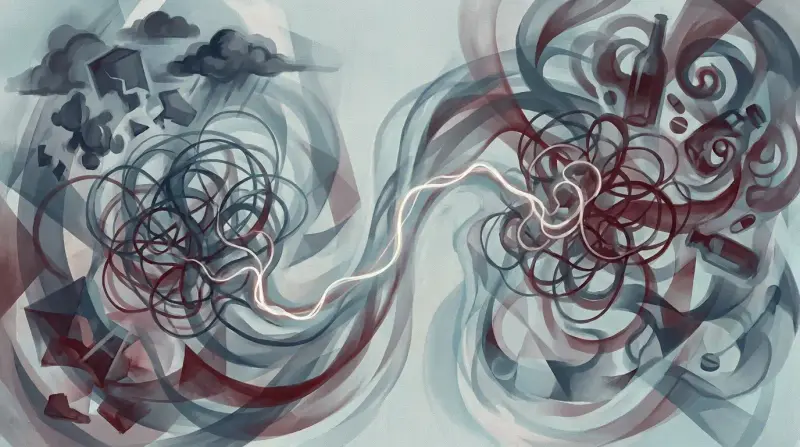
“I do what I need to do, but nothing seems to reach me.” One person might call that emptiness; another might mean loneliness, loss of meaning or feelings that seem distant. The word covers different experiences. It does not supply a cause or diagnosis on its own.
You do not have to feel sad or cry often to deserve help. Begin by describing what changed, rather than forcing yourself to produce a particular emotion.
What does emptiness mean for you?
Choose a description that fits, or use your own. These distinctions are conversation prompts, not a test.
Nearest description
A detail worth adding
I cannot name my feeling
Is a feeling present but hard to describe?
Things I liked are no longer enjoyable
Does this affect one activity or much of your day?
I feel distant from myself, or the world seems unreal
When does it happen? Are there gaps in memory?
I lack company or direction
Is there isolation, a loss or a recent change?
Descriptions can overlap. You can miss companionship and lose enjoyment at the same time. You need not identify an underlying cause before seeking assessment.
Avoid a single explanation
Emptiness can occur around stress, loss or life changes, and can accompany a mood problem or experiences of detachment. NIMH1 lists empty mood and loss of interest among possible depressive symptoms, while explaining the need for a broader assessment and attention to medical conditions and medications that can cause similar symptoms. This does not make every empty feeling depression.
Feeling as though you observe yourself from a distance, or that the world is unreal, is a different experience worth describing in a health appointment. The NHS dissociative-disorders guide2 explains these descriptions. They do not establish a disorder or prove a childhood or trauma-related cause.
Childhood experiences may matter for some people, but “empty” cannot tell us what happened in yours. Emptiness also does not prove you do not love your family or appreciate what you have.
A manageable step while the picture becomes clearer
Choose one basic need you can attend to today: a meal, a more usual bedtime or brief contact with someone safe. If arranging that feels difficult, ask for specific help: someone to sit with you while you eat, help book an appointment or call at an agreed time. The step is not a test of whether your feelings return. Feeling no different afterwards does not mean you failed or that support will be useless.
You could write: “I have felt empty for a while. Could you stay with me or help me arrange an appointment?” If notes help, record when it began, whether it changes through the day and its effect on work, relationships and self-care. Do not force painful memories or intense feelings. Stop meditation or body-focused reflection if it makes you more distressed.
It may be harder to explain when someone says, “But your life is good. Why would you feel like this?” You can answer with what you know: “I know there are good things in my life. What changed is that I do not enjoy them as I used to, and I want to understand that change.” You need not defend every detail of your life before seeking support. If one person does not understand, you can try someone else or arrange a health appointment directly.
When to seek support
Arrange an assessment when emptiness persists, recurs, causes distress or affects sleep, activity or self-care. You do not need to wait a fixed period when the difficulty is significant. Mention health or medication changes; do not stop medication yourself. In Saudi Arabia, 937 offers medical consultation.
If emptiness includes wishing to die or thoughts of self-harm, seek urgent health support and tell someone you trust today. If you are thinking of ending your life right now, contact a health professional immediately for an urgent assessment, even if you have no plan, and ask someone safe to stay with you. If you have injured yourself, have intent or a plan to act, or cannot keep yourself safe, call the Saudi ambulance number 997 or go to the nearest emergency department. An exercise or routine appointment is insufficient in that situation.
“I do not know whether this is sadness; I know I feel empty and it affects my life” is enough to begin a conversation.
Frequently Asked Questions
What does emotional emptiness mean?
The word covers different experiences and does not supply a cause or diagnosis on its own. One person may mean they cannot name their feeling; another, that things they liked are no longer enjoyable, that they feel distant from themselves, or that they lack company or direction. These descriptions can overlap, and you need not identify an underlying cause before seeking assessment.
Is feeling empty a sign of depression?
Not necessarily. Empty mood and loss of interest are listed among possible depressive symptoms, but a broader assessment is needed, with attention to medical conditions and medications that can cause similar symptoms. Not every empty feeling is depression. Arrange an assessment when emptiness persists, recurs, causes distress or affects sleep, activity or self-care. You do not need to wait a fixed period when the difficulty is significant.
Why do I feel empty when my life is good?
Emptiness can occur around stress, loss or life changes, and can accompany a mood problem or experiences of detachment. It does not prove you do not love your family or appreciate what you have. If someone asks why, you can answer with what you know: “I know there are good things in my life. What changed is that I do not enjoy them as I used to, and I want to understand that change.”
What can I do when I feel empty?
Choose one basic need you can attend to today: a meal, a more usual bedtime or brief contact with someone safe. If that feels difficult, ask for specific help, such as someone to sit with you while you eat or help you book an appointment. The step is not a test of whether your feelings return. Do not force painful memories or intense feelings, and stop meditation or body-focused reflection if it makes you more distressed.
When does feeling empty need urgent help?
If emptiness includes wishing to die or thoughts of self-harm, seek urgent health support and tell someone you trust today. If you are thinking of ending your life right now, contact a health professional immediately for an urgent assessment, even if you have no plan, and ask someone safe to stay with you. If you have injured yourself, have intent or a plan to act, or cannot keep yourself safe, call the Saudi ambulance number 997 or go to the nearest emergency department. An exercise or routine appointment is insufficient in that situation.
Content writer and researcher at Tatmeen, writing in Arabic and English about mental health and everyday life, from relationships and stress to work, habits, and family.
Every Tatmeen article is reviewed by care providers licensed by the Saudi Commission for Health Specialties, so what you read is accurate and trustworthy.
This article builds understanding and does not replace a licensed care provider.
Need someone to talk to?
Tatmeen's licensed care providers are available around the clock, and the app's urgent consultation connects you with one within minutes.
Download Tatmeen to explore care providers and booking options.
Smart matchingFour quick questions suggest the right care provider
Urgent consultationTalk to an available care provider within minutes
Free psychological measuresMore than 20 tests to understand how you are doing
Scan to download
{"data":{"id":"e3965894-9760-44f5-ae53-c31c5d972570","slug":"feeling_empty_not_sad_hurt_angry","arTitle":"الفراغ العاطفي: ما الذي يعنيه هذا الشعور؟","enTitle":"Emotional emptiness: what does this feeling mean?","thumbnailAltText":"ثلاثة مشاهد لامرأة في حافلة، وعلى مكتب، وأمام وجبة طعام في المنزل.","estimatedReadingTime":6,"likesCount":0,"writer":{"id":"d3defdb6-4a23-4b03-aad9-a1ecc054aae5","arBio":"كاتب وباحث محتوى في تطمين، يكتب بالعربية والإنجليزية عن الصحة النفسية والحياة اليومية، من العلاقات والضغوط إلى العمل والعادات والأسرة.\n","enBio":"Content writer and researcher at Tatmeen, writing in Arabic and English about mental health and everyday life, from relationships and stress to work, habits, and family.","user":{"slug":"fahad-almalik","arFullName":"فهد المالك","enFullName":"Fahad Almalik","publicProfileImageUrl":"https://cdn.tatmeen.sa/public/profile-images/a34c8028-5847-45de-ab83-a014942bb7d3/675415e988c16442a04af5d3b8899242613a955c44e0364314cc3ff74cbad082.webp","publicProfileImage96Url":"https://cdn.tatmeen.sa/public/profile-images/a34c8028-5847-45de-ab83-a014942bb7d3/675415e988c16442a04af5d3b8899242613a955c44e0364314cc3ff74cbad082-w96.webp","publicProfileImage192Url":"https://cdn.tatmeen.sa/public/profile-images/a34c8028-5847-45de-ab83-a014942bb7d3/675415e988c16442a04af5d3b8899242613a955c44e0364314cc3ff74cbad082-w192.webp"}},"arContent":"","enContent":"","productionDocument":{"headings":[{"id":"article-section-what-does-emptiness-mean-for-you","text":"What does emptiness mean for you?"},{"id":"article-section-avoid-a-single-explanation","text":"Avoid a single explanation"},{"id":"article-section-a-manageable-step-while-the-picture-becomes-clearer","text":"A manageable step while the picture becomes clearer"},{"id":"article-section-when-to-seek-support","text":"When to seek support"}],"faqs":[{"question":"What does emotional emptiness mean?","answer":"<p>The word covers different experiences and does not supply a cause or diagnosis on its own. One person may mean they cannot name their feeling; another, that things they liked are no longer enjoyable, that they feel distant from themselves, or that they lack company or direction. These descriptions can overlap, and you need not identify an underlying cause before seeking assessment.</p>"},{"question":"Is feeling empty a sign of depression?","answer":"<p>Not necessarily. Empty mood and loss of interest are listed among possible depressive symptoms, but a broader assessment is needed, with attention to medical conditions and medications that can cause similar symptoms. Not every empty feeling is depression. Arrange an assessment when emptiness persists, recurs, causes distress or affects sleep, activity or self-care. You do not need to wait a fixed period when the difficulty is significant.</p>"},{"question":"Why do I feel empty when my life is good?","answer":"<p>Emptiness can occur around stress, loss or life changes, and can accompany a mood problem or experiences of detachment. It does not prove you do not love your family or appreciate what you have. If someone asks why, you can answer with what you know: “I know there are good things in my life. What changed is that I do not enjoy them as I used to, and I want to understand that change.”</p>"},{"question":"What can I do when I feel empty?","answer":"<p>Choose one basic need you can attend to today: a meal, a more usual bedtime or brief contact with someone safe. If that feels difficult, ask for specific help, such as someone to sit with you while you eat or help you book an appointment. The step is not a test of whether your feelings return. Do not force painful memories or intense feelings, and stop meditation or body-focused reflection if it makes you more distressed.</p>"},{"question":"When does feeling empty need urgent help?","answer":"<p>If emptiness includes wishing to die or thoughts of self-harm, seek urgent health support and tell someone you trust today. If you are thinking of ending your life right now, contact a health professional immediately for an urgent assessment, even if you have no plan, and ask someone safe to stay with you. If you have injured yourself, have intent or a plan to act, or cannot keep yourself safe, call the Saudi ambulance number 997 or go to the nearest emergency department. An exercise or routine appointment is insufficient in that situation.</p>"}],"beforeSourcesHtml":"\n","sources":[{"title":"NIMH: Depression","href":"https://www.nimh.nih.gov/health/publications/depression","hostname":"nimh.nih.gov"},{"title":"NHS: Dissociative disorders","href":"https://www.nhs.uk/mental-health/conditions/dissociative-disorders/","hostname":"nhs.uk"},{"title":"NHS: Help for suicidal thoughts","href":"https://www.nhs.uk/mental-health/feelings-symptoms-behaviours/behaviours/help-for-suicidal-thoughts/","hostname":"nhs.uk"},{"title":"Saudi Ministry of Health: 937","href":"https://www.moh.gov.sa/937/pages/default.aspx","hostname":"moh.gov.sa"},{"title":"Saudi Red Crescent Authority: ambulance number 997","href":"https://www.srca.gov.sa/en/contact-us/","hostname":"srca.gov.sa"}],"afterSourcesHtml":"\n","blocks":[{"type":"html","html":"<p>“I do what I need to do, but nothing seems to reach me.” One person might call that emptiness; another might mean loneliness, loss of meaning or feelings that seem distant. The word covers different experiences. It does not supply a cause or diagnosis on its own.</p>\n<p>You do not have to feel sad or cry often to deserve help. Begin by describing what changed, rather than forcing yourself to produce a particular emotion.</p>\n<h2 id=\"article-section-what-does-emptiness-mean-for-you\" data-toc-heading tabindex=\"-1\"><span id=\"what-does-emptiness-mean-for-you-1\" aria-hidden=\"true\"></span>What does emptiness mean for you?</h2>\n<p>Choose a description that fits, or use your own. These distinctions are conversation prompts, not a test.</p>\n<div class=\"table-block\"><table>\n<thead>\n<tr>\n<th>Nearest description</th>\n<th>A detail worth adding</th>\n</tr>\n</thead>\n<tbody>\n<tr>\n<td>I cannot name my feeling</td>\n<td>Is a feeling present but hard to describe?</td>\n</tr>\n<tr>\n<td>Things I liked are no longer enjoyable</td>\n<td>Does this affect one activity or much of your day?</td>\n</tr>\n<tr>\n<td>I feel distant from myself, or the world seems unreal</td>\n<td>When does it happen? Are there gaps in memory?</td>\n</tr>\n<tr>\n<td>I lack company or direction</td>\n<td>Is there isolation, a loss or a recent change?</td>\n</tr>\n</tbody>\n</table></div>\n<p>Descriptions can overlap. You can miss companionship and lose enjoyment at the same time. You need not identify an underlying cause before seeking assessment.</p>\n<h2 id=\"article-section-avoid-a-single-explanation\" data-toc-heading tabindex=\"-1\"><span id=\"avoid-a-single-explanation-2\" aria-hidden=\"true\"></span>Avoid a single explanation</h2>\n<p>Emptiness can occur around stress, loss or life changes, and can accompany a mood problem or experiences of detachment. <a href=\"https://www.nimh.nih.gov/health/publications/depression\" target=\"_blank\" rel=\"noopener noreferrer\">NIMH</a> lists empty mood and loss of interest among possible depressive symptoms, while explaining the need for a broader assessment and attention to medical conditions and medications that can cause similar symptoms. This does not make every empty feeling depression.</p>\n<p>Feeling as though you observe yourself from a distance, or that the world is unreal, is a different experience worth describing in a health appointment. The <a href=\"https://www.nhs.uk/mental-health/conditions/dissociative-disorders/\" target=\"_blank\" rel=\"noopener noreferrer\">NHS dissociative-disorders guide</a> explains these descriptions. They do not establish a disorder or prove a childhood or trauma-related cause.</p>\n<p>Childhood experiences may matter for some people, but “empty” cannot tell us what happened in yours. Emptiness also does not prove you do not love your family or appreciate what you have.</p>\n<h2 id=\"article-section-a-manageable-step-while-the-picture-becomes-clearer\" data-toc-heading tabindex=\"-1\"><span id=\"a-manageable-step-while-the-picture-becomes-clearer-3\" aria-hidden=\"true\"></span>A manageable step while the picture becomes clearer</h2>\n<p>Choose one basic need you can attend to today: a meal, a more usual bedtime or brief contact with someone safe. If arranging that feels difficult, ask for specific help: someone to sit with you while you eat, help book an appointment or call at an agreed time. The step is not a test of whether your feelings return. Feeling no different afterwards does not mean you failed or that support will be useless.</p>\n<p>You could write: “I have felt empty for a while. Could you stay with me or help me arrange an appointment?” If notes help, record when it began, whether it changes through the day and its effect on work, relationships and self-care. Do not force painful memories or intense feelings. Stop meditation or body-focused reflection if it makes you more distressed.</p>\n<p>It may be harder to explain when someone says, “But your life is good. Why would you feel like this?” You can answer with what you know: “I know there are good things in my life. What changed is that I do not enjoy them as I used to, and I want to understand that change.” You need not defend every detail of your life before seeking support. If one person does not understand, you can try someone else or arrange a health appointment directly.</p>\n<h2 id=\"article-section-when-to-seek-support\" data-toc-heading tabindex=\"-1\"><span id=\"when-to-seek-support-4\" aria-hidden=\"true\"></span>When to seek support</h2>\n<p>Arrange an assessment when emptiness persists, recurs, causes distress or affects sleep, activity or self-care. You do not need to wait a fixed period when the difficulty is significant. Mention health or medication changes; do not stop medication yourself. In Saudi Arabia, 937 offers medical consultation.</p>\n<p>If emptiness includes wishing to die or thoughts of self-harm, seek urgent health support and tell someone you trust today. If you are thinking of ending your life right now, contact a health professional immediately for an urgent assessment, even if you have no plan, and ask someone safe to stay with you. If you have injured yourself, have intent or a plan to act, or cannot keep yourself safe, call the Saudi ambulance number <strong>997</strong> or go to the nearest emergency department. An exercise or routine appointment is insufficient in that situation.</p>\n<p>“I do not know whether this is sadness; I know I feel empty and it affects my life” is enough to begin a conversation.</p>\n"}],"inlineCtaSignatures":[],"_experienceAliases":{"v":1,"fields":["html","bodyHtml"],"faqs":[0,1,2,3,4]}},"createdAt":"2023-12-31T21:00:00.000Z","updatedAt":"2026-10-30T19:10:35.301Z","disorderGroups":[{"id":"4499a52a-06f8-4022-a64d-304e5eca51cc","slug":"life-challenges-and-stress","arName":"تحديات الحياة والضغوط","enName":"Life Challenges & Stress"}],"reviewer":{"arFullName":"فريق تطمين","enFullName":"Tatmeen team","slug":"tatmeen-team","kind":"organization"},"productionArticle":true,"promotionAllowed":true,"preparedCover":{"src":"https://cdn.tatmeen.sa/public/article-lcp/article-lcp-v2/sha256-952578d990b10a972fafd070fd5e64c6108de9d18d16b77c270484c52d0b389a/800-fc163254dc5420e28b639615019daec332d139ff07a92599f51373d64270c5bf.avif","fallback":"https://cdn.tatmeen.sa/public/article-lcp/article-lcp-v2/sha256-952578d990b10a972fafd070fd5e64c6108de9d18d16b77c270484c52d0b389a/800-ba0eb7d63042cff0266085fbe1a97df31bab8162ff62848ad9ae9cca6d0379a9.webp","directUrl":"https://cdn.tatmeen.sa/blog-cover/0b856710-589b-4af0-bba1-c99a7ab605a0.png","isGolden":true,"avifSrcset":"https://cdn.tatmeen.sa/public/article-lcp/article-lcp-v2/sha256-952578d990b10a972fafd070fd5e64c6108de9d18d16b77c270484c52d0b389a/400-3f7f565b88a36b2b2c041380eb9691fd78e0b4f28e5fc69e13538fb820d1b687.avif 400w, https://cdn.tatmeen.sa/public/article-lcp/article-lcp-v2/sha256-952578d990b10a972fafd070fd5e64c6108de9d18d16b77c270484c52d0b389a/640-1e977ac767a7a99240e64fd5ee2138dcd8d4483550815bea919284f03e6c8567.avif 640w, https://cdn.tatmeen.sa/public/article-lcp/article-lcp-v2/sha256-952578d990b10a972fafd070fd5e64c6108de9d18d16b77c270484c52d0b389a/800-fc163254dc5420e28b639615019daec332d139ff07a92599f51373d64270c5bf.avif 800w, https://cdn.tatmeen.sa/public/article-lcp/article-lcp-v2/sha256-952578d990b10a972fafd070fd5e64c6108de9d18d16b77c270484c52d0b389a/1200-439b651816e9075e627c765996d2a05670bfac54ad57099d3629c4217a94934d.avif 1200w","webpSrcset":"https://cdn.tatmeen.sa/public/article-lcp/article-lcp-v2/sha256-952578d990b10a972fafd070fd5e64c6108de9d18d16b77c270484c52d0b389a/400-542c387083e775cfaba65916ba4f55330844843ba31cc759b30deb869703bab2.webp 400w, https://cdn.tatmeen.sa/public/article-lcp/article-lcp-v2/sha256-952578d990b10a972fafd070fd5e64c6108de9d18d16b77c270484c52d0b389a/640-97260273f604dc637b5509aef7695fdccc693db778e3db26e752aadf6453ec44.webp 640w, https://cdn.tatmeen.sa/public/article-lcp/article-lcp-v2/sha256-952578d990b10a972fafd070fd5e64c6108de9d18d16b77c270484c52d0b389a/800-ba0eb7d63042cff0266085fbe1a97df31bab8162ff62848ad9ae9cca6d0379a9.webp 800w, https://cdn.tatmeen.sa/public/article-lcp/article-lcp-v2/sha256-952578d990b10a972fafd070fd5e64c6108de9d18d16b77c270484c52d0b389a/1200-b96bf807bbcb76614321b13e2691b4aa820a2cc9586eeee9523a9995b11e1b8f.webp 1200w","phoneAvifSrcset":"https://cdn.tatmeen.sa/public/article-lcp/article-lcp-v2/sha256-952578d990b10a972fafd070fd5e64c6108de9d18d16b77c270484c52d0b389a/400-3f7f565b88a36b2b2c041380eb9691fd78e0b4f28e5fc69e13538fb820d1b687.avif 400w, https://cdn.tatmeen.sa/public/article-lcp/article-lcp-v2/sha256-952578d990b10a972fafd070fd5e64c6108de9d18d16b77c270484c52d0b389a/640-1e977ac767a7a99240e64fd5ee2138dcd8d4483550815bea919284f03e6c8567.avif 640w, https://cdn.tatmeen.sa/public/article-lcp/article-lcp-v2/sha256-952578d990b10a972fafd070fd5e64c6108de9d18d16b77c270484c52d0b389a/800-fc163254dc5420e28b639615019daec332d139ff07a92599f51373d64270c5bf.avif 800w","phoneWebpSrcset":"https://cdn.tatmeen.sa/public/article-lcp/article-lcp-v2/sha256-952578d990b10a972fafd070fd5e64c6108de9d18d16b77c270484c52d0b389a/400-542c387083e775cfaba65916ba4f55330844843ba31cc759b30deb869703bab2.webp 400w, https://cdn.tatmeen.sa/public/article-lcp/article-lcp-v2/sha256-952578d990b10a972fafd070fd5e64c6108de9d18d16b77c270484c52d0b389a/640-97260273f604dc637b5509aef7695fdccc693db778e3db26e752aadf6453ec44.webp 640w, https://cdn.tatmeen.sa/public/article-lcp/article-lcp-v2/sha256-952578d990b10a972fafd070fd5e64c6108de9d18d16b77c270484c52d0b389a/800-ba0eb7d63042cff0266085fbe1a97df31bab8162ff62848ad9ae9cca6d0379a9.webp 800w","width":800,"height":533},"previewTaxonomy":{"groups":[{"id":"4499a52a-06f8-4022-a64d-304e5eca51cc","slug":"life-challenges-and-stress","arName":"تحديات الحياة والضغوط","enName":"Life Challenges & Stress"}],"topics":[{"id":"e135b175-04d3-4f95-bedb-db810907de86","slug":"childhood-trauma","arName":"صدمات الطفولة","enName":"Childhood Trauma","groupSlug":"common-mental-issues","href":"/blog/category/common-mental-issues/childhood-trauma/"}],"tags":[{"id":"4171fc4d-7607-4c71-96af-53b7247260de","slug":"emotional-emptiness","arName":"الفراغ العاطفي","enName":"Emotional emptiness"},{"id":"07738784-6495-42b7-819f-22706a2e5ad3","slug":"specialist-diagnosis","arName":"اختيار المختص والتشخيص","enName":"Choosing a Specialist & Diagnosis"},{"id":"c2a6e8d3-de9c-435f-8c95-9727e7db14cc","slug":"explainer-awareness","arName":"دليل توعوي / شرح","enName":"Explainer / Awareness Guide"}]},"previewProviderRecommendations":[{"id":"d754a189-f8c9-4aad-b4aa-a5dbd26c0bd7","slug":"talal-alshowaier-8694","arFullName":"طلال الشويعر","enFullName":"Talal Alshowaier","publicProfileImageUrl":"https://cdn.tatmeen.sa/public/profile-images/d754a189-f8c9-4aad-b4aa-a5dbd26c0bd7/74feb27848a47cf43189f6b5951e06a9b87b08269021d5bab765092fc65fce42.webp","publicProfileImage96Url":"https://cdn.tatmeen.sa/public/profile-images/d754a189-f8c9-4aad-b4aa-a5dbd26c0bd7/74feb27848a47cf43189f6b5951e06a9b87b08269021d5bab765092fc65fce42-w96.webp","publicProfileImage192Url":"https://cdn.tatmeen.sa/public/profile-images/d754a189-f8c9-4aad-b4aa-a5dbd26c0bd7/74feb27848a47cf43189f6b5951e06a9b87b08269021d5bab765092fc65fce42-w192.webp","specialization":{"arName":"أخصائي نفسي","enName":"Psychologist"},"profileImageUrl":"https://cdn.tatmeen.sa/public/profile-images/d754a189-f8c9-4aad-b4aa-a5dbd26c0bd7/74feb27848a47cf43189f6b5951e06a9b87b08269021d5bab765092fc65fce42-w192.webp","experienceYears":3,"consultantInfo":{"averageRating":{"average":5},"specialization":{"arGeneralName":"أخصائي نفسي","enGeneralName":"Psychologist"}}},{"id":"d4ffcb6b-90a7-45b6-b941-964866f4564b","slug":"dhaifallah-alhumaidi-1092","arFullName":"ضيف الله الحميدي","enFullName":"Dhaifallah Alhumaidi","publicProfileImageUrl":"https://cdn.tatmeen.sa/public/profile-images/d4ffcb6b-90a7-45b6-b941-964866f4564b/1817171c5828a9b57d6c30d12332cf154e335272548bc90a6e8456d74d356956.webp","publicProfileImage96Url":"https://cdn.tatmeen.sa/public/profile-images/d4ffcb6b-90a7-45b6-b941-964866f4564b/1817171c5828a9b57d6c30d12332cf154e335272548bc90a6e8456d74d356956-w96.webp","publicProfileImage192Url":"https://cdn.tatmeen.sa/public/profile-images/d4ffcb6b-90a7-45b6-b941-964866f4564b/1817171c5828a9b57d6c30d12332cf154e335272548bc90a6e8456d74d356956-w192.webp","specialization":{"arName":"أخصائي نفسي","enName":"Psychologist"},"profileImageUrl":"https://cdn.tatmeen.sa/public/profile-images/d4ffcb6b-90a7-45b6-b941-964866f4564b/1817171c5828a9b57d6c30d12332cf154e335272548bc90a6e8456d74d356956-w192.webp","experienceYears":3,"consultantInfo":{"averageRating":{"average":5},"specialization":{"arGeneralName":"أخصائي نفسي","enGeneralName":"Psychologist"}}},{"id":"c19c46bb-575a-46d1-9576-9053aba400c6","slug":"dr-fatima-nabil-3746","arFullName":"د. فاطمة الدندن","enFullName":"Dr. Fatima Aldandan","publicProfileImageUrl":"https://cdn.tatmeen.sa/public/profile-images/c19c46bb-575a-46d1-9576-9053aba400c6/972266807796ff0c476e2efcc12caccdb8b279aaabee5398714ecd920ef5dbe9.webp","publicProfileImage96Url":"https://cdn.tatmeen.sa/public/profile-images/c19c46bb-575a-46d1-9576-9053aba400c6/972266807796ff0c476e2efcc12caccdb8b279aaabee5398714ecd920ef5dbe9-w96.webp","publicProfileImage192Url":"https://cdn.tatmeen.sa/public/profile-images/c19c46bb-575a-46d1-9576-9053aba400c6/972266807796ff0c476e2efcc12caccdb8b279aaabee5398714ecd920ef5dbe9-w192.webp","specialization":{"arName":"طبيب نفسي","enName":"Psychiatrist"},"profileImageUrl":"https://cdn.tatmeen.sa/public/profile-images/c19c46bb-575a-46d1-9576-9053aba400c6/972266807796ff0c476e2efcc12caccdb8b279aaabee5398714ecd920ef5dbe9-w192.webp","experienceYears":7,"consultantInfo":{"averageRating":{"average":0},"specialization":{"arGeneralName":"طبيب نفسي","enGeneralName":"Psychiatrist"}}}],"previewCareProviders":[{"id":"09364052-c2a9-4c52-9717-7ce2093b8d0a","slug":"kholoud-alharbi-5221","arFullName":"خلود الحربي","enFullName":"Kholoud Alharbi","publicProfileImageUrl":"https://cdn.tatmeen.sa/public/profile-images/09364052-c2a9-4c52-9717-7ce2093b8d0a/4a0aeb81619e351b77f4323e3605a0a00acc7ca3c82ee7cc5ca2c9e8ef716049.webp","publicProfileImage96Url":"https://cdn.tatmeen.sa/public/profile-images/09364052-c2a9-4c52-9717-7ce2093b8d0a/4a0aeb81619e351b77f4323e3605a0a00acc7ca3c82ee7cc5ca2c9e8ef716049-w96.webp","publicProfileImage192Url":"https://cdn.tatmeen.sa/public/profile-images/09364052-c2a9-4c52-9717-7ce2093b8d0a/4a0aeb81619e351b77f4323e3605a0a00acc7ca3c82ee7cc5ca2c9e8ef716049-w192.webp","gender":"FEMALE","specialization":{"arName":"أخصائي نفسي","enName":"Psychologist"}},{"id":"6f037535-1dca-4b50-a8b2-5974b7323286","slug":"salah-althobaiti-9053","arFullName":"صلاح الثبيتي","enFullName":"Salah Althobaiti","publicProfileImageUrl":"https://cdn.tatmeen.sa/public/profile-images/6f037535-1dca-4b50-a8b2-5974b7323286/35b6bd7fad9b1e004c1835803eb9c1b56dcacd380685ec8bff141f0fb888005c.webp","publicProfileImage96Url":"https://cdn.tatmeen.sa/public/profile-images/6f037535-1dca-4b50-a8b2-5974b7323286/35b6bd7fad9b1e004c1835803eb9c1b56dcacd380685ec8bff141f0fb888005c-w96.webp","publicProfileImage192Url":"https://cdn.tatmeen.sa/public/profile-images/6f037535-1dca-4b50-a8b2-5974b7323286/35b6bd7fad9b1e004c1835803eb9c1b56dcacd380685ec8bff141f0fb888005c-w192.webp","gender":"MALE","specialization":{"arName":"أخصائي نفسي","enName":"Psychologist"}},{"id":"3cc806e8-616b-4884-9f21-a75b378580a2","slug":"aisha-al-hashim-8667","arFullName":"عائشة ال هاشم","enFullName":"Aisha Al Hashim","publicProfileImageUrl":"https://cdn.tatmeen.sa/public/profile-images/3cc806e8-616b-4884-9f21-a75b378580a2/27f523d03be4dcfa1f6a79f70c1773887434e698990d214cd990caec56a44798.webp","publicProfileImage96Url":"https://cdn.tatmeen.sa/public/profile-images/3cc806e8-616b-4884-9f21-a75b378580a2/27f523d03be4dcfa1f6a79f70c1773887434e698990d214cd990caec56a44798-w96.webp","publicProfileImage192Url":"https://cdn.tatmeen.sa/public/profile-images/3cc806e8-616b-4884-9f21-a75b378580a2/27f523d03be4dcfa1f6a79f70c1773887434e698990d214cd990caec56a44798-w192.webp","gender":"FEMALE","specialization":{"arName":"أخصائي نفسي","enName":"Psychologist"}},{"id":"db2ce1a0-9325-4471-b7ce-eb2e811c30a3","slug":"amer-qutub-2441","arFullName":"عامر قطب","enFullName":"Amer Qutub","publicProfileImageUrl":"https://cdn.tatmeen.sa/public/profile-images/db2ce1a0-9325-4471-b7ce-eb2e811c30a3/80580f99bfd7fe2b2a9cf8eed73ab532f5086d1efe053b0aa57358c1ce004261.webp","publicProfileImage96Url":"https://cdn.tatmeen.sa/public/profile-images/db2ce1a0-9325-4471-b7ce-eb2e811c30a3/80580f99bfd7fe2b2a9cf8eed73ab532f5086d1efe053b0aa57358c1ce004261-w96.webp","publicProfileImage192Url":"https://cdn.tatmeen.sa/public/profile-images/db2ce1a0-9325-4471-b7ce-eb2e811c30a3/80580f99bfd7fe2b2a9cf8eed73ab532f5086d1efe053b0aa57358c1ce004261-w192.webp","gender":"MALE","specialization":{"arName":"أخصائي نفسي","enName":"Psychologist"}},{"id":"6043a2b2-c41b-42c8-92bb-881f36083293","slug":"rehab-alharbi-3670","arFullName":"رحاب المعبدي","enFullName":"Rehab Almabadi","publicProfileImageUrl":"https://cdn.tatmeen.sa/public/profile-images/6043a2b2-c41b-42c8-92bb-881f36083293/9f25728f77c844fac517d39615495fdec1cf4c590360b466419ece1bdeb66c2e.webp","publicProfileImage96Url":"https://cdn.tatmeen.sa/public/profile-images/6043a2b2-c41b-42c8-92bb-881f36083293/9f25728f77c844fac517d39615495fdec1cf4c590360b466419ece1bdeb66c2e-w96.webp","publicProfileImage192Url":"https://cdn.tatmeen.sa/public/profile-images/6043a2b2-c41b-42c8-92bb-881f36083293/9f25728f77c844fac517d39615495fdec1cf4c590360b466419ece1bdeb66c2e-w192.webp","gender":"FEMALE","specialization":{"arName":"أخصائي نفسي","enName":"Psychologist"}},{"id":"618dba89-5b70-4b46-8304-741b7ac8ecd3","slug":"abdullah-mari-1311","arFullName":"عبدالله مرعي","enFullName":"Abdullah Mari","publicProfileImageUrl":"https://cdn.tatmeen.sa/public/profile-images/618dba89-5b70-4b46-8304-741b7ac8ecd3/6b4a3bfb59f8a304ca79083b32859b46baad2e1d692974a47c02c1f66bd11129.webp","publicProfileImage96Url":"https://cdn.tatmeen.sa/public/profile-images/618dba89-5b70-4b46-8304-741b7ac8ecd3/6b4a3bfb59f8a304ca79083b32859b46baad2e1d692974a47c02c1f66bd11129-w96.webp","publicProfileImage192Url":"https://cdn.tatmeen.sa/public/profile-images/618dba89-5b70-4b46-8304-741b7ac8ecd3/6b4a3bfb59f8a304ca79083b32859b46baad2e1d692974a47c02c1f66bd11129-w192.webp","gender":"MALE","specialization":{"arName":"أخصائي نفسي","enName":"Psychologist"}},{"id":"94765496-dbdf-4631-a01b-7df5f788668d","slug":"abdullrahman-alhamoudi-3045","arFullName":"عبدالرحمن الحمودي","enFullName":"Abdulrahman Alhamoudi","publicProfileImageUrl":"https://cdn.tatmeen.sa/public/profile-images/94765496-dbdf-4631-a01b-7df5f788668d/2d49f6b6493c564afb6f50b6c3634231dff3a5cf8353acfab393d1b2a88037d1.webp","publicProfileImage96Url":"https://cdn.tatmeen.sa/public/profile-images/94765496-dbdf-4631-a01b-7df5f788668d/2d49f6b6493c564afb6f50b6c3634231dff3a5cf8353acfab393d1b2a88037d1-w96.webp","publicProfileImage192Url":"https://cdn.tatmeen.sa/public/profile-images/94765496-dbdf-4631-a01b-7df5f788668d/2d49f6b6493c564afb6f50b6c3634231dff3a5cf8353acfab393d1b2a88037d1-w192.webp","gender":"MALE","specialization":{"arName":"أخصائي نفسي","enName":"Psychologist"}},{"id":"d4ffcb6b-90a7-45b6-b941-964866f4564b","slug":"dhaifallah-alhumaidi-1092","arFullName":"ضيف الله الحميدي","enFullName":"Dhaifallah Alhumaidi","publicProfileImageUrl":"https://cdn.tatmeen.sa/public/profile-images/d4ffcb6b-90a7-45b6-b941-964866f4564b/1817171c5828a9b57d6c30d12332cf154e335272548bc90a6e8456d74d356956.webp","publicProfileImage96Url":"https://cdn.tatmeen.sa/public/profile-images/d4ffcb6b-90a7-45b6-b941-964866f4564b/1817171c5828a9b57d6c30d12332cf154e335272548bc90a6e8456d74d356956-w96.webp","publicProfileImage192Url":"https://cdn.tatmeen.sa/public/profile-images/d4ffcb6b-90a7-45b6-b941-964866f4564b/1817171c5828a9b57d6c30d12332cf154e335272548bc90a6e8456d74d356956-w192.webp","gender":"MALE","specialization":{"arName":"أخصائي نفسي","enName":"Psychologist"}},{"id":"3b50a5d5-e795-407f-8676-fd7f0e1bb7a0","slug":"abdulaziz-bin-hudayan-4940","arFullName":"عبدالعزيز بن هديان","enFullName":"Abdulaziz Bin Hudayan","publicProfileImageUrl":"https://cdn.tatmeen.sa/public/profile-images/3b50a5d5-e795-407f-8676-fd7f0e1bb7a0/710ff0fe1fb00cdb5042092e27b7910b480a439b02251ecded62d7758eefce95.webp","publicProfileImage96Url":"https://cdn.tatmeen.sa/public/profile-images/3b50a5d5-e795-407f-8676-fd7f0e1bb7a0/710ff0fe1fb00cdb5042092e27b7910b480a439b02251ecded62d7758eefce95-w96.webp","publicProfileImage192Url":"https://cdn.tatmeen.sa/public/profile-images/3b50a5d5-e795-407f-8676-fd7f0e1bb7a0/710ff0fe1fb00cdb5042092e27b7910b480a439b02251ecded62d7758eefce95-w192.webp","gender":"MALE","specialization":{"arName":"أخصائي نفسي","enName":"Psychologist"}}],"previewDownload":{"href":"/download","title":{"ar":"خطوة واحدة لأجلك، ابدأ الآن","en":"One step for you, start now"},"description":{"ar":"حمّل تطبيق تطمين لاستكشاف مقدمي الرعاية وخيارات الحجز.","en":"Download Tatmeen to explore care providers and booking options."},"posterSrc":"/images/home/cta-ar-new-1.webp","videoSrc":"/images/home/cta-ar-new-1.mp4","videoPosterSrc":"/images/home/cta-ar-new-1.webp","videoPosterEnSrc":"/images/home/cta-en-new-1.webp","videoType":"video/mp4","appStoreHref":"https://apps.apple.com/us/app/tatmeen-%D8%AA%D8%B7%D9%85%D9%8A%D9%86/id6473836983","googlePlayHref":"https://play.google.com/store/apps/details?id=com.TatmeenApp.user&hl=en"},"previewRelatedArticles":[{"id":"27dda63f-8458-42d7-971d-8fafbf5bc7a6","slug":"psychological_incongruence_deficiency","route":"/blog/psychological_incongruence_deficiency/","title":{"ar":"الأليكسيثيميا: صعوبة تحديد المشاعر ووصفها","en":"Alexithymia: difficulty identifying and describing feelings"},"image":"https://cdn.tatmeen.sa/public/article-lcp/article-lcp-v2/sha256-2ed07815add6bffd817ebb0a649d984cf363d3dbf047d22835a9095e2292e262/800-d25b87cf539f687136cfebc43e43807c3dc861e8e5355f6bfc3e44c49cd32c87.webp","directImageFallback":"https://cdn.tatmeen.sa/blog-cover/f4c6f416-a17d-4d9b-8c36-667c93f171dc.png","arThumbnailAltText":"امرأة تحيط بها أقنعة متشققة لوجوه بتعابير مختلفة بين ضوء دافئ وسحب داكنة.","thumbnailAltText":"امرأة تحيط بها أقنعة متشققة لوجوه بتعابير مختلفة بين ضوء دافئ وسحب داكنة.","topic":{"label":{"ar":"تنمية الذات","en":"Self-Development"}},"readingTimeMinutes":6},{"id":"d93dbd0d-c365-4d6c-afe4-7c19227b0de6","slug":"childhood-trauma-addiction-science-link","route":"/blog/childhood-trauma-addiction-science-link/","title":{"ar":"العلاقة بين صدمات الطفولة والإدمان: ماذا يقول العلم؟","en":"The Link Between Childhood Trauma and Addiction: What Does Science Say?"},"image":"https://cdn.tatmeen.sa/public/article-lcp/article-lcp-v2/sha256-7cf351aa6208df4aee2f800452dea4e4a71dcf20a4a6786f477e6912747966e0/800-0838535c0557209e3ca130d7e6341c18878e9d2ec8acb9b70e0bfc65d99ff484.webp","directImageFallback":"https://cdn.tatmeen.sa/blog-cover/Tatmeen-1775846507521.webp","arThumbnailAltText":"alt image draft","thumbnailAltText":"alt image draft","topic":{"label":{"ar":"الإدمان والسلوكيات القهرية","en":"Addictions & Compulsive Behaviors"}},"readingTimeMinutes":5},{"id":"7e5699be-3af4-4b2c-b12c-fc37d74808f9","slug":"your_unresolved_childhood_aspect_the_inner_child","route":"/blog/your_unresolved_childhood_aspect_the_inner_child/","title":{"ar":"الطفل الداخلي: معنى الفكرة وحدود استخدامها في العلاج","en":"The inner child: what the idea means and its limits in therapy"},"image":"https://cdn.tatmeen.sa/public/article-lcp/article-lcp-v2/sha256-e76eaaddccc9ee6842cd10c5f20fcea10c91a8092938a35b88bd14341c4629c4/800-b66112753405066525d9cf78996f1ee08a0399ee15e76c5dbd026050e80cb107.webp","directImageFallback":"https://cdn.tatmeen.sa/blog-cover/11fa6a8c-05ad-470e-ac2a-0914cbdbf244.png","arThumbnailAltText":"طفلة في مشهد ملون تجلس بجوار امرأة في مشهد داكن، وظهر كل منهما إلى الأخرى.","thumbnailAltText":"طفلة في مشهد ملون تجلس بجوار امرأة في مشهد داكن، وظهر كل منهما إلى الأخرى.","topic":{"label":{"ar":"تنمية الذات","en":"Self-Development"}},"readingTimeMinutes":4},{"id":"77666ffa-1e2c-4851-9fb8-9cd1d56b89b1","slug":"Treating-psychological-trauma-in-children","route":"/blog/Treating-psychological-trauma-in-children/","title":{"ar":"الصدمات النفسية عند الأطفال: كيف تساعد طفلك؟","en":"Childhood trauma: how to support your child"},"image":"https://cdn.tatmeen.sa/public/article-lcp/article-lcp-v2/sha256-e24c5053db9018cf44a5d3accff933a3d66ef9b4eaf0880675e917232d3a5823/800-3c8711af2c9fc0b8f1346bac7aeeec6cff4cf698d57148162a4736b6dd01acd2.webp","directImageFallback":"https://cdn.tatmeen.sa/blog-cover/c21ed16e-312b-4f9b-be5d-79e5ae27d62b.png","arThumbnailAltText":"دب محشو بين بطانية محاكة وكتب ومكعبات ملونة، وبجواره بيت صغير مضاء ولعبة قوس قزح.","thumbnailAltText":"دب محشو بين بطانية محاكة وكتب ومكعبات ملونة، وبجواره بيت صغير مضاء ولعبة قوس قزح.","topic":{"label":{"ar":"الأطفال والمراهقين","en":"Children & Adolescents"}},"readingTimeMinutes":6}],"previewRelatedReadStates":{}},"locale":"en","device":"desktop","path":"/en/blog/feeling_empty_not_sad_hurt_angry/","readingControls":false,"config":{"public":{"BUCKET_URL":"https://cdn.tatmeen.sa/","APP_BASE_URL":"https://tatmeen.sa","intercomAppId":"ppcnu9e3"}}}