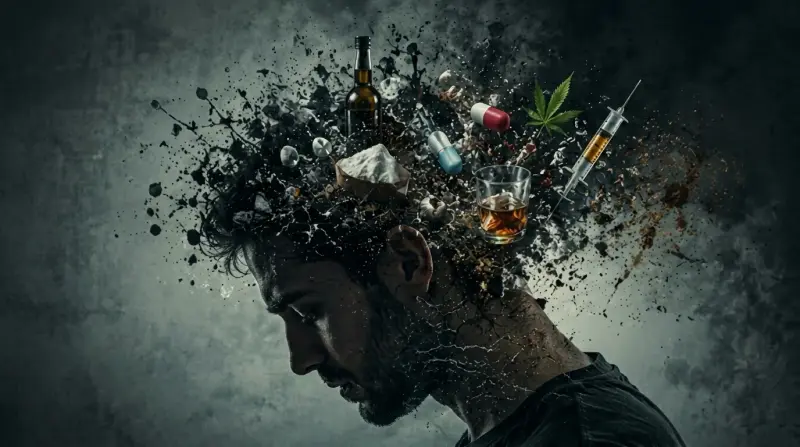
Addiction isn’t limited to chemical substances like drugs or alcohol. According to PMC, any stimulus capable of motivating an individual can become addictive without consuming any substance, known as “behavioral addiction.” This might include spending long hours playing video games, excessive immersion in social media, or even impulsive shopping. How do we differentiate between healthy enjoyment and real addiction? At what point do we shift from a habit to being caught in the circle of addiction? In this article, Tatmeen shines a spotlight on the concept of behavioral addiction, its warning signs, and how to address it before it becomes a significant barrier to our lives and mental health.
What Is Behavioral Addiction?
An Addiction Beyond Chemical Substances
Addiction is defined as a state of dependence and continued engagement in a behavior despite its negative consequences. This means addiction isn’t confined to drug use; even ordinary behaviors and activities can become addictive if practiced excessively, disrupting daily life. Behavioral addiction activates the same neural pathways triggered by drug use.
Common Examples
Some of the most common examples of behavioral addiction include:
Video Games: Some people find themselves spending countless hours in front of screens, neglecting their studies or work.
Compulsive Shopping: Where a person overspends to relieve stress or achieve a temporary sense of satisfaction.
Excessive Social Media Use: Spending massive amounts of time browsing apps and being unable to disconnect, even if it later causes distress.
Overeating: Sometimes referred to as “binge eating disorder,” involving the consumption of large quantities of food as a form of emotional compensation or anxiety relief.
Indicators of Behavioral Addiction: Warning Signs
Loss of Control
The first sign is your inability to stop despite wanting to. If you’ve told yourself “this is the last time” repeatedly yet continue the same activity, there’s a possibility you’ve exceeded normal limits. Specialists at Tatmeen note that this loss of control is a shared factor between behavioral and chemical addictions.
Withdrawal and Emotional Symptoms
You might assume withdrawal is limited to physical symptoms like trembling hands. However, in behavioral addiction, withdrawal manifests as emotional and mental symptoms such as anxiety, depression, irritability, or unstable mood when you can’t engage in the behavior. For example, if you find yourself extremely upset when your internet is down or your game is temporarily inaccessible, this may indicate an addiction.
Neglecting Responsibilities
If you notice you’re postponing important tasks (such as work, studying, or family care) to spend more time on the activity you’re addicted to, that’s a clear sign that addiction has taken top priority in your life. The problem worsens when you repeatedly justify it—saying things like “I’ll catch up later” or “just this once”—until delaying becomes a recurring pattern.
Continuing Despite Negative Consequences
A person might be aware of the harmful effects of their behavior, such as health deterioration, financial losses, or strained social relationships, yet persists with the same routine. This characteristic is a key indicator of addiction: continuing the behavior even though you know its drawbacks.
The Psychological and Social Effects of Behavioral Addiction
Relationship Deterioration
Becoming immersed in any activity too intensely can distance you from real social interaction. As a result, you might experience isolation or conflicts with family and friends. Someone who is addicted to social media, for instance, might feel alienated when meeting people face-to-face, lacking genuine communication skills.
Accompanying Anxiety and Depression
Anxiety and depression often surface as secondary symptoms. An individual addicted to shopping might suffer severe anxiety due to piling debts, then enter a cycle of sadness or guilt that feeds back into the addiction. Specialists at Tatmeen emphasize that behavioral addiction places a psychological burden on the individual, potentially leading to mood disorders requiring specialized treatment.
Financial and Health Troubles
Certain addictions (like gambling) can bring about real financial catastrophes, occasionally leading to economic collapse that impacts the entire family. Meanwhile, an addiction to overeating might result in health issues like obesity, diabetes, and high blood pressure. Similarly, prolonged gaming can affect physical fitness.
Practical Steps for Dealing with Behavioral Addiction
Recognizing the Problem and Early Diagnosis
The first step is acknowledging a real problem exists. Ask yourself questions like: “Can I easily stop?” “Am I neglecting my responsibilities because of this activity?” If your answer is yes, you could be on the verge of addiction. An evaluation by a mental health professional might be helpful to gauge the severity of your condition.
Seeking Professional Help
Don’t hesitate to consult a psychologist or counselor specializing in addictive behaviors. They may recommend certain treatment programs to help you change the thought patterns tied to addiction. When you trust that your therapist will maintain your privacy and avoid judgment, you gain a safe space to address the root causes of the issue. All of this is available through Tatmeen’s therapists. Book your online session via Tatmeen.
Setting Boundaries and Managing Time
One of the simplest initial steps is regulating the time you spend on the addictive behavior. If you’re addicted to video games, limit yourself to one or two hours per day and take concrete measures to block access beyond that limit (such as using site-blocking apps or entrusting the password to someone you trust). These boundaries reduce the chances of mindless overindulgence.
Engaging in Healthy Alternatives
Instead of spending endless hours on addictive behavior, look for alternate activities that provide enjoyment or distraction. You could find exercise, reading, or self-paced learning on online platforms to be effective substitutes. Volunteering also fosters a sense of self-worth and encourages positive social connections.
Support from Family and Friends
Sharing your situation with close friends and family helps you receive emotional and accountability support. If they understand your condition, they can help prevent relapses. For instance, if they notice you’ve gone beyond your set time for gaming, they can remind you and suggest alternatives right away.
In Conclusion
Behavioral addiction often sneaks in quietly, hidden behind fleeting moments of pleasure. Confronting it begins with awareness and then seeking assistance from professionals. Remember, confidentiality is key throughout your recovery journey, ensuring a safe environment for discussing your feelings and needs. Begin your treatment journey and book a session with Tatmeen today. A specialized team will guide you through purposeful steps toward breaking free from the chains of behavioral addiction.
Frequently Asked Questions
Does behavioral addiction only include video games? No, it may also include compulsive shopping, obsessive social media use, gambling, or even binge eating. It involves any behavior that goes beyond normal limits and negatively impacts your life.
How do I distinguish between normal enjoyment and addiction? If a behavior starts hindering your daily responsibilities or you feel anxious and uneasy when not engaging in it, you may have crossed from innocent leisure into addiction. Pay attention to how you feel and honestly assess your habits.
Can I overcome behavioral addiction on my own? Some mild cases may be managed by setting time limits and using self-directed strategies. However, if the issue is more severe or prolonged, seeking professional support is recommended to prevent relapse and address the root causes of the addiction.
Content writer and researcher at Tatmeen, writing in Arabic and English about mental health and everyday life, from relationships and stress to work, habits, and family.
Every Tatmeen article is reviewed by care providers licensed by the Saudi Commission for Health Specialties, so what you read is accurate and trustworthy.
This article builds understanding and does not replace a licensed care provider.
Need someone to talk to?
Tatmeen's licensed care providers are available around the clock, and the app's urgent consultation connects you with one within minutes.
Download Tatmeen to explore care providers and booking options.
Smart matchingFour quick questions suggest the right care provider
Urgent consultationTalk to an available care provider within minutes
Free psychological measuresMore than 20 tests to understand how you are doing
Scan to download
{"data":{"id":"e6bea74c-deaa-4d2c-9a50-5f831ed35383","slug":"behavioral-addiction-symptoms-you-may-not-know","arTitle":"قد تكون مدمنًا دون أن تدرك: الإدمان السلوكي وأعراضه","enTitle":"You May Be Addicted Without Knowing It: Behavioral Addiction and Its Symptoms","thumbnailAltText":"Man suffering from digital addiction","estimatedReadingTime":5,"likesCount":755,"writer":{"id":"d3defdb6-4a23-4b03-aad9-a1ecc054aae5","arBio":"كاتب وباحث محتوى في تطمين، يكتب بالعربية والإنجليزية عن الصحة النفسية والحياة اليومية، من العلاقات والضغوط إلى العمل والعادات والأسرة.\n","enBio":"Content writer and researcher at Tatmeen, writing in Arabic and English about mental health and everyday life, from relationships and stress to work, habits, and family.","user":{"slug":"fahad-almalik","arFullName":"فهد المالك","enFullName":"Fahad Almalik","publicProfileImageUrl":"https://cdn.tatmeen.sa/public/profile-images/a34c8028-5847-45de-ab83-a014942bb7d3/675415e988c16442a04af5d3b8899242613a955c44e0364314cc3ff74cbad082.webp","publicProfileImage96Url":"https://cdn.tatmeen.sa/public/profile-images/a34c8028-5847-45de-ab83-a014942bb7d3/675415e988c16442a04af5d3b8899242613a955c44e0364314cc3ff74cbad082-w96.webp","publicProfileImage192Url":"https://cdn.tatmeen.sa/public/profile-images/a34c8028-5847-45de-ab83-a014942bb7d3/675415e988c16442a04af5d3b8899242613a955c44e0364314cc3ff74cbad082-w192.webp"}},"arContent":"","enContent":"","productionDocument":{"headings":[],"faqs":[],"beforeSourcesHtml":"","sources":[],"afterSourcesHtml":"","blocks":[{"type":"html","html":"<p><span style=\"color:#000000\">Addiction isn’t limited to chemical substances like drugs or alcohol. According to </span><a href=\"https://pmc.ncbi.nlm.nih.gov/articles/PMC3354400/\" target=\"_blank\" rel=\"nofollow noopener noreferrer\"><span style=\"color:#1155cc\"><u>PMC</u></span></a><span style=\"color:#000000\">, any stimulus capable of motivating an individual can become addictive without consuming any substance, known as “behavioral addiction.” This might include spending long hours playing video games, excessive immersion in social media, or even impulsive shopping. How do we differentiate between healthy enjoyment and real addiction? At what point do we shift from a habit to being caught in the circle of addiction? In this article, <strong>Tatmeen</strong> shines a spotlight on the concept of behavioral addiction, its warning signs, and how to address it before it becomes a significant barrier to our lives and mental health.</span></p><p><br /></p><h3><span style=\"color:#000000\"><strong>What Is Behavioral Addiction?</strong></span></h3><h4><span style=\"color:#000000\"><strong>An Addiction Beyond Chemical Substances</strong></span></h4><p><span style=\"color:#000000\">Addiction is defined as a state of dependence and continued engagement in a behavior despite its negative consequences. This means addiction isn’t confined to drug use; even ordinary behaviors and activities can become addictive if practiced excessively, disrupting daily life. Behavioral addiction activates the same neural pathways triggered by drug use.</span></p><h4><span style=\"color:#000000\"><strong>Common Examples</strong></span></h4><p><span style=\"color:#000000\">Some of the most common examples of behavioral addiction include:</span></p><ul><li><p><span style=\"color:#000000\"><strong>Video Games:</strong> Some people find themselves spending countless hours in front of screens, neglecting their studies or work.<br /><br /></span></p></li><li><p><span style=\"color:#000000\"><strong>Compulsive Shopping:</strong> Where a person overspends to relieve stress or achieve a temporary sense of satisfaction.<br /><br /></span></p></li><li><p><span style=\"color:#000000\"><strong>Excessive Social Media Use:</strong> Spending massive amounts of time browsing apps and being unable to disconnect, even if it later causes distress.<br /><br /></span></p></li><li><p><span style=\"color:#000000\"><strong>Overeating:</strong> Sometimes referred to as “<strong><u>binge eating disorder,”</u></strong> involving the consumption of large quantities of food as a form of emotional compensation or anxiety relief.<br /><br /></span></p></li></ul><p><br /></p><h3><span style=\"color:#000000\"><strong>Indicators of Behavioral Addiction: Warning Signs</strong></span></h3><h4><span style=\"color:#000000\"><strong>Loss of Control</strong></span></h4><p><span style=\"color:#000000\">The first sign is your inability to stop despite wanting to. If you’ve told yourself “this is the last time” repeatedly yet continue the same activity, there’s a possibility you’ve exceeded normal limits. Specialists at<strong> Tatmeen</strong> note that this loss of control is a shared factor between behavioral and chemical addictions.</span></p><h4><span style=\"color:#000000\"><strong>Withdrawal and Emotional Symptoms</strong></span></h4><p><span style=\"color:#000000\">You might assume withdrawal is limited to physical symptoms like trembling hands. However, in behavioral addiction, withdrawal manifests as emotional and mental symptoms such as anxiety, depression, irritability, or unstable mood when you can’t engage in the behavior. For example, if you find yourself extremely upset when your internet is down or your game is temporarily inaccessible, this may indicate an addiction.</span></p><h4><span style=\"color:#000000\"><strong>Neglecting Responsibilities</strong></span></h4><p><span style=\"color:#000000\">If you notice you’re postponing important tasks (such as work, studying, or family care) to spend more time on the activity you’re addicted to, that’s a clear sign that addiction has taken top priority in your life. The problem worsens when you repeatedly justify it—saying things like “I’ll catch up later” or “just this once”—until delaying becomes a recurring pattern.</span></p><h4><span style=\"color:#000000\"><strong>Continuing Despite Negative Consequences</strong></span></h4><p><span style=\"color:#000000\">A person might be aware of the harmful effects of their behavior, such as health deterioration, financial losses, or strained social relationships, yet persists with the same routine. This characteristic is a key indicator of addiction: continuing the behavior even though you know its drawbacks.</span></p><p><br /></p><h3><span style=\"color:#000000\"><strong>The Psychological and Social Effects of Behavioral Addiction</strong></span></h3><h4><span style=\"color:#000000\"><strong>Relationship Deterioration</strong></span></h4><p><span style=\"color:#000000\">Becoming immersed in any activity too intensely can distance you from real social interaction. As a result, you might experience isolation or conflicts with family and friends. Someone who is addicted to social media, for instance, might feel alienated when meeting people face-to-face, lacking genuine communication skills.</span></p><h4><span style=\"color:#000000\"><strong>Accompanying Anxiety and Depression</strong></span></h4><p><span style=\"color:#000000\">Anxiety and depression often surface as secondary symptoms. An individual addicted to shopping might suffer severe anxiety due to piling debts, then enter a cycle of sadness or guilt that feeds back into the addiction. Specialists at <strong>Tatmeen</strong> emphasize that behavioral addiction places a psychological burden on the individual, potentially leading to mood disorders requiring specialized treatment.</span></p><h4><span style=\"color:#000000\"><strong>Financial and Health Troubles</strong></span></h4><p><span style=\"color:#000000\">Certain addictions (like gambling) can bring about real financial catastrophes, occasionally leading to economic collapse that impacts the entire family. Meanwhile, an addiction to overeating might result in health issues like obesity, diabetes, and high blood pressure. Similarly, prolonged gaming can affect physical fitness.</span></p><p><br /></p><h3><span style=\"color:#000000\"><strong>Practical Steps for Dealing with Behavioral Addiction</strong></span></h3><h4><span style=\"color:#000000\"><strong>Recognizing the Problem and Early Diagnosis</strong></span></h4><p><span style=\"color:#000000\">The first step is acknowledging a real problem exists. Ask yourself questions like: “Can I easily stop?” “Am I neglecting my responsibilities because of this activity?” If your answer is yes, you could be on the verge of addiction. An evaluation by a mental health professional might be helpful to gauge the severity of your condition.</span></p><h4><span style=\"color:#000000\"><strong>Seeking Professional Help</strong></span></h4><p><span style=\"color:#000000\">Don’t hesitate to consult a psychologist or counselor specializing in addictive behaviors. They may recommend certain treatment programs to help you change the thought patterns tied to addiction. When you trust that your therapist will maintain your privacy and avoid judgment, you gain a safe space to address the root causes of the issue. All of this is available through <strong>Tatmeen</strong>’s therapists.<u> Book your online session via Tatmeen.</u></span></p><h4><span style=\"color:#000000\"><strong>Setting Boundaries and Managing Time</strong></span></h4><p><span style=\"color:#000000\">One of the simplest initial steps is regulating the time you spend on the addictive behavior. If you’re addicted to video games, limit yourself to one or two hours per day and take concrete measures to block access beyond that limit (such as using site-blocking apps or entrusting the password to someone you trust). These boundaries reduce the chances of mindless overindulgence.</span></p><h4><span style=\"color:#000000\"><strong>Engaging in Healthy Alternatives</strong></span></h4><p><span style=\"color:#000000\">Instead of spending endless hours on addictive behavior, look for alternate activities that provide enjoyment or distraction. You could find exercise, reading, or self-paced learning on online platforms to be effective substitutes. Volunteering also fosters a sense of self-worth and encourages positive social connections.</span></p><h4><span style=\"color:#000000\"><strong>Support from Family and Friends</strong></span></h4><p><span style=\"color:#000000\">Sharing your situation with close friends and family helps you receive emotional and accountability support. If they understand your condition, they can help prevent relapses. For instance, if they notice you’ve gone beyond your set time for gaming, they can remind you and suggest alternatives right away.</span></p><p><br /></p><h3><span style=\"color:#000000\"><strong>In Conclusion</strong></span></h3><p><span style=\"color:#000000\">Behavioral addiction often sneaks in quietly, hidden behind fleeting moments of pleasure. Confronting it begins with awareness and then seeking assistance from professionals. Remember, confidentiality is key throughout your recovery journey, ensuring a safe environment for discussing your feelings and needs. Begin your treatment journey and<u> book a session with</u><strong><u> Tatmeen</u></strong><u> today.</u> A specialized team will guide you through purposeful steps toward breaking free from the chains of behavioral addiction.</span></p><p><br /></p><h3><span style=\"color:#000000\"><strong>Frequently Asked Questions</strong></span></h3><ol><li><p><span style=\"color:#000000\"><strong>Does behavioral addiction only include video games?<br /></strong> No, it may also include compulsive shopping, obsessive social media use, gambling, or even binge eating. It involves any behavior that goes beyond normal limits and negatively impacts your life.<br /><br /></span></p></li><li><p><span style=\"color:#000000\"><strong>How do I distinguish between normal enjoyment and addiction?<br /></strong> If a behavior starts hindering your daily responsibilities or you feel anxious and uneasy when not engaging in it, you may have crossed from innocent leisure into addiction. Pay attention to how you feel and honestly assess your habits.<br /><br /></span></p></li><li><p><span style=\"color:#000000\"><strong>Can I overcome behavioral addiction on my own?<br /></strong> Some mild cases may be managed by setting time limits and using self-directed strategies. However, if the issue is more severe or prolonged, seeking professional support is recommended to prevent relapse and address the root causes of the addiction.<br /></span></p></li></ol>"}],"inlineCtaSignatures":[],"_experienceAliases":{"v":1,"fields":["html","bodyHtml"]}},"createdAt":"2025-01-19T22:00:00.000Z","updatedAt":"2026-05-23T22:15:09.839Z","disorderGroups":[{"id":"04bd234d-c176-4ba1-afb3-9e9c05d0e648","slug":"addictions-and-compulsive-behaviors","arName":"الإدمان والسلوكيات القهرية","enName":"Addictions & Compulsive Behaviors"}],"reviewer":{"arFullName":"فريق تطمين","enFullName":"Tatmeen team","slug":"tatmeen-team","kind":"organization"},"productionArticle":true,"promotionAllowed":true,"preparedCover":{"src":"https://cdn.tatmeen.sa/public/article-lcp/article-lcp-v2/sha256-5ed8c6a3519251428d18dfd80d9898d5ba2b2db4ef7fe189df8737b2f09543b7/800-eaf95d8e7713a0a9fba3699ba36154d19465ffdb3a95fa474ac9780df17f1e23.avif","fallback":"https://cdn.tatmeen.sa/public/article-lcp/article-lcp-v2/sha256-5ed8c6a3519251428d18dfd80d9898d5ba2b2db4ef7fe189df8737b2f09543b7/800-cea739664ad9cef98996f0e64bdd9ed2c267e045dbd2337c1504754b56f06f72.webp","directUrl":"https://cdn.tatmeen.sa/blog-cover/Tatmeen-1776391892780.webp","isGolden":true,"avifSrcset":"https://cdn.tatmeen.sa/public/article-lcp/article-lcp-v2/sha256-5ed8c6a3519251428d18dfd80d9898d5ba2b2db4ef7fe189df8737b2f09543b7/400-1afdabf641ef3f07a4c2815d36f0cbc3761f8656edc6c3c81f0f374ae3efc86d.avif 400w, https://cdn.tatmeen.sa/public/article-lcp/article-lcp-v2/sha256-5ed8c6a3519251428d18dfd80d9898d5ba2b2db4ef7fe189df8737b2f09543b7/640-b4e43821dbedbbed01859b41e6b50325ec0037f1d7e8ee8d1523764a5f50cf0b.avif 640w, https://cdn.tatmeen.sa/public/article-lcp/article-lcp-v2/sha256-5ed8c6a3519251428d18dfd80d9898d5ba2b2db4ef7fe189df8737b2f09543b7/800-eaf95d8e7713a0a9fba3699ba36154d19465ffdb3a95fa474ac9780df17f1e23.avif 800w, https://cdn.tatmeen.sa/public/article-lcp/article-lcp-v2/sha256-5ed8c6a3519251428d18dfd80d9898d5ba2b2db4ef7fe189df8737b2f09543b7/1200-3cc21d1ff7b3aa6dee1fd1a152061eeb5637547d6d779e459fde6531271e42c2.avif 1200w","webpSrcset":"https://cdn.tatmeen.sa/public/article-lcp/article-lcp-v2/sha256-5ed8c6a3519251428d18dfd80d9898d5ba2b2db4ef7fe189df8737b2f09543b7/400-b4296a09b980d06b7a2a890d22a2ef649aaae7f08222ba6ace1bfa085bbfedf3.webp 400w, https://cdn.tatmeen.sa/public/article-lcp/article-lcp-v2/sha256-5ed8c6a3519251428d18dfd80d9898d5ba2b2db4ef7fe189df8737b2f09543b7/640-c2543b761d8cf8b2cd4f284821a3c8386da9b47a0911cd09e9182baa1037c38e.webp 640w, https://cdn.tatmeen.sa/public/article-lcp/article-lcp-v2/sha256-5ed8c6a3519251428d18dfd80d9898d5ba2b2db4ef7fe189df8737b2f09543b7/800-cea739664ad9cef98996f0e64bdd9ed2c267e045dbd2337c1504754b56f06f72.webp 800w, https://cdn.tatmeen.sa/public/article-lcp/article-lcp-v2/sha256-5ed8c6a3519251428d18dfd80d9898d5ba2b2db4ef7fe189df8737b2f09543b7/1200-75b9b00053c1a5bd98edd97d5ddc9551d8c359b5f1df1b4d1372181231a2bf29.webp 1200w","phoneAvifSrcset":"https://cdn.tatmeen.sa/public/article-lcp/article-lcp-v2/sha256-5ed8c6a3519251428d18dfd80d9898d5ba2b2db4ef7fe189df8737b2f09543b7/400-1afdabf641ef3f07a4c2815d36f0cbc3761f8656edc6c3c81f0f374ae3efc86d.avif 400w, https://cdn.tatmeen.sa/public/article-lcp/article-lcp-v2/sha256-5ed8c6a3519251428d18dfd80d9898d5ba2b2db4ef7fe189df8737b2f09543b7/640-b4e43821dbedbbed01859b41e6b50325ec0037f1d7e8ee8d1523764a5f50cf0b.avif 640w, https://cdn.tatmeen.sa/public/article-lcp/article-lcp-v2/sha256-5ed8c6a3519251428d18dfd80d9898d5ba2b2db4ef7fe189df8737b2f09543b7/800-eaf95d8e7713a0a9fba3699ba36154d19465ffdb3a95fa474ac9780df17f1e23.avif 800w","phoneWebpSrcset":"https://cdn.tatmeen.sa/public/article-lcp/article-lcp-v2/sha256-5ed8c6a3519251428d18dfd80d9898d5ba2b2db4ef7fe189df8737b2f09543b7/400-b4296a09b980d06b7a2a890d22a2ef649aaae7f08222ba6ace1bfa085bbfedf3.webp 400w, https://cdn.tatmeen.sa/public/article-lcp/article-lcp-v2/sha256-5ed8c6a3519251428d18dfd80d9898d5ba2b2db4ef7fe189df8737b2f09543b7/640-c2543b761d8cf8b2cd4f284821a3c8386da9b47a0911cd09e9182baa1037c38e.webp 640w, https://cdn.tatmeen.sa/public/article-lcp/article-lcp-v2/sha256-5ed8c6a3519251428d18dfd80d9898d5ba2b2db4ef7fe189df8737b2f09543b7/800-cea739664ad9cef98996f0e64bdd9ed2c267e045dbd2337c1504754b56f06f72.webp 800w","width":800,"height":447},"previewTaxonomy":{"groups":[{"id":"04bd234d-c176-4ba1-afb3-9e9c05d0e648","slug":"addictions-and-compulsive-behaviors","arName":"الإدمان والسلوكيات القهرية","enName":"Addictions & Compulsive Behaviors"}],"topics":[],"tags":[{"id":"a1d36353-cbcb-4907-b913-3069289a3514","slug":"addiction-recovery","arName":"الإدمان والتعافي","enName":"Addiction & Recovery"},{"id":"c2a6e8d3-de9c-435f-8c95-9727e7db14cc","slug":"explainer-awareness","arName":"دليل توعوي / شرح","enName":"Explainer / Awareness Guide"}]},"previewProviderRecommendations":[{"id":"445e4202-3b8e-4a4a-9d66-e4cb6de8c06d","slug":"dr-hassan-alasmari-5437","arFullName":"د. حسن الأسمري","enFullName":"Dr. Hassan Alasmari","publicProfileImageUrl":"https://cdn.tatmeen.sa/public/profile-images/445e4202-3b8e-4a4a-9d66-e4cb6de8c06d/e861463908ecb593816d7861c6d4e71484f7fb828e10765ffed9dafbbd0c26e0.webp","publicProfileImage96Url":"https://cdn.tatmeen.sa/public/profile-images/445e4202-3b8e-4a4a-9d66-e4cb6de8c06d/e861463908ecb593816d7861c6d4e71484f7fb828e10765ffed9dafbbd0c26e0-w96.webp","publicProfileImage192Url":"https://cdn.tatmeen.sa/public/profile-images/445e4202-3b8e-4a4a-9d66-e4cb6de8c06d/e861463908ecb593816d7861c6d4e71484f7fb828e10765ffed9dafbbd0c26e0-w192.webp","specialization":{"arName":"طبيب أسرة","enName":"Family Physician"},"profileImageUrl":"https://cdn.tatmeen.sa/public/profile-images/445e4202-3b8e-4a4a-9d66-e4cb6de8c06d/e861463908ecb593816d7861c6d4e71484f7fb828e10765ffed9dafbbd0c26e0-w192.webp","experienceYears":7,"consultantInfo":{"averageRating":{"average":0},"specialization":{"arGeneralName":"طبيب أسرة","enGeneralName":"Family Physician"}}},{"id":"07982fec-1441-415e-924f-22789d91a6ea","slug":"rayan-mgarry-6315","arFullName":"د. ريان مجري","enFullName":"Dr. Rayan Mgarry","publicProfileImageUrl":"https://cdn.tatmeen.sa/public/profile-images/07982fec-1441-415e-924f-22789d91a6ea/6de515adcc5cfa9a010fc52a7c8f27c06662bae5bc4ab58546e75e2b871813a6.webp","publicProfileImage96Url":"https://cdn.tatmeen.sa/public/profile-images/07982fec-1441-415e-924f-22789d91a6ea/6de515adcc5cfa9a010fc52a7c8f27c06662bae5bc4ab58546e75e2b871813a6-w96.webp","publicProfileImage192Url":"https://cdn.tatmeen.sa/public/profile-images/07982fec-1441-415e-924f-22789d91a6ea/6de515adcc5cfa9a010fc52a7c8f27c06662bae5bc4ab58546e75e2b871813a6-w192.webp","specialization":{"arName":"طبيب أسرة","enName":"Family Physician"},"profileImageUrl":"https://cdn.tatmeen.sa/public/profile-images/07982fec-1441-415e-924f-22789d91a6ea/6de515adcc5cfa9a010fc52a7c8f27c06662bae5bc4ab58546e75e2b871813a6-w192.webp","experienceYears":5,"consultantInfo":{"averageRating":{"average":0},"specialization":{"arGeneralName":"طبيب أسرة","enGeneralName":"Family Physician"}}},{"id":"d15ca13e-7ba5-4a7c-8402-41fe069e628f","slug":"sarah-alsubaie-5965","arFullName":"د. ساره السبيعي","enFullName":"Dr. Sarah Alsubaie","publicProfileImageUrl":"","publicProfileImage96Url":"","publicProfileImage192Url":"","specialization":{"arName":"طبيب أسرة","enName":"Family Physician"},"profileImageUrl":"","experienceYears":8,"consultantInfo":{"averageRating":{"average":0},"specialization":{"arGeneralName":"طبيب أسرة","enGeneralName":"Family Physician"}}}],"previewCareProviders":[{"id":"09364052-c2a9-4c52-9717-7ce2093b8d0a","slug":"kholoud-alharbi-5221","arFullName":"خلود الحربي","enFullName":"Kholoud Alharbi","publicProfileImageUrl":"https://cdn.tatmeen.sa/public/profile-images/09364052-c2a9-4c52-9717-7ce2093b8d0a/4a0aeb81619e351b77f4323e3605a0a00acc7ca3c82ee7cc5ca2c9e8ef716049.webp","publicProfileImage96Url":"https://cdn.tatmeen.sa/public/profile-images/09364052-c2a9-4c52-9717-7ce2093b8d0a/4a0aeb81619e351b77f4323e3605a0a00acc7ca3c82ee7cc5ca2c9e8ef716049-w96.webp","publicProfileImage192Url":"https://cdn.tatmeen.sa/public/profile-images/09364052-c2a9-4c52-9717-7ce2093b8d0a/4a0aeb81619e351b77f4323e3605a0a00acc7ca3c82ee7cc5ca2c9e8ef716049-w192.webp","gender":"FEMALE","specialization":{"arName":"أخصائي نفسي","enName":"Psychologist"}},{"id":"6f037535-1dca-4b50-a8b2-5974b7323286","slug":"salah-althobaiti-9053","arFullName":"صلاح الثبيتي","enFullName":"Salah Althobaiti","publicProfileImageUrl":"https://cdn.tatmeen.sa/public/profile-images/6f037535-1dca-4b50-a8b2-5974b7323286/35b6bd7fad9b1e004c1835803eb9c1b56dcacd380685ec8bff141f0fb888005c.webp","publicProfileImage96Url":"https://cdn.tatmeen.sa/public/profile-images/6f037535-1dca-4b50-a8b2-5974b7323286/35b6bd7fad9b1e004c1835803eb9c1b56dcacd380685ec8bff141f0fb888005c-w96.webp","publicProfileImage192Url":"https://cdn.tatmeen.sa/public/profile-images/6f037535-1dca-4b50-a8b2-5974b7323286/35b6bd7fad9b1e004c1835803eb9c1b56dcacd380685ec8bff141f0fb888005c-w192.webp","gender":"MALE","specialization":{"arName":"أخصائي نفسي","enName":"Psychologist"}},{"id":"3cc806e8-616b-4884-9f21-a75b378580a2","slug":"aisha-al-hashim-8667","arFullName":"عائشة ال هاشم","enFullName":"Aisha Al Hashim","publicProfileImageUrl":"https://cdn.tatmeen.sa/public/profile-images/3cc806e8-616b-4884-9f21-a75b378580a2/27f523d03be4dcfa1f6a79f70c1773887434e698990d214cd990caec56a44798.webp","publicProfileImage96Url":"https://cdn.tatmeen.sa/public/profile-images/3cc806e8-616b-4884-9f21-a75b378580a2/27f523d03be4dcfa1f6a79f70c1773887434e698990d214cd990caec56a44798-w96.webp","publicProfileImage192Url":"https://cdn.tatmeen.sa/public/profile-images/3cc806e8-616b-4884-9f21-a75b378580a2/27f523d03be4dcfa1f6a79f70c1773887434e698990d214cd990caec56a44798-w192.webp","gender":"FEMALE","specialization":{"arName":"أخصائي نفسي","enName":"Psychologist"}},{"id":"db2ce1a0-9325-4471-b7ce-eb2e811c30a3","slug":"amer-qutub-2441","arFullName":"عامر قطب","enFullName":"Amer Qutub","publicProfileImageUrl":"https://cdn.tatmeen.sa/public/profile-images/db2ce1a0-9325-4471-b7ce-eb2e811c30a3/80580f99bfd7fe2b2a9cf8eed73ab532f5086d1efe053b0aa57358c1ce004261.webp","publicProfileImage96Url":"https://cdn.tatmeen.sa/public/profile-images/db2ce1a0-9325-4471-b7ce-eb2e811c30a3/80580f99bfd7fe2b2a9cf8eed73ab532f5086d1efe053b0aa57358c1ce004261-w96.webp","publicProfileImage192Url":"https://cdn.tatmeen.sa/public/profile-images/db2ce1a0-9325-4471-b7ce-eb2e811c30a3/80580f99bfd7fe2b2a9cf8eed73ab532f5086d1efe053b0aa57358c1ce004261-w192.webp","gender":"MALE","specialization":{"arName":"أخصائي نفسي","enName":"Psychologist"}},{"id":"94765496-dbdf-4631-a01b-7df5f788668d","slug":"abdullrahman-alhamoudi-3045","arFullName":"عبدالرحمن الحمودي","enFullName":"Abdulrahman Alhamoudi","publicProfileImageUrl":"https://cdn.tatmeen.sa/public/profile-images/94765496-dbdf-4631-a01b-7df5f788668d/2d49f6b6493c564afb6f50b6c3634231dff3a5cf8353acfab393d1b2a88037d1.webp","publicProfileImage96Url":"https://cdn.tatmeen.sa/public/profile-images/94765496-dbdf-4631-a01b-7df5f788668d/2d49f6b6493c564afb6f50b6c3634231dff3a5cf8353acfab393d1b2a88037d1-w96.webp","publicProfileImage192Url":"https://cdn.tatmeen.sa/public/profile-images/94765496-dbdf-4631-a01b-7df5f788668d/2d49f6b6493c564afb6f50b6c3634231dff3a5cf8353acfab393d1b2a88037d1-w192.webp","gender":"MALE","specialization":{"arName":"أخصائي نفسي","enName":"Psychologist"}},{"id":"618dba89-5b70-4b46-8304-741b7ac8ecd3","slug":"abdullah-mari-1311","arFullName":"عبدالله مرعي","enFullName":"Abdullah Mari","publicProfileImageUrl":"https://cdn.tatmeen.sa/public/profile-images/618dba89-5b70-4b46-8304-741b7ac8ecd3/6b4a3bfb59f8a304ca79083b32859b46baad2e1d692974a47c02c1f66bd11129.webp","publicProfileImage96Url":"https://cdn.tatmeen.sa/public/profile-images/618dba89-5b70-4b46-8304-741b7ac8ecd3/6b4a3bfb59f8a304ca79083b32859b46baad2e1d692974a47c02c1f66bd11129-w96.webp","publicProfileImage192Url":"https://cdn.tatmeen.sa/public/profile-images/618dba89-5b70-4b46-8304-741b7ac8ecd3/6b4a3bfb59f8a304ca79083b32859b46baad2e1d692974a47c02c1f66bd11129-w192.webp","gender":"MALE","specialization":{"arName":"أخصائي نفسي","enName":"Psychologist"}},{"id":"d8fb937b-ad65-4b6f-a65b-276ad8258fed","slug":"azza-alharbi-7286","arFullName":"عزه الحربي","enFullName":"Azza Alharbi","publicProfileImageUrl":"https://cdn.tatmeen.sa/public/profile-images/d8fb937b-ad65-4b6f-a65b-276ad8258fed/378a8ab30f4087833263c41fb2c3102028cbe6bb9655172d7b3439ee1d6b0800.webp","publicProfileImage96Url":"https://cdn.tatmeen.sa/public/profile-images/d8fb937b-ad65-4b6f-a65b-276ad8258fed/378a8ab30f4087833263c41fb2c3102028cbe6bb9655172d7b3439ee1d6b0800-w96.webp","publicProfileImage192Url":"https://cdn.tatmeen.sa/public/profile-images/d8fb937b-ad65-4b6f-a65b-276ad8258fed/378a8ab30f4087833263c41fb2c3102028cbe6bb9655172d7b3439ee1d6b0800-w192.webp","gender":"FEMALE","specialization":{"arName":"أخصائي نفسي","enName":"Psychologist"}},{"id":"d4ffcb6b-90a7-45b6-b941-964866f4564b","slug":"dhaifallah-alhumaidi-1092","arFullName":"ضيف الله الحميدي","enFullName":"Dhaifallah Alhumaidi","publicProfileImageUrl":"https://cdn.tatmeen.sa/public/profile-images/d4ffcb6b-90a7-45b6-b941-964866f4564b/1817171c5828a9b57d6c30d12332cf154e335272548bc90a6e8456d74d356956.webp","publicProfileImage96Url":"https://cdn.tatmeen.sa/public/profile-images/d4ffcb6b-90a7-45b6-b941-964866f4564b/1817171c5828a9b57d6c30d12332cf154e335272548bc90a6e8456d74d356956-w96.webp","publicProfileImage192Url":"https://cdn.tatmeen.sa/public/profile-images/d4ffcb6b-90a7-45b6-b941-964866f4564b/1817171c5828a9b57d6c30d12332cf154e335272548bc90a6e8456d74d356956-w192.webp","gender":"MALE","specialization":{"arName":"أخصائي نفسي","enName":"Psychologist"}}],"previewDownload":{"href":"/download","title":{"ar":"خطوة واحدة لأجلك، ابدأ الآن","en":"One step for you, start now"},"description":{"ar":"حمّل تطبيق تطمين لاستكشاف مقدمي الرعاية وخيارات الحجز.","en":"Download Tatmeen to explore care providers and booking options."},"posterSrc":"/images/home/cta-ar-new-1.webp","videoSrc":"/images/home/cta-ar-new-1.mp4","videoPosterSrc":"/images/home/cta-ar-new-1.webp","videoPosterEnSrc":"/images/home/cta-en-new-1.webp","videoType":"video/mp4","appStoreHref":"https://apps.apple.com/us/app/tatmeen-%D8%AA%D8%B7%D9%85%D9%8A%D9%86/id6473836983","googlePlayHref":"https://play.google.com/store/apps/details?id=com.TatmeenApp.user&hl=en"},"previewRelatedArticles":[{"id":"46d22e48-3074-4cd0-b80a-72b2b4657b5c","slug":"Addiction-Symptoms-Treatment-Types-and-Stages","route":"/blog/Addiction-Symptoms-Treatment-Types-and-Stages/","title":{"ar":"الإدمان - أعراض وعلاج وأنواع بدايته و ما هي مراحله","en":"Addiction: Types, Causes, Symptoms, Stages, and Treatment"},"image":"https://cdn.tatmeen.sa/public/article-lcp/article-lcp-v2/sha256-705c4d2fe4b700c588023f408f033c1e7ad877780d56f3d54b7310a5283d0d81/599-bb1c5b2d693683a4273ca2ba7dbc32232697a112d8cd2aed14ab53599540cea7.webp","directImageFallback":"https://cdn.tatmeen.sa/blog-cover/1706455905072-Tatmeen-98.jpg","arThumbnailAltText":"Hand hovering above a syringe, scattered pills, white powder, and a lighter","thumbnailAltText":"Hand hovering above a syringe, scattered pills, white powder, and a lighter","topic":{"label":{"ar":"الإدمان والسلوكيات القهرية","en":"Addictions & Compulsive Behaviors"}},"readingTimeMinutes":5},{"id":"24c0358f-4fe4-4014-ba6c-eb7a6bddd195","slug":"real-causes-of-addiction-truth","route":"/blog/real-causes-of-addiction-truth/","title":{"ar":"هل توجد أسباب للإدمان؟ اكتشف الحقيقة","en":"Are There Real Causes of Addiction? Discover the Truth"},"image":"https://cdn.tatmeen.sa/public/article-lcp/article-lcp-v2/sha256-e9c40a20f21db70f32830fe5725e1f98f6f0106b1d9272637e527e1072d11072/800-adb6417d50257036a47cdda8ee6f6950c20f4bbbffc262ae82f33c2c27835a71.webp","directImageFallback":"https://cdn.tatmeen.sa/blog-cover/Tatmeen-1779126774931.webp","arThumbnailAltText":"a person clearly suffering from different types of addictions","thumbnailAltText":"a person clearly suffering from different types of addictions","topic":{"label":{"ar":"الإدمان والسلوكيات القهرية","en":"Addictions & Compulsive Behaviors"}},"readingTimeMinutes":5},{"id":"a3743355-382b-4308-8c9f-4532676b78d4","slug":"how-addicted-brain-works","route":"/blog/how-addicted-brain-works/","title":{"ar":"كيف يعمل العقل البشري الذي تغلب عليه الإدمان","en":"How the Addicted Brain Works"},"image":"https://cdn.tatmeen.sa/public/article-lcp/article-lcp-v2/sha256-043a51d3cb149bd1cf8002b4d2e9ca7a1fbc529e7909daeeb647bc085812c950/800-c9a30e15dbc7527a3e264ea299b55366683b8cb836dcf07402e32d84c6404de7.webp","directImageFallback":"https://cdn.tatmeen.sa/blog-cover/Tatmeen-1779041583813.webp","arThumbnailAltText":"an illustration of a human brain split in half one half is healthy and the other half is in shambles due to addiction","thumbnailAltText":"an illustration of a human brain split in half one half is healthy and the other half is in shambles due to addiction","topic":{"label":{"ar":"الإدمان والسلوكيات القهرية","en":"Addictions & Compulsive Behaviors"}},"readingTimeMinutes":5},{"id":"a17c78b7-03ae-47c0-90aa-ca4598881bf0","slug":"addiction-recovery-motivation-proven-strategies","route":"/blog/addiction-recovery-motivation-proven-strategies/","title":{"ar":"استراتيجيات مثبتة للبقاء متحفزًا خلال رحلة الإقلاع عن الإدمان","en":"Proven Strategies to Stay Motivated on Your Addiction Recovery Journey"},"image":"https://cdn.tatmeen.sa/public/article-lcp/article-lcp-v2/sha256-957b641f4ee4763946e072c889e89952b7ae53f9415bcf97ca6c678f48088f73/800-154027239cdbb8de6ba6d4a913bb20810c6eb5141fbc3f2b72cb681c757a54d5.webp","directImageFallback":"https://cdn.tatmeen.sa/blog-cover/Tatmeen-1775539257444.webp","arThumbnailAltText":"Single figure climbing a misty mountain path toward a ray of golden sunrise light","thumbnailAltText":"Single figure climbing a misty mountain path toward a ray of golden sunrise light","topic":{"label":{"ar":"الإدمان والسلوكيات القهرية","en":"Addictions & Compulsive Behaviors"}},"readingTimeMinutes":5}],"previewRelatedReadStates":{}},"locale":"en","device":"desktop","path":"/en/blog/behavioral-addiction-symptoms-you-may-not-know/","readingControls":false,"config":{"public":{"BUCKET_URL":"https://cdn.tatmeen.sa/","APP_BASE_URL":"https://tatmeen.sa","intercomAppId":"ppcnu9e3"}}}