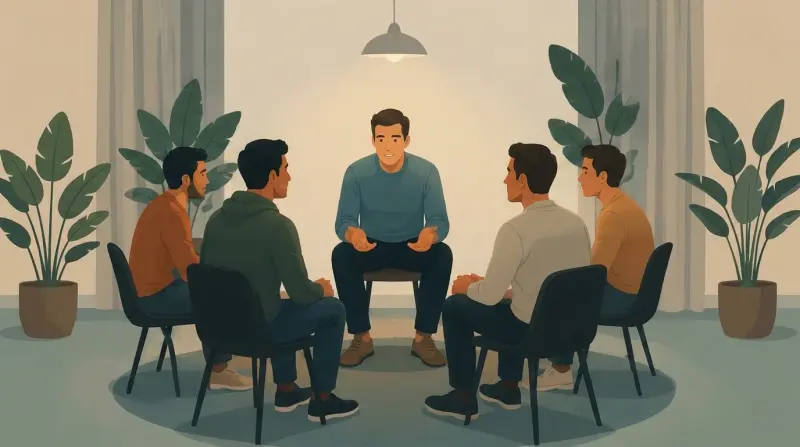
A man—especially in Arab societies—is often surrounded by unrealistic and unfair expectations when it comes to expressing emotions. Every human being, man or woman, has the right to a safe space in which to voice their feelings, particularly the heavy ones. While society may treat this openness as weakness, real strength lies in acknowledging emotions rather than suppressing them. In this article, Tatmeen shines a light on the importance of breaking the wall of silence that encloses many men, insisting that expressing feelings does not diminish masculinity. A man who shares his burdens lays the groundwork for a new generation that places human emotions where they rightfully belong.
Societal Constraints and the Traditional Image of Men
We were raised on a narrow stereotype that reduces manhood to perpetual stoicism, as though sadness and tears were a disgrace to men. The un-crying father became an entrenched model, and familiar phrases like “Don’t cry, you’re a man” seeped into our collective consciousness until they became an unspoken rule.
According to studies, this stereotype piles additional pressure on men, pushing them to hide their feelings for fear of criticism or loss of respect. Tatmeen’s experts note that the journey toward liberation from these shackles starts with re-examining the very notion of “strength.” Expressing pain is not weakness; it is part of the psychological maturation that moves a person toward inner balance and stability.
The Psychological Consequences of Not Expressing Emotions
When a man is forced to choke back his tears again and again, heavy layers of anxiety and tension accumulate inside him. Constant suppression fuels a sense of isolation that can grow into depression or sudden outbursts of anger. A man—first and foremost a human being—needs a safe outlet to share his crises and joys without fear of judgment. This outlet is even more crucial in our Arab societies, which still, to a large extent, treat men’s emotional displays with sensitivity. The resulting psychological pressure undermines long-term family life, career satisfaction, and overall quality of life.
How Expressing Emotions Redefines Masculinity
To some, admitting feelings seems at odds with a strong personality; in truth, the opposite is true. When a man can accurately name his emotions—be it sadness, anxiety, or frustration—he takes a major step toward emotional maturity. A study in the Sociology of Health & Illness shows that recognizing and sharing emotions strengthens social bonds and boosts resilience in the face of life’s pressures.
Tatmeen emphasizes that redefining manhood requires society to broaden the concept of “strength” to include emotional intelligence. The ability to identify and articulate feelings is a vital psychological skill that bolsters a man’s self-confidence and lends him a more influential presence at home and at work. Deep self-awareness—understanding the psyche’s ups and downs—grants a genuine masculinity built on consciousness and human empathy.
And Finally…
Allowing oneself free expression is a natural extension of the courage to acknowledge psychological needs—a profoundly important kind of bravery. If social pressures are depriving you of that freedom, consider booking a session with Tatmeen today. It is a chance to discover tools that help you balance your many roles—as husband, father, son, employee, and friend—without feeling alone in your struggle against preconceived molds.
Frequently Asked Questions
Is expressing emotions a sign of weakness in men?
Quite the opposite. The ability to express feelings requires great courage and self-awareness. Showing sadness, anxiety, or even joy signals emotional maturity, not weakness.
When should a man seek psychological counseling?
If stress dominates his life or he struggles to carry out daily activities, it may be time to talk to a professional. Professional counseling guides emotions and helps develop coping skills for pressure.
How can I support a friend under emotional strain who is afraid to open up?
Show genuine empathy without judgment and encourage him to talk about his worries. You might suggest a specialized counseling session or accompany him in his first steps. Above all, never belittle his feelings or label him weak, no matter how fragile his situation appears.
A writer and researcher specializing in psychiatry, she focuses on mental health and the human emotions we experience but cannot always find the words to name. She writes about us—about humanity and the human experience—and simplifies complex topics to offer content that helps us better understand ourselves and life, ultimately making us feel less alone.
Every Tatmeen article is reviewed by care providers licensed by the Saudi Commission for Health Specialties, so what you read is accurate and trustworthy.
This article builds understanding and does not replace a licensed care provider.
Need someone to talk to?
Tatmeen's licensed care providers are available around the clock, and the app's urgent consultation connects you with one within minutes.
Download Tatmeen to explore care providers and booking options.
Smart matchingFour quick questions suggest the right care provider
Urgent consultationTalk to an available care provider within minutes
Free psychological measuresMore than 20 tests to understand how you are doing
Scan to download
{"data":{"id":"b45b1df6-1f37-48a4-9139-37bfbe49e584","slug":"breaking-stigma-men-not-expressing-emotions","arTitle":"كسر الوصمة المجتمعية عن عدم إفصاح الرجال عن مشاعرهم","enTitle":"Breaking the Social Stigma Around Men Not Expressing Their Emotions","thumbnailAltText":"a group of 5 men sitting together watching the sunset","estimatedReadingTime":5,"likesCount":212,"writer":{"id":"3ab72b74-f26f-4337-9b47-3114b0f90de5","arBio":"كاتبة وباحثة متخصصة في مجال الطب النفسي، تهتم بموضوعات الصحة النفسية وبالمشاعر الإنسانية التي نختبرها ولا نجد دائمًا الكلمات لتسميتها. تكتب عنّا؛ عن الإنسان وتجربته، وتبسّط الموضوعات المعقّدة لتقدّم محتوى يساعدنا على فهم ذواتنا والحياة أكثر، ويجعلنا نشعر بأننا بوحدة أقل.","enBio":"A writer and researcher specializing in psychiatry, she focuses on mental health and the human emotions we experience but cannot always find the words to name. She writes about us—about humanity and the human experience—and simplifies complex topics to offer content that helps us better understand ourselves and life, ultimately making us feel less alone.","user":{"slug":"ayat-alnajar","arFullName":"آيات النجار","enFullName":"Ayat Al-Najjar","publicProfileImageUrl":"https://cdn.tatmeen.sa/public/profile-images/02384455-68fa-40b6-ad05-609fde65cafa/21b9a610dde5dfc6d37af110c23e9c7ab3946be080c281beb000debf4f7d31a6.webp","publicProfileImage96Url":"https://cdn.tatmeen.sa/public/profile-images/02384455-68fa-40b6-ad05-609fde65cafa/21b9a610dde5dfc6d37af110c23e9c7ab3946be080c281beb000debf4f7d31a6-w96.webp","publicProfileImage192Url":"https://cdn.tatmeen.sa/public/profile-images/02384455-68fa-40b6-ad05-609fde65cafa/21b9a610dde5dfc6d37af110c23e9c7ab3946be080c281beb000debf4f7d31a6-w192.webp"}},"arContent":"","enContent":"","productionDocument":{"headings":[{"id":"article-section-societal-constraints-and-the-traditional-image-of-men","text":"Societal Constraints and the Traditional Image of Men"},{"id":"article-section-the-psychological-consequences-of-not-expressing-emotions","text":"The Psychological Consequences of Not Expressing Emotions"},{"id":"article-section-how-expressing-emotions-redefines-masculinity","text":"How Expressing Emotions Redefines Masculinity"},{"id":"article-section-and-finally","text":"And Finally…"}],"faqs":[{"question":"Is expressing emotions a sign of weakness in men?","answer":"<p><span style=\"color:#000000\">Quite the opposite. The ability to express feelings requires great courage and self-awareness. Showing sadness, anxiety, or even joy signals emotional maturity, not weakness.</span></p>"},{"question":"When should a man seek psychological counseling?","answer":"<p><span style=\"color:#000000\">If stress dominates his life or he struggles to carry out daily activities, it may be time to talk to a professional. Professional counseling guides emotions and helps develop coping skills for pressure.</span></p>"},{"question":"How can I support a friend under emotional strain who is afraid to open up?","answer":"<p><span style=\"color:#000000\">Show genuine empathy without judgment and encourage him to talk about his worries. You might suggest a specialized counseling session or accompany him in his first steps. Above all, never belittle his feelings or label him weak, no matter how fragile his situation appears.</span></p>"}],"beforeSourcesHtml":"<p></p>","sources":[],"afterSourcesHtml":"","blocks":[{"type":"html","html":"<p><span style=\"color:#000000\">A man—especially in Arab societies—is often surrounded by unrealistic and unfair expectations when it comes to expressing emotions. Every human being, man or woman, has the right to a safe space in which to voice their feelings, particularly the heavy ones. While society may treat this openness as weakness, real strength lies in acknowledging emotions rather than suppressing them. In this article, <strong>Tatmeen</strong> shines a light on the importance of breaking the wall of silence that encloses many men, insisting that expressing feelings does not diminish masculinity. A man who shares his burdens lays the groundwork for a new generation that places human emotions where they rightfully belong.</span></p><h2 id=\"article-section-societal-constraints-and-the-traditional-image-of-men\" data-toc-heading tabindex=\"-1\"><span id=\"societal-constraints-and-the-traditional-image-of-men-1\" aria-hidden=\"true\"></span><span style=\"color:#000000\"><strong>Societal Constraints and the Traditional Image of Men</strong></span></h2><p><span style=\"color:#000000\">We were raised on a narrow stereotype that reduces manhood to perpetual stoicism, as though sadness and tears were a disgrace to men. The un-crying father became an entrenched model, and familiar phrases like “Don’t cry, you’re a man” seeped into our collective consciousness until they became an unspoken rule.</span></p><p><span style=\"color:#000000\">According to studies, this stereotype piles additional pressure on men, pushing them to hide their feelings for fear of criticism or loss of respect. <strong>Tatmeen</strong>’s experts note that the journey toward liberation from these shackles starts with re-examining the very notion of “strength.” Expressing pain is not weakness; it is part of the psychological maturation that moves a person toward inner balance and stability.</span></p><h2 id=\"article-section-the-psychological-consequences-of-not-expressing-emotions\" data-toc-heading tabindex=\"-1\"><span id=\"the-psychological-consequences-of-not-expressing-emotions-2\" aria-hidden=\"true\"></span><span style=\"color:#000000\"><strong>The Psychological Consequences of Not Expressing Emotions</strong></span></h2><p><span style=\"color:#000000\">When a man is forced to choke back his tears again and again, heavy layers of anxiety and tension accumulate inside him. Constant suppression fuels a sense of isolation that can grow into depression or sudden outbursts of anger. A man—first and foremost a human being—needs a safe outlet to share his crises and joys without fear of judgment. This outlet is even more crucial in our Arab societies, which still, to a large extent, treat men’s emotional displays with sensitivity. The resulting psychological pressure undermines long-term family life, career satisfaction, and overall quality of life.</span></p><h2 id=\"article-section-how-expressing-emotions-redefines-masculinity\" data-toc-heading tabindex=\"-1\"><span id=\"how-expressing-emotions-redefines-masculinity-3\" aria-hidden=\"true\"></span><span style=\"color:#000000\"><strong>How Expressing Emotions Redefines Masculinity</strong></span></h2><p><span style=\"color:#000000\">To some, admitting feelings seems at odds with a strong personality; in truth, the opposite is true. When a man can accurately name his emotions—be it sadness, anxiety, or frustration—he takes a major step toward emotional maturity. A study in the <em>Sociology of Health & Illness</em> shows that recognizing and sharing emotions strengthens social bonds and boosts resilience in the face of life’s pressures.</span></p><p><span style=\"color:#000000\"><strong>Tatmeen</strong> emphasizes that redefining manhood requires society to broaden the concept of “strength” to include emotional intelligence. The ability to identify and articulate feelings is a vital psychological skill that bolsters a man’s self-confidence and lends him a more influential presence at home and at work. Deep self-awareness—understanding the psyche’s ups and downs—grants a genuine masculinity built on consciousness and human empathy.</span></p><h2 id=\"article-section-and-finally\" data-toc-heading tabindex=\"-1\"><span id=\"and-finally-4\" aria-hidden=\"true\"></span><span style=\"color:#000000\"><strong>And Finally…</strong></span></h2><p><span style=\"color:#000000\">Allowing oneself free expression is a natural extension of the courage to acknowledge psychological needs—a profoundly important kind of bravery. If social pressures are depriving you of that freedom, <u>consider booking a session with Tatmeen today</u>. It is a chance to discover tools that help you balance your many roles—as husband, father, son, employee, and friend—without feeling alone in your struggle against preconceived molds.</span></p>"}],"inlineCtaSignatures":[],"_experienceAliases":{"v":1,"fields":["html","bodyHtml"],"faqs":[0,1,2]}},"createdAt":"2026-05-20T21:00:00.000Z","updatedAt":"2026-06-24T23:49:54.716Z","disorderGroups":[{"id":"5185d423-e92e-4be2-9bc7-85bf0dfcf771","slug":"mens-mental-health","arName":"الصحة النفسية للرجل","enName":"Men’s Mental Health"}],"reviewer":{"arFullName":"فريق تطمين","enFullName":"Tatmeen team","slug":"tatmeen-team","kind":"organization"},"productionArticle":true,"promotionAllowed":true,"preparedCover":{"src":"https://cdn.tatmeen.sa/public/article-lcp/article-lcp-v2/sha256-f2449b64c731232dcce7cb8ebb845219020c416a58d82462d85c8d295e6da7d7/800-400a2b1ed1622fea786bba0fce341e73f920cdc3518eaf9121128cf88195a9a9.avif","fallback":"https://cdn.tatmeen.sa/public/article-lcp/article-lcp-v2/sha256-f2449b64c731232dcce7cb8ebb845219020c416a58d82462d85c8d295e6da7d7/800-7b02eb9c201bddc002bd1909e0f9c6fbda444bddbc28085a29c5a22c9d6ec8ca.webp","directUrl":"https://cdn.tatmeen.sa/blog-cover/Tatmeen-1779388906109.webp","isGolden":true,"avifSrcset":"https://cdn.tatmeen.sa/public/article-lcp/article-lcp-v2/sha256-f2449b64c731232dcce7cb8ebb845219020c416a58d82462d85c8d295e6da7d7/400-4575967864c0ecc9f2e64f0208b47900f1112088654910186b99032964d92fa2.avif 400w, https://cdn.tatmeen.sa/public/article-lcp/article-lcp-v2/sha256-f2449b64c731232dcce7cb8ebb845219020c416a58d82462d85c8d295e6da7d7/640-9df2b45c15a1323cfcae5128e3d05faf092a6bee771c192cc80863c1f2995e79.avif 640w, https://cdn.tatmeen.sa/public/article-lcp/article-lcp-v2/sha256-f2449b64c731232dcce7cb8ebb845219020c416a58d82462d85c8d295e6da7d7/800-400a2b1ed1622fea786bba0fce341e73f920cdc3518eaf9121128cf88195a9a9.avif 800w, https://cdn.tatmeen.sa/public/article-lcp/article-lcp-v2/sha256-f2449b64c731232dcce7cb8ebb845219020c416a58d82462d85c8d295e6da7d7/1200-9786f6592a1544556fa6cbcee2f09fd7ff439b5d40bfda1f22abba354651ee89.avif 1200w","webpSrcset":"https://cdn.tatmeen.sa/public/article-lcp/article-lcp-v2/sha256-f2449b64c731232dcce7cb8ebb845219020c416a58d82462d85c8d295e6da7d7/400-20ad7ecb08735db6d00283eb3670375839b3754533c57ba24821a07248a68f7f.webp 400w, https://cdn.tatmeen.sa/public/article-lcp/article-lcp-v2/sha256-f2449b64c731232dcce7cb8ebb845219020c416a58d82462d85c8d295e6da7d7/640-d25c9682d7a4b3ed912fbfe7f77575db6c8c4984a336d117fa40422ba6fd93ec.webp 640w, https://cdn.tatmeen.sa/public/article-lcp/article-lcp-v2/sha256-f2449b64c731232dcce7cb8ebb845219020c416a58d82462d85c8d295e6da7d7/800-7b02eb9c201bddc002bd1909e0f9c6fbda444bddbc28085a29c5a22c9d6ec8ca.webp 800w, https://cdn.tatmeen.sa/public/article-lcp/article-lcp-v2/sha256-f2449b64c731232dcce7cb8ebb845219020c416a58d82462d85c8d295e6da7d7/1200-5b9da224e205d37fddcd6b8819bce605a3cb3912cdcc0174c64b1969be816873.webp 1200w","phoneAvifSrcset":"https://cdn.tatmeen.sa/public/article-lcp/article-lcp-v2/sha256-f2449b64c731232dcce7cb8ebb845219020c416a58d82462d85c8d295e6da7d7/400-4575967864c0ecc9f2e64f0208b47900f1112088654910186b99032964d92fa2.avif 400w, https://cdn.tatmeen.sa/public/article-lcp/article-lcp-v2/sha256-f2449b64c731232dcce7cb8ebb845219020c416a58d82462d85c8d295e6da7d7/640-9df2b45c15a1323cfcae5128e3d05faf092a6bee771c192cc80863c1f2995e79.avif 640w, https://cdn.tatmeen.sa/public/article-lcp/article-lcp-v2/sha256-f2449b64c731232dcce7cb8ebb845219020c416a58d82462d85c8d295e6da7d7/800-400a2b1ed1622fea786bba0fce341e73f920cdc3518eaf9121128cf88195a9a9.avif 800w","phoneWebpSrcset":"https://cdn.tatmeen.sa/public/article-lcp/article-lcp-v2/sha256-f2449b64c731232dcce7cb8ebb845219020c416a58d82462d85c8d295e6da7d7/400-20ad7ecb08735db6d00283eb3670375839b3754533c57ba24821a07248a68f7f.webp 400w, https://cdn.tatmeen.sa/public/article-lcp/article-lcp-v2/sha256-f2449b64c731232dcce7cb8ebb845219020c416a58d82462d85c8d295e6da7d7/640-d25c9682d7a4b3ed912fbfe7f77575db6c8c4984a336d117fa40422ba6fd93ec.webp 640w, https://cdn.tatmeen.sa/public/article-lcp/article-lcp-v2/sha256-f2449b64c731232dcce7cb8ebb845219020c416a58d82462d85c8d295e6da7d7/800-7b02eb9c201bddc002bd1909e0f9c6fbda444bddbc28085a29c5a22c9d6ec8ca.webp 800w","width":800,"height":447},"previewTaxonomy":{"groups":[{"id":"5185d423-e92e-4be2-9bc7-85bf0dfcf771","slug":"mens-mental-health","arName":"الصحة النفسية للرجل","enName":"Men’s Mental Health"}],"topics":[{"id":"9567ccad-d575-4333-86ca-b7062837939a","slug":"fear-of-weakness","arName":"الخوف من إظهار الضعف","enName":"Fear of Weakness","groupSlug":"mens-mental-health","href":"/blog/category/mens-mental-health/fear-of-weakness/"},{"id":"69e53338-0937-49ce-9708-5d45f3918d9b","slug":"expressing-emotions","arName":"صعوبة التعبير العاطفي","enName":"Expressing Emotions","groupSlug":"mens-mental-health","href":"/blog/category/mens-mental-health/expressing-emotions/"}],"tags":[{"id":"50a7bc5d-7fbd-43f1-9cf5-da4f55791d53","slug":"men","arName":"الرجال","enName":"Men"},{"id":"dbd6cf9d-e555-43d4-9205-05dcf3b84eb3","slug":"emotional-regulation","arName":"تنظيم المشاعر والذكاء العاطفي","enName":"Emotional Regulation"},{"id":"c2a6e8d3-de9c-435f-8c95-9727e7db14cc","slug":"explainer-awareness","arName":"دليل توعوي / شرح","enName":"Explainer / Awareness Guide"}]},"previewProviderRecommendations":[{"id":"94765496-dbdf-4631-a01b-7df5f788668d","slug":"abdullrahman-alhamoudi-3045","arFullName":"عبدالرحمن الحمودي","enFullName":"Abdulrahman Alhamoudi","publicProfileImageUrl":"https://cdn.tatmeen.sa/public/profile-images/94765496-dbdf-4631-a01b-7df5f788668d/2d49f6b6493c564afb6f50b6c3634231dff3a5cf8353acfab393d1b2a88037d1.webp","publicProfileImage96Url":"https://cdn.tatmeen.sa/public/profile-images/94765496-dbdf-4631-a01b-7df5f788668d/2d49f6b6493c564afb6f50b6c3634231dff3a5cf8353acfab393d1b2a88037d1-w96.webp","publicProfileImage192Url":"https://cdn.tatmeen.sa/public/profile-images/94765496-dbdf-4631-a01b-7df5f788668d/2d49f6b6493c564afb6f50b6c3634231dff3a5cf8353acfab393d1b2a88037d1-w192.webp","specialization":{"arName":"أخصائي نفسي","enName":"Psychologist"},"profileImageUrl":"https://cdn.tatmeen.sa/public/profile-images/94765496-dbdf-4631-a01b-7df5f788668d/2d49f6b6493c564afb6f50b6c3634231dff3a5cf8353acfab393d1b2a88037d1-w192.webp","experienceYears":9,"consultantInfo":{"averageRating":{"average":5},"specialization":{"arGeneralName":"أخصائي نفسي","enGeneralName":"Psychologist"}}},{"id":"09364052-c2a9-4c52-9717-7ce2093b8d0a","slug":"kholoud-alharbi-5221","arFullName":"خلود الحربي","enFullName":"Kholoud Alharbi","publicProfileImageUrl":"https://cdn.tatmeen.sa/public/profile-images/09364052-c2a9-4c52-9717-7ce2093b8d0a/4a0aeb81619e351b77f4323e3605a0a00acc7ca3c82ee7cc5ca2c9e8ef716049.webp","publicProfileImage96Url":"https://cdn.tatmeen.sa/public/profile-images/09364052-c2a9-4c52-9717-7ce2093b8d0a/4a0aeb81619e351b77f4323e3605a0a00acc7ca3c82ee7cc5ca2c9e8ef716049-w96.webp","publicProfileImage192Url":"https://cdn.tatmeen.sa/public/profile-images/09364052-c2a9-4c52-9717-7ce2093b8d0a/4a0aeb81619e351b77f4323e3605a0a00acc7ca3c82ee7cc5ca2c9e8ef716049-w192.webp","specialization":{"arName":"أخصائي نفسي","enName":"Psychologist"},"profileImageUrl":"https://cdn.tatmeen.sa/public/profile-images/09364052-c2a9-4c52-9717-7ce2093b8d0a/4a0aeb81619e351b77f4323e3605a0a00acc7ca3c82ee7cc5ca2c9e8ef716049-w192.webp","experienceYears":10,"consultantInfo":{"averageRating":{"average":5},"specialization":{"arGeneralName":"أخصائي نفسي","enGeneralName":"Psychologist"}}},{"id":"6f037535-1dca-4b50-a8b2-5974b7323286","slug":"salah-althobaiti-9053","arFullName":"صلاح الثبيتي","enFullName":"Salah Althobaiti","publicProfileImageUrl":"https://cdn.tatmeen.sa/public/profile-images/6f037535-1dca-4b50-a8b2-5974b7323286/35b6bd7fad9b1e004c1835803eb9c1b56dcacd380685ec8bff141f0fb888005c.webp","publicProfileImage96Url":"https://cdn.tatmeen.sa/public/profile-images/6f037535-1dca-4b50-a8b2-5974b7323286/35b6bd7fad9b1e004c1835803eb9c1b56dcacd380685ec8bff141f0fb888005c-w96.webp","publicProfileImage192Url":"https://cdn.tatmeen.sa/public/profile-images/6f037535-1dca-4b50-a8b2-5974b7323286/35b6bd7fad9b1e004c1835803eb9c1b56dcacd380685ec8bff141f0fb888005c-w192.webp","specialization":{"arName":"أخصائي نفسي","enName":"Psychologist"},"profileImageUrl":"https://cdn.tatmeen.sa/public/profile-images/6f037535-1dca-4b50-a8b2-5974b7323286/35b6bd7fad9b1e004c1835803eb9c1b56dcacd380685ec8bff141f0fb888005c-w192.webp","experienceYears":6,"consultantInfo":{"averageRating":{"average":4.98876404494382},"specialization":{"arGeneralName":"أخصائي نفسي","enGeneralName":"Psychologist"}}}],"previewCareProviders":[{"id":"09364052-c2a9-4c52-9717-7ce2093b8d0a","slug":"kholoud-alharbi-5221","arFullName":"خلود الحربي","enFullName":"Kholoud Alharbi","publicProfileImageUrl":"https://cdn.tatmeen.sa/public/profile-images/09364052-c2a9-4c52-9717-7ce2093b8d0a/4a0aeb81619e351b77f4323e3605a0a00acc7ca3c82ee7cc5ca2c9e8ef716049.webp","publicProfileImage96Url":"https://cdn.tatmeen.sa/public/profile-images/09364052-c2a9-4c52-9717-7ce2093b8d0a/4a0aeb81619e351b77f4323e3605a0a00acc7ca3c82ee7cc5ca2c9e8ef716049-w96.webp","publicProfileImage192Url":"https://cdn.tatmeen.sa/public/profile-images/09364052-c2a9-4c52-9717-7ce2093b8d0a/4a0aeb81619e351b77f4323e3605a0a00acc7ca3c82ee7cc5ca2c9e8ef716049-w192.webp","gender":"FEMALE","specialization":{"arName":"أخصائي نفسي","enName":"Psychologist"}},{"id":"6f037535-1dca-4b50-a8b2-5974b7323286","slug":"salah-althobaiti-9053","arFullName":"صلاح الثبيتي","enFullName":"Salah Althobaiti","publicProfileImageUrl":"https://cdn.tatmeen.sa/public/profile-images/6f037535-1dca-4b50-a8b2-5974b7323286/35b6bd7fad9b1e004c1835803eb9c1b56dcacd380685ec8bff141f0fb888005c.webp","publicProfileImage96Url":"https://cdn.tatmeen.sa/public/profile-images/6f037535-1dca-4b50-a8b2-5974b7323286/35b6bd7fad9b1e004c1835803eb9c1b56dcacd380685ec8bff141f0fb888005c-w96.webp","publicProfileImage192Url":"https://cdn.tatmeen.sa/public/profile-images/6f037535-1dca-4b50-a8b2-5974b7323286/35b6bd7fad9b1e004c1835803eb9c1b56dcacd380685ec8bff141f0fb888005c-w192.webp","gender":"MALE","specialization":{"arName":"أخصائي نفسي","enName":"Psychologist"}},{"id":"3cc806e8-616b-4884-9f21-a75b378580a2","slug":"aisha-al-hashim-8667","arFullName":"عائشة ال هاشم","enFullName":"Aisha Al Hashim","publicProfileImageUrl":"https://cdn.tatmeen.sa/public/profile-images/3cc806e8-616b-4884-9f21-a75b378580a2/27f523d03be4dcfa1f6a79f70c1773887434e698990d214cd990caec56a44798.webp","publicProfileImage96Url":"https://cdn.tatmeen.sa/public/profile-images/3cc806e8-616b-4884-9f21-a75b378580a2/27f523d03be4dcfa1f6a79f70c1773887434e698990d214cd990caec56a44798-w96.webp","publicProfileImage192Url":"https://cdn.tatmeen.sa/public/profile-images/3cc806e8-616b-4884-9f21-a75b378580a2/27f523d03be4dcfa1f6a79f70c1773887434e698990d214cd990caec56a44798-w192.webp","gender":"FEMALE","specialization":{"arName":"أخصائي نفسي","enName":"Psychologist"}},{"id":"db2ce1a0-9325-4471-b7ce-eb2e811c30a3","slug":"amer-qutub-2441","arFullName":"عامر قطب","enFullName":"Amer Qutub","publicProfileImageUrl":"https://cdn.tatmeen.sa/public/profile-images/db2ce1a0-9325-4471-b7ce-eb2e811c30a3/80580f99bfd7fe2b2a9cf8eed73ab532f5086d1efe053b0aa57358c1ce004261.webp","publicProfileImage96Url":"https://cdn.tatmeen.sa/public/profile-images/db2ce1a0-9325-4471-b7ce-eb2e811c30a3/80580f99bfd7fe2b2a9cf8eed73ab532f5086d1efe053b0aa57358c1ce004261-w96.webp","publicProfileImage192Url":"https://cdn.tatmeen.sa/public/profile-images/db2ce1a0-9325-4471-b7ce-eb2e811c30a3/80580f99bfd7fe2b2a9cf8eed73ab532f5086d1efe053b0aa57358c1ce004261-w192.webp","gender":"MALE","specialization":{"arName":"أخصائي نفسي","enName":"Psychologist"}},{"id":"94765496-dbdf-4631-a01b-7df5f788668d","slug":"abdullrahman-alhamoudi-3045","arFullName":"عبدالرحمن الحمودي","enFullName":"Abdulrahman Alhamoudi","publicProfileImageUrl":"https://cdn.tatmeen.sa/public/profile-images/94765496-dbdf-4631-a01b-7df5f788668d/2d49f6b6493c564afb6f50b6c3634231dff3a5cf8353acfab393d1b2a88037d1.webp","publicProfileImage96Url":"https://cdn.tatmeen.sa/public/profile-images/94765496-dbdf-4631-a01b-7df5f788668d/2d49f6b6493c564afb6f50b6c3634231dff3a5cf8353acfab393d1b2a88037d1-w96.webp","publicProfileImage192Url":"https://cdn.tatmeen.sa/public/profile-images/94765496-dbdf-4631-a01b-7df5f788668d/2d49f6b6493c564afb6f50b6c3634231dff3a5cf8353acfab393d1b2a88037d1-w192.webp","gender":"MALE","specialization":{"arName":"أخصائي نفسي","enName":"Psychologist"}},{"id":"618dba89-5b70-4b46-8304-741b7ac8ecd3","slug":"abdullah-mari-1311","arFullName":"عبدالله مرعي","enFullName":"Abdullah Mari","publicProfileImageUrl":"https://cdn.tatmeen.sa/public/profile-images/618dba89-5b70-4b46-8304-741b7ac8ecd3/6b4a3bfb59f8a304ca79083b32859b46baad2e1d692974a47c02c1f66bd11129.webp","publicProfileImage96Url":"https://cdn.tatmeen.sa/public/profile-images/618dba89-5b70-4b46-8304-741b7ac8ecd3/6b4a3bfb59f8a304ca79083b32859b46baad2e1d692974a47c02c1f66bd11129-w96.webp","publicProfileImage192Url":"https://cdn.tatmeen.sa/public/profile-images/618dba89-5b70-4b46-8304-741b7ac8ecd3/6b4a3bfb59f8a304ca79083b32859b46baad2e1d692974a47c02c1f66bd11129-w192.webp","gender":"MALE","specialization":{"arName":"أخصائي نفسي","enName":"Psychologist"}},{"id":"3b50a5d5-e795-407f-8676-fd7f0e1bb7a0","slug":"abdulaziz-bin-hudayan-4940","arFullName":"عبدالعزيز بن هديان","enFullName":"Abdulaziz Bin Hudayan","publicProfileImageUrl":"https://cdn.tatmeen.sa/public/profile-images/3b50a5d5-e795-407f-8676-fd7f0e1bb7a0/710ff0fe1fb00cdb5042092e27b7910b480a439b02251ecded62d7758eefce95.webp","publicProfileImage96Url":"https://cdn.tatmeen.sa/public/profile-images/3b50a5d5-e795-407f-8676-fd7f0e1bb7a0/710ff0fe1fb00cdb5042092e27b7910b480a439b02251ecded62d7758eefce95-w96.webp","publicProfileImage192Url":"https://cdn.tatmeen.sa/public/profile-images/3b50a5d5-e795-407f-8676-fd7f0e1bb7a0/710ff0fe1fb00cdb5042092e27b7910b480a439b02251ecded62d7758eefce95-w192.webp","gender":"MALE","specialization":{"arName":"أخصائي نفسي","enName":"Psychologist"}}],"previewDownload":{"href":"/download","title":{"ar":"خطوة واحدة لأجلك، ابدأ الآن","en":"One step for you, start now"},"description":{"ar":"حمّل تطبيق تطمين لاستكشاف مقدمي الرعاية وخيارات الحجز.","en":"Download Tatmeen to explore care providers and booking options."},"posterSrc":"/images/home/cta-ar-new-1.webp","videoSrc":"/images/home/cta-ar-new-1.mp4","videoPosterSrc":"/images/home/cta-ar-new-1.webp","videoPosterEnSrc":"/images/home/cta-en-new-1.webp","videoType":"video/mp4","appStoreHref":"https://apps.apple.com/us/app/tatmeen-%D8%AA%D8%B7%D9%85%D9%8A%D9%86/id6473836983","googlePlayHref":"https://play.google.com/store/apps/details?id=com.TatmeenApp.user&hl=en"},"previewRelatedArticles":[{"id":"1fd49c60-48a1-4ee0-a6ee-7e430358ca8a","slug":"why-men-struggle-seek-help-mental-health","route":"/blog/why-men-struggle-seek-help-mental-health/","title":{"ar":"لماذا يجد الرجال صعوبة في طلب المساعدة؟ أسباب وحلول","en":"Why Do Men Find It Hard to Ask for Help? Causes and Solutions"},"image":"https://cdn.tatmeen.sa/public/article-lcp/article-lcp-v2/sha256-a7ef9d5fa7af5402ecbbc04e2e431d1e82006a6934fa4dd85741d0546a27cac3/800-ff8116a677b26c0986c047e39a37d61c7c23c80508db59c61ae66d43f93208c2.webp","directImageFallback":"https://cdn.tatmeen.sa/blog-cover/Tatmeen-1779390235301.webp","arThumbnailAltText":"a group of 5 men sitting together in a room conversing","thumbnailAltText":"a group of 5 men sitting together in a room conversing","topic":{"label":{"ar":"الصحة النفسية للرجل","en":"Men’s Mental Health"}},"readingTimeMinutes":5},{"id":"11093a40-e568-4766-b128-7dd60bd1c533","slug":"father-wound-men-breaking-emotional-suppression","route":"/blog/father-wound-men-breaking-emotional-suppression/","title":{"ar":"جرح الأب لدى الذكور: كسر حلقة الكبت العاطفي","en":"Father Wound in Men: Breaking the Cycle of Emotional Suppression"},"image":"https://cdn.tatmeen.sa/public/article-lcp/article-lcp-v2/sha256-d114cc7f6f15fe72fda91b47990186e5522f56e24cbd2e904d47c2f8ea96618c/800-8d4fb6c04391c2c4fb3a42731715740b2416a95d28b7d4420418a8a5b377a6da.webp","directImageFallback":"https://cdn.tatmeen.sa/blog-cover/Tatmeen-1779211868384.webp","arThumbnailAltText":"ظلان لأب وابن يفصل بينهما نور ذهبي يرمز لجرح الأب والتعافي العاطفي","thumbnailAltText":"ظلان لأب وابن يفصل بينهما نور ذهبي يرمز لجرح الأب والتعافي العاطفي","topic":{"label":{"ar":"اضطرابات نفسية شائعة","en":"Common Mental Issues"}},"readingTimeMinutes":5},{"id":"cee09577-16ab-45c8-a461-6c80308c02a0","slug":"What-is-the-true-meaning-of-masculinity","route":"/blog/What-is-the-true-meaning-of-masculinity/","title":{"ar":"الرجولة - ما المعنى الحقيقي للرجولة؟","en":"Masculinity: What Is Its True Meaning?"},"image":"https://cdn.tatmeen.sa/public/article-lcp/article-lcp-v2/sha256-c14226b80e17ebe7b27c1ba8c87008ea80fccfe391bd0db9dda1f8e8b66eae11/600-7f93c06bbbca5fa3529b589c08f02fcb85e967c5895bdef49cbb1881cb71b515.webp","directImageFallback":"https://cdn.tatmeen.sa/blog-cover/1706455769414-Tatmeen-707.jpg","arThumbnailAltText":"Person flexing both arms in front of chalk-drawn muscular arms on a blackboard","thumbnailAltText":"Person flexing both arms in front of chalk-drawn muscular arms on a blackboard","topic":{"label":{"ar":"الصحة النفسية للرجل","en":"Men’s Mental Health"}},"readingTimeMinutes":5},{"id":"d989a943-27b5-4297-afc3-ed14ef5469c0","slug":"eldest-child-family-expectations","route":"/blog/eldest-child-family-expectations/","title":{"ar":"عقدة الابن البكر وعبء التوقعات العائلية","en":"The Eldest Child Role and the Burden of Family Expectations"},"image":"https://cdn.tatmeen.sa/public/article-lcp/article-lcp-v2/sha256-9356045a625137c8235ddcfa96ece429e79403e335806783a801e44e533b3a21/800-a8834a2b1fc02af2af2d62359586ef76a55acfbb03f8832218c5a3ac04a2b09f.webp","directImageFallback":"https://cdn.tatmeen.sa/blog-cover/Tatmeen-1780760366399.webp","arThumbnailAltText":"Silhouetted eldest child stands apart from family at sunset, carrying emotional responsibility.","thumbnailAltText":"Silhouetted eldest child stands apart from family at sunset, carrying emotional responsibility.","topic":{"label":{"ar":"العلاقات الأسرية والزوجية","en":"Family & Marital Relations"}},"readingTimeMinutes":5}],"previewRelatedReadStates":{}},"locale":"en","device":"desktop","path":"/en/blog/breaking-stigma-men-not-expressing-emotions/","readingControls":false,"config":{"public":{"BUCKET_URL":"https://cdn.tatmeen.sa/","APP_BASE_URL":"https://tatmeen.sa","intercomAppId":"ppcnu9e3"}}}