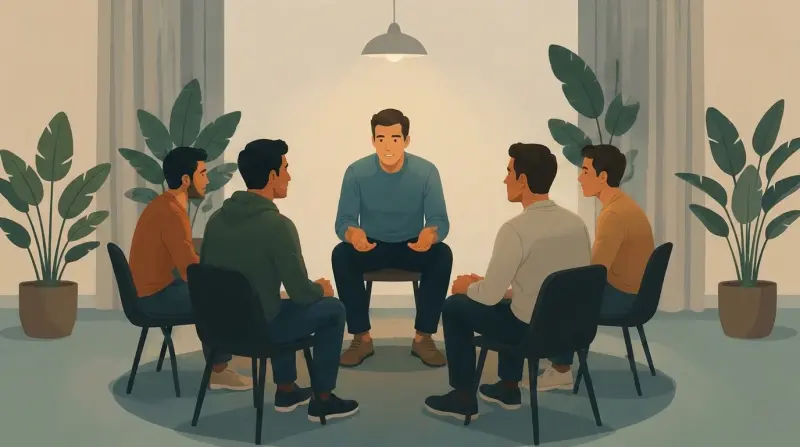
“You’re a man. You have to be strong.” You might hear this when you worry about work, feel sad or say you are exhausted. The person may mean to encourage you, but leave you unsure what to do with those feelings. You can take responsibility and need help at the same time. You do not have to conceal a difficulty to deserve a serious response.
Expectations vary within families, communities and between individuals. Consider the expectations you carry: do they help you act responsibly, or make you ashamed to ask for what you need? Courage, firmness, generosity and compassion can coexist.
A feeling and the response to it are different things
You can acknowledge worry about your livelihood and still help plan what your family needs. Anger does not permit insults or threats. Sadness does not require telling everyone, but it does not force you to pretend you are fine.
Choose when, with whom and how much to share. For example: “I’m worried about work. We need to discuss expenses this week, and I’d like you to listen for a little while before we suggest solutions.”
Now the other person knows what concerns you and what you are asking for. They might listen, help with a practical arrangement, or suggest another time if they are unavailable. You can agree on what each of you can offer without expecting them to read your silence or solve the entire problem.
When opening up brings mockery
Some people are safer to confide in than others. If someone says, “Don’t make a big deal of it,” or “Men shouldn’t talk like that,” you can clarify your request: “I’m not asking you to fix everything. I need you to listen without making fun of me.” If the mockery continues, choose someone else you trust or a professional. You do not have to persuade everyone around you before seeking support.
You do not have to share every detail either. You might begin, “I’m having a difficult time and don’t want to explain the reason yet. Could we spend a little time together?” You choose what to share and with whom, whether through a conversation, a specific request for help or time with someone you feel comfortable around.
What kind of strength would help here?
A situation may call for firmness, saying “I don’t know,” apologising or asking someone to carry part of the load. Consider what would help in that situation, rather than what would make you look strong to others.
Situation
A possible responsible response
You hurt someone.
A specific apology and feasible repair, without demanding immediate forgiveness.
Anger is escalating in a conversation.
Pause before insults and agree to return when respectful conversation is possible.
You face something unfamiliar.
Seek information or appropriate assistance rather than taking risks to appear self-sufficient.
Your load exceeds your capacity.
Review priorities and share responsibilities that can be shared, rather than hiding difficulty until it grows.
A pause should not become a threat or punitive silence. You could say, “I’m angry and worried I’ll say something hurtful. I’ll settle down and we can return to this tonight.” Choose a time you can actually keep.
What could you say when your son feels afraid?
“Men don’t get scared” may close a conversation about a new experience. Instead, try:
This seems frightening. Tell me which part is hardest, and we’ll think about the first step together.
Help him take a step suited to his age and the situation. Avoid ridicule or making him face danger to prove himself. A chance to talk does not remove every challenge; it allows him to describe what is difficult and ask for help.
Similarly, do not require an adult friend to talk or cry to prove healthy emotional expression. Ask what they need and respect their privacy.
When broader support is needed
In its explanation of guidelines for working with boys and men, the American Psychological Association recognises positive qualities associated with masculinity and notes that some rigid social expectations1 can obstruct emotional expression and seeking care. These are US professional guidelines for psychological work with boys and men.
If distress persists and affects sleep, work or relationships, you can speak to a professional. Start with current difficulties: “I’m sleeping badly, getting angry quickly, and want to understand what I can change.” You do not have to label yourself weak or wait until everyday functioning becomes impossible.
If you threaten someone or fear you may harm them, prioritise stopping escalation and obtaining urgent help. For imminent danger involving violence or threats in Saudi Arabia, call security patrols on 999; for an injury or immediate medical danger, call ambulance 997. Anger is neither proof of strength nor an excuse to hurt others. (Saudi Red Crescent Authority)
Frequently Asked Questions
Does expressing emotions make me less of a man?
You can take responsibility and need help at the same time. You do not have to conceal a difficulty to deserve a serious response. Courage, firmness, generosity and compassion can coexist, and you can acknowledge worry and still help plan what your family needs. Consider the expectations you carry: do they help you act responsibly, or make you ashamed to ask for what you need?
How can I talk about my feelings with someone close to me?
Choose when, with whom and how much to share, and say what concerns you and what you are asking for. For example: “I’m worried about work. I’d like you to listen for a little while before we suggest solutions.” They might listen, help with a practical arrangement, or suggest another time. You do not have to share every detail; you might begin, “I’m having a difficult time and don’t want to explain the reason yet.”
What if someone mocks me for talking about my feelings?
Some people are safer to confide in than others. You can clarify your request: “I’m not asking you to fix everything. I need you to listen without making fun of me.” If the mockery continues, choose someone else you trust or a professional. You do not have to persuade everyone around you before seeking support, and you choose what to share and with whom.
What should I say when my son is scared?
Try: “This seems frightening. Tell me which part is hardest, and we’ll think about the first step together.” A response like “Men don’t get scared” may close the conversation. Then help him take a step suited to his age and the situation, without ridicule or making him face danger to prove himself. A chance to talk does not remove every challenge; it allows him to describe what is difficult and ask for help.
When should I talk to a professional?
If distress persists and affects sleep, work or relationships, you can speak to a professional. Start with current difficulties: “I’m sleeping badly, getting angry quickly, and want to understand what I can change.” You do not have to label yourself weak or wait until everyday functioning becomes impossible.
If you threaten someone or fear you may harm them, prioritise stopping escalation and obtaining urgent help. For imminent danger involving violence or threats in Saudi Arabia, call security patrols on 999; for an injury or immediate medical danger, call ambulance 997.
Content writer and researcher at Tatmeen, writing in Arabic and English about mental health and everyday life, from relationships and stress to work, habits, and family.
Every Tatmeen article is reviewed by care providers licensed by the Saudi Commission for Health Specialties, so what you read is accurate and trustworthy.
This article builds understanding and does not replace a licensed care provider.
Need someone to talk to?
Tatmeen's licensed care providers are available around the clock, and the app's urgent consultation connects you with one within minutes.
Download Tatmeen to explore care providers and booking options.
Smart matchingFour quick questions suggest the right care provider
Urgent consultationTalk to an available care provider within minutes
Free psychological measuresMore than 20 tests to understand how you are doing
Scan to download
{"data":{"id":"cee09577-16ab-45c8-a461-6c80308c02a0","slug":"What-is-the-true-meaning-of-masculinity","arTitle":"الرجولة والمشاعر: كيف تعبّر عما تمر به؟","enTitle":"Masculinity and emotions: talking about what you are going through","thumbnailAltText":"رجل وصبي يتحدثان وهما جالسان على درجات أمام باب، وبجانب الصبي حقيبة.","estimatedReadingTime":7,"likesCount":956,"writer":{"id":"d3defdb6-4a23-4b03-aad9-a1ecc054aae5","arBio":"كاتب وباحث محتوى في تطمين، يكتب بالعربية والإنجليزية عن الصحة النفسية والحياة اليومية، من العلاقات والضغوط إلى العمل والعادات والأسرة.\n","enBio":"Content writer and researcher at Tatmeen, writing in Arabic and English about mental health and everyday life, from relationships and stress to work, habits, and family.","user":{"slug":"fahad-almalik","arFullName":"فهد المالك","enFullName":"Fahad Almalik","publicProfileImageUrl":"https://cdn.tatmeen.sa/public/profile-images/a34c8028-5847-45de-ab83-a014942bb7d3/675415e988c16442a04af5d3b8899242613a955c44e0364314cc3ff74cbad082.webp","publicProfileImage96Url":"https://cdn.tatmeen.sa/public/profile-images/a34c8028-5847-45de-ab83-a014942bb7d3/675415e988c16442a04af5d3b8899242613a955c44e0364314cc3ff74cbad082-w96.webp","publicProfileImage192Url":"https://cdn.tatmeen.sa/public/profile-images/a34c8028-5847-45de-ab83-a014942bb7d3/675415e988c16442a04af5d3b8899242613a955c44e0364314cc3ff74cbad082-w192.webp"}},"arContent":"","enContent":"","productionDocument":{"headings":[{"id":"article-section-a-feeling-and-the-response-to-it-are-different-things","text":"A feeling and the response to it are different things"},{"id":"article-section-when-opening-up-brings-mockery","text":"When opening up brings mockery"},{"id":"article-section-what-kind-of-strength-would-help-here","text":"What kind of strength would help here?"},{"id":"article-section-what-could-you-say-when-your-son-feels-afraid","text":"What could you say when your son feels afraid?"},{"id":"article-section-when-broader-support-is-needed","text":"When broader support is needed"}],"faqs":[{"question":"Does expressing emotions make me less of a man?","answer":"<p>You can take responsibility and need help at the same time. You do not have to conceal a difficulty to deserve a serious response. Courage, firmness, generosity and compassion can coexist, and you can acknowledge worry and still help plan what your family needs. Consider the expectations you carry: do they help you act responsibly, or make you ashamed to ask for what you need?</p>"},{"question":"How can I talk about my feelings with someone close to me?","answer":"<p>Choose when, with whom and how much to share, and say what concerns you and what you are asking for. For example: “I’m worried about work. I’d like you to listen for a little while before we suggest solutions.” They might listen, help with a practical arrangement, or suggest another time. You do not have to share every detail; you might begin, “I’m having a difficult time and don’t want to explain the reason yet.”</p>"},{"question":"What if someone mocks me for talking about my feelings?","answer":"<p>Some people are safer to confide in than others. You can clarify your request: “I’m not asking you to fix everything. I need you to listen without making fun of me.” If the mockery continues, choose someone else you trust or a professional. You do not have to persuade everyone around you before seeking support, and you choose what to share and with whom.</p>"},{"question":"What should I say when my son is scared?","answer":"<p>Try: “This seems frightening. Tell me which part is hardest, and we’ll think about the first step together.” A response like “Men don’t get scared” may close the conversation. Then help him take a step suited to his age and the situation, without ridicule or making him face danger to prove himself. A chance to talk does not remove every challenge; it allows him to describe what is difficult and ask for help.</p>"},{"question":"When should I talk to a professional?","answer":"<p>If distress persists and affects sleep, work or relationships, you can speak to a professional. Start with current difficulties: “I’m sleeping badly, getting angry quickly, and want to understand what I can change.” You do not have to label yourself weak or wait until everyday functioning becomes impossible.</p><p>If you threaten someone or fear you may harm them, prioritise stopping escalation and obtaining urgent help. For imminent danger involving violence or threats in Saudi Arabia, call security patrols on 999; for an injury or immediate medical danger, call ambulance 997.</p>"}],"beforeSourcesHtml":"\n","sources":[{"title":"American Psychological Association: A Closer Look at the Guidelines for Psychological Practice with Boys and Men, 2019","href":"https://www.apa.org/news/apa/2019/boys-men-look.html","hostname":"apa.org"}],"afterSourcesHtml":"\n","blocks":[{"type":"html","html":"<p>“You’re a man. You have to be strong.” You might hear this when you worry about work, feel sad or say you are exhausted. The person may mean to encourage you, but leave you unsure what to do with those feelings. You can take responsibility and need help at the same time. You do not have to conceal a difficulty to deserve a serious response.</p>\n<p>Expectations vary within families, communities and between individuals. Consider the expectations you carry: do they help you act responsibly, or make you ashamed to ask for what you need? Courage, firmness, generosity and compassion can coexist.</p>\n<h2 id=\"article-section-a-feeling-and-the-response-to-it-are-different-things\" data-toc-heading tabindex=\"-1\"><span id=\"a-feeling-and-the-response-to-it-are-different-things-1\" aria-hidden=\"true\"></span>A feeling and the response to it are different things</h2>\n<p>You can acknowledge worry about your livelihood and still help plan what your family needs. Anger does not permit insults or threats. Sadness does not require telling everyone, but it does not force you to pretend you are fine.</p>\n<p>Choose when, with whom and how much to share. For example: “I’m worried about work. We need to discuss expenses this week, and I’d like you to listen for a little while before we suggest solutions.”</p>\n<p>Now the other person knows what concerns you and what you are asking for. They might listen, help with a practical arrangement, or suggest another time if they are unavailable. You can agree on what each of you can offer without expecting them to read your silence or solve the entire problem.</p>\n<h2 id=\"article-section-when-opening-up-brings-mockery\" data-toc-heading tabindex=\"-1\"><span id=\"when-opening-up-brings-mockery-2\" aria-hidden=\"true\"></span>When opening up brings mockery</h2>\n<p>Some people are safer to confide in than others. If someone says, “Don’t make a big deal of it,” or “Men shouldn’t talk like that,” you can clarify your request: “I’m not asking you to fix everything. I need you to listen without making fun of me.” If the mockery continues, choose someone else you trust or a professional. You do not have to persuade everyone around you before seeking support.</p>\n<p>You do not have to share every detail either. You might begin, “I’m having a difficult time and don’t want to explain the reason yet. Could we spend a little time together?” You choose what to share and with whom, whether through a conversation, a specific request for help or time with someone you feel comfortable around.</p>\n<h2 id=\"article-section-what-kind-of-strength-would-help-here\" data-toc-heading tabindex=\"-1\"><span id=\"what-kind-of-strength-would-help-here-3\" aria-hidden=\"true\"></span>What kind of strength would help here?</h2>\n<p>A situation may call for firmness, saying “I don’t know,” apologising or asking someone to carry part of the load. Consider what would help in that situation, rather than what would make you look strong to others.</p>\n<div class=\"table-block\"><table>\n<thead>\n<tr>\n<th>Situation</th>\n<th>A possible responsible response</th>\n</tr>\n</thead>\n<tbody>\n<tr>\n<td>You hurt someone.</td>\n<td>A specific apology and feasible repair, without demanding immediate forgiveness.</td>\n</tr>\n<tr>\n<td>Anger is escalating in a conversation.</td>\n<td>Pause before insults and agree to return when respectful conversation is possible.</td>\n</tr>\n<tr>\n<td>You face something unfamiliar.</td>\n<td>Seek information or appropriate assistance rather than taking risks to appear self-sufficient.</td>\n</tr>\n<tr>\n<td>Your load exceeds your capacity.</td>\n<td>Review priorities and share responsibilities that can be shared, rather than hiding difficulty until it grows.</td>\n</tr>\n</tbody>\n</table></div>\n<p>A pause should not become a threat or punitive silence. You could say, “I’m angry and worried I’ll say something hurtful. I’ll settle down and we can return to this tonight.” Choose a time you can actually keep.</p>\n<h2 id=\"article-section-what-could-you-say-when-your-son-feels-afraid\" data-toc-heading tabindex=\"-1\"><span id=\"what-could-you-say-when-your-son-feels-afraid-4\" aria-hidden=\"true\"></span>What could you say when your son feels afraid?</h2>\n<p>“Men don’t get scared” may close a conversation about a new experience. Instead, try:</p>\n<blockquote>\n<p>This seems frightening. Tell me which part is hardest, and we’ll think about the first step together.</p>\n</blockquote>\n<p>Help him take a step suited to his age and the situation. Avoid ridicule or making him face danger to prove himself. A chance to talk does not remove every challenge; it allows him to describe what is difficult and ask for help.</p>\n<p>Similarly, do not require an adult friend to talk or cry to prove healthy emotional expression. Ask what they need and respect their privacy.</p>\n<h2 id=\"article-section-when-broader-support-is-needed\" data-toc-heading tabindex=\"-1\"><span id=\"when-broader-support-is-needed-5\" aria-hidden=\"true\"></span>When broader support is needed</h2>\n<p>In its explanation of guidelines for working with boys and men, the American Psychological Association recognises positive qualities associated with masculinity and notes that some <a href=\"https://www.apa.org/news/apa/2019/boys-men-look.html\" target=\"_blank\" rel=\"noopener noreferrer\">rigid social expectations</a> can obstruct emotional expression and seeking care. These are US professional guidelines for psychological work with boys and men.</p>\n<p>If distress persists and affects sleep, work or relationships, you can speak to a professional. Start with current difficulties: “I’m sleeping badly, getting angry quickly, and want to understand what I can change.” You do not have to label yourself weak or wait until everyday functioning becomes impossible.</p>\n<p>If you threaten someone or fear you may harm them, prioritise stopping escalation and obtaining urgent help. For imminent danger involving violence or threats in Saudi Arabia, call security patrols on <strong>999</strong>; for an injury or immediate medical danger, call ambulance <strong>997</strong>. Anger is neither proof of strength nor an excuse to hurt others. (<a href=\"https://www.srca.gov.sa/en/contact-us/\" target=\"_blank\" rel=\"noopener noreferrer\">Saudi Red Crescent Authority</a>)</p>\n"}],"inlineCtaSignatures":[],"_experienceAliases":{"v":1,"fields":["html","bodyHtml"],"faqs":[0,1,2,3,4]}},"createdAt":"2024-01-09T21:00:00.000Z","updatedAt":"2026-10-30T19:45:06.850Z","disorderGroups":[{"id":"5185d423-e92e-4be2-9bc7-85bf0dfcf771","slug":"mens-mental-health","arName":"الصحة النفسية للرجل","enName":"Men’s Mental Health"}],"reviewer":{"arFullName":"فريق تطمين","enFullName":"Tatmeen team","slug":"tatmeen-team","kind":"organization"},"productionArticle":true,"promotionAllowed":true,"preparedCover":{"src":"https://cdn.tatmeen.sa/public/article-lcp/article-lcp-v2/sha256-01f2ca9080c1ed46b290654cd50dae576f8906d055104424e12c9fed5e690393/800-0f24fd8d54da2998bfe5ea385c46eebabed5ab2fe9f38ad49741b54f76d672f2.avif","fallback":"https://cdn.tatmeen.sa/public/article-lcp/article-lcp-v2/sha256-01f2ca9080c1ed46b290654cd50dae576f8906d055104424e12c9fed5e690393/800-d27597f2e3e3c746bdcd76c8cc245d0480fbec5647ad4dad52f7c530c882b90c.webp","directUrl":"https://cdn.tatmeen.sa/blog-cover/68e52561-5f97-4cf4-b335-a7a70fc38e73.png","isGolden":true,"avifSrcset":"https://cdn.tatmeen.sa/public/article-lcp/article-lcp-v2/sha256-01f2ca9080c1ed46b290654cd50dae576f8906d055104424e12c9fed5e690393/400-e53bc6eeff4dad6bd080b5ccf5c67a6627ce7a73d4ec0060d8696426eab83738.avif 400w, https://cdn.tatmeen.sa/public/article-lcp/article-lcp-v2/sha256-01f2ca9080c1ed46b290654cd50dae576f8906d055104424e12c9fed5e690393/640-2fc81c1f12e983d2f962ad4ac72ded4c1281b11c742f3295fb9cbd09234c2f7e.avif 640w, https://cdn.tatmeen.sa/public/article-lcp/article-lcp-v2/sha256-01f2ca9080c1ed46b290654cd50dae576f8906d055104424e12c9fed5e690393/800-0f24fd8d54da2998bfe5ea385c46eebabed5ab2fe9f38ad49741b54f76d672f2.avif 800w, https://cdn.tatmeen.sa/public/article-lcp/article-lcp-v2/sha256-01f2ca9080c1ed46b290654cd50dae576f8906d055104424e12c9fed5e690393/1200-4cc9b6dd78d767763e3fca9c8fb1ed5077c9ca7ce7769d2534dab58c0fee9a3b.avif 1200w","webpSrcset":"https://cdn.tatmeen.sa/public/article-lcp/article-lcp-v2/sha256-01f2ca9080c1ed46b290654cd50dae576f8906d055104424e12c9fed5e690393/400-8af18ef5632a545ec2e916e7d104aade1fd8bfc9a61e72b2261ce9586c4d1c82.webp 400w, https://cdn.tatmeen.sa/public/article-lcp/article-lcp-v2/sha256-01f2ca9080c1ed46b290654cd50dae576f8906d055104424e12c9fed5e690393/640-96e8c64646113ad5f9127a229f3754e7c829d710054099b34c2a7f8ad2c1d16d.webp 640w, https://cdn.tatmeen.sa/public/article-lcp/article-lcp-v2/sha256-01f2ca9080c1ed46b290654cd50dae576f8906d055104424e12c9fed5e690393/800-d27597f2e3e3c746bdcd76c8cc245d0480fbec5647ad4dad52f7c530c882b90c.webp 800w, https://cdn.tatmeen.sa/public/article-lcp/article-lcp-v2/sha256-01f2ca9080c1ed46b290654cd50dae576f8906d055104424e12c9fed5e690393/1200-ffef174eb2d4f6bd0830d1e18c4db7e623345f0e20d2eefa6823667e2c714e20.webp 1200w","phoneAvifSrcset":"https://cdn.tatmeen.sa/public/article-lcp/article-lcp-v2/sha256-01f2ca9080c1ed46b290654cd50dae576f8906d055104424e12c9fed5e690393/400-e53bc6eeff4dad6bd080b5ccf5c67a6627ce7a73d4ec0060d8696426eab83738.avif 400w, https://cdn.tatmeen.sa/public/article-lcp/article-lcp-v2/sha256-01f2ca9080c1ed46b290654cd50dae576f8906d055104424e12c9fed5e690393/640-2fc81c1f12e983d2f962ad4ac72ded4c1281b11c742f3295fb9cbd09234c2f7e.avif 640w, https://cdn.tatmeen.sa/public/article-lcp/article-lcp-v2/sha256-01f2ca9080c1ed46b290654cd50dae576f8906d055104424e12c9fed5e690393/800-0f24fd8d54da2998bfe5ea385c46eebabed5ab2fe9f38ad49741b54f76d672f2.avif 800w","phoneWebpSrcset":"https://cdn.tatmeen.sa/public/article-lcp/article-lcp-v2/sha256-01f2ca9080c1ed46b290654cd50dae576f8906d055104424e12c9fed5e690393/400-8af18ef5632a545ec2e916e7d104aade1fd8bfc9a61e72b2261ce9586c4d1c82.webp 400w, https://cdn.tatmeen.sa/public/article-lcp/article-lcp-v2/sha256-01f2ca9080c1ed46b290654cd50dae576f8906d055104424e12c9fed5e690393/640-96e8c64646113ad5f9127a229f3754e7c829d710054099b34c2a7f8ad2c1d16d.webp 640w, https://cdn.tatmeen.sa/public/article-lcp/article-lcp-v2/sha256-01f2ca9080c1ed46b290654cd50dae576f8906d055104424e12c9fed5e690393/800-d27597f2e3e3c746bdcd76c8cc245d0480fbec5647ad4dad52f7c530c882b90c.webp 800w","width":800,"height":533},"previewTaxonomy":{"groups":[{"id":"5185d423-e92e-4be2-9bc7-85bf0dfcf771","slug":"mens-mental-health","arName":"الصحة النفسية للرجل","enName":"Men’s Mental Health"}],"topics":[{"id":"9567ccad-d575-4333-86ca-b7062837939a","slug":"fear-of-weakness","arName":"الخوف من إظهار الضعف","enName":"Fear of Weakness","groupSlug":"mens-mental-health","href":"/blog/category/mens-mental-health/fear-of-weakness/"},{"id":"69e53338-0937-49ce-9708-5d45f3918d9b","slug":"expressing-emotions","arName":"صعوبة التعبير العاطفي","enName":"Expressing Emotions","groupSlug":"mens-mental-health","href":"/blog/category/mens-mental-health/expressing-emotions/"}],"tags":[{"id":"50a7bc5d-7fbd-43f1-9cf5-da4f55791d53","slug":"men","arName":"الرجال","enName":"Men"},{"id":"15197da9-84de-40f0-b8f6-88a6468b5ddb","slug":"emotional-expression","arName":"التعبير عن المشاعر","enName":"Emotional expression"},{"id":"a7a7391b-bc2c-41de-91b1-7d701f1675b7","slug":"supporting-others","arName":"دعم شخص آخر","enName":"Supporting Someone Else"},{"id":"c2a6e8d3-de9c-435f-8c95-9727e7db14cc","slug":"explainer-awareness","arName":"دليل توعوي / شرح","enName":"Explainer / Awareness Guide"}]},"previewProviderRecommendations":[{"id":"d754a189-f8c9-4aad-b4aa-a5dbd26c0bd7","slug":"talal-alshowaier-8694","arFullName":"طلال الشويعر","enFullName":"Talal Alshowaier","publicProfileImageUrl":"https://cdn.tatmeen.sa/public/profile-images/d754a189-f8c9-4aad-b4aa-a5dbd26c0bd7/74feb27848a47cf43189f6b5951e06a9b87b08269021d5bab765092fc65fce42.webp","publicProfileImage96Url":"https://cdn.tatmeen.sa/public/profile-images/d754a189-f8c9-4aad-b4aa-a5dbd26c0bd7/74feb27848a47cf43189f6b5951e06a9b87b08269021d5bab765092fc65fce42-w96.webp","publicProfileImage192Url":"https://cdn.tatmeen.sa/public/profile-images/d754a189-f8c9-4aad-b4aa-a5dbd26c0bd7/74feb27848a47cf43189f6b5951e06a9b87b08269021d5bab765092fc65fce42-w192.webp","specialization":{"arName":"أخصائي نفسي","enName":"Psychologist"},"profileImageUrl":"https://cdn.tatmeen.sa/public/profile-images/d754a189-f8c9-4aad-b4aa-a5dbd26c0bd7/74feb27848a47cf43189f6b5951e06a9b87b08269021d5bab765092fc65fce42-w192.webp","experienceYears":3,"consultantInfo":{"averageRating":{"average":5},"specialization":{"arGeneralName":"أخصائي نفسي","enGeneralName":"Psychologist"}}},{"id":"d4ffcb6b-90a7-45b6-b941-964866f4564b","slug":"dhaifallah-alhumaidi-1092","arFullName":"ضيف الله الحميدي","enFullName":"Dhaifallah Alhumaidi","publicProfileImageUrl":"https://cdn.tatmeen.sa/public/profile-images/d4ffcb6b-90a7-45b6-b941-964866f4564b/1817171c5828a9b57d6c30d12332cf154e335272548bc90a6e8456d74d356956.webp","publicProfileImage96Url":"https://cdn.tatmeen.sa/public/profile-images/d4ffcb6b-90a7-45b6-b941-964866f4564b/1817171c5828a9b57d6c30d12332cf154e335272548bc90a6e8456d74d356956-w96.webp","publicProfileImage192Url":"https://cdn.tatmeen.sa/public/profile-images/d4ffcb6b-90a7-45b6-b941-964866f4564b/1817171c5828a9b57d6c30d12332cf154e335272548bc90a6e8456d74d356956-w192.webp","specialization":{"arName":"أخصائي نفسي","enName":"Psychologist"},"profileImageUrl":"https://cdn.tatmeen.sa/public/profile-images/d4ffcb6b-90a7-45b6-b941-964866f4564b/1817171c5828a9b57d6c30d12332cf154e335272548bc90a6e8456d74d356956-w192.webp","experienceYears":3,"consultantInfo":{"averageRating":{"average":5},"specialization":{"arGeneralName":"أخصائي نفسي","enGeneralName":"Psychologist"}}},{"id":"c19c46bb-575a-46d1-9576-9053aba400c6","slug":"dr-fatima-nabil-3746","arFullName":"د. فاطمة الدندن","enFullName":"Dr. Fatima Aldandan","publicProfileImageUrl":"https://cdn.tatmeen.sa/public/profile-images/c19c46bb-575a-46d1-9576-9053aba400c6/972266807796ff0c476e2efcc12caccdb8b279aaabee5398714ecd920ef5dbe9.webp","publicProfileImage96Url":"https://cdn.tatmeen.sa/public/profile-images/c19c46bb-575a-46d1-9576-9053aba400c6/972266807796ff0c476e2efcc12caccdb8b279aaabee5398714ecd920ef5dbe9-w96.webp","publicProfileImage192Url":"https://cdn.tatmeen.sa/public/profile-images/c19c46bb-575a-46d1-9576-9053aba400c6/972266807796ff0c476e2efcc12caccdb8b279aaabee5398714ecd920ef5dbe9-w192.webp","specialization":{"arName":"طبيب نفسي","enName":"Psychiatrist"},"profileImageUrl":"https://cdn.tatmeen.sa/public/profile-images/c19c46bb-575a-46d1-9576-9053aba400c6/972266807796ff0c476e2efcc12caccdb8b279aaabee5398714ecd920ef5dbe9-w192.webp","experienceYears":7,"consultantInfo":{"averageRating":{"average":0},"specialization":{"arGeneralName":"طبيب نفسي","enGeneralName":"Psychiatrist"}}}],"previewCareProviders":[{"id":"09364052-c2a9-4c52-9717-7ce2093b8d0a","slug":"kholoud-alharbi-5221","arFullName":"خلود الحربي","enFullName":"Kholoud Alharbi","publicProfileImageUrl":"https://cdn.tatmeen.sa/public/profile-images/09364052-c2a9-4c52-9717-7ce2093b8d0a/4a0aeb81619e351b77f4323e3605a0a00acc7ca3c82ee7cc5ca2c9e8ef716049.webp","publicProfileImage96Url":"https://cdn.tatmeen.sa/public/profile-images/09364052-c2a9-4c52-9717-7ce2093b8d0a/4a0aeb81619e351b77f4323e3605a0a00acc7ca3c82ee7cc5ca2c9e8ef716049-w96.webp","publicProfileImage192Url":"https://cdn.tatmeen.sa/public/profile-images/09364052-c2a9-4c52-9717-7ce2093b8d0a/4a0aeb81619e351b77f4323e3605a0a00acc7ca3c82ee7cc5ca2c9e8ef716049-w192.webp","gender":"FEMALE","specialization":{"arName":"أخصائي نفسي","enName":"Psychologist"}},{"id":"6f037535-1dca-4b50-a8b2-5974b7323286","slug":"salah-althobaiti-9053","arFullName":"صلاح الثبيتي","enFullName":"Salah Althobaiti","publicProfileImageUrl":"https://cdn.tatmeen.sa/public/profile-images/6f037535-1dca-4b50-a8b2-5974b7323286/35b6bd7fad9b1e004c1835803eb9c1b56dcacd380685ec8bff141f0fb888005c.webp","publicProfileImage96Url":"https://cdn.tatmeen.sa/public/profile-images/6f037535-1dca-4b50-a8b2-5974b7323286/35b6bd7fad9b1e004c1835803eb9c1b56dcacd380685ec8bff141f0fb888005c-w96.webp","publicProfileImage192Url":"https://cdn.tatmeen.sa/public/profile-images/6f037535-1dca-4b50-a8b2-5974b7323286/35b6bd7fad9b1e004c1835803eb9c1b56dcacd380685ec8bff141f0fb888005c-w192.webp","gender":"MALE","specialization":{"arName":"أخصائي نفسي","enName":"Psychologist"}},{"id":"3cc806e8-616b-4884-9f21-a75b378580a2","slug":"aisha-al-hashim-8667","arFullName":"عائشة ال هاشم","enFullName":"Aisha Al Hashim","publicProfileImageUrl":"https://cdn.tatmeen.sa/public/profile-images/3cc806e8-616b-4884-9f21-a75b378580a2/27f523d03be4dcfa1f6a79f70c1773887434e698990d214cd990caec56a44798.webp","publicProfileImage96Url":"https://cdn.tatmeen.sa/public/profile-images/3cc806e8-616b-4884-9f21-a75b378580a2/27f523d03be4dcfa1f6a79f70c1773887434e698990d214cd990caec56a44798-w96.webp","publicProfileImage192Url":"https://cdn.tatmeen.sa/public/profile-images/3cc806e8-616b-4884-9f21-a75b378580a2/27f523d03be4dcfa1f6a79f70c1773887434e698990d214cd990caec56a44798-w192.webp","gender":"FEMALE","specialization":{"arName":"أخصائي نفسي","enName":"Psychologist"}},{"id":"db2ce1a0-9325-4471-b7ce-eb2e811c30a3","slug":"amer-qutub-2441","arFullName":"عامر قطب","enFullName":"Amer Qutub","publicProfileImageUrl":"https://cdn.tatmeen.sa/public/profile-images/db2ce1a0-9325-4471-b7ce-eb2e811c30a3/80580f99bfd7fe2b2a9cf8eed73ab532f5086d1efe053b0aa57358c1ce004261.webp","publicProfileImage96Url":"https://cdn.tatmeen.sa/public/profile-images/db2ce1a0-9325-4471-b7ce-eb2e811c30a3/80580f99bfd7fe2b2a9cf8eed73ab532f5086d1efe053b0aa57358c1ce004261-w96.webp","publicProfileImage192Url":"https://cdn.tatmeen.sa/public/profile-images/db2ce1a0-9325-4471-b7ce-eb2e811c30a3/80580f99bfd7fe2b2a9cf8eed73ab532f5086d1efe053b0aa57358c1ce004261-w192.webp","gender":"MALE","specialization":{"arName":"أخصائي نفسي","enName":"Psychologist"}},{"id":"6043a2b2-c41b-42c8-92bb-881f36083293","slug":"rehab-alharbi-3670","arFullName":"رحاب المعبدي","enFullName":"Rehab Almabadi","publicProfileImageUrl":"https://cdn.tatmeen.sa/public/profile-images/6043a2b2-c41b-42c8-92bb-881f36083293/9f25728f77c844fac517d39615495fdec1cf4c590360b466419ece1bdeb66c2e.webp","publicProfileImage96Url":"https://cdn.tatmeen.sa/public/profile-images/6043a2b2-c41b-42c8-92bb-881f36083293/9f25728f77c844fac517d39615495fdec1cf4c590360b466419ece1bdeb66c2e-w96.webp","publicProfileImage192Url":"https://cdn.tatmeen.sa/public/profile-images/6043a2b2-c41b-42c8-92bb-881f36083293/9f25728f77c844fac517d39615495fdec1cf4c590360b466419ece1bdeb66c2e-w192.webp","gender":"FEMALE","specialization":{"arName":"أخصائي نفسي","enName":"Psychologist"}},{"id":"618dba89-5b70-4b46-8304-741b7ac8ecd3","slug":"abdullah-mari-1311","arFullName":"عبدالله مرعي","enFullName":"Abdullah Mari","publicProfileImageUrl":"https://cdn.tatmeen.sa/public/profile-images/618dba89-5b70-4b46-8304-741b7ac8ecd3/6b4a3bfb59f8a304ca79083b32859b46baad2e1d692974a47c02c1f66bd11129.webp","publicProfileImage96Url":"https://cdn.tatmeen.sa/public/profile-images/618dba89-5b70-4b46-8304-741b7ac8ecd3/6b4a3bfb59f8a304ca79083b32859b46baad2e1d692974a47c02c1f66bd11129-w96.webp","publicProfileImage192Url":"https://cdn.tatmeen.sa/public/profile-images/618dba89-5b70-4b46-8304-741b7ac8ecd3/6b4a3bfb59f8a304ca79083b32859b46baad2e1d692974a47c02c1f66bd11129-w192.webp","gender":"MALE","specialization":{"arName":"أخصائي نفسي","enName":"Psychologist"}},{"id":"94765496-dbdf-4631-a01b-7df5f788668d","slug":"abdullrahman-alhamoudi-3045","arFullName":"عبدالرحمن الحمودي","enFullName":"Abdulrahman Alhamoudi","publicProfileImageUrl":"https://cdn.tatmeen.sa/public/profile-images/94765496-dbdf-4631-a01b-7df5f788668d/2d49f6b6493c564afb6f50b6c3634231dff3a5cf8353acfab393d1b2a88037d1.webp","publicProfileImage96Url":"https://cdn.tatmeen.sa/public/profile-images/94765496-dbdf-4631-a01b-7df5f788668d/2d49f6b6493c564afb6f50b6c3634231dff3a5cf8353acfab393d1b2a88037d1-w96.webp","publicProfileImage192Url":"https://cdn.tatmeen.sa/public/profile-images/94765496-dbdf-4631-a01b-7df5f788668d/2d49f6b6493c564afb6f50b6c3634231dff3a5cf8353acfab393d1b2a88037d1-w192.webp","gender":"MALE","specialization":{"arName":"أخصائي نفسي","enName":"Psychologist"}},{"id":"d4ffcb6b-90a7-45b6-b941-964866f4564b","slug":"dhaifallah-alhumaidi-1092","arFullName":"ضيف الله الحميدي","enFullName":"Dhaifallah Alhumaidi","publicProfileImageUrl":"https://cdn.tatmeen.sa/public/profile-images/d4ffcb6b-90a7-45b6-b941-964866f4564b/1817171c5828a9b57d6c30d12332cf154e335272548bc90a6e8456d74d356956.webp","publicProfileImage96Url":"https://cdn.tatmeen.sa/public/profile-images/d4ffcb6b-90a7-45b6-b941-964866f4564b/1817171c5828a9b57d6c30d12332cf154e335272548bc90a6e8456d74d356956-w96.webp","publicProfileImage192Url":"https://cdn.tatmeen.sa/public/profile-images/d4ffcb6b-90a7-45b6-b941-964866f4564b/1817171c5828a9b57d6c30d12332cf154e335272548bc90a6e8456d74d356956-w192.webp","gender":"MALE","specialization":{"arName":"أخصائي نفسي","enName":"Psychologist"}},{"id":"3b50a5d5-e795-407f-8676-fd7f0e1bb7a0","slug":"abdulaziz-bin-hudayan-4940","arFullName":"عبدالعزيز بن هديان","enFullName":"Abdulaziz Bin Hudayan","publicProfileImageUrl":"https://cdn.tatmeen.sa/public/profile-images/3b50a5d5-e795-407f-8676-fd7f0e1bb7a0/710ff0fe1fb00cdb5042092e27b7910b480a439b02251ecded62d7758eefce95.webp","publicProfileImage96Url":"https://cdn.tatmeen.sa/public/profile-images/3b50a5d5-e795-407f-8676-fd7f0e1bb7a0/710ff0fe1fb00cdb5042092e27b7910b480a439b02251ecded62d7758eefce95-w96.webp","publicProfileImage192Url":"https://cdn.tatmeen.sa/public/profile-images/3b50a5d5-e795-407f-8676-fd7f0e1bb7a0/710ff0fe1fb00cdb5042092e27b7910b480a439b02251ecded62d7758eefce95-w192.webp","gender":"MALE","specialization":{"arName":"أخصائي نفسي","enName":"Psychologist"}}],"previewDownload":{"href":"/download","title":{"ar":"خطوة واحدة لأجلك، ابدأ الآن","en":"One step for you, start now"},"description":{"ar":"حمّل تطبيق تطمين لاستكشاف مقدمي الرعاية وخيارات الحجز.","en":"Download Tatmeen to explore care providers and booking options."},"posterSrc":"/images/home/cta-ar-new-1.webp","videoSrc":"/images/home/cta-ar-new-1.mp4","videoPosterSrc":"/images/home/cta-ar-new-1.webp","videoPosterEnSrc":"/images/home/cta-en-new-1.webp","videoType":"video/mp4","appStoreHref":"https://apps.apple.com/us/app/tatmeen-%D8%AA%D8%B7%D9%85%D9%8A%D9%86/id6473836983","googlePlayHref":"https://play.google.com/store/apps/details?id=com.TatmeenApp.user&hl=en"},"previewRelatedArticles":[{"id":"1fd49c60-48a1-4ee0-a6ee-7e430358ca8a","slug":"why-men-struggle-seek-help-mental-health","route":"/blog/why-men-struggle-seek-help-mental-health/","title":{"ar":"لماذا يجد الرجال صعوبة في طلب المساعدة؟ أسباب وحلول","en":"Why Do Men Find It Hard to Ask for Help? Causes and Solutions"},"image":"https://cdn.tatmeen.sa/public/article-lcp/article-lcp-v2/sha256-a7ef9d5fa7af5402ecbbc04e2e431d1e82006a6934fa4dd85741d0546a27cac3/800-ff8116a677b26c0986c047e39a37d61c7c23c80508db59c61ae66d43f93208c2.webp","directImageFallback":"https://cdn.tatmeen.sa/blog-cover/Tatmeen-1779390235301.webp","arThumbnailAltText":"a group of 5 men sitting together in a room conversing","thumbnailAltText":"a group of 5 men sitting together in a room conversing","topic":{"label":{"ar":"الصحة النفسية للرجل","en":"Men’s Mental Health"}},"readingTimeMinutes":5},{"id":"11093a40-e568-4766-b128-7dd60bd1c533","slug":"father-wound-men-breaking-emotional-suppression","route":"/blog/father-wound-men-breaking-emotional-suppression/","title":{"ar":"جرح الأب لدى الذكور: كسر حلقة الكبت العاطفي","en":"Father Wound in Men: Breaking the Cycle of Emotional Suppression"},"image":"https://cdn.tatmeen.sa/public/article-lcp/article-lcp-v2/sha256-d114cc7f6f15fe72fda91b47990186e5522f56e24cbd2e904d47c2f8ea96618c/800-8d4fb6c04391c2c4fb3a42731715740b2416a95d28b7d4420418a8a5b377a6da.webp","directImageFallback":"https://cdn.tatmeen.sa/blog-cover/Tatmeen-1779211868384.webp","arThumbnailAltText":"ظلان لأب وابن يفصل بينهما نور ذهبي يرمز لجرح الأب والتعافي العاطفي","thumbnailAltText":"ظلان لأب وابن يفصل بينهما نور ذهبي يرمز لجرح الأب والتعافي العاطفي","topic":{"label":{"ar":"اضطرابات نفسية شائعة","en":"Common Mental Issues"}},"readingTimeMinutes":5},{"id":"632e0968-cb63-4ef1-a052-8c790e6e2bc5","slug":"mother-wound-men-enmeshment-absent-maternal-support","route":"/blog/mother-wound-men-enmeshment-absent-maternal-support/","title":{"ar":"جرح الأم لدى الذكور: تجاوز التعلّق المفرط وغياب الدعم الأمومي","en":"Mother Wound in Men: Overcoming Enmeshment and Absent Maternal Support"},"image":"https://cdn.tatmeen.sa/public/article-lcp/article-lcp-v2/sha256-68d0d7ef8edfc686b975f67b48c9d891a461201ff20d77cc7accd90e77e42a50/800-49d012167fe993d1e567e50d73721181f9e23e16554b071e2fdc767f40dd1b09.webp","directImageFallback":"https://cdn.tatmeen.sa/blog-cover/Tatmeen-1777382972280.webp","arThumbnailAltText":"a man looking forward and behind him is the shadow of his mother","thumbnailAltText":"a man looking forward and behind him is the shadow of his mother","topic":{"label":{"ar":"اضطرابات نفسية شائعة","en":"Common Mental Issues"}},"readingTimeMinutes":5},{"id":"b45b1df6-1f37-48a4-9139-37bfbe49e584","slug":"breaking-stigma-men-not-expressing-emotions","route":"/blog/breaking-stigma-men-not-expressing-emotions/","title":{"ar":"كسر الوصمة المجتمعية عن عدم إفصاح الرجال عن مشاعرهم","en":"Breaking the Social Stigma Around Men Not Expressing Their Emotions"},"image":"https://cdn.tatmeen.sa/public/article-lcp/article-lcp-v2/sha256-f2449b64c731232dcce7cb8ebb845219020c416a58d82462d85c8d295e6da7d7/800-7b02eb9c201bddc002bd1909e0f9c6fbda444bddbc28085a29c5a22c9d6ec8ca.webp","directImageFallback":"https://cdn.tatmeen.sa/blog-cover/Tatmeen-1779388906109.webp","arThumbnailAltText":"a group of 5 men sitting together watching the sunset","thumbnailAltText":"a group of 5 men sitting together watching the sunset","topic":{"label":{"ar":"الصحة النفسية للرجل","en":"Men’s Mental Health"}},"readingTimeMinutes":5}],"previewRelatedReadStates":{}},"locale":"en","device":"desktop","path":"/en/blog/What-is-the-true-meaning-of-masculinity/","readingControls":false,"config":{"public":{"BUCKET_URL":"https://cdn.tatmeen.sa/","APP_BASE_URL":"https://tatmeen.sa","intercomAppId":"ppcnu9e3"}}}