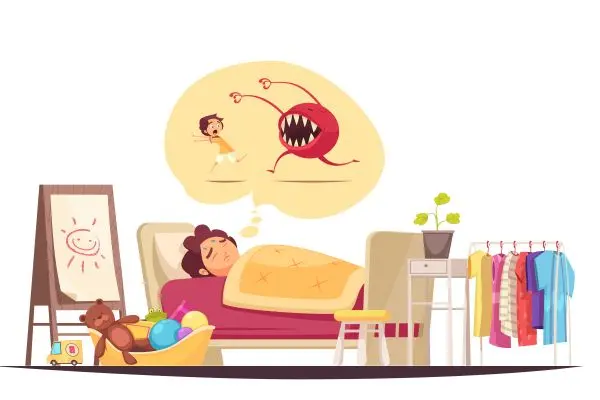
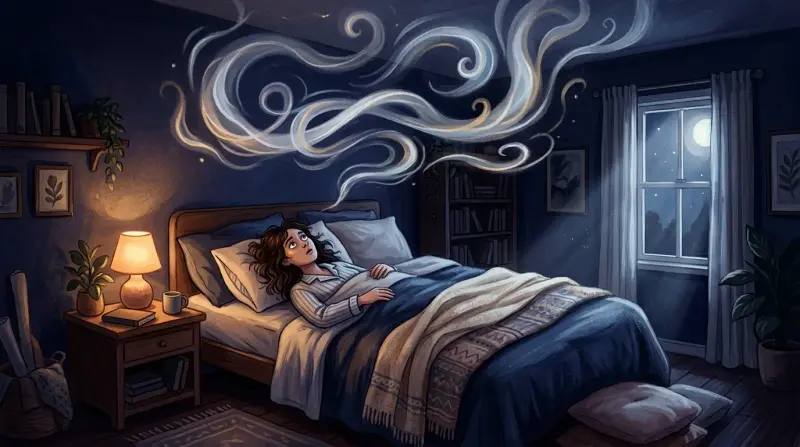
Many children experience disturbing dreams or nightmares at different stages of their lives, causing distress that may affect their mental well-being.
At what age do children begin having nightmares? What causes nightmares in children? When might children’s nightmares have psychological significance, and what should parents do in such cases? We will answer some of the many questions about children’s nightmares in this article.
The difference between nightmares and night terrors:
It is important to distinguish between nightmares and night terrors, as they differ in their psychological definition and symptoms.
Nightmares and when they begin in children:
Nightmares occur during the final stage of a child’s sleep. The child remembers them clearly upon waking and can recount them to you. Signs of fear and distress are visible during sleep, and these disturbing dreams begin at the age of two.
Night terrors and when they occur:
Night terrors occur during deep sleep, about two hours after the child falls asleep. Their symptoms include screaming, fear, and panic. The child may involuntarily hit or kick those nearby. Parents may think the child is awake and aware of what is happening, but the opposite is true: the child cannot see or hear you when you try to calm them. Upon waking, the child will not remember what happened during the night, much like sleepwalking, which occurs without conscious awareness or intention.
Genetics plays a major role in a child’s susceptibility to night terrors, which are most common between the ages of two and six. It is important to understand that disturbing dreams are part of a child’s natural development, the growth of their imagination, their developing awareness of fear and its existence, and their increasing interaction with their surroundings.
Causes of nightmares and night terrors
Disturbing dreams, whether nightmares or night terrors, can have several causes, including:
Not having a consistent sleep schedule or bedtime.
Poor nutrition.
Fever and certain medications.
Violent scenes on television or computers, and in video games.
The loss of a loved one.
Parental divorce.
Family instability.
Negative communication between parents, such as heated arguments or one parent abusing the other in front of the child.
Abusing or intimidating the child through shouting or hitting.
Feeling unsafe.
Experiencing certain incidents.
How can you help a child when nightmares occur?
First, remember that nightmares or disturbing dreams are part of the child’s brain development and social interaction. Try to remain prepared and calm when they occur so that your anxiety, tension, and fear are not passed on to your child.
Steps you can take to deal with children’s nightmares
Try to prevent children’s nightmares by keeping sources of fear and anxiety, such as violent cartoons or marital problems, out of your child’s sight as much as possible.
Establish a consistent routine for sleep and early waking that covers the time, place, and bedtime preparations. This can include reading a relaxing bedtime story and having a reassuring conversation that allows the child to express their feelings while receiving affection and cuddles.
Avoid frightening children’s stories, such as Little Red Riding Hood and the Wolf, as they can set the child’s imagination running.
Reassure the child with a calm voice or whisper, gentle touch, and cuddles.
Stay beside your child until they fall asleep again after the disturbing dream.
Do not leave the child alone when you hear them scream. Go to them so they can feel your presence and protection.
Leave a dim light on in the room or keep the door slightly open.
As the child grows, gradually teach them skills and strategies for calming themselves without leaving them to face the experience alone and without protection or support. For example, teach them to keep a small flashlight under their pillow and switch it on if they wake, to breathe in and out, or to change their sleeping position.
It is important to calm the child in the same place where they fell asleep and had the disturbing dream, whether in their parents’ room or their own. This prevents them from associating the dream with the sleeping place, which could negatively affect how they feel about it and turn it into a source of fear.
Help the child talk about the disturbing dream through drawing, conversation, storytelling, or role-play. This helps them express their feelings and reduces their fear.
When should I consult a mental health professional?
If the nightmare, or a dream with the same content, becomes more frequent—for example, if the child repeatedly dreams that a monster is chasing them, sees someone they love turn into a bad person who wants to hurt them, or sees their favorite toy causing them harm—and such nightmares or disturbing dreams continue for a month, a visit to a mental health professional is warranted. The professional can use psychological techniques to identify the causes and address them through appropriate therapeutic methods.
Sign up for the Tatmeen online mental health consultation platform. Access guidance through self-help programs or speak with leading psychotherapy professionals, including specialists in social, marital, family, and other fields. Sign up here for free.
Content writer and researcher at Tatmeen, working on Arabic and English articles across mental health and everyday life topics, including relationships, stress, work, habits, and family.
Every Tatmeen article is reviewed by care providers licensed by the Saudi Commission for Health Specialties, so what you read is accurate and trustworthy.
This article builds understanding and does not replace a licensed care provider.
Need someone to talk to?
Tatmeen's licensed care providers are available around the clock, and the app's urgent consultation connects you with one within minutes.
Download Tatmeen to explore care providers and booking options.
Smart matchingFour quick questions suggest the right care provider
Urgent consultationTalk to an available care provider within minutes
Free psychological measuresMore than 20 tests to understand how you are doing
Scan to download
{"data":{"id":"3077d381-8302-4b9a-924b-932303743fc7","slug":"Children-nightmares","arTitle":"كوابيس الأطفال - أسباب وكيفية التعامل معها","enTitle":"Children’s Nightmares: Causes and How to Respond","thumbnailAltText":"Sleeping child dreams of being chased by a sharp-toothed monster","estimatedReadingTime":5,"likesCount":941,"writer":{"id":"f49e2ee4-e68b-4e04-a40b-01d0b0195161","arBio":"كاتب وباحث محتوى في تطمين، يعمل على مقالات عربية وإنجليزية في موضوعات الصحة النفسية والحياة اليومية، مثل العلاقات، الضغوط، العمل، العادات، والأسرة.","enBio":"Content writer and researcher at Tatmeen, working on Arabic and English articles across mental health and everyday life topics, including relationships, stress, work, habits, and family.","user":{"slug":"sultan-almuhasin","arFullName":"سلطان المحيسن","enFullName":"Sultan Almuhasin","publicProfileImageUrl":"https://cdn.tatmeen.sa/public/profile-images/2494102f-7411-4dda-85b1-0c37a1031b3f/c9d25068aaa97c2c1f80123e2d6a27cc7b5a9b1df6a91493df9411b390a60279.webp","publicProfileImage96Url":"https://cdn.tatmeen.sa/public/profile-images/2494102f-7411-4dda-85b1-0c37a1031b3f/c9d25068aaa97c2c1f80123e2d6a27cc7b5a9b1df6a91493df9411b390a60279-w96.webp","publicProfileImage192Url":"https://cdn.tatmeen.sa/public/profile-images/2494102f-7411-4dda-85b1-0c37a1031b3f/c9d25068aaa97c2c1f80123e2d6a27cc7b5a9b1df6a91493df9411b390a60279-w192.webp"}},"arContent":"","enContent":"","productionDocument":{"headings":[{"id":"article-section-the-difference-between-nightmares-and-night-terrors","text":"The difference between nightmares and night terrors:"},{"id":"article-section-causes-of-nightmares-and-night-terrors","text":"Causes of nightmares and night terrors"},{"id":"article-section-how-can-you-help-a-child-when-nightmares-occur","text":"How can you help a child when nightmares occur?"},{"id":"article-section-when-should-i-consult-a-mental-health-professional","text":"When should I consult a mental health professional?"}],"faqs":[],"beforeSourcesHtml":"","sources":[],"afterSourcesHtml":"","blocks":[{"type":"html","html":"<p class=\"ql-align-right ql-direction-rtl\">Many children experience disturbing dreams or nightmares at different stages of their lives, causing distress that may affect their mental well-being.</p><p class=\"ql-align-right ql-direction-rtl\"><br /></p><p class=\"ql-align-right ql-direction-rtl\">At what age do children begin having nightmares? What causes nightmares in children? When might children’s nightmares have psychological significance, and what should parents do in such cases? We will answer some of the many questions about children’s nightmares in this article.</p><h2 class=\"ql-align-right ql-direction-rtl\" id=\"article-section-the-difference-between-nightmares-and-night-terrors\" data-toc-heading tabindex=\"-1\"><span id=\"the-difference-between-nightmares-and-night-terrors-1\" aria-hidden=\"true\"></span><strong>The difference between nightmares and night terrors:</strong></h2><p class=\"ql-align-right ql-direction-rtl\">It is important to distinguish between nightmares and night terrors, as they differ in their psychological definition and symptoms.</p><h3 class=\"ql-align-right ql-direction-rtl\">Nightmares and when they begin in children:</h3><p class=\"ql-align-right ql-direction-rtl\">Nightmares occur during the final stage of a child’s sleep. The child remembers them clearly upon waking and can recount them to you. Signs of fear and distress are visible during sleep, and these disturbing dreams begin at the age of two.</p><h3 class=\"ql-align-right ql-direction-rtl\">Night terrors and when they occur:</h3><p class=\"ql-align-right ql-direction-rtl\">Night terrors occur during deep sleep, about two hours after the child falls asleep. Their symptoms include screaming, fear, and panic. The child may involuntarily hit or kick those nearby. Parents may think the child is awake and aware of what is happening, but the opposite is true: the child cannot see or hear you when you try to calm them. Upon waking, the child will not remember what happened during the night, much like sleepwalking, which occurs without conscious awareness or intention.</p><p class=\"ql-align-right ql-direction-rtl\">Genetics plays a major role in a child’s susceptibility to night terrors, which are most common between the ages of two and six. It is important to understand that disturbing dreams are part of a child’s natural development, the growth of their imagination, their developing awareness of fear and its existence, and their increasing interaction with their surroundings.</p><h2 class=\"ql-align-right ql-direction-rtl\" id=\"article-section-causes-of-nightmares-and-night-terrors\" data-toc-heading tabindex=\"-1\"><span id=\"causes-of-nightmares-and-night-terrors-2\" aria-hidden=\"true\"></span><strong>Causes of nightmares and night terrors</strong></h2><p class=\"ql-align-right ql-direction-rtl\">Disturbing dreams, whether nightmares or night terrors, can have several causes, including:</p><ul><li class=\"ql-align-right ql-direction-rtl\">Not having a consistent sleep schedule or bedtime.</li><li class=\"ql-align-right ql-direction-rtl\">Poor nutrition.</li><li class=\"ql-align-right ql-direction-rtl\">Fever and certain medications.</li><li class=\"ql-align-right ql-direction-rtl\">Violent scenes on television or computers, and in video games.</li><li class=\"ql-align-right ql-direction-rtl\">The loss of a loved one.</li><li class=\"ql-align-right ql-direction-rtl\">Parental divorce.</li><li class=\"ql-align-right ql-direction-rtl\">Family instability.</li><li class=\"ql-align-right ql-direction-rtl\">Negative communication between parents, such as heated arguments or one parent abusing the other in front of the child.</li><li class=\"ql-align-right ql-direction-rtl\">Abusing or intimidating the child through shouting or hitting.</li><li class=\"ql-align-right ql-direction-rtl\">Feeling unsafe.</li><li class=\"ql-align-right ql-direction-rtl\">Experiencing certain incidents.</li></ul><p class=\"ql-align-right ql-direction-rtl\"> </p><h2 class=\"ql-align-right ql-direction-rtl\" id=\"article-section-how-can-you-help-a-child-when-nightmares-occur\" data-toc-heading tabindex=\"-1\"><span id=\"how-can-you-help-a-child-when-nightmares-occur-3\" aria-hidden=\"true\"></span><strong>How can you help a child when nightmares occur?</strong></h2><p class=\"ql-align-right ql-direction-rtl\">First, remember that nightmares or disturbing dreams are part of the child’s brain development and social interaction. Try to remain prepared and calm when they occur so that your anxiety, tension, and fear are not passed on to your child.</p><h3 class=\"ql-align-right ql-direction-rtl\"><strong>Steps you can take to deal with children’s nightmares</strong></h3><ul><li class=\"ql-align-right ql-direction-rtl\">Try to prevent children’s nightmares by keeping sources of fear and anxiety, such as violent cartoons or marital problems, out of your child’s sight as much as possible.</li><li class=\"ql-align-right ql-direction-rtl\">Establish a consistent routine for sleep and early waking that covers the time, place, and bedtime preparations. This can include reading a relaxing bedtime story and having a reassuring conversation that allows the child to express their feelings while receiving affection and cuddles.</li><li class=\"ql-align-right ql-direction-rtl\">Avoid frightening children’s stories, such as Little Red Riding Hood and the Wolf, as they can set the child’s imagination running.</li><li class=\"ql-align-right ql-direction-rtl\">Reassure the child with a calm voice or whisper, gentle touch, and cuddles.</li><li class=\"ql-align-right ql-direction-rtl\">Stay beside your child until they fall asleep again after the disturbing dream.</li><li class=\"ql-align-right ql-direction-rtl\">Do not leave the child alone when you hear them scream. Go to them so they can feel your presence and protection.</li><li class=\"ql-align-right ql-direction-rtl\">Leave a dim light on in the room or keep the door slightly open.</li><li class=\"ql-align-right ql-direction-rtl\">As the child grows, gradually teach them skills and strategies for calming themselves without leaving them to face the experience alone and without protection or support. For example, teach them to keep a small flashlight under their pillow and switch it on if they wake, to breathe in and out, or to change their sleeping position.</li><li class=\"ql-align-right ql-direction-rtl\">It is important to calm the child in the same place where they fell asleep and had the disturbing dream, whether in their parents’ room or their own. This prevents them from associating the dream with the sleeping place, which could negatively affect how they feel about it and turn it into a source of fear.</li><li class=\"ql-align-right ql-direction-rtl\">Help the child talk about the disturbing dream through drawing, conversation, storytelling, or role-play. This helps them express their feelings and reduces their fear.</li></ul><h2 class=\"ql-align-right ql-direction-rtl\" id=\"article-section-4\"><strong> </strong></h2><h2 class=\"ql-align-right ql-direction-rtl\" id=\"article-section-when-should-i-consult-a-mental-health-professional\" data-toc-heading tabindex=\"-1\"><span id=\"when-should-i-consult-a-mental-health-professional-4\" aria-hidden=\"true\"></span><strong>When should I consult a mental health professional?</strong></h2><p class=\"ql-align-right ql-direction-rtl\">If the nightmare, or a dream with the same content, becomes more frequent—for example, if the child repeatedly dreams that a monster is chasing them, sees someone they love turn into a bad person who wants to hurt them, or sees their favorite toy causing them harm—and such nightmares or disturbing dreams continue for a month, a visit to a mental health professional is warranted. The professional can use psychological techniques to identify the causes and address them through appropriate therapeutic methods.</p><p class=\"ql-align-right ql-direction-rtl\">Sign up for <a style=\"background-color:transparent\" href=\"http://www.hakini.net/\" target=\"_blank\" rel=\"noopener noreferrer\">the Tat</a>meen online mental health consultation platform. Access guidance through self-help programs or speak with leading psychotherapy professionals, including specialists in social, marital, family, and other fields. Sign up here for free.</p><p><br /></p>"}],"inlineCtaSignatures":[],"_experienceAliases":{"v":1,"fields":["html","bodyHtml"]}},"createdAt":"2024-01-06T21:00:00.000Z","updatedAt":"2026-08-11T04:45:02.303Z","disorderGroups":[{"id":"9fbda432-3713-400a-987b-3d56754a113e","slug":"children-and-adolescents","arName":"الأطفال والمراهقين","enName":"Children & Adolescents"},{"id":"1e82772d-a1a7-4d29-b475-be9d6b67ae02","slug":"common-mental-issues","arName":"اضطرابات نفسية شائعة","enName":"Common Mental Issues"}],"reviewer":{"arFullName":"فريق تطمين","enFullName":"Tatmeen team","slug":"tatmeen-team","kind":"organization"},"productionArticle":true,"promotionAllowed":true,"preparedCover":{"src":"https://cdn.tatmeen.sa/public/article-lcp/article-lcp-v2/sha256-cb3af0fb7b65c9c17cc743acb345edbd27406dfcd6522f5b53aa0f8cf0c294e4/600-a446d9cde21d021b668ce682365c5efc89584ac837920cb7d7d64b0ad046068e.avif","fallback":"https://cdn.tatmeen.sa/public/article-lcp/article-lcp-v2/sha256-cb3af0fb7b65c9c17cc743acb345edbd27406dfcd6522f5b53aa0f8cf0c294e4/600-6f1dd33ae34f9aae276e65243c4ef66eb91818e46049d91345f07babfc792963.webp","directUrl":"https://cdn.tatmeen.sa/blog-cover/1704641302227-Tatmeen-img-602","isGolden":true,"avifSrcset":"https://cdn.tatmeen.sa/public/article-lcp/article-lcp-v2/sha256-cb3af0fb7b65c9c17cc743acb345edbd27406dfcd6522f5b53aa0f8cf0c294e4/400-3b2d3d1345011be13a848f22ab9b218c064d3156b8a0b515b6eed0509d890b3f.avif 400w, https://cdn.tatmeen.sa/public/article-lcp/article-lcp-v2/sha256-cb3af0fb7b65c9c17cc743acb345edbd27406dfcd6522f5b53aa0f8cf0c294e4/600-a446d9cde21d021b668ce682365c5efc89584ac837920cb7d7d64b0ad046068e.avif 600w","webpSrcset":"https://cdn.tatmeen.sa/public/article-lcp/article-lcp-v2/sha256-cb3af0fb7b65c9c17cc743acb345edbd27406dfcd6522f5b53aa0f8cf0c294e4/400-561405de3ca67829a3fee2621d6bec5d17b6c633ab3907cb40343e3dde722b0c.webp 400w, https://cdn.tatmeen.sa/public/article-lcp/article-lcp-v2/sha256-cb3af0fb7b65c9c17cc743acb345edbd27406dfcd6522f5b53aa0f8cf0c294e4/600-6f1dd33ae34f9aae276e65243c4ef66eb91818e46049d91345f07babfc792963.webp 600w","phoneAvifSrcset":"https://cdn.tatmeen.sa/public/article-lcp/article-lcp-v2/sha256-cb3af0fb7b65c9c17cc743acb345edbd27406dfcd6522f5b53aa0f8cf0c294e4/400-3b2d3d1345011be13a848f22ab9b218c064d3156b8a0b515b6eed0509d890b3f.avif 400w, https://cdn.tatmeen.sa/public/article-lcp/article-lcp-v2/sha256-cb3af0fb7b65c9c17cc743acb345edbd27406dfcd6522f5b53aa0f8cf0c294e4/600-a446d9cde21d021b668ce682365c5efc89584ac837920cb7d7d64b0ad046068e.avif 600w","phoneWebpSrcset":"https://cdn.tatmeen.sa/public/article-lcp/article-lcp-v2/sha256-cb3af0fb7b65c9c17cc743acb345edbd27406dfcd6522f5b53aa0f8cf0c294e4/400-561405de3ca67829a3fee2621d6bec5d17b6c633ab3907cb40343e3dde722b0c.webp 400w, https://cdn.tatmeen.sa/public/article-lcp/article-lcp-v2/sha256-cb3af0fb7b65c9c17cc743acb345edbd27406dfcd6522f5b53aa0f8cf0c294e4/600-6f1dd33ae34f9aae276e65243c4ef66eb91818e46049d91345f07babfc792963.webp 600w","width":600,"height":400},"previewTaxonomy":{"groups":[{"id":"9fbda432-3713-400a-987b-3d56754a113e","slug":"children-and-adolescents","arName":"الأطفال والمراهقين","enName":"Children & Adolescents"},{"id":"1e82772d-a1a7-4d29-b475-be9d6b67ae02","slug":"common-mental-issues","arName":"اضطرابات نفسية شائعة","enName":"Common Mental Issues"}],"topics":[{"id":"aa57ccb9-d146-4629-8aa1-8b6d36c4c9ee","slug":"parenting-skills","arName":"تربية الأطفال","enName":"Parenting Skills","groupSlug":"children-and-adolescents","href":"/blog/category/children-and-adolescents/parenting-skills/"},{"id":"4c10d5ae-1b63-4868-901f-df8e1ce7f0d7","slug":"sleep-disorders","arName":"اضطرابات النوم","enName":"Sleep Disorders","groupSlug":"common-mental-issues","href":"/blog/category/common-mental-issues/sleep-disorders/"}],"tags":[{"id":"df684f2f-95c6-4603-afba-9a1061c94a62","slug":"sleep-disorders","arName":"اضطرابات النوم","enName":"Sleep Disorders"},{"id":"52aa8812-914e-495a-9ed5-13bec6c39a93","slug":"parents-children","arName":"الآباء والأطفال","enName":"Parents & Children"},{"id":"c2a6e8d3-de9c-435f-8c95-9727e7db14cc","slug":"explainer-awareness","arName":"دليل توعوي / شرح","enName":"Explainer / Awareness Guide"}]},"previewProviderRecommendations":[{"id":"278d5ac5-30ff-46ad-97be-c67cdd125836","slug":"dr-mohammed-alamari-8085","arFullName":"د. محمد العماري","enFullName":"Dr. Mohammed Alamari","publicProfileImageUrl":"https://cdn.tatmeen.sa/public/profile-images/278d5ac5-30ff-46ad-97be-c67cdd125836/69bdd11cb01784eed010eb9883403fd6ca4e4afcec739dcd6114fd8b85f133a8.webp","publicProfileImage96Url":"https://cdn.tatmeen.sa/public/profile-images/278d5ac5-30ff-46ad-97be-c67cdd125836/69bdd11cb01784eed010eb9883403fd6ca4e4afcec739dcd6114fd8b85f133a8-w96.webp","publicProfileImage192Url":"https://cdn.tatmeen.sa/public/profile-images/278d5ac5-30ff-46ad-97be-c67cdd125836/69bdd11cb01784eed010eb9883403fd6ca4e4afcec739dcd6114fd8b85f133a8-w192.webp","specialization":{"arName":"طبيب أسرة","enName":"Family Physician"},"profileImageUrl":"https://cdn.tatmeen.sa/public/profile-images/278d5ac5-30ff-46ad-97be-c67cdd125836/69bdd11cb01784eed010eb9883403fd6ca4e4afcec739dcd6114fd8b85f133a8-w192.webp","experienceYears":3,"consultantInfo":{"averageRating":{"average":4},"specialization":{"arGeneralName":"طبيب أسرة","enGeneralName":"Family Physician"}}},{"id":"6df31339-a6f5-4131-a603-3a7c7a34c143","slug":"joud-alodhayyani-9014","arFullName":"جود العتيبي","enFullName":"Joud Alotaibi","publicProfileImageUrl":"https://cdn.tatmeen.sa/public/profile-images/6df31339-a6f5-4131-a603-3a7c7a34c143/7bb005ef9d4315296aad2a7d142fb2af2cf89920a40b474fc5139b9530269282.webp","publicProfileImage96Url":"https://cdn.tatmeen.sa/public/profile-images/6df31339-a6f5-4131-a603-3a7c7a34c143/7bb005ef9d4315296aad2a7d142fb2af2cf89920a40b474fc5139b9530269282-w96.webp","publicProfileImage192Url":"https://cdn.tatmeen.sa/public/profile-images/6df31339-a6f5-4131-a603-3a7c7a34c143/7bb005ef9d4315296aad2a7d142fb2af2cf89920a40b474fc5139b9530269282-w192.webp","specialization":{"arName":"أخصائي نفسي","enName":"Psychologist"},"profileImageUrl":"https://cdn.tatmeen.sa/public/profile-images/6df31339-a6f5-4131-a603-3a7c7a34c143/7bb005ef9d4315296aad2a7d142fb2af2cf89920a40b474fc5139b9530269282-w192.webp","experienceYears":2,"consultantInfo":{"averageRating":{"average":3.5},"specialization":{"arGeneralName":"أخصائي نفسي","enGeneralName":"Psychologist"}}},{"id":"c83a1e29-92e4-42a8-8ae3-c99fcc835065","slug":"maha-aseri-3121","arFullName":"مها عسيري","enFullName":"Maha Aseri","publicProfileImageUrl":"","publicProfileImage96Url":"","publicProfileImage192Url":"","specialization":{"arName":"أخصائي نفسي","enName":"Psychologist"},"profileImageUrl":"","experienceYears":4,"consultantInfo":{"averageRating":{"average":0},"specialization":{"arGeneralName":"أخصائي نفسي","enGeneralName":"Psychologist"}}}],"previewCareProviders":[{"id":"09364052-c2a9-4c52-9717-7ce2093b8d0a","slug":"kholoud-alharbi-5221","arFullName":"خلود الحربي","enFullName":"Kholoud Alharbi","publicProfileImageUrl":"https://cdn.tatmeen.sa/public/profile-images/09364052-c2a9-4c52-9717-7ce2093b8d0a/4a0aeb81619e351b77f4323e3605a0a00acc7ca3c82ee7cc5ca2c9e8ef716049.webp","publicProfileImage96Url":"https://cdn.tatmeen.sa/public/profile-images/09364052-c2a9-4c52-9717-7ce2093b8d0a/4a0aeb81619e351b77f4323e3605a0a00acc7ca3c82ee7cc5ca2c9e8ef716049-w96.webp","publicProfileImage192Url":"https://cdn.tatmeen.sa/public/profile-images/09364052-c2a9-4c52-9717-7ce2093b8d0a/4a0aeb81619e351b77f4323e3605a0a00acc7ca3c82ee7cc5ca2c9e8ef716049-w192.webp","gender":"FEMALE","specialization":{"arName":"أخصائي نفسي","enName":"Psychologist"}},{"id":"6f037535-1dca-4b50-a8b2-5974b7323286","slug":"salah-althobaiti-9053","arFullName":"صلاح الثبيتي","enFullName":"Salah Althobaiti","publicProfileImageUrl":"https://cdn.tatmeen.sa/public/profile-images/6f037535-1dca-4b50-a8b2-5974b7323286/35b6bd7fad9b1e004c1835803eb9c1b56dcacd380685ec8bff141f0fb888005c.webp","publicProfileImage96Url":"https://cdn.tatmeen.sa/public/profile-images/6f037535-1dca-4b50-a8b2-5974b7323286/35b6bd7fad9b1e004c1835803eb9c1b56dcacd380685ec8bff141f0fb888005c-w96.webp","publicProfileImage192Url":"https://cdn.tatmeen.sa/public/profile-images/6f037535-1dca-4b50-a8b2-5974b7323286/35b6bd7fad9b1e004c1835803eb9c1b56dcacd380685ec8bff141f0fb888005c-w192.webp","gender":"MALE","specialization":{"arName":"أخصائي نفسي","enName":"Psychologist"}},{"id":"3cc806e8-616b-4884-9f21-a75b378580a2","slug":"aisha-al-hashim-8667","arFullName":"عائشة ال هاشم","enFullName":"Aisha Al Hashim","publicProfileImageUrl":"https://cdn.tatmeen.sa/public/profile-images/3cc806e8-616b-4884-9f21-a75b378580a2/27f523d03be4dcfa1f6a79f70c1773887434e698990d214cd990caec56a44798.webp","publicProfileImage96Url":"https://cdn.tatmeen.sa/public/profile-images/3cc806e8-616b-4884-9f21-a75b378580a2/27f523d03be4dcfa1f6a79f70c1773887434e698990d214cd990caec56a44798-w96.webp","publicProfileImage192Url":"https://cdn.tatmeen.sa/public/profile-images/3cc806e8-616b-4884-9f21-a75b378580a2/27f523d03be4dcfa1f6a79f70c1773887434e698990d214cd990caec56a44798-w192.webp","gender":"FEMALE","specialization":{"arName":"أخصائي نفسي","enName":"Psychologist"}},{"id":"db2ce1a0-9325-4471-b7ce-eb2e811c30a3","slug":"amer-qutub-2441","arFullName":"عامر قطب","enFullName":"Amer Qutub","publicProfileImageUrl":"https://cdn.tatmeen.sa/public/profile-images/db2ce1a0-9325-4471-b7ce-eb2e811c30a3/80580f99bfd7fe2b2a9cf8eed73ab532f5086d1efe053b0aa57358c1ce004261.webp","publicProfileImage96Url":"https://cdn.tatmeen.sa/public/profile-images/db2ce1a0-9325-4471-b7ce-eb2e811c30a3/80580f99bfd7fe2b2a9cf8eed73ab532f5086d1efe053b0aa57358c1ce004261-w96.webp","publicProfileImage192Url":"https://cdn.tatmeen.sa/public/profile-images/db2ce1a0-9325-4471-b7ce-eb2e811c30a3/80580f99bfd7fe2b2a9cf8eed73ab532f5086d1efe053b0aa57358c1ce004261-w192.webp","gender":"MALE","specialization":{"arName":"أخصائي نفسي","enName":"Psychologist"}},{"id":"94765496-dbdf-4631-a01b-7df5f788668d","slug":"abdullrahman-alhamoudi-3045","arFullName":"عبدالرحمن الحمودي","enFullName":"Abdulrahman Alhamoudi","publicProfileImageUrl":"https://cdn.tatmeen.sa/public/profile-images/94765496-dbdf-4631-a01b-7df5f788668d/2d49f6b6493c564afb6f50b6c3634231dff3a5cf8353acfab393d1b2a88037d1.webp","publicProfileImage96Url":"https://cdn.tatmeen.sa/public/profile-images/94765496-dbdf-4631-a01b-7df5f788668d/2d49f6b6493c564afb6f50b6c3634231dff3a5cf8353acfab393d1b2a88037d1-w96.webp","publicProfileImage192Url":"https://cdn.tatmeen.sa/public/profile-images/94765496-dbdf-4631-a01b-7df5f788668d/2d49f6b6493c564afb6f50b6c3634231dff3a5cf8353acfab393d1b2a88037d1-w192.webp","gender":"MALE","specialization":{"arName":"أخصائي نفسي","enName":"Psychologist"}},{"id":"618dba89-5b70-4b46-8304-741b7ac8ecd3","slug":"abdullah-mari-1311","arFullName":"عبدالله مرعي","enFullName":"Abdullah Mari","publicProfileImageUrl":"https://cdn.tatmeen.sa/public/profile-images/618dba89-5b70-4b46-8304-741b7ac8ecd3/6b4a3bfb59f8a304ca79083b32859b46baad2e1d692974a47c02c1f66bd11129.webp","publicProfileImage96Url":"https://cdn.tatmeen.sa/public/profile-images/618dba89-5b70-4b46-8304-741b7ac8ecd3/6b4a3bfb59f8a304ca79083b32859b46baad2e1d692974a47c02c1f66bd11129-w96.webp","publicProfileImage192Url":"https://cdn.tatmeen.sa/public/profile-images/618dba89-5b70-4b46-8304-741b7ac8ecd3/6b4a3bfb59f8a304ca79083b32859b46baad2e1d692974a47c02c1f66bd11129-w192.webp","gender":"MALE","specialization":{"arName":"أخصائي نفسي","enName":"Psychologist"}},{"id":"3b50a5d5-e795-407f-8676-fd7f0e1bb7a0","slug":"abdulaziz-bin-hudayan-4940","arFullName":"عبدالعزيز بن هديان","enFullName":"Abdulaziz Bin Hudayan","publicProfileImageUrl":"https://cdn.tatmeen.sa/public/profile-images/3b50a5d5-e795-407f-8676-fd7f0e1bb7a0/710ff0fe1fb00cdb5042092e27b7910b480a439b02251ecded62d7758eefce95.webp","publicProfileImage96Url":"https://cdn.tatmeen.sa/public/profile-images/3b50a5d5-e795-407f-8676-fd7f0e1bb7a0/710ff0fe1fb00cdb5042092e27b7910b480a439b02251ecded62d7758eefce95-w96.webp","publicProfileImage192Url":"https://cdn.tatmeen.sa/public/profile-images/3b50a5d5-e795-407f-8676-fd7f0e1bb7a0/710ff0fe1fb00cdb5042092e27b7910b480a439b02251ecded62d7758eefce95-w192.webp","gender":"MALE","specialization":{"arName":"أخصائي نفسي","enName":"Psychologist"}},{"id":"d4ffcb6b-90a7-45b6-b941-964866f4564b","slug":"dhaifallah-alhumaidi-1092","arFullName":"ضيف الله الحميدي","enFullName":"Dhaifallah Alhumaidi","publicProfileImageUrl":"https://cdn.tatmeen.sa/public/profile-images/d4ffcb6b-90a7-45b6-b941-964866f4564b/1817171c5828a9b57d6c30d12332cf154e335272548bc90a6e8456d74d356956.webp","publicProfileImage96Url":"https://cdn.tatmeen.sa/public/profile-images/d4ffcb6b-90a7-45b6-b941-964866f4564b/1817171c5828a9b57d6c30d12332cf154e335272548bc90a6e8456d74d356956-w96.webp","publicProfileImage192Url":"https://cdn.tatmeen.sa/public/profile-images/d4ffcb6b-90a7-45b6-b941-964866f4564b/1817171c5828a9b57d6c30d12332cf154e335272548bc90a6e8456d74d356956-w192.webp","gender":"MALE","specialization":{"arName":"أخصائي نفسي","enName":"Psychologist"}}],"previewDownload":{"href":"/download","title":{"ar":"خطوة واحدة لأجلك، ابدأ الآن","en":"One step for you, start now"},"description":{"ar":"حمّل تطبيق تطمين لاستكشاف مقدمي الرعاية وخيارات الحجز.","en":"Download Tatmeen to explore care providers and booking options."},"posterSrc":"/images/home/cta-ar-new-1.webp","videoSrc":"/images/home/cta-ar-new-1.mp4","videoPosterSrc":"/images/home/cta-ar-new-1.webp","videoPosterEnSrc":"/images/home/cta-en-new-1.webp","videoType":"video/mp4","appStoreHref":"https://apps.apple.com/us/app/tatmeen-%D8%AA%D8%B7%D9%85%D9%8A%D9%86/id6473836983","googlePlayHref":"https://play.google.com/store/apps/details?id=com.TatmeenApp.user&hl=en"},"previewRelatedArticles":[{"id":"43ca67b8-3404-4a88-b3df-8e041a8d51f3","slug":"how-sleep-disorders-affect-mental-physical-health","route":"/blog/how-sleep-disorders-affect-mental-physical-health/","title":{"ar":"كيف تؤثر اضطرابات النوم على صحتك النفسية والجسدية؟","en":"How Do Sleep Disorders Affect Your Mental and Physical Health?"},"image":"https://cdn.tatmeen.sa/public/article-lcp/article-lcp-v2/sha256-5bfc6df6d74c8c43b13c2b96eae01b0fa656501c43bbcaea6702908917c41be5/800-a993176d5efb48d95cca6548e901cd03715c9d45d79acb5a2ab5e83b64e27748.webp","directImageFallback":"https://cdn.tatmeen.sa/blog-cover/Tatmeen-1775749970066.webp","arThumbnailAltText":"كيف تؤثر اضطرابات النوم على الصحة النفسية والجسدية","thumbnailAltText":"كيف تؤثر اضطرابات النوم على الصحة النفسية والجسدية","topic":{"label":{"ar":"اضطرابات نفسية شائعة","en":"Common Mental Issues"}},"readingTimeMinutes":5},{"id":"b37fc06e-4901-4a15-a941-6066b6540a7b","slug":"Is-sleep-paralysis-a-mental-disorder","route":"/blog/Is-sleep-paralysis-a-mental-disorder/","title":{"ar":"هل شلل النوم مرض نفسي؟","en":"Is Sleep Paralysis a Mental Disorder?"},"image":"https://cdn.tatmeen.sa/public/article-lcp/article-lcp-v2/sha256-765495c4ec65678b00f19b55ed8b669efb3347b2e88a3d48439c0e4c03f8add2/600-cb748175e5cf2c38e7186fc7f1ea0c6006b2e144e26d0a093692cf9172746c53.webp","directImageFallback":"https://cdn.tatmeen.sa/blog-cover/1704733815220-Tatmeen-img-550","arThumbnailAltText":"Stylized person curled on their side with their head on a pillow","thumbnailAltText":"Stylized person curled on their side with their head on a pillow","topic":{"label":{"ar":"اضطرابات نفسية شائعة","en":"Common Mental Issues"}},"readingTimeMinutes":5},{"id":"f1e2a888-ef81-49ad-a75f-d7d99c79e14a","slug":"Insomnia-and-its-relationship-to-sleep-deprivation","route":"/blog/Insomnia-and-its-relationship-to-sleep-deprivation/","title":{"ar":"الأرق – أسباب وأعراض وعلاج والعلاقة بينه وبين قلة النوم","en":"Insomnia: Causes, Symptoms, Treatment, and Sleep Deprivation"},"image":"https://cdn.tatmeen.sa/public/article-lcp/article-lcp-v2/sha256-043b35866b43d3928fa6e43100f41cde2c868718137f5408d324e584458dc8ed/600-d5d8bc7e4763c0198cc38bd8f4743d6982d753155328b0a65dcbf399f86050e7.webp","directImageFallback":"https://cdn.tatmeen.sa/blog-cover/1704816568714-Tatmeen-img-333","arThumbnailAltText":"Person lies in bed beside a digital clock displaying 02:32","thumbnailAltText":"Person lies in bed beside a digital clock displaying 02:32","topic":{"label":{"ar":"اضطرابات نفسية شائعة","en":"Common Mental Issues"}},"readingTimeMinutes":5},{"id":"70b7ed3e-7b09-435c-853a-dbbd7f9d7330","slug":"common-sleep-disorders-causes-solutions","route":"/blog/common-sleep-disorders-causes-solutions/","title":{"ar":"اضطرابات النوم الشائعة وكيفية التغلّب عليها","en":"Common Sleep Disorders and How to Overcome Them"},"image":"https://cdn.tatmeen.sa/public/article-lcp/article-lcp-v2/sha256-8fbf560a07a9bb2bce7053d0c352e63dba9bba6ceb8a15ca03468dbce08d2160/800-315c9e8ea7100a884c9bc34e4a67bf51cbe205bc21ae73de885bc0607a541e1e.webp","directImageFallback":"https://cdn.tatmeen.sa/blog-cover/Tatmeen-1775451036269.webp","arThumbnailAltText":"alt image draft","thumbnailAltText":"alt image draft","topic":{"label":{"ar":"اضطرابات نفسية شائعة","en":"Common Mental Issues"}},"readingTimeMinutes":5}],"previewRelatedReadStates":{}},"locale":"en","device":"desktop","path":"/en/blog/Children-nightmares/","readingControls":false,"config":{"public":{"BUCKET_URL":"https://cdn.tatmeen.sa/","APP_BASE_URL":"https://tatmeen.sa","intercomAppId":"ppcnu9e3"}}}