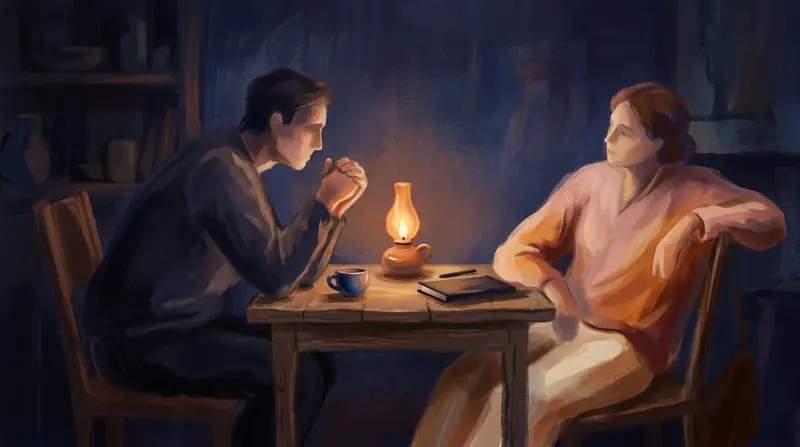
Being attracted to narcissistic people can be confusing, especially when the beginning is so striking: a strong presence, high confidence, and attention that makes you feel seen and valued. Then the exhaustion begins: repeated justifying, anxiety about their reaction, and constant attempts to keep the peace. This can happen in a marriage, an engagement, a friendship, or even at work, and the result is the same: your inner space shrinks in order to avoid conflict. The goal of understanding this is not to condemn anyone, but to help you reclaim your choices and your boundaries.
Why does this pattern seem attractive at first?
Some people with narcissistic traits are very skilled at making a quick and intense impression: exaggerated compliments, big promises, or rushing into strong closeness before trust has had time to form. This style can awaken in you the feeling that you have finally found someone who truly sees you, so your attachment grows before the full picture becomes clear.
And sometimes the opposite happens: intense attention followed by sudden withdrawal. This fluctuation creates an inner race to regain their attention, as if you are being asked to prove your worth. The problem is not that you believed them, but that the pattern pulls you into a cycle of push and pull instead of a steady relationship.
Inner roots that make the attraction keep repeating
Sometimes the attraction repeats because something inside you carries an old need: conditional acceptance, fear of rejection, or a belief that love comes in exchange for sacrifice. If you were raised in the role of the peacemaker or the fixer at home, pleasing the other person may become an automatic habit, and so the sharp or controlling person may feel more familiar than they should.
In our context, boundaries can also become entangled with ideas of respect and keeping things private, so you may hesitate to say no even when it is necessary to protect yourself. And when self-worth feels unstable, outside admiration can feel like a quick painkiller: it soothes you for a moment, then leaves you more vulnerable to belittling and blame. What is familiar is not always safe, but it often feels understandable, and that is what gives it power.
Signs that the problem is in the dynamic, not in you
The clearest sign is not the word “narcissistic,” but the effect the relationship has on you: do you leave conversations feeling clearer, or more confused? Are you able to express yourself without fear? When certain traits turn into a fixed pattern, they may appear as self-centeredness, entitlement, sensitivity to criticism, and weak empathy.
Practical signs that may help you read reality more calmly:
The rules keep changing: what is allowed for them is not allowed for you, and you are always the one expected to be understanding.
Your experience is minimized or questioned until your confidence in yourself begins to shake.
Attention is given, then withdrawn as a form of pressure: silence, ignoring, or emotional punishment.
You live in a state of anticipation, watching your words more than actually living the relationship.
If these signs keep recurring, it often means the dynamic itself is exhausting, not that you are weak or not perceptive enough.
How do you break the cycle with small, realistic steps?
Start by slowing the pace down. Do not let fast promises rush you into a decision or a closeness that does not suit you. Watch for consistency: are the actions steady, or are the words big while commitment keeps shifting? Consistency is what builds safety.
Then set short and clear boundaries instead of long explanations: “This way of speaking does not work for me,” or “I need us to continue this conversation calmly.” Boundaries are not threats, but a respectful definition of what you can accept. The reaction to a boundary reveals a lot: a healthy relationship may be upset for a moment, but it still tries to understand and adjust, while a harmful relationship will often try to get around the boundary by triggering guilt, mockery, or turning the issue back on you.
And to steady your sense of reality, write simple notes after confusing situations: what happened, what did you feel, and what did you need? You may be surprised by how much the confusion lessens when you name the experience. And remember: compassion does not mean enduring what breaks you, nor does it mean turning yourself into a healer who must fix everything alone.
Finally..
You may be drawn to this pattern because something inside you is searching for worth or safety in the way it learned to before, not because you are seeking harm. When you understand the early signs and redefine your boundaries, your choices begin to change more quietly. One step today is enough: notice the effect, act on one clear boundary, and give yourself the right to support. And if you feel that you slip backward at times, that does not mean failure, but a need for clearer support. You can contact a trusted specialist by booking a session with Tatmeen at any time, with complete privacy.
Frequently Asked Questions
Is every self-confident person considered narcissistic?
No. Healthy confidence comes with respect for others and the ability to apologize and empathize. The problem begins when the relationship revolves around one person, your feelings and rights are pushed aside, and power is used to justify belittling or control. Mutual respect is the real dividing line.
Why do I go back to the same type even though it hurts me?
Because what is familiar sometimes pulls us more strongly than what is safe, especially if love was once tied to anxiety or to proving yourself. Breaking the cycle starts with awareness of the early signs and building a steadier sense of self-worth, and sometimes with the support of a specialist.
Can a relationship with someone who has narcissistic traits improve?
Improvement is possible when there is genuine willingness to listen, change behavior, and commit to clear boundaries. If blame remains constant and change is only temporary in order to calm you down, then protecting yourself becomes the priority, even if gradually. You may also need outside support to help you hold those boundaries.
A writer and researcher specializing in psychiatry, she focuses on mental health and the human emotions we experience but cannot always find the words to name. She writes about us—about humanity and the human experience—and simplifies complex topics to offer content that helps us better understand ourselves and life, ultimately making us feel less alone.
Every Tatmeen article is reviewed by care providers licensed by the Saudi Commission for Health Specialties, so what you read is accurate and trustworthy.
This article builds understanding and does not replace a licensed care provider.
Need someone to talk to?
Tatmeen's licensed care providers are available around the clock, and the app's urgent consultation connects you with one within minutes.
Download Tatmeen to explore care providers and booking options.
Smart matchingFour quick questions suggest the right care provider
Urgent consultationTalk to an available care provider within minutes
Free psychological measuresMore than 20 tests to understand how you are doing
Scan to download
{"data":{"id":"53acdd0d-47dd-4f31-b1c1-de942e2e2356","slug":"why-attracted-to-narcissistic-traits","arTitle":"لماذا قد أنجذب للأشخاص ذوي السمات النرجسية؟","enTitle":"Why Might I Be Attracted to People with Narcissistic Traits?","thumbnailAltText":"A giant hand controls a woman like a puppet in a dark, smoky scene","estimatedReadingTime":6,"likesCount":118,"writer":{"id":"3ab72b74-f26f-4337-9b47-3114b0f90de5","arBio":"كاتبة وباحثة متخصصة في مجال الطب النفسي، تهتم بموضوعات الصحة النفسية وبالمشاعر الإنسانية التي نختبرها ولا نجد دائمًا الكلمات لتسميتها. تكتب عنّا؛ عن الإنسان وتجربته، وتبسّط الموضوعات المعقّدة لتقدّم محتوى يساعدنا على فهم ذواتنا والحياة أكثر، ويجعلنا نشعر بأننا بوحدة أقل.","enBio":"A writer and researcher specializing in psychiatry, she focuses on mental health and the human emotions we experience but cannot always find the words to name. She writes about us—about humanity and the human experience—and simplifies complex topics to offer content that helps us better understand ourselves and life, ultimately making us feel less alone.","user":{"slug":"ayat-alnajar","arFullName":"آيات النجار","enFullName":"Ayat Al-Najjar","publicProfileImageUrl":"https://cdn.tatmeen.sa/public/profile-images/02384455-68fa-40b6-ad05-609fde65cafa/21b9a610dde5dfc6d37af110c23e9c7ab3946be080c281beb000debf4f7d31a6.webp","publicProfileImage96Url":"https://cdn.tatmeen.sa/public/profile-images/02384455-68fa-40b6-ad05-609fde65cafa/21b9a610dde5dfc6d37af110c23e9c7ab3946be080c281beb000debf4f7d31a6-w96.webp","publicProfileImage192Url":"https://cdn.tatmeen.sa/public/profile-images/02384455-68fa-40b6-ad05-609fde65cafa/21b9a610dde5dfc6d37af110c23e9c7ab3946be080c281beb000debf4f7d31a6-w192.webp"}},"arContent":"","enContent":"","productionDocument":{"headings":[{"id":"article-section-why-does-this-pattern-seem-attractive-at-first","text":"Why does this pattern seem attractive at first?"},{"id":"article-section-inner-roots-that-make-the-attraction-keep-repeating","text":"Inner roots that make the attraction keep repeating"},{"id":"article-section-signs-that-the-problem-is-in-the-dynamic-not-in-you","text":"Signs that the problem is in the dynamic, not in you"},{"id":"article-section-how-do-you-break-the-cycle-with-small-realistic-steps","text":"How do you break the cycle with small, realistic steps?"},{"id":"article-section-finally","text":"Finally.."}],"faqs":[{"question":"Is every self-confident person considered narcissistic?","answer":"<p><span style=\"color:#000000\">No. Healthy confidence comes with respect for others and the ability to apologize and empathize. The problem begins when the relationship revolves around one person, your feelings and rights are pushed aside, and power is used to justify belittling or control. Mutual respect is the real dividing line.</span></p>"},{"question":"Why do I go back to the same type even though it hurts me?","answer":"<p><span style=\"color:#000000\">Because what is familiar sometimes pulls us more strongly than what is safe, especially if love was once tied to anxiety or to proving yourself. Breaking the cycle starts with awareness of the early signs and building a steadier sense of self-worth, and sometimes with the support of a specialist.</span></p>"},{"question":"Can a relationship with someone who has narcissistic traits improve?","answer":"<p><span style=\"color:#000000\">Improvement is possible when there is genuine willingness to listen, change behavior, and commit to clear boundaries. If blame remains constant and change is only temporary in order to calm you down, then protecting yourself becomes the priority, even if gradually. You may also need outside support to help you hold those boundaries.</span></p>"}],"beforeSourcesHtml":"","sources":[{"title":"Cleveland Clinic: Narcissistic Personality Disorder","href":"https://my.clevelandclinic.org/health/diseases/9742-narcissistic-personality-disorder","hostname":"my.clevelandclinic.org"},{"title":"Mayo Clinic: Narcissistic Personality Disorder","href":"https://www.mayoclinic.org/diseases-conditions/narcissistic-personality-disorder/symptoms-causes/syc-20366662","hostname":"mayoclinic.org"},{"title":"NHS: Maintaining Healthy Relationships","href":"https://www.nhs.uk/every-mind-matters/lifes-challenges/maintaining-healthy-relationships-and-mental-wellbeing/","hostname":"nhs.uk"}],"afterSourcesHtml":"","blocks":[{"type":"html","html":"<p><span style=\"color:#000000\">Being attracted to narcissistic people can be confusing, especially when the beginning is so striking: a strong presence, high confidence, and attention that makes you feel seen and valued. Then the exhaustion begins: repeated justifying, anxiety about their reaction, and constant attempts to keep the peace. This can happen in a marriage, an engagement, a friendship, or even at work, and the result is the same: your inner space shrinks in order to avoid conflict. The goal of understanding this is not to condemn anyone, but to help you reclaim your choices and your boundaries.</span></p><h2 id=\"article-section-why-does-this-pattern-seem-attractive-at-first\" data-toc-heading tabindex=\"-1\"><span id=\"why-does-this-pattern-seem-attractive-at-first-1\" aria-hidden=\"true\"></span><span style=\"color:#000000\"><strong>Why does this pattern seem attractive at first?</strong></span></h2><p><span style=\"color:#000000\">Some people with narcissistic traits are very skilled at making a quick and intense impression: exaggerated compliments, big promises, or rushing into strong closeness before trust has had time to form. This style can awaken in you the feeling that you have finally found someone who truly sees you, so your attachment grows before the full picture becomes clear.</span></p><p><span style=\"color:#000000\">And sometimes the opposite happens: intense attention followed by sudden withdrawal. This fluctuation creates an inner race to regain their attention, as if you are being asked to prove your worth. The problem is not that you believed them, but that the pattern pulls you into a cycle of push and pull instead of a steady relationship.</span></p><h2 id=\"article-section-inner-roots-that-make-the-attraction-keep-repeating\" data-toc-heading tabindex=\"-1\"><span id=\"inner-roots-that-make-the-attraction-keep-repeating-2\" aria-hidden=\"true\"></span><span style=\"color:#000000\"><strong>Inner roots that make the attraction keep repeating</strong></span></h2><p><span style=\"color:#000000\">Sometimes the attraction repeats because something inside you carries an old need: conditional acceptance, fear of rejection, or a belief that love comes in exchange for sacrifice. If you were raised in the role of the peacemaker or the fixer at home, pleasing the other person may become an automatic habit, and so the sharp or controlling person may feel more familiar than they should.</span></p><p><span style=\"color:#000000\">In our context, boundaries can also become entangled with ideas of respect and keeping things private, so you may hesitate to say no even when it is necessary to protect yourself. And when self-worth feels unstable, outside admiration can feel like a quick painkiller: it soothes you for a moment, then leaves you more vulnerable to belittling and blame. What is familiar is not always safe, but it often feels understandable, and that is what gives it power.</span></p><h2 id=\"article-section-signs-that-the-problem-is-in-the-dynamic-not-in-you\" data-toc-heading tabindex=\"-1\"><span id=\"signs-that-the-problem-is-in-the-dynamic-not-in-you-3\" aria-hidden=\"true\"></span><span style=\"color:#000000\"><strong>Signs that the problem is in the dynamic, not in you</strong></span></h2><p><span style=\"color:#000000\">The clearest sign is not the word “narcissistic,” but the effect the relationship has on you: do you leave conversations feeling clearer, or more confused? Are you able to express yourself without fear? When certain traits turn into a fixed pattern, they may appear as self-centeredness, entitlement, sensitivity to criticism, and weak empathy.</span></p><p><span style=\"color:#000000\">Practical signs that may help you read reality more calmly:</span></p><ul><li><p><span style=\"color:#000000\">The rules keep changing: what is allowed for them is not allowed for you, and you are always the one expected to be understanding.</span></p></li><li><p><span style=\"color:#000000\">Your experience is minimized or questioned until your confidence in yourself begins to shake.</span></p></li><li><p><span style=\"color:#000000\">Attention is given, then withdrawn as a form of pressure: silence, ignoring, or emotional punishment.</span></p></li><li><p><span style=\"color:#000000\">You live in a state of anticipation, watching your words more than actually living the relationship.</span></p></li></ul><p><span style=\"color:#000000\">If these signs keep recurring, it often means the dynamic itself is exhausting, not that you are weak or not perceptive enough.</span></p><h2 id=\"article-section-how-do-you-break-the-cycle-with-small-realistic-steps\" data-toc-heading tabindex=\"-1\"><span id=\"how-do-you-break-the-cycle-with-small-realistic-steps-4\" aria-hidden=\"true\"></span><span style=\"color:#000000\"><strong>How do you break the cycle with small, realistic steps?</strong></span></h2><p><span style=\"color:#000000\">Start by slowing the pace down. Do not let fast promises rush you into a decision or a closeness that does not suit you. Watch for consistency: are the actions steady, or are the words big while commitment keeps shifting? Consistency is what builds safety.</span></p><p><span style=\"color:#000000\">Then set short and clear boundaries instead of long explanations: “This way of speaking does not work for me,” or “I need us to continue this conversation calmly.” Boundaries are not threats, but a respectful definition of what you can accept. The reaction to a boundary reveals a lot: a healthy relationship may be upset for a moment, but it still tries to understand and adjust, while a harmful relationship will often try to get around the boundary by triggering guilt, mockery, or turning the issue back on you.</span></p><p><span style=\"color:#000000\">And to steady your sense of reality, write simple notes after confusing situations: what happened, what did you feel, and what did you need? You may be surprised by how much the confusion lessens when you name the experience. And remember: compassion does not mean enduring what breaks you, nor does it mean turning yourself into a healer who must fix everything alone.</span></p><h2 id=\"article-section-finally\" data-toc-heading tabindex=\"-1\"><span id=\"finally-5\" aria-hidden=\"true\"></span><span style=\"color:#000000\"><strong>Finally..</strong></span></h2><p><span style=\"color:#000000\">You may be drawn to this pattern because something inside you is searching for worth or safety in the way it learned to before, not because you are seeking harm. When you understand the early signs and redefine your boundaries, your choices begin to change more quietly. One step today is enough: notice the effect, act on one clear boundary, and give yourself the right to support. And if you feel that you slip backward at times, that does not mean failure, but a need for clearer support. You can contact a trusted specialist by </span><a href=\"https://tatmeen.sa/download/\"><span style=\"color:#1155cc\"><u>booking a session with Tatmeen</u></span></a><span style=\"color:#000000\"> at any time, with complete privacy.</span></p>"}],"inlineCtaSignatures":[],"_experienceAliases":{"v":1,"fields":["html","bodyHtml"],"faqs":[0,1,2]}},"createdAt":"2026-06-29T21:00:00.000Z","updatedAt":"2026-07-05T16:57:10.661Z","disorderGroups":[{"id":"1e82772d-a1a7-4d29-b475-be9d6b67ae02","slug":"common-mental-issues","arName":"اضطرابات نفسية شائعة","enName":"Common Mental Issues"},{"id":"01b1a587-3584-435b-971a-c40ffce29802","slug":"family-and-marital-relations","arName":"العلاقات الأسرية والزوجية","enName":"Family & Marital Relations"}],"reviewer":{"arFullName":"فريق تطمين","enFullName":"Tatmeen team","slug":"tatmeen-team","kind":"organization"},"productionArticle":true,"promotionAllowed":true,"preparedCover":{"src":"https://cdn.tatmeen.sa/public/article-lcp/article-lcp-v2/sha256-a68d4cec85c3f710c3adf260700424a84f6bdf2471d9a4df317653867b578ddb/800-9bf3e4d862d15a2fa29ac28e98e1710545cf950cad2787e4b95358aa3c5e1d42.avif","fallback":"https://cdn.tatmeen.sa/public/article-lcp/article-lcp-v2/sha256-a68d4cec85c3f710c3adf260700424a84f6bdf2471d9a4df317653867b578ddb/800-0c653d5a2710e63ba3c825e11b98825f84b3d758e5cb50ea6b38cabeccf9e172.webp","directUrl":"https://cdn.tatmeen.sa/blog-cover/Tatmeen-1782839415216.webp","isGolden":true,"avifSrcset":"https://cdn.tatmeen.sa/public/article-lcp/article-lcp-v2/sha256-a68d4cec85c3f710c3adf260700424a84f6bdf2471d9a4df317653867b578ddb/400-551c74454cd5fcde424689b155074d5c3fcd06d5aa0c8348b5419b77d8f0cd9a.avif 400w, https://cdn.tatmeen.sa/public/article-lcp/article-lcp-v2/sha256-a68d4cec85c3f710c3adf260700424a84f6bdf2471d9a4df317653867b578ddb/640-c72618cbf50ecd8b8a6b5531c8fea29f19ee1d905f12551d96e3fff0bb04097e.avif 640w, https://cdn.tatmeen.sa/public/article-lcp/article-lcp-v2/sha256-a68d4cec85c3f710c3adf260700424a84f6bdf2471d9a4df317653867b578ddb/800-9bf3e4d862d15a2fa29ac28e98e1710545cf950cad2787e4b95358aa3c5e1d42.avif 800w, https://cdn.tatmeen.sa/public/article-lcp/article-lcp-v2/sha256-a68d4cec85c3f710c3adf260700424a84f6bdf2471d9a4df317653867b578ddb/1200-0ca59e4f420797728c13c52430d76264c8c662dd5c40b87553e274583b412993.avif 1200w","webpSrcset":"https://cdn.tatmeen.sa/public/article-lcp/article-lcp-v2/sha256-a68d4cec85c3f710c3adf260700424a84f6bdf2471d9a4df317653867b578ddb/400-6278e09a39b769e1ecaaf819b0482beb42fd64dcc12034920e1d6db67e23cfbd.webp 400w, https://cdn.tatmeen.sa/public/article-lcp/article-lcp-v2/sha256-a68d4cec85c3f710c3adf260700424a84f6bdf2471d9a4df317653867b578ddb/640-443bb1079f99a960da1f936e3e5d341c3ef71cf8c88d9673a196057c2453b786.webp 640w, https://cdn.tatmeen.sa/public/article-lcp/article-lcp-v2/sha256-a68d4cec85c3f710c3adf260700424a84f6bdf2471d9a4df317653867b578ddb/800-0c653d5a2710e63ba3c825e11b98825f84b3d758e5cb50ea6b38cabeccf9e172.webp 800w, https://cdn.tatmeen.sa/public/article-lcp/article-lcp-v2/sha256-a68d4cec85c3f710c3adf260700424a84f6bdf2471d9a4df317653867b578ddb/1200-a1d8905f95d79e65d6518741d5ed76beeac092cfea129f5d95224279b2207cf9.webp 1200w","phoneAvifSrcset":"https://cdn.tatmeen.sa/public/article-lcp/article-lcp-v2/sha256-a68d4cec85c3f710c3adf260700424a84f6bdf2471d9a4df317653867b578ddb/400-551c74454cd5fcde424689b155074d5c3fcd06d5aa0c8348b5419b77d8f0cd9a.avif 400w, https://cdn.tatmeen.sa/public/article-lcp/article-lcp-v2/sha256-a68d4cec85c3f710c3adf260700424a84f6bdf2471d9a4df317653867b578ddb/640-c72618cbf50ecd8b8a6b5531c8fea29f19ee1d905f12551d96e3fff0bb04097e.avif 640w, https://cdn.tatmeen.sa/public/article-lcp/article-lcp-v2/sha256-a68d4cec85c3f710c3adf260700424a84f6bdf2471d9a4df317653867b578ddb/800-9bf3e4d862d15a2fa29ac28e98e1710545cf950cad2787e4b95358aa3c5e1d42.avif 800w","phoneWebpSrcset":"https://cdn.tatmeen.sa/public/article-lcp/article-lcp-v2/sha256-a68d4cec85c3f710c3adf260700424a84f6bdf2471d9a4df317653867b578ddb/400-6278e09a39b769e1ecaaf819b0482beb42fd64dcc12034920e1d6db67e23cfbd.webp 400w, https://cdn.tatmeen.sa/public/article-lcp/article-lcp-v2/sha256-a68d4cec85c3f710c3adf260700424a84f6bdf2471d9a4df317653867b578ddb/640-443bb1079f99a960da1f936e3e5d341c3ef71cf8c88d9673a196057c2453b786.webp 640w, https://cdn.tatmeen.sa/public/article-lcp/article-lcp-v2/sha256-a68d4cec85c3f710c3adf260700424a84f6bdf2471d9a4df317653867b578ddb/800-0c653d5a2710e63ba3c825e11b98825f84b3d758e5cb50ea6b38cabeccf9e172.webp 800w","width":800,"height":450},"previewTaxonomy":{"groups":[{"id":"1e82772d-a1a7-4d29-b475-be9d6b67ae02","slug":"common-mental-issues","arName":"اضطرابات نفسية شائعة","enName":"Common Mental Issues"},{"id":"01b1a587-3584-435b-971a-c40ffce29802","slug":"family-and-marital-relations","arName":"العلاقات الأسرية والزوجية","enName":"Family & Marital Relations"}],"topics":[{"id":"e12cd2a1-236e-4ce4-b722-49d7c6db3b8d","slug":"coping-with-narcissism","arName":"التعامل مع النرجسية","enName":"Coping with Narcissism","groupSlug":"common-mental-issues","href":"/blog/category/common-mental-issues/coping-with-narcissism/"},{"id":"79c48ff5-92b2-42da-ac64-c6ef33d5b74e","slug":"toxic-relationships","arName":"علاقات سامة","enName":"Toxic Relationships","groupSlug":"family-and-marital-relations","href":"/blog/category/family-and-marital-relations/toxic-relationships/"},{"id":"50c2f23c-d5ee-4f58-9a90-db2b071c9bfb","slug":"unhealthy-attachment","arName":"التعلّق المرضي","enName":"Unhealthy Attachment","groupSlug":"common-mental-issues","href":"/blog/category/common-mental-issues/unhealthy-attachment/"},{"id":"4e48198e-aa5b-4a6f-bbf2-45a1c3afe5a4","slug":"narcissistic-partner","arName":"التعامل مع شريك نرجسي","enName":"Narcissistic Partner","groupSlug":"family-and-marital-relations","href":"/blog/category/family-and-marital-relations/narcissistic-partner/"}],"tags":[]},"previewProviderRecommendations":[{"id":"deb6b1c3-c452-46e3-abf0-c2698984c77b","slug":"shereen-seddiq-8815","arFullName":"شيرين صديق","enFullName":"Shereen Seddiq","publicProfileImageUrl":"","publicProfileImage96Url":"","publicProfileImage192Url":"","specialization":{"arName":"أخصائي نفسي","enName":"Psychologist"},"profileImageUrl":"","experienceYears":3,"consultantInfo":{"averageRating":{"average":5},"specialization":{"arGeneralName":"أخصائي نفسي","enGeneralName":"Psychologist"}}},{"id":"8fa4276a-c503-4da9-90fb-762c65a4d8e3","slug":"norah-alshraif-9704","arFullName":"نوره الشريّف","enFullName":"Norah Alshraif","publicProfileImageUrl":"https://cdn.tatmeen.sa/public/profile-images/8fa4276a-c503-4da9-90fb-762c65a4d8e3/a1ae8b45edcf7616ff79e8b53ec7b04cf035be4bbf95a159af8cde9db734a25d.webp","publicProfileImage96Url":"https://cdn.tatmeen.sa/public/profile-images/8fa4276a-c503-4da9-90fb-762c65a4d8e3/a1ae8b45edcf7616ff79e8b53ec7b04cf035be4bbf95a159af8cde9db734a25d-w96.webp","publicProfileImage192Url":"https://cdn.tatmeen.sa/public/profile-images/8fa4276a-c503-4da9-90fb-762c65a4d8e3/a1ae8b45edcf7616ff79e8b53ec7b04cf035be4bbf95a159af8cde9db734a25d-w192.webp","specialization":{"arName":"أخصائي نفسي","enName":"Psychologist"},"profileImageUrl":"https://cdn.tatmeen.sa/public/profile-images/8fa4276a-c503-4da9-90fb-762c65a4d8e3/a1ae8b45edcf7616ff79e8b53ec7b04cf035be4bbf95a159af8cde9db734a25d-w192.webp","experienceYears":5,"consultantInfo":{"averageRating":{"average":5},"specialization":{"arGeneralName":"أخصائي نفسي","enGeneralName":"Psychologist"}}},{"id":"c4fa0501-eff5-45c4-b6a2-8397525c82dc","slug":"modhi-almalko-2478","arFullName":"موضي المالكي","enFullName":"Moudhi Almalki","publicProfileImageUrl":"https://cdn.tatmeen.sa/public/profile-images/c4fa0501-eff5-45c4-b6a2-8397525c82dc/2a762b0b4a03efb41a4f7f9dd4e374641dff71b576f9c50003f6d4a417875721.webp","publicProfileImage96Url":"https://cdn.tatmeen.sa/public/profile-images/c4fa0501-eff5-45c4-b6a2-8397525c82dc/2a762b0b4a03efb41a4f7f9dd4e374641dff71b576f9c50003f6d4a417875721-w96.webp","publicProfileImage192Url":"https://cdn.tatmeen.sa/public/profile-images/c4fa0501-eff5-45c4-b6a2-8397525c82dc/2a762b0b4a03efb41a4f7f9dd4e374641dff71b576f9c50003f6d4a417875721-w192.webp","specialization":{"arName":"أخصائي نفسي","enName":"Psychologist"},"profileImageUrl":"https://cdn.tatmeen.sa/public/profile-images/c4fa0501-eff5-45c4-b6a2-8397525c82dc/2a762b0b4a03efb41a4f7f9dd4e374641dff71b576f9c50003f6d4a417875721-w192.webp","experienceYears":3,"consultantInfo":{"averageRating":{"average":0},"specialization":{"arGeneralName":"أخصائي نفسي","enGeneralName":"Psychologist"}}}],"previewCareProviders":[{"id":"09364052-c2a9-4c52-9717-7ce2093b8d0a","slug":"kholoud-alharbi-5221","arFullName":"خلود الحربي","enFullName":"Kholoud Alharbi","publicProfileImageUrl":"https://cdn.tatmeen.sa/public/profile-images/09364052-c2a9-4c52-9717-7ce2093b8d0a/4a0aeb81619e351b77f4323e3605a0a00acc7ca3c82ee7cc5ca2c9e8ef716049.webp","publicProfileImage96Url":"https://cdn.tatmeen.sa/public/profile-images/09364052-c2a9-4c52-9717-7ce2093b8d0a/4a0aeb81619e351b77f4323e3605a0a00acc7ca3c82ee7cc5ca2c9e8ef716049-w96.webp","publicProfileImage192Url":"https://cdn.tatmeen.sa/public/profile-images/09364052-c2a9-4c52-9717-7ce2093b8d0a/4a0aeb81619e351b77f4323e3605a0a00acc7ca3c82ee7cc5ca2c9e8ef716049-w192.webp","gender":"FEMALE","specialization":{"arName":"أخصائي نفسي","enName":"Psychologist"}},{"id":"6f037535-1dca-4b50-a8b2-5974b7323286","slug":"salah-althobaiti-9053","arFullName":"صلاح الثبيتي","enFullName":"Salah Althobaiti","publicProfileImageUrl":"https://cdn.tatmeen.sa/public/profile-images/6f037535-1dca-4b50-a8b2-5974b7323286/35b6bd7fad9b1e004c1835803eb9c1b56dcacd380685ec8bff141f0fb888005c.webp","publicProfileImage96Url":"https://cdn.tatmeen.sa/public/profile-images/6f037535-1dca-4b50-a8b2-5974b7323286/35b6bd7fad9b1e004c1835803eb9c1b56dcacd380685ec8bff141f0fb888005c-w96.webp","publicProfileImage192Url":"https://cdn.tatmeen.sa/public/profile-images/6f037535-1dca-4b50-a8b2-5974b7323286/35b6bd7fad9b1e004c1835803eb9c1b56dcacd380685ec8bff141f0fb888005c-w192.webp","gender":"MALE","specialization":{"arName":"أخصائي نفسي","enName":"Psychologist"}},{"id":"3cc806e8-616b-4884-9f21-a75b378580a2","slug":"aisha-al-hashim-8667","arFullName":"عائشة ال هاشم","enFullName":"Aisha Al Hashim","publicProfileImageUrl":"https://cdn.tatmeen.sa/public/profile-images/3cc806e8-616b-4884-9f21-a75b378580a2/27f523d03be4dcfa1f6a79f70c1773887434e698990d214cd990caec56a44798.webp","publicProfileImage96Url":"https://cdn.tatmeen.sa/public/profile-images/3cc806e8-616b-4884-9f21-a75b378580a2/27f523d03be4dcfa1f6a79f70c1773887434e698990d214cd990caec56a44798-w96.webp","publicProfileImage192Url":"https://cdn.tatmeen.sa/public/profile-images/3cc806e8-616b-4884-9f21-a75b378580a2/27f523d03be4dcfa1f6a79f70c1773887434e698990d214cd990caec56a44798-w192.webp","gender":"FEMALE","specialization":{"arName":"أخصائي نفسي","enName":"Psychologist"}},{"id":"db2ce1a0-9325-4471-b7ce-eb2e811c30a3","slug":"amer-qutub-2441","arFullName":"عامر قطب","enFullName":"Amer Qutub","publicProfileImageUrl":"https://cdn.tatmeen.sa/public/profile-images/db2ce1a0-9325-4471-b7ce-eb2e811c30a3/80580f99bfd7fe2b2a9cf8eed73ab532f5086d1efe053b0aa57358c1ce004261.webp","publicProfileImage96Url":"https://cdn.tatmeen.sa/public/profile-images/db2ce1a0-9325-4471-b7ce-eb2e811c30a3/80580f99bfd7fe2b2a9cf8eed73ab532f5086d1efe053b0aa57358c1ce004261-w96.webp","publicProfileImage192Url":"https://cdn.tatmeen.sa/public/profile-images/db2ce1a0-9325-4471-b7ce-eb2e811c30a3/80580f99bfd7fe2b2a9cf8eed73ab532f5086d1efe053b0aa57358c1ce004261-w192.webp","gender":"MALE","specialization":{"arName":"أخصائي نفسي","enName":"Psychologist"}},{"id":"94765496-dbdf-4631-a01b-7df5f788668d","slug":"abdullrahman-alhamoudi-3045","arFullName":"عبدالرحمن الحمودي","enFullName":"Abdulrahman Alhamoudi","publicProfileImageUrl":"https://cdn.tatmeen.sa/public/profile-images/94765496-dbdf-4631-a01b-7df5f788668d/2d49f6b6493c564afb6f50b6c3634231dff3a5cf8353acfab393d1b2a88037d1.webp","publicProfileImage96Url":"https://cdn.tatmeen.sa/public/profile-images/94765496-dbdf-4631-a01b-7df5f788668d/2d49f6b6493c564afb6f50b6c3634231dff3a5cf8353acfab393d1b2a88037d1-w96.webp","publicProfileImage192Url":"https://cdn.tatmeen.sa/public/profile-images/94765496-dbdf-4631-a01b-7df5f788668d/2d49f6b6493c564afb6f50b6c3634231dff3a5cf8353acfab393d1b2a88037d1-w192.webp","gender":"MALE","specialization":{"arName":"أخصائي نفسي","enName":"Psychologist"}},{"id":"618dba89-5b70-4b46-8304-741b7ac8ecd3","slug":"abdullah-mari-1311","arFullName":"عبدالله مرعي","enFullName":"Abdullah Mari","publicProfileImageUrl":"https://cdn.tatmeen.sa/public/profile-images/618dba89-5b70-4b46-8304-741b7ac8ecd3/6b4a3bfb59f8a304ca79083b32859b46baad2e1d692974a47c02c1f66bd11129.webp","publicProfileImage96Url":"https://cdn.tatmeen.sa/public/profile-images/618dba89-5b70-4b46-8304-741b7ac8ecd3/6b4a3bfb59f8a304ca79083b32859b46baad2e1d692974a47c02c1f66bd11129-w96.webp","publicProfileImage192Url":"https://cdn.tatmeen.sa/public/profile-images/618dba89-5b70-4b46-8304-741b7ac8ecd3/6b4a3bfb59f8a304ca79083b32859b46baad2e1d692974a47c02c1f66bd11129-w192.webp","gender":"MALE","specialization":{"arName":"أخصائي نفسي","enName":"Psychologist"}},{"id":"d8fb937b-ad65-4b6f-a65b-276ad8258fed","slug":"azza-alharbi-7286","arFullName":"عزه الحربي","enFullName":"Azza Alharbi","publicProfileImageUrl":"https://cdn.tatmeen.sa/public/profile-images/d8fb937b-ad65-4b6f-a65b-276ad8258fed/378a8ab30f4087833263c41fb2c3102028cbe6bb9655172d7b3439ee1d6b0800.webp","publicProfileImage96Url":"https://cdn.tatmeen.sa/public/profile-images/d8fb937b-ad65-4b6f-a65b-276ad8258fed/378a8ab30f4087833263c41fb2c3102028cbe6bb9655172d7b3439ee1d6b0800-w96.webp","publicProfileImage192Url":"https://cdn.tatmeen.sa/public/profile-images/d8fb937b-ad65-4b6f-a65b-276ad8258fed/378a8ab30f4087833263c41fb2c3102028cbe6bb9655172d7b3439ee1d6b0800-w192.webp","gender":"FEMALE","specialization":{"arName":"أخصائي نفسي","enName":"Psychologist"}},{"id":"d4ffcb6b-90a7-45b6-b941-964866f4564b","slug":"dhaifallah-alhumaidi-1092","arFullName":"ضيف الله الحميدي","enFullName":"Dhaifallah Alhumaidi","publicProfileImageUrl":"https://cdn.tatmeen.sa/public/profile-images/d4ffcb6b-90a7-45b6-b941-964866f4564b/1817171c5828a9b57d6c30d12332cf154e335272548bc90a6e8456d74d356956.webp","publicProfileImage96Url":"https://cdn.tatmeen.sa/public/profile-images/d4ffcb6b-90a7-45b6-b941-964866f4564b/1817171c5828a9b57d6c30d12332cf154e335272548bc90a6e8456d74d356956-w96.webp","publicProfileImage192Url":"https://cdn.tatmeen.sa/public/profile-images/d4ffcb6b-90a7-45b6-b941-964866f4564b/1817171c5828a9b57d6c30d12332cf154e335272548bc90a6e8456d74d356956-w192.webp","gender":"MALE","specialization":{"arName":"أخصائي نفسي","enName":"Psychologist"}}],"previewDownload":{"href":"/download","title":{"ar":"خطوة واحدة لأجلك، ابدأ الآن","en":"One step for you, start now"},"description":{"ar":"حمّل تطبيق تطمين لاستكشاف مقدمي الرعاية وخيارات الحجز.","en":"Download Tatmeen to explore care providers and booking options."},"posterSrc":"/images/home/cta-ar-new-1.webp","videoSrc":"/images/home/cta-ar-new-1.mp4","videoPosterSrc":"/images/home/cta-ar-new-1.webp","videoPosterEnSrc":"/images/home/cta-en-new-1.webp","videoType":"video/mp4","appStoreHref":"https://apps.apple.com/us/app/tatmeen-%D8%AA%D8%B7%D9%85%D9%8A%D9%86/id6473836983","googlePlayHref":"https://play.google.com/store/apps/details?id=com.TatmeenApp.user&hl=en"},"previewRelatedArticles":[{"id":"d2525b56-79b9-434c-8461-ffec68e7648c","slug":"impact-of-narcissism-on-romantic-relationships","route":"/blog/impact-of-narcissism-on-romantic-relationships/","title":{"ar":"تأثير النرجسية على العلاقات العاطفية وكيف تحمي نفسك","en":"The Impact of Narcissism on Romantic Relationships and How to Protect Yourself"},"image":"https://cdn.tatmeen.sa/public/article-lcp/article-lcp-v2/sha256-fa4bf7b7f614ee4270aa08a7edeb30719ba6e289419086a838d8676b6b5de163/800-b96f688053c3f54037102c694b421a941080eadef0a8e8c4acfe5c83eff5b206.webp","directImageFallback":"https://cdn.tatmeen.sa/blog-cover/Tatmeen-1782574268716.webp","arThumbnailAltText":"Woman faces a glowing portal with a man’s silhouette in a vast, calm landscape","thumbnailAltText":"Woman faces a glowing portal with a man’s silhouette in a vast, calm landscape","topic":{"label":{"ar":"اضطرابات نفسية شائعة","en":"Common Mental Issues"}},"readingTimeMinutes":5},{"id":"bda8d935-6a63-4400-96f0-7a785321fa2d","slug":"Dealing-with-a-narcissistic-spouse","route":"/blog/Dealing-with-a-narcissistic-spouse/","title":{"ar":"التعامل مع الزوج النرجسي دون خسارة نفسك","en":"Dealing with a Narcissistic Husband Without Losing Yourself"},"image":"https://cdn.tatmeen.sa/public/article-lcp/article-lcp-v2/sha256-7f88b76938e7ba326d810aeaa092e242ff059c06387debe3654b5425e660e3b4/800-9931c9ca12564eaa865d3517d9ff09bc871a7b36575c7329a4f08951a171eac2.webp","directImageFallback":"https://cdn.tatmeen.sa/blog-cover/Tatmeen-1783527749254.webp","arThumbnailAltText":"Puppet master controlling a woman like a marionette, symbolizing manipulation and control.","thumbnailAltText":"Puppet master controlling a woman like a marionette, symbolizing manipulation and control.","topic":{"label":{"ar":"اضطرابات نفسية شائعة","en":"Common Mental Issues"}},"readingTimeMinutes":5},{"id":"10bd10b7-3770-4b34-aace-2f11b1b60258","slug":"gaslighting-narcissistic-relationship-early-signs-exit-map","route":"/blog/gaslighting-narcissistic-relationship-early-signs-exit-map/","title":{"ar":"التلاعب بالواقع (Gaslighting) في العلاقة النرجسية: علامات مبكرة وخريطة خروج","en":"Gaslighting in Narcissistic Relationships: Early Signs and a Safe Exit Map"},"image":"https://cdn.tatmeen.sa/public/article-lcp/article-lcp-v2/sha256-ea1d138f5eebb2a449c6a173ef842fa0c81324b72a6596d65cd27df08a2b43db/800-93c59eddc47f537ddb5a5dd5c1f7173ed01fe0c83ebe5c281e4f4968f1f380c5.webp","directImageFallback":"https://cdn.tatmeen.sa/blog-cover/Tatmeen-1775749462793.webp","arThumbnailAltText":"Women leaving house","thumbnailAltText":"Women leaving house","topic":{"label":{"ar":"العلاقات الأسرية والزوجية","en":"Family & Marital Relations"}},"readingTimeMinutes":5},{"id":"d9f852bd-ff96-4be1-b13c-49fd23bdd915","slug":"Why-are-we-attracted-to-narcissistic-individuals","route":"/blog/Why-are-we-attracted-to-narcissistic-individuals/","title":{"ar":"لماذا أنجذب للأشخاص النرجسيين؟","en":"Why Am I Attracted to Narcissistic People?"},"image":"https://cdn.tatmeen.sa/public/article-lcp/article-lcp-v2/sha256-89c419fdd7f0018ac8b354481a021599e9dcac860d926550d9f4ddbad8221336/632-23b81a7e686d0c0c31168c794f266cfb52088ca817dce7e637a963ce24058528.webp","directImageFallback":"https://cdn.tatmeen.sa/blog-cover/1706455501096-Tatmeen-241.jpg","arThumbnailAltText":"Two faces appear through narrow openings in a dark composition","thumbnailAltText":"Two faces appear through narrow openings in a dark composition","topic":{"label":{"ar":"اضطرابات نفسية شائعة","en":"Common Mental Issues"}},"readingTimeMinutes":5}],"previewRelatedReadStates":{}},"locale":"en","device":"desktop","path":"/en/blog/why-attracted-to-narcissistic-traits/","readingControls":false,"config":{"public":{"BUCKET_URL":"https://cdn.tatmeen.sa/","APP_BASE_URL":"https://tatmeen.sa","intercomAppId":"ppcnu9e3"}}}