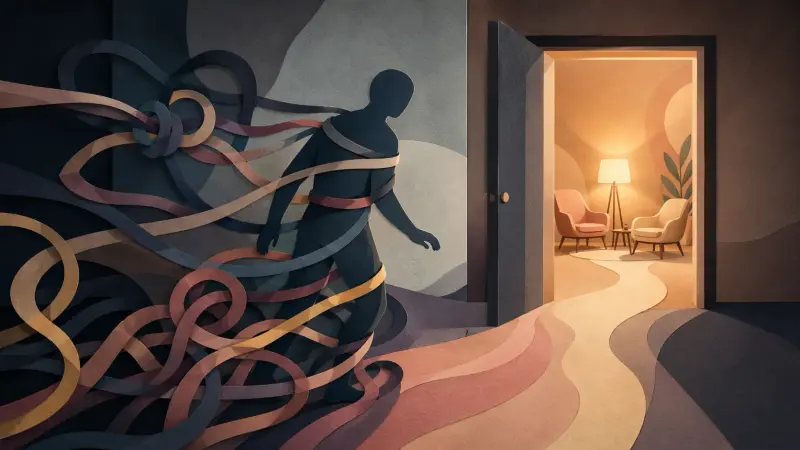
When a passing comment ruins your whole day, or a simple remark turns into a feeling of rejection, you may start asking yourself: Was what happened truly painful, or has my response become larger than the situation? Heightened sensitivity does not mean you are weak or dramatic. Sometimes it is the result of a long accumulation of pressure, disappointment, criticism, or stress, until your emotional system becomes more ready to detect pain and defend you before you fully understand what happened.
But restoring balance does not mean becoming cold or losing your tenderness. It simply means learning how to separate the situation from its meaning, and what was actually said from what it stirred inside you, so you can protect your sensitivity instead of being drained by it. In this article from Tatmeen, we explain why emotional sensitivity can become amplified, and how it can be calmed gently and consciously, without being harsh with yourself or denying your feelings.
The Problem Is Not Sensitivity Itself
Emotional sensitivity does not necessarily mean weakness of character, and it does not mean that the person is always exaggerating for no reason. Sometimes this sensitivity is part of a strong attention to detail, an old fear of rejection, or an inner habit that quickly reads tone of voice, delayed replies, and facial expressions as negative signs. The problem begins when the feeling does not remain a simple reaction, but becomes a wave that disrupts your day and reinterprets situations through the lens of hurt.
That is why you may find yourself returning to a small situation many times, feeling insulted by a remark someone else might have moved past easily, or anticipating disappointment before you are sure what something means. What is needed here is not to become cold, but to regain the ability to place the event in its real size instead of letting it take up more space than it deserves.
What Raises the Intensity From Within
In many cases, heightened sensitivity does not come from the situation alone, but from an earlier inner load that lowers the threshold: accumulated exhaustion, ongoing pressure, disturbed sleep, or old experiences that made rejection feel like danger rather than ordinary disappointment. With this buildup, the self becomes faster to defend, withdraw, cry, or stay preoccupied for a long time with what was said and how it was said.
NHS1 explains that stress may appear as irritability, difficulty concentrating, feeling overwhelmed, and sleeping too much or too little. So the issue may not be only "too much sensitivity," but an exhausted inner system that receives everything sharply because it no longer has enough room to tolerate more.
Do Not Stop at the Most Recent Situation
When you are hurt by a word or action, it may seem that the whole solution lies in analyzing that moment: What did they mean? Why did they say it? Did they intend to hurt me? But balance sometimes begins with another question: Why was this specific situation able to ignite so much inside me? This question does not justify other people's harm, but it keeps you from remaining captive to them each time.
This is why we emphasize at Tatmeen that heightened sensitivity is not a final verdict on your personality, but a pattern that can be understood and softened. Sometimes its root is a fear of losing your place in a relationship, an old feeling of not being enough, or an environment where you became used to staying alert all the time so you would not be caught off guard. When you understand the root, your way of dealing with the surface changes. Not every remark remains a threat, and not every difference becomes a sign of rejection.
What Softens the Intensity Before It Swallows Your Day
Calming sensitivity does not begin by trying to cancel feelings. It begins by slowing their speed so you can catch up with them and understand them. What helps here are small practices that create space between the event and your first interpretation of it:
Name the feeling precisely: Is it embarrassment, rejection, disappointment, or fear that your value has decreased?
Delay your reply if you are at the peak of emotion, because the first interpretation is not always the most accurate one.
Test the meaning before accepting it: Did you understand the tone as an insult, or was it only direct?
Notice what came before your intensity: hunger, lack of sleep, stress, or accumulated situations that have not yet been processed.
The World Health Organization2 notes that keeping a daily routine and using simple stress-management techniques can help reduce the effect of stress. This matters because an emotionally sensitive person does not need harsh advice as much as they need a calmer rhythm: more balanced sleep, less time being drained, and clearer boundaries with what exhausts them.
Emotional Balance Shows in Relationships
The clearest sign of improvement is not that you have stopped being affected, but that you have become less impulsive in interpreting what affects you and calmer in expressing it. Your heart may remain quick to notice things, but you no longer hand it the steering wheel every time. You begin to notice the difference between feeling and fact, between a passing tone and a confirmed meaning, and between the need for clarity and the need for conflict.
When misunderstandings repeatedly damage your relationships, or you avoid people because you expect hurt before it happens, or one word is enough to disrupt your whole day, psychological support becomes a step toward understanding rather than exaggeration. The point is not for someone to simply tell you that you are sensitive. The point is to understand why signals become amplified for you, and how you can restore a calmer ability to tolerate, express, and set boundaries.
Finally
Emotional balance does not mean becoming less human. It means allowing feelings to return to their natural size so they do not swallow your day or your relationships. If heightened sensitivity is exhausting you at work, at home, or inside yourself alone, downloading the Tatmeen app and booking your first session may be a practical step that helps you move toward calmer understanding, without pressure or urgency.
Frequently Asked Questions
Is heightened sensitivity a fixed trait that never changes?
Not necessarily. It may increase with stress, lack of sleep, and painful experiences, and it may ease when you understand what triggers you and practice calming your response. What matters is not treating it as a final fate or a personal flaw.
Is ignoring feelings the solution?
No. Ignoring feelings may delay the reaction, but it does not soften it from within. What is usually more helpful is naming the feeling, understanding its cause, and delaying the reaction so that every emotional impact does not become conflict, withdrawal, or self-blame.
When do I know that I need help from a specialist?
When disruption keeps repeating in your relationships or work, when one word becomes enough to ruin a whole day, or when you live in constant anticipation of disappointment. At that point, it helps to understand the pattern deeply instead of settling for the label that you are sensitive.
A writer and researcher specializing in psychiatry, she focuses on mental health and the human emotions we experience but cannot always find the words to name. She writes about us—about humanity and the human experience—and simplifies complex topics to offer content that helps us better understand ourselves and life, ultimately making us feel less alone.
Every Tatmeen article is reviewed by care providers licensed by the Saudi Commission for Health Specialties, so what you read is accurate and trustworthy.
This article builds understanding and does not replace a licensed care provider.
Need someone to talk to?
Tatmeen's licensed care providers are available around the clock, and the app's urgent consultation connects you with one within minutes.
Download Tatmeen to explore care providers and booking options.
Smart matchingFour quick questions suggest the right care provider
Urgent consultationTalk to an available care provider within minutes
Free psychological measuresMore than 20 tests to understand how you are doing
Scan to download
{"data":{"id":"00f25dd4-e93a-4378-be6c-a4da7e9917dd","slug":"How-to-alleviate-relieve-sensitivity","arTitle":"تخفيف الحساسية المفرطة واستعادة التوازن النفسي","enTitle":"Easing Heightened Sensitivity and Restoring Emotional Balance","thumbnailAltText":"Person sitting on a cliff at sunset overlooking a calm river and mountains","estimatedReadingTime":6,"likesCount":145,"writer":{"id":"3ab72b74-f26f-4337-9b47-3114b0f90de5","arBio":"كاتبة وباحثة متخصصة في مجال الطب النفسي، تهتم بموضوعات الصحة النفسية وبالمشاعر الإنسانية التي نختبرها ولا نجد دائمًا الكلمات لتسميتها. تكتب عنّا؛ عن الإنسان وتجربته، وتبسّط الموضوعات المعقّدة لتقدّم محتوى يساعدنا على فهم ذواتنا والحياة أكثر، ويجعلنا نشعر بأننا بوحدة أقل.","enBio":"A writer and researcher specializing in psychiatry, she focuses on mental health and the human emotions we experience but cannot always find the words to name. She writes about us—about humanity and the human experience—and simplifies complex topics to offer content that helps us better understand ourselves and life, ultimately making us feel less alone.","user":{"slug":"ayat-alnajar","arFullName":"آيات النجار","enFullName":"Ayat Al-Najjar","publicProfileImageUrl":"https://cdn.tatmeen.sa/public/profile-images/02384455-68fa-40b6-ad05-609fde65cafa/21b9a610dde5dfc6d37af110c23e9c7ab3946be080c281beb000debf4f7d31a6.webp","publicProfileImage96Url":"https://cdn.tatmeen.sa/public/profile-images/02384455-68fa-40b6-ad05-609fde65cafa/21b9a610dde5dfc6d37af110c23e9c7ab3946be080c281beb000debf4f7d31a6-w96.webp","publicProfileImage192Url":"https://cdn.tatmeen.sa/public/profile-images/02384455-68fa-40b6-ad05-609fde65cafa/21b9a610dde5dfc6d37af110c23e9c7ab3946be080c281beb000debf4f7d31a6-w192.webp"}},"arContent":"","enContent":"","productionDocument":{"headings":[{"id":"article-section-the-problem-is-not-sensitivity-itself","text":"The Problem Is Not Sensitivity Itself"},{"id":"article-section-what-raises-the-intensity-from-within","text":"What Raises the Intensity From Within"},{"id":"article-section-do-not-stop-at-the-most-recent-situation","text":"Do Not Stop at the Most Recent Situation"},{"id":"article-section-what-softens-the-intensity-before-it-swallows-your-day","text":"What Softens the Intensity Before It Swallows Your Day"},{"id":"article-section-emotional-balance-shows-in-relationships","text":"Emotional Balance Shows in Relationships"},{"id":"article-section-finally","text":"Finally"}],"faqs":[{"question":"Is heightened sensitivity a fixed trait that never changes?","answer":"<p><span style=\"color:#000000\">Not necessarily. It may increase with stress, lack of sleep, and painful experiences, and it may ease when you understand what triggers you and practice calming your response. What matters is not treating it as a final fate or a personal flaw.</span></p>"},{"question":"Is ignoring feelings the solution?","answer":"<p><span style=\"color:#000000\">No. Ignoring feelings may delay the reaction, but it does not soften it from within. What is usually more helpful is naming the feeling, understanding its cause, and delaying the reaction so that every emotional impact does not become conflict, withdrawal, or self-blame.</span></p>"},{"question":"When do I know that I need help from a specialist?","answer":"<p><span style=\"color:#000000\">When disruption keeps repeating in your relationships or work, when one word becomes enough to ruin a whole day, or when you live in constant anticipation of disappointment. At that point, it helps to understand the pattern deeply instead of settling for the label that you are sensitive.</span></p>"}],"beforeSourcesHtml":"","sources":[{"title":"Stress - NHS","href":"https://www.nhs.uk/mental-health/feelings-symptoms-behaviours/feelings-and-symptoms/stress/","hostname":"nhs.uk"},{"title":"Stress - WHO","href":"https://www.who.int/news-room/questions-and-answers/item/stress","hostname":"who.int"},{"title":"Caring for Your Mental Health - NIMH","href":"https://www.nimh.nih.gov/health/topics/caring-for-your-mental-health","hostname":"nimh.nih.gov"},{"title":"Stress Effects on the Body - American Psychological Association","href":"https://www.apa.org/topics/stress/body","hostname":"apa.org"},{"title":"Anxiety Disorders - NIMH","href":"https://www.nimh.nih.gov/health/topics/anxiety-disorders","hostname":"nimh.nih.gov"}],"afterSourcesHtml":"","blocks":[{"type":"html","html":"<p><span style=\"color:#000000\">When a passing comment ruins your whole day, or a simple remark turns into a feeling of rejection, you may start asking yourself: Was what happened truly painful, or has my response become larger than the situation? Heightened sensitivity does not mean you are weak or dramatic. Sometimes it is the result of a long accumulation of pressure, disappointment, criticism, or stress, until your emotional system becomes more ready to detect pain and defend you before you fully understand what happened.</span></p><p><span style=\"color:#000000\">But restoring balance does not mean becoming cold or losing your tenderness. It simply means learning how to separate the situation from its meaning, and what was actually said from what it stirred inside you, so you can protect your sensitivity instead of being drained by it. In this article from Tatmeen, we explain why emotional sensitivity can become amplified, and how it can be calmed gently and consciously, without being harsh with yourself or denying your feelings.</span></p><h2 id=\"article-section-the-problem-is-not-sensitivity-itself\" data-toc-heading tabindex=\"-1\"><span id=\"the-problem-is-not-sensitivity-itself-1\" aria-hidden=\"true\"></span><span style=\"color:#000000\"><strong>The Problem Is Not Sensitivity Itself</strong></span></h2><p><span style=\"color:#000000\">Emotional sensitivity does not necessarily mean weakness of character, and it does not mean that the person is always exaggerating for no reason. Sometimes this sensitivity is part of a strong attention to detail, an old fear of rejection, or an inner habit that quickly reads tone of voice, delayed replies, and facial expressions as negative signs. The problem begins when the feeling does not remain a simple reaction, but becomes a wave that disrupts your day and reinterprets situations through the lens of hurt.</span></p><p><span style=\"color:#000000\">That is why you may find yourself returning to a small situation many times, feeling insulted by a remark someone else might have moved past easily, or anticipating disappointment before you are sure what something means. What is needed here is not to become cold, but to regain the ability to place the event in its real size instead of letting it take up more space than it deserves.</span></p><h2 id=\"article-section-what-raises-the-intensity-from-within\" data-toc-heading tabindex=\"-1\"><span id=\"what-raises-the-intensity-from-within-2\" aria-hidden=\"true\"></span><span style=\"color:#000000\"><strong>What Raises the Intensity From Within</strong></span></h2><p><span style=\"color:#000000\">In many cases, heightened sensitivity does not come from the situation alone, but from an earlier inner load that lowers the threshold: accumulated exhaustion, ongoing pressure, disturbed sleep, or old experiences that made rejection feel like danger rather than ordinary disappointment. With this buildup, the self becomes faster to defend, withdraw, cry, or stay preoccupied for a long time with what was said and how it was said.</span></p><p><a href=\"https://www.nhs.uk/mental-health/feelings-symptoms-behaviours/feelings-and-symptoms/stress/\" target=\"_blank\" rel=\"nofollow noopener noreferrer\"><span style=\"color:#1155cc\"><u>NHS</u></span></a><span style=\"color:#000000\"> explains that stress may appear as irritability, difficulty concentrating, feeling overwhelmed, and sleeping too much or too little. So the issue may not be only \"too much sensitivity,\" but an exhausted inner system that receives everything sharply because it no longer has enough room to tolerate more.</span></p><h2 id=\"article-section-do-not-stop-at-the-most-recent-situation\" data-toc-heading tabindex=\"-1\"><span id=\"do-not-stop-at-the-most-recent-situation-3\" aria-hidden=\"true\"></span><span style=\"color:#000000\"><strong>Do Not Stop at the Most Recent Situation</strong></span></h2><p><span style=\"color:#000000\">When you are hurt by a word or action, it may seem that the whole solution lies in analyzing that moment: What did they mean? Why did they say it? Did they intend to hurt me? But balance sometimes begins with another question: Why was this specific situation able to ignite so much inside me? This question does not justify other people's harm, but it keeps you from remaining captive to them each time.</span></p><p><span style=\"color:#000000\">This is why we emphasize at Tatmeen that heightened sensitivity is not a final verdict on your personality, but a pattern that can be understood and softened. Sometimes its root is a fear of losing your place in a relationship, an old feeling of not being enough, or an environment where you became used to staying alert all the time so you would not be caught off guard. When you understand the root, your way of dealing with the surface changes. Not every remark remains a threat, and not every difference becomes a sign of rejection.</span></p><h2 id=\"article-section-what-softens-the-intensity-before-it-swallows-your-day\" data-toc-heading tabindex=\"-1\"><span id=\"what-softens-the-intensity-before-it-swallows-your-day-4\" aria-hidden=\"true\"></span><span style=\"color:#000000\"><strong>What Softens the Intensity Before It Swallows Your Day</strong></span></h2><p><span style=\"color:#000000\">Calming sensitivity does not begin by trying to cancel feelings. It begins by slowing their speed so you can catch up with them and understand them. What helps here are small practices that create space between the event and your first interpretation of it:</span></p><ul><li><p><span style=\"color:#000000\">Name the feeling precisely: Is it embarrassment, rejection, disappointment, or fear that your value has decreased?</span></p></li><li><p><span style=\"color:#000000\">Delay your reply if you are at the peak of emotion, because the first interpretation is not always the most accurate one.</span></p></li><li><p><span style=\"color:#000000\">Test the meaning before accepting it: Did you understand the tone as an insult, or was it only direct?</span></p></li><li><p><span style=\"color:#000000\">Notice what came before your intensity: hunger, lack of sleep, stress, or accumulated situations that have not yet been processed.</span></p></li></ul><p><span style=\"color:#000000\">The </span><a href=\"https://www.who.int/news-room/questions-and-answers/item/stress\" target=\"_blank\" rel=\"nofollow noopener noreferrer\"><span style=\"color:#1155cc\"><u>World Health Organization</u></span></a><span style=\"color:#000000\"> notes that keeping a daily routine and using simple stress-management techniques can help reduce the effect of stress. This matters because an emotionally sensitive person does not need harsh advice as much as they need a calmer rhythm: more balanced sleep, less time being drained, and clearer boundaries with what exhausts them.</span></p><h2 id=\"article-section-emotional-balance-shows-in-relationships\" data-toc-heading tabindex=\"-1\"><span id=\"emotional-balance-shows-in-relationships-5\" aria-hidden=\"true\"></span><span style=\"color:#000000\"><strong>Emotional Balance Shows in Relationships</strong></span></h2><p><span style=\"color:#000000\">The clearest sign of improvement is not that you have stopped being affected, but that you have become less impulsive in interpreting what affects you and calmer in expressing it. Your heart may remain quick to notice things, but you no longer hand it the steering wheel every time. You begin to notice the difference between feeling and fact, between a passing tone and a confirmed meaning, and between the need for clarity and the need for conflict.</span></p><p><span style=\"color:#000000\">When misunderstandings repeatedly damage your relationships, or you avoid people because you expect hurt before it happens, or one word is enough to disrupt your whole day, psychological support becomes a step toward understanding rather than exaggeration. The point is not for someone to simply tell you that you are sensitive. The point is to understand why signals become amplified for you, and how you can restore a calmer ability to tolerate, express, and set boundaries.</span></p><h2 id=\"article-section-finally\" data-toc-heading tabindex=\"-1\"><span id=\"finally-6\" aria-hidden=\"true\"></span><span style=\"color:#000000\"><strong>Finally</strong></span></h2><p><span style=\"color:#000000\">Emotional balance does not mean becoming less human. It means allowing feelings to return to their natural size so they do not swallow your day or your relationships. If heightened sensitivity is exhausting you at work, at home, or inside yourself alone, </span><a href=\"https://tatmeen.sa/download/\"><span style=\"color:#1155cc\"><u>downloading the Tatmeen app and booking your first session</u></span></a><span style=\"color:#000000\"> may be a practical step that helps you move toward calmer understanding, without pressure or urgency.</span></p>"}],"inlineCtaSignatures":[],"_experienceAliases":{"v":1,"fields":["html","bodyHtml"],"faqs":[0,1,2]}},"createdAt":"2026-07-14T21:00:00.000Z","updatedAt":"2026-08-31T21:05:00.051Z","disorderGroups":[{"id":"1e82772d-a1a7-4d29-b475-be9d6b67ae02","slug":"common-mental-issues","arName":"اضطرابات نفسية شائعة","enName":"Common Mental Issues"},{"id":"4499a52a-06f8-4022-a64d-304e5eca51cc","slug":"life-challenges-and-stress","arName":"تحديات الحياة والضغوط","enName":"Life Challenges & Stress"}],"reviewer":{"arFullName":"فريق تطمين","enFullName":"Tatmeen team","slug":"tatmeen-team","kind":"organization"},"productionArticle":true,"promotionAllowed":true,"preparedCover":{"src":"https://cdn.tatmeen.sa/public/article-lcp/article-lcp-v2/sha256-d5155744cf96fbef5d284406c3582fd94df7cf9b1c6671485a6fb11c180ea196/800-ac3f8abf951a0e93d336ad091c287c42342954779f0d1c3734c9a3bd4db04da0.avif","fallback":"https://cdn.tatmeen.sa/public/article-lcp/article-lcp-v2/sha256-d5155744cf96fbef5d284406c3582fd94df7cf9b1c6671485a6fb11c180ea196/800-ca34b41cc310b150d465ded60455918d20f7347b813e75a676b17c8b3b022024.webp","directUrl":"https://cdn.tatmeen.sa/blog-cover/Tatmeen-1784134336940.webp","isGolden":true,"avifSrcset":"https://cdn.tatmeen.sa/public/article-lcp/article-lcp-v2/sha256-d5155744cf96fbef5d284406c3582fd94df7cf9b1c6671485a6fb11c180ea196/400-1c0e7ca7b208eb7613b2ca55290ef82b6e4adf57cd31cd0f68c86022fe721c23.avif 400w, https://cdn.tatmeen.sa/public/article-lcp/article-lcp-v2/sha256-d5155744cf96fbef5d284406c3582fd94df7cf9b1c6671485a6fb11c180ea196/640-05b4b98646f83c783ffa61180c464536c5321a84f3f0a5b189561f0ab3600544.avif 640w, https://cdn.tatmeen.sa/public/article-lcp/article-lcp-v2/sha256-d5155744cf96fbef5d284406c3582fd94df7cf9b1c6671485a6fb11c180ea196/800-ac3f8abf951a0e93d336ad091c287c42342954779f0d1c3734c9a3bd4db04da0.avif 800w, https://cdn.tatmeen.sa/public/article-lcp/article-lcp-v2/sha256-d5155744cf96fbef5d284406c3582fd94df7cf9b1c6671485a6fb11c180ea196/1200-899094eecba944a290f540a74ac652aec6c991dbfeebdf50582a8947e501ca1a.avif 1200w","webpSrcset":"https://cdn.tatmeen.sa/public/article-lcp/article-lcp-v2/sha256-d5155744cf96fbef5d284406c3582fd94df7cf9b1c6671485a6fb11c180ea196/400-4a244d15e54700dd89c9f393015d957804ed52b730504848ffb0ba511a377dd1.webp 400w, https://cdn.tatmeen.sa/public/article-lcp/article-lcp-v2/sha256-d5155744cf96fbef5d284406c3582fd94df7cf9b1c6671485a6fb11c180ea196/640-43a301923861b9ceb915a61f209de89fa90d6d6b272a1207076596a4cf5f9a78.webp 640w, https://cdn.tatmeen.sa/public/article-lcp/article-lcp-v2/sha256-d5155744cf96fbef5d284406c3582fd94df7cf9b1c6671485a6fb11c180ea196/800-ca34b41cc310b150d465ded60455918d20f7347b813e75a676b17c8b3b022024.webp 800w, https://cdn.tatmeen.sa/public/article-lcp/article-lcp-v2/sha256-d5155744cf96fbef5d284406c3582fd94df7cf9b1c6671485a6fb11c180ea196/1200-dc19c801020ec0a03bb127cee67c924011cf01b1691c732ba07cd75aa4fc5b77.webp 1200w","phoneAvifSrcset":"https://cdn.tatmeen.sa/public/article-lcp/article-lcp-v2/sha256-d5155744cf96fbef5d284406c3582fd94df7cf9b1c6671485a6fb11c180ea196/400-1c0e7ca7b208eb7613b2ca55290ef82b6e4adf57cd31cd0f68c86022fe721c23.avif 400w, https://cdn.tatmeen.sa/public/article-lcp/article-lcp-v2/sha256-d5155744cf96fbef5d284406c3582fd94df7cf9b1c6671485a6fb11c180ea196/640-05b4b98646f83c783ffa61180c464536c5321a84f3f0a5b189561f0ab3600544.avif 640w, https://cdn.tatmeen.sa/public/article-lcp/article-lcp-v2/sha256-d5155744cf96fbef5d284406c3582fd94df7cf9b1c6671485a6fb11c180ea196/800-ac3f8abf951a0e93d336ad091c287c42342954779f0d1c3734c9a3bd4db04da0.avif 800w","phoneWebpSrcset":"https://cdn.tatmeen.sa/public/article-lcp/article-lcp-v2/sha256-d5155744cf96fbef5d284406c3582fd94df7cf9b1c6671485a6fb11c180ea196/400-4a244d15e54700dd89c9f393015d957804ed52b730504848ffb0ba511a377dd1.webp 400w, https://cdn.tatmeen.sa/public/article-lcp/article-lcp-v2/sha256-d5155744cf96fbef5d284406c3582fd94df7cf9b1c6671485a6fb11c180ea196/640-43a301923861b9ceb915a61f209de89fa90d6d6b272a1207076596a4cf5f9a78.webp 640w, https://cdn.tatmeen.sa/public/article-lcp/article-lcp-v2/sha256-d5155744cf96fbef5d284406c3582fd94df7cf9b1c6671485a6fb11c180ea196/800-ca34b41cc310b150d465ded60455918d20f7347b813e75a676b17c8b3b022024.webp 800w","width":800,"height":450},"previewTaxonomy":{"groups":[{"id":"1e82772d-a1a7-4d29-b475-be9d6b67ae02","slug":"common-mental-issues","arName":"اضطرابات نفسية شائعة","enName":"Common Mental Issues"},{"id":"4499a52a-06f8-4022-a64d-304e5eca51cc","slug":"life-challenges-and-stress","arName":"تحديات الحياة والضغوط","enName":"Life Challenges & Stress"}],"topics":[{"id":"4b322099-fefa-4ba7-a3d1-4130f206046a","slug":"anxiety","arName":"قلق","enName":"Anxiety","groupSlug":"common-mental-issues","href":"/blog/category/common-mental-issues/anxiety/"}],"tags":[]},"previewProviderRecommendations":[{"id":"23ba62b8-9679-46a2-9439-b2801cafc59b","slug":"dr-mohammed-alanazi-4132","arFullName":"د. محمد العنزي","enFullName":"Dr. Mohammed ALANAZI","publicProfileImageUrl":"https://cdn.tatmeen.sa/public/profile-images/23ba62b8-9679-46a2-9439-b2801cafc59b/233e70d98cd910633553abf60e5ee8dd305797b64c4172746ab379f3b91a1461.webp","publicProfileImage96Url":"https://cdn.tatmeen.sa/public/profile-images/23ba62b8-9679-46a2-9439-b2801cafc59b/233e70d98cd910633553abf60e5ee8dd305797b64c4172746ab379f3b91a1461-w96.webp","publicProfileImage192Url":"https://cdn.tatmeen.sa/public/profile-images/23ba62b8-9679-46a2-9439-b2801cafc59b/233e70d98cd910633553abf60e5ee8dd305797b64c4172746ab379f3b91a1461-w192.webp","specialization":{"arName":"طبيب أسرة","enName":"Family Physician"},"profileImageUrl":"https://cdn.tatmeen.sa/public/profile-images/23ba62b8-9679-46a2-9439-b2801cafc59b/233e70d98cd910633553abf60e5ee8dd305797b64c4172746ab379f3b91a1461-w192.webp","experienceYears":3,"consultantInfo":{"averageRating":{"average":0},"specialization":{"arGeneralName":"طبيب أسرة","enGeneralName":"Family Physician"}}},{"id":"4bcf0531-d58c-4284-aeed-b2563c966ee3","slug":"dr-sultan-albalawi-9701","arFullName":"د. سلطان البلوي","enFullName":"Dr. Sultan Albalawi","publicProfileImageUrl":"https://cdn.tatmeen.sa/public/profile-images/4bcf0531-d58c-4284-aeed-b2563c966ee3/7038797eec8398a3d17eebf66394b26366409d9a9faece56515311203b0600b2.webp","publicProfileImage96Url":"https://cdn.tatmeen.sa/public/profile-images/4bcf0531-d58c-4284-aeed-b2563c966ee3/7038797eec8398a3d17eebf66394b26366409d9a9faece56515311203b0600b2-w96.webp","publicProfileImage192Url":"https://cdn.tatmeen.sa/public/profile-images/4bcf0531-d58c-4284-aeed-b2563c966ee3/7038797eec8398a3d17eebf66394b26366409d9a9faece56515311203b0600b2-w192.webp","specialization":{"arName":"طبيب أسرة","enName":"Family Physician"},"profileImageUrl":"https://cdn.tatmeen.sa/public/profile-images/4bcf0531-d58c-4284-aeed-b2563c966ee3/7038797eec8398a3d17eebf66394b26366409d9a9faece56515311203b0600b2-w192.webp","experienceYears":3,"consultantInfo":{"averageRating":{"average":0},"specialization":{"arGeneralName":"طبيب أسرة","enGeneralName":"Family Physician"}}},{"id":"025d770d-f6d4-405b-be1c-d45dde63fbf7","slug":"akila-alomran-7545","arFullName":"عقيله العمران","enFullName":"Akila Alomran","publicProfileImageUrl":"https://cdn.tatmeen.sa/public/profile-images/025d770d-f6d4-405b-be1c-d45dde63fbf7/44a990b9294f02c9810c69a68b8913a6afac0eb30d1b7494155f31b6dde9378b.webp","publicProfileImage96Url":"https://cdn.tatmeen.sa/public/profile-images/025d770d-f6d4-405b-be1c-d45dde63fbf7/44a990b9294f02c9810c69a68b8913a6afac0eb30d1b7494155f31b6dde9378b-w96.webp","publicProfileImage192Url":"https://cdn.tatmeen.sa/public/profile-images/025d770d-f6d4-405b-be1c-d45dde63fbf7/44a990b9294f02c9810c69a68b8913a6afac0eb30d1b7494155f31b6dde9378b-w192.webp","specialization":{"arName":"أخصائي نفسي","enName":"Psychologist"},"profileImageUrl":"https://cdn.tatmeen.sa/public/profile-images/025d770d-f6d4-405b-be1c-d45dde63fbf7/44a990b9294f02c9810c69a68b8913a6afac0eb30d1b7494155f31b6dde9378b-w192.webp","experienceYears":3,"consultantInfo":{"averageRating":{"average":5},"specialization":{"arGeneralName":"أخصائي نفسي","enGeneralName":"Psychologist"}}}],"previewCareProviders":[{"id":"09364052-c2a9-4c52-9717-7ce2093b8d0a","slug":"kholoud-alharbi-5221","arFullName":"خلود الحربي","enFullName":"Kholoud Alharbi","publicProfileImageUrl":"https://cdn.tatmeen.sa/public/profile-images/09364052-c2a9-4c52-9717-7ce2093b8d0a/4a0aeb81619e351b77f4323e3605a0a00acc7ca3c82ee7cc5ca2c9e8ef716049.webp","publicProfileImage96Url":"https://cdn.tatmeen.sa/public/profile-images/09364052-c2a9-4c52-9717-7ce2093b8d0a/4a0aeb81619e351b77f4323e3605a0a00acc7ca3c82ee7cc5ca2c9e8ef716049-w96.webp","publicProfileImage192Url":"https://cdn.tatmeen.sa/public/profile-images/09364052-c2a9-4c52-9717-7ce2093b8d0a/4a0aeb81619e351b77f4323e3605a0a00acc7ca3c82ee7cc5ca2c9e8ef716049-w192.webp","gender":"FEMALE","specialization":{"arName":"أخصائي نفسي","enName":"Psychologist"}},{"id":"6f037535-1dca-4b50-a8b2-5974b7323286","slug":"salah-althobaiti-9053","arFullName":"صلاح الثبيتي","enFullName":"Salah Althobaiti","publicProfileImageUrl":"https://cdn.tatmeen.sa/public/profile-images/6f037535-1dca-4b50-a8b2-5974b7323286/35b6bd7fad9b1e004c1835803eb9c1b56dcacd380685ec8bff141f0fb888005c.webp","publicProfileImage96Url":"https://cdn.tatmeen.sa/public/profile-images/6f037535-1dca-4b50-a8b2-5974b7323286/35b6bd7fad9b1e004c1835803eb9c1b56dcacd380685ec8bff141f0fb888005c-w96.webp","publicProfileImage192Url":"https://cdn.tatmeen.sa/public/profile-images/6f037535-1dca-4b50-a8b2-5974b7323286/35b6bd7fad9b1e004c1835803eb9c1b56dcacd380685ec8bff141f0fb888005c-w192.webp","gender":"MALE","specialization":{"arName":"أخصائي نفسي","enName":"Psychologist"}},{"id":"3cc806e8-616b-4884-9f21-a75b378580a2","slug":"aisha-al-hashim-8667","arFullName":"عائشة ال هاشم","enFullName":"Aisha Al Hashim","publicProfileImageUrl":"https://cdn.tatmeen.sa/public/profile-images/3cc806e8-616b-4884-9f21-a75b378580a2/27f523d03be4dcfa1f6a79f70c1773887434e698990d214cd990caec56a44798.webp","publicProfileImage96Url":"https://cdn.tatmeen.sa/public/profile-images/3cc806e8-616b-4884-9f21-a75b378580a2/27f523d03be4dcfa1f6a79f70c1773887434e698990d214cd990caec56a44798-w96.webp","publicProfileImage192Url":"https://cdn.tatmeen.sa/public/profile-images/3cc806e8-616b-4884-9f21-a75b378580a2/27f523d03be4dcfa1f6a79f70c1773887434e698990d214cd990caec56a44798-w192.webp","gender":"FEMALE","specialization":{"arName":"أخصائي نفسي","enName":"Psychologist"}},{"id":"db2ce1a0-9325-4471-b7ce-eb2e811c30a3","slug":"amer-qutub-2441","arFullName":"عامر قطب","enFullName":"Amer Qutub","publicProfileImageUrl":"https://cdn.tatmeen.sa/public/profile-images/db2ce1a0-9325-4471-b7ce-eb2e811c30a3/80580f99bfd7fe2b2a9cf8eed73ab532f5086d1efe053b0aa57358c1ce004261.webp","publicProfileImage96Url":"https://cdn.tatmeen.sa/public/profile-images/db2ce1a0-9325-4471-b7ce-eb2e811c30a3/80580f99bfd7fe2b2a9cf8eed73ab532f5086d1efe053b0aa57358c1ce004261-w96.webp","publicProfileImage192Url":"https://cdn.tatmeen.sa/public/profile-images/db2ce1a0-9325-4471-b7ce-eb2e811c30a3/80580f99bfd7fe2b2a9cf8eed73ab532f5086d1efe053b0aa57358c1ce004261-w192.webp","gender":"MALE","specialization":{"arName":"أخصائي نفسي","enName":"Psychologist"}},{"id":"94765496-dbdf-4631-a01b-7df5f788668d","slug":"abdullrahman-alhamoudi-3045","arFullName":"عبدالرحمن الحمودي","enFullName":"Abdulrahman Alhamoudi","publicProfileImageUrl":"https://cdn.tatmeen.sa/public/profile-images/94765496-dbdf-4631-a01b-7df5f788668d/2d49f6b6493c564afb6f50b6c3634231dff3a5cf8353acfab393d1b2a88037d1.webp","publicProfileImage96Url":"https://cdn.tatmeen.sa/public/profile-images/94765496-dbdf-4631-a01b-7df5f788668d/2d49f6b6493c564afb6f50b6c3634231dff3a5cf8353acfab393d1b2a88037d1-w96.webp","publicProfileImage192Url":"https://cdn.tatmeen.sa/public/profile-images/94765496-dbdf-4631-a01b-7df5f788668d/2d49f6b6493c564afb6f50b6c3634231dff3a5cf8353acfab393d1b2a88037d1-w192.webp","gender":"MALE","specialization":{"arName":"أخصائي نفسي","enName":"Psychologist"}},{"id":"618dba89-5b70-4b46-8304-741b7ac8ecd3","slug":"abdullah-mari-1311","arFullName":"عبدالله مرعي","enFullName":"Abdullah Mari","publicProfileImageUrl":"https://cdn.tatmeen.sa/public/profile-images/618dba89-5b70-4b46-8304-741b7ac8ecd3/6b4a3bfb59f8a304ca79083b32859b46baad2e1d692974a47c02c1f66bd11129.webp","publicProfileImage96Url":"https://cdn.tatmeen.sa/public/profile-images/618dba89-5b70-4b46-8304-741b7ac8ecd3/6b4a3bfb59f8a304ca79083b32859b46baad2e1d692974a47c02c1f66bd11129-w96.webp","publicProfileImage192Url":"https://cdn.tatmeen.sa/public/profile-images/618dba89-5b70-4b46-8304-741b7ac8ecd3/6b4a3bfb59f8a304ca79083b32859b46baad2e1d692974a47c02c1f66bd11129-w192.webp","gender":"MALE","specialization":{"arName":"أخصائي نفسي","enName":"Psychologist"}},{"id":"3b50a5d5-e795-407f-8676-fd7f0e1bb7a0","slug":"abdulaziz-bin-hudayan-4940","arFullName":"عبدالعزيز بن هديان","enFullName":"Abdulaziz Bin Hudayan","publicProfileImageUrl":"https://cdn.tatmeen.sa/public/profile-images/3b50a5d5-e795-407f-8676-fd7f0e1bb7a0/710ff0fe1fb00cdb5042092e27b7910b480a439b02251ecded62d7758eefce95.webp","publicProfileImage96Url":"https://cdn.tatmeen.sa/public/profile-images/3b50a5d5-e795-407f-8676-fd7f0e1bb7a0/710ff0fe1fb00cdb5042092e27b7910b480a439b02251ecded62d7758eefce95-w96.webp","publicProfileImage192Url":"https://cdn.tatmeen.sa/public/profile-images/3b50a5d5-e795-407f-8676-fd7f0e1bb7a0/710ff0fe1fb00cdb5042092e27b7910b480a439b02251ecded62d7758eefce95-w192.webp","gender":"MALE","specialization":{"arName":"أخصائي نفسي","enName":"Psychologist"}}],"previewDownload":{"href":"/download","title":{"ar":"خطوة واحدة لأجلك، ابدأ الآن","en":"One step for you, start now"},"description":{"ar":"حمّل تطبيق تطمين لاستكشاف مقدمي الرعاية وخيارات الحجز.","en":"Download Tatmeen to explore care providers and booking options."},"posterSrc":"/images/home/cta-ar-new-1.webp","videoSrc":"/images/home/cta-ar-new-1.mp4","videoPosterSrc":"/images/home/cta-ar-new-1.webp","videoPosterEnSrc":"/images/home/cta-en-new-1.webp","videoType":"video/mp4","appStoreHref":"https://apps.apple.com/us/app/tatmeen-%D8%AA%D8%B7%D9%85%D9%8A%D9%86/id6473836983","googlePlayHref":"https://play.google.com/store/apps/details?id=com.TatmeenApp.user&hl=en"},"previewRelatedArticles":[{"id":"dbdcbe3d-731d-48e7-bb17-fe1705dc2ec7","slug":"why-cancel-therapy-last-minute","route":"/blog/why-cancel-therapy-last-minute/","title":{"ar":"لماذا نشعر بالرغبة في إلغاء جلسة العلاج في اللحظة الأخيرة؟","en":"Why Do We Feel Like Canceling Therapy at the Last Minute?"},"image":"https://cdn.tatmeen.sa/public/article-lcp/article-lcp-v2/sha256-f2547fbf8473d769f2be468e53b712b5f33e8faa8545f8e39410fe713b64e47c/800-c810d1e4661aeb1cbd979626ebe53927ef61f1b907f3c9a8fdac8626b7bea9b5.webp","directImageFallback":"https://cdn.tatmeen.sa/blog-cover/Tatmeen-1776967264668.webp","arThumbnailAltText":"a person approaching the therapy session being held back by negative thoughts","thumbnailAltText":"a person approaching the therapy session being held back by negative thoughts","topic":{"label":{"ar":"اضطرابات نفسية شائعة","en":"Common Mental Issues"}},"readingTimeMinutes":5},{"id":"af904b56-631b-40d5-8a89-c6abf387235a","slug":"How-to-treat-anxiety-and-fear","route":"/blog/How-to-treat-anxiety-and-fear/","title":{"ar":"كيفية علاج القلق والخوف؟","en":"How to Treat Anxiety and Fear"},"image":"https://cdn.tatmeen.sa/public/article-lcp/article-lcp-v2/sha256-931de9b7b43c4633adaec24c0c8cf9efb725ada1d97ffc76d1aef5e51d9e139f/630-ac596fd9d80670a5122493befe493613483a9038c4cf168208d84bab6de3440b.webp","directImageFallback":"https://cdn.tatmeen.sa/blog-cover/1704726770215-Tatmeen-img-812","arThumbnailAltText":"Person grips their hair with both hands and looks ahead with wide eyes","thumbnailAltText":"Person grips their hair with both hands and looks ahead with wide eyes","topic":{"label":{"ar":"اضطرابات نفسية شائعة","en":"Common Mental Issues"}},"readingTimeMinutes":5},{"id":"0568d64f-6c91-4ff6-833e-21f8ac60810c","slug":"understanding-anxiety-symptoms-causes-treatment","route":"/blog/understanding-anxiety-symptoms-causes-treatment/","title":{"ar":"فهم القلق: الأعراض والأسباب وطرق العلاج","en":"Understanding Anxiety: Symptoms, Causes, and Treatment Methods"},"image":"https://cdn.tatmeen.sa/public/article-lcp/article-lcp-v2/sha256-4eed4f1d126cd3aba4f09886799d5f88594e70340069ee2c1f785bcb1440eadd/800-f85f9a2cc1afd3203d39b71739cdb7aa2e894f1fe18b44a6e670ee1875e93dca.webp","directImageFallback":"https://cdn.tatmeen.sa/blog-cover/Tatmeen-1777481890080.webp","arThumbnailAltText":"فهم القلق وأعراضه وأسبابه وطرق العلاج النفسي الفعّال","thumbnailAltText":"فهم القلق وأعراضه وأسبابه وطرق العلاج النفسي الفعّال","topic":{"label":{"ar":"اضطرابات نفسية شائعة","en":"Common Mental Issues"}},"readingTimeMinutes":5},{"id":"d368060c-48c2-4cfc-a22a-5ca36a7788f8","slug":"how-to-support-someone-with-anxiety-guide-friends-family","route":"/blog/how-to-support-someone-with-anxiety-guide-friends-family/","title":{"ar":"كيف تدعم شخصًا يعاني من القلق؟ دليل للأصدقاء والعائلة","en":"How to Support Someone with Anxiety? A Guide for Friends and Family"},"image":"https://cdn.tatmeen.sa/public/article-lcp/article-lcp-v2/sha256-d860dded1ce707e7f2198ed5ac20a35408c7fe857d12ed79ff6cbc11c5a91bf9/800-494f2740bf19a00baa57e53da64861abff5c03ccad0abee69e819c3b05e65f61.webp","directImageFallback":"https://cdn.tatmeen.sa/blog-cover/Tatmeen-1777567602720.webp","arThumbnailAltText":"كيف تدعم شخصاً يعاني من القلق دليل للأصدقاء والعائلة","thumbnailAltText":"كيف تدعم شخصاً يعاني من القلق دليل للأصدقاء والعائلة","topic":{"label":{"ar":"اضطرابات نفسية شائعة","en":"Common Mental Issues"}},"readingTimeMinutes":5}],"previewRelatedReadStates":{}},"locale":"en","device":"desktop","path":"/en/blog/How-to-alleviate-relieve-sensitivity/","readingControls":false,"config":{"public":{"BUCKET_URL":"https://cdn.tatmeen.sa/","APP_BASE_URL":"https://tatmeen.sa","intercomAppId":"ppcnu9e3"}}}