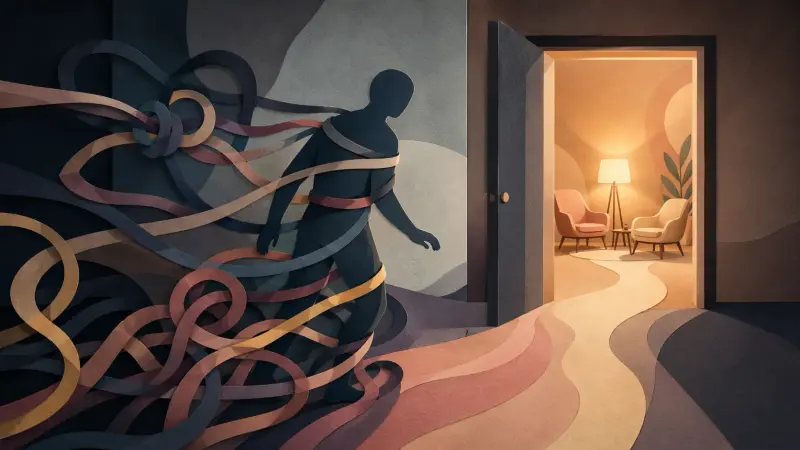
Have you ever felt excited to attend a therapy session, then suddenly found yourself thinking about canceling it just a few hours or even minutes before it starts? You might feel hesitant or vaguely uncomfortable inside, and begin spinning flimsy excuses to back out. Your mind might pose questions like: “Am I really ready?” “Will I embarrass myself in front of the therapist?” “Do I really need this session?” In this article, Tatmeen’s mental health platform aims to clarify the underlying psychological reasons behind this sudden feeling and offer practical tips to help you get past this tough stage, so you can continue your journey toward improved mental health and emotional balance.
Why do we hesitate and feel like canceling a therapy session?
Fear of facing oneself A therapy session can be a place where you open the closets of your mind, bringing out painful memories or difficult situations you might wish to forget. This confrontation forces you to confront deep-seated emotions and major challenges. It’s natural for you to try to avoid anything that compels you to relive past pain, as human nature often leads us to withdraw from potential sources of psychological pain—even if that step is necessary for healing.
Anxiety about others’ judgments You might be overwhelmed by the feeling that the therapist or others will judge you or see you as “ill” or “weak.” Although therapists are completely accustomed to dealing with all sorts of cases and emotions, the fear of being judged can still be a barrier for some. Sometimes the mind jumps ahead to negative scenarios: “What if I find out my problem has no solution?” or “What if the therapist doesn’t understand my situation?” This triggers a desire to cancel the session as a way to protect yourself from possible rejection or embarrassment. To give you absolute peace of mind and a suitable space to express yourself, Tatmeen’s doctors are the best in the Kingdom on both a professional and human level. You can now book your online therapy session via Tatmeen.
Internal resistance to change Much like certain behavioral addictions, the human mind may find a familiar comfort in its current state—even if it’s a state of suffering—compared to the unknown that change might bring. If this is your first time starting therapy, you might wonder: “Will my life really change? Will I lose a part of my identity if I abandon my old behavior?” Research indicates that people often fear moving from one stage to another because they don’t know what awaits them. As a result, they resist therapy, sometimes unconsciously.
Embarrassment about discussing personal problems Many people lack the courage to talk about sensitive matters with a stranger, even if that stranger is a qualified therapist. Perhaps you grew up in an environment that didn’t encourage open discussion, making the thought of revealing intimate details terrifying. As your appointment nears, questions circle in your mind: “How will I admit something like that?” or “What will they think of me if I share my illogical fears?” The desire to cancel becomes an escape route from a potentially awkward confrontation.
The psychological consequences of repeatedly canceling therapy sessions
Prolonging the duration of suffering By avoiding therapy sessions, you deny yourself the chance to resolve your problems early on, which may prolong your psychological symptoms. Early therapeutic intervention helps reduce the intensity of those symptoms and prevents them from escalating. On the other hand, continually postponing sessions hinders progress and causes you to lose your initial motivation.
Strengthening a cycle of guilt and withdrawal Canceling therapy appointments at the last moment can create a sense of guilt within you, as you realize you’re wasting the time and effort put into scheduling, both on your part and the therapist’s. This guilt can push you further into withdrawal. The more embarrassed you feel with yourself, the more you avoid confronting the issue.
Losing confidence in the therapeutic process When you keep canceling appointments, you may come to the incorrect conclusion that “therapy isn’t for me” without truly giving it a fair shot. As a result, you miss out on learning about different therapeutic methods available to you and figuring out which one suits your condition. You might also form a generally negative view of therapy, even though it wasn’t carried out properly in the first place.
How to overcome the sudden desire to cancel?
Recognize your feelings and label your fears Sometimes the urge to cancel stems from very clear emotions, such as fear of judgment or anxiety about revealing a big secret. Write these fears on paper and try giving them specific labels like “fear of wasting the therapist’s time” or “embarrassment about sharing personal details.” Identifying the problem clearly is the first step to addressing it.
Remember your core reason for seeking therapy Why did you initially decide to get help? What goals are you looking to achieve (for example: reducing stress, coping with depression, improving relationships)? Bring these motivations to mind a day or an hour before your session. Try to recall them mentally to remind yourself that facing temporary stress can lead you to a better place than before. According to experts at Tatmeen, keeping a clear picture of your therapy goals resets your enthusiasm and reduces the impact of anxiety.
Give yourself a small window before backing out Make it a rule for yourself: if you feel the urge to cancel your session, wait at least ten minutes before making a final decision. During that time, do something simple to ease your tension—like deep breathing, drinking a glass of water, or taking a short walk. Once your emotions calm slightly, you’ll often realize that canceling wasn’t as crucial as it seemed; it was more an attempt to dodge a future moment of discomfort.
Share your worries with your therapist If you decide to attend the session despite your fears, don’t hide your hesitation. Speak openly about your discomfort or fear of judgment. Therapists on Tatmeen’s platform are often trained to deal with these concerns; they may offer clarifications or reassurances that reduce your anxiety. Transparent communication strengthens your therapeutic relationship and helps you feel safe.
Practical tips for developing motivation and staying committed to therapy
Create a pre-session ritual Try to make the process more relaxing. For example, spend five minutes writing down the feelings you want to discuss, or enjoy some music. These small rituals make your experience more positive and reduce any looming dread.
Encouragement from someone you trust Look for a close friend or family member to support you. Share your fears and therapy plans with them, and ask for their encouragement or a simple text message before the appointment (such as: “Remember why you started!”). Social support can be the deciding factor in not canceling your session.
Celebrate small achievements If you manage to attend a session despite feeling a strong urge to cancel, celebrate that accomplishment. Self-appreciation motivates you to keep going. You might reward yourself with something you enjoy, even if it’s just a special cup of coffee or a short break doing an activity you love.
And finally… Feeling the urge to cancel a psychotherapy session at the last minute isn’t rare; it’s a sign of natural anxiety about opening up your inner world. Yet recognizing these motivations and confronting them in a rational way leads you to continue your therapeutic journey with confidence and awareness. Start your therapy journey and book an online therapy session with doctors and mental health specialists through Tatmeen, where you’ll find a professional team that understands your hesitations and helps you turn this fleeting anxiety into a step toward improvement and stability.
Frequently Asked Questions
What’s the best thing to do if I feel like canceling my session at the last minute?
Pause for a moment and try to pinpoint the real reason behind your desire: is it fear or embarrassment? Take a short break to breathe or talk to someone close, then go to your therapy session if it’s just passing anxiety.
Is it okay to tell my therapist about my hesitation to come?
Absolutely. Being open about your fears and hesitation helps the therapist understand your situation and support you. Therapists are trained to listen without judgment and offer solutions tailored to your specific needs.
What if I feel therapy isn’t right for me?
Try attending a few sessions first to give yourself and your therapist enough of a chance. If you don’t feel any progress or comfort over several sessions, discuss it with your therapist. You might benefit from trying another type of therapy or switching to a different specialist if necessary.
A writer and researcher specializing in psychiatry, she focuses on mental health and the human emotions we experience but cannot always find the words to name. She writes about us—about humanity and the human experience—and simplifies complex topics to offer content that helps us better understand ourselves and life, ultimately making us feel less alone.
Every Tatmeen article is reviewed by care providers licensed by the Saudi Commission for Health Specialties, so what you read is accurate and trustworthy.
This article builds understanding and does not replace a licensed care provider.
Need someone to talk to?
Tatmeen's licensed care providers are available around the clock, and the app's urgent consultation connects you with one within minutes.
Download Tatmeen to explore care providers and booking options.
Smart matchingFour quick questions suggest the right care provider
Urgent consultationTalk to an available care provider within minutes
Free psychological measuresMore than 20 tests to understand how you are doing
Scan to download
{"data":{"id":"dbdcbe3d-731d-48e7-bb17-fe1705dc2ec7","slug":"why-cancel-therapy-last-minute","arTitle":"لماذا نشعر بالرغبة في إلغاء جلسة العلاج في اللحظة الأخيرة؟","enTitle":"Why Do We Feel Like Canceling Therapy at the Last Minute?","thumbnailAltText":"a person approaching the therapy session being held back by negative thoughts","estimatedReadingTime":5,"likesCount":358,"writer":{"id":"3ab72b74-f26f-4337-9b47-3114b0f90de5","arBio":"كاتبة وباحثة متخصصة في مجال الطب النفسي، تهتم بموضوعات الصحة النفسية وبالمشاعر الإنسانية التي نختبرها ولا نجد دائمًا الكلمات لتسميتها. تكتب عنّا؛ عن الإنسان وتجربته، وتبسّط الموضوعات المعقّدة لتقدّم محتوى يساعدنا على فهم ذواتنا والحياة أكثر، ويجعلنا نشعر بأننا بوحدة أقل.","enBio":"A writer and researcher specializing in psychiatry, she focuses on mental health and the human emotions we experience but cannot always find the words to name. She writes about us—about humanity and the human experience—and simplifies complex topics to offer content that helps us better understand ourselves and life, ultimately making us feel less alone.","user":{"slug":"ayat-alnajar","arFullName":"آيات النجار","enFullName":"Ayat Al-Najjar","publicProfileImageUrl":"https://cdn.tatmeen.sa/public/profile-images/02384455-68fa-40b6-ad05-609fde65cafa/21b9a610dde5dfc6d37af110c23e9c7ab3946be080c281beb000debf4f7d31a6.webp","publicProfileImage96Url":"https://cdn.tatmeen.sa/public/profile-images/02384455-68fa-40b6-ad05-609fde65cafa/21b9a610dde5dfc6d37af110c23e9c7ab3946be080c281beb000debf4f7d31a6-w96.webp","publicProfileImage192Url":"https://cdn.tatmeen.sa/public/profile-images/02384455-68fa-40b6-ad05-609fde65cafa/21b9a610dde5dfc6d37af110c23e9c7ab3946be080c281beb000debf4f7d31a6-w192.webp"}},"arContent":"","enContent":"","productionDocument":{"headings":[],"faqs":[{"question":"What’s the best thing to do if I feel like canceling my session at the last minute?","answer":"<p><span style=\"color:#000000\">Pause for a moment and try to pinpoint the real reason behind your desire: is it fear or embarrassment? Take a short break to breathe or talk to someone close, then go to your therapy session if it’s just passing anxiety.</span></p>"},{"question":"Is it okay to tell my therapist about my hesitation to come?","answer":"<p><span style=\"color:#000000\">Absolutely. Being open about your fears and hesitation helps the therapist understand your situation and support you. Therapists are trained to listen without judgment and offer solutions tailored to your specific needs.</span></p>"},{"question":"What if I feel therapy isn’t right for me?","answer":"<p><span style=\"color:#000000\">Try attending a few sessions first to give yourself and your therapist enough of a chance. If you don’t feel any progress or comfort over several sessions, discuss it with your therapist. You might benefit from trying another type of therapy or switching to a different specialist if necessary.<br /></span></p>"}],"beforeSourcesHtml":"<p></p>","sources":[],"afterSourcesHtml":"","blocks":[{"type":"html","html":"<p><span style=\"color:#000000\">Have you ever felt excited to attend a therapy session, then suddenly found yourself thinking about canceling it just a few hours or even minutes before it starts? You might feel hesitant or vaguely uncomfortable inside, and begin spinning flimsy excuses to back out. Your mind might pose questions like: “Am I really ready?” “Will I embarrass myself in front of the therapist?” “Do I really need this session?” In this article, Tatmeen’s mental health platform aims to clarify the underlying psychological reasons behind this sudden feeling and offer practical tips to help you get past this tough stage, so you can continue your journey toward improved mental health and emotional balance.</span></p><p><br /></p><h3><span style=\"color:#000000\">Why do we hesitate and feel like canceling a therapy session?</span></h3><ol><li><p><span style=\"color:#000000\">Fear of facing oneself<br /> A therapy session can be a place where you open the closets of your mind, bringing out painful memories or difficult situations you might wish to forget. This confrontation forces you to confront deep-seated emotions and major challenges. It’s natural for you to try to avoid anything that compels you to relive past pain, as human nature often leads us to withdraw from potential sources of psychological pain—even if that step is necessary for healing.<br /><br /></span></p></li><li><p><span style=\"color:#000000\">Anxiety about others’ judgments<br /> You might be overwhelmed by the feeling that the therapist or others will judge you or see you as “ill” or “weak.” Although therapists are completely accustomed to dealing with all sorts of cases and emotions, the fear of being judged can still be a barrier for some. Sometimes the mind jumps ahead to negative scenarios: “What if I find out my problem has no solution?” or “What if the therapist doesn’t understand my situation?” This triggers a desire to cancel the session as a way to protect yourself from possible rejection or embarrassment. To give you absolute peace of mind and a suitable space to express yourself, Tatmeen’s doctors are the best in the Kingdom on both a professional and human level. You can now <u>book your online therapy session</u> via Tatmeen.<br /><br /></span></p></li><li><p><span style=\"color:#000000\">Internal resistance to change<br /> Much like certain<u> behavioral addictions</u>, the human mind may find a familiar comfort in its current state—even if it’s a state of suffering—compared to the unknown that change might bring. If this is your first time starting therapy, you might wonder: “Will my life really change? Will I lose a part of my identity if I abandon my old behavior?” Research indicates that people often fear moving from one stage to another because they don’t know what awaits them. As a result, they resist therapy, sometimes unconsciously.<br /><br /></span></p></li><li><p><span style=\"color:#000000\">Embarrassment about discussing personal problems<br /> Many people lack the courage to talk about sensitive matters with a stranger, even if that stranger is a qualified therapist. Perhaps you grew up in an environment that didn’t encourage open discussion, making the thought of revealing intimate details terrifying. As your appointment nears, questions circle in your mind: “How will I admit something like that?” or “What will they think of me if I share my illogical fears?” The desire to cancel becomes an escape route from a potentially awkward confrontation.<br /><br /></span></p></li></ol><p><br /></p><h3><span style=\"color:#000000\">The psychological consequences of repeatedly canceling therapy sessions</span></h3><ol><li><p><span style=\"color:#000000\">Prolonging the duration of suffering<br /> By avoiding therapy sessions, you deny yourself the chance to resolve your problems early on, which may prolong your psychological symptoms. Early therapeutic intervention helps reduce the intensity of those symptoms and prevents them from escalating. On the other hand, continually postponing sessions hinders progress and causes you to lose your initial motivation.<br /><br /></span></p></li><li><p><span style=\"color:#000000\">Strengthening a cycle of guilt and withdrawal<br /> Canceling therapy appointments at the last moment can create a sense of guilt within you, as you realize you’re wasting the time and effort put into scheduling, both on your part and the therapist’s. This guilt can push you further into withdrawal. The more embarrassed you feel with yourself, the more you avoid confronting the issue.<br /><br /></span></p></li><li><p><span style=\"color:#000000\">Losing confidence in the therapeutic process<br /> When you keep canceling appointments, you may come to the incorrect conclusion that “therapy isn’t for me” without truly giving it a fair shot. As a result, you miss out on learning about different therapeutic methods available to you and figuring out which one suits your condition. You might also form a generally negative view of therapy, even though it wasn’t carried out properly in the first place.<br /><br /></span></p></li></ol><p><br /></p><h3><span style=\"color:#000000\">How to overcome the sudden desire to cancel?</span></h3><ol><li><p><span style=\"color:#000000\">Recognize your feelings and label your fears<br /> Sometimes the urge to cancel stems from very clear emotions, such as fear of judgment or anxiety about revealing a big secret. Write these fears on paper and try giving them specific labels like “fear of wasting the therapist’s time” or “embarrassment about sharing personal details.” Identifying the problem clearly is the first step to addressing it.<br /><br /></span></p></li><li><p><span style=\"color:#000000\">Remember your core reason for seeking therapy<br /> Why did you initially decide to get help? What goals are you looking to achieve (for example: reducing stress, coping with depression, improving relationships)? Bring these motivations to mind a day or an hour before your session. Try to recall them mentally to remind yourself that facing temporary stress can lead you to a better place than before. According to experts at Tatmeen, keeping a clear picture of your therapy goals resets your enthusiasm and reduces the impact of anxiety.<br /><br /></span></p></li><li><p><span style=\"color:#000000\">Give yourself a small window before backing out<br /> Make it a rule for yourself: if you feel the urge to cancel your session, wait at least ten minutes before making a final decision. During that time, do something simple to ease your tension—like deep breathing, drinking a glass of water, or taking a short walk. Once your emotions calm slightly, you’ll often realize that canceling wasn’t as crucial as it seemed; it was more an attempt to dodge a future moment of discomfort.<br /><br /></span></p></li><li><p><span style=\"color:#000000\">Share your worries with your therapist<br /> If you decide to attend the session despite your fears, don’t hide your hesitation. Speak openly about your discomfort or fear of judgment. Therapists on Tatmeen’s platform are often trained to deal with these concerns; they may offer clarifications or reassurances that reduce your anxiety. Transparent communication strengthens your therapeutic relationship and helps you feel safe.<br /><br /></span></p></li></ol><p><br /></p><h3><span style=\"color:#000000\">Practical tips for developing motivation and staying committed to therapy</span></h3><ol><li><p><span style=\"color:#000000\">Create a pre-session ritual<br /> Try to make the process more relaxing. For example, spend five minutes writing down the feelings you want to discuss, or enjoy some music. These small rituals make your experience more positive and reduce any looming dread.<br /><br /></span></p></li><li><p><span style=\"color:#000000\">Encouragement from someone you trust<br /> Look for a close friend or family member to support you. Share your fears and therapy plans with them, and ask for their encouragement or a simple text message before the appointment (such as: “Remember why you started!”). Social support can be the deciding factor in not canceling your session.<br /><br /></span></p></li><li><p><span style=\"color:#000000\">Celebrate small achievements<br /> If you manage to attend a session despite feeling a strong urge to cancel, celebrate that accomplishment. Self-appreciation motivates you to keep going. You might reward yourself with something you enjoy, even if it’s just a special cup of coffee or a short break doing an activity you love.<br /><br /></span></p></li></ol><p><br /><span style=\"color:#000000\">And finally…<br /> Feeling the urge to cancel a psychotherapy session at the last minute isn’t rare; it’s a sign of natural anxiety about opening up your inner world. Yet recognizing these motivations and confronting them in a rational way leads you to continue your therapeutic journey with confidence and awareness. Start your therapy journey and<u> book an online therapy session</u> with doctors and mental health specialists through Tatmeen, where you’ll find a professional team that understands your hesitations and helps you turn this fleeting anxiety into a step toward improvement and stability.</span></p>"}],"inlineCtaSignatures":[],"_experienceAliases":{"v":1,"fields":["html","bodyHtml"],"faqs":[0,1,2]}},"createdAt":"2026-04-22T22:00:00.000Z","updatedAt":"2026-06-24T23:51:13.484Z","disorderGroups":[{"id":"1e82772d-a1a7-4d29-b475-be9d6b67ae02","slug":"common-mental-issues","arName":"اضطرابات نفسية شائعة","enName":"Common Mental Issues"}],"reviewer":{"arFullName":"فريق تطمين","enFullName":"Tatmeen team","slug":"tatmeen-team","kind":"organization"},"productionArticle":true,"promotionAllowed":true,"preparedCover":{"src":"https://cdn.tatmeen.sa/public/article-lcp/article-lcp-v2/sha256-f2547fbf8473d769f2be468e53b712b5f33e8faa8545f8e39410fe713b64e47c/800-5e12046ddbc293975281cc77765211aab51ce7af721fe4715bc51638251cb32f.avif","fallback":"https://cdn.tatmeen.sa/public/article-lcp/article-lcp-v2/sha256-f2547fbf8473d769f2be468e53b712b5f33e8faa8545f8e39410fe713b64e47c/800-c810d1e4661aeb1cbd979626ebe53927ef61f1b907f3c9a8fdac8626b7bea9b5.webp","directUrl":"https://cdn.tatmeen.sa/blog-cover/Tatmeen-1776967264668.webp","isGolden":true,"avifSrcset":"https://cdn.tatmeen.sa/public/article-lcp/article-lcp-v2/sha256-f2547fbf8473d769f2be468e53b712b5f33e8faa8545f8e39410fe713b64e47c/400-4645e468232c57052f18c04abcbaf31c84be7fed1aff8f7c5e345db806651ec2.avif 400w, https://cdn.tatmeen.sa/public/article-lcp/article-lcp-v2/sha256-f2547fbf8473d769f2be468e53b712b5f33e8faa8545f8e39410fe713b64e47c/640-d7e71b4e7ddaf9ed5b225cf36540968bcf46a5b498ed8587764f23b64d8f7cf9.avif 640w, https://cdn.tatmeen.sa/public/article-lcp/article-lcp-v2/sha256-f2547fbf8473d769f2be468e53b712b5f33e8faa8545f8e39410fe713b64e47c/800-5e12046ddbc293975281cc77765211aab51ce7af721fe4715bc51638251cb32f.avif 800w, https://cdn.tatmeen.sa/public/article-lcp/article-lcp-v2/sha256-f2547fbf8473d769f2be468e53b712b5f33e8faa8545f8e39410fe713b64e47c/1200-280dffba3166cf91e4c93ddf13233636f94f7f349c3995c82ffdc929a88676ea.avif 1200w","webpSrcset":"https://cdn.tatmeen.sa/public/article-lcp/article-lcp-v2/sha256-f2547fbf8473d769f2be468e53b712b5f33e8faa8545f8e39410fe713b64e47c/400-35421f264e2e0451ce734c42be872b106e2b35a7099d786d8d8f0d16d0ddfeed.webp 400w, https://cdn.tatmeen.sa/public/article-lcp/article-lcp-v2/sha256-f2547fbf8473d769f2be468e53b712b5f33e8faa8545f8e39410fe713b64e47c/640-b4265ad6d5c96e8ad56587b53ac5e7335c91b7a9908b31be10019911940738f4.webp 640w, https://cdn.tatmeen.sa/public/article-lcp/article-lcp-v2/sha256-f2547fbf8473d769f2be468e53b712b5f33e8faa8545f8e39410fe713b64e47c/800-c810d1e4661aeb1cbd979626ebe53927ef61f1b907f3c9a8fdac8626b7bea9b5.webp 800w, https://cdn.tatmeen.sa/public/article-lcp/article-lcp-v2/sha256-f2547fbf8473d769f2be468e53b712b5f33e8faa8545f8e39410fe713b64e47c/1200-141ee19353731135d7302fec8a98b3708328655b3459035b276e917879681fc7.webp 1200w","phoneAvifSrcset":"https://cdn.tatmeen.sa/public/article-lcp/article-lcp-v2/sha256-f2547fbf8473d769f2be468e53b712b5f33e8faa8545f8e39410fe713b64e47c/400-4645e468232c57052f18c04abcbaf31c84be7fed1aff8f7c5e345db806651ec2.avif 400w, https://cdn.tatmeen.sa/public/article-lcp/article-lcp-v2/sha256-f2547fbf8473d769f2be468e53b712b5f33e8faa8545f8e39410fe713b64e47c/640-d7e71b4e7ddaf9ed5b225cf36540968bcf46a5b498ed8587764f23b64d8f7cf9.avif 640w, https://cdn.tatmeen.sa/public/article-lcp/article-lcp-v2/sha256-f2547fbf8473d769f2be468e53b712b5f33e8faa8545f8e39410fe713b64e47c/800-5e12046ddbc293975281cc77765211aab51ce7af721fe4715bc51638251cb32f.avif 800w","phoneWebpSrcset":"https://cdn.tatmeen.sa/public/article-lcp/article-lcp-v2/sha256-f2547fbf8473d769f2be468e53b712b5f33e8faa8545f8e39410fe713b64e47c/400-35421f264e2e0451ce734c42be872b106e2b35a7099d786d8d8f0d16d0ddfeed.webp 400w, https://cdn.tatmeen.sa/public/article-lcp/article-lcp-v2/sha256-f2547fbf8473d769f2be468e53b712b5f33e8faa8545f8e39410fe713b64e47c/640-b4265ad6d5c96e8ad56587b53ac5e7335c91b7a9908b31be10019911940738f4.webp 640w, https://cdn.tatmeen.sa/public/article-lcp/article-lcp-v2/sha256-f2547fbf8473d769f2be468e53b712b5f33e8faa8545f8e39410fe713b64e47c/800-c810d1e4661aeb1cbd979626ebe53927ef61f1b907f3c9a8fdac8626b7bea9b5.webp 800w","width":800,"height":450},"previewTaxonomy":{"groups":[{"id":"1e82772d-a1a7-4d29-b475-be9d6b67ae02","slug":"common-mental-issues","arName":"اضطرابات نفسية شائعة","enName":"Common Mental Issues"}],"topics":[{"id":"4b322099-fefa-4ba7-a3d1-4130f206046a","slug":"anxiety","arName":"قلق","enName":"Anxiety","groupSlug":"common-mental-issues","href":"/blog/category/common-mental-issues/anxiety/"}],"tags":[{"id":"22e81878-b04f-4e67-8dd1-fe64bee6baaf","slug":"therapy-journey","arName":"رحلة العلاج النفسي","enName":"Therapy Journey & Process"},{"id":"ed48558e-5694-415a-9234-3044a5c29fe5","slug":"cognitive-patterns","arName":"الأنماط الذهنية والتشوهات الإدراكية","enName":"Thinking Patterns & Distortions"},{"id":"c2a6e8d3-de9c-435f-8c95-9727e7db14cc","slug":"explainer-awareness","arName":"دليل توعوي / شرح","enName":"Explainer / Awareness Guide"}]},"previewProviderRecommendations":[{"id":"278d5ac5-30ff-46ad-97be-c67cdd125836","slug":"dr-mohammed-alamari-8085","arFullName":"د. محمد العماري","enFullName":"Dr. Mohammed Alamari","publicProfileImageUrl":"https://cdn.tatmeen.sa/public/profile-images/278d5ac5-30ff-46ad-97be-c67cdd125836/69bdd11cb01784eed010eb9883403fd6ca4e4afcec739dcd6114fd8b85f133a8.webp","publicProfileImage96Url":"https://cdn.tatmeen.sa/public/profile-images/278d5ac5-30ff-46ad-97be-c67cdd125836/69bdd11cb01784eed010eb9883403fd6ca4e4afcec739dcd6114fd8b85f133a8-w96.webp","publicProfileImage192Url":"https://cdn.tatmeen.sa/public/profile-images/278d5ac5-30ff-46ad-97be-c67cdd125836/69bdd11cb01784eed010eb9883403fd6ca4e4afcec739dcd6114fd8b85f133a8-w192.webp","specialization":{"arName":"طبيب أسرة","enName":"Family Physician"},"profileImageUrl":"https://cdn.tatmeen.sa/public/profile-images/278d5ac5-30ff-46ad-97be-c67cdd125836/69bdd11cb01784eed010eb9883403fd6ca4e4afcec739dcd6114fd8b85f133a8-w192.webp","experienceYears":3,"consultantInfo":{"averageRating":{"average":4},"specialization":{"arGeneralName":"طبيب أسرة","enGeneralName":"Family Physician"}}},{"id":"dc4f4096-c96e-46ad-8e85-55c7104fbbf9","slug":"alya-alasiri-9292","arFullName":"علياء العسيري","enFullName":"Alya Alasiri","publicProfileImageUrl":"","publicProfileImage96Url":"","publicProfileImage192Url":"","specialization":{"arName":"أخصائي نفسي","enName":"Psychologist"},"profileImageUrl":"","experienceYears":4,"consultantInfo":{"averageRating":{"average":0},"specialization":{"arGeneralName":"أخصائي نفسي","enGeneralName":"Psychologist"}}},{"id":"6df31339-a6f5-4131-a603-3a7c7a34c143","slug":"joud-alodhayyani-9014","arFullName":"جود العتيبي","enFullName":"Joud Alotaibi","publicProfileImageUrl":"https://cdn.tatmeen.sa/public/profile-images/6df31339-a6f5-4131-a603-3a7c7a34c143/7bb005ef9d4315296aad2a7d142fb2af2cf89920a40b474fc5139b9530269282.webp","publicProfileImage96Url":"https://cdn.tatmeen.sa/public/profile-images/6df31339-a6f5-4131-a603-3a7c7a34c143/7bb005ef9d4315296aad2a7d142fb2af2cf89920a40b474fc5139b9530269282-w96.webp","publicProfileImage192Url":"https://cdn.tatmeen.sa/public/profile-images/6df31339-a6f5-4131-a603-3a7c7a34c143/7bb005ef9d4315296aad2a7d142fb2af2cf89920a40b474fc5139b9530269282-w192.webp","specialization":{"arName":"أخصائي نفسي","enName":"Psychologist"},"profileImageUrl":"https://cdn.tatmeen.sa/public/profile-images/6df31339-a6f5-4131-a603-3a7c7a34c143/7bb005ef9d4315296aad2a7d142fb2af2cf89920a40b474fc5139b9530269282-w192.webp","experienceYears":2,"consultantInfo":{"averageRating":{"average":3.5},"specialization":{"arGeneralName":"أخصائي نفسي","enGeneralName":"Psychologist"}}}],"previewCareProviders":[{"id":"09364052-c2a9-4c52-9717-7ce2093b8d0a","slug":"kholoud-alharbi-5221","arFullName":"خلود الحربي","enFullName":"Kholoud Alharbi","publicProfileImageUrl":"https://cdn.tatmeen.sa/public/profile-images/09364052-c2a9-4c52-9717-7ce2093b8d0a/4a0aeb81619e351b77f4323e3605a0a00acc7ca3c82ee7cc5ca2c9e8ef716049.webp","publicProfileImage96Url":"https://cdn.tatmeen.sa/public/profile-images/09364052-c2a9-4c52-9717-7ce2093b8d0a/4a0aeb81619e351b77f4323e3605a0a00acc7ca3c82ee7cc5ca2c9e8ef716049-w96.webp","publicProfileImage192Url":"https://cdn.tatmeen.sa/public/profile-images/09364052-c2a9-4c52-9717-7ce2093b8d0a/4a0aeb81619e351b77f4323e3605a0a00acc7ca3c82ee7cc5ca2c9e8ef716049-w192.webp","gender":"FEMALE","specialization":{"arName":"أخصائي نفسي","enName":"Psychologist"}},{"id":"6f037535-1dca-4b50-a8b2-5974b7323286","slug":"salah-althobaiti-9053","arFullName":"صلاح الثبيتي","enFullName":"Salah Althobaiti","publicProfileImageUrl":"https://cdn.tatmeen.sa/public/profile-images/6f037535-1dca-4b50-a8b2-5974b7323286/35b6bd7fad9b1e004c1835803eb9c1b56dcacd380685ec8bff141f0fb888005c.webp","publicProfileImage96Url":"https://cdn.tatmeen.sa/public/profile-images/6f037535-1dca-4b50-a8b2-5974b7323286/35b6bd7fad9b1e004c1835803eb9c1b56dcacd380685ec8bff141f0fb888005c-w96.webp","publicProfileImage192Url":"https://cdn.tatmeen.sa/public/profile-images/6f037535-1dca-4b50-a8b2-5974b7323286/35b6bd7fad9b1e004c1835803eb9c1b56dcacd380685ec8bff141f0fb888005c-w192.webp","gender":"MALE","specialization":{"arName":"أخصائي نفسي","enName":"Psychologist"}},{"id":"3cc806e8-616b-4884-9f21-a75b378580a2","slug":"aisha-al-hashim-8667","arFullName":"عائشة ال هاشم","enFullName":"Aisha Al Hashim","publicProfileImageUrl":"https://cdn.tatmeen.sa/public/profile-images/3cc806e8-616b-4884-9f21-a75b378580a2/27f523d03be4dcfa1f6a79f70c1773887434e698990d214cd990caec56a44798.webp","publicProfileImage96Url":"https://cdn.tatmeen.sa/public/profile-images/3cc806e8-616b-4884-9f21-a75b378580a2/27f523d03be4dcfa1f6a79f70c1773887434e698990d214cd990caec56a44798-w96.webp","publicProfileImage192Url":"https://cdn.tatmeen.sa/public/profile-images/3cc806e8-616b-4884-9f21-a75b378580a2/27f523d03be4dcfa1f6a79f70c1773887434e698990d214cd990caec56a44798-w192.webp","gender":"FEMALE","specialization":{"arName":"أخصائي نفسي","enName":"Psychologist"}},{"id":"94765496-dbdf-4631-a01b-7df5f788668d","slug":"abdullrahman-alhamoudi-3045","arFullName":"عبدالرحمن الحمودي","enFullName":"Abdulrahman Alhamoudi","publicProfileImageUrl":"https://cdn.tatmeen.sa/public/profile-images/94765496-dbdf-4631-a01b-7df5f788668d/2d49f6b6493c564afb6f50b6c3634231dff3a5cf8353acfab393d1b2a88037d1.webp","publicProfileImage96Url":"https://cdn.tatmeen.sa/public/profile-images/94765496-dbdf-4631-a01b-7df5f788668d/2d49f6b6493c564afb6f50b6c3634231dff3a5cf8353acfab393d1b2a88037d1-w96.webp","publicProfileImage192Url":"https://cdn.tatmeen.sa/public/profile-images/94765496-dbdf-4631-a01b-7df5f788668d/2d49f6b6493c564afb6f50b6c3634231dff3a5cf8353acfab393d1b2a88037d1-w192.webp","gender":"MALE","specialization":{"arName":"أخصائي نفسي","enName":"Psychologist"}},{"id":"618dba89-5b70-4b46-8304-741b7ac8ecd3","slug":"abdullah-mari-1311","arFullName":"عبدالله مرعي","enFullName":"Abdullah Mari","publicProfileImageUrl":"https://cdn.tatmeen.sa/public/profile-images/618dba89-5b70-4b46-8304-741b7ac8ecd3/6b4a3bfb59f8a304ca79083b32859b46baad2e1d692974a47c02c1f66bd11129.webp","publicProfileImage96Url":"https://cdn.tatmeen.sa/public/profile-images/618dba89-5b70-4b46-8304-741b7ac8ecd3/6b4a3bfb59f8a304ca79083b32859b46baad2e1d692974a47c02c1f66bd11129-w96.webp","publicProfileImage192Url":"https://cdn.tatmeen.sa/public/profile-images/618dba89-5b70-4b46-8304-741b7ac8ecd3/6b4a3bfb59f8a304ca79083b32859b46baad2e1d692974a47c02c1f66bd11129-w192.webp","gender":"MALE","specialization":{"arName":"أخصائي نفسي","enName":"Psychologist"}},{"id":"d4ffcb6b-90a7-45b6-b941-964866f4564b","slug":"dhaifallah-alhumaidi-1092","arFullName":"ضيف الله الحميدي","enFullName":"Dhaifallah Alhumaidi","publicProfileImageUrl":"https://cdn.tatmeen.sa/public/profile-images/d4ffcb6b-90a7-45b6-b941-964866f4564b/1817171c5828a9b57d6c30d12332cf154e335272548bc90a6e8456d74d356956.webp","publicProfileImage96Url":"https://cdn.tatmeen.sa/public/profile-images/d4ffcb6b-90a7-45b6-b941-964866f4564b/1817171c5828a9b57d6c30d12332cf154e335272548bc90a6e8456d74d356956-w96.webp","publicProfileImage192Url":"https://cdn.tatmeen.sa/public/profile-images/d4ffcb6b-90a7-45b6-b941-964866f4564b/1817171c5828a9b57d6c30d12332cf154e335272548bc90a6e8456d74d356956-w192.webp","gender":"MALE","specialization":{"arName":"أخصائي نفسي","enName":"Psychologist"}},{"id":"d8fb937b-ad65-4b6f-a65b-276ad8258fed","slug":"azza-alharbi-7286","arFullName":"عزه الحربي","enFullName":"Azza Alharbi","publicProfileImageUrl":"https://cdn.tatmeen.sa/public/profile-images/d8fb937b-ad65-4b6f-a65b-276ad8258fed/378a8ab30f4087833263c41fb2c3102028cbe6bb9655172d7b3439ee1d6b0800.webp","publicProfileImage96Url":"https://cdn.tatmeen.sa/public/profile-images/d8fb937b-ad65-4b6f-a65b-276ad8258fed/378a8ab30f4087833263c41fb2c3102028cbe6bb9655172d7b3439ee1d6b0800-w96.webp","publicProfileImage192Url":"https://cdn.tatmeen.sa/public/profile-images/d8fb937b-ad65-4b6f-a65b-276ad8258fed/378a8ab30f4087833263c41fb2c3102028cbe6bb9655172d7b3439ee1d6b0800-w192.webp","gender":"FEMALE","specialization":{"arName":"أخصائي نفسي","enName":"Psychologist"}},{"id":"025d770d-f6d4-405b-be1c-d45dde63fbf7","slug":"akila-alomran-7545","arFullName":"عقيله العمران","enFullName":"Akila Alomran","publicProfileImageUrl":"https://cdn.tatmeen.sa/public/profile-images/025d770d-f6d4-405b-be1c-d45dde63fbf7/bd8100c67f58b1f001b711faa58522d8981beab8eccbfd8af599903803d2edee.webp","publicProfileImage96Url":"https://cdn.tatmeen.sa/public/profile-images/025d770d-f6d4-405b-be1c-d45dde63fbf7/bd8100c67f58b1f001b711faa58522d8981beab8eccbfd8af599903803d2edee-w96.webp","publicProfileImage192Url":"https://cdn.tatmeen.sa/public/profile-images/025d770d-f6d4-405b-be1c-d45dde63fbf7/bd8100c67f58b1f001b711faa58522d8981beab8eccbfd8af599903803d2edee-w192.webp","gender":"FEMALE","specialization":{"arName":"أخصائي نفسي","enName":"Psychologist"}}],"previewDownload":{"href":"/download","title":{"ar":"خطوة واحدة لأجلك، ابدأ الآن","en":"One step for you, start now"},"description":{"ar":"حمّل تطبيق تطمين لاستكشاف مقدمي الرعاية وخيارات الحجز.","en":"Download Tatmeen to explore care providers and booking options."},"posterSrc":"/images/home/cta-ar-new-1.webp","videoSrc":"/images/home/cta-ar-new-1.mp4","videoPosterSrc":"/images/home/cta-ar-new-1.webp","videoPosterEnSrc":"/images/home/cta-en-new-1.webp","videoType":"video/mp4","appStoreHref":"https://apps.apple.com/us/app/tatmeen-%D8%AA%D8%B7%D9%85%D9%8A%D9%86/id6473836983","googlePlayHref":"https://play.google.com/store/apps/details?id=com.TatmeenApp.user&hl=en"},"previewRelatedArticles":[{"id":"0568d64f-6c91-4ff6-833e-21f8ac60810c","slug":"understanding-anxiety-symptoms-causes-treatment","route":"/blog/understanding-anxiety-symptoms-causes-treatment/","title":{"ar":"فهم القلق: الأعراض والأسباب وطرق العلاج","en":"Understanding Anxiety: Symptoms, Causes, and Treatment Methods"},"image":"https://cdn.tatmeen.sa/public/article-lcp/article-lcp-v2/sha256-4eed4f1d126cd3aba4f09886799d5f88594e70340069ee2c1f785bcb1440eadd/800-f85f9a2cc1afd3203d39b71739cdb7aa2e894f1fe18b44a6e670ee1875e93dca.webp","directImageFallback":"https://cdn.tatmeen.sa/blog-cover/Tatmeen-1777481890080.webp","arThumbnailAltText":"فهم القلق وأعراضه وأسبابه وطرق العلاج النفسي الفعّال","thumbnailAltText":"فهم القلق وأعراضه وأسبابه وطرق العلاج النفسي الفعّال","topic":{"label":{"ar":"اضطرابات نفسية شائعة","en":"Common Mental Issues"}},"readingTimeMinutes":5},{"id":"d242644b-cf94-4a22-9f55-a76b1e530a25","slug":"depersonalization-derealization","route":"/blog/depersonalization-derealization/","title":{"ar":"الشعور بالانفصال: فهم تبدد الشخصية وتبدد الواقع","en":"Feeling Disconnected: Understanding Depersonalization and Derealization"},"image":"https://cdn.tatmeen.sa/public/article-lcp/article-lcp-v2/sha256-54fa2d9059f8788afe80025c4df9b301bbac45b4e26674bb76d3cab432d94eca/800-06b083970ae9594c9a10480d6516808220c17ec69d4ba679fa232d0f8b56bf09.webp","directImageFallback":"https://cdn.tatmeen.sa/blog-cover/Tatmeen-1780419291423.webp","arThumbnailAltText":"A lone figure stands before a floating sky window in a vast, surreal empty space.","thumbnailAltText":"A lone figure stands before a floating sky window in a vast, surreal empty space.","topic":{"label":{"ar":"اضطرابات نفسية شائعة","en":"Common Mental Issues"}},"readingTimeMinutes":5},{"id":"8d377bd5-96fc-4f07-afc8-2055f5d08884","slug":"money-anxiety-mental-stability","route":"/blog/money-anxiety-mental-stability/","title":{"ar":"قلق المال وحماية الاستقرار النفسي في زمن الأزمات الاقتصادية","en":"Money Anxiety and Protecting Psychological Stability in Times of Economic Crisis"},"image":"https://cdn.tatmeen.sa/public/article-lcp/article-lcp-v2/sha256-b6d6695d3b6287bd98c7084f338bee3d6bffe57401bd7ec439974424ae3d5d30/800-4cbc3c7593176b3e80a7a02b8cb5fa8539dfd1b4b6c3cbc6c141cf152e1e4c3f.webp","directImageFallback":"https://cdn.tatmeen.sa/blog-cover/Tatmeen-1781452447782.webp","arThumbnailAltText":"Stressed person at desk with bills, dark cloud overhead symbolizing financial anxiety.","thumbnailAltText":"Stressed person at desk with bills, dark cloud overhead symbolizing financial anxiety.","topic":{"label":{"ar":"اضطرابات نفسية شائعة","en":"Common Mental Issues"}},"readingTimeMinutes":5},{"id":"d188af23-cc26-48a1-892f-9544e9d0db0a","slug":"infertility-mental-health-steps-ease-anxiety","route":"/blog/infertility-mental-health-steps-ease-anxiety/","title":{"ar":"العقم والصحة النفسية: خطوات عملية لمواجهة القلق","en":"Infertility and Mental Health: Practical Steps to Face the Anxiety"},"image":"https://cdn.tatmeen.sa/public/article-lcp/article-lcp-v2/sha256-6c44b427d76d5738b8f49bd9ee73cd040116f0f8bfbedfedb4e2af92ab182d4e/800-5c8ecb8e39300bbbc260ebefdb5c5625a1e198516b090bdd8736c1aef7f82993.webp","directImageFallback":"https://cdn.tatmeen.sa/blog-cover/Tatmeen-1775855115399.webp","arThumbnailAltText":"A delicate flower bud on a slender stem","thumbnailAltText":"A delicate flower bud on a slender stem","topic":{"label":{"ar":"اضطرابات نفسية شائعة","en":"Common Mental Issues"}},"readingTimeMinutes":5}],"previewRelatedReadStates":{}},"locale":"en","device":"desktop","path":"/en/blog/why-cancel-therapy-last-minute/","readingControls":false,"config":{"public":{"BUCKET_URL":"https://cdn.tatmeen.sa/","APP_BASE_URL":"https://tatmeen.sa","intercomAppId":"ppcnu9e3"}}}