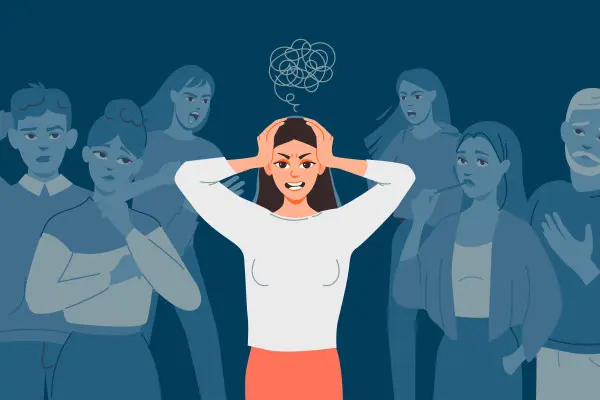
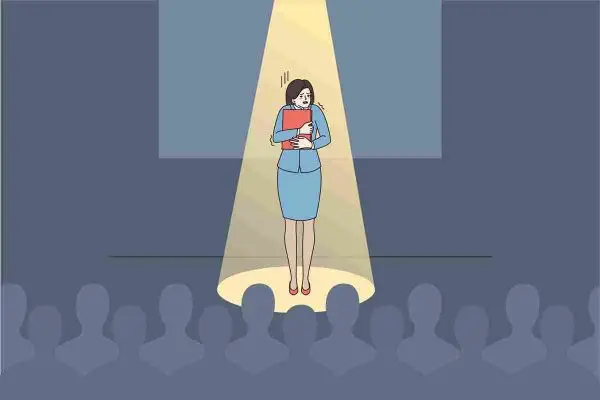
One of the most distinctive human traits is that people are born with an innate desire to belong and live within communities, as human beings are social by nature. It is true that people vary in their desire for openness and social involvement. Some are outgoing and able to form friendships and acquaintances quickly, while others prefer some solitude and a relatively small inner circle. In either case, under normal circumstances, communicating with others should feel natural, smooth, and easy, without complications. In other words, a person should be able to attend gatherings and communicate with others even if they naturally prefer solitude.
This is entirely different from social phobia. Contrary to this natural tendency, a person with social phobia feels anxious about any gathering and avoids ordinary communication with those around them, no matter how close they are. In this article, we present comprehensive information about the nature and types of social phobia, the most effective diagnostic and treatment methods, and the most important advice for interacting positively with people who have social phobia.
What is social phobia?
Social phobia is defined as a type of social anxiety disorder, meaning that it is a form of intense fear, anxiety, and persistent shyness that the affected person experiences in social situations and interactions with others. The person often avoids gatherings and continually tries to isolate themselves from others as much as possible.
The mere possibility of attending a gathering and having to interact with others may cause severe distress, which can sometimes lead to uncomfortable physical symptoms.
It is important to distinguish between normal anxiety and tension in certain situations and social phobia. It is natural for everyone to experience anxiety and distress in some everyday situations, but a person with social phobia feels anxious persistently, no matter how simple, ordinary, or predictable the situation may be.
Social phobia in children
Although social phobia mainly appears during adolescence, it can sometimes appear in children as intense crying, severe temper tantrums, clinging to parents, and fear of family gatherings.
These symptoms are certainly very normal at a certain age in children. However, children with social phobia can be distinguished because these symptoms appear to an exaggerated degree compared with their peers. Parents should pay attention and promptly contact a child psychiatrist to identify the causes and explore the best treatment options.
Types of social phobia
There are two types of social phobia:
Generalized social phobia: A general fear of all social situations and intense apprehension about them.
Specific social phobia: A person experiences all the physical and behavioral symptoms of social phobia in particular social situations.
Symptoms of social anxiety disorder
A psychological disorder cannot be diagnosed unless individuals display certain symptoms indicating a problem in specific areas.
Some signs may indicate that a person could have social anxiety disorder. These include behavioral, physical, and emotional symptoms. In other words, some symptoms appear in a person’s behavior or body and may be easily noticed by family members, while emotional symptoms are what the person feels internally. We discuss each category in detail below:
The main emotional symptoms of social phobia include:
Fear and anxiety about being judged negatively by people around them. This feeling often stays with the person, making them unwilling to gather with others.
Anxiety about embarrassment and humiliating oneself when speaking in gatherings.
Fear that others will notice your fear and distress.
Anxiety about physical symptoms that reveal your fear, such as flushed cheeks, a trembling voice, and heavy sweating.
Keeping away from others for fear of embarrassment.
Avoiding places or conversations in which you might become the center of attention.
Excessive anxiety about any future activity and feeling that it is a heavy burden you want to escape.
Expecting bad consequences—even the worst ones—when interacting with others.
Although these symptoms have a strong effect on the person, they remain inside their mind and may go unnoticed, unlike physical symptoms, which are easy to observe.
The main physical symptoms of social anxiety disorder
Physical symptoms appear involuntarily. This may often increase the episodes of distress and panic that can occur at gatherings. The most prominent symptoms include:
Severely flushed cheeks.
An increased heart rate.
Trembling and excessive sweating.
Irregular breathing.
Dizziness and vertigo.
Tension affecting muscle control and movement.
Feeling that the mind has gone completely blank.
These symptoms are obvious and can certainly be noticed by anyone. Who among us could not see that the cheeks of the person in front of us had turned red? Yet behavioral symptoms remain the most serious aspect of social phobia disorder.
Behavioral symptoms of social anxiety disorder
Social anxiety disorder primarily affects how a person interacts with others, particularly strangers. Sometimes the fear extends to communicating with relatives and colleagues, at which point everyone notices that something unusual is happening. The most common symptoms include:
Intense fear and apprehension when dealing with strangers, even a shopkeeper who is regularly present on the same street.
Avoiding eye contact while speaking with others out of fear that their eyes will meet and the distress will increase.
Being unable, or finding it extremely difficult, to enter a group of people who are already gathered together.
Ordinary daily interactions such as paying bills and buying household necessities.
Being unable to eat in a group.
Avoiding the use of public restrooms.
Intense fear of carrying out certain activities, such as giving speeches or announcing a meeting at work.
Experiencing genuine and extreme difficulty meeting new people and often finding it difficult to meet a life partner.
What causes social phobia?
Many factors contribute to the development of social phobia. The most common include:
Hereditary factors: Genetic factors play a fundamental role in the development of social phobia. The likelihood of developing it increases if a family member already has it.
An imbalance in neurotransmitters: This is believed to be one of the causes that increase the likelihood of social phobia, as an imbalance in neurotransmitters negatively affects mood stability.
Personality traits: These include a person’s excessive expectations of themselves and others.
An intense preoccupation with the body and a relentless pursuit of an ideal appearance, making the person afraid to be around people who may have a negative view of their body.
Inappropriate parenting: Excessive protection that prevents children from mixing and interacting with others can cause social phobia in children.
Going through emotionally difficult experiences, such as losing a parent or separating from a loved one.
Now let us answer a very important question: How is the condition diagnosed? Is it enough for any of these symptoms to appear even once, or must they appear together? Here is the answer.
Methods of diagnosing social phobia
Most conditions require particular symptoms to appear and persist for a continuous period before they can be diagnosed. Temporary symptoms are usually considered normal and are not regarded as an illness. Below, we discuss the most important and effective ways of diagnosing social phobia.
1. Duration of symptoms
The social and behavioral symptoms of social phobia must persist for six consecutive months.
2. Fear of all gatherings
Any of us may feel distressed about gathering with certain people and may consequently feel anxious, tense, and eager to leave that gathering. Yet we may not experience those feelings when gathering with other people. In social phobia, however, the fear must be general rather than directed only toward certain individuals.
3. Inability to manage the fear
This means that the person cannot calm themselves because the fears are greater than their ability to control them. Their fear is likely to intensify whenever they think about reducing or controlling it.
4. Being severely affected by and afraid of others’ opinions
A person may feel some fear when interacting with certain people for various reasons. A person with social phobia, however, fears others because they believe those people will think negatively about them and hold negative views or ideas about their appearance, clothes, ideas, way of speaking, and so on.
5. The internal feeling of anxiety is disproportionate to the actual danger
Suppose, for the sake of argument, that some people make negative comments about the affected person. A person would normally ignore them or, at worst, feel slightly upset and then continue their life as usual. A person with social phobia, however, experiences intense and excessive anxiety about some people’s opinions even though those opinions cause no real harm. They may be affected to the point that they avoid gatherings.
6. Ruling out other psychological disorders
Some psychological disorders and pressures can make a person want to isolate themselves and avoid gatherings, including agoraphobia, panic disorder, and body dysmorphic disorder. Other conditions must therefore be ruled out before social phobia can be diagnosed.
These are the factors used to diagnose a person with social phobia. But do you expect biological sex to influence how common the disorder is?
Rates of social phobia in men and women
Research has found that approximately 13% of people may develop social anxiety disorder at some point in their lives. Among every 100 people, between 7 and 12 may be diagnosed with it, especially during adulthood. However, women are one and a half times more likely to develop it than men.
Are there different forms and courses of the disorder?
Social anxiety disorder is a psychological condition that affects a person’s view of themselves and often leads to other psychological disorders, such as depression. It may also result in dangerous behaviors, such as turning to addiction as the person tries to overcome fear, stop thinking about how they appear to others, and reduce their preoccupation with other people’s opinions.
It is worth noting that social phobia often does not recede on its own. Instead, therapeutic intervention is needed to identify its causes and then determine the appropriate way to treat them. This may increase the rate of complete recovery. What effective treatment methods are used for this disorder?
Treatment for social phobia
There are several treatment methods. A specialist doctor determines which is appropriate for each case. Treatment methods are divided into:
1. Exposure therapy (shock therapy)
This is one method of psychotherapy in general. It is based on exposing the person to what causes the disorder and then trying to help them deal with it and see it in perspective, until they recognize that their fears about the cause are unfounded and that they can, in fact, deal with and confront it.
For example, a person with social phobia fears speaking in front of others and does not want to attend gatherings. Here, shock therapy involves exposing the person to situations where many people are present. At first, the person will feel frightened and may well reject the idea. With repeated exposure, however, they will find that their fears about other people’s opinions are unfounded. They will then begin to participate, and treatment will continue until they recover completely.
2. Cognitive behavioral therapy
This treatment is based on correcting a person’s thoughts and beliefs. In other words, the person has many beliefs and ideas about themselves and others, and cognitive behavioral therapy works to change those beliefs and replace them with correct ones. The treatment uses several approaches in parallel, including:
Using relaxation exercises that help the person reduce tension in social situations.
Identifying thought patterns that cause anxiety, which helps the person address and change them.
Changing behaviors after changing thoughts.
3. Taking medication
In some cases, the psychiatrist may believe that medication is necessary to control the condition. This depends on the severity of the person’s social phobia. Options may include:
Selective serotonin reuptake inhibitors
Serotonin-norepinephrine reuptake inhibitors
Monoamine oxidase inhibitors
Beta blockers
We emphasize the need to consult a doctor or psychotherapist for treatment to avoid serious complications of social anxiety disorder.
Complications of social phobia
As with all other psychological disorders, if it is not treated, the condition will certainly worsen and treatment will become more difficult. There may also be several serious complications, which can include:
A negative effect on the person’s social life, studies, and work. They avoid communicating with others, which prevents them from fulfilling their academic duties or performing their work normally.
Being unable to form friendships because of the constant desire to remain isolated.
Low self-confidence.
Developing depression.
Alcohol addiction.
Isolation and avoidance of family meetings and gatherings.
Not wanting to leave the house.
Thoughts of suicide.
Because recovering completely from social anxiety disorder takes a relatively long time, we offer some advice to help you live with the condition. Remember, however, that these tips can help only alongside appropriate treatment from a doctor and are not a substitute for it.
Tips for living with social anxiety disorder
The following tips can help you live well alongside the treatment your doctor considers appropriate for your condition:
Read and learn about social phobia disorder, as this encourages you to understand what you are experiencing.
Join psychological support groups made up of people who have recovered from social phobia. This can motivate you and reassure you that it is possible to overcome the disorder completely.
Attend regular follow-up appointments with the specialist doctor.
Exercise regularly.
Practice relaxation exercises consistently, especially during gatherings.
Make sure you get an adequate amount of sleep.
Social phobia is one of the most common mental health disorders. It affects men and women and can also affect children. Its seriousness lies in its potential to directly affect a person’s social and professional life, as well as their self-image. Seeking treatment is therefore essential to living peacefully. Many effective treatment methods are available without medication, while medication-based strategies have also advanced considerably and now have fewer side effects and greater effectiveness in treating the condition.
Download the Tatmeen app for online psychological and family consultations from the Apple App Store or Google Play. You can also register on the Tatmeen mental health website to access valuable information and practical tools for strengthening your mental and family well-being.
Content writer and researcher at Tatmeen, writing in Arabic and English about mental health and everyday life, from relationships and stress to work, habits, and family.
Every Tatmeen article is reviewed by care providers licensed by the Saudi Commission for Health Specialties, so what you read is accurate and trustworthy.
This article builds understanding and does not replace a licensed care provider.
Need someone to talk to?
Tatmeen's licensed care providers are available around the clock, and the app's urgent consultation connects you with one within minutes.
Download Tatmeen to explore care providers and booking options.
Smart matchingFour quick questions suggest the right care provider
Urgent consultationTalk to an available care provider within minutes
Free psychological measuresMore than 20 tests to understand how you are doing
Scan to download
{"data":{"id":"2880b479-5602-4a3d-9067-ee6f23a17127","slug":"Comprehensive-Guide-to-Social-Anxiety-Disorder","arTitle":"الدليل الشامل عن الرهاب الاجتماعي وأعراضه وطرق تشخيصه وعلاجه","enTitle":"A Comprehensive Guide to Social Anxiety Disorder","thumbnailAltText":"Person holds their head while standing amid a group of people","estimatedReadingTime":5,"likesCount":933,"writer":{"id":"d3defdb6-4a23-4b03-aad9-a1ecc054aae5","arBio":"كاتب وباحث محتوى في تطمين، يكتب بالعربية والإنجليزية عن الصحة النفسية والحياة اليومية، من العلاقات والضغوط إلى العمل والعادات والأسرة.\n","enBio":"Content writer and researcher at Tatmeen, writing in Arabic and English about mental health and everyday life, from relationships and stress to work, habits, and family.","user":{"slug":"fahad-almalik","arFullName":"فهد المالك","enFullName":"Fahad Almalik","publicProfileImageUrl":"https://cdn.tatmeen.sa/public/profile-images/a34c8028-5847-45de-ab83-a014942bb7d3/675415e988c16442a04af5d3b8899242613a955c44e0364314cc3ff74cbad082.webp","publicProfileImage96Url":"https://cdn.tatmeen.sa/public/profile-images/a34c8028-5847-45de-ab83-a014942bb7d3/675415e988c16442a04af5d3b8899242613a955c44e0364314cc3ff74cbad082-w96.webp","publicProfileImage192Url":"https://cdn.tatmeen.sa/public/profile-images/a34c8028-5847-45de-ab83-a014942bb7d3/675415e988c16442a04af5d3b8899242613a955c44e0364314cc3ff74cbad082-w192.webp"}},"arContent":"","enContent":"","productionDocument":{"headings":[{"id":"article-section-what-is-social-phobia","text":"What is social phobia?"},{"id":"article-section-social-phobia-in-children","text":"Social phobia in children"},{"id":"article-section-types-of-social-phobia","text":"Types of social phobia"},{"id":"article-section-symptoms-of-social-anxiety-disorder","text":"Symptoms of social anxiety disorder"},{"id":"article-section-what-causes-social-phobia","text":"What causes social phobia?"},{"id":"article-section-methods-of-diagnosing-social-phobia","text":"Methods of diagnosing social phobia"},{"id":"article-section-rates-of-social-phobia-in-men-and-women","text":"Rates of social phobia in men and women"},{"id":"article-section-are-there-different-forms-and-courses-of-the-disorder","text":"Are there different forms and courses of the disorder?"},{"id":"article-section-treatment-for-social-phobia","text":"Treatment for social phobia"},{"id":"article-section-complications-of-social-phobia","text":"Complications of social phobia"},{"id":"article-section-tips-for-living-with-social-anxiety-disorder","text":"Tips for living with social anxiety disorder"}],"faqs":[],"beforeSourcesHtml":"","sources":[],"afterSourcesHtml":"","blocks":[{"type":"html","html":"<p class=\"ql-align-right ql-direction-rtl\">One of the most distinctive human traits is that people are born with an innate desire to belong and live within communities, as human beings are social by nature. It is true that people vary in their desire for openness and social involvement. Some are outgoing and able to form friendships and acquaintances quickly, while others prefer some solitude and a relatively small inner circle. In either case, under normal circumstances, communicating with others should feel natural, smooth, and easy, without complications. In other words, a person should be able to attend gatherings and communicate with others even if they naturally prefer solitude.</p><p class=\"ql-align-right ql-direction-rtl\">This is entirely different from social phobia. Contrary to this natural tendency, a person with social phobia feels anxious about any gathering and avoids ordinary communication with those around them, no matter how close they are. In this article, we present comprehensive information about the nature and types of social phobia, the most effective diagnostic and treatment methods, and the most important advice for interacting positively with people who have social phobia.</p><h2 class=\"ql-align-right ql-direction-rtl\" id=\"article-section-what-is-social-phobia\" data-toc-heading tabindex=\"-1\"><span id=\"what-is-social-phobia-1\" aria-hidden=\"true\"></span><strong>What is social phobia?</strong></h2><p class=\"ql-align-right ql-direction-rtl\">Social phobia is defined as a type of social anxiety disorder, meaning that it is a form of intense fear, anxiety, and persistent shyness <a style=\"background-color:transparent\" href=\"https://www.hakini.net/article/%D8%A7%D9%84%D8%AE%D8%AC%D9%84-%D8%A3%D8%B3%D8%A8%D8%A7%D8%A8-%D9%88%D8%A7%D8%B9%D8%B1%D8%A7%D8%B6-%D9%88%D8%A3%D9%86%D9%88%D8%A7%D8%B9-%D9%88%D8%B7%D8%B1%D9%82-%D8%B9%D9%84%D8%A7%D8%AC-%D9%88%D8%B9%D9%84%D8%A7%D9%82%D8%AA%D9%87-%D8%A8%D8%A7%D9%84%D9%85%D8%B1%D8%B6-%D8%A7%D9%84%D9%86%D9%81%D8%B3%D9%8A\" target=\"_blank\" rel=\"noopener noreferrer\"> </a>that the affected person experiences in social situations and interactions with others. The person often avoids gatherings and continually tries to isolate themselves from others as much as possible.</p><p class=\"ql-align-right ql-direction-rtl\">The mere possibility of attending a gathering and having to interact with others may cause severe distress, which can sometimes lead to uncomfortable physical symptoms.</p><p class=\"ql-align-right ql-direction-rtl\">It is important to distinguish between normal anxiety and tension in certain situations and social phobia. It is natural for everyone to experience anxiety and distress in some everyday situations, but a person with social phobia feels anxious persistently, no matter how simple, ordinary, or predictable the situation may be.</p><h2 class=\"ql-align-right ql-direction-rtl\" id=\"article-section-social-phobia-in-children\" data-toc-heading tabindex=\"-1\"><span id=\"social-phobia-in-children-2\" aria-hidden=\"true\"></span><strong>Social phobia in children</strong></h2><p class=\"ql-align-right ql-direction-rtl\">Although social phobia mainly appears during adolescence, it can sometimes appear in children as intense crying, severe temper tantrums, clinging to parents, and fear of family gatherings.</p><p class=\"ql-align-right ql-direction-rtl\">These symptoms are certainly very normal at a certain age in children. However, children with social phobia can be distinguished because these symptoms appear to an exaggerated degree compared with their peers. Parents should pay attention and promptly contact a child psychiatrist to identify the causes and explore the best treatment options.</p><h2 class=\"ql-align-right ql-direction-rtl\" id=\"article-section-types-of-social-phobia\" data-toc-heading tabindex=\"-1\"><span id=\"types-of-social-phobia-3\" aria-hidden=\"true\"></span><strong>Types of social phobia</strong></h2><p class=\"ql-align-right ql-direction-rtl\">There are two types of social phobia:</p><ol><li class=\"ql-align-right ql-direction-rtl\">Generalized social phobia: A general fear of all social situations and intense apprehension about them.</li><li class=\"ql-align-right ql-direction-rtl\">Specific social phobia: A person experiences all the physical and behavioral symptoms of social phobia in particular social situations.</li></ol><h2 class=\"ql-align-right ql-direction-rtl\" id=\"article-section-symptoms-of-social-anxiety-disorder\" data-toc-heading tabindex=\"-1\"><span id=\"symptoms-of-social-anxiety-disorder-4\" aria-hidden=\"true\"></span><strong>Symptoms of social anxiety disorder</strong></h2><p class=\"ql-align-right ql-direction-rtl\">A psychological disorder cannot be diagnosed unless individuals display certain symptoms indicating a problem in specific areas.</p><p class=\"ql-align-right ql-direction-rtl\">Some signs may indicate that a person could have social anxiety disorder. These include behavioral, physical, and emotional symptoms. In other words, some symptoms appear in a person’s behavior or body and may be easily noticed by family members, while emotional symptoms are what the person feels internally. We discuss each category in detail below:</p><h3 class=\"ql-align-right ql-direction-rtl\">The main emotional symptoms of social phobia include:</h3><ol><li class=\"ql-align-right ql-direction-rtl\">Fear and anxiety about being judged negatively by people around them. This feeling often stays with the person, making them unwilling to gather with others.</li><li class=\"ql-align-right ql-direction-rtl\">Anxiety about embarrassment and humiliating oneself when speaking in gatherings.</li><li class=\"ql-align-right ql-direction-rtl\">Fear that others will notice your fear and distress.</li><li class=\"ql-align-right ql-direction-rtl\">Anxiety about physical symptoms that reveal your fear, such as flushed cheeks, a trembling voice, and heavy sweating.</li><li class=\"ql-align-right ql-direction-rtl\">Keeping away from others for fear of embarrassment.</li><li class=\"ql-align-right ql-direction-rtl\">Avoiding places or conversations in which you might become the center of attention.</li><li class=\"ql-align-right ql-direction-rtl\">Excessive anxiety about any future activity and feeling that it is a heavy burden you want to escape.</li><li class=\"ql-align-right ql-direction-rtl\">Expecting bad consequences—even the worst ones—when interacting with others.</li></ol><p class=\"ql-align-right ql-direction-rtl\">Although these symptoms have a strong effect on the person, they remain inside their mind and may go unnoticed, unlike physical symptoms, which are easy to observe.</p><h3 class=\"ql-align-right ql-direction-rtl\">The main physical symptoms of social anxiety disorder</h3><p class=\"ql-align-right ql-direction-rtl\">Physical symptoms appear involuntarily. This may often increase the episodes of distress and panic that can occur at gatherings. The most prominent symptoms include:</p><ol><li class=\"ql-align-right ql-direction-rtl\">Severely flushed cheeks.</li><li class=\"ql-align-right ql-direction-rtl\">An increased heart rate.</li><li class=\"ql-align-right ql-direction-rtl\">Trembling and excessive sweating.</li><li class=\"ql-align-right ql-direction-rtl\">Irregular breathing.</li><li class=\"ql-align-right ql-direction-rtl\">Dizziness and vertigo.</li><li class=\"ql-align-right ql-direction-rtl\">Tension affecting muscle control and movement.</li><li class=\"ql-align-right ql-direction-rtl\">Feeling that the mind has gone completely blank.</li></ol><p class=\"ql-align-right ql-direction-rtl\">These symptoms are obvious and can certainly be noticed by anyone. Who among us could not see that the cheeks of the person in front of us had turned red? Yet behavioral symptoms remain the most serious aspect of social phobia disorder.</p><h3 class=\"ql-align-right ql-direction-rtl\">Behavioral symptoms of social anxiety disorder</h3><p class=\"ql-align-right ql-direction-rtl\">Social anxiety disorder primarily affects how a person interacts with others, particularly strangers. Sometimes the fear extends to communicating with relatives and colleagues, at which point everyone notices that something unusual is happening. The most common symptoms include:</p><ol><li class=\"ql-align-right ql-direction-rtl\">Intense fear and apprehension when dealing with strangers, even a shopkeeper who is regularly present on the same street.</li><li class=\"ql-align-right ql-direction-rtl\">Avoiding eye contact while speaking with others out of fear that their eyes will meet and the distress will increase.</li><li class=\"ql-align-right ql-direction-rtl\">Being unable, or finding it extremely difficult, to enter a group of people who are already gathered together.</li><li class=\"ql-align-right ql-direction-rtl\">Ordinary daily interactions such as paying bills and buying household necessities.</li><li class=\"ql-align-right ql-direction-rtl\">Being unable to eat in a group.</li><li class=\"ql-align-right ql-direction-rtl\">Avoiding the use of public restrooms.</li><li class=\"ql-align-right ql-direction-rtl\">Intense fear of carrying out certain activities, such as giving speeches or announcing a meeting at work.</li><li class=\"ql-align-right ql-direction-rtl\">Experiencing genuine and extreme difficulty meeting new people and often finding it difficult to meet a life partner.</li></ol><h2 class=\"ql-align-right ql-direction-rtl\" id=\"article-section-what-causes-social-phobia\" data-toc-heading tabindex=\"-1\"><span id=\"what-causes-social-phobia-5\" aria-hidden=\"true\"></span><strong>What causes social phobia?</strong></h2><p class=\"ql-align-right ql-direction-rtl\">Many factors contribute to the development of social phobia. The most common include:</p><ol><li class=\"ql-align-right ql-direction-rtl\">Hereditary factors: Genetic factors play a fundamental role in the development of social phobia. The likelihood of developing it increases if a family member already has it.</li><li class=\"ql-align-right ql-direction-rtl\">An imbalance in neurotransmitters: This is believed to be one of the causes that increase the likelihood of social phobia, as an imbalance in neurotransmitters negatively affects mood stability.</li><li class=\"ql-align-right ql-direction-rtl\">Personality traits: These include a person’s excessive expectations of themselves and others.</li><li class=\"ql-align-right ql-direction-rtl\">An intense preoccupation with the body and a relentless pursuit of an ideal appearance, making the person afraid to be around people who may have a negative view of their body.</li><li class=\"ql-align-right ql-direction-rtl\">Inappropriate parenting: Excessive protection that prevents children from mixing and interacting with others can cause social phobia in children.</li><li class=\"ql-align-right ql-direction-rtl\">Going through emotionally difficult experiences, such as losing a parent or separating from a loved one.</li></ol><p class=\"ql-align-right ql-direction-rtl\">Now let us answer a very important question: How is the condition diagnosed? Is it enough for any of these symptoms to appear even once, or must they appear together? Here is the answer.</p><h2 class=\"ql-align-right ql-direction-rtl\" id=\"article-section-methods-of-diagnosing-social-phobia\" data-toc-heading tabindex=\"-1\"><span id=\"methods-of-diagnosing-social-phobia-6\" aria-hidden=\"true\"></span><strong>Methods of diagnosing social phobia</strong></h2><p class=\"ql-align-right ql-direction-rtl\">Most conditions require particular symptoms to appear and persist for a continuous period before they can be diagnosed. Temporary symptoms are usually considered normal and are not regarded as an illness. Below, we discuss the most important and effective ways of diagnosing social phobia.</p><h3 class=\"ql-align-right ql-direction-rtl\">1. Duration of symptoms</h3><p class=\"ql-align-right ql-direction-rtl\">The social and behavioral symptoms of social phobia must persist for six consecutive months.</p><h3 class=\"ql-align-right ql-direction-rtl\">2. Fear of all gatherings</h3><p class=\"ql-align-right ql-direction-rtl\">Any of us may feel distressed about gathering with certain people and may consequently feel anxious, tense, and eager to leave that gathering. Yet we may not experience those feelings when gathering with other people. In social phobia, however, the fear must be general rather than directed only toward certain individuals.</p><h3 class=\"ql-align-right ql-direction-rtl\">3. Inability to manage the fear</h3><p class=\"ql-align-right ql-direction-rtl\">This means that the person cannot calm themselves because the fears are greater than their ability to control them. Their fear is likely to intensify whenever they think about reducing or controlling it.</p><h3 class=\"ql-align-right ql-direction-rtl\">4. Being severely affected by and afraid of others’ opinions</h3><p class=\"ql-align-right ql-direction-rtl\">A person may feel some fear when interacting with certain people for various reasons. A person with social phobia, however, fears others because they believe those people will think negatively about them and hold negative views or ideas about their appearance, clothes, ideas, way of speaking, and so on.</p><h3 class=\"ql-align-right ql-direction-rtl\">5. The internal feeling of anxiety is disproportionate to the actual danger</h3><p class=\"ql-align-right ql-direction-rtl\">Suppose, for the sake of argument, that some people make negative comments about the affected person. A person would normally ignore them or, at worst, feel slightly upset and then continue their life as usual. A person with social phobia, however, experiences intense and excessive anxiety about some people’s opinions even though those opinions cause no real harm. They may be affected to the point that they avoid gatherings.</p><h3 class=\"ql-align-right ql-direction-rtl\">6. Ruling out other psychological disorders</h3><p class=\"ql-align-right ql-direction-rtl\">Some psychological disorders and pressures can make a person want to isolate themselves and avoid gatherings, including agoraphobia, panic disorder, and body dysmorphic disorder. Other conditions must therefore be ruled out before social phobia can be diagnosed.</p><p class=\"ql-align-right ql-direction-rtl\">These are the factors used to diagnose a person with social phobia. But do you expect biological sex to influence how common the disorder is?</p><h2 class=\"ql-align-right ql-direction-rtl\" id=\"article-section-rates-of-social-phobia-in-men-and-women\" data-toc-heading tabindex=\"-1\"><span id=\"rates-of-social-phobia-in-men-and-women-7\" aria-hidden=\"true\"></span><strong>Rates of social phobia in men and women</strong></h2><p class=\"ql-align-right ql-direction-rtl\">Research has found that approximately 13% of people may develop social anxiety disorder at some point in their lives. Among every 100 people, between 7 and 12 may be diagnosed with it, especially during adulthood. However, women are one and a half times more likely to develop it than men.</p><h2 class=\"ql-align-right ql-direction-rtl\" id=\"article-section-are-there-different-forms-and-courses-of-the-disorder\" data-toc-heading tabindex=\"-1\"><span id=\"are-there-different-forms-and-courses-of-the-disorder-8\" aria-hidden=\"true\"></span><strong>Are there different forms and courses of the disorder?</strong></h2><p class=\"ql-align-right ql-direction-rtl\">Social anxiety disorder is a psychological condition that affects a person’s view of themselves and often leads to other psychological disorders, such as depression. It may also result in dangerous behaviors, such as turning to addiction as the person tries to overcome fear, stop thinking about how they appear to others, and reduce their preoccupation with other people’s opinions.</p><p class=\"ql-align-right ql-direction-rtl\">It is worth noting that social phobia often does not recede on its own. Instead, therapeutic intervention is needed to identify its causes and then determine the appropriate way to treat them. This may increase the rate of complete recovery. What effective treatment methods are used for this disorder?</p><h2 class=\"ql-align-right ql-direction-rtl\" id=\"article-section-treatment-for-social-phobia\" data-toc-heading tabindex=\"-1\"><span id=\"treatment-for-social-phobia-9\" aria-hidden=\"true\"></span><strong>Treatment for social phobia</strong></h2><p class=\"ql-align-right ql-direction-rtl\">There are several treatment methods. A specialist doctor determines which is appropriate for each case. Treatment methods are divided into:</p><h3 class=\"ql-align-right ql-direction-rtl\">1. Exposure therapy (shock therapy)</h3><p class=\"ql-align-right ql-direction-rtl\">This is one method of psychotherapy in general. It is based on exposing the person to what causes the disorder and then trying to help them deal with it and see it in perspective, until they recognize that their fears about the cause are unfounded and that they can, in fact, deal with and confront it.</p><p class=\"ql-align-right ql-direction-rtl\">For example, a person with social phobia fears speaking in front of others and does not want to attend gatherings. Here, shock therapy involves exposing the person to situations where many people are present. At first, the person will feel frightened and may well reject the idea. With repeated exposure, however, they will find that their fears about other people’s opinions are unfounded. They will then begin to participate, and treatment will continue until they recover completely.</p><h3 class=\"ql-align-right ql-direction-rtl\">2. Cognitive behavioral therapy</h3><p class=\"ql-align-right ql-direction-rtl\">This treatment is based on correcting a person’s thoughts and beliefs. In other words, the person has many beliefs and ideas about themselves and others, and cognitive behavioral therapy works to change those beliefs and replace them with correct ones. The treatment uses several approaches in parallel, including:</p><ul><li class=\"ql-align-right ql-direction-rtl\">Using relaxation exercises that help the person reduce tension in social situations.</li><li class=\"ql-align-right ql-direction-rtl\">Identifying thought patterns that cause anxiety, which helps the person address and change them.</li><li class=\"ql-align-right ql-direction-rtl\">Changing behaviors after changing thoughts.</li></ul><h3 class=\"ql-align-right ql-direction-rtl\">3. Taking medication</h3><p class=\"ql-align-right ql-direction-rtl\">In some cases, the psychiatrist may believe <a style=\"background-color:transparent\" href=\"https://apps.apple.com/us/app/hakini/id1618923800\" target=\"_blank\" rel=\"noopener noreferrer\"> </a>that medication is necessary to control the condition. This depends on the severity of the person’s social phobia. Options may include:</p><ul><li class=\"ql-align-right ql-direction-rtl\">Selective serotonin reuptake inhibitors</li><li class=\"ql-align-right ql-direction-rtl\">Serotonin-norepinephrine reuptake inhibitors</li><li class=\"ql-align-right ql-direction-rtl\">Monoamine oxidase inhibitors</li><li class=\"ql-align-right ql-direction-rtl\">Beta blockers</li></ul><p class=\"ql-align-right ql-direction-rtl\">We emphasize the need to consult a doctor or psychotherapist for treatment to avoid serious complications of social anxiety disorder.</p><h2 class=\"ql-align-right ql-direction-rtl\" id=\"article-section-complications-of-social-phobia\" data-toc-heading tabindex=\"-1\"><span id=\"complications-of-social-phobia-10\" aria-hidden=\"true\"></span><strong>Complications of social phobia</strong></h2><p class=\"ql-align-right ql-direction-rtl\">As with all other psychological disorders, if it is not treated, the condition will certainly worsen and treatment will become more difficult. There may also be several serious complications, which can include:</p><ol><li class=\"ql-align-right ql-direction-rtl\">A negative effect on the person’s social life, studies, and work. They avoid communicating with others, which prevents them from fulfilling their academic duties or performing their work normally.</li><li class=\"ql-align-right ql-direction-rtl\">Being unable to form friendships because of the constant desire to remain isolated.</li><li class=\"ql-align-right ql-direction-rtl\">Low self-confidence.</li><li class=\"ql-align-right ql-direction-rtl\">Developing depression.</li><li class=\"ql-align-right ql-direction-rtl\">Alcohol addiction.</li><li class=\"ql-align-right ql-direction-rtl\">Isolation and avoidance of family meetings and gatherings.</li><li class=\"ql-align-right ql-direction-rtl\">Not wanting to leave the house.</li><li class=\"ql-align-right ql-direction-rtl\">Thoughts of suicide.</li></ol><p class=\"ql-align-right ql-direction-rtl\">Because recovering completely from social anxiety disorder takes a relatively long time, we offer some advice to help you live with the condition. Remember, however, that these tips can help only alongside appropriate treatment from a doctor and are not a substitute for it.</p><h2 class=\"ql-align-right ql-direction-rtl\" id=\"article-section-tips-for-living-with-social-anxiety-disorder\" data-toc-heading tabindex=\"-1\"><span id=\"tips-for-living-with-social-anxiety-disorder-11\" aria-hidden=\"true\"></span><strong>Tips for living with social anxiety disorder</strong></h2><p class=\"ql-align-right ql-direction-rtl\">The following tips can help you live well alongside the treatment your doctor considers appropriate for your condition:</p><ol><li class=\"ql-align-right ql-direction-rtl\">Read and learn about social phobia disorder, as this encourages you to understand what you are experiencing.</li><li class=\"ql-align-right ql-direction-rtl\">Join psychological support groups made up of people who have recovered from social phobia. This can motivate you and reassure you that it is possible to overcome the disorder completely.</li><li class=\"ql-align-right ql-direction-rtl\">Attend regular follow-up appointments with the specialist doctor.</li><li class=\"ql-align-right ql-direction-rtl\">Exercise regularly.</li><li class=\"ql-align-right ql-direction-rtl\">Practice relaxation exercises consistently, especially during gatherings.</li><li class=\"ql-align-right ql-direction-rtl\">Make sure you get an adequate amount of sleep.</li></ol><p class=\"ql-align-right ql-direction-rtl\">Social phobia is one of the most common mental health disorders. It affects men and women and can also affect children. Its seriousness lies in its potential to directly affect a person’s social and professional life, as well as their self-image. Seeking treatment is therefore essential to living peacefully. Many effective treatment methods are available without medication, while medication-based strategies have also advanced considerably and now have fewer side effects and greater effectiveness in treating the condition.</p><p class=\"ql-align-right ql-direction-rtl\"><br /></p><p class=\"ql-direction-rtl ql-align-justify\">Download the Tatmeen app for online psychological and family consultations from the Apple App Store or Google Play. You can also register on the Tatmeen mental health website to access valuable information and practical tools for strengthening your mental and family well-being.</p><p class=\"ql-align-right ql-direction-rtl\"><br /></p><p><br /></p>"}],"inlineCtaSignatures":[],"_experienceAliases":{"v":1,"fields":["html","bodyHtml"]}},"createdAt":"2024-01-08T21:00:00.000Z","updatedAt":"2026-08-11T04:45:02.303Z","disorderGroups":[{"id":"1e82772d-a1a7-4d29-b475-be9d6b67ae02","slug":"common-mental-issues","arName":"اضطرابات نفسية شائعة","enName":"Common Mental Issues"}],"reviewer":{"arFullName":"فريق تطمين","enFullName":"Tatmeen team","slug":"tatmeen-team","kind":"organization"},"productionArticle":true,"promotionAllowed":true,"preparedCover":{"src":"https://cdn.tatmeen.sa/public/article-lcp/article-lcp-v2/sha256-0c7aa3ed47b4a1a1e253b62f460e88b67cff4f472971be32e04e27074aef265a/600-afc45315db54bb1e63ada05d1e518b50542893f38844db117316986e4c39c841.avif","fallback":"https://cdn.tatmeen.sa/public/article-lcp/article-lcp-v2/sha256-0c7aa3ed47b4a1a1e253b62f460e88b67cff4f472971be32e04e27074aef265a/600-d998289a37c445fd5910a8dce71e99f8f4d5603966ac50b3148111cc19b5e620.webp","directUrl":"https://cdn.tatmeen.sa/blog-cover/1704816866979-Tatmeen-img-862","isGolden":true,"avifSrcset":"https://cdn.tatmeen.sa/public/article-lcp/article-lcp-v2/sha256-0c7aa3ed47b4a1a1e253b62f460e88b67cff4f472971be32e04e27074aef265a/400-d704e5febfb0f7a5ffe1519989f6d3f8f8536e34b37f0de34b7318f71d2bb479.avif 400w, https://cdn.tatmeen.sa/public/article-lcp/article-lcp-v2/sha256-0c7aa3ed47b4a1a1e253b62f460e88b67cff4f472971be32e04e27074aef265a/600-afc45315db54bb1e63ada05d1e518b50542893f38844db117316986e4c39c841.avif 600w","webpSrcset":"https://cdn.tatmeen.sa/public/article-lcp/article-lcp-v2/sha256-0c7aa3ed47b4a1a1e253b62f460e88b67cff4f472971be32e04e27074aef265a/400-dae05270d8d8e50cdb51d97f1181500dce6c511cfaf64500154429c532956dd3.webp 400w, https://cdn.tatmeen.sa/public/article-lcp/article-lcp-v2/sha256-0c7aa3ed47b4a1a1e253b62f460e88b67cff4f472971be32e04e27074aef265a/600-d998289a37c445fd5910a8dce71e99f8f4d5603966ac50b3148111cc19b5e620.webp 600w","phoneAvifSrcset":"https://cdn.tatmeen.sa/public/article-lcp/article-lcp-v2/sha256-0c7aa3ed47b4a1a1e253b62f460e88b67cff4f472971be32e04e27074aef265a/400-d704e5febfb0f7a5ffe1519989f6d3f8f8536e34b37f0de34b7318f71d2bb479.avif 400w, https://cdn.tatmeen.sa/public/article-lcp/article-lcp-v2/sha256-0c7aa3ed47b4a1a1e253b62f460e88b67cff4f472971be32e04e27074aef265a/600-afc45315db54bb1e63ada05d1e518b50542893f38844db117316986e4c39c841.avif 600w","phoneWebpSrcset":"https://cdn.tatmeen.sa/public/article-lcp/article-lcp-v2/sha256-0c7aa3ed47b4a1a1e253b62f460e88b67cff4f472971be32e04e27074aef265a/400-dae05270d8d8e50cdb51d97f1181500dce6c511cfaf64500154429c532956dd3.webp 400w, https://cdn.tatmeen.sa/public/article-lcp/article-lcp-v2/sha256-0c7aa3ed47b4a1a1e253b62f460e88b67cff4f472971be32e04e27074aef265a/600-d998289a37c445fd5910a8dce71e99f8f4d5603966ac50b3148111cc19b5e620.webp 600w","width":600,"height":400},"previewTaxonomy":{"groups":[{"id":"1e82772d-a1a7-4d29-b475-be9d6b67ae02","slug":"common-mental-issues","arName":"اضطرابات نفسية شائعة","enName":"Common Mental Issues"}],"topics":[{"id":"833e7e92-9a41-46f7-9a3d-8f3e504517a0","slug":"social-phobia","arName":"رهاب اجتماعي","enName":"Social Phobia","groupSlug":"common-mental-issues","href":"/blog/category/common-mental-issues/social-phobia/"}],"tags":[{"id":"b17ecf79-93e3-43d7-8e38-1861533199ba","slug":"anxiety-panic-phobia","arName":"القلق والرهاب والهلع","enName":"Anxiety Phobias & Panic"},{"id":"c2a6e8d3-de9c-435f-8c95-9727e7db14cc","slug":"explainer-awareness","arName":"دليل توعوي / شرح","enName":"Explainer / Awareness Guide"}]},"previewProviderRecommendations":[{"id":"23ba62b8-9679-46a2-9439-b2801cafc59b","slug":"dr-mohammed-alanazi-4132","arFullName":"د. محمد العنزي","enFullName":"Dr. Mohammed ALANAZI","publicProfileImageUrl":"https://cdn.tatmeen.sa/public/profile-images/23ba62b8-9679-46a2-9439-b2801cafc59b/233e70d98cd910633553abf60e5ee8dd305797b64c4172746ab379f3b91a1461.webp","publicProfileImage96Url":"https://cdn.tatmeen.sa/public/profile-images/23ba62b8-9679-46a2-9439-b2801cafc59b/233e70d98cd910633553abf60e5ee8dd305797b64c4172746ab379f3b91a1461-w96.webp","publicProfileImage192Url":"https://cdn.tatmeen.sa/public/profile-images/23ba62b8-9679-46a2-9439-b2801cafc59b/233e70d98cd910633553abf60e5ee8dd305797b64c4172746ab379f3b91a1461-w192.webp","specialization":{"arName":"طبيب أسرة","enName":"Family Physician"},"profileImageUrl":"https://cdn.tatmeen.sa/public/profile-images/23ba62b8-9679-46a2-9439-b2801cafc59b/233e70d98cd910633553abf60e5ee8dd305797b64c4172746ab379f3b91a1461-w192.webp","experienceYears":3,"consultantInfo":{"averageRating":{"average":0},"specialization":{"arGeneralName":"طبيب أسرة","enGeneralName":"Family Physician"}}},{"id":"025d770d-f6d4-405b-be1c-d45dde63fbf7","slug":"akila-alomran-7545","arFullName":"عقيله العمران","enFullName":"Akila Alomran","publicProfileImageUrl":"https://cdn.tatmeen.sa/public/profile-images/025d770d-f6d4-405b-be1c-d45dde63fbf7/44a990b9294f02c9810c69a68b8913a6afac0eb30d1b7494155f31b6dde9378b.webp","publicProfileImage96Url":"https://cdn.tatmeen.sa/public/profile-images/025d770d-f6d4-405b-be1c-d45dde63fbf7/44a990b9294f02c9810c69a68b8913a6afac0eb30d1b7494155f31b6dde9378b-w96.webp","publicProfileImage192Url":"https://cdn.tatmeen.sa/public/profile-images/025d770d-f6d4-405b-be1c-d45dde63fbf7/44a990b9294f02c9810c69a68b8913a6afac0eb30d1b7494155f31b6dde9378b-w192.webp","specialization":{"arName":"أخصائي نفسي","enName":"Psychologist"},"profileImageUrl":"https://cdn.tatmeen.sa/public/profile-images/025d770d-f6d4-405b-be1c-d45dde63fbf7/44a990b9294f02c9810c69a68b8913a6afac0eb30d1b7494155f31b6dde9378b-w192.webp","experienceYears":3,"consultantInfo":{"averageRating":{"average":5},"specialization":{"arGeneralName":"أخصائي نفسي","enGeneralName":"Psychologist"}}},{"id":"798526a5-3457-41bc-9825-35c7fd1bcd0b","slug":"dr-maeed-algarny-9986","arFullName":"د. معيض القرني","enFullName":"Dr. Maeed Algarny","publicProfileImageUrl":"https://cdn.tatmeen.sa/public/profile-images/798526a5-3457-41bc-9825-35c7fd1bcd0b/8a9d8aa7bd91280f7ac6f9d4e7d75c42a847cbd8896e108e40e4231760a567f4.webp","publicProfileImage96Url":"https://cdn.tatmeen.sa/public/profile-images/798526a5-3457-41bc-9825-35c7fd1bcd0b/8a9d8aa7bd91280f7ac6f9d4e7d75c42a847cbd8896e108e40e4231760a567f4-w96.webp","publicProfileImage192Url":"https://cdn.tatmeen.sa/public/profile-images/798526a5-3457-41bc-9825-35c7fd1bcd0b/8a9d8aa7bd91280f7ac6f9d4e7d75c42a847cbd8896e108e40e4231760a567f4-w192.webp","specialization":{"arName":"طبيب أسرة","enName":"Family Physician"},"profileImageUrl":"https://cdn.tatmeen.sa/public/profile-images/798526a5-3457-41bc-9825-35c7fd1bcd0b/8a9d8aa7bd91280f7ac6f9d4e7d75c42a847cbd8896e108e40e4231760a567f4-w192.webp","experienceYears":16,"consultantInfo":{"averageRating":{"average":0},"specialization":{"arGeneralName":"طبيب أسرة","enGeneralName":"Family Physician"}}}],"previewCareProviders":[{"id":"09364052-c2a9-4c52-9717-7ce2093b8d0a","slug":"kholoud-alharbi-5221","arFullName":"خلود الحربي","enFullName":"Kholoud Alharbi","publicProfileImageUrl":"https://cdn.tatmeen.sa/public/profile-images/09364052-c2a9-4c52-9717-7ce2093b8d0a/4a0aeb81619e351b77f4323e3605a0a00acc7ca3c82ee7cc5ca2c9e8ef716049.webp","publicProfileImage96Url":"https://cdn.tatmeen.sa/public/profile-images/09364052-c2a9-4c52-9717-7ce2093b8d0a/4a0aeb81619e351b77f4323e3605a0a00acc7ca3c82ee7cc5ca2c9e8ef716049-w96.webp","publicProfileImage192Url":"https://cdn.tatmeen.sa/public/profile-images/09364052-c2a9-4c52-9717-7ce2093b8d0a/4a0aeb81619e351b77f4323e3605a0a00acc7ca3c82ee7cc5ca2c9e8ef716049-w192.webp","gender":"FEMALE","specialization":{"arName":"أخصائي نفسي","enName":"Psychologist"}},{"id":"6f037535-1dca-4b50-a8b2-5974b7323286","slug":"salah-althobaiti-9053","arFullName":"صلاح الثبيتي","enFullName":"Salah Althobaiti","publicProfileImageUrl":"https://cdn.tatmeen.sa/public/profile-images/6f037535-1dca-4b50-a8b2-5974b7323286/35b6bd7fad9b1e004c1835803eb9c1b56dcacd380685ec8bff141f0fb888005c.webp","publicProfileImage96Url":"https://cdn.tatmeen.sa/public/profile-images/6f037535-1dca-4b50-a8b2-5974b7323286/35b6bd7fad9b1e004c1835803eb9c1b56dcacd380685ec8bff141f0fb888005c-w96.webp","publicProfileImage192Url":"https://cdn.tatmeen.sa/public/profile-images/6f037535-1dca-4b50-a8b2-5974b7323286/35b6bd7fad9b1e004c1835803eb9c1b56dcacd380685ec8bff141f0fb888005c-w192.webp","gender":"MALE","specialization":{"arName":"أخصائي نفسي","enName":"Psychologist"}},{"id":"3cc806e8-616b-4884-9f21-a75b378580a2","slug":"aisha-al-hashim-8667","arFullName":"عائشة ال هاشم","enFullName":"Aisha Al Hashim","publicProfileImageUrl":"https://cdn.tatmeen.sa/public/profile-images/3cc806e8-616b-4884-9f21-a75b378580a2/27f523d03be4dcfa1f6a79f70c1773887434e698990d214cd990caec56a44798.webp","publicProfileImage96Url":"https://cdn.tatmeen.sa/public/profile-images/3cc806e8-616b-4884-9f21-a75b378580a2/27f523d03be4dcfa1f6a79f70c1773887434e698990d214cd990caec56a44798-w96.webp","publicProfileImage192Url":"https://cdn.tatmeen.sa/public/profile-images/3cc806e8-616b-4884-9f21-a75b378580a2/27f523d03be4dcfa1f6a79f70c1773887434e698990d214cd990caec56a44798-w192.webp","gender":"FEMALE","specialization":{"arName":"أخصائي نفسي","enName":"Psychologist"}},{"id":"db2ce1a0-9325-4471-b7ce-eb2e811c30a3","slug":"amer-qutub-2441","arFullName":"عامر قطب","enFullName":"Amer Qutub","publicProfileImageUrl":"https://cdn.tatmeen.sa/public/profile-images/db2ce1a0-9325-4471-b7ce-eb2e811c30a3/80580f99bfd7fe2b2a9cf8eed73ab532f5086d1efe053b0aa57358c1ce004261.webp","publicProfileImage96Url":"https://cdn.tatmeen.sa/public/profile-images/db2ce1a0-9325-4471-b7ce-eb2e811c30a3/80580f99bfd7fe2b2a9cf8eed73ab532f5086d1efe053b0aa57358c1ce004261-w96.webp","publicProfileImage192Url":"https://cdn.tatmeen.sa/public/profile-images/db2ce1a0-9325-4471-b7ce-eb2e811c30a3/80580f99bfd7fe2b2a9cf8eed73ab532f5086d1efe053b0aa57358c1ce004261-w192.webp","gender":"MALE","specialization":{"arName":"أخصائي نفسي","enName":"Psychologist"}},{"id":"94765496-dbdf-4631-a01b-7df5f788668d","slug":"abdullrahman-alhamoudi-3045","arFullName":"عبدالرحمن الحمودي","enFullName":"Abdulrahman Alhamoudi","publicProfileImageUrl":"https://cdn.tatmeen.sa/public/profile-images/94765496-dbdf-4631-a01b-7df5f788668d/2d49f6b6493c564afb6f50b6c3634231dff3a5cf8353acfab393d1b2a88037d1.webp","publicProfileImage96Url":"https://cdn.tatmeen.sa/public/profile-images/94765496-dbdf-4631-a01b-7df5f788668d/2d49f6b6493c564afb6f50b6c3634231dff3a5cf8353acfab393d1b2a88037d1-w96.webp","publicProfileImage192Url":"https://cdn.tatmeen.sa/public/profile-images/94765496-dbdf-4631-a01b-7df5f788668d/2d49f6b6493c564afb6f50b6c3634231dff3a5cf8353acfab393d1b2a88037d1-w192.webp","gender":"MALE","specialization":{"arName":"أخصائي نفسي","enName":"Psychologist"}},{"id":"618dba89-5b70-4b46-8304-741b7ac8ecd3","slug":"abdullah-mari-1311","arFullName":"عبدالله مرعي","enFullName":"Abdullah Mari","publicProfileImageUrl":"https://cdn.tatmeen.sa/public/profile-images/618dba89-5b70-4b46-8304-741b7ac8ecd3/6b4a3bfb59f8a304ca79083b32859b46baad2e1d692974a47c02c1f66bd11129.webp","publicProfileImage96Url":"https://cdn.tatmeen.sa/public/profile-images/618dba89-5b70-4b46-8304-741b7ac8ecd3/6b4a3bfb59f8a304ca79083b32859b46baad2e1d692974a47c02c1f66bd11129-w96.webp","publicProfileImage192Url":"https://cdn.tatmeen.sa/public/profile-images/618dba89-5b70-4b46-8304-741b7ac8ecd3/6b4a3bfb59f8a304ca79083b32859b46baad2e1d692974a47c02c1f66bd11129-w192.webp","gender":"MALE","specialization":{"arName":"أخصائي نفسي","enName":"Psychologist"}},{"id":"3b50a5d5-e795-407f-8676-fd7f0e1bb7a0","slug":"abdulaziz-bin-hudayan-4940","arFullName":"عبدالعزيز بن هديان","enFullName":"Abdulaziz Bin Hudayan","publicProfileImageUrl":"https://cdn.tatmeen.sa/public/profile-images/3b50a5d5-e795-407f-8676-fd7f0e1bb7a0/710ff0fe1fb00cdb5042092e27b7910b480a439b02251ecded62d7758eefce95.webp","publicProfileImage96Url":"https://cdn.tatmeen.sa/public/profile-images/3b50a5d5-e795-407f-8676-fd7f0e1bb7a0/710ff0fe1fb00cdb5042092e27b7910b480a439b02251ecded62d7758eefce95-w96.webp","publicProfileImage192Url":"https://cdn.tatmeen.sa/public/profile-images/3b50a5d5-e795-407f-8676-fd7f0e1bb7a0/710ff0fe1fb00cdb5042092e27b7910b480a439b02251ecded62d7758eefce95-w192.webp","gender":"MALE","specialization":{"arName":"أخصائي نفسي","enName":"Psychologist"}}],"previewDownload":{"href":"/download","title":{"ar":"خطوة واحدة لأجلك، ابدأ الآن","en":"One step for you, start now"},"description":{"ar":"حمّل تطبيق تطمين لاستكشاف مقدمي الرعاية وخيارات الحجز.","en":"Download Tatmeen to explore care providers and booking options."},"posterSrc":"/images/home/cta-ar-new-1.webp","videoSrc":"/images/home/cta-ar-new-1.mp4","videoPosterSrc":"/images/home/cta-ar-new-1.webp","videoPosterEnSrc":"/images/home/cta-en-new-1.webp","videoType":"video/mp4","appStoreHref":"https://apps.apple.com/us/app/tatmeen-%D8%AA%D8%B7%D9%85%D9%8A%D9%86/id6473836983","googlePlayHref":"https://play.google.com/store/apps/details?id=com.TatmeenApp.user&hl=en"},"previewRelatedArticles":[{"id":"e6e247f7-80f0-4853-963f-12a43996ed0a","slug":"fear-public-speaking-overcome-social-phobia","route":"/blog/fear-public-speaking-overcome-social-phobia/","title":{"ar":"الخوف من التحدث أمام الجمهور: خطوات للتغلّب على الرهاب الاجتماعي","en":"Fear of Public Speaking: Steps to Overcome Social Phobia"},"image":"https://cdn.tatmeen.sa/public/article-lcp/article-lcp-v2/sha256-18a8e2a1250958c7ea054d1fafa8855f96a873e6c040e95e5e8fbcdad289f995/800-f9b798c7c7b1b94ee4345d59ce403c9d37d59d57658d490f15e4321c871df645.webp","directImageFallback":"https://cdn.tatmeen.sa/blog-cover/Tatmeen-1778338257837.webp","arThumbnailAltText":"Person standing behind a podium taking a deep breath before speaking to a blurred audience","thumbnailAltText":"Person standing behind a podium taking a deep breath before speaking to a blurred audience","topic":{"label":{"ar":"اضطرابات نفسية شائعة","en":"Common Mental Issues"}},"readingTimeMinutes":5},{"id":"0f807582-c844-45fd-a679-6047bc5a32db","slug":"social-anxiety-at-work","route":"/blog/social-anxiety-at-work/","title":{"ar":"الرهاب الاجتماعي في العمل: أدوات للاجتماعات والعروض","en":"Social Anxiety at Work: Tools for Meetings and Presentations"},"image":"https://cdn.tatmeen.sa/public/article-lcp/article-lcp-v2/sha256-e5e7454374edb9d63d627d2656086f87553cd1dc06d97bcd7a3db2c369431336/800-cbda7efd77582cf5f502d127c1f6ea12e9dd612b0aa1cf05db37c1e45467144d.webp","directImageFallback":"https://cdn.tatmeen.sa/blog-cover/Tatmeen-1780504618830.webp","arThumbnailAltText":"woman standing on a podium giving a presentation while clearly having social anxiety","thumbnailAltText":"woman standing on a podium giving a presentation while clearly having social anxiety","topic":{"label":{"ar":"اضطرابات نفسية شائعة","en":"Common Mental Issues"}},"readingTimeMinutes":5},{"id":"75379a26-8b8a-435a-bddb-9dd3fca641d5","slug":"Self-treatment-of-social-anxiety","route":"/blog/Self-treatment-of-social-anxiety/","title":{"ar":"كيف تعالج نفسك من الرهاب الاجتماعي؟","en":"How Can You Treat Yourself for Social Phobia?"},"image":"https://cdn.tatmeen.sa/public/article-lcp/article-lcp-v2/sha256-701801a0d548cf0c3b0b9478e4ea54f95dc2d7344e50b57e60c472ee7886ab5f/800-ec5644651481620c772eb04ac394ca69d219196d9692ba589f19dba75e24bd26.webp","directImageFallback":"https://cdn.tatmeen.sa/blog-cover/1704815793561-Tatmeen-img-152","arThumbnailAltText":"Person standing with arms folded while blurred groups talk in the background","thumbnailAltText":"Person standing with arms folded while blurred groups talk in the background","topic":{"label":{"ar":"اضطرابات نفسية شائعة","en":"Common Mental Issues"}},"readingTimeMinutes":5},{"id":"7fc44a53-71ac-4b64-82c3-3066977f2345","slug":"How-to-self-treat-social-anxiety","route":"/blog/How-to-self-treat-social-anxiety/","title":{"ar":"كيف تعالج نفسك من الرهاب الاجتماعي؟","en":"How to Help Yourself with Social Anxiety"},"image":"https://cdn.tatmeen.sa/public/article-lcp/article-lcp-v2/sha256-b0918c7a7abdc8d435106499c375bdc0726b268cbd539b8745205a5b6072eee7/600-823ef8ee21af11aca4e29cdf95a075458407644e30444e34068b1b6e51a70c19.webp","directImageFallback":"https://cdn.tatmeen.sa/blog-cover/1704734375351-Tatmeen-img-15","arThumbnailAltText":"Person stands alone under a spotlight onstage before a seated audience","thumbnailAltText":"Person stands alone under a spotlight onstage before a seated audience","topic":{"label":{"ar":"اضطرابات نفسية شائعة","en":"Common Mental Issues"}},"readingTimeMinutes":5}],"previewRelatedReadStates":{}},"locale":"en","device":"desktop","path":"/en/blog/Comprehensive-Guide-to-Social-Anxiety-Disorder/","readingControls":false,"config":{"public":{"BUCKET_URL":"https://cdn.tatmeen.sa/","APP_BASE_URL":"https://tatmeen.sa","intercomAppId":"ppcnu9e3"}}}