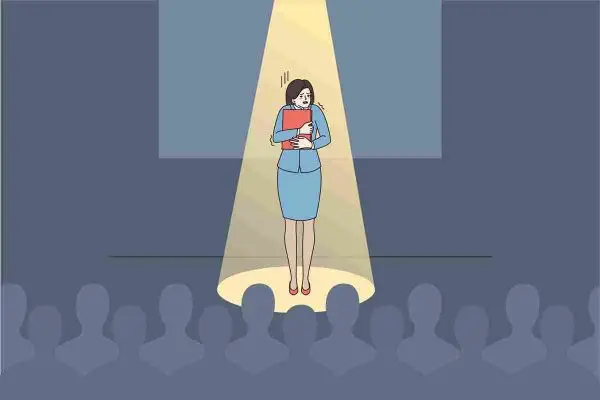
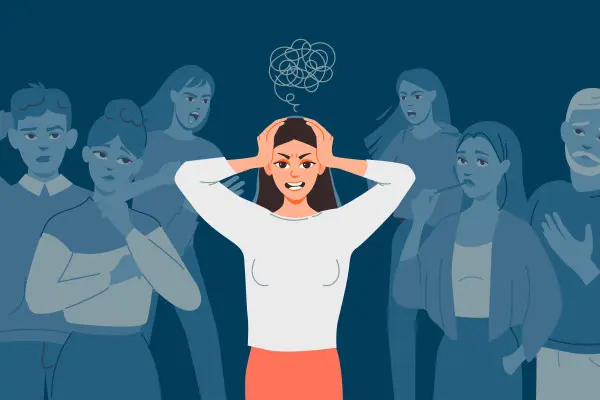
It may start seconds before you speak: cold palms, a racing heartbeat, and one thought looping—what if I make a mistake? At that moment, the situation can feel bigger than it really is, even though many people go through it. This article offers you a realistic understanding of the reasons, a simple step-by-step plan you can apply, and when it may be helpful to seek specialized support through Tatmeen or elsewhere—without judgment or exaggeration.
Why does fear of speaking in front of people happen?
At its core, anxiety is a natural response meant to protect us. When you stand in front of a group, the mind sometimes interprets the situation as an acceptance test or a threat to your reputation, and it heightens alertness: the heart rate speeds up, breathing feels tighter, and attention shifts toward possible mistakes. This doesn’t mean a weak personality—it’s simply a pattern the brain learned through past experiences, high expectations, or harsh self-criticism.
Fear usually increases when we tie performance to our personal worth: if I stumble, that means I’m incompetent. This belief makes any small slip feel like a disaster. But the reality is that audiences often remember the message more than the details of your nervousness—and they offer more grace than we imagine.
Is it normal nervousness or social anxiety disorder?
There’s a difference between helpful nervousness that supports focus, and persistent fear that leads to avoidance and affects school, work, or relationships. The National Institute of Mental Health describes social anxiety as fear or anxiety in situations where a person may be evaluated or judged—such as speaking in front of others or answering in class. The most important indicator isn’t whether anxiety exists, but how it impacts your life and how you respond to it.
Consider these signs without diagnosing yourself: Do you avoid presentations completely even if you lose opportunities? Do you spiral into worry days before an event and keep criticizing yourself afterward? Has fear become a fixed pattern that prevents you from moving forward? If the answer is repeatedly yes, a professional evaluation may help you build a plan that fits you.
A practical plan before presenting
Good preparation doesn’t erase anxiety entirely, but it reduces surprises and restores a sense of control. You can start with these steps:
Define the core message in one sentence, then build around it with a few clear points.
Write a short opening you memorize well; a strong start eases the first minutes of discomfort.
Break the talk into “stops”; each stop is one idea with a simple example.
Practice out loud, and record yourself once to notice pacing—not to punish yourself.
Use gradual exposure: start in front of one person, then a small group, then a work meeting.
Prepare a backup plan: a small card with keywords instead of memorizing every word.
And if you use slides or notes, keep them light: a few words are enough to remind you of the next stop. Too much text on the screen increases anxiety because you’re trying to read and present at the same time, while the goal is for slides to be support—not a burden.
According to specialists on Tatmeen, anxiety often decreases when exposure is repeated with a greater sense of safety and ability—especially when practice is structured and paired with reshaping harsh self-beliefs. The point isn’t to become completely without nervousness, but to let your confidence expand with each small experience.
During speaking: Managing the moment instead of fighting the anxiety
When physical symptoms start, you may get busy trying to hide them—making tension worse. A gentler alternative is to accept them as a natural signal, then return to your purpose. Try slowing your exhale so it lasts a bit longer than your inhale, and intentionally taking a short pause between paragraphs; pauses look like confidence to the audience, not hesitation.
Also help yourself by directing attention outward: focus on delivering a useful idea, not monitoring your hand or your voice. Choose three gaze points around the room rather than staring at one person, and allow yourself to say a simple sentence if you forget: “Let me rephrase the idea.” Over-apologizing shines a spotlight on what others often don’t notice in the first place.
After the experience: How do you build accumulated confidence?
What happens after presenting matters as much as what happens before it. Instead of replaying the talk in your head searching for flaws, use a fair review: write three things you did well, and one thing you can improve next time. This balance protects you from overgeneralizing—that one small mistake means total failure.
It also helps to track evidence, not feelings: Did you expect you’d freeze, but it didn’t happen? Did you think everyone would notice your trembling, yet you received thanks for how clear the idea was? This practice gradually resets expectations and reduces the “size” of the fear.
When might specialized support help you?
If fear is intense enough to restrict your life or cause ongoing avoidance, psychological support may be a realistic step. Social anxiety goes beyond shyness and can affect work and study, and talk therapies such as cognitive behavioral therapy may help address the thoughts and behaviors that fuel fear.
In the specific context of presentation anxiety, Mayo Clinic notes that preparation, practice, and seeking help when needed are factors that may reduce fear of public speaking. In sessions, a specialist helps you understand the story behind your fear, build gradual exposure that suits you, and learn calming and communication skills without pressure.
Finally…
Fear of speaking in front of an audience doesn’t disappear with a sudden decision, but it does lessen when you treat it as a skill you can learn—not a fixed trait. Start with small steps, and celebrate any progress, even if it’s simple. And if you feel anxiety is stealing your opportunities or draining your energy, a session with a specialist could be a turning point; you can book a session through Tatmeen to create a plan that fits you and respects your pace.
Frequently Asked Questions
Does fear of speaking in public mean I have social anxiety disorder?
Not necessarily. Nervousness before presenting is common, but social anxiety disorder is typically linked to repeated avoidance and a clear impact on school or work, with prolonged worry before situations and self-criticism afterward. If the impact is significant, an assessment with a specialist can help.
What should I do if my voice trembles or I forget part of what I’m saying?
Slow down, take a short pause, then return to the next “keyword.” You can calmly acknowledge that you’ll rephrase the idea—without a long apology. Practicing out loud beforehand reduces the chance of forgetting and increases vocal steadiness.
How long does it take to notice improvement?
Improvement is usually gradual. Some people notice a difference within weeks of structured practice and gradual exposure, while others need longer depending on the severity of anxiety and their history of experiences. What matters is consistency and reviewing progress in a fair—not harsh—way.
A writer and researcher specializing in psychiatry, she focuses on mental health and the human emotions we experience but cannot always find the words to name. She writes about us—about humanity and the human experience—and simplifies complex topics to offer content that helps us better understand ourselves and life, ultimately making us feel less alone.
Every Tatmeen article is reviewed by care providers licensed by the Saudi Commission for Health Specialties, so what you read is accurate and trustworthy.
This article builds understanding and does not replace a licensed care provider.
Need someone to talk to?
Tatmeen's licensed care providers are available around the clock, and the app's urgent consultation connects you with one within minutes.
Download Tatmeen to explore care providers and booking options.
Smart matchingFour quick questions suggest the right care provider
Urgent consultationTalk to an available care provider within minutes
Free psychological measuresMore than 20 tests to understand how you are doing
Scan to download
{"data":{"id":"e6e247f7-80f0-4853-963f-12a43996ed0a","slug":"fear-public-speaking-overcome-social-phobia","arTitle":"الخوف من التحدث أمام الجمهور: خطوات للتغلّب على الرهاب الاجتماعي","enTitle":"Fear of Public Speaking: Steps to Overcome Social Phobia","thumbnailAltText":"Person standing behind a podium taking a deep breath before speaking to a blurred audience","estimatedReadingTime":5,"likesCount":386,"writer":{"id":"3ab72b74-f26f-4337-9b47-3114b0f90de5","arBio":"كاتبة وباحثة متخصصة في مجال الطب النفسي، تهتم بموضوعات الصحة النفسية وبالمشاعر الإنسانية التي نختبرها ولا نجد دائمًا الكلمات لتسميتها. تكتب عنّا؛ عن الإنسان وتجربته، وتبسّط الموضوعات المعقّدة لتقدّم محتوى يساعدنا على فهم ذواتنا والحياة أكثر، ويجعلنا نشعر بأننا بوحدة أقل.","enBio":"A writer and researcher specializing in psychiatry, she focuses on mental health and the human emotions we experience but cannot always find the words to name. She writes about us—about humanity and the human experience—and simplifies complex topics to offer content that helps us better understand ourselves and life, ultimately making us feel less alone.","user":{"slug":"ayat-alnajar","arFullName":"آيات النجار","enFullName":"Ayat Al-Najjar","publicProfileImageUrl":"https://cdn.tatmeen.sa/public/profile-images/02384455-68fa-40b6-ad05-609fde65cafa/21b9a610dde5dfc6d37af110c23e9c7ab3946be080c281beb000debf4f7d31a6.webp","publicProfileImage96Url":"https://cdn.tatmeen.sa/public/profile-images/02384455-68fa-40b6-ad05-609fde65cafa/21b9a610dde5dfc6d37af110c23e9c7ab3946be080c281beb000debf4f7d31a6-w96.webp","publicProfileImage192Url":"https://cdn.tatmeen.sa/public/profile-images/02384455-68fa-40b6-ad05-609fde65cafa/21b9a610dde5dfc6d37af110c23e9c7ab3946be080c281beb000debf4f7d31a6-w192.webp"}},"arContent":"","enContent":"","productionDocument":{"headings":[{"id":"article-section-why-does-fear-of-speaking-in-front-of-people-happen","text":"Why does fear of speaking in front of people happen?"},{"id":"article-section-is-it-normal-nervousness-or-social-anxiety-disorder","text":"Is it normal nervousness or social anxiety disorder?"},{"id":"article-section-a-practical-plan-before-presenting","text":"A practical plan before presenting"},{"id":"article-section-during-speaking-managing-the-moment-instead-of-fighting-the-anxiety","text":"During speaking: Managing the moment instead of fighting the anxiety"},{"id":"article-section-after-the-experience-how-do-you-build-accumulated-confidence","text":"After the experience: How do you build accumulated confidence?"},{"id":"article-section-when-might-specialized-support-help-you","text":"When might specialized support help you?"},{"id":"article-section-finally","text":"Finally…"}],"faqs":[{"question":"Does fear of speaking in public mean I have social anxiety disorder?","answer":"<p><span style=\"color:#000000\">Not necessarily. Nervousness before presenting is common, but social anxiety disorder is typically linked to repeated avoidance and a clear impact on school or work, with prolonged worry before situations and self-criticism afterward. If the impact is significant, an assessment with a specialist can help.</span></p>"},{"question":"What should I do if my voice trembles or I forget part of what I’m saying?","answer":"<p><span style=\"color:#000000\">Slow down, take a short pause, then return to the next “keyword.” You can calmly acknowledge that you’ll rephrase the idea—without a long apology. Practicing out loud beforehand reduces the chance of forgetting and increases vocal steadiness.</span></p>"},{"question":"How long does it take to notice improvement?","answer":"<p><span style=\"color:#000000\">Improvement is usually gradual. Some people notice a difference within weeks of structured practice and gradual exposure, while others need longer depending on the severity of anxiety and their history of experiences. What matters is consistency and reviewing progress in a fair—not harsh—way.</span></p>"}],"beforeSourcesHtml":"<p></p>","sources":[],"afterSourcesHtml":"","blocks":[{"type":"html","html":"<p><span style=\"color:#000000\">It may start seconds before you speak: cold palms, a racing heartbeat, and one thought looping—what if I make a mistake? At that moment, the situation can feel bigger than it really is, even though many people go through it. This article offers you a realistic understanding of the reasons, a simple step-by-step plan you can apply, and when it may be helpful to seek specialized support through Tatmeen or elsewhere—without judgment or exaggeration.</span></p><h2 id=\"article-section-why-does-fear-of-speaking-in-front-of-people-happen\" data-toc-heading tabindex=\"-1\"><span id=\"why-does-fear-of-speaking-in-front-of-people-happen-1\" aria-hidden=\"true\"></span><span style=\"color:#000000\"><strong>Why does fear of speaking in front of people happen?</strong></span></h2><p><span style=\"color:#000000\">At its core, anxiety is a natural response meant to protect us. When you stand in front of a group, the mind sometimes interprets the situation as an acceptance test or a threat to your reputation, and it heightens alertness: the heart rate speeds up, breathing feels tighter, and attention shifts toward possible mistakes. This doesn’t mean a weak personality—it’s simply a pattern the brain learned through past experiences, high expectations, or harsh self-criticism.</span></p><p><span style=\"color:#000000\">Fear usually increases when we tie performance to our personal worth: if I stumble, that means I’m incompetent. This belief makes any small slip feel like a disaster. But the reality is that audiences often remember the message more than the details of your nervousness—and they offer more grace than we imagine.</span></p><h2 id=\"article-section-is-it-normal-nervousness-or-social-anxiety-disorder\" data-toc-heading tabindex=\"-1\"><span id=\"is-it-normal-nervousness-or-social-anxiety-disorder-2\" aria-hidden=\"true\"></span><span style=\"color:#000000\"><strong>Is it normal nervousness or social anxiety disorder?</strong></span></h2><p><span style=\"color:#000000\">There’s a difference between helpful nervousness that supports focus, and persistent fear that leads to avoidance and affects school, work, or relationships. </span><a href=\"https://www.nimh.nih.gov/health/publications/social-anxiety-disorder-more-than-just-shyness\" target=\"_blank\" rel=\"nofollow noopener noreferrer\"><span style=\"color:#1155cc\"><u>The National Institute of Mental Health</u></span></a><span style=\"color:#000000\"> describes social anxiety as fear or anxiety in situations where a person may be evaluated or judged—such as speaking in front of others or answering in class. The most important indicator isn’t whether anxiety exists, but how it impacts your life and how you respond to it.</span></p><p><span style=\"color:#000000\">Consider these signs without diagnosing yourself: Do you avoid presentations completely even if you lose opportunities? Do you spiral into worry days before an event and keep criticizing yourself afterward? Has fear become a fixed pattern that prevents you from moving forward? If the answer is repeatedly yes, a professional evaluation may help you build a plan that fits you.</span></p><h2 id=\"article-section-a-practical-plan-before-presenting\" data-toc-heading tabindex=\"-1\"><span id=\"a-practical-plan-before-presenting-3\" aria-hidden=\"true\"></span><span style=\"color:#000000\"><strong>A practical plan before presenting</strong></span></h2><p><span style=\"color:#000000\">Good preparation doesn’t erase anxiety entirely, but it reduces surprises and restores a sense of control. You can start with these steps:</span></p><ul><li><p><span style=\"color:#000000\">Define the core message in one sentence, then build around it with a few clear points.</span></p></li><li><p><span style=\"color:#000000\">Write a short opening you memorize well; a strong start eases the first minutes of discomfort.</span></p></li><li><p><span style=\"color:#000000\">Break the talk into “stops”; each stop is one idea with a simple example.</span></p></li><li><p><span style=\"color:#000000\">Practice out loud, and record yourself once to notice pacing—not to punish yourself.</span></p></li><li><p><span style=\"color:#000000\">Use gradual exposure: start in front of one person, then a small group, then a work meeting.</span></p></li><li><p><span style=\"color:#000000\">Prepare a backup plan: a small card with keywords instead of memorizing every word.</span></p></li></ul><p><span style=\"color:#000000\">And if you use slides or notes, keep them light: a few words are enough to remind you of the next stop. Too much text on the screen increases anxiety because you’re trying to read and present at the same time, while the goal is for slides to be support—not a burden.</span></p><p><span style=\"color:#000000\">According to specialists on Tatmeen, anxiety often decreases when exposure is repeated with a greater sense of safety and ability—especially when practice is structured and paired with reshaping harsh self-beliefs. The point isn’t to become completely without nervousness, but to let your confidence expand with each small experience.</span></p><h2 id=\"article-section-during-speaking-managing-the-moment-instead-of-fighting-the-anxiety\" data-toc-heading tabindex=\"-1\"><span id=\"during-speaking-managing-the-moment-instead-of-fighting-the-anxiety-4\" aria-hidden=\"true\"></span><span style=\"color:#000000\"><strong>During speaking: Managing the moment instead of fighting the anxiety</strong></span></h2><p><span style=\"color:#000000\">When physical symptoms start, you may get busy trying to hide them—making tension worse. A gentler alternative is to accept them as a natural signal, then return to your purpose. Try slowing your exhale so it lasts a bit longer than your inhale, and intentionally taking a short pause between paragraphs; pauses look like confidence to the audience, not hesitation.</span></p><p><span style=\"color:#000000\">Also help yourself by directing attention outward: focus on delivering a useful idea, not monitoring your hand or your voice. Choose three gaze points around the room rather than staring at one person, and allow yourself to say a simple sentence if you forget: “Let me rephrase the idea.” Over-apologizing shines a spotlight on what others often don’t notice in the first place.</span></p><h2 id=\"article-section-after-the-experience-how-do-you-build-accumulated-confidence\" data-toc-heading tabindex=\"-1\"><span id=\"after-the-experience-how-do-you-build-accumulated-confidence-5\" aria-hidden=\"true\"></span><span style=\"color:#000000\"><strong>After the experience: How do you build accumulated confidence?</strong></span></h2><p><span style=\"color:#000000\">What happens after presenting matters as much as what happens before it. Instead of replaying the talk in your head searching for flaws, use a fair review: write three things you did well, and one thing you can improve next time. This balance protects you from overgeneralizing—that one small mistake means total failure.</span></p><p><span style=\"color:#000000\">It also helps to track evidence, not feelings: Did you expect you’d freeze, but it didn’t happen? Did you think everyone would notice your trembling, yet you received thanks for how clear the idea was? This practice gradually resets expectations and reduces the “size” of the fear.</span></p><h2 id=\"article-section-when-might-specialized-support-help-you\" data-toc-heading tabindex=\"-1\"><span id=\"when-might-specialized-support-help-you-6\" aria-hidden=\"true\"></span><span style=\"color:#000000\"><strong>When might specialized support help you?</strong></span></h2><p><span style=\"color:#000000\">If fear is intense enough to restrict your life or cause ongoing avoidance, psychological support may be a realistic step. Social anxiety goes beyond shyness and can affect work and study, and talk therapies such as cognitive behavioral therapy may help address the thoughts and behaviors that fuel fear.</span></p><p><span style=\"color:#000000\">In the specific context of presentation anxiety, Mayo Clinic notes that preparation, practice, and seeking help when needed are factors that may reduce fear of public speaking. In sessions, a specialist helps you understand the story behind your fear, build gradual exposure that suits you, and learn calming and communication skills without pressure.</span></p><h2 id=\"article-section-finally\" data-toc-heading tabindex=\"-1\"><span id=\"finally-7\" aria-hidden=\"true\"></span><span style=\"color:#000000\"><strong>Finally…</strong></span></h2><p><span style=\"color:#000000\">Fear of speaking in front of an audience doesn’t disappear with a sudden decision, but it does lessen when you treat it as a skill you can learn—not a fixed trait. Start with small steps, and celebrate any progress, even if it’s simple. And if you feel anxiety is stealing your opportunities or draining your energy, a session with a specialist could be a turning point; you can<u> book a session </u>through Tatmeen to create a plan that fits you and respects your pace.</span></p>"}],"inlineCtaSignatures":[],"_experienceAliases":{"v":1,"fields":["html","bodyHtml"],"faqs":[0,1,2]}},"createdAt":"2026-05-08T21:00:00.000Z","updatedAt":"2026-06-02T20:31:29.480Z","disorderGroups":[{"id":"1e82772d-a1a7-4d29-b475-be9d6b67ae02","slug":"common-mental-issues","arName":"اضطرابات نفسية شائعة","enName":"Common Mental Issues"},{"id":"d807ea69-44d4-4e81-bee4-0a059fd36645","slug":"self-development","arName":"تنمية الذات","enName":"Self-Development"}],"reviewer":{"arFullName":"فريق تطمين","enFullName":"Tatmeen team","slug":"tatmeen-team","kind":"organization"},"productionArticle":true,"promotionAllowed":true,"preparedCover":{"src":"https://cdn.tatmeen.sa/public/article-lcp/article-lcp-v2/sha256-18a8e2a1250958c7ea054d1fafa8855f96a873e6c040e95e5e8fbcdad289f995/800-82edeb7e14fae19c50eaa0709ea4358060b7471f9f1b2a36c10a217221167fe8.avif","fallback":"https://cdn.tatmeen.sa/public/article-lcp/article-lcp-v2/sha256-18a8e2a1250958c7ea054d1fafa8855f96a873e6c040e95e5e8fbcdad289f995/800-f9b798c7c7b1b94ee4345d59ce403c9d37d59d57658d490f15e4321c871df645.webp","directUrl":"https://cdn.tatmeen.sa/blog-cover/Tatmeen-1778338257837.webp","isGolden":true,"avifSrcset":"https://cdn.tatmeen.sa/public/article-lcp/article-lcp-v2/sha256-18a8e2a1250958c7ea054d1fafa8855f96a873e6c040e95e5e8fbcdad289f995/400-c315b9943318295c0af08971ba8e67586a0778b04d732243d25434891041077d.avif 400w, https://cdn.tatmeen.sa/public/article-lcp/article-lcp-v2/sha256-18a8e2a1250958c7ea054d1fafa8855f96a873e6c040e95e5e8fbcdad289f995/640-4313f920017d5f7a9d02b03ef69621c3e712c8a1d439f50adfbe0db8d3e0dc52.avif 640w, https://cdn.tatmeen.sa/public/article-lcp/article-lcp-v2/sha256-18a8e2a1250958c7ea054d1fafa8855f96a873e6c040e95e5e8fbcdad289f995/800-82edeb7e14fae19c50eaa0709ea4358060b7471f9f1b2a36c10a217221167fe8.avif 800w, https://cdn.tatmeen.sa/public/article-lcp/article-lcp-v2/sha256-18a8e2a1250958c7ea054d1fafa8855f96a873e6c040e95e5e8fbcdad289f995/1200-623889f7bfb66a5aa71b858c138a9e43171a7b4dc05c31dd302d3f96f84c7ee4.avif 1200w","webpSrcset":"https://cdn.tatmeen.sa/public/article-lcp/article-lcp-v2/sha256-18a8e2a1250958c7ea054d1fafa8855f96a873e6c040e95e5e8fbcdad289f995/400-dbb1d4e108180fdccbe9e9277671d8e3cff1a9f1abe96a9e17a3ed53fb7ce3b2.webp 400w, https://cdn.tatmeen.sa/public/article-lcp/article-lcp-v2/sha256-18a8e2a1250958c7ea054d1fafa8855f96a873e6c040e95e5e8fbcdad289f995/640-00f68e7fe58d5d17ee44489e035e8014238361ac22976de29adc5c9926abf963.webp 640w, https://cdn.tatmeen.sa/public/article-lcp/article-lcp-v2/sha256-18a8e2a1250958c7ea054d1fafa8855f96a873e6c040e95e5e8fbcdad289f995/800-f9b798c7c7b1b94ee4345d59ce403c9d37d59d57658d490f15e4321c871df645.webp 800w, https://cdn.tatmeen.sa/public/article-lcp/article-lcp-v2/sha256-18a8e2a1250958c7ea054d1fafa8855f96a873e6c040e95e5e8fbcdad289f995/1200-2d8119b8d0cb8857c70bbe7e5dc7f1c172687c5bde9f96ac3fea9a4869e72696.webp 1200w","phoneAvifSrcset":"https://cdn.tatmeen.sa/public/article-lcp/article-lcp-v2/sha256-18a8e2a1250958c7ea054d1fafa8855f96a873e6c040e95e5e8fbcdad289f995/400-c315b9943318295c0af08971ba8e67586a0778b04d732243d25434891041077d.avif 400w, https://cdn.tatmeen.sa/public/article-lcp/article-lcp-v2/sha256-18a8e2a1250958c7ea054d1fafa8855f96a873e6c040e95e5e8fbcdad289f995/640-4313f920017d5f7a9d02b03ef69621c3e712c8a1d439f50adfbe0db8d3e0dc52.avif 640w, https://cdn.tatmeen.sa/public/article-lcp/article-lcp-v2/sha256-18a8e2a1250958c7ea054d1fafa8855f96a873e6c040e95e5e8fbcdad289f995/800-82edeb7e14fae19c50eaa0709ea4358060b7471f9f1b2a36c10a217221167fe8.avif 800w","phoneWebpSrcset":"https://cdn.tatmeen.sa/public/article-lcp/article-lcp-v2/sha256-18a8e2a1250958c7ea054d1fafa8855f96a873e6c040e95e5e8fbcdad289f995/400-dbb1d4e108180fdccbe9e9277671d8e3cff1a9f1abe96a9e17a3ed53fb7ce3b2.webp 400w, https://cdn.tatmeen.sa/public/article-lcp/article-lcp-v2/sha256-18a8e2a1250958c7ea054d1fafa8855f96a873e6c040e95e5e8fbcdad289f995/640-00f68e7fe58d5d17ee44489e035e8014238361ac22976de29adc5c9926abf963.webp 640w, https://cdn.tatmeen.sa/public/article-lcp/article-lcp-v2/sha256-18a8e2a1250958c7ea054d1fafa8855f96a873e6c040e95e5e8fbcdad289f995/800-f9b798c7c7b1b94ee4345d59ce403c9d37d59d57658d490f15e4321c871df645.webp 800w","width":800,"height":500},"previewTaxonomy":{"groups":[{"id":"1e82772d-a1a7-4d29-b475-be9d6b67ae02","slug":"common-mental-issues","arName":"اضطرابات نفسية شائعة","enName":"Common Mental Issues"},{"id":"d807ea69-44d4-4e81-bee4-0a059fd36645","slug":"self-development","arName":"تنمية الذات","enName":"Self-Development"}],"topics":[{"id":"f495e682-facf-4a75-b8d2-369cf476488b","slug":"low-self-confidence","arName":"ضعف الثقة بالنفس","enName":"Low Self-Confidence","groupSlug":"self-development","href":"/blog/category/self-development/low-self-confidence/"},{"id":"833e7e92-9a41-46f7-9a3d-8f3e504517a0","slug":"social-phobia","arName":"رهاب اجتماعي","enName":"Social Phobia","groupSlug":"common-mental-issues","href":"/blog/category/common-mental-issues/social-phobia/"}],"tags":[{"id":"b17ecf79-93e3-43d7-8e38-1861533199ba","slug":"anxiety-panic-phobia","arName":"القلق والرهاب والهلع","enName":"Anxiety Phobias & Panic"},{"id":"a52f4363-76ff-4a4d-8969-b9b985cb7608","slug":"workplace-leadership","arName":"مكان العمل والقيادة","enName":"Workplace & Leadership"},{"id":"d58e6187-021b-44a5-882c-245bccd77611","slug":"self-help-howto","arName":"مساعدة ذاتية / خطوات عملية","enName":"Self-Help / How-To"}]},"previewProviderRecommendations":[{"id":"278d5ac5-30ff-46ad-97be-c67cdd125836","slug":"dr-mohammed-alamari-8085","arFullName":"د. محمد العماري","enFullName":"Dr. Mohammed Alamari","publicProfileImageUrl":"https://cdn.tatmeen.sa/public/profile-images/278d5ac5-30ff-46ad-97be-c67cdd125836/69bdd11cb01784eed010eb9883403fd6ca4e4afcec739dcd6114fd8b85f133a8.webp","publicProfileImage96Url":"https://cdn.tatmeen.sa/public/profile-images/278d5ac5-30ff-46ad-97be-c67cdd125836/69bdd11cb01784eed010eb9883403fd6ca4e4afcec739dcd6114fd8b85f133a8-w96.webp","publicProfileImage192Url":"https://cdn.tatmeen.sa/public/profile-images/278d5ac5-30ff-46ad-97be-c67cdd125836/69bdd11cb01784eed010eb9883403fd6ca4e4afcec739dcd6114fd8b85f133a8-w192.webp","specialization":{"arName":"طبيب أسرة","enName":"Family Physician"},"profileImageUrl":"https://cdn.tatmeen.sa/public/profile-images/278d5ac5-30ff-46ad-97be-c67cdd125836/69bdd11cb01784eed010eb9883403fd6ca4e4afcec739dcd6114fd8b85f133a8-w192.webp","experienceYears":3,"consultantInfo":{"averageRating":{"average":4},"specialization":{"arGeneralName":"طبيب أسرة","enGeneralName":"Family Physician"}}},{"id":"dc4f4096-c96e-46ad-8e85-55c7104fbbf9","slug":"alya-alasiri-9292","arFullName":"علياء العسيري","enFullName":"Alya Alasiri","publicProfileImageUrl":"","publicProfileImage96Url":"","publicProfileImage192Url":"","specialization":{"arName":"أخصائي نفسي","enName":"Psychologist"},"profileImageUrl":"","experienceYears":4,"consultantInfo":{"averageRating":{"average":0},"specialization":{"arGeneralName":"أخصائي نفسي","enGeneralName":"Psychologist"}}},{"id":"6df31339-a6f5-4131-a603-3a7c7a34c143","slug":"joud-alodhayyani-9014","arFullName":"جود العتيبي","enFullName":"Joud Alotaibi","publicProfileImageUrl":"https://cdn.tatmeen.sa/public/profile-images/6df31339-a6f5-4131-a603-3a7c7a34c143/7bb005ef9d4315296aad2a7d142fb2af2cf89920a40b474fc5139b9530269282.webp","publicProfileImage96Url":"https://cdn.tatmeen.sa/public/profile-images/6df31339-a6f5-4131-a603-3a7c7a34c143/7bb005ef9d4315296aad2a7d142fb2af2cf89920a40b474fc5139b9530269282-w96.webp","publicProfileImage192Url":"https://cdn.tatmeen.sa/public/profile-images/6df31339-a6f5-4131-a603-3a7c7a34c143/7bb005ef9d4315296aad2a7d142fb2af2cf89920a40b474fc5139b9530269282-w192.webp","specialization":{"arName":"أخصائي نفسي","enName":"Psychologist"},"profileImageUrl":"https://cdn.tatmeen.sa/public/profile-images/6df31339-a6f5-4131-a603-3a7c7a34c143/7bb005ef9d4315296aad2a7d142fb2af2cf89920a40b474fc5139b9530269282-w192.webp","experienceYears":2,"consultantInfo":{"averageRating":{"average":3.5},"specialization":{"arGeneralName":"أخصائي نفسي","enGeneralName":"Psychologist"}}}],"previewCareProviders":[{"id":"09364052-c2a9-4c52-9717-7ce2093b8d0a","slug":"kholoud-alharbi-5221","arFullName":"خلود الحربي","enFullName":"Kholoud Alharbi","publicProfileImageUrl":"https://cdn.tatmeen.sa/public/profile-images/09364052-c2a9-4c52-9717-7ce2093b8d0a/4a0aeb81619e351b77f4323e3605a0a00acc7ca3c82ee7cc5ca2c9e8ef716049.webp","publicProfileImage96Url":"https://cdn.tatmeen.sa/public/profile-images/09364052-c2a9-4c52-9717-7ce2093b8d0a/4a0aeb81619e351b77f4323e3605a0a00acc7ca3c82ee7cc5ca2c9e8ef716049-w96.webp","publicProfileImage192Url":"https://cdn.tatmeen.sa/public/profile-images/09364052-c2a9-4c52-9717-7ce2093b8d0a/4a0aeb81619e351b77f4323e3605a0a00acc7ca3c82ee7cc5ca2c9e8ef716049-w192.webp","gender":"FEMALE","specialization":{"arName":"أخصائي نفسي","enName":"Psychologist"}},{"id":"6f037535-1dca-4b50-a8b2-5974b7323286","slug":"salah-althobaiti-9053","arFullName":"صلاح الثبيتي","enFullName":"Salah Althobaiti","publicProfileImageUrl":"https://cdn.tatmeen.sa/public/profile-images/6f037535-1dca-4b50-a8b2-5974b7323286/35b6bd7fad9b1e004c1835803eb9c1b56dcacd380685ec8bff141f0fb888005c.webp","publicProfileImage96Url":"https://cdn.tatmeen.sa/public/profile-images/6f037535-1dca-4b50-a8b2-5974b7323286/35b6bd7fad9b1e004c1835803eb9c1b56dcacd380685ec8bff141f0fb888005c-w96.webp","publicProfileImage192Url":"https://cdn.tatmeen.sa/public/profile-images/6f037535-1dca-4b50-a8b2-5974b7323286/35b6bd7fad9b1e004c1835803eb9c1b56dcacd380685ec8bff141f0fb888005c-w192.webp","gender":"MALE","specialization":{"arName":"أخصائي نفسي","enName":"Psychologist"}},{"id":"3cc806e8-616b-4884-9f21-a75b378580a2","slug":"aisha-al-hashim-8667","arFullName":"عائشة ال هاشم","enFullName":"Aisha Al Hashim","publicProfileImageUrl":"https://cdn.tatmeen.sa/public/profile-images/3cc806e8-616b-4884-9f21-a75b378580a2/27f523d03be4dcfa1f6a79f70c1773887434e698990d214cd990caec56a44798.webp","publicProfileImage96Url":"https://cdn.tatmeen.sa/public/profile-images/3cc806e8-616b-4884-9f21-a75b378580a2/27f523d03be4dcfa1f6a79f70c1773887434e698990d214cd990caec56a44798-w96.webp","publicProfileImage192Url":"https://cdn.tatmeen.sa/public/profile-images/3cc806e8-616b-4884-9f21-a75b378580a2/27f523d03be4dcfa1f6a79f70c1773887434e698990d214cd990caec56a44798-w192.webp","gender":"FEMALE","specialization":{"arName":"أخصائي نفسي","enName":"Psychologist"}},{"id":"db2ce1a0-9325-4471-b7ce-eb2e811c30a3","slug":"amer-qutub-2441","arFullName":"عامر قطب","enFullName":"Amer Qutub","publicProfileImageUrl":"https://cdn.tatmeen.sa/public/profile-images/db2ce1a0-9325-4471-b7ce-eb2e811c30a3/80580f99bfd7fe2b2a9cf8eed73ab532f5086d1efe053b0aa57358c1ce004261.webp","publicProfileImage96Url":"https://cdn.tatmeen.sa/public/profile-images/db2ce1a0-9325-4471-b7ce-eb2e811c30a3/80580f99bfd7fe2b2a9cf8eed73ab532f5086d1efe053b0aa57358c1ce004261-w96.webp","publicProfileImage192Url":"https://cdn.tatmeen.sa/public/profile-images/db2ce1a0-9325-4471-b7ce-eb2e811c30a3/80580f99bfd7fe2b2a9cf8eed73ab532f5086d1efe053b0aa57358c1ce004261-w192.webp","gender":"MALE","specialization":{"arName":"أخصائي نفسي","enName":"Psychologist"}},{"id":"94765496-dbdf-4631-a01b-7df5f788668d","slug":"abdullrahman-alhamoudi-3045","arFullName":"عبدالرحمن الحمودي","enFullName":"Abdulrahman Alhamoudi","publicProfileImageUrl":"https://cdn.tatmeen.sa/public/profile-images/94765496-dbdf-4631-a01b-7df5f788668d/2d49f6b6493c564afb6f50b6c3634231dff3a5cf8353acfab393d1b2a88037d1.webp","publicProfileImage96Url":"https://cdn.tatmeen.sa/public/profile-images/94765496-dbdf-4631-a01b-7df5f788668d/2d49f6b6493c564afb6f50b6c3634231dff3a5cf8353acfab393d1b2a88037d1-w96.webp","publicProfileImage192Url":"https://cdn.tatmeen.sa/public/profile-images/94765496-dbdf-4631-a01b-7df5f788668d/2d49f6b6493c564afb6f50b6c3634231dff3a5cf8353acfab393d1b2a88037d1-w192.webp","gender":"MALE","specialization":{"arName":"أخصائي نفسي","enName":"Psychologist"}},{"id":"618dba89-5b70-4b46-8304-741b7ac8ecd3","slug":"abdullah-mari-1311","arFullName":"عبدالله مرعي","enFullName":"Abdullah Mari","publicProfileImageUrl":"https://cdn.tatmeen.sa/public/profile-images/618dba89-5b70-4b46-8304-741b7ac8ecd3/6b4a3bfb59f8a304ca79083b32859b46baad2e1d692974a47c02c1f66bd11129.webp","publicProfileImage96Url":"https://cdn.tatmeen.sa/public/profile-images/618dba89-5b70-4b46-8304-741b7ac8ecd3/6b4a3bfb59f8a304ca79083b32859b46baad2e1d692974a47c02c1f66bd11129-w96.webp","publicProfileImage192Url":"https://cdn.tatmeen.sa/public/profile-images/618dba89-5b70-4b46-8304-741b7ac8ecd3/6b4a3bfb59f8a304ca79083b32859b46baad2e1d692974a47c02c1f66bd11129-w192.webp","gender":"MALE","specialization":{"arName":"أخصائي نفسي","enName":"Psychologist"}},{"id":"3b50a5d5-e795-407f-8676-fd7f0e1bb7a0","slug":"abdulaziz-bin-hudayan-4940","arFullName":"عبدالعزيز بن هديان","enFullName":"Abdulaziz Bin Hudayan","publicProfileImageUrl":"https://cdn.tatmeen.sa/public/profile-images/3b50a5d5-e795-407f-8676-fd7f0e1bb7a0/710ff0fe1fb00cdb5042092e27b7910b480a439b02251ecded62d7758eefce95.webp","publicProfileImage96Url":"https://cdn.tatmeen.sa/public/profile-images/3b50a5d5-e795-407f-8676-fd7f0e1bb7a0/710ff0fe1fb00cdb5042092e27b7910b480a439b02251ecded62d7758eefce95-w96.webp","publicProfileImage192Url":"https://cdn.tatmeen.sa/public/profile-images/3b50a5d5-e795-407f-8676-fd7f0e1bb7a0/710ff0fe1fb00cdb5042092e27b7910b480a439b02251ecded62d7758eefce95-w192.webp","gender":"MALE","specialization":{"arName":"أخصائي نفسي","enName":"Psychologist"}},{"id":"d4ffcb6b-90a7-45b6-b941-964866f4564b","slug":"dhaifallah-alhumaidi-1092","arFullName":"ضيف الله الحميدي","enFullName":"Dhaifallah Alhumaidi","publicProfileImageUrl":"https://cdn.tatmeen.sa/public/profile-images/d4ffcb6b-90a7-45b6-b941-964866f4564b/1817171c5828a9b57d6c30d12332cf154e335272548bc90a6e8456d74d356956.webp","publicProfileImage96Url":"https://cdn.tatmeen.sa/public/profile-images/d4ffcb6b-90a7-45b6-b941-964866f4564b/1817171c5828a9b57d6c30d12332cf154e335272548bc90a6e8456d74d356956-w96.webp","publicProfileImage192Url":"https://cdn.tatmeen.sa/public/profile-images/d4ffcb6b-90a7-45b6-b941-964866f4564b/1817171c5828a9b57d6c30d12332cf154e335272548bc90a6e8456d74d356956-w192.webp","gender":"MALE","specialization":{"arName":"أخصائي نفسي","enName":"Psychologist"}}],"previewDownload":{"href":"/download","title":{"ar":"خطوة واحدة لأجلك، ابدأ الآن","en":"One step for you, start now"},"description":{"ar":"حمّل تطبيق تطمين لاستكشاف مقدمي الرعاية وخيارات الحجز.","en":"Download Tatmeen to explore care providers and booking options."},"posterSrc":"/images/home/cta-ar-new-1.webp","videoSrc":"/images/home/cta-ar-new-1.mp4","videoPosterSrc":"/images/home/cta-ar-new-1.webp","videoPosterEnSrc":"/images/home/cta-en-new-1.webp","videoType":"video/mp4","appStoreHref":"https://apps.apple.com/us/app/tatmeen-%D8%AA%D8%B7%D9%85%D9%8A%D9%86/id6473836983","googlePlayHref":"https://play.google.com/store/apps/details?id=com.TatmeenApp.user&hl=en"},"previewRelatedArticles":[{"id":"75379a26-8b8a-435a-bddb-9dd3fca641d5","slug":"Self-treatment-of-social-anxiety","route":"/blog/Self-treatment-of-social-anxiety/","title":{"ar":"كيف تعالج نفسك من الرهاب الاجتماعي؟","en":"How Can You Treat Yourself for Social Phobia?"},"image":"https://cdn.tatmeen.sa/public/article-lcp/article-lcp-v2/sha256-701801a0d548cf0c3b0b9478e4ea54f95dc2d7344e50b57e60c472ee7886ab5f/800-ec5644651481620c772eb04ac394ca69d219196d9692ba589f19dba75e24bd26.webp","directImageFallback":"https://cdn.tatmeen.sa/blog-cover/1704815793561-Tatmeen-img-152","arThumbnailAltText":"Person standing with arms folded while blurred groups talk in the background","thumbnailAltText":"Person standing with arms folded while blurred groups talk in the background","topic":{"label":{"ar":"اضطرابات نفسية شائعة","en":"Common Mental Issues"}},"readingTimeMinutes":5},{"id":"7fc44a53-71ac-4b64-82c3-3066977f2345","slug":"How-to-self-treat-social-anxiety","route":"/blog/How-to-self-treat-social-anxiety/","title":{"ar":"كيف تعالج نفسك من الرهاب الاجتماعي؟","en":"How to Help Yourself with Social Anxiety"},"image":"https://cdn.tatmeen.sa/public/article-lcp/article-lcp-v2/sha256-b0918c7a7abdc8d435106499c375bdc0726b268cbd539b8745205a5b6072eee7/600-823ef8ee21af11aca4e29cdf95a075458407644e30444e34068b1b6e51a70c19.webp","directImageFallback":"https://cdn.tatmeen.sa/blog-cover/1704734375351-Tatmeen-img-15","arThumbnailAltText":"Person stands alone under a spotlight onstage before a seated audience","thumbnailAltText":"Person stands alone under a spotlight onstage before a seated audience","topic":{"label":{"ar":"اضطرابات نفسية شائعة","en":"Common Mental Issues"}},"readingTimeMinutes":5},{"id":"2880b479-5602-4a3d-9067-ee6f23a17127","slug":"Comprehensive-Guide-to-Social-Anxiety-Disorder","route":"/blog/Comprehensive-Guide-to-Social-Anxiety-Disorder/","title":{"ar":"الدليل الشامل عن الرهاب الاجتماعي وأعراضه وطرق تشخيصه وعلاجه","en":"A Comprehensive Guide to Social Anxiety Disorder"},"image":"https://cdn.tatmeen.sa/public/article-lcp/article-lcp-v2/sha256-0c7aa3ed47b4a1a1e253b62f460e88b67cff4f472971be32e04e27074aef265a/600-d998289a37c445fd5910a8dce71e99f8f4d5603966ac50b3148111cc19b5e620.webp","directImageFallback":"https://cdn.tatmeen.sa/blog-cover/1704816866979-Tatmeen-img-862","arThumbnailAltText":"Person holds their head while standing amid a group of people","thumbnailAltText":"Person holds their head while standing amid a group of people","topic":{"label":{"ar":"اضطرابات نفسية شائعة","en":"Common Mental Issues"}},"readingTimeMinutes":5},{"id":"180630e1-d7a9-4613-bead-2225098a16a6","slug":"What-is-Social-Anxiety-Disorder","route":"/blog/What-is-Social-Anxiety-Disorder/","title":{"ar":"ما هو اضطراب القلق الاجتماعي (الرهاب الاجتماعي)؟","en":"What Is Social Anxiety Disorder (Social Phobia)?"},"image":"https://cdn.tatmeen.sa/public/article-lcp/article-lcp-v2/sha256-5fa9fb1beed5e7bec726a8a4769a8798024a378338a27692f186cb4771e38094/600-899628ad89239658c1454e42aa439f7bb02a49621d5dd94eda3eb276d2da1921.webp","directImageFallback":"https://cdn.tatmeen.sa/blog-cover/1704732626373-Tatmeen-img-616","arThumbnailAltText":"Person in red glasses holding their hands to their mouth against a pink background","thumbnailAltText":"Person in red glasses holding their hands to their mouth against a pink background","topic":{"label":{"ar":"اضطرابات نفسية شائعة","en":"Common Mental Issues"}},"readingTimeMinutes":5}],"previewRelatedReadStates":{}},"locale":"en","device":"desktop","path":"/en/blog/fear-public-speaking-overcome-social-phobia/","readingControls":false,"config":{"public":{"BUCKET_URL":"https://cdn.tatmeen.sa/","APP_BASE_URL":"https://tatmeen.sa","intercomAppId":"ppcnu9e3"}}}