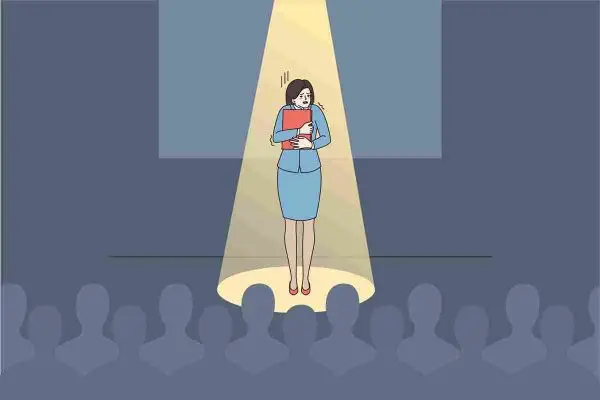
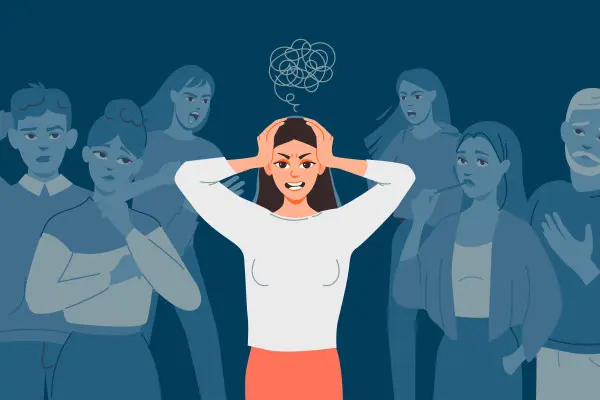
Social anxiety at work can show up in meetings, presentations, interviews, calls, asking for help, receiving feedback, or even camera-on meetings. You may walk into the meeting prepared, then feel the words catch in your throat the moment eyes turn toward you. This feeling is exhausting, especially when your competence is high but anxiety gets to the room before you do. Many people don’t need more pressure on themselves; they need a calmer understanding of what’s happening, and practical tools that protect their presence. In the lines below, you’ll find smart ways that help you participate with steadiness, without pretending to be someone you’re not.
What’s Really Happening Inside Social Anxiety at Work?
Feeling tense before a big presentation or meeting is normal, but social anxiety tends to be deeper and more attached to how a person sees themselves in front of others. The UK National Health Service describes social anxiety as a long-term fear of social situations, and it can affect work, study, and relationships. The core idea isn’t that you don’t know what to say—it’s that your mind overestimates the danger of being judged, and treats the situation like a threat rather than a conversation.
In the workplace, this fear may show up in quiet ways others don’t notice: long silence, avoiding questions, or delaying a presentation until the last moment. Sometimes an employee prepares very hard, but preparation turns into an attempt to control every possible mistake—so stress increases instead of easing.
Common Signs in Meetings and Presentations
The U.S. National Institute of Mental Health explains that anxiety may intensify in performance situations like public speaking or job interviews, and it may come with a racing heartbeat, sweating, or the feeling that your mind suddenly went blank. At work specifically, you might also notice over-reading facial expressions, or interpreting any silence as rejection.
It’s important to separate anxiety from your professional worth. Anxiety is a feeling, not a report on your level. This article does not diagnose your condition, but it can help you understand a pattern that may be social anxiety or performance anxiety. If anxiety includes thoughts of self-harm, severe panic-like symptoms, a clear inability to function, substance use to get through situations, or immediate danger, urgent help from emergency services or a qualified health provider comes first. When you relate to anxiety this way, your goal becomes managing the situation skillfully, not eliminating all tension completely.
Before the Meeting: Smart Preparation That Doesn’t Drain You
Start with what can be called calming the body, because it’s the fastest way to reduce the surge of anxiety. Three minutes of slow breathing with a longer exhale may help lower in-the-moment stress. After that, move to preparing the thought: instead of the sentence “I’ll stumble and everyone will notice,” try a more accurate phrasing like “I may feel nervous, and I can still communicate two clear points.”
And choose a small, specific goal for the meeting. You’re not required to be the most present person in the room—just present enough. Write three points you want to say on a paper in front of you, and a short opening sentence that helps you start even if you tremble at first.
During the Meeting or Presentation: Practical Tools in the Moment
When anxiety starts, the mind tends to monitor the self: How does my voice sound? Did my face turn red? This focus increases confusion. Instead, shift your focus to the task: What message do I want to land? Then use simple tools:
Open with a short, steady sentence: Thank you for your time, and I’ll present the idea briefly.
Let your gaze move between three points in the room instead of staring at one person.
If your words speed up, pause for two seconds and drink water; pausing doesn’t mean failure.
Use a bullet-point sheet, not a full script, so the presentation doesn’t turn into anxious reading.
If you forget a point, say: I’ll come back to this point in a moment—then continue with confidence.
These tools won’t erase anxiety instantly, but they stop anxiety from steering the moment. With repetition, they become an automatic skill—like driving: at first it takes focus, then it becomes calmer.
After the Meeting: A Compassionate Review Instead of an Inner Courtroom
Many people exhaust themselves after a meeting by replaying every word and movement. This rumination gives anxiety extra fuel for the next meeting. A useful review is the one that looks for one actionable lesson, not for mistakes to punish yourself with.
Try asking yourself only three questions: What went well? What was hard? What small step will improve the next experience? Then close the file. If you leave the review open all day, you’ll find yourself living the meeting twice: once in reality and once in your head.
Building Cumulative Confidence: Gradual Exposure Without Harshness
Confidence in presenting isn’t born from one encouraging sentence—it grows from small experiences that repeat. When you always avoid, avoidance gives temporary relief but expands the circle of fear. That’s why a gradual exposure plan may help, and it is best planned with a qualified professional if anxiety is severe or disabling: you start with steps you can tolerate, then slowly level up. The beginning might be one question in a small meeting, then a short comment, then a five-minute presentation.
What Helps in Everyday Work Culture, and When the Problem Is Not You
In the workplace, formality and social considerations may carry extra weight, and that’s normal. What reduces pressure is clarity of roles and boundaries. Ask for the meeting agenda in advance if possible, and prepare a short contribution tied to points—not to over-justifying. And if a question surprises you, it is completely acceptable to say: I need a minute to organize the idea, or I’ll get back to you with a more accurate answer after the meeting.
Build a quiet alliance with one person you trust on your team. Having one familiar face during a presentation may reduce the feeling that you’re alone. At the same time, if fear is connected to repeated mockery, humiliation, bullying, threats, or unsafe management, the problem is not only your sensitivity. That situation needs appropriate support and clear boundaries, not simply training yourself to tolerate more. Over time, healthy professional relationships can become less like a constant exam and more like a space for learning and collaboration.
Finally…
Social anxiety at work doesn’t erase your experience or define your future, but it asks you for a kinder way to manage anxiety. Give yourself the right to move gradually, and celebrate the small attempts before the big results. And if you feel anxiety is limiting your performance or weighing down your day, Tatmeen may help you explore licensed, suitable support.
Frequently Asked Questions
How can I speak in a big meeting without my voice trembling?
Start with a short warm-up: slow breathing and a longer exhale, then choose a memorized opening sentence and two clear points. While speaking, focus on meaning—not on your voice. Trembling may show up and then settle, and it doesn’t mean others are judging you.
Does social anxiety at work mean I’m not suited for leadership?
Not necessarily. Many leaders were anxious people who learned presentation and communication skills. Leadership isn’t the absence of tension—it’s the ability to make a decision and communicate clearly. Start with small leadership roles within your team and expand them gradually.
What do I do if I ruminate on my mistakes for hours after presenting?
Set a frame for review: only 10 minutes in which you write what went well and what you’ll adjust once. After that, return to your routine or an activity that breaks the thinking loop. If rumination returns, remind yourself that learning doesn’t require punishment—it requires calm repetition.
A writer and researcher specializing in psychiatry, she focuses on mental health and the human emotions we experience but cannot always find the words to name. She writes about us—about humanity and the human experience—and simplifies complex topics to offer content that helps us better understand ourselves and life, ultimately making us feel less alone.
Every Tatmeen article is reviewed by care providers licensed by the Saudi Commission for Health Specialties, so what you read is accurate and trustworthy.
This article builds understanding and does not replace a licensed care provider.
Need someone to talk to?
Tatmeen's licensed care providers are available around the clock, and the app's urgent consultation connects you with one within minutes.
Download Tatmeen to explore care providers and booking options.
Smart matchingFour quick questions suggest the right care provider
Urgent consultationTalk to an available care provider within minutes
Free psychological measuresMore than 20 tests to understand how you are doing
Scan to download
{"data":{"id":"0f807582-c844-45fd-a679-6047bc5a32db","slug":"social-anxiety-at-work","arTitle":"الرهاب الاجتماعي في العمل: أدوات للاجتماعات والعروض","enTitle":"Social Anxiety at Work: Tools for Meetings and Presentations","thumbnailAltText":"woman standing on a podium giving a presentation while clearly having social anxiety","estimatedReadingTime":5,"likesCount":281,"writer":{"id":"3ab72b74-f26f-4337-9b47-3114b0f90de5","arBio":"كاتبة وباحثة متخصصة في مجال الطب النفسي، تهتم بموضوعات الصحة النفسية وبالمشاعر الإنسانية التي نختبرها ولا نجد دائمًا الكلمات لتسميتها. تكتب عنّا؛ عن الإنسان وتجربته، وتبسّط الموضوعات المعقّدة لتقدّم محتوى يساعدنا على فهم ذواتنا والحياة أكثر، ويجعلنا نشعر بأننا بوحدة أقل.","enBio":"A writer and researcher specializing in psychiatry, she focuses on mental health and the human emotions we experience but cannot always find the words to name. She writes about us—about humanity and the human experience—and simplifies complex topics to offer content that helps us better understand ourselves and life, ultimately making us feel less alone.","user":{"slug":"ayat-alnajar","arFullName":"آيات النجار","enFullName":"Ayat Al-Najjar","publicProfileImageUrl":"https://cdn.tatmeen.sa/public/profile-images/02384455-68fa-40b6-ad05-609fde65cafa/21b9a610dde5dfc6d37af110c23e9c7ab3946be080c281beb000debf4f7d31a6.webp","publicProfileImage96Url":"https://cdn.tatmeen.sa/public/profile-images/02384455-68fa-40b6-ad05-609fde65cafa/21b9a610dde5dfc6d37af110c23e9c7ab3946be080c281beb000debf4f7d31a6-w96.webp","publicProfileImage192Url":"https://cdn.tatmeen.sa/public/profile-images/02384455-68fa-40b6-ad05-609fde65cafa/21b9a610dde5dfc6d37af110c23e9c7ab3946be080c281beb000debf4f7d31a6-w192.webp"}},"arContent":"","enContent":"","productionDocument":{"headings":[{"id":"article-section-what-s-really-happening-inside-social-anxiety-at-work","text":"What’s Really Happening Inside Social Anxiety at Work?"},{"id":"article-section-common-signs-in-meetings-and-presentations","text":"Common Signs in Meetings and Presentations"},{"id":"article-section-before-the-meeting-smart-preparation-that-doesn-t-drain-you","text":"Before the Meeting: Smart Preparation That Doesn’t Drain You"},{"id":"article-section-during-the-meeting-or-presentation-practical-tools-in-the-moment","text":"During the Meeting or Presentation: Practical Tools in the Moment"},{"id":"article-section-after-the-meeting-a-compassionate-review-instead-of-an-inner-courtroom","text":"After the Meeting: A Compassionate Review Instead of an Inner Courtroom"},{"id":"article-section-building-cumulative-confidence-gradual-exposure-without-harshness","text":"Building Cumulative Confidence: Gradual Exposure Without Harshness"},{"id":"article-section-what-helps-in-everyday-work-culture-and-when-the-problem-is-not-you","text":"What Helps in Everyday Work Culture, and When the Problem Is Not You"},{"id":"article-section-finally","text":"Finally…"}],"faqs":[{"question":"How can I speak in a big meeting without my voice trembling?","answer":"<p><span style=\"color:#000000\">Start with a short warm-up: slow breathing and a longer exhale, then choose a memorized opening sentence and two clear points. While speaking, focus on meaning—not on your voice. Trembling may show up and then settle, and it doesn’t mean others are judging you.</span></p>"},{"question":"Does social anxiety at work mean I’m not suited for leadership?","answer":"<p><span style=\"color:#000000\">Not necessarily. Many leaders were anxious people who learned presentation and communication skills. Leadership isn’t the absence of tension—it’s the ability to make a decision and communicate clearly. Start with small leadership roles within your team and expand them gradually.</span></p>"},{"question":"What do I do if I ruminate on my mistakes for hours after presenting?","answer":"<p><span style=\"color:#000000\">Set a frame for review: only 10 minutes in which you write what went well and what you’ll adjust once. After that, return to your routine or an activity that breaks the thinking loop. If rumination returns, remind yourself that learning doesn’t require punishment—it requires calm repetition.</span></p>"}],"beforeSourcesHtml":"<p></p>","sources":[],"afterSourcesHtml":"","blocks":[{"type":"html","html":"<p><span style=\"color:#000000\">Social anxiety at work can show up in meetings, presentations, interviews, calls, asking for help, receiving feedback, or even camera-on meetings. You may walk into the meeting prepared, then feel the words catch in your throat the moment eyes turn toward you. This feeling is exhausting, especially when your competence is high but anxiety gets to the room before you do. Many people don’t need more pressure on themselves; they need a calmer understanding of what’s happening, and practical tools that protect their presence. In the lines below, you’ll find smart ways that help you participate with steadiness, without pretending to be someone you’re not.</span></p><h2 id=\"article-section-what-s-really-happening-inside-social-anxiety-at-work\" data-toc-heading tabindex=\"-1\"><span id=\"what-s-really-happening-inside-social-anxiety-at-work-1\" aria-hidden=\"true\"></span><span style=\"color:#000000\"><strong>What’s Really Happening Inside Social Anxiety at Work?</strong></span></h2><p><span style=\"color:#000000\">Feeling tense before a big presentation or meeting is normal, but social anxiety tends to be deeper and more attached to how a person sees themselves in front of others. </span><a href=\"https://www.nhs.uk/mental-health/conditions/social-anxiety/\" target=\"_blank\" rel=\"nofollow noopener noreferrer\"><span style=\"color:#1155cc\"><u>The UK National Health Service</u></span></a><span style=\"color:#000000\"> describes social anxiety as a long-term fear of social situations, and it can affect work, study, and relationships. The core idea isn’t that you don’t know what to say—it’s that your mind overestimates the danger of being judged, and treats the situation like a threat rather than a conversation.</span></p><p><span style=\"color:#000000\">In the workplace, this fear may show up in quiet ways others don’t notice: long silence, avoiding questions, or delaying a presentation until the last moment. Sometimes an employee prepares very hard, but preparation turns into an attempt to control every possible mistake—so stress increases instead of easing.</span></p><h2 id=\"article-section-common-signs-in-meetings-and-presentations\" data-toc-heading tabindex=\"-1\"><span id=\"common-signs-in-meetings-and-presentations-2\" aria-hidden=\"true\"></span><span style=\"color:#000000\"><strong>Common Signs in Meetings and Presentations</strong></span></h2><p><a href=\"https://www.nimh.nih.gov/health/publications/social-anxiety-disorder-more-than-just-shyness\" target=\"_blank\" rel=\"nofollow noopener noreferrer\"><span style=\"color:#1155cc\"><u>The U.S. National Institute of Mental Health</u></span></a><span style=\"color:#000000\"> explains that anxiety may intensify in performance situations like public speaking or job interviews, and it may come with a racing heartbeat, sweating, or the feeling that your mind suddenly went blank. At work specifically, you might also notice over-reading facial expressions, or interpreting any silence as rejection.</span></p><p><span style=\"color:#000000\">It’s important to separate anxiety from your professional worth. Anxiety is a feeling, not a report on your level. This article does not diagnose your condition, but it can help you understand a pattern that may be social anxiety or performance anxiety. If anxiety includes thoughts of self-harm, severe panic-like symptoms, a clear inability to function, substance use to get through situations, or immediate danger, urgent help from emergency services or a qualified health provider comes first. When you relate to anxiety this way, your goal becomes managing the situation skillfully, not eliminating all tension completely.</span></p><h2 id=\"article-section-before-the-meeting-smart-preparation-that-doesn-t-drain-you\" data-toc-heading tabindex=\"-1\"><span id=\"before-the-meeting-smart-preparation-that-doesn-t-drain-you-3\" aria-hidden=\"true\"></span><span style=\"color:#000000\"><strong>Before the Meeting: Smart Preparation That Doesn’t Drain You</strong></span></h2><p><span style=\"color:#000000\">Start with what can be called calming the body, because it’s the fastest way to reduce the surge of anxiety. Three minutes of slow breathing with a longer exhale may help lower in-the-moment stress. After that, move to preparing the thought: instead of the sentence “I’ll stumble and everyone will notice,” try a more accurate phrasing like “I may feel nervous, and I can still communicate two clear points.”</span></p><p><span style=\"color:#000000\">And choose a small, specific goal for the meeting. You’re not required to be the most present person in the room—just present enough. Write three points you want to say on a paper in front of you, and a short opening sentence that helps you start even if you tremble at first.</span></p><h2 id=\"article-section-during-the-meeting-or-presentation-practical-tools-in-the-moment\" data-toc-heading tabindex=\"-1\"><span id=\"during-the-meeting-or-presentation-practical-tools-in-the-moment-4\" aria-hidden=\"true\"></span><span style=\"color:#000000\"><strong>During the Meeting or Presentation: Practical Tools in the Moment</strong></span></h2><p><span style=\"color:#000000\">When anxiety starts, the mind tends to monitor the self: How does my voice sound? Did my face turn red? This focus increases confusion. Instead, shift your focus to the task: What message do I want to land? Then use simple tools:</span></p><ul><li><p><span style=\"color:#000000\">Open with a short, steady sentence: Thank you for your time, and I’ll present the idea briefly.</span></p></li><li><p><span style=\"color:#000000\">Let your gaze move between three points in the room instead of staring at one person.</span></p></li><li><p><span style=\"color:#000000\">If your words speed up, pause for two seconds and drink water; pausing doesn’t mean failure.</span></p></li><li><p><span style=\"color:#000000\">Use a bullet-point sheet, not a full script, so the presentation doesn’t turn into anxious reading.</span></p></li><li><p><span style=\"color:#000000\">If you forget a point, say: I’ll come back to this point in a moment—then continue with confidence.</span></p></li></ul><p><span style=\"color:#000000\">These tools won’t erase anxiety instantly, but they stop anxiety from steering the moment. With repetition, they become an automatic skill—like driving: at first it takes focus, then it becomes calmer.</span></p><h2 id=\"article-section-after-the-meeting-a-compassionate-review-instead-of-an-inner-courtroom\" data-toc-heading tabindex=\"-1\"><span id=\"after-the-meeting-a-compassionate-review-instead-of-an-inner-courtroom-5\" aria-hidden=\"true\"></span><span style=\"color:#000000\"><strong>After the Meeting: A Compassionate Review Instead of an Inner Courtroom</strong></span></h2><p><span style=\"color:#000000\">Many people exhaust themselves after a meeting by replaying every word and movement. This rumination gives anxiety extra fuel for the next meeting. A useful review is the one that looks for one actionable lesson, not for mistakes to punish yourself with.</span></p><p><span style=\"color:#000000\">Try asking yourself only three questions: What went well? What was hard? What small step will improve the next experience? Then close the file. If you leave the review open all day, you’ll find yourself living the meeting twice: once in reality and once in your head.</span></p><h2 id=\"article-section-building-cumulative-confidence-gradual-exposure-without-harshness\" data-toc-heading tabindex=\"-1\"><span id=\"building-cumulative-confidence-gradual-exposure-without-harshness-6\" aria-hidden=\"true\"></span><span style=\"color:#000000\"><strong>Building Cumulative Confidence: Gradual Exposure Without Harshness</strong></span></h2><p><span style=\"color:#000000\">Confidence in presenting isn’t born from one encouraging sentence—it grows from small experiences that repeat. When you always avoid, avoidance gives temporary relief but expands the circle of fear. That’s why a gradual exposure plan may help, and it is best planned with a qualified professional if anxiety is severe or disabling: you start with steps you can tolerate, then slowly level up. The beginning might be one question in a small meeting, then a short comment, then a five-minute presentation.</span></p><h2 id=\"article-section-what-helps-in-everyday-work-culture-and-when-the-problem-is-not-you\" data-toc-heading tabindex=\"-1\"><span id=\"what-helps-in-everyday-work-culture-and-when-the-problem-is-not-you-7\" aria-hidden=\"true\"></span><span style=\"color:#000000\"><strong>What Helps in Everyday Work Culture, and When the Problem Is Not You</strong></span></h2><p><span style=\"color:#000000\">In the workplace, formality and social considerations may carry extra weight, and that’s normal. What reduces pressure is clarity of roles and boundaries. Ask for the meeting agenda in advance if possible, and prepare a short contribution tied to points—not to over-justifying. And if a question surprises you, it is completely acceptable to say: I need a minute to organize the idea, or I’ll get back to you with a more accurate answer after the meeting.</span></p><p><span style=\"color:#000000\">Build a quiet alliance with one person you trust on your team. Having one familiar face during a presentation may reduce the feeling that you’re alone. At the same time, if fear is connected to repeated mockery, humiliation, bullying, threats, or unsafe management, the problem is not only your sensitivity. That situation needs appropriate support and clear boundaries, not simply training yourself to tolerate more. Over time, healthy professional relationships can become less like a constant exam and more like a space for learning and collaboration.</span></p><h2 id=\"article-section-finally\" data-toc-heading tabindex=\"-1\"><span id=\"finally-8\" aria-hidden=\"true\"></span><span style=\"color:#000000\"><strong>Finally…</strong></span></h2><p><span style=\"color:#000000\">Social anxiety at work doesn’t erase your experience or define your future, but it asks you for a kinder way to manage anxiety. Give yourself the right to move gradually, and celebrate the small attempts before the big results. And if you feel anxiety is limiting your performance or weighing down your day,<u> Tatmeen may help you explore licensed, suitable support.</u></span></p>"}],"inlineCtaSignatures":[],"_experienceAliases":{"v":1,"fields":["html","bodyHtml"],"faqs":[0,1,2]}},"createdAt":"2026-06-02T21:00:00.000Z","updatedAt":"2026-06-10T23:43:43.858Z","disorderGroups":[{"id":"1e82772d-a1a7-4d29-b475-be9d6b67ae02","slug":"common-mental-issues","arName":"اضطرابات نفسية شائعة","enName":"Common Mental Issues"},{"id":"53f7e813-a9ad-451e-9864-f807bed91a9f","slug":"work-and-career","arName":"العمل والوظيفة","enName":"Work & Career"},{"id":"4499a52a-06f8-4022-a64d-304e5eca51cc","slug":"life-challenges-and-stress","arName":"تحديات الحياة والضغوط","enName":"Life Challenges & Stress"}],"reviewer":{"arFullName":"فريق تطمين","enFullName":"Tatmeen team","slug":"tatmeen-team","kind":"organization"},"productionArticle":true,"promotionAllowed":true,"preparedCover":{"src":"https://cdn.tatmeen.sa/public/article-lcp/article-lcp-v2/sha256-e5e7454374edb9d63d627d2656086f87553cd1dc06d97bcd7a3db2c369431336/800-7473de3e81f4f23b4c484dcf8ce188c505665d483232780929260ca31c96b3be.avif","fallback":"https://cdn.tatmeen.sa/public/article-lcp/article-lcp-v2/sha256-e5e7454374edb9d63d627d2656086f87553cd1dc06d97bcd7a3db2c369431336/800-cbda7efd77582cf5f502d127c1f6ea12e9dd612b0aa1cf05db37c1e45467144d.webp","directUrl":"https://cdn.tatmeen.sa/blog-cover/Tatmeen-1780504618830.webp","isGolden":true,"avifSrcset":"https://cdn.tatmeen.sa/public/article-lcp/article-lcp-v2/sha256-e5e7454374edb9d63d627d2656086f87553cd1dc06d97bcd7a3db2c369431336/400-e3e7d8090352b9747ea7aa1c25932faf14ceb215b7d585f52e2687df0699b312.avif 400w, https://cdn.tatmeen.sa/public/article-lcp/article-lcp-v2/sha256-e5e7454374edb9d63d627d2656086f87553cd1dc06d97bcd7a3db2c369431336/640-2cf8ab30a3442b788e984225628af5fa1a972f1ee1dbf77f4319acfe7a8c618b.avif 640w, https://cdn.tatmeen.sa/public/article-lcp/article-lcp-v2/sha256-e5e7454374edb9d63d627d2656086f87553cd1dc06d97bcd7a3db2c369431336/800-7473de3e81f4f23b4c484dcf8ce188c505665d483232780929260ca31c96b3be.avif 800w, https://cdn.tatmeen.sa/public/article-lcp/article-lcp-v2/sha256-e5e7454374edb9d63d627d2656086f87553cd1dc06d97bcd7a3db2c369431336/1200-3d47875a5986392a46f7aff9c821061ee494602eef1f19731e741f2da5f0933d.avif 1200w","webpSrcset":"https://cdn.tatmeen.sa/public/article-lcp/article-lcp-v2/sha256-e5e7454374edb9d63d627d2656086f87553cd1dc06d97bcd7a3db2c369431336/400-047aae298c07d60681d276f23d008db623393abe3931b7c413333bd0a857c14b.webp 400w, https://cdn.tatmeen.sa/public/article-lcp/article-lcp-v2/sha256-e5e7454374edb9d63d627d2656086f87553cd1dc06d97bcd7a3db2c369431336/640-3255b9dc0c260dd0ea54da32d6dee3deb1edc29525e8244f7462f9c807ee1c71.webp 640w, https://cdn.tatmeen.sa/public/article-lcp/article-lcp-v2/sha256-e5e7454374edb9d63d627d2656086f87553cd1dc06d97bcd7a3db2c369431336/800-cbda7efd77582cf5f502d127c1f6ea12e9dd612b0aa1cf05db37c1e45467144d.webp 800w, https://cdn.tatmeen.sa/public/article-lcp/article-lcp-v2/sha256-e5e7454374edb9d63d627d2656086f87553cd1dc06d97bcd7a3db2c369431336/1200-15a3eb9ca61c7af1c392248c8cc68311dccf5418f68a16b2cbcd51719d5e4b4a.webp 1200w","phoneAvifSrcset":"https://cdn.tatmeen.sa/public/article-lcp/article-lcp-v2/sha256-e5e7454374edb9d63d627d2656086f87553cd1dc06d97bcd7a3db2c369431336/400-e3e7d8090352b9747ea7aa1c25932faf14ceb215b7d585f52e2687df0699b312.avif 400w, https://cdn.tatmeen.sa/public/article-lcp/article-lcp-v2/sha256-e5e7454374edb9d63d627d2656086f87553cd1dc06d97bcd7a3db2c369431336/640-2cf8ab30a3442b788e984225628af5fa1a972f1ee1dbf77f4319acfe7a8c618b.avif 640w, https://cdn.tatmeen.sa/public/article-lcp/article-lcp-v2/sha256-e5e7454374edb9d63d627d2656086f87553cd1dc06d97bcd7a3db2c369431336/800-7473de3e81f4f23b4c484dcf8ce188c505665d483232780929260ca31c96b3be.avif 800w","phoneWebpSrcset":"https://cdn.tatmeen.sa/public/article-lcp/article-lcp-v2/sha256-e5e7454374edb9d63d627d2656086f87553cd1dc06d97bcd7a3db2c369431336/400-047aae298c07d60681d276f23d008db623393abe3931b7c413333bd0a857c14b.webp 400w, https://cdn.tatmeen.sa/public/article-lcp/article-lcp-v2/sha256-e5e7454374edb9d63d627d2656086f87553cd1dc06d97bcd7a3db2c369431336/640-3255b9dc0c260dd0ea54da32d6dee3deb1edc29525e8244f7462f9c807ee1c71.webp 640w, https://cdn.tatmeen.sa/public/article-lcp/article-lcp-v2/sha256-e5e7454374edb9d63d627d2656086f87553cd1dc06d97bcd7a3db2c369431336/800-cbda7efd77582cf5f502d127c1f6ea12e9dd612b0aa1cf05db37c1e45467144d.webp 800w","width":800,"height":447},"previewTaxonomy":{"groups":[{"id":"1e82772d-a1a7-4d29-b475-be9d6b67ae02","slug":"common-mental-issues","arName":"اضطرابات نفسية شائعة","enName":"Common Mental Issues"},{"id":"53f7e813-a9ad-451e-9864-f807bed91a9f","slug":"work-and-career","arName":"العمل والوظيفة","enName":"Work & Career"},{"id":"4499a52a-06f8-4022-a64d-304e5eca51cc","slug":"life-challenges-and-stress","arName":"تحديات الحياة والضغوط","enName":"Life Challenges & Stress"}],"topics":[{"id":"fcdada09-553a-446c-9515-66892fdcd80a","slug":"facing-fears","arName":"مواجهة المخاوف","enName":"Facing Fears","groupSlug":"life-challenges-and-stress","href":"/blog/category/life-challenges-and-stress/facing-fears/"},{"id":"833e7e92-9a41-46f7-9a3d-8f3e504517a0","slug":"social-phobia","arName":"رهاب اجتماعي","enName":"Social Phobia","groupSlug":"common-mental-issues","href":"/blog/category/common-mental-issues/social-phobia/"}],"tags":[{"id":"b17ecf79-93e3-43d7-8e38-1861533199ba","slug":"anxiety-panic-phobia","arName":"القلق والرهاب والهلع","enName":"Anxiety Phobias & Panic"},{"id":"a52f4363-76ff-4a4d-8969-b9b985cb7608","slug":"workplace-leadership","arName":"مكان العمل والقيادة","enName":"Workplace & Leadership"},{"id":"d58e6187-021b-44a5-882c-245bccd77611","slug":"self-help-howto","arName":"مساعدة ذاتية / خطوات عملية","enName":"Self-Help / How-To"}]},"previewProviderRecommendations":[{"id":"278d5ac5-30ff-46ad-97be-c67cdd125836","slug":"dr-mohammed-alamari-8085","arFullName":"د. محمد العماري","enFullName":"Dr. Mohammed Alamari","publicProfileImageUrl":"https://cdn.tatmeen.sa/public/profile-images/278d5ac5-30ff-46ad-97be-c67cdd125836/69bdd11cb01784eed010eb9883403fd6ca4e4afcec739dcd6114fd8b85f133a8.webp","publicProfileImage96Url":"https://cdn.tatmeen.sa/public/profile-images/278d5ac5-30ff-46ad-97be-c67cdd125836/69bdd11cb01784eed010eb9883403fd6ca4e4afcec739dcd6114fd8b85f133a8-w96.webp","publicProfileImage192Url":"https://cdn.tatmeen.sa/public/profile-images/278d5ac5-30ff-46ad-97be-c67cdd125836/69bdd11cb01784eed010eb9883403fd6ca4e4afcec739dcd6114fd8b85f133a8-w192.webp","specialization":{"arName":"طبيب أسرة","enName":"Family Physician"},"profileImageUrl":"https://cdn.tatmeen.sa/public/profile-images/278d5ac5-30ff-46ad-97be-c67cdd125836/69bdd11cb01784eed010eb9883403fd6ca4e4afcec739dcd6114fd8b85f133a8-w192.webp","experienceYears":3,"consultantInfo":{"averageRating":{"average":4},"specialization":{"arGeneralName":"طبيب أسرة","enGeneralName":"Family Physician"}}},{"id":"dc4f4096-c96e-46ad-8e85-55c7104fbbf9","slug":"alya-alasiri-9292","arFullName":"علياء العسيري","enFullName":"Alya Alasiri","publicProfileImageUrl":"","publicProfileImage96Url":"","publicProfileImage192Url":"","specialization":{"arName":"أخصائي نفسي","enName":"Psychologist"},"profileImageUrl":"","experienceYears":4,"consultantInfo":{"averageRating":{"average":0},"specialization":{"arGeneralName":"أخصائي نفسي","enGeneralName":"Psychologist"}}},{"id":"6df31339-a6f5-4131-a603-3a7c7a34c143","slug":"joud-alodhayyani-9014","arFullName":"جود العتيبي","enFullName":"Joud Alotaibi","publicProfileImageUrl":"https://cdn.tatmeen.sa/public/profile-images/6df31339-a6f5-4131-a603-3a7c7a34c143/7bb005ef9d4315296aad2a7d142fb2af2cf89920a40b474fc5139b9530269282.webp","publicProfileImage96Url":"https://cdn.tatmeen.sa/public/profile-images/6df31339-a6f5-4131-a603-3a7c7a34c143/7bb005ef9d4315296aad2a7d142fb2af2cf89920a40b474fc5139b9530269282-w96.webp","publicProfileImage192Url":"https://cdn.tatmeen.sa/public/profile-images/6df31339-a6f5-4131-a603-3a7c7a34c143/7bb005ef9d4315296aad2a7d142fb2af2cf89920a40b474fc5139b9530269282-w192.webp","specialization":{"arName":"أخصائي نفسي","enName":"Psychologist"},"profileImageUrl":"https://cdn.tatmeen.sa/public/profile-images/6df31339-a6f5-4131-a603-3a7c7a34c143/7bb005ef9d4315296aad2a7d142fb2af2cf89920a40b474fc5139b9530269282-w192.webp","experienceYears":2,"consultantInfo":{"averageRating":{"average":3.5},"specialization":{"arGeneralName":"أخصائي نفسي","enGeneralName":"Psychologist"}}}],"previewCareProviders":[{"id":"09364052-c2a9-4c52-9717-7ce2093b8d0a","slug":"kholoud-alharbi-5221","arFullName":"خلود الحربي","enFullName":"Kholoud Alharbi","publicProfileImageUrl":"https://cdn.tatmeen.sa/public/profile-images/09364052-c2a9-4c52-9717-7ce2093b8d0a/4a0aeb81619e351b77f4323e3605a0a00acc7ca3c82ee7cc5ca2c9e8ef716049.webp","publicProfileImage96Url":"https://cdn.tatmeen.sa/public/profile-images/09364052-c2a9-4c52-9717-7ce2093b8d0a/4a0aeb81619e351b77f4323e3605a0a00acc7ca3c82ee7cc5ca2c9e8ef716049-w96.webp","publicProfileImage192Url":"https://cdn.tatmeen.sa/public/profile-images/09364052-c2a9-4c52-9717-7ce2093b8d0a/4a0aeb81619e351b77f4323e3605a0a00acc7ca3c82ee7cc5ca2c9e8ef716049-w192.webp","gender":"FEMALE","specialization":{"arName":"أخصائي نفسي","enName":"Psychologist"}},{"id":"6f037535-1dca-4b50-a8b2-5974b7323286","slug":"salah-althobaiti-9053","arFullName":"صلاح الثبيتي","enFullName":"Salah Althobaiti","publicProfileImageUrl":"https://cdn.tatmeen.sa/public/profile-images/6f037535-1dca-4b50-a8b2-5974b7323286/35b6bd7fad9b1e004c1835803eb9c1b56dcacd380685ec8bff141f0fb888005c.webp","publicProfileImage96Url":"https://cdn.tatmeen.sa/public/profile-images/6f037535-1dca-4b50-a8b2-5974b7323286/35b6bd7fad9b1e004c1835803eb9c1b56dcacd380685ec8bff141f0fb888005c-w96.webp","publicProfileImage192Url":"https://cdn.tatmeen.sa/public/profile-images/6f037535-1dca-4b50-a8b2-5974b7323286/35b6bd7fad9b1e004c1835803eb9c1b56dcacd380685ec8bff141f0fb888005c-w192.webp","gender":"MALE","specialization":{"arName":"أخصائي نفسي","enName":"Psychologist"}},{"id":"3cc806e8-616b-4884-9f21-a75b378580a2","slug":"aisha-al-hashim-8667","arFullName":"عائشة ال هاشم","enFullName":"Aisha Al Hashim","publicProfileImageUrl":"https://cdn.tatmeen.sa/public/profile-images/3cc806e8-616b-4884-9f21-a75b378580a2/27f523d03be4dcfa1f6a79f70c1773887434e698990d214cd990caec56a44798.webp","publicProfileImage96Url":"https://cdn.tatmeen.sa/public/profile-images/3cc806e8-616b-4884-9f21-a75b378580a2/27f523d03be4dcfa1f6a79f70c1773887434e698990d214cd990caec56a44798-w96.webp","publicProfileImage192Url":"https://cdn.tatmeen.sa/public/profile-images/3cc806e8-616b-4884-9f21-a75b378580a2/27f523d03be4dcfa1f6a79f70c1773887434e698990d214cd990caec56a44798-w192.webp","gender":"FEMALE","specialization":{"arName":"أخصائي نفسي","enName":"Psychologist"}},{"id":"db2ce1a0-9325-4471-b7ce-eb2e811c30a3","slug":"amer-qutub-2441","arFullName":"عامر قطب","enFullName":"Amer Qutub","publicProfileImageUrl":"https://cdn.tatmeen.sa/public/profile-images/db2ce1a0-9325-4471-b7ce-eb2e811c30a3/80580f99bfd7fe2b2a9cf8eed73ab532f5086d1efe053b0aa57358c1ce004261.webp","publicProfileImage96Url":"https://cdn.tatmeen.sa/public/profile-images/db2ce1a0-9325-4471-b7ce-eb2e811c30a3/80580f99bfd7fe2b2a9cf8eed73ab532f5086d1efe053b0aa57358c1ce004261-w96.webp","publicProfileImage192Url":"https://cdn.tatmeen.sa/public/profile-images/db2ce1a0-9325-4471-b7ce-eb2e811c30a3/80580f99bfd7fe2b2a9cf8eed73ab532f5086d1efe053b0aa57358c1ce004261-w192.webp","gender":"MALE","specialization":{"arName":"أخصائي نفسي","enName":"Psychologist"}},{"id":"94765496-dbdf-4631-a01b-7df5f788668d","slug":"abdullrahman-alhamoudi-3045","arFullName":"عبدالرحمن الحمودي","enFullName":"Abdulrahman Alhamoudi","publicProfileImageUrl":"https://cdn.tatmeen.sa/public/profile-images/94765496-dbdf-4631-a01b-7df5f788668d/2d49f6b6493c564afb6f50b6c3634231dff3a5cf8353acfab393d1b2a88037d1.webp","publicProfileImage96Url":"https://cdn.tatmeen.sa/public/profile-images/94765496-dbdf-4631-a01b-7df5f788668d/2d49f6b6493c564afb6f50b6c3634231dff3a5cf8353acfab393d1b2a88037d1-w96.webp","publicProfileImage192Url":"https://cdn.tatmeen.sa/public/profile-images/94765496-dbdf-4631-a01b-7df5f788668d/2d49f6b6493c564afb6f50b6c3634231dff3a5cf8353acfab393d1b2a88037d1-w192.webp","gender":"MALE","specialization":{"arName":"أخصائي نفسي","enName":"Psychologist"}},{"id":"618dba89-5b70-4b46-8304-741b7ac8ecd3","slug":"abdullah-mari-1311","arFullName":"عبدالله مرعي","enFullName":"Abdullah Mari","publicProfileImageUrl":"https://cdn.tatmeen.sa/public/profile-images/618dba89-5b70-4b46-8304-741b7ac8ecd3/6b4a3bfb59f8a304ca79083b32859b46baad2e1d692974a47c02c1f66bd11129.webp","publicProfileImage96Url":"https://cdn.tatmeen.sa/public/profile-images/618dba89-5b70-4b46-8304-741b7ac8ecd3/6b4a3bfb59f8a304ca79083b32859b46baad2e1d692974a47c02c1f66bd11129-w96.webp","publicProfileImage192Url":"https://cdn.tatmeen.sa/public/profile-images/618dba89-5b70-4b46-8304-741b7ac8ecd3/6b4a3bfb59f8a304ca79083b32859b46baad2e1d692974a47c02c1f66bd11129-w192.webp","gender":"MALE","specialization":{"arName":"أخصائي نفسي","enName":"Psychologist"}},{"id":"3b50a5d5-e795-407f-8676-fd7f0e1bb7a0","slug":"abdulaziz-bin-hudayan-4940","arFullName":"عبدالعزيز بن هديان","enFullName":"Abdulaziz Bin Hudayan","publicProfileImageUrl":"https://cdn.tatmeen.sa/public/profile-images/3b50a5d5-e795-407f-8676-fd7f0e1bb7a0/710ff0fe1fb00cdb5042092e27b7910b480a439b02251ecded62d7758eefce95.webp","publicProfileImage96Url":"https://cdn.tatmeen.sa/public/profile-images/3b50a5d5-e795-407f-8676-fd7f0e1bb7a0/710ff0fe1fb00cdb5042092e27b7910b480a439b02251ecded62d7758eefce95-w96.webp","publicProfileImage192Url":"https://cdn.tatmeen.sa/public/profile-images/3b50a5d5-e795-407f-8676-fd7f0e1bb7a0/710ff0fe1fb00cdb5042092e27b7910b480a439b02251ecded62d7758eefce95-w192.webp","gender":"MALE","specialization":{"arName":"أخصائي نفسي","enName":"Psychologist"}},{"id":"d4ffcb6b-90a7-45b6-b941-964866f4564b","slug":"dhaifallah-alhumaidi-1092","arFullName":"ضيف الله الحميدي","enFullName":"Dhaifallah Alhumaidi","publicProfileImageUrl":"https://cdn.tatmeen.sa/public/profile-images/d4ffcb6b-90a7-45b6-b941-964866f4564b/1817171c5828a9b57d6c30d12332cf154e335272548bc90a6e8456d74d356956.webp","publicProfileImage96Url":"https://cdn.tatmeen.sa/public/profile-images/d4ffcb6b-90a7-45b6-b941-964866f4564b/1817171c5828a9b57d6c30d12332cf154e335272548bc90a6e8456d74d356956-w96.webp","publicProfileImage192Url":"https://cdn.tatmeen.sa/public/profile-images/d4ffcb6b-90a7-45b6-b941-964866f4564b/1817171c5828a9b57d6c30d12332cf154e335272548bc90a6e8456d74d356956-w192.webp","gender":"MALE","specialization":{"arName":"أخصائي نفسي","enName":"Psychologist"}}],"previewDownload":{"href":"/download","title":{"ar":"خطوة واحدة لأجلك، ابدأ الآن","en":"One step for you, start now"},"description":{"ar":"حمّل تطبيق تطمين لاستكشاف مقدمي الرعاية وخيارات الحجز.","en":"Download Tatmeen to explore care providers and booking options."},"posterSrc":"/images/home/cta-ar-new-1.webp","videoSrc":"/images/home/cta-ar-new-1.mp4","videoPosterSrc":"/images/home/cta-ar-new-1.webp","videoPosterEnSrc":"/images/home/cta-en-new-1.webp","videoType":"video/mp4","appStoreHref":"https://apps.apple.com/us/app/tatmeen-%D8%AA%D8%B7%D9%85%D9%8A%D9%86/id6473836983","googlePlayHref":"https://play.google.com/store/apps/details?id=com.TatmeenApp.user&hl=en"},"previewRelatedArticles":[{"id":"75379a26-8b8a-435a-bddb-9dd3fca641d5","slug":"Self-treatment-of-social-anxiety","route":"/blog/Self-treatment-of-social-anxiety/","title":{"ar":"كيف تعالج نفسك من الرهاب الاجتماعي؟","en":"How Can You Treat Yourself for Social Phobia?"},"image":"https://cdn.tatmeen.sa/public/article-lcp/article-lcp-v2/sha256-701801a0d548cf0c3b0b9478e4ea54f95dc2d7344e50b57e60c472ee7886ab5f/800-ec5644651481620c772eb04ac394ca69d219196d9692ba589f19dba75e24bd26.webp","directImageFallback":"https://cdn.tatmeen.sa/blog-cover/1704815793561-Tatmeen-img-152","arThumbnailAltText":"Person standing with arms folded while blurred groups talk in the background","thumbnailAltText":"Person standing with arms folded while blurred groups talk in the background","topic":{"label":{"ar":"اضطرابات نفسية شائعة","en":"Common Mental Issues"}},"readingTimeMinutes":5},{"id":"7fc44a53-71ac-4b64-82c3-3066977f2345","slug":"How-to-self-treat-social-anxiety","route":"/blog/How-to-self-treat-social-anxiety/","title":{"ar":"كيف تعالج نفسك من الرهاب الاجتماعي؟","en":"How to Help Yourself with Social Anxiety"},"image":"https://cdn.tatmeen.sa/public/article-lcp/article-lcp-v2/sha256-b0918c7a7abdc8d435106499c375bdc0726b268cbd539b8745205a5b6072eee7/600-823ef8ee21af11aca4e29cdf95a075458407644e30444e34068b1b6e51a70c19.webp","directImageFallback":"https://cdn.tatmeen.sa/blog-cover/1704734375351-Tatmeen-img-15","arThumbnailAltText":"Person stands alone under a spotlight onstage before a seated audience","thumbnailAltText":"Person stands alone under a spotlight onstage before a seated audience","topic":{"label":{"ar":"اضطرابات نفسية شائعة","en":"Common Mental Issues"}},"readingTimeMinutes":5},{"id":"2880b479-5602-4a3d-9067-ee6f23a17127","slug":"Comprehensive-Guide-to-Social-Anxiety-Disorder","route":"/blog/Comprehensive-Guide-to-Social-Anxiety-Disorder/","title":{"ar":"الدليل الشامل عن الرهاب الاجتماعي وأعراضه وطرق تشخيصه وعلاجه","en":"A Comprehensive Guide to Social Anxiety Disorder"},"image":"https://cdn.tatmeen.sa/public/article-lcp/article-lcp-v2/sha256-0c7aa3ed47b4a1a1e253b62f460e88b67cff4f472971be32e04e27074aef265a/600-d998289a37c445fd5910a8dce71e99f8f4d5603966ac50b3148111cc19b5e620.webp","directImageFallback":"https://cdn.tatmeen.sa/blog-cover/1704816866979-Tatmeen-img-862","arThumbnailAltText":"Person holds their head while standing amid a group of people","thumbnailAltText":"Person holds their head while standing amid a group of people","topic":{"label":{"ar":"اضطرابات نفسية شائعة","en":"Common Mental Issues"}},"readingTimeMinutes":5},{"id":"180630e1-d7a9-4613-bead-2225098a16a6","slug":"What-is-Social-Anxiety-Disorder","route":"/blog/What-is-Social-Anxiety-Disorder/","title":{"ar":"ما هو اضطراب القلق الاجتماعي (الرهاب الاجتماعي)؟","en":"What Is Social Anxiety Disorder (Social Phobia)?"},"image":"https://cdn.tatmeen.sa/public/article-lcp/article-lcp-v2/sha256-5fa9fb1beed5e7bec726a8a4769a8798024a378338a27692f186cb4771e38094/600-899628ad89239658c1454e42aa439f7bb02a49621d5dd94eda3eb276d2da1921.webp","directImageFallback":"https://cdn.tatmeen.sa/blog-cover/1704732626373-Tatmeen-img-616","arThumbnailAltText":"Person in red glasses holding their hands to their mouth against a pink background","thumbnailAltText":"Person in red glasses holding their hands to their mouth against a pink background","topic":{"label":{"ar":"اضطرابات نفسية شائعة","en":"Common Mental Issues"}},"readingTimeMinutes":5}],"previewRelatedReadStates":{}},"locale":"en","device":"desktop","path":"/en/blog/social-anxiety-at-work/","readingControls":false,"config":{"public":{"BUCKET_URL":"https://cdn.tatmeen.sa/","APP_BASE_URL":"https://tatmeen.sa","intercomAppId":"ppcnu9e3"}}}