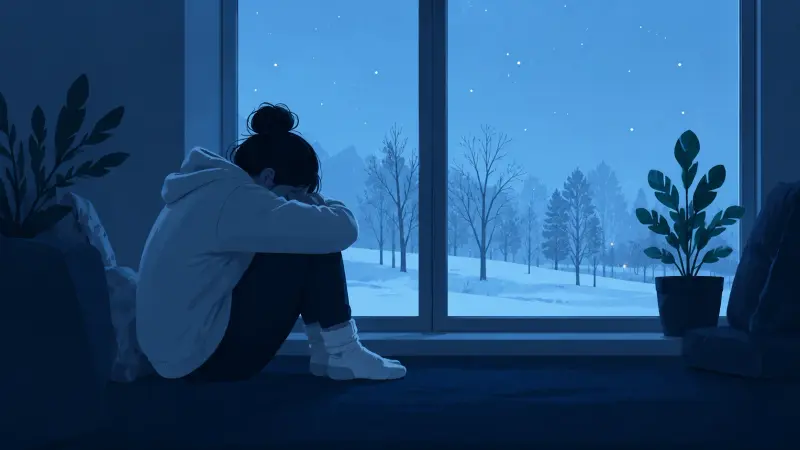
Seasonal depression in winter is a psychological and physical shift that may happen when light decreases and daily routines change, and that can reflect on mood, energy, and sleep. You may feel an inner heaviness, less pleasure and concentration, and a tendency to withdraw that doesn’t look like laziness and isn’t treated by blame. What matters most is to understand that what you’re going through is understandable and has an explanation—and that dealing with it begins by noticing the signals instead of putting yourself on trial for them. In this article, Tatmeen presents common signs that help you tell the difference, and we offer simple, doable steps that support gradual recovery.
What Is Seasonal Depression, and Why Does It Show Up in Winter?
Seasonal depression is a depressive condition linked to changes in seasons. It often appears with shorter daylight in late autumn and winter, then eases with spring. It isn’t just a passing “winter blues”; it’s a change that affects mood, sleep, appetite, concentration, and a person’s ability to enjoy what’s around them. The National Institute of Mental Health1 explains that seasonal mood changes may be mild for some people, but for others they become deeper and affect thinking and behavior. As for why it shows up specifically in winter, there are possible explanations that don’t work as one fixed rule for everyone. It’s believed that reduced exposure to natural light may disrupt the body clock and affect sleep, energy, and some factors linked to mood.
Signs That Suggest It’s More Than Winter Tiredness
It’s normal for your pace to slow a little in winter, but some signs deserve attention when they repeat and last. You may notice sadness or distress most of the day, or a numbness that doesn’t lift even with rest. You may lose interest in hobbies and visits, and find yourself sleeping more or feeling very heavy when waking up. For some people, appetite increases or cravings for heavy foods grow, along with guilt or self-blame.
Another common sign is social withdrawal—not because you dislike people, but because you may not have the energy to explain or laugh. You may also feel slower thinking, difficulty concentrating and making decisions, or quicker irritability than usual. These symptoms may point to seasonal depression or to other mental or physical causes, and an article cannot confirm a diagnosis. If thoughts of self-harm come to you, you lose the desire to live, or you feel you may not be safe now, seek immediate help from the nearest emergency department or local emergency services; safety comes first.
How Do You Tell the Difference Between Passing Blues and Seasonal Depression?
The difference isn’t only in how intense the feeling is, but in how long it lasts and how much it affects you. If symptoms stay on most days for weeks and begin to disrupt work, study, or household responsibilities, that’s an important sign. Also, if you notice they return in the same season year after year, even if the severity changes. Specialists usually look at the pattern over time, and may ask about symptoms repeating over consecutive seasons and improving as the season changes, rather than relying on a single momentary impression.
It may help to write short notes about your sleep, daily energy, what lifts your mood, and what lowers it. These notes aren’t a diagnosis, but they give you a truer picture when memory gets tired under pressure. And remember: not being able to fully control it doesn’t mean you aren’t trying—sometimes the problem is in the circumstances, not in the person.
Practical Steps That Ease Seasonal Depression Symptoms
The idea here is to create a supportive environment for yourself—not to force yourself into positivity. Try these steps for several weeks, and evaluate them gently:
Catch natural daylight during the day as much as possible: open the curtains, sit near a window, and go out in sunny time even if only for minutes.
Move your body daily in a way that suits you: a light walk, home exercises, or any safe activity that raises your heart rate.
Keep your wake and sleep times as steady as you can, and reduce screens before bed to lessen mental overstimulation.
Keep social connection simple and doable: a message, a short call, or a light meet-up with someone you feel comfortable with.
Reduce pressure on your day with small, achievable tasks, and celebrate consistency—not perfection.
It may also help to review your eating pattern without harshness: balanced meals, enough water, and less reliance on stimulants in the evening. If you have a known vitamin deficiency or a chronic health condition, consulting a doctor helps rule out physical factors that can increase fatigue. And in the Saudi context, routines connected to prayers can be a gentle opportunity to anchor your day’s timing and step into daylight from time to time without overdoing it.
If you have been diagnosed with bipolar disorder, or you have had periods of unusually high energy, very little sleep without tiredness, impulsive decisions, racing thoughts, or severe irritability, speak with a doctor or qualified specialist before trying bright light therapy or making intensive sleep changes. Bright light and some antidepressant treatments may increase the risk of mania or hypomania in some people.
Finally…
Seasonal depression may feel like it is taking away your usual lightness, but it is not a permanent verdict. Start with one small step you can repeat, and give yourself time to notice improvement instead of waiting for a sudden turnaround. If symptoms are longer or heavier than you can carry alone, or if they affect your work, relationships, sleep, or ability to function, professional support can help you understand the pattern and build a plan that fits you. If you have thoughts of self-harm, feel you may not be safe now, or there is immediate danger to you or someone else, do not wait for a session. Go to the nearest emergency department or contact local emergency services. In Saudi Arabia, call ambulance 997 or emergency 999, and you can contact the Ministry of Health 937 for health guidance. Tatmeen is suitable for non-emergency psychological support and follow-up, not a substitute for emergency care. When the situation is not urgent, you can download the Tatmeen app and book a session with a licensed mental-health specialist.
Frequently Asked Questions
Does seasonal depression mean I’ll stay like this all winter?
Not necessarily. Some people improve gradually by stabilizing sleep, increasing light exposure, movement, and social support. If symptoms persist or affect your work and relationships, consulting a specialist can help you build a plan that fits you before things worsen.
Is medication necessary for seasonal depression?
Not always. Many cases benefit from therapy, routine adjustment, and care for sleep and light. Medication may be an option when symptoms are moderate or severe, or recur in a way that exhausts you—and a doctor decides that after evaluation and follow-up.
How can I help myself if I can’t go out much during the day?
Bring light into your day as much as you can: open curtains and sit near a window, and take a few minutes on a balcony if possible. Add simple indoor movement, keep a stable wake time, and ask for support from someone close to reduce isolation.
A writer and researcher specializing in psychiatry, she focuses on mental health and the human emotions we experience but cannot always find the words to name. She writes about us—about humanity and the human experience—and simplifies complex topics to offer content that helps us better understand ourselves and life, ultimately making us feel less alone.
Every Tatmeen article is reviewed by care providers licensed by the Saudi Commission for Health Specialties, so what you read is accurate and trustworthy.
This article builds understanding and does not replace a licensed care provider.
Need someone to talk to?
Tatmeen's licensed care providers are available around the clock, and the app's urgent consultation connects you with one within minutes.
Download Tatmeen to explore care providers and booking options.
Smart matchingFour quick questions suggest the right care provider
Urgent consultationTalk to an available care provider within minutes
Free psychological measuresMore than 20 tests to understand how you are doing
Scan to download
{"data":{"id":"da560787-e60b-409b-b527-b15223b9ae24","slug":"winter-seasonal-depression-signs-recovery","arTitle":" الاكتئاب الموسمي في الشتاء: علامات شائعة وطرق للتعافي","enTitle":"Winter Seasonal Depression: Common Signs and Ways to Recover","thumbnailAltText":"Person sitting by a window on a snowy winter night, reflecting quietly in a blue-toned room.","estimatedReadingTime":5,"likesCount":229,"writer":{"id":"3ab72b74-f26f-4337-9b47-3114b0f90de5","arBio":"كاتبة وباحثة متخصصة في مجال الطب النفسي، تهتم بموضوعات الصحة النفسية وبالمشاعر الإنسانية التي نختبرها ولا نجد دائمًا الكلمات لتسميتها. تكتب عنّا؛ عن الإنسان وتجربته، وتبسّط الموضوعات المعقّدة لتقدّم محتوى يساعدنا على فهم ذواتنا والحياة أكثر، ويجعلنا نشعر بأننا بوحدة أقل.","enBio":"A writer and researcher specializing in psychiatry, she focuses on mental health and the human emotions we experience but cannot always find the words to name. She writes about us—about humanity and the human experience—and simplifies complex topics to offer content that helps us better understand ourselves and life, ultimately making us feel less alone.","user":{"slug":"ayat-alnajar","arFullName":"آيات النجار","enFullName":"Ayat Al-Najjar","publicProfileImageUrl":"https://cdn.tatmeen.sa/public/profile-images/02384455-68fa-40b6-ad05-609fde65cafa/21b9a610dde5dfc6d37af110c23e9c7ab3946be080c281beb000debf4f7d31a6.webp","publicProfileImage96Url":"https://cdn.tatmeen.sa/public/profile-images/02384455-68fa-40b6-ad05-609fde65cafa/21b9a610dde5dfc6d37af110c23e9c7ab3946be080c281beb000debf4f7d31a6-w96.webp","publicProfileImage192Url":"https://cdn.tatmeen.sa/public/profile-images/02384455-68fa-40b6-ad05-609fde65cafa/21b9a610dde5dfc6d37af110c23e9c7ab3946be080c281beb000debf4f7d31a6-w192.webp"}},"arContent":"","enContent":"","productionDocument":{"headings":[{"id":"article-section-what-is-seasonal-depression-and-why-does-it-show-up-in-winter","text":"What Is Seasonal Depression, and Why Does It Show Up in Winter?"},{"id":"article-section-signs-that-suggest-it-s-more-than-winter-tiredness","text":"Signs That Suggest It’s More Than Winter Tiredness"},{"id":"article-section-how-do-you-tell-the-difference-between-passing-blues-and-seasonal-depression","text":"How Do You Tell the Difference Between Passing Blues and Seasonal Depression?"},{"id":"article-section-practical-steps-that-ease-seasonal-depression-symptoms","text":"Practical Steps That Ease Seasonal Depression Symptoms"},{"id":"article-section-finally","text":"Finally…"}],"faqs":[{"question":"Does seasonal depression mean I’ll stay like this all winter?","answer":"<p><span style=\"color:#000000\">Not necessarily. Some people improve gradually by stabilizing sleep, increasing light exposure, movement, and social support. If symptoms persist or affect your work and relationships, consulting a specialist can help you build a plan that fits you before things worsen.</span></p>"},{"question":"Is medication necessary for seasonal depression?","answer":"<p><span style=\"color:#000000\">Not always. Many cases benefit from therapy, routine adjustment, and care for sleep and light. Medication may be an option when symptoms are moderate or severe, or recur in a way that exhausts you—and a doctor decides that after evaluation and follow-up.</span></p>"},{"question":"How can I help myself if I can’t go out much during the day?","answer":"<p><span style=\"color:#000000\">Bring light into your day as much as you can: open curtains and sit near a window, and take a few minutes on a balcony if possible. Add simple indoor movement, keep a stable wake time, and ask for support from someone close to reduce isolation.</span></p>"}],"beforeSourcesHtml":"","sources":[{"title":"National Institute of Mental Health: Seasonal Affective Disorder","href":"https://www.nimh.nih.gov/health/publications/seasonal-affective-disorder","hostname":"nimh.nih.gov"},{"title":"Saudi Ministry of Health: 937","href":"https://www.moh.gov.sa/en/937/pages/default.aspx","hostname":"moh.gov.sa"},{"title":"Tatmeen: Get Help Now","href":"https://tatmeen.sa/en/gethelpnow/","hostname":"tatmeen.sa"}],"afterSourcesHtml":"","blocks":[{"type":"html","html":"<p><span style=\"color:#000000\">Seasonal depression in winter is a psychological and physical shift that may happen when light decreases and daily routines change, and that can reflect on mood, energy, and sleep. You may feel an inner heaviness, less pleasure and concentration, and a tendency to withdraw that doesn’t look like laziness and isn’t treated by blame. What matters most is to understand that what you’re going through is understandable and has an explanation—and that dealing with it begins by noticing the signals instead of putting yourself on trial for them. In this article, Tatmeen presents common signs that help you tell the difference, and we offer simple, doable steps that support gradual recovery.</span></p><h2 id=\"article-section-what-is-seasonal-depression-and-why-does-it-show-up-in-winter\" data-toc-heading tabindex=\"-1\"><span id=\"what-is-seasonal-depression-and-why-does-it-show-up-in-winter-1\" aria-hidden=\"true\"></span><span style=\"color:#000000\"><strong>What Is Seasonal Depression, and Why Does It Show Up in Winter?</strong></span></h2><p><span style=\"color:#000000\">Seasonal depression is a depressive condition linked to changes in seasons. It often appears with shorter daylight in late autumn and winter, then eases with spring. It isn’t just a passing “winter blues”; it’s a change that affects mood, sleep, appetite, concentration, and a person’s ability to enjoy what’s around them. </span><a href=\"https://www.nimh.nih.gov/health/publications/seasonal-affective-disorder\" target=\"_blank\" rel=\"nofollow noopener noreferrer\"><span style=\"color:#1155cc\"><u>The National Institute of Mental Health</u></span></a><span style=\"color:#000000\"> explains that seasonal mood changes may be mild for some people, but for others they become deeper and affect thinking and behavior. As for why it shows up specifically in winter, there are possible explanations that don’t work as one fixed rule for everyone. It’s believed that reduced exposure to natural light may disrupt the body clock and affect sleep, energy, and some factors linked to mood.</span></p><h2 id=\"article-section-signs-that-suggest-it-s-more-than-winter-tiredness\" data-toc-heading tabindex=\"-1\"><span id=\"signs-that-suggest-it-s-more-than-winter-tiredness-2\" aria-hidden=\"true\"></span><span style=\"color:#000000\"><strong>Signs That Suggest It’s More Than Winter Tiredness</strong></span></h2><p><span style=\"color:#000000\">It’s normal for your pace to slow a little in winter, but some signs deserve attention when they repeat and last. You may notice sadness or distress most of the day, or a numbness that doesn’t lift even with rest. You may lose interest in hobbies and visits, and find yourself sleeping more or feeling very heavy when waking up. For some people, appetite increases or cravings for heavy foods grow, along with guilt or self-blame.</span></p><p><span style=\"color:#111111\">Another common sign is social withdrawal—not because you dislike people, but because you may not have the energy to explain or laugh. You may also feel slower thinking, difficulty concentrating and making decisions, or quicker irritability than usual. These symptoms may point to seasonal depression or to other mental or physical causes, and an article cannot confirm a diagnosis. If thoughts of self-harm come to you, you lose the desire to live, or you feel you may not be safe now, seek immediate help from the nearest emergency department or local emergency services; safety comes first.</span></p><h2 id=\"article-section-how-do-you-tell-the-difference-between-passing-blues-and-seasonal-depression\" data-toc-heading tabindex=\"-1\"><span id=\"how-do-you-tell-the-difference-between-passing-blues-and-seasonal-depression-3\" aria-hidden=\"true\"></span><span style=\"color:#000000\"><strong>How Do You Tell the Difference Between Passing Blues and Seasonal Depression?</strong></span></h2><p><span style=\"color:#000000\">The difference isn’t only in how intense the feeling is, but in how long it lasts and how much it affects you. If symptoms stay on most days for weeks and begin to disrupt work, study, or household responsibilities, that’s an important sign. Also, if you notice they return in the same season year after year, even if the severity changes. Specialists usually look at the pattern over time, and may ask about symptoms repeating over consecutive seasons and improving as the season changes, rather than relying on a single momentary impression.</span></p><p><span style=\"color:#000000\">It may help to write short notes about your sleep, daily energy, what lifts your mood, and what lowers it. These notes aren’t a diagnosis, but they give you a truer picture when memory gets tired under pressure. And remember: not being able to fully control it doesn’t mean you aren’t trying—sometimes the problem is in the circumstances, not in the person.</span></p><h2 id=\"article-section-practical-steps-that-ease-seasonal-depression-symptoms\" data-toc-heading tabindex=\"-1\"><span id=\"practical-steps-that-ease-seasonal-depression-symptoms-4\" aria-hidden=\"true\"></span><span style=\"color:#000000\"><strong>Practical Steps That Ease Seasonal Depression Symptoms</strong></span></h2><p><span style=\"color:#000000\">The idea here is to create a supportive environment for yourself—not to force yourself into positivity. Try these steps for several weeks, and evaluate them gently:</span></p><ul><li><p><span style=\"color:#000000\">Catch natural daylight during the day as much as possible: open the curtains, sit near a window, and go out in sunny time even if only for minutes.</span></p></li><li><p><span style=\"color:#000000\">Move your body daily in a way that suits you: a light walk, home exercises, or any safe activity that raises your heart rate.</span></p></li><li><p><span style=\"color:#000000\">Keep your wake and sleep times as steady as you can, and reduce screens before bed to lessen mental overstimulation.</span></p></li><li><p><span style=\"color:#000000\">Keep social connection simple and doable: a message, a short call, or a light meet-up with someone you feel comfortable with.</span></p></li><li><p><span style=\"color:#000000\">Reduce pressure on your day with small, achievable tasks, and celebrate consistency—not perfection.</span></p></li></ul><p><span style=\"color:#000000\">It may also help to review your eating pattern without harshness: balanced meals, enough water, and less reliance on stimulants in the evening. If you have a known vitamin deficiency or a chronic health condition, consulting a doctor helps rule out physical factors that can increase fatigue. And in the Saudi context, routines connected to prayers can be a gentle opportunity to anchor your day’s timing and step into daylight from time to time without overdoing it.</span></p><p><span style=\"color:#111111\">If you have been diagnosed with bipolar disorder, or you have had periods of unusually high energy, very little sleep without tiredness, impulsive decisions, racing thoughts, or severe irritability, speak with a doctor or qualified specialist before trying bright light therapy or making intensive sleep changes. Bright light and some antidepressant treatments may increase the risk of mania or hypomania in some people.</span></p><h2 id=\"article-section-finally\" data-toc-heading tabindex=\"-1\"><span id=\"finally-5\" aria-hidden=\"true\"></span><span style=\"color:#000000\"><strong>Finally…</strong></span></h2><p><span style=\"color:#000000\">Seasonal depression may feel like it is taking away your usual lightness, but it is not a permanent verdict. Start with one small step you can repeat, and give yourself time to notice improvement instead of waiting for a sudden turnaround. If symptoms are longer or heavier than you can carry alone, or if they affect your work, relationships, sleep, or ability to function, professional support can help you understand the pattern and build a plan that fits you. If you have thoughts of self-harm, feel you may not be safe now, or there is immediate danger to you or someone else, do not wait for a session. Go to the nearest emergency department or contact local emergency services. In Saudi Arabia, call ambulance 997 or emergency 999, and you can contact the Ministry of Health 937 for health guidance. Tatmeen is suitable for non-emergency psychological support and follow-up, not a substitute for emergency care. When the situation is not urgent, you can </span><a href=\"https://tatmeen.sa/download/\"><span style=\"color:#1155cc\"><u>download the Tatmeen app and book a session</u></span></a><span style=\"color:#000000\"> with a licensed mental-health specialist.</span></p>"}],"inlineCtaSignatures":[],"_experienceAliases":{"v":1,"fields":["html","bodyHtml"],"faqs":[0,1,2]}},"createdAt":"2026-06-03T21:00:00.000Z","updatedAt":"2026-06-10T23:43:55.160Z","disorderGroups":[{"id":"1e82772d-a1a7-4d29-b475-be9d6b67ae02","slug":"common-mental-issues","arName":"اضطرابات نفسية شائعة","enName":"Common Mental Issues"}],"reviewer":{"arFullName":"فريق تطمين","enFullName":"Tatmeen team","slug":"tatmeen-team","kind":"organization"},"productionArticle":true,"promotionAllowed":true,"preparedCover":{"src":"https://cdn.tatmeen.sa/public/article-lcp/article-lcp-v2/sha256-18a088ef4b29c8a5f250fdd1a4c2924e00376330ad4aecacc07931b4eb56638e/800-8788b04fc6239b7b3c77270be1edd516cb443f4b0a90f8cfe45e7de9e256327a.avif","fallback":"https://cdn.tatmeen.sa/public/article-lcp/article-lcp-v2/sha256-18a088ef4b29c8a5f250fdd1a4c2924e00376330ad4aecacc07931b4eb56638e/800-241f063381feb892daca2a1f3dc7cf73b84b480e380e951d1b9f86ef1c6b9a9d.webp","directUrl":"https://cdn.tatmeen.sa/blog-cover/Tatmeen-1780588942532.webp","isGolden":true,"avifSrcset":"https://cdn.tatmeen.sa/public/article-lcp/article-lcp-v2/sha256-18a088ef4b29c8a5f250fdd1a4c2924e00376330ad4aecacc07931b4eb56638e/400-afb752ae8f88f0b2912ea670773e1e160513d6386d6ad90d8c4eb399b7e22a6b.avif 400w, https://cdn.tatmeen.sa/public/article-lcp/article-lcp-v2/sha256-18a088ef4b29c8a5f250fdd1a4c2924e00376330ad4aecacc07931b4eb56638e/640-38bce606659237992cddce523c495da29862fbf67f3772e7d8f60382112c807d.avif 640w, https://cdn.tatmeen.sa/public/article-lcp/article-lcp-v2/sha256-18a088ef4b29c8a5f250fdd1a4c2924e00376330ad4aecacc07931b4eb56638e/800-8788b04fc6239b7b3c77270be1edd516cb443f4b0a90f8cfe45e7de9e256327a.avif 800w, https://cdn.tatmeen.sa/public/article-lcp/article-lcp-v2/sha256-18a088ef4b29c8a5f250fdd1a4c2924e00376330ad4aecacc07931b4eb56638e/1200-978cff4386988d6c827fbe3275e073b6eb37c96ebdef8b2e169f1bfaa09b3258.avif 1200w","webpSrcset":"https://cdn.tatmeen.sa/public/article-lcp/article-lcp-v2/sha256-18a088ef4b29c8a5f250fdd1a4c2924e00376330ad4aecacc07931b4eb56638e/400-f6df67d158467b1d072a2f3df47dd00e786e21f06cf12cde4413a7ac3b19f240.webp 400w, https://cdn.tatmeen.sa/public/article-lcp/article-lcp-v2/sha256-18a088ef4b29c8a5f250fdd1a4c2924e00376330ad4aecacc07931b4eb56638e/640-6f0629c16316a6ee2b0083d2303b5d072fe20405af85028cafbed96aee65fa75.webp 640w, https://cdn.tatmeen.sa/public/article-lcp/article-lcp-v2/sha256-18a088ef4b29c8a5f250fdd1a4c2924e00376330ad4aecacc07931b4eb56638e/800-241f063381feb892daca2a1f3dc7cf73b84b480e380e951d1b9f86ef1c6b9a9d.webp 800w, https://cdn.tatmeen.sa/public/article-lcp/article-lcp-v2/sha256-18a088ef4b29c8a5f250fdd1a4c2924e00376330ad4aecacc07931b4eb56638e/1200-0cd4b9ff30e0bd63036c2e1b1072269eece425adb7f63076ccf2cf15cd5f695a.webp 1200w","phoneAvifSrcset":"https://cdn.tatmeen.sa/public/article-lcp/article-lcp-v2/sha256-18a088ef4b29c8a5f250fdd1a4c2924e00376330ad4aecacc07931b4eb56638e/400-afb752ae8f88f0b2912ea670773e1e160513d6386d6ad90d8c4eb399b7e22a6b.avif 400w, https://cdn.tatmeen.sa/public/article-lcp/article-lcp-v2/sha256-18a088ef4b29c8a5f250fdd1a4c2924e00376330ad4aecacc07931b4eb56638e/640-38bce606659237992cddce523c495da29862fbf67f3772e7d8f60382112c807d.avif 640w, https://cdn.tatmeen.sa/public/article-lcp/article-lcp-v2/sha256-18a088ef4b29c8a5f250fdd1a4c2924e00376330ad4aecacc07931b4eb56638e/800-8788b04fc6239b7b3c77270be1edd516cb443f4b0a90f8cfe45e7de9e256327a.avif 800w","phoneWebpSrcset":"https://cdn.tatmeen.sa/public/article-lcp/article-lcp-v2/sha256-18a088ef4b29c8a5f250fdd1a4c2924e00376330ad4aecacc07931b4eb56638e/400-f6df67d158467b1d072a2f3df47dd00e786e21f06cf12cde4413a7ac3b19f240.webp 400w, https://cdn.tatmeen.sa/public/article-lcp/article-lcp-v2/sha256-18a088ef4b29c8a5f250fdd1a4c2924e00376330ad4aecacc07931b4eb56638e/640-6f0629c16316a6ee2b0083d2303b5d072fe20405af85028cafbed96aee65fa75.webp 640w, https://cdn.tatmeen.sa/public/article-lcp/article-lcp-v2/sha256-18a088ef4b29c8a5f250fdd1a4c2924e00376330ad4aecacc07931b4eb56638e/800-241f063381feb892daca2a1f3dc7cf73b84b480e380e951d1b9f86ef1c6b9a9d.webp 800w","width":800,"height":450},"previewTaxonomy":{"groups":[{"id":"1e82772d-a1a7-4d29-b475-be9d6b67ae02","slug":"common-mental-issues","arName":"اضطرابات نفسية شائعة","enName":"Common Mental Issues"}],"topics":[{"id":"279dbfbb-dda2-465a-93a1-e9b181574318","slug":"depression","arName":"اكتئاب","enName":"Depression","groupSlug":"common-mental-issues","href":"/blog/category/common-mental-issues/depression/"}],"tags":[{"id":"8208dc52-de2b-485d-aa6d-e06ec0bf5e98","slug":"depression","arName":"الاكتئاب","enName":"Depression"},{"id":"c2a6e8d3-de9c-435f-8c95-9727e7db14cc","slug":"explainer-awareness","arName":"دليل توعوي / شرح","enName":"Explainer / Awareness Guide"}]},"previewProviderRecommendations":[{"id":"2f7246d0-92bf-4031-a5a7-36e0a6199114","slug":"dr-rakan-alshaalan-6051","arFullName":"د. راكان الشعلان","enFullName":"Dr. Rakan Alshaalan","publicProfileImageUrl":"https://cdn.tatmeen.sa/public/profile-images/2f7246d0-92bf-4031-a5a7-36e0a6199114/3776034fe5c6572fc48f03a5abcde7abce9c3b1cb6ee81ef0a44eb9fcc10c646.webp","publicProfileImage96Url":"https://cdn.tatmeen.sa/public/profile-images/2f7246d0-92bf-4031-a5a7-36e0a6199114/3776034fe5c6572fc48f03a5abcde7abce9c3b1cb6ee81ef0a44eb9fcc10c646-w96.webp","publicProfileImage192Url":"https://cdn.tatmeen.sa/public/profile-images/2f7246d0-92bf-4031-a5a7-36e0a6199114/3776034fe5c6572fc48f03a5abcde7abce9c3b1cb6ee81ef0a44eb9fcc10c646-w192.webp","specialization":{"arName":"طبيب أسرة","enName":"Family Physician"},"profileImageUrl":"https://cdn.tatmeen.sa/public/profile-images/2f7246d0-92bf-4031-a5a7-36e0a6199114/3776034fe5c6572fc48f03a5abcde7abce9c3b1cb6ee81ef0a44eb9fcc10c646-w192.webp","experienceYears":5,"consultantInfo":{"averageRating":{"average":0},"specialization":{"arGeneralName":"طبيب أسرة","enGeneralName":"Family Physician"}}},{"id":"445e4202-3b8e-4a4a-9d66-e4cb6de8c06d","slug":"dr-hassan-alasmari-5437","arFullName":"د. حسن الأسمري","enFullName":"Dr. Hassan Alasmari","publicProfileImageUrl":"https://cdn.tatmeen.sa/public/profile-images/445e4202-3b8e-4a4a-9d66-e4cb6de8c06d/e861463908ecb593816d7861c6d4e71484f7fb828e10765ffed9dafbbd0c26e0.webp","publicProfileImage96Url":"https://cdn.tatmeen.sa/public/profile-images/445e4202-3b8e-4a4a-9d66-e4cb6de8c06d/e861463908ecb593816d7861c6d4e71484f7fb828e10765ffed9dafbbd0c26e0-w96.webp","publicProfileImage192Url":"https://cdn.tatmeen.sa/public/profile-images/445e4202-3b8e-4a4a-9d66-e4cb6de8c06d/e861463908ecb593816d7861c6d4e71484f7fb828e10765ffed9dafbbd0c26e0-w192.webp","specialization":{"arName":"طبيب أسرة","enName":"Family Physician"},"profileImageUrl":"https://cdn.tatmeen.sa/public/profile-images/445e4202-3b8e-4a4a-9d66-e4cb6de8c06d/e861463908ecb593816d7861c6d4e71484f7fb828e10765ffed9dafbbd0c26e0-w192.webp","experienceYears":7,"consultantInfo":{"averageRating":{"average":0},"specialization":{"arGeneralName":"طبيب أسرة","enGeneralName":"Family Physician"}}},{"id":"07982fec-1441-415e-924f-22789d91a6ea","slug":"rayan-mgarry-6315","arFullName":"د. ريان مجري","enFullName":"Dr. Rayan Mgarry","publicProfileImageUrl":"https://cdn.tatmeen.sa/public/profile-images/07982fec-1441-415e-924f-22789d91a6ea/6de515adcc5cfa9a010fc52a7c8f27c06662bae5bc4ab58546e75e2b871813a6.webp","publicProfileImage96Url":"https://cdn.tatmeen.sa/public/profile-images/07982fec-1441-415e-924f-22789d91a6ea/6de515adcc5cfa9a010fc52a7c8f27c06662bae5bc4ab58546e75e2b871813a6-w96.webp","publicProfileImage192Url":"https://cdn.tatmeen.sa/public/profile-images/07982fec-1441-415e-924f-22789d91a6ea/6de515adcc5cfa9a010fc52a7c8f27c06662bae5bc4ab58546e75e2b871813a6-w192.webp","specialization":{"arName":"طبيب أسرة","enName":"Family Physician"},"profileImageUrl":"https://cdn.tatmeen.sa/public/profile-images/07982fec-1441-415e-924f-22789d91a6ea/6de515adcc5cfa9a010fc52a7c8f27c06662bae5bc4ab58546e75e2b871813a6-w192.webp","experienceYears":5,"consultantInfo":{"averageRating":{"average":0},"specialization":{"arGeneralName":"طبيب أسرة","enGeneralName":"Family Physician"}}}],"previewCareProviders":[{"id":"09364052-c2a9-4c52-9717-7ce2093b8d0a","slug":"kholoud-alharbi-5221","arFullName":"خلود الحربي","enFullName":"Kholoud Alharbi","publicProfileImageUrl":"https://cdn.tatmeen.sa/public/profile-images/09364052-c2a9-4c52-9717-7ce2093b8d0a/4a0aeb81619e351b77f4323e3605a0a00acc7ca3c82ee7cc5ca2c9e8ef716049.webp","publicProfileImage96Url":"https://cdn.tatmeen.sa/public/profile-images/09364052-c2a9-4c52-9717-7ce2093b8d0a/4a0aeb81619e351b77f4323e3605a0a00acc7ca3c82ee7cc5ca2c9e8ef716049-w96.webp","publicProfileImage192Url":"https://cdn.tatmeen.sa/public/profile-images/09364052-c2a9-4c52-9717-7ce2093b8d0a/4a0aeb81619e351b77f4323e3605a0a00acc7ca3c82ee7cc5ca2c9e8ef716049-w192.webp","gender":"FEMALE","specialization":{"arName":"أخصائي نفسي","enName":"Psychologist"}},{"id":"6f037535-1dca-4b50-a8b2-5974b7323286","slug":"salah-althobaiti-9053","arFullName":"صلاح الثبيتي","enFullName":"Salah Althobaiti","publicProfileImageUrl":"https://cdn.tatmeen.sa/public/profile-images/6f037535-1dca-4b50-a8b2-5974b7323286/35b6bd7fad9b1e004c1835803eb9c1b56dcacd380685ec8bff141f0fb888005c.webp","publicProfileImage96Url":"https://cdn.tatmeen.sa/public/profile-images/6f037535-1dca-4b50-a8b2-5974b7323286/35b6bd7fad9b1e004c1835803eb9c1b56dcacd380685ec8bff141f0fb888005c-w96.webp","publicProfileImage192Url":"https://cdn.tatmeen.sa/public/profile-images/6f037535-1dca-4b50-a8b2-5974b7323286/35b6bd7fad9b1e004c1835803eb9c1b56dcacd380685ec8bff141f0fb888005c-w192.webp","gender":"MALE","specialization":{"arName":"أخصائي نفسي","enName":"Psychologist"}},{"id":"3cc806e8-616b-4884-9f21-a75b378580a2","slug":"aisha-al-hashim-8667","arFullName":"عائشة ال هاشم","enFullName":"Aisha Al Hashim","publicProfileImageUrl":"https://cdn.tatmeen.sa/public/profile-images/3cc806e8-616b-4884-9f21-a75b378580a2/27f523d03be4dcfa1f6a79f70c1773887434e698990d214cd990caec56a44798.webp","publicProfileImage96Url":"https://cdn.tatmeen.sa/public/profile-images/3cc806e8-616b-4884-9f21-a75b378580a2/27f523d03be4dcfa1f6a79f70c1773887434e698990d214cd990caec56a44798-w96.webp","publicProfileImage192Url":"https://cdn.tatmeen.sa/public/profile-images/3cc806e8-616b-4884-9f21-a75b378580a2/27f523d03be4dcfa1f6a79f70c1773887434e698990d214cd990caec56a44798-w192.webp","gender":"FEMALE","specialization":{"arName":"أخصائي نفسي","enName":"Psychologist"}},{"id":"db2ce1a0-9325-4471-b7ce-eb2e811c30a3","slug":"amer-qutub-2441","arFullName":"عامر قطب","enFullName":"Amer Qutub","publicProfileImageUrl":"https://cdn.tatmeen.sa/public/profile-images/db2ce1a0-9325-4471-b7ce-eb2e811c30a3/80580f99bfd7fe2b2a9cf8eed73ab532f5086d1efe053b0aa57358c1ce004261.webp","publicProfileImage96Url":"https://cdn.tatmeen.sa/public/profile-images/db2ce1a0-9325-4471-b7ce-eb2e811c30a3/80580f99bfd7fe2b2a9cf8eed73ab532f5086d1efe053b0aa57358c1ce004261-w96.webp","publicProfileImage192Url":"https://cdn.tatmeen.sa/public/profile-images/db2ce1a0-9325-4471-b7ce-eb2e811c30a3/80580f99bfd7fe2b2a9cf8eed73ab532f5086d1efe053b0aa57358c1ce004261-w192.webp","gender":"MALE","specialization":{"arName":"أخصائي نفسي","enName":"Psychologist"}},{"id":"94765496-dbdf-4631-a01b-7df5f788668d","slug":"abdullrahman-alhamoudi-3045","arFullName":"عبدالرحمن الحمودي","enFullName":"Abdulrahman Alhamoudi","publicProfileImageUrl":"https://cdn.tatmeen.sa/public/profile-images/94765496-dbdf-4631-a01b-7df5f788668d/2d49f6b6493c564afb6f50b6c3634231dff3a5cf8353acfab393d1b2a88037d1.webp","publicProfileImage96Url":"https://cdn.tatmeen.sa/public/profile-images/94765496-dbdf-4631-a01b-7df5f788668d/2d49f6b6493c564afb6f50b6c3634231dff3a5cf8353acfab393d1b2a88037d1-w96.webp","publicProfileImage192Url":"https://cdn.tatmeen.sa/public/profile-images/94765496-dbdf-4631-a01b-7df5f788668d/2d49f6b6493c564afb6f50b6c3634231dff3a5cf8353acfab393d1b2a88037d1-w192.webp","gender":"MALE","specialization":{"arName":"أخصائي نفسي","enName":"Psychologist"}},{"id":"618dba89-5b70-4b46-8304-741b7ac8ecd3","slug":"abdullah-mari-1311","arFullName":"عبدالله مرعي","enFullName":"Abdullah Mari","publicProfileImageUrl":"https://cdn.tatmeen.sa/public/profile-images/618dba89-5b70-4b46-8304-741b7ac8ecd3/6b4a3bfb59f8a304ca79083b32859b46baad2e1d692974a47c02c1f66bd11129.webp","publicProfileImage96Url":"https://cdn.tatmeen.sa/public/profile-images/618dba89-5b70-4b46-8304-741b7ac8ecd3/6b4a3bfb59f8a304ca79083b32859b46baad2e1d692974a47c02c1f66bd11129-w96.webp","publicProfileImage192Url":"https://cdn.tatmeen.sa/public/profile-images/618dba89-5b70-4b46-8304-741b7ac8ecd3/6b4a3bfb59f8a304ca79083b32859b46baad2e1d692974a47c02c1f66bd11129-w192.webp","gender":"MALE","specialization":{"arName":"أخصائي نفسي","enName":"Psychologist"}},{"id":"d8fb937b-ad65-4b6f-a65b-276ad8258fed","slug":"azza-alharbi-7286","arFullName":"عزه الحربي","enFullName":"Azza Alharbi","publicProfileImageUrl":"https://cdn.tatmeen.sa/public/profile-images/d8fb937b-ad65-4b6f-a65b-276ad8258fed/378a8ab30f4087833263c41fb2c3102028cbe6bb9655172d7b3439ee1d6b0800.webp","publicProfileImage96Url":"https://cdn.tatmeen.sa/public/profile-images/d8fb937b-ad65-4b6f-a65b-276ad8258fed/378a8ab30f4087833263c41fb2c3102028cbe6bb9655172d7b3439ee1d6b0800-w96.webp","publicProfileImage192Url":"https://cdn.tatmeen.sa/public/profile-images/d8fb937b-ad65-4b6f-a65b-276ad8258fed/378a8ab30f4087833263c41fb2c3102028cbe6bb9655172d7b3439ee1d6b0800-w192.webp","gender":"FEMALE","specialization":{"arName":"أخصائي نفسي","enName":"Psychologist"}},{"id":"d4ffcb6b-90a7-45b6-b941-964866f4564b","slug":"dhaifallah-alhumaidi-1092","arFullName":"ضيف الله الحميدي","enFullName":"Dhaifallah Alhumaidi","publicProfileImageUrl":"https://cdn.tatmeen.sa/public/profile-images/d4ffcb6b-90a7-45b6-b941-964866f4564b/1817171c5828a9b57d6c30d12332cf154e335272548bc90a6e8456d74d356956.webp","publicProfileImage96Url":"https://cdn.tatmeen.sa/public/profile-images/d4ffcb6b-90a7-45b6-b941-964866f4564b/1817171c5828a9b57d6c30d12332cf154e335272548bc90a6e8456d74d356956-w96.webp","publicProfileImage192Url":"https://cdn.tatmeen.sa/public/profile-images/d4ffcb6b-90a7-45b6-b941-964866f4564b/1817171c5828a9b57d6c30d12332cf154e335272548bc90a6e8456d74d356956-w192.webp","gender":"MALE","specialization":{"arName":"أخصائي نفسي","enName":"Psychologist"}}],"previewDownload":{"href":"/download","title":{"ar":"خطوة واحدة لأجلك، ابدأ الآن","en":"One step for you, start now"},"description":{"ar":"حمّل تطبيق تطمين لاستكشاف مقدمي الرعاية وخيارات الحجز.","en":"Download Tatmeen to explore care providers and booking options."},"posterSrc":"/images/home/cta-ar-new-1.webp","videoSrc":"/images/home/cta-ar-new-1.mp4","videoPosterSrc":"/images/home/cta-ar-new-1.webp","videoPosterEnSrc":"/images/home/cta-en-new-1.webp","videoType":"video/mp4","appStoreHref":"https://apps.apple.com/us/app/tatmeen-%D8%AA%D8%B7%D9%85%D9%8A%D9%86/id6473836983","googlePlayHref":"https://play.google.com/store/apps/details?id=com.TatmeenApp.user&hl=en"},"previewRelatedArticles":[{"id":"d334df3a-8cab-41bd-a7f2-8ac8209a91a5","slug":"Seasonal-Affective-Disorder-Symptoms-Causes","route":"/blog/Seasonal-Affective-Disorder-Symptoms-Causes/","title":{"ar":"الاكتئاب الشتوي: الاعراض والأسباب والحلول","en":"Winter Depression: Symptoms, Causes, and Solutions"},"image":"https://cdn.tatmeen.sa/public/article-lcp/article-lcp-v2/sha256-a2f8c4784de80e5529301221c33695ab06f3c0d236fb0a8093af3f9819cb84c0/668-6b5b485f2b71be50474c4c9abb26729ad620972c8fbc62fd8d371165f4245e6d.webp","directImageFallback":"https://cdn.tatmeen.sa/blog-cover/1704734972518-Tatmeen-img-552","arThumbnailAltText":"Person covering their face with both hands against a snowy forest backdrop","thumbnailAltText":"Person covering their face with both hands against a snowy forest backdrop","topic":{"label":{"ar":"اضطرابات نفسية شائعة","en":"Common Mental Issues"}},"readingTimeMinutes":5},{"id":"91080d8b-a416-403e-bc53-bbc1957a1549","slug":"Self-treatment-of-depression-How-to-treat-yourself","route":"/blog/Self-treatment-of-depression-How-to-treat-yourself/","title":{"ar":"كيف تعالج نفسك بنفسك من الاكتئاب؟","en":"How Can You Treat Depression Yourself?"},"image":"https://cdn.tatmeen.sa/public/article-lcp/article-lcp-v2/sha256-4669d0908f4dcb9487be025cc14b2c3904ab5bd7d0c4645829a41563d1e733b1/600-67e80ae7577b2a92e3119a8c0fa9e02df1faa513da333c1a05bb7e590349b688.webp","directImageFallback":"https://cdn.tatmeen.sa/blog-cover/1706456076897-Tatmeen-152.jpg","arThumbnailAltText":"Silhouetted person sitting with a hand to their face against a low sun","thumbnailAltText":"Silhouetted person sitting with a hand to their face against a low sun","topic":{"label":{"ar":"اضطرابات نفسية شائعة","en":"Common Mental Issues"}},"readingTimeMinutes":5},{"id":"281b67f8-c9fa-428b-9191-133fd6c3e2f5","slug":"Sudden-shortness-of-breath-relateted-to-depression","route":"/blog/Sudden-shortness-of-breath-relateted-to-depression/","title":{"ar":"الضيق النفسي المفاجئ – أسباب وطرق العلاج وعلاقته بالاكتئاب ","en":"Sudden Psychological Distress: Causes, Treatment, and Depression"},"image":"https://cdn.tatmeen.sa/public/article-lcp/article-lcp-v2/sha256-cc761cebd297a818a94b0c2eba2b6b8db4c4a2c465d9f7aa20e5aeba7a613deb/600-399636fd38e8664f0ef5cf5da2c28f671a67dd616fec4a8967256702772a7c7d.webp","directImageFallback":"https://cdn.tatmeen.sa/blog-cover/1704817208494-Tatmeen-img-310","arThumbnailAltText":"Person sits leaning forward with both hands on their head","thumbnailAltText":"Person sits leaning forward with both hands on their head","topic":{"label":{"ar":"اضطرابات نفسية شائعة","en":"Common Mental Issues"}},"readingTimeMinutes":5},{"id":"94479df6-dc1f-4f0a-93e8-a8fd7248147e","slug":"Severe-of-depression-Causes-symptoms-and-treatment","route":"/blog/Severe-of-depression-Causes-symptoms-and-treatment/","title":{"ar":"ما هي أشد أنواع الاكتئاب - الأسباب والأعراض والعلاج","en":"The Most Severe Types of Depression: Causes, Symptoms, and Treatment"},"image":"https://cdn.tatmeen.sa/public/article-lcp/article-lcp-v2/sha256-b6f63b1020905e37d9fa0efce6e15fd4549ebdac3ffb253ec9edb708b9bf9bcb/600-3a289c79f756e3c33b359031ef58db49b02c88a7e83315744c74d4fb228f280d.webp","directImageFallback":"https://cdn.tatmeen.sa/blog-cover/1706456141437-Tatmeen-472.jpg","arThumbnailAltText":"Person wrapped in a striped blanket sitting outdoors and facing a distant landscape","thumbnailAltText":"Person wrapped in a striped blanket sitting outdoors and facing a distant landscape","topic":{"label":{"ar":"اضطرابات نفسية شائعة","en":"Common Mental Issues"}},"readingTimeMinutes":5}],"previewRelatedReadStates":{}},"locale":"en","device":"desktop","path":"/en/blog/winter-seasonal-depression-signs-recovery/","readingControls":false,"config":{"public":{"BUCKET_URL":"https://cdn.tatmeen.sa/","APP_BASE_URL":"https://tatmeen.sa","intercomAppId":"ppcnu9e3"}}}