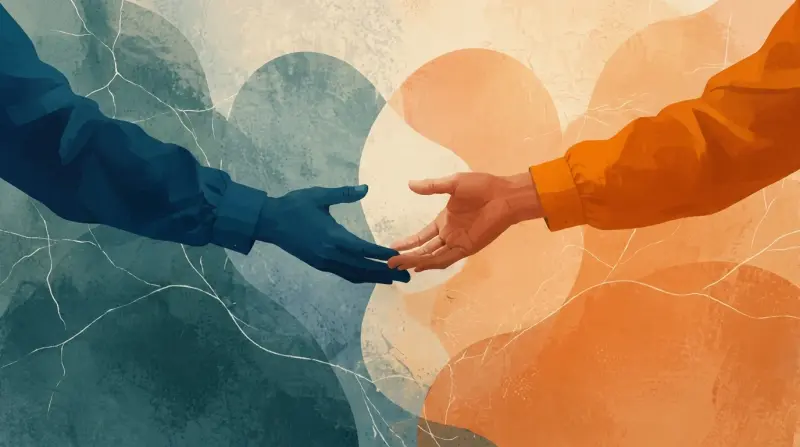
The silent comparison after watching pornography begins in a moment no one else notices: a longer look in the mirror, a slight tightening in the chest, then a harsh inner question about appearance or “being enough.” It doesn’t happen loudly—it slips in like a whisper that shifts the angle of how you see yourself: your body becomes a project of evaluation, and confidence turns into a test.
Many people live this experience in silence because talking about it feels embarrassing or weighed down by guilt. But the idea here isn’t self-punishment—it’s understanding the psychological mechanism that links comparison-driven content with body image and self-esteem. In this article, you’ll find a clear explanation of how comparison forms and feeds the inner critic, along with practical steps that help protect how you see your body and restore your confidence calmly—without denial and without harshness.
How Does Pornography Create Standards That Don’t Match Reality?
Pornography isn’t a neutral window into reality. It is content designed to grab attention and provoke a strong response, and it often shows carefully selected bodies and scenes—under lighting, angles, and performance that are calculated. The issue isn’t that people are different, but that the brain tends to treat what it sees frequently as a general standard, then compares itself (and others) to it without awareness.
Reviews point to associations between frequent exposure to pornography and a more negative view of the body or body image related to intimacy among some people. This does not mean that any use equals addiction, or that the effect is inevitable or applies to everyone; concern increases when there is loss of control, repeated distress, or a clear impact on sleep, relationships, studies, or work.
Why Can Body Image and Self-Confidence Be Affected So Quickly?
Periods of identity-building often bring questions like: How do I look? How do others see me? What is my worth? When these questions intersect with content that presents idealized and exaggerated body models, self-confidence can turn into an endless comparison project. Sometimes the comparison expands to include fine details a person wouldn’t normally think about, then becomes a daily source of anxiety.
In this context, social comparison plays a role: when a person continually compares themselves to a higher standard, their satisfaction with themselves can drop even if their life and performance are good. A study in a sample of men found that body comparison can act as a mediating loop, helping explain how pornography use may relate to worsening body image when use becomes problematic.
Silent Comparison: How Does It Work Inside the Mind?
You usually don’t tell yourself explicitly, “I’m comparing,” but it happens as quick flashes of thought: My body isn’t how it should be, or I can’t be desired, or I have to look a certain way to deserve acceptance. Then behavior follows: repeatedly checking the mirror, harsh workouts driven by shame rather than care, or avoiding relationships out of fear of judgment.
What’s painful about silent comparison is that it steals your ability to enjoy the present. Instead of being with friends or focused on academic achievement, you become preoccupied with bodily details or mental images measuring you against them. Over time, a hidden belief can form that your worth is tied only to appearance—and that belief is harsh, pressing on the self more than it helps it improve.
Signs That the Effect Is Starting to Touch You
One useful sign to notice is that the issue is not only the number of times, but the amount of preoccupation and distress that follows afterward. If you notice these signs repeatedly, you may need to calm the cycle rather than keep blaming yourself:
A drop in self-confidence immediately after viewing, even though nothing in your life has changed.
Comparing your body to other people’s bodies at the gym or on social media in a way that ruins your mood.
Feeling ashamed of your body or avoiding emotional closeness out of fear of not being enough.
Excessive preoccupation with small appearance details, or repeatedly searching for them.
Mood swings and higher anxiety at any talk about the body or relationships.
Trying to compensate for feeling “less” through harsh or impulsive behaviors.
If monitoring turns into painful preoccupation that consumes your time and makes you avoid your life, or if it comes with severe food restriction or thoughts of self-harm, these are signs that deserve professional or urgent support depending on the level of risk. It can sometimes resemble features of compulsive appearance preoccupation in some people, without that meaning you carry a specific diagnosis. The point here is that distress deserves to be taken seriously.
Practical Tools to Reduce the Impact and Build a More Realistic Confidence
The first step is slowing the automatic reaction. When the urge to compare or self-criticize comes, say internally: this is a comparison thought, not a fact. Naming it alone reduces its intensity. Then try bringing the body back to calm: breathe slowly, stand up, or wash your face. Many harsh thoughts soften when the body settles.
Next, move to the digital environment. Reducing triggers doesn’t mean living in a constant battle—it means creating distance between you and the content that fuels comparison. It may help to set phone-use times, keep devices out of the bedroom, and reduce browsing that blends strong responses with beauty standards.
And instead of chasing an ideal shape, try building a different relationship with your body: What does my body allow me to do? How do I support my health, sleep, and daily energy? Focusing on function and capability may gradually support confidence because it returns you to reality rather than images.
Handling Slips and Guilt Without Losing Yourself
If you slip and return to viewing—or the comparison flares—don’t treat it as proof of permanent failure. Ask calmly: what came before it—stress, loneliness, staying up late, or emptiness? Then choose one adjustment for next time, such as sleeping earlier, seeking company, or choosing an alternative activity before pressure peaks.
Most importantly, separate a behavior you need to adjust from your worth as a person. Excessive guilt does not build confidence; it expands the cycle of secrecy. When your relationship with yourself improves, it becomes easier to set boundaries and seek appropriate support if needed—especially if thoughts start taking over your day or your relationships with others.
Finally…
Silent comparison isn’t a sign of weakness. It’s a signal that your mind is searching for safety in a standard that doesn’t give safety. Take one small step today: reduce what feeds comparison and expand what feeds your self-respect. If the impact lasts or hurts your confidence, booking a session with a mental-health specialist through Tatmeen may help you understand the pattern and build tools that fit you without judgment. If you have thoughts of harming yourself, or you feel unsafe right now, call local emergency services immediately or go to the nearest emergency department. In Saudi Arabia: 999 for emergency support, 997 for ambulance, and 937 for the Ministry of Health. Stay with someone you trust until help arrives; Tatmeen is not a substitute for emergency services.
Frequently Asked Questions
Does watching pornography always weaken self-confidence?
Not necessarily. The impact differs between people and is often linked to the degree of preoccupation and comparison afterward. If you notice a repeated drop in mood and body image, reducing triggers and building supportive habits can help you regain confidence.
How do I stop comparison when it attacks suddenly?
Start by naming the thought: this is comparison. Then bring your attention back to a small real-world action like drinking water or walking for two minutes. After that, ask: what is the real evidence, and what is a broader interpretation? Repetition turns it into an automatic skill.
Can body image improve without becoming “perfect”?
Yes. Body image improves when your relationship with your body changes—not only when its shape changes. Focus on sleep, movement, and a healthy routine, and reduce exposure to content that inflates standards. Self-compassion makes improvement more stable.
A writer and researcher specializing in psychiatry, she focuses on mental health and the human emotions we experience but cannot always find the words to name. She writes about us—about humanity and the human experience—and simplifies complex topics to offer content that helps us better understand ourselves and life, ultimately making us feel less alone.
Every Tatmeen article is reviewed by care providers licensed by the Saudi Commission for Health Specialties, so what you read is accurate and trustworthy.
This article builds understanding and does not replace a licensed care provider.
Need someone to talk to?
Tatmeen's licensed care providers are available around the clock, and the app's urgent consultation connects you with one within minutes.
Download Tatmeen to explore care providers and booking options.
Smart matchingFour quick questions suggest the right care provider
Urgent consultationTalk to an available care provider within minutes
Free psychological measuresMore than 20 tests to understand how you are doing
Scan to download
{"data":{"id":"1e13f6d7-8eab-4b73-b654-fd3ff7266662","slug":"pornography-body-image-self-confidence","arTitle":"المقارنة الصامتة بين الإباحية وصورة الجسد والثقة بالنفس","enTitle":"The Silent Comparison Between Pornography, Body Image, and Self-Confidence","thumbnailAltText":"Young man between contrasting idealized selves, symbolizing comparison, body image, and self-confidence.","estimatedReadingTime":5,"likesCount":170,"writer":{"id":"3ab72b74-f26f-4337-9b47-3114b0f90de5","arBio":"كاتبة وباحثة متخصصة في مجال الطب النفسي، تهتم بموضوعات الصحة النفسية وبالمشاعر الإنسانية التي نختبرها ولا نجد دائمًا الكلمات لتسميتها. تكتب عنّا؛ عن الإنسان وتجربته، وتبسّط الموضوعات المعقّدة لتقدّم محتوى يساعدنا على فهم ذواتنا والحياة أكثر، ويجعلنا نشعر بأننا بوحدة أقل.","enBio":"A writer and researcher specializing in psychiatry, she focuses on mental health and the human emotions we experience but cannot always find the words to name. She writes about us—about humanity and the human experience—and simplifies complex topics to offer content that helps us better understand ourselves and life, ultimately making us feel less alone.","user":{"slug":"ayat-alnajar","arFullName":"آيات النجار","enFullName":"Ayat Al-Najjar","publicProfileImageUrl":"https://cdn.tatmeen.sa/public/profile-images/02384455-68fa-40b6-ad05-609fde65cafa/21b9a610dde5dfc6d37af110c23e9c7ab3946be080c281beb000debf4f7d31a6.webp","publicProfileImage96Url":"https://cdn.tatmeen.sa/public/profile-images/02384455-68fa-40b6-ad05-609fde65cafa/21b9a610dde5dfc6d37af110c23e9c7ab3946be080c281beb000debf4f7d31a6-w96.webp","publicProfileImage192Url":"https://cdn.tatmeen.sa/public/profile-images/02384455-68fa-40b6-ad05-609fde65cafa/21b9a610dde5dfc6d37af110c23e9c7ab3946be080c281beb000debf4f7d31a6-w192.webp"}},"arContent":"","enContent":"","productionDocument":{"headings":[{"id":"article-section-how-does-pornography-create-standards-that-don-t-match-reality","text":"How Does Pornography Create Standards That Don’t Match Reality?"},{"id":"article-section-why-can-body-image-and-self-confidence-be-affected-so-quickly","text":"Why Can Body Image and Self-Confidence Be Affected So Quickly?"},{"id":"article-section-silent-comparison-how-does-it-work-inside-the-mind","text":"Silent Comparison: How Does It Work Inside the Mind?"},{"id":"article-section-signs-that-the-effect-is-starting-to-touch-you","text":"Signs That the Effect Is Starting to Touch You"},{"id":"article-section-practical-tools-to-reduce-the-impact-and-build-a-more-realistic-confidence","text":"Practical Tools to Reduce the Impact and Build a More Realistic Confidence"},{"id":"article-section-handling-slips-and-guilt-without-losing-yourself","text":"Handling Slips and Guilt Without Losing Yourself"},{"id":"article-section-finally","text":"Finally…"}],"faqs":[{"question":"Does watching pornography always weaken self-confidence?","answer":"<p><span style=\"color:#000000\">Not necessarily. The impact differs between people and is often linked to the degree of preoccupation and comparison afterward. If you notice a repeated drop in mood and body image, reducing triggers and building supportive habits can help you regain confidence.</span></p>"},{"question":"How do I stop comparison when it attacks suddenly?","answer":"<p><span style=\"color:#000000\">Start by naming the thought: this is comparison. Then bring your attention back to a small real-world action like drinking water or walking for two minutes. After that, ask: what is the real evidence, and what is a broader interpretation? Repetition turns it into an automatic skill.</span></p>"},{"question":"Can body image improve without becoming “perfect”?","answer":"<p><span style=\"color:#000000\">Yes. Body image improves when your relationship with your body changes—not only when its shape changes. Focus on sleep, movement, and a healthy routine, and reduce exposure to content that inflates standards. Self-compassion makes improvement more stable.</span></p>"}],"beforeSourcesHtml":"<p></p>","sources":[],"afterSourcesHtml":"","blocks":[{"type":"html","html":"<p><span style=\"color:#000000\">The silent comparison after watching pornography begins in a moment no one else notices: a longer look in the mirror, a slight tightening in the chest, then a harsh inner question about appearance or “being enough.” It doesn’t happen loudly—it slips in like a whisper that shifts the angle of how you see yourself: your body becomes a project of evaluation, and confidence turns into a test.</span></p><p><span style=\"color:#000000\">Many people live this experience in silence because talking about it feels embarrassing or weighed down by guilt. But the idea here isn’t self-punishment—it’s understanding the psychological mechanism that links comparison-driven content with body image and self-esteem. In this article, you’ll find a clear explanation of how comparison forms and feeds the inner critic, along with practical steps that help protect how you see your body and restore your confidence calmly—without denial and without harshness.</span></p><h2 id=\"article-section-how-does-pornography-create-standards-that-don-t-match-reality\" data-toc-heading tabindex=\"-1\"><span id=\"how-does-pornography-create-standards-that-don-t-match-reality-1\" aria-hidden=\"true\"></span><span style=\"color:#000000\"><strong>How Does Pornography Create Standards That Don’t Match Reality?</strong></span></h2><p><span style=\"color:#000000\">Pornography isn’t a neutral window into reality. It is content designed to grab attention and provoke a strong response, and it often shows carefully selected bodies and scenes—under lighting, angles, and performance that are calculated. The issue isn’t that people are different, but that the brain tends to treat what it sees frequently as a general standard, then compares itself (and others) to it without awareness.</span></p><p><span style=\"color:#000000\">Reviews point to associations between frequent exposure to pornography and a more negative view of the body or body image related to intimacy among some people. This does not mean that any use equals addiction, or that the effect is inevitable or applies to everyone; concern increases when there is loss of control, repeated distress, or a clear impact on sleep, relationships, studies, or work.</span></p><h2 id=\"article-section-why-can-body-image-and-self-confidence-be-affected-so-quickly\" data-toc-heading tabindex=\"-1\"><span id=\"why-can-body-image-and-self-confidence-be-affected-so-quickly-2\" aria-hidden=\"true\"></span><span style=\"color:#000000\"><strong>Why Can Body Image and Self-Confidence Be Affected So Quickly?</strong></span></h2><p><span style=\"color:#000000\">Periods of identity-building often bring questions like: How do I look? How do others see me? What is my worth? When these questions intersect with content that presents idealized and exaggerated body models, self-confidence can turn into an endless comparison project. Sometimes the comparison expands to include fine details a person wouldn’t normally think about, then becomes a daily source of anxiety.</span></p><p><span style=\"color:#000000\">In this context, social comparison plays a role: when a person continually compares themselves to a higher standard, their satisfaction with themselves can drop even if their life and performance are good. A study in a sample of men found that body comparison can act as a mediating loop, helping explain how pornography use may relate to worsening body image when use becomes problematic.</span></p><h2 id=\"article-section-silent-comparison-how-does-it-work-inside-the-mind\" data-toc-heading tabindex=\"-1\"><span id=\"silent-comparison-how-does-it-work-inside-the-mind-3\" aria-hidden=\"true\"></span><span style=\"color:#000000\"><strong>Silent Comparison: How Does It Work Inside the Mind?</strong></span></h2><p><span style=\"color:#000000\">You usually don’t tell yourself explicitly, “I’m comparing,” but it happens as quick flashes of thought: My body isn’t how it should be, or I can’t be desired, or I have to look a certain way to deserve acceptance. Then behavior follows: repeatedly checking the mirror, harsh workouts driven by shame rather than care, or avoiding relationships out of fear of judgment.</span></p><p><span style=\"color:#000000\">What’s painful about silent comparison is that it steals your ability to enjoy the present. Instead of being with friends or focused on academic achievement, you become preoccupied with bodily details or mental images measuring you against them. Over time, a hidden belief can form that your worth is tied only to appearance—and that belief is harsh, pressing on the self more than it helps it improve.</span></p><h2 id=\"article-section-signs-that-the-effect-is-starting-to-touch-you\" data-toc-heading tabindex=\"-1\"><span id=\"signs-that-the-effect-is-starting-to-touch-you-4\" aria-hidden=\"true\"></span><span style=\"color:#000000\"><strong>Signs That the Effect Is Starting to Touch You</strong></span></h2><p><span style=\"color:#000000\">One useful sign to notice is that the issue is not only the number of times, but the amount of preoccupation and distress that follows afterward. If you notice these signs repeatedly, you may need to calm the cycle rather than keep blaming yourself:</span></p><ul><li><p><span style=\"color:#000000\">A drop in self-confidence immediately after viewing, even though nothing in your life has changed.</span></p></li><li><p><span style=\"color:#000000\">Comparing your body to other people’s bodies at the gym or on social media in a way that ruins your mood.</span></p></li><li><p><span style=\"color:#000000\">Feeling ashamed of your body or avoiding emotional closeness out of fear of not being enough.</span></p></li><li><p><span style=\"color:#000000\">Excessive preoccupation with small appearance details, or repeatedly searching for them.</span></p></li><li><p><span style=\"color:#000000\">Mood swings and higher anxiety at any talk about the body or relationships.</span></p></li><li><p><span style=\"color:#000000\">Trying to compensate for feeling “less” through harsh or impulsive behaviors.</span></p></li></ul><p><span style=\"color:#000000\">If monitoring turns into painful preoccupation that consumes your time and makes you avoid your life, or if it comes with severe food restriction or thoughts of self-harm, these are signs that deserve professional or urgent support depending on the level of risk. It can sometimes resemble features of compulsive appearance preoccupation in some people, without that meaning you carry a specific diagnosis. The point here is that distress deserves to be taken seriously.</span></p><h2 id=\"article-section-practical-tools-to-reduce-the-impact-and-build-a-more-realistic-confidence\" data-toc-heading tabindex=\"-1\"><span id=\"practical-tools-to-reduce-the-impact-and-build-a-more-realistic-confidence-5\" aria-hidden=\"true\"></span><span style=\"color:#000000\"><strong>Practical Tools to Reduce the Impact and Build a More Realistic Confidence</strong></span></h2><p><span style=\"color:#000000\">The first step is slowing the automatic reaction. When the urge to compare or self-criticize comes, say internally: this is a comparison thought, not a fact. Naming it alone reduces its intensity. Then try bringing the body back to calm: breathe slowly, stand up, or wash your face. Many harsh thoughts soften when the body settles.</span></p><p><span style=\"color:#000000\">Next, move to the digital environment. Reducing triggers doesn’t mean living in a constant battle—it means creating distance between you and the content that fuels comparison. It may help to set phone-use times, keep devices out of the bedroom, and reduce browsing that blends strong responses with beauty standards.</span></p><p><span style=\"color:#000000\">And instead of chasing an ideal shape, try building a different relationship with your body: What does my body allow me to do? How do I support my health, sleep, and daily energy? Focusing on function and capability may gradually support confidence because it returns you to reality rather than images.</span></p><h2 id=\"article-section-handling-slips-and-guilt-without-losing-yourself\" data-toc-heading tabindex=\"-1\"><span id=\"handling-slips-and-guilt-without-losing-yourself-6\" aria-hidden=\"true\"></span><span style=\"color:#000000\"><strong>Handling Slips and Guilt Without Losing Yourself</strong></span></h2><p><span style=\"color:#000000\">If you slip and return to viewing—or the comparison flares—don’t treat it as proof of permanent failure. Ask calmly: what came before it—stress, loneliness, staying up late, or emptiness? Then choose one adjustment for next time, such as sleeping earlier, seeking company, or choosing an alternative activity before pressure peaks.</span></p><p><span style=\"color:#000000\">Most importantly, separate a behavior you need to adjust from your worth as a person. Excessive guilt does not build confidence; it expands the cycle of secrecy. When your relationship with yourself improves, it becomes easier to set boundaries and seek appropriate support if needed—especially if thoughts start taking over your day or your relationships with others.</span></p><h2 id=\"article-section-finally\" data-toc-heading tabindex=\"-1\"><span id=\"finally-7\" aria-hidden=\"true\"></span><span style=\"color:#000000\"><strong>Finally…</strong></span></h2><p><span style=\"color:#000000\">Silent comparison isn’t a sign of weakness. It’s a signal that your mind is searching for safety in a standard that doesn’t give safety. Take one small step today: reduce what feeds comparison and expand what feeds your self-respect. If the impact lasts or hurts your confidence, booking a session with a mental-health specialist through Tatmeen may help you understand the pattern and build tools that fit you without judgment. If you have thoughts of harming yourself, or you feel unsafe right now, call local emergency services immediately or go to the nearest emergency department.<u> In Saudi Arabia: 999 for emergency support, 997 for ambulance, and 937 for the Ministry of Health. Stay with someone you trust until help arrives; Tatmeen is not a substitute for emergency services.</u></span></p>"}],"inlineCtaSignatures":[],"_experienceAliases":{"v":1,"fields":["html","bodyHtml"],"faqs":[0,1,2]}},"createdAt":"2026-06-07T21:00:00.000Z","updatedAt":"2026-06-24T23:49:34.403Z","disorderGroups":[{"id":"04bd234d-c176-4ba1-afb3-9e9c05d0e648","slug":"addictions-and-compulsive-behaviors","arName":"الإدمان والسلوكيات القهرية","enName":"Addictions & Compulsive Behaviors"},{"id":"d807ea69-44d4-4e81-bee4-0a059fd36645","slug":"self-development","arName":"تنمية الذات","enName":"Self-Development"},{"id":"4499a52a-06f8-4022-a64d-304e5eca51cc","slug":"life-challenges-and-stress","arName":"تحديات الحياة والضغوط","enName":"Life Challenges & Stress"},{"id":"1e82772d-a1a7-4d29-b475-be9d6b67ae02","slug":"common-mental-issues","arName":"اضطرابات نفسية شائعة","enName":"Common Mental Issues"}],"reviewer":{"arFullName":"فريق تطمين","enFullName":"Tatmeen team","slug":"tatmeen-team","kind":"organization"},"productionArticle":true,"promotionAllowed":true,"preparedCover":{"src":"https://cdn.tatmeen.sa/public/article-lcp/article-lcp-v2/sha256-f0ff6756b1f86aca323b533c791d13a1f32aaaeeb8283d7c9dff208bcc61c333/800-f20bcee6bedac232229e9c7e2b830a996f31c8f271044ea633ae3c75983f1946.avif","fallback":"https://cdn.tatmeen.sa/public/article-lcp/article-lcp-v2/sha256-f0ff6756b1f86aca323b533c791d13a1f32aaaeeb8283d7c9dff208bcc61c333/800-27fd8164b407bbd76e105cb9fc27fd21473b8582514164a54b22740a5731473e.webp","directUrl":"https://cdn.tatmeen.sa/blog-cover/Tatmeen-1780940266422.webp","isGolden":true,"avifSrcset":"https://cdn.tatmeen.sa/public/article-lcp/article-lcp-v2/sha256-f0ff6756b1f86aca323b533c791d13a1f32aaaeeb8283d7c9dff208bcc61c333/400-41dbd1daa1169ec25aed922a41b4f5de690a5c4fc8b87febb65b4e259ceae6c0.avif 400w, https://cdn.tatmeen.sa/public/article-lcp/article-lcp-v2/sha256-f0ff6756b1f86aca323b533c791d13a1f32aaaeeb8283d7c9dff208bcc61c333/640-20725d3d9c1eed2c24d26c958ebe75e8a95d1f4d7a55529fb9a85c1c8f1bf513.avif 640w, https://cdn.tatmeen.sa/public/article-lcp/article-lcp-v2/sha256-f0ff6756b1f86aca323b533c791d13a1f32aaaeeb8283d7c9dff208bcc61c333/800-f20bcee6bedac232229e9c7e2b830a996f31c8f271044ea633ae3c75983f1946.avif 800w, https://cdn.tatmeen.sa/public/article-lcp/article-lcp-v2/sha256-f0ff6756b1f86aca323b533c791d13a1f32aaaeeb8283d7c9dff208bcc61c333/1200-3943baa1d7222876afaec511eb33bc556225b403fdb1081d6bb2cb1b89b851b7.avif 1200w","webpSrcset":"https://cdn.tatmeen.sa/public/article-lcp/article-lcp-v2/sha256-f0ff6756b1f86aca323b533c791d13a1f32aaaeeb8283d7c9dff208bcc61c333/400-31949bea72830beae9ae8cd79f5eaf7811ebc2768693d88e1908a7b46a50f6b5.webp 400w, https://cdn.tatmeen.sa/public/article-lcp/article-lcp-v2/sha256-f0ff6756b1f86aca323b533c791d13a1f32aaaeeb8283d7c9dff208bcc61c333/640-2546d990b446e883365620d1b46bfbaa5c17de499cb2ab545bf0cdef9afb1c65.webp 640w, https://cdn.tatmeen.sa/public/article-lcp/article-lcp-v2/sha256-f0ff6756b1f86aca323b533c791d13a1f32aaaeeb8283d7c9dff208bcc61c333/800-27fd8164b407bbd76e105cb9fc27fd21473b8582514164a54b22740a5731473e.webp 800w, https://cdn.tatmeen.sa/public/article-lcp/article-lcp-v2/sha256-f0ff6756b1f86aca323b533c791d13a1f32aaaeeb8283d7c9dff208bcc61c333/1200-a3c22fd0103018ff4515332866563cc229bde01f83fb4f1f6d1f33e336887025.webp 1200w","phoneAvifSrcset":"https://cdn.tatmeen.sa/public/article-lcp/article-lcp-v2/sha256-f0ff6756b1f86aca323b533c791d13a1f32aaaeeb8283d7c9dff208bcc61c333/400-41dbd1daa1169ec25aed922a41b4f5de690a5c4fc8b87febb65b4e259ceae6c0.avif 400w, https://cdn.tatmeen.sa/public/article-lcp/article-lcp-v2/sha256-f0ff6756b1f86aca323b533c791d13a1f32aaaeeb8283d7c9dff208bcc61c333/640-20725d3d9c1eed2c24d26c958ebe75e8a95d1f4d7a55529fb9a85c1c8f1bf513.avif 640w, https://cdn.tatmeen.sa/public/article-lcp/article-lcp-v2/sha256-f0ff6756b1f86aca323b533c791d13a1f32aaaeeb8283d7c9dff208bcc61c333/800-f20bcee6bedac232229e9c7e2b830a996f31c8f271044ea633ae3c75983f1946.avif 800w","phoneWebpSrcset":"https://cdn.tatmeen.sa/public/article-lcp/article-lcp-v2/sha256-f0ff6756b1f86aca323b533c791d13a1f32aaaeeb8283d7c9dff208bcc61c333/400-31949bea72830beae9ae8cd79f5eaf7811ebc2768693d88e1908a7b46a50f6b5.webp 400w, https://cdn.tatmeen.sa/public/article-lcp/article-lcp-v2/sha256-f0ff6756b1f86aca323b533c791d13a1f32aaaeeb8283d7c9dff208bcc61c333/640-2546d990b446e883365620d1b46bfbaa5c17de499cb2ab545bf0cdef9afb1c65.webp 640w, https://cdn.tatmeen.sa/public/article-lcp/article-lcp-v2/sha256-f0ff6756b1f86aca323b533c791d13a1f32aaaeeb8283d7c9dff208bcc61c333/800-27fd8164b407bbd76e105cb9fc27fd21473b8582514164a54b22740a5731473e.webp 800w","width":800,"height":450},"previewTaxonomy":{"groups":[{"id":"04bd234d-c176-4ba1-afb3-9e9c05d0e648","slug":"addictions-and-compulsive-behaviors","arName":"الإدمان والسلوكيات القهرية","enName":"Addictions & Compulsive Behaviors"},{"id":"d807ea69-44d4-4e81-bee4-0a059fd36645","slug":"self-development","arName":"تنمية الذات","enName":"Self-Development"},{"id":"4499a52a-06f8-4022-a64d-304e5eca51cc","slug":"life-challenges-and-stress","arName":"تحديات الحياة والضغوط","enName":"Life Challenges & Stress"},{"id":"1e82772d-a1a7-4d29-b475-be9d6b67ae02","slug":"common-mental-issues","arName":"اضطرابات نفسية شائعة","enName":"Common Mental Issues"}],"topics":[{"id":"f495e682-facf-4a75-b8d2-369cf476488b","slug":"low-self-confidence","arName":"ضعف الثقة بالنفس","enName":"Low Self-Confidence","groupSlug":"self-development","href":"/blog/category/self-development/low-self-confidence/"},{"id":"28d04107-540c-42ab-92ac-2a50b15f15e6","slug":"positive-body-image","arName":"بناء صورة جسد إيجابية","enName":"Positive Body Image","groupSlug":"life-challenges-and-stress","href":"/blog/category/life-challenges-and-stress/positive-body-image/"},{"id":"15ff72d6-a734-4802-9430-5938aa292115","slug":"porn-addiction","arName":"إدمان الإباحية","enName":"Porn Addiction","groupSlug":"addictions-and-compulsive-behaviors","href":"/blog/category/addictions-and-compulsive-behaviors/porn-addiction/"}],"tags":[{"id":"4ed98471-68bf-4682-b622-f092e88833bb","slug":"porn-compulsive-sexual","arName":"إدمان الإباحية والسلوك الجنسي القهري","enName":"Pornography & Compulsive Sexual"},{"id":"1ad76cf4-ae2a-43ad-b868-152d6e093624","slug":"self-esteem-self-worth","arName":"تقدير الذات والثقة بالنفس","enName":"Self-Esteem & Self-Worth"},{"id":"c2a6e8d3-de9c-435f-8c95-9727e7db14cc","slug":"explainer-awareness","arName":"دليل توعوي / شرح","enName":"Explainer / Awareness Guide"}]},"previewProviderRecommendations":[{"id":"88c2def6-197e-422e-8a2d-4a9a7f9c65e3","slug":"riaydh-almalki-8844","arFullName":"رياض المالكي","enFullName":"Riaydh Almalki","publicProfileImageUrl":"https://cdn.tatmeen.sa/public/profile-images/88c2def6-197e-422e-8a2d-4a9a7f9c65e3/52289ca22f8c6c3aa086d10d78c0a7a93b50887333e87e08397bbfa65be007e0.webp","publicProfileImage96Url":"https://cdn.tatmeen.sa/public/profile-images/88c2def6-197e-422e-8a2d-4a9a7f9c65e3/52289ca22f8c6c3aa086d10d78c0a7a93b50887333e87e08397bbfa65be007e0-w96.webp","publicProfileImage192Url":"https://cdn.tatmeen.sa/public/profile-images/88c2def6-197e-422e-8a2d-4a9a7f9c65e3/52289ca22f8c6c3aa086d10d78c0a7a93b50887333e87e08397bbfa65be007e0-w192.webp","specialization":{"arName":"أخصائي نفسي","enName":"Psychologist"},"profileImageUrl":"https://cdn.tatmeen.sa/public/profile-images/88c2def6-197e-422e-8a2d-4a9a7f9c65e3/52289ca22f8c6c3aa086d10d78c0a7a93b50887333e87e08397bbfa65be007e0-w192.webp","experienceYears":5,"consultantInfo":{"averageRating":{"average":0},"specialization":{"arGeneralName":"أخصائي نفسي","enGeneralName":"Psychologist"}}},{"id":"e8612105-064a-4ac1-9851-b14e644e0672","slug":"razan-aba-alkhail-1756","arFullName":"رزان أبا الخيل","enFullName":"Razan Aba Alkhail","publicProfileImageUrl":"","publicProfileImage96Url":"","publicProfileImage192Url":"","specialization":{"arName":"أخصائي نفسي","enName":"Psychologist"},"profileImageUrl":"","experienceYears":7,"consultantInfo":{"averageRating":{"average":5},"specialization":{"arGeneralName":"أخصائي نفسي","enGeneralName":"Psychologist"}}},{"id":"3b50a5d5-e795-407f-8676-fd7f0e1bb7a0","slug":"abdulaziz-bin-hudayan-4940","arFullName":"عبدالعزيز بن هديان","enFullName":"Abdulaziz Bin Hudayan","publicProfileImageUrl":"https://cdn.tatmeen.sa/public/profile-images/3b50a5d5-e795-407f-8676-fd7f0e1bb7a0/710ff0fe1fb00cdb5042092e27b7910b480a439b02251ecded62d7758eefce95.webp","publicProfileImage96Url":"https://cdn.tatmeen.sa/public/profile-images/3b50a5d5-e795-407f-8676-fd7f0e1bb7a0/710ff0fe1fb00cdb5042092e27b7910b480a439b02251ecded62d7758eefce95-w96.webp","publicProfileImage192Url":"https://cdn.tatmeen.sa/public/profile-images/3b50a5d5-e795-407f-8676-fd7f0e1bb7a0/710ff0fe1fb00cdb5042092e27b7910b480a439b02251ecded62d7758eefce95-w192.webp","specialization":{"arName":"أخصائي نفسي","enName":"Psychologist"},"profileImageUrl":"https://cdn.tatmeen.sa/public/profile-images/3b50a5d5-e795-407f-8676-fd7f0e1bb7a0/710ff0fe1fb00cdb5042092e27b7910b480a439b02251ecded62d7758eefce95-w192.webp","experienceYears":35,"consultantInfo":{"averageRating":{"average":4},"specialization":{"arGeneralName":"أخصائي نفسي","enGeneralName":"Psychologist"}}}],"previewCareProviders":[{"id":"09364052-c2a9-4c52-9717-7ce2093b8d0a","slug":"kholoud-alharbi-5221","arFullName":"خلود الحربي","enFullName":"Kholoud Alharbi","publicProfileImageUrl":"https://cdn.tatmeen.sa/public/profile-images/09364052-c2a9-4c52-9717-7ce2093b8d0a/4a0aeb81619e351b77f4323e3605a0a00acc7ca3c82ee7cc5ca2c9e8ef716049.webp","publicProfileImage96Url":"https://cdn.tatmeen.sa/public/profile-images/09364052-c2a9-4c52-9717-7ce2093b8d0a/4a0aeb81619e351b77f4323e3605a0a00acc7ca3c82ee7cc5ca2c9e8ef716049-w96.webp","publicProfileImage192Url":"https://cdn.tatmeen.sa/public/profile-images/09364052-c2a9-4c52-9717-7ce2093b8d0a/4a0aeb81619e351b77f4323e3605a0a00acc7ca3c82ee7cc5ca2c9e8ef716049-w192.webp","gender":"FEMALE","specialization":{"arName":"أخصائي نفسي","enName":"Psychologist"}},{"id":"6f037535-1dca-4b50-a8b2-5974b7323286","slug":"salah-althobaiti-9053","arFullName":"صلاح الثبيتي","enFullName":"Salah Althobaiti","publicProfileImageUrl":"https://cdn.tatmeen.sa/public/profile-images/6f037535-1dca-4b50-a8b2-5974b7323286/35b6bd7fad9b1e004c1835803eb9c1b56dcacd380685ec8bff141f0fb888005c.webp","publicProfileImage96Url":"https://cdn.tatmeen.sa/public/profile-images/6f037535-1dca-4b50-a8b2-5974b7323286/35b6bd7fad9b1e004c1835803eb9c1b56dcacd380685ec8bff141f0fb888005c-w96.webp","publicProfileImage192Url":"https://cdn.tatmeen.sa/public/profile-images/6f037535-1dca-4b50-a8b2-5974b7323286/35b6bd7fad9b1e004c1835803eb9c1b56dcacd380685ec8bff141f0fb888005c-w192.webp","gender":"MALE","specialization":{"arName":"أخصائي نفسي","enName":"Psychologist"}},{"id":"3cc806e8-616b-4884-9f21-a75b378580a2","slug":"aisha-al-hashim-8667","arFullName":"عائشة ال هاشم","enFullName":"Aisha Al Hashim","publicProfileImageUrl":"https://cdn.tatmeen.sa/public/profile-images/3cc806e8-616b-4884-9f21-a75b378580a2/27f523d03be4dcfa1f6a79f70c1773887434e698990d214cd990caec56a44798.webp","publicProfileImage96Url":"https://cdn.tatmeen.sa/public/profile-images/3cc806e8-616b-4884-9f21-a75b378580a2/27f523d03be4dcfa1f6a79f70c1773887434e698990d214cd990caec56a44798-w96.webp","publicProfileImage192Url":"https://cdn.tatmeen.sa/public/profile-images/3cc806e8-616b-4884-9f21-a75b378580a2/27f523d03be4dcfa1f6a79f70c1773887434e698990d214cd990caec56a44798-w192.webp","gender":"FEMALE","specialization":{"arName":"أخصائي نفسي","enName":"Psychologist"}},{"id":"db2ce1a0-9325-4471-b7ce-eb2e811c30a3","slug":"amer-qutub-2441","arFullName":"عامر قطب","enFullName":"Amer Qutub","publicProfileImageUrl":"https://cdn.tatmeen.sa/public/profile-images/db2ce1a0-9325-4471-b7ce-eb2e811c30a3/80580f99bfd7fe2b2a9cf8eed73ab532f5086d1efe053b0aa57358c1ce004261.webp","publicProfileImage96Url":"https://cdn.tatmeen.sa/public/profile-images/db2ce1a0-9325-4471-b7ce-eb2e811c30a3/80580f99bfd7fe2b2a9cf8eed73ab532f5086d1efe053b0aa57358c1ce004261-w96.webp","publicProfileImage192Url":"https://cdn.tatmeen.sa/public/profile-images/db2ce1a0-9325-4471-b7ce-eb2e811c30a3/80580f99bfd7fe2b2a9cf8eed73ab532f5086d1efe053b0aa57358c1ce004261-w192.webp","gender":"MALE","specialization":{"arName":"أخصائي نفسي","enName":"Psychologist"}},{"id":"94765496-dbdf-4631-a01b-7df5f788668d","slug":"abdullrahman-alhamoudi-3045","arFullName":"عبدالرحمن الحمودي","enFullName":"Abdulrahman Alhamoudi","publicProfileImageUrl":"https://cdn.tatmeen.sa/public/profile-images/94765496-dbdf-4631-a01b-7df5f788668d/2d49f6b6493c564afb6f50b6c3634231dff3a5cf8353acfab393d1b2a88037d1.webp","publicProfileImage96Url":"https://cdn.tatmeen.sa/public/profile-images/94765496-dbdf-4631-a01b-7df5f788668d/2d49f6b6493c564afb6f50b6c3634231dff3a5cf8353acfab393d1b2a88037d1-w96.webp","publicProfileImage192Url":"https://cdn.tatmeen.sa/public/profile-images/94765496-dbdf-4631-a01b-7df5f788668d/2d49f6b6493c564afb6f50b6c3634231dff3a5cf8353acfab393d1b2a88037d1-w192.webp","gender":"MALE","specialization":{"arName":"أخصائي نفسي","enName":"Psychologist"}},{"id":"618dba89-5b70-4b46-8304-741b7ac8ecd3","slug":"abdullah-mari-1311","arFullName":"عبدالله مرعي","enFullName":"Abdullah Mari","publicProfileImageUrl":"https://cdn.tatmeen.sa/public/profile-images/618dba89-5b70-4b46-8304-741b7ac8ecd3/6b4a3bfb59f8a304ca79083b32859b46baad2e1d692974a47c02c1f66bd11129.webp","publicProfileImage96Url":"https://cdn.tatmeen.sa/public/profile-images/618dba89-5b70-4b46-8304-741b7ac8ecd3/6b4a3bfb59f8a304ca79083b32859b46baad2e1d692974a47c02c1f66bd11129-w96.webp","publicProfileImage192Url":"https://cdn.tatmeen.sa/public/profile-images/618dba89-5b70-4b46-8304-741b7ac8ecd3/6b4a3bfb59f8a304ca79083b32859b46baad2e1d692974a47c02c1f66bd11129-w192.webp","gender":"MALE","specialization":{"arName":"أخصائي نفسي","enName":"Psychologist"}},{"id":"d8fb937b-ad65-4b6f-a65b-276ad8258fed","slug":"azza-alharbi-7286","arFullName":"عزه الحربي","enFullName":"Azza Alharbi","publicProfileImageUrl":"https://cdn.tatmeen.sa/public/profile-images/d8fb937b-ad65-4b6f-a65b-276ad8258fed/378a8ab30f4087833263c41fb2c3102028cbe6bb9655172d7b3439ee1d6b0800.webp","publicProfileImage96Url":"https://cdn.tatmeen.sa/public/profile-images/d8fb937b-ad65-4b6f-a65b-276ad8258fed/378a8ab30f4087833263c41fb2c3102028cbe6bb9655172d7b3439ee1d6b0800-w96.webp","publicProfileImage192Url":"https://cdn.tatmeen.sa/public/profile-images/d8fb937b-ad65-4b6f-a65b-276ad8258fed/378a8ab30f4087833263c41fb2c3102028cbe6bb9655172d7b3439ee1d6b0800-w192.webp","gender":"FEMALE","specialization":{"arName":"أخصائي نفسي","enName":"Psychologist"}}],"previewDownload":{"href":"/download","title":{"ar":"خطوة واحدة لأجلك، ابدأ الآن","en":"One step for you, start now"},"description":{"ar":"حمّل تطبيق تطمين لاستكشاف مقدمي الرعاية وخيارات الحجز.","en":"Download Tatmeen to explore care providers and booking options."},"posterSrc":"/images/home/cta-ar-new-1.webp","videoSrc":"/images/home/cta-ar-new-1.mp4","videoPosterSrc":"/images/home/cta-ar-new-1.webp","videoPosterEnSrc":"/images/home/cta-en-new-1.webp","videoType":"video/mp4","appStoreHref":"https://apps.apple.com/us/app/tatmeen-%D8%AA%D8%B7%D9%85%D9%8A%D9%86/id6473836983","googlePlayHref":"https://play.google.com/store/apps/details?id=com.TatmeenApp.user&hl=en"},"previewRelatedArticles":[{"id":"e405107a-ccc4-459f-9fc3-c611e5c2a09e","slug":"porn-addiction-treatment-self-help-specialist","route":"/blog/porn-addiction-treatment-self-help-specialist/","title":{"ar":"علاج إدمان الإباحية: خطوات تساعدك ومتى تحتاج مختصًا؟","en":"Porn Addiction Treatment: Helpful Steps and When to See a Specialist"},"image":"https://cdn.tatmeen.sa/public/article-lcp/article-lcp-v2/sha256-16c581aef7167e6b1c4ad466c039cd2931a6835c287f7108e24fb86edb516c15/800-0fae8acd6469f00a009077aae85fb5e3cee8fa52e8d4854ed9466ba74b70fc03.webp","directImageFallback":"https://cdn.tatmeen.sa/blog-cover/Tatmeen-1780941367354.webp","arThumbnailAltText":"Helping hands reaching across abstract shapes, symbolizing support and addiction recovery.","thumbnailAltText":"Helping hands reaching across abstract shapes, symbolizing support and addiction recovery.","topic":{"label":{"ar":"الإدمان والسلوكيات القهرية","en":"Addictions & Compulsive Behaviors"}},"readingTimeMinutes":5},{"id":"2ca13e37-b3da-47a6-bc79-3f41510e889d","slug":"Masturbation-and-its-relationship-with-depression","route":"/blog/Masturbation-and-its-relationship-with-depression/","title":{"ar":"العادة السرية - اضرار واسباب وطرق علاجها وعلاقتها بالاكتئاب","en":"Compulsive Masturbation: Signs, Causes, and Treatment"},"image":"https://cdn.tatmeen.sa/public/article-lcp/article-lcp-v2/sha256-cc84ae3c40ee924215c119f44a0fe5da48972cf8bc68f63144ba4a93b29eb9f0/600-c147ac589fdab2f3758b478bb1f1f2cbdd9eae3fe7f98b128720fede4b960204.webp","directImageFallback":"https://cdn.tatmeen.sa/blog-cover/1706456059533-Tatmeen-751.jpg","arThumbnailAltText":"Person in bed holding a smartphone with chained wrists and a padlock","thumbnailAltText":"Person in bed holding a smartphone with chained wrists and a padlock","topic":{"label":{"ar":"الإدمان والسلوكيات القهرية","en":"Addictions & Compulsive Behaviors"}},"readingTimeMinutes":5},{"id":"82df8253-a830-42b9-ae23-aef0ab5bd56f","slug":"why-is-it-hard-to-stop-porn-addiction-reasons","route":"/blog/why-is-it-hard-to-stop-porn-addiction-reasons/","title":{"ar":" لماذا يصعب التوقف عن مشاهدة الإباحية؟ أسباب شائعة وراء الاستخدام القهري","en":"Why Is It Hard to Stop Watching Pornography? Common Reasons Behind Compulsive Us"},"image":"https://cdn.tatmeen.sa/public/article-lcp/article-lcp-v2/sha256-500f92cd0d9428d88831013159df93637d0eae0daa4ee0afa7280dee3764ed42/800-2c73d636cfe7468abf61c487442ec2962864217239c91c2e3ca530ab785978f9.webp","directImageFallback":"https://cdn.tatmeen.sa/blog-cover/Tatmeen-1780940703424.webp","arThumbnailAltText":"A lone figure stands before a glowing portal at the end of a dark maze, symbolizing temptation.","thumbnailAltText":"A lone figure stands before a glowing portal at the end of a dark maze, symbolizing temptation.","topic":{"label":{"ar":"الإدمان والسلوكيات القهرية","en":"Addictions & Compulsive Behaviors"}},"readingTimeMinutes":5},{"id":"0db19109-462b-4a98-88ba-79bb38b81840","slug":"healing-from-narcissistic-mother-self-worth-boundaries","route":"/blog/healing-from-narcissistic-mother-self-worth-boundaries/","title":{"ar":"التعافي من أم نرجسية: إعادة بناء تقدير الذات وحدود آمنة لعلاقات أكثر صحة","en":"Recovery from a Narcissistic Mother: Rebuilding Self-Esteem and Safe Boundaries."},"image":"https://cdn.tatmeen.sa/public/article-lcp/article-lcp-v2/sha256-8234034d78c939916cf48de6cd3f733c1129b86f65169ce34c13052c0bd292b7/800-a6c7a0bad4b79bceca55d87d60b71cab720fc4b99f141d92ecdae103e80b02b6.webp","directImageFallback":"https://cdn.tatmeen.sa/blog-cover/Tatmeen-1776106677637.webp","arThumbnailAltText":"A silhouette of a woman standing in warm sunrise light, symbolizing healing and freedom from a narcissistic mother.","thumbnailAltText":"A silhouette of a woman standing in warm sunrise light, symbolizing healing and freedom from a narcissistic mother.","topic":{"label":{"ar":"اضطرابات نفسية شائعة","en":"Common Mental Issues"}},"readingTimeMinutes":5}],"previewRelatedReadStates":{}},"locale":"en","device":"desktop","path":"/en/blog/pornography-body-image-self-confidence/","readingControls":false,"config":{"public":{"BUCKET_URL":"https://cdn.tatmeen.sa/","APP_BASE_URL":"https://tatmeen.sa","intercomAppId":"ppcnu9e3"}}}