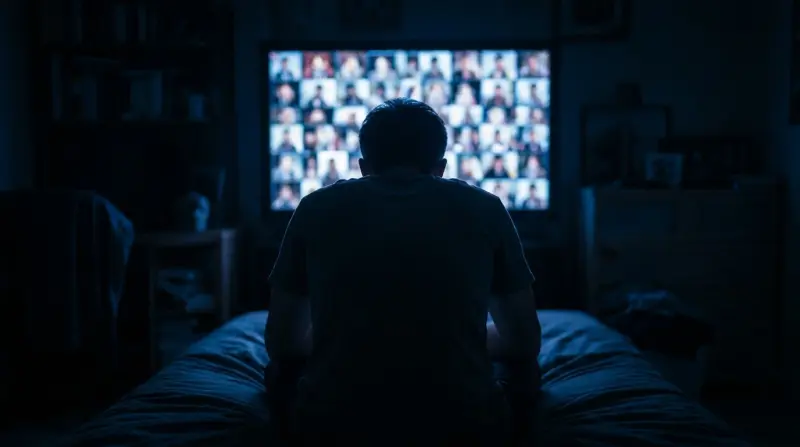
Stopping pornography can seem like a clear decision followed by quick execution. But it becomes difficult when it turns into a button that eases tension, fills a void, or helps you escape an uncomfortable feeling for a few moments. Here, the problem is not weakness in you, but a loop the brain learned through repetition, then began demanding whenever pressure rises or boredom returns. Understanding this loop opens a door to control instead of struggle. The goal is not to erase desire, but to regain your ability to choose.
Not every use of pornography means addiction or a disorder; concern increases when there is repeated loss of control or a clear effect on sleep, work, study, or relationships.
When Porn Becomes a Way to Numb Emotions
Many people don’t return to porn content solely out of desire, but because it has become a fast calming tool. The brain remembers that this behavior brings immediate relief, so it automatically links it to stress, loneliness, and frustration. Then comes the cost: regret, shame, and anger at yourself. Over time, porn shifts from a choice to a compulsive habit; every time you feel bad, you go to it—and every time you go to it, you feel worse.
Common Reasons That Make Stopping Harder Than You Expect
There are small daily factors, but with repetition they create a fast path toward compulsive behavior. When these factors repeat, stopping becomes an exhausting daily test without a realistic plan.
Easy access and secrecy make resistance require more effort, because the temptation costs you almost nothing. Fatigue and lack of sleep weaken self-control, so slipping often happens late at night—not because desire is higher, but because energy is lower.
Pressure and anxiety may push you to look for a quick break from distressing thoughts. And with isolation and emptiness, returning to content becomes easier—especially when relationships and activities shrink and empty spaces expand.
And with repeated exposure to strong, constantly renewed stimulation, everything else may feel less appealing, so the mind asks for more in the same way habits form. Sometimes attachment intensifies because the attempt to stop is done with inner punishment: harsh prevention, then a stumble, then surrender. Change doesn’t grow in an environment of constant self-blame.
The Difference Between Value Conflict and Loss of Control
In a conservative society, a person may live a conflict between what they believe and what they do. This conflict is painful and understandable, and it is a valid reason to seek psychological support without shame. But it helps to distinguish between distress that comes from a conflict of values, and distress that comes from losing control and a decline in daily life.
One sign worth noticing is when use turns into an automatic behavior that doesn’t align with your intention: you spend more time than you decided, you postpone important tasks, or you feel that the day doesn’t settle unless it happens. The presence of these signs is not a judgment on you, but it means the plan needs support and a different environment.
On the other hand, when there is a repeated pattern that is hard to regulate and affects work, study, relationships, or worship, the focus becomes restoring control and building emotion-regulation skills. It is also useful to know that moral discomfort alone is not enough to judge the presence of a disorder, and that the key criterion is loss of control and harm.
Practical Steps to Break the Loop Without Being Harsh on Yourself
Stopping porn is not a button—it’s a path where impulses decrease and the ability to regulate increases. These are realistic steps; apply them with the spirit of experimenting, not the spirit of an exam:
Identify high-risk moments: When does slipping usually happen? Late at night? After stress? Name the feeling before the act.
Create friction: Reduce excessive privacy, change where you use your phone, and make access to content harder in ways that suit you.
Replace the function of the behavior: If porn calms anxiety, try an alternative calming option you can do immediately: slow breathing, a short walk, ablution and prayer for those who find peace in it, or a message to someone you trust.
Treat a slip as data: Instead of “Why am I weak?” ask: What came before that? What do I need in that moment?
Pay attention to emptiness: A simple plan for the end of the day, with better sleep and gentle movement, can greatly reduce the chances of slipping.
You may notice that desire comes like a wave: it rises quickly, then falls if it isn’t fed by watching. Try giving yourself a few minutes of calm observation. Ask yourself: Where do I feel it in my body? What thought comes before it? Then return to something simple and tangible, like drinking water slowly or tidying the space. Those minutes can be the difference between an automatic impulse and a conscious decision.
When Seeking Help Is a Wise Step
If the behavior keeps repeating despite serious attempts, or steals your time, or increases isolation and anxiety, or leaves you in a cycle of shame and pain—then asking for support is not a luxury. A licensed mental health professional helps you understand the roots of the behavior and build practical tools to deal with urges, reduce stress, and adjust harsh self-talk—while respecting your values and boundaries.
Finally…
You may feel that the problem is part of you, but it is often a habit that learned its way into your vulnerable moments. Every time you add one small regulation step, you rebuild trust in yourself and reclaim respect for your decisions. Even if the road seems winding, steady, gentle persistence makes a real difference over time. Approach it with privacy and self-respect, and allow professional support through Tatmeen to be a source of help, not judgment. If the behavior involves risk to yourself or others, coercion, extortion, abuse, or illegal content, seek urgent help from emergency services or the relevant authority first.
Frequently Asked Questions
Am I addicted if I slip after a period of stopping?
A slip doesn’t prove anything, and it doesn’t erase what you achieved. Focus on the pattern and the impact: Is there loss of control and harm? Consider the relapse a sign of triggers that haven’t been addressed yet, and return to a simple plan instead of self-blame.
Is complete abstinence better, or gradual reduction?
Abstinence can work with a plan of alternatives, support, and an environment change—while gradual reduction may help those whose stress increases with strict abstinence. Choose what you can sustain, and revisit your decision if stopping becomes a source of more stress than necessary.
How do I talk about this with a specialist without feeling embarrassed?
Start with the impact, not the details: time, mood, shame, and value conflict. A licensed professional is used to these topics with confidentiality and respect, and you can ask for an approach that fits your culture and boundaries from the beginning. If you feel tense, say it clearly so the conversation can be guided gently.
A writer and researcher specializing in psychiatry, she focuses on mental health and the human emotions we experience but cannot always find the words to name. She writes about us—about humanity and the human experience—and simplifies complex topics to offer content that helps us better understand ourselves and life, ultimately making us feel less alone.
Every Tatmeen article is reviewed by care providers licensed by the Saudi Commission for Health Specialties, so what you read is accurate and trustworthy.
This article builds understanding and does not replace a licensed care provider.
Need someone to talk to?
Tatmeen's licensed care providers are available around the clock, and the app's urgent consultation connects you with one within minutes.
Download Tatmeen to explore care providers and booking options.
Smart matchingFour quick questions suggest the right care provider
Urgent consultationTalk to an available care provider within minutes
Free psychological measuresMore than 20 tests to understand how you are doing
Scan to download
{"data":{"id":"82df8253-a830-42b9-ae23-aef0ab5bd56f","slug":"why-is-it-hard-to-stop-porn-addiction-reasons","arTitle":" لماذا يصعب التوقف عن مشاهدة الإباحية؟ أسباب شائعة وراء الاستخدام القهري","enTitle":"Why Is It Hard to Stop Watching Pornography? Common Reasons Behind Compulsive Us","thumbnailAltText":"A lone figure stands before a glowing portal at the end of a dark maze, symbolizing temptation.","estimatedReadingTime":5,"likesCount":226,"writer":{"id":"3ab72b74-f26f-4337-9b47-3114b0f90de5","arBio":"كاتبة وباحثة متخصصة في مجال الطب النفسي، تهتم بموضوعات الصحة النفسية وبالمشاعر الإنسانية التي نختبرها ولا نجد دائمًا الكلمات لتسميتها. تكتب عنّا؛ عن الإنسان وتجربته، وتبسّط الموضوعات المعقّدة لتقدّم محتوى يساعدنا على فهم ذواتنا والحياة أكثر، ويجعلنا نشعر بأننا بوحدة أقل.","enBio":"A writer and researcher specializing in psychiatry, she focuses on mental health and the human emotions we experience but cannot always find the words to name. She writes about us—about humanity and the human experience—and simplifies complex topics to offer content that helps us better understand ourselves and life, ultimately making us feel less alone.","user":{"slug":"ayat-alnajar","arFullName":"آيات النجار","enFullName":"Ayat Al-Najjar","publicProfileImageUrl":"https://cdn.tatmeen.sa/public/profile-images/02384455-68fa-40b6-ad05-609fde65cafa/21b9a610dde5dfc6d37af110c23e9c7ab3946be080c281beb000debf4f7d31a6.webp","publicProfileImage96Url":"https://cdn.tatmeen.sa/public/profile-images/02384455-68fa-40b6-ad05-609fde65cafa/21b9a610dde5dfc6d37af110c23e9c7ab3946be080c281beb000debf4f7d31a6-w96.webp","publicProfileImage192Url":"https://cdn.tatmeen.sa/public/profile-images/02384455-68fa-40b6-ad05-609fde65cafa/21b9a610dde5dfc6d37af110c23e9c7ab3946be080c281beb000debf4f7d31a6-w192.webp"}},"arContent":"","enContent":"","productionDocument":{"headings":[{"id":"article-section-when-porn-becomes-a-way-to-numb-emotions","text":"When Porn Becomes a Way to Numb Emotions"},{"id":"article-section-common-reasons-that-make-stopping-harder-than-you-expect","text":"Common Reasons That Make Stopping Harder Than You Expect"},{"id":"article-section-the-difference-between-value-conflict-and-loss-of-control","text":"The Difference Between Value Conflict and Loss of Control"},{"id":"article-section-practical-steps-to-break-the-loop-without-being-harsh-on-yourself","text":"Practical Steps to Break the Loop Without Being Harsh on Yourself"},{"id":"article-section-when-seeking-help-is-a-wise-step","text":"When Seeking Help Is a Wise Step"},{"id":"article-section-finally","text":"Finally…"}],"faqs":[{"question":"Am I addicted if I slip after a period of stopping?","answer":"<p><span style=\"color:#000000\">A slip doesn’t prove anything, and it doesn’t erase what you achieved. Focus on the pattern and the impact: Is there loss of control and harm? Consider the relapse a sign of triggers that haven’t been addressed yet, and return to a simple plan instead of self-blame.</span></p>"},{"question":"Is complete abstinence better, or gradual reduction?","answer":"<p><span style=\"color:#000000\">Abstinence can work with a plan of alternatives, support, and an environment change—while gradual reduction may help those whose stress increases with strict abstinence. Choose what you can sustain, and revisit your decision if stopping becomes a source of more stress than necessary.</span></p>"},{"question":"How do I talk about this with a specialist without feeling embarrassed?","answer":"<p><span style=\"color:#000000\">Start with the impact, not the details: time, mood, shame, and value conflict. A licensed professional is used to these topics with confidentiality and respect, and you can ask for an approach that fits your culture and boundaries from the beginning. If you feel tense, say it clearly so the conversation can be guided gently.</span></p>"}],"beforeSourcesHtml":"<p></p>","sources":[],"afterSourcesHtml":"","blocks":[{"type":"html","html":"<p><span style=\"color:#000000\">Stopping pornography can seem like a clear decision followed by quick execution. But it becomes difficult when it turns into a button that eases tension, fills a void, or helps you escape an uncomfortable feeling for a few moments. Here, the problem is not weakness in you, but a loop the brain learned through repetition, then began demanding whenever pressure rises or boredom returns. Understanding this loop opens a door to control instead of struggle. The goal is not to erase desire, but to regain your ability to choose.</span></p><p><span style=\"color:#000000\">Not every use of pornography means addiction or a disorder; concern increases when there is repeated loss of control or a clear effect on sleep, work, study, or relationships.</span></p><h2 id=\"article-section-when-porn-becomes-a-way-to-numb-emotions\" data-toc-heading tabindex=\"-1\"><span id=\"when-porn-becomes-a-way-to-numb-emotions-1\" aria-hidden=\"true\"></span><span style=\"color:#000000\"><strong>When Porn Becomes a Way to Numb Emotions</strong></span></h2><p><span style=\"color:#000000\">Many people don’t return to porn content solely out of desire, but because it has become a fast calming tool. The brain remembers that this behavior brings immediate relief, so it automatically links it to stress, loneliness, and frustration. Then comes the cost: regret, shame, and anger at yourself. Over time, porn shifts from a choice to a compulsive habit; every time you feel bad, you go to it—and every time you go to it, you feel worse.</span></p><h2 id=\"article-section-common-reasons-that-make-stopping-harder-than-you-expect\" data-toc-heading tabindex=\"-1\"><span id=\"common-reasons-that-make-stopping-harder-than-you-expect-2\" aria-hidden=\"true\"></span><span style=\"color:#000000\"><strong>Common Reasons That Make Stopping Harder Than You Expect</strong></span></h2><p><span style=\"color:#000000\">There are small daily factors, but with repetition they create a fast path toward compulsive behavior. When these factors repeat, stopping becomes an exhausting daily test without a realistic plan.</span></p><p><span style=\"color:#000000\">Easy access and secrecy make resistance require more effort, because the temptation costs you almost nothing. Fatigue and lack of sleep weaken self-control, so slipping often happens late at night—not because desire is higher, but because energy is lower.</span></p><p><span style=\"color:#000000\">Pressure and anxiety may push you to look for a quick break from distressing thoughts. And with isolation and emptiness, returning to content becomes easier—especially when relationships and activities shrink and empty spaces expand.</span></p><p><span style=\"color:#000000\">And with repeated exposure to strong, constantly renewed stimulation, everything else may feel less appealing, so the mind asks for more in the same way habits form. Sometimes attachment intensifies because the attempt to stop is done with inner punishment: harsh prevention, then a stumble, then surrender. Change doesn’t grow in an environment of constant self-blame.</span></p><h2 id=\"article-section-the-difference-between-value-conflict-and-loss-of-control\" data-toc-heading tabindex=\"-1\"><span id=\"the-difference-between-value-conflict-and-loss-of-control-3\" aria-hidden=\"true\"></span><span style=\"color:#000000\"><strong>The Difference Between Value Conflict and Loss of Control</strong></span></h2><p><span style=\"color:#000000\">In a conservative society, a person may live a conflict between what they believe and what they do. This conflict is painful and understandable, and it is a valid reason to seek psychological support without shame. But it helps to distinguish between distress that comes from a conflict of values, and distress that comes from losing control and a decline in daily life.</span></p><p><span style=\"color:#000000\">One sign worth noticing is when use turns into an automatic behavior that doesn’t align with your intention: you spend more time than you decided, you postpone important tasks, or you feel that the day doesn’t settle unless it happens. The presence of these signs is not a judgment on you, but it means the plan needs support and a different environment.</span></p><p><span style=\"color:#000000\">On the other hand, when there is a repeated pattern that is hard to regulate and affects work, study, relationships, or worship, the focus becomes restoring control and building emotion-regulation skills. It is also useful to know that moral discomfort alone is not enough to judge the presence of a disorder, and that the key criterion is loss of control and harm.</span></p><h2 id=\"article-section-practical-steps-to-break-the-loop-without-being-harsh-on-yourself\" data-toc-heading tabindex=\"-1\"><span id=\"practical-steps-to-break-the-loop-without-being-harsh-on-yourself-4\" aria-hidden=\"true\"></span><span style=\"color:#000000\"><strong>Practical Steps to Break the Loop Without Being Harsh on Yourself</strong></span></h2><p><span style=\"color:#000000\">Stopping porn is not a button—it’s a path where impulses decrease and the ability to regulate increases. These are realistic steps; apply them with the spirit of experimenting, not the spirit of an exam:</span></p><ul><li><p><span style=\"color:#000000\"><strong>Identify high-risk moments:</strong> When does slipping usually happen? Late at night? After stress? Name the feeling before the act.</span></p></li><li><p><span style=\"color:#000000\"><strong>Create friction:</strong> Reduce excessive privacy, change where you use your phone, and make access to content harder in ways that suit you.</span></p></li><li><p><span style=\"color:#000000\"><strong>Replace the function of the behavior:</strong> If porn calms anxiety, try an alternative calming option you can do immediately: slow breathing, a short walk, ablution and prayer for those who find peace in it, or a message to someone you trust.</span></p></li><li><p><span style=\"color:#000000\"><strong>Treat a slip as data:</strong> Instead of “Why am I weak?” ask: What came before that? What do I need in that moment?</span></p></li><li><p><span style=\"color:#000000\"><strong>Pay attention to emptiness:</strong> A simple plan for the end of the day, with better sleep and gentle movement, can greatly reduce the chances of slipping.</span></p></li></ul><p><span style=\"color:#000000\">You may notice that desire comes like a wave: it rises quickly, then falls if it isn’t fed by watching. Try giving yourself a few minutes of calm observation. Ask yourself: Where do I feel it in my body? What thought comes before it? Then return to something simple and tangible, like drinking water slowly or tidying the space. Those minutes can be the difference between an automatic impulse and a conscious decision.</span></p><h2 id=\"article-section-when-seeking-help-is-a-wise-step\" data-toc-heading tabindex=\"-1\"><span id=\"when-seeking-help-is-a-wise-step-5\" aria-hidden=\"true\"></span><span style=\"color:#000000\"><strong>When Seeking Help Is a Wise Step</strong></span></h2><p><span style=\"color:#000000\">If the behavior keeps repeating despite serious attempts, or steals your time, or increases isolation and anxiety, or leaves you in a cycle of shame and pain—then asking for support is not a luxury. A licensed mental health professional helps you understand the roots of the behavior and build practical tools to deal with urges, reduce stress, and adjust harsh self-talk—while respecting your values and boundaries.</span></p><h2 id=\"article-section-finally\" data-toc-heading tabindex=\"-1\"><span id=\"finally-6\" aria-hidden=\"true\"></span><span style=\"color:#000000\"><strong>Finally…</strong></span></h2><p><span style=\"color:#000000\">You may feel that the problem is part of you, but it is often a habit that learned its way into your vulnerable moments. Every time you add one small regulation step, you rebuild trust in yourself and reclaim respect for your decisions. Even if the road seems winding, steady, gentle persistence makes a real difference over time. Approach it with privacy and self-respect, and allow professional support through Tatmeen to be a source of help, not judgment. If the behavior involves risk to yourself or others, coercion, extortion, abuse, or illegal content, seek urgent help from emergency services or the relevant authority first.</span></p>"}],"inlineCtaSignatures":[],"_experienceAliases":{"v":1,"fields":["html","bodyHtml"],"faqs":[0,1,2]}},"createdAt":"2026-06-07T21:00:00.000Z","updatedAt":"2026-06-21T16:06:02.404Z","disorderGroups":[{"id":"04bd234d-c176-4ba1-afb3-9e9c05d0e648","slug":"addictions-and-compulsive-behaviors","arName":"الإدمان والسلوكيات القهرية","enName":"Addictions & Compulsive Behaviors"},{"id":"d807ea69-44d4-4e81-bee4-0a059fd36645","slug":"self-development","arName":"تنمية الذات","enName":"Self-Development"},{"id":"1e82772d-a1a7-4d29-b475-be9d6b67ae02","slug":"common-mental-issues","arName":"اضطرابات نفسية شائعة","enName":"Common Mental Issues"}],"reviewer":{"arFullName":"فريق تطمين","enFullName":"Tatmeen team","slug":"tatmeen-team","kind":"organization"},"productionArticle":true,"promotionAllowed":true,"preparedCover":{"src":"https://cdn.tatmeen.sa/public/article-lcp/article-lcp-v2/sha256-500f92cd0d9428d88831013159df93637d0eae0daa4ee0afa7280dee3764ed42/800-68154575b3e25a403e8571a8d532fe3750d8d5fe17232362f0e43850b53f4734.avif","fallback":"https://cdn.tatmeen.sa/public/article-lcp/article-lcp-v2/sha256-500f92cd0d9428d88831013159df93637d0eae0daa4ee0afa7280dee3764ed42/800-2c73d636cfe7468abf61c487442ec2962864217239c91c2e3ca530ab785978f9.webp","directUrl":"https://cdn.tatmeen.sa/blog-cover/Tatmeen-1780940703424.webp","isGolden":true,"avifSrcset":"https://cdn.tatmeen.sa/public/article-lcp/article-lcp-v2/sha256-500f92cd0d9428d88831013159df93637d0eae0daa4ee0afa7280dee3764ed42/400-35c0a4524c522695bd67f051d011a1d5fafe4fe5a63149ac231fe4d981c609e7.avif 400w, https://cdn.tatmeen.sa/public/article-lcp/article-lcp-v2/sha256-500f92cd0d9428d88831013159df93637d0eae0daa4ee0afa7280dee3764ed42/640-07df2614a5f79195f5aa1e18a9a143ff652a1ac4d1b04a19090e8eb7dc150c4d.avif 640w, https://cdn.tatmeen.sa/public/article-lcp/article-lcp-v2/sha256-500f92cd0d9428d88831013159df93637d0eae0daa4ee0afa7280dee3764ed42/800-68154575b3e25a403e8571a8d532fe3750d8d5fe17232362f0e43850b53f4734.avif 800w, https://cdn.tatmeen.sa/public/article-lcp/article-lcp-v2/sha256-500f92cd0d9428d88831013159df93637d0eae0daa4ee0afa7280dee3764ed42/1200-396e7632230a46af396226c8e28ecee1b0d69ccd1061db0b84ed3cc51793c5f6.avif 1200w","webpSrcset":"https://cdn.tatmeen.sa/public/article-lcp/article-lcp-v2/sha256-500f92cd0d9428d88831013159df93637d0eae0daa4ee0afa7280dee3764ed42/400-8f5b5de2827f0031779638f7c5da9fc02bb5c74f0f45cf13a2b155ebf1979d86.webp 400w, https://cdn.tatmeen.sa/public/article-lcp/article-lcp-v2/sha256-500f92cd0d9428d88831013159df93637d0eae0daa4ee0afa7280dee3764ed42/640-14e8675840fcaa635a8a9ec9d4b828dfb5c51a812484c305e411b4ae3a3c4508.webp 640w, https://cdn.tatmeen.sa/public/article-lcp/article-lcp-v2/sha256-500f92cd0d9428d88831013159df93637d0eae0daa4ee0afa7280dee3764ed42/800-2c73d636cfe7468abf61c487442ec2962864217239c91c2e3ca530ab785978f9.webp 800w, https://cdn.tatmeen.sa/public/article-lcp/article-lcp-v2/sha256-500f92cd0d9428d88831013159df93637d0eae0daa4ee0afa7280dee3764ed42/1200-f86c2e4bbbb68f6634d17ef21ac5d5fa5d9ff3fd6f04ce131b0ac04ab7c16603.webp 1200w","phoneAvifSrcset":"https://cdn.tatmeen.sa/public/article-lcp/article-lcp-v2/sha256-500f92cd0d9428d88831013159df93637d0eae0daa4ee0afa7280dee3764ed42/400-35c0a4524c522695bd67f051d011a1d5fafe4fe5a63149ac231fe4d981c609e7.avif 400w, https://cdn.tatmeen.sa/public/article-lcp/article-lcp-v2/sha256-500f92cd0d9428d88831013159df93637d0eae0daa4ee0afa7280dee3764ed42/640-07df2614a5f79195f5aa1e18a9a143ff652a1ac4d1b04a19090e8eb7dc150c4d.avif 640w, https://cdn.tatmeen.sa/public/article-lcp/article-lcp-v2/sha256-500f92cd0d9428d88831013159df93637d0eae0daa4ee0afa7280dee3764ed42/800-68154575b3e25a403e8571a8d532fe3750d8d5fe17232362f0e43850b53f4734.avif 800w","phoneWebpSrcset":"https://cdn.tatmeen.sa/public/article-lcp/article-lcp-v2/sha256-500f92cd0d9428d88831013159df93637d0eae0daa4ee0afa7280dee3764ed42/400-8f5b5de2827f0031779638f7c5da9fc02bb5c74f0f45cf13a2b155ebf1979d86.webp 400w, https://cdn.tatmeen.sa/public/article-lcp/article-lcp-v2/sha256-500f92cd0d9428d88831013159df93637d0eae0daa4ee0afa7280dee3764ed42/640-14e8675840fcaa635a8a9ec9d4b828dfb5c51a812484c305e411b4ae3a3c4508.webp 640w, https://cdn.tatmeen.sa/public/article-lcp/article-lcp-v2/sha256-500f92cd0d9428d88831013159df93637d0eae0daa4ee0afa7280dee3764ed42/800-2c73d636cfe7468abf61c487442ec2962864217239c91c2e3ca530ab785978f9.webp 800w","width":800,"height":447},"previewTaxonomy":{"groups":[{"id":"04bd234d-c176-4ba1-afb3-9e9c05d0e648","slug":"addictions-and-compulsive-behaviors","arName":"الإدمان والسلوكيات القهرية","enName":"Addictions & Compulsive Behaviors"},{"id":"d807ea69-44d4-4e81-bee4-0a059fd36645","slug":"self-development","arName":"تنمية الذات","enName":"Self-Development"},{"id":"1e82772d-a1a7-4d29-b475-be9d6b67ae02","slug":"common-mental-issues","arName":"اضطرابات نفسية شائعة","enName":"Common Mental Issues"}],"topics":[{"id":"7795b6e4-e390-47a5-baf0-09243b44e066","slug":"self-compassion","arName":"تعاطف مع الذات","enName":"Self-Compassion","groupSlug":"self-development","href":"/blog/category/self-development/self-compassion/"},{"id":"15ff72d6-a734-4802-9430-5938aa292115","slug":"porn-addiction","arName":"إدمان الإباحية","enName":"Porn Addiction","groupSlug":"addictions-and-compulsive-behaviors","href":"/blog/category/addictions-and-compulsive-behaviors/porn-addiction/"}],"tags":[{"id":"4ed98471-68bf-4682-b622-f092e88833bb","slug":"porn-compulsive-sexual","arName":"إدمان الإباحية والسلوك الجنسي القهري","enName":"Pornography & Compulsive Sexual"},{"id":"a1d36353-cbcb-4907-b913-3069289a3514","slug":"addiction-recovery","arName":"الإدمان والتعافي","enName":"Addiction & Recovery"},{"id":"c2a6e8d3-de9c-435f-8c95-9727e7db14cc","slug":"explainer-awareness","arName":"دليل توعوي / شرح","enName":"Explainer / Awareness Guide"}]},"previewProviderRecommendations":[{"id":"3cc806e8-616b-4884-9f21-a75b378580a2","slug":"aisha-al-hashim-8667","arFullName":"عائشة ال هاشم","enFullName":"Aisha Al Hashim","publicProfileImageUrl":"https://cdn.tatmeen.sa/public/profile-images/3cc806e8-616b-4884-9f21-a75b378580a2/27f523d03be4dcfa1f6a79f70c1773887434e698990d214cd990caec56a44798.webp","publicProfileImage96Url":"https://cdn.tatmeen.sa/public/profile-images/3cc806e8-616b-4884-9f21-a75b378580a2/27f523d03be4dcfa1f6a79f70c1773887434e698990d214cd990caec56a44798-w96.webp","publicProfileImage192Url":"https://cdn.tatmeen.sa/public/profile-images/3cc806e8-616b-4884-9f21-a75b378580a2/27f523d03be4dcfa1f6a79f70c1773887434e698990d214cd990caec56a44798-w192.webp","specialization":{"arName":"أخصائي نفسي","enName":"Psychologist"},"profileImageUrl":"https://cdn.tatmeen.sa/public/profile-images/3cc806e8-616b-4884-9f21-a75b378580a2/27f523d03be4dcfa1f6a79f70c1773887434e698990d214cd990caec56a44798-w192.webp","experienceYears":2,"consultantInfo":{"averageRating":{"average":4.991150442477876},"specialization":{"arGeneralName":"أخصائي نفسي","enGeneralName":"Psychologist"}}},{"id":"b1145c29-bfad-4521-b090-60a33245e75d","slug":"hazem-alnemari-4692","arFullName":"حازم النمري","enFullName":"Hazem Alnemari","publicProfileImageUrl":"https://cdn.tatmeen.sa/public/profile-images/b1145c29-bfad-4521-b090-60a33245e75d/332e5e630d92b6550fc2262f536aa0fa0e14dca82641cdf0fdfdb3fd909482a1.webp","publicProfileImage96Url":"https://cdn.tatmeen.sa/public/profile-images/b1145c29-bfad-4521-b090-60a33245e75d/332e5e630d92b6550fc2262f536aa0fa0e14dca82641cdf0fdfdb3fd909482a1-w96.webp","publicProfileImage192Url":"https://cdn.tatmeen.sa/public/profile-images/b1145c29-bfad-4521-b090-60a33245e75d/332e5e630d92b6550fc2262f536aa0fa0e14dca82641cdf0fdfdb3fd909482a1-w192.webp","specialization":{"arName":"أخصائي نفسي","enName":"Psychologist"},"profileImageUrl":"https://cdn.tatmeen.sa/public/profile-images/b1145c29-bfad-4521-b090-60a33245e75d/332e5e630d92b6550fc2262f536aa0fa0e14dca82641cdf0fdfdb3fd909482a1-w192.webp","experienceYears":6,"consultantInfo":{"averageRating":{"average":4.666666666666667},"specialization":{"arGeneralName":"أخصائي نفسي","enGeneralName":"Psychologist"}}},{"id":"a0a9dce9-6750-4ffa-bdc6-22d543504410","slug":"fatimah-aldhneen-9827","arFullName":"فاطمه الدهنين","enFullName":"Fatimah Aldhneen","publicProfileImageUrl":"","publicProfileImage96Url":"","publicProfileImage192Url":"","specialization":{"arName":"أخصائي نفسي","enName":"Psychologist"},"profileImageUrl":"","experienceYears":2,"consultantInfo":{"averageRating":{"average":5},"specialization":{"arGeneralName":"أخصائي نفسي","enGeneralName":"Psychologist"}}}],"previewCareProviders":[{"id":"09364052-c2a9-4c52-9717-7ce2093b8d0a","slug":"kholoud-alharbi-5221","arFullName":"خلود الحربي","enFullName":"Kholoud Alharbi","publicProfileImageUrl":"https://cdn.tatmeen.sa/public/profile-images/09364052-c2a9-4c52-9717-7ce2093b8d0a/4a0aeb81619e351b77f4323e3605a0a00acc7ca3c82ee7cc5ca2c9e8ef716049.webp","publicProfileImage96Url":"https://cdn.tatmeen.sa/public/profile-images/09364052-c2a9-4c52-9717-7ce2093b8d0a/4a0aeb81619e351b77f4323e3605a0a00acc7ca3c82ee7cc5ca2c9e8ef716049-w96.webp","publicProfileImage192Url":"https://cdn.tatmeen.sa/public/profile-images/09364052-c2a9-4c52-9717-7ce2093b8d0a/4a0aeb81619e351b77f4323e3605a0a00acc7ca3c82ee7cc5ca2c9e8ef716049-w192.webp","gender":"FEMALE","specialization":{"arName":"أخصائي نفسي","enName":"Psychologist"}},{"id":"6f037535-1dca-4b50-a8b2-5974b7323286","slug":"salah-althobaiti-9053","arFullName":"صلاح الثبيتي","enFullName":"Salah Althobaiti","publicProfileImageUrl":"https://cdn.tatmeen.sa/public/profile-images/6f037535-1dca-4b50-a8b2-5974b7323286/35b6bd7fad9b1e004c1835803eb9c1b56dcacd380685ec8bff141f0fb888005c.webp","publicProfileImage96Url":"https://cdn.tatmeen.sa/public/profile-images/6f037535-1dca-4b50-a8b2-5974b7323286/35b6bd7fad9b1e004c1835803eb9c1b56dcacd380685ec8bff141f0fb888005c-w96.webp","publicProfileImage192Url":"https://cdn.tatmeen.sa/public/profile-images/6f037535-1dca-4b50-a8b2-5974b7323286/35b6bd7fad9b1e004c1835803eb9c1b56dcacd380685ec8bff141f0fb888005c-w192.webp","gender":"MALE","specialization":{"arName":"أخصائي نفسي","enName":"Psychologist"}},{"id":"3cc806e8-616b-4884-9f21-a75b378580a2","slug":"aisha-al-hashim-8667","arFullName":"عائشة ال هاشم","enFullName":"Aisha Al Hashim","publicProfileImageUrl":"https://cdn.tatmeen.sa/public/profile-images/3cc806e8-616b-4884-9f21-a75b378580a2/27f523d03be4dcfa1f6a79f70c1773887434e698990d214cd990caec56a44798.webp","publicProfileImage96Url":"https://cdn.tatmeen.sa/public/profile-images/3cc806e8-616b-4884-9f21-a75b378580a2/27f523d03be4dcfa1f6a79f70c1773887434e698990d214cd990caec56a44798-w96.webp","publicProfileImage192Url":"https://cdn.tatmeen.sa/public/profile-images/3cc806e8-616b-4884-9f21-a75b378580a2/27f523d03be4dcfa1f6a79f70c1773887434e698990d214cd990caec56a44798-w192.webp","gender":"FEMALE","specialization":{"arName":"أخصائي نفسي","enName":"Psychologist"}},{"id":"db2ce1a0-9325-4471-b7ce-eb2e811c30a3","slug":"amer-qutub-2441","arFullName":"عامر قطب","enFullName":"Amer Qutub","publicProfileImageUrl":"https://cdn.tatmeen.sa/public/profile-images/db2ce1a0-9325-4471-b7ce-eb2e811c30a3/80580f99bfd7fe2b2a9cf8eed73ab532f5086d1efe053b0aa57358c1ce004261.webp","publicProfileImage96Url":"https://cdn.tatmeen.sa/public/profile-images/db2ce1a0-9325-4471-b7ce-eb2e811c30a3/80580f99bfd7fe2b2a9cf8eed73ab532f5086d1efe053b0aa57358c1ce004261-w96.webp","publicProfileImage192Url":"https://cdn.tatmeen.sa/public/profile-images/db2ce1a0-9325-4471-b7ce-eb2e811c30a3/80580f99bfd7fe2b2a9cf8eed73ab532f5086d1efe053b0aa57358c1ce004261-w192.webp","gender":"MALE","specialization":{"arName":"أخصائي نفسي","enName":"Psychologist"}},{"id":"618dba89-5b70-4b46-8304-741b7ac8ecd3","slug":"abdullah-mari-1311","arFullName":"عبدالله مرعي","enFullName":"Abdullah Mari","publicProfileImageUrl":"https://cdn.tatmeen.sa/public/profile-images/618dba89-5b70-4b46-8304-741b7ac8ecd3/6b4a3bfb59f8a304ca79083b32859b46baad2e1d692974a47c02c1f66bd11129.webp","publicProfileImage96Url":"https://cdn.tatmeen.sa/public/profile-images/618dba89-5b70-4b46-8304-741b7ac8ecd3/6b4a3bfb59f8a304ca79083b32859b46baad2e1d692974a47c02c1f66bd11129-w96.webp","publicProfileImage192Url":"https://cdn.tatmeen.sa/public/profile-images/618dba89-5b70-4b46-8304-741b7ac8ecd3/6b4a3bfb59f8a304ca79083b32859b46baad2e1d692974a47c02c1f66bd11129-w192.webp","gender":"MALE","specialization":{"arName":"أخصائي نفسي","enName":"Psychologist"}},{"id":"94765496-dbdf-4631-a01b-7df5f788668d","slug":"abdullrahman-alhamoudi-3045","arFullName":"عبدالرحمن الحمودي","enFullName":"Abdulrahman Alhamoudi","publicProfileImageUrl":"https://cdn.tatmeen.sa/public/profile-images/94765496-dbdf-4631-a01b-7df5f788668d/2d49f6b6493c564afb6f50b6c3634231dff3a5cf8353acfab393d1b2a88037d1.webp","publicProfileImage96Url":"https://cdn.tatmeen.sa/public/profile-images/94765496-dbdf-4631-a01b-7df5f788668d/2d49f6b6493c564afb6f50b6c3634231dff3a5cf8353acfab393d1b2a88037d1-w96.webp","publicProfileImage192Url":"https://cdn.tatmeen.sa/public/profile-images/94765496-dbdf-4631-a01b-7df5f788668d/2d49f6b6493c564afb6f50b6c3634231dff3a5cf8353acfab393d1b2a88037d1-w192.webp","gender":"MALE","specialization":{"arName":"أخصائي نفسي","enName":"Psychologist"}},{"id":"3b50a5d5-e795-407f-8676-fd7f0e1bb7a0","slug":"abdulaziz-bin-hudayan-4940","arFullName":"عبدالعزيز بن هديان","enFullName":"Abdulaziz Bin Hudayan","publicProfileImageUrl":"https://cdn.tatmeen.sa/public/profile-images/3b50a5d5-e795-407f-8676-fd7f0e1bb7a0/710ff0fe1fb00cdb5042092e27b7910b480a439b02251ecded62d7758eefce95.webp","publicProfileImage96Url":"https://cdn.tatmeen.sa/public/profile-images/3b50a5d5-e795-407f-8676-fd7f0e1bb7a0/710ff0fe1fb00cdb5042092e27b7910b480a439b02251ecded62d7758eefce95-w96.webp","publicProfileImage192Url":"https://cdn.tatmeen.sa/public/profile-images/3b50a5d5-e795-407f-8676-fd7f0e1bb7a0/710ff0fe1fb00cdb5042092e27b7910b480a439b02251ecded62d7758eefce95-w192.webp","gender":"MALE","specialization":{"arName":"أخصائي نفسي","enName":"Psychologist"}},{"id":"d4ffcb6b-90a7-45b6-b941-964866f4564b","slug":"dhaifallah-alhumaidi-1092","arFullName":"ضيف الله الحميدي","enFullName":"Dhaifallah Alhumaidi","publicProfileImageUrl":"https://cdn.tatmeen.sa/public/profile-images/d4ffcb6b-90a7-45b6-b941-964866f4564b/1817171c5828a9b57d6c30d12332cf154e335272548bc90a6e8456d74d356956.webp","publicProfileImage96Url":"https://cdn.tatmeen.sa/public/profile-images/d4ffcb6b-90a7-45b6-b941-964866f4564b/1817171c5828a9b57d6c30d12332cf154e335272548bc90a6e8456d74d356956-w96.webp","publicProfileImage192Url":"https://cdn.tatmeen.sa/public/profile-images/d4ffcb6b-90a7-45b6-b941-964866f4564b/1817171c5828a9b57d6c30d12332cf154e335272548bc90a6e8456d74d356956-w192.webp","gender":"MALE","specialization":{"arName":"أخصائي نفسي","enName":"Psychologist"}}],"previewDownload":{"href":"/download","title":{"ar":"خطوة واحدة لأجلك، ابدأ الآن","en":"One step for you, start now"},"description":{"ar":"حمّل تطبيق تطمين لاستكشاف مقدمي الرعاية وخيارات الحجز.","en":"Download Tatmeen to explore care providers and booking options."},"posterSrc":"/images/home/cta-ar-new-1.webp","videoSrc":"/images/home/cta-ar-new-1.mp4","videoPosterSrc":"/images/home/cta-ar-new-1.webp","videoPosterEnSrc":"/images/home/cta-en-new-1.webp","videoType":"video/mp4","appStoreHref":"https://apps.apple.com/us/app/tatmeen-%D8%AA%D8%B7%D9%85%D9%8A%D9%86/id6473836983","googlePlayHref":"https://play.google.com/store/apps/details?id=com.TatmeenApp.user&hl=en"},"previewRelatedArticles":[{"id":"fb99d6a3-59f2-4787-8874-ffa01b5ec580","slug":"porn-addiction-signs-start-change","route":"/blog/porn-addiction-signs-start-change/","title":{"ar":" إدمان الإباحية: علامات أنك عالق وكيف تبدأ التغيير","en":"Porn Addiction: Signs You May Be Stuck and How to Start Changing"},"image":"https://cdn.tatmeen.sa/public/article-lcp/article-lcp-v2/sha256-79daa099858bf004b6f5394cef6a9ae1b46b3abac2fba268c4a4dc30b86171d3/800-996c00b9be38bc5e0fc2a9d0c263231bb21e12c6c43c633812db7992a6cf2767.webp","directImageFallback":"https://cdn.tatmeen.sa/blog-cover/Tatmeen-1781116081732.webp","arThumbnailAltText":"Man sitting in dark room, facing glowing screen filled with many thumbnails, feeling isolated","thumbnailAltText":"Man sitting in dark room, facing glowing screen filled with many thumbnails, feeling isolated","topic":{"label":{"ar":"الإدمان والسلوكيات القهرية","en":"Addictions & Compulsive Behaviors"}},"readingTimeMinutes":5},{"id":"1865687e-765e-4545-b603-c1b1800ed1f8","slug":"porn-addiction-withdrawal-symptoms-coping","route":"/blog/porn-addiction-withdrawal-symptoms-coping/","title":{"ar":"أعراض الانسحاب من إدمان الإباحية وكيف تتعامل معها بمرونة","en":"Pornography Addiction Withdrawal Symptoms and How to Cope Flexibly"},"image":"https://cdn.tatmeen.sa/public/article-lcp/article-lcp-v2/sha256-6087bc2248ab857436c6bbd826657a475a29035fd117e7fccb71df153a44533e/800-62155c66d16747f1b9b5ee2abc09663abda3efe5ef59e9ce3efa853d06220fa7.webp","directImageFallback":"https://cdn.tatmeen.sa/blog-cover/Tatmeen-1779130957177.webp","arThumbnailAltText":"Person sitting on the bed against a wall suffering from pornography addiction withdrawal","thumbnailAltText":"Person sitting on the bed against a wall suffering from pornography addiction withdrawal","topic":{"label":{"ar":"الإدمان والسلوكيات القهرية","en":"Addictions & Compulsive Behaviors"}},"readingTimeMinutes":5},{"id":"347c2811-bc22-475f-bd27-f79863232909","slug":"-effects-of-pornography-on-brain-mood-relationships","route":"/blog/-effects-of-pornography-on-brain-mood-relationships/","title":{"ar":" اختطاف الدوبامين مع الإباحية وكيف تستعيد التوازن","en":" Dopamine Hijacking With Pornography and How to Restore Balance"},"image":"https://cdn.tatmeen.sa/public/article-lcp/article-lcp-v2/sha256-eb5c485471e1880f339c79d43427fef858f66c275dd20cd1bfdf4247cbe11e47/800-96cc3bcc6b007d2ef11fe1d82341a5d9cd58362b3807e25c9e508a7e50a53f8b.webp","directImageFallback":"https://cdn.tatmeen.sa/blog-cover/Tatmeen-1781115344993.webp","arThumbnailAltText":"\"Person chained before a glowing screen, symbolizing compulsive digital reward seeking.\"","thumbnailAltText":"\"Person chained before a glowing screen, symbolizing compulsive digital reward seeking.\"","topic":{"label":{"ar":"الإدمان والسلوكيات القهرية","en":"Addictions & Compulsive Behaviors"}},"readingTimeMinutes":5},{"id":"219a5f20-e554-45f7-b572-c8cb72ff300c","slug":"manage-sudden-porn-urges-in-minutes","route":"/blog/manage-sudden-porn-urges-in-minutes/","title":{"ar":"التعامل مع الرغبة المفاجئة لمشاهدة الإباحية خلال دقائق","en":"Managing Sudden Urges to Watch Pornography Within Minutes"},"image":"https://cdn.tatmeen.sa/public/article-lcp/article-lcp-v2/sha256-f0314b16a8d5f6e75ee1e25bd52f628948b940f7abae5b73592eaa750ebb6838/800-58077223878f36e215f6d5abc85d28b59ef1b070718e6f9fea3a5783d56d54a2.webp","directImageFallback":"https://cdn.tatmeen.sa/blog-cover/Tatmeen-1780942805949.webp","arThumbnailAltText":"Finger hovering over a glowing red button in a dark, minimal scene, capturing tension.","thumbnailAltText":"Finger hovering over a glowing red button in a dark, minimal scene, capturing tension.","topic":{"label":{"ar":"الإدمان والسلوكيات القهرية","en":"Addictions & Compulsive Behaviors"}},"readingTimeMinutes":5}],"previewRelatedReadStates":{}},"locale":"en","device":"desktop","path":"/en/blog/why-is-it-hard-to-stop-porn-addiction-reasons/","readingControls":false,"config":{"public":{"BUCKET_URL":"https://cdn.tatmeen.sa/","APP_BASE_URL":"https://tatmeen.sa","intercomAppId":"ppcnu9e3"}}}