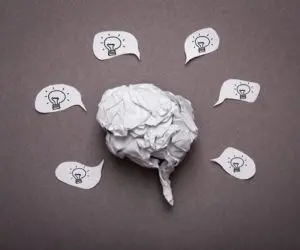
Cognitive or perceptual distortions—a term used in psychology—are unhealthy habits in our thinking patterns that negatively affect our lives by generating negative feelings and shaping negative beliefs about ourselves and others.
The things we repeatedly tell ourselves help shape our self-image and the way we interact with the world around us.
Unfortunately, our thoughts can become so automatic that we regard them as facts, even when they are not true.
“Perceptual distortions” or “cognitive distortions” (link to Wikipedia) is a term used in psychology for the thoughts that arise when our brain convinces us of something that is not true.
These distortions often reinforce negative thoughts and feelings, which may lead to depression, anxiety, and mental illness. Fortunately, if we become aware of our cognitive distortions, we can learn to change our thinking patterns and thereby improve our quality of life.
13 Things You Tell Yourself That Are Actually Cognitive Distortions
Here are 13 thoughts you may tell yourself that are actually cognitive distortions:
This phrase was popularized by Will Ferrell’s character Ricky Bobby in the 2006 film Talladega Nights. Joking aside, believing that if you do not win, you are a loser is a form of all-or-nothing thinking. Also known as black-and-white thinking, this cognitive distortion sees everything as either black or white and fails to recognize all the shades of gray in between.
Another common saying that represents this kind of binary thinking is, “If this is not bad luck, then I have no luck at all.”
The truth is that every one of us has bad moments from time to time. Sometimes you succeed; other times you lose. Seeing everything in only one of two ways can limit your thinking and lead to negative feelings.
Cognitive reframing: I did not come in first, but third place is still very good. I am proud of myself, and I will try hard next time.
2. If I had been there for him or her then, this would not have happened.
Cognitive distortion: personalization
When we tell ourselves things like this, we assume responsibility for events that are actually beyond our control. This type of distorted thinking is called personalization.
When someone engages in personalization, they take everything personally and see themselves at the center of every situation.
The truth is that sad things sometimes happen to the people we love, and nothing we did or did not do could have changed what happened.
Cognitive reframing: I accept that some things are beyond my control and that there is nothing I can do to change them.
3. I always mess things up. I will never achieve anything in my life.
Cognitive distortion: overgeneralization
Whenever you use words such as “always,” “never,” or “everything,” you are probably overgeneralizing. If you make one mistake and immediately tell yourself, “I always mess things up,” “I never do anything right,” or “I will never improve,” it is time to take a close look at your thinking patterns.
The truth is that you cannot draw conclusions from one, two, or even three isolated events. Just because you have made one or two mistakes does not mean you are a failure.
Cognitive reframing: I have made a few mistakes, but I am learning. There is always room to improve.
4. Anything that can go wrong will definitely go wrong.
Cognitive distortion: fortune-telling (predicting the future)
We have all heard the saying known as “Sod’s Law” (a term used in the United Kingdom that corresponds to “Murphy’s Law” in North America, referring to a collection of rules that do not rise to the level of actual laws and are generally humorous and wryly pessimistic). This cognitive distortion is called fortune-telling, and using this saying involves arbitrarily predicting negative outcomes in the future.
In reality, the future holds many possibilities. Some outcomes are positive and others are negative. Would it not be better to feel hopeful and optimistic about the future instead of viewing it from a pessimistic angle?
Cognitive reframing: Every difficulty has a silver lining. Even if something unpleasant happens, there will still be things we can gain from the situation.
5. I am not good enough.
Cognitive distortion: labeling
This is something we may have said to ourselves once or twice in our lives. Telling ourselves that we are not good enough can undermine our self-confidence and stop us from taking risks or trying new things in life. Labeling is a harsh form of overgeneralization in which people describe themselves in negative terms.
The truth is that whether the phrase is “I am not good enough” or “I am a failure,” none of these statements will make you feel better about yourself. Try replacing these thoughts with positive affirmations, and work toward a balance that also acknowledges your strengths.
Cognitive reframing: I am a good person. I can show myself compassion and accept myself as I am.
6. I should have... but...
Cognitive distortion: should statements
One example of this kind of thinking is, “I should have worn a black tie to the job interview; perhaps I would have gotten the job.”
If you find yourself using statements such as “I should have,” “I could have,” or “I ought to have,” then you have fallen into a cognitive distortion. Try reframing the situation to see what you can learn instead of focusing on what you “should” have done differently.
The truth is that should statements serve no purpose except to generate negative feelings such as guilt, shame, anger, or regret. We cannot change the past. Telling yourself that you should or could have done something does not change the fact that you did not do it.
Cognitive reframing: I did not..., but I cannot change the past. I can, however, learn from this experience and do something differently in the future.
7. I feel as though he lied to me, so he must have.
Cognitive distortion: emotional reasoning
Just because you feel a certain way does not mean that what you feel is true. For example, someone may feel afraid even though no real external danger exists.
A person engaging in emotional reasoning confuses feelings with reality. It is better to view the situation objectively and step back from your feelings before making any critical judgment.
The truth is that we have intuitions from time to time. Sometimes we have a gut feeling that turns out to be correct. But our feelings are not the same as reality.
Cognitive reframing: I have a feeling that he lied to me, but that does not necessarily mean he did. I will tell him how I feel and give him an opportunity to share his side of the story.
8. Misfortunes never come singly.
Cognitive distortion: magnification or catastrophizing
We have all heard the saying, “Misfortunes never come singly.” It can seem as though whenever one thing goes wrong, everything goes wrong. But many people caught in negative thinking take this idea too far.
Catastrophizing is a cognitive distortion that leads people to make a mountain out of a molehill. They magnify small matters and turn them into major ones, like someone who receives a poor grade on one exam and concludes that they will fail the entire course.
The truth is that a drizzle is not the same as a downpour.
Cognitive reframing: Yes, there was some rain during our camping trip, but at least it was not a thunderstorm.
9. It is all his or her fault.
Cognitive distortion: blaming
This cognitive distortion is the opposite of personalization. Instead of viewing things as “It is all because of me,” someone who engages in blaming becomes a victim who always sees the other person, rather than themselves, as the cause.
The truth is that, regardless of the situation you are in, it will never be entirely someone else’s doing. You will always have some degree of responsibility for the events that occur in your life. Instead of pointing the finger at someone else, take time to consider the part you played and accept full personal responsibility for your actions.
Cognitive reframing: I accept responsibility for my role in this situation.
10. I am certain that other people do not like me.
Cognitive distortion: mind reading
When someone engages in mind reading, they assume they are psychic and can read other people’s thoughts even when there is no external confirmation that this is true.
If you find yourself saying things such as, “I am certain that other people do not like me,” stop and examine the situation. Do you have any evidence that this is true?
The truth is that we cannot know what another person is thinking unless we ask them. If we believe that we do know, we are making assumptions based on our own insecurities.
Cognitive reframing: I cannot read other people’s minds. I may be projecting my own feelings of insecurity onto them.
11. I am not special. Anyone else could do what I do.
Cognitive distortion: minimizing
When someone falls into this cognitive distortion, it can seem as though they never do anything right because they continually minimize their achievements.
Unfortunately, the same person who minimizes everything good in their life will magnify and overgeneralize everything bad.
The truth is that it is natural to pat yourself on the back for your achievements. You deserve it. If you find yourself minimizing your strengths and talents, try changing your thinking and praising yourself instead.
Cognitive reframing: I worked hard to achieve what I have. It is natural for me to feel proud of myself.
12. If they have not called by now, the situation must be bad.
Cognitive distortion: jumping to conclusions
Jumping to conclusions and expecting the worst simply because time is passing will create only anxiety and other negative feelings within you. In these situations, it is better to be patient and realistic.
The truth is that jumping to conclusions before you have all the evidence is unlikely to produce an accurate conclusion anyway. You are only wasting your time and energy.
Cognitive reframing: The doctor has not called yet, but the clinic may be busy. I will wait until I hear something before making assumptions.
13. He complimented me, but he was only being kind.
Cognitive distortion: discounting the positive
It is common for people to have difficulty accepting compliments. Someone says, “I like your shirt,” and you reply, “This worn-out thing?”
Dismissing compliments is only the beginning for people who discount everything positive. People who think this negatively tend to minimize anything and everything positive in their lives.
The truth is that nothing is entirely negative or entirely positive. But by constantly ignoring the positive, you can dry up the sources of joy in your life and ultimately feel inadequate, extremely anxious, or simply miserable. Instead of discounting the positive, let it matter. Feel it within you and enjoy it. You will be glad you did.
Cognitive reframing: It feels good to receive a compliment. I am grateful for his kind words. In fact, there is a 50% chance that he is right.
What now? I really do fall into these cognitive distortions. What should I do?
If you recognize any of these thinking habits in yourself, do not worry—you can retrain your mind. Consider seeing a therapist who specializes in cognitive behavioral therapy to help you manage your thoughts, recognize cognitive distortions when they arise, and replace them with more positive and uplifting thoughts. (Alternatively, use self-help resources such as this blog.)
Content writer and researcher at Tatmeen, working on Arabic and English articles across mental health and everyday life topics, including relationships, stress, work, habits, and family.
Every Tatmeen article is reviewed by care providers licensed by the Saudi Commission for Health Specialties, so what you read is accurate and trustworthy.
This article builds understanding and does not replace a licensed care provider.
Need someone to talk to?
Tatmeen's licensed care providers are available around the clock, and the app's urgent consultation connects you with one within minutes.
Download Tatmeen to explore care providers and booking options.
Smart matchingFour quick questions suggest the right care provider
Urgent consultationTalk to an available care provider within minutes
Free psychological measuresMore than 20 tests to understand how you are doing
Scan to download
{"data":{"id":"4f06c2f1-9b65-400a-8783-e22f05d9a934","slug":"cognitive_distortions_is_your_brain_deceiving_you","arTitle":"التشوهات الإدراكية – هل يخدعك دماغك؟","enTitle":"Cognitive Distortions: Is Your Brain Deceiving You?","thumbnailAltText":"Crumpled paper shaped like a brain surrounded by speech bubbles with light bulbs","estimatedReadingTime":5,"likesCount":4,"writer":{"id":"f49e2ee4-e68b-4e04-a40b-01d0b0195161","arBio":"كاتب وباحث محتوى في تطمين، يعمل على مقالات عربية وإنجليزية في موضوعات الصحة النفسية والحياة اليومية، مثل العلاقات، الضغوط، العمل، العادات، والأسرة.","enBio":"Content writer and researcher at Tatmeen, working on Arabic and English articles across mental health and everyday life topics, including relationships, stress, work, habits, and family.","user":{"slug":"sultan-almuhasin","arFullName":"سلطان المحيسن","enFullName":"Sultan Almuhasin","publicProfileImageUrl":"https://cdn.tatmeen.sa/public/profile-images/2494102f-7411-4dda-85b1-0c37a1031b3f/c9d25068aaa97c2c1f80123e2d6a27cc7b5a9b1df6a91493df9411b390a60279.webp","publicProfileImage96Url":"https://cdn.tatmeen.sa/public/profile-images/2494102f-7411-4dda-85b1-0c37a1031b3f/c9d25068aaa97c2c1f80123e2d6a27cc7b5a9b1df6a91493df9411b390a60279-w96.webp","publicProfileImage192Url":"https://cdn.tatmeen.sa/public/profile-images/2494102f-7411-4dda-85b1-0c37a1031b3f/c9d25068aaa97c2c1f80123e2d6a27cc7b5a9b1df6a91493df9411b390a60279-w192.webp"}},"arContent":"","enContent":"","productionDocument":{"headings":[],"faqs":[],"beforeSourcesHtml":"","sources":[],"afterSourcesHtml":"","blocks":[{"type":"html","html":"<p class=\"ql-align-right ql-direction-rtl\"><strong>Cognitive or perceptual distortions—a term used in psychology—are unhealthy habits in our thinking patterns that negatively affect our lives by generating negative feelings and shaping negative beliefs about ourselves and others.</strong></p><p class=\"ql-align-right ql-direction-rtl\">The things we repeatedly tell ourselves help shape our self-image and the way we interact with the world around us.</p><p class=\"ql-align-right ql-direction-rtl\">Unfortunately, our thoughts can become so automatic that we regard them as facts, even when they are not true.</p><h3 class=\"ql-align-right ql-direction-rtl\"><strong>“Perceptual distortions” or “cognitive distortions” (link to </strong><a style=\"background-color:transparent\" href=\"https://ar.wikipedia.org/wiki/%D8%AA%D8%B4%D9%88%D9%8A%D9%87_%D9%85%D8%B9%D8%B1%D9%81%D9%8A\" target=\"_blank\" rel=\"noopener noreferrer\"><strong>Wikipedia</strong></a><strong>) is a term used in psychology for the thoughts that arise when our brain convinces us of something that is not true.</strong></h3><p class=\"ql-align-right ql-direction-rtl\">These distortions often reinforce negative thoughts and feelings, which may lead to depression, anxiety, and mental illness. Fortunately, if we become aware of our cognitive distortions, we can learn to change our thinking patterns and thereby improve our quality of life.</p><h3 class=\"ql-align-right ql-direction-rtl\"><strong> 13 Things You Tell Yourself That Are Actually Cognitive Distortions</strong></h3><p class=\"ql-align-right ql-direction-rtl\">Here are 13 thoughts you may tell yourself that are actually cognitive distortions:</p><h3 class=\"ql-align-right ql-direction-rtl\"><strong>1. If you are not first, you are last.</strong></h3><p class=\"ql-align-right ql-direction-rtl\"><strong>Cognitive distortion: all-or-nothing thinking (polarized thinking)</strong></p><p class=\"ql-align-right ql-direction-rtl\">This phrase was popularized by Will Ferrell’s character Ricky Bobby in the 2006 film Talladega Nights. Joking aside, believing that if you do not win, you are a loser is a form of all-or-nothing thinking. Also known as black-and-white thinking, this cognitive distortion sees everything as either black or white and fails to recognize all the shades of gray in between.</p><p class=\"ql-align-right ql-direction-rtl\">Another common saying that represents this kind of binary thinking is, “If this is not bad luck, then I have no luck at all.”</p><p class=\"ql-align-right ql-direction-rtl\">The truth is that every one of us has bad moments from time to time. Sometimes you succeed; other times you lose. Seeing everything in only one of two ways can limit your thinking and lead to negative feelings.</p><p class=\"ql-align-right ql-direction-rtl\"><strong>Cognitive reframing: I did not come in first, but third place is still very good. I am proud of myself, and I will try hard next time.</strong></p><h3 class=\"ql-align-right ql-direction-rtl\"><strong>2. If I had been there for him or her then, this would not have happened.</strong></h3><p class=\"ql-align-right ql-direction-rtl\"><strong>Cognitive distortion: personalization</strong></p><p class=\"ql-align-right ql-direction-rtl\">When we tell ourselves things like this, we assume responsibility for events that are actually beyond our control. This type of distorted thinking is called personalization.</p><p class=\"ql-align-right ql-direction-rtl\">When someone engages in personalization, they take everything personally and see themselves at the center of every situation.</p><p class=\"ql-align-right ql-direction-rtl\">The truth is that sad things sometimes happen to the people we love, and nothing we did or did not do could have changed what happened.</p><p class=\"ql-align-right ql-direction-rtl\"><strong>Cognitive reframing: I accept that some things are beyond my control and that there is nothing I can do to change them.</strong></p><h3 class=\"ql-align-right ql-direction-rtl\"><strong>3. I always mess things up. I will never achieve anything in my life.</strong></h3><p class=\"ql-align-right ql-direction-rtl\"><strong>Cognitive distortion: overgeneralization</strong></p><p class=\"ql-align-right ql-direction-rtl\">Whenever you use words such as “always,” “never,” or “everything,” you are probably overgeneralizing. If you make one mistake and immediately tell yourself, “I always mess things up,” “I never do anything right,” or “I will never improve,” it is time to take a close look at your thinking patterns.</p><p class=\"ql-align-right ql-direction-rtl\">The truth is that you cannot draw conclusions from one, two, or even three isolated events. Just because you have made one or two mistakes does not mean you are a failure.</p><p class=\"ql-align-right ql-direction-rtl\"><strong>Cognitive reframing: I have made a few mistakes, but I am learning. There is always room to improve.</strong></p><h3 class=\"ql-align-right ql-direction-rtl\"><strong>4. Anything that can go wrong will definitely go wrong.</strong></h3><p class=\"ql-align-right ql-direction-rtl\"><strong>Cognitive distortion: fortune-telling (predicting the future)</strong></p><p class=\"ql-align-right ql-direction-rtl\">We have all heard the saying known as “Sod’s Law” (a term used in the United Kingdom that corresponds to “<a style=\"background-color:transparent\" href=\"https://ar.wikipedia.org/wiki/%D9%82%D8%A7%D9%86%D9%88%D9%86_%D9%85%D9%88%D8%B1%D9%81%D9%8A\" target=\"_blank\" rel=\"noopener noreferrer\">Murphy’s Law</a>” in North America, referring to a collection of rules that do not rise to the level of actual laws and are generally humorous and wryly pessimistic). This cognitive distortion is called fortune-telling, and using this saying involves arbitrarily predicting negative outcomes in the future.</p><p class=\"ql-align-right ql-direction-rtl\">In reality, the future holds many possibilities. Some outcomes are positive and others are negative. Would it not be better to feel hopeful and optimistic about the future instead of viewing it from a pessimistic angle?</p><p class=\"ql-align-right ql-direction-rtl\"><strong>Cognitive reframing: Every difficulty has a silver lining. Even if something unpleasant happens, there will still be things we can gain from the situation.</strong></p><h3 class=\"ql-align-right ql-direction-rtl\"><strong>5. I am not good enough.</strong></h3><p class=\"ql-align-right ql-direction-rtl\"><strong>Cognitive distortion: labeling</strong></p><p class=\"ql-align-right ql-direction-rtl\">This is something we may have said to ourselves once or twice in our lives. Telling ourselves that we are not good enough can undermine our self-confidence and stop us from taking risks or trying new things in life. Labeling is a harsh form of overgeneralization in which people describe themselves in negative terms.</p><p class=\"ql-align-right ql-direction-rtl\">The truth is that whether the phrase is “I am not good enough” or “I am a failure,” none of these statements will make you feel better about yourself. Try replacing these thoughts with positive affirmations, and work toward a balance that also acknowledges your strengths.</p><p class=\"ql-align-right ql-direction-rtl\"><strong>Cognitive reframing: I am a good person. I can show myself compassion and accept myself as I am.</strong></p><h3 class=\"ql-align-right ql-direction-rtl\"><strong> 6. I should have... but...</strong></h3><p class=\"ql-align-right ql-direction-rtl\"><strong>Cognitive distortion: should statements</strong></p><p class=\"ql-align-right ql-direction-rtl\">One example of this kind of thinking is, “I should have worn a black tie to the job interview; perhaps I would have gotten the job.”</p><p class=\"ql-align-right ql-direction-rtl\">If you find yourself using statements such as “I should have,” “I could have,” or “I ought to have,” then you have fallen into a cognitive distortion. Try reframing the situation to see what you can learn instead of focusing on what you “should” have done differently.</p><p class=\"ql-align-right ql-direction-rtl\">The truth is that should statements serve no purpose except to generate negative feelings such as guilt, shame, anger, or regret. We cannot change the past. Telling yourself that you should or could have done something does not change the fact that you did not do it.</p><p class=\"ql-align-right ql-direction-rtl\"><strong>Cognitive reframing: I did not..., but I cannot change the past. I can, however, learn from this experience and do something differently in the future.</strong></p><h3 class=\"ql-align-right ql-direction-rtl\"><strong>7. I feel as though he lied to me, so he must have.</strong></h3><p class=\"ql-align-right ql-direction-rtl\"><strong>Cognitive distortion: emotional reasoning</strong></p><p class=\"ql-align-right ql-direction-rtl\">Just because you feel a certain way does not mean that what you feel is true. For example, someone may feel afraid even though no real external danger exists.</p><p class=\"ql-align-right ql-direction-rtl\">A person engaging in emotional reasoning confuses feelings with reality. It is better to view the situation objectively and step back from your feelings before making any critical judgment.</p><p class=\"ql-align-right ql-direction-rtl\">The truth is that we have intuitions from time to time. Sometimes we have a gut feeling that turns out to be correct. But our feelings are not the same as reality.</p><p class=\"ql-align-right ql-direction-rtl\"><strong>Cognitive reframing: I have a feeling that he lied to me, but that does not necessarily mean he did. I will tell him how I feel and give him an opportunity to share his side of the story.</strong></p><h3 class=\"ql-align-right ql-direction-rtl\"><strong>8. Misfortunes never come singly.</strong></h3><p class=\"ql-align-right ql-direction-rtl\"><strong>Cognitive distortion: magnification or catastrophizing</strong></p><p class=\"ql-align-right ql-direction-rtl\">We have all heard the saying, “Misfortunes never come singly.” It can seem as though whenever one thing goes wrong, everything goes wrong. But many people caught in negative thinking take this idea too far.</p><p class=\"ql-align-right ql-direction-rtl\">Catastrophizing is a cognitive distortion that leads people to make a mountain out of a molehill. They magnify small matters and turn them into major ones, like someone who receives a poor grade on one exam and concludes that they will fail the entire course.</p><p class=\"ql-align-right ql-direction-rtl\">The truth is that a drizzle is not the same as a downpour.</p><p class=\"ql-align-right ql-direction-rtl\"><strong>Cognitive reframing: Yes, there was some rain during our camping trip, but at least it was not a thunderstorm.</strong></p><h3 class=\"ql-align-right ql-direction-rtl\"><strong>9. It is all his or her fault.</strong></h3><p class=\"ql-align-right ql-direction-rtl\"><strong>Cognitive distortion: blaming</strong></p><p class=\"ql-align-right ql-direction-rtl\">This cognitive distortion is the opposite of personalization. Instead of viewing things as “It is all because of me,” someone who engages in blaming becomes a victim who always sees the other person, rather than themselves, as the cause.</p><p class=\"ql-align-right ql-direction-rtl\">The truth is that, regardless of the situation you are in, it will never be entirely someone else’s doing. You will always have some degree of responsibility for the events that occur in your life. Instead of pointing the finger at someone else, take time to consider the part you played and accept full personal responsibility for your actions.</p><p class=\"ql-align-right ql-direction-rtl\"><strong>Cognitive reframing: I accept responsibility for my role in this situation.</strong></p><h3 class=\"ql-align-right ql-direction-rtl\"><strong>10. I am certain that other people do not like me.</strong></h3><p class=\"ql-align-right ql-direction-rtl\"><strong>Cognitive distortion: mind reading</strong></p><p class=\"ql-align-right ql-direction-rtl\">When someone engages in mind reading, they assume they are psychic and can read other people’s thoughts even when there is no external confirmation that this is true.</p><p class=\"ql-align-right ql-direction-rtl\">If you find yourself saying things such as, “I am certain that other people do not like me,” stop and examine the situation. Do you have any evidence that this is true?</p><p class=\"ql-align-right ql-direction-rtl\">The truth is that we cannot know what another person is thinking unless we ask them. If we believe that we do know, we are making assumptions based on our own insecurities.</p><p class=\"ql-align-right ql-direction-rtl\"><strong>Cognitive reframing: I cannot read other people’s minds. I may be projecting my own feelings of insecurity onto them.</strong></p><h3 class=\"ql-align-right ql-direction-rtl\"><strong>11. I am not special. Anyone else could do what I do.</strong></h3><p class=\"ql-align-right ql-direction-rtl\"><strong>Cognitive distortion: minimizing</strong></p><p class=\"ql-align-right ql-direction-rtl\">When someone falls into this cognitive distortion, it can seem as though they never do anything right because they continually minimize their achievements.</p><p class=\"ql-align-right ql-direction-rtl\">Unfortunately, the same person who minimizes everything good in their life will magnify and overgeneralize everything bad.</p><p class=\"ql-align-right ql-direction-rtl\">The truth is that it is natural to pat yourself on the back for your achievements. You deserve it. If you find yourself minimizing your strengths and talents, try changing your thinking and praising yourself instead.</p><p class=\"ql-align-right ql-direction-rtl\"><strong>Cognitive reframing: I worked hard to achieve what I have. It is natural for me to feel proud of myself.</strong></p><h3 class=\"ql-align-right ql-direction-rtl\"><strong>12. If they have not called by now, the situation must be bad.</strong></h3><p class=\"ql-align-right ql-direction-rtl\"><strong>Cognitive distortion: jumping to conclusions</strong></p><p class=\"ql-align-right ql-direction-rtl\">Jumping to conclusions and expecting the worst simply because time is passing will create only anxiety and other negative feelings within you. In these situations, it is better to be patient and realistic.</p><p class=\"ql-align-right ql-direction-rtl\">The truth is that jumping to conclusions before you have all the evidence is unlikely to produce an accurate conclusion anyway. You are only wasting your time and energy.</p><p class=\"ql-align-right ql-direction-rtl\"><strong>Cognitive reframing: The doctor has not called yet, but the clinic may be busy. I will wait until I hear something before making assumptions.</strong></p><h3 class=\"ql-align-right ql-direction-rtl\"><strong>13. He complimented me, but he was only being kind.</strong></h3><p class=\"ql-align-right ql-direction-rtl\"><strong>Cognitive distortion: discounting the positive</strong></p><p class=\"ql-align-right ql-direction-rtl\">It is common for people to have difficulty accepting compliments. Someone says, “I like your shirt,” and you reply, “This worn-out thing?”</p><p class=\"ql-align-right ql-direction-rtl\">Dismissing compliments is only the beginning for people who discount everything positive. People who think this negatively tend to minimize anything and everything positive in their lives.</p><p class=\"ql-align-right ql-direction-rtl\">The truth is that nothing is entirely negative or entirely positive. But by constantly ignoring the positive, you can dry up the sources of joy in your life and ultimately feel inadequate, extremely anxious, or simply miserable. Instead of discounting the positive, let it matter. Feel it within you and enjoy it. You will be glad you did.</p><p class=\"ql-align-right ql-direction-rtl\"><strong>Cognitive reframing: It feels good to receive a compliment. I am grateful for his kind words. In fact, there is a 50% chance that he is right.</strong></p><h3 class=\"ql-align-right ql-direction-rtl\"><strong>What now? I really do fall into these cognitive distortions. What should I do?</strong></h3><p class=\"ql-align-right ql-direction-rtl\">If you recognize any of these thinking habits in yourself, do not worry—you can retrain your mind. Consider seeing a therapist who specializes in <a style=\"background-color:transparent\" href=\"https://ar.wikipedia.org/wiki/%D8%B9%D9%84%D8%A7%D8%AC_%D8%B3%D9%84%D9%88%D9%83%D9%8A_%D9%85%D8%B9%D8%B1%D9%81%D9%8A\" target=\"_blank\" rel=\"noopener noreferrer\">cognitive behavioral therapy</a> to help you manage your thoughts, recognize cognitive distortions when they arise, and replace them with more positive and uplifting thoughts. (Alternatively, use self-help resources such as this blog.)</p><p class=\"ql-align-right ql-direction-rtl\"><br /></p><p class=\"ql-align-right ql-direction-rtl\">Source: <a style=\"background-color:transparent\" href=\"http://www.harleytherapy.co.uk/counselling/cognitive-distortions.htm\" target=\"_blank\" rel=\"noopener noreferrer\">Harley Therapy</a></p><p class=\"ql-align-right ql-direction-rtl\">Image: <a style=\"background-color:transparent\" href=\"http://www.freepik.com/jannoon028\" target=\"_blank\" rel=\"noopener noreferrer\">jannoon</a></p><p><br /></p>"}],"inlineCtaSignatures":[],"_experienceAliases":{"v":1,"fields":["html","bodyHtml"]}},"createdAt":"2023-12-31T21:00:00.000Z","updatedAt":"2026-08-11T04:45:02.303Z","disorderGroups":[{"id":"d807ea69-44d4-4e81-bee4-0a059fd36645","slug":"self-development","arName":"تنمية الذات","enName":"Self-Development"}],"reviewer":{"arFullName":"فريق تطمين","enFullName":"Tatmeen team","slug":"tatmeen-team","kind":"organization"},"productionArticle":true,"promotionAllowed":true,"preparedCover":{"src":"https://cdn.tatmeen.sa/public/article-lcp/article-lcp-v2/sha256-28520901c71d09a04c09cfaae8294b3f40ba214551c9241bd145ffd63e03f631/300-c3eb2e341c2725954c37bdd0a4fa7a456548f3abdfc281513bd7e0b9cdc8f52a.avif","fallback":"https://cdn.tatmeen.sa/public/article-lcp/article-lcp-v2/sha256-28520901c71d09a04c09cfaae8294b3f40ba214551c9241bd145ffd63e03f631/300-2300a0f05097309e43b3af1fd2a616c3742a6d24492a2e0fea396248dda03c00.webp","directUrl":"https://cdn.tatmeen.sa/blog-cover/1704129446435-2101-300x250.jpeg","isGolden":true,"avifSrcset":"https://cdn.tatmeen.sa/public/article-lcp/article-lcp-v2/sha256-28520901c71d09a04c09cfaae8294b3f40ba214551c9241bd145ffd63e03f631/300-c3eb2e341c2725954c37bdd0a4fa7a456548f3abdfc281513bd7e0b9cdc8f52a.avif 300w","webpSrcset":"https://cdn.tatmeen.sa/public/article-lcp/article-lcp-v2/sha256-28520901c71d09a04c09cfaae8294b3f40ba214551c9241bd145ffd63e03f631/300-2300a0f05097309e43b3af1fd2a616c3742a6d24492a2e0fea396248dda03c00.webp 300w","phoneAvifSrcset":"https://cdn.tatmeen.sa/public/article-lcp/article-lcp-v2/sha256-28520901c71d09a04c09cfaae8294b3f40ba214551c9241bd145ffd63e03f631/300-c3eb2e341c2725954c37bdd0a4fa7a456548f3abdfc281513bd7e0b9cdc8f52a.avif 300w","phoneWebpSrcset":"https://cdn.tatmeen.sa/public/article-lcp/article-lcp-v2/sha256-28520901c71d09a04c09cfaae8294b3f40ba214551c9241bd145ffd63e03f631/300-2300a0f05097309e43b3af1fd2a616c3742a6d24492a2e0fea396248dda03c00.webp 300w","width":300,"height":250},"previewTaxonomy":{"groups":[{"id":"d807ea69-44d4-4e81-bee4-0a059fd36645","slug":"self-development","arName":"تنمية الذات","enName":"Self-Development"}],"topics":[],"tags":[{"id":"ed48558e-5694-415a-9234-3044a5c29fe5","slug":"cognitive-patterns","arName":"الأنماط الذهنية والتشوهات الإدراكية","enName":"Thinking Patterns & Distortions"},{"id":"c2a6e8d3-de9c-435f-8c95-9727e7db14cc","slug":"explainer-awareness","arName":"دليل توعوي / شرح","enName":"Explainer / Awareness Guide"}]},"previewProviderRecommendations":[{"id":"deb6b1c3-c452-46e3-abf0-c2698984c77b","slug":"shereen-seddiq-8815","arFullName":"شيرين صديق","enFullName":"Shereen Seddiq","publicProfileImageUrl":"","publicProfileImage96Url":"","publicProfileImage192Url":"","specialization":{"arName":"أخصائي نفسي","enName":"Psychologist"},"profileImageUrl":"","experienceYears":3,"consultantInfo":{"averageRating":{"average":5},"specialization":{"arGeneralName":"أخصائي نفسي","enGeneralName":"Psychologist"}}},{"id":"3ff47c5a-5bec-49d1-9727-b47774e45fbf","slug":"sarah-almaimani-5607","arFullName":"سارة الميمني","enFullName":"Sarah Almaimani","publicProfileImageUrl":"","publicProfileImage96Url":"","publicProfileImage192Url":"","specialization":{"arName":"أخصائي نفسي","enName":"Psychologist"},"profileImageUrl":"","experienceYears":5,"consultantInfo":{"averageRating":{"average":5},"specialization":{"arGeneralName":"أخصائي نفسي","enGeneralName":"Psychologist"}}},{"id":"2df830a9-3384-4afc-adbd-850f40d60041","slug":"dalya-almodaife-5525","arFullName":"داليا المديفع","enFullName":"Dalya Almodaife","publicProfileImageUrl":"https://cdn.tatmeen.sa/public/profile-images/2df830a9-3384-4afc-adbd-850f40d60041/006e3b825c2c127af38851decd7bb1d320adf5ed1e9e613d0c905a3bd3553cef.webp","publicProfileImage96Url":"https://cdn.tatmeen.sa/public/profile-images/2df830a9-3384-4afc-adbd-850f40d60041/006e3b825c2c127af38851decd7bb1d320adf5ed1e9e613d0c905a3bd3553cef-w96.webp","publicProfileImage192Url":"https://cdn.tatmeen.sa/public/profile-images/2df830a9-3384-4afc-adbd-850f40d60041/006e3b825c2c127af38851decd7bb1d320adf5ed1e9e613d0c905a3bd3553cef-w192.webp","specialization":{"arName":"أخصائي نفسي","enName":"Psychologist"},"profileImageUrl":"https://cdn.tatmeen.sa/public/profile-images/2df830a9-3384-4afc-adbd-850f40d60041/006e3b825c2c127af38851decd7bb1d320adf5ed1e9e613d0c905a3bd3553cef-w192.webp","experienceYears":3,"consultantInfo":{"averageRating":{"average":5},"specialization":{"arGeneralName":"أخصائي نفسي","enGeneralName":"Psychologist"}}}],"previewCareProviders":[{"id":"09364052-c2a9-4c52-9717-7ce2093b8d0a","slug":"kholoud-alharbi-5221","arFullName":"خلود الحربي","enFullName":"Kholoud Alharbi","publicProfileImageUrl":"https://cdn.tatmeen.sa/public/profile-images/09364052-c2a9-4c52-9717-7ce2093b8d0a/4a0aeb81619e351b77f4323e3605a0a00acc7ca3c82ee7cc5ca2c9e8ef716049.webp","publicProfileImage96Url":"https://cdn.tatmeen.sa/public/profile-images/09364052-c2a9-4c52-9717-7ce2093b8d0a/4a0aeb81619e351b77f4323e3605a0a00acc7ca3c82ee7cc5ca2c9e8ef716049-w96.webp","publicProfileImage192Url":"https://cdn.tatmeen.sa/public/profile-images/09364052-c2a9-4c52-9717-7ce2093b8d0a/4a0aeb81619e351b77f4323e3605a0a00acc7ca3c82ee7cc5ca2c9e8ef716049-w192.webp","gender":"FEMALE","specialization":{"arName":"أخصائي نفسي","enName":"Psychologist"}},{"id":"6f037535-1dca-4b50-a8b2-5974b7323286","slug":"salah-althobaiti-9053","arFullName":"صلاح الثبيتي","enFullName":"Salah Althobaiti","publicProfileImageUrl":"https://cdn.tatmeen.sa/public/profile-images/6f037535-1dca-4b50-a8b2-5974b7323286/35b6bd7fad9b1e004c1835803eb9c1b56dcacd380685ec8bff141f0fb888005c.webp","publicProfileImage96Url":"https://cdn.tatmeen.sa/public/profile-images/6f037535-1dca-4b50-a8b2-5974b7323286/35b6bd7fad9b1e004c1835803eb9c1b56dcacd380685ec8bff141f0fb888005c-w96.webp","publicProfileImage192Url":"https://cdn.tatmeen.sa/public/profile-images/6f037535-1dca-4b50-a8b2-5974b7323286/35b6bd7fad9b1e004c1835803eb9c1b56dcacd380685ec8bff141f0fb888005c-w192.webp","gender":"MALE","specialization":{"arName":"أخصائي نفسي","enName":"Psychologist"}},{"id":"3cc806e8-616b-4884-9f21-a75b378580a2","slug":"aisha-al-hashim-8667","arFullName":"عائشة ال هاشم","enFullName":"Aisha Al Hashim","publicProfileImageUrl":"https://cdn.tatmeen.sa/public/profile-images/3cc806e8-616b-4884-9f21-a75b378580a2/27f523d03be4dcfa1f6a79f70c1773887434e698990d214cd990caec56a44798.webp","publicProfileImage96Url":"https://cdn.tatmeen.sa/public/profile-images/3cc806e8-616b-4884-9f21-a75b378580a2/27f523d03be4dcfa1f6a79f70c1773887434e698990d214cd990caec56a44798-w96.webp","publicProfileImage192Url":"https://cdn.tatmeen.sa/public/profile-images/3cc806e8-616b-4884-9f21-a75b378580a2/27f523d03be4dcfa1f6a79f70c1773887434e698990d214cd990caec56a44798-w192.webp","gender":"FEMALE","specialization":{"arName":"أخصائي نفسي","enName":"Psychologist"}},{"id":"db2ce1a0-9325-4471-b7ce-eb2e811c30a3","slug":"amer-qutub-2441","arFullName":"عامر قطب","enFullName":"Amer Qutub","publicProfileImageUrl":"https://cdn.tatmeen.sa/public/profile-images/db2ce1a0-9325-4471-b7ce-eb2e811c30a3/80580f99bfd7fe2b2a9cf8eed73ab532f5086d1efe053b0aa57358c1ce004261.webp","publicProfileImage96Url":"https://cdn.tatmeen.sa/public/profile-images/db2ce1a0-9325-4471-b7ce-eb2e811c30a3/80580f99bfd7fe2b2a9cf8eed73ab532f5086d1efe053b0aa57358c1ce004261-w96.webp","publicProfileImage192Url":"https://cdn.tatmeen.sa/public/profile-images/db2ce1a0-9325-4471-b7ce-eb2e811c30a3/80580f99bfd7fe2b2a9cf8eed73ab532f5086d1efe053b0aa57358c1ce004261-w192.webp","gender":"MALE","specialization":{"arName":"أخصائي نفسي","enName":"Psychologist"}},{"id":"94765496-dbdf-4631-a01b-7df5f788668d","slug":"abdullrahman-alhamoudi-3045","arFullName":"عبدالرحمن الحمودي","enFullName":"Abdulrahman Alhamoudi","publicProfileImageUrl":"https://cdn.tatmeen.sa/public/profile-images/94765496-dbdf-4631-a01b-7df5f788668d/2d49f6b6493c564afb6f50b6c3634231dff3a5cf8353acfab393d1b2a88037d1.webp","publicProfileImage96Url":"https://cdn.tatmeen.sa/public/profile-images/94765496-dbdf-4631-a01b-7df5f788668d/2d49f6b6493c564afb6f50b6c3634231dff3a5cf8353acfab393d1b2a88037d1-w96.webp","publicProfileImage192Url":"https://cdn.tatmeen.sa/public/profile-images/94765496-dbdf-4631-a01b-7df5f788668d/2d49f6b6493c564afb6f50b6c3634231dff3a5cf8353acfab393d1b2a88037d1-w192.webp","gender":"MALE","specialization":{"arName":"أخصائي نفسي","enName":"Psychologist"}},{"id":"618dba89-5b70-4b46-8304-741b7ac8ecd3","slug":"abdullah-mari-1311","arFullName":"عبدالله مرعي","enFullName":"Abdullah Mari","publicProfileImageUrl":"https://cdn.tatmeen.sa/public/profile-images/618dba89-5b70-4b46-8304-741b7ac8ecd3/6b4a3bfb59f8a304ca79083b32859b46baad2e1d692974a47c02c1f66bd11129.webp","publicProfileImage96Url":"https://cdn.tatmeen.sa/public/profile-images/618dba89-5b70-4b46-8304-741b7ac8ecd3/6b4a3bfb59f8a304ca79083b32859b46baad2e1d692974a47c02c1f66bd11129-w96.webp","publicProfileImage192Url":"https://cdn.tatmeen.sa/public/profile-images/618dba89-5b70-4b46-8304-741b7ac8ecd3/6b4a3bfb59f8a304ca79083b32859b46baad2e1d692974a47c02c1f66bd11129-w192.webp","gender":"MALE","specialization":{"arName":"أخصائي نفسي","enName":"Psychologist"}},{"id":"d8fb937b-ad65-4b6f-a65b-276ad8258fed","slug":"azza-alharbi-7286","arFullName":"عزه الحربي","enFullName":"Azza Alharbi","publicProfileImageUrl":"https://cdn.tatmeen.sa/public/profile-images/d8fb937b-ad65-4b6f-a65b-276ad8258fed/378a8ab30f4087833263c41fb2c3102028cbe6bb9655172d7b3439ee1d6b0800.webp","publicProfileImage96Url":"https://cdn.tatmeen.sa/public/profile-images/d8fb937b-ad65-4b6f-a65b-276ad8258fed/378a8ab30f4087833263c41fb2c3102028cbe6bb9655172d7b3439ee1d6b0800-w96.webp","publicProfileImage192Url":"https://cdn.tatmeen.sa/public/profile-images/d8fb937b-ad65-4b6f-a65b-276ad8258fed/378a8ab30f4087833263c41fb2c3102028cbe6bb9655172d7b3439ee1d6b0800-w192.webp","gender":"FEMALE","specialization":{"arName":"أخصائي نفسي","enName":"Psychologist"}},{"id":"d4ffcb6b-90a7-45b6-b941-964866f4564b","slug":"dhaifallah-alhumaidi-1092","arFullName":"ضيف الله الحميدي","enFullName":"Dhaifallah Alhumaidi","publicProfileImageUrl":"https://cdn.tatmeen.sa/public/profile-images/d4ffcb6b-90a7-45b6-b941-964866f4564b/1817171c5828a9b57d6c30d12332cf154e335272548bc90a6e8456d74d356956.webp","publicProfileImage96Url":"https://cdn.tatmeen.sa/public/profile-images/d4ffcb6b-90a7-45b6-b941-964866f4564b/1817171c5828a9b57d6c30d12332cf154e335272548bc90a6e8456d74d356956-w96.webp","publicProfileImage192Url":"https://cdn.tatmeen.sa/public/profile-images/d4ffcb6b-90a7-45b6-b941-964866f4564b/1817171c5828a9b57d6c30d12332cf154e335272548bc90a6e8456d74d356956-w192.webp","gender":"MALE","specialization":{"arName":"أخصائي نفسي","enName":"Psychologist"}}],"previewDownload":{"href":"/download","title":{"ar":"خطوة واحدة لأجلك، ابدأ الآن","en":"One step for you, start now"},"description":{"ar":"حمّل تطبيق تطمين لاستكشاف مقدمي الرعاية وخيارات الحجز.","en":"Download Tatmeen to explore care providers and booking options."},"posterSrc":"/images/home/cta-ar-new-1.webp","videoSrc":"/images/home/cta-ar-new-1.mp4","videoPosterSrc":"/images/home/cta-ar-new-1.webp","videoPosterEnSrc":"/images/home/cta-en-new-1.webp","videoType":"video/mp4","appStoreHref":"https://apps.apple.com/us/app/tatmeen-%D8%AA%D8%B7%D9%85%D9%8A%D9%86/id6473836983","googlePlayHref":"https://play.google.com/store/apps/details?id=com.TatmeenApp.user&hl=en"},"previewRelatedArticles":[{"id":"99a610d9-a140-46ab-95d3-68629dd90256","slug":"connect-with-core-emotions-courage","route":"/blog/connect-with-core-emotions-courage/","title":{"ar":"رحلة للداخل: كيف تتصل بمشاعرك الأساسية بشجاعة","en":"A Journey Inward: How to Connect with Your Core Emotions with Courage"},"image":"https://cdn.tatmeen.sa/public/article-lcp/article-lcp-v2/sha256-872511414b0c0e3382c14f801313e7e95b68050a3ccbc5e601bb917c68813207/800-dcd68d47bc086b7ede6df7cac5dae8926dda78999fff39cf88a8b9f44be81907.webp","directImageFallback":"https://cdn.tatmeen.sa/blog-cover/Tatmeen-1781363378013.webp","arThumbnailAltText":"Meditative silhouette reflected in watercolor hues, symbolizing inner exploration and emotional courage.","thumbnailAltText":"Meditative silhouette reflected in watercolor hues, symbolizing inner exploration and emotional courage.","topic":{"label":{"ar":"تنمية الذات","en":"Self-Development"}},"readingTimeMinutes":5},{"id":"3c02131f-bf6b-4c2e-953a-347258620a95","slug":"facing-pain-path-to-better-life","route":"/blog/facing-pain-path-to-better-life/","title":{"ar":"الحياة التي تبحث عنها تنتظرك على الجانب الآخر من الألم الذي ترفض مواجهته","en":"The Life You're Looking For is on the Other Side of the Pain You Refuse to see"},"image":"https://cdn.tatmeen.sa/public/article-lcp/article-lcp-v2/sha256-8495042661f362ba7d4b9597cb36ca760cff0894e99a321c8cfd2c1e215c683b/800-006ff9a6fc936b38d1c62713b83dcab9ef82b252666fd0400359eb31d5fa25b4.webp","directImageFallback":"https://cdn.tatmeen.sa/blog-cover/Tatmeen-1775745775024.webp","arThumbnailAltText":"A silhouette walking through darkness toward a bright golden opening, symbolizing the journey through pain toward hope","thumbnailAltText":"A silhouette walking through darkness toward a bright golden opening, symbolizing the journey through pain toward hope","topic":{"label":{"ar":"تنمية الذات","en":"Self-Development"}},"readingTimeMinutes":5},{"id":"a528f690-0e1d-4ac3-ba73-1801d1f6a0dc","slug":"self-sabotage-why-we-block-success-how-to-overcome","route":"/blog/self-sabotage-why-we-block-success-how-to-overcome/","title":{"ar":"تخريب الذات: لماذا نعيق نجاحنا وكيف نتخطى ذلك؟","en":"Self-Sabotage: Why We Block Our Own Success and How to Overcome It"},"image":"https://cdn.tatmeen.sa/public/article-lcp/article-lcp-v2/sha256-5f0e1d46156913bb6e711817dedbd53ddd6767b622d900069d9ebbc095861d3f/800-84a2dd23133a1d24067691960f47fc57536d4b56d08eafd4f153c455556f95a6.webp","directImageFallback":"https://cdn.tatmeen.sa/blog-cover/Tatmeen-1778941518823.webp","arThumbnailAltText":"شخص يمد يده نحو نور بينما ظلال تشده للخلف ترمز لتخريب الذات","thumbnailAltText":"شخص يمد يده نحو نور بينما ظلال تشده للخلف ترمز لتخريب الذات","topic":{"label":{"ar":"تنمية الذات","en":"Self-Development"}},"readingTimeMinutes":5},{"id":"6afde9b3-2696-4fc7-b573-e1b517aa378a","slug":"how_to_change_core_beliefs","route":"/blog/how_to_change_core_beliefs/","title":{"ar":"كيف تغير قناعاتك الأساسية","en":"How to Change Your Core Beliefs"},"image":"https://cdn.tatmeen.sa/public/article-lcp/article-lcp-v2/sha256-73199323b0028e41f1855d504cedef55aec01e10f2f9e978fded9b872d682e05/300-e5c6d582f721df7e56abd625d1bc5ad6da54f1dd1207524a511b2d1d50910fce.webp","directImageFallback":"https://cdn.tatmeen.sa/blog-cover/1704128931300-sailing-690289_1280-300x250.jpeg","arThumbnailAltText":"Taut green rope crosses a blurred low-angle view of two people and a sail","thumbnailAltText":"Taut green rope crosses a blurred low-angle view of two people and a sail","topic":{"label":{"ar":"تنمية الذات","en":"Self-Development"}},"readingTimeMinutes":5}],"previewRelatedReadStates":{}},"locale":"en","device":"desktop","path":"/en/blog/cognitive_distortions_is_your_brain_deceiving_you/","readingControls":false,"config":{"public":{"BUCKET_URL":"https://cdn.tatmeen.sa/","APP_BASE_URL":"https://tatmeen.sa","intercomAppId":"ppcnu9e3"}}}