Behavior includes everything a person says or does, as well as reactions and physiological arousal. Behavior modification, however, is concerned with voluntary actions that a person can control. The science of behavior modification focuses on improving and regulating people’s behaviors. Its goal is to add a desirable behavior, eliminate an undesirable behavior, or shape a new behavior. In other words, it involves training a child in a new behavior or gradually developing an existing one by adding new skills.
How do I know whether my child needs behavior modification?
Scientists have identified a set of indicators for determining whether a child’s behavior is typical or has some kind of problem—that is, whether it is atypical. These include:
Duration:This refers to how long the behavior lasts and whether it continues for longer or shorter than the normal range. If it lasts longer or less time than expected, this indicates a problem and a need for behavior modification. For example, children are known to start crying when they want something, and if they do not get what they want, they stop after a while. But when children continue crying or use and repeat certain words in an unusual way, this can indicate a problem.
Setting:Where does this behavior occur? Some behavior may be acceptable at home but unacceptable in the street, while certain behaviors are acceptable at school and others are not. In this way, the setting helps determine whether the behavior is typical.
Social acceptability:Is the behavior socially acceptable or unacceptable? This naturally depends on each society and culture. For example, some societies reject eating with the hand, while others encourage it. We therefore judge a child’s behavior within the society in which the child lives.
Frequency of the behavior:This means how many times the behavior occurs within an hour or a day, so I can determine whether there is a problem. Frequency must also be considered in relation to the child’s age.
Latency:This is the period between a stimulus and the behavior. The stimulus provides preceding cues that lead to the behavior. For example, if you call a child, the child should respond within ten seconds. If the child hears you but takes a long time and does not respond, there may be a problem. This differs from duration, which refers to how long the behavior itself lasts. Eating, for example, takes a certain amount of time for a child. Taking longer may be an early indication of a problem, while taking less than the usual eating time may also signal a problem. Latency, by contrast, is the period between the appearance of the stimulus—the initial cue for the behavior—and the behavior itself.
What are the steps for modifying children’s behavior?
There are several points we need to consider when modifying a child’s behavior. Some people cannot visitspecialists, so we will offer you some steps that may help you modify your children’s behavior, including:
1. The child’s age.
The child’s age must be considered to determine whether the behavior is normal for that developmental stage. For example, some parents have a four-year-old who tells them about events that did not happen, but this is not considered lying. Between the ages of four and five, a child’s developmental stage nurtures the imagination, so the child describes things that did not happen from either the parents’ or the child’s perspective. The child is expressing a developing imagination through what is called imaginative play, which is positive and consistent with this age.
Another age-related example is involuntary urination. If the child is two years old, this is not considered a problem because the child is new to using the bathroom. But if the child reaches the age of four and still urinates involuntarily, there is a problem and the parents should consult a doctor for treatment. It is therefore important to consider the characteristics of a child’s development. Many books discuss child development and can be useful to parents. Another example is that adolescent girls may be closer to their fathers than to their mothers. A mother may think this is because her daughter hates her, but this is not true. It is a characteristic of their age, and the girl has an emotional need that should be met.
2. Replacing the behavior.
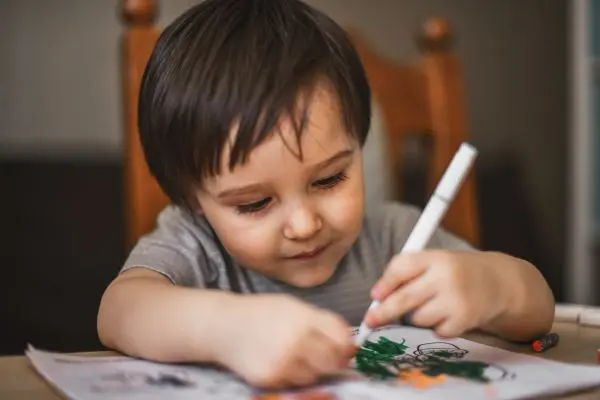
If I reduce my child’s use of offensive language, I must develop an alternative, positive behavior. You cannot simply tell your child to stop using offensive words without giving them positive words to use instead. For example, if you say, “Do not draw on the wall,” you should provide an alternative by giving the child drawing boards. You should not prevent a behavior without offering an alternative, because the child will automatically return to the original behavior. Parents must understand the idea of substitution: replacing one thing with another.
3. Do not let things build up.
This means not accumulating behaviors. Do not store up a child’s behaviors and then explode at or hit the child over a small mistake. Likewise, do not give excessive reinforcement for one small positive action because the child will not remember having performed several positive behaviors before it. We try to respond to each behavior separately. If the child behaves positively, give them a positive response proportionate to that behavior—neither excessive nor insufficient, and not greater than the behavior itself. The child should understand why they are being reinforced, because otherwise they may not connect the reinforcement with the behavior. Whether the behavior is simple or not, explain the reason for the reinforcement.
4. Separate loving the child from approving of their behavior.
You should not tell a child that you do not love them because of a particular behavior. The child does not understand the idea of separating themselves from their behavior. If you say you do not love the child because of a particular behavior, the child will think you will never love them. Parents must separate the behavior from the child’s character. For example, tell the child, “I do not like your behavior, but I love you,” or, “I do not like you damaging your toys or hitting your brother.” These things can affect the child’s psychological well-being and willingness to change their behavior. If you tell a child you do not love them, they will begin to believe it. This idea is dangerous for the child, so you must separate the child from the behavior.
Goals of behavior modification
Each behavior modification goal has its own method, including:
Reinforcing a desirable behavior: First, we use reinforcement. Reinforcers must be appropriate for the child and motivating to them. At first, reinforcement should be continuous, then become intermittent so the child does not grow accustomed to being rewarded every time the behavior occurs. Reinforcement should also be immediate because the child may otherwise fail to connect it with the behavior. Parents can help the child understand that performing well at school and achieving a high academic result, for example, will earn a reward. This can motivate the child to work hard and study to receive the reward. The benefit of this method is that parents do not have to bring their children a gift and reinforce them every time. Instead, they can use tokens as reinforcement after each completed stage, according to what the parents and child have agreed.
Eliminating an undesirable behavior:This can be done through first-degree punishment, or positive punishment, such as requiring the child to do something they dislike. If the child does not enjoy a particular activity, for example, make them do it. The child must understand that this is punishment for a behavior they committed, not because you do not love them. Alternatively, second-degree punishment, or negative punishment, involves taking away something the child likes or preventing the child from doing an activity they want and enjoy.
Behavior modification methods for children
Response cost:This means making the child repair what they damaged. For example, if the child breaks something, have them gather it up and put it in the trash.
Overcorrection:This means making the child repair more than they damaged. For example, if the child writes on one edge of a wall, have them clean the entire wall, repairing more than they damaged.
Negative practice:This means making a period of punishment or deprivation last a long time. Parents should try to avoid it because it carries risks. It involves bringing the child to the point of satiation so that they come to dislike the behavior. This method is usually used with smokers to help them quit smoking, but parents should try to avoid this approach and not use it.
Aversion:Parents often use this for thumb-sucking behavior by applying a substance that makes the child dislike sucking their thumb. This carries risks, so no substance that is harmful or painful to the child should be used. A child must not be harmed under the pretext of modifying their behavior. Safe products that help create aversion are available in pharmacies.
Behavior shaping:This means teaching the child a particular behavior by explaining it and dividing it into short, simple parts or skills. In this way, I shape the behavior safely and connect it with efforts to reinforce the child. Every time the child learns a skill, I reinforce it positively and repeatedly. The child’s age and the period in which I want to teach the child must be considered, even if it is a self-care behavior or a simple behavior for children. Whatever the behavior, I must use simple skills and divide larger skills into parts. For example, when teaching a child to wash their hands, first teach them how to turn on the tap, then how to put soap on their hands, and continue in this way until they learn how to wash their hands.
Modeling:This means performing the behavior in front of the child more than once until the child reaches the required level and the adult becomes a model for them. Any modification of a child’s behavior requires a sequence and the development of an additional skill. We must prepare the child for that skill and make sure the child is consistent with the behavior currently being addressed. The skill must be appropriate for the child’s age. Modeling must also be maintained in sequence, along with the idea of retrieval: teaching the child something, reinforcing something in the child, or punishing the child for something after a certain period.
You may notice that the old behavior has returned. If the parents return to punishment or previous parenting mistakes, the child will return to the earlier behavior. Parents must be prepared to use behavior modification methods so that the child becomes accustomed to using the positive behavior or stopping the negative one. Parents must also recognize that their children’s generation differs from the previous generation, so they need to learn about the things specific to their children. This will allow them to learn how to manage those things and modify their children’s behavior toward them. In relation to technology, parents can reduce, increase, shape, and sequence their child’s behaviors when dealing with a complex world.
Content writer and researcher at Tatmeen, writing in Arabic and English about mental health and everyday life, from relationships and stress to work, habits, and family.
Every Tatmeen article is reviewed by care providers licensed by the Saudi Commission for Health Specialties, so what you read is accurate and trustworthy.
This article builds understanding and does not replace a licensed care provider.
Need someone to talk to?
Tatmeen's licensed care providers are available around the clock, and the app's urgent consultation connects you with one within minutes.
Download Tatmeen to explore care providers and booking options.
Smart matchingFour quick questions suggest the right care provider
Urgent consultationTalk to an available care provider within minutes
Free psychological measuresMore than 20 tests to understand how you are doing
Scan to download
{"data":{"id":"df86d3e4-a549-41ae-86fb-acaa677893d6","slug":"childrens-behavior","arTitle":"سلوك الأطفال - كيف اعرف أن طفلي يحتاج لتعديل سلوك ؟","enTitle":"Children’s Behavior: Does My Child Need Behavior Modification?","thumbnailAltText":"Child frowning with arms crossed against a white background","estimatedReadingTime":5,"likesCount":999,"writer":{"id":"d3defdb6-4a23-4b03-aad9-a1ecc054aae5","arBio":"كاتب وباحث محتوى في تطمين، يكتب بالعربية والإنجليزية عن الصحة النفسية والحياة اليومية، من العلاقات والضغوط إلى العمل والعادات والأسرة.\n","enBio":"Content writer and researcher at Tatmeen, writing in Arabic and English about mental health and everyday life, from relationships and stress to work, habits, and family.","user":{"slug":"fahad-almalik","arFullName":"فهد المالك","enFullName":"Fahad Almalik","publicProfileImageUrl":"https://cdn.tatmeen.sa/public/profile-images/a34c8028-5847-45de-ab83-a014942bb7d3/675415e988c16442a04af5d3b8899242613a955c44e0364314cc3ff74cbad082.webp","publicProfileImage96Url":"https://cdn.tatmeen.sa/public/profile-images/a34c8028-5847-45de-ab83-a014942bb7d3/675415e988c16442a04af5d3b8899242613a955c44e0364314cc3ff74cbad082-w96.webp","publicProfileImage192Url":"https://cdn.tatmeen.sa/public/profile-images/a34c8028-5847-45de-ab83-a014942bb7d3/675415e988c16442a04af5d3b8899242613a955c44e0364314cc3ff74cbad082-w192.webp"}},"arContent":"","enContent":"","productionDocument":{"headings":[{"id":"article-section-how-do-i-know-whether-my-child-needs-behavior-modification","text":"How do I know whether my child needs behavior modification?"},{"id":"article-section-what-are-the-steps-for-modifying-children-s-behavior","text":"What are the steps for modifying children’s behavior?"},{"id":"article-section-goals-of-behavior-modification","text":"Goals of behavior modification"},{"id":"article-section-behavior-modification-methods-for-children","text":"Behavior modification methods for children"}],"faqs":[],"beforeSourcesHtml":"","sources":[],"afterSourcesHtml":"","blocks":[{"type":"html","html":"<p class=\"ql-align-right ql-direction-rtl\">Behavior includes everything a person says or does, as well as reactions and physiological arousal. Behavior modification, however, is concerned with voluntary actions that a person can control. The science of behavior modification focuses on improving and regulating people’s behaviors. Its goal is to add a desirable behavior, eliminate an undesirable behavior, or shape a new behavior. In other words, it involves training a child in a new behavior or gradually developing an existing one by adding new skills.</p><h2 class=\"ql-align-right ql-direction-rtl\" id=\"article-section-how-do-i-know-whether-my-child-needs-behavior-modification\" data-toc-heading tabindex=\"-1\"><span id=\"how-do-i-know-whether-my-child-needs-behavior-modification-1\" aria-hidden=\"true\"></span><strong>How do I know whether my child needs behavior modification?</strong></h2><p class=\"ql-align-right ql-direction-rtl\">Scientists have identified a set of indicators for determining whether a child’s behavior is typical or has some kind of problem—that is, whether it is atypical. These include:</p><ol><li class=\"ql-align-right ql-direction-rtl\"><strong>Duration:</strong>This refers to how long the behavior lasts and whether it continues for longer or shorter than the normal range. If it lasts longer or less time than expected, this indicates a problem and a need for behavior modification. For example, children are known to start crying when they want something, and if they do not get what they want, they stop after a while. But when children continue crying or use and repeat certain words in an unusual way, this can indicate a problem.</li><li class=\"ql-align-right ql-direction-rtl\"><strong>Setting:</strong>Where does this behavior occur? Some behavior may be acceptable at home but unacceptable in the street, while certain behaviors are acceptable at school and others are not. In this way, the setting helps determine whether the behavior is typical.</li><li class=\"ql-align-right ql-direction-rtl\"><strong>Social acceptability:</strong>Is the behavior socially acceptable or unacceptable? This naturally depends on each society and culture. For example, some societies reject eating with the hand, while others encourage it. We therefore judge a child’s behavior within the society in which the child lives.</li><li class=\"ql-align-right ql-direction-rtl\"><strong>Frequency of the behavior:</strong>This means how many times the behavior occurs within an hour or a day, so I can determine whether there is a problem. Frequency must also be considered in relation to the child’s age.</li><li class=\"ql-align-right ql-direction-rtl\"><strong>Latency:</strong>This is the period between a stimulus and the behavior. The stimulus provides preceding cues that lead to the behavior. For example, if you call a child, the child should respond within ten seconds. If the child hears you but takes a long time and does not respond, there may be a problem. This differs from duration, which refers to how long the behavior itself lasts. Eating, for example, takes a certain amount of time for a child. Taking longer may be an early indication of a problem, while taking less than the usual eating time may also signal a problem. Latency, by contrast, is the period between the appearance of the stimulus—the initial cue for the behavior—and the behavior itself.</li></ol><h2 class=\"ql-align-right ql-direction-rtl\" id=\"article-section-what-are-the-steps-for-modifying-children-s-behavior\" data-toc-heading tabindex=\"-1\"><span id=\"what-are-the-steps-for-modifying-children-s-behavior-2\" aria-hidden=\"true\"></span><strong>What are the steps for modifying children’s behavior?</strong></h2><p class=\"ql-align-right ql-direction-rtl\">There are several points we need to consider when modifying a child’s behavior. Some people cannot visit<a style=\"background-color:transparent\" href=\"https://www.hakini.net/\" target=\"_blank\" rel=\"noopener noreferrer\">specialists</a>, so we will offer you some steps that may help you modify your children’s behavior, including:</p><p class=\"ql-align-right ql-direction-rtl\"><strong>1. The child’s age</strong>.</p><p class=\"ql-align-right ql-direction-rtl\">The child’s age must be considered to determine whether the behavior is normal for that developmental stage. For example, some parents have a four-year-old who tells them about events that did not happen, but this is not considered lying. Between the ages of four and five, a child’s developmental stage nurtures the imagination, so the child describes things that did not happen from either the parents’ or the child’s perspective. The child is expressing a developing imagination through what is called imaginative play, which is positive and consistent with this age.</p><p class=\"ql-align-right ql-direction-rtl\">Another age-related example is involuntary urination. If the child is two years old, this is not considered a problem because the child is new to using the bathroom. But if the child reaches the age of four and still urinates involuntarily, there is a problem and the parents should consult a doctor for treatment. It is therefore important to consider the characteristics of a child’s development. Many books discuss child development and can be useful to parents. Another example is that adolescent girls may be closer to their fathers than to their mothers. A mother may think this is because her daughter hates her, but this is not true. It is a characteristic of their age, and the girl has an emotional need that should be met.</p><p class=\"ql-align-right ql-direction-rtl\">2. <strong>Replacing the behavior</strong>.</p><p class=\"ql-align-right ql-direction-rtl\">If I reduce my child’s use of offensive language, I must develop an alternative, positive behavior. You cannot simply tell your child to stop using offensive words without giving them positive words to use instead. For example, if you say, “Do not draw on the wall,” you should provide an alternative by giving the child drawing boards. You should not prevent a behavior without offering an alternative, because the child will automatically return to the original behavior. Parents must understand the idea of substitution: replacing one thing with another.</p><p class=\"ql-align-right ql-direction-rtl\">3. <strong>Do not let things build up</strong>.</p><p class=\"ql-align-right ql-direction-rtl\">This means not accumulating behaviors. Do not store up a child’s behaviors and then explode at or hit the child over a small mistake. Likewise, do not give excessive reinforcement for one small positive action because the child will not remember having performed several positive behaviors before it. We try to respond to each behavior separately. If the child behaves positively, give them a positive response proportionate to that behavior—neither excessive nor insufficient, and not greater than the behavior itself. The child should understand why they are being reinforced, because otherwise they may not connect the reinforcement with the behavior. Whether the behavior is simple or not, explain the reason for the reinforcement.</p><p class=\"ql-align-right ql-direction-rtl\">4. <strong>Separate loving the child from approving of their behavior.</strong></p><p class=\"ql-align-right ql-direction-rtl\">You should not tell a child that you do not love them because of a particular behavior. The child does not understand the idea of separating themselves from their behavior. If you say you do not love the child because of a particular behavior, the child will think you will never love them. Parents must separate the behavior from the child’s character. For example, tell the child, “I do not like your behavior, but I love you,” or, “I do not like you damaging your toys or hitting your brother.” These things can affect the child’s psychological well-being and willingness to change their behavior. If you tell a child you do not love them, they will begin to believe it. This idea is dangerous for the child, so you must separate the child from the behavior.</p><h2 class=\"ql-align-right ql-direction-rtl\" id=\"article-section-goals-of-behavior-modification\" data-toc-heading tabindex=\"-1\"><span id=\"goals-of-behavior-modification-3\" aria-hidden=\"true\"></span><strong>Goals of behavior modification</strong></h2><p class=\"ql-align-right ql-direction-rtl\">Each behavior modification goal has its own method, including:</p><ol><li class=\"ql-align-right ql-direction-rtl\"><strong>Reinforcing a desirable behavior</strong>: First, we use reinforcement. Reinforcers must be appropriate for the child and motivating to them. At first, reinforcement should be continuous, then become intermittent so the child does not grow accustomed to being rewarded every time the behavior occurs. Reinforcement should also be immediate because the child may otherwise fail to connect it with the behavior. Parents can help the child understand that performing well at school and achieving a high academic result, for example, will earn a reward. This can motivate the child to work hard and study to receive the reward. The benefit of this method is that parents do not have to bring their children a gift and reinforce them every time. Instead, they can use tokens as reinforcement after each completed stage, according to what the parents and child have agreed.</li><li class=\"ql-align-right ql-direction-rtl\"><strong>Eliminating an undesirable behavior:</strong>This can be done through first-degree punishment, or positive punishment, such as requiring the child to do something they dislike. If the child does not enjoy a particular activity, for example, make them do it. The child must understand that this is punishment for a behavior they committed, not because you do not love them. Alternatively, second-degree punishment, or negative punishment, involves taking away something the child likes or preventing the child from doing an activity they want and enjoy.</li></ol><h2 class=\"ql-align-right ql-direction-rtl\" id=\"article-section-behavior-modification-methods-for-children\" data-toc-heading tabindex=\"-1\"><span id=\"behavior-modification-methods-for-children-4\" aria-hidden=\"true\"></span><strong>Behavior modification methods for children</strong></h2><ol><li class=\"ql-align-right ql-direction-rtl\"><strong>Response cost:</strong>This means making the child repair what they damaged. For example, if the child breaks something, have them gather it up and put it in the trash.</li><li class=\"ql-align-right ql-direction-rtl\"><strong>Overcorrection:</strong>This means making the child repair more than they damaged. For example, if the child writes on one edge of a wall, have them clean the entire wall, repairing more than they damaged.</li><li class=\"ql-align-right ql-direction-rtl\"><strong>Negative practice:</strong>This means making a period of punishment or deprivation last a long time. Parents should try to avoid it because it carries risks. It involves bringing the child to the point of satiation so that they come to dislike the behavior. This method is usually used with smokers to help them quit smoking, but parents should try to avoid this approach and not use it.</li><li class=\"ql-align-right ql-direction-rtl\"><strong>Aversion:</strong>Parents often use this for thumb-sucking behavior by applying a substance that makes the child dislike sucking their thumb. This carries risks, so no substance that is harmful or painful to the child should be used. A child must not be harmed under the pretext of modifying their behavior. Safe products that help create aversion are available in pharmacies.</li><li class=\"ql-align-right ql-direction-rtl\"><strong>Behavior shaping:</strong>This means teaching the child a particular behavior by explaining it and dividing it into short, simple parts or skills. In this way, I shape the behavior safely and connect it with efforts to reinforce the child. Every time the child learns a skill, I reinforce it positively and repeatedly. The child’s age and the period in which I want to teach the child must be considered, even if it is a self-care behavior or a simple behavior for children. Whatever the behavior, I must use simple skills and divide larger skills into parts. For example, when teaching a child to wash their hands, first teach them how to turn on the tap, then how to put soap on their hands, and continue in this way until they learn how to wash their hands.</li><li class=\"ql-align-right ql-direction-rtl\"><strong>Modeling:</strong>This means performing the behavior in front of the child more than once until the child reaches the required level and the adult becomes a model for them. Any modification of a child’s behavior requires a sequence and the development of an additional skill. We must prepare the child for that skill and make sure the child is consistent with the behavior currently being addressed. The skill must be appropriate for the child’s age. Modeling must also be maintained in sequence, along with the idea of retrieval: teaching the child something, reinforcing something in the child, or punishing the child for something after a certain period.</li></ol><p class=\"ql-align-right ql-direction-rtl\">You may notice that the old behavior has returned. If the parents return to punishment or previous parenting mistakes, the child will return to the earlier behavior. Parents must be prepared to use behavior modification methods so that the child becomes accustomed to using the positive behavior or stopping the negative one. Parents must also recognize that their children’s generation differs from the previous generation, so they need to learn about the things specific to their children. This will allow them to learn how to manage those things and modify their children’s behavior toward them. In relation to technology, parents can reduce, increase, shape, and sequence their child’s behaviors when dealing with a complex world.</p><p><br /></p>"}],"inlineCtaSignatures":[],"_experienceAliases":{"v":1,"fields":["html","bodyHtml"]}},"createdAt":"2024-01-02T21:00:00.000Z","updatedAt":"2026-08-11T04:45:02.303Z","disorderGroups":[{"id":"9fbda432-3713-400a-987b-3d56754a113e","slug":"children-and-adolescents","arName":"الأطفال والمراهقين","enName":"Children & Adolescents"}],"reviewer":{"arFullName":"فريق تطمين","enFullName":"Tatmeen team","slug":"tatmeen-team","kind":"organization"},"productionArticle":true,"promotionAllowed":true,"preparedCover":{"src":"https://cdn.tatmeen.sa/public/article-lcp/article-lcp-v2/sha256-1bef17deaab7720d943ff943186ed946d57efaa378efbd835f43c14485fb1667/600-c717cbc23d5b374c9961348676bb741d0b492608c68cebe9ff6661d4bbf05e66.avif","fallback":"https://cdn.tatmeen.sa/public/article-lcp/article-lcp-v2/sha256-1bef17deaab7720d943ff943186ed946d57efaa378efbd835f43c14485fb1667/600-0306b9b3df8dfc146785445bed32253adb16a212c5b2b052cc39dff225b4d47b.webp","directUrl":"https://cdn.tatmeen.sa/blog-cover/1704291450579-%C3%99%C2%83%C3%99%C2%8A%C3%99%C2%81-%C3%98%C2%A7%C3%98%C2%B9%C3%98%C2%B1%C3%99%C2%81-%C3%98%C2%A7%C3%99%C2%94%C3%99%C2%86-%C3%98%C2%B7%C3%99%C2%81%C3%99%C2%84%C3%99%C2%8A-%C3%99%C2%8A%C3%98%C2%AD%C3%98%C2%AA%C3%98%C2%A7%C3%98%C2%AC-%C3%99%C2%84%C3%98%C2%AA%C3%98%C2%B9%C3%98%C2%AF%C3%99%C2%8A%C3%99%C2%84-%C3%98%C2%B3%C3%99%C2%84%C3%99%C2%88%C3%99%C2%83-%C3%98%C2%AA%C3%98%C2%B9%C3%98%C2%AF%C3%99%C2%8A%C3%99%C2%84-%C3%98%C2%A7%C3%99%C2%84%C3%98%C2%B3%C3%99%C2%84%C3%99%C2%88%C3%99%C2%83-%C3%98%C2%A7%C3%99%C2%84%C3%98%C2%A7%C3%99%C2%94%C3%98%C2%B7%C3%99%C2%81-7tzui-600x400.jpeg","isGolden":true,"avifSrcset":"https://cdn.tatmeen.sa/public/article-lcp/article-lcp-v2/sha256-1bef17deaab7720d943ff943186ed946d57efaa378efbd835f43c14485fb1667/400-3d4d406c9c3a36e0c34cf45596a64c8cc8ca390a0e907a232407c8f61a214357.avif 400w, https://cdn.tatmeen.sa/public/article-lcp/article-lcp-v2/sha256-1bef17deaab7720d943ff943186ed946d57efaa378efbd835f43c14485fb1667/600-c717cbc23d5b374c9961348676bb741d0b492608c68cebe9ff6661d4bbf05e66.avif 600w","webpSrcset":"https://cdn.tatmeen.sa/public/article-lcp/article-lcp-v2/sha256-1bef17deaab7720d943ff943186ed946d57efaa378efbd835f43c14485fb1667/400-a365ad718642e29937fca8fa8ec9e25acb4d6d2aa2e213a685025d7d78ee99d8.webp 400w, https://cdn.tatmeen.sa/public/article-lcp/article-lcp-v2/sha256-1bef17deaab7720d943ff943186ed946d57efaa378efbd835f43c14485fb1667/600-0306b9b3df8dfc146785445bed32253adb16a212c5b2b052cc39dff225b4d47b.webp 600w","phoneAvifSrcset":"https://cdn.tatmeen.sa/public/article-lcp/article-lcp-v2/sha256-1bef17deaab7720d943ff943186ed946d57efaa378efbd835f43c14485fb1667/400-3d4d406c9c3a36e0c34cf45596a64c8cc8ca390a0e907a232407c8f61a214357.avif 400w, https://cdn.tatmeen.sa/public/article-lcp/article-lcp-v2/sha256-1bef17deaab7720d943ff943186ed946d57efaa378efbd835f43c14485fb1667/600-c717cbc23d5b374c9961348676bb741d0b492608c68cebe9ff6661d4bbf05e66.avif 600w","phoneWebpSrcset":"https://cdn.tatmeen.sa/public/article-lcp/article-lcp-v2/sha256-1bef17deaab7720d943ff943186ed946d57efaa378efbd835f43c14485fb1667/400-a365ad718642e29937fca8fa8ec9e25acb4d6d2aa2e213a685025d7d78ee99d8.webp 400w, https://cdn.tatmeen.sa/public/article-lcp/article-lcp-v2/sha256-1bef17deaab7720d943ff943186ed946d57efaa378efbd835f43c14485fb1667/600-0306b9b3df8dfc146785445bed32253adb16a212c5b2b052cc39dff225b4d47b.webp 600w","width":600,"height":400},"previewTaxonomy":{"groups":[{"id":"9fbda432-3713-400a-987b-3d56754a113e","slug":"children-and-adolescents","arName":"الأطفال والمراهقين","enName":"Children & Adolescents"}],"topics":[{"id":"aa57ccb9-d146-4629-8aa1-8b6d36c4c9ee","slug":"parenting-skills","arName":"تربية الأطفال","enName":"Parenting Skills","groupSlug":"children-and-adolescents","href":"/blog/category/children-and-adolescents/parenting-skills/"}],"tags":[{"id":"52aa8812-914e-495a-9ed5-13bec6c39a93","slug":"parents-children","arName":"الآباء والأطفال","enName":"Parents & Children"},{"id":"475c9ee4-379d-436c-93ab-4c63916e7197","slug":"self-assessment","arName":"تقييم ذاتي","enName":"Self-Assessment"},{"id":"c2a6e8d3-de9c-435f-8c95-9727e7db14cc","slug":"explainer-awareness","arName":"دليل توعوي / شرح","enName":"Explainer / Awareness Guide"}]},"previewProviderRecommendations":[{"id":"deb6b1c3-c452-46e3-abf0-c2698984c77b","slug":"shereen-seddiq-8815","arFullName":"شيرين صديق","enFullName":"Shereen Seddiq","publicProfileImageUrl":"","publicProfileImage96Url":"","publicProfileImage192Url":"","specialization":{"arName":"أخصائي نفسي","enName":"Psychologist"},"profileImageUrl":"","experienceYears":3,"consultantInfo":{"averageRating":{"average":5},"specialization":{"arGeneralName":"أخصائي نفسي","enGeneralName":"Psychologist"}}},{"id":"2df830a9-3384-4afc-adbd-850f40d60041","slug":"dalya-almodaife-5525","arFullName":"داليا المديفع","enFullName":"Dalya Almodaife","publicProfileImageUrl":"https://cdn.tatmeen.sa/public/profile-images/2df830a9-3384-4afc-adbd-850f40d60041/006e3b825c2c127af38851decd7bb1d320adf5ed1e9e613d0c905a3bd3553cef.webp","publicProfileImage96Url":"https://cdn.tatmeen.sa/public/profile-images/2df830a9-3384-4afc-adbd-850f40d60041/006e3b825c2c127af38851decd7bb1d320adf5ed1e9e613d0c905a3bd3553cef-w96.webp","publicProfileImage192Url":"https://cdn.tatmeen.sa/public/profile-images/2df830a9-3384-4afc-adbd-850f40d60041/006e3b825c2c127af38851decd7bb1d320adf5ed1e9e613d0c905a3bd3553cef-w192.webp","specialization":{"arName":"أخصائي نفسي","enName":"Psychologist"},"profileImageUrl":"https://cdn.tatmeen.sa/public/profile-images/2df830a9-3384-4afc-adbd-850f40d60041/006e3b825c2c127af38851decd7bb1d320adf5ed1e9e613d0c905a3bd3553cef-w192.webp","experienceYears":3,"consultantInfo":{"averageRating":{"average":5},"specialization":{"arGeneralName":"أخصائي نفسي","enGeneralName":"Psychologist"}}},{"id":"1c342b76-4e9d-4a37-a0db-5bbc9f378893","slug":"rana-habani-3055","arFullName":"رنا حباني","enFullName":"Rana Habani","publicProfileImageUrl":"https://cdn.tatmeen.sa/public/profile-images/1c342b76-4e9d-4a37-a0db-5bbc9f378893/fb6066962c7f406410ec0879fe059fbd48fe77f1eaca4086754969447f278259.webp","publicProfileImage96Url":"https://cdn.tatmeen.sa/public/profile-images/1c342b76-4e9d-4a37-a0db-5bbc9f378893/fb6066962c7f406410ec0879fe059fbd48fe77f1eaca4086754969447f278259-w96.webp","publicProfileImage192Url":"https://cdn.tatmeen.sa/public/profile-images/1c342b76-4e9d-4a37-a0db-5bbc9f378893/fb6066962c7f406410ec0879fe059fbd48fe77f1eaca4086754969447f278259-w192.webp","specialization":{"arName":"أخصائي نفسي","enName":"Psychologist"},"profileImageUrl":"https://cdn.tatmeen.sa/public/profile-images/1c342b76-4e9d-4a37-a0db-5bbc9f378893/fb6066962c7f406410ec0879fe059fbd48fe77f1eaca4086754969447f278259-w192.webp","experienceYears":3,"consultantInfo":{"averageRating":{"average":0},"specialization":{"arGeneralName":"أخصائي نفسي","enGeneralName":"Psychologist"}}}],"previewCareProviders":[{"id":"09364052-c2a9-4c52-9717-7ce2093b8d0a","slug":"kholoud-alharbi-5221","arFullName":"خلود الحربي","enFullName":"Kholoud Alharbi","publicProfileImageUrl":"https://cdn.tatmeen.sa/public/profile-images/09364052-c2a9-4c52-9717-7ce2093b8d0a/4a0aeb81619e351b77f4323e3605a0a00acc7ca3c82ee7cc5ca2c9e8ef716049.webp","publicProfileImage96Url":"https://cdn.tatmeen.sa/public/profile-images/09364052-c2a9-4c52-9717-7ce2093b8d0a/4a0aeb81619e351b77f4323e3605a0a00acc7ca3c82ee7cc5ca2c9e8ef716049-w96.webp","publicProfileImage192Url":"https://cdn.tatmeen.sa/public/profile-images/09364052-c2a9-4c52-9717-7ce2093b8d0a/4a0aeb81619e351b77f4323e3605a0a00acc7ca3c82ee7cc5ca2c9e8ef716049-w192.webp","gender":"FEMALE","specialization":{"arName":"أخصائي نفسي","enName":"Psychologist"}},{"id":"6f037535-1dca-4b50-a8b2-5974b7323286","slug":"salah-althobaiti-9053","arFullName":"صلاح الثبيتي","enFullName":"Salah Althobaiti","publicProfileImageUrl":"https://cdn.tatmeen.sa/public/profile-images/6f037535-1dca-4b50-a8b2-5974b7323286/35b6bd7fad9b1e004c1835803eb9c1b56dcacd380685ec8bff141f0fb888005c.webp","publicProfileImage96Url":"https://cdn.tatmeen.sa/public/profile-images/6f037535-1dca-4b50-a8b2-5974b7323286/35b6bd7fad9b1e004c1835803eb9c1b56dcacd380685ec8bff141f0fb888005c-w96.webp","publicProfileImage192Url":"https://cdn.tatmeen.sa/public/profile-images/6f037535-1dca-4b50-a8b2-5974b7323286/35b6bd7fad9b1e004c1835803eb9c1b56dcacd380685ec8bff141f0fb888005c-w192.webp","gender":"MALE","specialization":{"arName":"أخصائي نفسي","enName":"Psychologist"}},{"id":"3cc806e8-616b-4884-9f21-a75b378580a2","slug":"aisha-al-hashim-8667","arFullName":"عائشة ال هاشم","enFullName":"Aisha Al Hashim","publicProfileImageUrl":"https://cdn.tatmeen.sa/public/profile-images/3cc806e8-616b-4884-9f21-a75b378580a2/27f523d03be4dcfa1f6a79f70c1773887434e698990d214cd990caec56a44798.webp","publicProfileImage96Url":"https://cdn.tatmeen.sa/public/profile-images/3cc806e8-616b-4884-9f21-a75b378580a2/27f523d03be4dcfa1f6a79f70c1773887434e698990d214cd990caec56a44798-w96.webp","publicProfileImage192Url":"https://cdn.tatmeen.sa/public/profile-images/3cc806e8-616b-4884-9f21-a75b378580a2/27f523d03be4dcfa1f6a79f70c1773887434e698990d214cd990caec56a44798-w192.webp","gender":"FEMALE","specialization":{"arName":"أخصائي نفسي","enName":"Psychologist"}},{"id":"db2ce1a0-9325-4471-b7ce-eb2e811c30a3","slug":"amer-qutub-2441","arFullName":"عامر قطب","enFullName":"Amer Qutub","publicProfileImageUrl":"https://cdn.tatmeen.sa/public/profile-images/db2ce1a0-9325-4471-b7ce-eb2e811c30a3/80580f99bfd7fe2b2a9cf8eed73ab532f5086d1efe053b0aa57358c1ce004261.webp","publicProfileImage96Url":"https://cdn.tatmeen.sa/public/profile-images/db2ce1a0-9325-4471-b7ce-eb2e811c30a3/80580f99bfd7fe2b2a9cf8eed73ab532f5086d1efe053b0aa57358c1ce004261-w96.webp","publicProfileImage192Url":"https://cdn.tatmeen.sa/public/profile-images/db2ce1a0-9325-4471-b7ce-eb2e811c30a3/80580f99bfd7fe2b2a9cf8eed73ab532f5086d1efe053b0aa57358c1ce004261-w192.webp","gender":"MALE","specialization":{"arName":"أخصائي نفسي","enName":"Psychologist"}},{"id":"94765496-dbdf-4631-a01b-7df5f788668d","slug":"abdullrahman-alhamoudi-3045","arFullName":"عبدالرحمن الحمودي","enFullName":"Abdulrahman Alhamoudi","publicProfileImageUrl":"https://cdn.tatmeen.sa/public/profile-images/94765496-dbdf-4631-a01b-7df5f788668d/2d49f6b6493c564afb6f50b6c3634231dff3a5cf8353acfab393d1b2a88037d1.webp","publicProfileImage96Url":"https://cdn.tatmeen.sa/public/profile-images/94765496-dbdf-4631-a01b-7df5f788668d/2d49f6b6493c564afb6f50b6c3634231dff3a5cf8353acfab393d1b2a88037d1-w96.webp","publicProfileImage192Url":"https://cdn.tatmeen.sa/public/profile-images/94765496-dbdf-4631-a01b-7df5f788668d/2d49f6b6493c564afb6f50b6c3634231dff3a5cf8353acfab393d1b2a88037d1-w192.webp","gender":"MALE","specialization":{"arName":"أخصائي نفسي","enName":"Psychologist"}},{"id":"618dba89-5b70-4b46-8304-741b7ac8ecd3","slug":"abdullah-mari-1311","arFullName":"عبدالله مرعي","enFullName":"Abdullah Mari","publicProfileImageUrl":"https://cdn.tatmeen.sa/public/profile-images/618dba89-5b70-4b46-8304-741b7ac8ecd3/6b4a3bfb59f8a304ca79083b32859b46baad2e1d692974a47c02c1f66bd11129.webp","publicProfileImage96Url":"https://cdn.tatmeen.sa/public/profile-images/618dba89-5b70-4b46-8304-741b7ac8ecd3/6b4a3bfb59f8a304ca79083b32859b46baad2e1d692974a47c02c1f66bd11129-w96.webp","publicProfileImage192Url":"https://cdn.tatmeen.sa/public/profile-images/618dba89-5b70-4b46-8304-741b7ac8ecd3/6b4a3bfb59f8a304ca79083b32859b46baad2e1d692974a47c02c1f66bd11129-w192.webp","gender":"MALE","specialization":{"arName":"أخصائي نفسي","enName":"Psychologist"}},{"id":"d8fb937b-ad65-4b6f-a65b-276ad8258fed","slug":"azza-alharbi-7286","arFullName":"عزه الحربي","enFullName":"Azza Alharbi","publicProfileImageUrl":"https://cdn.tatmeen.sa/public/profile-images/d8fb937b-ad65-4b6f-a65b-276ad8258fed/378a8ab30f4087833263c41fb2c3102028cbe6bb9655172d7b3439ee1d6b0800.webp","publicProfileImage96Url":"https://cdn.tatmeen.sa/public/profile-images/d8fb937b-ad65-4b6f-a65b-276ad8258fed/378a8ab30f4087833263c41fb2c3102028cbe6bb9655172d7b3439ee1d6b0800-w96.webp","publicProfileImage192Url":"https://cdn.tatmeen.sa/public/profile-images/d8fb937b-ad65-4b6f-a65b-276ad8258fed/378a8ab30f4087833263c41fb2c3102028cbe6bb9655172d7b3439ee1d6b0800-w192.webp","gender":"FEMALE","specialization":{"arName":"أخصائي نفسي","enName":"Psychologist"}},{"id":"d4ffcb6b-90a7-45b6-b941-964866f4564b","slug":"dhaifallah-alhumaidi-1092","arFullName":"ضيف الله الحميدي","enFullName":"Dhaifallah Alhumaidi","publicProfileImageUrl":"https://cdn.tatmeen.sa/public/profile-images/d4ffcb6b-90a7-45b6-b941-964866f4564b/1817171c5828a9b57d6c30d12332cf154e335272548bc90a6e8456d74d356956.webp","publicProfileImage96Url":"https://cdn.tatmeen.sa/public/profile-images/d4ffcb6b-90a7-45b6-b941-964866f4564b/1817171c5828a9b57d6c30d12332cf154e335272548bc90a6e8456d74d356956-w96.webp","publicProfileImage192Url":"https://cdn.tatmeen.sa/public/profile-images/d4ffcb6b-90a7-45b6-b941-964866f4564b/1817171c5828a9b57d6c30d12332cf154e335272548bc90a6e8456d74d356956-w192.webp","gender":"MALE","specialization":{"arName":"أخصائي نفسي","enName":"Psychologist"}}],"previewDownload":{"href":"/download","title":{"ar":"خطوة واحدة لأجلك، ابدأ الآن","en":"One step for you, start now"},"description":{"ar":"حمّل تطبيق تطمين لاستكشاف مقدمي الرعاية وخيارات الحجز.","en":"Download Tatmeen to explore care providers and booking options."},"posterSrc":"/images/home/cta-ar-new-1.webp","videoSrc":"/images/home/cta-ar-new-1.mp4","videoPosterSrc":"/images/home/cta-ar-new-1.webp","videoPosterEnSrc":"/images/home/cta-en-new-1.webp","videoType":"video/mp4","appStoreHref":"https://apps.apple.com/us/app/tatmeen-%D8%AA%D8%B7%D9%85%D9%8A%D9%86/id6473836983","googlePlayHref":"https://play.google.com/store/apps/details?id=com.TatmeenApp.user&hl=en"},"previewRelatedArticles":[{"id":"1ab2549b-990a-4b2d-accb-6c37afe6d7fb","slug":"Why-do-children-draw","route":"/blog/Why-do-children-draw/","title":{"ar":"رسم الاطفال: لماذا يرسم الطفل؟","en":"Why Do Children Draw?"},"image":"https://cdn.tatmeen.sa/public/article-lcp/article-lcp-v2/sha256-249be2b864cea065f6926396670e2141d782a935d39d0fd82cef9a23c564f644/600-9aa24ebeaef261bb00af3e1851ad84f1bf6bf4a58b4975332bf72e1cea5049b4.webp","directImageFallback":"https://cdn.tatmeen.sa/blog-cover/1704643107139-Tatmeen-img-261","arThumbnailAltText":"Child drawing on paper with a marker at a table","thumbnailAltText":"Child drawing on paper with a marker at a table","topic":{"label":{"ar":"الأطفال والمراهقين","en":"Children & Adolescents"}},"readingTimeMinutes":5},{"id":"83c89c14-8982-408f-aa70-2e75aea60639","slug":"The-parent-child-relationship","route":"/blog/The-parent-child-relationship/","title":{"ar":"العلاقة بين الوالدين والطفل - ما تأثيرها على العلاقة الزوجية","en":"How Parent-Child Relationships Shape Adult Marriage"},"image":"https://cdn.tatmeen.sa/public/article-lcp/article-lcp-v2/sha256-68173fcd57ef7986b63405add3ccb359685581eca8f0ec19f2b1d2b53560ef7c/600-949699ef85057f63ff97223413dce88ea91445ec41ddf9d8b41ef3515da13cc7.webp","directImageFallback":"https://cdn.tatmeen.sa/blog-cover/1704643655055-Tatmeen-img-504","arThumbnailAltText":"A person holds their head while another gestures behind them on a sidewalk","thumbnailAltText":"A person holds their head while another gestures behind them on a sidewalk","topic":{"label":{"ar":"الأطفال والمراهقين","en":"Children & Adolescents"}},"readingTimeMinutes":5},{"id":"2fe37459-13d9-4c16-828a-18e51fe3c4ef","slug":"how-daily-choices-shape-childrens-future","route":"/blog/how-daily-choices-shape-childrens-future/","title":{"ar":"كيف تؤثّر اختياراتنا اليومية في تشكيل مستقبل أطفالنا؟","en":"How Do Our Daily Choices Shape Our Children's Future?"},"image":"https://cdn.tatmeen.sa/public/article-lcp/article-lcp-v2/sha256-568eae264308101fa05ae53ca88ca167d098d7d441200b742cf74d57eaaca351/800-9ba013745a5dbfa2dacb87ee8d625c1acf85085aa08b95f9352405902de0164c.webp","directImageFallback":"https://cdn.tatmeen.sa/blog-cover/Tatmeen-1776961380392.webp","arThumbnailAltText":"كيف تؤثر اختياراتنا اليومية في تشكيل مستقبل أطفالنا وتربيتهم","thumbnailAltText":"كيف تؤثر اختياراتنا اليومية في تشكيل مستقبل أطفالنا وتربيتهم","topic":{"label":{"ar":"الأطفال والمراهقين","en":"Children & Adolescents"}},"readingTimeMinutes":5},{"id":"ff0658d4-bbb1-4d9e-8c7e-749fb070ad14","slug":"Early-sexual-education-for-children","route":"/blog/Early-sexual-education-for-children/","title":{"ar":"التربية الجنسية المبكرة للأطفال","en":"Early Sex Education for Children"},"image":"https://cdn.tatmeen.sa/public/article-lcp/article-lcp-v2/sha256-20e86401fdeaabf72275df1e06d8d762fdbdf010d17f839163d97bd06d4ee646/600-39d4809de68100449b24f2c4e9035a0b7303c9040ec86e9ea70b442460905359.webp","directImageFallback":"https://cdn.tatmeen.sa/blog-cover/1704632203533-%C3%98%C2%A7%C3%99%C2%84%C3%98%C2%AA%C3%98%C2%B1%C3%98%C2%A8%C3%99%C2%8A%C3%98%C2%A9-%C3%98%C2%A7%C3%99%C2%84%C3%98%C2%AC%C3%99%C2%86%C3%98%C2%B3%C3%99%C2%8A%C3%98%C2%A9-%C3%98%C2%A7%C3%99%C2%84%C3%99%C2%85%C3%98%C2%A8%C3%99%C2%83%C3%98%C2%B1%C3%98%C2%A9-%C3%99%C2%84%C3%99%C2%84%C3%98%C2%A7%C3%99%C2%94%C3%98%C2%B7%C3%99%C2%81%C3%98%C2%A7%C3%99%C2%84-600x400.jpeg","arThumbnailAltText":"Open book with male and female symbols, three small figures, a condom wrapper and pill pack","thumbnailAltText":"Open book with male and female symbols, three small figures, a condom wrapper and pill pack","topic":{"label":{"ar":"الأطفال والمراهقين","en":"Children & Adolescents"}},"readingTimeMinutes":5}],"previewRelatedReadStates":{}},"locale":"en","device":"desktop","path":"/en/blog/childrens-behavior/","readingControls":false,"config":{"public":{"BUCKET_URL":"https://cdn.tatmeen.sa/","APP_BASE_URL":"https://tatmeen.sa","intercomAppId":"ppcnu9e3"}}}