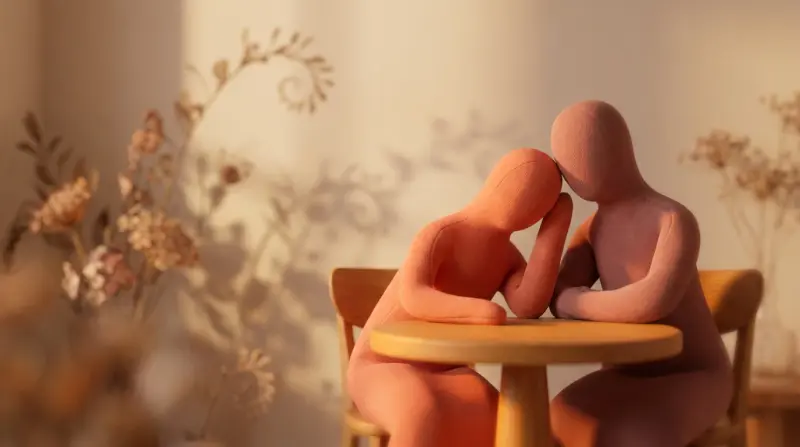
From a philosophical and psychological perspective, Alain de Botton believes that our view of marriage must change to take new dimensions into account, with the aim of experiencing a happy marriage.
(The full text has been translated as written. In the section on marital infidelity, the author discusses the subject from a psychological perspective on human behavior, without framing it culturally or religiously.)
It once depended on achieving certain financial and social goals: owning a home in your name, obtaining a collection of certificates, and owning a few head of cattle and a plot of land.
Under the influence of romantic ideology, however, this kind of marriage came to be seen as greedy and materialistic, shifting the focus toward feelings. It became widely believed that having the right feeling was extremely important and the ideal sign of a good marriage. The right feelings included sensing that the other person was “the one,” that you understood each other perfectly, and that neither of you would ever consider being unfaithful with someone else.
Although compelling, this idea has proved a reliable recipe for the eventual breakdown of a marriage—and has devastated the emotional lives of millions of supposedly sensible and kind couples.
As an alternative to these two approaches, we propose below a completely different and more classical set of principles showing when two people can consider themselves truly ready for marriage.
We are ready for marriage...
1. When we give up idealism
We must not merely accept, in general, that the person we marry is far from perfect. We must understand the particular ways in which they fall short: how they will be irritating, difficult to deal with, sometimes irrational, and often unable to empathize with or understand us. Marriage vows should be rewritten to include this brief line: “I agree to marry this person even though they will continually drive me mad.”
Yet these flaws should not be interpreted as merely evidence of a problem unique to this person. No one else would be better. We are all just as bad. We are a flawed species. Whoever we are with will be profoundly imperfect in significant ways. We must abandon the idea that things could be perfect with any creature in this galaxy. There can only ever be a “good enough” marriage.
To understand this truth, it helps to have had some relationships before marriage—not for the chance to find “the one,” but for ample opportunity to discover firsthand, and in different circumstances, that everyone, even the most exciting prospect at first, will prove somewhat unsuitable as we grow closer to them.
2. When we give up hope of being understood
Love begins with the experience of being understood deeply and exceptionally. They understand those lonely parts of you; you do not have to explain why you found a particular joke funny; you hate the same people; and they also want to try a particular intimate scenario.
This will not last. Another marriage vow should be: “However well the other person understands me, there will always be vast areas of my soul that remain unintelligible to them, to anyone else, and even to me.”
We should therefore not accuse our partner of neglecting a duty when they fail to interpret and understand our inner world. It does not mean they are inept. They simply could not grasp our past and our needs—which is entirely normal. No one can properly understand or fully empathize with anyone else.
3. When we realize that we are mad
This is almost impossible to grasp. We seem like normal and mostly good people.
It is other people...
But maturity is built on a renewed awareness of one’s own foolishness. A person may be out of control for long periods, fail to move beyond their past, make futile plans, and worry constantly. They may, to put it mildly, be a fool.
If we are not regularly and deeply embarrassed by ourselves, it is only because we have a dangerously selective memory.
4. When we are more prepared to love than to be loved
We speak of “love” as if it were one thing, rather than distinguishing between two completely different experiences that share the same name: being loved and loving. We should marry when we are ready to do the latter and aware of our unnatural, immature desire for the former.
“Being loved” is the first kind of love we encounter. It then becomes—quite wrongly—the norm. To a child, it seems as though a parent is automatically ready to soothe, guide, entertain, feed, clean, and remain endlessly tender and cheerful. Parents do not reveal how often they have stopped themselves from speaking, fought back tears, or been too exhausted to change their clothes after a day of caring for children. The relationship is not reciprocal at all. Parents love, but they do not expect the favor to be returned in any meaningful way. A parent is not upset when the child fails to notice a new haircut, ask thoughtful questions about a work meeting, or suggest that they take a nap. Parent and child may both “love,” but each stands at a different end of the spectrum—an arrangement the child does not recognize.
So, in adulthood, when we say that we long for love, what we usually mean is that we want to be loved as a parent once loved us. We want to recreate in adulthood the feeling of being pampered. In a hidden part of our minds, we imagine someone who will understand our needs, give us what we want, be immensely patient and compassionate with us, act devotedly, and fix everything.
This is undoubtedly a disaster. For a marriage to succeed, we must decisively leave the child’s position and move into the parent’s position. We must become someone prepared to postpone their own demands and interests in favor of another person’s needs.
There is another lesson to learn. When a child tells a parent, “I hate you,” the parent does not automatically react in shock or threaten to leave home forever, because the parent knows that the child is not offering the conclusion of careful, considered research into the nature of their relationship. The reasons behind those words may be hunger, a missing piece from an important Lego set, having attended a party the previous night, not being allowed to play a video game, or an earache...
Parents become skilled at not listening to the literal words and hearing instead what the child means but does not yet know how to express: “I am lonely, frightened, or in pain.” It is a need for help emerging unfairly as an outburst against the safest, kindest, and most dependable presence in the child’s world: the parent.
We find it genuinely difficult to take this approach with our partners: listening to what they truly mean instead of responding angrily to what they say.
A third vow should be: “Whenever I have the strength, I will imitate those who loved me and care for my partner as they cared for me. The task is not unfair drudgery or an abandonment of the nature of love. It is the only kind of love worthy of that exalted word.”
5. When we are ready for the work of managing a household
The romantic person views marriage through the lens of feelings. But what a couple creates through their life together closely resembles the way a small business operates. They must prepare task lists, clean, drive, cook, repair, care for others, hire, fire, compromise, and budget.
None of these activities carries any magic or glamour, at least in society’s present form. Those compelled to perform them are most likely to resent them and feel that something has gone wrong in their lives to force them to become involved. Yet these tasks are genuinely the most “romantic,” in the sense that they “support and preserve love.” They should be understood as the cornerstone of a successful marriage and given all the honor and appreciation currently granted to other activities in society, such as mountain climbing or motorcycle racing.
A pivotal vow should be: “I accept the importance of housework.”
6. When we understand that sex and love both do and do not belong together
The romantic perspective expects love and sex to remain aligned. In reality, however, they will not remain so for more than a few months or, at most, a year or two. This is no one’s fault. Because marriage has other central concerns—friendship, management, and another generation—sex will suffer. We are ready for marriage when we accept a substantial degree of “resignation” and practice “sublimation,” meaning the redirection of instinctive energy toward work of social or cultural value.
Both parties must avoid making marriage “about sex.” From the outset, they must also plan for the challenge that, statistically, is most likely to arise: one of them may be unfaithful to the other. A person is ready for marriage when they are prepared to respond maturely to being unfaithful or being betrayed.
The immature view of infidelity is this: sex does not have to be part of love. It can be quick and meaningless, like playing tennis. Two people should not try to own each other’s bodies. It is only a little fun, so the partner should not mind.
But this stubbornly ignores indisputable fundamentals of human nature. No one can experience marital betrayal without feeling that they have been judged fundamentally inadequate and wounded at the core of their being. They will never simply get over it. Of course, this makes no sense, but that is beside the point. Many things about us make no sense—and yet they must be respected. The unfaithful partner must be prepared to respect and forgive their partner’s capacity for intense jealousy. They must also strongly resist the desire to sleep with other people and, if they do act on it, take every possible precaution to keep their partner from finding out. If the truth emerges, they must respond with immense kindness and patience. Above all, they should not try to convince their partner that they should not feel jealous, that jealousy is unnatural, or that it is “bad” and unhelpful.
On the other side of the equation, a person should prepare themselves for being betrayed. This means making an enormous effort to understand what might be going through a partner’s mind while that partner is being unfaithful with someone else. A person is likely to think that there can be no explanation for the betrayal other than a deliberate attempt to humiliate them and that all their partner’s love has evaporated. The more likely truth—that the partner simply wanted more, or something different—is as difficult to accept as learning Chinese or learning to play the flute, and it takes a great deal of practice.
A person is ready for marriage when two very difficult conditions are met: they are prepared to believe in their partner’s genuine capacity to separate love and sex, while also being prepared to believe in their partner’s complete inability to keep love and sex apart.
Both partners must be capable of mastering these two heroic tasks together because, over the course of their life together, they may be called upon to demonstrate both capacities. This—rather than a vow never to sleep with someone else—should be the most important test of marriage.
7. When we are happy to be taught and calm when teaching
We are ready for marriage when we accept that, in some areas, our partner will be wiser, more rational, and more mature than we are. We should want to learn from them. We should tolerate having things explained to us. In important matters, we should regard them as the teacher and ourselves as the student. At the same time, we should be prepared to teach them certain things and, like good teachers, not shout, lose our temper, or expect them simply to know. Marriage should be defined as a process of mutual education.
8. When we realize that we are not all that compatible
The romantic view of marriage insists that the “right” person is someone who generally shares our tastes, interests, and attitudes toward life. This may be true in the short term. In the long term, however, its importance fades considerably because differences inevitably emerge. The person truly suited to us is not someone who shares our tastes, but someone who can discuss differences in taste intelligently and wisely.
Rather than a theoretical idea of perfect complementarity, the ability to accept differences is the true sign of the “right” person. Compatibility is an achievement of love; it should not be a prerequisite for it.
Conclusion
We have accepted that attending certain training courses before having children is a very good idea. This is now standard practice among all educated people in all developed countries.
Yet there is still no widespread acceptance of the idea of attending training courses before marriage. The results are evident all around us.
It is time to abandon the intuitive, romantic view of marriage and learn to practice marriage as we learn to ski or play the violin—activities that are no more complex and no more deserving of systematic periods of instruction.
For now, while the structures for new vows and training courses are being developed, we all deserve extraordinary compassion for our struggles. We are trying to do something extremely difficult without even the minimum necessary support. It is no surprise that we repeatedly encounter problems.
Content writer and researcher at Tatmeen, working on Arabic and English articles across mental health and everyday life topics, including relationships, stress, work, habits, and family.
Every Tatmeen article is reviewed by care providers licensed by the Saudi Commission for Health Specialties, so what you read is accurate and trustworthy.
This article builds understanding and does not replace a licensed care provider.
Need someone to talk to?
Tatmeen's licensed care providers are available around the clock, and the app's urgent consultation connects you with one within minutes.
Download Tatmeen to explore care providers and booking options.
Smart matchingFour quick questions suggest the right care provider
Urgent consultationTalk to an available care provider within minutes
Free psychological measuresMore than 20 tests to understand how you are doing
Scan to download
{"data":{"id":"2b90d3a1-9569-44ca-958f-9b4b3c8ab90f","slug":"are_you_mentally_prepared_for_marriage","arTitle":"هل أنت مستعد نفسيا للزواج؟","enTitle":"Are You Psychologically Ready for Marriage?","thumbnailAltText":"Marry me? traced in wet sand beside foamy seawater","estimatedReadingTime":5,"likesCount":1,"writer":{"id":"f49e2ee4-e68b-4e04-a40b-01d0b0195161","arBio":"كاتب وباحث محتوى في تطمين، يعمل على مقالات عربية وإنجليزية في موضوعات الصحة النفسية والحياة اليومية، مثل العلاقات، الضغوط، العمل، العادات، والأسرة.","enBio":"Content writer and researcher at Tatmeen, working on Arabic and English articles across mental health and everyday life topics, including relationships, stress, work, habits, and family.","user":{"slug":"sultan-almuhasin","arFullName":"سلطان المحيسن","enFullName":"Sultan Almuhasin","publicProfileImageUrl":"https://cdn.tatmeen.sa/public/profile-images/2494102f-7411-4dda-85b1-0c37a1031b3f/c9d25068aaa97c2c1f80123e2d6a27cc7b5a9b1df6a91493df9411b390a60279.webp","publicProfileImage96Url":"https://cdn.tatmeen.sa/public/profile-images/2494102f-7411-4dda-85b1-0c37a1031b3f/c9d25068aaa97c2c1f80123e2d6a27cc7b5a9b1df6a91493df9411b390a60279-w96.webp","publicProfileImage192Url":"https://cdn.tatmeen.sa/public/profile-images/2494102f-7411-4dda-85b1-0c37a1031b3f/c9d25068aaa97c2c1f80123e2d6a27cc7b5a9b1df6a91493df9411b390a60279-w192.webp"}},"arContent":"","enContent":"","productionDocument":{"headings":[],"faqs":[],"beforeSourcesHtml":"","sources":[],"afterSourcesHtml":"","blocks":[{"type":"html","html":"<p class=\"ql-align-right ql-direction-rtl\"><br /></p><p class=\"ql-align-right ql-direction-rtl\"><strong>From a philosophical and psychological perspective, </strong><a style=\"background-color:transparent\" href=\"http://alaindebotton.com/cv/\" target=\"_blank\" rel=\"noopener noreferrer\"><strong>Alain de Botton</strong></a><strong> believes that our view of marriage must change to take new dimensions into account, with the aim of experiencing a happy marriage.</strong></p><p class=\"ql-align-right ql-direction-rtl\"><strong>(The full text has been translated as written. In the section on marital infidelity, the author discusses the subject from a psychological perspective on human behavior, without framing it culturally or religiously.)</strong></p><p class=\"ql-align-right ql-direction-rtl\"> </p><p class=\"ql-align-right ql-direction-rtl\"> </p><p class=\"ql-align-right ql-direction-rtl\">It once depended on achieving certain financial and social goals: owning a home in your name, obtaining a collection of certificates, and owning a few head of cattle and a plot of land.</p><p class=\"ql-align-right ql-direction-rtl\">Under the influence of romantic ideology, however, this kind of marriage came to be seen as greedy and materialistic, shifting the focus toward feelings. It became widely believed that having the right feeling was extremely important and the ideal sign of a good marriage. The right feelings included sensing that the other person was “the one,” that you understood each other perfectly, and that neither of you would ever consider being unfaithful with someone else.</p><p class=\"ql-align-right ql-direction-rtl\">Although compelling, this idea has proved a reliable recipe for the eventual breakdown of a marriage—and has devastated the emotional lives of millions of supposedly sensible and kind couples.</p><p class=\"ql-align-right ql-direction-rtl\">As an alternative to these two approaches, we propose below a completely different and more classical set of principles showing when two people can consider themselves truly ready for marriage.</p><p class=\"ql-align-right ql-direction-rtl\">We are ready for marriage...</p><p class=\"ql-align-right ql-direction-rtl\"> </p><p class=\"ql-align-right ql-direction-rtl\"><strong>1. When we give up idealism</strong></p><p class=\"ql-align-right ql-direction-rtl\"> </p><p class=\"ql-align-right ql-direction-rtl\">We must not merely accept, in general, that the person we marry is far from perfect. We must understand the particular ways in which they fall short: how they will be irritating, difficult to deal with, sometimes irrational, and often unable to empathize with or understand us. Marriage vows should be rewritten to include this brief line: “I agree to marry this person even though they will continually drive me mad.”</p><p class=\"ql-align-right ql-direction-rtl\">Yet these flaws should not be interpreted as merely evidence of a problem unique to this person. No one else would be better. We are all just as bad. We are a flawed species. Whoever we are with will be profoundly imperfect in significant ways. We must abandon the idea that things could be perfect with any creature in this galaxy. There can only ever be a “good enough” marriage.</p><p class=\"ql-align-right ql-direction-rtl\">To understand this truth, it helps to have had some relationships before marriage—not for the chance to find “the one,” but for ample opportunity to discover firsthand, and in different circumstances, that everyone, even the most exciting prospect at first, will prove somewhat unsuitable as we grow closer to them.</p><p class=\"ql-align-right ql-direction-rtl\"> </p><p class=\"ql-align-right ql-direction-rtl\"><strong>2. When we give up hope of being understood</strong></p><p class=\"ql-align-right ql-direction-rtl\"> </p><p class=\"ql-align-right ql-direction-rtl\">Love begins with the experience of being understood deeply and exceptionally. They understand those lonely parts of you; you do not have to explain why you found a particular joke funny; you hate the same people; and they also want to try a particular intimate scenario.</p><p class=\"ql-align-right ql-direction-rtl\">This will not last. Another marriage vow should be: “However well the other person understands me, there will always be vast areas of my soul that remain unintelligible to them, to anyone else, and even to me.”</p><p class=\"ql-align-right ql-direction-rtl\">We should therefore not accuse our partner of neglecting a duty when they fail to interpret and understand our inner world. It does not mean they are inept. They simply could not grasp our past and our needs—which is entirely normal. No one can properly understand or fully empathize with anyone else.</p><p class=\"ql-align-right ql-direction-rtl\"> </p><p class=\"ql-align-right ql-direction-rtl\"><strong>3. When we realize that we are mad</strong></p><p class=\"ql-align-right ql-direction-rtl\"> </p><p class=\"ql-align-right ql-direction-rtl\">This is almost impossible to grasp. We seem like normal and mostly good people.</p><p class=\"ql-align-right ql-direction-rtl\">It is other people...</p><p class=\"ql-align-right ql-direction-rtl\">But maturity is built on a renewed awareness of one’s own foolishness. A person may be out of control for long periods, fail to move beyond their past, make futile plans, and worry constantly. They may, to put it mildly, be a fool.</p><p class=\"ql-align-right ql-direction-rtl\">If we are not regularly and deeply embarrassed by ourselves, it is only because we have a dangerously selective memory.</p><p class=\"ql-align-right ql-direction-rtl\"> </p><p class=\"ql-align-right ql-direction-rtl\"><strong>4. When we are more prepared to love than to be loved</strong></p><p class=\"ql-align-right ql-direction-rtl\"> </p><p class=\"ql-align-right ql-direction-rtl\">We speak of “love” as if it were one thing, rather than distinguishing between two completely different experiences that share the same name: being loved and loving. We should marry when we are ready to do the latter and aware of our unnatural, immature desire for the former.</p><p class=\"ql-align-right ql-direction-rtl\">“Being loved” is the first kind of love we encounter. It then becomes—quite wrongly—the norm. To a child, it seems as though a parent is automatically ready to soothe, guide, entertain, feed, clean, and remain endlessly tender and cheerful. Parents do not reveal how often they have stopped themselves from speaking, fought back tears, or been too exhausted to change their clothes after a day of caring for children. The relationship is not reciprocal at all. Parents <a style=\"background-color:transparent\" href=\"http://sehanafsia.com/ar/%D8%A7%D9%84%D8%AD%D8%A8-%D8%A7%D9%84%D9%84%D8%A7%D9%85%D8%B4%D8%B1%D9%88%D8%B7/\" target=\"_blank\" rel=\"noopener noreferrer\">love</a>, but they do not expect the favor to be returned in any meaningful way. A parent is not upset when the child fails to notice a new haircut, ask thoughtful questions about a work meeting, or suggest that they take a nap. Parent and child may both “love,” but each stands at a different end of the spectrum—an arrangement the child does not recognize.</p><p class=\"ql-align-right ql-direction-rtl\">So, in adulthood, when we say that we long for love, what we usually mean is that we want to be loved as a parent once loved us. We want to recreate in adulthood the feeling of being pampered. In a hidden part of our minds, we imagine someone who will understand our needs, give us what we want, be immensely patient and compassionate with us, act devotedly, and fix everything.</p><p class=\"ql-align-right ql-direction-rtl\">This is undoubtedly a disaster. For a marriage to succeed, we must decisively leave the child’s position and move into the parent’s position. We must become someone prepared to postpone their own demands and interests in favor of another person’s needs.</p><p class=\"ql-align-right ql-direction-rtl\">There is another lesson to learn. When a child tells a parent, “I hate you,” the parent does not automatically react in shock or threaten to leave home forever, because the parent knows that the child is not offering the conclusion of careful, considered research into the nature of their relationship. The reasons behind those words may be hunger, a missing piece from an important Lego set, having attended a party the previous night, not being allowed to play a video game, or an earache...</p><p class=\"ql-align-right ql-direction-rtl\">Parents become skilled at not listening to the literal words and hearing instead what the child means but does not yet know how to express: “I am lonely, frightened, or in pain.” It is a need for help emerging unfairly as an outburst against the safest, kindest, and most dependable presence in the child’s world: the parent.</p><p class=\"ql-align-right ql-direction-rtl\">We find it genuinely difficult to take this approach with our partners: listening to what they truly mean instead of responding angrily to what they say.</p><p class=\"ql-align-right ql-direction-rtl\">A third vow should be: “Whenever I have the strength, I will imitate those who loved me and care for my partner as they cared for me. The task is not unfair drudgery or an abandonment of the nature of love. It is the only kind of love worthy of that exalted word.”</p><p class=\"ql-align-right ql-direction-rtl\"><strong> </strong></p><p class=\"ql-align-right ql-direction-rtl\"><strong>5. When we are ready for the work of managing a household</strong></p><p class=\"ql-align-right ql-direction-rtl\"> </p><p class=\"ql-align-right ql-direction-rtl\">The romantic person views marriage through the lens of feelings. But what a couple creates through their life together closely resembles the way a small business operates. They must prepare task lists, clean, drive, cook, repair, care for others, hire, fire, compromise, and budget.</p><p class=\"ql-align-right ql-direction-rtl\">None of these activities carries any magic or glamour, at least in society’s present form. Those compelled to perform them are most likely to resent them and feel that something has gone wrong in their lives to force them to become involved. Yet these tasks are genuinely the most “romantic,” in the sense that they “support and preserve love.” They should be understood as the cornerstone of a successful marriage and given all the honor and appreciation currently granted to other activities in society, such as mountain climbing or motorcycle racing.</p><p class=\"ql-align-right ql-direction-rtl\"> </p><p class=\"ql-align-right ql-direction-rtl\">A pivotal vow should be: “I accept the importance of housework.”</p><p class=\"ql-align-right ql-direction-rtl\"> </p><p class=\"ql-align-right ql-direction-rtl\"><strong>6. When we understand that sex and love both do and do not belong together</strong></p><p class=\"ql-align-right ql-direction-rtl\"> </p><p class=\"ql-align-right ql-direction-rtl\">The romantic perspective expects love and sex to remain aligned. In reality, however, they will not remain so for more than a few months or, at most, a year or two. This is no one’s fault. Because marriage has other central concerns—friendship, management, and another generation—sex will suffer. We are ready for marriage when we accept a substantial degree of “resignation” and practice “sublimation,” meaning the redirection of instinctive energy toward work of social or cultural value.</p><p class=\"ql-align-right ql-direction-rtl\">Both parties must avoid making marriage “about sex.” From the outset, they must also plan for the challenge that, statistically, is most likely to arise: one of them may be unfaithful to the other. A person is ready for marriage when they are prepared to respond maturely to being unfaithful or being betrayed.</p><p class=\"ql-align-right ql-direction-rtl\">The immature view of infidelity is this: sex does not have to be part of love. It can be quick and meaningless, like playing tennis. Two people should not try to own each other’s bodies. It is only a little fun, so the partner should not mind.</p><p class=\"ql-align-right ql-direction-rtl\">But this stubbornly ignores indisputable fundamentals of human nature. No one can experience marital betrayal without feeling that they have been judged fundamentally inadequate and wounded at the core of their being. They will never simply get over it. Of course, this makes no sense, but that is beside the point. Many things about us make no sense—and yet they must be respected. The unfaithful partner must be prepared to respect and forgive their partner’s capacity for intense jealousy. They must also strongly resist the desire to sleep with other people and, if they do act on it, take every possible precaution to keep their partner from finding out. If the truth emerges, they must respond with immense kindness and patience. Above all, they should not try to convince their partner that they should not feel jealous, that jealousy is unnatural, or that it is “bad” and unhelpful.</p><p class=\"ql-align-right ql-direction-rtl\">On the other side of the equation, a person should prepare themselves for being betrayed. This means making an enormous effort to understand what might be going through a partner’s mind while that partner is being unfaithful with someone else. A person is likely to think that there can be no explanation for the betrayal other than a deliberate attempt to humiliate them and that all their partner’s love has evaporated. The more likely truth—that the partner simply wanted more, or something different—is as difficult to accept as learning Chinese or learning to play the flute, and it takes a great deal of practice.</p><p class=\"ql-align-right ql-direction-rtl\">A person is ready for marriage when two very difficult conditions are met: they are prepared to believe in their partner’s genuine capacity to separate love and sex, while also being prepared to believe in their partner’s complete inability to keep love and sex apart.</p><p class=\"ql-align-right ql-direction-rtl\">Both partners must be capable of mastering these two heroic tasks together because, over the course of their life together, they may be called upon to demonstrate both capacities. This—rather than a vow never to sleep with someone else—should be the most important test of marriage.</p><p class=\"ql-align-right ql-direction-rtl\"> </p><p class=\"ql-align-right ql-direction-rtl\"><strong>7. When we are happy to be taught and calm when teaching</strong></p><p class=\"ql-align-right ql-direction-rtl\"> </p><p class=\"ql-align-right ql-direction-rtl\">We are ready for marriage when we accept that, in some areas, our partner will be wiser, more rational, and more mature than we are. We should want to learn from them. We should tolerate having things explained to us. In important matters, we should regard them as the teacher and ourselves as the student. At the same time, we should be prepared to teach them certain things and, like good teachers, not shout, lose our temper, or expect them simply to know. Marriage should be defined as a process of mutual education.</p><p class=\"ql-align-right ql-direction-rtl\"> </p><p class=\"ql-align-right ql-direction-rtl\"><strong>8. When we realize that we are not all that compatible</strong></p><p class=\"ql-align-right ql-direction-rtl\"> </p><p class=\"ql-align-right ql-direction-rtl\">The romantic view of marriage insists that the “right” person is someone who generally shares our tastes, interests, and attitudes toward life. This may be true in the short term. In the long term, however, its importance fades considerably because differences inevitably emerge. The person truly suited to us is not someone who shares our tastes, but someone who can discuss differences in taste intelligently and wisely.</p><p class=\"ql-align-right ql-direction-rtl\">Rather than a theoretical idea of perfect complementarity, the ability to accept differences is the true sign of the “right” person. Compatibility is an achievement of love; it should not be a prerequisite for it.</p><p class=\"ql-align-right ql-direction-rtl\"><strong> </strong></p><p class=\"ql-align-right ql-direction-rtl\"><strong>Conclusion</strong></p><p class=\"ql-align-right ql-direction-rtl\"> </p><p class=\"ql-align-right ql-direction-rtl\">We have accepted that attending certain training courses before having children is a very good idea. This is now standard practice among all educated people in all developed countries.</p><p class=\"ql-align-right ql-direction-rtl\">Yet there is still no widespread acceptance of the idea of attending training courses before marriage. The results are evident all around us.</p><p class=\"ql-align-right ql-direction-rtl\">It is time to abandon the intuitive, romantic view of marriage and learn to practice marriage as we learn to ski or play the violin—activities that are no more complex and no more deserving of systematic periods of instruction.</p><p class=\"ql-align-right ql-direction-rtl\">For now, while the structures for new vows and training courses are being developed, we all deserve extraordinary compassion for our struggles. We are trying to do something extremely difficult without even the minimum necessary support. It is no surprise that we repeatedly encounter problems.</p><p class=\"ql-align-right ql-direction-rtl\"> </p><p class=\"ql-align-right ql-direction-rtl\">Source: <a style=\"background-color:transparent\" href=\"http://www.thebookoflife.org/\" target=\"_blank\" rel=\"noopener noreferrer\">The Book of Life</a></p><p class=\"ql-align-right ql-direction-rtl\">Image: <a style=\"background-color:transparent\" href=\"http://pixabay.com/\" target=\"_blank\" rel=\"noopener noreferrer\">Pixabay</a></p>"}],"inlineCtaSignatures":[],"_experienceAliases":{"v":1,"fields":["html","bodyHtml"]}},"createdAt":"2023-12-31T21:00:00.000Z","updatedAt":"2026-08-11T04:45:02.303Z","disorderGroups":[{"id":"01b1a587-3584-435b-971a-c40ffce29802","slug":"family-and-marital-relations","arName":"العلاقات الأسرية والزوجية","enName":"Family & Marital Relations"}],"reviewer":{"arFullName":"فريق تطمين","enFullName":"Tatmeen team","slug":"tatmeen-team","kind":"organization"},"productionArticle":true,"promotionAllowed":true,"preparedCover":{"src":"https://cdn.tatmeen.sa/public/article-lcp/article-lcp-v2/sha256-6d69db7b07b00f5635f48848e3021872717f52124484dad03d7a9076d252d396/300-84feb11f0bcf8c6fc874d7c1afcc42768a7873c1157552d3b713baa354e039f6.avif","fallback":"https://cdn.tatmeen.sa/public/article-lcp/article-lcp-v2/sha256-6d69db7b07b00f5635f48848e3021872717f52124484dad03d7a9076d252d396/300-17b8e815abb55ed1f07a679cb82723c73687c2bff73e0136f8657aba7e2f73dc.webp","directUrl":"https://cdn.tatmeen.sa/blog-cover/1704129833041-marry-me-1044416_1280-300x250.jpeg","isGolden":true,"avifSrcset":"https://cdn.tatmeen.sa/public/article-lcp/article-lcp-v2/sha256-6d69db7b07b00f5635f48848e3021872717f52124484dad03d7a9076d252d396/300-84feb11f0bcf8c6fc874d7c1afcc42768a7873c1157552d3b713baa354e039f6.avif 300w","webpSrcset":"https://cdn.tatmeen.sa/public/article-lcp/article-lcp-v2/sha256-6d69db7b07b00f5635f48848e3021872717f52124484dad03d7a9076d252d396/300-17b8e815abb55ed1f07a679cb82723c73687c2bff73e0136f8657aba7e2f73dc.webp 300w","phoneAvifSrcset":"https://cdn.tatmeen.sa/public/article-lcp/article-lcp-v2/sha256-6d69db7b07b00f5635f48848e3021872717f52124484dad03d7a9076d252d396/300-84feb11f0bcf8c6fc874d7c1afcc42768a7873c1157552d3b713baa354e039f6.avif 300w","phoneWebpSrcset":"https://cdn.tatmeen.sa/public/article-lcp/article-lcp-v2/sha256-6d69db7b07b00f5635f48848e3021872717f52124484dad03d7a9076d252d396/300-17b8e815abb55ed1f07a679cb82723c73687c2bff73e0136f8657aba7e2f73dc.webp 300w","width":300,"height":250},"previewTaxonomy":{"groups":[{"id":"01b1a587-3584-435b-971a-c40ffce29802","slug":"family-and-marital-relations","arName":"العلاقات الأسرية والزوجية","enName":"Family & Marital Relations"}],"topics":[{"id":"f7424e7c-5097-4ff5-a1ad-b378d36bcbb6","slug":"couple-communication","arName":"التواصل بين الشريكين","enName":"Couple Communication","groupSlug":"family-and-marital-relations","href":"/blog/category/family-and-marital-relations/couple-communication/"},{"id":"cc7b6f62-a96a-4600-9f90-8c07c1da7a73","slug":"premarital-counseling","arName":"استشارات ما قبل الزواج","enName":"Premarital Counseling","groupSlug":"family-and-marital-relations","href":"/blog/category/family-and-marital-relations/premarital-counseling/"}],"tags":[{"id":"8666ef73-6ba1-47b4-9a44-767b6a474092","slug":"marriage-couples","arName":"الزواج والعلاقات الزوجية","enName":"Marriage & Couples"},{"id":"475c9ee4-379d-436c-93ab-4c63916e7197","slug":"self-assessment","arName":"تقييم ذاتي","enName":"Self-Assessment"}]},"previewProviderRecommendations":[{"id":"025d770d-f6d4-405b-be1c-d45dde63fbf7","slug":"akila-alomran-7545","arFullName":"عقيله العمران","enFullName":"Akila Alomran","publicProfileImageUrl":"https://cdn.tatmeen.sa/public/profile-images/025d770d-f6d4-405b-be1c-d45dde63fbf7/44a990b9294f02c9810c69a68b8913a6afac0eb30d1b7494155f31b6dde9378b.webp","publicProfileImage96Url":"https://cdn.tatmeen.sa/public/profile-images/025d770d-f6d4-405b-be1c-d45dde63fbf7/44a990b9294f02c9810c69a68b8913a6afac0eb30d1b7494155f31b6dde9378b-w96.webp","publicProfileImage192Url":"https://cdn.tatmeen.sa/public/profile-images/025d770d-f6d4-405b-be1c-d45dde63fbf7/44a990b9294f02c9810c69a68b8913a6afac0eb30d1b7494155f31b6dde9378b-w192.webp","specialization":{"arName":"أخصائي نفسي","enName":"Psychologist"},"profileImageUrl":"https://cdn.tatmeen.sa/public/profile-images/025d770d-f6d4-405b-be1c-d45dde63fbf7/44a990b9294f02c9810c69a68b8913a6afac0eb30d1b7494155f31b6dde9378b-w192.webp","experienceYears":3,"consultantInfo":{"averageRating":{"average":5},"specialization":{"arGeneralName":"أخصائي نفسي","enGeneralName":"Psychologist"}}},{"id":"94765496-dbdf-4631-a01b-7df5f788668d","slug":"abdullrahman-alhamoudi-3045","arFullName":"عبدالرحمن الحمودي","enFullName":"Abdulrahman Alhamoudi","publicProfileImageUrl":"https://cdn.tatmeen.sa/public/profile-images/94765496-dbdf-4631-a01b-7df5f788668d/2d49f6b6493c564afb6f50b6c3634231dff3a5cf8353acfab393d1b2a88037d1.webp","publicProfileImage96Url":"https://cdn.tatmeen.sa/public/profile-images/94765496-dbdf-4631-a01b-7df5f788668d/2d49f6b6493c564afb6f50b6c3634231dff3a5cf8353acfab393d1b2a88037d1-w96.webp","publicProfileImage192Url":"https://cdn.tatmeen.sa/public/profile-images/94765496-dbdf-4631-a01b-7df5f788668d/2d49f6b6493c564afb6f50b6c3634231dff3a5cf8353acfab393d1b2a88037d1-w192.webp","specialization":{"arName":"أخصائي نفسي","enName":"Psychologist"},"profileImageUrl":"https://cdn.tatmeen.sa/public/profile-images/94765496-dbdf-4631-a01b-7df5f788668d/2d49f6b6493c564afb6f50b6c3634231dff3a5cf8353acfab393d1b2a88037d1-w192.webp","experienceYears":9,"consultantInfo":{"averageRating":{"average":5},"specialization":{"arGeneralName":"أخصائي نفسي","enGeneralName":"Psychologist"}}},{"id":"09364052-c2a9-4c52-9717-7ce2093b8d0a","slug":"kholoud-alharbi-5221","arFullName":"خلود الحربي","enFullName":"Kholoud Alharbi","publicProfileImageUrl":"https://cdn.tatmeen.sa/public/profile-images/09364052-c2a9-4c52-9717-7ce2093b8d0a/4a0aeb81619e351b77f4323e3605a0a00acc7ca3c82ee7cc5ca2c9e8ef716049.webp","publicProfileImage96Url":"https://cdn.tatmeen.sa/public/profile-images/09364052-c2a9-4c52-9717-7ce2093b8d0a/4a0aeb81619e351b77f4323e3605a0a00acc7ca3c82ee7cc5ca2c9e8ef716049-w96.webp","publicProfileImage192Url":"https://cdn.tatmeen.sa/public/profile-images/09364052-c2a9-4c52-9717-7ce2093b8d0a/4a0aeb81619e351b77f4323e3605a0a00acc7ca3c82ee7cc5ca2c9e8ef716049-w192.webp","specialization":{"arName":"أخصائي نفسي","enName":"Psychologist"},"profileImageUrl":"https://cdn.tatmeen.sa/public/profile-images/09364052-c2a9-4c52-9717-7ce2093b8d0a/4a0aeb81619e351b77f4323e3605a0a00acc7ca3c82ee7cc5ca2c9e8ef716049-w192.webp","experienceYears":10,"consultantInfo":{"averageRating":{"average":5},"specialization":{"arGeneralName":"أخصائي نفسي","enGeneralName":"Psychologist"}}}],"previewCareProviders":[{"id":"09364052-c2a9-4c52-9717-7ce2093b8d0a","slug":"kholoud-alharbi-5221","arFullName":"خلود الحربي","enFullName":"Kholoud Alharbi","publicProfileImageUrl":"https://cdn.tatmeen.sa/public/profile-images/09364052-c2a9-4c52-9717-7ce2093b8d0a/4a0aeb81619e351b77f4323e3605a0a00acc7ca3c82ee7cc5ca2c9e8ef716049.webp","publicProfileImage96Url":"https://cdn.tatmeen.sa/public/profile-images/09364052-c2a9-4c52-9717-7ce2093b8d0a/4a0aeb81619e351b77f4323e3605a0a00acc7ca3c82ee7cc5ca2c9e8ef716049-w96.webp","publicProfileImage192Url":"https://cdn.tatmeen.sa/public/profile-images/09364052-c2a9-4c52-9717-7ce2093b8d0a/4a0aeb81619e351b77f4323e3605a0a00acc7ca3c82ee7cc5ca2c9e8ef716049-w192.webp","gender":"FEMALE","specialization":{"arName":"أخصائي نفسي","enName":"Psychologist"}},{"id":"6f037535-1dca-4b50-a8b2-5974b7323286","slug":"salah-althobaiti-9053","arFullName":"صلاح الثبيتي","enFullName":"Salah Althobaiti","publicProfileImageUrl":"https://cdn.tatmeen.sa/public/profile-images/6f037535-1dca-4b50-a8b2-5974b7323286/35b6bd7fad9b1e004c1835803eb9c1b56dcacd380685ec8bff141f0fb888005c.webp","publicProfileImage96Url":"https://cdn.tatmeen.sa/public/profile-images/6f037535-1dca-4b50-a8b2-5974b7323286/35b6bd7fad9b1e004c1835803eb9c1b56dcacd380685ec8bff141f0fb888005c-w96.webp","publicProfileImage192Url":"https://cdn.tatmeen.sa/public/profile-images/6f037535-1dca-4b50-a8b2-5974b7323286/35b6bd7fad9b1e004c1835803eb9c1b56dcacd380685ec8bff141f0fb888005c-w192.webp","gender":"MALE","specialization":{"arName":"أخصائي نفسي","enName":"Psychologist"}},{"id":"3cc806e8-616b-4884-9f21-a75b378580a2","slug":"aisha-al-hashim-8667","arFullName":"عائشة ال هاشم","enFullName":"Aisha Al Hashim","publicProfileImageUrl":"https://cdn.tatmeen.sa/public/profile-images/3cc806e8-616b-4884-9f21-a75b378580a2/27f523d03be4dcfa1f6a79f70c1773887434e698990d214cd990caec56a44798.webp","publicProfileImage96Url":"https://cdn.tatmeen.sa/public/profile-images/3cc806e8-616b-4884-9f21-a75b378580a2/27f523d03be4dcfa1f6a79f70c1773887434e698990d214cd990caec56a44798-w96.webp","publicProfileImage192Url":"https://cdn.tatmeen.sa/public/profile-images/3cc806e8-616b-4884-9f21-a75b378580a2/27f523d03be4dcfa1f6a79f70c1773887434e698990d214cd990caec56a44798-w192.webp","gender":"FEMALE","specialization":{"arName":"أخصائي نفسي","enName":"Psychologist"}},{"id":"db2ce1a0-9325-4471-b7ce-eb2e811c30a3","slug":"amer-qutub-2441","arFullName":"عامر قطب","enFullName":"Amer Qutub","publicProfileImageUrl":"https://cdn.tatmeen.sa/public/profile-images/db2ce1a0-9325-4471-b7ce-eb2e811c30a3/80580f99bfd7fe2b2a9cf8eed73ab532f5086d1efe053b0aa57358c1ce004261.webp","publicProfileImage96Url":"https://cdn.tatmeen.sa/public/profile-images/db2ce1a0-9325-4471-b7ce-eb2e811c30a3/80580f99bfd7fe2b2a9cf8eed73ab532f5086d1efe053b0aa57358c1ce004261-w96.webp","publicProfileImage192Url":"https://cdn.tatmeen.sa/public/profile-images/db2ce1a0-9325-4471-b7ce-eb2e811c30a3/80580f99bfd7fe2b2a9cf8eed73ab532f5086d1efe053b0aa57358c1ce004261-w192.webp","gender":"MALE","specialization":{"arName":"أخصائي نفسي","enName":"Psychologist"}},{"id":"94765496-dbdf-4631-a01b-7df5f788668d","slug":"abdullrahman-alhamoudi-3045","arFullName":"عبدالرحمن الحمودي","enFullName":"Abdulrahman Alhamoudi","publicProfileImageUrl":"https://cdn.tatmeen.sa/public/profile-images/94765496-dbdf-4631-a01b-7df5f788668d/2d49f6b6493c564afb6f50b6c3634231dff3a5cf8353acfab393d1b2a88037d1.webp","publicProfileImage96Url":"https://cdn.tatmeen.sa/public/profile-images/94765496-dbdf-4631-a01b-7df5f788668d/2d49f6b6493c564afb6f50b6c3634231dff3a5cf8353acfab393d1b2a88037d1-w96.webp","publicProfileImage192Url":"https://cdn.tatmeen.sa/public/profile-images/94765496-dbdf-4631-a01b-7df5f788668d/2d49f6b6493c564afb6f50b6c3634231dff3a5cf8353acfab393d1b2a88037d1-w192.webp","gender":"MALE","specialization":{"arName":"أخصائي نفسي","enName":"Psychologist"}},{"id":"618dba89-5b70-4b46-8304-741b7ac8ecd3","slug":"abdullah-mari-1311","arFullName":"عبدالله مرعي","enFullName":"Abdullah Mari","publicProfileImageUrl":"https://cdn.tatmeen.sa/public/profile-images/618dba89-5b70-4b46-8304-741b7ac8ecd3/6b4a3bfb59f8a304ca79083b32859b46baad2e1d692974a47c02c1f66bd11129.webp","publicProfileImage96Url":"https://cdn.tatmeen.sa/public/profile-images/618dba89-5b70-4b46-8304-741b7ac8ecd3/6b4a3bfb59f8a304ca79083b32859b46baad2e1d692974a47c02c1f66bd11129-w96.webp","publicProfileImage192Url":"https://cdn.tatmeen.sa/public/profile-images/618dba89-5b70-4b46-8304-741b7ac8ecd3/6b4a3bfb59f8a304ca79083b32859b46baad2e1d692974a47c02c1f66bd11129-w192.webp","gender":"MALE","specialization":{"arName":"أخصائي نفسي","enName":"Psychologist"}},{"id":"3b50a5d5-e795-407f-8676-fd7f0e1bb7a0","slug":"abdulaziz-bin-hudayan-4940","arFullName":"عبدالعزيز بن هديان","enFullName":"Abdulaziz Bin Hudayan","publicProfileImageUrl":"https://cdn.tatmeen.sa/public/profile-images/3b50a5d5-e795-407f-8676-fd7f0e1bb7a0/710ff0fe1fb00cdb5042092e27b7910b480a439b02251ecded62d7758eefce95.webp","publicProfileImage96Url":"https://cdn.tatmeen.sa/public/profile-images/3b50a5d5-e795-407f-8676-fd7f0e1bb7a0/710ff0fe1fb00cdb5042092e27b7910b480a439b02251ecded62d7758eefce95-w96.webp","publicProfileImage192Url":"https://cdn.tatmeen.sa/public/profile-images/3b50a5d5-e795-407f-8676-fd7f0e1bb7a0/710ff0fe1fb00cdb5042092e27b7910b480a439b02251ecded62d7758eefce95-w192.webp","gender":"MALE","specialization":{"arName":"أخصائي نفسي","enName":"Psychologist"}}],"previewDownload":{"href":"/download","title":{"ar":"خطوة واحدة لأجلك، ابدأ الآن","en":"One step for you, start now"},"description":{"ar":"حمّل تطبيق تطمين لاستكشاف مقدمي الرعاية وخيارات الحجز.","en":"Download Tatmeen to explore care providers and booking options."},"posterSrc":"/images/home/cta-ar-new-1.webp","videoSrc":"/images/home/cta-ar-new-1.mp4","videoPosterSrc":"/images/home/cta-ar-new-1.webp","videoPosterEnSrc":"/images/home/cta-en-new-1.webp","videoType":"video/mp4","appStoreHref":"https://apps.apple.com/us/app/tatmeen-%D8%AA%D8%B7%D9%85%D9%8A%D9%86/id6473836983","googlePlayHref":"https://play.google.com/store/apps/details?id=com.TatmeenApp.user&hl=en"},"previewRelatedArticles":[{"id":"07a55476-3004-47d2-af90-1f229ff5ace5","slug":"premarital-psychological-assessment-family-stability","route":"/blog/premarital-psychological-assessment-family-stability/","title":{"ar":"أهمية الفحص النفسي قبل الزواج لتعزيز الاستقرار الأسري","en":"The Importance of Premarital Psychological Assessment for Family Stability"},"image":"https://cdn.tatmeen.sa/public/article-lcp/article-lcp-v2/sha256-56a1ae6d1dffef73aaae147dd0f8c4ab7c85a94ea05e0ff2f9707ca69df3348a/800-14466649599ac024958796d7431f91aea814455cb03424aef841c2759a41b1dc.webp","directImageFallback":"https://cdn.tatmeen.sa/blog-cover/Tatmeen-1778436313687.webp","arThumbnailAltText":"two human figures sitting at a table with gentle glow filling the room","thumbnailAltText":"two human figures sitting at a table with gentle glow filling the room","topic":{"label":{"ar":"العلاقات الأسرية والزوجية","en":"Family & Marital Relations"}},"readingTimeMinutes":5},{"id":"c7a00315-7148-4e10-9fd7-c1c853299cb3","slug":"Recognizing-and-escaping-toxic-relationship-signs","route":"/blog/Recognizing-and-escaping-toxic-relationship-signs/","title":{"ar":"العلاقات السامة - علامات العلاقة السامة كيف تحددها وتتخلص منها؟","en":"Toxic Relationships: Signs, Effects, and How to Leave"},"image":"https://cdn.tatmeen.sa/public/article-lcp/article-lcp-v2/sha256-002a893740a19927523f56ee96692089b00d653597d88445a51177e30b54db33/800-456e10d1f05718024f9307413992c45ab25d9cb56964e7d7a0048e3beaf1fe3d.webp","directImageFallback":"https://cdn.tatmeen.sa/blog-cover/1706455876733-Tatmeen-688.jpg","arThumbnailAltText":"Crowded abstract artwork of overlapping figures surrounded by handwritten marks","thumbnailAltText":"Crowded abstract artwork of overlapping figures surrounded by handwritten marks","topic":{"label":{"ar":"العلاقات الأسرية والزوجية","en":"Family & Marital Relations"}},"readingTimeMinutes":5},{"id":"393f2aba-2e0b-41fe-9a72-d24154fda1e0","slug":"Intimacy-in-relationships","route":"/blog/Intimacy-in-relationships/","title":{"ar":"كيف تعرف أن الحميمية موجودة في زواجك؟","en":"How Do You Know Intimacy Is Present in Your Marriage?"},"image":"https://cdn.tatmeen.sa/public/article-lcp/article-lcp-v2/sha256-6dc5bcee6d4aea8a38573811153e414c2df3fc1cb0a335b34bad21562c4c50b1/800-4b0f9706b3f1c7e91a1c05dbefbdd95690604db3b97df537e4402fc550b121c8.webp","directImageFallback":"https://cdn.tatmeen.sa/blog-cover/Tatmeen-1784395700523.webp","arThumbnailAltText":"Two people gently holding hands across a wooden table in soft natural light.","thumbnailAltText":"Two people gently holding hands across a wooden table in soft natural light.","topic":{"label":{"ar":"العلاقات الأسرية والزوجية","en":"Family & Marital Relations"}},"readingTimeMinutes":5},{"id":"dc5b4902-4224-4e90-8b21-0757ec47f7e1","slug":"The-silent-treatment","route":"/blog/The-silent-treatment/","title":{"ar":"المعاملة الصامتة – تلاعب عاطفي يهدد استقرار علاقاتنا","en":"The Silent Treatment: Emotional Manipulation in Relationships"},"image":"https://cdn.tatmeen.sa/public/article-lcp/article-lcp-v2/sha256-7cca0f12afef0fa7dc97d2bfbc406582685f0fb97937135948aa041855f06be0/800-41d4d65656cb4365247f3931293cb4598266d7f3d12a1ae645452f54fe87d6a8.webp","directImageFallback":"https://cdn.tatmeen.sa/default/default-blog-image.png","arThumbnailAltText":"White interlocking loop symbol centered on a plain turquoise background","thumbnailAltText":"White interlocking loop symbol centered on a plain turquoise background","topic":{"label":{"ar":"العلاقات الأسرية والزوجية","en":"Family & Marital Relations"}},"readingTimeMinutes":5}],"previewRelatedReadStates":{}},"locale":"en","device":"desktop","path":"/en/blog/are_you_mentally_prepared_for_marriage/","readingControls":false,"config":{"public":{"BUCKET_URL":"https://cdn.tatmeen.sa/","APP_BASE_URL":"https://tatmeen.sa","intercomAppId":"ppcnu9e3"}}}