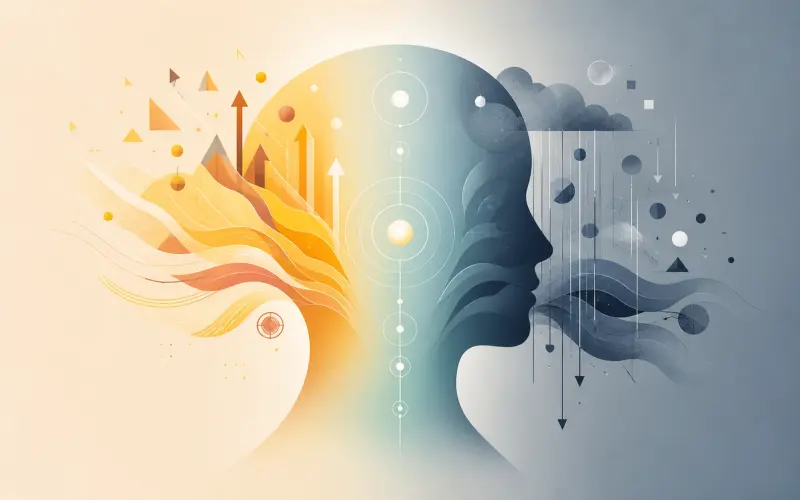
Bipolar disorder is usuallydiagnosedduring adolescence, but this does not rule out the appearance of some symptoms during childhood or during and after pregnancy in women. Diagnosis relies primarily on signs and symptoms identified by a specialist doctor or mental health professional. In this article, Tatmeen therefore introduces bipolar disorder, its causes, its symptoms, and how it is treated.
What is bipolar disorder, or manic depression?
It is a mental health condition that causes mood fluctuations resulting from episodes of intense emotion. These episodes produce sharp mood changes involving either emotional highs—mania or hypomania—or lows (depression). During emotional highs, the affected person may feel euphoric, unusually active, irritable or quick to anger, and inclined to act without thinking or planning. During lows, symptoms include sadness, hopelessness, loss of interest in activities, crying, avoiding others, and a bleak outlook on life. The person may also go through periods when their mood is normal.
Causes of bipolar disorder, or manic depression
No precise cause of bipolar disorder has been identified, but certain factors may contribute to its development. These include:
Biological factors, such as physical changes in the brain, including changes in its chemical balance.
Genetic factors, such as having a family member with depression or bipolar disorder.
Environmental causes, such as experiencing abuse during childhood or prolonged stress and psychological strain.
Using drugs and alcohol.
How do I know if I have bipolar disorder?
You may recognize it through the symptoms of bipolar disorder, including:
Feeling an enormous amount of energy and a high level of activity that lasts longer than usual.
Racing, overlapping thoughts that drive you to speak extremely quickly about several different topics at once.
Feeling able to perform several tasks at the same time.
Excessive self-confidence and feelings of grandiosity.
Doing dangerous things without thinking, such as spending huge amounts of money.
Feeling sad, empty, and hopeless, leading the patient to cry from time to time.
Difficulty sleeping and othersleep disturbances, which may cause the patient to experience insomnia or sleep for long hours.
Losing pleasure and feeling no happiness when engaging in any activity, whatever it may be.
Difficulty concentrating or thinking.
Frequent forgetfulness.
Eating disturbances, involving either overeating or eating too little, and weight disturbances involving either gain or loss.
Feeling tired and exhausted, resulting in a loss of energy and activity.
Feeling worthless and guilty without a valid reason, which may lead the patient to think about death andsuicide..
Psychotherapy sessionssuch as cognitive behavioral therapy, which enables the patient to identify negative behaviors and work to replace them. This means helping to identify the causes of bipolar episodes.
Electroconvulsive therapy: This treatment is intended for people experiencing severe depressive periods accompanied by suicidal thoughts or tendencies.
Establishing a routine to regulate the patient's sleep schedule, alongside adopting a healthy diet and exercising.
Family therapy, which focuses on the family and holds that family communication with the patient helps them adhere more effectively to the treatment plan.
Can bipolar disorder be treated without medication?
Try to persuade the patient to receive treatment peacefully, and avoid threatening to take them to the hospital for treatment.
The patient should be supported by avoiding harassment and constant personal criticism.
Do not force the patient to change their behavior, and understand that they do not have full control over it.
Make the necessary effort to show and clarify reality to the patient so that no space is left for the fantasies and doubts affecting them.
Supporting the patient never means accepting their pathological ideas. Instead, critique those ideas in a healthy and appropriate way to help the patient recognize their unhealthy behavior.
The best treatment for bipolar disorder is considered to be a combination of medication and psychotherapy sessions. It is not possible to specify a particular treatment duration, as the patient may receive treatment throughout their life. The success of bipolar disorder treatment depends on the severity of the condition, the patient's adherence to the treatment plan prepared by their doctor, and the amount of support they receive from their environment and the people close to them.
Content writer and researcher at Tatmeen, writing in Arabic and English about mental health and everyday life, from relationships and stress to work, habits, and family.
Every Tatmeen article is reviewed by care providers licensed by the Saudi Commission for Health Specialties, so what you read is accurate and trustworthy.
This article builds understanding and does not replace a licensed care provider.
Need someone to talk to?
Tatmeen's licensed care providers are available around the clock, and the app's urgent consultation connects you with one within minutes.
Download Tatmeen to explore care providers and booking options.
Smart matchingFour quick questions suggest the right care provider
Urgent consultationTalk to an available care provider within minutes
Free psychological measuresMore than 20 tests to understand how you are doing
Scan to download
{"data":{"id":"472c3673-bf25-495c-9d5c-2ae06d98fe37","slug":"How-do-I-know-if-I-have-bipolar-disorder","arTitle":"كيف اعرف أني أعاني من اضطراب ثنائي القطب؟","enTitle":"How Do I Know If I Have Bipolar Disorder?","thumbnailAltText":"Person in a wide-brimmed hat overlaid with two faded figures","estimatedReadingTime":5,"likesCount":944,"writer":{"id":"d3defdb6-4a23-4b03-aad9-a1ecc054aae5","arBio":"كاتب وباحث محتوى في تطمين، يكتب بالعربية والإنجليزية عن الصحة النفسية والحياة اليومية، من العلاقات والضغوط إلى العمل والعادات والأسرة.\n","enBio":"Content writer and researcher at Tatmeen, writing in Arabic and English about mental health and everyday life, from relationships and stress to work, habits, and family.","user":{"slug":"fahad-almalik","arFullName":"فهد المالك","enFullName":"Fahad Almalik","publicProfileImageUrl":"https://cdn.tatmeen.sa/public/profile-images/a34c8028-5847-45de-ab83-a014942bb7d3/675415e988c16442a04af5d3b8899242613a955c44e0364314cc3ff74cbad082.webp","publicProfileImage96Url":"https://cdn.tatmeen.sa/public/profile-images/a34c8028-5847-45de-ab83-a014942bb7d3/675415e988c16442a04af5d3b8899242613a955c44e0364314cc3ff74cbad082-w96.webp","publicProfileImage192Url":"https://cdn.tatmeen.sa/public/profile-images/a34c8028-5847-45de-ab83-a014942bb7d3/675415e988c16442a04af5d3b8899242613a955c44e0364314cc3ff74cbad082-w192.webp"}},"arContent":"","enContent":"","productionDocument":{"headings":[{"id":"article-section-what-is-bipolar-disorder-or-manic-depression","text":"What is bipolar disorder, or manic depression?"},{"id":"article-section-causes-of-bipolar-disorder-or-manic-depression","text":"Causes of bipolar disorder, or manic depression"},{"id":"article-section-how-do-i-know-if-i-have-bipolar-disorder","text":"How do I know if I have bipolar disorder?"},{"id":"article-section-treatment-of-bipolar-disorder","text":"Treatment of bipolar disorder:"},{"id":"article-section-can-bipolar-disorder-be-treated-without-medication","text":"Can bipolar disorder be treated without medication?"}],"faqs":[],"beforeSourcesHtml":"","sources":[],"afterSourcesHtml":"","blocks":[{"type":"html","html":"<p class=\"ql-align-right ql-direction-rtl\">Bipolar disorder is usually<a style=\"background-color:transparent\" href=\"https://www.hakini.net/article/%D8%A7%D9%84%D8%AA%D8%B4%D8%AE%D9%8A%D8%B5-%D8%A7%D9%84%D9%86%D9%81%D8%B3%D9%8A-%D9%83%D9%8A%D9%81-%D8%AA%D8%AA%D9%85-%D8%B9%D9%85%D9%84%D9%8A%D8%A9-%D8%A7%D9%84%D8%AA%D8%B4%D8%AE%D9%8A%D8%B5-%D9%81%D9%8A-%D8%B9%D9%84%D9%85-%D8%A7%D9%84%D9%86%D9%81%D8%B3\" target=\"_blank\" rel=\"noopener noreferrer\">diagnosed</a>during adolescence, but this does not rule out the appearance of some symptoms during childhood or during and after pregnancy in women. Diagnosis relies primarily on signs and symptoms identified by a specialist doctor or mental health professional. In this article, Tatmeen therefore introduces bipolar disorder, its causes, its symptoms, and how it is treated.</p><h2 class=\"ql-align-right ql-direction-rtl\" id=\"article-section-what-is-bipolar-disorder-or-manic-depression\" data-toc-heading tabindex=\"-1\"><span id=\"what-is-bipolar-disorder-or-manic-depression-1\" aria-hidden=\"true\"></span><strong>What is bipolar disorder, or manic depression?</strong></h2><p class=\"ql-align-right ql-direction-rtl\">It is a mental health condition that causes mood fluctuations resulting from episodes of intense emotion. These episodes produce sharp mood changes involving either emotional highs—mania or hypomania—or lows (<a style=\"background-color:transparent\" href=\"https://www.hakini.net/article/%D8%A7%D9%84%D8%A7%D9%83%D8%AA%D8%A6%D8%A7%D8%A8-%D9%85%D8%A7-%D9%87%D9%8A-%D8%A3%D9%86%D9%88%D8%A7%D8%B9-%D8%A7%D9%84%D8%A7%D9%83%D8%AA%D8%A6%D8%A7%D8%A8-%D9%88%D9%85%D8%A7-%D9%87%D9%8A-%D8%A3%D8%B9%D8%B1%D8%A7%D8%B6%D9%87\" target=\"_blank\" rel=\"noopener noreferrer\">depression</a>). During emotional highs, the affected person may feel euphoric, unusually active, irritable or quick to anger, and inclined to act without thinking or planning. During lows, symptoms include sadness, hopelessness, loss of interest in activities, crying, avoiding others, and a bleak outlook on life. The person may also go through periods when their mood is normal.</p><h2 class=\"ql-align-right ql-direction-rtl\" id=\"article-section-causes-of-bipolar-disorder-or-manic-depression\" data-toc-heading tabindex=\"-1\"><span id=\"causes-of-bipolar-disorder-or-manic-depression-2\" aria-hidden=\"true\"></span><strong>Causes of bipolar disorder, or manic depression</strong></h2><p class=\"ql-align-right ql-direction-rtl\">No precise cause of bipolar disorder has been identified, but certain factors may contribute to its development. These include:</p><ol><li class=\"ql-align-right ql-direction-rtl\">Biological factors, such as physical changes in the brain, including changes in its chemical balance.</li><li class=\"ql-align-right ql-direction-rtl\">Genetic factors, such as having a family member with depression or bipolar disorder.</li><li class=\"ql-align-right ql-direction-rtl\">Environmental causes, such as experiencing abuse during childhood or prolonged stress and psychological strain.</li><li class=\"ql-align-right ql-direction-rtl\">Using drugs and alcohol.</li></ol><h2 class=\"ql-align-right ql-direction-rtl\" id=\"article-section-how-do-i-know-if-i-have-bipolar-disorder\" data-toc-heading tabindex=\"-1\"><span id=\"how-do-i-know-if-i-have-bipolar-disorder-3\" aria-hidden=\"true\"></span><strong>How do I know if I have bipolar disorder?</strong></h2><p class=\"ql-align-right ql-direction-rtl\">You may recognize it through the symptoms of bipolar disorder, including:</p><ol><li class=\"ql-align-right ql-direction-rtl\">Feeling an enormous amount of energy and a high level of activity that lasts longer than usual.</li><li class=\"ql-align-right ql-direction-rtl\">Racing, overlapping thoughts that drive you to speak extremely quickly about several different topics at once.</li><li class=\"ql-align-right ql-direction-rtl\">Feeling able to perform several tasks at the same time.</li><li class=\"ql-align-right ql-direction-rtl\">Excessive self-confidence and feelings of grandiosity.</li><li class=\"ql-align-right ql-direction-rtl\">Doing dangerous things without thinking, such as spending huge amounts of money.</li><li class=\"ql-align-right ql-direction-rtl\">Feeling sad, empty, and hopeless, leading the patient to cry from time to time.</li><li class=\"ql-align-right ql-direction-rtl\">Difficulty sleeping and other<a style=\"background-color:transparent\" href=\"https://www.hakini.net/article/%D8%A7%D8%B6%D8%B7%D8%B1%D8%A7%D8%A8%D8%A7%D8%AA-%D8%A7%D9%84%D9%86%D9%88%D9%85-%D8%AA%D8%B9%D8%B1%D9%81-%D8%B9%D9%84%D9%89-%D8%A7%D9%86%D9%88%D8%A7%D8%B9-%D8%A7%D8%B6%D8%B7%D8%B1%D8%A7%D8%A8%D8%A7%D8%AA-%D9%88%D9%85%D8%B4%D8%A7%D9%83%D9%84-%D8%A7%D9%84%D9%86%D9%88%D9%85\" target=\"_blank\" rel=\"noopener noreferrer\">sleep disturbances</a>, which may cause the patient to experience insomnia or sleep for long hours.</li><li class=\"ql-align-right ql-direction-rtl\">Losing pleasure and feeling no happiness when engaging in any activity, whatever it may be.</li><li class=\"ql-align-right ql-direction-rtl\">Difficulty concentrating or thinking.</li><li class=\"ql-align-right ql-direction-rtl\">Frequent forgetfulness.</li><li class=\"ql-align-right ql-direction-rtl\">Eating disturbances, involving either overeating or eating too little, and weight disturbances involving either gain or loss.</li><li class=\"ql-align-right ql-direction-rtl\">Feeling tired and exhausted, resulting in a loss of energy and activity.</li><li class=\"ql-align-right ql-direction-rtl\">Feeling worthless and guilty without a valid reason, which may lead the patient to think about death and<a style=\"background-color:transparent\" href=\"https://www.hakini.net/article/%D9%83%D9%8A%D9%81-%D8%AA%D8%B3%D8%A7%D8%B9%D8%AF-%D8%B4%D8%AE%D8%B5-%D9%8A%D8%B1%D9%8A%D8%AF-%D8%A7%D9%84%D8%A7%D9%86%D8%AA%D8%AD%D8%A7%D8%B1\" target=\"_blank\" rel=\"noopener noreferrer\">suicide.</a>. </li></ol><h2 class=\"ql-align-right ql-direction-rtl\" id=\"article-section-treatment-of-bipolar-disorder\" data-toc-heading tabindex=\"-1\"><span id=\"treatment-of-bipolar-disorder-4\" aria-hidden=\"true\"></span><strong>Treatment of bipolar disorder:</strong></h2><ol><li class=\"ql-align-right ql-direction-rtl\"><a style=\"background-color:transparent\" href=\"https://www.hakini.net/article/%D9%85%D8%AA%D9%89-%D9%8A%D9%84%D8%AC%D8%A3-%D8%A7%D9%84%D8%A3%D8%B7%D8%A8%D8%A7%D8%A1-%D9%84%D9%84%D8%A3%D8%AF%D9%88%D9%8A%D8%A9-%D8%A7%D9%84%D9%86%D9%81%D8%B3%D9%8A%D8%A9-%D9%88%D9%85%D8%A7-%D9%85%D8%AF%D9%89-%D9%81%D8%B9%D8%A7%D9%84%D9%8A%D8%AA%D9%87%D8%A7\" target=\"_blank\" rel=\"noopener noreferrer\">Medication treatment</a>. This may include mood stabilizers, anticonvulsants, and antidepressants. It is important to note that these medications must not be taken without<a style=\"background-color:transparent\" href=\"http://www.hakini.net/\" target=\"_blank\" rel=\"noopener noreferrer\">consulting your specialist psychiatrist.</a>.</li><li class=\"ql-align-right ql-direction-rtl\"><a style=\"background-color:transparent\" href=\"https://www.hakini.net/subscription\" target=\"_blank\" rel=\"noopener noreferrer\">Psychotherapy sessions</a>such as cognitive behavioral therapy, which enables the patient to identify negative behaviors and work to replace them. This means helping to identify the causes of bipolar episodes.</li><li class=\"ql-align-right ql-direction-rtl\">Electroconvulsive therapy: This treatment is intended for people experiencing severe depressive periods accompanied by suicidal thoughts or tendencies.</li><li class=\"ql-align-right ql-direction-rtl\">Establishing a routine to regulate the patient's sleep schedule, alongside adopting a healthy diet and exercising.</li><li class=\"ql-align-right ql-direction-rtl\">Family therapy, which focuses on the family and holds that family communication with the patient helps them adhere more effectively to the treatment plan.</li></ol><h2 class=\"ql-align-right ql-direction-rtl\" id=\"article-section-can-bipolar-disorder-be-treated-without-medication\" data-toc-heading tabindex=\"-1\"><span id=\"can-bipolar-disorder-be-treated-without-medication-5\" aria-hidden=\"true\"></span><strong>Can bipolar disorder be treated without medication?</strong></h2><ol><li class=\"ql-align-right ql-direction-rtl\">Try to persuade the patient to receive treatment peacefully, and avoid threatening to take them to the hospital for treatment.</li><li class=\"ql-align-right ql-direction-rtl\">The patient should be supported by avoiding harassment and constant personal criticism.</li><li class=\"ql-align-right ql-direction-rtl\">Do not force the patient to change their behavior, and understand that they do not have full control over it.</li><li class=\"ql-align-right ql-direction-rtl\">Make the necessary effort to show and clarify reality to the patient so that no space is left for the fantasies and doubts affecting them.</li><li class=\"ql-align-right ql-direction-rtl\">Supporting the patient never means accepting their pathological ideas. Instead, critique those ideas in a healthy and appropriate way to help the patient recognize their unhealthy behavior.</li></ol><p class=\"ql-align-right ql-direction-rtl\">The best treatment for bipolar disorder is considered to be a combination of medication and psychotherapy sessions. It is not possible to specify a particular treatment duration, as the patient may receive treatment throughout their life. The success of bipolar disorder treatment depends on the severity of the condition, the patient's adherence to the treatment plan prepared by their doctor, and the amount of support they receive from their environment and the people close to them.</p><p><br /></p>"}],"inlineCtaSignatures":[],"_experienceAliases":{"v":1,"fields":["html","bodyHtml"]}},"createdAt":"2024-01-07T21:00:00.000Z","updatedAt":"2026-08-11T04:45:02.303Z","disorderGroups":[{"id":"1e82772d-a1a7-4d29-b475-be9d6b67ae02","slug":"common-mental-issues","arName":"اضطرابات نفسية شائعة","enName":"Common Mental Issues"}],"reviewer":{"arFullName":"فريق تطمين","enFullName":"Tatmeen team","slug":"tatmeen-team","kind":"organization"},"productionArticle":true,"promotionAllowed":true,"preparedCover":{"src":"https://cdn.tatmeen.sa/public/article-lcp/article-lcp-v2/sha256-5b61e3c20b32d7c59f5fd4ea955a6584681a9b8be940546fcd9be35f83517136/600-1f815fe6c2f17ade7bc86dc9d90b2bd8ac89115ca8afb53f26f1f037958878a6.avif","fallback":"https://cdn.tatmeen.sa/public/article-lcp/article-lcp-v2/sha256-5b61e3c20b32d7c59f5fd4ea955a6584681a9b8be940546fcd9be35f83517136/600-ff05f6d3b7c7157c143df08e1acf54999aaea195c44f2f71c6c701fa62e2565b.webp","directUrl":"https://cdn.tatmeen.sa/blog-cover/1704735159380-Tatmeen-img-481","isGolden":true,"avifSrcset":"https://cdn.tatmeen.sa/public/article-lcp/article-lcp-v2/sha256-5b61e3c20b32d7c59f5fd4ea955a6584681a9b8be940546fcd9be35f83517136/400-db57b0438505a2ca0c3c16259609e280b58a142ee4b30e3aea0c821d3a195ba2.avif 400w, https://cdn.tatmeen.sa/public/article-lcp/article-lcp-v2/sha256-5b61e3c20b32d7c59f5fd4ea955a6584681a9b8be940546fcd9be35f83517136/600-1f815fe6c2f17ade7bc86dc9d90b2bd8ac89115ca8afb53f26f1f037958878a6.avif 600w","webpSrcset":"https://cdn.tatmeen.sa/public/article-lcp/article-lcp-v2/sha256-5b61e3c20b32d7c59f5fd4ea955a6584681a9b8be940546fcd9be35f83517136/400-a8f0095ccfc5b6da4b00f963a5fdd49fee1c7e1d327a9a042fc052a6f9cf8239.webp 400w, https://cdn.tatmeen.sa/public/article-lcp/article-lcp-v2/sha256-5b61e3c20b32d7c59f5fd4ea955a6584681a9b8be940546fcd9be35f83517136/600-ff05f6d3b7c7157c143df08e1acf54999aaea195c44f2f71c6c701fa62e2565b.webp 600w","phoneAvifSrcset":"https://cdn.tatmeen.sa/public/article-lcp/article-lcp-v2/sha256-5b61e3c20b32d7c59f5fd4ea955a6584681a9b8be940546fcd9be35f83517136/400-db57b0438505a2ca0c3c16259609e280b58a142ee4b30e3aea0c821d3a195ba2.avif 400w, https://cdn.tatmeen.sa/public/article-lcp/article-lcp-v2/sha256-5b61e3c20b32d7c59f5fd4ea955a6584681a9b8be940546fcd9be35f83517136/600-1f815fe6c2f17ade7bc86dc9d90b2bd8ac89115ca8afb53f26f1f037958878a6.avif 600w","phoneWebpSrcset":"https://cdn.tatmeen.sa/public/article-lcp/article-lcp-v2/sha256-5b61e3c20b32d7c59f5fd4ea955a6584681a9b8be940546fcd9be35f83517136/400-a8f0095ccfc5b6da4b00f963a5fdd49fee1c7e1d327a9a042fc052a6f9cf8239.webp 400w, https://cdn.tatmeen.sa/public/article-lcp/article-lcp-v2/sha256-5b61e3c20b32d7c59f5fd4ea955a6584681a9b8be940546fcd9be35f83517136/600-ff05f6d3b7c7157c143df08e1acf54999aaea195c44f2f71c6c701fa62e2565b.webp 600w","width":600,"height":400},"previewTaxonomy":{"groups":[{"id":"1e82772d-a1a7-4d29-b475-be9d6b67ae02","slug":"common-mental-issues","arName":"اضطرابات نفسية شائعة","enName":"Common Mental Issues"}],"topics":[{"id":"7a04dceb-8294-4e51-8525-48bda7bdec14","slug":"bipolar-disorder","arName":"اضطراب ثنائي القطب","enName":"Bipolar Disorder","groupSlug":"common-mental-issues","href":"/blog/category/common-mental-issues/bipolar-disorder/"}],"tags":[{"id":"d6bda589-0241-44c2-a689-634f1922ba0e","slug":"bipolar-mania","arName":"اضطراب ثنائي القطب والهوس","enName":"Bipolar & Mania"},{"id":"475c9ee4-379d-436c-93ab-4c63916e7197","slug":"self-assessment","arName":"تقييم ذاتي","enName":"Self-Assessment"}]},"previewProviderRecommendations":[{"id":"98afb74a-ce22-4f07-a3c5-dbf120cfbf98","slug":"dr-nouf-alqahtani-5289","arFullName":"د. نوف القحطاني","enFullName":"Dr. Nouf Alqahtani","publicProfileImageUrl":"","publicProfileImage96Url":"","publicProfileImage192Url":"","specialization":{"arName":"طبيب أسرة","enName":"Family Physician"},"profileImageUrl":"","experienceYears":4,"consultantInfo":{"averageRating":{"average":5},"specialization":{"arGeneralName":"طبيب أسرة","enGeneralName":"Family Physician"}}},{"id":"64f18815-de2d-4515-8a7a-cbfb541976ae","slug":"dr-amer-alanazi-9964","arFullName":"د. عامر العنزي","enFullName":"Dr. Amer Alanazi","publicProfileImageUrl":"https://cdn.tatmeen.sa/public/profile-images/64f18815-de2d-4515-8a7a-cbfb541976ae/6a36fee9388645bf5848f119c0927c429246cc9abd7bcf4d6b004ab6db3624a4.webp","publicProfileImage96Url":"https://cdn.tatmeen.sa/public/profile-images/64f18815-de2d-4515-8a7a-cbfb541976ae/6a36fee9388645bf5848f119c0927c429246cc9abd7bcf4d6b004ab6db3624a4-w96.webp","publicProfileImage192Url":"https://cdn.tatmeen.sa/public/profile-images/64f18815-de2d-4515-8a7a-cbfb541976ae/6a36fee9388645bf5848f119c0927c429246cc9abd7bcf4d6b004ab6db3624a4-w192.webp","specialization":{"arName":"طبيب أسرة","enName":"Family Physician"},"profileImageUrl":"https://cdn.tatmeen.sa/public/profile-images/64f18815-de2d-4515-8a7a-cbfb541976ae/6a36fee9388645bf5848f119c0927c429246cc9abd7bcf4d6b004ab6db3624a4-w192.webp","experienceYears":7,"consultantInfo":{"averageRating":{"average":0},"specialization":{"arGeneralName":"طبيب أسرة","enGeneralName":"Family Physician"}}},{"id":"4377737a-0bbd-4ec6-9438-a2a04b384759","slug":"dr-amro-bokhari-9680","arFullName":"د. عمرو بخاري","enFullName":"Dr. Amro Bokhari","publicProfileImageUrl":"https://cdn.tatmeen.sa/public/profile-images/4377737a-0bbd-4ec6-9438-a2a04b384759/0cfd4c08700d691181fa9a7a88a5e744567633a9124e6db6e29cbb8eb560f3d7.webp","publicProfileImage96Url":"https://cdn.tatmeen.sa/public/profile-images/4377737a-0bbd-4ec6-9438-a2a04b384759/0cfd4c08700d691181fa9a7a88a5e744567633a9124e6db6e29cbb8eb560f3d7-w96.webp","publicProfileImage192Url":"https://cdn.tatmeen.sa/public/profile-images/4377737a-0bbd-4ec6-9438-a2a04b384759/0cfd4c08700d691181fa9a7a88a5e744567633a9124e6db6e29cbb8eb560f3d7-w192.webp","specialization":{"arName":"طبيب أسرة","enName":"Family Physician"},"profileImageUrl":"https://cdn.tatmeen.sa/public/profile-images/4377737a-0bbd-4ec6-9438-a2a04b384759/0cfd4c08700d691181fa9a7a88a5e744567633a9124e6db6e29cbb8eb560f3d7-w192.webp","experienceYears":8,"consultantInfo":{"averageRating":{"average":4.989583333333333},"specialization":{"arGeneralName":"طبيب أسرة","enGeneralName":"Family Physician"}}}],"previewCareProviders":[{"id":"09364052-c2a9-4c52-9717-7ce2093b8d0a","slug":"kholoud-alharbi-5221","arFullName":"خلود الحربي","enFullName":"Kholoud Alharbi","publicProfileImageUrl":"https://cdn.tatmeen.sa/public/profile-images/09364052-c2a9-4c52-9717-7ce2093b8d0a/4a0aeb81619e351b77f4323e3605a0a00acc7ca3c82ee7cc5ca2c9e8ef716049.webp","publicProfileImage96Url":"https://cdn.tatmeen.sa/public/profile-images/09364052-c2a9-4c52-9717-7ce2093b8d0a/4a0aeb81619e351b77f4323e3605a0a00acc7ca3c82ee7cc5ca2c9e8ef716049-w96.webp","publicProfileImage192Url":"https://cdn.tatmeen.sa/public/profile-images/09364052-c2a9-4c52-9717-7ce2093b8d0a/4a0aeb81619e351b77f4323e3605a0a00acc7ca3c82ee7cc5ca2c9e8ef716049-w192.webp","gender":"FEMALE","specialization":{"arName":"أخصائي نفسي","enName":"Psychologist"}},{"id":"6f037535-1dca-4b50-a8b2-5974b7323286","slug":"salah-althobaiti-9053","arFullName":"صلاح الثبيتي","enFullName":"Salah Althobaiti","publicProfileImageUrl":"https://cdn.tatmeen.sa/public/profile-images/6f037535-1dca-4b50-a8b2-5974b7323286/35b6bd7fad9b1e004c1835803eb9c1b56dcacd380685ec8bff141f0fb888005c.webp","publicProfileImage96Url":"https://cdn.tatmeen.sa/public/profile-images/6f037535-1dca-4b50-a8b2-5974b7323286/35b6bd7fad9b1e004c1835803eb9c1b56dcacd380685ec8bff141f0fb888005c-w96.webp","publicProfileImage192Url":"https://cdn.tatmeen.sa/public/profile-images/6f037535-1dca-4b50-a8b2-5974b7323286/35b6bd7fad9b1e004c1835803eb9c1b56dcacd380685ec8bff141f0fb888005c-w192.webp","gender":"MALE","specialization":{"arName":"أخصائي نفسي","enName":"Psychologist"}},{"id":"3cc806e8-616b-4884-9f21-a75b378580a2","slug":"aisha-al-hashim-8667","arFullName":"عائشة ال هاشم","enFullName":"Aisha Al Hashim","publicProfileImageUrl":"https://cdn.tatmeen.sa/public/profile-images/3cc806e8-616b-4884-9f21-a75b378580a2/27f523d03be4dcfa1f6a79f70c1773887434e698990d214cd990caec56a44798.webp","publicProfileImage96Url":"https://cdn.tatmeen.sa/public/profile-images/3cc806e8-616b-4884-9f21-a75b378580a2/27f523d03be4dcfa1f6a79f70c1773887434e698990d214cd990caec56a44798-w96.webp","publicProfileImage192Url":"https://cdn.tatmeen.sa/public/profile-images/3cc806e8-616b-4884-9f21-a75b378580a2/27f523d03be4dcfa1f6a79f70c1773887434e698990d214cd990caec56a44798-w192.webp","gender":"FEMALE","specialization":{"arName":"أخصائي نفسي","enName":"Psychologist"}},{"id":"94765496-dbdf-4631-a01b-7df5f788668d","slug":"abdullrahman-alhamoudi-3045","arFullName":"عبدالرحمن الحمودي","enFullName":"Abdulrahman Alhamoudi","publicProfileImageUrl":"https://cdn.tatmeen.sa/public/profile-images/94765496-dbdf-4631-a01b-7df5f788668d/2d49f6b6493c564afb6f50b6c3634231dff3a5cf8353acfab393d1b2a88037d1.webp","publicProfileImage96Url":"https://cdn.tatmeen.sa/public/profile-images/94765496-dbdf-4631-a01b-7df5f788668d/2d49f6b6493c564afb6f50b6c3634231dff3a5cf8353acfab393d1b2a88037d1-w96.webp","publicProfileImage192Url":"https://cdn.tatmeen.sa/public/profile-images/94765496-dbdf-4631-a01b-7df5f788668d/2d49f6b6493c564afb6f50b6c3634231dff3a5cf8353acfab393d1b2a88037d1-w192.webp","gender":"MALE","specialization":{"arName":"أخصائي نفسي","enName":"Psychologist"}},{"id":"618dba89-5b70-4b46-8304-741b7ac8ecd3","slug":"abdullah-mari-1311","arFullName":"عبدالله مرعي","enFullName":"Abdullah Mari","publicProfileImageUrl":"https://cdn.tatmeen.sa/public/profile-images/618dba89-5b70-4b46-8304-741b7ac8ecd3/6b4a3bfb59f8a304ca79083b32859b46baad2e1d692974a47c02c1f66bd11129.webp","publicProfileImage96Url":"https://cdn.tatmeen.sa/public/profile-images/618dba89-5b70-4b46-8304-741b7ac8ecd3/6b4a3bfb59f8a304ca79083b32859b46baad2e1d692974a47c02c1f66bd11129-w96.webp","publicProfileImage192Url":"https://cdn.tatmeen.sa/public/profile-images/618dba89-5b70-4b46-8304-741b7ac8ecd3/6b4a3bfb59f8a304ca79083b32859b46baad2e1d692974a47c02c1f66bd11129-w192.webp","gender":"MALE","specialization":{"arName":"أخصائي نفسي","enName":"Psychologist"}},{"id":"d4ffcb6b-90a7-45b6-b941-964866f4564b","slug":"dhaifallah-alhumaidi-1092","arFullName":"ضيف الله الحميدي","enFullName":"Dhaifallah Alhumaidi","publicProfileImageUrl":"https://cdn.tatmeen.sa/public/profile-images/d4ffcb6b-90a7-45b6-b941-964866f4564b/1817171c5828a9b57d6c30d12332cf154e335272548bc90a6e8456d74d356956.webp","publicProfileImage96Url":"https://cdn.tatmeen.sa/public/profile-images/d4ffcb6b-90a7-45b6-b941-964866f4564b/1817171c5828a9b57d6c30d12332cf154e335272548bc90a6e8456d74d356956-w96.webp","publicProfileImage192Url":"https://cdn.tatmeen.sa/public/profile-images/d4ffcb6b-90a7-45b6-b941-964866f4564b/1817171c5828a9b57d6c30d12332cf154e335272548bc90a6e8456d74d356956-w192.webp","gender":"MALE","specialization":{"arName":"أخصائي نفسي","enName":"Psychologist"}},{"id":"d8fb937b-ad65-4b6f-a65b-276ad8258fed","slug":"azza-alharbi-7286","arFullName":"عزه الحربي","enFullName":"Azza Alharbi","publicProfileImageUrl":"https://cdn.tatmeen.sa/public/profile-images/d8fb937b-ad65-4b6f-a65b-276ad8258fed/378a8ab30f4087833263c41fb2c3102028cbe6bb9655172d7b3439ee1d6b0800.webp","publicProfileImage96Url":"https://cdn.tatmeen.sa/public/profile-images/d8fb937b-ad65-4b6f-a65b-276ad8258fed/378a8ab30f4087833263c41fb2c3102028cbe6bb9655172d7b3439ee1d6b0800-w96.webp","publicProfileImage192Url":"https://cdn.tatmeen.sa/public/profile-images/d8fb937b-ad65-4b6f-a65b-276ad8258fed/378a8ab30f4087833263c41fb2c3102028cbe6bb9655172d7b3439ee1d6b0800-w192.webp","gender":"FEMALE","specialization":{"arName":"أخصائي نفسي","enName":"Psychologist"}},{"id":"025d770d-f6d4-405b-be1c-d45dde63fbf7","slug":"akila-alomran-7545","arFullName":"عقيله العمران","enFullName":"Akila Alomran","publicProfileImageUrl":"https://cdn.tatmeen.sa/public/profile-images/025d770d-f6d4-405b-be1c-d45dde63fbf7/44a990b9294f02c9810c69a68b8913a6afac0eb30d1b7494155f31b6dde9378b.webp","publicProfileImage96Url":"https://cdn.tatmeen.sa/public/profile-images/025d770d-f6d4-405b-be1c-d45dde63fbf7/44a990b9294f02c9810c69a68b8913a6afac0eb30d1b7494155f31b6dde9378b-w96.webp","publicProfileImage192Url":"https://cdn.tatmeen.sa/public/profile-images/025d770d-f6d4-405b-be1c-d45dde63fbf7/44a990b9294f02c9810c69a68b8913a6afac0eb30d1b7494155f31b6dde9378b-w192.webp","gender":"FEMALE","specialization":{"arName":"أخصائي نفسي","enName":"Psychologist"}}],"previewDownload":{"href":"/download","title":{"ar":"خطوة واحدة لأجلك، ابدأ الآن","en":"One step for you, start now"},"description":{"ar":"حمّل تطبيق تطمين لاستكشاف مقدمي الرعاية وخيارات الحجز.","en":"Download Tatmeen to explore care providers and booking options."},"posterSrc":"/images/home/cta-ar-new-1.webp","videoSrc":"/images/home/cta-ar-new-1.mp4","videoPosterSrc":"/images/home/cta-ar-new-1.webp","videoPosterEnSrc":"/images/home/cta-en-new-1.webp","videoType":"video/mp4","appStoreHref":"https://apps.apple.com/us/app/tatmeen-%D8%AA%D8%B7%D9%85%D9%8A%D9%86/id6473836983","googlePlayHref":"https://play.google.com/store/apps/details?id=com.TatmeenApp.user&hl=en"},"previewRelatedArticles":[{"id":"6cf2667d-de46-409f-8ee8-0df75d908800","slug":"Bipolar-and-relationship-with-schizophrenia","route":"/blog/Bipolar-and-relationship-with-schizophrenia/","title":{"ar":"اضطراب ثنائي القطب - الأعراض والعلاج وعلاقته بالفصام","en":"Bipolar Disorder: Symptoms, Treatment, and Its Link to Schizophrenia"},"image":"https://cdn.tatmeen.sa/public/article-lcp/article-lcp-v2/sha256-c67976b7478443a2b1ee683a0b247be86f4f8bc620adf46767f53e54747f4010/599-8c6a0250eeb67284ff42e242422661720567ec7aa85707fe4a20840a4574a909.webp","directImageFallback":"https://cdn.tatmeen.sa/blog-cover/1706456109490-Tatmeen-698.jpg","arThumbnailAltText":"Overlapping views of a person holding a smartphone with contrasting facial expressions","thumbnailAltText":"Overlapping views of a person holding a smartphone with contrasting facial expressions","topic":{"label":{"ar":"اضطرابات نفسية شائعة","en":"Common Mental Issues"}},"readingTimeMinutes":5},{"id":"fd11277c-9ad0-40d6-a44d-5b4c7e3155d9","slug":"bipolar-disorder-symptoms-management","route":"/blog/bipolar-disorder-symptoms-management/","title":{"ar":"ما هو اضطراب ثنائي القطب؟ الأعراض وطرق الإدارة","en":"What Is Bipolar Disorder? Symptoms and Management"},"image":"https://cdn.tatmeen.sa/public/article-lcp/article-lcp-v2/sha256-48086f5a45e69c344c547e14010c579e7a850ac8395c03b6e72563013cf567aa/800-90efda6b876bdf297fc309b11dad457d8c0a0cbb785a8d41fc3673f90b80731c.webp","directImageFallback":"https://cdn.tatmeen.sa/blog-cover/Tatmeen-1777644975831.webp","arThumbnailAltText":"stylized human head split between bright sunrise and dark storm with a figure at the dividing line","thumbnailAltText":"stylized human head split between bright sunrise and dark storm with a figure at the dividing line","topic":{"label":{"ar":"اضطرابات نفسية شائعة","en":"Common Mental Issues"}},"readingTimeMinutes":5},{"id":"c9f24629-7ef0-4cca-b91f-f6e6a40202b7","slug":"how-to-support-loved-one-with-bipolar-disorder","route":"/blog/how-to-support-loved-one-with-bipolar-disorder/","title":{"ar":"كيف تدعم شخصًا عزيزًا مصابًا باضطراب ثنائي القطب؟","en":"How to Support a Loved One with Bipolar Disorder?"},"image":"https://cdn.tatmeen.sa/public/article-lcp/article-lcp-v2/sha256-cdf364ccac65a03bae4695ad0699a02aa624e1b908315ea6f0c4d0190f1411f2/800-3a5c12ea6fc87fba10c1cd231cdab05d063d7c021804b73bd218677e27bdd505.webp","directImageFallback":"https://cdn.tatmeen.sa/blog-cover/Tatmeen-1777567169486.webp","arThumbnailAltText":"كيف تدعم شخصاً عزيزاً يعاني من اضطراب ثنائي القطب","thumbnailAltText":"كيف تدعم شخصاً عزيزاً يعاني من اضطراب ثنائي القطب","topic":{"label":{"ar":"اضطرابات نفسية شائعة","en":"Common Mental Issues"}},"readingTimeMinutes":5},{"id":"1e13f6d7-8eab-4b73-b654-fd3ff7266662","slug":"pornography-body-image-self-confidence","route":"/blog/pornography-body-image-self-confidence/","title":{"ar":"المقارنة الصامتة بين الإباحية وصورة الجسد والثقة بالنفس","en":"The Silent Comparison Between Pornography, Body Image, and Self-Confidence"},"image":"https://cdn.tatmeen.sa/public/article-lcp/article-lcp-v2/sha256-f0ff6756b1f86aca323b533c791d13a1f32aaaeeb8283d7c9dff208bcc61c333/800-27fd8164b407bbd76e105cb9fc27fd21473b8582514164a54b22740a5731473e.webp","directImageFallback":"https://cdn.tatmeen.sa/blog-cover/Tatmeen-1780940266422.webp","arThumbnailAltText":"Young man between contrasting idealized selves, symbolizing comparison, body image, and self-confidence.","thumbnailAltText":"Young man between contrasting idealized selves, symbolizing comparison, body image, and self-confidence.","topic":{"label":{"ar":"الإدمان والسلوكيات القهرية","en":"Addictions & Compulsive Behaviors"}},"readingTimeMinutes":5}],"previewRelatedReadStates":{}},"locale":"en","device":"desktop","path":"/en/blog/How-do-I-know-if-I-have-bipolar-disorder/","readingControls":false,"config":{"public":{"BUCKET_URL":"https://cdn.tatmeen.sa/","APP_BASE_URL":"https://tatmeen.sa","intercomAppId":"ppcnu9e3"}}}