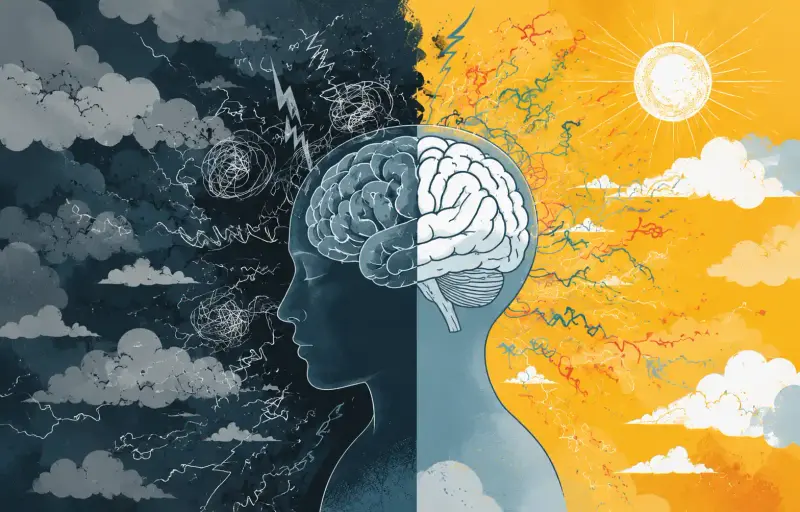
Bipolar disorder is far more than “moodiness”; it is a neuro-psychiatric condition that can redraw a person’s energy and thoughts so rapidly that daily life is upended. Early diagnosis reduces the first-year relapse rate by about 40 %, yet many people remain stuck wondering: Is what I’m feeling normal, or is it a symptom? Below, Tatmeen offers a comprehensive guide to core symptoms and day-to-day management options.
Understanding the Disorder: More Than Mood Swings
Bipolar disorder features recurring cycles of mania or hypomania that alternate with periods of major depression, sometimes separated by mood-stable phases.
Cycle Types
Full mania: Marked energy surge, little sleep, risky financial or social behavior—often severe enough for hospitalization.
Hypomania: Milder symptoms that don’t disrupt work but are noticeable to others.
Depression: Intense sadness, loss of interest, slowed movement, dark thoughts.
According to the U.S. National Institute of Mental Health, about 2.8 % of adults experience bipolar disorder annually, and symptoms commonly return without treatment.
Why Does the Disorder Occur?
Genetic Predisposition Heritability can reach 80 %; if one parent has the disorder, risk for children rises five-fold.
Environmental Stressors Childhood trauma, stimulant misuse, and disrupted sleep cycles can trigger episodes in genetically prone individuals.
Diagnosis: Bridging Doubt and Certainty
There is no blood test for confirmation. Doctors rely on detailed clinical interviews and mood-tracking charts over weeks. A Mayo Clinic review notes that diagnosis hinges on episode duration, severity, and impact on work and relationships—while ruling out thyroid disease or substance use.
Treatment Options
Medication
Mood stabilizers such as lithium and anticonvulsants.
Atypical antipsychotics for acute mania or mixed episodes.
Antidepressants used cautiously and usually alongside a mood stabilizer.
Psychotherapy
Cognitive-behavioral therapy (CBT) and social-rhythm therapy are front-line tools for coping skills and sleep-pattern control.
Lifestyle Support
Strict sleep routine: Going to bed and waking up at the same times steadies the body clock.
Moderate exercise: A 30-minute daily walk releases endorphins and eases anxiety.
Mood tracking: An app that logs energy and sleep helps the clinician fine-tune treatment.
Daily Management: A Practical Roadmap
Trigger Control
Cut back evening caffeine and sugar.
Avoid all-night study sessions or frequent travel without a sleep plan.
Open Communication
Halfway through treatment a patient may feel stigma or medication fatigue. Provide judgment-free space and remind them the goal is quality of life, not numbing emotions.
Support Network
Family sessions or peer groups cultivate the feeling “I’m not alone.” Tatmeen offers private virtual groups you can join under an alias for privacy.
Complications of Neglect
Suicide risk rises seven-fold.
Financial or legal troubles during manic episodes.
Family breakdown or job loss.
When to Seek Emergency Help
Suicidal thoughts or a clear self-harm plan.
Severe mania with hallucinations or aggression.
Depression so deep it halts eating or self-care.
Immediate contact with emergency services—or booking an urgent Tatmeen session—can mark the line between dangerous relapse and a new step toward recovery.
And Finally …
Bipolar disorder may look like a daunting mountain, but understanding symptoms, committing to shared treatment, and leaning on a compassionate support network can make the path manageable. Balance begins with precise knowledge and a brave question; book your first session today and rest assured that science and empathy walk hand in hand.
Frequently Asked Questions
Can I stop medication once my mood is stable?
No. Medication is the cornerstone that prevents relapse. Any change must be slow and doctor-supervised to avoid sudden episodes.
How long before psychotherapy shows results?
Many notice better thought patterns and sleep control after 8–12 sessions; continuing for six months strengthens the gains.
How do I distinguish work stress from a hypomanic episode?
Hypomania lasts days, features little sleep and clear impulsivity, while work stress usually eases with rest and has minimal impact on spending or social behavior.
A writer and researcher specializing in psychiatry, she focuses on mental health and the human emotions we experience but cannot always find the words to name. She writes about us—about humanity and the human experience—and simplifies complex topics to offer content that helps us better understand ourselves and life, ultimately making us feel less alone.
Every Tatmeen article is reviewed by care providers licensed by the Saudi Commission for Health Specialties, so what you read is accurate and trustworthy.
This article builds understanding and does not replace a licensed care provider.
Need someone to talk to?
Tatmeen's licensed care providers are available around the clock, and the app's urgent consultation connects you with one within minutes.
Download Tatmeen to explore care providers and booking options.
Smart matchingFour quick questions suggest the right care provider
Urgent consultationTalk to an available care provider within minutes
Free psychological measuresMore than 20 tests to understand how you are doing
Scan to download
{"data":{"id":"fd11277c-9ad0-40d6-a44d-5b4c7e3155d9","slug":"bipolar-disorder-symptoms-management","arTitle":"ما هو اضطراب ثنائي القطب؟ الأعراض وطرق الإدارة","enTitle":"What Is Bipolar Disorder? Symptoms and Management","thumbnailAltText":"stylized human head split between bright sunrise and dark storm with a figure at the dividing line","estimatedReadingTime":5,"likesCount":323,"writer":{"id":"3ab72b74-f26f-4337-9b47-3114b0f90de5","arBio":"كاتبة وباحثة متخصصة في مجال الطب النفسي، تهتم بموضوعات الصحة النفسية وبالمشاعر الإنسانية التي نختبرها ولا نجد دائمًا الكلمات لتسميتها. تكتب عنّا؛ عن الإنسان وتجربته، وتبسّط الموضوعات المعقّدة لتقدّم محتوى يساعدنا على فهم ذواتنا والحياة أكثر، ويجعلنا نشعر بأننا بوحدة أقل.","enBio":"A writer and researcher specializing in psychiatry, she focuses on mental health and the human emotions we experience but cannot always find the words to name. She writes about us—about humanity and the human experience—and simplifies complex topics to offer content that helps us better understand ourselves and life, ultimately making us feel less alone.","user":{"slug":"ayat-alnajar","arFullName":"آيات النجار","enFullName":"Ayat Al-Najjar","publicProfileImageUrl":"https://cdn.tatmeen.sa/public/profile-images/02384455-68fa-40b6-ad05-609fde65cafa/21b9a610dde5dfc6d37af110c23e9c7ab3946be080c281beb000debf4f7d31a6.webp","publicProfileImage96Url":"https://cdn.tatmeen.sa/public/profile-images/02384455-68fa-40b6-ad05-609fde65cafa/21b9a610dde5dfc6d37af110c23e9c7ab3946be080c281beb000debf4f7d31a6-w96.webp","publicProfileImage192Url":"https://cdn.tatmeen.sa/public/profile-images/02384455-68fa-40b6-ad05-609fde65cafa/21b9a610dde5dfc6d37af110c23e9c7ab3946be080c281beb000debf4f7d31a6-w192.webp"}},"arContent":"","enContent":"","productionDocument":{"headings":[{"id":"article-section-understanding-the-disorder-more-than-mood-swings","text":"Understanding the Disorder: More Than Mood Swings"},{"id":"article-section-why-does-the-disorder-occur","text":"Why Does the Disorder Occur?"},{"id":"article-section-diagnosis-bridging-doubt-and-certainty","text":"Diagnosis: Bridging Doubt and Certainty"},{"id":"article-section-treatment-options","text":"Treatment Options"},{"id":"article-section-daily-management-a-practical-roadmap","text":"Daily Management: A Practical Roadmap"},{"id":"article-section-complications-of-neglect","text":"Complications of Neglect"},{"id":"article-section-when-to-seek-emergency-help","text":"When to Seek Emergency Help"},{"id":"article-section-and-finally","text":"And Finally …"}],"faqs":[{"question":"Can I stop medication once my mood is stable?","answer":"<p><span style=\"color:#000000\">No. Medication is the cornerstone that prevents relapse. Any change must be slow and doctor-supervised to avoid sudden episodes.</span></p>"},{"question":"How long before psychotherapy shows results?","answer":"<p><span style=\"color:#000000\">Many notice better thought patterns and sleep control after <strong>8–12 sessions</strong>; continuing for six months strengthens the gains.</span></p>"},{"question":"How do I distinguish work stress from a hypomanic episode?","answer":"<p><span style=\"color:#000000\">Hypomania lasts days, features little sleep and clear impulsivity, while work stress usually eases with rest and has minimal impact on spending or social behavior.</span></p>"}],"beforeSourcesHtml":"<p></p>","sources":[],"afterSourcesHtml":"","blocks":[{"type":"html","html":"<p><span style=\"color:#000000\">Bipolar disorder is far more than “moodiness”; it is a neuro-psychiatric condition that can redraw a person’s energy and thoughts so rapidly that daily life is upended. Early diagnosis reduces the first-year relapse rate by about <strong>40 %</strong>, yet many people remain stuck wondering: <em>Is what I’m feeling normal, or is it a symptom?</em> Below,<strong> Tatmeen</strong> offers a comprehensive guide to core symptoms and day-to-day management options.</span></p><h2 id=\"article-section-understanding-the-disorder-more-than-mood-swings\" data-toc-heading tabindex=\"-1\"><span id=\"understanding-the-disorder-more-than-mood-swings-1\" aria-hidden=\"true\"></span><span style=\"color:#000000\"><strong>Understanding the Disorder: More Than Mood Swings</strong></span></h2><p><span style=\"color:#000000\">Bipolar disorder features recurring cycles of <strong>mania</strong> or <strong>hypomania</strong> that alternate with periods of <strong>major depression</strong>, sometimes separated by mood-stable phases.</span></p><h3><span style=\"color:#000000\"><strong>Cycle Types</strong></span></h3><ul><li><p><span style=\"color:#000000\"><strong>Full mania:</strong> Marked energy surge, little sleep, risky financial or social behavior—often severe enough for hospitalization.<br /></span></p></li><li><p><span style=\"color:#000000\"><strong>Hypomania:</strong> Milder symptoms that don’t disrupt work but are noticeable to others.<br /></span></p></li><li><p><span style=\"color:#000000\"><strong>Depression:</strong> Intense sadness, loss of interest, slowed movement, dark thoughts.<br /></span></p></li></ul><p><span style=\"color:#000000\">According to the U.S. National Institute of Mental Health, about <strong>2.8 %</strong> of adults experience bipolar disorder annually, and symptoms commonly return without treatment.</span></p><h2 id=\"article-section-why-does-the-disorder-occur\" data-toc-heading tabindex=\"-1\"><span id=\"why-does-the-disorder-occur-2\" aria-hidden=\"true\"></span><span style=\"color:#000000\"><strong>Why Does the Disorder Occur?</strong></span></h2><ol><li><p><span style=\"color:#000000\"><strong>Genetic Predisposition<br /></strong> Heritability can reach 80 %; if one parent has the disorder, risk for children rises five-fold.<br /></span></p></li><li><p><span style=\"color:#000000\"><strong>Environmental Stressors<br /></strong> Childhood trauma, stimulant misuse, and disrupted sleep cycles can trigger episodes in genetically prone individuals.</span></p></li></ol><h2 id=\"article-section-diagnosis-bridging-doubt-and-certainty\" data-toc-heading tabindex=\"-1\"><span id=\"diagnosis-bridging-doubt-and-certainty-3\" aria-hidden=\"true\"></span><span style=\"color:#000000\"><strong>Diagnosis: Bridging Doubt and Certainty</strong></span></h2><p><span style=\"color:#000000\">There is no blood test for confirmation. Doctors rely on detailed clinical interviews and mood-tracking charts over weeks. A <em>Mayo Clinic</em> review notes that diagnosis hinges on episode duration, severity, and impact on work and relationships—while ruling out thyroid disease or substance use.</span></p><h2 id=\"article-section-treatment-options\" data-toc-heading tabindex=\"-1\"><span id=\"treatment-options-4\" aria-hidden=\"true\"></span><span style=\"color:#000000\"><strong>Treatment Options</strong></span></h2><h3><span style=\"color:#000000\"><strong>Medication</strong></span></h3><ul><li><p><span style=\"color:#000000\"><strong>Mood stabilizers</strong> such as lithium and anticonvulsants.<br /></span></p></li><li><p><span style=\"color:#000000\"><strong>Atypical antipsychotics</strong> for acute mania or mixed episodes.<br /></span></p></li><li><p><span style=\"color:#000000\"><strong>Antidepressants</strong> used cautiously and usually alongside a mood stabilizer.</span></p></li></ul><h3><span style=\"color:#000000\"><strong>Psychotherapy</strong></span></h3><p><span style=\"color:#000000\">Cognitive-behavioral therapy (CBT) and social-rhythm therapy are front-line tools for coping skills and sleep-pattern control.</span></p><h3><span style=\"color:#000000\"><strong>Lifestyle Support</strong></span></h3><ul><li><p><span style=\"color:#000000\"><strong>Strict sleep routine:</strong> Going to bed and waking up at the same times steadies the body clock.<br /></span></p></li><li><p><span style=\"color:#000000\"><strong>Moderate exercise:</strong> A 30-minute daily walk releases endorphins and eases anxiety.<br /></span></p></li><li><p><span style=\"color:#000000\"><strong>Mood tracking:</strong> An app that logs energy and sleep helps the clinician fine-tune treatment.</span></p></li></ul><h2 id=\"article-section-daily-management-a-practical-roadmap\" data-toc-heading tabindex=\"-1\"><span id=\"daily-management-a-practical-roadmap-5\" aria-hidden=\"true\"></span><span style=\"color:#000000\"><strong>Daily Management: A Practical Roadmap</strong></span></h2><h3><span style=\"color:#000000\"><strong>Trigger Control</strong></span></h3><ul><li><p><span style=\"color:#000000\">Cut back evening caffeine and sugar.<br /></span></p></li><li><p><span style=\"color:#000000\">Avoid all-night study sessions or frequent travel without a sleep plan.</span></p></li></ul><h3><span style=\"color:#000000\"><strong>Open Communication</strong></span></h3><p><span style=\"color:#000000\">Halfway through treatment a patient may feel stigma or medication fatigue. Provide judgment-free space and remind them the goal is <em>quality of life</em>, not numbing emotions.</span></p><h3><span style=\"color:#000000\"><strong>Support Network</strong></span></h3><p><span style=\"color:#000000\">Family sessions or peer groups cultivate the feeling “I’m not alone.” Tatmeen offers private virtual groups you can join under an alias for privacy.</span></p><h2 id=\"article-section-complications-of-neglect\" data-toc-heading tabindex=\"-1\"><span id=\"complications-of-neglect-6\" aria-hidden=\"true\"></span><span style=\"color:#000000\"><strong>Complications of Neglect</strong></span></h2><ul><li><p><span style=\"color:#000000\">Suicide risk rises seven-fold.<br /></span></p></li><li><p><span style=\"color:#000000\">Financial or legal troubles during manic episodes.<br /></span></p></li><li><p><span style=\"color:#000000\">Family breakdown or job loss.</span></p></li></ul><h2 id=\"article-section-when-to-seek-emergency-help\" data-toc-heading tabindex=\"-1\"><span id=\"when-to-seek-emergency-help-7\" aria-hidden=\"true\"></span><span style=\"color:#000000\"><strong>When to Seek Emergency Help</strong></span></h2><ul><li><p><span style=\"color:#000000\">Suicidal thoughts or a clear self-harm plan.<br /></span></p></li><li><p><span style=\"color:#000000\">Severe mania with hallucinations or aggression.<br /></span></p></li><li><p><span style=\"color:#000000\">Depression so deep it halts eating or self-care.<br /></span></p></li></ul><p><span style=\"color:#000000\">Immediate contact with emergency services—or booking an urgent Tatmeen session—can mark the line between dangerous relapse and a new step toward recovery.</span></p><h2 id=\"article-section-and-finally\" data-toc-heading tabindex=\"-1\"><span id=\"and-finally-8\" aria-hidden=\"true\"></span><span style=\"color:#000000\"><strong>And Finally …</strong></span></h2><p><span style=\"color:#000000\">Bipolar disorder may look like a daunting mountain, but understanding symptoms, committing to shared treatment, and leaning on a compassionate support network can make the path manageable. Balance begins with precise knowledge and a brave question;<u> book your first session</u> today and rest assured that science and empathy walk hand in hand.</span></p>"}],"inlineCtaSignatures":[],"_experienceAliases":{"v":1,"fields":["html","bodyHtml"],"faqs":[0,1,2]}},"createdAt":"2026-04-30T21:00:00.000Z","updatedAt":"2026-06-02T16:23:03.637Z","disorderGroups":[{"id":"1e82772d-a1a7-4d29-b475-be9d6b67ae02","slug":"common-mental-issues","arName":"اضطرابات نفسية شائعة","enName":"Common Mental Issues"}],"reviewer":{"arFullName":"فريق تطمين","enFullName":"Tatmeen team","slug":"tatmeen-team","kind":"organization"},"productionArticle":true,"promotionAllowed":true,"preparedCover":{"src":"https://cdn.tatmeen.sa/public/article-lcp/article-lcp-v2/sha256-48086f5a45e69c344c547e14010c579e7a850ac8395c03b6e72563013cf567aa/800-f8aa310a5a6062afc9471ab87d6772f3b2f78255c5fbf2c3de1b53b0f2a6adde.avif","fallback":"https://cdn.tatmeen.sa/public/article-lcp/article-lcp-v2/sha256-48086f5a45e69c344c547e14010c579e7a850ac8395c03b6e72563013cf567aa/800-90efda6b876bdf297fc309b11dad457d8c0a0cbb785a8d41fc3673f90b80731c.webp","directUrl":"https://cdn.tatmeen.sa/blog-cover/Tatmeen-1777644975831.webp","isGolden":true,"avifSrcset":"https://cdn.tatmeen.sa/public/article-lcp/article-lcp-v2/sha256-48086f5a45e69c344c547e14010c579e7a850ac8395c03b6e72563013cf567aa/400-2808337e5cef2388b7d0ebf220b8839a20c38653e500420ebb48b1c007fe76d1.avif 400w, https://cdn.tatmeen.sa/public/article-lcp/article-lcp-v2/sha256-48086f5a45e69c344c547e14010c579e7a850ac8395c03b6e72563013cf567aa/640-0f621c6ea075e13144d2817ae8e0dc56a68038baf13c98734331e967adc7b584.avif 640w, https://cdn.tatmeen.sa/public/article-lcp/article-lcp-v2/sha256-48086f5a45e69c344c547e14010c579e7a850ac8395c03b6e72563013cf567aa/800-f8aa310a5a6062afc9471ab87d6772f3b2f78255c5fbf2c3de1b53b0f2a6adde.avif 800w, https://cdn.tatmeen.sa/public/article-lcp/article-lcp-v2/sha256-48086f5a45e69c344c547e14010c579e7a850ac8395c03b6e72563013cf567aa/1200-99b29fdfe07597febd1f7d8cc87288084780fa4ddfa947c01f9a9a66bf76c3ad.avif 1200w","webpSrcset":"https://cdn.tatmeen.sa/public/article-lcp/article-lcp-v2/sha256-48086f5a45e69c344c547e14010c579e7a850ac8395c03b6e72563013cf567aa/400-c74ffa82dba9c2882c46c7bc9c0c7d01d574dbbcf5eebc2a5b8a91963d4c6c01.webp 400w, https://cdn.tatmeen.sa/public/article-lcp/article-lcp-v2/sha256-48086f5a45e69c344c547e14010c579e7a850ac8395c03b6e72563013cf567aa/640-0c1c6764fee24b4ad430a6ce82f911d76f4d5677583635214b892d2e2e3252a1.webp 640w, https://cdn.tatmeen.sa/public/article-lcp/article-lcp-v2/sha256-48086f5a45e69c344c547e14010c579e7a850ac8395c03b6e72563013cf567aa/800-90efda6b876bdf297fc309b11dad457d8c0a0cbb785a8d41fc3673f90b80731c.webp 800w, https://cdn.tatmeen.sa/public/article-lcp/article-lcp-v2/sha256-48086f5a45e69c344c547e14010c579e7a850ac8395c03b6e72563013cf567aa/1200-f00c15c9b32c98e2384acd5781dbd0e69e4957997c2a21df46737e9b5e5e4061.webp 1200w","phoneAvifSrcset":"https://cdn.tatmeen.sa/public/article-lcp/article-lcp-v2/sha256-48086f5a45e69c344c547e14010c579e7a850ac8395c03b6e72563013cf567aa/400-2808337e5cef2388b7d0ebf220b8839a20c38653e500420ebb48b1c007fe76d1.avif 400w, https://cdn.tatmeen.sa/public/article-lcp/article-lcp-v2/sha256-48086f5a45e69c344c547e14010c579e7a850ac8395c03b6e72563013cf567aa/640-0f621c6ea075e13144d2817ae8e0dc56a68038baf13c98734331e967adc7b584.avif 640w, https://cdn.tatmeen.sa/public/article-lcp/article-lcp-v2/sha256-48086f5a45e69c344c547e14010c579e7a850ac8395c03b6e72563013cf567aa/800-f8aa310a5a6062afc9471ab87d6772f3b2f78255c5fbf2c3de1b53b0f2a6adde.avif 800w","phoneWebpSrcset":"https://cdn.tatmeen.sa/public/article-lcp/article-lcp-v2/sha256-48086f5a45e69c344c547e14010c579e7a850ac8395c03b6e72563013cf567aa/400-c74ffa82dba9c2882c46c7bc9c0c7d01d574dbbcf5eebc2a5b8a91963d4c6c01.webp 400w, https://cdn.tatmeen.sa/public/article-lcp/article-lcp-v2/sha256-48086f5a45e69c344c547e14010c579e7a850ac8395c03b6e72563013cf567aa/640-0c1c6764fee24b4ad430a6ce82f911d76f4d5677583635214b892d2e2e3252a1.webp 640w, https://cdn.tatmeen.sa/public/article-lcp/article-lcp-v2/sha256-48086f5a45e69c344c547e14010c579e7a850ac8395c03b6e72563013cf567aa/800-90efda6b876bdf297fc309b11dad457d8c0a0cbb785a8d41fc3673f90b80731c.webp 800w","width":800,"height":500},"previewTaxonomy":{"groups":[{"id":"1e82772d-a1a7-4d29-b475-be9d6b67ae02","slug":"common-mental-issues","arName":"اضطرابات نفسية شائعة","enName":"Common Mental Issues"}],"topics":[{"id":"7a04dceb-8294-4e51-8525-48bda7bdec14","slug":"bipolar-disorder","arName":"اضطراب ثنائي القطب","enName":"Bipolar Disorder","groupSlug":"common-mental-issues","href":"/blog/category/common-mental-issues/bipolar-disorder/"}],"tags":[{"id":"d6bda589-0241-44c2-a689-634f1922ba0e","slug":"bipolar-mania","arName":"اضطراب ثنائي القطب والهوس","enName":"Bipolar & Mania"},{"id":"c2a6e8d3-de9c-435f-8c95-9727e7db14cc","slug":"explainer-awareness","arName":"دليل توعوي / شرح","enName":"Explainer / Awareness Guide"}]},"previewProviderRecommendations":[{"id":"98afb74a-ce22-4f07-a3c5-dbf120cfbf98","slug":"dr-nouf-alqahtani-5289","arFullName":"د. نوف القحطاني","enFullName":"Dr. Nouf Alqahtani","publicProfileImageUrl":"","publicProfileImage96Url":"","publicProfileImage192Url":"","specialization":{"arName":"طبيب أسرة","enName":"Family Physician"},"profileImageUrl":"","experienceYears":4,"consultantInfo":{"averageRating":{"average":5},"specialization":{"arGeneralName":"طبيب أسرة","enGeneralName":"Family Physician"}}},{"id":"64f18815-de2d-4515-8a7a-cbfb541976ae","slug":"dr-amer-alanazi-9964","arFullName":"د. عامر العنزي","enFullName":"Dr. Amer Alanazi","publicProfileImageUrl":"https://cdn.tatmeen.sa/public/profile-images/64f18815-de2d-4515-8a7a-cbfb541976ae/6a36fee9388645bf5848f119c0927c429246cc9abd7bcf4d6b004ab6db3624a4.webp","publicProfileImage96Url":"https://cdn.tatmeen.sa/public/profile-images/64f18815-de2d-4515-8a7a-cbfb541976ae/6a36fee9388645bf5848f119c0927c429246cc9abd7bcf4d6b004ab6db3624a4-w96.webp","publicProfileImage192Url":"https://cdn.tatmeen.sa/public/profile-images/64f18815-de2d-4515-8a7a-cbfb541976ae/6a36fee9388645bf5848f119c0927c429246cc9abd7bcf4d6b004ab6db3624a4-w192.webp","specialization":{"arName":"طبيب أسرة","enName":"Family Physician"},"profileImageUrl":"https://cdn.tatmeen.sa/public/profile-images/64f18815-de2d-4515-8a7a-cbfb541976ae/6a36fee9388645bf5848f119c0927c429246cc9abd7bcf4d6b004ab6db3624a4-w192.webp","experienceYears":7,"consultantInfo":{"averageRating":{"average":0},"specialization":{"arGeneralName":"طبيب أسرة","enGeneralName":"Family Physician"}}},{"id":"4377737a-0bbd-4ec6-9438-a2a04b384759","slug":"dr-amro-bokhari-9680","arFullName":"د. عمرو بخاري","enFullName":"Dr. Amro Bokhari","publicProfileImageUrl":"https://cdn.tatmeen.sa/public/profile-images/4377737a-0bbd-4ec6-9438-a2a04b384759/0cfd4c08700d691181fa9a7a88a5e744567633a9124e6db6e29cbb8eb560f3d7.webp","publicProfileImage96Url":"https://cdn.tatmeen.sa/public/profile-images/4377737a-0bbd-4ec6-9438-a2a04b384759/0cfd4c08700d691181fa9a7a88a5e744567633a9124e6db6e29cbb8eb560f3d7-w96.webp","publicProfileImage192Url":"https://cdn.tatmeen.sa/public/profile-images/4377737a-0bbd-4ec6-9438-a2a04b384759/0cfd4c08700d691181fa9a7a88a5e744567633a9124e6db6e29cbb8eb560f3d7-w192.webp","specialization":{"arName":"طبيب أسرة","enName":"Family Physician"},"profileImageUrl":"https://cdn.tatmeen.sa/public/profile-images/4377737a-0bbd-4ec6-9438-a2a04b384759/0cfd4c08700d691181fa9a7a88a5e744567633a9124e6db6e29cbb8eb560f3d7-w192.webp","experienceYears":8,"consultantInfo":{"averageRating":{"average":4.989583333333333},"specialization":{"arGeneralName":"طبيب أسرة","enGeneralName":"Family Physician"}}}],"previewCareProviders":[{"id":"09364052-c2a9-4c52-9717-7ce2093b8d0a","slug":"kholoud-alharbi-5221","arFullName":"خلود الحربي","enFullName":"Kholoud Alharbi","publicProfileImageUrl":"https://cdn.tatmeen.sa/public/profile-images/09364052-c2a9-4c52-9717-7ce2093b8d0a/4a0aeb81619e351b77f4323e3605a0a00acc7ca3c82ee7cc5ca2c9e8ef716049.webp","publicProfileImage96Url":"https://cdn.tatmeen.sa/public/profile-images/09364052-c2a9-4c52-9717-7ce2093b8d0a/4a0aeb81619e351b77f4323e3605a0a00acc7ca3c82ee7cc5ca2c9e8ef716049-w96.webp","publicProfileImage192Url":"https://cdn.tatmeen.sa/public/profile-images/09364052-c2a9-4c52-9717-7ce2093b8d0a/4a0aeb81619e351b77f4323e3605a0a00acc7ca3c82ee7cc5ca2c9e8ef716049-w192.webp","gender":"FEMALE","specialization":{"arName":"أخصائي نفسي","enName":"Psychologist"}},{"id":"6f037535-1dca-4b50-a8b2-5974b7323286","slug":"salah-althobaiti-9053","arFullName":"صلاح الثبيتي","enFullName":"Salah Althobaiti","publicProfileImageUrl":"https://cdn.tatmeen.sa/public/profile-images/6f037535-1dca-4b50-a8b2-5974b7323286/35b6bd7fad9b1e004c1835803eb9c1b56dcacd380685ec8bff141f0fb888005c.webp","publicProfileImage96Url":"https://cdn.tatmeen.sa/public/profile-images/6f037535-1dca-4b50-a8b2-5974b7323286/35b6bd7fad9b1e004c1835803eb9c1b56dcacd380685ec8bff141f0fb888005c-w96.webp","publicProfileImage192Url":"https://cdn.tatmeen.sa/public/profile-images/6f037535-1dca-4b50-a8b2-5974b7323286/35b6bd7fad9b1e004c1835803eb9c1b56dcacd380685ec8bff141f0fb888005c-w192.webp","gender":"MALE","specialization":{"arName":"أخصائي نفسي","enName":"Psychologist"}},{"id":"3cc806e8-616b-4884-9f21-a75b378580a2","slug":"aisha-al-hashim-8667","arFullName":"عائشة ال هاشم","enFullName":"Aisha Al Hashim","publicProfileImageUrl":"https://cdn.tatmeen.sa/public/profile-images/3cc806e8-616b-4884-9f21-a75b378580a2/27f523d03be4dcfa1f6a79f70c1773887434e698990d214cd990caec56a44798.webp","publicProfileImage96Url":"https://cdn.tatmeen.sa/public/profile-images/3cc806e8-616b-4884-9f21-a75b378580a2/27f523d03be4dcfa1f6a79f70c1773887434e698990d214cd990caec56a44798-w96.webp","publicProfileImage192Url":"https://cdn.tatmeen.sa/public/profile-images/3cc806e8-616b-4884-9f21-a75b378580a2/27f523d03be4dcfa1f6a79f70c1773887434e698990d214cd990caec56a44798-w192.webp","gender":"FEMALE","specialization":{"arName":"أخصائي نفسي","enName":"Psychologist"}},{"id":"db2ce1a0-9325-4471-b7ce-eb2e811c30a3","slug":"amer-qutub-2441","arFullName":"عامر قطب","enFullName":"Amer Qutub","publicProfileImageUrl":"https://cdn.tatmeen.sa/public/profile-images/db2ce1a0-9325-4471-b7ce-eb2e811c30a3/80580f99bfd7fe2b2a9cf8eed73ab532f5086d1efe053b0aa57358c1ce004261.webp","publicProfileImage96Url":"https://cdn.tatmeen.sa/public/profile-images/db2ce1a0-9325-4471-b7ce-eb2e811c30a3/80580f99bfd7fe2b2a9cf8eed73ab532f5086d1efe053b0aa57358c1ce004261-w96.webp","publicProfileImage192Url":"https://cdn.tatmeen.sa/public/profile-images/db2ce1a0-9325-4471-b7ce-eb2e811c30a3/80580f99bfd7fe2b2a9cf8eed73ab532f5086d1efe053b0aa57358c1ce004261-w192.webp","gender":"MALE","specialization":{"arName":"أخصائي نفسي","enName":"Psychologist"}},{"id":"94765496-dbdf-4631-a01b-7df5f788668d","slug":"abdullrahman-alhamoudi-3045","arFullName":"عبدالرحمن الحمودي","enFullName":"Abdulrahman Alhamoudi","publicProfileImageUrl":"https://cdn.tatmeen.sa/public/profile-images/94765496-dbdf-4631-a01b-7df5f788668d/2d49f6b6493c564afb6f50b6c3634231dff3a5cf8353acfab393d1b2a88037d1.webp","publicProfileImage96Url":"https://cdn.tatmeen.sa/public/profile-images/94765496-dbdf-4631-a01b-7df5f788668d/2d49f6b6493c564afb6f50b6c3634231dff3a5cf8353acfab393d1b2a88037d1-w96.webp","publicProfileImage192Url":"https://cdn.tatmeen.sa/public/profile-images/94765496-dbdf-4631-a01b-7df5f788668d/2d49f6b6493c564afb6f50b6c3634231dff3a5cf8353acfab393d1b2a88037d1-w192.webp","gender":"MALE","specialization":{"arName":"أخصائي نفسي","enName":"Psychologist"}},{"id":"618dba89-5b70-4b46-8304-741b7ac8ecd3","slug":"abdullah-mari-1311","arFullName":"عبدالله مرعي","enFullName":"Abdullah Mari","publicProfileImageUrl":"https://cdn.tatmeen.sa/public/profile-images/618dba89-5b70-4b46-8304-741b7ac8ecd3/6b4a3bfb59f8a304ca79083b32859b46baad2e1d692974a47c02c1f66bd11129.webp","publicProfileImage96Url":"https://cdn.tatmeen.sa/public/profile-images/618dba89-5b70-4b46-8304-741b7ac8ecd3/6b4a3bfb59f8a304ca79083b32859b46baad2e1d692974a47c02c1f66bd11129-w96.webp","publicProfileImage192Url":"https://cdn.tatmeen.sa/public/profile-images/618dba89-5b70-4b46-8304-741b7ac8ecd3/6b4a3bfb59f8a304ca79083b32859b46baad2e1d692974a47c02c1f66bd11129-w192.webp","gender":"MALE","specialization":{"arName":"أخصائي نفسي","enName":"Psychologist"}},{"id":"3b50a5d5-e795-407f-8676-fd7f0e1bb7a0","slug":"abdulaziz-bin-hudayan-4940","arFullName":"عبدالعزيز بن هديان","enFullName":"Abdulaziz Bin Hudayan","publicProfileImageUrl":"https://cdn.tatmeen.sa/public/profile-images/3b50a5d5-e795-407f-8676-fd7f0e1bb7a0/710ff0fe1fb00cdb5042092e27b7910b480a439b02251ecded62d7758eefce95.webp","publicProfileImage96Url":"https://cdn.tatmeen.sa/public/profile-images/3b50a5d5-e795-407f-8676-fd7f0e1bb7a0/710ff0fe1fb00cdb5042092e27b7910b480a439b02251ecded62d7758eefce95-w96.webp","publicProfileImage192Url":"https://cdn.tatmeen.sa/public/profile-images/3b50a5d5-e795-407f-8676-fd7f0e1bb7a0/710ff0fe1fb00cdb5042092e27b7910b480a439b02251ecded62d7758eefce95-w192.webp","gender":"MALE","specialization":{"arName":"أخصائي نفسي","enName":"Psychologist"}},{"id":"d4ffcb6b-90a7-45b6-b941-964866f4564b","slug":"dhaifallah-alhumaidi-1092","arFullName":"ضيف الله الحميدي","enFullName":"Dhaifallah Alhumaidi","publicProfileImageUrl":"https://cdn.tatmeen.sa/public/profile-images/d4ffcb6b-90a7-45b6-b941-964866f4564b/1817171c5828a9b57d6c30d12332cf154e335272548bc90a6e8456d74d356956.webp","publicProfileImage96Url":"https://cdn.tatmeen.sa/public/profile-images/d4ffcb6b-90a7-45b6-b941-964866f4564b/1817171c5828a9b57d6c30d12332cf154e335272548bc90a6e8456d74d356956-w96.webp","publicProfileImage192Url":"https://cdn.tatmeen.sa/public/profile-images/d4ffcb6b-90a7-45b6-b941-964866f4564b/1817171c5828a9b57d6c30d12332cf154e335272548bc90a6e8456d74d356956-w192.webp","gender":"MALE","specialization":{"arName":"أخصائي نفسي","enName":"Psychologist"}}],"previewDownload":{"href":"/download","title":{"ar":"خطوة واحدة لأجلك، ابدأ الآن","en":"One step for you, start now"},"description":{"ar":"حمّل تطبيق تطمين لاستكشاف مقدمي الرعاية وخيارات الحجز.","en":"Download Tatmeen to explore care providers and booking options."},"posterSrc":"/images/home/cta-ar-new-1.webp","videoSrc":"/images/home/cta-ar-new-1.mp4","videoPosterSrc":"/images/home/cta-ar-new-1.webp","videoPosterEnSrc":"/images/home/cta-en-new-1.webp","videoType":"video/mp4","appStoreHref":"https://apps.apple.com/us/app/tatmeen-%D8%AA%D8%B7%D9%85%D9%8A%D9%86/id6473836983","googlePlayHref":"https://play.google.com/store/apps/details?id=com.TatmeenApp.user&hl=en"},"previewRelatedArticles":[{"id":"472c3673-bf25-495c-9d5c-2ae06d98fe37","slug":"How-do-I-know-if-I-have-bipolar-disorder","route":"/blog/How-do-I-know-if-I-have-bipolar-disorder/","title":{"ar":"كيف اعرف أني أعاني من اضطراب ثنائي القطب؟","en":"How Do I Know If I Have Bipolar Disorder?"},"image":"https://cdn.tatmeen.sa/public/article-lcp/article-lcp-v2/sha256-5b61e3c20b32d7c59f5fd4ea955a6584681a9b8be940546fcd9be35f83517136/600-ff05f6d3b7c7157c143df08e1acf54999aaea195c44f2f71c6c701fa62e2565b.webp","directImageFallback":"https://cdn.tatmeen.sa/blog-cover/1704735159380-Tatmeen-img-481","arThumbnailAltText":"Person in a wide-brimmed hat overlaid with two faded figures","thumbnailAltText":"Person in a wide-brimmed hat overlaid with two faded figures","topic":{"label":{"ar":"اضطرابات نفسية شائعة","en":"Common Mental Issues"}},"readingTimeMinutes":5},{"id":"f9e335bc-466c-412b-a71d-ba51b83a9e43","slug":"mania-Causes-symptoms-and-treatment","route":"/blog/mania-Causes-symptoms-and-treatment/","title":{"ar":"الهوس: أسبابه وأعراضه وكيف يُعالج بحكمة","en":"Mania: Causes, Symptoms, and Treatment Options"},"image":"https://cdn.tatmeen.sa/public/article-lcp/article-lcp-v2/sha256-b8b4bb51c4b056cbec194d6308fa849206ddee0eae8fd54c2c456584aca68547/800-ab42c787d9bdb8847a8be18484f2b7083f6d5f29807cdb66975c8bb9fa2bbc05.webp","directImageFallback":"https://cdn.tatmeen.sa/blog-cover/Tatmeen-1782671354141.webp","arThumbnailAltText":"Man showing three emotional states—anger, calm, and joy—in split vibrant colors","thumbnailAltText":"Man showing three emotional states—anger, calm, and joy—in split vibrant colors","topic":{"label":{"ar":"اضطرابات نفسية شائعة","en":"Common Mental Issues"}},"readingTimeMinutes":5},{"id":"dab30f4c-4d61-479d-a1d9-02feaec46fa4","slug":"bipolar-disorder-vs-mood-swings-key-differences","route":"/blog/bipolar-disorder-vs-mood-swings-key-differences/","title":{"ar":"اضطراب ثنائي القطب أم تقلّبات مزاجية؟ الفروق الرئيسية التي يجب معرفتها","en":"Bipolar Disorder or Mood Swings? Key Differences You Need to Know"},"image":"https://cdn.tatmeen.sa/public/article-lcp/article-lcp-v2/sha256-8200a899d37c35f760e819914eb8c066d255e561f318246499fd5236022acdc1/800-2efe8356685dfee37243795836b9c07c178f489e62861ed9e001636e4b1f55cf.webp","directImageFallback":"https://cdn.tatmeen.sa/blog-cover/Tatmeen-1775539656468.webp","arThumbnailAltText":"Split face showing electric blue mania half and deep indigo depression half symbolizing bipolar extremes","thumbnailAltText":"Split face showing electric blue mania half and deep indigo depression half symbolizing bipolar extremes","topic":{"label":{"ar":"اضطرابات نفسية شائعة","en":"Common Mental Issues"}},"readingTimeMinutes":5},{"id":"6adfa578-4a36-433e-bd9f-53694ecabee5","slug":"manic-episode-brain-safe-response","route":"/blog/manic-episode-brain-safe-response/","title":{"ar":"نوبة الهوس: ماذا يحدث في الدماغ وكيف نتعامل بأمان؟","en":"Manic Episode: What Happens in the Brain and How Do We Respond Safely?"},"image":"https://cdn.tatmeen.sa/public/article-lcp/article-lcp-v2/sha256-523c2f9b055d9fb486043680219fc4024340f4aee5cb64517ab15369256f785c/800-1ff996114cd55f0d7d0f67f74ced353c7f5a20e46408497ad6f39fdfa25a5f37.webp","directImageFallback":"https://cdn.tatmeen.sa/blog-cover/Tatmeen-1780067556216.webp","arThumbnailAltText":"a brain image split into two halves one half is in shambles and the other one is bright and healthy","thumbnailAltText":"a brain image split into two halves one half is in shambles and the other one is bright and healthy","topic":{"label":{"ar":"اضطرابات نفسية شائعة","en":"Common Mental Issues"}},"readingTimeMinutes":5}],"previewRelatedReadStates":{}},"locale":"en","device":"desktop","path":"/en/blog/bipolar-disorder-symptoms-management/","readingControls":false,"config":{"public":{"BUCKET_URL":"https://cdn.tatmeen.sa/","APP_BASE_URL":"https://tatmeen.sa","intercomAppId":"ppcnu9e3"}}}