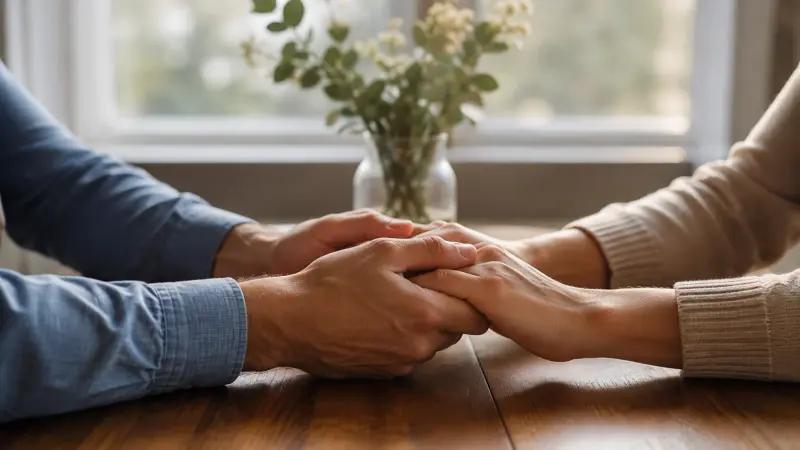
Happy couples do not live in a relationship free of conflict or pressure, but they know how to protect their bond in the middle of ordinary days before the difficult ones. Many people think the secret to marital happiness lies in complete compatibility or in feelings that always stay glowing, while the truth is that the difference often appears in small details that keep repeating, and in qualities and habits that make each partner calmer, more understanding, and fairer with the other. That is why marital happiness looks less like luck, and more like a relationship that is built with gentleness and awareness over time.
Marital Happiness Is Not the Absence of Problems
One common idea is that happy couples do not disagree. This is not realistic. Conflict exists in any long-term relationship, but the difference shows in how it is handled. The NHS 1explains that calmer relationships tend to preserve respect, support, and clear communication, instead of suppressing distress until it later explodes.
They also do not let small things accumulate until every discussion turns into a major problem. Having a known time to talk, even if it is short, makes it easier to discuss things than bringing them up during exhaustion or emotional intensity. Happiness here does not mean a perfect life, but that the relationship has a workable way of dealing with whatever comes up.
Daily Habits That Make a Difference
The first clear habit is ordinary daily conversation, not speaking only in times of crisis. This does not mean long or formal talks, but actual time for asking, listening, and sharing the details of the day. It seems that spending daily time talking is linked to greater satisfaction in the relationship and a stronger sense of closeness between spouses.
The second habit is visible appreciation. It is not wise for one partner’s effort to become something taken for granted. A word of thanks, a simple notice of the other person’s tiredness, or an acknowledgment that they tried can change the atmosphere in the home. Appreciation here is not excessive politeness, but part of each person feeling present and seen within the relationship.
Another important habit is for each partner to keep something of their own time and self. Personal time, a natural relationship with family and friends, or a space where they can rest without that being understood as rejection. Closeness does not require total merging, but rather a balance that makes the relationship manageable and comforting for both sides.
How Do They Act During Disagreement?
Happy couples do not turn every disagreement into a judgment about the other person’s character. They disagree about the issue itself, not the person’s worth. Instead of phrases like “You don’t understand” or “You always fall short,” their words are closer to describing what happened and what upset them about it. This reduces defensiveness and makes it easier to reach a solution.
They also pay attention to the way something is said, not just the idea itself. More positive, less negative, and clearer communication is usually linked to greater satisfaction in the relationship, while harsh criticism and escalation increase the drain of conflict even if the topic itself is simple. So it is not enough to be right; what matters is how you say it and when you say it.
One of their useful habits is also knowing when to stop. If emotions rise too high, they do not insist on finishing the discussion in that same moment. A short pause followed by returning after calm is often better than words spoken in anger that leave a mark afterward. What matters is that the pause is clear, not a vague withdrawal that leaves the other person confused.
What Qualities Support These Habits?
These habits do not live on their own. Behind them are usually qualities that make them possible in everyday life. One of the most important is flexibility, meaning that not every disagreement becomes a battle over who is more right. A flexible husband or wife does not see a small compromise as a loss, but as a natural part of living with another person who has their own temperament and needs.
There is also accountability. A clear apology when one is wrong eases a great deal of tension, while lengthy justification or turning the discussion back on the other person adds more complication. Calmer couples do not differ in that they never make mistakes, but in that they do not waste long periods defending an obvious one.
The third quality is realism. Each partner knows the other will not read what is in their mind, and that clarity costs the relationship less than silent resentment. Expecting your partner to understand you automatically may seem sweet at first, but in reality it opens a wide door to misunderstanding.
When Does the Relationship Need Extra Support?
Sometimes the problem is not the absence of one or two habits, but the repetition of the same cycle without any real improvement. A discussion followed by withdrawal, then emotional distance, then a temporary return, then the same conflict all over again. And if this pattern begins affecting sleep, the calm inside the home, or the ability to speak respectfully, then asking for support becomes a practical step. You can book your first session with a licensed specialist through Tatmeen at a time that suits you, with complete privacy and confidentiality.
Finally..
Happy couples do not have a secret formula, nor do they live a life without strain. What usually distinguishes them is that they keep repeating simple behaviors: daily conversation, respect during disagreement, clear appreciation, and the ability to apologize and step back when needed. These things may seem ordinary, but they are what make the relationship calmer and more likely to endure. And the beginning does not require a major change; sometimes one steady habit is enough for the atmosphere between spouses to truly change.
Frequently Asked Questions
Do happy couples never fight?
No. Conflict is natural in any long-term relationship. The difference is not in whether conflict exists, but in how it happens. If respect remains present, the discussion is clear, and it ends in understanding or a practical step, then the existence of conflict does not mean the relationship is bad.
What is the most important habit we can start with today?
One of the best beginnings is a short, consistent time for daily conversation without distraction. The goal is not to solve everything, but to keep regular connection between you before remarks build up and talking becomes harder than it needs to be.
When does asking for support become necessary?
When the same problems keep repeating without progress, or respect disappears, or the home turns into constant tension, or conflict begins affecting sleep, work, and daily life. At that point, professional support becomes a way of understanding and organizing, not a judgment on the relationship.
A writer and researcher specializing in psychiatry, she focuses on mental health and the human emotions we experience but cannot always find the words to name. She writes about us—about humanity and the human experience—and simplifies complex topics to offer content that helps us better understand ourselves and life, ultimately making us feel less alone.
Every Tatmeen article is reviewed by care providers licensed by the Saudi Commission for Health Specialties, so what you read is accurate and trustworthy.
This article builds understanding and does not replace a licensed care provider.
Need someone to talk to?
Tatmeen's licensed care providers are available around the clock, and the app's urgent consultation connects you with one within minutes.
Download Tatmeen to explore care providers and booking options.
Smart matchingFour quick questions suggest the right care provider
Urgent consultationTalk to an available care provider within minutes
Free psychological measuresMore than 20 tests to understand how you are doing
Scan to download
{"data":{"id":"7c8115ff-bbff-491f-8710-8cf529067ab3","slug":"Habits-of-happy-couples-and-their-characteristics","arTitle":"ما الذي يميز الأزواج السعداء؟","enTitle":"What Distinguishes Happy Couples?","thumbnailAltText":"Two ceramic mugs side by side with a small heart on a wooden table, soft cozy light.","estimatedReadingTime":5,"likesCount":1124,"writer":{"id":"3ab72b74-f26f-4337-9b47-3114b0f90de5","arBio":"كاتبة وباحثة متخصصة في مجال الطب النفسي، تهتم بموضوعات الصحة النفسية وبالمشاعر الإنسانية التي نختبرها ولا نجد دائمًا الكلمات لتسميتها. تكتب عنّا؛ عن الإنسان وتجربته، وتبسّط الموضوعات المعقّدة لتقدّم محتوى يساعدنا على فهم ذواتنا والحياة أكثر، ويجعلنا نشعر بأننا بوحدة أقل.","enBio":"A writer and researcher specializing in psychiatry, she focuses on mental health and the human emotions we experience but cannot always find the words to name. She writes about us—about humanity and the human experience—and simplifies complex topics to offer content that helps us better understand ourselves and life, ultimately making us feel less alone.","user":{"slug":"ayat-alnajar","arFullName":"آيات النجار","enFullName":"Ayat Al-Najjar","publicProfileImageUrl":"https://cdn.tatmeen.sa/public/profile-images/02384455-68fa-40b6-ad05-609fde65cafa/21b9a610dde5dfc6d37af110c23e9c7ab3946be080c281beb000debf4f7d31a6.webp","publicProfileImage96Url":"https://cdn.tatmeen.sa/public/profile-images/02384455-68fa-40b6-ad05-609fde65cafa/21b9a610dde5dfc6d37af110c23e9c7ab3946be080c281beb000debf4f7d31a6-w96.webp","publicProfileImage192Url":"https://cdn.tatmeen.sa/public/profile-images/02384455-68fa-40b6-ad05-609fde65cafa/21b9a610dde5dfc6d37af110c23e9c7ab3946be080c281beb000debf4f7d31a6-w192.webp"}},"arContent":"","enContent":"","productionDocument":{"headings":[{"id":"article-section-marital-happiness-is-not-the-absence-of-problems","text":"Marital Happiness Is Not the Absence of Problems"},{"id":"article-section-daily-habits-that-make-a-difference","text":"Daily Habits That Make a Difference"},{"id":"article-section-how-do-they-act-during-disagreement","text":"How Do They Act During Disagreement?"},{"id":"article-section-what-qualities-support-these-habits","text":"What Qualities Support These Habits?"},{"id":"article-section-when-does-the-relationship-need-extra-support","text":"When Does the Relationship Need Extra Support?"},{"id":"article-section-finally","text":"Finally.."}],"faqs":[{"question":"Do happy couples never fight?","answer":"<p><span style=\"color:#000000\">No. Conflict is natural in any long-term relationship. The difference is not in whether conflict exists, but in how it happens. If respect remains present, the discussion is clear, and it ends in understanding or a practical step, then the existence of conflict does not mean the relationship is bad.</span></p>"},{"question":"What is the most important habit we can start with today?","answer":"<p><span style=\"color:#000000\">One of the best beginnings is a short, consistent time for daily conversation without distraction. The goal is not to solve everything, but to keep regular connection between you before remarks build up and talking becomes harder than it needs to be.</span></p>"},{"question":"When does asking for support become necessary?","answer":"<p><span style=\"color:#000000\">When the same problems keep repeating without progress, or respect disappears, or the home turns into constant tension, or conflict begins affecting sleep, work, and daily life. At that point, professional support becomes a way of understanding and organizing, not a judgment on the relationship.</span></p>"}],"beforeSourcesHtml":"","sources":[{"title":"NHS: Maintaining Healthy Relationships","href":"https://www.nhs.uk/every-mind-matters/lifes-challenges/maintaining-healthy-relationships-and-mental-wellbeing/","hostname":"nhs.uk"},{"title":"Gottman Institute: The Four Horsemen","href":"https://www.gottman.com/blog/the-four-horsemen-recognizing-criticism-contempt-defensiveness-and-stonewalling/","hostname":"gottman.com"},{"title":"NMSU Extension: Healthy Communication","href":"https://efcs.nmsu.edu/documents/handout--communication-2019.pdf","hostname":"efcs.nmsu.edu"}],"afterSourcesHtml":"","blocks":[{"type":"html","html":"<p><span style=\"color:#000000\">Happy couples do not live in a relationship free of conflict or pressure, but they know how to protect their bond in the middle of ordinary days before the difficult ones. Many people think the secret to marital happiness lies in complete compatibility or in feelings that always stay glowing, while the truth is that the difference often appears in small details that keep repeating, and in qualities and habits that make each partner calmer, more understanding, and fairer with the other. That is why marital happiness looks less like luck, and more like a relationship that is built with gentleness and awareness over time.</span></p><h2 id=\"article-section-marital-happiness-is-not-the-absence-of-problems\" data-toc-heading tabindex=\"-1\"><span id=\"marital-happiness-is-not-the-absence-of-problems-1\" aria-hidden=\"true\"></span><span style=\"color:#000000\"><strong>Marital Happiness Is Not the Absence of Problems</strong></span></h2><p><span style=\"color:#000000\">One common idea is that happy couples do not disagree. This is not realistic. Conflict exists in any long-term relationship, but the difference shows in how it is handled. The </span><a href=\"https://www.nhs.uk/every-mind-matters/lifes-challenges/maintaining-healthy-relationships-and-mental-wellbeing/\" target=\"_blank\" rel=\"nofollow noopener noreferrer\"><span style=\"color:#1155cc\"><u>NHS </u></span></a><span style=\"color:#000000\">explains that calmer relationships tend to preserve respect, support, and clear communication, instead of suppressing distress until it later explodes.</span></p><p><span style=\"color:#000000\">They also do not let small things accumulate until every discussion turns into a major problem. Having a known time to talk, even if it is short, makes it easier to discuss things than bringing them up during exhaustion or emotional intensity. Happiness here does not mean a perfect life, but that the relationship has a workable way of dealing with whatever comes up.</span></p><h2 id=\"article-section-daily-habits-that-make-a-difference\" data-toc-heading tabindex=\"-1\"><span id=\"daily-habits-that-make-a-difference-2\" aria-hidden=\"true\"></span><span style=\"color:#000000\"><strong>Daily Habits That Make a Difference</strong></span></h2><p><span style=\"color:#000000\">The first clear habit is ordinary daily conversation, not speaking only in times of crisis. This does not mean long or formal talks, but actual time for asking, listening, and sharing the details of the day. It seems that spending daily time talking is linked to greater satisfaction in the relationship and a stronger sense of closeness between spouses.</span></p><p><span style=\"color:#000000\">The second habit is visible appreciation. It is not wise for one partner’s effort to become something taken for granted. A word of thanks, a simple notice of the other person’s tiredness, or an acknowledgment that they tried can change the atmosphere in the home. Appreciation here is not excessive politeness, but part of each person feeling present and seen within the relationship.</span></p><p><span style=\"color:#000000\">Another important habit is for each partner to keep something of their own time and self. Personal time, a natural relationship with family and friends, or a space where they can rest without that being understood as rejection. Closeness does not require total merging, but rather a balance that makes the relationship manageable and comforting for both sides.</span></p><h2 id=\"article-section-how-do-they-act-during-disagreement\" data-toc-heading tabindex=\"-1\"><span id=\"how-do-they-act-during-disagreement-3\" aria-hidden=\"true\"></span><span style=\"color:#000000\"><strong>How Do They Act During Disagreement?</strong></span></h2><p><span style=\"color:#000000\">Happy couples do not turn every disagreement into a judgment about the other person’s character. They disagree about the issue itself, not the person’s worth. Instead of phrases like “You don’t understand” or “You always fall short,” their words are closer to describing what happened and what upset them about it. This reduces defensiveness and makes it easier to reach a solution.</span></p><p><span style=\"color:#000000\">They also pay attention to the way something is said, not just the idea itself. More positive, less negative, and clearer communication is usually linked to greater satisfaction in the relationship, while harsh criticism and escalation increase the drain of conflict even if the topic itself is simple. So it is not enough to be right; what matters is how you say it and when you say it.</span></p><p><span style=\"color:#000000\">One of their useful habits is also knowing when to stop. If emotions rise too high, they do not insist on finishing the discussion in that same moment. A short pause followed by returning after calm is often better than words spoken in anger that leave a mark afterward. What matters is that the pause is clear, not a vague withdrawal that leaves the other person confused.</span></p><h2 id=\"article-section-what-qualities-support-these-habits\" data-toc-heading tabindex=\"-1\"><span id=\"what-qualities-support-these-habits-4\" aria-hidden=\"true\"></span><span style=\"color:#000000\"><strong>What Qualities Support These Habits?</strong></span></h2><p><span style=\"color:#000000\">These habits do not live on their own. Behind them are usually qualities that make them possible in everyday life. One of the most important is flexibility, meaning that not every disagreement becomes a battle over who is more right. A flexible husband or wife does not see a small compromise as a loss, but as a natural part of living with another person who has their own temperament and needs.</span></p><p><span style=\"color:#000000\">There is also accountability. A clear apology when one is wrong eases a great deal of tension, while lengthy justification or turning the discussion back on the other person adds more complication. Calmer couples do not differ in that they never make mistakes, but in that they do not waste long periods defending an obvious one.</span></p><p><span style=\"color:#000000\">The third quality is realism. Each partner knows the other will not read what is in their mind, and that clarity costs the relationship less than silent resentment. Expecting your partner to understand you automatically may seem sweet at first, but in reality it opens a wide door to misunderstanding.</span></p><h2 id=\"article-section-when-does-the-relationship-need-extra-support\" data-toc-heading tabindex=\"-1\"><span id=\"when-does-the-relationship-need-extra-support-5\" aria-hidden=\"true\"></span><span style=\"color:#000000\"><strong>When Does the Relationship Need Extra Support?</strong></span></h2><p><span style=\"color:#000000\">Sometimes the problem is not the absence of one or two habits, but the repetition of the same cycle without any real improvement. A discussion followed by withdrawal, then emotional distance, then a temporary return, then the same conflict all over again. And if this pattern begins affecting sleep, the calm inside the home, or the ability to speak respectfully, then asking for support becomes a practical step. You can </span><a href=\"https://tatmeen.sa/download/\"><span style=\"color:#1155cc\"><u>book your first session with a licensed specialist through Tatmeen</u></span></a><span style=\"color:#000000\"> at a time that suits you, with complete privacy and confidentiality.</span></p><h2 id=\"article-section-finally\" data-toc-heading tabindex=\"-1\"><span id=\"finally-6\" aria-hidden=\"true\"></span><span style=\"color:#000000\"><strong>Finally..</strong></span></h2><p><span style=\"color:#000000\">Happy couples do not have a secret formula, nor do they live a life without strain. What usually distinguishes them is that they keep repeating simple behaviors: daily conversation, respect during disagreement, clear appreciation, and the ability to apologize and step back when needed. These things may seem ordinary, but they are what make the relationship calmer and more likely to endure. And the beginning does not require a major change; sometimes one steady habit is enough for the atmosphere between spouses to truly change.</span></p>"}],"inlineCtaSignatures":[],"_experienceAliases":{"v":1,"fields":["html","bodyHtml"],"faqs":[0,1,2]}},"createdAt":"2024-01-09T21:00:00.000Z","updatedAt":"2026-08-11T09:13:00.183Z","disorderGroups":[{"id":"01b1a587-3584-435b-971a-c40ffce29802","slug":"family-and-marital-relations","arName":"العلاقات الأسرية والزوجية","enName":"Family & Marital Relations"},{"id":"d807ea69-44d4-4e81-bee4-0a059fd36645","slug":"self-development","arName":"تنمية الذات","enName":"Self-Development"}],"reviewer":{"arFullName":"فريق تطمين","enFullName":"Tatmeen team","slug":"tatmeen-team","kind":"organization"},"productionArticle":true,"promotionAllowed":true,"preparedCover":{"src":"https://cdn.tatmeen.sa/public/article-lcp/article-lcp-v2/sha256-8606b5324a325b34ebcb37c83184bef3cb2716a6c8a76ad142f3e2e30da60844/800-bd9f52f71650551d7c01e2f8da3f962283808c4629a578923566a750a3087809.avif","fallback":"https://cdn.tatmeen.sa/public/article-lcp/article-lcp-v2/sha256-8606b5324a325b34ebcb37c83184bef3cb2716a6c8a76ad142f3e2e30da60844/800-b1f173b0341af6cf6d21ea97105934e9efa4eccdbc35608bc20e81dcf246fd25.webp","directUrl":"https://cdn.tatmeen.sa/blog-cover/Tatmeen-1782838798823.webp","isGolden":true,"avifSrcset":"https://cdn.tatmeen.sa/public/article-lcp/article-lcp-v2/sha256-8606b5324a325b34ebcb37c83184bef3cb2716a6c8a76ad142f3e2e30da60844/400-aaf0dbf95ea5316f238d3462026ddce8492567fef075f4e5a7ad83bb7f4bd0d6.avif 400w, https://cdn.tatmeen.sa/public/article-lcp/article-lcp-v2/sha256-8606b5324a325b34ebcb37c83184bef3cb2716a6c8a76ad142f3e2e30da60844/640-45b4056d6895240ae74fee352ced8039f2c1ba759ae40aff7b50df44bbb1a1cc.avif 640w, https://cdn.tatmeen.sa/public/article-lcp/article-lcp-v2/sha256-8606b5324a325b34ebcb37c83184bef3cb2716a6c8a76ad142f3e2e30da60844/800-bd9f52f71650551d7c01e2f8da3f962283808c4629a578923566a750a3087809.avif 800w, https://cdn.tatmeen.sa/public/article-lcp/article-lcp-v2/sha256-8606b5324a325b34ebcb37c83184bef3cb2716a6c8a76ad142f3e2e30da60844/1200-97be70276532931c9d9d1dbb3910aa7e2a842a396984840b90b1b42bcbce6e57.avif 1200w","webpSrcset":"https://cdn.tatmeen.sa/public/article-lcp/article-lcp-v2/sha256-8606b5324a325b34ebcb37c83184bef3cb2716a6c8a76ad142f3e2e30da60844/400-b2129de61a70c7c323d2d6b2f57083505c33f0d6e748669034a508ddf9f619f8.webp 400w, https://cdn.tatmeen.sa/public/article-lcp/article-lcp-v2/sha256-8606b5324a325b34ebcb37c83184bef3cb2716a6c8a76ad142f3e2e30da60844/640-d1f74b6bdaad37ac6719ffba616726ed7563b30176d2382a1c0eac693638fc7d.webp 640w, https://cdn.tatmeen.sa/public/article-lcp/article-lcp-v2/sha256-8606b5324a325b34ebcb37c83184bef3cb2716a6c8a76ad142f3e2e30da60844/800-b1f173b0341af6cf6d21ea97105934e9efa4eccdbc35608bc20e81dcf246fd25.webp 800w, https://cdn.tatmeen.sa/public/article-lcp/article-lcp-v2/sha256-8606b5324a325b34ebcb37c83184bef3cb2716a6c8a76ad142f3e2e30da60844/1200-4fc78b3c78f30e42d29108a498ebb6a8f753addd17cb48c38c41a2364184541e.webp 1200w","phoneAvifSrcset":"https://cdn.tatmeen.sa/public/article-lcp/article-lcp-v2/sha256-8606b5324a325b34ebcb37c83184bef3cb2716a6c8a76ad142f3e2e30da60844/400-aaf0dbf95ea5316f238d3462026ddce8492567fef075f4e5a7ad83bb7f4bd0d6.avif 400w, https://cdn.tatmeen.sa/public/article-lcp/article-lcp-v2/sha256-8606b5324a325b34ebcb37c83184bef3cb2716a6c8a76ad142f3e2e30da60844/640-45b4056d6895240ae74fee352ced8039f2c1ba759ae40aff7b50df44bbb1a1cc.avif 640w, https://cdn.tatmeen.sa/public/article-lcp/article-lcp-v2/sha256-8606b5324a325b34ebcb37c83184bef3cb2716a6c8a76ad142f3e2e30da60844/800-bd9f52f71650551d7c01e2f8da3f962283808c4629a578923566a750a3087809.avif 800w","phoneWebpSrcset":"https://cdn.tatmeen.sa/public/article-lcp/article-lcp-v2/sha256-8606b5324a325b34ebcb37c83184bef3cb2716a6c8a76ad142f3e2e30da60844/400-b2129de61a70c7c323d2d6b2f57083505c33f0d6e748669034a508ddf9f619f8.webp 400w, https://cdn.tatmeen.sa/public/article-lcp/article-lcp-v2/sha256-8606b5324a325b34ebcb37c83184bef3cb2716a6c8a76ad142f3e2e30da60844/640-d1f74b6bdaad37ac6719ffba616726ed7563b30176d2382a1c0eac693638fc7d.webp 640w, https://cdn.tatmeen.sa/public/article-lcp/article-lcp-v2/sha256-8606b5324a325b34ebcb37c83184bef3cb2716a6c8a76ad142f3e2e30da60844/800-b1f173b0341af6cf6d21ea97105934e9efa4eccdbc35608bc20e81dcf246fd25.webp 800w","width":800,"height":450},"previewTaxonomy":{"groups":[{"id":"01b1a587-3584-435b-971a-c40ffce29802","slug":"family-and-marital-relations","arName":"العلاقات الأسرية والزوجية","enName":"Family & Marital Relations"},{"id":"d807ea69-44d4-4e81-bee4-0a059fd36645","slug":"self-development","arName":"تنمية الذات","enName":"Self-Development"}],"topics":[{"id":"f7424e7c-5097-4ff5-a1ad-b378d36bcbb6","slug":"couple-communication","arName":"التواصل بين الشريكين","enName":"Couple Communication","groupSlug":"family-and-marital-relations","href":"/blog/category/family-and-marital-relations/couple-communication/"},{"id":"eb4252aa-fb67-4971-a563-954a8176f44c","slug":"communication-skills","arName":"مهارات التواصل","enName":"Communication Skills","groupSlug":"self-development","href":"/blog/category/self-development/communication-skills/"},{"id":"df422fae-2631-4acb-8a97-69baec4bbc8f","slug":"positive-habits","arName":"بناء عادات إيجابية","enName":"Positive Habits","groupSlug":"self-development","href":"/blog/category/self-development/positive-habits/"}],"tags":[{"id":"8666ef73-6ba1-47b4-9a44-767b6a474092","slug":"marriage-couples","arName":"الزواج والعلاقات الزوجية","enName":"Marriage & Couples"},{"id":"d58e6187-021b-44a5-882c-245bccd77611","slug":"self-help-howto","arName":"مساعدة ذاتية / خطوات عملية","enName":"Self-Help / How-To"}]},"previewProviderRecommendations":[{"id":"025d770d-f6d4-405b-be1c-d45dde63fbf7","slug":"akila-alomran-7545","arFullName":"عقيله العمران","enFullName":"Akila Alomran","publicProfileImageUrl":"https://cdn.tatmeen.sa/public/profile-images/025d770d-f6d4-405b-be1c-d45dde63fbf7/44a990b9294f02c9810c69a68b8913a6afac0eb30d1b7494155f31b6dde9378b.webp","publicProfileImage96Url":"https://cdn.tatmeen.sa/public/profile-images/025d770d-f6d4-405b-be1c-d45dde63fbf7/44a990b9294f02c9810c69a68b8913a6afac0eb30d1b7494155f31b6dde9378b-w96.webp","publicProfileImage192Url":"https://cdn.tatmeen.sa/public/profile-images/025d770d-f6d4-405b-be1c-d45dde63fbf7/44a990b9294f02c9810c69a68b8913a6afac0eb30d1b7494155f31b6dde9378b-w192.webp","specialization":{"arName":"أخصائي نفسي","enName":"Psychologist"},"profileImageUrl":"https://cdn.tatmeen.sa/public/profile-images/025d770d-f6d4-405b-be1c-d45dde63fbf7/44a990b9294f02c9810c69a68b8913a6afac0eb30d1b7494155f31b6dde9378b-w192.webp","experienceYears":3,"consultantInfo":{"averageRating":{"average":5},"specialization":{"arGeneralName":"أخصائي نفسي","enGeneralName":"Psychologist"}}},{"id":"94765496-dbdf-4631-a01b-7df5f788668d","slug":"abdullrahman-alhamoudi-3045","arFullName":"عبدالرحمن الحمودي","enFullName":"Abdulrahman Alhamoudi","publicProfileImageUrl":"https://cdn.tatmeen.sa/public/profile-images/94765496-dbdf-4631-a01b-7df5f788668d/2d49f6b6493c564afb6f50b6c3634231dff3a5cf8353acfab393d1b2a88037d1.webp","publicProfileImage96Url":"https://cdn.tatmeen.sa/public/profile-images/94765496-dbdf-4631-a01b-7df5f788668d/2d49f6b6493c564afb6f50b6c3634231dff3a5cf8353acfab393d1b2a88037d1-w96.webp","publicProfileImage192Url":"https://cdn.tatmeen.sa/public/profile-images/94765496-dbdf-4631-a01b-7df5f788668d/2d49f6b6493c564afb6f50b6c3634231dff3a5cf8353acfab393d1b2a88037d1-w192.webp","specialization":{"arName":"أخصائي نفسي","enName":"Psychologist"},"profileImageUrl":"https://cdn.tatmeen.sa/public/profile-images/94765496-dbdf-4631-a01b-7df5f788668d/2d49f6b6493c564afb6f50b6c3634231dff3a5cf8353acfab393d1b2a88037d1-w192.webp","experienceYears":9,"consultantInfo":{"averageRating":{"average":5},"specialization":{"arGeneralName":"أخصائي نفسي","enGeneralName":"Psychologist"}}},{"id":"6f037535-1dca-4b50-a8b2-5974b7323286","slug":"salah-althobaiti-9053","arFullName":"صلاح الثبيتي","enFullName":"Salah Althobaiti","publicProfileImageUrl":"https://cdn.tatmeen.sa/public/profile-images/6f037535-1dca-4b50-a8b2-5974b7323286/35b6bd7fad9b1e004c1835803eb9c1b56dcacd380685ec8bff141f0fb888005c.webp","publicProfileImage96Url":"https://cdn.tatmeen.sa/public/profile-images/6f037535-1dca-4b50-a8b2-5974b7323286/35b6bd7fad9b1e004c1835803eb9c1b56dcacd380685ec8bff141f0fb888005c-w96.webp","publicProfileImage192Url":"https://cdn.tatmeen.sa/public/profile-images/6f037535-1dca-4b50-a8b2-5974b7323286/35b6bd7fad9b1e004c1835803eb9c1b56dcacd380685ec8bff141f0fb888005c-w192.webp","specialization":{"arName":"أخصائي نفسي","enName":"Psychologist"},"profileImageUrl":"https://cdn.tatmeen.sa/public/profile-images/6f037535-1dca-4b50-a8b2-5974b7323286/35b6bd7fad9b1e004c1835803eb9c1b56dcacd380685ec8bff141f0fb888005c-w192.webp","experienceYears":6,"consultantInfo":{"averageRating":{"average":4.98876404494382},"specialization":{"arGeneralName":"أخصائي نفسي","enGeneralName":"Psychologist"}}}],"previewCareProviders":[{"id":"09364052-c2a9-4c52-9717-7ce2093b8d0a","slug":"kholoud-alharbi-5221","arFullName":"خلود الحربي","enFullName":"Kholoud Alharbi","publicProfileImageUrl":"https://cdn.tatmeen.sa/public/profile-images/09364052-c2a9-4c52-9717-7ce2093b8d0a/4a0aeb81619e351b77f4323e3605a0a00acc7ca3c82ee7cc5ca2c9e8ef716049.webp","publicProfileImage96Url":"https://cdn.tatmeen.sa/public/profile-images/09364052-c2a9-4c52-9717-7ce2093b8d0a/4a0aeb81619e351b77f4323e3605a0a00acc7ca3c82ee7cc5ca2c9e8ef716049-w96.webp","publicProfileImage192Url":"https://cdn.tatmeen.sa/public/profile-images/09364052-c2a9-4c52-9717-7ce2093b8d0a/4a0aeb81619e351b77f4323e3605a0a00acc7ca3c82ee7cc5ca2c9e8ef716049-w192.webp","gender":"FEMALE","specialization":{"arName":"أخصائي نفسي","enName":"Psychologist"}},{"id":"6f037535-1dca-4b50-a8b2-5974b7323286","slug":"salah-althobaiti-9053","arFullName":"صلاح الثبيتي","enFullName":"Salah Althobaiti","publicProfileImageUrl":"https://cdn.tatmeen.sa/public/profile-images/6f037535-1dca-4b50-a8b2-5974b7323286/35b6bd7fad9b1e004c1835803eb9c1b56dcacd380685ec8bff141f0fb888005c.webp","publicProfileImage96Url":"https://cdn.tatmeen.sa/public/profile-images/6f037535-1dca-4b50-a8b2-5974b7323286/35b6bd7fad9b1e004c1835803eb9c1b56dcacd380685ec8bff141f0fb888005c-w96.webp","publicProfileImage192Url":"https://cdn.tatmeen.sa/public/profile-images/6f037535-1dca-4b50-a8b2-5974b7323286/35b6bd7fad9b1e004c1835803eb9c1b56dcacd380685ec8bff141f0fb888005c-w192.webp","gender":"MALE","specialization":{"arName":"أخصائي نفسي","enName":"Psychologist"}},{"id":"3cc806e8-616b-4884-9f21-a75b378580a2","slug":"aisha-al-hashim-8667","arFullName":"عائشة ال هاشم","enFullName":"Aisha Al Hashim","publicProfileImageUrl":"https://cdn.tatmeen.sa/public/profile-images/3cc806e8-616b-4884-9f21-a75b378580a2/27f523d03be4dcfa1f6a79f70c1773887434e698990d214cd990caec56a44798.webp","publicProfileImage96Url":"https://cdn.tatmeen.sa/public/profile-images/3cc806e8-616b-4884-9f21-a75b378580a2/27f523d03be4dcfa1f6a79f70c1773887434e698990d214cd990caec56a44798-w96.webp","publicProfileImage192Url":"https://cdn.tatmeen.sa/public/profile-images/3cc806e8-616b-4884-9f21-a75b378580a2/27f523d03be4dcfa1f6a79f70c1773887434e698990d214cd990caec56a44798-w192.webp","gender":"FEMALE","specialization":{"arName":"أخصائي نفسي","enName":"Psychologist"}},{"id":"db2ce1a0-9325-4471-b7ce-eb2e811c30a3","slug":"amer-qutub-2441","arFullName":"عامر قطب","enFullName":"Amer Qutub","publicProfileImageUrl":"https://cdn.tatmeen.sa/public/profile-images/db2ce1a0-9325-4471-b7ce-eb2e811c30a3/80580f99bfd7fe2b2a9cf8eed73ab532f5086d1efe053b0aa57358c1ce004261.webp","publicProfileImage96Url":"https://cdn.tatmeen.sa/public/profile-images/db2ce1a0-9325-4471-b7ce-eb2e811c30a3/80580f99bfd7fe2b2a9cf8eed73ab532f5086d1efe053b0aa57358c1ce004261-w96.webp","publicProfileImage192Url":"https://cdn.tatmeen.sa/public/profile-images/db2ce1a0-9325-4471-b7ce-eb2e811c30a3/80580f99bfd7fe2b2a9cf8eed73ab532f5086d1efe053b0aa57358c1ce004261-w192.webp","gender":"MALE","specialization":{"arName":"أخصائي نفسي","enName":"Psychologist"}},{"id":"94765496-dbdf-4631-a01b-7df5f788668d","slug":"abdullrahman-alhamoudi-3045","arFullName":"عبدالرحمن الحمودي","enFullName":"Abdulrahman Alhamoudi","publicProfileImageUrl":"https://cdn.tatmeen.sa/public/profile-images/94765496-dbdf-4631-a01b-7df5f788668d/2d49f6b6493c564afb6f50b6c3634231dff3a5cf8353acfab393d1b2a88037d1.webp","publicProfileImage96Url":"https://cdn.tatmeen.sa/public/profile-images/94765496-dbdf-4631-a01b-7df5f788668d/2d49f6b6493c564afb6f50b6c3634231dff3a5cf8353acfab393d1b2a88037d1-w96.webp","publicProfileImage192Url":"https://cdn.tatmeen.sa/public/profile-images/94765496-dbdf-4631-a01b-7df5f788668d/2d49f6b6493c564afb6f50b6c3634231dff3a5cf8353acfab393d1b2a88037d1-w192.webp","gender":"MALE","specialization":{"arName":"أخصائي نفسي","enName":"Psychologist"}},{"id":"618dba89-5b70-4b46-8304-741b7ac8ecd3","slug":"abdullah-mari-1311","arFullName":"عبدالله مرعي","enFullName":"Abdullah Mari","publicProfileImageUrl":"https://cdn.tatmeen.sa/public/profile-images/618dba89-5b70-4b46-8304-741b7ac8ecd3/6b4a3bfb59f8a304ca79083b32859b46baad2e1d692974a47c02c1f66bd11129.webp","publicProfileImage96Url":"https://cdn.tatmeen.sa/public/profile-images/618dba89-5b70-4b46-8304-741b7ac8ecd3/6b4a3bfb59f8a304ca79083b32859b46baad2e1d692974a47c02c1f66bd11129-w96.webp","publicProfileImage192Url":"https://cdn.tatmeen.sa/public/profile-images/618dba89-5b70-4b46-8304-741b7ac8ecd3/6b4a3bfb59f8a304ca79083b32859b46baad2e1d692974a47c02c1f66bd11129-w192.webp","gender":"MALE","specialization":{"arName":"أخصائي نفسي","enName":"Psychologist"}},{"id":"3b50a5d5-e795-407f-8676-fd7f0e1bb7a0","slug":"abdulaziz-bin-hudayan-4940","arFullName":"عبدالعزيز بن هديان","enFullName":"Abdulaziz Bin Hudayan","publicProfileImageUrl":"https://cdn.tatmeen.sa/public/profile-images/3b50a5d5-e795-407f-8676-fd7f0e1bb7a0/710ff0fe1fb00cdb5042092e27b7910b480a439b02251ecded62d7758eefce95.webp","publicProfileImage96Url":"https://cdn.tatmeen.sa/public/profile-images/3b50a5d5-e795-407f-8676-fd7f0e1bb7a0/710ff0fe1fb00cdb5042092e27b7910b480a439b02251ecded62d7758eefce95-w96.webp","publicProfileImage192Url":"https://cdn.tatmeen.sa/public/profile-images/3b50a5d5-e795-407f-8676-fd7f0e1bb7a0/710ff0fe1fb00cdb5042092e27b7910b480a439b02251ecded62d7758eefce95-w192.webp","gender":"MALE","specialization":{"arName":"أخصائي نفسي","enName":"Psychologist"}}],"previewDownload":{"href":"/download","title":{"ar":"خطوة واحدة لأجلك، ابدأ الآن","en":"One step for you, start now"},"description":{"ar":"حمّل تطبيق تطمين لاستكشاف مقدمي الرعاية وخيارات الحجز.","en":"Download Tatmeen to explore care providers and booking options."},"posterSrc":"/images/home/cta-ar-new-1.webp","videoSrc":"/images/home/cta-ar-new-1.mp4","videoPosterSrc":"/images/home/cta-ar-new-1.webp","videoPosterEnSrc":"/images/home/cta-en-new-1.webp","videoType":"video/mp4","appStoreHref":"https://apps.apple.com/us/app/tatmeen-%D8%AA%D8%B7%D9%85%D9%8A%D9%86/id6473836983","googlePlayHref":"https://play.google.com/store/apps/details?id=com.TatmeenApp.user&hl=en"},"previewRelatedArticles":[{"id":"dbd56fb2-c697-419a-81ba-04ec531d6538","slug":"weakness-of-strength-theory-relationships","route":"/blog/weakness-of-strength-theory-relationships/","title":{"ar":"نظرية ضعف القوة: ما يزعجنا في مَن نحب غالبًا هو الجانب الآخر من صفاتهم المميزة","en":"The Weakness of Strength Theory: What Annoys Us in Loved Ones"},"image":"https://cdn.tatmeen.sa/public/article-lcp/article-lcp-v2/sha256-f17bbe7af6da371f50f5be10d1bb4beffb3dcf6ade0867c7d55508c89382fea3/800-3f37a6d29f78cdd44f3bdaaddee732715615c0cbd052b4154e97a9f66af352e7.webp","directImageFallback":"https://cdn.tatmeen.sa/blog-cover/Tatmeen-1778776374235.webp","arThumbnailAltText":"Two people sitting together one animated and the other lovingly exasperated in warm lamplight","thumbnailAltText":"Two people sitting together one animated and the other lovingly exasperated in warm lamplight","topic":{"label":{"ar":"العلاقات الأسرية والزوجية","en":"Family & Marital Relations"}},"readingTimeMinutes":5},{"id":"393f2aba-2e0b-41fe-9a72-d24154fda1e0","slug":"Intimacy-in-relationships","route":"/blog/Intimacy-in-relationships/","title":{"ar":"كيف تعرف أن الحميمية موجودة في زواجك؟","en":"How Do You Know Intimacy Is Present in Your Marriage?"},"image":"https://cdn.tatmeen.sa/public/article-lcp/article-lcp-v2/sha256-6dc5bcee6d4aea8a38573811153e414c2df3fc1cb0a335b34bad21562c4c50b1/800-4b0f9706b3f1c7e91a1c05dbefbdd95690604db3b97df537e4402fc550b121c8.webp","directImageFallback":"https://cdn.tatmeen.sa/blog-cover/Tatmeen-1784395700523.webp","arThumbnailAltText":"Two people gently holding hands across a wooden table in soft natural light.","thumbnailAltText":"Two people gently holding hands across a wooden table in soft natural light.","topic":{"label":{"ar":"العلاقات الأسرية والزوجية","en":"Family & Marital Relations"}},"readingTimeMinutes":5},{"id":"e405107a-ccc4-459f-9fc3-c611e5c2a09e","slug":"porn-addiction-treatment-self-help-specialist","route":"/blog/porn-addiction-treatment-self-help-specialist/","title":{"ar":"علاج إدمان الإباحية: خطوات تساعدك ومتى تحتاج مختصًا؟","en":"Porn Addiction Treatment: Helpful Steps and When to See a Specialist"},"image":"https://cdn.tatmeen.sa/public/article-lcp/article-lcp-v2/sha256-16c581aef7167e6b1c4ad466c039cd2931a6835c287f7108e24fb86edb516c15/800-0fae8acd6469f00a009077aae85fb5e3cee8fa52e8d4854ed9466ba74b70fc03.webp","directImageFallback":"https://cdn.tatmeen.sa/blog-cover/Tatmeen-1780941367354.webp","arThumbnailAltText":"Helping hands reaching across abstract shapes, symbolizing support and addiction recovery.","thumbnailAltText":"Helping hands reaching across abstract shapes, symbolizing support and addiction recovery.","topic":{"label":{"ar":"الإدمان والسلوكيات القهرية","en":"Addictions & Compulsive Behaviors"}},"readingTimeMinutes":5},{"id":"7fb87a8d-b6b7-4a1b-a5d9-f322c6df76a0","slug":"14-day-plan-to-stop-porn","route":"/blog/14-day-plan-to-stop-porn/","title":{"ar":"كيف أترك الإباحية؟ خطة يومية لأول 14 يومًا بدون جلد الذات","en":"How to Stop Porn: A Daily Plan for the First 14 Days Without Self-Blame"},"image":"https://cdn.tatmeen.sa/public/article-lcp/article-lcp-v2/sha256-a6cf5907224f1d68530df1ab6f68ad61ca28be2946417c3460a179fe90ecc616/800-c51c8525fff2b4512afa170a47c1695566691cb330826e268848f1bf43ff756f.webp","directImageFallback":"https://cdn.tatmeen.sa/blog-cover/Tatmeen-1780941860150.webp","arThumbnailAltText":"Person standing at the edge of a dark passage opening into a bright, green landscape.","thumbnailAltText":"Person standing at the edge of a dark passage opening into a bright, green landscape.","topic":{"label":{"ar":"الإدمان والسلوكيات القهرية","en":"Addictions & Compulsive Behaviors"}},"readingTimeMinutes":5}],"previewRelatedReadStates":{}},"locale":"en","device":"desktop","path":"/en/blog/Habits-of-happy-couples-and-their-characteristics/","readingControls":false,"config":{"public":{"BUCKET_URL":"https://cdn.tatmeen.sa/","APP_BASE_URL":"https://tatmeen.sa","intercomAppId":"ppcnu9e3"}}}