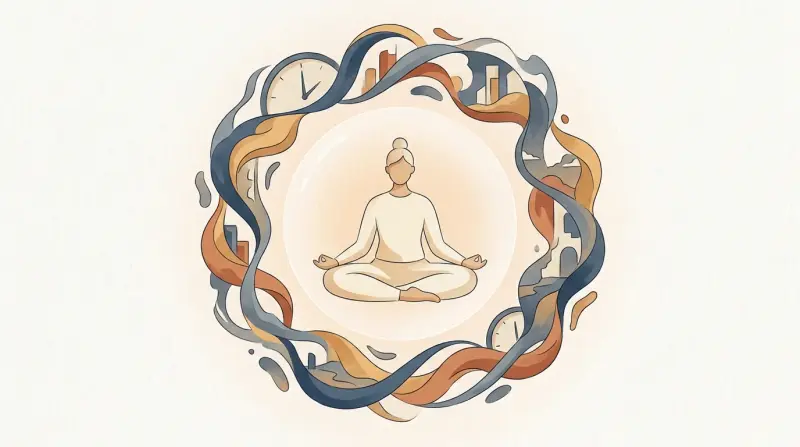
When we look at the history of meditation, we find that the Western world focused on tangible material achievements, while the East devoted most of its attention and accomplishments to people's inner spiritual development. For this reason, the major scientific and technological advances of the past 500 years arose in the West, while yogis and roshis in Asian monasteries were developing the inner arts of meditation.
Meditation and its techniques are no longer confined to the East. Today, we find broad agreement across the world's different schools and movements about the importance and benefits of meditation, making it a way of life for many people. This interest in meditation has emerged from an urgent human need, particularly in the present age, to balance our need for modern technology with our need to connect with our inner strength—and to reprogram the body, mind, and heart away from the artificiality of the machine.
Meditation is considered a suitable treatment for feelings of being lost, isolated, and alienated, and even for conditions related to depression and stress. It does not seek to solve the problem itself, but helps you develop the resilience, balance, and strength needed to overcome trauma and reach innovative solutions.
What Does Meditation Treat?
We explain the mechanism used by meditation in treatment by showing how it addresses the following problems:
1. Addiction:
Addiction distracts people from their pain and encourages them to set aside their usual worries and concerns. In addition to changing brain chemistry, addiction also tends to focus the mind on an addictive substance or activity, such as drugs, alcohol, or sex. Meditation works to correct this by encouraging the person with an addiction to open up to the reality of the life they are living and connect more effectively with themselves, enabling them to recognize their needs. It also encourages them to build a better way of life in which they can recognize their problems and learn how to solve them instead of escaping from them and destroying themselves.
2. Dogmatism:
Meditation enables you to view anything holistically and from more than one angle by inviting you to find simple answers to complex problems and create a sense of meaning and belonging. Dogmatism and intolerance—or what many understand as rigid, black-and-white thinking—provide fertile ground for ambiguity and alienation, even though life's complex circumstances cannot accommodate such rigidity. Meditation therefore encourages us to move beyond binaries such as black and white, good and bad, and us and them, and to view the world much more broadly.
3. Loneliness and Isolation:
Many of us confront feelings of loneliness or isolation by turning on the television or going to the cinema, believing that this will eliminate loneliness. These forms of entertainment cannot eliminate your loneliness. All they do is encourage you to ignore its causes and avoid thinking about them. Meditation, by contrast, directs your attention inward and gives you the opportunity to understand why you feel this way so that you can deal with it.
4. Greed:
Meditation gives practitioners the insight to recognize and refine their own needs. This can cause desires rooted in greed and possessiveness to fade, because through meditation they can rise above such desires and elevate themselves toward something greater.
Based on the above, treatment through meditation works by encouraging you to condition yourself to live with inner peace, facing life's difficulties with balance, happiness, and harmony while moving away from anxiety, stress, and dissatisfaction amid life's changes. All this requires only that you sit quietly and attune yourself to the present moment. In doing so, you enable yourself to respond to positive emotions and face life's difficulties in better ways.
Meditation enables you to create a metaphor for your life, such as imagining it as a sea with high waves that continually rise and fall. When you meditate, you dive beneath the surface into a quiet place where the water is calmer and steadier. Whatever metaphor you prefer, the important point is that meditation offers a way to transform stress and suffering into composure and ease.
How Does Meditation Change the Brain?
Seeing things from a broader and deeper perspective.
Strengthening the brain's ability to concentrate.
The ability to distinguish between reality, its demands, and the lesson it offers.
Unshakable inner peace that external circumstances cannot disturb.
Developing positive emotions, such as patience, love, kindness, balance, joy, and compassion for the suffering of others.
The ability to control bodily functions usually considered involuntary, such as heart rate, body temperature, and diet.
The ability to gather and direct vital energy through the body's different centers and channels for healing and personal transformation.
Developing special psychic powers, such as clairvoyance—the ability to perceive things beyond the range of ordinary perception—and psychokinesis—the ability to move objects remotely without touching them.
Meditation aims to encourage people to seek freedom from suffering, either by withdrawing from the world into a higher reality or by gaining profound insights into the nature of existence. Nevertheless, meditation skills, which have become widely available over the past few decades, can be used by the rest of us in ordinary, everyday ways to achieve some extraordinary benefits.
Benefits of Meditation for the Mind and Body:
Although the first scientific studies of meditation date back to the 1930s and 1940s, research into its psychological and physical effects began in the 1970s, accompanied by growing interest in Transcendental Meditation and other Eastern meditation techniques.
Michael Murphy has been a pioneer in exploring human potential since he co-founded the Esalen Institute in Big Sur, California, in 1962. Based on the findings of studies Murphy conducted, he and Donovan identified thebenefits of meditation for the body and mind.
1. Physical Benefits:
A lower heart rate during meditation.
Lower blood pressure among people with moderate hypertension.
Faster recovery from stress.
An increase in alpha-wave rhythm—slow, high-amplitude brain waves associated with relaxation.
Improved coordination between the brain's right and left hemispheres, which is positively associated with creativity.
Lower cholesterol levels.
Reduced energy consumption and need for oxygen.
Deeper, slower breathing.
Muscle relaxation.
Reduced pain intensity.
2. Psychological Benefits:
Greater happiness and peace of mind.
A reduction in intense negative emotions and thoughts and in mood swings.
Greater compassion.
Enhanced creativity and self-actualization.
Greater clarity and perceptual sensitivity.
Reduced feelings of acute and chronic anxiety.
A complement to psychotherapy and other approaches to addiction treatment.
You do not have to join a sect or be baptized, for example, to enjoy the benefits of meditation. Nor do you have to leave your daily life behind and escape to a monastery in the Himalayas. You simply need to meditate regularly without trying to get anywhere or achieve anything. Like interest in a money-market account, the benefits accumulate on their own.
What Happens After Meditation?
1. You Become Aware of the Present Moment
When your thoughts are focused on the obstacles ahead, you are constantly rushing toward the future and consuming the present by thinking about everything it holds. In doing so, you miss the beauty of the present moment as it continually unfolds before your eyes. Meditation teaches you to live every moment of your life fully and to receive each moment as it comes: sounds, traffic, the smell of new clothes, children's laughter, the worried look on an elderly woman's face, and your breath coming and going. In fact, as meditative traditions remind us, only the present moment exists anyway. The past is merely a memory, and the future is an imagined scene being projected onto the mind's movie screen right now.
2. Befriending Yourself
Being constantly preoccupied with the behavior of the people around you and their expectations of you, while continually placing yourself in a competitive environment, will not enable you to know yourself as you truly are. Competition and comparison may motivate self-improvement, but they can be painful and come at the expense of other things, such as creating a poor psychological state filled with negative feelings, including fear, anger, depression, and isolation. They may also prevent you from reaching your full potential.
Meditation teaches you to welcome every experience and every aspect of your existence without judgment or denial. In this process, you begin treating yourself as you would a close friend, accepting—and even loving—the whole package, including weaknesses and apparent flaws as well as positive qualities and strengths.
3. Connecting More Deeply with Others
When you are aware of yourself and your needs, this encourages you to open your heart and mind to your own experience. This openness will naturally extend into your relationships with family and friends, encouraging you to accept others as they are and breaking down barriers to genuine communication with them. All of this can be developed through meditation, which opens the way to deeper love between you and those around you.
4. Calming the Body and Mind
Contemporary researchers have discovered that the mind and body are inseparable, and that a tense mind inevitably produces an exhausted body. When the mind settles, relaxes, and opens during meditation, the body does the same. The longer you meditate—measured by the minutes recorded each day and by the days and weeks of regular practice—the more this calm and relaxation spreads throughout your life, including your health.
5. Finding Constructive Solutions
Constant thinking and worry produce only fear. Your life then becomes filled with problems that accumulate and feed on one another, ultimately causing them to grow. All this produces nothing but exhaustion and panic. Meditation encourages you to see difficulties and fears as temporary rather than lasting, allowing constructive solutions to emerge naturally.
6. Enjoying Greater Happiness
Practicing meditation every day for only a few months is enough to make people happier, as measured by their reactions to what happens around them. In fact, meditation appears to be the only thing that can permanently change your emotional responses, including feelings of happiness. Therefore, if you want lasting happiness, pioneering science and spiritual wisdom offer the same advice: forget winning the lottery or finding the perfect job, and start meditating instead.
7. Experiencing Concentration and Flow
When you are completely absorbed in an activity and every sense of self-consciousness and separation dissolves, you have entered what psychologist Mihaly Csikszentmihalyi calls the state of flow. For humans, this complete immersion represents pure enjoyment and offers the ultimate remedy for distraction and alienation. You have undoubtedly experienced moments like this while engaging with art, playing sports, working in the garden, or making love—experiences researchers describe as being in your zone. Through meditation, you can learn to give the same attention to every activity and gain the same enjoyment from it.
8. Feeling More Focused, Stable, and Balanced
To counter the growing insecurity of life in rapidly changing times, meditation offers inner security and balance that external circumstances cannot destroy. When you practice returning repeatedly to your body, breath, sensations, and feelings, you realize that you are always safe and grounded, wherever you go. When you befriend yourself in all your darker aspects, weaknesses, and strengths, you will no longer feel unstable, regardless of life's difficulties.
9. Improving Your Performance
Practicing basic meditation skills alone can enhance perceptual clarity, creativity, self-actualization, and many other factors that contribute to superior performance. In addition, specific meditations have been designed to improve performance in a variety of activities, from sports to schoolwork.
10. Increasing Appreciation, Gratitude, and Love
As you begin to open yourself to your experience without judgment or aversion, your heart gradually opens to yourself and others as well. You can practice specific meditations to cultivate appreciation, gratitude, and love. Or, as many meditators before you have found, these qualities may arise naturally when you can view the world with fresh eyes, free from habitual expectations.
11. Developing a Firm Belief in Purpose
As you practice moving from a state of doing and thinking to a state of being, you discover how to connect yourself with a deeper current of meaning and belonging. You may connect with personal feelings and aspirations that have long remained hidden from your awareness. Or you may connect with a more inclusive source of purpose and direction, which some people call guidance from the higher self or inner guidance.
12. Awakening to the Spiritual Dimension of Existence
As meditation gradually opens your mind to the possibilities within each irreplaceable moment, you may naturally begin to see the true meaning of reality and the things around you beyond the veil of appearances. Eventually, you may realize—and reaching this moment can take an entire lifetime—that this same sacred truth is, in fact, who you are at the core of your being.
This profound insight, which sages and teachers call awakening from the illusion of separation, ultimately penetrates and dispels loneliness and alienation, opening your mind to the beauty of the human condition.
Content writer and researcher at Tatmeen, writing in Arabic and English about mental health and everyday life, from relationships and stress to work, habits, and family.
Every Tatmeen article is reviewed by care providers licensed by the Saudi Commission for Health Specialties, so what you read is accurate and trustworthy.
This article builds understanding and does not replace a licensed care provider.
Need someone to talk to?
Tatmeen's licensed care providers are available around the clock, and the app's urgent consultation connects you with one within minutes.
Download Tatmeen to explore care providers and booking options.
Smart matchingFour quick questions suggest the right care provider
Urgent consultationTalk to an available care provider within minutes
Free psychological measuresMore than 20 tests to understand how you are doing
Scan to download
{"data":{"id":"a6b05fc6-1280-4a8a-b60d-f7a9e6dadefb","slug":"Benefits-of-meditation-for-the-mind-and-body","arTitle":"فوائد التأمل للعقل والجسم","enTitle":"Benefits of Meditation for the Mind and Body","thumbnailAltText":"Person sits cross-legged with one hand resting on a knee beside the sea","estimatedReadingTime":5,"likesCount":912,"writer":{"id":"d3defdb6-4a23-4b03-aad9-a1ecc054aae5","arBio":"كاتب وباحث محتوى في تطمين، يكتب بالعربية والإنجليزية عن الصحة النفسية والحياة اليومية، من العلاقات والضغوط إلى العمل والعادات والأسرة.\n","enBio":"Content writer and researcher at Tatmeen, writing in Arabic and English about mental health and everyday life, from relationships and stress to work, habits, and family.","user":{"slug":"fahad-almalik","arFullName":"فهد المالك","enFullName":"Fahad Almalik","publicProfileImageUrl":"https://cdn.tatmeen.sa/public/profile-images/a34c8028-5847-45de-ab83-a014942bb7d3/675415e988c16442a04af5d3b8899242613a955c44e0364314cc3ff74cbad082.webp","publicProfileImage96Url":"https://cdn.tatmeen.sa/public/profile-images/a34c8028-5847-45de-ab83-a014942bb7d3/675415e988c16442a04af5d3b8899242613a955c44e0364314cc3ff74cbad082-w96.webp","publicProfileImage192Url":"https://cdn.tatmeen.sa/public/profile-images/a34c8028-5847-45de-ab83-a014942bb7d3/675415e988c16442a04af5d3b8899242613a955c44e0364314cc3ff74cbad082-w192.webp"}},"arContent":"","enContent":"","productionDocument":{"headings":[{"id":"article-section-what-does-meditation-treat","text":"What Does Meditation Treat?"},{"id":"article-section-how-does-meditation-change-the-brain","text":"How Does Meditation Change the Brain?"},{"id":"article-section-benefits-of-meditation-for-the-mind-and-body","text":"Benefits of Meditation for the Mind and Body:"},{"id":"article-section-what-happens-after-meditation","text":"What Happens After Meditation?"}],"faqs":[],"beforeSourcesHtml":"","sources":[],"afterSourcesHtml":"","blocks":[{"type":"html","html":"<p class=\"ql-align-right ql-direction-rtl\">When we look at the history of meditation, we find that the Western world focused on tangible material achievements, while the East devoted most of its attention and accomplishments to people's inner spiritual development. For this reason, the major scientific and technological advances of the past 500 years arose in the West, while yogis and roshis in Asian monasteries were developing the inner arts of meditation.</p><p class=\"ql-align-right ql-direction-rtl\">Meditation and its techniques are no longer confined to the East. Today, we find broad agreement across the world's different schools and movements about the importance and benefits of meditation, making it a way of life for many people. This interest in meditation has emerged from an urgent human need, particularly in the present age, to balance our need for modern technology with our need to connect with our inner strength—and to reprogram the body, mind, and heart away from the artificiality of the machine.</p><p class=\"ql-align-right ql-direction-rtl\">Meditation is considered a suitable treatment for feelings of being lost, isolated, and alienated, and even for conditions related to depression and stress. It does not seek to solve the problem itself, but helps you develop the resilience, balance, and strength needed to overcome trauma and reach innovative solutions.</p><h2 class=\"ql-align-right ql-direction-rtl\" id=\"article-section-what-does-meditation-treat\" data-toc-heading tabindex=\"-1\"><span id=\"what-does-meditation-treat-1\" aria-hidden=\"true\"></span><strong>What Does Meditation Treat?</strong></h2><p class=\"ql-align-right ql-direction-rtl\">We explain the mechanism used by meditation in treatment by showing how it addresses the following problems:</p><h3 class=\"ql-align-right ql-direction-rtl\"><strong>1. Addiction:</strong></h3><p class=\"ql-align-right ql-direction-rtl\">Addiction distracts people from their pain and encourages them to set aside their usual worries and concerns. In addition to changing brain chemistry, addiction also tends to focus the mind on an addictive substance or activity, such as drugs, alcohol, or sex. Meditation works to correct this by encouraging the person with an addiction to open up to the reality of the life they are living and connect more effectively with themselves, enabling them to recognize their needs. It also encourages them to build a better way of life in which they can recognize their problems and learn how to solve them instead of escaping from them and destroying themselves.</p><h3 class=\"ql-align-right ql-direction-rtl\"><strong>2. Dogmatism:</strong></h3><p class=\"ql-align-right ql-direction-rtl\">Meditation enables you to view anything holistically and from more than one angle by inviting you to find simple answers to complex problems and create a sense of meaning and belonging. Dogmatism and intolerance—or what many understand as rigid, black-and-white thinking—provide fertile ground for ambiguity and alienation, even though life's complex circumstances cannot accommodate such rigidity. Meditation therefore encourages us to move beyond binaries such as black and white, good and bad, and us and them, and to view the world much more broadly.</p><h3 class=\"ql-align-right ql-direction-rtl\"><strong>3. Loneliness and Isolation:</strong></h3><p class=\"ql-align-right ql-direction-rtl\">Many of us confront feelings of loneliness or isolation by turning on the television or going to the cinema, believing that this will eliminate loneliness. These forms of entertainment cannot eliminate your loneliness. All they do is encourage you to ignore its causes and avoid thinking about them. Meditation, by contrast, directs your attention inward and gives you the opportunity to understand why you feel this way so that you can deal with it.</p><h3 class=\"ql-align-right ql-direction-rtl\"><strong>4. Greed:</strong></h3><p class=\"ql-align-right ql-direction-rtl\">Meditation gives practitioners the insight to recognize and refine their own needs. This can cause desires rooted in greed and possessiveness to fade, because through meditation they can rise above such desires and elevate themselves toward something greater.</p><p class=\"ql-align-right ql-direction-rtl\">Based on the above, treatment through meditation works by encouraging you to condition yourself to live with inner peace, facing life's difficulties with balance, happiness, and harmony while moving away from anxiety, stress, and dissatisfaction amid life's changes. All this requires only that you sit quietly and attune yourself to the present moment. In doing so, you enable yourself to respond to positive emotions and face life's difficulties in better ways.</p><p class=\"ql-align-right ql-direction-rtl\">Meditation enables you to create a metaphor for your life, such as imagining it as a sea with high waves that continually rise and fall. When you meditate, you dive beneath the surface into a quiet place where the water is calmer and steadier. Whatever metaphor you prefer, the important point is that meditation offers a way to transform stress and suffering into composure and ease.</p><h2 class=\"ql-align-right ql-direction-rtl\" id=\"article-section-how-does-meditation-change-the-brain\" data-toc-heading tabindex=\"-1\"><span id=\"how-does-meditation-change-the-brain-2\" aria-hidden=\"true\"></span><strong>How Does Meditation Change the Brain?</strong></h2><ol><li class=\"ql-align-right ql-direction-rtl\">Seeing things from a broader and deeper perspective.</li><li class=\"ql-align-right ql-direction-rtl\">Strengthening the brain's ability to concentrate.</li><li class=\"ql-align-right ql-direction-rtl\">The ability to distinguish between reality, its demands, and the lesson it offers.</li><li class=\"ql-align-right ql-direction-rtl\">Unshakable inner peace that external circumstances cannot disturb.</li><li class=\"ql-align-right ql-direction-rtl\">Developing positive emotions, such as patience, love, kindness, balance, joy, and compassion for the suffering of others.</li><li class=\"ql-align-right ql-direction-rtl\">The ability to control bodily functions usually considered involuntary, such as heart rate, body temperature, and diet.</li><li class=\"ql-align-right ql-direction-rtl\">The ability to gather and direct vital energy through the body's different centers and channels for healing and personal transformation.</li><li class=\"ql-align-right ql-direction-rtl\">Developing special psychic powers, such as clairvoyance—the ability to perceive things beyond the range of ordinary perception—and psychokinesis—the ability to move objects remotely without touching them.</li></ol><p class=\"ql-align-right ql-direction-rtl\">Meditation aims to encourage people to seek freedom from suffering, either by withdrawing from the world into a higher reality or by gaining profound insights into the nature of existence. Nevertheless, meditation skills, which have become widely available over the past few decades, can be used by the rest of us in ordinary, everyday ways to achieve some extraordinary benefits.</p><h2 class=\"ql-align-right ql-direction-rtl\" id=\"article-section-benefits-of-meditation-for-the-mind-and-body\" data-toc-heading tabindex=\"-1\"><span id=\"benefits-of-meditation-for-the-mind-and-body-3\" aria-hidden=\"true\"></span><strong>Benefits of Meditation for the Mind and Body:</strong></h2><p class=\"ql-align-right ql-direction-rtl\">Although the first scientific studies of meditation date back to the 1930s and 1940s, research into its psychological and physical effects began in the 1970s, accompanied by growing interest in Transcendental Meditation and other Eastern meditation techniques.</p><p class=\"ql-align-right ql-direction-rtl\">Michael Murphy has been a pioneer in exploring human potential since he co-founded the Esalen Institute in Big Sur, California, in 1962. Based on the findings of studies Murphy conducted, he and Donovan identified the<strong>benefits of meditation for the body and mind.</strong></p><h3 class=\"ql-align-right ql-direction-rtl\"><strong>1. Physical Benefits:</strong></h3><ul><li class=\"ql-align-right ql-direction-rtl\">A lower heart rate during meditation.</li><li class=\"ql-align-right ql-direction-rtl\">Lower blood pressure among people with moderate hypertension.</li><li class=\"ql-align-right ql-direction-rtl\">Faster recovery from stress.</li><li class=\"ql-align-right ql-direction-rtl\">An increase in alpha-wave rhythm—slow, high-amplitude brain waves associated with relaxation.</li><li class=\"ql-align-right ql-direction-rtl\">Improved coordination between the brain's right and left hemispheres, which is positively associated with creativity.</li><li class=\"ql-align-right ql-direction-rtl\">Lower cholesterol levels.</li><li class=\"ql-align-right ql-direction-rtl\">Reduced energy consumption and need for oxygen.</li><li class=\"ql-align-right ql-direction-rtl\">Deeper, slower breathing.</li><li class=\"ql-align-right ql-direction-rtl\">Muscle relaxation.</li><li class=\"ql-align-right ql-direction-rtl\"><strong>Reduced pain intensity.</strong></li></ul><h3 class=\"ql-align-right ql-direction-rtl\"><strong>2. Psychological Benefits:</strong></h3><ul><li class=\"ql-align-right ql-direction-rtl\">Greater happiness and peace of mind.</li><li class=\"ql-align-right ql-direction-rtl\">A reduction in intense negative emotions and thoughts and in mood swings.</li><li class=\"ql-align-right ql-direction-rtl\">Greater compassion.</li><li class=\"ql-align-right ql-direction-rtl\">Enhanced creativity and self-actualization.</li><li class=\"ql-align-right ql-direction-rtl\">Greater clarity and perceptual sensitivity.</li><li class=\"ql-align-right ql-direction-rtl\">Reduced feelings of acute and chronic anxiety.</li><li class=\"ql-align-right ql-direction-rtl\">A complement to psychotherapy and other approaches to addiction treatment.</li></ul><p class=\"ql-align-right ql-direction-rtl\">You do not have to join a sect or be baptized, for example, to enjoy the benefits of meditation. Nor do you have to leave your daily life behind and escape to a monastery in the Himalayas. You simply need to meditate regularly without trying to get anywhere or achieve anything. Like interest in a money-market account, the benefits accumulate on their own.</p><h2 class=\"ql-align-right ql-direction-rtl\" id=\"article-section-what-happens-after-meditation\" data-toc-heading tabindex=\"-1\"><span id=\"what-happens-after-meditation-4\" aria-hidden=\"true\"></span><strong>What Happens After Meditation?</strong></h2><h3 class=\"ql-align-right ql-direction-rtl\"><strong>1. You Become Aware of the Present Moment</strong></h3><p class=\"ql-align-right ql-direction-rtl\">When your thoughts are focused on the obstacles ahead, you are constantly rushing toward the future and consuming the present by thinking about everything it holds. In doing so, you miss the beauty of the present moment as it continually unfolds before your eyes. Meditation teaches you to live every moment of your life fully and to receive each moment as it comes: sounds, traffic, the smell of new clothes, children's laughter, the worried look on an elderly woman's face, and your breath coming and going. In fact, as meditative traditions remind us, only the present moment exists anyway. The past is merely a memory, and the future is an imagined scene being projected onto the mind's movie screen right now.</p><h3 class=\"ql-align-right ql-direction-rtl\"><strong>2. Befriending Yourself</strong></h3><p class=\"ql-align-right ql-direction-rtl\">Being constantly preoccupied with the behavior of the people around you and their expectations of you, while continually placing yourself in a competitive environment, will not enable you to know yourself as you truly are. Competition and comparison may motivate self-improvement, but they can be painful and come at the expense of other things, such as creating a poor psychological state filled with negative feelings, including fear, anger, depression, and isolation. They may also prevent you from reaching your full potential.</p><p class=\"ql-align-right ql-direction-rtl\">Meditation teaches you to welcome every experience and every aspect of your existence without judgment or denial. In this process, you begin treating yourself as you would a close friend, accepting—and even loving—the whole package, including weaknesses and apparent flaws as well as positive qualities and strengths.</p><h3 class=\"ql-align-right ql-direction-rtl\"><strong>3. Connecting More Deeply with Others</strong></h3><p class=\"ql-align-right ql-direction-rtl\">When you are aware of yourself and your needs, this encourages you to open your heart and mind to your own experience. This openness will naturally extend into your relationships with family and friends, encouraging you to accept others as they are and breaking down barriers to genuine communication with them. All of this can be developed through meditation, which opens the way to deeper love between you and those around you.</p><h3 class=\"ql-align-right ql-direction-rtl\"><strong>4. Calming the Body and Mind</strong></h3><p class=\"ql-align-right ql-direction-rtl\">Contemporary researchers have discovered that the mind and body are inseparable, and that a tense mind inevitably produces an exhausted body. When the mind settles, relaxes, and opens during meditation, the body does the same. The longer you meditate—measured by the minutes recorded each day and by the days and weeks of regular practice—the more this calm and relaxation spreads throughout your life, including your health.</p><h3 class=\"ql-align-right ql-direction-rtl\"><strong>5. Finding Constructive Solutions</strong></h3><p class=\"ql-align-right ql-direction-rtl\">Constant thinking and worry produce only fear. Your life then becomes filled with problems that accumulate and feed on one another, ultimately causing them to grow. All this produces nothing but exhaustion and panic. Meditation encourages you to see difficulties and fears as temporary rather than lasting, allowing constructive solutions to emerge naturally.</p><h3 class=\"ql-align-right ql-direction-rtl\"><strong>6. Enjoying Greater Happiness</strong></h3><p class=\"ql-align-right ql-direction-rtl\">Practicing meditation every day for only a few months is enough to make people happier, as measured by their reactions to what happens around them. In fact, meditation appears to be the only thing that can permanently change your emotional responses, including feelings of happiness. Therefore, if you want lasting happiness, pioneering science and spiritual wisdom offer the same advice: forget winning the lottery or finding the perfect job, and start meditating instead.</p><h3 class=\"ql-align-right ql-direction-rtl\"><strong>7. Experiencing Concentration and Flow</strong></h3><p class=\"ql-align-right ql-direction-rtl\">When you are completely absorbed in an activity and every sense of self-consciousness and separation dissolves, you have entered what psychologist Mihaly Csikszentmihalyi calls the state of flow. For humans, this complete immersion represents pure enjoyment and offers the ultimate remedy for distraction and alienation. You have undoubtedly experienced moments like this while engaging with art, playing sports, working in the garden, or making love—experiences researchers describe as being in your zone. Through meditation, you can learn to give the same attention to every activity and gain the same enjoyment from it.</p><h3 class=\"ql-align-right ql-direction-rtl\"><strong>8. Feeling More Focused, Stable, and Balanced</strong></h3><p class=\"ql-align-right ql-direction-rtl\">To counter the growing insecurity of life in rapidly changing times, meditation offers inner security and balance that external circumstances cannot destroy. When you practice returning repeatedly to your body, breath, sensations, and feelings, you realize that you are always safe and grounded, wherever you go. When you befriend yourself in all your darker aspects, weaknesses, and strengths, you will no longer feel unstable, regardless of life's difficulties.</p><h3 class=\"ql-align-right ql-direction-rtl\"><strong>9. Improving Your Performance</strong></h3><p class=\"ql-align-right ql-direction-rtl\">Practicing basic meditation skills alone can enhance perceptual clarity, creativity, self-actualization, and many other factors that contribute to superior performance. In addition, specific meditations have been designed to improve performance in a variety of activities, from sports to schoolwork.</p><h3 class=\"ql-align-right ql-direction-rtl\"><strong>10. Increasing Appreciation, Gratitude, and Love</strong></h3><p class=\"ql-align-right ql-direction-rtl\">As you begin to open yourself to your experience without judgment or aversion, your heart gradually opens to yourself and others as well. You can practice specific meditations to cultivate appreciation, gratitude, and love. Or, as many meditators before you have found, these qualities may arise naturally when you can view the world with fresh eyes, free from habitual expectations.</p><h3 class=\"ql-align-right ql-direction-rtl\"><strong>11. Developing a Firm Belief in Purpose</strong></h3><p class=\"ql-align-right ql-direction-rtl\">As you practice moving from a state of doing and thinking to a state of being, you discover how to connect yourself with a deeper current of meaning and belonging. You may connect with personal feelings and aspirations that have long remained hidden from your awareness. Or you may connect with a more inclusive source of purpose and direction, which some people call guidance from the higher self or inner guidance.</p><h3 class=\"ql-align-right ql-direction-rtl\"><strong>12. Awakening to the Spiritual Dimension of Existence</strong></h3><p class=\"ql-align-right ql-direction-rtl\">As meditation gradually opens your mind to the possibilities within each irreplaceable moment, you may naturally begin to see the true meaning of reality and the things around you beyond the veil of appearances. Eventually, you may realize—and reaching this moment can take an entire lifetime—that this same sacred truth is, in fact, who you are at the core of your being.</p><p class=\"ql-align-right ql-direction-rtl\">This profound insight, which sages and teachers call awakening from the illusion of separation, ultimately penetrates and dispels loneliness and alienation, opening your mind to the beauty of the human condition.</p><p><br /></p>"}],"inlineCtaSignatures":[],"_experienceAliases":{"v":1,"fields":["html","bodyHtml"]}},"createdAt":"2024-01-07T21:00:00.000Z","updatedAt":"2026-08-11T04:45:02.303Z","disorderGroups":[{"id":"d807ea69-44d4-4e81-bee4-0a059fd36645","slug":"self-development","arName":"تنمية الذات","enName":"Self-Development"}],"reviewer":{"arFullName":"فريق تطمين","enFullName":"Tatmeen team","slug":"tatmeen-team","kind":"organization"},"productionArticle":true,"promotionAllowed":true,"preparedCover":{"src":"https://cdn.tatmeen.sa/public/article-lcp/article-lcp-v2/sha256-9081a5c8e488f1d98967d3d0f24bb5da1efd9cb8e9708f909f49056e66862cb3/600-642c4595d6d96fadda03027c1bdf9b2502fa87d4b04a7b15fb2d6377c3cc2539.avif","fallback":"https://cdn.tatmeen.sa/public/article-lcp/article-lcp-v2/sha256-9081a5c8e488f1d98967d3d0f24bb5da1efd9cb8e9708f909f49056e66862cb3/600-c842cdd237e77b9d1f038112b1ee582daf43050c5888db8abcc973e9892c63ae.webp","directUrl":"https://cdn.tatmeen.sa/blog-cover/1704731885037-Tatmeen-img-721","isGolden":true,"avifSrcset":"https://cdn.tatmeen.sa/public/article-lcp/article-lcp-v2/sha256-9081a5c8e488f1d98967d3d0f24bb5da1efd9cb8e9708f909f49056e66862cb3/400-de6c99c6e0b4fab003e595fca376c56f3fb846a5a79934f9757676c26e6f5d9d.avif 400w, https://cdn.tatmeen.sa/public/article-lcp/article-lcp-v2/sha256-9081a5c8e488f1d98967d3d0f24bb5da1efd9cb8e9708f909f49056e66862cb3/600-642c4595d6d96fadda03027c1bdf9b2502fa87d4b04a7b15fb2d6377c3cc2539.avif 600w","webpSrcset":"https://cdn.tatmeen.sa/public/article-lcp/article-lcp-v2/sha256-9081a5c8e488f1d98967d3d0f24bb5da1efd9cb8e9708f909f49056e66862cb3/400-d67560bc8d9afacfc7662a2435942ea8c2037221e7bfa56c3c5d429aa7d64df1.webp 400w, https://cdn.tatmeen.sa/public/article-lcp/article-lcp-v2/sha256-9081a5c8e488f1d98967d3d0f24bb5da1efd9cb8e9708f909f49056e66862cb3/600-c842cdd237e77b9d1f038112b1ee582daf43050c5888db8abcc973e9892c63ae.webp 600w","phoneAvifSrcset":"https://cdn.tatmeen.sa/public/article-lcp/article-lcp-v2/sha256-9081a5c8e488f1d98967d3d0f24bb5da1efd9cb8e9708f909f49056e66862cb3/400-de6c99c6e0b4fab003e595fca376c56f3fb846a5a79934f9757676c26e6f5d9d.avif 400w, https://cdn.tatmeen.sa/public/article-lcp/article-lcp-v2/sha256-9081a5c8e488f1d98967d3d0f24bb5da1efd9cb8e9708f909f49056e66862cb3/600-642c4595d6d96fadda03027c1bdf9b2502fa87d4b04a7b15fb2d6377c3cc2539.avif 600w","phoneWebpSrcset":"https://cdn.tatmeen.sa/public/article-lcp/article-lcp-v2/sha256-9081a5c8e488f1d98967d3d0f24bb5da1efd9cb8e9708f909f49056e66862cb3/400-d67560bc8d9afacfc7662a2435942ea8c2037221e7bfa56c3c5d429aa7d64df1.webp 400w, https://cdn.tatmeen.sa/public/article-lcp/article-lcp-v2/sha256-9081a5c8e488f1d98967d3d0f24bb5da1efd9cb8e9708f909f49056e66862cb3/600-c842cdd237e77b9d1f038112b1ee582daf43050c5888db8abcc973e9892c63ae.webp 600w","width":600,"height":400},"previewTaxonomy":{"groups":[{"id":"d807ea69-44d4-4e81-bee4-0a059fd36645","slug":"self-development","arName":"تنمية الذات","enName":"Self-Development"}],"topics":[{"id":"12d3f617-fbdf-4a76-9b59-bcf5a6cce447","slug":"mindfulness","arName":"اليقظة الذهنية","enName":"Mindfulness","groupSlug":"self-development","href":"/blog/category/self-development/mindfulness/"}],"tags":[{"id":"c6f3b756-bd7d-4a70-ab6c-fc7a2ce44532","slug":"meditation-mindfulness","arName":"التأمل واليقظة الذهنية","enName":"Meditation & Mindfulness"},{"id":"b897e937-ea28-464a-8ff7-12db934a625c","slug":"mind-body-connection","arName":"العلاقة بين الجسد والنفس","enName":"Mind-Body Connection"},{"id":"c2a6e8d3-de9c-435f-8c95-9727e7db14cc","slug":"explainer-awareness","arName":"دليل توعوي / شرح","enName":"Explainer / Awareness Guide"}]},"previewProviderRecommendations":[{"id":"7771d078-cbd9-4acd-aa51-29cc905753c4","slug":"hatim-jafaari-2902","arFullName":"حاتم جعفرى","enFullName":"Hatim Jafaari","publicProfileImageUrl":"https://cdn.tatmeen.sa/public/profile-images/7771d078-cbd9-4acd-aa51-29cc905753c4/874a489ca72b87dacbde76d8496eef84ca341ee8074b9ec54464cd0a56bbdbe6.webp","publicProfileImage96Url":"https://cdn.tatmeen.sa/public/profile-images/7771d078-cbd9-4acd-aa51-29cc905753c4/874a489ca72b87dacbde76d8496eef84ca341ee8074b9ec54464cd0a56bbdbe6-w96.webp","publicProfileImage192Url":"https://cdn.tatmeen.sa/public/profile-images/7771d078-cbd9-4acd-aa51-29cc905753c4/874a489ca72b87dacbde76d8496eef84ca341ee8074b9ec54464cd0a56bbdbe6-w192.webp","specialization":{"arName":"أخصائي نفسي","enName":"Psychologist"},"profileImageUrl":"https://cdn.tatmeen.sa/public/profile-images/7771d078-cbd9-4acd-aa51-29cc905753c4/874a489ca72b87dacbde76d8496eef84ca341ee8074b9ec54464cd0a56bbdbe6-w192.webp","experienceYears":2,"consultantInfo":{"averageRating":{"average":5},"specialization":{"arGeneralName":"أخصائي نفسي","enGeneralName":"Psychologist"}}},{"id":"5520abac-2d83-4b20-a11d-f63055316699","slug":"maha-alawad-4831","arFullName":"مها العواد","enFullName":"Maha Alawad","publicProfileImageUrl":"","publicProfileImage96Url":"","publicProfileImage192Url":"","specialization":{"arName":"أخصائي نفسي","enName":"Psychologist"},"profileImageUrl":"","experienceYears":13,"consultantInfo":{"averageRating":{"average":4.846153846153846},"specialization":{"arGeneralName":"أخصائي نفسي","enGeneralName":"Psychologist"}}},{"id":"a4a1f8a4-87a7-4447-8667-0bbf3fae006a","slug":"ghadah-alghamdi-2904","arFullName":"غاده الغامدي","enFullName":"Ghadah Alghamdi","publicProfileImageUrl":"","publicProfileImage96Url":"","publicProfileImage192Url":"","specialization":{"arName":"أخصائي نفسي","enName":"Psychologist"},"profileImageUrl":"","experienceYears":18,"consultantInfo":{"averageRating":{"average":0},"specialization":{"arGeneralName":"أخصائي نفسي","enGeneralName":"Psychologist"}}}],"previewCareProviders":[{"id":"09364052-c2a9-4c52-9717-7ce2093b8d0a","slug":"kholoud-alharbi-5221","arFullName":"خلود الحربي","enFullName":"Kholoud Alharbi","publicProfileImageUrl":"https://cdn.tatmeen.sa/public/profile-images/09364052-c2a9-4c52-9717-7ce2093b8d0a/4a0aeb81619e351b77f4323e3605a0a00acc7ca3c82ee7cc5ca2c9e8ef716049.webp","publicProfileImage96Url":"https://cdn.tatmeen.sa/public/profile-images/09364052-c2a9-4c52-9717-7ce2093b8d0a/4a0aeb81619e351b77f4323e3605a0a00acc7ca3c82ee7cc5ca2c9e8ef716049-w96.webp","publicProfileImage192Url":"https://cdn.tatmeen.sa/public/profile-images/09364052-c2a9-4c52-9717-7ce2093b8d0a/4a0aeb81619e351b77f4323e3605a0a00acc7ca3c82ee7cc5ca2c9e8ef716049-w192.webp","gender":"FEMALE","specialization":{"arName":"أخصائي نفسي","enName":"Psychologist"}},{"id":"6f037535-1dca-4b50-a8b2-5974b7323286","slug":"salah-althobaiti-9053","arFullName":"صلاح الثبيتي","enFullName":"Salah Althobaiti","publicProfileImageUrl":"https://cdn.tatmeen.sa/public/profile-images/6f037535-1dca-4b50-a8b2-5974b7323286/35b6bd7fad9b1e004c1835803eb9c1b56dcacd380685ec8bff141f0fb888005c.webp","publicProfileImage96Url":"https://cdn.tatmeen.sa/public/profile-images/6f037535-1dca-4b50-a8b2-5974b7323286/35b6bd7fad9b1e004c1835803eb9c1b56dcacd380685ec8bff141f0fb888005c-w96.webp","publicProfileImage192Url":"https://cdn.tatmeen.sa/public/profile-images/6f037535-1dca-4b50-a8b2-5974b7323286/35b6bd7fad9b1e004c1835803eb9c1b56dcacd380685ec8bff141f0fb888005c-w192.webp","gender":"MALE","specialization":{"arName":"أخصائي نفسي","enName":"Psychologist"}},{"id":"3cc806e8-616b-4884-9f21-a75b378580a2","slug":"aisha-al-hashim-8667","arFullName":"عائشة ال هاشم","enFullName":"Aisha Al Hashim","publicProfileImageUrl":"https://cdn.tatmeen.sa/public/profile-images/3cc806e8-616b-4884-9f21-a75b378580a2/27f523d03be4dcfa1f6a79f70c1773887434e698990d214cd990caec56a44798.webp","publicProfileImage96Url":"https://cdn.tatmeen.sa/public/profile-images/3cc806e8-616b-4884-9f21-a75b378580a2/27f523d03be4dcfa1f6a79f70c1773887434e698990d214cd990caec56a44798-w96.webp","publicProfileImage192Url":"https://cdn.tatmeen.sa/public/profile-images/3cc806e8-616b-4884-9f21-a75b378580a2/27f523d03be4dcfa1f6a79f70c1773887434e698990d214cd990caec56a44798-w192.webp","gender":"FEMALE","specialization":{"arName":"أخصائي نفسي","enName":"Psychologist"}},{"id":"db2ce1a0-9325-4471-b7ce-eb2e811c30a3","slug":"amer-qutub-2441","arFullName":"عامر قطب","enFullName":"Amer Qutub","publicProfileImageUrl":"https://cdn.tatmeen.sa/public/profile-images/db2ce1a0-9325-4471-b7ce-eb2e811c30a3/80580f99bfd7fe2b2a9cf8eed73ab532f5086d1efe053b0aa57358c1ce004261.webp","publicProfileImage96Url":"https://cdn.tatmeen.sa/public/profile-images/db2ce1a0-9325-4471-b7ce-eb2e811c30a3/80580f99bfd7fe2b2a9cf8eed73ab532f5086d1efe053b0aa57358c1ce004261-w96.webp","publicProfileImage192Url":"https://cdn.tatmeen.sa/public/profile-images/db2ce1a0-9325-4471-b7ce-eb2e811c30a3/80580f99bfd7fe2b2a9cf8eed73ab532f5086d1efe053b0aa57358c1ce004261-w192.webp","gender":"MALE","specialization":{"arName":"أخصائي نفسي","enName":"Psychologist"}},{"id":"94765496-dbdf-4631-a01b-7df5f788668d","slug":"abdullrahman-alhamoudi-3045","arFullName":"عبدالرحمن الحمودي","enFullName":"Abdulrahman Alhamoudi","publicProfileImageUrl":"https://cdn.tatmeen.sa/public/profile-images/94765496-dbdf-4631-a01b-7df5f788668d/2d49f6b6493c564afb6f50b6c3634231dff3a5cf8353acfab393d1b2a88037d1.webp","publicProfileImage96Url":"https://cdn.tatmeen.sa/public/profile-images/94765496-dbdf-4631-a01b-7df5f788668d/2d49f6b6493c564afb6f50b6c3634231dff3a5cf8353acfab393d1b2a88037d1-w96.webp","publicProfileImage192Url":"https://cdn.tatmeen.sa/public/profile-images/94765496-dbdf-4631-a01b-7df5f788668d/2d49f6b6493c564afb6f50b6c3634231dff3a5cf8353acfab393d1b2a88037d1-w192.webp","gender":"MALE","specialization":{"arName":"أخصائي نفسي","enName":"Psychologist"}},{"id":"618dba89-5b70-4b46-8304-741b7ac8ecd3","slug":"abdullah-mari-1311","arFullName":"عبدالله مرعي","enFullName":"Abdullah Mari","publicProfileImageUrl":"https://cdn.tatmeen.sa/public/profile-images/618dba89-5b70-4b46-8304-741b7ac8ecd3/6b4a3bfb59f8a304ca79083b32859b46baad2e1d692974a47c02c1f66bd11129.webp","publicProfileImage96Url":"https://cdn.tatmeen.sa/public/profile-images/618dba89-5b70-4b46-8304-741b7ac8ecd3/6b4a3bfb59f8a304ca79083b32859b46baad2e1d692974a47c02c1f66bd11129-w96.webp","publicProfileImage192Url":"https://cdn.tatmeen.sa/public/profile-images/618dba89-5b70-4b46-8304-741b7ac8ecd3/6b4a3bfb59f8a304ca79083b32859b46baad2e1d692974a47c02c1f66bd11129-w192.webp","gender":"MALE","specialization":{"arName":"أخصائي نفسي","enName":"Psychologist"}},{"id":"3b50a5d5-e795-407f-8676-fd7f0e1bb7a0","slug":"abdulaziz-bin-hudayan-4940","arFullName":"عبدالعزيز بن هديان","enFullName":"Abdulaziz Bin Hudayan","publicProfileImageUrl":"https://cdn.tatmeen.sa/public/profile-images/3b50a5d5-e795-407f-8676-fd7f0e1bb7a0/710ff0fe1fb00cdb5042092e27b7910b480a439b02251ecded62d7758eefce95.webp","publicProfileImage96Url":"https://cdn.tatmeen.sa/public/profile-images/3b50a5d5-e795-407f-8676-fd7f0e1bb7a0/710ff0fe1fb00cdb5042092e27b7910b480a439b02251ecded62d7758eefce95-w96.webp","publicProfileImage192Url":"https://cdn.tatmeen.sa/public/profile-images/3b50a5d5-e795-407f-8676-fd7f0e1bb7a0/710ff0fe1fb00cdb5042092e27b7910b480a439b02251ecded62d7758eefce95-w192.webp","gender":"MALE","specialization":{"arName":"أخصائي نفسي","enName":"Psychologist"}},{"id":"d4ffcb6b-90a7-45b6-b941-964866f4564b","slug":"dhaifallah-alhumaidi-1092","arFullName":"ضيف الله الحميدي","enFullName":"Dhaifallah Alhumaidi","publicProfileImageUrl":"https://cdn.tatmeen.sa/public/profile-images/d4ffcb6b-90a7-45b6-b941-964866f4564b/1817171c5828a9b57d6c30d12332cf154e335272548bc90a6e8456d74d356956.webp","publicProfileImage96Url":"https://cdn.tatmeen.sa/public/profile-images/d4ffcb6b-90a7-45b6-b941-964866f4564b/1817171c5828a9b57d6c30d12332cf154e335272548bc90a6e8456d74d356956-w96.webp","publicProfileImage192Url":"https://cdn.tatmeen.sa/public/profile-images/d4ffcb6b-90a7-45b6-b941-964866f4564b/1817171c5828a9b57d6c30d12332cf154e335272548bc90a6e8456d74d356956-w192.webp","gender":"MALE","specialization":{"arName":"أخصائي نفسي","enName":"Psychologist"}}],"previewDownload":{"href":"/download","title":{"ar":"خطوة واحدة لأجلك، ابدأ الآن","en":"One step for you, start now"},"description":{"ar":"حمّل تطبيق تطمين لاستكشاف مقدمي الرعاية وخيارات الحجز.","en":"Download Tatmeen to explore care providers and booking options."},"posterSrc":"/images/home/cta-ar-new-1.webp","videoSrc":"/images/home/cta-ar-new-1.mp4","videoPosterSrc":"/images/home/cta-ar-new-1.webp","videoPosterEnSrc":"/images/home/cta-en-new-1.webp","videoType":"video/mp4","appStoreHref":"https://apps.apple.com/us/app/tatmeen-%D8%AA%D8%B7%D9%85%D9%8A%D9%86/id6473836983","googlePlayHref":"https://play.google.com/store/apps/details?id=com.TatmeenApp.user&hl=en"},"previewRelatedArticles":[{"id":"f02c171e-4352-4059-900c-f4fecb49e55c","slug":"Mindfulness-meditation-for-stress-reduction","route":"/blog/Mindfulness-meditation-for-stress-reduction/","title":{"ar":"التأمل: كيف يساعدنا التأمل على الحد من الضغط النفسي؟","en":"How Meditation Helps Reduce Psychological Stress"},"image":"https://cdn.tatmeen.sa/public/article-lcp/article-lcp-v2/sha256-6ff40dad90f2ea2a83765a4cd29683de38b91d43b5d52cad2ccde0e791e3d53a/600-70fb6396843e599ed4055a24d2e850807d6461b0ef9a19fcf63b86a530df1e82.webp","directImageFallback":"https://cdn.tatmeen.sa/blog-cover/1704731692392-Tatmeen-img-537","arThumbnailAltText":"Smooth stones stacked on a rocky beach at sunset","thumbnailAltText":"Smooth stones stacked on a rocky beach at sunset","topic":{"label":{"ar":"تنمية الذات","en":"Self-Development"}},"readingTimeMinutes":5},{"id":"27b3a8af-3e9a-4e26-82f5-eccb481f4233","slug":"connecting_with_core_emotions","route":"/blog/connecting_with_core_emotions/","title":{"ar":"كيف تتصل بمشاعرك الأساسية؟","en":"How to Connect With Your Core Emotions"},"image":"https://cdn.tatmeen.sa/public/article-lcp/article-lcp-v2/sha256-9c7f81dba3558868e882d577a2b8d981da04029bc110b1470afcde76269974e9/300-5922a8eceb52b3570e298624831047c275d8fc35f3111b75642cfd3b0521136a.webp","directImageFallback":"https://cdn.tatmeen.sa/blog-cover/1704130719534-6805981514_3b42d68785_b-300x250.jpeg","arThumbnailAltText":"Smiling and frowning faces drawn on several fogged glass panes","thumbnailAltText":"Smiling and frowning faces drawn on several fogged glass panes","topic":{"label":{"ar":"تنمية الذات","en":"Self-Development"}},"readingTimeMinutes":5},{"id":"d9e25388-3798-4ae0-bd8a-2dcb7e1227df","slug":"mindfulness-difficulty-living-present-moment","route":"/blog/mindfulness-difficulty-living-present-moment/","title":{"ar":"اليقظة الذهنية وصعوبة عيش اللحظة الحالية","en":"Mindfulness and the Difficulty of Living in the Present Moment"},"image":"https://cdn.tatmeen.sa/public/article-lcp/article-lcp-v2/sha256-79faac9136e57ad0d42abe1f0758e8662898c36c88fd5df09fda91eddfeb02cb/800-87cf125c7b422a4b2a7d679dddfa898028102b056f30d36339fd4e650df26dc0.webp","directImageFallback":"https://cdn.tatmeen.sa/blog-cover/Tatmeen-1777306444017.webp","arThumbnailAltText":"stylized woman figure sitting in a circle representing mindfulness","thumbnailAltText":"stylized woman figure sitting in a circle representing mindfulness","topic":{"label":{"ar":"تنمية الذات","en":"Self-Development"}},"readingTimeMinutes":5},{"id":"29a6d623-5b8a-4ad9-b505-38e4d33d5318","slug":"self-awareness-vs-overthinking-differences-growth-tips","route":"/blog/self-awareness-vs-overthinking-differences-growth-tips/","title":{"ar":"الوعي الذاتي أم التحليل المفرط؟ فروقات جوهرية ونصائح للنمو","en":"Self-Awareness or Overthinking? Key Differences and Tips for Growth"},"image":"https://cdn.tatmeen.sa/public/article-lcp/article-lcp-v2/sha256-9907be24745cb92604edc308faccfbd4bb7a1cf3e54eb035732a31c4450452cc/800-517784c552dd39d947266c744dcbca911d5902aa34228f5df191e950a98f9b57.webp","directImageFallback":"https://cdn.tatmeen.sa/blog-cover/Tatmeen-1775746241703.webp","arThumbnailAltText":"Woman overthinking","thumbnailAltText":"Woman overthinking","topic":{"label":{"ar":"تنمية الذات","en":"Self-Development"}},"readingTimeMinutes":5}],"previewRelatedReadStates":{}},"locale":"en","device":"desktop","path":"/en/blog/Benefits-of-meditation-for-the-mind-and-body/","readingControls":false,"config":{"public":{"BUCKET_URL":"https://cdn.tatmeen.sa/","APP_BASE_URL":"https://tatmeen.sa","intercomAppId":"ppcnu9e3"}}}