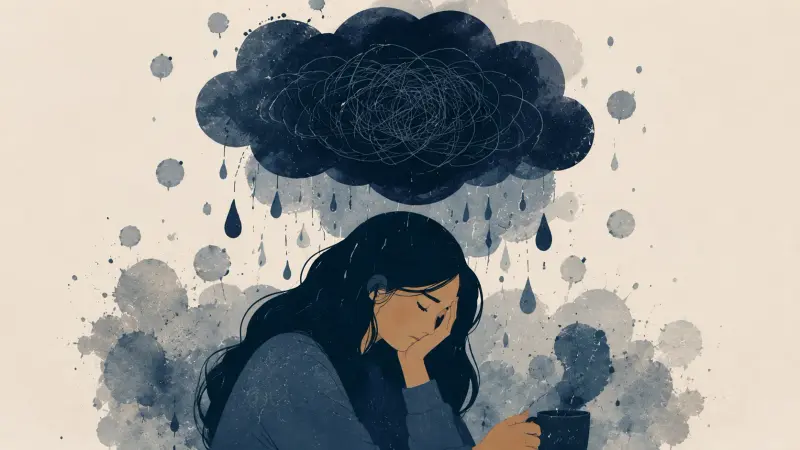
One of the most confusing things about sadness is when it comes without a clear reason. No major loss, no direct conflict, and yet you feel a heaviness you do not know how to explain. That can make the experience even harder, because you do not know where to begin understanding it, or what needs your attention first. In this explanation from Tatmeen, we try to approach this feeling gently, and explain why it may appear even when your life looks ordinary from the outside, and how to tell the difference between passing sadness that fades with time and emotional signs that deserve a more mindful pause. Not everything that seems to have no reason is truly without one; sometimes what you feel is the result of exhaustion that built up quietly, loneliness that was never spoken, or pressure that lasted longer than the heart could bear.
Not Every Sadness Without a Reason Is Truly Mysterious
Sometimes we connect sadness to a major and obvious cause: a loss, a conflict, bad news, or a sudden change in life. But the mind does not always work in such a direct way; your mood may shift before you yourself can identify the cause, or understanding may come later while the effect has already been present for days. That is why sadness can seem to come for no reason, even though what lies behind it may already be there, just not yet formed in your mind as a clear explanation.
The NHS 2explains that low mood may pass as a temporary state, while it comes closer to depression when sadness continues for weeks or months and starts affecting daily life. This distinction can bring relief, because it moves you away from an exhausting question like What is wrong with me? and toward a more precise one: How long has this feeling lasted, and what has it done to my day?
Sometimes the Cause Is Scattered, Not Absent
What is weighing on you may be less dramatic than you expect: disturbed sleep, constant comparison with others, a mild isolation that lasted longer than it should, family tension that never explodes but never settles, or ongoing responsibilities without any real space for rest. These things may not seem like enough on their own, but when they accumulate, they leave a heaviness in the soul that shows up as vague sadness, especially if you are used to pushing past your exhaustion instead of noticing it.
And sometimes the cause is more internal than external: harsh self-criticism, a chronic sense of not being enough, or an old disappointment that never had its full share of understanding. Here, the question is not Why am I sad for no reason? but What has been building up inside me until it began to show itself this way? Simply changing the question in this way softens the harshness, because you stop treating yourself as though you are a broken puzzle, and begin seeing yourself as a human being made heavy by something they have not yet named.
The Signs Worth Pausing For
The most important sign is not the presence of sadness alone, but the way its effect begins to spread. Pause more carefully if you begin to notice one or more of the following:
Losing interest in things that used to comfort you
Clear disruption in sleep or appetite
Difficulty concentrating or making the simplest decisions
Repeated withdrawal from people or from daily responsibilities
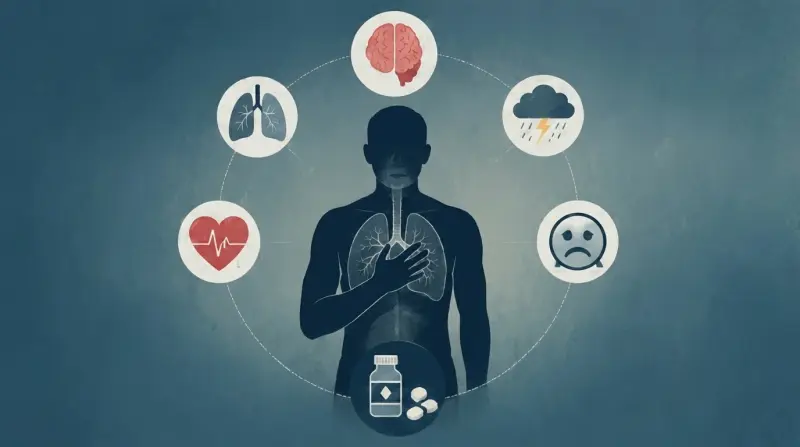
The picture does not stop at sadness alone; it may also show up in fatigue, irritability, feeling worthless, and sometimes physical pains that seem to have no clear cause. So do not search for one single decisive sign. Look instead at the whole pattern: what has been repeating, how long it has lasted, and what it has taken from your sleep, your calm, and your ability to cope.
What Helps Before You Turn Against Yourself
What helps first is not interrogating yourself, but quietly noticing your day. Ask: Since when have I felt this heavy? What has changed in my sleep, my appetite, my patience, and my relationship with messages, people, and simple tasks? This kind of noticing does not solve everything immediately, but it keeps you from either exaggerating the mystery or denying it. And when you see the changes written down or clearly in front of you, the feeling becomes less chaotic and more understandable.
That is why, at Tatmeen, we point out that searching for one final, decisive reason may exhaust you more than help you. Sometimes what is more useful is to write for a few days what makes the heaviness worse and what lightens it, and to return to neglected basics like sleep, light movement, and reducing isolation, instead of waiting for a perfect moment of understanding before you begin caring for yourself. You do not need to explain yourself completely in one day. What matters is to treat what you feel as a sign worth listening to, not scolding.
Finally..
Sadness without a clear reason does not mean that you are exaggerating, nor does it mean that you need to pass a harsh judgment on yourself. The gentler path is to look at the duration, the effect, and what has changed in your day, then give yourself the right to understand before denying or frightening yourself. And if this heaviness lasts too long, or talking about it becomes harder, booking your first session through Tatmeen may be a practical step toward beginning a clearer conversation with a licensed specialist.
Frequently Asked Questions
Does feeling sad for no reason mean I am depressed?
Not necessarily. It may be a passing wave linked to exhaustion or accumulated stress, and it may also be part of a deeper state if it lasts, continues, and affects sleep, concentration, and relationships. The difference is not decided by a quick impression, but by the duration, the impact, and the repeated pattern.
Do I need to know the full reason before asking for help?
No. Many people ask for help precisely because they do not know the reason yet, and that is normal. What matters is that you can describe what has changed for you: when it began, what in your day has been affected, and what has become heavier or harder than usual.
What should I do if the sadness comes and goes?
Notice its pattern instead of chasing a new explanation every time. Pay attention to when it appears, what comes before it, and whether it leaves an effect on your sleep, your work, or your relationships. If the repetition becomes distressing or starts affecting your life, it is better not to leave it without attention.
A writer and researcher specializing in psychiatry, she focuses on mental health and the human emotions we experience but cannot always find the words to name. She writes about us—about humanity and the human experience—and simplifies complex topics to offer content that helps us better understand ourselves and life, ultimately making us feel less alone.
Every Tatmeen article is reviewed by care providers licensed by the Saudi Commission for Health Specialties, so what you read is accurate and trustworthy.
This article builds understanding and does not replace a licensed care provider.
Need someone to talk to?
Tatmeen's licensed care providers are available around the clock, and the app's urgent consultation connects you with one within minutes.
Download Tatmeen to explore care providers and booking options.
Smart matchingFour quick questions suggest the right care provider
Urgent consultationTalk to an available care provider within minutes
Free psychological measuresMore than 20 tests to understand how you are doing
Scan to download
{"data":{"id":"0ca93e60-b764-491f-97a3-3ecdc0366d1d","slug":"why-do-i-feel-sad-for-no-reason","arTitle":"لماذا أشعر بالحزن بلا سبب؟ فهمٌ يريحك وخطوات تساعدك","enTitle":"Why Do I Feel Sad for No Reason? Understanding That Brings Relief.","thumbnailAltText":"Person under dark cloud of tangled thoughts, holding a cup, feeling overwhelmed and sad","estimatedReadingTime":5,"likesCount":292,"writer":{"id":"3ab72b74-f26f-4337-9b47-3114b0f90de5","arBio":"كاتبة وباحثة متخصصة في مجال الطب النفسي، تهتم بموضوعات الصحة النفسية وبالمشاعر الإنسانية التي نختبرها ولا نجد دائمًا الكلمات لتسميتها. تكتب عنّا؛ عن الإنسان وتجربته، وتبسّط الموضوعات المعقّدة لتقدّم محتوى يساعدنا على فهم ذواتنا والحياة أكثر، ويجعلنا نشعر بأننا بوحدة أقل.","enBio":"A writer and researcher specializing in psychiatry, she focuses on mental health and the human emotions we experience but cannot always find the words to name. She writes about us—about humanity and the human experience—and simplifies complex topics to offer content that helps us better understand ourselves and life, ultimately making us feel less alone.","user":{"slug":"ayat-alnajar","arFullName":"آيات النجار","enFullName":"Ayat Al-Najjar","publicProfileImageUrl":"https://cdn.tatmeen.sa/public/profile-images/02384455-68fa-40b6-ad05-609fde65cafa/21b9a610dde5dfc6d37af110c23e9c7ab3946be080c281beb000debf4f7d31a6.webp","publicProfileImage96Url":"https://cdn.tatmeen.sa/public/profile-images/02384455-68fa-40b6-ad05-609fde65cafa/21b9a610dde5dfc6d37af110c23e9c7ab3946be080c281beb000debf4f7d31a6-w96.webp","publicProfileImage192Url":"https://cdn.tatmeen.sa/public/profile-images/02384455-68fa-40b6-ad05-609fde65cafa/21b9a610dde5dfc6d37af110c23e9c7ab3946be080c281beb000debf4f7d31a6-w192.webp"}},"arContent":"","enContent":"","productionDocument":{"headings":[{"id":"article-section-not-every-sadness-without-a-reason-is-truly-mysterious","text":"Not Every Sadness Without a Reason Is Truly Mysterious"},{"id":"article-section-sometimes-the-cause-is-scattered-not-absent","text":"Sometimes the Cause Is Scattered, Not Absent"},{"id":"article-section-the-signs-worth-pausing-for","text":"The Signs Worth Pausing For"},{"id":"article-section-what-helps-before-you-turn-against-yourself","text":"What Helps Before You Turn Against Yourself"},{"id":"article-section-finally","text":"Finally.."}],"faqs":[{"question":"Does feeling sad for no reason mean I am depressed?","answer":"<p><span style=\"color:#000000\">Not necessarily. It may be a passing wave linked to exhaustion or accumulated stress, and it may also be part of a deeper state if it lasts, continues, and affects sleep, concentration, and relationships. The difference is not decided by a quick impression, but by the duration, the impact, and the repeated pattern.</span></p>"},{"question":"Do I need to know the full reason before asking for help?","answer":"<p><span style=\"color:#000000\">No. Many people ask for help precisely because they do not know the reason yet, and that is normal. What matters is that you can describe what has changed for you: when it began, what in your day has been affected, and what has become heavier or harder than usual.</span></p>"},{"question":"What should I do if the sadness comes and goes?","answer":"<p><span style=\"color:#000000\">Notice its pattern instead of chasing a new explanation every time. Pay attention to when it appears, what comes before it, and whether it leaves an effect on your sleep, your work, or your relationships. If the repetition becomes distressing or starts affecting your life, it is better not to leave it without attention.</span></p>"}],"beforeSourcesHtml":"","sources":[{"title":"NIMH: Depression","href":"https://www.nimh.nih.gov/health/topics/depression","hostname":"nimh.nih.gov"},{"title":"NHS: Low Mood, Sadness and Depression","href":"https://www.nhs.uk/mental-health/feelings-symptoms-behaviours/feelings-and-symptoms/low-mood-sadness-depression/","hostname":"nhs.uk"},{"title":"Mayo Clinic: Depression","href":"https://www.mayoclinic.org/diseases-conditions/depression/symptoms-causes/syc-20356007","hostname":"mayoclinic.org"}],"afterSourcesHtml":"","blocks":[{"type":"html","html":"<p><span style=\"color:#000000\">One of the most confusing things about sadness is when it comes without a clear reason. No major loss, no direct conflict, and yet you feel a heaviness you do not know how to explain. That can make the experience even harder, because you do not know where to begin understanding it, or what needs your attention first. In this explanation from Tatmeen, we try to approach this feeling gently, and explain why it may appear even when your life looks ordinary from the outside, and how to tell the difference between passing sadness that fades with time and emotional signs that deserve a more mindful pause. Not everything that seems to have no reason is truly without one; sometimes what you feel is the result of exhaustion that built up quietly, loneliness that was never spoken, or pressure that lasted longer than the heart could bear.</span></p><h2 id=\"article-section-not-every-sadness-without-a-reason-is-truly-mysterious\" data-toc-heading tabindex=\"-1\"><span id=\"not-every-sadness-without-a-reason-is-truly-mysterious-1\" aria-hidden=\"true\"></span><span style=\"color:#000000\"><strong>Not Every Sadness Without a Reason Is Truly Mysterious</strong></span></h2><p><span style=\"color:#000000\">Sometimes we connect sadness to a major and obvious cause: a loss, a conflict, bad news, or a sudden change in life. But the mind does not always work in such a direct way; your mood may shift before you yourself can identify the cause, or understanding may come later while the effect has already been present for days. That is why sadness can seem to come for no reason, even though what lies behind it may already be there, just not yet formed in your mind as a clear explanation.</span></p><p><span style=\"color:#000000\">The </span><a href=\"https://www.nhs.uk/mental-health/conditions/depression-in-adults/overview/\" target=\"_blank\" rel=\"nofollow noopener noreferrer\"><span style=\"color:#1155cc\"><u>NHS </u></span></a><span style=\"color:#000000\">explains that low mood may pass as a temporary state, while it comes closer to depression when sadness continues for weeks or months and starts affecting daily life. This distinction can bring relief, because it moves you away from an exhausting question like <em>What is wrong with me?</em> and toward a more precise one: <em>How long has this feeling lasted, and what has it done to my day?</em></span></p><h2 id=\"article-section-sometimes-the-cause-is-scattered-not-absent\" data-toc-heading tabindex=\"-1\"><span id=\"sometimes-the-cause-is-scattered-not-absent-2\" aria-hidden=\"true\"></span><span style=\"color:#000000\"><strong>Sometimes the Cause Is Scattered, Not Absent</strong></span></h2><p><span style=\"color:#000000\">What is weighing on you may be less dramatic than you expect: disturbed sleep, constant comparison with others, a mild isolation that lasted longer than it should, family tension that never explodes but never settles, or ongoing responsibilities without any real space for rest. These things may not seem like enough on their own, but when they accumulate, they leave a heaviness in the soul that shows up as vague sadness, especially if you are used to pushing past your exhaustion instead of noticing it.</span></p><p><span style=\"color:#000000\">And sometimes the cause is more internal than external: harsh self-criticism, a chronic sense of not being enough, or an old disappointment that never had its full share of understanding. Here, the question is not <em>Why am I sad for no reason?</em> but <em>What has been building up inside me until it began to show itself this way?</em> Simply changing the question in this way softens the harshness, because you stop treating yourself as though you are a broken puzzle, and begin seeing yourself as a human being made heavy by something they have not yet named.</span></p><h2 id=\"article-section-the-signs-worth-pausing-for\" data-toc-heading tabindex=\"-1\"><span id=\"the-signs-worth-pausing-for-3\" aria-hidden=\"true\"></span><span style=\"color:#000000\"><strong>The Signs Worth Pausing For</strong></span></h2><p><span style=\"color:#000000\">The most important sign is not the presence of sadness alone, but the way its effect begins to spread. Pause more carefully if you begin to notice one or more of the following:</span></p><ul><li><p><span style=\"color:#000000\">Losing interest in things that used to comfort you</span></p></li><li><p><span style=\"color:#000000\">Clear disruption in sleep or appetite</span></p></li><li><p><span style=\"color:#000000\">Difficulty concentrating or making the simplest decisions</span></p></li><li><p><span style=\"color:#000000\">Repeated withdrawal from people or from daily responsibilities</span></p></li></ul><p><span style=\"color:#000000\">The picture does not stop at sadness alone; it may also show up in fatigue, irritability, feeling worthless, and sometimes physical pains that seem to have no clear cause. So do not search for one single decisive sign. Look instead at the whole pattern: what has been repeating, how long it has lasted, and what it has taken from your sleep, your calm, and your ability to cope.</span></p><h2 id=\"article-section-what-helps-before-you-turn-against-yourself\" data-toc-heading tabindex=\"-1\"><span id=\"what-helps-before-you-turn-against-yourself-4\" aria-hidden=\"true\"></span><span style=\"color:#000000\"><strong>What Helps Before You Turn Against Yourself</strong></span></h2><p><span style=\"color:#000000\">What helps first is not interrogating yourself, but quietly noticing your day. Ask: <em>Since when have I felt this heavy? What has changed in my sleep, my appetite, my patience, and my relationship with messages, people, and simple tasks?</em> This kind of noticing does not solve everything immediately, but it keeps you from either exaggerating the mystery or denying it. And when you see the changes written down or clearly in front of you, the feeling becomes less chaotic and more understandable.</span></p><p><span style=\"color:#000000\">That is why, at Tatmeen, we point out that searching for one final, decisive reason may exhaust you more than help you. Sometimes what is more useful is to write for a few days what makes the heaviness worse and what lightens it, and to return to neglected basics like sleep, light movement, and reducing isolation, instead of waiting for a perfect moment of understanding before you begin caring for yourself. You do not need to explain yourself completely in one day. What matters is to treat what you feel as a sign worth listening to, not scolding.</span></p><h2 id=\"article-section-finally\" data-toc-heading tabindex=\"-1\"><span id=\"finally-5\" aria-hidden=\"true\"></span><span style=\"color:#000000\"><strong>Finally..</strong></span></h2><p><span style=\"color:#000000\">Sadness without a clear reason does not mean that you are exaggerating, nor does it mean that you need to pass a harsh judgment on yourself. The gentler path is to look at the duration, the effect, and what has changed in your day, then give yourself the right to understand before denying or frightening yourself. And if this heaviness lasts too long, or talking about it becomes harder, </span><a href=\"https://tatmeen.sa/download/\"><span style=\"color:#1155cc\"><u>booking your first session through Tatmeen</u></span></a><span style=\"color:#000000\"> may be a practical step toward beginning a clearer conversation with a licensed specialist.</span></p>"}],"inlineCtaSignatures":[],"_experienceAliases":{"v":1,"fields":["html","bodyHtml"],"faqs":[0,1,2]}},"createdAt":"2026-06-26T21:00:00.000Z","updatedAt":"2026-06-29T17:30:30.149Z","disorderGroups":[{"id":"1e82772d-a1a7-4d29-b475-be9d6b67ae02","slug":"common-mental-issues","arName":"اضطرابات نفسية شائعة","enName":"Common Mental Issues"}],"reviewer":{"arFullName":"فريق تطمين","enFullName":"Tatmeen team","slug":"tatmeen-team","kind":"organization"},"productionArticle":true,"promotionAllowed":true,"preparedCover":{"src":"https://cdn.tatmeen.sa/public/article-lcp/article-lcp-v2/sha256-fe5e4f652c7525c23146bbd4a5cd18292cdb6632445436898f67dff8f65e961c/800-d07c74be97dd639aff450b08cc8919ebfa9f936919007807a6e4163cf9b5b767.avif","fallback":"https://cdn.tatmeen.sa/public/article-lcp/article-lcp-v2/sha256-fe5e4f652c7525c23146bbd4a5cd18292cdb6632445436898f67dff8f65e961c/800-2ad89ba887c4b7fdde29e02dc9c8ae641f341822ec70def754255c8cefc1f727.webp","directUrl":"https://cdn.tatmeen.sa/blog-cover/Tatmeen-1782573050407.webp","isGolden":true,"avifSrcset":"https://cdn.tatmeen.sa/public/article-lcp/article-lcp-v2/sha256-fe5e4f652c7525c23146bbd4a5cd18292cdb6632445436898f67dff8f65e961c/400-bbb32f07a34a1bfa3ee97c3ac20df8189d859491a5eb0c81a6994a8e11462f56.avif 400w, https://cdn.tatmeen.sa/public/article-lcp/article-lcp-v2/sha256-fe5e4f652c7525c23146bbd4a5cd18292cdb6632445436898f67dff8f65e961c/640-1a28e07e33ca5706f507bfdc3e6501bd888ee72754f32ddafc598604ba466ca5.avif 640w, https://cdn.tatmeen.sa/public/article-lcp/article-lcp-v2/sha256-fe5e4f652c7525c23146bbd4a5cd18292cdb6632445436898f67dff8f65e961c/800-d07c74be97dd639aff450b08cc8919ebfa9f936919007807a6e4163cf9b5b767.avif 800w, https://cdn.tatmeen.sa/public/article-lcp/article-lcp-v2/sha256-fe5e4f652c7525c23146bbd4a5cd18292cdb6632445436898f67dff8f65e961c/1200-4a6587c943bcbcae5045e31e9ecda2927a70683add62b483604ad48a6d254bdb.avif 1200w","webpSrcset":"https://cdn.tatmeen.sa/public/article-lcp/article-lcp-v2/sha256-fe5e4f652c7525c23146bbd4a5cd18292cdb6632445436898f67dff8f65e961c/400-a83b6f578c5b96d0ee899fcf461501395b59dccb3286e3af73b1ad70e3e1a7ab.webp 400w, https://cdn.tatmeen.sa/public/article-lcp/article-lcp-v2/sha256-fe5e4f652c7525c23146bbd4a5cd18292cdb6632445436898f67dff8f65e961c/640-3a8cb8c9b6dd4ffcc6eb72f74f7e99ce544bdae0049650eadd3dbb7af4a4ec43.webp 640w, https://cdn.tatmeen.sa/public/article-lcp/article-lcp-v2/sha256-fe5e4f652c7525c23146bbd4a5cd18292cdb6632445436898f67dff8f65e961c/800-2ad89ba887c4b7fdde29e02dc9c8ae641f341822ec70def754255c8cefc1f727.webp 800w, https://cdn.tatmeen.sa/public/article-lcp/article-lcp-v2/sha256-fe5e4f652c7525c23146bbd4a5cd18292cdb6632445436898f67dff8f65e961c/1200-336047e553e06b8fa30bc0f8b19e01b7befc11c6a1f8952c8c537b3fe65e98ba.webp 1200w","phoneAvifSrcset":"https://cdn.tatmeen.sa/public/article-lcp/article-lcp-v2/sha256-fe5e4f652c7525c23146bbd4a5cd18292cdb6632445436898f67dff8f65e961c/400-bbb32f07a34a1bfa3ee97c3ac20df8189d859491a5eb0c81a6994a8e11462f56.avif 400w, https://cdn.tatmeen.sa/public/article-lcp/article-lcp-v2/sha256-fe5e4f652c7525c23146bbd4a5cd18292cdb6632445436898f67dff8f65e961c/640-1a28e07e33ca5706f507bfdc3e6501bd888ee72754f32ddafc598604ba466ca5.avif 640w, https://cdn.tatmeen.sa/public/article-lcp/article-lcp-v2/sha256-fe5e4f652c7525c23146bbd4a5cd18292cdb6632445436898f67dff8f65e961c/800-d07c74be97dd639aff450b08cc8919ebfa9f936919007807a6e4163cf9b5b767.avif 800w","phoneWebpSrcset":"https://cdn.tatmeen.sa/public/article-lcp/article-lcp-v2/sha256-fe5e4f652c7525c23146bbd4a5cd18292cdb6632445436898f67dff8f65e961c/400-a83b6f578c5b96d0ee899fcf461501395b59dccb3286e3af73b1ad70e3e1a7ab.webp 400w, https://cdn.tatmeen.sa/public/article-lcp/article-lcp-v2/sha256-fe5e4f652c7525c23146bbd4a5cd18292cdb6632445436898f67dff8f65e961c/640-3a8cb8c9b6dd4ffcc6eb72f74f7e99ce544bdae0049650eadd3dbb7af4a4ec43.webp 640w, https://cdn.tatmeen.sa/public/article-lcp/article-lcp-v2/sha256-fe5e4f652c7525c23146bbd4a5cd18292cdb6632445436898f67dff8f65e961c/800-2ad89ba887c4b7fdde29e02dc9c8ae641f341822ec70def754255c8cefc1f727.webp 800w","width":800,"height":450},"previewTaxonomy":{"groups":[{"id":"1e82772d-a1a7-4d29-b475-be9d6b67ae02","slug":"common-mental-issues","arName":"اضطرابات نفسية شائعة","enName":"Common Mental Issues"}],"topics":[{"id":"9c2666e2-e11e-4d68-a178-f9e7c5430372","slug":"mood-disorders","arName":"اضطرابات المزاج","enName":"Mood Disorders","groupSlug":"common-mental-issues","href":"/blog/category/common-mental-issues/mood-disorders/"},{"id":"279dbfbb-dda2-465a-93a1-e9b181574318","slug":"depression","arName":"اكتئاب","enName":"Depression","groupSlug":"common-mental-issues","href":"/blog/category/common-mental-issues/depression/"}],"tags":[]},"previewProviderRecommendations":[{"id":"23ba62b8-9679-46a2-9439-b2801cafc59b","slug":"dr-mohammed-alanazi-4132","arFullName":"د. محمد العنزي","enFullName":"Dr. Mohammed ALANAZI","publicProfileImageUrl":"https://cdn.tatmeen.sa/public/profile-images/23ba62b8-9679-46a2-9439-b2801cafc59b/233e70d98cd910633553abf60e5ee8dd305797b64c4172746ab379f3b91a1461.webp","publicProfileImage96Url":"https://cdn.tatmeen.sa/public/profile-images/23ba62b8-9679-46a2-9439-b2801cafc59b/233e70d98cd910633553abf60e5ee8dd305797b64c4172746ab379f3b91a1461-w96.webp","publicProfileImage192Url":"https://cdn.tatmeen.sa/public/profile-images/23ba62b8-9679-46a2-9439-b2801cafc59b/233e70d98cd910633553abf60e5ee8dd305797b64c4172746ab379f3b91a1461-w192.webp","specialization":{"arName":"طبيب أسرة","enName":"Family Physician"},"profileImageUrl":"https://cdn.tatmeen.sa/public/profile-images/23ba62b8-9679-46a2-9439-b2801cafc59b/233e70d98cd910633553abf60e5ee8dd305797b64c4172746ab379f3b91a1461-w192.webp","experienceYears":3,"consultantInfo":{"averageRating":{"average":0},"specialization":{"arGeneralName":"طبيب أسرة","enGeneralName":"Family Physician"}}},{"id":"798526a5-3457-41bc-9825-35c7fd1bcd0b","slug":"dr-maeed-algarny-9986","arFullName":"د. معيض القرني","enFullName":"Dr. Maeed Algarny","publicProfileImageUrl":"https://cdn.tatmeen.sa/public/profile-images/798526a5-3457-41bc-9825-35c7fd1bcd0b/8a9d8aa7bd91280f7ac6f9d4e7d75c42a847cbd8896e108e40e4231760a567f4.webp","publicProfileImage96Url":"https://cdn.tatmeen.sa/public/profile-images/798526a5-3457-41bc-9825-35c7fd1bcd0b/8a9d8aa7bd91280f7ac6f9d4e7d75c42a847cbd8896e108e40e4231760a567f4-w96.webp","publicProfileImage192Url":"https://cdn.tatmeen.sa/public/profile-images/798526a5-3457-41bc-9825-35c7fd1bcd0b/8a9d8aa7bd91280f7ac6f9d4e7d75c42a847cbd8896e108e40e4231760a567f4-w192.webp","specialization":{"arName":"طبيب أسرة","enName":"Family Physician"},"profileImageUrl":"https://cdn.tatmeen.sa/public/profile-images/798526a5-3457-41bc-9825-35c7fd1bcd0b/8a9d8aa7bd91280f7ac6f9d4e7d75c42a847cbd8896e108e40e4231760a567f4-w192.webp","experienceYears":16,"consultantInfo":{"averageRating":{"average":0},"specialization":{"arGeneralName":"طبيب أسرة","enGeneralName":"Family Physician"}}},{"id":"94765496-dbdf-4631-a01b-7df5f788668d","slug":"abdullrahman-alhamoudi-3045","arFullName":"عبدالرحمن الحمودي","enFullName":"Abdulrahman Alhamoudi","publicProfileImageUrl":"https://cdn.tatmeen.sa/public/profile-images/94765496-dbdf-4631-a01b-7df5f788668d/2d49f6b6493c564afb6f50b6c3634231dff3a5cf8353acfab393d1b2a88037d1.webp","publicProfileImage96Url":"https://cdn.tatmeen.sa/public/profile-images/94765496-dbdf-4631-a01b-7df5f788668d/2d49f6b6493c564afb6f50b6c3634231dff3a5cf8353acfab393d1b2a88037d1-w96.webp","publicProfileImage192Url":"https://cdn.tatmeen.sa/public/profile-images/94765496-dbdf-4631-a01b-7df5f788668d/2d49f6b6493c564afb6f50b6c3634231dff3a5cf8353acfab393d1b2a88037d1-w192.webp","specialization":{"arName":"أخصائي نفسي","enName":"Psychologist"},"profileImageUrl":"https://cdn.tatmeen.sa/public/profile-images/94765496-dbdf-4631-a01b-7df5f788668d/2d49f6b6493c564afb6f50b6c3634231dff3a5cf8353acfab393d1b2a88037d1-w192.webp","experienceYears":9,"consultantInfo":{"averageRating":{"average":5},"specialization":{"arGeneralName":"أخصائي نفسي","enGeneralName":"Psychologist"}}}],"previewCareProviders":[{"id":"09364052-c2a9-4c52-9717-7ce2093b8d0a","slug":"kholoud-alharbi-5221","arFullName":"خلود الحربي","enFullName":"Kholoud Alharbi","publicProfileImageUrl":"https://cdn.tatmeen.sa/public/profile-images/09364052-c2a9-4c52-9717-7ce2093b8d0a/4a0aeb81619e351b77f4323e3605a0a00acc7ca3c82ee7cc5ca2c9e8ef716049.webp","publicProfileImage96Url":"https://cdn.tatmeen.sa/public/profile-images/09364052-c2a9-4c52-9717-7ce2093b8d0a/4a0aeb81619e351b77f4323e3605a0a00acc7ca3c82ee7cc5ca2c9e8ef716049-w96.webp","publicProfileImage192Url":"https://cdn.tatmeen.sa/public/profile-images/09364052-c2a9-4c52-9717-7ce2093b8d0a/4a0aeb81619e351b77f4323e3605a0a00acc7ca3c82ee7cc5ca2c9e8ef716049-w192.webp","gender":"FEMALE","specialization":{"arName":"أخصائي نفسي","enName":"Psychologist"}},{"id":"6f037535-1dca-4b50-a8b2-5974b7323286","slug":"salah-althobaiti-9053","arFullName":"صلاح الثبيتي","enFullName":"Salah Althobaiti","publicProfileImageUrl":"https://cdn.tatmeen.sa/public/profile-images/6f037535-1dca-4b50-a8b2-5974b7323286/35b6bd7fad9b1e004c1835803eb9c1b56dcacd380685ec8bff141f0fb888005c.webp","publicProfileImage96Url":"https://cdn.tatmeen.sa/public/profile-images/6f037535-1dca-4b50-a8b2-5974b7323286/35b6bd7fad9b1e004c1835803eb9c1b56dcacd380685ec8bff141f0fb888005c-w96.webp","publicProfileImage192Url":"https://cdn.tatmeen.sa/public/profile-images/6f037535-1dca-4b50-a8b2-5974b7323286/35b6bd7fad9b1e004c1835803eb9c1b56dcacd380685ec8bff141f0fb888005c-w192.webp","gender":"MALE","specialization":{"arName":"أخصائي نفسي","enName":"Psychologist"}},{"id":"3cc806e8-616b-4884-9f21-a75b378580a2","slug":"aisha-al-hashim-8667","arFullName":"عائشة ال هاشم","enFullName":"Aisha Al Hashim","publicProfileImageUrl":"https://cdn.tatmeen.sa/public/profile-images/3cc806e8-616b-4884-9f21-a75b378580a2/27f523d03be4dcfa1f6a79f70c1773887434e698990d214cd990caec56a44798.webp","publicProfileImage96Url":"https://cdn.tatmeen.sa/public/profile-images/3cc806e8-616b-4884-9f21-a75b378580a2/27f523d03be4dcfa1f6a79f70c1773887434e698990d214cd990caec56a44798-w96.webp","publicProfileImage192Url":"https://cdn.tatmeen.sa/public/profile-images/3cc806e8-616b-4884-9f21-a75b378580a2/27f523d03be4dcfa1f6a79f70c1773887434e698990d214cd990caec56a44798-w192.webp","gender":"FEMALE","specialization":{"arName":"أخصائي نفسي","enName":"Psychologist"}},{"id":"db2ce1a0-9325-4471-b7ce-eb2e811c30a3","slug":"amer-qutub-2441","arFullName":"عامر قطب","enFullName":"Amer Qutub","publicProfileImageUrl":"https://cdn.tatmeen.sa/public/profile-images/db2ce1a0-9325-4471-b7ce-eb2e811c30a3/80580f99bfd7fe2b2a9cf8eed73ab532f5086d1efe053b0aa57358c1ce004261.webp","publicProfileImage96Url":"https://cdn.tatmeen.sa/public/profile-images/db2ce1a0-9325-4471-b7ce-eb2e811c30a3/80580f99bfd7fe2b2a9cf8eed73ab532f5086d1efe053b0aa57358c1ce004261-w96.webp","publicProfileImage192Url":"https://cdn.tatmeen.sa/public/profile-images/db2ce1a0-9325-4471-b7ce-eb2e811c30a3/80580f99bfd7fe2b2a9cf8eed73ab532f5086d1efe053b0aa57358c1ce004261-w192.webp","gender":"MALE","specialization":{"arName":"أخصائي نفسي","enName":"Psychologist"}},{"id":"94765496-dbdf-4631-a01b-7df5f788668d","slug":"abdullrahman-alhamoudi-3045","arFullName":"عبدالرحمن الحمودي","enFullName":"Abdulrahman Alhamoudi","publicProfileImageUrl":"https://cdn.tatmeen.sa/public/profile-images/94765496-dbdf-4631-a01b-7df5f788668d/2d49f6b6493c564afb6f50b6c3634231dff3a5cf8353acfab393d1b2a88037d1.webp","publicProfileImage96Url":"https://cdn.tatmeen.sa/public/profile-images/94765496-dbdf-4631-a01b-7df5f788668d/2d49f6b6493c564afb6f50b6c3634231dff3a5cf8353acfab393d1b2a88037d1-w96.webp","publicProfileImage192Url":"https://cdn.tatmeen.sa/public/profile-images/94765496-dbdf-4631-a01b-7df5f788668d/2d49f6b6493c564afb6f50b6c3634231dff3a5cf8353acfab393d1b2a88037d1-w192.webp","gender":"MALE","specialization":{"arName":"أخصائي نفسي","enName":"Psychologist"}},{"id":"618dba89-5b70-4b46-8304-741b7ac8ecd3","slug":"abdullah-mari-1311","arFullName":"عبدالله مرعي","enFullName":"Abdullah Mari","publicProfileImageUrl":"https://cdn.tatmeen.sa/public/profile-images/618dba89-5b70-4b46-8304-741b7ac8ecd3/6b4a3bfb59f8a304ca79083b32859b46baad2e1d692974a47c02c1f66bd11129.webp","publicProfileImage96Url":"https://cdn.tatmeen.sa/public/profile-images/618dba89-5b70-4b46-8304-741b7ac8ecd3/6b4a3bfb59f8a304ca79083b32859b46baad2e1d692974a47c02c1f66bd11129-w96.webp","publicProfileImage192Url":"https://cdn.tatmeen.sa/public/profile-images/618dba89-5b70-4b46-8304-741b7ac8ecd3/6b4a3bfb59f8a304ca79083b32859b46baad2e1d692974a47c02c1f66bd11129-w192.webp","gender":"MALE","specialization":{"arName":"أخصائي نفسي","enName":"Psychologist"}},{"id":"3b50a5d5-e795-407f-8676-fd7f0e1bb7a0","slug":"abdulaziz-bin-hudayan-4940","arFullName":"عبدالعزيز بن هديان","enFullName":"Abdulaziz Bin Hudayan","publicProfileImageUrl":"https://cdn.tatmeen.sa/public/profile-images/3b50a5d5-e795-407f-8676-fd7f0e1bb7a0/710ff0fe1fb00cdb5042092e27b7910b480a439b02251ecded62d7758eefce95.webp","publicProfileImage96Url":"https://cdn.tatmeen.sa/public/profile-images/3b50a5d5-e795-407f-8676-fd7f0e1bb7a0/710ff0fe1fb00cdb5042092e27b7910b480a439b02251ecded62d7758eefce95-w96.webp","publicProfileImage192Url":"https://cdn.tatmeen.sa/public/profile-images/3b50a5d5-e795-407f-8676-fd7f0e1bb7a0/710ff0fe1fb00cdb5042092e27b7910b480a439b02251ecded62d7758eefce95-w192.webp","gender":"MALE","specialization":{"arName":"أخصائي نفسي","enName":"Psychologist"}}],"previewDownload":{"href":"/download","title":{"ar":"خطوة واحدة لأجلك، ابدأ الآن","en":"One step for you, start now"},"description":{"ar":"حمّل تطبيق تطمين لاستكشاف مقدمي الرعاية وخيارات الحجز.","en":"Download Tatmeen to explore care providers and booking options."},"posterSrc":"/images/home/cta-ar-new-1.webp","videoSrc":"/images/home/cta-ar-new-1.mp4","videoPosterSrc":"/images/home/cta-ar-new-1.webp","videoPosterEnSrc":"/images/home/cta-en-new-1.webp","videoType":"video/mp4","appStoreHref":"https://apps.apple.com/us/app/tatmeen-%D8%AA%D8%B7%D9%85%D9%8A%D9%86/id6473836983","googlePlayHref":"https://play.google.com/store/apps/details?id=com.TatmeenApp.user&hl=en"},"previewRelatedArticles":[{"id":"089f352c-47c9-485f-88f6-4a8feee5fa11","slug":"Why-do-I-feel-sadness-without-a-reason","route":"/blog/Why-do-I-feel-sadness-without-a-reason/","title":{"ar":"لماذا أشعر بالحزن بلا سبب؟","en":"Why Do I Feel Sad for No Apparent Reason?"},"image":"https://cdn.tatmeen.sa/public/article-lcp/article-lcp-v2/sha256-55a6723474fdeaef14a27e001d6282054a164c7799ea4b9ca2bd4f0b38e0a5a3/800-5d8e7948a06d02884595e17abb0c7d47874d179fe0622fad968b2710785049a7.webp","directImageFallback":"https://cdn.tatmeen.sa/blog-cover/1706455084893-Tatmeen-156.jpg","arThumbnailAltText":"Crying women with rainy clouds","thumbnailAltText":"Crying women with rainy clouds","topic":{"label":{"ar":"اضطرابات نفسية شائعة","en":"Common Mental Issues"}},"readingTimeMinutes":5},{"id":"a27dc405-72e4-4453-b15d-ff4e8881d114","slug":"sudden-shortness-breath-causes-depression-link","route":"/blog/sudden-shortness-breath-causes-depression-link/","title":{"ar":"ضيق التنفس المفاجئ – أسباب وطرق العلاج وعلاقته بالاكتئاب","en":"Sudden Shortness of Breath: Causes, Treatment, and Its Link to Depression"},"image":"https://cdn.tatmeen.sa/public/article-lcp/article-lcp-v2/sha256-33dba334f85320a771650682098f15475c7f71a1f9e5d4747701c995f2df1e30/800-d06064e252bef6de679f1e937411247c316567a330aa2faa208bab8b8b2f9701.webp","directImageFallback":"https://cdn.tatmeen.sa/blog-cover/Tatmeen-1778340084305.webp","arThumbnailAltText":"Person pressing hand to chest resembling shortness of breath","thumbnailAltText":"Person pressing hand to chest resembling shortness of breath","topic":{"label":{"ar":"اضطرابات نفسية شائعة","en":"Common Mental Issues"}},"readingTimeMinutes":5},{"id":"640fc5c6-3d11-4a33-9210-1269e4cd4641","slug":"improve-mental-well-being-during-pregnancy","route":"/blog/improve-mental-well-being-during-pregnancy/","title":{"ar":"نفسية الحامل: كيف تحسنينها أثناء الحمل؟","en":"Pregnant Women's Mental Well-Being: How Can You Improve It During Pregnancy?"},"image":"https://cdn.tatmeen.sa/public/article-lcp/article-lcp-v2/sha256-1533af27b887d1e45091b7246521ee5d4bb205bcea2d6ccf5ba6ebbfb3442e7d/800-b300f62bab87b2349c3bfd774a3cd4e3114a3c3ddf6c80f537d6fe503a2d79a1.webp","directImageFallback":"https://cdn.tatmeen.sa/blog-cover/Tatmeen-1782925088936.webp","arThumbnailAltText":"Pregnant woman journaling calmly in a pastel room with soft floral thoughts above","thumbnailAltText":"Pregnant woman journaling calmly in a pastel room with soft floral thoughts above","topic":{"label":{"ar":"اضطرابات نفسية شائعة","en":"Common Mental Issues"}},"readingTimeMinutes":6},{"id":"d4941994-e199-4eae-ba3e-9bfb75f0172c","slug":"sadness-without-reason-loneliness","route":"/blog/sadness-without-reason-loneliness/","title":{"ar":"الحزن: أنواعه وعلاج الشعور بالحزن دون سبب وعلاقته بالوحدة","en":"Sadness: Types, Coping with Sadness Without a Clear Reason, and Its Link to Lone"},"image":"https://cdn.tatmeen.sa/public/article-lcp/article-lcp-v2/sha256-9b669713f9c2b1c516e18526ab484b47dda93df60ea65f8a97346a0043e77a50/800-065351059cb1b35df54ceb09118ef5816c49601276f104c1f91b6f3e6026a937.webp","directImageFallback":"https://cdn.tatmeen.sa/blog-cover/Tatmeen-1779977766390.webp","arThumbnailAltText":"a person sitting down feeling sad surrounded by drawing that represent different causes of sadness","thumbnailAltText":"a person sitting down feeling sad surrounded by drawing that represent different causes of sadness","topic":{"label":{"ar":"اضطرابات نفسية شائعة","en":"Common Mental Issues"}},"readingTimeMinutes":5}],"previewRelatedReadStates":{}},"locale":"en","device":"desktop","path":"/en/blog/why-do-i-feel-sad-for-no-reason/","readingControls":false,"config":{"public":{"BUCKET_URL":"https://cdn.tatmeen.sa/","APP_BASE_URL":"https://tatmeen.sa","intercomAppId":"ppcnu9e3"}}}