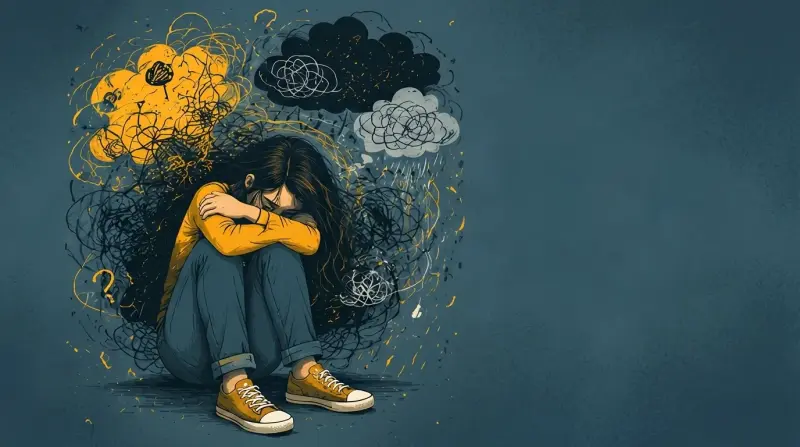
AI may not scare you as much as the question it leaves behind: Where will I fit in all of this? As tools accelerate and tasks get shortened, you might feel as though your years of experience have become comparable to a single button. This anxiety isn’t weakness—it’s a natural response to rapid change that touches professional security and personal identity. In this article, we’ll turn fear into understanding and a plan: what you can develop, and what deserves your focus right now.
Why Does Anxiety Grow With AI News?
When the job market changes quickly, the mind searches for certainty and can’t find it. Headlines compress reality and sometimes exaggerate, so it can feel as though replacement has already happened—even though what’s often happening is a shift in tasks, not the immediate disappearance of whole roles. With repetition, your brain learns to interpret every technical update as a danger signal.
There’s also a hidden emotional side: work isn’t only a source of income, but part of identity and pride in achievement. So fear may take the form of painful questions like: If the machine can, what makes me stand out? This is a deeply human question, and the answer doesn’t come from a quick comparison, but from calmly redefining your professional value.
Separate a Real Threat From Anticipatory Anxiety
Fear becomes exhausting when what could happen gets mixed up with what is happening. Try naming what you feel precisely: is it a direct threat to your job right now, or anticipatory anxiety about the future? That naming alone can soften the intensity of the rush.
Then use a simple rule: What can I control? What can I influence? And what do I have no choice but to observe for now? Write three columns on a piece of paper. In the control column, put what’s up to you today: learning a small skill, improving your CV, building a portfolio, or organizing your time. In the influence column, put what happens through others: proposing an improvement to your manager, joining a project, or expanding your network. In the observe column, put major news and big decisions—and set a limited time for them instead of letting them break into your day. This approach doesn’t deny reality; it simply gives you back the feeling that you’re not entirely a bystander.
Turn Fear of Replacement Into a Practical Skills Plan
AI is excellent at repetitive tasks or standardized text, but it doesn’t carry the context of your life, your understanding of organizational culture, or your ethical responsibility. Many roles will change, but this shift offers an opportunity for anyone who learns how to use tools—rather than feeling at their mercy.
Start with a practical question: Which tasks in my job can be partially automated? Then ask: Which part needs my judgment, experience, and communication? That’s where your investment becomes clear. Focus on skills that remain valuable even as tools change:
Deep domain understanding and the ability to make decisions in complex contexts
Communication, persuasion, and managing relationships with the client or the team
Critical thinking: evaluating output quality and spotting errors
Turning ideas into steps, execution, and responsible follow-through
And because a plan needs consistency—not two days of enthusiasm—it may help to make learning small but steady, as part of a worker’s readiness for change. According to specialists on Tatmeen, choosing one skill that directly serves your current work, then applying it in a small project, reduces anxiety more than collecting many courses without practice.
Workday Habits to Reduce AI Anxiety
Anxiety doesn’t live only in thoughts—it lives in the body too: tightness in the neck, quick breathing, and sleepless nights. So lower daily arousal before trying to convince yourself logically. Keep news in a short time window, and avoid following updates right before sleep.
A simple method may help tame circular thinking: setting a specific time for worry, writing your fears down, then returning to your day. It’s close to the idea of “schedule worry time,” which helps stop fears from leaking into every hour. After that time, ask: What is one step I can execute now? Even if it’s sending a message to a colleague or arranging a task list.
And don’t forget that the work environment itself can increase anxiety—or ease it. When expectations are unclear, or the workload exceeds your capacity, fear rises easily. That’s why it’s useful to understand the importance of mental health in the workplace and how factors like job security and task pressure affect stress. In your daily reality, the simple solution might be asking for clarity on priorities, or agreeing on a realistic scope of work instead of trying to carry everything alone.
Staying Human Amid the Shift
In our Arab countries, many people feel responsibility toward family and obligations, so pressure increases when a new factor like AI enters the picture. Remind yourself that your value isn’t reduced to your productivity, and that adaptation is a skill built slowly. Celebrate small steps: a short lesson, a better process, or completing a task with higher quality with the help of a tool.
And if you notice anxiety stealing your sleep for weeks, or keeping you tense all day, treating it as a mental health issue—not a personal flaw—lightens the load. Sometimes it’s enough to put your feelings into words in front of someone who understands them, so you can find your direction again.
Finally..
Fear of replacement is understandable, but it shouldn’t become a final verdict on your future. When you separate news from reality, build a small skills plan, and care for the rhythm of your day, AI anxiety becomes quieter and more manageable. And if you’d like a supportive space to help you organize your thoughts and set steps that fit your circumstances, booking a session with a specialist through Tatmeen could be your next step..
Frequently Asked Questions
Is AI anxiety normal?
Yes—because it’s tied to uncertainty and job security. It’s normal to worry when something changes that touches your livelihood and professional identity. What matters is not spending your whole day following updates, and turning anxiety into a learning plan and calming habits.
How do I develop myself without feeling like I’m behind?
Choose one skill that serves your current work within a month, and set a modest time for it three times a week. Make application part of your tasks—like improving a report or automating a small step. Consistency matters more than quantity.
What should I do if the news increases my stress?
Set one window for news, and turn off tech-related notifications. When the thinking attacks you, write the thought down and return it to a set worry time. After that, choose a small action that proves to you you’re moving—even by one step.
A writer and researcher specializing in psychiatry, she focuses on mental health and the human emotions we experience but cannot always find the words to name. She writes about us—about humanity and the human experience—and simplifies complex topics to offer content that helps us better understand ourselves and life, ultimately making us feel less alone.
Every Tatmeen article is reviewed by care providers licensed by the Saudi Commission for Health Specialties, so what you read is accurate and trustworthy.
This article builds understanding and does not replace a licensed care provider.
Need someone to talk to?
Tatmeen's licensed care providers are available around the clock, and the app's urgent consultation connects you with one within minutes.
Download Tatmeen to explore care providers and booking options.
Smart matchingFour quick questions suggest the right care provider
Urgent consultationTalk to an available care provider within minutes
Free psychological measuresMore than 20 tests to understand how you are doing
Scan to download
{"data":{"id":"3efbb921-e4a5-4824-8193-a332969906f4","slug":"what-ai-cant-take-from-you","arTitle":" ما الذي لا يستطيع الذكاء الاصطناعي أخذه منك؟","enTitle":"What AI Can't Take From You","thumbnailAltText":"Close-up of a hand writing in a notebook beside a coffee cup, soft cozy lighting.","estimatedReadingTime":5,"likesCount":160,"writer":{"id":"3ab72b74-f26f-4337-9b47-3114b0f90de5","arBio":"كاتبة وباحثة متخصصة في مجال الطب النفسي، تهتم بموضوعات الصحة النفسية وبالمشاعر الإنسانية التي نختبرها ولا نجد دائمًا الكلمات لتسميتها. تكتب عنّا؛ عن الإنسان وتجربته، وتبسّط الموضوعات المعقّدة لتقدّم محتوى يساعدنا على فهم ذواتنا والحياة أكثر، ويجعلنا نشعر بأننا بوحدة أقل.","enBio":"A writer and researcher specializing in psychiatry, she focuses on mental health and the human emotions we experience but cannot always find the words to name. She writes about us—about humanity and the human experience—and simplifies complex topics to offer content that helps us better understand ourselves and life, ultimately making us feel less alone.","user":{"slug":"ayat-alnajar","arFullName":"آيات النجار","enFullName":"Ayat Al-Najjar","publicProfileImageUrl":"https://cdn.tatmeen.sa/public/profile-images/02384455-68fa-40b6-ad05-609fde65cafa/21b9a610dde5dfc6d37af110c23e9c7ab3946be080c281beb000debf4f7d31a6.webp","publicProfileImage96Url":"https://cdn.tatmeen.sa/public/profile-images/02384455-68fa-40b6-ad05-609fde65cafa/21b9a610dde5dfc6d37af110c23e9c7ab3946be080c281beb000debf4f7d31a6-w96.webp","publicProfileImage192Url":"https://cdn.tatmeen.sa/public/profile-images/02384455-68fa-40b6-ad05-609fde65cafa/21b9a610dde5dfc6d37af110c23e9c7ab3946be080c281beb000debf4f7d31a6-w192.webp"}},"arContent":"","enContent":"","productionDocument":{"headings":[{"id":"article-section-why-does-anxiety-grow-with-ai-news","text":"Why Does Anxiety Grow With AI News?"},{"id":"article-section-separate-a-real-threat-from-anticipatory-anxiety","text":"Separate a Real Threat From Anticipatory Anxiety"},{"id":"article-section-turn-fear-of-replacement-into-a-practical-skills-plan","text":"Turn Fear of Replacement Into a Practical Skills Plan"},{"id":"article-section-workday-habits-to-reduce-ai-anxiety","text":"Workday Habits to Reduce AI Anxiety"},{"id":"article-section-staying-human-amid-the-shift","text":"Staying Human Amid the Shift"},{"id":"article-section-finally","text":"Finally.."}],"faqs":[{"question":"Is AI anxiety normal?","answer":"<p><span style=\"color:#000000\">Yes—because it’s tied to uncertainty and job security. It’s normal to worry when something changes that touches your livelihood and professional identity. What matters is not spending your whole day following updates, and turning anxiety into a learning plan and calming habits.</span></p>"},{"question":"How do I develop myself without feeling like I’m behind?","answer":"<p><span style=\"color:#000000\">Choose one skill that serves your current work within a month, and set a modest time for it three times a week. Make application part of your tasks—like improving a report or automating a small step. Consistency matters more than quantity.</span></p>"},{"question":"What should I do if the news increases my stress?","answer":"<p><span style=\"color:#000000\">Set one window for news, and turn off tech-related notifications. When the thinking attacks you, write the thought down and return it to a set worry time. After that, choose a small action that proves to you you’re moving—even by one step.</span></p>"}],"beforeSourcesHtml":"<p></p>","sources":[],"afterSourcesHtml":"","blocks":[{"type":"html","html":"<p><span style=\"color:#000000\">AI may not scare you as much as the question it leaves behind: <strong>Where will I fit in all of this?</strong> As tools accelerate and tasks get shortened, you might feel as though your years of experience have become comparable to a single button. This anxiety isn’t weakness—it’s a natural response to rapid change that touches professional security and personal identity. In this article, we’ll turn fear into understanding and a plan: what you can develop, and what deserves your focus right now.</span></p><h2 id=\"article-section-why-does-anxiety-grow-with-ai-news\" data-toc-heading tabindex=\"-1\"><span id=\"why-does-anxiety-grow-with-ai-news-1\" aria-hidden=\"true\"></span><span style=\"color:#000000\"><strong>Why Does Anxiety Grow With AI News?</strong></span></h2><p><span style=\"color:#000000\">When the job market changes quickly, the mind searches for certainty and can’t find it. Headlines compress reality and sometimes exaggerate, so it can feel as though replacement has already happened—even though what’s often happening is a shift in tasks, not the immediate disappearance of whole roles. With repetition, your brain learns to interpret every technical update as a danger signal.</span></p><p><span style=\"color:#000000\">There’s also a hidden emotional side: work isn’t only a source of income, but part of identity and pride in achievement. So fear may take the form of painful questions like: <strong>If the machine can, what makes me stand out?</strong> This is a deeply human question, and the answer doesn’t come from a quick comparison, but from calmly redefining your professional value.</span></p><h2 id=\"article-section-separate-a-real-threat-from-anticipatory-anxiety\" data-toc-heading tabindex=\"-1\"><span id=\"separate-a-real-threat-from-anticipatory-anxiety-2\" aria-hidden=\"true\"></span><span style=\"color:#000000\"><strong>Separate a Real Threat From Anticipatory Anxiety</strong></span></h2><p><span style=\"color:#000000\">Fear becomes exhausting when what <em>could</em> happen gets mixed up with what <em>is</em> happening. Try naming what you feel precisely: is it a direct threat to your job right now, or anticipatory anxiety about the future? That naming alone can soften the intensity of the rush.</span></p><p><span style=\"color:#000000\">Then use a simple rule: <strong>What can I control? What can I influence? And what do I have no choice but to observe for now?</strong> Write three columns on a piece of paper. In the <em>control</em> column, put what’s up to you today: learning a small skill, improving your CV, building a portfolio, or organizing your time. In the <em>influence</em> column, put what happens through others: proposing an improvement to your manager, joining a project, or expanding your network. In the <em>observe</em> column, put major news and big decisions—and set a limited time for them instead of letting them break into your day. This approach doesn’t deny reality; it simply gives you back the feeling that you’re not entirely a bystander.</span></p><h2 id=\"article-section-turn-fear-of-replacement-into-a-practical-skills-plan\" data-toc-heading tabindex=\"-1\"><span id=\"turn-fear-of-replacement-into-a-practical-skills-plan-3\" aria-hidden=\"true\"></span><span style=\"color:#000000\"><strong>Turn Fear of Replacement Into a Practical Skills Plan</strong></span></h2><p><span style=\"color:#000000\">AI is excellent at repetitive tasks or standardized text, but it doesn’t carry the context of your life, your understanding of organizational culture, or your ethical responsibility. Many roles will change, but this shift offers an opportunity for anyone who learns how to use tools—rather than feeling at their mercy.</span></p><p><span style=\"color:#000000\">Start with a practical question: <strong>Which tasks in my job can be partially automated?</strong> Then ask: <strong>Which part needs my judgment, experience, and communication?</strong> That’s where your investment becomes clear. Focus on skills that remain valuable even as tools change:</span></p><ul><li><p><span style=\"color:#000000\">Deep domain understanding and the ability to make decisions in complex contexts</span></p></li><li><p><span style=\"color:#000000\">Communication, persuasion, and managing relationships with the client or the team</span></p></li><li><p><span style=\"color:#000000\">Critical thinking: evaluating output quality and spotting errors</span></p></li><li><p><span style=\"color:#000000\">Turning ideas into steps, execution, and responsible follow-through</span></p></li></ul><p><span style=\"color:#000000\">And because a plan needs consistency—not two days of enthusiasm—it may help to make learning small but steady, as part of a worker’s readiness for change. According to specialists on Tatmeen, choosing one skill that directly serves your current work, then applying it in a small project, reduces anxiety more than collecting many courses without practice.</span></p><h2 id=\"article-section-workday-habits-to-reduce-ai-anxiety\" data-toc-heading tabindex=\"-1\"><span id=\"workday-habits-to-reduce-ai-anxiety-4\" aria-hidden=\"true\"></span><span style=\"color:#000000\"><strong>Workday Habits to Reduce AI Anxiety</strong></span></h2><p><span style=\"color:#000000\">Anxiety doesn’t live only in thoughts—it lives in the body too: tightness in the neck, quick breathing, and sleepless nights. So lower daily arousal before trying to convince yourself logically. Keep news in a short time window, and avoid following updates right before sleep.</span></p><p><span style=\"color:#000000\">A simple method may help tame circular thinking: setting a specific </span><a href=\"https://www.nhs.uk/every-mind-matters/mental-wellbeing-tips/self-help-cbt-techniques/tackling-your-worries/?\" target=\"_blank\" rel=\"nofollow noopener noreferrer\"><span style=\"color:#1155cc\"><u>time for worry</u></span></a><span style=\"color:#000000\">, writing your fears down, then returning to your day. It’s close to the idea of “schedule worry time,” which helps stop fears from leaking into every hour. After that time, ask: <strong>What is one step I can execute now?</strong> Even if it’s sending a message to a colleague or arranging a task list.</span></p><p><span style=\"color:#000000\">And don’t forget that the work environment itself can increase anxiety—or ease it. When expectations are unclear, or the workload exceeds your capacity, fear rises easily. That’s why it’s useful to understand the importance of mental health in the workplace and how factors like job security and task pressure affect stress. In your daily reality, the simple solution might be asking for clarity on priorities, or agreeing on a realistic scope of work instead of trying to carry everything alone.</span></p><h2 id=\"article-section-staying-human-amid-the-shift\" data-toc-heading tabindex=\"-1\"><span id=\"staying-human-amid-the-shift-5\" aria-hidden=\"true\"></span><span style=\"color:#000000\"><strong>Staying Human Amid the Shift</strong></span></h2><p><span style=\"color:#000000\">In our Arab countries, many people feel responsibility toward family and obligations, so pressure increases when a new factor like AI enters the picture. Remind yourself that your value isn’t reduced to your productivity, and that adaptation is a skill built slowly. Celebrate small steps: a short lesson, a better process, or completing a task with higher quality with the help of a tool.</span></p><p><span style=\"color:#000000\">And if you notice anxiety stealing your sleep for weeks, or keeping you tense all day, treating it as a mental health issue—not a personal flaw—lightens the load. Sometimes it’s enough to put your feelings into words in front of someone who understands them, so you can find your direction again.</span></p><h2 id=\"article-section-finally\" data-toc-heading tabindex=\"-1\"><span id=\"finally-6\" aria-hidden=\"true\"></span><span style=\"color:#000000\"><strong>Finally..</strong></span></h2><p><span style=\"color:#000000\">Fear of replacement is understandable, but it shouldn’t become a final verdict on your future. When you separate news from reality, build a small skills plan, and care for the rhythm of your day, AI anxiety becomes quieter and more manageable. And if you’d like a supportive space to help you organize your thoughts and set steps that fit your circumstances,<u> booking a session </u>with a specialist through Tatmeen could be your next step..</span></p>"}],"inlineCtaSignatures":[],"_experienceAliases":{"v":1,"fields":["html","bodyHtml"],"faqs":[0,1,2]}},"createdAt":"2026-06-10T21:00:00.000Z","updatedAt":"2026-06-22T17:03:10.898Z","disorderGroups":[{"id":"4499a52a-06f8-4022-a64d-304e5eca51cc","slug":"life-challenges-and-stress","arName":"تحديات الحياة والضغوط","enName":"Life Challenges & Stress"},{"id":"d807ea69-44d4-4e81-bee4-0a059fd36645","slug":"self-development","arName":"تنمية الذات","enName":"Self-Development"},{"id":"53f7e813-a9ad-451e-9864-f807bed91a9f","slug":"work-and-career","arName":"العمل والوظيفة","enName":"Work & Career"}],"reviewer":{"arFullName":"فريق تطمين","enFullName":"Tatmeen team","slug":"tatmeen-team","kind":"organization"},"productionArticle":true,"promotionAllowed":true,"preparedCover":{"src":"https://cdn.tatmeen.sa/public/article-lcp/article-lcp-v2/sha256-6e85530f3e38633470b897542e72df8514815f36fd76b2173587592bcfa1ced4/800-e35f0393367b9fbe101ae1b7f4aef333fe4dccc644a39703449b44956bd23b17.avif","fallback":"https://cdn.tatmeen.sa/public/article-lcp/article-lcp-v2/sha256-6e85530f3e38633470b897542e72df8514815f36fd76b2173587592bcfa1ced4/800-13b3e8df7730c5c4ebf6978edca630797f8cfcb876bba382be8999ce357bc3ef.webp","directUrl":"https://cdn.tatmeen.sa/blog-cover/Tatmeen-1781206736387.webp","isGolden":true,"avifSrcset":"https://cdn.tatmeen.sa/public/article-lcp/article-lcp-v2/sha256-6e85530f3e38633470b897542e72df8514815f36fd76b2173587592bcfa1ced4/400-60723766563bcfd2500367af24afa70d4b49c5e9368c5a4d2d029b98be8c9298.avif 400w, https://cdn.tatmeen.sa/public/article-lcp/article-lcp-v2/sha256-6e85530f3e38633470b897542e72df8514815f36fd76b2173587592bcfa1ced4/640-c5eccdc0813378ae874a127667588a498decacd521a3aeb14fffd4e2b45dbddb.avif 640w, https://cdn.tatmeen.sa/public/article-lcp/article-lcp-v2/sha256-6e85530f3e38633470b897542e72df8514815f36fd76b2173587592bcfa1ced4/800-e35f0393367b9fbe101ae1b7f4aef333fe4dccc644a39703449b44956bd23b17.avif 800w, https://cdn.tatmeen.sa/public/article-lcp/article-lcp-v2/sha256-6e85530f3e38633470b897542e72df8514815f36fd76b2173587592bcfa1ced4/1200-4b7dd0737091b711ae98b26bef46aa595de0c66b908e07044131891c753b9a10.avif 1200w","webpSrcset":"https://cdn.tatmeen.sa/public/article-lcp/article-lcp-v2/sha256-6e85530f3e38633470b897542e72df8514815f36fd76b2173587592bcfa1ced4/400-69618b803a4ca06ff88d337350ab09ed3923ec27d29b177c6567d56560b0b8c0.webp 400w, https://cdn.tatmeen.sa/public/article-lcp/article-lcp-v2/sha256-6e85530f3e38633470b897542e72df8514815f36fd76b2173587592bcfa1ced4/640-0676bb6606e3ec3b7881d684ab2e44878a9795e70e46a34a3158a797e900978e.webp 640w, https://cdn.tatmeen.sa/public/article-lcp/article-lcp-v2/sha256-6e85530f3e38633470b897542e72df8514815f36fd76b2173587592bcfa1ced4/800-13b3e8df7730c5c4ebf6978edca630797f8cfcb876bba382be8999ce357bc3ef.webp 800w, https://cdn.tatmeen.sa/public/article-lcp/article-lcp-v2/sha256-6e85530f3e38633470b897542e72df8514815f36fd76b2173587592bcfa1ced4/1200-73a1eeccbce5fe695d2d7f1d5e4034f0a5b12f6746efa08b99b74abba0062875.webp 1200w","phoneAvifSrcset":"https://cdn.tatmeen.sa/public/article-lcp/article-lcp-v2/sha256-6e85530f3e38633470b897542e72df8514815f36fd76b2173587592bcfa1ced4/400-60723766563bcfd2500367af24afa70d4b49c5e9368c5a4d2d029b98be8c9298.avif 400w, https://cdn.tatmeen.sa/public/article-lcp/article-lcp-v2/sha256-6e85530f3e38633470b897542e72df8514815f36fd76b2173587592bcfa1ced4/640-c5eccdc0813378ae874a127667588a498decacd521a3aeb14fffd4e2b45dbddb.avif 640w, https://cdn.tatmeen.sa/public/article-lcp/article-lcp-v2/sha256-6e85530f3e38633470b897542e72df8514815f36fd76b2173587592bcfa1ced4/800-e35f0393367b9fbe101ae1b7f4aef333fe4dccc644a39703449b44956bd23b17.avif 800w","phoneWebpSrcset":"https://cdn.tatmeen.sa/public/article-lcp/article-lcp-v2/sha256-6e85530f3e38633470b897542e72df8514815f36fd76b2173587592bcfa1ced4/400-69618b803a4ca06ff88d337350ab09ed3923ec27d29b177c6567d56560b0b8c0.webp 400w, https://cdn.tatmeen.sa/public/article-lcp/article-lcp-v2/sha256-6e85530f3e38633470b897542e72df8514815f36fd76b2173587592bcfa1ced4/640-0676bb6606e3ec3b7881d684ab2e44878a9795e70e46a34a3158a797e900978e.webp 640w, https://cdn.tatmeen.sa/public/article-lcp/article-lcp-v2/sha256-6e85530f3e38633470b897542e72df8514815f36fd76b2173587592bcfa1ced4/800-13b3e8df7730c5c4ebf6978edca630797f8cfcb876bba382be8999ce357bc3ef.webp 800w","width":800,"height":447},"previewTaxonomy":{"groups":[{"id":"4499a52a-06f8-4022-a64d-304e5eca51cc","slug":"life-challenges-and-stress","arName":"تحديات الحياة والضغوط","enName":"Life Challenges & Stress"},{"id":"d807ea69-44d4-4e81-bee4-0a059fd36645","slug":"self-development","arName":"تنمية الذات","enName":"Self-Development"},{"id":"53f7e813-a9ad-451e-9864-f807bed91a9f","slug":"work-and-career","arName":"العمل والوظيفة","enName":"Work & Career"}],"topics":[{"id":"a4a99704-6315-4bfa-bee7-b4b022a171dc","slug":"fear-of-the-future","arName":"الخوف من المستقبل","enName":"Fear of the Future","groupSlug":"life-challenges-and-stress","href":"/blog/category/life-challenges-and-stress/fear-of-the-future/"},{"id":"0e1db031-465b-41d9-82c4-55e797d09c46","slug":"goal-setting","arName":"تحديد الأهداف","enName":"Goal Setting","groupSlug":"self-development","href":"/blog/category/self-development/goal-setting/"}],"tags":[{"id":"18c7be3e-909a-4149-85b9-1584c5f74e3c","slug":"digital-wellbeing","arName":"العافية الرقمية ووقت الشاشة","enName":"Digital Wellbeing & Screen Time"},{"id":"1ad76cf4-ae2a-43ad-b868-152d6e093624","slug":"self-esteem-self-worth","arName":"تقدير الذات والثقة بالنفس","enName":"Self-Esteem & Self-Worth"},{"id":"c2a6e8d3-de9c-435f-8c95-9727e7db14cc","slug":"explainer-awareness","arName":"دليل توعوي / شرح","enName":"Explainer / Awareness Guide"}]},"previewProviderRecommendations":[{"id":"dc4f4096-c96e-46ad-8e85-55c7104fbbf9","slug":"alya-alasiri-9292","arFullName":"علياء العسيري","enFullName":"Alya Alasiri","publicProfileImageUrl":"","publicProfileImage96Url":"","publicProfileImage192Url":"","specialization":{"arName":"أخصائي نفسي","enName":"Psychologist"},"profileImageUrl":"","experienceYears":4,"consultantInfo":{"averageRating":{"average":0},"specialization":{"arGeneralName":"أخصائي نفسي","enGeneralName":"Psychologist"}}},{"id":"7771d078-cbd9-4acd-aa51-29cc905753c4","slug":"hatim-jafaari-2902","arFullName":"حاتم جعفرى","enFullName":"Hatim Jafaari","publicProfileImageUrl":"https://cdn.tatmeen.sa/public/profile-images/7771d078-cbd9-4acd-aa51-29cc905753c4/874a489ca72b87dacbde76d8496eef84ca341ee8074b9ec54464cd0a56bbdbe6.webp","publicProfileImage96Url":"https://cdn.tatmeen.sa/public/profile-images/7771d078-cbd9-4acd-aa51-29cc905753c4/874a489ca72b87dacbde76d8496eef84ca341ee8074b9ec54464cd0a56bbdbe6-w96.webp","publicProfileImage192Url":"https://cdn.tatmeen.sa/public/profile-images/7771d078-cbd9-4acd-aa51-29cc905753c4/874a489ca72b87dacbde76d8496eef84ca341ee8074b9ec54464cd0a56bbdbe6-w192.webp","specialization":{"arName":"أخصائي نفسي","enName":"Psychologist"},"profileImageUrl":"https://cdn.tatmeen.sa/public/profile-images/7771d078-cbd9-4acd-aa51-29cc905753c4/874a489ca72b87dacbde76d8496eef84ca341ee8074b9ec54464cd0a56bbdbe6-w192.webp","experienceYears":2,"consultantInfo":{"averageRating":{"average":5},"specialization":{"arGeneralName":"أخصائي نفسي","enGeneralName":"Psychologist"}}},{"id":"5520abac-2d83-4b20-a11d-f63055316699","slug":"maha-alawad-4831","arFullName":"مها العواد","enFullName":"Maha Alawad","publicProfileImageUrl":"","publicProfileImage96Url":"","publicProfileImage192Url":"","specialization":{"arName":"أخصائي نفسي","enName":"Psychologist"},"profileImageUrl":"","experienceYears":13,"consultantInfo":{"averageRating":{"average":4.846153846153846},"specialization":{"arGeneralName":"أخصائي نفسي","enGeneralName":"Psychologist"}}}],"previewCareProviders":[{"id":"09364052-c2a9-4c52-9717-7ce2093b8d0a","slug":"kholoud-alharbi-5221","arFullName":"خلود الحربي","enFullName":"Kholoud Alharbi","publicProfileImageUrl":"https://cdn.tatmeen.sa/public/profile-images/09364052-c2a9-4c52-9717-7ce2093b8d0a/4a0aeb81619e351b77f4323e3605a0a00acc7ca3c82ee7cc5ca2c9e8ef716049.webp","publicProfileImage96Url":"https://cdn.tatmeen.sa/public/profile-images/09364052-c2a9-4c52-9717-7ce2093b8d0a/4a0aeb81619e351b77f4323e3605a0a00acc7ca3c82ee7cc5ca2c9e8ef716049-w96.webp","publicProfileImage192Url":"https://cdn.tatmeen.sa/public/profile-images/09364052-c2a9-4c52-9717-7ce2093b8d0a/4a0aeb81619e351b77f4323e3605a0a00acc7ca3c82ee7cc5ca2c9e8ef716049-w192.webp","gender":"FEMALE","specialization":{"arName":"أخصائي نفسي","enName":"Psychologist"}},{"id":"6f037535-1dca-4b50-a8b2-5974b7323286","slug":"salah-althobaiti-9053","arFullName":"صلاح الثبيتي","enFullName":"Salah Althobaiti","publicProfileImageUrl":"https://cdn.tatmeen.sa/public/profile-images/6f037535-1dca-4b50-a8b2-5974b7323286/35b6bd7fad9b1e004c1835803eb9c1b56dcacd380685ec8bff141f0fb888005c.webp","publicProfileImage96Url":"https://cdn.tatmeen.sa/public/profile-images/6f037535-1dca-4b50-a8b2-5974b7323286/35b6bd7fad9b1e004c1835803eb9c1b56dcacd380685ec8bff141f0fb888005c-w96.webp","publicProfileImage192Url":"https://cdn.tatmeen.sa/public/profile-images/6f037535-1dca-4b50-a8b2-5974b7323286/35b6bd7fad9b1e004c1835803eb9c1b56dcacd380685ec8bff141f0fb888005c-w192.webp","gender":"MALE","specialization":{"arName":"أخصائي نفسي","enName":"Psychologist"}},{"id":"3cc806e8-616b-4884-9f21-a75b378580a2","slug":"aisha-al-hashim-8667","arFullName":"عائشة ال هاشم","enFullName":"Aisha Al Hashim","publicProfileImageUrl":"https://cdn.tatmeen.sa/public/profile-images/3cc806e8-616b-4884-9f21-a75b378580a2/27f523d03be4dcfa1f6a79f70c1773887434e698990d214cd990caec56a44798.webp","publicProfileImage96Url":"https://cdn.tatmeen.sa/public/profile-images/3cc806e8-616b-4884-9f21-a75b378580a2/27f523d03be4dcfa1f6a79f70c1773887434e698990d214cd990caec56a44798-w96.webp","publicProfileImage192Url":"https://cdn.tatmeen.sa/public/profile-images/3cc806e8-616b-4884-9f21-a75b378580a2/27f523d03be4dcfa1f6a79f70c1773887434e698990d214cd990caec56a44798-w192.webp","gender":"FEMALE","specialization":{"arName":"أخصائي نفسي","enName":"Psychologist"}},{"id":"94765496-dbdf-4631-a01b-7df5f788668d","slug":"abdullrahman-alhamoudi-3045","arFullName":"عبدالرحمن الحمودي","enFullName":"Abdulrahman Alhamoudi","publicProfileImageUrl":"https://cdn.tatmeen.sa/public/profile-images/94765496-dbdf-4631-a01b-7df5f788668d/2d49f6b6493c564afb6f50b6c3634231dff3a5cf8353acfab393d1b2a88037d1.webp","publicProfileImage96Url":"https://cdn.tatmeen.sa/public/profile-images/94765496-dbdf-4631-a01b-7df5f788668d/2d49f6b6493c564afb6f50b6c3634231dff3a5cf8353acfab393d1b2a88037d1-w96.webp","publicProfileImage192Url":"https://cdn.tatmeen.sa/public/profile-images/94765496-dbdf-4631-a01b-7df5f788668d/2d49f6b6493c564afb6f50b6c3634231dff3a5cf8353acfab393d1b2a88037d1-w192.webp","gender":"MALE","specialization":{"arName":"أخصائي نفسي","enName":"Psychologist"}},{"id":"618dba89-5b70-4b46-8304-741b7ac8ecd3","slug":"abdullah-mari-1311","arFullName":"عبدالله مرعي","enFullName":"Abdullah Mari","publicProfileImageUrl":"https://cdn.tatmeen.sa/public/profile-images/618dba89-5b70-4b46-8304-741b7ac8ecd3/6b4a3bfb59f8a304ca79083b32859b46baad2e1d692974a47c02c1f66bd11129.webp","publicProfileImage96Url":"https://cdn.tatmeen.sa/public/profile-images/618dba89-5b70-4b46-8304-741b7ac8ecd3/6b4a3bfb59f8a304ca79083b32859b46baad2e1d692974a47c02c1f66bd11129-w96.webp","publicProfileImage192Url":"https://cdn.tatmeen.sa/public/profile-images/618dba89-5b70-4b46-8304-741b7ac8ecd3/6b4a3bfb59f8a304ca79083b32859b46baad2e1d692974a47c02c1f66bd11129-w192.webp","gender":"MALE","specialization":{"arName":"أخصائي نفسي","enName":"Psychologist"}},{"id":"d4ffcb6b-90a7-45b6-b941-964866f4564b","slug":"dhaifallah-alhumaidi-1092","arFullName":"ضيف الله الحميدي","enFullName":"Dhaifallah Alhumaidi","publicProfileImageUrl":"https://cdn.tatmeen.sa/public/profile-images/d4ffcb6b-90a7-45b6-b941-964866f4564b/1817171c5828a9b57d6c30d12332cf154e335272548bc90a6e8456d74d356956.webp","publicProfileImage96Url":"https://cdn.tatmeen.sa/public/profile-images/d4ffcb6b-90a7-45b6-b941-964866f4564b/1817171c5828a9b57d6c30d12332cf154e335272548bc90a6e8456d74d356956-w96.webp","publicProfileImage192Url":"https://cdn.tatmeen.sa/public/profile-images/d4ffcb6b-90a7-45b6-b941-964866f4564b/1817171c5828a9b57d6c30d12332cf154e335272548bc90a6e8456d74d356956-w192.webp","gender":"MALE","specialization":{"arName":"أخصائي نفسي","enName":"Psychologist"}},{"id":"d8fb937b-ad65-4b6f-a65b-276ad8258fed","slug":"azza-alharbi-7286","arFullName":"عزه الحربي","enFullName":"Azza Alharbi","publicProfileImageUrl":"https://cdn.tatmeen.sa/public/profile-images/d8fb937b-ad65-4b6f-a65b-276ad8258fed/378a8ab30f4087833263c41fb2c3102028cbe6bb9655172d7b3439ee1d6b0800.webp","publicProfileImage96Url":"https://cdn.tatmeen.sa/public/profile-images/d8fb937b-ad65-4b6f-a65b-276ad8258fed/378a8ab30f4087833263c41fb2c3102028cbe6bb9655172d7b3439ee1d6b0800-w96.webp","publicProfileImage192Url":"https://cdn.tatmeen.sa/public/profile-images/d8fb937b-ad65-4b6f-a65b-276ad8258fed/378a8ab30f4087833263c41fb2c3102028cbe6bb9655172d7b3439ee1d6b0800-w192.webp","gender":"FEMALE","specialization":{"arName":"أخصائي نفسي","enName":"Psychologist"}},{"id":"025d770d-f6d4-405b-be1c-d45dde63fbf7","slug":"akila-alomran-7545","arFullName":"عقيله العمران","enFullName":"Akila Alomran","publicProfileImageUrl":"https://cdn.tatmeen.sa/public/profile-images/025d770d-f6d4-405b-be1c-d45dde63fbf7/84139585dd91b51b2f1bb7a3411fa69e4c4fe3d7dd415f3fdb6444d5f69a3820.webp","publicProfileImage96Url":"https://cdn.tatmeen.sa/public/profile-images/025d770d-f6d4-405b-be1c-d45dde63fbf7/84139585dd91b51b2f1bb7a3411fa69e4c4fe3d7dd415f3fdb6444d5f69a3820-w96.webp","publicProfileImage192Url":"https://cdn.tatmeen.sa/public/profile-images/025d770d-f6d4-405b-be1c-d45dde63fbf7/84139585dd91b51b2f1bb7a3411fa69e4c4fe3d7dd415f3fdb6444d5f69a3820-w192.webp","gender":"FEMALE","specialization":{"arName":"أخصائي نفسي","enName":"Psychologist"}}],"previewDownload":{"href":"/download","title":{"ar":"خطوة واحدة لأجلك، ابدأ الآن","en":"One step for you, start now"},"description":{"ar":"حمّل تطبيق تطمين لاستكشاف مقدمي الرعاية وخيارات الحجز.","en":"Download Tatmeen to explore care providers and booking options."},"posterSrc":"/images/home/cta-ar-new-1.webp","videoSrc":"/images/home/cta-ar-new-1.mp4","videoPosterSrc":"/images/home/cta-ar-new-1.webp","videoPosterEnSrc":"/images/home/cta-en-new-1.webp","videoType":"video/mp4","appStoreHref":"https://apps.apple.com/us/app/tatmeen-%D8%AA%D8%B7%D9%85%D9%8A%D9%86/id6473836983","googlePlayHref":"https://play.google.com/store/apps/details?id=com.TatmeenApp.user&hl=en"},"previewRelatedArticles":[{"id":"a528f690-0e1d-4ac3-ba73-1801d1f6a0dc","slug":"self-sabotage-why-we-block-success-how-to-overcome","route":"/blog/self-sabotage-why-we-block-success-how-to-overcome/","title":{"ar":"تخريب الذات: لماذا نعيق نجاحنا وكيف نتخطى ذلك؟","en":"Self-Sabotage: Why We Block Our Own Success and How to Overcome It"},"image":"https://cdn.tatmeen.sa/public/article-lcp/article-lcp-v2/sha256-5f0e1d46156913bb6e711817dedbd53ddd6767b622d900069d9ebbc095861d3f/800-84a2dd23133a1d24067691960f47fc57536d4b56d08eafd4f153c455556f95a6.webp","directImageFallback":"https://cdn.tatmeen.sa/blog-cover/Tatmeen-1778941518823.webp","arThumbnailAltText":"شخص يمد يده نحو نور بينما ظلال تشده للخلف ترمز لتخريب الذات","thumbnailAltText":"شخص يمد يده نحو نور بينما ظلال تشده للخلف ترمز لتخريب الذات","topic":{"label":{"ar":"تنمية الذات","en":"Self-Development"}},"readingTimeMinutes":5},{"id":"0301e07e-6c8b-4f00-abc2-599192644e12","slug":"difference-between-psychotherapist-and-life-coach","route":"/blog/difference-between-psychotherapist-and-life-coach/","title":{"ar":"الفرق بين المعالج النفسي واللايف كوتش","en":"The Difference Between a Psychotherapist and a Life Coach"},"image":"https://cdn.tatmeen.sa/public/article-lcp/article-lcp-v2/sha256-ab7b0f7151c048b72b2dbef25adfc9193ed7d948b07dfab7fde23681c35dd11b/800-172b8668e37dfd0e109e7b49bf8ac2dcd07ddd4ffddd8ab7e00b690fdfc002b3.webp","directImageFallback":"https://cdn.tatmeen.sa/blog-cover/Tatmeen-1783100322572.webp","arThumbnailAltText":"Two women sit facing each other as blue chaos transforms into warm, calm growth","thumbnailAltText":"Two women sit facing each other as blue chaos transforms into warm, calm growth","topic":{"label":{"ar":"اضطرابات نفسية شائعة","en":"Common Mental Issues"}},"readingTimeMinutes":5},{"id":"a7b62173-1789-46bf-a7ce-f440f8a811b1","slug":"psychologically-shattered-when-to-seek-help","route":"/blog/psychologically-shattered-when-to-seek-help/","title":{"ar":"هل تشعر أنك مدمر نفسيًا وتحتاج إلى المساعدة؟","en":"Do You Feel Psychologically Shattered and in Need of Help?"},"image":"https://cdn.tatmeen.sa/public/article-lcp/article-lcp-v2/sha256-d7dcaa60188f389a65e1bce5c02e26f792f6822cdb952d88f177fa0d6b4ccd84/800-cd8aa8b15efa341d1ea33a7a5bb6aa43fb9b1d017372d6afefe8ebac2204a406.webp","directImageFallback":"https://cdn.tatmeen.sa/blog-cover/Tatmeen-1783442237081.webp","arThumbnailAltText":"Person curled up, surrounded by chaotic scribbles and storm-like thoughts closing in","thumbnailAltText":"Person curled up, surrounded by chaotic scribbles and storm-like thoughts closing in","topic":{"label":{"ar":"اضطرابات نفسية شائعة","en":"Common Mental Issues"}},"readingTimeMinutes":5},{"id":"c0724b49-f122-40fe-b313-b3843e493986","slug":"When-is-talk-therapy-used","route":"/blog/When-is-talk-therapy-used/","title":{"ar":"هل العلاج النفسي ضروري في حياتنا؟","en":"Is Psychotherapy Necessary in Our Lives?"},"image":"https://cdn.tatmeen.sa/public/article-lcp/article-lcp-v2/sha256-dc5c81316fa422fede5cf3bb187aec9aef3ee4d55a8a64ad2ddd2c1c631c91b7/800-e450da8380fb1328dec604d7479b25bf2989c5b3e0b2d0783375442061e05e30.webp","directImageFallback":"https://cdn.tatmeen.sa/blog-cover/Tatmeen-1782926294893.webp","arThumbnailAltText":"Two women in a calm, cozy therapy session, seated across from each other in soft natural light.","thumbnailAltText":"Two women in a calm, cozy therapy session, seated across from each other in soft natural light.","topic":{"label":{"ar":"اضطرابات نفسية شائعة","en":"Common Mental Issues"}},"readingTimeMinutes":5}],"previewRelatedReadStates":{}},"locale":"en","device":"desktop","path":"/en/blog/what-ai-cant-take-from-you/","readingControls":false,"config":{"public":{"BUCKET_URL":"https://cdn.tatmeen.sa/","APP_BASE_URL":"https://tatmeen.sa","intercomAppId":"ppcnu9e3"}}}