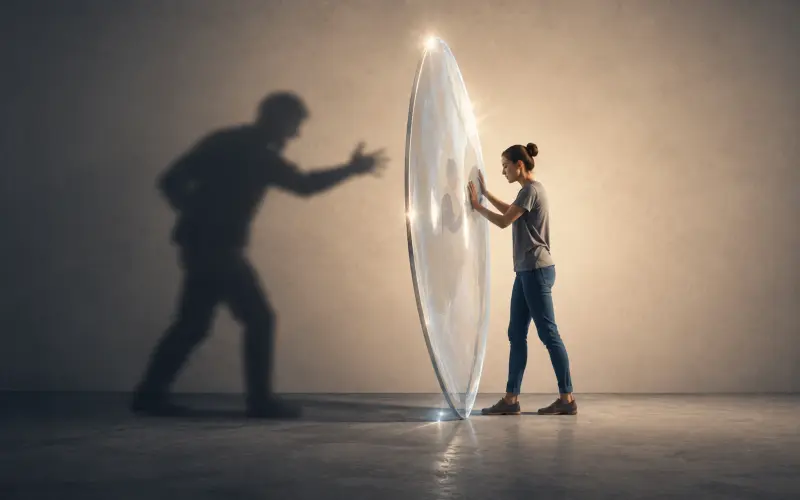
The impact of toxic relationships on self-esteem begins the moment daily conversations turn into constant criticism and subtle mockery. Gradually, your self-perception begins to shrink—often without you noticing. Data from Tatmeen indicates that early recognition of emotional abuse patterns can reduce the deterioration of self-esteem by 35% within the first year of the relationship. In the following lines, we reveal how toxicity reshapes your inner image and offer practical ways to reclaim your deep sense of self-respect.
What is a “Toxic Relationship”?
A toxic relationship is a recurring interaction dominated by blame, manipulation, and an imbalance of power, in which your self-worth is redefined through the lens of the abusive partner. This pattern causes ongoing stress, increasing cortisol levels and suppressing the brain’s reward centers—making the victim more vulnerable to diminished self-esteem.
How Does Self-Esteem Erode Within a Toxic Relationship?
Emotional Manipulation and the Alteration of Inner Narrative
An abusive partner often uses phrases like “No one else will ever love you” or “You’re too sensitive.” Over time, these messages morph into “truths” repeated by your subconscious. Continuous exposure to belittlement activates the nervous system’s fight-or-flight response, reinforcing fear and reducing your ability to defend your personal boundaries.
Social Isolation and Loss of Positive Feedback
When the toxic partner distances you from friends or family, you lose the mirrors that reflect your real value. This increases your tendency to accept demeaning behavior as the new normal.
Early Signs of Declining Self-Esteem
Frequent apologizing, even for things you didn’t do.
Persistent belief that you “don’t deserve” better.
Avoiding expressing opinions for fear of rejection or mockery.
Constantly monitoring your partner’s reactions before making even small decisions.
Practical Steps to Rebuild Self-Esteem After a Toxic Relationship
1. Document the Reality with Honesty Write down daily situations where you felt diminished, and start naming the behavior: “This is guilt-tripping” or “This is cruel sarcasm.” Doing so creates emotional distance between you and the toxic messages.
2. Restore Your Inner Dialogue Replace thoughts like “I’m not enough” with realistic affirmations such as “I’m learning to set boundaries.”
3. Build a Safe Support Network Seek out a trusted friend or family member, or join an online support group. Sharing your experience in a judgment-free environment increases psychological recovery indicators by 28% within three months.
4. Care for the Body to Soothe the Nervous System
30 minutes of walking daily to release endorphins.
Omega-3-rich meals (like fish and walnuts) to enhance brain resilience.
Five minutes of deep breathing before bedtime to lower stress hormones.
Psychotherapy with Tatmeen: Your Digital Safe Space
In this article, Tatmeen highlights that combining cognitive behavioral therapy with mindfulness sessions can boost self-esteem scores by an average of two points on the Rosenberg Scale within six weeks. Through the app, you can book a confidential session with a licensed therapist to discuss post-breakup challenges—without having to reveal your full identity.
Future Prevention: How to Assess the Health of a New Relationship
Quick Criteria
Mutual Respect: Are your opinions heard without sarcasm?
Emotional Transparency: Can you share fears without them being used against you?
Support for Personal Growth: Does your partner encourage your individual goals?
Monthly Review Plan
Record your overall emotional state and sense of self-worth every four weeks. If you notice recurring feelings of devaluation or fear, address them early or seek professional advice.
In Conclusion…
The collapse of self-esteem is a reversible outcome when you choose a safe environment and effective therapeutic tools. As this guide concludes, Tatmeen emphasizes that seeking help is a courageous act—not a weakness—and every effort you make today is an investment in your future self-image. Give yourself a new chance by speaking with a professional who understands your journey and walks beside you toward full recovery.
Frequently Asked Questions
How long does it take to rebuild self-esteem after a toxic relationship?
It depends on the severity of the abuse and the level of support available, but many people notice tangible improvement within 3–6 months of weekly sessions and consistent self-practices.
Is confronting the toxic partner necessary for healing?
Not necessarily; your emotional and physical safety comes first. The need for closure can be addressed with a professional therapist without direct confrontation, which might re-trigger harm.
How can I avoid repeating the toxic pattern in future relationships?
Keep a list of your red-line boundaries, implement a “slow dating period” to evaluate the other person’s behavior, and consult a specialist if signs of control or devaluation appear.
A writer and researcher specializing in psychiatry, she focuses on mental health and the human emotions we experience but cannot always find the words to name. She writes about us—about humanity and the human experience—and simplifies complex topics to offer content that helps us better understand ourselves and life, ultimately making us feel less alone.
Every Tatmeen article is reviewed by care providers licensed by the Saudi Commission for Health Specialties, so what you read is accurate and trustworthy.
This article builds understanding and does not replace a licensed care provider.
Need someone to talk to?
Tatmeen's licensed care providers are available around the clock, and the app's urgent consultation connects you with one within minutes.
Download Tatmeen to explore care providers and booking options.
Smart matchingFour quick questions suggest the right care provider
Urgent consultationTalk to an available care provider within minutes
Free psychological measuresMore than 20 tests to understand how you are doing
Scan to download
{"data":{"id":"fa60bac3-eb6b-45ad-a619-27bbcd75a5bb","slug":"toxic-relationships-impact-on-self-esteem","arTitle":"تأثير العلاقات السامة على تقدير الذات","enTitle":"The Impact of Toxic Relationships on Self-Esteem","thumbnailAltText":"a person sitting on the floor heartbroken from a toxic relationship","estimatedReadingTime":5,"likesCount":324,"writer":{"id":"3ab72b74-f26f-4337-9b47-3114b0f90de5","arBio":"كاتبة وباحثة متخصصة في مجال الطب النفسي، تهتم بموضوعات الصحة النفسية وبالمشاعر الإنسانية التي نختبرها ولا نجد دائمًا الكلمات لتسميتها. تكتب عنّا؛ عن الإنسان وتجربته، وتبسّط الموضوعات المعقّدة لتقدّم محتوى يساعدنا على فهم ذواتنا والحياة أكثر، ويجعلنا نشعر بأننا بوحدة أقل.","enBio":"A writer and researcher specializing in psychiatry, she focuses on mental health and the human emotions we experience but cannot always find the words to name. She writes about us—about humanity and the human experience—and simplifies complex topics to offer content that helps us better understand ourselves and life, ultimately making us feel less alone.","user":{"slug":"ayat-alnajar","arFullName":"آيات النجار","enFullName":"Ayat Al-Najjar","publicProfileImageUrl":"https://cdn.tatmeen.sa/public/profile-images/02384455-68fa-40b6-ad05-609fde65cafa/21b9a610dde5dfc6d37af110c23e9c7ab3946be080c281beb000debf4f7d31a6.webp","publicProfileImage96Url":"https://cdn.tatmeen.sa/public/profile-images/02384455-68fa-40b6-ad05-609fde65cafa/21b9a610dde5dfc6d37af110c23e9c7ab3946be080c281beb000debf4f7d31a6-w96.webp","publicProfileImage192Url":"https://cdn.tatmeen.sa/public/profile-images/02384455-68fa-40b6-ad05-609fde65cafa/21b9a610dde5dfc6d37af110c23e9c7ab3946be080c281beb000debf4f7d31a6-w192.webp"}},"arContent":"","enContent":"","productionDocument":{"headings":[],"faqs":[{"question":"How long does it take to rebuild self-esteem after a toxic relationship?","answer":"<p><span style=\"color:#000000\">It depends on the severity of the abuse and the level of support available, but many people notice tangible improvement within 3–6 months of weekly sessions and consistent self-practices.</span></p>"},{"question":"Is confronting the toxic partner necessary for healing?","answer":"<p><span style=\"color:#000000\">Not necessarily; your emotional and physical safety comes first. The need for closure can be addressed with a professional therapist without direct confrontation, which might re-trigger harm.</span></p>"},{"question":"How can I avoid repeating the toxic pattern in future relationships?","answer":"<p><span style=\"color:#000000\">Keep a list of your red-line boundaries, implement a “slow dating period” to evaluate the other person’s behavior, and consult a specialist if signs of control or devaluation appear.</span></p>"}],"beforeSourcesHtml":"<p></p>","sources":[],"afterSourcesHtml":"","blocks":[{"type":"html","html":"<p><span style=\"color:#000000\">The impact of toxic relationships on self-esteem begins the moment daily conversations turn into constant criticism and subtle mockery. Gradually, your self-perception begins to shrink—often without you noticing. Data from <strong>Tatmeen</strong> indicates that early recognition of emotional abuse patterns can reduce the deterioration of self-esteem by 35% within the first year of the relationship. In the following lines, we reveal how toxicity reshapes your inner image and offer practical ways to reclaim your deep sense of self-respect.</span></p><h3><span style=\"color:#000000\"><strong>What is a “Toxic Relationship”?</strong></span></h3><p><span style=\"color:#000000\">A toxic relationship is a recurring interaction dominated by blame, manipulation, and an imbalance of power, in which your self-worth is redefined through the lens of the abusive partner. This pattern causes ongoing stress, increasing cortisol levels and suppressing the brain’s reward centers—making the victim more vulnerable to diminished self-esteem.</span></p><h3><span style=\"color:#000000\"><strong>How Does Self-Esteem Erode Within a Toxic Relationship?</strong></span></h3><h4><span style=\"color:#000000\"><strong>Emotional Manipulation and the Alteration of Inner Narrative</strong></span></h4><p><span style=\"color:#000000\">An abusive partner often uses phrases like “No one else will ever love you” or “You’re too sensitive.” Over time, these messages morph into “truths” repeated by your subconscious. Continuous exposure to belittlement activates the nervous system’s fight-or-flight response, reinforcing fear and reducing your ability to defend your personal boundaries.</span></p><h4><span style=\"color:#000000\"><strong>Social Isolation and Loss of Positive Feedback</strong></span></h4><p><span style=\"color:#000000\">When the toxic partner distances you from friends or family, you lose the mirrors that reflect your real value. This increases your tendency to accept demeaning behavior as the new normal.</span></p><h3><span style=\"color:#000000\"><strong>Early Signs of Declining Self-Esteem</strong></span></h3><ul><li><p><span style=\"color:#000000\">Frequent apologizing, even for things you didn’t do.<br /></span></p></li><li><p><span style=\"color:#000000\">Persistent belief that you “don’t deserve” better.<br /></span></p></li><li><p><span style=\"color:#000000\">Avoiding expressing opinions for fear of rejection or mockery.<br /></span></p></li><li><p><span style=\"color:#000000\">Constantly monitoring your partner’s reactions before making even small decisions.</span><br /></p></li></ul><h3><span style=\"color:#000000\"><strong>Practical Steps to Rebuild Self-Esteem After a Toxic Relationship</strong></span></h3><p><span style=\"color:#000000\"><strong>1. Document the Reality with Honesty<br /></strong> Write down daily situations where you felt diminished, and start naming the behavior: “This is guilt-tripping” or “This is cruel sarcasm.” Doing so creates emotional distance between you and the toxic messages.</span></p><p><span style=\"color:#000000\"><strong>2. Restore Your Inner Dialogue<br /></strong> Replace thoughts like “I’m not enough” with realistic affirmations such as “I’m learning to set boundaries.”</span></p><p><span style=\"color:#000000\"><strong>3. Build a Safe Support Network<br /></strong> Seek out a trusted friend or family member, or join an online support group. Sharing your experience in a judgment-free environment increases psychological recovery indicators by 28% within three months.</span></p><p><span style=\"color:#000000\"><strong>4. Care for the Body to Soothe the Nervous System</strong></span></p><ul><li><p><span style=\"color:#000000\">30 minutes of walking daily to release endorphins.<br /></span></p></li><li><p><span style=\"color:#000000\">Omega-3-rich meals (like fish and walnuts) to enhance brain resilience.<br /></span></p></li><li><p><span style=\"color:#000000\">Five minutes of deep breathing before bedtime to lower stress hormones.</span><br /></p></li></ul><h3><span style=\"color:#000000\"><strong>Psychotherapy with Tatmeen: Your Digital Safe Space</strong></span></h3><p><span style=\"color:#000000\">In this article, <strong>Tatmeen</strong> highlights that combining cognitive behavioral therapy with mindfulness sessions can boost self-esteem scores by an average of two points on the Rosenberg Scale within six weeks. Through the app, you can book a confidential session with a licensed therapist to discuss post-breakup challenges—without having to reveal your full identity.</span></p><h3><span style=\"color:#000000\"><strong>Future Prevention: How to Assess the Health of a New Relationship</strong></span></h3><h4><span style=\"color:#000000\"><strong>Quick Criteria</strong></span></h4><p><span style=\"color:#000000\"><strong>Mutual Respect:</strong> Are your opinions heard without sarcasm?</span></p><p><span style=\"color:#000000\"><strong>Emotional Transparency:</strong> Can you share fears without them being used against you?</span></p><p><span style=\"color:#000000\"><strong>Support for Personal Growth:</strong> Does your partner encourage your individual goals?</span></p><h4><span style=\"color:#000000\"><strong>Monthly Review Plan</strong></span></h4><p><span style=\"color:#000000\">Record your overall emotional state and sense of self-worth every four weeks. If you notice recurring feelings of devaluation or fear, address them early or seek professional advice.</span></p><h3><span style=\"color:#000000\"><strong>In Conclusion…</strong></span></h3><p><span style=\"color:#000000\">The collapse of self-esteem is a reversible outcome when you choose a safe environment and effective therapeutic tools. As this guide concludes, <strong>Tatmeen</strong> emphasizes that seeking help is a courageous act—not a weakness—and every effort you make today is an investment in your future self-image. Give yourself a new chance by speaking with a professional who understands your journey and walks beside you toward full recovery.</span></p>"}],"inlineCtaSignatures":[],"_experienceAliases":{"v":1,"fields":["html","bodyHtml"],"faqs":[0,1,2]}},"createdAt":"2026-05-09T21:00:00.000Z","updatedAt":"2026-06-24T23:50:33.540Z","disorderGroups":[{"id":"01b1a587-3584-435b-971a-c40ffce29802","slug":"family-and-marital-relations","arName":"العلاقات الأسرية والزوجية","enName":"Family & Marital Relations"},{"id":"d807ea69-44d4-4e81-bee4-0a059fd36645","slug":"self-development","arName":"تنمية الذات","enName":"Self-Development"}],"reviewer":{"arFullName":"فريق تطمين","enFullName":"Tatmeen team","slug":"tatmeen-team","kind":"organization"},"productionArticle":true,"promotionAllowed":true,"preparedCover":{"src":"https://cdn.tatmeen.sa/public/article-lcp/article-lcp-v2/sha256-8ec6417486e87cada36e9bf7377925083183a7cf9bf10cf13559413505fe3ce2/800-21c7bbce37a53ae51a0b0d0c543e6db141468c7c55057a6ba1fd98fc011dae5b.avif","fallback":"https://cdn.tatmeen.sa/public/article-lcp/article-lcp-v2/sha256-8ec6417486e87cada36e9bf7377925083183a7cf9bf10cf13559413505fe3ce2/800-247e7807232ec2f2a0233670e0c32de43d84f5fc9e61b71d52be1a89e0d29460.webp","directUrl":"https://cdn.tatmeen.sa/blog-cover/Tatmeen-1778437207308.webp","isGolden":true,"avifSrcset":"https://cdn.tatmeen.sa/public/article-lcp/article-lcp-v2/sha256-8ec6417486e87cada36e9bf7377925083183a7cf9bf10cf13559413505fe3ce2/400-54bcccb6671bb3d030e144672bf2025d3c212d1be16ea43e8d0847dcb582e0bf.avif 400w, https://cdn.tatmeen.sa/public/article-lcp/article-lcp-v2/sha256-8ec6417486e87cada36e9bf7377925083183a7cf9bf10cf13559413505fe3ce2/640-ffc0cba43f8cc8e65807518c8d0b96bc51c5baefd00c555db9ae9099496c93c7.avif 640w, https://cdn.tatmeen.sa/public/article-lcp/article-lcp-v2/sha256-8ec6417486e87cada36e9bf7377925083183a7cf9bf10cf13559413505fe3ce2/800-21c7bbce37a53ae51a0b0d0c543e6db141468c7c55057a6ba1fd98fc011dae5b.avif 800w, https://cdn.tatmeen.sa/public/article-lcp/article-lcp-v2/sha256-8ec6417486e87cada36e9bf7377925083183a7cf9bf10cf13559413505fe3ce2/1200-f6682c63710cca73d8f06b4a9f887ac33ebb112861d40cc78ad5d24153e9156f.avif 1200w","webpSrcset":"https://cdn.tatmeen.sa/public/article-lcp/article-lcp-v2/sha256-8ec6417486e87cada36e9bf7377925083183a7cf9bf10cf13559413505fe3ce2/400-806ca473b523550f2862d68451f1d4ff615692a21664e7db0362ff05032b9867.webp 400w, https://cdn.tatmeen.sa/public/article-lcp/article-lcp-v2/sha256-8ec6417486e87cada36e9bf7377925083183a7cf9bf10cf13559413505fe3ce2/640-1a047f1b8892cf43b6303aa12f93c0faf100181ee54329cb4a067c959b7b3108.webp 640w, https://cdn.tatmeen.sa/public/article-lcp/article-lcp-v2/sha256-8ec6417486e87cada36e9bf7377925083183a7cf9bf10cf13559413505fe3ce2/800-247e7807232ec2f2a0233670e0c32de43d84f5fc9e61b71d52be1a89e0d29460.webp 800w, https://cdn.tatmeen.sa/public/article-lcp/article-lcp-v2/sha256-8ec6417486e87cada36e9bf7377925083183a7cf9bf10cf13559413505fe3ce2/1200-06cc933af7733373473968c698081a63cbcdc537c648f546f89f1fe83afd669c.webp 1200w","phoneAvifSrcset":"https://cdn.tatmeen.sa/public/article-lcp/article-lcp-v2/sha256-8ec6417486e87cada36e9bf7377925083183a7cf9bf10cf13559413505fe3ce2/400-54bcccb6671bb3d030e144672bf2025d3c212d1be16ea43e8d0847dcb582e0bf.avif 400w, https://cdn.tatmeen.sa/public/article-lcp/article-lcp-v2/sha256-8ec6417486e87cada36e9bf7377925083183a7cf9bf10cf13559413505fe3ce2/640-ffc0cba43f8cc8e65807518c8d0b96bc51c5baefd00c555db9ae9099496c93c7.avif 640w, https://cdn.tatmeen.sa/public/article-lcp/article-lcp-v2/sha256-8ec6417486e87cada36e9bf7377925083183a7cf9bf10cf13559413505fe3ce2/800-21c7bbce37a53ae51a0b0d0c543e6db141468c7c55057a6ba1fd98fc011dae5b.avif 800w","phoneWebpSrcset":"https://cdn.tatmeen.sa/public/article-lcp/article-lcp-v2/sha256-8ec6417486e87cada36e9bf7377925083183a7cf9bf10cf13559413505fe3ce2/400-806ca473b523550f2862d68451f1d4ff615692a21664e7db0362ff05032b9867.webp 400w, https://cdn.tatmeen.sa/public/article-lcp/article-lcp-v2/sha256-8ec6417486e87cada36e9bf7377925083183a7cf9bf10cf13559413505fe3ce2/640-1a047f1b8892cf43b6303aa12f93c0faf100181ee54329cb4a067c959b7b3108.webp 640w, https://cdn.tatmeen.sa/public/article-lcp/article-lcp-v2/sha256-8ec6417486e87cada36e9bf7377925083183a7cf9bf10cf13559413505fe3ce2/800-247e7807232ec2f2a0233670e0c32de43d84f5fc9e61b71d52be1a89e0d29460.webp 800w","width":800,"height":510},"previewTaxonomy":{"groups":[{"id":"01b1a587-3584-435b-971a-c40ffce29802","slug":"family-and-marital-relations","arName":"العلاقات الأسرية والزوجية","enName":"Family & Marital Relations"},{"id":"d807ea69-44d4-4e81-bee4-0a059fd36645","slug":"self-development","arName":"تنمية الذات","enName":"Self-Development"}],"topics":[{"id":"f495e682-facf-4a75-b8d2-369cf476488b","slug":"low-self-confidence","arName":"ضعف الثقة بالنفس","enName":"Low Self-Confidence","groupSlug":"self-development","href":"/blog/category/self-development/low-self-confidence/"},{"id":"79c48ff5-92b2-42da-ac64-c6ef33d5b74e","slug":"toxic-relationships","arName":"علاقات سامة","enName":"Toxic Relationships","groupSlug":"family-and-marital-relations","href":"/blog/category/family-and-marital-relations/toxic-relationships/"}],"tags":[{"id":"2faf13b8-07d4-40ee-89b2-ae2c507a580a","slug":"toxic-relationships-manipulation","arName":"العلاقات السامة والتلاعب النفسي","enName":"Toxic Relationships & Manipulation"},{"id":"1ad76cf4-ae2a-43ad-b868-152d6e093624","slug":"self-esteem-self-worth","arName":"تقدير الذات والثقة بالنفس","enName":"Self-Esteem & Self-Worth"},{"id":"c2a6e8d3-de9c-435f-8c95-9727e7db14cc","slug":"explainer-awareness","arName":"دليل توعوي / شرح","enName":"Explainer / Awareness Guide"}]},"previewProviderRecommendations":[{"id":"6df31339-a6f5-4131-a603-3a7c7a34c143","slug":"joud-alodhayyani-9014","arFullName":"جود العتيبي","enFullName":"Joud Alotaibi","publicProfileImageUrl":"https://cdn.tatmeen.sa/public/profile-images/6df31339-a6f5-4131-a603-3a7c7a34c143/7bb005ef9d4315296aad2a7d142fb2af2cf89920a40b474fc5139b9530269282.webp","publicProfileImage96Url":"https://cdn.tatmeen.sa/public/profile-images/6df31339-a6f5-4131-a603-3a7c7a34c143/7bb005ef9d4315296aad2a7d142fb2af2cf89920a40b474fc5139b9530269282-w96.webp","publicProfileImage192Url":"https://cdn.tatmeen.sa/public/profile-images/6df31339-a6f5-4131-a603-3a7c7a34c143/7bb005ef9d4315296aad2a7d142fb2af2cf89920a40b474fc5139b9530269282-w192.webp","specialization":{"arName":"أخصائي نفسي","enName":"Psychologist"},"profileImageUrl":"https://cdn.tatmeen.sa/public/profile-images/6df31339-a6f5-4131-a603-3a7c7a34c143/7bb005ef9d4315296aad2a7d142fb2af2cf89920a40b474fc5139b9530269282-w192.webp","experienceYears":2,"consultantInfo":{"averageRating":{"average":3.5},"specialization":{"arGeneralName":"أخصائي نفسي","enGeneralName":"Psychologist"}}},{"id":"5520abac-2d83-4b20-a11d-f63055316699","slug":"maha-alawad-4831","arFullName":"مها العواد","enFullName":"Maha Alawad","publicProfileImageUrl":"","publicProfileImage96Url":"","publicProfileImage192Url":"","specialization":{"arName":"أخصائي نفسي","enName":"Psychologist"},"profileImageUrl":"","experienceYears":13,"consultantInfo":{"averageRating":{"average":4.846153846153846},"specialization":{"arGeneralName":"أخصائي نفسي","enGeneralName":"Psychologist"}}},{"id":"d754a189-f8c9-4aad-b4aa-a5dbd26c0bd7","slug":"talal-alshowaier-8694","arFullName":"طلال الشويعر","enFullName":"Talal Alshowaier","publicProfileImageUrl":"https://cdn.tatmeen.sa/public/profile-images/d754a189-f8c9-4aad-b4aa-a5dbd26c0bd7/74feb27848a47cf43189f6b5951e06a9b87b08269021d5bab765092fc65fce42.webp","publicProfileImage96Url":"https://cdn.tatmeen.sa/public/profile-images/d754a189-f8c9-4aad-b4aa-a5dbd26c0bd7/74feb27848a47cf43189f6b5951e06a9b87b08269021d5bab765092fc65fce42-w96.webp","publicProfileImage192Url":"https://cdn.tatmeen.sa/public/profile-images/d754a189-f8c9-4aad-b4aa-a5dbd26c0bd7/74feb27848a47cf43189f6b5951e06a9b87b08269021d5bab765092fc65fce42-w192.webp","specialization":{"arName":"أخصائي نفسي","enName":"Psychologist"},"profileImageUrl":"https://cdn.tatmeen.sa/public/profile-images/d754a189-f8c9-4aad-b4aa-a5dbd26c0bd7/74feb27848a47cf43189f6b5951e06a9b87b08269021d5bab765092fc65fce42-w192.webp","experienceYears":3,"consultantInfo":{"averageRating":{"average":5},"specialization":{"arGeneralName":"أخصائي نفسي","enGeneralName":"Psychologist"}}}],"previewCareProviders":[{"id":"09364052-c2a9-4c52-9717-7ce2093b8d0a","slug":"kholoud-alharbi-5221","arFullName":"خلود الحربي","enFullName":"Kholoud Alharbi","publicProfileImageUrl":"https://cdn.tatmeen.sa/public/profile-images/09364052-c2a9-4c52-9717-7ce2093b8d0a/4a0aeb81619e351b77f4323e3605a0a00acc7ca3c82ee7cc5ca2c9e8ef716049.webp","publicProfileImage96Url":"https://cdn.tatmeen.sa/public/profile-images/09364052-c2a9-4c52-9717-7ce2093b8d0a/4a0aeb81619e351b77f4323e3605a0a00acc7ca3c82ee7cc5ca2c9e8ef716049-w96.webp","publicProfileImage192Url":"https://cdn.tatmeen.sa/public/profile-images/09364052-c2a9-4c52-9717-7ce2093b8d0a/4a0aeb81619e351b77f4323e3605a0a00acc7ca3c82ee7cc5ca2c9e8ef716049-w192.webp","gender":"FEMALE","specialization":{"arName":"أخصائي نفسي","enName":"Psychologist"}},{"id":"6f037535-1dca-4b50-a8b2-5974b7323286","slug":"salah-althobaiti-9053","arFullName":"صلاح الثبيتي","enFullName":"Salah Althobaiti","publicProfileImageUrl":"https://cdn.tatmeen.sa/public/profile-images/6f037535-1dca-4b50-a8b2-5974b7323286/35b6bd7fad9b1e004c1835803eb9c1b56dcacd380685ec8bff141f0fb888005c.webp","publicProfileImage96Url":"https://cdn.tatmeen.sa/public/profile-images/6f037535-1dca-4b50-a8b2-5974b7323286/35b6bd7fad9b1e004c1835803eb9c1b56dcacd380685ec8bff141f0fb888005c-w96.webp","publicProfileImage192Url":"https://cdn.tatmeen.sa/public/profile-images/6f037535-1dca-4b50-a8b2-5974b7323286/35b6bd7fad9b1e004c1835803eb9c1b56dcacd380685ec8bff141f0fb888005c-w192.webp","gender":"MALE","specialization":{"arName":"أخصائي نفسي","enName":"Psychologist"}},{"id":"3cc806e8-616b-4884-9f21-a75b378580a2","slug":"aisha-al-hashim-8667","arFullName":"عائشة ال هاشم","enFullName":"Aisha Al Hashim","publicProfileImageUrl":"https://cdn.tatmeen.sa/public/profile-images/3cc806e8-616b-4884-9f21-a75b378580a2/27f523d03be4dcfa1f6a79f70c1773887434e698990d214cd990caec56a44798.webp","publicProfileImage96Url":"https://cdn.tatmeen.sa/public/profile-images/3cc806e8-616b-4884-9f21-a75b378580a2/27f523d03be4dcfa1f6a79f70c1773887434e698990d214cd990caec56a44798-w96.webp","publicProfileImage192Url":"https://cdn.tatmeen.sa/public/profile-images/3cc806e8-616b-4884-9f21-a75b378580a2/27f523d03be4dcfa1f6a79f70c1773887434e698990d214cd990caec56a44798-w192.webp","gender":"FEMALE","specialization":{"arName":"أخصائي نفسي","enName":"Psychologist"}},{"id":"94765496-dbdf-4631-a01b-7df5f788668d","slug":"abdullrahman-alhamoudi-3045","arFullName":"عبدالرحمن الحمودي","enFullName":"Abdulrahman Alhamoudi","publicProfileImageUrl":"https://cdn.tatmeen.sa/public/profile-images/94765496-dbdf-4631-a01b-7df5f788668d/2d49f6b6493c564afb6f50b6c3634231dff3a5cf8353acfab393d1b2a88037d1.webp","publicProfileImage96Url":"https://cdn.tatmeen.sa/public/profile-images/94765496-dbdf-4631-a01b-7df5f788668d/2d49f6b6493c564afb6f50b6c3634231dff3a5cf8353acfab393d1b2a88037d1-w96.webp","publicProfileImage192Url":"https://cdn.tatmeen.sa/public/profile-images/94765496-dbdf-4631-a01b-7df5f788668d/2d49f6b6493c564afb6f50b6c3634231dff3a5cf8353acfab393d1b2a88037d1-w192.webp","gender":"MALE","specialization":{"arName":"أخصائي نفسي","enName":"Psychologist"}},{"id":"618dba89-5b70-4b46-8304-741b7ac8ecd3","slug":"abdullah-mari-1311","arFullName":"عبدالله مرعي","enFullName":"Abdullah Mari","publicProfileImageUrl":"https://cdn.tatmeen.sa/public/profile-images/618dba89-5b70-4b46-8304-741b7ac8ecd3/6b4a3bfb59f8a304ca79083b32859b46baad2e1d692974a47c02c1f66bd11129.webp","publicProfileImage96Url":"https://cdn.tatmeen.sa/public/profile-images/618dba89-5b70-4b46-8304-741b7ac8ecd3/6b4a3bfb59f8a304ca79083b32859b46baad2e1d692974a47c02c1f66bd11129-w96.webp","publicProfileImage192Url":"https://cdn.tatmeen.sa/public/profile-images/618dba89-5b70-4b46-8304-741b7ac8ecd3/6b4a3bfb59f8a304ca79083b32859b46baad2e1d692974a47c02c1f66bd11129-w192.webp","gender":"MALE","specialization":{"arName":"أخصائي نفسي","enName":"Psychologist"}},{"id":"d4ffcb6b-90a7-45b6-b941-964866f4564b","slug":"dhaifallah-alhumaidi-1092","arFullName":"ضيف الله الحميدي","enFullName":"Dhaifallah Alhumaidi","publicProfileImageUrl":"https://cdn.tatmeen.sa/public/profile-images/d4ffcb6b-90a7-45b6-b941-964866f4564b/1817171c5828a9b57d6c30d12332cf154e335272548bc90a6e8456d74d356956.webp","publicProfileImage96Url":"https://cdn.tatmeen.sa/public/profile-images/d4ffcb6b-90a7-45b6-b941-964866f4564b/1817171c5828a9b57d6c30d12332cf154e335272548bc90a6e8456d74d356956-w96.webp","publicProfileImage192Url":"https://cdn.tatmeen.sa/public/profile-images/d4ffcb6b-90a7-45b6-b941-964866f4564b/1817171c5828a9b57d6c30d12332cf154e335272548bc90a6e8456d74d356956-w192.webp","gender":"MALE","specialization":{"arName":"أخصائي نفسي","enName":"Psychologist"}},{"id":"d8fb937b-ad65-4b6f-a65b-276ad8258fed","slug":"azza-alharbi-7286","arFullName":"عزه الحربي","enFullName":"Azza Alharbi","publicProfileImageUrl":"https://cdn.tatmeen.sa/public/profile-images/d8fb937b-ad65-4b6f-a65b-276ad8258fed/378a8ab30f4087833263c41fb2c3102028cbe6bb9655172d7b3439ee1d6b0800.webp","publicProfileImage96Url":"https://cdn.tatmeen.sa/public/profile-images/d8fb937b-ad65-4b6f-a65b-276ad8258fed/378a8ab30f4087833263c41fb2c3102028cbe6bb9655172d7b3439ee1d6b0800-w96.webp","publicProfileImage192Url":"https://cdn.tatmeen.sa/public/profile-images/d8fb937b-ad65-4b6f-a65b-276ad8258fed/378a8ab30f4087833263c41fb2c3102028cbe6bb9655172d7b3439ee1d6b0800-w192.webp","gender":"FEMALE","specialization":{"arName":"أخصائي نفسي","enName":"Psychologist"}},{"id":"025d770d-f6d4-405b-be1c-d45dde63fbf7","slug":"akila-alomran-7545","arFullName":"عقيله العمران","enFullName":"Akila Alomran","publicProfileImageUrl":"https://cdn.tatmeen.sa/public/profile-images/025d770d-f6d4-405b-be1c-d45dde63fbf7/44a990b9294f02c9810c69a68b8913a6afac0eb30d1b7494155f31b6dde9378b.webp","publicProfileImage96Url":"https://cdn.tatmeen.sa/public/profile-images/025d770d-f6d4-405b-be1c-d45dde63fbf7/44a990b9294f02c9810c69a68b8913a6afac0eb30d1b7494155f31b6dde9378b-w96.webp","publicProfileImage192Url":"https://cdn.tatmeen.sa/public/profile-images/025d770d-f6d4-405b-be1c-d45dde63fbf7/44a990b9294f02c9810c69a68b8913a6afac0eb30d1b7494155f31b6dde9378b-w192.webp","gender":"FEMALE","specialization":{"arName":"أخصائي نفسي","enName":"Psychologist"}}],"previewDownload":{"href":"/download","title":{"ar":"خطوة واحدة لأجلك، ابدأ الآن","en":"One step for you, start now"},"description":{"ar":"حمّل تطبيق تطمين لاستكشاف مقدمي الرعاية وخيارات الحجز.","en":"Download Tatmeen to explore care providers and booking options."},"posterSrc":"/images/home/cta-ar-new-1.webp","videoSrc":"/images/home/cta-ar-new-1.mp4","videoPosterSrc":"/images/home/cta-ar-new-1.webp","videoPosterEnSrc":"/images/home/cta-en-new-1.webp","videoType":"video/mp4","appStoreHref":"https://apps.apple.com/us/app/tatmeen-%D8%AA%D8%B7%D9%85%D9%8A%D9%86/id6473836983","googlePlayHref":"https://play.google.com/store/apps/details?id=com.TatmeenApp.user&hl=en"},"previewRelatedArticles":[{"id":"d5183a89-eb71-413b-84bc-3d69aa99819a","slug":"am-i-a-toxic-person-signs-and-repair","route":"/blog/am-i-a-toxic-person-signs-and-repair/","title":{"ar":"هل أنا شخصية سامة؟ فهم العلامات وإصلاح الأثر","en":"Am I a Toxic Person? Understanding the Signs and Repairing the Impact"},"image":"https://cdn.tatmeen.sa/public/article-lcp/article-lcp-v2/sha256-67111e5c079b4ba9e31eb9206c69eb963d1c0a16c2740088447f31f846d0f980/800-cfc309b9df2635f1552ba9dcc5df2dc969181bc4e9bd1bd83eb80d262a14fabf.webp","directImageFallback":"https://cdn.tatmeen.sa/blog-cover/Tatmeen-1782926927020.webp","arThumbnailAltText":"Man sits in a cracked dark room, facing a sunlit open door with plants outside.","thumbnailAltText":"Man sits in a cracked dark room, facing a sunlit open door with plants outside.","topic":{"label":{"ar":"العلاقات الأسرية والزوجية","en":"Family & Marital Relations"}},"readingTimeMinutes":5},{"id":"f12ebfeb-49f1-4a16-827c-28817f462bea","slug":"how-to-deal-with-toxic-partner","route":"/blog/how-to-deal-with-toxic-partner/","title":{"ar":"كيف تتعامل مع شريك سام؟","en":"How to Deal with a Toxic Partner?"},"image":"https://cdn.tatmeen.sa/public/article-lcp/article-lcp-v2/sha256-e8e89001a887308550e3bcf11a7d1ad178c660c2726c3498b65b85c4454ef72b/800-e39393e3d0f0269f873448ba5a3cb7f7423c8c50de3ddfffd1d755bddcd3589e.webp","directImageFallback":"https://cdn.tatmeen.sa/blog-cover/Tatmeen-1778438093250.webp","arThumbnailAltText":"a person is shielding herself from her toxic partner","thumbnailAltText":"a person is shielding herself from her toxic partner","topic":{"label":{"ar":"العلاقات الأسرية والزوجية","en":"Family & Marital Relations"}},"readingTimeMinutes":5},{"id":"08ebb8ef-be78-450f-81d3-86004c413b6b","slug":"am-i-toxic-signs-how-to-change","route":"/blog/am-i-toxic-signs-how-to-change/","title":{"ar":"هل أنا شخصية سامة؟ علامات التسمّم العاطفي وكيف أبدأ التغيير","en":"Am I a Toxic Person? Signs of Emotional Toxicity and How to Start Changing"},"image":"https://cdn.tatmeen.sa/public/article-lcp/article-lcp-v2/sha256-f1601faf9e0385e469c9650738a43329a32b5ee44c4352db089af5ecc11f0bcb/800-4cc209d8d05759bf193b1a148e4f4af857f75b302e429e8c4f429afa84596832.webp","directImageFallback":"https://cdn.tatmeen.sa/blog-cover/Tatmeen-1780758597248.webp","arThumbnailAltText":"Person holding a smiling mask before a cracked mirror, revealing a sad reflection behind it.","thumbnailAltText":"Person holding a smiling mask before a cracked mirror, revealing a sad reflection behind it.","topic":{"label":{"ar":"العلاقات الأسرية والزوجية","en":"Family & Marital Relations"}},"readingTimeMinutes":5},{"id":"fbfbb5d7-a0bd-4654-be94-c5decefad021","slug":"why-hard-leave-toxic-relationship","route":"/blog/why-hard-leave-toxic-relationship/","title":{"ar":"لماذا يصعب مغادرة العلاقة السامة؟","en":"Why Is It Hard to Leave a Toxic Relationship?"},"image":"https://cdn.tatmeen.sa/public/article-lcp/article-lcp-v2/sha256-5d4e49a0362a765c5476e646a04837cadd8f916fe80a8232dee3e89b9e53af70/800-f5adcb3b11c038acf6980ae418fbbfef3667b642d5b8df970d3bfc47261357c2.webp","directImageFallback":"https://cdn.tatmeen.sa/blog-cover/Tatmeen-1778605810225.webp","arThumbnailAltText":"woman crossing from a dark side to a warm side full of blossomed flowers","thumbnailAltText":"woman crossing from a dark side to a warm side full of blossomed flowers","topic":{"label":{"ar":"اضطرابات نفسية شائعة","en":"Common Mental Issues"}},"readingTimeMinutes":5}],"previewRelatedReadStates":{}},"locale":"en","device":"desktop","path":"/en/blog/toxic-relationships-impact-on-self-esteem/","readingControls":false,"config":{"public":{"BUCKET_URL":"https://cdn.tatmeen.sa/","APP_BASE_URL":"https://tatmeen.sa","intercomAppId":"ppcnu9e3"}}}