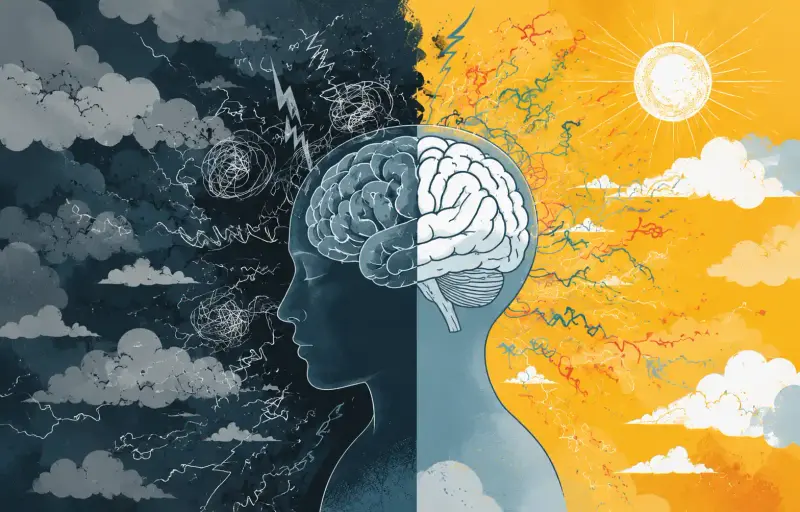
A manic episode is not just a high mood. It may begin with striking energy and racing ideas, then turn into an inner rush that steals sleep and weakens judgment and decision-making. A person may feel unusually confident and impulsive, then later feel confused or deeply drained. The challenge is that the early stage can look like achievement and enthusiasm, while underneath it may be a sign that needs early attention and safe support.
In this article, you will find a clear explanation of what may be happening, signs that help you notice changes before they escalate, and practical steps that protect balance without self-blame. Professional assessment matters because several different conditions can look similar.
What Is Mania, and Why Can It Seem Appealing at First?
Mania is not simply a good mood or passing excitement. It is a state in which energy and activity rise in an unusual way, sometimes alongside irritability or quick agitation. At first, it may feel productive and powerful, but over time it can lead to rushed decisions, fast speech, reduced need for sleep, and continued activity despite exhaustion.
Mania is often linked to bipolar disorder, where periods of elevated mood may alternate with periods of low mood or stability. NIMH explains that bipolar disorder involves clear changes in mood, energy, activity, and concentration, and may include manic episodes or depressive episodes. Understanding this framework does not mean self-diagnosis, but it can reduce confusion and give you a starting point.
Causes of Mania: A Mix of Vulnerability and Triggers
There is no single simple cause of mania. Biological and genetic factors may interact with life stress, sleep patterns, and daily habits. The rush may intensify with repeated late nights, severe stress, use of stimulants or substances, or major changes in routine.
Daily rhythm can become a hidden fuel: work without breaks, too many stimulants, or long isolation that increases rumination. The goal is not to blame yourself, but to notice what speeds up the race in your mind. Tracking triggers alone can turn the experience from chaos into a map you can work with.
Signs of Mania That Deserve Attention
The signs can be confused with normal enthusiasm, but when they appear strongly or repeatedly, they deserve attention:
Reduced sleep with continued activity
Racing thoughts and scattered focus
Talking a lot or speaking quickly
Excessive confidence or an unrealistic sense of ability
Impulsive spending or sudden major decisions
Irritability, agitation, or strong sensitivity to criticism
Disturbed perception or unrealistic thoughts in severe states
Elevated mood can involve high energy, reduced sleep, racing thoughts, and impulsive behavior. In some cases it may reach psychotic symptoms such as hallucinations or delusions. If you feel your impulsivity is putting you at risk, or if you have thoughts of harming yourself, seek urgent medical help in your area or contact a trusted person near you immediately.
According to specialists at Tatmeen, one of the hardest parts of mania is that it may first seem like a quick solution to exhaustion or frustration, then gradually become a loss of balance. This is why noticing early signs can help, even when they are subtle, before rushed decisions grow larger.
What Is the Difference Between Mania and Normal Energy?
Normal energy usually remains within your control: you sleep reasonably, you can pause when needed, and your decisions stay aligned with your values and circumstances. In mania, boundaries tend to fade: sleep decreases, thoughts speed up, judgment becomes weaker, and enthusiasm may turn into impulsivity.
A practical indicator is the effect on relationships, work, and money. When people around you begin noticing a sharp change, or when painful outcomes repeat despite your intentions, it deserves a calm review. Many people benefit from a simple agreement with someone close who can gently remind them when sleep patterns or impulsive behavior begin to shift.
Calming a Racing Mind Safely on Difficult Days
When your inner speed rises, you do not need major decisions as much as you need measured slowing down. Start by reducing stimulants, softening the lighting, avoiding heated arguments, and keeping the day simpler: a few clear tasks instead of a long list.
Sleep is a core protection for balance. Even if you do not feel sleepy, help your body settle by closing screens early, using a consistent bedtime routine, and choosing a calm non-stimulating activity or dhikr. During the day, light movement and a short walk can help release tension without raising stimulation further.
It is also wise to postpone major financial or career decisions until mood settles. If impulsivity feels strong, add a gentle barrier such as asking a trusted person to review any major decision or temporarily organize spending, to protect yourself from consequences that may later feel heavy.
Safe Treatment: Why Does It Need a Balanced Plan?
Treatment for mania depends on symptom severity and context, and often combines medical, psychological, and routine-based elements. A plan may include medication that helps stabilize mood or calm impulsivity, alongside therapy that supports early-warning recognition, sleep routine, and stress management. The best plan is personal and realistic, because what helps one person may not fit another.
Finally...
During mania, you may feel as if your mind is racing ahead of you and you cannot find the off switch. Still, balance can become more possible when you protect sleep, delay major decisions, and respond to early signs without self-blame. Improvement often comes through small repeated steps. If you would like professional support that respects your privacy, booking an appointment with a licensed specialist through Tatmeen may be a comfortable step when you are ready.
Frequently Asked Questions
Does mania always mean bipolar disorder?
Not necessarily, although it is often linked to it. Similar symptoms can appear in other situations or be influenced by lack of sleep, stress, or certain substances. It is better to notice the pattern and its impact on your life instead of making a quick self-diagnosis.
What is the difference between mania and hypomania?
The difference is usually severity and impact. Hypomania may raise energy and confidence without major disruption, while mania may cause clear impulsivity, weaker judgment, and sometimes disturbed perception. Monitoring sleep and impulsivity is useful in both cases.
How can I help someone close who may be experiencing mania?
Start with calm and avoid arguing. Help them reduce stimulation, keep a simple routine, and postpone major decisions. If you notice a risk to their safety or the safety of others, seek urgent medical help and stay nearby in a supportive way.
A writer and researcher specializing in psychiatry, she focuses on mental health and the human emotions we experience but cannot always find the words to name. She writes about us—about humanity and the human experience—and simplifies complex topics to offer content that helps us better understand ourselves and life, ultimately making us feel less alone.
Every Tatmeen article is reviewed by care providers licensed by the Saudi Commission for Health Specialties, so what you read is accurate and trustworthy.
This article builds understanding and does not replace a licensed care provider.
Need someone to talk to?
Tatmeen's licensed care providers are available around the clock, and the app's urgent consultation connects you with one within minutes.
Download Tatmeen to explore care providers and booking options.
Smart matchingFour quick questions suggest the right care provider
Urgent consultationTalk to an available care provider within minutes
Free psychological measuresMore than 20 tests to understand how you are doing
Scan to download
{"data":{"id":"6adfa578-4a36-433e-bd9f-53694ecabee5","slug":"manic-episode-brain-safe-response","arTitle":"نوبة الهوس: ماذا يحدث في الدماغ وكيف نتعامل بأمان؟","enTitle":"Manic Episode: What Happens in the Brain and How Do We Respond Safely?","thumbnailAltText":"a brain image split into two halves one half is in shambles and the other one is bright and healthy","estimatedReadingTime":5,"likesCount":194,"writer":{"id":"3ab72b74-f26f-4337-9b47-3114b0f90de5","arBio":"كاتبة وباحثة متخصصة في مجال الطب النفسي، تهتم بموضوعات الصحة النفسية وبالمشاعر الإنسانية التي نختبرها ولا نجد دائمًا الكلمات لتسميتها. تكتب عنّا؛ عن الإنسان وتجربته، وتبسّط الموضوعات المعقّدة لتقدّم محتوى يساعدنا على فهم ذواتنا والحياة أكثر، ويجعلنا نشعر بأننا بوحدة أقل.","enBio":"A writer and researcher specializing in psychiatry, she focuses on mental health and the human emotions we experience but cannot always find the words to name. She writes about us—about humanity and the human experience—and simplifies complex topics to offer content that helps us better understand ourselves and life, ultimately making us feel less alone.","user":{"slug":"ayat-alnajar","arFullName":"آيات النجار","enFullName":"Ayat Al-Najjar","publicProfileImageUrl":"https://cdn.tatmeen.sa/public/profile-images/02384455-68fa-40b6-ad05-609fde65cafa/21b9a610dde5dfc6d37af110c23e9c7ab3946be080c281beb000debf4f7d31a6.webp","publicProfileImage96Url":"https://cdn.tatmeen.sa/public/profile-images/02384455-68fa-40b6-ad05-609fde65cafa/21b9a610dde5dfc6d37af110c23e9c7ab3946be080c281beb000debf4f7d31a6-w96.webp","publicProfileImage192Url":"https://cdn.tatmeen.sa/public/profile-images/02384455-68fa-40b6-ad05-609fde65cafa/21b9a610dde5dfc6d37af110c23e9c7ab3946be080c281beb000debf4f7d31a6-w192.webp"}},"arContent":"","enContent":"","productionDocument":{"headings":[{"id":"article-section-what-is-mania-and-why-can-it-seem-appealing-at-first","text":"What Is Mania, and Why Can It Seem Appealing at First?"},{"id":"article-section-causes-of-mania-a-mix-of-vulnerability-and-triggers","text":"Causes of Mania: A Mix of Vulnerability and Triggers"},{"id":"article-section-signs-of-mania-that-deserve-attention","text":"Signs of Mania That Deserve Attention"},{"id":"article-section-what-is-the-difference-between-mania-and-normal-energy","text":"What Is the Difference Between Mania and Normal Energy?"},{"id":"article-section-calming-a-racing-mind-safely-on-difficult-days","text":"Calming a Racing Mind Safely on Difficult Days"},{"id":"article-section-safe-treatment-why-does-it-need-a-balanced-plan","text":"Safe Treatment: Why Does It Need a Balanced Plan?"},{"id":"article-section-finally","text":"Finally..."}],"faqs":[{"question":"Does mania always mean bipolar disorder?","answer":"<p><span style=\"color:#000000\">Not necessarily, although it is often linked to it. Similar symptoms can appear in other situations or be influenced by lack of sleep, stress, or certain substances. It is better to notice the pattern and its impact on your life instead of making a quick self-diagnosis.</span></p>"},{"question":"What is the difference between mania and hypomania?","answer":"<p><span style=\"color:#000000\">The difference is usually severity and impact. Hypomania may raise energy and confidence without major disruption, while mania may cause clear impulsivity, weaker judgment, and sometimes disturbed perception. Monitoring sleep and impulsivity is useful in both cases.</span></p>"},{"question":"How can I help someone close who may be experiencing mania?","answer":"<p><span style=\"color:#000000\">Start with calm and avoid arguing. Help them reduce stimulation, keep a simple routine, and postpone major decisions. If you notice a risk to their safety or the safety of others, seek urgent medical help and stay nearby in a supportive way.</span></p>"}],"beforeSourcesHtml":"<p></p>","sources":[],"afterSourcesHtml":"","blocks":[{"type":"html","html":"<p><span style=\"color:#000000\">A manic episode is not just a high mood. It may begin with striking energy and racing ideas, then turn into an inner rush that steals sleep and weakens judgment and decision-making. A person may feel unusually confident and impulsive, then later feel confused or deeply drained. The challenge is that the early stage can look like achievement and enthusiasm, while underneath it may be a sign that needs early attention and safe support.</span></p><p><span style=\"color:#000000\">In this article, you will find a clear explanation of what may be happening, signs that help you notice changes before they escalate, and practical steps that protect balance without self-blame. Professional assessment matters because several different conditions can look similar.</span></p><h2 id=\"article-section-what-is-mania-and-why-can-it-seem-appealing-at-first\" data-toc-heading tabindex=\"-1\"><span id=\"what-is-mania-and-why-can-it-seem-appealing-at-first-1\" aria-hidden=\"true\"></span><span style=\"color:#000000\"><strong>What Is Mania, and Why Can It Seem Appealing at First?</strong></span></h2><p><span style=\"color:#000000\">Mania is not simply a good mood or passing excitement. It is a state in which energy and activity rise in an unusual way, sometimes alongside irritability or quick agitation. At first, it may feel productive and powerful, but over time it can lead to rushed decisions, fast speech, reduced need for sleep, and continued activity despite exhaustion.</span></p><p><span style=\"color:#000000\">Mania is often linked to bipolar disorder, where periods of elevated mood may alternate with periods of low mood or stability. NIMH explains that bipolar disorder involves clear changes in mood, energy, activity, and concentration, and may include manic episodes or depressive episodes. Understanding this framework does not mean self-diagnosis, but it can reduce confusion and give you a starting point.</span></p><h2 id=\"article-section-causes-of-mania-a-mix-of-vulnerability-and-triggers\" data-toc-heading tabindex=\"-1\"><span id=\"causes-of-mania-a-mix-of-vulnerability-and-triggers-2\" aria-hidden=\"true\"></span><span style=\"color:#000000\"><strong>Causes of Mania: A Mix of Vulnerability and Triggers</strong></span></h2><p><span style=\"color:#000000\">There is no single simple cause of mania. Biological and genetic factors may interact with life stress, sleep patterns, and daily habits. The rush may intensify with repeated late nights, severe stress, use of stimulants or substances, or major changes in routine.</span></p><p><span style=\"color:#000000\">Daily rhythm can become a hidden fuel: work without breaks, too many stimulants, or long isolation that increases rumination. The goal is not to blame yourself, but to notice what speeds up the race in your mind. Tracking triggers alone can turn the experience from chaos into a map you can work with.</span></p><h2 id=\"article-section-signs-of-mania-that-deserve-attention\" data-toc-heading tabindex=\"-1\"><span id=\"signs-of-mania-that-deserve-attention-3\" aria-hidden=\"true\"></span><span style=\"color:#000000\"><strong>Signs of Mania That Deserve Attention</strong></span></h2><p><span style=\"color:#000000\">The signs can be confused with normal enthusiasm, but when they appear strongly or repeatedly, they deserve attention:</span></p><p><span style=\"color:#000000\">Reduced sleep with continued activity</span></p><p><span style=\"color:#000000\">Racing thoughts and scattered focus</span></p><p><span style=\"color:#000000\">Talking a lot or speaking quickly</span></p><p><span style=\"color:#000000\">Excessive confidence or an unrealistic sense of ability</span></p><p><span style=\"color:#000000\">Impulsive spending or sudden major decisions</span></p><p><span style=\"color:#000000\">Irritability, agitation, or strong sensitivity to criticism</span></p><p><span style=\"color:#000000\">Disturbed perception or unrealistic thoughts in severe states</span></p><p><span style=\"color:#000000\">Elevated mood can involve high energy, reduced sleep, racing thoughts, and impulsive behavior. In some cases it may reach psychotic symptoms such as hallucinations or delusions. If you feel your impulsivity is putting you at risk, or if you have thoughts of harming yourself, seek urgent medical help in your area or contact a trusted person near you immediately.</span></p><p><span style=\"color:#000000\">According to specialists at Tatmeen, one of the hardest parts of mania is that it may first seem like a quick solution to exhaustion or frustration, then gradually become a loss of balance. This is why noticing early signs can help, even when they are subtle, before rushed decisions grow larger.</span></p><h2 id=\"article-section-what-is-the-difference-between-mania-and-normal-energy\" data-toc-heading tabindex=\"-1\"><span id=\"what-is-the-difference-between-mania-and-normal-energy-4\" aria-hidden=\"true\"></span><span style=\"color:#000000\"><strong>What Is the Difference Between Mania and Normal Energy?</strong></span></h2><p><span style=\"color:#000000\">Normal energy usually remains within your control: you sleep reasonably, you can pause when needed, and your decisions stay aligned with your values and circumstances. In mania, boundaries tend to fade: sleep decreases, thoughts speed up, judgment becomes weaker, and enthusiasm may turn into impulsivity.</span></p><p><span style=\"color:#000000\">A practical indicator is the effect on relationships, work, and money. When people around you begin noticing a sharp change, or when painful outcomes repeat despite your intentions, it deserves a calm review. Many people benefit from a simple agreement with someone close who can gently remind them when sleep patterns or impulsive behavior begin to shift.</span></p><h2 id=\"article-section-calming-a-racing-mind-safely-on-difficult-days\" data-toc-heading tabindex=\"-1\"><span id=\"calming-a-racing-mind-safely-on-difficult-days-5\" aria-hidden=\"true\"></span><span style=\"color:#000000\"><strong>Calming a Racing Mind Safely on Difficult Days</strong></span></h2><p><span style=\"color:#000000\">When your inner speed rises, you do not need major decisions as much as you need measured slowing down. Start by reducing stimulants, softening the lighting, avoiding heated arguments, and keeping the day simpler: a few clear tasks instead of a long list.</span></p><p><span style=\"color:#000000\">Sleep is a core protection for balance. Even if you do not feel sleepy, help your body settle by closing screens early, using a consistent bedtime routine, and choosing a calm non-stimulating activity or dhikr. During the day, light movement and a short walk can help release tension without raising stimulation further.</span></p><p><span style=\"color:#000000\">It is also wise to postpone major financial or career decisions until mood settles. If impulsivity feels strong, add a gentle barrier such as asking a trusted person to review any major decision or temporarily organize spending, to protect yourself from consequences that may later feel heavy.</span></p><h2 id=\"article-section-safe-treatment-why-does-it-need-a-balanced-plan\" data-toc-heading tabindex=\"-1\"><span id=\"safe-treatment-why-does-it-need-a-balanced-plan-6\" aria-hidden=\"true\"></span><span style=\"color:#000000\"><strong>Safe Treatment: Why Does It Need a Balanced Plan?</strong></span></h2><p><span style=\"color:#000000\">Treatment for mania depends on symptom severity and context, and often combines medical, psychological, and routine-based elements. A plan may include medication that helps stabilize mood or calm impulsivity, alongside therapy that supports early-warning recognition, sleep routine, and stress management. The best plan is personal and realistic, because what helps one person may not fit another.</span></p><h2 id=\"article-section-finally\" data-toc-heading tabindex=\"-1\"><span id=\"finally-7\" aria-hidden=\"true\"></span><span style=\"color:#000000\"><strong>Finally...</strong></span></h2><p><span style=\"color:#000000\">During mania, you may feel as if your mind is racing ahead of you and you cannot find the off switch. Still, balance can become more possible when you protect sleep, delay major decisions, and respond to early signs without self-blame. Improvement often comes through small repeated steps. If you would like professional support that respects your privacy, booking an appointment with a licensed specialist through Tatmeen may be a comfortable step when you are ready.</span></p>"}],"inlineCtaSignatures":[],"_experienceAliases":{"v":1,"fields":["html","bodyHtml"],"faqs":[0,1,2]}},"createdAt":"2026-05-28T21:00:00.000Z","updatedAt":"2026-06-04T19:52:13.827Z","disorderGroups":[{"id":"1e82772d-a1a7-4d29-b475-be9d6b67ae02","slug":"common-mental-issues","arName":"اضطرابات نفسية شائعة","enName":"Common Mental Issues"}],"reviewer":{"arFullName":"فريق تطمين","enFullName":"Tatmeen team","slug":"tatmeen-team","kind":"organization"},"productionArticle":true,"promotionAllowed":true,"preparedCover":{"src":"https://cdn.tatmeen.sa/public/article-lcp/article-lcp-v2/sha256-523c2f9b055d9fb486043680219fc4024340f4aee5cb64517ab15369256f785c/800-45e67c54a710ab598c631aee3bcf100bcfbfca6623b642c6542df3cb483704e4.avif","fallback":"https://cdn.tatmeen.sa/public/article-lcp/article-lcp-v2/sha256-523c2f9b055d9fb486043680219fc4024340f4aee5cb64517ab15369256f785c/800-1ff996114cd55f0d7d0f67f74ced353c7f5a20e46408497ad6f39fdfa25a5f37.webp","directUrl":"https://cdn.tatmeen.sa/blog-cover/Tatmeen-1780067556216.webp","isGolden":true,"avifSrcset":"https://cdn.tatmeen.sa/public/article-lcp/article-lcp-v2/sha256-523c2f9b055d9fb486043680219fc4024340f4aee5cb64517ab15369256f785c/400-c2062c62f0375de90fdbfef298f070fa0bd2480249e118e125048072b58e4965.avif 400w, https://cdn.tatmeen.sa/public/article-lcp/article-lcp-v2/sha256-523c2f9b055d9fb486043680219fc4024340f4aee5cb64517ab15369256f785c/640-a596403de2cc25a833fa397be4c4a2407e7860122c39bc62fd5ed3af1aac0dfc.avif 640w, https://cdn.tatmeen.sa/public/article-lcp/article-lcp-v2/sha256-523c2f9b055d9fb486043680219fc4024340f4aee5cb64517ab15369256f785c/800-45e67c54a710ab598c631aee3bcf100bcfbfca6623b642c6542df3cb483704e4.avif 800w, https://cdn.tatmeen.sa/public/article-lcp/article-lcp-v2/sha256-523c2f9b055d9fb486043680219fc4024340f4aee5cb64517ab15369256f785c/1200-08606a2cae8d107bbdfc7b45c961db7531f2a8dfe980c1ff5a9aff9724b7c681.avif 1200w","webpSrcset":"https://cdn.tatmeen.sa/public/article-lcp/article-lcp-v2/sha256-523c2f9b055d9fb486043680219fc4024340f4aee5cb64517ab15369256f785c/400-37c4be7df7c7c16aba73e59a3f170043c78f148fc6f2679d107736dd0ca42b6e.webp 400w, https://cdn.tatmeen.sa/public/article-lcp/article-lcp-v2/sha256-523c2f9b055d9fb486043680219fc4024340f4aee5cb64517ab15369256f785c/640-0e08c724c06b682e053709b7eaf304da74cea01aa9395bbc537cb6dc006f7e16.webp 640w, https://cdn.tatmeen.sa/public/article-lcp/article-lcp-v2/sha256-523c2f9b055d9fb486043680219fc4024340f4aee5cb64517ab15369256f785c/800-1ff996114cd55f0d7d0f67f74ced353c7f5a20e46408497ad6f39fdfa25a5f37.webp 800w, https://cdn.tatmeen.sa/public/article-lcp/article-lcp-v2/sha256-523c2f9b055d9fb486043680219fc4024340f4aee5cb64517ab15369256f785c/1200-2414f65a0998616307b66c4fac8d122f85935ab94799cc1eb22dcae6ba98d02a.webp 1200w","phoneAvifSrcset":"https://cdn.tatmeen.sa/public/article-lcp/article-lcp-v2/sha256-523c2f9b055d9fb486043680219fc4024340f4aee5cb64517ab15369256f785c/400-c2062c62f0375de90fdbfef298f070fa0bd2480249e118e125048072b58e4965.avif 400w, https://cdn.tatmeen.sa/public/article-lcp/article-lcp-v2/sha256-523c2f9b055d9fb486043680219fc4024340f4aee5cb64517ab15369256f785c/640-a596403de2cc25a833fa397be4c4a2407e7860122c39bc62fd5ed3af1aac0dfc.avif 640w, https://cdn.tatmeen.sa/public/article-lcp/article-lcp-v2/sha256-523c2f9b055d9fb486043680219fc4024340f4aee5cb64517ab15369256f785c/800-45e67c54a710ab598c631aee3bcf100bcfbfca6623b642c6542df3cb483704e4.avif 800w","phoneWebpSrcset":"https://cdn.tatmeen.sa/public/article-lcp/article-lcp-v2/sha256-523c2f9b055d9fb486043680219fc4024340f4aee5cb64517ab15369256f785c/400-37c4be7df7c7c16aba73e59a3f170043c78f148fc6f2679d107736dd0ca42b6e.webp 400w, https://cdn.tatmeen.sa/public/article-lcp/article-lcp-v2/sha256-523c2f9b055d9fb486043680219fc4024340f4aee5cb64517ab15369256f785c/640-0e08c724c06b682e053709b7eaf304da74cea01aa9395bbc537cb6dc006f7e16.webp 640w, https://cdn.tatmeen.sa/public/article-lcp/article-lcp-v2/sha256-523c2f9b055d9fb486043680219fc4024340f4aee5cb64517ab15369256f785c/800-1ff996114cd55f0d7d0f67f74ced353c7f5a20e46408497ad6f39fdfa25a5f37.webp 800w","width":800,"height":512},"previewTaxonomy":{"groups":[{"id":"1e82772d-a1a7-4d29-b475-be9d6b67ae02","slug":"common-mental-issues","arName":"اضطرابات نفسية شائعة","enName":"Common Mental Issues"}],"topics":[{"id":"9c2666e2-e11e-4d68-a178-f9e7c5430372","slug":"mood-disorders","arName":"اضطرابات المزاج","enName":"Mood Disorders","groupSlug":"common-mental-issues","href":"/blog/category/common-mental-issues/mood-disorders/"},{"id":"7a04dceb-8294-4e51-8525-48bda7bdec14","slug":"bipolar-disorder","arName":"اضطراب ثنائي القطب","enName":"Bipolar Disorder","groupSlug":"common-mental-issues","href":"/blog/category/common-mental-issues/bipolar-disorder/"}],"tags":[{"id":"d6bda589-0241-44c2-a689-634f1922ba0e","slug":"bipolar-mania","arName":"اضطراب ثنائي القطب والهوس","enName":"Bipolar & Mania"},{"id":"82fa58ec-2aa5-4f35-8ae3-e8ec8f3ab069","slug":"caregivers-supporters","arName":"داعمو المريض","enName":"Caregivers & Supporters"},{"id":"a7a7391b-bc2c-41de-91b1-7d701f1675b7","slug":"supporting-others","arName":"دعم شخص آخر","enName":"Supporting Someone Else"}]},"previewProviderRecommendations":[{"id":"dfe7323b-e45a-4544-8c1c-418524ea1336","slug":"dr-hamzah-alqadi-6404","arFullName":"د. د. حمزة الزهراني","enFullName":"Dr. Dr. Hamzah Alzahrani","publicProfileImageUrl":"https://cdn.tatmeen.sa/public/profile-images/dfe7323b-e45a-4544-8c1c-418524ea1336/d080c9b252f6f6357f1581f4cde2428c84997965cf0fd943b4102be6f66d4df8.webp","publicProfileImage96Url":"https://cdn.tatmeen.sa/public/profile-images/dfe7323b-e45a-4544-8c1c-418524ea1336/d080c9b252f6f6357f1581f4cde2428c84997965cf0fd943b4102be6f66d4df8-w96.webp","publicProfileImage192Url":"https://cdn.tatmeen.sa/public/profile-images/dfe7323b-e45a-4544-8c1c-418524ea1336/d080c9b252f6f6357f1581f4cde2428c84997965cf0fd943b4102be6f66d4df8-w192.webp","specialization":{"arName":"طبيب أسرة","enName":"Family Physician"},"profileImageUrl":"https://cdn.tatmeen.sa/public/profile-images/dfe7323b-e45a-4544-8c1c-418524ea1336/d080c9b252f6f6357f1581f4cde2428c84997965cf0fd943b4102be6f66d4df8-w192.webp","experienceYears":7,"consultantInfo":{"averageRating":{"average":4.166666666666667},"specialization":{"arGeneralName":"طبيب أسرة","enGeneralName":"Family Physician"}}},{"id":"7f3a58f4-a226-46a9-9ef7-bd07abad137b","slug":"saleh-alkathiri-9151","arFullName":"د. صالح الكثيري","enFullName":"Dr. Saleh Alkathiri","publicProfileImageUrl":"https://cdn.tatmeen.sa/public/profile-images/7f3a58f4-a226-46a9-9ef7-bd07abad137b/322dc1b8d1fe7d69a92b35265511dbb06613315c8c248e774ed0feabfe5db12c.webp","publicProfileImage96Url":"https://cdn.tatmeen.sa/public/profile-images/7f3a58f4-a226-46a9-9ef7-bd07abad137b/322dc1b8d1fe7d69a92b35265511dbb06613315c8c248e774ed0feabfe5db12c-w96.webp","publicProfileImage192Url":"https://cdn.tatmeen.sa/public/profile-images/7f3a58f4-a226-46a9-9ef7-bd07abad137b/322dc1b8d1fe7d69a92b35265511dbb06613315c8c248e774ed0feabfe5db12c-w192.webp","specialization":{"arName":"طبيب أسرة","enName":"Family Physician"},"profileImageUrl":"https://cdn.tatmeen.sa/public/profile-images/7f3a58f4-a226-46a9-9ef7-bd07abad137b/322dc1b8d1fe7d69a92b35265511dbb06613315c8c248e774ed0feabfe5db12c-w192.webp","experienceYears":3,"consultantInfo":{"averageRating":{"average":0},"specialization":{"arGeneralName":"طبيب أسرة","enGeneralName":"Family Physician"}}},{"id":"98afb74a-ce22-4f07-a3c5-dbf120cfbf98","slug":"dr-nouf-alqahtani-5289","arFullName":"د. نوف القحطاني","enFullName":"Dr. Nouf Alqahtani","publicProfileImageUrl":"","publicProfileImage96Url":"","publicProfileImage192Url":"","specialization":{"arName":"طبيب أسرة","enName":"Family Physician"},"profileImageUrl":"","experienceYears":4,"consultantInfo":{"averageRating":{"average":5},"specialization":{"arGeneralName":"طبيب أسرة","enGeneralName":"Family Physician"}}}],"previewCareProviders":[{"id":"09364052-c2a9-4c52-9717-7ce2093b8d0a","slug":"kholoud-alharbi-5221","arFullName":"خلود الحربي","enFullName":"Kholoud Alharbi","publicProfileImageUrl":"https://cdn.tatmeen.sa/public/profile-images/09364052-c2a9-4c52-9717-7ce2093b8d0a/4a0aeb81619e351b77f4323e3605a0a00acc7ca3c82ee7cc5ca2c9e8ef716049.webp","publicProfileImage96Url":"https://cdn.tatmeen.sa/public/profile-images/09364052-c2a9-4c52-9717-7ce2093b8d0a/4a0aeb81619e351b77f4323e3605a0a00acc7ca3c82ee7cc5ca2c9e8ef716049-w96.webp","publicProfileImage192Url":"https://cdn.tatmeen.sa/public/profile-images/09364052-c2a9-4c52-9717-7ce2093b8d0a/4a0aeb81619e351b77f4323e3605a0a00acc7ca3c82ee7cc5ca2c9e8ef716049-w192.webp","gender":"FEMALE","specialization":{"arName":"أخصائي نفسي","enName":"Psychologist"}},{"id":"6f037535-1dca-4b50-a8b2-5974b7323286","slug":"salah-althobaiti-9053","arFullName":"صلاح الثبيتي","enFullName":"Salah Althobaiti","publicProfileImageUrl":"https://cdn.tatmeen.sa/public/profile-images/6f037535-1dca-4b50-a8b2-5974b7323286/35b6bd7fad9b1e004c1835803eb9c1b56dcacd380685ec8bff141f0fb888005c.webp","publicProfileImage96Url":"https://cdn.tatmeen.sa/public/profile-images/6f037535-1dca-4b50-a8b2-5974b7323286/35b6bd7fad9b1e004c1835803eb9c1b56dcacd380685ec8bff141f0fb888005c-w96.webp","publicProfileImage192Url":"https://cdn.tatmeen.sa/public/profile-images/6f037535-1dca-4b50-a8b2-5974b7323286/35b6bd7fad9b1e004c1835803eb9c1b56dcacd380685ec8bff141f0fb888005c-w192.webp","gender":"MALE","specialization":{"arName":"أخصائي نفسي","enName":"Psychologist"}},{"id":"3cc806e8-616b-4884-9f21-a75b378580a2","slug":"aisha-al-hashim-8667","arFullName":"عائشة ال هاشم","enFullName":"Aisha Al Hashim","publicProfileImageUrl":"https://cdn.tatmeen.sa/public/profile-images/3cc806e8-616b-4884-9f21-a75b378580a2/27f523d03be4dcfa1f6a79f70c1773887434e698990d214cd990caec56a44798.webp","publicProfileImage96Url":"https://cdn.tatmeen.sa/public/profile-images/3cc806e8-616b-4884-9f21-a75b378580a2/27f523d03be4dcfa1f6a79f70c1773887434e698990d214cd990caec56a44798-w96.webp","publicProfileImage192Url":"https://cdn.tatmeen.sa/public/profile-images/3cc806e8-616b-4884-9f21-a75b378580a2/27f523d03be4dcfa1f6a79f70c1773887434e698990d214cd990caec56a44798-w192.webp","gender":"FEMALE","specialization":{"arName":"أخصائي نفسي","enName":"Psychologist"}},{"id":"db2ce1a0-9325-4471-b7ce-eb2e811c30a3","slug":"amer-qutub-2441","arFullName":"عامر قطب","enFullName":"Amer Qutub","publicProfileImageUrl":"https://cdn.tatmeen.sa/public/profile-images/db2ce1a0-9325-4471-b7ce-eb2e811c30a3/80580f99bfd7fe2b2a9cf8eed73ab532f5086d1efe053b0aa57358c1ce004261.webp","publicProfileImage96Url":"https://cdn.tatmeen.sa/public/profile-images/db2ce1a0-9325-4471-b7ce-eb2e811c30a3/80580f99bfd7fe2b2a9cf8eed73ab532f5086d1efe053b0aa57358c1ce004261-w96.webp","publicProfileImage192Url":"https://cdn.tatmeen.sa/public/profile-images/db2ce1a0-9325-4471-b7ce-eb2e811c30a3/80580f99bfd7fe2b2a9cf8eed73ab532f5086d1efe053b0aa57358c1ce004261-w192.webp","gender":"MALE","specialization":{"arName":"أخصائي نفسي","enName":"Psychologist"}},{"id":"94765496-dbdf-4631-a01b-7df5f788668d","slug":"abdullrahman-alhamoudi-3045","arFullName":"عبدالرحمن الحمودي","enFullName":"Abdulrahman Alhamoudi","publicProfileImageUrl":"https://cdn.tatmeen.sa/public/profile-images/94765496-dbdf-4631-a01b-7df5f788668d/2d49f6b6493c564afb6f50b6c3634231dff3a5cf8353acfab393d1b2a88037d1.webp","publicProfileImage96Url":"https://cdn.tatmeen.sa/public/profile-images/94765496-dbdf-4631-a01b-7df5f788668d/2d49f6b6493c564afb6f50b6c3634231dff3a5cf8353acfab393d1b2a88037d1-w96.webp","publicProfileImage192Url":"https://cdn.tatmeen.sa/public/profile-images/94765496-dbdf-4631-a01b-7df5f788668d/2d49f6b6493c564afb6f50b6c3634231dff3a5cf8353acfab393d1b2a88037d1-w192.webp","gender":"MALE","specialization":{"arName":"أخصائي نفسي","enName":"Psychologist"}},{"id":"618dba89-5b70-4b46-8304-741b7ac8ecd3","slug":"abdullah-mari-1311","arFullName":"عبدالله مرعي","enFullName":"Abdullah Mari","publicProfileImageUrl":"https://cdn.tatmeen.sa/public/profile-images/618dba89-5b70-4b46-8304-741b7ac8ecd3/6b4a3bfb59f8a304ca79083b32859b46baad2e1d692974a47c02c1f66bd11129.webp","publicProfileImage96Url":"https://cdn.tatmeen.sa/public/profile-images/618dba89-5b70-4b46-8304-741b7ac8ecd3/6b4a3bfb59f8a304ca79083b32859b46baad2e1d692974a47c02c1f66bd11129-w96.webp","publicProfileImage192Url":"https://cdn.tatmeen.sa/public/profile-images/618dba89-5b70-4b46-8304-741b7ac8ecd3/6b4a3bfb59f8a304ca79083b32859b46baad2e1d692974a47c02c1f66bd11129-w192.webp","gender":"MALE","specialization":{"arName":"أخصائي نفسي","enName":"Psychologist"}},{"id":"3b50a5d5-e795-407f-8676-fd7f0e1bb7a0","slug":"abdulaziz-bin-hudayan-4940","arFullName":"عبدالعزيز بن هديان","enFullName":"Abdulaziz Bin Hudayan","publicProfileImageUrl":"https://cdn.tatmeen.sa/public/profile-images/3b50a5d5-e795-407f-8676-fd7f0e1bb7a0/710ff0fe1fb00cdb5042092e27b7910b480a439b02251ecded62d7758eefce95.webp","publicProfileImage96Url":"https://cdn.tatmeen.sa/public/profile-images/3b50a5d5-e795-407f-8676-fd7f0e1bb7a0/710ff0fe1fb00cdb5042092e27b7910b480a439b02251ecded62d7758eefce95-w96.webp","publicProfileImage192Url":"https://cdn.tatmeen.sa/public/profile-images/3b50a5d5-e795-407f-8676-fd7f0e1bb7a0/710ff0fe1fb00cdb5042092e27b7910b480a439b02251ecded62d7758eefce95-w192.webp","gender":"MALE","specialization":{"arName":"أخصائي نفسي","enName":"Psychologist"}}],"previewDownload":{"href":"/download","title":{"ar":"خطوة واحدة لأجلك، ابدأ الآن","en":"One step for you, start now"},"description":{"ar":"حمّل تطبيق تطمين لاستكشاف مقدمي الرعاية وخيارات الحجز.","en":"Download Tatmeen to explore care providers and booking options."},"posterSrc":"/images/home/cta-ar-new-1.webp","videoSrc":"/images/home/cta-ar-new-1.mp4","videoPosterSrc":"/images/home/cta-ar-new-1.webp","videoPosterEnSrc":"/images/home/cta-en-new-1.webp","videoType":"video/mp4","appStoreHref":"https://apps.apple.com/us/app/tatmeen-%D8%AA%D8%B7%D9%85%D9%8A%D9%86/id6473836983","googlePlayHref":"https://play.google.com/store/apps/details?id=com.TatmeenApp.user&hl=en"},"previewRelatedArticles":[{"id":"6cf2667d-de46-409f-8ee8-0df75d908800","slug":"Bipolar-and-relationship-with-schizophrenia","route":"/blog/Bipolar-and-relationship-with-schizophrenia/","title":{"ar":"اضطراب ثنائي القطب - الأعراض والعلاج وعلاقته بالفصام","en":"Bipolar Disorder: Symptoms, Treatment, and Its Link to Schizophrenia"},"image":"https://cdn.tatmeen.sa/public/article-lcp/article-lcp-v2/sha256-c67976b7478443a2b1ee683a0b247be86f4f8bc620adf46767f53e54747f4010/599-8c6a0250eeb67284ff42e242422661720567ec7aa85707fe4a20840a4574a909.webp","directImageFallback":"https://cdn.tatmeen.sa/blog-cover/1706456109490-Tatmeen-698.jpg","arThumbnailAltText":"Overlapping views of a person holding a smartphone with contrasting facial expressions","thumbnailAltText":"Overlapping views of a person holding a smartphone with contrasting facial expressions","topic":{"label":{"ar":"اضطرابات نفسية شائعة","en":"Common Mental Issues"}},"readingTimeMinutes":5},{"id":"fd11277c-9ad0-40d6-a44d-5b4c7e3155d9","slug":"bipolar-disorder-symptoms-management","route":"/blog/bipolar-disorder-symptoms-management/","title":{"ar":"ما هو اضطراب ثنائي القطب؟ الأعراض وطرق الإدارة","en":"What Is Bipolar Disorder? Symptoms and Management"},"image":"https://cdn.tatmeen.sa/public/article-lcp/article-lcp-v2/sha256-48086f5a45e69c344c547e14010c579e7a850ac8395c03b6e72563013cf567aa/800-90efda6b876bdf297fc309b11dad457d8c0a0cbb785a8d41fc3673f90b80731c.webp","directImageFallback":"https://cdn.tatmeen.sa/blog-cover/Tatmeen-1777644975831.webp","arThumbnailAltText":"stylized human head split between bright sunrise and dark storm with a figure at the dividing line","thumbnailAltText":"stylized human head split between bright sunrise and dark storm with a figure at the dividing line","topic":{"label":{"ar":"اضطرابات نفسية شائعة","en":"Common Mental Issues"}},"readingTimeMinutes":5},{"id":"c9f24629-7ef0-4cca-b91f-f6e6a40202b7","slug":"how-to-support-loved-one-with-bipolar-disorder","route":"/blog/how-to-support-loved-one-with-bipolar-disorder/","title":{"ar":"كيف تدعم شخصًا عزيزًا مصابًا باضطراب ثنائي القطب؟","en":"How to Support a Loved One with Bipolar Disorder?"},"image":"https://cdn.tatmeen.sa/public/article-lcp/article-lcp-v2/sha256-cdf364ccac65a03bae4695ad0699a02aa624e1b908315ea6f0c4d0190f1411f2/800-3a5c12ea6fc87fba10c1cd231cdab05d063d7c021804b73bd218677e27bdd505.webp","directImageFallback":"https://cdn.tatmeen.sa/blog-cover/Tatmeen-1777567169486.webp","arThumbnailAltText":"كيف تدعم شخصاً عزيزاً يعاني من اضطراب ثنائي القطب","thumbnailAltText":"كيف تدعم شخصاً عزيزاً يعاني من اضطراب ثنائي القطب","topic":{"label":{"ar":"اضطرابات نفسية شائعة","en":"Common Mental Issues"}},"readingTimeMinutes":5},{"id":"089f352c-47c9-485f-88f6-4a8feee5fa11","slug":"Why-do-I-feel-sadness-without-a-reason","route":"/blog/Why-do-I-feel-sadness-without-a-reason/","title":{"ar":"لماذا أشعر بالحزن بلا سبب؟","en":"Why Do I Feel Sad for No Apparent Reason?"},"image":"https://cdn.tatmeen.sa/public/article-lcp/article-lcp-v2/sha256-55a6723474fdeaef14a27e001d6282054a164c7799ea4b9ca2bd4f0b38e0a5a3/800-5d8e7948a06d02884595e17abb0c7d47874d179fe0622fad968b2710785049a7.webp","directImageFallback":"https://cdn.tatmeen.sa/blog-cover/1706455084893-Tatmeen-156.jpg","arThumbnailAltText":"Crying women with rainy clouds","thumbnailAltText":"Crying women with rainy clouds","topic":{"label":{"ar":"اضطرابات نفسية شائعة","en":"Common Mental Issues"}},"readingTimeMinutes":5}],"previewRelatedReadStates":{}},"locale":"en","device":"desktop","path":"/en/blog/manic-episode-brain-safe-response/","readingControls":false,"config":{"public":{"BUCKET_URL":"https://cdn.tatmeen.sa/","APP_BASE_URL":"https://tatmeen.sa","intercomAppId":"ppcnu9e3"}}}