Why do we become more irritable when we’re hungry? Why does our appetite change under stress? Are there foods that make us feel lighter, and others that increase a sense of heaviness? These questions aren’t superficial—they’re part of the relationship between the body and the mind. Here, we’ll review what science says about food and mood, and what can be done practically at home.
What Do We Know Scientifically About the Relationship Between Food and Mood?
The conversation around nutrition and mental health has evolved a lot, but the picture isn’t black and white. Evidence tends to suggest that, for some people, diet quality is associated with improved mood or a higher tendency toward stress—yet the relationship is often two-way: mood influences our food choices, and eating patterns may affect energy, sleep, and the ability to regulate emotions. NIH explains that the links between food and mental health are complex, and that more research is needed to understand how—and for whom—the effect is clearer.
That’s why it can help to adopt a simple idea: food is not a substitute for psychological treatment when it’s needed, but it can be a supportive part of a self-care routine—especially when the goal is daily stability that reduces sharp drops in energy or mood.
How Can Food Leave an أثر on Emotions?
When a person eats irregularly or relies on quick options high in sugar or fat, they may go through cycles of a burst of energy followed by a crash—and for some people, this is reflected in focus and irritability. Likewise, low fluid intake or eating very small meals may increase feelings of fatigue and headaches, making the day feel heavier than it really is.
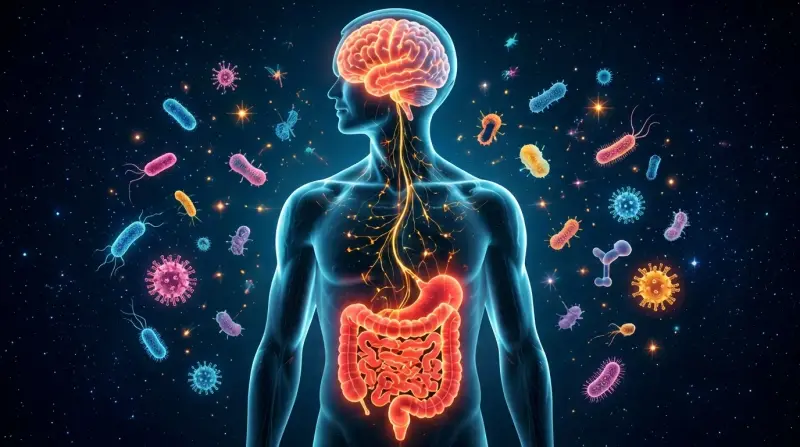
Researchers also talk about the gut–brain axis as a pathway through which multiple signals related to digestion, immunity, and the microbiome communicate with the brain. This doesn’t mean a specific food will directly change your psychological state, but it opens a wider understanding: the body and mind operate as one system, and any chronic disruption in eating patterns may leave an أثر on sleep and energy—two key pillars of mood.
Dietary Principles That Support a More Stable Mood
The goal here isn’t a perfect diet, but steps you can sustain without harshness. It may help to adopt simple points such as:
Keeping meal times as steady as possible, or at least reducing very long gaps without eating.
Making each meal closer to balance by adding a protein source with vegetables or fruit and whole grains if available.
Reducing stress-eating by preparing easy options at home instead of waiting until you’re extremely hungry.
Paying attention to stimulants: too much coffee or energy drinks may increase anxiety for some people, especially with poor sleep.
Drinking water regularly; sometimes fatigue blends with dehydration and we read it as a bad mood.
On busy days, a light, balanced snack may help you avoid an impulsive decision that increases distraction: a simple option that combines moderate energy with protein or fiber. The idea isn’t complexity—it’s giving the body steady fuel that reduces fluctuations, especially during work or study hours.
And you don’t have to apply everything at once. You can try one adjustment for two weeks while noticing its effect on energy, sleep quality, and ease of concentration—then add another step when you’re ready.
When Eating Becomes a Way to Escape or Punish Yourself
With anxiety and depression, eating may change in two opposite ways: loss of appetite, or overeating in search of quick soothing. Sometimes a painful loop forms: psychological stress → emotional eating or harsh restriction → guilt → more stress. Balanced food and movement can support recovery, while recognizing that appetite may be affected and that some people turn to food for comfort.
According to experts at Tatmeen, a kinder approach to eating begins by changing your inner language: instead of “I’m weak,” you might say, “I’m tired and looking for relief.” Then comes a small but important question: what do I truly need right now—rest, sleep, a conversation, or daily structure? Sometimes it helps to add a short ritual that calms the body before eating: slow breathing, a warm cup of water, or a few minutes of walking inside the home—then returning to the choice with more awareness.
If emotional eating repeats to the point that it comes with a loss of control, or if harsh restriction and constant fear of food and weight appear, specialized support helps you understand triggers and build calming skills that don’t rely on punishment or deprivation.
Finally…
Yes—food and mood are connected in many everyday details, but a connection doesn’t mean a bite alone creates happiness or removes depression. Gradual change is a realistic option: more regular meals, greater variety, and more gentleness with yourself when you stumble. And if you feel you need someone to accompany you in untangling this loop between stress and eating, a session with a specialist through Tatmeen may be a calm step toward building a plan that fits your life without pressure.
Frequently Asked Questions
Are there foods that are guaranteed to improve mood?
There isn’t a single food that guarantees mood improvement for everyone. What’s more realistic is focusing on a balanced, regular pattern that reduces energy crashes and supports sleep. If you notice improvement with small changes, you can stabilize them gradually instead of searching for a magic recipe.
Does coffee always increase anxiety?
Coffee doesn’t raise anxiety for everyone, but overconsumption—or drinking it with poor sleep—may increase tension and a racing heart for some. You can try reducing the amount or having it after eating, while monitoring its effect on sleep and mood over a few days.
How can I deal with emotional eating without self-blame?
Start with curiosity, not blame: what feelings or situations come before eating? Place short calming alternatives before eating, such as slow breathing or a glass of water. And if it repeats and becomes painful, psychological support helps you build broader tools.
A writer and researcher specializing in psychiatry, she focuses on mental health and the human emotions we experience but cannot always find the words to name. She writes about us—about humanity and the human experience—and simplifies complex topics to offer content that helps us better understand ourselves and life, ultimately making us feel less alone.
Every Tatmeen article is reviewed by care providers licensed by the Saudi Commission for Health Specialties, so what you read is accurate and trustworthy.
This article builds understanding and does not replace a licensed care provider.
Need someone to talk to?
Tatmeen's licensed care providers are available around the clock, and the app's urgent consultation connects you with one within minutes.
Download Tatmeen to explore care providers and booking options.
Smart matchingFour quick questions suggest the right care provider
Urgent consultationTalk to an available care provider within minutes
Free psychological measuresMore than 20 tests to understand how you are doing
Scan to download
{"data":{"id":"919b7e29-7583-4695-bd6b-0918b7f01ac8","slug":"food-mood-diet-affects-mental-health","arTitle":"الغذاء والمزاج: هل يؤثر ما تأكله على صحتك النفسية؟","enTitle":"Food and Mood: Does What You Eat Affect Your Mental Health?","thumbnailAltText":"Colorful plate of fresh healthy food on a sunlit kitchen table with warm natural light","estimatedReadingTime":5,"likesCount":369,"writer":{"id":"3ab72b74-f26f-4337-9b47-3114b0f90de5","arBio":"كاتبة وباحثة متخصصة في مجال الطب النفسي، تهتم بموضوعات الصحة النفسية وبالمشاعر الإنسانية التي نختبرها ولا نجد دائمًا الكلمات لتسميتها. تكتب عنّا؛ عن الإنسان وتجربته، وتبسّط الموضوعات المعقّدة لتقدّم محتوى يساعدنا على فهم ذواتنا والحياة أكثر، ويجعلنا نشعر بأننا بوحدة أقل.","enBio":"A writer and researcher specializing in psychiatry, she focuses on mental health and the human emotions we experience but cannot always find the words to name. She writes about us—about humanity and the human experience—and simplifies complex topics to offer content that helps us better understand ourselves and life, ultimately making us feel less alone.","user":{"slug":"ayat-alnajar","arFullName":"آيات النجار","enFullName":"Ayat Al-Najjar","publicProfileImageUrl":"https://cdn.tatmeen.sa/public/profile-images/02384455-68fa-40b6-ad05-609fde65cafa/21b9a610dde5dfc6d37af110c23e9c7ab3946be080c281beb000debf4f7d31a6.webp","publicProfileImage96Url":"https://cdn.tatmeen.sa/public/profile-images/02384455-68fa-40b6-ad05-609fde65cafa/21b9a610dde5dfc6d37af110c23e9c7ab3946be080c281beb000debf4f7d31a6-w96.webp","publicProfileImage192Url":"https://cdn.tatmeen.sa/public/profile-images/02384455-68fa-40b6-ad05-609fde65cafa/21b9a610dde5dfc6d37af110c23e9c7ab3946be080c281beb000debf4f7d31a6-w192.webp"}},"arContent":"","enContent":"","productionDocument":{"headings":[{"id":"article-section-what-do-we-know-scientifically-about-the-relationship-between-food-and-mood","text":"What Do We Know Scientifically About the Relationship Between Food and Mood?"},{"id":"article-section-how-can-food-leave-an-أثر-on-emotions","text":"How Can Food Leave an أثر on Emotions?"},{"id":"article-section-dietary-principles-that-support-a-more-stable-mood","text":"Dietary Principles That Support a More Stable Mood"},{"id":"article-section-when-eating-becomes-a-way-to-escape-or-punish-yourself","text":"When Eating Becomes a Way to Escape or Punish Yourself"},{"id":"article-section-finally","text":"Finally…"}],"faqs":[{"question":"Are there foods that are guaranteed to improve mood?","answer":"<p><span style=\"color:#000000\">There isn’t a single food that guarantees mood improvement for everyone. What’s more realistic is focusing on a balanced, regular pattern that reduces energy crashes and supports sleep. If you notice improvement with small changes, you can stabilize them gradually instead of searching for a magic recipe.</span></p>"},{"question":"Does coffee always increase anxiety?","answer":"<p><span style=\"color:#000000\">Coffee doesn’t raise anxiety for everyone, but overconsumption—or drinking it with poor sleep—may increase tension and a racing heart for some. You can try reducing the amount or having it after eating, while monitoring its effect on sleep and mood over a few days.</span></p>"},{"question":"How can I deal with emotional eating without self-blame?","answer":"<p><span style=\"color:#000000\">Start with curiosity, not blame: what feelings or situations come before eating? Place short calming alternatives before eating, such as slow breathing or a glass of water. And if it repeats and becomes painful, psychological support helps you build broader tools.</span></p>"}],"beforeSourcesHtml":"<p></p>","sources":[],"afterSourcesHtml":"","blocks":[{"type":"html","html":"<p><span style=\"color:#000000\">Why do we become more irritable when we’re hungry? Why does our appetite change under stress? Are there foods that make us feel lighter, and others that increase a sense of heaviness? These questions aren’t superficial—they’re part of the relationship between the body and the mind. Here, we’ll review what science says about food and mood, and what can be done practically at home.</span></p><h2 id=\"article-section-what-do-we-know-scientifically-about-the-relationship-between-food-and-mood\" data-toc-heading tabindex=\"-1\"><span id=\"what-do-we-know-scientifically-about-the-relationship-between-food-and-mood-1\" aria-hidden=\"true\"></span><span style=\"color:#000000\"><strong>What Do We Know Scientifically About the Relationship Between Food and Mood?</strong></span></h2><p><span style=\"color:#000000\">The conversation around nutrition and mental health has evolved a lot, but the picture isn’t black and white. Evidence tends to suggest that, for some people, diet quality is associated with improved mood or a higher tendency toward stress—yet the relationship is often two-way: mood influences our food choices, and eating patterns may affect energy, sleep, and the ability to regulate emotions. NIH explains that the links between food and mental health are complex, and that more research is needed to understand how—and for whom—the effect is clearer.</span></p><p><span style=\"color:#000000\">That’s why it can help to adopt a simple idea: food is not a substitute for psychological treatment when it’s needed, but it can be a supportive part of a self-care routine—especially when the goal is daily stability that reduces sharp drops in energy or mood.</span></p><h2 id=\"article-section-how-can-food-leave-an-أثر-on-emotions\" data-toc-heading tabindex=\"-1\"><span id=\"how-can-food-leave-an-أثر-on-emotions-2\" aria-hidden=\"true\"></span><span style=\"color:#000000\"><strong>How Can Food Leave an أثر on Emotions?</strong></span></h2><p><span style=\"color:#000000\">When a person eats irregularly or relies on quick options high in sugar or fat, they may go through cycles of a burst of energy followed by a crash—and for some people, this is reflected in focus and irritability. Likewise, low fluid intake or eating very small meals may increase feelings of fatigue and headaches, making the day feel heavier than it really is.</span></p><p><span style=\"color:#000000\">Researchers also talk about the gut–brain axis as a pathway through which multiple signals related to digestion, immunity, and the microbiome communicate with the brain. This doesn’t mean a specific food will directly change your psychological state, but it opens a wider understanding: the body and mind operate as one system, and any chronic disruption in eating patterns may leave an أثر on sleep and energy—two key pillars of mood.</span></p><h2 id=\"article-section-dietary-principles-that-support-a-more-stable-mood\" data-toc-heading tabindex=\"-1\"><span id=\"dietary-principles-that-support-a-more-stable-mood-3\" aria-hidden=\"true\"></span><span style=\"color:#000000\"><strong>Dietary Principles That Support a More Stable Mood</strong></span></h2><p><span style=\"color:#000000\">The goal here isn’t a perfect diet, but steps you can sustain without harshness. It may help to adopt simple points such as:</span></p><ul><li><p><span style=\"color:#000000\">Keeping meal times as steady as possible, or at least reducing very long gaps without eating.</span></p></li><li><p><span style=\"color:#000000\">Making each meal closer to balance by adding a protein source with vegetables or fruit and whole grains if available.</span></p></li><li><p><span style=\"color:#000000\">Reducing stress-eating by preparing easy options at home instead of waiting until you’re extremely hungry.</span></p></li><li><p><span style=\"color:#000000\">Paying attention to stimulants: too much coffee or energy drinks may increase anxiety for some people, especially with poor sleep.</span></p></li><li><p><span style=\"color:#000000\">Drinking water regularly; sometimes fatigue blends with dehydration and we read it as a bad mood.</span></p></li></ul><p><span style=\"color:#000000\">On busy days, a light, balanced snack may help you avoid an impulsive decision that increases distraction: a simple option that combines moderate energy with protein or fiber. The idea isn’t complexity—it’s giving the body steady fuel that reduces fluctuations, especially during work or study hours.</span></p><p><span style=\"color:#000000\">And you don’t have to apply everything at once. You can try one adjustment for two weeks while noticing its effect on energy, sleep quality, and ease of concentration—then add another step when you’re ready.</span></p><h2 id=\"article-section-when-eating-becomes-a-way-to-escape-or-punish-yourself\" data-toc-heading tabindex=\"-1\"><span id=\"when-eating-becomes-a-way-to-escape-or-punish-yourself-4\" aria-hidden=\"true\"></span><span style=\"color:#000000\"><strong>When Eating Becomes a Way to Escape or Punish Yourself</strong></span></h2><p><span style=\"color:#000000\">With anxiety and depression, eating may change in two opposite ways: loss of appetite, or overeating in search of quick soothing. Sometimes a painful loop forms: psychological stress → emotional eating or harsh restriction → guilt → more stress. Balanced food and movement can support recovery, while recognizing that appetite may be affected and that some people turn to food for comfort.</span></p><p><span style=\"color:#000000\">According to experts at <strong>Tatmeen</strong>, a kinder approach to eating begins by changing your inner language: instead of “I’m weak,” you might say, “I’m tired and looking for relief.” Then comes a small but important question: what do I truly need right now—rest, sleep, a conversation, or daily structure? Sometimes it helps to add a short ritual that calms the body before eating: slow breathing, a warm cup of water, or a few minutes of walking inside the home—then returning to the choice with more awareness.</span></p><p><span style=\"color:#000000\">If emotional eating repeats to the point that it comes with a loss of control, or if harsh restriction and constant fear of food and weight appear, specialized support helps you understand triggers and build calming skills that don’t rely on punishment or deprivation.</span></p><h2 id=\"article-section-finally\" data-toc-heading tabindex=\"-1\"><span id=\"finally-5\" aria-hidden=\"true\"></span><span style=\"color:#000000\"><strong>Finally…</strong></span></h2><p><span style=\"color:#000000\">Yes—food and mood are connected in many everyday details, but a connection doesn’t mean a bite alone creates happiness or removes depression. Gradual change is a realistic option: more regular meals, greater variety, and more gentleness with yourself when you stumble. And if you feel you need someone to accompany you in untangling this loop between stress and eating, a <u>session with a specialist through </u><strong><u>Tatmeen</u></strong> may be a calm step toward building a plan that fits your life without pressure.</span></p>"}],"inlineCtaSignatures":[],"_experienceAliases":{"v":1,"fields":["html","bodyHtml"],"faqs":[0,1,2]}},"createdAt":"2026-05-08T21:00:00.000Z","updatedAt":"2026-06-04T15:44:13.988Z","disorderGroups":[{"id":"ebb11477-95c3-4773-ad1b-c53ca45cb6f7","slug":"general-health","arName":"صحة عامة","enName":"General Health"}],"reviewer":{"arFullName":"فريق تطمين","enFullName":"Tatmeen team","slug":"tatmeen-team","kind":"organization"},"productionArticle":true,"promotionAllowed":true,"preparedCover":{"src":"https://cdn.tatmeen.sa/public/article-lcp/article-lcp-v2/sha256-21fc2daa7140ee0128f71e1bcc57ba4c7a4c5f848f993ee1f1390e8e85de185d/800-9217a5da7258440ef279fd4b6644ecf8d85a3056d53e607212aa147d9c36a913.avif","fallback":"https://cdn.tatmeen.sa/public/article-lcp/article-lcp-v2/sha256-21fc2daa7140ee0128f71e1bcc57ba4c7a4c5f848f993ee1f1390e8e85de185d/800-61d6768f461a2be90c18ec37e47b1a32e132224ad4020699310a0902e1658a90.webp","directUrl":"https://cdn.tatmeen.sa/blog-cover/Tatmeen-1778338646109.webp","isGolden":true,"avifSrcset":"https://cdn.tatmeen.sa/public/article-lcp/article-lcp-v2/sha256-21fc2daa7140ee0128f71e1bcc57ba4c7a4c5f848f993ee1f1390e8e85de185d/400-2260b75375a2d6594c33fa6965e8d4fe8a82e5a603782186ee5f30a89a3cf84b.avif 400w, https://cdn.tatmeen.sa/public/article-lcp/article-lcp-v2/sha256-21fc2daa7140ee0128f71e1bcc57ba4c7a4c5f848f993ee1f1390e8e85de185d/640-aca34148783b561edad05a93688618852e880acd2f7d56f001cf1958a4d72360.avif 640w, https://cdn.tatmeen.sa/public/article-lcp/article-lcp-v2/sha256-21fc2daa7140ee0128f71e1bcc57ba4c7a4c5f848f993ee1f1390e8e85de185d/800-9217a5da7258440ef279fd4b6644ecf8d85a3056d53e607212aa147d9c36a913.avif 800w, https://cdn.tatmeen.sa/public/article-lcp/article-lcp-v2/sha256-21fc2daa7140ee0128f71e1bcc57ba4c7a4c5f848f993ee1f1390e8e85de185d/1200-514cf44edf87a9ff8b38a48292b14f37ef65a89caf0aaa30ae6cc686e577a6df.avif 1200w","webpSrcset":"https://cdn.tatmeen.sa/public/article-lcp/article-lcp-v2/sha256-21fc2daa7140ee0128f71e1bcc57ba4c7a4c5f848f993ee1f1390e8e85de185d/400-b1f806ef529a16ba2b4ae71fb80236b4a741e7c029f9351c4827fe79b6b1b898.webp 400w, https://cdn.tatmeen.sa/public/article-lcp/article-lcp-v2/sha256-21fc2daa7140ee0128f71e1bcc57ba4c7a4c5f848f993ee1f1390e8e85de185d/640-7e3874d3b641c35fa0c51afb7063523c5ac7859beb69c9b14595eccbbcc83818.webp 640w, https://cdn.tatmeen.sa/public/article-lcp/article-lcp-v2/sha256-21fc2daa7140ee0128f71e1bcc57ba4c7a4c5f848f993ee1f1390e8e85de185d/800-61d6768f461a2be90c18ec37e47b1a32e132224ad4020699310a0902e1658a90.webp 800w, https://cdn.tatmeen.sa/public/article-lcp/article-lcp-v2/sha256-21fc2daa7140ee0128f71e1bcc57ba4c7a4c5f848f993ee1f1390e8e85de185d/1200-c8ffc4a70100ff8b60f5068388929d29cff7be61e8f49c618f65de4bdcba1d52.webp 1200w","phoneAvifSrcset":"https://cdn.tatmeen.sa/public/article-lcp/article-lcp-v2/sha256-21fc2daa7140ee0128f71e1bcc57ba4c7a4c5f848f993ee1f1390e8e85de185d/400-2260b75375a2d6594c33fa6965e8d4fe8a82e5a603782186ee5f30a89a3cf84b.avif 400w, https://cdn.tatmeen.sa/public/article-lcp/article-lcp-v2/sha256-21fc2daa7140ee0128f71e1bcc57ba4c7a4c5f848f993ee1f1390e8e85de185d/640-aca34148783b561edad05a93688618852e880acd2f7d56f001cf1958a4d72360.avif 640w, https://cdn.tatmeen.sa/public/article-lcp/article-lcp-v2/sha256-21fc2daa7140ee0128f71e1bcc57ba4c7a4c5f848f993ee1f1390e8e85de185d/800-9217a5da7258440ef279fd4b6644ecf8d85a3056d53e607212aa147d9c36a913.avif 800w","phoneWebpSrcset":"https://cdn.tatmeen.sa/public/article-lcp/article-lcp-v2/sha256-21fc2daa7140ee0128f71e1bcc57ba4c7a4c5f848f993ee1f1390e8e85de185d/400-b1f806ef529a16ba2b4ae71fb80236b4a741e7c029f9351c4827fe79b6b1b898.webp 400w, https://cdn.tatmeen.sa/public/article-lcp/article-lcp-v2/sha256-21fc2daa7140ee0128f71e1bcc57ba4c7a4c5f848f993ee1f1390e8e85de185d/640-7e3874d3b641c35fa0c51afb7063523c5ac7859beb69c9b14595eccbbcc83818.webp 640w, https://cdn.tatmeen.sa/public/article-lcp/article-lcp-v2/sha256-21fc2daa7140ee0128f71e1bcc57ba4c7a4c5f848f993ee1f1390e8e85de185d/800-61d6768f461a2be90c18ec37e47b1a32e132224ad4020699310a0902e1658a90.webp 800w","width":800,"height":447},"previewTaxonomy":{"groups":[{"id":"ebb11477-95c3-4773-ad1b-c53ca45cb6f7","slug":"general-health","arName":"صحة عامة","enName":"General Health"}],"topics":[{"id":"adc5ed32-aa43-47d3-b6df-a39800d83ed8","slug":"healthy-nutrition","arName":"تغذية صحية","enName":"Healthy Nutrition","groupSlug":"general-health","href":"/blog/category/general-health/healthy-nutrition/"}],"tags":[{"id":"b897e937-ea28-464a-8ff7-12db934a625c","slug":"mind-body-connection","arName":"العلاقة بين الجسد والنفس","enName":"Mind-Body Connection"},{"id":"c2a6e8d3-de9c-435f-8c95-9727e7db14cc","slug":"explainer-awareness","arName":"دليل توعوي / شرح","enName":"Explainer / Awareness Guide"}]},"previewProviderRecommendations":[{"id":"09364052-c2a9-4c52-9717-7ce2093b8d0a","slug":"kholoud-alharbi-5221","arFullName":"خلود الحربي","enFullName":"Kholoud Alharbi","publicProfileImageUrl":"https://cdn.tatmeen.sa/public/profile-images/09364052-c2a9-4c52-9717-7ce2093b8d0a/4a0aeb81619e351b77f4323e3605a0a00acc7ca3c82ee7cc5ca2c9e8ef716049.webp","publicProfileImage96Url":"https://cdn.tatmeen.sa/public/profile-images/09364052-c2a9-4c52-9717-7ce2093b8d0a/4a0aeb81619e351b77f4323e3605a0a00acc7ca3c82ee7cc5ca2c9e8ef716049-w96.webp","publicProfileImage192Url":"https://cdn.tatmeen.sa/public/profile-images/09364052-c2a9-4c52-9717-7ce2093b8d0a/4a0aeb81619e351b77f4323e3605a0a00acc7ca3c82ee7cc5ca2c9e8ef716049-w192.webp","specialization":{"arName":"أخصائي نفسي","enName":"Psychologist"},"profileImageUrl":"https://cdn.tatmeen.sa/public/profile-images/09364052-c2a9-4c52-9717-7ce2093b8d0a/4a0aeb81619e351b77f4323e3605a0a00acc7ca3c82ee7cc5ca2c9e8ef716049-w192.webp","experienceYears":10,"consultantInfo":{"averageRating":{"average":5},"specialization":{"arGeneralName":"أخصائي نفسي","enGeneralName":"Psychologist"}}},{"id":"6f037535-1dca-4b50-a8b2-5974b7323286","slug":"salah-althobaiti-9053","arFullName":"صلاح الثبيتي","enFullName":"Salah Althobaiti","publicProfileImageUrl":"https://cdn.tatmeen.sa/public/profile-images/6f037535-1dca-4b50-a8b2-5974b7323286/35b6bd7fad9b1e004c1835803eb9c1b56dcacd380685ec8bff141f0fb888005c.webp","publicProfileImage96Url":"https://cdn.tatmeen.sa/public/profile-images/6f037535-1dca-4b50-a8b2-5974b7323286/35b6bd7fad9b1e004c1835803eb9c1b56dcacd380685ec8bff141f0fb888005c-w96.webp","publicProfileImage192Url":"https://cdn.tatmeen.sa/public/profile-images/6f037535-1dca-4b50-a8b2-5974b7323286/35b6bd7fad9b1e004c1835803eb9c1b56dcacd380685ec8bff141f0fb888005c-w192.webp","specialization":{"arName":"أخصائي نفسي","enName":"Psychologist"},"profileImageUrl":"https://cdn.tatmeen.sa/public/profile-images/6f037535-1dca-4b50-a8b2-5974b7323286/35b6bd7fad9b1e004c1835803eb9c1b56dcacd380685ec8bff141f0fb888005c-w192.webp","experienceYears":6,"consultantInfo":{"averageRating":{"average":4.98936170212766},"specialization":{"arGeneralName":"أخصائي نفسي","enGeneralName":"Psychologist"}}},{"id":"3cc806e8-616b-4884-9f21-a75b378580a2","slug":"aisha-al-hashim-8667","arFullName":"عائشة ال هاشم","enFullName":"Aisha Al Hashim","publicProfileImageUrl":"https://cdn.tatmeen.sa/public/profile-images/3cc806e8-616b-4884-9f21-a75b378580a2/27f523d03be4dcfa1f6a79f70c1773887434e698990d214cd990caec56a44798.webp","publicProfileImage96Url":"https://cdn.tatmeen.sa/public/profile-images/3cc806e8-616b-4884-9f21-a75b378580a2/27f523d03be4dcfa1f6a79f70c1773887434e698990d214cd990caec56a44798-w96.webp","publicProfileImage192Url":"https://cdn.tatmeen.sa/public/profile-images/3cc806e8-616b-4884-9f21-a75b378580a2/27f523d03be4dcfa1f6a79f70c1773887434e698990d214cd990caec56a44798-w192.webp","specialization":{"arName":"أخصائي نفسي","enName":"Psychologist"},"profileImageUrl":"https://cdn.tatmeen.sa/public/profile-images/3cc806e8-616b-4884-9f21-a75b378580a2/27f523d03be4dcfa1f6a79f70c1773887434e698990d214cd990caec56a44798-w192.webp","experienceYears":2,"consultantInfo":{"averageRating":{"average":4.990990990990991},"specialization":{"arGeneralName":"أخصائي نفسي","enGeneralName":"Psychologist"}}}],"previewCareProviders":[{"id":"09364052-c2a9-4c52-9717-7ce2093b8d0a","slug":"kholoud-alharbi-5221","arFullName":"خلود الحربي","enFullName":"Kholoud Alharbi","publicProfileImageUrl":"https://cdn.tatmeen.sa/public/profile-images/09364052-c2a9-4c52-9717-7ce2093b8d0a/4a0aeb81619e351b77f4323e3605a0a00acc7ca3c82ee7cc5ca2c9e8ef716049.webp","publicProfileImage96Url":"https://cdn.tatmeen.sa/public/profile-images/09364052-c2a9-4c52-9717-7ce2093b8d0a/4a0aeb81619e351b77f4323e3605a0a00acc7ca3c82ee7cc5ca2c9e8ef716049-w96.webp","publicProfileImage192Url":"https://cdn.tatmeen.sa/public/profile-images/09364052-c2a9-4c52-9717-7ce2093b8d0a/4a0aeb81619e351b77f4323e3605a0a00acc7ca3c82ee7cc5ca2c9e8ef716049-w192.webp","gender":"FEMALE","specialization":{"arName":"أخصائي نفسي","enName":"Psychologist"}},{"id":"6f037535-1dca-4b50-a8b2-5974b7323286","slug":"salah-althobaiti-9053","arFullName":"صلاح الثبيتي","enFullName":"Salah Althobaiti","publicProfileImageUrl":"https://cdn.tatmeen.sa/public/profile-images/6f037535-1dca-4b50-a8b2-5974b7323286/35b6bd7fad9b1e004c1835803eb9c1b56dcacd380685ec8bff141f0fb888005c.webp","publicProfileImage96Url":"https://cdn.tatmeen.sa/public/profile-images/6f037535-1dca-4b50-a8b2-5974b7323286/35b6bd7fad9b1e004c1835803eb9c1b56dcacd380685ec8bff141f0fb888005c-w96.webp","publicProfileImage192Url":"https://cdn.tatmeen.sa/public/profile-images/6f037535-1dca-4b50-a8b2-5974b7323286/35b6bd7fad9b1e004c1835803eb9c1b56dcacd380685ec8bff141f0fb888005c-w192.webp","gender":"MALE","specialization":{"arName":"أخصائي نفسي","enName":"Psychologist"}},{"id":"3cc806e8-616b-4884-9f21-a75b378580a2","slug":"aisha-al-hashim-8667","arFullName":"عائشة ال هاشم","enFullName":"Aisha Al Hashim","publicProfileImageUrl":"https://cdn.tatmeen.sa/public/profile-images/3cc806e8-616b-4884-9f21-a75b378580a2/27f523d03be4dcfa1f6a79f70c1773887434e698990d214cd990caec56a44798.webp","publicProfileImage96Url":"https://cdn.tatmeen.sa/public/profile-images/3cc806e8-616b-4884-9f21-a75b378580a2/27f523d03be4dcfa1f6a79f70c1773887434e698990d214cd990caec56a44798-w96.webp","publicProfileImage192Url":"https://cdn.tatmeen.sa/public/profile-images/3cc806e8-616b-4884-9f21-a75b378580a2/27f523d03be4dcfa1f6a79f70c1773887434e698990d214cd990caec56a44798-w192.webp","gender":"FEMALE","specialization":{"arName":"أخصائي نفسي","enName":"Psychologist"}},{"id":"db2ce1a0-9325-4471-b7ce-eb2e811c30a3","slug":"amer-qutub-2441","arFullName":"عامر قطب","enFullName":"Amer Qutub","publicProfileImageUrl":"https://cdn.tatmeen.sa/public/profile-images/db2ce1a0-9325-4471-b7ce-eb2e811c30a3/80580f99bfd7fe2b2a9cf8eed73ab532f5086d1efe053b0aa57358c1ce004261.webp","publicProfileImage96Url":"https://cdn.tatmeen.sa/public/profile-images/db2ce1a0-9325-4471-b7ce-eb2e811c30a3/80580f99bfd7fe2b2a9cf8eed73ab532f5086d1efe053b0aa57358c1ce004261-w96.webp","publicProfileImage192Url":"https://cdn.tatmeen.sa/public/profile-images/db2ce1a0-9325-4471-b7ce-eb2e811c30a3/80580f99bfd7fe2b2a9cf8eed73ab532f5086d1efe053b0aa57358c1ce004261-w192.webp","gender":"MALE","specialization":{"arName":"أخصائي نفسي","enName":"Psychologist"}},{"id":"94765496-dbdf-4631-a01b-7df5f788668d","slug":"abdullrahman-alhamoudi-3045","arFullName":"عبدالرحمن الحمودي","enFullName":"Abdulrahman Alhamoudi","publicProfileImageUrl":"https://cdn.tatmeen.sa/public/profile-images/94765496-dbdf-4631-a01b-7df5f788668d/2d49f6b6493c564afb6f50b6c3634231dff3a5cf8353acfab393d1b2a88037d1.webp","publicProfileImage96Url":"https://cdn.tatmeen.sa/public/profile-images/94765496-dbdf-4631-a01b-7df5f788668d/2d49f6b6493c564afb6f50b6c3634231dff3a5cf8353acfab393d1b2a88037d1-w96.webp","publicProfileImage192Url":"https://cdn.tatmeen.sa/public/profile-images/94765496-dbdf-4631-a01b-7df5f788668d/2d49f6b6493c564afb6f50b6c3634231dff3a5cf8353acfab393d1b2a88037d1-w192.webp","gender":"MALE","specialization":{"arName":"أخصائي نفسي","enName":"Psychologist"}},{"id":"618dba89-5b70-4b46-8304-741b7ac8ecd3","slug":"abdullah-mari-1311","arFullName":"عبدالله مرعي","enFullName":"Abdullah Mari","publicProfileImageUrl":"https://cdn.tatmeen.sa/public/profile-images/618dba89-5b70-4b46-8304-741b7ac8ecd3/6b4a3bfb59f8a304ca79083b32859b46baad2e1d692974a47c02c1f66bd11129.webp","publicProfileImage96Url":"https://cdn.tatmeen.sa/public/profile-images/618dba89-5b70-4b46-8304-741b7ac8ecd3/6b4a3bfb59f8a304ca79083b32859b46baad2e1d692974a47c02c1f66bd11129-w96.webp","publicProfileImage192Url":"https://cdn.tatmeen.sa/public/profile-images/618dba89-5b70-4b46-8304-741b7ac8ecd3/6b4a3bfb59f8a304ca79083b32859b46baad2e1d692974a47c02c1f66bd11129-w192.webp","gender":"MALE","specialization":{"arName":"أخصائي نفسي","enName":"Psychologist"}},{"id":"3b50a5d5-e795-407f-8676-fd7f0e1bb7a0","slug":"abdulaziz-bin-hudayan-4940","arFullName":"عبدالعزيز بن هديان","enFullName":"Abdulaziz Bin Hudayan","publicProfileImageUrl":"https://cdn.tatmeen.sa/public/profile-images/3b50a5d5-e795-407f-8676-fd7f0e1bb7a0/710ff0fe1fb00cdb5042092e27b7910b480a439b02251ecded62d7758eefce95.webp","publicProfileImage96Url":"https://cdn.tatmeen.sa/public/profile-images/3b50a5d5-e795-407f-8676-fd7f0e1bb7a0/710ff0fe1fb00cdb5042092e27b7910b480a439b02251ecded62d7758eefce95-w96.webp","publicProfileImage192Url":"https://cdn.tatmeen.sa/public/profile-images/3b50a5d5-e795-407f-8676-fd7f0e1bb7a0/710ff0fe1fb00cdb5042092e27b7910b480a439b02251ecded62d7758eefce95-w192.webp","gender":"MALE","specialization":{"arName":"أخصائي نفسي","enName":"Psychologist"}},{"id":"d4ffcb6b-90a7-45b6-b941-964866f4564b","slug":"dhaifallah-alhumaidi-1092","arFullName":"ضيف الله الحميدي","enFullName":"Dhaifallah Alhumaidi","publicProfileImageUrl":"https://cdn.tatmeen.sa/public/profile-images/d4ffcb6b-90a7-45b6-b941-964866f4564b/1817171c5828a9b57d6c30d12332cf154e335272548bc90a6e8456d74d356956.webp","publicProfileImage96Url":"https://cdn.tatmeen.sa/public/profile-images/d4ffcb6b-90a7-45b6-b941-964866f4564b/1817171c5828a9b57d6c30d12332cf154e335272548bc90a6e8456d74d356956-w96.webp","publicProfileImage192Url":"https://cdn.tatmeen.sa/public/profile-images/d4ffcb6b-90a7-45b6-b941-964866f4564b/1817171c5828a9b57d6c30d12332cf154e335272548bc90a6e8456d74d356956-w192.webp","gender":"MALE","specialization":{"arName":"أخصائي نفسي","enName":"Psychologist"}}],"previewDownload":{"href":"/download","title":{"ar":"خطوة واحدة لأجلك، ابدأ الآن","en":"One step for you, start now"},"description":{"ar":"حمّل تطبيق تطمين لاستكشاف مقدمي الرعاية وخيارات الحجز.","en":"Download Tatmeen to explore care providers and booking options."},"posterSrc":"/images/home/cta-ar-new-1.webp","videoSrc":"/images/home/cta-ar-new-1.mp4","videoPosterSrc":"/images/home/cta-ar-new-1.webp","videoPosterEnSrc":"/images/home/cta-en-new-1.webp","videoType":"video/mp4","appStoreHref":"https://apps.apple.com/us/app/tatmeen-%D8%AA%D8%B7%D9%85%D9%8A%D9%86/id6473836983","googlePlayHref":"https://play.google.com/store/apps/details?id=com.TatmeenApp.user&hl=en"},"previewRelatedArticles":[{"id":"92f46d00-2c9b-4e58-8095-c01b87a7e867","slug":"gut-microbiome-mood-gut-brain-axis","route":"/blog/gut-microbiome-mood-gut-brain-axis/","title":{"ar":"ميكروبيوم الأمعاء والمزاج: شرح محور الأمعاء والدماغ","en":"Gut Microbiome and Mood: Explaining the Gut-Brain Axis"},"image":"https://cdn.tatmeen.sa/public/article-lcp/article-lcp-v2/sha256-1b82068285f8feebda6cdda0a03180bb7122b6a565fe5af45820645c080271f4/800-39ee340d6855ac2c1ce1b400c4c124639ef9113feda4ba15c2f27bcfefa86bd7.webp","directImageFallback":"https://cdn.tatmeen.sa/blog-cover/Tatmeen-1781451847536.webp","arThumbnailAltText":"Glowing human body with highlighted brain and gut connected by neural pathways and microbes","thumbnailAltText":"Glowing human body with highlighted brain and gut connected by neural pathways and microbes","topic":{"label":{"ar":"صحة عامة","en":"General Health"}},"readingTimeMinutes":5},{"id":"1ac1de45-3351-41c5-bbe8-d12c2c767c94","slug":"Psychological-well-being-over-physical-fitness","route":"/blog/Psychological-well-being-over-physical-fitness/","title":{"ar":"الرشاقة النفسية أولى من الرشاقة البدنية","en":"Psychological Well-Being Comes Before Physical Fitness"},"image":"https://cdn.tatmeen.sa/public/article-lcp/article-lcp-v2/sha256-fdebe94e9b031db90f68d1160b4b40d199bcb0889bc9ce263133677e2f18c799/600-fdc06d1a417672c95c9d3dcb302fdc78d68b67bd3d6851943cca9a6437aba1b7.webp","directImageFallback":"https://cdn.tatmeen.sa/blog-cover/1704822413539-Tatmeen-img-10","arThumbnailAltText":"Measuring tape draped across a pair of jeans on a patterned floor","thumbnailAltText":"Measuring tape draped across a pair of jeans on a patterned floor","topic":{"label":{"ar":"اضطرابات نفسية شائعة","en":"Common Mental Issues"}},"readingTimeMinutes":5},{"id":"82088368-c076-4071-8b69-5263314c0188","slug":"chronic-inflammation-mood-mental-health","route":"/blog/chronic-inflammation-mood-mental-health/","title":{"ar":"كيف يؤثر الالتهاب المزمن على مزاجك وصحتك النفسية؟","en":"How Does Chronic Inflammation Affect Your Mood and Mental Health?"},"image":"https://cdn.tatmeen.sa/public/article-lcp/article-lcp-v2/sha256-cdb466f0d0bf8040cf2e97dabbed8793c5a9c5e8290e2c843a37ffe5f1e1afd5/800-022caad5c0aaac54a5b151b90dd89eb4c0b57f9e8fc1c8208fb91011c296e191.webp","directImageFallback":"https://cdn.tatmeen.sa/blog-cover/Tatmeen-1779211442761.webp","arThumbnailAltText":"Woman feeling unwell with a red glow representing chronic inflammation","thumbnailAltText":"Woman feeling unwell with a red glow representing chronic inflammation","topic":{"label":{"ar":"اضطرابات نفسية شائعة","en":"Common Mental Issues"}},"readingTimeMinutes":5},{"id":"0067caa1-6089-43af-8740-9bd9e9d82875","slug":"Epilepsy-Symptoms-Treatment","route":"/blog/Epilepsy-Symptoms-Treatment/","title":{"ar":"الصرع - أعراض و طرق العلاج و أنواع نوبات الصرع","en":"Epilepsy: Symptoms, Treatment, and Seizure Types"},"image":"https://cdn.tatmeen.sa/public/article-lcp/article-lcp-v2/sha256-1643b77d9532d92044c36895f23d01c2c0bdc12ee2ca71de9408ad1b761fade8/600-360f4a4382df5ca858f3a0c830a48e1e3704e2173b952cf1e325d3d91fcb46d3.webp","directImageFallback":"https://cdn.tatmeen.sa/blog-cover/1704729861674-Tatmeen-img-794","arThumbnailAltText":"One person kneels beside another lying on a sofa","thumbnailAltText":"One person kneels beside another lying on a sofa","topic":{"label":{"ar":"صحة عامة","en":"General Health"}},"readingTimeMinutes":5}],"previewRelatedReadStates":{}},"locale":"en","device":"desktop","path":"/en/blog/food-mood-diet-affects-mental-health/","readingControls":false,"config":{"public":{"BUCKET_URL":"https://cdn.tatmeen.sa/","APP_BASE_URL":"https://tatmeen.sa","intercomAppId":"ppcnu9e3"}}}