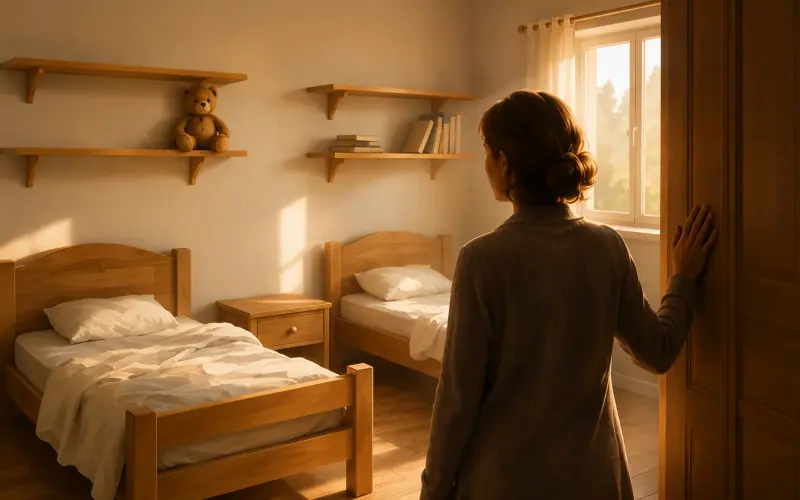
The house looks the same, but its function has changed: it is no longer a “command center” for the children’s lives as much as it has become a wider… quieter space. After they leave, the emptiness doesn’t always show up as constant, direct sadness; it may come as a longer silence than usual, a routine that has lost its rhythm, and new questions about identity and meaning: what remains when the daily caregiving task that used to fill time and heart begins to recede?
Empty nest syndrome explains this shift: a natural transition that can still feel confusing, because pride and longing can live together in the very same moment. In this article, we’ll clarify what the syndrome means and why its intensity differs from one person to another, and how to distinguish between a sadness that can adapt with time and signs that deserve extra support.
What Is Empty Nest Syndrome, and What Triggers It?
Empty nest syndrome refers to feelings parents may experience when children leave the home for study, work, or marriage—especially when the last child leaves. It may show up as sadness, loneliness, anxiety, or guilt because you miss the daily details you used to be part of. Medical sources indicate that it is not a mental health diagnosis in itself, but it is a real experience that may affect mood, sleep, and energy—and that it can be managed through supportive steps such as staying connected, setting healthy expectations, and seeking meaningful activities.
What awakens these feelings isn’t only the child’s absence, but the shift in your role. When your day-to-day need feels reduced, you may feel as if your value has been shaken or your identity has emptied—especially if you placed your entire life inside the parenting role. That’s why it’s natural to need a transition period in which you reorganize your day and your image of yourself.
Why Might the Experience Feel Heavier in a Close-Knit Family Environment?
In our society, the home is often the center of the family, and ties extend across the week through visits, responsibilities, and mutual care. So children leaving may feel like a shift in the entire system of life—not just in one room. The weight may also increase when those around you expect you to be available all the time before you’ve arranged your own needs and boundaries.
Try reframing the stage: parenthood does not end, but it moves from daily caretaking to a more mature kind of support that respects the child’s independence. This meaning helps you accept longing without letting it turn into chronic anxiety.
Natural Signs and Others Worth Noticing
It’s natural to have days of sadness, mental drifting, or mild sleep disruption—especially in the first weeks. But it’s useful to pay attention if feelings start preventing you from living your daily life or pull you into prolonged isolation.
You may benefit from professional support if, over an extended period, you notice repeated signs. Notice them without panic:
Low mood with a clear loss of enjoyment
Intense anxiety about the children that leads to exhausting monitoring
Social withdrawal and persistent sleep disruption
Harsh thoughts about yourself or a loss of meaning in life
And if you have thoughts of self-harm or feel unsafe, seek urgent help from health services in your area or from a trusted person close to you. Your safety comes first.
Practical Steps to Adapt to Life After Children Leave Home
Build a New Routine Before the Emptiness Swallows You
Emptiness isn’t filled with random activity, but with a calm rhythm that steadies you. Choose three fixed points in your day: a wake-up time close to what you’re used to, light movement, and a weekly appointment with meaning—such as a family visit or a hobby. This framework reduces confusion and gives you a sense of direction.
Expand Your Identity Beyond the Parenting Role
Ask yourself about the things you postponed for years: learning a skill, reading, a health focus, or a simple home project. The goal isn’t to be busy all the time, but to remember that you have a life within your family role—and returning to it isn’t selfishness, but balance.
Stay Connected with Your Children in a Way That Protects the Relationship and Doesn’t Feed Anxiety
Sometimes longing turns into monitoring, and anxiety turns into tension. A better approach is to agree on a steady way of communicating that suits everyone: a weekly call or brief messages depending on the child’s circumstances. Make your communication supportive, not interrogating, and focus on asking what they need instead of dictating what to do.
According to specialists at Tatmeen, it helps a lot to turn anxiety into a clear plan: when do I reach out, when do I give space, and what do I do when longing intensifies? This reduces the swing between over-checking and then angry withdrawal.
Care for Your Marriage and Your Social Network
When children leave, silence may appear between spouses—or closeness may renew itself. Begin with simple steps that bring warmth back: a short outing, a calm daily conversation, or a shared activity once a week. And if you live alone, build a small but steady network: a relative who understands you, an old friend, or an activity group.
The World Health Organization also emphasizes that high-quality social connections are essential for mental and physical health, and that loneliness and social isolation can affect quality of life across life stages.
Finally…
Empty nest syndrome isn’t a flaw in your love for your children—it’s a sign of transition into a new stage. Give yourself time to adjust, build a routine, meaning, and relationships that support you, and remember that your role hasn’t ended—its shape has changed. And if you want a private, professional space that helps you organize your feelings and set a plan that fits your life, you can book an appointment with a licensed specialist remotely through Tatmeen.
Frequently Asked Questions
Is empty nest syndrome a type of depression?
It isn’t a diagnosis in itself, but it may resemble symptoms of anxiety or depression for some people. If sadness is intense or persistent and affects sleep and interest in life, seeking a specialist’s support can help you understand and reduce the burden.
How do I deal with my husband or wife after the children leave?
Start with small steps that rebuild closeness without pressure: a short daily conversation, a simple weekly activity, and sharing feelings instead of exchanging blame. If old conflicts resurface, family or psychological support may help you build calmer communication.
How can I support my children after they move out without excessive interference?
Agree on regular communication that suits them, and ask what they need instead of assuming it. Offer practical support when they request it, and remind them you’re there without constant calls. Set simple boundaries such as a weekly call time. Respecting their independence strengthens the relationship and eases your anxiety.
A writer and researcher specializing in psychiatry, she focuses on mental health and the human emotions we experience but cannot always find the words to name. She writes about us—about humanity and the human experience—and simplifies complex topics to offer content that helps us better understand ourselves and life, ultimately making us feel less alone.
Every Tatmeen article is reviewed by care providers licensed by the Saudi Commission for Health Specialties, so what you read is accurate and trustworthy.
This article builds understanding and does not replace a licensed care provider.
Need someone to talk to?
Tatmeen's licensed care providers are available around the clock, and the app's urgent consultation connects you with one within minutes.
Download Tatmeen to explore care providers and booking options.
Smart matchingFour quick questions suggest the right care provider
Urgent consultationTalk to an available care provider within minutes
Free psychological measuresMore than 20 tests to understand how you are doing
Scan to download
{"data":{"id":"17b54b41-8f66-4397-9e11-457af1211fd1","slug":"empty-nest-syndrome-coping-children-leave","arTitle":"متلازمة العش الفارغ والتكيف بعد مغادرة الأبناء","enTitle":"Empty Nest Syndrome: Coping After Your Children Leave Home","thumbnailAltText":"Parent standing in the doorway of a quiet empty children bedroom in warm afternoon light","estimatedReadingTime":5,"likesCount":321,"writer":{"id":"3ab72b74-f26f-4337-9b47-3114b0f90de5","arBio":"كاتبة وباحثة متخصصة في مجال الطب النفسي، تهتم بموضوعات الصحة النفسية وبالمشاعر الإنسانية التي نختبرها ولا نجد دائمًا الكلمات لتسميتها. تكتب عنّا؛ عن الإنسان وتجربته، وتبسّط الموضوعات المعقّدة لتقدّم محتوى يساعدنا على فهم ذواتنا والحياة أكثر، ويجعلنا نشعر بأننا بوحدة أقل.","enBio":"A writer and researcher specializing in psychiatry, she focuses on mental health and the human emotions we experience but cannot always find the words to name. She writes about us—about humanity and the human experience—and simplifies complex topics to offer content that helps us better understand ourselves and life, ultimately making us feel less alone.","user":{"slug":"ayat-alnajar","arFullName":"آيات النجار","enFullName":"Ayat Al-Najjar","publicProfileImageUrl":"https://cdn.tatmeen.sa/public/profile-images/02384455-68fa-40b6-ad05-609fde65cafa/21b9a610dde5dfc6d37af110c23e9c7ab3946be080c281beb000debf4f7d31a6.webp","publicProfileImage96Url":"https://cdn.tatmeen.sa/public/profile-images/02384455-68fa-40b6-ad05-609fde65cafa/21b9a610dde5dfc6d37af110c23e9c7ab3946be080c281beb000debf4f7d31a6-w96.webp","publicProfileImage192Url":"https://cdn.tatmeen.sa/public/profile-images/02384455-68fa-40b6-ad05-609fde65cafa/21b9a610dde5dfc6d37af110c23e9c7ab3946be080c281beb000debf4f7d31a6-w192.webp"}},"arContent":"","enContent":"","productionDocument":{"headings":[{"id":"article-section-what-is-empty-nest-syndrome-and-what-triggers-it","text":"What Is Empty Nest Syndrome, and What Triggers It?"},{"id":"article-section-why-might-the-experience-feel-heavier-in-a-close-knit-family-environment","text":"Why Might the Experience Feel Heavier in a Close-Knit Family Environment?"},{"id":"article-section-natural-signs-and-others-worth-noticing","text":"Natural Signs and Others Worth Noticing"},{"id":"article-section-practical-steps-to-adapt-to-life-after-children-leave-home","text":"Practical Steps to Adapt to Life After Children Leave Home"},{"id":"article-section-finally","text":"Finally…"}],"faqs":[{"question":"Is empty nest syndrome a type of depression?","answer":"<p><span style=\"color:#000000\">It isn’t a diagnosis in itself, but it may resemble symptoms of anxiety or depression for some people. If sadness is intense or persistent and affects sleep and interest in life, seeking a specialist’s support can help you understand and reduce the burden.</span></p>"},{"question":"How do I deal with my husband or wife after the children leave?","answer":"<p><span style=\"color:#000000\">Start with small steps that rebuild closeness without pressure: a short daily conversation, a simple weekly activity, and sharing feelings instead of exchanging blame. If old conflicts resurface, family or psychological support may help you build calmer communication.</span></p>"},{"question":"How can I support my children after they move out without excessive interference?","answer":"<p><span style=\"color:#000000\">Agree on regular communication that suits them, and ask what they need instead of assuming it. Offer practical support when they request it, and remind them you’re there without constant calls. Set simple boundaries such as a weekly call time. Respecting their independence strengthens the relationship and eases your anxiety.</span></p>"}],"beforeSourcesHtml":"<p></p>","sources":[],"afterSourcesHtml":"","blocks":[{"type":"html","html":"<p><span style=\"color:#000000\">The house looks the same, but its function has changed: it is no longer a “command center” for the children’s lives as much as it has become a wider… quieter space. After they leave, the emptiness doesn’t always show up as constant, direct sadness; it may come as a longer silence than usual, a routine that has lost its rhythm, and new questions about identity and meaning: what remains when the daily caregiving task that used to fill time and heart begins to recede?</span></p><p><span style=\"color:#000000\">Empty nest syndrome explains this shift: a natural transition that can still feel confusing, because pride and longing can live together in the very same moment. In this article, we’ll clarify what the syndrome means and why its intensity differs from one person to another, and how to distinguish between a sadness that can adapt with time and signs that deserve extra support.</span></p><h2 id=\"article-section-what-is-empty-nest-syndrome-and-what-triggers-it\" data-toc-heading tabindex=\"-1\"><span id=\"what-is-empty-nest-syndrome-and-what-triggers-it-1\" aria-hidden=\"true\"></span><span style=\"color:#000000\"><strong>What Is Empty Nest Syndrome, and What Triggers It?</strong></span></h2><p><span style=\"color:#000000\">Empty nest syndrome refers to feelings parents may experience when children leave the home for study, work, or marriage—especially when the last child leaves. It may show up as sadness, loneliness, anxiety, or guilt because you miss the daily details you used to be part of. Medical sources indicate that it is not a mental health diagnosis in itself, but it is a real experience that may affect mood, sleep, and energy—and that it can be managed through supportive steps such as staying connected, setting healthy expectations, and seeking meaningful activities.</span></p><p><span style=\"color:#000000\">What awakens these feelings isn’t only the child’s absence, but the shift in your role. When your day-to-day need feels reduced, you may feel as if your value has been shaken or your identity has emptied—especially if you placed your entire life inside the parenting role. That’s why it’s natural to need a transition period in which you reorganize your day and your image of yourself.</span></p><h2 id=\"article-section-why-might-the-experience-feel-heavier-in-a-close-knit-family-environment\" data-toc-heading tabindex=\"-1\"><span id=\"why-might-the-experience-feel-heavier-in-a-close-knit-family-environment-2\" aria-hidden=\"true\"></span><span style=\"color:#000000\"><strong>Why Might the Experience Feel Heavier in a Close-Knit Family Environment?</strong></span></h2><p><span style=\"color:#000000\">In our society, the home is often the center of the family, and ties extend across the week through visits, responsibilities, and mutual care. So children leaving may feel like a shift in the entire system of life—not just in one room. The weight may also increase when those around you expect you to be available all the time before you’ve arranged your own needs and boundaries.</span></p><p><span style=\"color:#000000\">Try reframing the stage: parenthood does not end, but it moves from daily caretaking to a more mature kind of support that respects the child’s independence. This meaning helps you accept longing without letting it turn into chronic anxiety.</span></p><h2 id=\"article-section-natural-signs-and-others-worth-noticing\" data-toc-heading tabindex=\"-1\"><span id=\"natural-signs-and-others-worth-noticing-3\" aria-hidden=\"true\"></span><span style=\"color:#000000\"><strong>Natural Signs and Others Worth Noticing</strong></span></h2><p><span style=\"color:#000000\">It’s natural to have days of sadness, mental drifting, or mild sleep disruption—especially in the first weeks. But it’s useful to pay attention if feelings start preventing you from living your daily life or pull you into prolonged isolation.</span></p><p><span style=\"color:#000000\">You may benefit from professional support if, over an extended period, you notice repeated signs. Notice them without panic:</span></p><ul><li><p><span style=\"color:#000000\">Low mood with a clear loss of enjoyment</span></p></li><li><p><span style=\"color:#000000\">Intense anxiety about the children that leads to exhausting monitoring</span></p></li><li><p><span style=\"color:#000000\">Social withdrawal and persistent sleep disruption</span></p></li><li><p><span style=\"color:#000000\">Harsh thoughts about yourself or a loss of meaning in life</span></p></li></ul><p><span style=\"color:#000000\">And if you have thoughts of self-harm or feel unsafe, seek urgent help from health services in your area or from a trusted person close to you. Your safety comes first.</span></p><h2 id=\"article-section-practical-steps-to-adapt-to-life-after-children-leave-home\" data-toc-heading tabindex=\"-1\"><span id=\"practical-steps-to-adapt-to-life-after-children-leave-home-4\" aria-hidden=\"true\"></span><span style=\"color:#000000\"><strong>Practical Steps to Adapt to Life After Children Leave Home</strong></span></h2><h3><span style=\"color:#000000\"><strong>Build a New Routine Before the Emptiness Swallows You</strong></span></h3><p><span style=\"color:#000000\">Emptiness isn’t filled with random activity, but with a calm rhythm that steadies you. Choose three fixed points in your day: a wake-up time close to what you’re used to, light movement, and a weekly appointment with meaning—such as a family visit or a hobby. This framework reduces confusion and gives you a sense of direction.</span></p><h3><span style=\"color:#000000\"><strong>Expand Your Identity Beyond the Parenting Role</strong></span></h3><p><span style=\"color:#000000\">Ask yourself about the things you postponed for years: learning a skill, reading, a health focus, or a simple home project. The goal isn’t to be busy all the time, but to remember that you have a life within your family role—and returning to it isn’t selfishness, but balance.</span></p><h3><span style=\"color:#000000\"><strong>Stay Connected with Your Children in a Way That Protects the Relationship and Doesn’t Feed Anxiety</strong></span></h3><p><span style=\"color:#000000\">Sometimes longing turns into monitoring, and anxiety turns into tension. A better approach is to agree on a steady way of communicating that suits everyone: a weekly call or brief messages depending on the child’s circumstances. Make your communication supportive, not interrogating, and focus on asking what they need instead of dictating what to do.</span></p><p><span style=\"color:#000000\">According to specialists at <strong>Tatmeen</strong>, it helps a lot to turn anxiety into a clear plan: when do I reach out, when do I give space, and what do I do when longing intensifies? This reduces the swing between over-checking and then angry withdrawal.</span></p><h3><span style=\"color:#000000\"><strong>Care for Your Marriage and Your Social Network</strong></span></h3><p><span style=\"color:#000000\">When children leave, silence may appear between spouses—or closeness may renew itself. Begin with simple steps that bring warmth back: a short outing, a calm daily conversation, or a shared activity once a week. And if you live alone, build a small but steady network: a relative who understands you, an old friend, or an activity group.</span></p><p><a href=\"https://www.who.int/teams/social-determinants-of-health/demographic-change-and-healthy-ageing/social-isolation-and-loneliness\" target=\"_blank\" rel=\"nofollow noopener noreferrer\"><span style=\"color:#1155cc\"><u>The World Health Organization</u></span></a><span style=\"color:#000000\"> also emphasizes that high-quality social connections are essential for mental and physical health, and that loneliness and social isolation can affect quality of life across life stages.</span></p><h2 id=\"article-section-finally\" data-toc-heading tabindex=\"-1\"><span id=\"finally-5\" aria-hidden=\"true\"></span><span style=\"color:#000000\"><strong>Finally…</strong></span></h2><p><span style=\"color:#000000\">Empty nest syndrome isn’t a flaw in your love for your children—it’s a sign of transition into a new stage. Give yourself time to adjust, build a routine, meaning, and relationships that support you, and remember that your role hasn’t ended—its shape has changed. And if you want a private, professional space that helps you organize your feelings and set a plan that fits your life, you can<u> book an appointment</u> with a licensed specialist remotely through <strong>Tatmeen</strong>.</span></p>"}],"inlineCtaSignatures":[],"_experienceAliases":{"v":1,"fields":["html","bodyHtml"],"faqs":[0,1,2]}},"createdAt":"2026-05-14T21:00:00.000Z","updatedAt":"2026-06-02T20:31:03.082Z","disorderGroups":[{"id":"01b1a587-3584-435b-971a-c40ffce29802","slug":"family-and-marital-relations","arName":"العلاقات الأسرية والزوجية","enName":"Family & Marital Relations"}],"reviewer":{"arFullName":"فريق تطمين","enFullName":"Tatmeen team","slug":"tatmeen-team","kind":"organization"},"productionArticle":true,"promotionAllowed":true,"preparedCover":{"src":"https://cdn.tatmeen.sa/public/article-lcp/article-lcp-v2/sha256-ea0165c5545cb2cbfb8e9e1972b009c08447743008c5546880fe931060062f6d/800-28a583a4a6b7691c04fbdf4071d19cb81e28feecf6033eefb6eb42914dd0145f.avif","fallback":"https://cdn.tatmeen.sa/public/article-lcp/article-lcp-v2/sha256-ea0165c5545cb2cbfb8e9e1972b009c08447743008c5546880fe931060062f6d/800-d4e676f381c54b5100ba1fb5685e2ae0fea0c18b366a0a4ffce7920b9f78e43f.webp","directUrl":"https://cdn.tatmeen.sa/blog-cover/Tatmeen-1778869408967.webp","isGolden":true,"avifSrcset":"https://cdn.tatmeen.sa/public/article-lcp/article-lcp-v2/sha256-ea0165c5545cb2cbfb8e9e1972b009c08447743008c5546880fe931060062f6d/400-4daa2855e8a892d65f10fb51b1e0faaa5f3c02ac107dd925eebbdfd8373d9570.avif 400w, https://cdn.tatmeen.sa/public/article-lcp/article-lcp-v2/sha256-ea0165c5545cb2cbfb8e9e1972b009c08447743008c5546880fe931060062f6d/640-9e39b5b1cc57ab11f44dbdc6d38ba73147a2ed4212f2f759789e8da7770aa6d7.avif 640w, https://cdn.tatmeen.sa/public/article-lcp/article-lcp-v2/sha256-ea0165c5545cb2cbfb8e9e1972b009c08447743008c5546880fe931060062f6d/800-28a583a4a6b7691c04fbdf4071d19cb81e28feecf6033eefb6eb42914dd0145f.avif 800w, https://cdn.tatmeen.sa/public/article-lcp/article-lcp-v2/sha256-ea0165c5545cb2cbfb8e9e1972b009c08447743008c5546880fe931060062f6d/1200-bc50cb703a6e591ded29f8192fe34ecb6633bbeb57f188c1c4f6207a4fa67331.avif 1200w","webpSrcset":"https://cdn.tatmeen.sa/public/article-lcp/article-lcp-v2/sha256-ea0165c5545cb2cbfb8e9e1972b009c08447743008c5546880fe931060062f6d/400-3e9f6bc8755003562561f59486d37cecccaec2bbee875eec603de8b1b6ce62d8.webp 400w, https://cdn.tatmeen.sa/public/article-lcp/article-lcp-v2/sha256-ea0165c5545cb2cbfb8e9e1972b009c08447743008c5546880fe931060062f6d/640-54d4b5ff68527f8747f75723cf5940cbfbcb046a611ac650332835cf56127bba.webp 640w, https://cdn.tatmeen.sa/public/article-lcp/article-lcp-v2/sha256-ea0165c5545cb2cbfb8e9e1972b009c08447743008c5546880fe931060062f6d/800-d4e676f381c54b5100ba1fb5685e2ae0fea0c18b366a0a4ffce7920b9f78e43f.webp 800w, https://cdn.tatmeen.sa/public/article-lcp/article-lcp-v2/sha256-ea0165c5545cb2cbfb8e9e1972b009c08447743008c5546880fe931060062f6d/1200-de8a0ae86d6b71e6d91e2e320836c2027b40e795fd925a428f8899a42e261854.webp 1200w","phoneAvifSrcset":"https://cdn.tatmeen.sa/public/article-lcp/article-lcp-v2/sha256-ea0165c5545cb2cbfb8e9e1972b009c08447743008c5546880fe931060062f6d/400-4daa2855e8a892d65f10fb51b1e0faaa5f3c02ac107dd925eebbdfd8373d9570.avif 400w, https://cdn.tatmeen.sa/public/article-lcp/article-lcp-v2/sha256-ea0165c5545cb2cbfb8e9e1972b009c08447743008c5546880fe931060062f6d/640-9e39b5b1cc57ab11f44dbdc6d38ba73147a2ed4212f2f759789e8da7770aa6d7.avif 640w, https://cdn.tatmeen.sa/public/article-lcp/article-lcp-v2/sha256-ea0165c5545cb2cbfb8e9e1972b009c08447743008c5546880fe931060062f6d/800-28a583a4a6b7691c04fbdf4071d19cb81e28feecf6033eefb6eb42914dd0145f.avif 800w","phoneWebpSrcset":"https://cdn.tatmeen.sa/public/article-lcp/article-lcp-v2/sha256-ea0165c5545cb2cbfb8e9e1972b009c08447743008c5546880fe931060062f6d/400-3e9f6bc8755003562561f59486d37cecccaec2bbee875eec603de8b1b6ce62d8.webp 400w, https://cdn.tatmeen.sa/public/article-lcp/article-lcp-v2/sha256-ea0165c5545cb2cbfb8e9e1972b009c08447743008c5546880fe931060062f6d/640-54d4b5ff68527f8747f75723cf5940cbfbcb046a611ac650332835cf56127bba.webp 640w, https://cdn.tatmeen.sa/public/article-lcp/article-lcp-v2/sha256-ea0165c5545cb2cbfb8e9e1972b009c08447743008c5546880fe931060062f6d/800-d4e676f381c54b5100ba1fb5685e2ae0fea0c18b366a0a4ffce7920b9f78e43f.webp 800w","width":800,"height":500},"previewTaxonomy":{"groups":[{"id":"01b1a587-3584-435b-971a-c40ffce29802","slug":"family-and-marital-relations","arName":"العلاقات الأسرية والزوجية","enName":"Family & Marital Relations"}],"topics":[],"tags":[{"id":"52aa8812-914e-495a-9ed5-13bec6c39a93","slug":"parents-children","arName":"الآباء والأطفال","enName":"Parents & Children"},{"id":"67a4f7e8-5c58-4421-870b-17497c68d635","slug":"grief-loss","arName":"الحزن والفقد والحداد","enName":"Grief Loss & Sadness"},{"id":"d58e6187-021b-44a5-882c-245bccd77611","slug":"self-help-howto","arName":"مساعدة ذاتية / خطوات عملية","enName":"Self-Help / How-To"}]},"previewProviderRecommendations":[{"id":"deb6b1c3-c452-46e3-abf0-c2698984c77b","slug":"shereen-seddiq-8815","arFullName":"شيرين صديق","enFullName":"Shereen Seddiq","publicProfileImageUrl":"","publicProfileImage96Url":"","publicProfileImage192Url":"","specialization":{"arName":"أخصائي نفسي","enName":"Psychologist"},"profileImageUrl":"","experienceYears":3,"consultantInfo":{"averageRating":{"average":5},"specialization":{"arGeneralName":"أخصائي نفسي","enGeneralName":"Psychologist"}}},{"id":"d8fb937b-ad65-4b6f-a65b-276ad8258fed","slug":"azza-alharbi-7286","arFullName":"عزه الحربي","enFullName":"Azza Alharbi","publicProfileImageUrl":"https://cdn.tatmeen.sa/public/profile-images/d8fb937b-ad65-4b6f-a65b-276ad8258fed/378a8ab30f4087833263c41fb2c3102028cbe6bb9655172d7b3439ee1d6b0800.webp","publicProfileImage96Url":"https://cdn.tatmeen.sa/public/profile-images/d8fb937b-ad65-4b6f-a65b-276ad8258fed/378a8ab30f4087833263c41fb2c3102028cbe6bb9655172d7b3439ee1d6b0800-w96.webp","publicProfileImage192Url":"https://cdn.tatmeen.sa/public/profile-images/d8fb937b-ad65-4b6f-a65b-276ad8258fed/378a8ab30f4087833263c41fb2c3102028cbe6bb9655172d7b3439ee1d6b0800-w192.webp","specialization":{"arName":"أخصائي نفسي","enName":"Psychologist"},"profileImageUrl":"https://cdn.tatmeen.sa/public/profile-images/d8fb937b-ad65-4b6f-a65b-276ad8258fed/378a8ab30f4087833263c41fb2c3102028cbe6bb9655172d7b3439ee1d6b0800-w192.webp","experienceYears":9,"consultantInfo":{"averageRating":{"average":5},"specialization":{"arGeneralName":"أخصائي نفسي","enGeneralName":"Psychologist"}}},{"id":"1c342b76-4e9d-4a37-a0db-5bbc9f378893","slug":"rana-habani-3055","arFullName":"رنا حباني","enFullName":"Rana Habani","publicProfileImageUrl":"https://cdn.tatmeen.sa/public/profile-images/1c342b76-4e9d-4a37-a0db-5bbc9f378893/fb6066962c7f406410ec0879fe059fbd48fe77f1eaca4086754969447f278259.webp","publicProfileImage96Url":"https://cdn.tatmeen.sa/public/profile-images/1c342b76-4e9d-4a37-a0db-5bbc9f378893/fb6066962c7f406410ec0879fe059fbd48fe77f1eaca4086754969447f278259-w96.webp","publicProfileImage192Url":"https://cdn.tatmeen.sa/public/profile-images/1c342b76-4e9d-4a37-a0db-5bbc9f378893/fb6066962c7f406410ec0879fe059fbd48fe77f1eaca4086754969447f278259-w192.webp","specialization":{"arName":"أخصائي نفسي","enName":"Psychologist"},"profileImageUrl":"https://cdn.tatmeen.sa/public/profile-images/1c342b76-4e9d-4a37-a0db-5bbc9f378893/fb6066962c7f406410ec0879fe059fbd48fe77f1eaca4086754969447f278259-w192.webp","experienceYears":3,"consultantInfo":{"averageRating":{"average":0},"specialization":{"arGeneralName":"أخصائي نفسي","enGeneralName":"Psychologist"}}}],"previewCareProviders":[{"id":"09364052-c2a9-4c52-9717-7ce2093b8d0a","slug":"kholoud-alharbi-5221","arFullName":"خلود الحربي","enFullName":"Kholoud Alharbi","publicProfileImageUrl":"https://cdn.tatmeen.sa/public/profile-images/09364052-c2a9-4c52-9717-7ce2093b8d0a/4a0aeb81619e351b77f4323e3605a0a00acc7ca3c82ee7cc5ca2c9e8ef716049.webp","publicProfileImage96Url":"https://cdn.tatmeen.sa/public/profile-images/09364052-c2a9-4c52-9717-7ce2093b8d0a/4a0aeb81619e351b77f4323e3605a0a00acc7ca3c82ee7cc5ca2c9e8ef716049-w96.webp","publicProfileImage192Url":"https://cdn.tatmeen.sa/public/profile-images/09364052-c2a9-4c52-9717-7ce2093b8d0a/4a0aeb81619e351b77f4323e3605a0a00acc7ca3c82ee7cc5ca2c9e8ef716049-w192.webp","gender":"FEMALE","specialization":{"arName":"أخصائي نفسي","enName":"Psychologist"}},{"id":"6f037535-1dca-4b50-a8b2-5974b7323286","slug":"salah-althobaiti-9053","arFullName":"صلاح الثبيتي","enFullName":"Salah Althobaiti","publicProfileImageUrl":"https://cdn.tatmeen.sa/public/profile-images/6f037535-1dca-4b50-a8b2-5974b7323286/35b6bd7fad9b1e004c1835803eb9c1b56dcacd380685ec8bff141f0fb888005c.webp","publicProfileImage96Url":"https://cdn.tatmeen.sa/public/profile-images/6f037535-1dca-4b50-a8b2-5974b7323286/35b6bd7fad9b1e004c1835803eb9c1b56dcacd380685ec8bff141f0fb888005c-w96.webp","publicProfileImage192Url":"https://cdn.tatmeen.sa/public/profile-images/6f037535-1dca-4b50-a8b2-5974b7323286/35b6bd7fad9b1e004c1835803eb9c1b56dcacd380685ec8bff141f0fb888005c-w192.webp","gender":"MALE","specialization":{"arName":"أخصائي نفسي","enName":"Psychologist"}},{"id":"3cc806e8-616b-4884-9f21-a75b378580a2","slug":"aisha-al-hashim-8667","arFullName":"عائشة ال هاشم","enFullName":"Aisha Al Hashim","publicProfileImageUrl":"https://cdn.tatmeen.sa/public/profile-images/3cc806e8-616b-4884-9f21-a75b378580a2/27f523d03be4dcfa1f6a79f70c1773887434e698990d214cd990caec56a44798.webp","publicProfileImage96Url":"https://cdn.tatmeen.sa/public/profile-images/3cc806e8-616b-4884-9f21-a75b378580a2/27f523d03be4dcfa1f6a79f70c1773887434e698990d214cd990caec56a44798-w96.webp","publicProfileImage192Url":"https://cdn.tatmeen.sa/public/profile-images/3cc806e8-616b-4884-9f21-a75b378580a2/27f523d03be4dcfa1f6a79f70c1773887434e698990d214cd990caec56a44798-w192.webp","gender":"FEMALE","specialization":{"arName":"أخصائي نفسي","enName":"Psychologist"}},{"id":"db2ce1a0-9325-4471-b7ce-eb2e811c30a3","slug":"amer-qutub-2441","arFullName":"عامر قطب","enFullName":"Amer Qutub","publicProfileImageUrl":"https://cdn.tatmeen.sa/public/profile-images/db2ce1a0-9325-4471-b7ce-eb2e811c30a3/80580f99bfd7fe2b2a9cf8eed73ab532f5086d1efe053b0aa57358c1ce004261.webp","publicProfileImage96Url":"https://cdn.tatmeen.sa/public/profile-images/db2ce1a0-9325-4471-b7ce-eb2e811c30a3/80580f99bfd7fe2b2a9cf8eed73ab532f5086d1efe053b0aa57358c1ce004261-w96.webp","publicProfileImage192Url":"https://cdn.tatmeen.sa/public/profile-images/db2ce1a0-9325-4471-b7ce-eb2e811c30a3/80580f99bfd7fe2b2a9cf8eed73ab532f5086d1efe053b0aa57358c1ce004261-w192.webp","gender":"MALE","specialization":{"arName":"أخصائي نفسي","enName":"Psychologist"}},{"id":"94765496-dbdf-4631-a01b-7df5f788668d","slug":"abdullrahman-alhamoudi-3045","arFullName":"عبدالرحمن الحمودي","enFullName":"Abdulrahman Alhamoudi","publicProfileImageUrl":"https://cdn.tatmeen.sa/public/profile-images/94765496-dbdf-4631-a01b-7df5f788668d/2d49f6b6493c564afb6f50b6c3634231dff3a5cf8353acfab393d1b2a88037d1.webp","publicProfileImage96Url":"https://cdn.tatmeen.sa/public/profile-images/94765496-dbdf-4631-a01b-7df5f788668d/2d49f6b6493c564afb6f50b6c3634231dff3a5cf8353acfab393d1b2a88037d1-w96.webp","publicProfileImage192Url":"https://cdn.tatmeen.sa/public/profile-images/94765496-dbdf-4631-a01b-7df5f788668d/2d49f6b6493c564afb6f50b6c3634231dff3a5cf8353acfab393d1b2a88037d1-w192.webp","gender":"MALE","specialization":{"arName":"أخصائي نفسي","enName":"Psychologist"}},{"id":"618dba89-5b70-4b46-8304-741b7ac8ecd3","slug":"abdullah-mari-1311","arFullName":"عبدالله مرعي","enFullName":"Abdullah Mari","publicProfileImageUrl":"https://cdn.tatmeen.sa/public/profile-images/618dba89-5b70-4b46-8304-741b7ac8ecd3/6b4a3bfb59f8a304ca79083b32859b46baad2e1d692974a47c02c1f66bd11129.webp","publicProfileImage96Url":"https://cdn.tatmeen.sa/public/profile-images/618dba89-5b70-4b46-8304-741b7ac8ecd3/6b4a3bfb59f8a304ca79083b32859b46baad2e1d692974a47c02c1f66bd11129-w96.webp","publicProfileImage192Url":"https://cdn.tatmeen.sa/public/profile-images/618dba89-5b70-4b46-8304-741b7ac8ecd3/6b4a3bfb59f8a304ca79083b32859b46baad2e1d692974a47c02c1f66bd11129-w192.webp","gender":"MALE","specialization":{"arName":"أخصائي نفسي","enName":"Psychologist"}},{"id":"d8fb937b-ad65-4b6f-a65b-276ad8258fed","slug":"azza-alharbi-7286","arFullName":"عزه الحربي","enFullName":"Azza Alharbi","publicProfileImageUrl":"https://cdn.tatmeen.sa/public/profile-images/d8fb937b-ad65-4b6f-a65b-276ad8258fed/378a8ab30f4087833263c41fb2c3102028cbe6bb9655172d7b3439ee1d6b0800.webp","publicProfileImage96Url":"https://cdn.tatmeen.sa/public/profile-images/d8fb937b-ad65-4b6f-a65b-276ad8258fed/378a8ab30f4087833263c41fb2c3102028cbe6bb9655172d7b3439ee1d6b0800-w96.webp","publicProfileImage192Url":"https://cdn.tatmeen.sa/public/profile-images/d8fb937b-ad65-4b6f-a65b-276ad8258fed/378a8ab30f4087833263c41fb2c3102028cbe6bb9655172d7b3439ee1d6b0800-w192.webp","gender":"FEMALE","specialization":{"arName":"أخصائي نفسي","enName":"Psychologist"}},{"id":"d4ffcb6b-90a7-45b6-b941-964866f4564b","slug":"dhaifallah-alhumaidi-1092","arFullName":"ضيف الله الحميدي","enFullName":"Dhaifallah Alhumaidi","publicProfileImageUrl":"https://cdn.tatmeen.sa/public/profile-images/d4ffcb6b-90a7-45b6-b941-964866f4564b/1817171c5828a9b57d6c30d12332cf154e335272548bc90a6e8456d74d356956.webp","publicProfileImage96Url":"https://cdn.tatmeen.sa/public/profile-images/d4ffcb6b-90a7-45b6-b941-964866f4564b/1817171c5828a9b57d6c30d12332cf154e335272548bc90a6e8456d74d356956-w96.webp","publicProfileImage192Url":"https://cdn.tatmeen.sa/public/profile-images/d4ffcb6b-90a7-45b6-b941-964866f4564b/1817171c5828a9b57d6c30d12332cf154e335272548bc90a6e8456d74d356956-w192.webp","gender":"MALE","specialization":{"arName":"أخصائي نفسي","enName":"Psychologist"}}],"previewDownload":{"href":"/download","title":{"ar":"خطوة واحدة لأجلك، ابدأ الآن","en":"One step for you, start now"},"description":{"ar":"حمّل تطبيق تطمين لاستكشاف مقدمي الرعاية وخيارات الحجز.","en":"Download Tatmeen to explore care providers and booking options."},"posterSrc":"/images/home/cta-ar-new-1.webp","videoSrc":"/images/home/cta-ar-new-1.mp4","videoPosterSrc":"/images/home/cta-ar-new-1.webp","videoPosterEnSrc":"/images/home/cta-en-new-1.webp","videoType":"video/mp4","appStoreHref":"https://apps.apple.com/us/app/tatmeen-%D8%AA%D8%B7%D9%85%D9%8A%D9%86/id6473836983","googlePlayHref":"https://play.google.com/store/apps/details?id=com.TatmeenApp.user&hl=en"},"previewRelatedArticles":[{"id":"b90cf1c2-5250-443b-9040-f6324ead6bb3","slug":"unconditional_love","route":"/blog/unconditional_love/","title":{"ar":"الحب اللامشروط","en":"Unconditional Love"},"image":"https://cdn.tatmeen.sa/public/article-lcp/article-lcp-v2/sha256-a78d48a04f4ffb5965580246be07cda6389268c341c7e5db66f7e7c528a15f63/300-cee1e7fee3ed3850f4aafd3b2dcddd1c59a8c335439de5f30e5d87147c38e153.webp","directImageFallback":"https://cdn.tatmeen.sa/blog-cover/1704201973616-couple-freestocks-org-300x250.jpeg","arThumbnailAltText":"Two people embrace while one holds a bouquet behind the other","thumbnailAltText":"Two people embrace while one holds a bouquet behind the other","topic":{"label":{"ar":"العلاقات الأسرية والزوجية","en":"Family & Marital Relations"}},"readingTimeMinutes":5},{"id":"9b3f1411-cbb5-430f-a430-6cc5ba9ec2a9","slug":"fearful-avoidant-attachment-roots-solutions","route":"/blog/fearful-avoidant-attachment-roots-solutions/","title":{"ar":"نمط التعلّق التجنّبي الخائف: فهم جذوره والبحث عن الحلول","en":"Fearful-Avoidant Attachment Style: Understanding Its Roots and Finding Solutions"},"image":"https://cdn.tatmeen.sa/public/article-lcp/article-lcp-v2/sha256-fed015c99dd20c16b82efcbc3ac4da5bf898f425b6ad5813709ae3be86ef1676/800-e1d316b3152f3b6c43544dbdba4d10af6fb963095e9dec57cef30004e52d1a9a.webp","directImageFallback":"https://cdn.tatmeen.sa/blog-cover/Tatmeen-1777737290741.webp","arThumbnailAltText":"Person reaching toward an outstretched hand but pulling back at the last second","thumbnailAltText":"Person reaching toward an outstretched hand but pulling back at the last second","topic":{"label":{"ar":"اضطرابات نفسية شائعة","en":"Common Mental Issues"}},"readingTimeMinutes":5},{"id":"07a55476-3004-47d2-af90-1f229ff5ace5","slug":"premarital-psychological-assessment-family-stability","route":"/blog/premarital-psychological-assessment-family-stability/","title":{"ar":"أهمية الفحص النفسي قبل الزواج لتعزيز الاستقرار الأسري","en":"The Importance of Premarital Psychological Assessment for Family Stability"},"image":"https://cdn.tatmeen.sa/public/article-lcp/article-lcp-v2/sha256-56a1ae6d1dffef73aaae147dd0f8c4ab7c85a94ea05e0ff2f9707ca69df3348a/800-14466649599ac024958796d7431f91aea814455cb03424aef841c2759a41b1dc.webp","directImageFallback":"https://cdn.tatmeen.sa/blog-cover/Tatmeen-1778436313687.webp","arThumbnailAltText":"two human figures sitting at a table with gentle glow filling the room","thumbnailAltText":"two human figures sitting at a table with gentle glow filling the room","topic":{"label":{"ar":"العلاقات الأسرية والزوجية","en":"Family & Marital Relations"}},"readingTimeMinutes":5},{"id":"c7f5e2be-3039-4f47-bd90-25892a366775","slug":"saudi-mental-health-platform-women-family-youth","route":"/blog/saudi-mental-health-platform-women-family-youth/","title":{"ar":"الصحة النفسية للمرأة والأسرة والشباب: كيف يواكب تطمين أولويات المجتمع الجديد؟","en":"Tatmeen - Mental Health for Women, Families, and Young People"},"image":"https://cdn.tatmeen.sa/public/article-lcp/article-lcp-v2/sha256-2f5e6e9c5f782b161edf5753038ed1931985d3c3baf0a02b85f97f60abfaba76/800-e2148848eedafdb98b891e94080bd9623d3a8fad23bc73730508964122779f00.webp","directImageFallback":"https://cdn.tatmeen.sa/blog-cover/Tatmeen-1778979469917.webp","arThumbnailAltText":"Youth, Women and family saudi arabia ","thumbnailAltText":"Youth, Women and family saudi arabia ","topic":{"label":{"ar":"الأطفال والمراهقين","en":"Children & Adolescents"}},"readingTimeMinutes":5}],"previewRelatedReadStates":{}},"locale":"en","device":"desktop","path":"/en/blog/empty-nest-syndrome-coping-children-leave/","readingControls":false,"config":{"public":{"BUCKET_URL":"https://cdn.tatmeen.sa/","APP_BASE_URL":"https://tatmeen.sa","intercomAppId":"ppcnu9e3"}}}