“Drama addiction” sometimes doesn’t look like loving problems—it can look like a faint anxiety that visits you when everything becomes too calm. You might have stable hours at work and at home, then suddenly you start searching for a small mistake in a message, or you open a sharp discussion for no real reason—just to feel that something is moving. If calm unsettles you or makes you suspect an approaching storm, you’re not strange. This article from Tatmeen offers a kinder explanation for what’s happening, and practical steps that bring you back to steadiness without extinguishing what’s alive inside you.
Some people call this pattern "drama addiction," but here it is not a medical diagnosis or a judgment on your personality. It describes a learned way of dealing with tension and emotional emptiness when calm feels unfamiliar.
Important safety note: this article is about internal tension patterns and non-harmful conflict. If what is happening includes threats, intimidation, repeated humiliation, surveillance, being blocked from contact, movement, or money, or any physical or sexual violence, this is not "drama" and it is not your responsibility to calm the relationship alone. Prioritize your safety and seek trusted or urgent support in your country.
Why Does Calm Feel Heavy for Someone Who’s Used to Chaos?
When a person grows up amid constant tension, early responsibilities, or unpredictable environments, the body learns to stay ready. Stability doesn’t translate as rest—it translates as an “empty space” that needs monitoring. It’s as if the nervous system says: Be careful—the silence comes before something.
Stress is the body’s response to feeling threatened or under pressure, and it can release hormones that prepare us for fast action. The problem begins when this readiness turns into a chronic pattern; our ability to relax decreases, and we unconsciously search for what returns us to the familiar feeling of movement.
This is where confusion happens: calm doesn’t necessarily mean safety, but it may not feel safe to someone who learned safety under different conditions. That’s why you might feel bored by smooth days—not because you don’t want goodness, but because your body hasn’t learned to trust it yet.
Drama as a “Safe Zone”: How Do We Create a Problem Before It Surprises Us?
Drama gives one clear thing: direction. When there’s conflict, you have a task—defend, explain, fix, or withdraw. But when stability dominates, a wide space opens up that you don’t know what to do with—and postponed emotions that were hidden under the busyness of life may rise to the surface.
Some people learned that confusion is more dangerous than conflict. So they prefer a problem they can see over an anxiety with no name. This may show up in small details: over-interpreting a coworker’s tone, magnifying a minor delay, or reopening an old issue because you never truly closed it inside yourself.
The U.S. National Institute of Mental Health notes, after distressing experiences, that fear is part of the fight-or-flight response that helps us deal with danger, and that people may go through feelings such as anxiety, anger, and difficulty sleeping and concentrating after distressing experiences. Without diagnosing or assuming one story for everyone, understanding the idea is enough: when the body gets used to alarm, it may read calm as unfamiliar—so it searches for a trigger that returns the known sensation.
The hardest part is that drama can turn into an emotional language: I raise my voice so I feel I exist; I create conflict so I can guarantee the other person’s closeness; I exaggerate my complaints so I can be sure someone hears me. Behind all of that is a human need: reassurance, attention, or a sense of control.
Signs You’re Stuck in a Drama Pattern
You might recognize it in an honest moment with yourself: I only calm down after a fight, or I only feel alive when I am angry. These signs are not a moral judgment; they are road signals. The most common include:
You start arguments when you’re exhausted, then regret it after you calm down.
You interpret ambiguity as rejection—even before you ask.
You feel more anxious on calm days than on busy days.
You jump quickly from one topic to another without finishing your first feeling.
You exhaust yourself trying to fix everything immediately.
Some people discover that they do not love drama as much as they fear emotional emptiness. Stability is a skill: allowing feelings to be seen without turning them into a battle. What looks like boredom is not always simple boredom; it may be a sign that tension has become familiar and that calm needs practice before it feels tolerable.
Try naming what’s happening in the moment: I’m activated right now. I’m afraid of being ignored. I’m feeling lonely. Naming slows the impulse and creates a small distance between sensation and reaction.
How Do You Build a Lively Stability Without Creating Trouble?
The goal is not to become cold or silent. It is to learn other ways to feel alive that do not hurt you or exhaust the people around you. Start with very small steps, because sudden change can feel unfamiliar at first.
First, if you are in a safe situation, train yourself to delay responding when your inner heat rises. Say clearly: I need ten minutes to calm down and I will return to the discussion. During those minutes, do something simple with your body: cold water on your face, light stretching, or slower breathing. If there is a threat or fear for your safety, the priority is not finishing the discussion; it is moving to a safer place and seeking support.
Second, create a short routine for calm instead of waiting for calm to appear by itself—like a fixed walk after dinner, turning off the phone for the last half-hour before sleep, or writing three lines about what weighed on your day. Stability is built through repetition, not through mood.
Third, give yourself safe alternatives for vitality: a hobby with a gentle challenge, learning a skill, light exercise, or a small project at home. When your mind finds a healthy source of stimulation, it may need less conflict to feel awake.
Finally…
Remember: your pull toward drama is not a fixed trait. It may be a learned pattern that can change with awareness, practice, and support. Tonight, choose one simple step: delay a reply, name a feeling, or do a short calming routine. If the pattern keeps repeating and affects your sleep, work, or relationships, talking with a licensed specialist can help you understand it gradually. If you feel at risk of harming yourself or someone else, or you feel you may lose control, seek urgent local emergency support and do not wait for an appointment.
Frequently Asked Questions
Does drama addiction mean I am a bad person?
No. It’s often a style you learned to feel safe or to regain a sense of being alive—especially if you got used to volatile environments. Instead of blame, focus on understanding triggers and learning small calming alternatives. Change begins with kindness toward yourself.
Why do I feel bored when things are going well?
Your body may have gotten used to tension as the default state, so it reads calm as emptiness or an unclear threat. Try adding healthy vitality daily—movement, a hobby, or a small goal—and over time stability will feel less unfamiliar.
How can I stop myself before I create a problem?
Look for an early signal: tightness in the chest, faster speech, or an urge to send a sharp message. Then apply one rule: delay for ten minutes with slow breathing, and ask: What is my real need right now?
A writer and researcher specializing in psychiatry, she focuses on mental health and the human emotions we experience but cannot always find the words to name. She writes about us—about humanity and the human experience—and simplifies complex topics to offer content that helps us better understand ourselves and life, ultimately making us feel less alone.
Every Tatmeen article is reviewed by care providers licensed by the Saudi Commission for Health Specialties, so what you read is accurate and trustworthy.
This article builds understanding and does not replace a licensed care provider.
Need someone to talk to?
Tatmeen's licensed care providers are available around the clock, and the app's urgent consultation connects you with one within minutes.
Download Tatmeen to explore care providers and booking options.
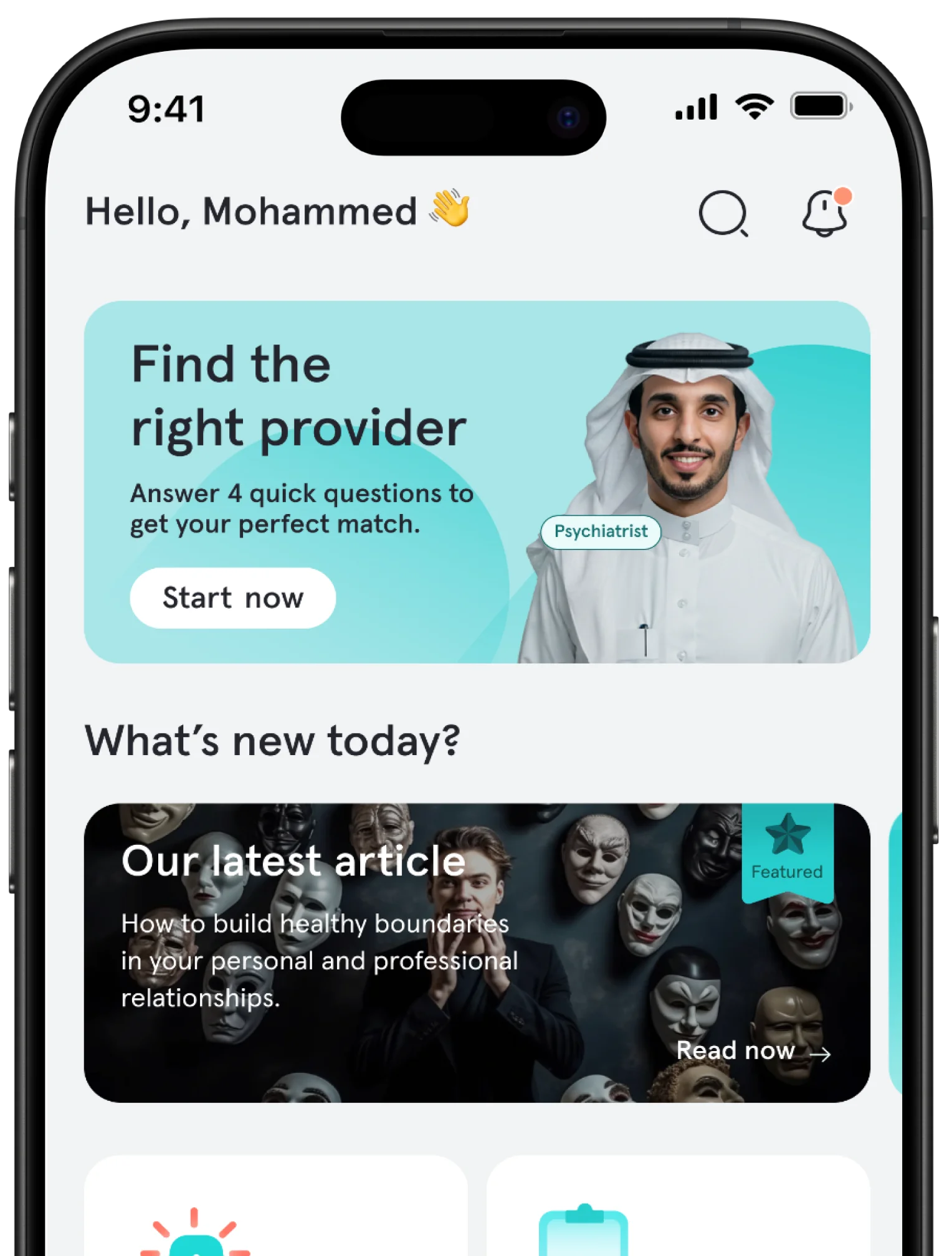
Smart matchingFour quick questions suggest the right care provider
Urgent consultationTalk to an available care provider within minutes
Free psychological measuresMore than 20 tests to understand how you are doing
Scan to download
{"data":{"id":"db7aef3a-e8b9-4065-a2ff-7c7b31f0dd04","slug":"drama-addiction-relationships","arTitle":" إدمان الدراما في العلاقات: لماذا نهرب من الاستقرار؟","enTitle":"Drama Addiction in Relationships: Why Do We Run From Stability?","thumbnailAltText":"Two figures sit apart on a balanced beam, split by warm and cool tones, symbolizing tension.","estimatedReadingTime":5,"likesCount":252,"writer":{"id":"3ab72b74-f26f-4337-9b47-3114b0f90de5","arBio":"كاتبة وباحثة متخصصة في مجال الطب النفسي، تهتم بموضوعات الصحة النفسية وبالمشاعر الإنسانية التي نختبرها ولا نجد دائمًا الكلمات لتسميتها. تكتب عنّا؛ عن الإنسان وتجربته، وتبسّط الموضوعات المعقّدة لتقدّم محتوى يساعدنا على فهم ذواتنا والحياة أكثر، ويجعلنا نشعر بأننا بوحدة أقل.","enBio":"A writer and researcher specializing in psychiatry, she focuses on mental health and the human emotions we experience but cannot always find the words to name. She writes about us—about humanity and the human experience—and simplifies complex topics to offer content that helps us better understand ourselves and life, ultimately making us feel less alone.","user":{"slug":"ayat-alnajar","arFullName":"آيات النجار","enFullName":"Ayat Al-Najjar","publicProfileImageUrl":"https://cdn.tatmeen.sa/public/profile-images/02384455-68fa-40b6-ad05-609fde65cafa/21b9a610dde5dfc6d37af110c23e9c7ab3946be080c281beb000debf4f7d31a6.webp","publicProfileImage96Url":"https://cdn.tatmeen.sa/public/profile-images/02384455-68fa-40b6-ad05-609fde65cafa/21b9a610dde5dfc6d37af110c23e9c7ab3946be080c281beb000debf4f7d31a6-w96.webp","publicProfileImage192Url":"https://cdn.tatmeen.sa/public/profile-images/02384455-68fa-40b6-ad05-609fde65cafa/21b9a610dde5dfc6d37af110c23e9c7ab3946be080c281beb000debf4f7d31a6-w192.webp"}},"arContent":"","enContent":"","productionDocument":{"headings":[{"id":"article-section-why-does-calm-feel-heavy-for-someone-who-s-used-to-chaos","text":"Why Does Calm Feel Heavy for Someone Who’s Used to Chaos?"},{"id":"article-section-drama-as-a-safe-zone-how-do-we-create-a-problem-before-it-surprises-us","text":"Drama as a “Safe Zone”: How Do We Create a Problem Before It Surprises Us?"},{"id":"article-section-signs-you-re-stuck-in-a-drama-pattern","text":"Signs You’re Stuck in a Drama Pattern"},{"id":"article-section-how-do-you-build-a-lively-stability-without-creating-trouble","text":"How Do You Build a Lively Stability Without Creating Trouble?"},{"id":"article-section-finally","text":"Finally…"}],"faqs":[{"question":"Does drama addiction mean I am a bad person?","answer":"<p><span style=\"color:#000000\">No. It’s often a style you learned to feel safe or to regain a sense of being alive—especially if you got used to volatile environments. Instead of blame, focus on understanding triggers and learning small calming alternatives. Change begins with kindness toward yourself.</span></p>"},{"question":"Why do I feel bored when things are going well?","answer":"<p><span style=\"color:#000000\">Your body may have gotten used to tension as the default state, so it reads calm as emptiness or an unclear threat. Try adding healthy vitality daily—movement, a hobby, or a small goal—and over time stability will feel less unfamiliar.</span></p>"},{"question":"How can I stop myself before I create a problem?","answer":"<p><span style=\"color:#000000\">Look for an early signal: tightness in the chest, faster speech, or an urge to send a sharp message. Then apply one rule: delay for ten minutes with slow breathing, and ask: <em>What is my real need right now?</em></span></p>"}],"beforeSourcesHtml":"<p></p>","sources":[],"afterSourcesHtml":"","blocks":[{"type":"html","html":"<p><span style=\"color:#000000\">“Drama addiction” sometimes doesn’t look like loving problems—it can look like a faint anxiety that visits you when everything becomes <em>too</em> calm. You might have stable hours at work and at home, then suddenly you start searching for a small mistake in a message, or you open a sharp discussion for no real reason—just to feel that something is moving. If calm unsettles you or makes you suspect an approaching storm, you’re not strange. This article from Tatmeen offers a kinder explanation for what’s happening, and practical steps that bring you back to steadiness without extinguishing what’s alive inside you.</span></p><p><span style=\"color:#000000\">Some people call this pattern \"drama addiction,\" but here it is not a medical diagnosis or a judgment on your personality. It describes a learned way of dealing with tension and emotional emptiness when calm feels unfamiliar.</span></p><p><span style=\"color:#000000\">Important safety note: this article is about internal tension patterns and non-harmful conflict. If what is happening includes threats, intimidation, repeated humiliation, surveillance, being blocked from contact, movement, or money, or any physical or sexual violence, this is not \"drama\" and it is not your responsibility to calm the relationship alone. Prioritize your safety and seek trusted or urgent support in your country.</span></p><h2 id=\"article-section-why-does-calm-feel-heavy-for-someone-who-s-used-to-chaos\" data-toc-heading tabindex=\"-1\"><span id=\"why-does-calm-feel-heavy-for-someone-who-s-used-to-chaos-1\" aria-hidden=\"true\"></span><span style=\"color:#000000\">Why Does Calm Feel Heavy for Someone Who’s Used to Chaos?</span></h2><p><span style=\"color:#000000\">When a person grows up amid constant tension, early responsibilities, or unpredictable environments, the body learns to stay ready. Stability doesn’t translate as rest—it translates as an “empty space” that needs monitoring. It’s as if the nervous system says: <em>Be careful—the silence comes before something.</em></span></p><p><span style=\"color:#000000\">Stress is the body’s response to feeling threatened or under pressure, and it can release hormones that prepare us for fast action. The problem begins when this readiness turns into a chronic pattern; our ability to relax decreases, and we unconsciously search for what returns us to the familiar feeling of movement.</span></p><p><span style=\"color:#000000\">This is where confusion happens: calm doesn’t necessarily mean safety, but it may not <em>feel</em> safe to someone who learned safety under different conditions. That’s why you might feel bored by smooth days—not because you don’t want goodness, but because your body hasn’t learned to trust it yet.</span></p><h2 id=\"article-section-drama-as-a-safe-zone-how-do-we-create-a-problem-before-it-surprises-us\" data-toc-heading tabindex=\"-1\"><span id=\"drama-as-a-safe-zone-how-do-we-create-a-problem-before-it-surprises-us-2\" aria-hidden=\"true\"></span><span style=\"color:#000000\">Drama as a “Safe Zone”: How Do We Create a Problem Before It Surprises Us?</span></h2><p><span style=\"color:#000000\">Drama gives one clear thing: direction. When there’s conflict, you have a task—defend, explain, fix, or withdraw. But when stability dominates, a wide space opens up that you don’t know what to do with—and postponed emotions that were hidden under the busyness of life may rise to the surface.</span></p><p><span style=\"color:#000000\">Some people learned that confusion is more dangerous than conflict. So they prefer a problem they can see over an anxiety with no name. This may show up in small details: over-interpreting a coworker’s tone, magnifying a minor delay, or reopening an old issue because you never truly closed it inside yourself.</span></p><p><a href=\"https://www.nimh.nih.gov/health/topics/coping-with-traumatic-events?\" target=\"_blank\" rel=\"nofollow noopener noreferrer\"><span style=\"color:#000000\"><u>The U.S. National Institute of Mental Health</u></span></a><span style=\"color:#000000\"> notes, after distressing experiences, that fear is part of the fight-or-flight response that helps us deal with danger, and that people may go through feelings such as anxiety, anger, and difficulty sleeping and concentrating after distressing experiences. Without diagnosing or assuming one story for everyone, understanding the idea is enough: when the body gets used to alarm, it may read calm as unfamiliar—so it searches for a trigger that returns the known sensation.</span></p><p><span style=\"color:#000000\">The hardest part is that drama can turn into an emotional language: <em>I raise my voice so I feel I exist; I create conflict so I can guarantee the other person’s closeness; I exaggerate my complaints so I can be sure someone hears me.</em> Behind all of that is a human need: reassurance, attention, or a sense of control.</span></p><h2 id=\"article-section-signs-you-re-stuck-in-a-drama-pattern\" data-toc-heading tabindex=\"-1\"><span id=\"signs-you-re-stuck-in-a-drama-pattern-3\" aria-hidden=\"true\"></span><span style=\"color:#000000\">Signs You’re Stuck in a Drama Pattern</span></h2><p><span style=\"color:#000000\">You might recognize it in an honest moment with yourself: I only calm down after a fight, or I only feel alive when I am angry. These signs are not a moral judgment; they are road signals. The most common include:</span></p><ul><li><p><span style=\"color:#000000\">You start arguments when you’re exhausted, then regret it after you calm down.</span></p></li><li><p><span style=\"color:#000000\">You interpret ambiguity as rejection—even before you ask.</span></p></li><li><p><span style=\"color:#000000\">You feel more anxious on calm days than on busy days.</span></p></li><li><p><span style=\"color:#000000\">You jump quickly from one topic to another without finishing your first feeling.</span></p></li><li><p><span style=\"color:#000000\">You exhaust yourself trying to fix everything immediately.</span></p></li></ul><p><span style=\"color:#000000\">Some people discover that they do not love drama as much as they fear emotional emptiness. Stability is a skill: allowing feelings to be seen without turning them into a battle. What looks like boredom is not always simple boredom; it may be a sign that tension has become familiar and that calm needs practice before it feels tolerable.</span></p><p><span style=\"color:#000000\">Try naming what’s happening in the moment: <em>I’m activated right now. I’m afraid of being ignored. I’m feeling lonely.</em> Naming slows the impulse and creates a small distance between sensation and reaction.</span></p><h2 id=\"article-section-how-do-you-build-a-lively-stability-without-creating-trouble\" data-toc-heading tabindex=\"-1\"><span id=\"how-do-you-build-a-lively-stability-without-creating-trouble-4\" aria-hidden=\"true\"></span><span style=\"color:#000000\">How Do You Build a Lively Stability Without Creating Trouble?</span></h2><p><span style=\"color:#000000\">The goal is not to become cold or silent. It is to learn other ways to feel alive that do not hurt you or exhaust the people around you. Start with very small steps, because sudden change can feel unfamiliar at first.</span></p><p><span style=\"color:#000000\">First, if you are in a safe situation, train yourself to delay responding when your inner heat rises. Say clearly: I need ten minutes to calm down and I will return to the discussion. During those minutes, do something simple with your body: cold water on your face, light stretching, or slower breathing. If there is a threat or fear for your safety, the priority is not finishing the discussion; it is moving to a safer place and seeking support.</span></p><p><span style=\"color:#000000\">Second, create a short routine for calm instead of waiting for calm to appear by itself—like a fixed walk after dinner, turning off the phone for the last half-hour before sleep, or writing three lines about what weighed on your day. Stability is built through repetition, not through mood.</span></p><p><span style=\"color:#000000\">Third, give yourself safe alternatives for vitality: a hobby with a gentle challenge, learning a skill, light exercise, or a small project at home. When your mind finds a healthy source of stimulation, it may need less conflict to feel awake.</span></p><h2 id=\"article-section-finally\" data-toc-heading tabindex=\"-1\"><span id=\"finally-5\" aria-hidden=\"true\"></span><span style=\"color:#000000\">Finally…</span></h2><p><span style=\"color:#000000\">Remember: your pull toward drama is not a fixed trait. It may be a learned pattern that can change with awareness, practice, and support. Tonight, choose one simple step: delay a reply, name a feeling, or do a short calming routine. If the pattern keeps repeating and affects your sleep, work, or relationships, </span><a href=\"https://tatmeen.sa/download/\"><span style=\"color:#1155cc\"><u>talking with a licensed specialist</u></span></a><span style=\"color:#000000\"> can help you understand it gradually. If you feel at risk of harming yourself or someone else, or you feel you may lose control, seek urgent local emergency support and do not wait for an appointment.</span></p>"}],"inlineCtaSignatures":[],"_experienceAliases":{"v":1,"fields":["html","bodyHtml"],"faqs":[0,1,2]}},"createdAt":"2026-06-08T21:00:00.000Z","updatedAt":"2026-06-21T16:06:19.988Z","disorderGroups":[{"id":"01b1a587-3584-435b-971a-c40ffce29802","slug":"family-and-marital-relations","arName":"العلاقات الأسرية والزوجية","enName":"Family & Marital Relations"},{"id":"4499a52a-06f8-4022-a64d-304e5eca51cc","slug":"life-challenges-and-stress","arName":"تحديات الحياة والضغوط","enName":"Life Challenges & Stress"}],"reviewer":{"arFullName":"فريق تطمين","enFullName":"Tatmeen team","slug":"tatmeen-team","kind":"organization"},"productionArticle":true,"promotionAllowed":true,"preparedCover":{"src":"https://cdn.tatmeen.sa/public/article-lcp/article-lcp-v2/sha256-5ffc3bc5d4dfc7475beb440c3930077996c7a613b03a962f470d80efdb115136/800-37ecc63069193f20c738f5878c89b33ae66c97abdff8e5bb2b87c4f071d4b325.avif","fallback":"https://cdn.tatmeen.sa/public/article-lcp/article-lcp-v2/sha256-5ffc3bc5d4dfc7475beb440c3930077996c7a613b03a962f470d80efdb115136/800-84bad1918f238623b4150d965bb07f6ed5370da01442074af2702a5545e79850.webp","directUrl":"https://cdn.tatmeen.sa/blog-cover/Tatmeen-1781022620316.webp","isGolden":true,"avifSrcset":"https://cdn.tatmeen.sa/public/article-lcp/article-lcp-v2/sha256-5ffc3bc5d4dfc7475beb440c3930077996c7a613b03a962f470d80efdb115136/400-971c6790ed09aa8484954d002a1c452e0f229c754203cd877a40ea1b5b3b9eb3.avif 400w, https://cdn.tatmeen.sa/public/article-lcp/article-lcp-v2/sha256-5ffc3bc5d4dfc7475beb440c3930077996c7a613b03a962f470d80efdb115136/640-f7d4bcfa4f38a8f0b6799ebd6028b708efb3bd012ec4923eb07231ea5ad7d25d.avif 640w, https://cdn.tatmeen.sa/public/article-lcp/article-lcp-v2/sha256-5ffc3bc5d4dfc7475beb440c3930077996c7a613b03a962f470d80efdb115136/800-37ecc63069193f20c738f5878c89b33ae66c97abdff8e5bb2b87c4f071d4b325.avif 800w, https://cdn.tatmeen.sa/public/article-lcp/article-lcp-v2/sha256-5ffc3bc5d4dfc7475beb440c3930077996c7a613b03a962f470d80efdb115136/1200-2434b9dbdfe958cf96e2ff397af6258c0643ce4d54211502aca2da49470773b8.avif 1200w","webpSrcset":"https://cdn.tatmeen.sa/public/article-lcp/article-lcp-v2/sha256-5ffc3bc5d4dfc7475beb440c3930077996c7a613b03a962f470d80efdb115136/400-27f81cfeca0fdb088b9564617790570bdfe880d45a197baf79196e50050aac0f.webp 400w, https://cdn.tatmeen.sa/public/article-lcp/article-lcp-v2/sha256-5ffc3bc5d4dfc7475beb440c3930077996c7a613b03a962f470d80efdb115136/640-28fbb4318654285445663987c3501833649e7cf9de078d24f222193805df28cf.webp 640w, https://cdn.tatmeen.sa/public/article-lcp/article-lcp-v2/sha256-5ffc3bc5d4dfc7475beb440c3930077996c7a613b03a962f470d80efdb115136/800-84bad1918f238623b4150d965bb07f6ed5370da01442074af2702a5545e79850.webp 800w, https://cdn.tatmeen.sa/public/article-lcp/article-lcp-v2/sha256-5ffc3bc5d4dfc7475beb440c3930077996c7a613b03a962f470d80efdb115136/1200-b4a8774ea2167c7e829198610cf9e146f171e0d3fafa5c95a9b8d0b585cc4260.webp 1200w","phoneAvifSrcset":"https://cdn.tatmeen.sa/public/article-lcp/article-lcp-v2/sha256-5ffc3bc5d4dfc7475beb440c3930077996c7a613b03a962f470d80efdb115136/400-971c6790ed09aa8484954d002a1c452e0f229c754203cd877a40ea1b5b3b9eb3.avif 400w, https://cdn.tatmeen.sa/public/article-lcp/article-lcp-v2/sha256-5ffc3bc5d4dfc7475beb440c3930077996c7a613b03a962f470d80efdb115136/640-f7d4bcfa4f38a8f0b6799ebd6028b708efb3bd012ec4923eb07231ea5ad7d25d.avif 640w, https://cdn.tatmeen.sa/public/article-lcp/article-lcp-v2/sha256-5ffc3bc5d4dfc7475beb440c3930077996c7a613b03a962f470d80efdb115136/800-37ecc63069193f20c738f5878c89b33ae66c97abdff8e5bb2b87c4f071d4b325.avif 800w","phoneWebpSrcset":"https://cdn.tatmeen.sa/public/article-lcp/article-lcp-v2/sha256-5ffc3bc5d4dfc7475beb440c3930077996c7a613b03a962f470d80efdb115136/400-27f81cfeca0fdb088b9564617790570bdfe880d45a197baf79196e50050aac0f.webp 400w, https://cdn.tatmeen.sa/public/article-lcp/article-lcp-v2/sha256-5ffc3bc5d4dfc7475beb440c3930077996c7a613b03a962f470d80efdb115136/640-28fbb4318654285445663987c3501833649e7cf9de078d24f222193805df28cf.webp 640w, https://cdn.tatmeen.sa/public/article-lcp/article-lcp-v2/sha256-5ffc3bc5d4dfc7475beb440c3930077996c7a613b03a962f470d80efdb115136/800-84bad1918f238623b4150d965bb07f6ed5370da01442074af2702a5545e79850.webp 800w","width":800,"height":447},"previewTaxonomy":{"groups":[{"id":"01b1a587-3584-435b-971a-c40ffce29802","slug":"family-and-marital-relations","arName":"العلاقات الأسرية والزوجية","enName":"Family & Marital Relations"},{"id":"4499a52a-06f8-4022-a64d-304e5eca51cc","slug":"life-challenges-and-stress","arName":"تحديات الحياة والضغوط","enName":"Life Challenges & Stress"}],"topics":[],"tags":[{"id":"2faf13b8-07d4-40ee-89b2-ae2c507a580a","slug":"toxic-relationships-manipulation","arName":"العلاقات السامة والتلاعب النفسي","enName":"Toxic Relationships & Manipulation"},{"id":"510c3a96-f7ec-45f9-8077-9c7b673f089b","slug":"attachment-styles","arName":"أنماط التعلّق","enName":"Attachment Styles"},{"id":"c2a6e8d3-de9c-435f-8c95-9727e7db14cc","slug":"explainer-awareness","arName":"دليل توعوي / شرح","enName":"Explainer / Awareness Guide"}]},"previewProviderRecommendations":[{"id":"278d5ac5-30ff-46ad-97be-c67cdd125836","slug":"dr-mohammed-alamari-8085","arFullName":"د. محمد العماري","enFullName":"Dr. Mohammed Alamari","publicProfileImageUrl":"https://cdn.tatmeen.sa/public/profile-images/278d5ac5-30ff-46ad-97be-c67cdd125836/69bdd11cb01784eed010eb9883403fd6ca4e4afcec739dcd6114fd8b85f133a8.webp","publicProfileImage96Url":"https://cdn.tatmeen.sa/public/profile-images/278d5ac5-30ff-46ad-97be-c67cdd125836/69bdd11cb01784eed010eb9883403fd6ca4e4afcec739dcd6114fd8b85f133a8-w96.webp","publicProfileImage192Url":"https://cdn.tatmeen.sa/public/profile-images/278d5ac5-30ff-46ad-97be-c67cdd125836/69bdd11cb01784eed010eb9883403fd6ca4e4afcec739dcd6114fd8b85f133a8-w192.webp","specialization":{"arName":"طبيب أسرة","enName":"Family Physician"},"profileImageUrl":"https://cdn.tatmeen.sa/public/profile-images/278d5ac5-30ff-46ad-97be-c67cdd125836/69bdd11cb01784eed010eb9883403fd6ca4e4afcec739dcd6114fd8b85f133a8-w192.webp","experienceYears":3,"consultantInfo":{"averageRating":{"average":4},"specialization":{"arGeneralName":"طبيب أسرة","enGeneralName":"Family Physician"}}},{"id":"6df31339-a6f5-4131-a603-3a7c7a34c143","slug":"joud-alodhayyani-9014","arFullName":"جود العتيبي","enFullName":"Joud Alotaibi","publicProfileImageUrl":"https://cdn.tatmeen.sa/public/profile-images/6df31339-a6f5-4131-a603-3a7c7a34c143/7bb005ef9d4315296aad2a7d142fb2af2cf89920a40b474fc5139b9530269282.webp","publicProfileImage96Url":"https://cdn.tatmeen.sa/public/profile-images/6df31339-a6f5-4131-a603-3a7c7a34c143/7bb005ef9d4315296aad2a7d142fb2af2cf89920a40b474fc5139b9530269282-w96.webp","publicProfileImage192Url":"https://cdn.tatmeen.sa/public/profile-images/6df31339-a6f5-4131-a603-3a7c7a34c143/7bb005ef9d4315296aad2a7d142fb2af2cf89920a40b474fc5139b9530269282-w192.webp","specialization":{"arName":"أخصائي نفسي","enName":"Psychologist"},"profileImageUrl":"https://cdn.tatmeen.sa/public/profile-images/6df31339-a6f5-4131-a603-3a7c7a34c143/7bb005ef9d4315296aad2a7d142fb2af2cf89920a40b474fc5139b9530269282-w192.webp","experienceYears":2,"consultantInfo":{"averageRating":{"average":3.5},"specialization":{"arGeneralName":"أخصائي نفسي","enGeneralName":"Psychologist"}}},{"id":"b7aa8f1e-fdae-426f-a1bf-589bc39d71b1","slug":"hussain-alsayegh-0835","arFullName":"د. حسين الصايغ","enFullName":"Dr. Hussain Alsayegh","publicProfileImageUrl":"https://cdn.tatmeen.sa/public/profile-images/b7aa8f1e-fdae-426f-a1bf-589bc39d71b1/ae60ba4216e401d2d512719d2b2c8e6a9d4c9570de1c01e34eb22f7ae1c7a106.webp","publicProfileImage96Url":"https://cdn.tatmeen.sa/public/profile-images/b7aa8f1e-fdae-426f-a1bf-589bc39d71b1/ae60ba4216e401d2d512719d2b2c8e6a9d4c9570de1c01e34eb22f7ae1c7a106-w96.webp","publicProfileImage192Url":"https://cdn.tatmeen.sa/public/profile-images/b7aa8f1e-fdae-426f-a1bf-589bc39d71b1/ae60ba4216e401d2d512719d2b2c8e6a9d4c9570de1c01e34eb22f7ae1c7a106-w192.webp","specialization":{"arName":"طبيب أسرة","enName":"Family Physician"},"profileImageUrl":"https://cdn.tatmeen.sa/public/profile-images/b7aa8f1e-fdae-426f-a1bf-589bc39d71b1/ae60ba4216e401d2d512719d2b2c8e6a9d4c9570de1c01e34eb22f7ae1c7a106-w192.webp","experienceYears":3,"consultantInfo":{"averageRating":{"average":5},"specialization":{"arGeneralName":"طبيب أسرة","enGeneralName":"Family Physician"}}}],"previewCareProviders":[{"id":"09364052-c2a9-4c52-9717-7ce2093b8d0a","slug":"kholoud-alharbi-5221","arFullName":"خلود الحربي","enFullName":"Kholoud Alharbi","publicProfileImageUrl":"https://cdn.tatmeen.sa/public/profile-images/09364052-c2a9-4c52-9717-7ce2093b8d0a/4a0aeb81619e351b77f4323e3605a0a00acc7ca3c82ee7cc5ca2c9e8ef716049.webp","publicProfileImage96Url":"https://cdn.tatmeen.sa/public/profile-images/09364052-c2a9-4c52-9717-7ce2093b8d0a/4a0aeb81619e351b77f4323e3605a0a00acc7ca3c82ee7cc5ca2c9e8ef716049-w96.webp","publicProfileImage192Url":"https://cdn.tatmeen.sa/public/profile-images/09364052-c2a9-4c52-9717-7ce2093b8d0a/4a0aeb81619e351b77f4323e3605a0a00acc7ca3c82ee7cc5ca2c9e8ef716049-w192.webp","gender":"FEMALE","specialization":{"arName":"أخصائي نفسي","enName":"Psychologist"}},{"id":"6f037535-1dca-4b50-a8b2-5974b7323286","slug":"salah-althobaiti-9053","arFullName":"صلاح الثبيتي","enFullName":"Salah Althobaiti","publicProfileImageUrl":"https://cdn.tatmeen.sa/public/profile-images/6f037535-1dca-4b50-a8b2-5974b7323286/35b6bd7fad9b1e004c1835803eb9c1b56dcacd380685ec8bff141f0fb888005c.webp","publicProfileImage96Url":"https://cdn.tatmeen.sa/public/profile-images/6f037535-1dca-4b50-a8b2-5974b7323286/35b6bd7fad9b1e004c1835803eb9c1b56dcacd380685ec8bff141f0fb888005c-w96.webp","publicProfileImage192Url":"https://cdn.tatmeen.sa/public/profile-images/6f037535-1dca-4b50-a8b2-5974b7323286/35b6bd7fad9b1e004c1835803eb9c1b56dcacd380685ec8bff141f0fb888005c-w192.webp","gender":"MALE","specialization":{"arName":"أخصائي نفسي","enName":"Psychologist"}},{"id":"3cc806e8-616b-4884-9f21-a75b378580a2","slug":"aisha-al-hashim-8667","arFullName":"عائشة ال هاشم","enFullName":"Aisha Al Hashim","publicProfileImageUrl":"https://cdn.tatmeen.sa/public/profile-images/3cc806e8-616b-4884-9f21-a75b378580a2/27f523d03be4dcfa1f6a79f70c1773887434e698990d214cd990caec56a44798.webp","publicProfileImage96Url":"https://cdn.tatmeen.sa/public/profile-images/3cc806e8-616b-4884-9f21-a75b378580a2/27f523d03be4dcfa1f6a79f70c1773887434e698990d214cd990caec56a44798-w96.webp","publicProfileImage192Url":"https://cdn.tatmeen.sa/public/profile-images/3cc806e8-616b-4884-9f21-a75b378580a2/27f523d03be4dcfa1f6a79f70c1773887434e698990d214cd990caec56a44798-w192.webp","gender":"FEMALE","specialization":{"arName":"أخصائي نفسي","enName":"Psychologist"}},{"id":"db2ce1a0-9325-4471-b7ce-eb2e811c30a3","slug":"amer-qutub-2441","arFullName":"عامر قطب","enFullName":"Amer Qutub","publicProfileImageUrl":"https://cdn.tatmeen.sa/public/profile-images/db2ce1a0-9325-4471-b7ce-eb2e811c30a3/80580f99bfd7fe2b2a9cf8eed73ab532f5086d1efe053b0aa57358c1ce004261.webp","publicProfileImage96Url":"https://cdn.tatmeen.sa/public/profile-images/db2ce1a0-9325-4471-b7ce-eb2e811c30a3/80580f99bfd7fe2b2a9cf8eed73ab532f5086d1efe053b0aa57358c1ce004261-w96.webp","publicProfileImage192Url":"https://cdn.tatmeen.sa/public/profile-images/db2ce1a0-9325-4471-b7ce-eb2e811c30a3/80580f99bfd7fe2b2a9cf8eed73ab532f5086d1efe053b0aa57358c1ce004261-w192.webp","gender":"MALE","specialization":{"arName":"أخصائي نفسي","enName":"Psychologist"}},{"id":"94765496-dbdf-4631-a01b-7df5f788668d","slug":"abdullrahman-alhamoudi-3045","arFullName":"عبدالرحمن الحمودي","enFullName":"Abdulrahman Alhamoudi","publicProfileImageUrl":"https://cdn.tatmeen.sa/public/profile-images/94765496-dbdf-4631-a01b-7df5f788668d/2d49f6b6493c564afb6f50b6c3634231dff3a5cf8353acfab393d1b2a88037d1.webp","publicProfileImage96Url":"https://cdn.tatmeen.sa/public/profile-images/94765496-dbdf-4631-a01b-7df5f788668d/2d49f6b6493c564afb6f50b6c3634231dff3a5cf8353acfab393d1b2a88037d1-w96.webp","publicProfileImage192Url":"https://cdn.tatmeen.sa/public/profile-images/94765496-dbdf-4631-a01b-7df5f788668d/2d49f6b6493c564afb6f50b6c3634231dff3a5cf8353acfab393d1b2a88037d1-w192.webp","gender":"MALE","specialization":{"arName":"أخصائي نفسي","enName":"Psychologist"}},{"id":"618dba89-5b70-4b46-8304-741b7ac8ecd3","slug":"abdullah-mari-1311","arFullName":"عبدالله مرعي","enFullName":"Abdullah Mari","publicProfileImageUrl":"https://cdn.tatmeen.sa/public/profile-images/618dba89-5b70-4b46-8304-741b7ac8ecd3/6b4a3bfb59f8a304ca79083b32859b46baad2e1d692974a47c02c1f66bd11129.webp","publicProfileImage96Url":"https://cdn.tatmeen.sa/public/profile-images/618dba89-5b70-4b46-8304-741b7ac8ecd3/6b4a3bfb59f8a304ca79083b32859b46baad2e1d692974a47c02c1f66bd11129-w96.webp","publicProfileImage192Url":"https://cdn.tatmeen.sa/public/profile-images/618dba89-5b70-4b46-8304-741b7ac8ecd3/6b4a3bfb59f8a304ca79083b32859b46baad2e1d692974a47c02c1f66bd11129-w192.webp","gender":"MALE","specialization":{"arName":"أخصائي نفسي","enName":"Psychologist"}},{"id":"3b50a5d5-e795-407f-8676-fd7f0e1bb7a0","slug":"abdulaziz-bin-hudayan-4940","arFullName":"عبدالعزيز بن هديان","enFullName":"Abdulaziz Bin Hudayan","publicProfileImageUrl":"https://cdn.tatmeen.sa/public/profile-images/3b50a5d5-e795-407f-8676-fd7f0e1bb7a0/710ff0fe1fb00cdb5042092e27b7910b480a439b02251ecded62d7758eefce95.webp","publicProfileImage96Url":"https://cdn.tatmeen.sa/public/profile-images/3b50a5d5-e795-407f-8676-fd7f0e1bb7a0/710ff0fe1fb00cdb5042092e27b7910b480a439b02251ecded62d7758eefce95-w96.webp","publicProfileImage192Url":"https://cdn.tatmeen.sa/public/profile-images/3b50a5d5-e795-407f-8676-fd7f0e1bb7a0/710ff0fe1fb00cdb5042092e27b7910b480a439b02251ecded62d7758eefce95-w192.webp","gender":"MALE","specialization":{"arName":"أخصائي نفسي","enName":"Psychologist"}},{"id":"d4ffcb6b-90a7-45b6-b941-964866f4564b","slug":"dhaifallah-alhumaidi-1092","arFullName":"ضيف الله الحميدي","enFullName":"Dhaifallah Alhumaidi","publicProfileImageUrl":"https://cdn.tatmeen.sa/public/profile-images/d4ffcb6b-90a7-45b6-b941-964866f4564b/1817171c5828a9b57d6c30d12332cf154e335272548bc90a6e8456d74d356956.webp","publicProfileImage96Url":"https://cdn.tatmeen.sa/public/profile-images/d4ffcb6b-90a7-45b6-b941-964866f4564b/1817171c5828a9b57d6c30d12332cf154e335272548bc90a6e8456d74d356956-w96.webp","publicProfileImage192Url":"https://cdn.tatmeen.sa/public/profile-images/d4ffcb6b-90a7-45b6-b941-964866f4564b/1817171c5828a9b57d6c30d12332cf154e335272548bc90a6e8456d74d356956-w192.webp","gender":"MALE","specialization":{"arName":"أخصائي نفسي","enName":"Psychologist"}}],"previewDownload":{"href":"/download","title":{"ar":"خطوة واحدة لأجلك، ابدأ الآن","en":"One step for you, start now"},"description":{"ar":"حمّل تطبيق تطمين لاستكشاف مقدمي الرعاية وخيارات الحجز.","en":"Download Tatmeen to explore care providers and booking options."},"posterSrc":"/images/home/cta-ar-new-1.webp","videoSrc":"/images/home/cta-ar-new-1.mp4","videoPosterSrc":"/images/home/cta-ar-new-1.webp","videoPosterEnSrc":"/images/home/cta-en-new-1.webp","videoType":"video/mp4","appStoreHref":"https://apps.apple.com/us/app/tatmeen-%D8%AA%D8%B7%D9%85%D9%8A%D9%86/id6473836983","googlePlayHref":"https://play.google.com/store/apps/details?id=com.TatmeenApp.user&hl=en"},"previewRelatedArticles":[{"id":"b90cf1c2-5250-443b-9040-f6324ead6bb3","slug":"unconditional_love","route":"/blog/unconditional_love/","title":{"ar":"الحب اللامشروط","en":"Unconditional Love"},"image":"https://cdn.tatmeen.sa/public/article-lcp/article-lcp-v2/sha256-a78d48a04f4ffb5965580246be07cda6389268c341c7e5db66f7e7c528a15f63/300-cee1e7fee3ed3850f4aafd3b2dcddd1c59a8c335439de5f30e5d87147c38e153.webp","directImageFallback":"https://cdn.tatmeen.sa/blog-cover/1704201973616-couple-freestocks-org-300x250.jpeg","arThumbnailAltText":"Two people embrace while one holds a bouquet behind the other","thumbnailAltText":"Two people embrace while one holds a bouquet behind the other","topic":{"label":{"ar":"العلاقات الأسرية والزوجية","en":"Family & Marital Relations"}},"readingTimeMinutes":5},{"id":"a7b62173-1789-46bf-a7ce-f440f8a811b1","slug":"psychologically-shattered-when-to-seek-help","route":"/blog/psychologically-shattered-when-to-seek-help/","title":{"ar":"هل تشعر أنك مدمر نفسيًا وتحتاج إلى المساعدة؟","en":"Do You Feel Psychologically Shattered and in Need of Help?"},"image":"https://cdn.tatmeen.sa/public/article-lcp/article-lcp-v2/sha256-d7dcaa60188f389a65e1bce5c02e26f792f6822cdb952d88f177fa0d6b4ccd84/800-cd8aa8b15efa341d1ea33a7a5bb6aa43fb9b1d017372d6afefe8ebac2204a406.webp","directImageFallback":"https://cdn.tatmeen.sa/blog-cover/Tatmeen-1783442237081.webp","arThumbnailAltText":"Person curled up, surrounded by chaotic scribbles and storm-like thoughts closing in","thumbnailAltText":"Person curled up, surrounded by chaotic scribbles and storm-like thoughts closing in","topic":{"label":{"ar":"اضطرابات نفسية شائعة","en":"Common Mental Issues"}},"readingTimeMinutes":5},{"id":"c7f5e2be-3039-4f47-bd90-25892a366775","slug":"saudi-mental-health-platform-women-family-youth","route":"/blog/saudi-mental-health-platform-women-family-youth/","title":{"ar":"الصحة النفسية للمرأة والأسرة والشباب: كيف يواكب تطمين أولويات المجتمع الجديد؟","en":"Tatmeen - Mental Health for Women, Families, and Young People"},"image":"https://cdn.tatmeen.sa/public/article-lcp/article-lcp-v2/sha256-2f5e6e9c5f782b161edf5753038ed1931985d3c3baf0a02b85f97f60abfaba76/800-e2148848eedafdb98b891e94080bd9623d3a8fad23bc73730508964122779f00.webp","directImageFallback":"https://cdn.tatmeen.sa/blog-cover/Tatmeen-1778979469917.webp","arThumbnailAltText":"Youth, Women and family saudi arabia ","thumbnailAltText":"Youth, Women and family saudi arabia ","topic":{"label":{"ar":"الأطفال والمراهقين","en":"Children & Adolescents"}},"readingTimeMinutes":5},{"id":"07a55476-3004-47d2-af90-1f229ff5ace5","slug":"premarital-psychological-assessment-family-stability","route":"/blog/premarital-psychological-assessment-family-stability/","title":{"ar":"أهمية الفحص النفسي قبل الزواج لتعزيز الاستقرار الأسري","en":"The Importance of Premarital Psychological Assessment for Family Stability"},"image":"https://cdn.tatmeen.sa/public/article-lcp/article-lcp-v2/sha256-56a1ae6d1dffef73aaae147dd0f8c4ab7c85a94ea05e0ff2f9707ca69df3348a/800-14466649599ac024958796d7431f91aea814455cb03424aef841c2759a41b1dc.webp","directImageFallback":"https://cdn.tatmeen.sa/blog-cover/Tatmeen-1778436313687.webp","arThumbnailAltText":"two human figures sitting at a table with gentle glow filling the room","thumbnailAltText":"two human figures sitting at a table with gentle glow filling the room","topic":{"label":{"ar":"العلاقات الأسرية والزوجية","en":"Family & Marital Relations"}},"readingTimeMinutes":5}],"previewRelatedReadStates":{}},"locale":"en","device":"desktop","path":"/en/blog/drama-addiction-relationships/","readingControls":false,"config":{"public":{"BUCKET_URL":"https://cdn.tatmeen.sa/","APP_BASE_URL":"https://tatmeen.sa","intercomAppId":"ppcnu9e3"}}}