You open an old photo album at your family’s home. The faces are familiar, the laughter frozen in frames, and the dates of events clear beneath each picture… but the stories that tie these snapshots together fade away like a light mist. You try to recall the scent of a cake, a sentence someone said, or a particular holiday, but all you hear is a distant echo, as though your mind has hit the emergency brakes to protect you from an unspoken burden. This isn’t a betrayal of your memory, but a cautious attempt to keep you safe until your inner world calms down. The gaps may seem confusing, and fear might seep into your daily life, but there’s a gentle way to return: through a kinder understanding of what’s happening, a safe space, and small steps that allow the story to be restructured without rushing. In this article, we’ll explain this disorder in simple terms and clarify the common confusion between it and post-traumatic amnesia (PTA).
What is Dissociative Amnesia?
Dissociative amnesia is the difficulty or inability to recall significant personal information, often related to a stressful or traumatic event, with no neurological or substance-related explanation. The gaps appear as holes in your autobiographical memory: names, places, details of incidents, or entire periods of time. This disorder is part of the spectrum of dissociative disorders, typically linked to traumatic experiences, and is primarily treated through specialized psychotherapy.
Why Does it Happen?
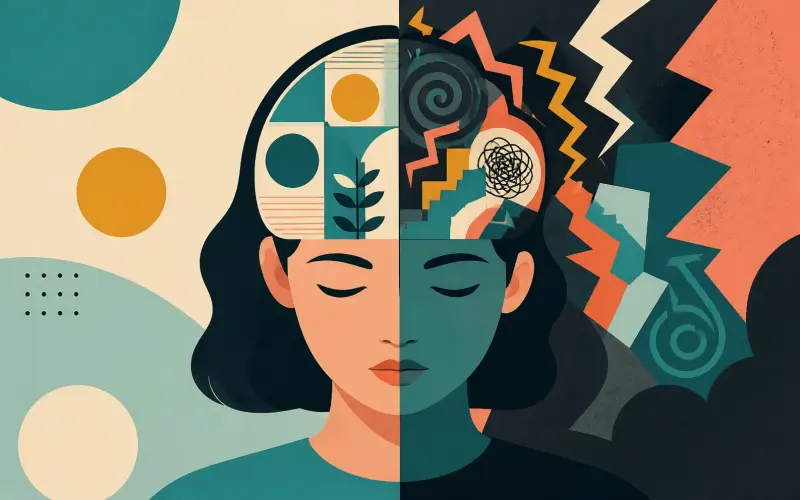
Dissociation is understood as a psychological defense mechanism: when pain becomes unbearable, the mind disconnects its awareness from the painful memory so that daily life can continue. The goal isn’t deception, but survival. You might find yourself working, studying, and socializing, but your memory stops at a closed door that doesn’t want to open without enough safety. This reminds us that memory retrieval isn’t a battle of strength, but a safe process that moves forward when a supportive environment is provided.
Dissociative or Post-Traumatic Amnesia? Clearing Up the Confusion Simply
You may come across the abbreviation PTA alongside "dissociative" in some Arabic headlines, but in medical terms, this abbreviation typically refers to post-traumatic amnesia after a head injury, not dissociative amnesia. Post-traumatic amnesia is a temporary neurological condition: confusion and a break in memory continuity occur after the injury, followed by a gradual ability to form new memories. On the other hand, dissociative amnesia is usually linked to psychological trauma (such as violence, disasters, or wars) with no evidence of brain injury. Summary: Post-traumatic amnesia is neurologically based and requires medical evaluation after an injury, while dissociative amnesia is psychologically based and requires specialized psychotherapy.
How Does Dissociative Amnesia Show Up in Daily Life?
You may feel as though your memory is selectively choosing what it allows to pass through. Gaps may form specifically around the traumatic event or entire periods of your life. Sometimes, the condition is accompanied by a sense of detachment from the self or surroundings (depersonalization/derealization). It’s important to emphasize: this is not a fabrication. Those who experience dissociative amnesia often suffer from the emptiness of memory just as much as from the trauma itself.
Treatment: Restoring Safety Before Restoring Memories
With dissociative amnesia, the goal isn’t to force open the locked door, but to create a genuine sense of safety so that it can open gently on its own. We start by calming the body and nerves: slower breathing, simple grounding techniques, and organizing the rhythm of the day. Then, methods like cognitive-behavioral therapy, narrative therapy, and self-regulation techniques (grounding and breathing exercises) are used to reduce arousal and restore a sense of control. Clinical experience recommends focusing first on your current safety, then on regulating emotions, and only then gradually approaching the painful memories at a pace you can handle.
A Practical Midway:
Tatmeen therapists observe that many people feel relief when they’re given a safe space to speak without pressure to fully remember. We begin together with a clear plan to reduce symptoms, measurable by factors like improved sleep, fewer panic attacks, and increased concentration. When you’re ready, we gently approach the traumatic content step by step. This method protects you from retraumatization and strengthens your ability to bear memories instead of fleeing from them. Steady compassion brings you back to yourself, breath by breath.
Daily Gentle Steps to Support Recovery
Write down what you remember without forcing it, and allow the empty spaces to stay empty for now.
Practice grounding exercises: name five things you see, four things you touch… until your body calms down.
Organize your sleep, food, and light movement routines; your body is your gateway to inner safety.
Surround yourself with a small, safe circle, and choose a trusted person to share what you need now—not the whole story at once.
What About the Lost Memories?
Memories may return in bits and pieces or remain vague. There are no guarantees of a full return, and it’s not useful to force the mind to remember before it feels safe. Sources suggest that progress in self-regulation skills and evidence-supported therapy increases the likelihood of improving functional memory in the medium term.
Finally...
Dissociative amnesia is not a weakness. It’s a sign that your psyche tried to protect you when the pain was greater than what you could bear. By clearly distinguishing it from post-traumatic amnesia, and walking through compassionate and gradual treatment steps, your story can be told at a pace that honors your safety. If you wish for gentle professional support, book your session now with Tatmeen. We’re here with you, step by step, when you choose to begin.
Frequently Asked Questions
Does dissociative amnesia resolve on its own?
The gaps may improve with safety and gradual treatment, but the pace is individual. Don’t force yourself to remember; focus on sleep, calming, and building support, and your therapist will work with you to safely restore what can be recalled.
How can I differentiate between dissociative amnesia and PTA after a head injury?
If the condition followed a blow to the head with severe confusion or neurological symptoms, seek urgent medical evaluation—it could be PTA. If the gaps are around a traumatic psychological event without evidence of brain injury, it’s more likely dissociative amnesia and requires psychological treatment.
Do medications help with dissociative amnesia?
There’s no “memory pill” for dissociative amnesia. Medications may be used for accompanying symptoms like depression or anxiety, but the core treatment is psychological, focusing on safety, emotional regulation, and gradual trauma processing.
A writer and researcher specializing in psychiatry, she focuses on mental health and the human emotions we experience but cannot always find the words to name. She writes about us—about humanity and the human experience—and simplifies complex topics to offer content that helps us better understand ourselves and life, ultimately making us feel less alone.
Every Tatmeen article is reviewed by care providers licensed by the Saudi Commission for Health Specialties, so what you read is accurate and trustworthy.
This article builds understanding and does not replace a licensed care provider.
Need someone to talk to?
Tatmeen's licensed care providers are available around the clock, and the app's urgent consultation connects you with one within minutes.
Download Tatmeen to explore care providers and booking options.
Smart matchingFour quick questions suggest the right care provider
Urgent consultationTalk to an available care provider within minutes
Free psychological measuresMore than 20 tests to understand how you are doing
Scan to download
{"data":{"id":"8804b702-7f2e-4370-b6a0-748c268e4575","slug":"dissociative-amnesia-trauma-erases-memories","arTitle":"فقدان الذاكرة التفارقي: عندما تمحو الصدمة ذكرياتك","enTitle":"Dissociative Amnesia: When Trauma Erases Your Memories","thumbnailAltText":"فقدان الذاكرة التفارقي وتأثير الصدمة النفسية على محو الذكريات","estimatedReadingTime":5,"likesCount":380,"writer":{"id":"3ab72b74-f26f-4337-9b47-3114b0f90de5","arBio":"كاتبة وباحثة متخصصة في مجال الطب النفسي، تهتم بموضوعات الصحة النفسية وبالمشاعر الإنسانية التي نختبرها ولا نجد دائمًا الكلمات لتسميتها. تكتب عنّا؛ عن الإنسان وتجربته، وتبسّط الموضوعات المعقّدة لتقدّم محتوى يساعدنا على فهم ذواتنا والحياة أكثر، ويجعلنا نشعر بأننا بوحدة أقل.","enBio":"A writer and researcher specializing in psychiatry, she focuses on mental health and the human emotions we experience but cannot always find the words to name. She writes about us—about humanity and the human experience—and simplifies complex topics to offer content that helps us better understand ourselves and life, ultimately making us feel less alone.","user":{"slug":"ayat-alnajar","arFullName":"آيات النجار","enFullName":"Ayat Al-Najjar","publicProfileImageUrl":"https://cdn.tatmeen.sa/public/profile-images/02384455-68fa-40b6-ad05-609fde65cafa/21b9a610dde5dfc6d37af110c23e9c7ab3946be080c281beb000debf4f7d31a6.webp","publicProfileImage96Url":"https://cdn.tatmeen.sa/public/profile-images/02384455-68fa-40b6-ad05-609fde65cafa/21b9a610dde5dfc6d37af110c23e9c7ab3946be080c281beb000debf4f7d31a6-w96.webp","publicProfileImage192Url":"https://cdn.tatmeen.sa/public/profile-images/02384455-68fa-40b6-ad05-609fde65cafa/21b9a610dde5dfc6d37af110c23e9c7ab3946be080c281beb000debf4f7d31a6-w192.webp"}},"arContent":"","enContent":"","productionDocument":{"headings":[],"faqs":[{"question":"Does dissociative amnesia resolve on its own?","answer":"<p><span style=\"color:#000000\">The gaps may improve with safety and gradual treatment, but the pace is individual. Don’t force yourself to remember; focus on sleep, calming, and building support, and your therapist will work with you to safely restore what can be recalled.</span></p>"},{"question":"How can I differentiate between dissociative amnesia and PTA after a head injury?","answer":"<p><span style=\"color:#000000\">If the condition followed a blow to the head with severe confusion or neurological symptoms, seek urgent medical evaluation—it could be PTA. If the gaps are around a traumatic psychological event without evidence of brain injury, it’s more likely dissociative amnesia and requires psychological treatment.</span></p>"},{"question":"Do medications help with dissociative amnesia?","answer":"<p><span style=\"color:#000000\">There’s no “memory pill” for dissociative amnesia. Medications may be used for accompanying symptoms like depression or anxiety, but the core treatment is psychological, focusing on safety, emotional regulation, and gradual trauma processing.</span></p>"}],"beforeSourcesHtml":"<p></p>","sources":[],"afterSourcesHtml":"","blocks":[{"type":"html","html":"<p><span style=\"color:#000000\">You open an old photo album at your family’s home. The faces are familiar, the laughter frozen in frames, and the dates of events clear beneath each picture… but the stories that tie these snapshots together fade away like a light mist. You try to recall the scent of a cake, a sentence someone said, or a particular holiday, but all you hear is a distant echo, as though your mind has hit the emergency brakes to protect you from an unspoken burden.<br /> This isn’t a betrayal of your memory, but a cautious attempt to keep you safe until your inner world calms down. The gaps may seem confusing, and fear might seep into your daily life, but there’s a gentle way to return: through a kinder understanding of what’s happening, a safe space, and small steps that allow the story to be restructured without rushing. In this article, we’ll explain this disorder in simple terms and clarify the common confusion between it and post-traumatic amnesia (PTA).</span></p><h3><span style=\"color:#000000\"><strong>What is Dissociative Amnesia?</strong></span></h3><p><span style=\"color:#000000\">Dissociative amnesia is the difficulty or inability to recall significant personal information, often related to a stressful or traumatic event, with no neurological or substance-related explanation. The gaps appear as holes in your autobiographical memory: names, places, details of incidents, or entire periods of time. This disorder is part of the spectrum of dissociative disorders, typically linked to traumatic experiences, and is primarily treated through specialized psychotherapy.</span></p><h3><span style=\"color:#000000\"><strong>Why Does it Happen?</strong></span></h3><p><span style=\"color:#000000\">Dissociation is understood as a psychological defense mechanism: when pain becomes unbearable, the mind disconnects its awareness from the painful memory so that daily life can continue. The goal isn’t deception, but survival. You might find yourself working, studying, and socializing, but your memory stops at a closed door that doesn’t want to open without enough safety. This reminds us that memory retrieval isn’t a battle of strength, but a safe process that moves forward when a supportive environment is provided.</span></p><h3><span style=\"color:#000000\"><strong>Dissociative or Post-Traumatic Amnesia? Clearing Up the Confusion Simply</strong></span></h3><p><span style=\"color:#000000\">You may come across the abbreviation PTA alongside \"dissociative\" in some Arabic headlines, but in medical terms, this abbreviation typically refers to post-traumatic amnesia after a head injury, not dissociative amnesia.<br /> Post-traumatic amnesia is a temporary neurological condition: confusion and a break in memory continuity occur after the injury, followed by a gradual ability to form new memories.<br /> On the other hand, dissociative amnesia is usually linked to psychological trauma (such as violence, disasters, or wars) with no evidence of brain injury.<br /> <strong>Summary</strong>: Post-traumatic amnesia is neurologically based and requires medical evaluation after an injury, while dissociative amnesia is psychologically based and requires specialized psychotherapy.</span></p><h3><span style=\"color:#000000\"><strong>How Does Dissociative Amnesia Show Up in Daily Life?</strong></span></h3><p><span style=\"color:#000000\">You may feel as though your memory is selectively choosing what it allows to pass through. Gaps may form specifically around the traumatic event or entire periods of your life. Sometimes, the condition is accompanied by a sense of detachment from the self or surroundings (depersonalization/derealization).<br /> It’s important to emphasize: this is not a fabrication. Those who experience dissociative amnesia often suffer from the emptiness of memory just as much as from the trauma itself.</span></p><h3><span style=\"color:#000000\"><strong>Treatment: Restoring Safety Before Restoring Memories</strong></span></h3><p><span style=\"color:#000000\">With dissociative amnesia, the goal isn’t to force open the locked door, but to create a genuine sense of safety so that it can open gently on its own. We start by calming the body and nerves: slower breathing, simple grounding techniques, and organizing the rhythm of the day. Then, methods like cognitive-behavioral therapy, narrative therapy, and self-regulation techniques (grounding and breathing exercises) are used to reduce arousal and restore a sense of control.<br /> Clinical experience recommends focusing first on your current safety, then on regulating emotions, and only then gradually approaching the painful memories at a pace you can handle.</span></p><h3><span style=\"color:#000000\">A Practical Midway:</span></h3><p><span style=\"color:#000000\"><em>Tatmeen</em> therapists observe that many people feel relief when they’re given a safe space to speak without pressure to fully remember. We begin together with a clear plan to reduce symptoms, measurable by factors like improved sleep, fewer panic attacks, and increased concentration. When you’re ready, we gently approach the traumatic content step by step. This method protects you from retraumatization and strengthens your ability to bear memories instead of fleeing from them. Steady compassion brings you back to yourself, breath by breath.</span></p><p><br /></p><h3><span style=\"color:#000000\"><strong>Daily Gentle Steps to Support Recovery</strong></span></h3><ul><li><p><span style=\"color:#000000\">Write down what you remember without forcing it, and allow the empty spaces to stay empty for now.<br /></span></p></li><li><p><span style=\"color:#000000\">Practice grounding exercises: name five things you see, four things you touch… until your body calms down.<br /></span></p></li><li><p><span style=\"color:#000000\">Organize your sleep, food, and light movement routines; your body is your gateway to inner safety.<br /></span></p></li><li><p><span style=\"color:#000000\">Reduce stimulants (caffeine, shocking news) and increase regulators (water, slow breathing, prayer/meditation).<br /></span></p></li><li><p><span style=\"color:#000000\">Surround yourself with a small, safe circle, and choose a trusted person to share what you need now—not the whole story at once.</span></p></li></ul><h3><span style=\"color:#000000\"><strong>What About the Lost Memories?</strong></span></h3><p><span style=\"color:#000000\">Memories may return in bits and pieces or remain vague. There are no guarantees of a full return, and it’s not useful to force the mind to remember before it feels safe. Sources suggest that progress in self-regulation skills and evidence-supported therapy increases the likelihood of improving functional memory in the medium term.</span></p><h3><span style=\"color:#000000\"><strong>Finally...</strong></span></h3><p><span style=\"color:#000000\">Dissociative amnesia is not a weakness. It’s a sign that your psyche tried to protect you when the pain was greater than what you could bear. By clearly distinguishing it from post-traumatic amnesia, and walking through compassionate and gradual treatment steps, your story can be told at a pace that honors your safety. If you wish for gentle professional support, <u>book your session now</u> with <em>Tatmeen</em>. We’re here with you, step by step, when you choose to begin.</span></p>"}],"inlineCtaSignatures":[],"_experienceAliases":{"v":1,"fields":["html","bodyHtml"],"faqs":[0,1,2]}},"createdAt":"2026-04-28T21:00:00.000Z","updatedAt":"2026-06-24T23:50:59.929Z","disorderGroups":[{"id":"1e82772d-a1a7-4d29-b475-be9d6b67ae02","slug":"common-mental-issues","arName":"اضطرابات نفسية شائعة","enName":"Common Mental Issues"},{"id":"ebb11477-95c3-4773-ad1b-c53ca45cb6f7","slug":"general-health","arName":"صحة عامة","enName":"General Health"}],"reviewer":{"arFullName":"فريق تطمين","enFullName":"Tatmeen team","slug":"tatmeen-team","kind":"organization"},"productionArticle":true,"promotionAllowed":true,"preparedCover":{"src":"https://cdn.tatmeen.sa/public/article-lcp/article-lcp-v2/sha256-1b82acf7cbd927962f403d356f10b5cabc82ae3b90eeb60de275da9343c239ba/800-e1ba770571842f7c566a48af4203d54e490b0c258ab12d9f4b512de0c581f74c.avif","fallback":"https://cdn.tatmeen.sa/public/article-lcp/article-lcp-v2/sha256-1b82acf7cbd927962f403d356f10b5cabc82ae3b90eeb60de275da9343c239ba/800-537245e2cbdf88db2cab05c047dc85b865c23dce169b88559654e787d7525301.webp","directUrl":"https://cdn.tatmeen.sa/blog-cover/Tatmeen-1777480703780.webp","isGolden":true,"avifSrcset":"https://cdn.tatmeen.sa/public/article-lcp/article-lcp-v2/sha256-1b82acf7cbd927962f403d356f10b5cabc82ae3b90eeb60de275da9343c239ba/400-ff0c383759faceba9b8689f7094a162d5d03a5c43d7375749f673dfa051299d4.avif 400w, https://cdn.tatmeen.sa/public/article-lcp/article-lcp-v2/sha256-1b82acf7cbd927962f403d356f10b5cabc82ae3b90eeb60de275da9343c239ba/640-3743d18d79be9b0cc1cb967e9bb8ac404fd0a24154ae6210217caf3fae2d3a05.avif 640w, https://cdn.tatmeen.sa/public/article-lcp/article-lcp-v2/sha256-1b82acf7cbd927962f403d356f10b5cabc82ae3b90eeb60de275da9343c239ba/800-e1ba770571842f7c566a48af4203d54e490b0c258ab12d9f4b512de0c581f74c.avif 800w, https://cdn.tatmeen.sa/public/article-lcp/article-lcp-v2/sha256-1b82acf7cbd927962f403d356f10b5cabc82ae3b90eeb60de275da9343c239ba/1200-7fb2779fb3af3816a1a79b2d9021610596d810e2b06309da0060c48197ed58f4.avif 1200w","webpSrcset":"https://cdn.tatmeen.sa/public/article-lcp/article-lcp-v2/sha256-1b82acf7cbd927962f403d356f10b5cabc82ae3b90eeb60de275da9343c239ba/400-3084261684e38ec138d0240fff61545c32b701f909dde608858f58f625a169ac.webp 400w, https://cdn.tatmeen.sa/public/article-lcp/article-lcp-v2/sha256-1b82acf7cbd927962f403d356f10b5cabc82ae3b90eeb60de275da9343c239ba/640-7b0af0416c2682393f8a32d91d8ffa7cf2d687330b05b0a82ac5a6b10b54fdac.webp 640w, https://cdn.tatmeen.sa/public/article-lcp/article-lcp-v2/sha256-1b82acf7cbd927962f403d356f10b5cabc82ae3b90eeb60de275da9343c239ba/800-537245e2cbdf88db2cab05c047dc85b865c23dce169b88559654e787d7525301.webp 800w, https://cdn.tatmeen.sa/public/article-lcp/article-lcp-v2/sha256-1b82acf7cbd927962f403d356f10b5cabc82ae3b90eeb60de275da9343c239ba/1200-c700f5afbe8a1bb6d00785cf7296fd9f241a28d64a6bb5c39edbb309950a5871.webp 1200w","phoneAvifSrcset":"https://cdn.tatmeen.sa/public/article-lcp/article-lcp-v2/sha256-1b82acf7cbd927962f403d356f10b5cabc82ae3b90eeb60de275da9343c239ba/400-ff0c383759faceba9b8689f7094a162d5d03a5c43d7375749f673dfa051299d4.avif 400w, https://cdn.tatmeen.sa/public/article-lcp/article-lcp-v2/sha256-1b82acf7cbd927962f403d356f10b5cabc82ae3b90eeb60de275da9343c239ba/640-3743d18d79be9b0cc1cb967e9bb8ac404fd0a24154ae6210217caf3fae2d3a05.avif 640w, https://cdn.tatmeen.sa/public/article-lcp/article-lcp-v2/sha256-1b82acf7cbd927962f403d356f10b5cabc82ae3b90eeb60de275da9343c239ba/800-e1ba770571842f7c566a48af4203d54e490b0c258ab12d9f4b512de0c581f74c.avif 800w","phoneWebpSrcset":"https://cdn.tatmeen.sa/public/article-lcp/article-lcp-v2/sha256-1b82acf7cbd927962f403d356f10b5cabc82ae3b90eeb60de275da9343c239ba/400-3084261684e38ec138d0240fff61545c32b701f909dde608858f58f625a169ac.webp 400w, https://cdn.tatmeen.sa/public/article-lcp/article-lcp-v2/sha256-1b82acf7cbd927962f403d356f10b5cabc82ae3b90eeb60de275da9343c239ba/640-7b0af0416c2682393f8a32d91d8ffa7cf2d687330b05b0a82ac5a6b10b54fdac.webp 640w, https://cdn.tatmeen.sa/public/article-lcp/article-lcp-v2/sha256-1b82acf7cbd927962f403d356f10b5cabc82ae3b90eeb60de275da9343c239ba/800-537245e2cbdf88db2cab05c047dc85b865c23dce169b88559654e787d7525301.webp 800w","width":800,"height":450},"previewTaxonomy":{"groups":[{"id":"1e82772d-a1a7-4d29-b475-be9d6b67ae02","slug":"common-mental-issues","arName":"اضطرابات نفسية شائعة","enName":"Common Mental Issues"},{"id":"ebb11477-95c3-4773-ad1b-c53ca45cb6f7","slug":"general-health","arName":"صحة عامة","enName":"General Health"}],"topics":[{"id":"d0df06a6-b1d8-41c8-a054-68223a37afe5","slug":"memory-loss","arName":"فقدان الذاكرة","enName":"Memory Loss","groupSlug":"general-health","href":"/blog/category/general-health/memory-loss/"}],"tags":[{"id":"82ea9460-3054-4964-a9ad-48c94868cd41","slug":"trauma-ptsd","arName":"الصدمة واضطراب ما بعد الصدمة","enName":"Trauma & PTSD"},{"id":"c2a6e8d3-de9c-435f-8c95-9727e7db14cc","slug":"explainer-awareness","arName":"دليل توعوي / شرح","enName":"Explainer / Awareness Guide"}]},"previewProviderRecommendations":[{"id":"b7aa8f1e-fdae-426f-a1bf-589bc39d71b1","slug":"hussain-alsayegh-0835","arFullName":"د. حسين الصايغ","enFullName":"Dr. Hussain Alsayegh","publicProfileImageUrl":"https://cdn.tatmeen.sa/public/profile-images/b7aa8f1e-fdae-426f-a1bf-589bc39d71b1/ae60ba4216e401d2d512719d2b2c8e6a9d4c9570de1c01e34eb22f7ae1c7a106.webp","publicProfileImage96Url":"https://cdn.tatmeen.sa/public/profile-images/b7aa8f1e-fdae-426f-a1bf-589bc39d71b1/ae60ba4216e401d2d512719d2b2c8e6a9d4c9570de1c01e34eb22f7ae1c7a106-w96.webp","publicProfileImage192Url":"https://cdn.tatmeen.sa/public/profile-images/b7aa8f1e-fdae-426f-a1bf-589bc39d71b1/ae60ba4216e401d2d512719d2b2c8e6a9d4c9570de1c01e34eb22f7ae1c7a106-w192.webp","specialization":{"arName":"طبيب أسرة","enName":"Family Physician"},"profileImageUrl":"https://cdn.tatmeen.sa/public/profile-images/b7aa8f1e-fdae-426f-a1bf-589bc39d71b1/ae60ba4216e401d2d512719d2b2c8e6a9d4c9570de1c01e34eb22f7ae1c7a106-w192.webp","experienceYears":3,"consultantInfo":{"averageRating":{"average":5},"specialization":{"arGeneralName":"طبيب أسرة","enGeneralName":"Family Physician"}}},{"id":"312f7576-e27a-4a59-aaea-bdcef7c527d1","slug":"saleh-alshawi-3080","arFullName":"د. صالح الشاوي","enFullName":"Dr. Saleh Alshawi","publicProfileImageUrl":"https://cdn.tatmeen.sa/public/profile-images/312f7576-e27a-4a59-aaea-bdcef7c527d1/53375220c8cad5d70aa5d3ce31fd8e8f27ef1bd3fa909801e4e1a76a5fd5bab7.webp","publicProfileImage96Url":"https://cdn.tatmeen.sa/public/profile-images/312f7576-e27a-4a59-aaea-bdcef7c527d1/53375220c8cad5d70aa5d3ce31fd8e8f27ef1bd3fa909801e4e1a76a5fd5bab7-w96.webp","publicProfileImage192Url":"https://cdn.tatmeen.sa/public/profile-images/312f7576-e27a-4a59-aaea-bdcef7c527d1/53375220c8cad5d70aa5d3ce31fd8e8f27ef1bd3fa909801e4e1a76a5fd5bab7-w192.webp","specialization":{"arName":"طبيب أسرة","enName":"Family Physician"},"profileImageUrl":"https://cdn.tatmeen.sa/public/profile-images/312f7576-e27a-4a59-aaea-bdcef7c527d1/53375220c8cad5d70aa5d3ce31fd8e8f27ef1bd3fa909801e4e1a76a5fd5bab7-w192.webp","experienceYears":3,"consultantInfo":{"averageRating":{"average":5},"specialization":{"arGeneralName":"طبيب أسرة","enGeneralName":"Family Physician"}}},{"id":"ce72e706-9f61-4909-9b43-2bb19c08cc8e","slug":"dr-mohmmad-alhussain-9469","arFullName":"د. محمد الحسين","enFullName":"Dr. Mohmmad Alhussain","publicProfileImageUrl":"https://cdn.tatmeen.sa/public/profile-images/ce72e706-9f61-4909-9b43-2bb19c08cc8e/bbbb7efff2830b14ce8af8cdd7522281231c392f81183b0a484efadd20bc122e.webp","publicProfileImage96Url":"https://cdn.tatmeen.sa/public/profile-images/ce72e706-9f61-4909-9b43-2bb19c08cc8e/bbbb7efff2830b14ce8af8cdd7522281231c392f81183b0a484efadd20bc122e-w96.webp","publicProfileImage192Url":"https://cdn.tatmeen.sa/public/profile-images/ce72e706-9f61-4909-9b43-2bb19c08cc8e/bbbb7efff2830b14ce8af8cdd7522281231c392f81183b0a484efadd20bc122e-w192.webp","specialization":{"arName":"طبيب أسرة","enName":"Family Physician"},"profileImageUrl":"https://cdn.tatmeen.sa/public/profile-images/ce72e706-9f61-4909-9b43-2bb19c08cc8e/bbbb7efff2830b14ce8af8cdd7522281231c392f81183b0a484efadd20bc122e-w192.webp","experienceYears":3,"consultantInfo":{"averageRating":{"average":0},"specialization":{"arGeneralName":"طبيب أسرة","enGeneralName":"Family Physician"}}}],"previewCareProviders":[{"id":"09364052-c2a9-4c52-9717-7ce2093b8d0a","slug":"kholoud-alharbi-5221","arFullName":"خلود الحربي","enFullName":"Kholoud Alharbi","publicProfileImageUrl":"https://cdn.tatmeen.sa/public/profile-images/09364052-c2a9-4c52-9717-7ce2093b8d0a/4a0aeb81619e351b77f4323e3605a0a00acc7ca3c82ee7cc5ca2c9e8ef716049.webp","publicProfileImage96Url":"https://cdn.tatmeen.sa/public/profile-images/09364052-c2a9-4c52-9717-7ce2093b8d0a/4a0aeb81619e351b77f4323e3605a0a00acc7ca3c82ee7cc5ca2c9e8ef716049-w96.webp","publicProfileImage192Url":"https://cdn.tatmeen.sa/public/profile-images/09364052-c2a9-4c52-9717-7ce2093b8d0a/4a0aeb81619e351b77f4323e3605a0a00acc7ca3c82ee7cc5ca2c9e8ef716049-w192.webp","gender":"FEMALE","specialization":{"arName":"أخصائي نفسي","enName":"Psychologist"}},{"id":"6f037535-1dca-4b50-a8b2-5974b7323286","slug":"salah-althobaiti-9053","arFullName":"صلاح الثبيتي","enFullName":"Salah Althobaiti","publicProfileImageUrl":"https://cdn.tatmeen.sa/public/profile-images/6f037535-1dca-4b50-a8b2-5974b7323286/35b6bd7fad9b1e004c1835803eb9c1b56dcacd380685ec8bff141f0fb888005c.webp","publicProfileImage96Url":"https://cdn.tatmeen.sa/public/profile-images/6f037535-1dca-4b50-a8b2-5974b7323286/35b6bd7fad9b1e004c1835803eb9c1b56dcacd380685ec8bff141f0fb888005c-w96.webp","publicProfileImage192Url":"https://cdn.tatmeen.sa/public/profile-images/6f037535-1dca-4b50-a8b2-5974b7323286/35b6bd7fad9b1e004c1835803eb9c1b56dcacd380685ec8bff141f0fb888005c-w192.webp","gender":"MALE","specialization":{"arName":"أخصائي نفسي","enName":"Psychologist"}},{"id":"3cc806e8-616b-4884-9f21-a75b378580a2","slug":"aisha-al-hashim-8667","arFullName":"عائشة ال هاشم","enFullName":"Aisha Al Hashim","publicProfileImageUrl":"https://cdn.tatmeen.sa/public/profile-images/3cc806e8-616b-4884-9f21-a75b378580a2/27f523d03be4dcfa1f6a79f70c1773887434e698990d214cd990caec56a44798.webp","publicProfileImage96Url":"https://cdn.tatmeen.sa/public/profile-images/3cc806e8-616b-4884-9f21-a75b378580a2/27f523d03be4dcfa1f6a79f70c1773887434e698990d214cd990caec56a44798-w96.webp","publicProfileImage192Url":"https://cdn.tatmeen.sa/public/profile-images/3cc806e8-616b-4884-9f21-a75b378580a2/27f523d03be4dcfa1f6a79f70c1773887434e698990d214cd990caec56a44798-w192.webp","gender":"FEMALE","specialization":{"arName":"أخصائي نفسي","enName":"Psychologist"}},{"id":"db2ce1a0-9325-4471-b7ce-eb2e811c30a3","slug":"amer-qutub-2441","arFullName":"عامر قطب","enFullName":"Amer Qutub","publicProfileImageUrl":"https://cdn.tatmeen.sa/public/profile-images/db2ce1a0-9325-4471-b7ce-eb2e811c30a3/80580f99bfd7fe2b2a9cf8eed73ab532f5086d1efe053b0aa57358c1ce004261.webp","publicProfileImage96Url":"https://cdn.tatmeen.sa/public/profile-images/db2ce1a0-9325-4471-b7ce-eb2e811c30a3/80580f99bfd7fe2b2a9cf8eed73ab532f5086d1efe053b0aa57358c1ce004261-w96.webp","publicProfileImage192Url":"https://cdn.tatmeen.sa/public/profile-images/db2ce1a0-9325-4471-b7ce-eb2e811c30a3/80580f99bfd7fe2b2a9cf8eed73ab532f5086d1efe053b0aa57358c1ce004261-w192.webp","gender":"MALE","specialization":{"arName":"أخصائي نفسي","enName":"Psychologist"}},{"id":"94765496-dbdf-4631-a01b-7df5f788668d","slug":"abdullrahman-alhamoudi-3045","arFullName":"عبدالرحمن الحمودي","enFullName":"Abdulrahman Alhamoudi","publicProfileImageUrl":"https://cdn.tatmeen.sa/public/profile-images/94765496-dbdf-4631-a01b-7df5f788668d/2d49f6b6493c564afb6f50b6c3634231dff3a5cf8353acfab393d1b2a88037d1.webp","publicProfileImage96Url":"https://cdn.tatmeen.sa/public/profile-images/94765496-dbdf-4631-a01b-7df5f788668d/2d49f6b6493c564afb6f50b6c3634231dff3a5cf8353acfab393d1b2a88037d1-w96.webp","publicProfileImage192Url":"https://cdn.tatmeen.sa/public/profile-images/94765496-dbdf-4631-a01b-7df5f788668d/2d49f6b6493c564afb6f50b6c3634231dff3a5cf8353acfab393d1b2a88037d1-w192.webp","gender":"MALE","specialization":{"arName":"أخصائي نفسي","enName":"Psychologist"}},{"id":"618dba89-5b70-4b46-8304-741b7ac8ecd3","slug":"abdullah-mari-1311","arFullName":"عبدالله مرعي","enFullName":"Abdullah Mari","publicProfileImageUrl":"https://cdn.tatmeen.sa/public/profile-images/618dba89-5b70-4b46-8304-741b7ac8ecd3/6b4a3bfb59f8a304ca79083b32859b46baad2e1d692974a47c02c1f66bd11129.webp","publicProfileImage96Url":"https://cdn.tatmeen.sa/public/profile-images/618dba89-5b70-4b46-8304-741b7ac8ecd3/6b4a3bfb59f8a304ca79083b32859b46baad2e1d692974a47c02c1f66bd11129-w96.webp","publicProfileImage192Url":"https://cdn.tatmeen.sa/public/profile-images/618dba89-5b70-4b46-8304-741b7ac8ecd3/6b4a3bfb59f8a304ca79083b32859b46baad2e1d692974a47c02c1f66bd11129-w192.webp","gender":"MALE","specialization":{"arName":"أخصائي نفسي","enName":"Psychologist"}},{"id":"3b50a5d5-e795-407f-8676-fd7f0e1bb7a0","slug":"abdulaziz-bin-hudayan-4940","arFullName":"عبدالعزيز بن هديان","enFullName":"Abdulaziz Bin Hudayan","publicProfileImageUrl":"https://cdn.tatmeen.sa/public/profile-images/3b50a5d5-e795-407f-8676-fd7f0e1bb7a0/710ff0fe1fb00cdb5042092e27b7910b480a439b02251ecded62d7758eefce95.webp","publicProfileImage96Url":"https://cdn.tatmeen.sa/public/profile-images/3b50a5d5-e795-407f-8676-fd7f0e1bb7a0/710ff0fe1fb00cdb5042092e27b7910b480a439b02251ecded62d7758eefce95-w96.webp","publicProfileImage192Url":"https://cdn.tatmeen.sa/public/profile-images/3b50a5d5-e795-407f-8676-fd7f0e1bb7a0/710ff0fe1fb00cdb5042092e27b7910b480a439b02251ecded62d7758eefce95-w192.webp","gender":"MALE","specialization":{"arName":"أخصائي نفسي","enName":"Psychologist"}},{"id":"d4ffcb6b-90a7-45b6-b941-964866f4564b","slug":"dhaifallah-alhumaidi-1092","arFullName":"ضيف الله الحميدي","enFullName":"Dhaifallah Alhumaidi","publicProfileImageUrl":"https://cdn.tatmeen.sa/public/profile-images/d4ffcb6b-90a7-45b6-b941-964866f4564b/1817171c5828a9b57d6c30d12332cf154e335272548bc90a6e8456d74d356956.webp","publicProfileImage96Url":"https://cdn.tatmeen.sa/public/profile-images/d4ffcb6b-90a7-45b6-b941-964866f4564b/1817171c5828a9b57d6c30d12332cf154e335272548bc90a6e8456d74d356956-w96.webp","publicProfileImage192Url":"https://cdn.tatmeen.sa/public/profile-images/d4ffcb6b-90a7-45b6-b941-964866f4564b/1817171c5828a9b57d6c30d12332cf154e335272548bc90a6e8456d74d356956-w192.webp","gender":"MALE","specialization":{"arName":"أخصائي نفسي","enName":"Psychologist"}}],"previewDownload":{"href":"/download","title":{"ar":"خطوة واحدة لأجلك، ابدأ الآن","en":"One step for you, start now"},"description":{"ar":"حمّل تطبيق تطمين لاستكشاف مقدمي الرعاية وخيارات الحجز.","en":"Download Tatmeen to explore care providers and booking options."},"posterSrc":"/images/home/cta-ar-new-1.webp","videoSrc":"/images/home/cta-ar-new-1.mp4","videoPosterSrc":"/images/home/cta-ar-new-1.webp","videoPosterEnSrc":"/images/home/cta-en-new-1.webp","videoType":"video/mp4","appStoreHref":"https://apps.apple.com/us/app/tatmeen-%D8%AA%D8%B7%D9%85%D9%8A%D9%86/id6473836983","googlePlayHref":"https://play.google.com/store/apps/details?id=com.TatmeenApp.user&hl=en"},"previewRelatedArticles":[{"id":"923f60d9-30ea-4da6-83d7-f16e2532174a","slug":"Recognizing-Obsessive-Compulsive-Disorder-OCD","route":"/blog/Recognizing-Obsessive-Compulsive-Disorder-OCD/","title":{"ar":"كيف تعرف أنك مصاب بالوسواس القهري؟","en":"How Do You Know If You Have OCD?"},"image":"https://cdn.tatmeen.sa/public/article-lcp/article-lcp-v2/sha256-d15128a6f55c859618cee0480ae8d7300c521978d7b71a9f655938fa2b658c29/600-3c74785808fcc82752cab1839290135a42059771d83c3c3997b846326fe9cf8f.webp","directImageFallback":"https://cdn.tatmeen.sa/blog-cover/1704735368041-Tatmeen-img-520","arThumbnailAltText":"Person cleaning a dark kitchen counter with a spray bottle and cloth","thumbnailAltText":"Person cleaning a dark kitchen counter with a spray bottle and cloth","topic":{"label":{"ar":"اضطرابات نفسية شائعة","en":"Common Mental Issues"}},"readingTimeMinutes":5},{"id":"3586995e-5289-4b0b-912d-434fcb15ebee","slug":"Recognizing-Psychological-Trauma","route":"/blog/Recognizing-Psychological-Trauma/","title":{"ar":"كيف أعرف أني أعاني من صدمة نفسية؟","en":"How Do I Know If I Have Psychological Trauma?"},"image":"https://cdn.tatmeen.sa/public/article-lcp/article-lcp-v2/sha256-f5b4126634608219907bf1a61e8b48a5dfeadbcb1f38b5b055443d36c244f27d/654-49f6a1bc5e73722384fe48ec792fc50fa456cccc25c8e7fa77dde55947159bb3.webp","directImageFallback":"https://cdn.tatmeen.sa/blog-cover/1704734021370-Tatmeen-img-995","arThumbnailAltText":"Person leans forward on a sofa with one hand resting on their head","thumbnailAltText":"Person leans forward on a sofa with one hand resting on their head","topic":{"label":{"ar":"اضطرابات نفسية شائعة","en":"Common Mental Issues"}},"readingTimeMinutes":5},{"id":"dab30f4c-4d61-479d-a1d9-02feaec46fa4","slug":"bipolar-disorder-vs-mood-swings-key-differences","route":"/blog/bipolar-disorder-vs-mood-swings-key-differences/","title":{"ar":"اضطراب ثنائي القطب أم تقلّبات مزاجية؟ الفروق الرئيسية التي يجب معرفتها","en":"Bipolar Disorder or Mood Swings? Key Differences You Need to Know"},"image":"https://cdn.tatmeen.sa/public/article-lcp/article-lcp-v2/sha256-8200a899d37c35f760e819914eb8c066d255e561f318246499fd5236022acdc1/800-2efe8356685dfee37243795836b9c07c178f489e62861ed9e001636e4b1f55cf.webp","directImageFallback":"https://cdn.tatmeen.sa/blog-cover/Tatmeen-1775539656468.webp","arThumbnailAltText":"Split face showing electric blue mania half and deep indigo depression half symbolizing bipolar extremes","thumbnailAltText":"Split face showing electric blue mania half and deep indigo depression half symbolizing bipolar extremes","topic":{"label":{"ar":"اضطرابات نفسية شائعة","en":"Common Mental Issues"}},"readingTimeMinutes":5},{"id":"1c8e3e56-4201-4e6f-80a3-087d5350b293","slug":"normal-worry-vs-anxiety-disorder","route":"/blog/normal-worry-vs-anxiety-disorder/","title":{"ar":"هل أعاني من اضطراب القلق أم أنه مجرد قلق طبيعي؟","en":"Do I Have an Anxiety Disorder or Is It Just Normal Worry?"},"image":"https://cdn.tatmeen.sa/public/article-lcp/article-lcp-v2/sha256-458b1daebb54b7b197843e0f54905292c9154246bd3bcb86d67f1c8944aaf9b2/800-894f5fedd07ef11daab1d57279fde96258c12c240a7b10de0b9997be03587faa.webp","directImageFallback":"https://cdn.tatmeen.sa/blog-cover/Tatmeen-1777825713504.webp","arThumbnailAltText":"an image of a person split in two halves one half is tidy and in order while the other half is messy","thumbnailAltText":"an image of a person split in two halves one half is tidy and in order while the other half is messy","topic":{"label":{"ar":"اضطرابات نفسية شائعة","en":"Common Mental Issues"}},"readingTimeMinutes":5}],"previewRelatedReadStates":{}},"locale":"en","device":"desktop","path":"/en/blog/dissociative-amnesia-trauma-erases-memories/","readingControls":false,"config":{"public":{"BUCKET_URL":"https://cdn.tatmeen.sa/","APP_BASE_URL":"https://tatmeen.sa","intercomAppId":"ppcnu9e3"}}}