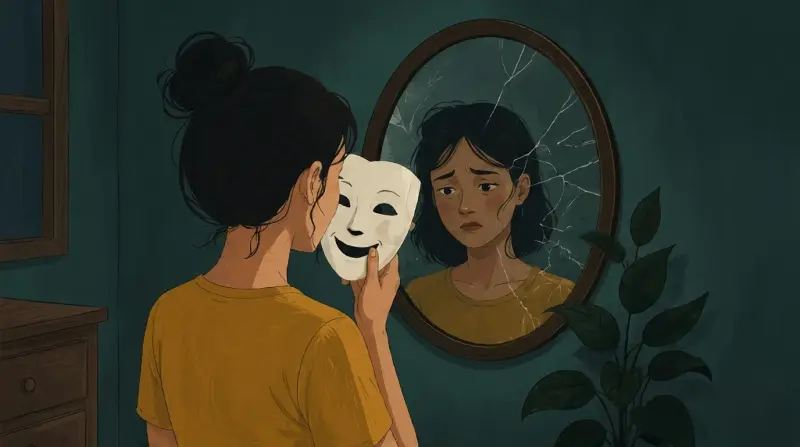
Discovering, or even suspecting, that you might be hurting the people you love is not a simple feeling; it can land on your heart in a painful, confusing, guilt-filled way. Many people ask themselves: Is the problem me? Specialists on Tatmeen notice that this question comes up often in sessions, and it is usually the starting point of a deep journey of awareness, not a final and harsh judgment on the self.
In this article, we are not going to stamp your forehead with “toxic person.” Instead, we will try to understand together: What is meant by toxic behavior? What signs may point to it? And how can you, with gentle and clear practical steps, gradually move from being a source of harm to a source of safety for yourself and those around you?
First: What Does It Mean to Be a Toxic Person?
The term “toxic person” has spread widely on social media, but in psychology it is not used as an official diagnosis. Rather, it is an expression for repeated behaviors that wound others, ignore their feelings, or drain their energy.
WebMD explains that a toxic person often behaves in a manipulative, critical, or belittling way toward others’ feelings, which leaves the people around them feeling tense and drained after interacting with them.
It is important to distinguish between:
I am a completely bad person → a harmful and inaccurate idea.
I have toxic behaviors that hurt the people I love → a realistic description, and one that can be changed gradually through learning and support.
The very fact that you are asking, “Am I a toxic person?” means your conscience is present, and that a part of you does not want to hurt anyone. That, in itself, is a point of strength, not weakness.
Signs That May Indicate My Behavior Is Hurting Those Around Me
1. I Always Justify Myself… and Do Not Take Responsibility for My Mistakes
If you find that in most conflicts you say, internally or out loud, “They are the problem, not me,” and you refuse to apologize or to see your part, this is a sign that needs attention. Toxic behavior often runs away from admitting fault, because being wrong feels threatening to the person, so they resort to defensiveness, attack, or flipping the table.
2. I Use Blame and Belittling as a Weapon
You may not shout, but you wound with small phrases like: “You always fail at the simplest things,” “You are too sensitive,” “No one can put up with you except me.”
These statements leave a deep mark on the other person, even if you say them jokingly or in a moment of anger. With repetition, the person in front of you begins to doubt their own worth and becomes afraid to speak honestly with you.
3. I Control the People Around Me in the Name of “Caring”
Sometimes we think we are loving, while in reality we are besieging.
Behaviors such as: intervening in every decision, checking the phone, having a harsh opinion about every friendship, threatening the other person with breaking up if they do not obey your orders… all of this may feel on the inside like “concern,” but from the outside it is experienced as suffocating control.
4. I Ignore Other People’s Feelings or Belittle Them
If the people around you are used to hearing responses from you like: “Grow up,” “This is trivial,” “You are exaggerating,” they may learn to hide their feelings from you, because they expect judgment from you, not holding and understanding. Ignoring others’ feelings is one of the common patterns of toxic behavior.
5. My Relationships Are Full of Conflicts and Cutoffs
If you look at the history of your relationships, do you notice a repeating pattern of:
Friendships that end suddenly with severe problems.
Ongoing estrangement from relatives.
Similar complaints from different partners?
Mental Health America points out that “toxic behavior” is a pattern that repeats across several relationships, not a single passing incident or reaction on a bad day. If you see this pattern in yourself, it may be time to stop blaming “everyone” and to look, with kindness and courage, at your own part.
Why Might I Behave in a Toxic Way Even Though I Love Them?
This is a sensitive point; many people who show toxic behaviors do not wake up in the morning planning to hurt others. Sometimes:
We may have grown up in an environment where shouting, criticism, or sarcasm were frequent, so we think this is a normal way of relating.
Or we find that control gives us a temporary sense of safety, because deep down we are afraid of abandonment or rejection.
Or we carry old wounds that we have not allowed ourselves to heal, so they turn into harsh defenses against anyone who comes close to us.
In the therapy sessions offered by specialists through Tatmeen , some clients discover that they are repeating with their children the same patterns they themselves suffered from in childhood—not because they are cruel by nature, but because they have not yet learned kinder and clearer alternatives.
How Do I Deal with It If I Realize I Have Toxic Behaviors?
1. Awareness Without Self-Flagellation
The most important step is to admit: “Yes, some of my behaviors hurt the people around me.”
But be careful: admitting this does not mean drowning in self-hatred or labeling yourself “I am a rotten person.” Instead, try to treat yourself as you would a friend who made a mistake and wants to change—with honesty, and at the same time with compassion. You can, for example, write a list of the behaviors you feel are hurting others, and next to each one write: How would I like to act next time?
2. Truly Listening to Others’ Feedback
If more than one person repeats a certain comment about you (for example: “Your criticism is hurtful,” “You do not give me space to talk”), try to see these comments as data rather than attacks. Ask someone you trust: “How do you feel when I deal with you? What things in my way of relating hurt you?” and listen without constant defensiveness.
3. Sincere Apology… With Behavioral Change
Apology is not just a word; it is the beginning of change. Saying, “I realize now that my way with you was hurtful. I am sorry, and I will try to be gentler,” and then genuinely trying to change, is far more important than saying, “Fine, don’t be upset,” without taking any responsibility.
4. Learning Communication Skills and Healthy Boundaries
A large part of toxic behavior is linked to not knowing how to:
Express my anger without insulting.
Say no without cruelty.
Ask for my needs without blackmail or blame.
Individual or family psychotherapy through Tatmeen helps greatly in building these skills in a practical way. It supports people in changing unhealthy behavior patterns and learning new ways of dealing with others and taking responsibility for their actions. In therapy sessions you can practice real-life conversations, explore the roots of your behavior, and learn how to set boundaries for yourself and others without losing the important relationships in your life.
You Are Not Toxic Forever
The question “Am I a toxic person?” is painful, but it is brave. It means you are willing to look at yourself honestly, and that you do not want to remain a source of harm to those you love. Remember that “toxicity” is not a fixed identity, but a set of behaviors that can be understood, deconstructed, and replaced with alternatives that are healthier and more compassionate.
You can start with a small step today: a moment of honesty with yourself, a calm conversation with someone you trust, or booking a session now with a trusted professional through Tatmeen so we can explore together: What do you want to change? And from what point can you start, without whipping yourself or losing hope in your ability to grow?
Frequently Asked Questions
Does admitting that I have toxic behaviors mean that I am a bad person?
No. Admitting it means that you are aware of your impact on others, and this is maturity, not condemnation. What is harmful is insisting on the hurtful behavior without trying to change it. You can love yourself and, at the same time, work on gradually adjusting your hurtful behaviors.
How do I distinguish between being straightforward and being hurtful?
Healthy honesty aims to solve the problem and is expressed respectfully, while hurtful “honesty” aims at control, devaluation, or venting at the expense of others’ feelings. Pay attention to your tone of voice, your choice of words, and the impact of your words after the conversation: Did you leave the other person broken or feeling understood?
What can I do if I feel that I am toxic but I do not know where to start?
Start with a simple step: observe yourself for a week and write down the situations in which you feel you were harsh or ignored the other person’s feelings. After that, you can share them with a mental health professional to help you understand the roots of these behaviors and put together a small, clear plan for change, step by step.
A writer and researcher specializing in psychiatry, she focuses on mental health and the human emotions we experience but cannot always find the words to name. She writes about us—about humanity and the human experience—and simplifies complex topics to offer content that helps us better understand ourselves and life, ultimately making us feel less alone.
Every Tatmeen article is reviewed by care providers licensed by the Saudi Commission for Health Specialties, so what you read is accurate and trustworthy.
This article builds understanding and does not replace a licensed care provider.
Need someone to talk to?
Tatmeen's licensed care providers are available around the clock, and the app's urgent consultation connects you with one within minutes.
Download Tatmeen to explore care providers and booking options.
Smart matchingFour quick questions suggest the right care provider
Urgent consultationTalk to an available care provider within minutes
Free psychological measuresMore than 20 tests to understand how you are doing
Scan to download
{"data":{"id":"08ebb8ef-be78-450f-81d3-86004c413b6b","slug":"am-i-toxic-signs-how-to-change","arTitle":"هل أنا شخصية سامة؟ علامات التسمّم العاطفي وكيف أبدأ التغيير","enTitle":"Am I a Toxic Person? Signs of Emotional Toxicity and How to Start Changing","thumbnailAltText":"Person holding a smiling mask before a cracked mirror, revealing a sad reflection behind it.","estimatedReadingTime":5,"likesCount":140,"writer":{"id":"3ab72b74-f26f-4337-9b47-3114b0f90de5","arBio":"كاتبة وباحثة متخصصة في مجال الطب النفسي، تهتم بموضوعات الصحة النفسية وبالمشاعر الإنسانية التي نختبرها ولا نجد دائمًا الكلمات لتسميتها. تكتب عنّا؛ عن الإنسان وتجربته، وتبسّط الموضوعات المعقّدة لتقدّم محتوى يساعدنا على فهم ذواتنا والحياة أكثر، ويجعلنا نشعر بأننا بوحدة أقل.","enBio":"A writer and researcher specializing in psychiatry, she focuses on mental health and the human emotions we experience but cannot always find the words to name. She writes about us—about humanity and the human experience—and simplifies complex topics to offer content that helps us better understand ourselves and life, ultimately making us feel less alone.","user":{"slug":"ayat-alnajar","arFullName":"آيات النجار","enFullName":"Ayat Al-Najjar","publicProfileImageUrl":"https://cdn.tatmeen.sa/public/profile-images/02384455-68fa-40b6-ad05-609fde65cafa/21b9a610dde5dfc6d37af110c23e9c7ab3946be080c281beb000debf4f7d31a6.webp","publicProfileImage96Url":"https://cdn.tatmeen.sa/public/profile-images/02384455-68fa-40b6-ad05-609fde65cafa/21b9a610dde5dfc6d37af110c23e9c7ab3946be080c281beb000debf4f7d31a6-w96.webp","publicProfileImage192Url":"https://cdn.tatmeen.sa/public/profile-images/02384455-68fa-40b6-ad05-609fde65cafa/21b9a610dde5dfc6d37af110c23e9c7ab3946be080c281beb000debf4f7d31a6-w192.webp"}},"arContent":"","enContent":"","productionDocument":{"headings":[{"id":"article-section-first-what-does-it-mean-to-be-a-toxic-person","text":"First: What Does It Mean to Be a Toxic Person?"},{"id":"article-section-signs-that-may-indicate-my-behavior-is-hurting-those-around-me","text":"Signs That May Indicate My Behavior Is Hurting Those Around Me"},{"id":"article-section-why-might-i-behave-in-a-toxic-way-even-though-i-love-them","text":"Why Might I Behave in a Toxic Way Even Though I Love Them?"},{"id":"article-section-how-do-i-deal-with-it-if-i-realize-i-have-toxic-behaviors","text":"How Do I Deal with It If I Realize I Have Toxic Behaviors?"},{"id":"article-section-you-are-not-toxic-forever","text":"You Are Not Toxic Forever"}],"faqs":[{"question":"Does admitting that I have toxic behaviors mean that I am a bad person?","answer":"<p><span style=\"color:#000000\">No. Admitting it means that you are aware of your impact on others, and this is maturity, not condemnation. What is harmful is insisting on the hurtful behavior without trying to change it. You can love yourself and, at the same time, work on gradually adjusting your hurtful behaviors.</span></p>"},{"question":"How do I distinguish between being straightforward and being hurtful?","answer":"<p><span style=\"color:#000000\">Healthy honesty aims to solve the problem and is expressed respectfully, while hurtful “honesty” aims at control, devaluation, or venting at the expense of others’ feelings. Pay attention to your tone of voice, your choice of words, and the impact of your words after the conversation: Did you leave the other person broken or feeling understood?</span></p>"},{"question":"What can I do if I feel that I am toxic but I do not know where to start?","answer":"<p><span style=\"color:#000000\">Start with a simple step: observe yourself for a week and write down the situations in which you feel you were harsh or ignored the other person’s feelings. After that, you can share them with a mental health professional to help you understand the roots of these behaviors and put together a small, clear plan for change, step by step.</span></p>"}],"beforeSourcesHtml":"<p></p>","sources":[],"afterSourcesHtml":"","blocks":[{"type":"html","html":"<p><span style=\"color:#000000\">Discovering, or even suspecting, that you might be hurting the people you love is not a simple feeling; it can land on your heart in a painful, confusing, guilt-filled way. Many people ask themselves: Is the problem me? Specialists on Tatmeen notice that this question comes up often in sessions, and it is usually the starting point of a deep journey of awareness, not a final and harsh judgment on the self.</span></p><p><span style=\"color:#000000\">In this article, we are not going to stamp your forehead with “toxic person.” Instead, we will try to understand together: What is meant by toxic behavior? What signs may point to it? And how can you, with gentle and clear practical steps, gradually move from being a source of harm to a source of safety for yourself and those around you?</span></p><h2 id=\"article-section-first-what-does-it-mean-to-be-a-toxic-person\" data-toc-heading tabindex=\"-1\"><span id=\"first-what-does-it-mean-to-be-a-toxic-person-1\" aria-hidden=\"true\"></span><span style=\"color:#000000\"><strong>First: What Does It Mean to Be a Toxic Person?</strong></span></h2><p><span style=\"color:#000000\">The term “toxic person” has spread widely on social media, but in psychology it is not used as an official diagnosis. Rather, it is an expression for repeated behaviors that wound others, ignore their feelings, or drain their energy.</span></p><p><a href=\"https://www.webmd.com/mental-health/signs-toxic-person\" target=\"_blank\" rel=\"nofollow noopener noreferrer\"><span style=\"color:#1155cc\"><u>WebMD</u></span></a><span style=\"color:#000000\"> explains that a toxic person often behaves in a manipulative, critical, or belittling way toward others’ feelings, which leaves the people around them feeling tense and drained after interacting with them.</span></p><p><span style=\"color:#000000\">It is important to distinguish between:</span></p><p><span style=\"color:#000000\">I am a completely bad person → a harmful and inaccurate idea.</span></p><p><span style=\"color:#000000\">I have toxic behaviors that hurt the people I love → a realistic description, and one that can be changed gradually through learning and support.</span></p><p><span style=\"color:#000000\">The very fact that you are asking, “Am I a toxic person?” means your conscience is present, and that a part of you does not want to hurt anyone. That, in itself, is a point of strength, not weakness.</span></p><h2 id=\"article-section-signs-that-may-indicate-my-behavior-is-hurting-those-around-me\" data-toc-heading tabindex=\"-1\"><span id=\"signs-that-may-indicate-my-behavior-is-hurting-those-around-me-2\" aria-hidden=\"true\"></span><span style=\"color:#000000\"><strong>Signs That May Indicate My Behavior Is Hurting Those Around Me</strong></span></h2><h3><span style=\"color:#000000\"><strong>1. I Always Justify Myself… and Do Not Take Responsibility for My Mistakes</strong></span></h3><p><span style=\"color:#000000\">If you find that in most conflicts you say, internally or out loud, “They are the problem, not me,” and you refuse to apologize or to see your part, this is a sign that needs attention. Toxic behavior often runs away from admitting fault, because being wrong feels threatening to the person, so they resort to defensiveness, attack, or flipping the table.</span></p><h3><span style=\"color:#000000\"><strong>2. I Use Blame and Belittling as a Weapon</strong></span></h3><p><span style=\"color:#000000\">You may not shout, but you wound with small phrases like:<br /> “You always fail at the simplest things,” “You are too sensitive,” “No one can put up with you except me.”</span></p><p><span style=\"color:#000000\">These statements leave a deep mark on the other person, even if you say them jokingly or in a moment of anger. With repetition, the person in front of you begins to doubt their own worth and becomes afraid to speak honestly with you.</span></p><h3><span style=\"color:#000000\"><strong>3. I Control the People Around Me in the Name of “Caring”</strong></span></h3><p><span style=\"color:#000000\">Sometimes we think we are loving, while in reality we are besieging.</span></p><p><span style=\"color:#000000\">Behaviors such as: intervening in every decision, checking the phone, having a harsh opinion about every friendship, threatening the other person with breaking up if they do not obey your orders… all of this may feel on the inside like “concern,” but from the outside it is experienced as suffocating control.</span></p><h3><span style=\"color:#000000\"><strong>4. I Ignore Other People’s Feelings or Belittle Them</strong></span></h3><p><span style=\"color:#000000\">If the people around you are used to hearing responses from you like: “Grow up,” “This is trivial,” “You are exaggerating,” they may learn to hide their feelings from you, because they expect judgment from you, not holding and understanding. Ignoring others’ feelings is one of the common patterns of toxic behavior.</span></p><h3><span style=\"color:#000000\"><strong>5. My Relationships Are Full of Conflicts and Cutoffs</strong></span></h3><p><span style=\"color:#000000\">If you look at the history of your relationships, do you notice a repeating pattern of:</span></p><ul><li><p><span style=\"color:#000000\">Friendships that end suddenly with severe problems.</span></p></li><li><p><span style=\"color:#000000\">Ongoing estrangement from relatives.</span></p></li><li><p><span style=\"color:#000000\">Similar complaints from different partners?</span></p></li></ul><p><a href=\"https://screening.mhanational.org/content/am-i-toxic/\" target=\"_blank\" rel=\"nofollow noopener noreferrer\"><span style=\"color:#1155cc\"><u>Mental Health America</u></span></a><span style=\"color:#000000\"> points out that “toxic behavior” is a pattern that repeats across several relationships, not a single passing incident or reaction on a bad day. If you see this pattern in yourself, it may be time to stop blaming “everyone” and to look, with kindness and courage, at your own part.</span></p><h2 id=\"article-section-why-might-i-behave-in-a-toxic-way-even-though-i-love-them\" data-toc-heading tabindex=\"-1\"><span id=\"why-might-i-behave-in-a-toxic-way-even-though-i-love-them-3\" aria-hidden=\"true\"></span><span style=\"color:#000000\"><strong>Why Might I Behave in a Toxic Way Even Though I Love Them?</strong></span></h2><p><span style=\"color:#000000\">This is a sensitive point; many people who show toxic behaviors do not wake up in the morning planning to hurt others. Sometimes:</span></p><ul><li><p><span style=\"color:#000000\">We may have grown up in an environment where shouting, criticism, or sarcasm were frequent, so we think this is a normal way of relating.</span></p></li><li><p><span style=\"color:#000000\">Or we find that control gives us a temporary sense of safety, because deep down we are afraid of abandonment or rejection.</span></p></li><li><p><span style=\"color:#000000\">Or we carry old wounds that we have not allowed ourselves to heal, so they turn into harsh defenses against anyone who comes close to us.</span></p></li></ul><p><span style=\"color:#000000\">In the therapy sessions offered by specialists through Tatmeen , some clients discover that they are repeating with their children the same patterns they themselves suffered from in childhood—not because they are cruel by nature, but because they have not yet learned kinder and clearer alternatives.</span></p><h2 id=\"article-section-how-do-i-deal-with-it-if-i-realize-i-have-toxic-behaviors\" data-toc-heading tabindex=\"-1\"><span id=\"how-do-i-deal-with-it-if-i-realize-i-have-toxic-behaviors-4\" aria-hidden=\"true\"></span><span style=\"color:#000000\"><strong>How Do I Deal with It If I Realize I Have Toxic Behaviors?</strong></span></h2><h3><span style=\"color:#000000\"><strong>1. Awareness Without Self-Flagellation</strong></span></h3><p><span style=\"color:#000000\">The most important step is to admit: “Yes, some of my behaviors hurt the people around me.”</span></p><p><span style=\"color:#000000\">But be careful: admitting this does not mean drowning in self-hatred or labeling yourself “I am a rotten person.” Instead, try to treat yourself as you would a friend who made a mistake and wants to change—with honesty, and at the same time with compassion. You can, for example, write a list of the behaviors you feel are hurting others, and next to each one write: How would I like to act next time?</span></p><h3><span style=\"color:#000000\"><strong>2. Truly Listening to Others’ Feedback</strong></span></h3><p><span style=\"color:#000000\">If more than one person repeats a certain comment about you (for example: “Your criticism is hurtful,” “You do not give me space to talk”), try to see these comments as data rather than attacks. Ask someone you trust: “How do you feel when I deal with you? What things in my way of relating hurt you?” and listen without constant defensiveness.</span></p><h3><span style=\"color:#000000\"><strong>3. Sincere Apology… With Behavioral Change</strong></span></h3><p><span style=\"color:#000000\">Apology is not just a word; it is the beginning of change. Saying, “I realize now that my way with you was hurtful. I am sorry, and I will try to be gentler,” and then genuinely trying to change, is far more important than saying, “Fine, don’t be upset,” without taking any responsibility.</span></p><h3><span style=\"color:#000000\"><strong>4. Learning Communication Skills and Healthy Boundaries</strong></span></h3><p><span style=\"color:#000000\">A large part of toxic behavior is linked to not knowing how to:</span></p><ul><li><p><span style=\"color:#000000\">Express my anger without insulting.</span></p></li><li><p><span style=\"color:#000000\">Say no without cruelty.</span></p></li><li><p><span style=\"color:#000000\">Ask for my needs without blackmail or blame.</span></p></li></ul><p><span style=\"color:#000000\">Individual or family psychotherapy through Tatmeen helps greatly in building these skills in a practical way. It supports people in changing unhealthy behavior patterns and learning new ways of dealing with others and taking responsibility for their actions. In therapy sessions you can practice real-life conversations, explore the roots of your behavior, and learn how to set boundaries for yourself and others without losing the important relationships in your life.</span></p><h2 id=\"article-section-you-are-not-toxic-forever\" data-toc-heading tabindex=\"-1\"><span id=\"you-are-not-toxic-forever-5\" aria-hidden=\"true\"></span><span style=\"color:#000000\"><strong>You Are Not Toxic Forever</strong></span></h2><p><span style=\"color:#000000\">The question “Am I a toxic person?” is painful, but it is brave. It means you are willing to look at yourself honestly, and that you do not want to remain a source of harm to those you love. Remember that “toxicity” is not a fixed identity, but a set of behaviors that can be understood, deconstructed, and replaced with alternatives that are healthier and more compassionate.</span></p><p><span style=\"color:#000000\">You can start with a small step today: a moment of honesty with yourself, a calm conversation with someone you trust, or <u>booking a session now</u> with a trusted professional through Tatmeen so we can explore together: What do you want to change? And from what point can you start, without whipping yourself or losing hope in your ability to grow?</span></p>"}],"inlineCtaSignatures":[],"_experienceAliases":{"v":1,"fields":["html","bodyHtml"],"faqs":[0,1,2]}},"createdAt":"2026-06-05T21:00:00.000Z","updatedAt":"2026-06-24T23:49:39.079Z","disorderGroups":[{"id":"01b1a587-3584-435b-971a-c40ffce29802","slug":"family-and-marital-relations","arName":"العلاقات الأسرية والزوجية","enName":"Family & Marital Relations"},{"id":"d807ea69-44d4-4e81-bee4-0a059fd36645","slug":"self-development","arName":"تنمية الذات","enName":"Self-Development"}],"reviewer":{"arFullName":"فريق تطمين","enFullName":"Tatmeen team","slug":"tatmeen-team","kind":"organization"},"productionArticle":true,"promotionAllowed":true,"preparedCover":{"src":"https://cdn.tatmeen.sa/public/article-lcp/article-lcp-v2/sha256-f1601faf9e0385e469c9650738a43329a32b5ee44c4352db089af5ecc11f0bcb/800-526464fbc6172b5f515f17eed768b014d3dc9e699c81fb74cfc66c85fb971185.avif","fallback":"https://cdn.tatmeen.sa/public/article-lcp/article-lcp-v2/sha256-f1601faf9e0385e469c9650738a43329a32b5ee44c4352db089af5ecc11f0bcb/800-4cc209d8d05759bf193b1a148e4f4af857f75b302e429e8c4f429afa84596832.webp","directUrl":"https://cdn.tatmeen.sa/blog-cover/Tatmeen-1780758597248.webp","isGolden":true,"avifSrcset":"https://cdn.tatmeen.sa/public/article-lcp/article-lcp-v2/sha256-f1601faf9e0385e469c9650738a43329a32b5ee44c4352db089af5ecc11f0bcb/400-87ab3b3f8b267a37ea528a7ec1b644717d0c1ac19f9bdb4e433453f4f94c18c1.avif 400w, https://cdn.tatmeen.sa/public/article-lcp/article-lcp-v2/sha256-f1601faf9e0385e469c9650738a43329a32b5ee44c4352db089af5ecc11f0bcb/640-391de2e1334231b42e7e3beaac5e087815cc6bdb49b15d4dffee2b14d2a8bc08.avif 640w, https://cdn.tatmeen.sa/public/article-lcp/article-lcp-v2/sha256-f1601faf9e0385e469c9650738a43329a32b5ee44c4352db089af5ecc11f0bcb/800-526464fbc6172b5f515f17eed768b014d3dc9e699c81fb74cfc66c85fb971185.avif 800w, https://cdn.tatmeen.sa/public/article-lcp/article-lcp-v2/sha256-f1601faf9e0385e469c9650738a43329a32b5ee44c4352db089af5ecc11f0bcb/1200-fc97334c8aa1d08ee2ccb838591f7a619dfd221743ee6970b754e8d43ffb7064.avif 1200w","webpSrcset":"https://cdn.tatmeen.sa/public/article-lcp/article-lcp-v2/sha256-f1601faf9e0385e469c9650738a43329a32b5ee44c4352db089af5ecc11f0bcb/400-dca6f82cb0804510177e7521c69e0a7d0e49923a5bd8baadb5590ad17c16f71b.webp 400w, https://cdn.tatmeen.sa/public/article-lcp/article-lcp-v2/sha256-f1601faf9e0385e469c9650738a43329a32b5ee44c4352db089af5ecc11f0bcb/640-e11317c1dfdaecd4dfb28342a91cdceb11765c3172d1a3b6340c2e9424842ef7.webp 640w, https://cdn.tatmeen.sa/public/article-lcp/article-lcp-v2/sha256-f1601faf9e0385e469c9650738a43329a32b5ee44c4352db089af5ecc11f0bcb/800-4cc209d8d05759bf193b1a148e4f4af857f75b302e429e8c4f429afa84596832.webp 800w, https://cdn.tatmeen.sa/public/article-lcp/article-lcp-v2/sha256-f1601faf9e0385e469c9650738a43329a32b5ee44c4352db089af5ecc11f0bcb/1200-334c3f61f54f5e98dd56730887686f73bcb1eddffff4b57f55c8a021a744993a.webp 1200w","phoneAvifSrcset":"https://cdn.tatmeen.sa/public/article-lcp/article-lcp-v2/sha256-f1601faf9e0385e469c9650738a43329a32b5ee44c4352db089af5ecc11f0bcb/400-87ab3b3f8b267a37ea528a7ec1b644717d0c1ac19f9bdb4e433453f4f94c18c1.avif 400w, https://cdn.tatmeen.sa/public/article-lcp/article-lcp-v2/sha256-f1601faf9e0385e469c9650738a43329a32b5ee44c4352db089af5ecc11f0bcb/640-391de2e1334231b42e7e3beaac5e087815cc6bdb49b15d4dffee2b14d2a8bc08.avif 640w, https://cdn.tatmeen.sa/public/article-lcp/article-lcp-v2/sha256-f1601faf9e0385e469c9650738a43329a32b5ee44c4352db089af5ecc11f0bcb/800-526464fbc6172b5f515f17eed768b014d3dc9e699c81fb74cfc66c85fb971185.avif 800w","phoneWebpSrcset":"https://cdn.tatmeen.sa/public/article-lcp/article-lcp-v2/sha256-f1601faf9e0385e469c9650738a43329a32b5ee44c4352db089af5ecc11f0bcb/400-dca6f82cb0804510177e7521c69e0a7d0e49923a5bd8baadb5590ad17c16f71b.webp 400w, https://cdn.tatmeen.sa/public/article-lcp/article-lcp-v2/sha256-f1601faf9e0385e469c9650738a43329a32b5ee44c4352db089af5ecc11f0bcb/640-e11317c1dfdaecd4dfb28342a91cdceb11765c3172d1a3b6340c2e9424842ef7.webp 640w, https://cdn.tatmeen.sa/public/article-lcp/article-lcp-v2/sha256-f1601faf9e0385e469c9650738a43329a32b5ee44c4352db089af5ecc11f0bcb/800-4cc209d8d05759bf193b1a148e4f4af857f75b302e429e8c4f429afa84596832.webp 800w","width":800,"height":447},"previewTaxonomy":{"groups":[{"id":"01b1a587-3584-435b-971a-c40ffce29802","slug":"family-and-marital-relations","arName":"العلاقات الأسرية والزوجية","enName":"Family & Marital Relations"},{"id":"d807ea69-44d4-4e81-bee4-0a059fd36645","slug":"self-development","arName":"تنمية الذات","enName":"Self-Development"}],"topics":[{"id":"eb4252aa-fb67-4971-a563-954a8176f44c","slug":"communication-skills","arName":"مهارات التواصل","enName":"Communication Skills","groupSlug":"self-development","href":"/blog/category/self-development/communication-skills/"},{"id":"79c48ff5-92b2-42da-ac64-c6ef33d5b74e","slug":"toxic-relationships","arName":"علاقات سامة","enName":"Toxic Relationships","groupSlug":"family-and-marital-relations","href":"/blog/category/family-and-marital-relations/toxic-relationships/"},{"id":"785d9b22-1cd8-4f1a-a300-5170c1348b2f","slug":"setting-boundaries","arName":"وضع حدود شخصية","enName":"Setting Boundaries","groupSlug":"self-development","href":"/blog/category/self-development/setting-boundaries/"},{"id":"7795b6e4-e390-47a5-baf0-09243b44e066","slug":"self-compassion","arName":"تعاطف مع الذات","enName":"Self-Compassion","groupSlug":"self-development","href":"/blog/category/self-development/self-compassion/"}],"tags":[{"id":"2faf13b8-07d4-40ee-89b2-ae2c507a580a","slug":"toxic-relationships-manipulation","arName":"العلاقات السامة والتلاعب النفسي","enName":"Toxic Relationships & Manipulation"},{"id":"ed48558e-5694-415a-9234-3044a5c29fe5","slug":"cognitive-patterns","arName":"الأنماط الذهنية والتشوهات الإدراكية","enName":"Thinking Patterns & Distortions"},{"id":"475c9ee4-379d-436c-93ab-4c63916e7197","slug":"self-assessment","arName":"تقييم ذاتي","enName":"Self-Assessment"}]},"previewProviderRecommendations":[{"id":"025d770d-f6d4-405b-be1c-d45dde63fbf7","slug":"akila-alomran-7545","arFullName":"عقيله العمران","enFullName":"Akila Alomran","publicProfileImageUrl":"https://cdn.tatmeen.sa/public/profile-images/025d770d-f6d4-405b-be1c-d45dde63fbf7/44a990b9294f02c9810c69a68b8913a6afac0eb30d1b7494155f31b6dde9378b.webp","publicProfileImage96Url":"https://cdn.tatmeen.sa/public/profile-images/025d770d-f6d4-405b-be1c-d45dde63fbf7/44a990b9294f02c9810c69a68b8913a6afac0eb30d1b7494155f31b6dde9378b-w96.webp","publicProfileImage192Url":"https://cdn.tatmeen.sa/public/profile-images/025d770d-f6d4-405b-be1c-d45dde63fbf7/44a990b9294f02c9810c69a68b8913a6afac0eb30d1b7494155f31b6dde9378b-w192.webp","specialization":{"arName":"أخصائي نفسي","enName":"Psychologist"},"profileImageUrl":"https://cdn.tatmeen.sa/public/profile-images/025d770d-f6d4-405b-be1c-d45dde63fbf7/44a990b9294f02c9810c69a68b8913a6afac0eb30d1b7494155f31b6dde9378b-w192.webp","experienceYears":3,"consultantInfo":{"averageRating":{"average":5},"specialization":{"arGeneralName":"أخصائي نفسي","enGeneralName":"Psychologist"}}},{"id":"94765496-dbdf-4631-a01b-7df5f788668d","slug":"abdullrahman-alhamoudi-3045","arFullName":"عبدالرحمن الحمودي","enFullName":"Abdulrahman Alhamoudi","publicProfileImageUrl":"https://cdn.tatmeen.sa/public/profile-images/94765496-dbdf-4631-a01b-7df5f788668d/2d49f6b6493c564afb6f50b6c3634231dff3a5cf8353acfab393d1b2a88037d1.webp","publicProfileImage96Url":"https://cdn.tatmeen.sa/public/profile-images/94765496-dbdf-4631-a01b-7df5f788668d/2d49f6b6493c564afb6f50b6c3634231dff3a5cf8353acfab393d1b2a88037d1-w96.webp","publicProfileImage192Url":"https://cdn.tatmeen.sa/public/profile-images/94765496-dbdf-4631-a01b-7df5f788668d/2d49f6b6493c564afb6f50b6c3634231dff3a5cf8353acfab393d1b2a88037d1-w192.webp","specialization":{"arName":"أخصائي نفسي","enName":"Psychologist"},"profileImageUrl":"https://cdn.tatmeen.sa/public/profile-images/94765496-dbdf-4631-a01b-7df5f788668d/2d49f6b6493c564afb6f50b6c3634231dff3a5cf8353acfab393d1b2a88037d1-w192.webp","experienceYears":9,"consultantInfo":{"averageRating":{"average":5},"specialization":{"arGeneralName":"أخصائي نفسي","enGeneralName":"Psychologist"}}},{"id":"09364052-c2a9-4c52-9717-7ce2093b8d0a","slug":"kholoud-alharbi-5221","arFullName":"خلود الحربي","enFullName":"Kholoud Alharbi","publicProfileImageUrl":"https://cdn.tatmeen.sa/public/profile-images/09364052-c2a9-4c52-9717-7ce2093b8d0a/4a0aeb81619e351b77f4323e3605a0a00acc7ca3c82ee7cc5ca2c9e8ef716049.webp","publicProfileImage96Url":"https://cdn.tatmeen.sa/public/profile-images/09364052-c2a9-4c52-9717-7ce2093b8d0a/4a0aeb81619e351b77f4323e3605a0a00acc7ca3c82ee7cc5ca2c9e8ef716049-w96.webp","publicProfileImage192Url":"https://cdn.tatmeen.sa/public/profile-images/09364052-c2a9-4c52-9717-7ce2093b8d0a/4a0aeb81619e351b77f4323e3605a0a00acc7ca3c82ee7cc5ca2c9e8ef716049-w192.webp","specialization":{"arName":"أخصائي نفسي","enName":"Psychologist"},"profileImageUrl":"https://cdn.tatmeen.sa/public/profile-images/09364052-c2a9-4c52-9717-7ce2093b8d0a/4a0aeb81619e351b77f4323e3605a0a00acc7ca3c82ee7cc5ca2c9e8ef716049-w192.webp","experienceYears":10,"consultantInfo":{"averageRating":{"average":5},"specialization":{"arGeneralName":"أخصائي نفسي","enGeneralName":"Psychologist"}}}],"previewCareProviders":[{"id":"09364052-c2a9-4c52-9717-7ce2093b8d0a","slug":"kholoud-alharbi-5221","arFullName":"خلود الحربي","enFullName":"Kholoud Alharbi","publicProfileImageUrl":"https://cdn.tatmeen.sa/public/profile-images/09364052-c2a9-4c52-9717-7ce2093b8d0a/4a0aeb81619e351b77f4323e3605a0a00acc7ca3c82ee7cc5ca2c9e8ef716049.webp","publicProfileImage96Url":"https://cdn.tatmeen.sa/public/profile-images/09364052-c2a9-4c52-9717-7ce2093b8d0a/4a0aeb81619e351b77f4323e3605a0a00acc7ca3c82ee7cc5ca2c9e8ef716049-w96.webp","publicProfileImage192Url":"https://cdn.tatmeen.sa/public/profile-images/09364052-c2a9-4c52-9717-7ce2093b8d0a/4a0aeb81619e351b77f4323e3605a0a00acc7ca3c82ee7cc5ca2c9e8ef716049-w192.webp","gender":"FEMALE","specialization":{"arName":"أخصائي نفسي","enName":"Psychologist"}},{"id":"6f037535-1dca-4b50-a8b2-5974b7323286","slug":"salah-althobaiti-9053","arFullName":"صلاح الثبيتي","enFullName":"Salah Althobaiti","publicProfileImageUrl":"https://cdn.tatmeen.sa/public/profile-images/6f037535-1dca-4b50-a8b2-5974b7323286/35b6bd7fad9b1e004c1835803eb9c1b56dcacd380685ec8bff141f0fb888005c.webp","publicProfileImage96Url":"https://cdn.tatmeen.sa/public/profile-images/6f037535-1dca-4b50-a8b2-5974b7323286/35b6bd7fad9b1e004c1835803eb9c1b56dcacd380685ec8bff141f0fb888005c-w96.webp","publicProfileImage192Url":"https://cdn.tatmeen.sa/public/profile-images/6f037535-1dca-4b50-a8b2-5974b7323286/35b6bd7fad9b1e004c1835803eb9c1b56dcacd380685ec8bff141f0fb888005c-w192.webp","gender":"MALE","specialization":{"arName":"أخصائي نفسي","enName":"Psychologist"}},{"id":"3cc806e8-616b-4884-9f21-a75b378580a2","slug":"aisha-al-hashim-8667","arFullName":"عائشة ال هاشم","enFullName":"Aisha Al Hashim","publicProfileImageUrl":"https://cdn.tatmeen.sa/public/profile-images/3cc806e8-616b-4884-9f21-a75b378580a2/27f523d03be4dcfa1f6a79f70c1773887434e698990d214cd990caec56a44798.webp","publicProfileImage96Url":"https://cdn.tatmeen.sa/public/profile-images/3cc806e8-616b-4884-9f21-a75b378580a2/27f523d03be4dcfa1f6a79f70c1773887434e698990d214cd990caec56a44798-w96.webp","publicProfileImage192Url":"https://cdn.tatmeen.sa/public/profile-images/3cc806e8-616b-4884-9f21-a75b378580a2/27f523d03be4dcfa1f6a79f70c1773887434e698990d214cd990caec56a44798-w192.webp","gender":"FEMALE","specialization":{"arName":"أخصائي نفسي","enName":"Psychologist"}},{"id":"db2ce1a0-9325-4471-b7ce-eb2e811c30a3","slug":"amer-qutub-2441","arFullName":"عامر قطب","enFullName":"Amer Qutub","publicProfileImageUrl":"https://cdn.tatmeen.sa/public/profile-images/db2ce1a0-9325-4471-b7ce-eb2e811c30a3/80580f99bfd7fe2b2a9cf8eed73ab532f5086d1efe053b0aa57358c1ce004261.webp","publicProfileImage96Url":"https://cdn.tatmeen.sa/public/profile-images/db2ce1a0-9325-4471-b7ce-eb2e811c30a3/80580f99bfd7fe2b2a9cf8eed73ab532f5086d1efe053b0aa57358c1ce004261-w96.webp","publicProfileImage192Url":"https://cdn.tatmeen.sa/public/profile-images/db2ce1a0-9325-4471-b7ce-eb2e811c30a3/80580f99bfd7fe2b2a9cf8eed73ab532f5086d1efe053b0aa57358c1ce004261-w192.webp","gender":"MALE","specialization":{"arName":"أخصائي نفسي","enName":"Psychologist"}},{"id":"94765496-dbdf-4631-a01b-7df5f788668d","slug":"abdullrahman-alhamoudi-3045","arFullName":"عبدالرحمن الحمودي","enFullName":"Abdulrahman Alhamoudi","publicProfileImageUrl":"https://cdn.tatmeen.sa/public/profile-images/94765496-dbdf-4631-a01b-7df5f788668d/2d49f6b6493c564afb6f50b6c3634231dff3a5cf8353acfab393d1b2a88037d1.webp","publicProfileImage96Url":"https://cdn.tatmeen.sa/public/profile-images/94765496-dbdf-4631-a01b-7df5f788668d/2d49f6b6493c564afb6f50b6c3634231dff3a5cf8353acfab393d1b2a88037d1-w96.webp","publicProfileImage192Url":"https://cdn.tatmeen.sa/public/profile-images/94765496-dbdf-4631-a01b-7df5f788668d/2d49f6b6493c564afb6f50b6c3634231dff3a5cf8353acfab393d1b2a88037d1-w192.webp","gender":"MALE","specialization":{"arName":"أخصائي نفسي","enName":"Psychologist"}},{"id":"618dba89-5b70-4b46-8304-741b7ac8ecd3","slug":"abdullah-mari-1311","arFullName":"عبدالله مرعي","enFullName":"Abdullah Mari","publicProfileImageUrl":"https://cdn.tatmeen.sa/public/profile-images/618dba89-5b70-4b46-8304-741b7ac8ecd3/6b4a3bfb59f8a304ca79083b32859b46baad2e1d692974a47c02c1f66bd11129.webp","publicProfileImage96Url":"https://cdn.tatmeen.sa/public/profile-images/618dba89-5b70-4b46-8304-741b7ac8ecd3/6b4a3bfb59f8a304ca79083b32859b46baad2e1d692974a47c02c1f66bd11129-w96.webp","publicProfileImage192Url":"https://cdn.tatmeen.sa/public/profile-images/618dba89-5b70-4b46-8304-741b7ac8ecd3/6b4a3bfb59f8a304ca79083b32859b46baad2e1d692974a47c02c1f66bd11129-w192.webp","gender":"MALE","specialization":{"arName":"أخصائي نفسي","enName":"Psychologist"}},{"id":"3b50a5d5-e795-407f-8676-fd7f0e1bb7a0","slug":"abdulaziz-bin-hudayan-4940","arFullName":"عبدالعزيز بن هديان","enFullName":"Abdulaziz Bin Hudayan","publicProfileImageUrl":"https://cdn.tatmeen.sa/public/profile-images/3b50a5d5-e795-407f-8676-fd7f0e1bb7a0/710ff0fe1fb00cdb5042092e27b7910b480a439b02251ecded62d7758eefce95.webp","publicProfileImage96Url":"https://cdn.tatmeen.sa/public/profile-images/3b50a5d5-e795-407f-8676-fd7f0e1bb7a0/710ff0fe1fb00cdb5042092e27b7910b480a439b02251ecded62d7758eefce95-w96.webp","publicProfileImage192Url":"https://cdn.tatmeen.sa/public/profile-images/3b50a5d5-e795-407f-8676-fd7f0e1bb7a0/710ff0fe1fb00cdb5042092e27b7910b480a439b02251ecded62d7758eefce95-w192.webp","gender":"MALE","specialization":{"arName":"أخصائي نفسي","enName":"Psychologist"}}],"previewDownload":{"href":"/download","title":{"ar":"خطوة واحدة لأجلك، ابدأ الآن","en":"One step for you, start now"},"description":{"ar":"حمّل تطبيق تطمين لاستكشاف مقدمي الرعاية وخيارات الحجز.","en":"Download Tatmeen to explore care providers and booking options."},"posterSrc":"/images/home/cta-ar-new-1.webp","videoSrc":"/images/home/cta-ar-new-1.mp4","videoPosterSrc":"/images/home/cta-ar-new-1.webp","videoPosterEnSrc":"/images/home/cta-en-new-1.webp","videoType":"video/mp4","appStoreHref":"https://apps.apple.com/us/app/tatmeen-%D8%AA%D8%B7%D9%85%D9%8A%D9%86/id6473836983","googlePlayHref":"https://play.google.com/store/apps/details?id=com.TatmeenApp.user&hl=en"},"previewRelatedArticles":[{"id":"fa60bac3-eb6b-45ad-a619-27bbcd75a5bb","slug":"toxic-relationships-impact-on-self-esteem","route":"/blog/toxic-relationships-impact-on-self-esteem/","title":{"ar":"تأثير العلاقات السامة على تقدير الذات","en":"The Impact of Toxic Relationships on Self-Esteem"},"image":"https://cdn.tatmeen.sa/public/article-lcp/article-lcp-v2/sha256-8ec6417486e87cada36e9bf7377925083183a7cf9bf10cf13559413505fe3ce2/800-247e7807232ec2f2a0233670e0c32de43d84f5fc9e61b71d52be1a89e0d29460.webp","directImageFallback":"https://cdn.tatmeen.sa/blog-cover/Tatmeen-1778437207308.webp","arThumbnailAltText":"a person sitting on the floor heartbroken from a toxic relationship","thumbnailAltText":"a person sitting on the floor heartbroken from a toxic relationship","topic":{"label":{"ar":"العلاقات الأسرية والزوجية","en":"Family & Marital Relations"}},"readingTimeMinutes":5},{"id":"caf135dd-0eff-4508-9057-5fdea0d3dc11","slug":"trauma-bonding-why-return-narcissist-pain","route":"/blog/trauma-bonding-why-return-narcissist-pain/","title":{"ar":"رابطة الصدمة: لماذا نعود للنرجسي رغم الألم؟","en":"Trauma Bonding: Why Do We Go Back to a Narcissist Despite the Pain?"},"image":"https://cdn.tatmeen.sa/public/article-lcp/article-lcp-v2/sha256-3619b64285c6230d767e934dfc596d84dae65511c83b36afe504edefa5fae6cf/800-5e9a840971dc57f6168cbf9a33df976af219e2f80db65b3fd3fc556410ee3d3b.webp","directImageFallback":"https://cdn.tatmeen.sa/blog-cover/Tatmeen-1778339385951.webp","arThumbnailAltText":"Person walking away from a narcissistic partner but a heart shaped thread holding him back","thumbnailAltText":"Person walking away from a narcissistic partner but a heart shaped thread holding him back","topic":{"label":{"ar":"العلاقات الأسرية والزوجية","en":"Family & Marital Relations"}},"readingTimeMinutes":5},{"id":"55b54743-9a68-4bfe-8c8f-2fbde160f918","slug":"childhood-abuse-survivors-toxic-relationships-pattern","route":"/blog/childhood-abuse-survivors-toxic-relationships-pattern/","title":{"ar":"لماذا يختار ضحايا إساءة الطفولة علاقات مؤذية في كثير من الأحيان؟","en":"Why Do Childhood Abuse Survivors Often Choose Harmful Relationships?"},"image":"https://cdn.tatmeen.sa/public/article-lcp/article-lcp-v2/sha256-26da8153a89ed73fe459e4c2277bbb4317c43464609827b333d9dcb876b9c36e/800-85648cbb9c0a40418d6016eea094945189cb271836980d2e391943f4b326e94e.webp","directImageFallback":"https://cdn.tatmeen.sa/blog-cover/Tatmeen-1777644309450.webp","arThumbnailAltText":"Person suffering from relationship complications reflecting on her childhood abuse","thumbnailAltText":"Person suffering from relationship complications reflecting on her childhood abuse","topic":{"label":{"ar":"اضطرابات نفسية شائعة","en":"Common Mental Issues"}},"readingTimeMinutes":5},{"id":"ef6a5ab8-c16e-455f-a4b4-ff9e7bafe62a","slug":"gaslighting-doubt-your-reality","route":"/blog/gaslighting-doubt-your-reality/","title":{"ar":"التلاعب النفسي حين يجعلك الآخر تشك في واقعك","en":"Gaslighting: When Someone Makes You Doubt Your Own Reality"},"image":"https://cdn.tatmeen.sa/public/article-lcp/article-lcp-v2/sha256-4315f09316c941614ae3e34b2bd65384038ff6811999e6c2e7f58f894d011dc9/800-b4fa53a191a652859ee38efc0f0d47cf9d06c2ec214b89b71cffae5a1f69edb5.webp","directImageFallback":"https://cdn.tatmeen.sa/blog-cover/Tatmeen-1778867993813.webp","arThumbnailAltText":"Person looking confused in a room with slightly distorted and tilted surroundings","thumbnailAltText":"Person looking confused in a room with slightly distorted and tilted surroundings","topic":{"label":{"ar":"العلاقات الأسرية والزوجية","en":"Family & Marital Relations"}},"readingTimeMinutes":5}],"previewRelatedReadStates":{}},"locale":"en","device":"desktop","path":"/en/blog/am-i-toxic-signs-how-to-change/","readingControls":false,"config":{"public":{"BUCKET_URL":"https://cdn.tatmeen.sa/","APP_BASE_URL":"https://tatmeen.sa","intercomAppId":"ppcnu9e3"}}}