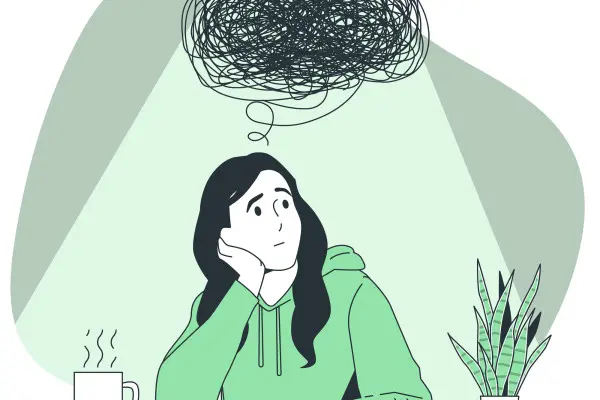
Overthinking is defined as excessively analyzing, questioning, or dwelling on a particular idea, situation, or problem. It involves repeatedly turning the same thoughts and scenarios over in the mind, which in some cases leads to a bout of negativity and panic. People who overthink usually tend to focus on problems, outcomes, or potential mistakes, which may leave them feeling anxious and tense and unable to make decisions. Here are some key points related to overthinking:
Negative bias:People who overthink often tend toward pessimism or focus on thenegative aspects, which can increase the likelihood of feeling panicked and make situations seem more dangerous or complicated than they really are.
Analysis paralysis: Overthinking may lead to analysis paralysis, in which a person feels overwhelmed by the number of choices or possibilities and becomes unable to make a decision or resolve a problem.
Impact on mental health:Overthinking can significantly affect mental health and may contribute to conditions such asanxiety and stressand evendepression. It should therefore not be taken lightly, and help should be sought from amental health professional if it becomes generally distressing.
Overthinking in Psychology
In psychology, overthinking is a cognitive process characterized by excessive, repetitive thinking about a topic, issue, or problem until it becomes compulsive and beyond the person's control. It often involves analyzing and scrutinizing thoughts, events, or situations to an unhealthy degree and/or without producing positive results. It can also be associated with various psychological phenomena and conditions, such as anxiety, rumination, and perfectionism, as well as attentional control theory and cognitive behavioral theory:
Anxiety: Overthinking is closely linked to anxiety. People experiencing anxiety may engage in overthinking as a defense mechanism that helps them anticipate and prepare for potential dangers or negative outcomes. Conversely, overthinking can also worsen anxiety symptoms and prolong them.
Rumination: Overthinking often involves ruminating on negative thoughts, feelings, or experiences—that is, focusing on them repeatedly and excessively. Rumination is usually more focused on the past, as a person becomes trapped in memories of past events and tries to analyze or understand them. This can intensify feelings of sadness, regret, and self-criticism.
Perfectionism: It is not surprising that overthinking is associated with perfectionism, a personality trait characterized by setting extremely high standards for oneself and striving for perfection. People who overthink may constantly evaluate their actions, choices, or performance in an attempt to avoid mistakes or failure, which can lead to a vicious cycle of excessive analysis and self-doubt.
Attentional control theory: According to attentional control theory, overthinking may be associated with difficulties regulating attention. Overthinking may be part of a person's efforts to shift focus away from intrusive or negative thoughts, causing them instead to become preoccupied with analyzing and evaluating those thoughts.
Cognitive behavioral theory: Overthinking is consistent with cognitive behavioral theory, which suggests that our thoughts can influence our emotions and behavior. People who overthink often have cognitive distortions, such as catastrophizing or overgeneralization. These distorted thinking patterns, in turn, contribute to stronger negative feelings and reinforce the habit of overthinking.
Regarding the last point, psychiatrists often use cognitive behavioral therapy (CBT) to help people who struggle with overthinking. This therapy aims to identify and challenge negative thinking patterns, develop more adaptive ways of thinking, and create effective strategies for managing anxiety and rumination.
Understanding the psychological aspects of overthinking can help identify and address the underlying factors contributing to this thinking pattern. By working with aspecialist psychiatrist, a person can learn how to manage overthinking and improve their mental health overall.
Can Overthinking Lead to Insanity?
Overthinking does not in itself cause insanity. It can certainly contribute to feelings of stress, anxiety, and confusion, but it does not drive a person insane or cause mental illness in the traditional sense. Mental illnesses, such as schizophrenia or bipolar disorder, have complex causes involving a combination of genetic, biological, environmental, and psychological factors. Overthinking alone is not a direct cause of these conditions.
However, it is worth noting that prolonged overthinking may negatively affect mental health. It can contribute to the development or worsening of anxiety disorders, such as generalized anxiety disorder orobsessive-compulsive disorder, and may also lead to physical problems such as sleep disturbances and difficulty concentrating.
If you or someone you know is struggling with overthinking or any other mental health concerns, it is wise to seek professional help from a mental health care provider. They can provide an accurate diagnosis, identify suitable treatment options, and offer support for managing overthinking and related symptoms.
Causes of Overthinking
The causes of overthinking vary from one person to another, but they are often the result of a combination of internal and external factors. Here are some common causes of overthinking:
Anxiety: Overthinking is often associated with anxiety. The more prone a person is to anxiety, the more likely they are to overthink as a defense mechanism, as mentioned above.
Perfectionism: Perfectionistic tendencies can lead to overthinking, as the need to achieve perfection, look for flaws, or avoid making mistakes may cause people to analyze and evaluate their thoughts, decisions, and actions excessively.
Low self-confidence: Low self-esteem and a lack of self-confidence can play a role in the development of overthinking. Seeking reassurance while experiencing self-doubt may result in excessive analysis and rumination, which are common traits among people who overthink.
An overactive mind: Some people naturally have a very active or busy mind. Their thoughts quickly shift from one topic to another, making it difficult to calm the mind and break free from patterns of overthinking.
Environmental factors:Environmental factors, such as high-pressure workplaces,toxic relationships, constant exposure to negative news, or excessive use of social media, can contribute to overthinking by creating a continuous stream of stressors and information that demand analysis.
Stress: Stressful life events, such as major transitions, conflicts, or difficult circumstances, may lead to overthinking. Stressful situations can also increase the need for control, which may manifest as excessive thinking.
Past events: Past experiences, especially negative or painful ones, can fuel a person's urge to overthink. If someone has experienced trauma, failure, rejection, or other painful events, they may tend to overthink in an attempt to prevent these things from happening in the future.
Cognitive habits: Overthinking can become a harmful habit. If a person develops a pattern of overthinking over time, it may become an automatic response to different situations, even when it is no longer needed.
Symptoms of Overthinking
The signs and symptoms of overthinking vary from one person to another, but here are some common indicators that a person may be struggling with it:
Persistent or intrusive thoughts: People who overthink often have a constant stream of thoughts running through their minds. These thoughts can be persistent and difficult to control, and may center on a particular problem, a concern, or even simple everyday tasks.
Excessive analysis and rumination: People who overthink tend to analyze situations, decisions, or conversations continuously, often replaying them in their minds again and again in a process resembling rumination. They may also dwell at length on what happened in the past or anticipate future scenarios, trying to find solutions or meaning in every tedious detail.
Difficulty making decisions: Overthinking can lead to analysis paralysis, meaning hesitation and difficulty making decisions. People who overthink may continually weigh the advantages and disadvantages, excessively analyze potential outcomes, and worry about making the wrong decision.
Procrastination and delay: Overthinking can lead to procrastination and the avoidance and/or delay of tasks or decisions because of fear of making mistakes or facing potential negative consequences.
Negative self-talk: People who overthink often engage in negative self-talk, self-doubt, and self-criticism. They may judge themselves harshly and focus on perceived flaws or mistakes, which can contribute to feelings of inadequacy or low self-esteem.
Increased anxiety and stress: Overthinking is closely linked to anxiety and can increase feelings of worry, stress, and restlessness. People who overthink may constantly anticipate negative outcomes or continually experience a sense of impending doom.
Insomnia and sleep disturbances:Overthinking can interfere with sleep patterns, as racing thoughts and excessive mental activity may make relaxing and falling asleep difficult. People who overthink may experienceinsomnia or find it difficult to stay asleep because their minds are crowded with thoughts.
Physical symptoms of stress: Prolonged overthinking can manifest as physical symptoms associated with stress and anxiety, such as headaches, muscle tension, digestive problems, an increased heart rate, or changes in appetite.
How Can You Overcome Overthinking and Negative Thoughts?
Managing overthinking and negative thoughts requires consistent effort and practice. If you find yourself struggling with overthinking, here are some strategies that may help:
Recognize negative thoughts: Begin by becoming aware of negative thoughts and challenging them. Question negative or irrational thoughts by asking yourself about the evidence or considering alternative perspectives. This can help break the cycle of overthinking. Examine the evidence behind these thoughts and develop alternative perspectives or explanations.
Challenge catastrophic thinking: If you tend to catastrophize, assume the worst, or think pessimistically, consciously challenge these thoughts. Ask yourself what evidence might support the catastrophic outcome and consider more realistic and balanced perspectives.
Set realistic expectations: The pursuit of perfection often fuels overthinking, so set reasonable and realistic expectations for yourself and others. Accept that mistakes and imperfections are a natural part of life and opportunities for improvement and learning.
Set aside “rumination time”: Set aside specific periods, such as 10 to 15 minutes each day, to allow yourself to think. Afterward, consciously redirect your attention to other activities or more positive thoughts. This practice can help contain overthinking and prevent it from taking over your day.
Set aside “worry time”: As with rumination,set aside a specific time each day for your worries and overthinking. Outside that allotted time, try to redirect your attention toward more positive or productive activities.
Engage in positive activities: Fill your time with activities that bring you happiness and a sense of achievement. Engaging in hobbies, exercising, or spending time with loved ones can shift your focus away from negative thoughts and help build a more positive mindset.
Shift your attention away from yourself: Engage in activities that help redirect your attention away from overthinking, such as working on a creative project or caring for a pet or plant.
Seek support: Talk to a trusted friend, family member, or mental health professional about your overthinking and negative thoughts. They may be able to offer support, guidance, and an objective perspective to help you manage and overcome these challenges.
Treatment for Overthinking
Although there is no specific “cure” for overthinking, it is possible to manage it and reduce its impact on your life. The goal is to develop healthier thinking patterns and coping mechanisms. Here are some strategies that may help:
Cognitive Behavioral Therapy (CBT):Cognitive behavioral therapy is a therapeutic approach that can be highly effective in addressing overthinking. It helps identify and challenge negative thinking patterns and teaches effective coping skills. Consider seeking help from a qualified mental health professional who specializes in cognitive behavioral therapy.
Mindfulness-based approaches: Mindfulness practices, such as meditation, deep-breathing exercises, and mindful awareness, can help you become more aware of your thoughts and emotions. By practicing mindfulness, you can learn to observe your thoughts without judgment and reduce the tendency to become absorbed in overthinking.
Practice relaxation techniques: Regularly practice relaxation techniques such as deep breathing or progressive muscle relaxation. These methods can help calm the mind, reduce stress, and ease overthinking.
Self-care:Look after your physical and emotional health. Engage in activities that promote relaxation, such as exercising, spending time in nature, pursuing hobbies, and connecting with loved ones. Prioritizeself-care to reduce your stress levels and foster healthier thinking patterns.
Thought stopping: When you notice your thoughts escalating into overthinking, use a technique called “thought stopping.” Interrupt repetitive thoughts by saying “Stop!” or imagining a red stop sign in your mind. Then consciously redirect your attention to a different, productive, or more positive thought.
Positive thinking:Replace negative or excessive thoughts with morepositive and realistic ones. For example, if you find yourself catastrophizing about the past or future, deliberately balance that with more measured and rational thoughts.
Develop problem-solving skills: Overthinking often stems from a desire to solve problems or avoid potential negative outcomes. Improving your problem-solving skills can help you address underlying concerns more effectively, reducing the need to ruminate.
Create a routine: Creating and following a structured routine can undoubtedly help reduce overthinking by providing a sense of stability and purpose. A well-planned routine can help ease feelings of uncertainty and make decision-making easier.
Remember that overcoming overthinking is a process that requires effort and perseverance. It may be helpful to combine different strategies and seek support from mental health professionals, who can offer personalized guidance and help you develop effective coping mechanisms for managing overthinking.
Excessive thinking is a product of a world with many choices, where speed is considered a virtue. As you work to overcome overthinking, it is all right to be patient with yourself and celebrate small victories along the way. By applying the strategies above and seeking support when needed, you can develop healthier thinking patterns and reduce the impact of overthinking on your daily life.
Content writer and researcher at Tatmeen, writing in Arabic and English on mental health and everyday life topics, including relationships, stress, work, habits, and family.
Every Tatmeen article is reviewed by care providers licensed by the Saudi Commission for Health Specialties, so what you read is accurate and trustworthy.
This article builds understanding and does not replace a licensed care provider.
Need someone to talk to?
Tatmeen's licensed care providers are available around the clock, and the app's urgent consultation connects you with one within minutes.
Download Tatmeen to explore care providers and booking options.
Smart matchingFour quick questions suggest the right care provider
Urgent consultationTalk to an available care provider within minutes
Free psychological measuresMore than 20 tests to understand how you are doing
Scan to download
{"data":{"id":"261f97f1-dc3a-4edd-a1cc-a404ebaa7751","slug":"Rumination-Symptoms-Treat-and-Relation-to-Insanity","arTitle":"التفكير الزائد – الأعراض والعلاج وهل يسبب الجنون","enTitle":"Overthinking: Symptoms, Treatment, and Does It Cause Insanity?","thumbnailAltText":"Drawing of a person resting their head on one hand beneath a tangled scribble","estimatedReadingTime":5,"likesCount":994,"writer":{"id":"c7b27cce-cc91-45c8-9ba1-1d194830c654","arBio":"كاتبة وباحثة محتوى في تطمين، تكتب بالعربية والإنجليزية في موضوعات الصحة النفسية والحياة اليومية، بما يشمل العلاقات، الضغوط، العمل، العادات، والأسرة.","enBio":"Content writer and researcher at Tatmeen, writing in Arabic and English on mental health and everyday life topics, including relationships, stress, work, habits, and family.","user":{"slug":"alanoud-alturki","arFullName":"العنود التركي","enFullName":"Alanoud Alturki","publicProfileImageUrl":"https://cdn.tatmeen.sa/public/profile-images/78d20741-cf98-483e-9055-2f0ca0ab3bd5/4e190bf082a179be202f7a2618844e0dd134e14126b74d947c78eec35b7e390e.webp","publicProfileImage96Url":"https://cdn.tatmeen.sa/public/profile-images/78d20741-cf98-483e-9055-2f0ca0ab3bd5/4e190bf082a179be202f7a2618844e0dd134e14126b74d947c78eec35b7e390e-w96.webp","publicProfileImage192Url":"https://cdn.tatmeen.sa/public/profile-images/78d20741-cf98-483e-9055-2f0ca0ab3bd5/4e190bf082a179be202f7a2618844e0dd134e14126b74d947c78eec35b7e390e-w192.webp"}},"arContent":"","enContent":"","productionDocument":{"headings":[{"id":"article-section-overthinking-in-psychology","text":"Overthinking in Psychology"},{"id":"article-section-can-overthinking-lead-to-insanity","text":"Can Overthinking Lead to Insanity?"},{"id":"article-section-causes-of-overthinking","text":"Causes of Overthinking"},{"id":"article-section-symptoms-of-overthinking","text":"Symptoms of Overthinking"},{"id":"article-section-how-can-you-overcome-overthinking-and-negative-thoughts","text":"How Can You Overcome Overthinking and Negative Thoughts?"},{"id":"article-section-treatment-for-overthinking","text":"Treatment for Overthinking"}],"faqs":[],"beforeSourcesHtml":"","sources":[],"afterSourcesHtml":"","blocks":[{"type":"html","html":"<p class=\"ql-align-right ql-direction-rtl\">Overthinking is defined as excessively analyzing, questioning, or dwelling on a particular idea, situation, or problem. It involves repeatedly turning the same thoughts and scenarios over in the mind, which in some cases leads to a bout of negativity and panic. People who overthink usually tend to focus on problems, outcomes, or potential mistakes, which may leave them feeling anxious and tense and unable to make decisions. Here are some key points related to overthinking:</p><ul><li class=\"ql-align-right ql-direction-rtl\"><strong>Negative bias:</strong>People who overthink often tend toward pessimism or focus on the<a style=\"background-color:transparent\" href=\"https://www.hakini.net/article/%D9%85%D9%86-%D8%A7%D9%8A%D9%86-%D8%AA%D8%A7%D8%AA%D9%8A-%D8%A7%D9%84%D8%A7%D9%81%D9%83%D8%A7%D8%B1-%D8%A7%D9%84%D8%B3%D9%84%D8%A8%D9%8A%D8%A9\" target=\"_blank\" rel=\"noopener noreferrer\">negative</a> aspects, which can increase the likelihood of feeling panicked and make situations seem more dangerous or complicated than they really are.</li><li class=\"ql-align-right ql-direction-rtl\"><strong>Analysis paralysis:</strong> Overthinking may lead to analysis paralysis, in which a person feels overwhelmed by the number of choices or possibilities and becomes unable to make a decision or resolve a problem.</li><li class=\"ql-align-right ql-direction-rtl\"><strong>Impact on mental health:</strong>Overthinking can significantly affect mental health and may contribute to conditions such as<a style=\"background-color:transparent\" href=\"http://www.hakini.net/article/%D9%85%D8%A7-%D9%87%D9%8A-%D8%B7%D8%B1%D9%8A%D9%82%D8%A9-%D8%A7%D9%84%D8%AA%D8%AE%D9%84%D8%B5-%D9%85%D9%86-%D8%A7%D9%84%D9%82%D9%84%D9%82-%D9%88%D8%A7%D9%84%D8%AA%D9%88%D8%AA%D8%B1\" target=\"_blank\" rel=\"noopener noreferrer\">anxiety and stress</a>and even<a style=\"background-color:transparent\" href=\"https://www.hakini.net/article/%D9%85%D8%A7-%D9%87%D9%8A-%D8%A3%D8%B4%D8%AF-%D8%A3%D9%86%D9%88%D8%A7%D8%B9-%D8%A7%D9%84%D8%A7%D9%83%D8%AA%D8%A6%D8%A7%D8%A8-%D8%A7%D8%B3%D8%A8%D8%A7%D8%A8%D9%87-%D9%88%D8%A7%D8%B9%D8%B1%D8%A7%D8%B6%D9%87-%D9%88%D8%B9%D9%84%D8%A7%D8%AC%D9%87\" target=\"_blank\" rel=\"noopener noreferrer\">depression</a>. It should therefore not be taken lightly, and help should be sought from a<a style=\"background-color:transparent\" href=\"http://apps.apple.com/us/app/hakini/id1618923800\" target=\"_blank\" rel=\"noopener noreferrer\">mental health professional</a> if it becomes generally distressing.</li></ul><h2 class=\"ql-align-right ql-direction-rtl\" id=\"article-section-overthinking-in-psychology\" data-toc-heading tabindex=\"-1\"><span id=\"overthinking-in-psychology-1\" aria-hidden=\"true\"></span><strong>Overthinking in Psychology</strong></h2><p class=\"ql-align-right ql-direction-rtl\">In psychology, overthinking is a cognitive process characterized by excessive, repetitive thinking about a topic, issue, or problem until it becomes compulsive and beyond the person's control. It often involves analyzing and scrutinizing thoughts, events, or situations to an unhealthy degree and/or without producing positive results. It can also be associated with various psychological phenomena and conditions, such as anxiety, rumination, and perfectionism, as well as attentional control theory and cognitive behavioral theory:</p><ol><li class=\"ql-align-right ql-direction-rtl\"><strong>Anxiety:</strong> Overthinking is closely linked to anxiety. People experiencing anxiety may engage in overthinking as a defense mechanism that helps them anticipate and prepare for potential dangers or negative outcomes. Conversely, overthinking can also worsen anxiety symptoms and prolong them.</li><li class=\"ql-align-right ql-direction-rtl\"><strong>Rumination:</strong> Overthinking often involves ruminating on negative thoughts, feelings, or experiences—that is, focusing on them repeatedly and excessively. Rumination is usually more focused on the past, as a person becomes trapped in memories of past events and tries to analyze or understand them. This can intensify feelings of sadness, regret, and self-criticism.</li><li class=\"ql-align-right ql-direction-rtl\"><strong>Perfectionism:</strong> It is not surprising that overthinking is associated with perfectionism, a personality trait characterized by setting extremely high standards for oneself and striving for perfection. People who overthink may constantly evaluate their actions, choices, or performance in an attempt to avoid mistakes or failure, which can lead to a vicious cycle of excessive analysis and self-doubt.</li><li class=\"ql-align-right ql-direction-rtl\"><strong>Attentional control theory:</strong> According to attentional control theory, overthinking may be associated with difficulties regulating attention. Overthinking may be part of a person's efforts to shift focus away from intrusive or negative thoughts, causing them instead to become preoccupied with analyzing and evaluating those thoughts.</li><li class=\"ql-align-right ql-direction-rtl\">Cognitive behavioral theory: Overthinking is consistent with cognitive behavioral theory, which suggests that our thoughts can influence our emotions and behavior. People who overthink often have cognitive distortions, such as catastrophizing or overgeneralization. These distorted thinking patterns, in turn, contribute to stronger negative feelings and reinforce the habit of overthinking.</li></ol><p class=\"ql-align-right ql-direction-rtl\">Regarding the last point, psychiatrists often use<a style=\"background-color:transparent\" href=\"http://www.hakini.net/article/%D9%88%D8%AF%D8%A7%D8%B9%D8%A7-%D8%A2%D8%B1%D9%88%D9%86-%D8%A8%D9%8A%D9%83-%D8%A3%D8%AD%D8%AF-%D8%A3%D9%87%D9%85-%D9%85%D8%A4%D8%B3%D8%B3%D9%8A-%D8%A7%D9%84%D8%B9%D9%84%D8%A7%D8%AC-%D8%A7%D9%84%D8%B3%D9%84%D9%88%D9%83%D9%8A-%D8%A7%D9%84%D9%85%D8%B9%D8%B1%D9%81%D9%8A-CBT\" target=\"_blank\" rel=\"noopener noreferrer\"> cognitive behavioral therapy (CBT)</a> to help people who struggle with overthinking. This therapy aims to identify and challenge negative thinking patterns, develop more adaptive ways of thinking, and create effective strategies for managing anxiety and rumination.</p><p class=\"ql-align-right ql-direction-rtl\">Understanding the psychological aspects of overthinking can help identify and address the underlying factors contributing to this thinking pattern. By working with a<a style=\"background-color:transparent\" href=\"http://play.google.com/store/apps/details?id=com.hakiniapp\" target=\"_blank\" rel=\"noopener noreferrer\">specialist psychiatrist</a>, a person can learn how to manage overthinking and improve their mental health overall.</p><h2 class=\"ql-align-right ql-direction-rtl\" id=\"article-section-can-overthinking-lead-to-insanity\" data-toc-heading tabindex=\"-1\"><span id=\"can-overthinking-lead-to-insanity-2\" aria-hidden=\"true\"></span><strong>Can Overthinking Lead to Insanity?</strong></h2><p class=\"ql-align-right ql-direction-rtl\">Overthinking does not in itself cause insanity. It can certainly contribute to feelings of stress, anxiety, and confusion, but it does not drive a person insane or cause mental illness in the traditional sense. Mental illnesses, such as schizophrenia or bipolar disorder, have complex causes involving a combination of genetic, biological, environmental, and psychological factors. Overthinking alone is not a direct cause of these conditions.</p><p class=\"ql-align-right ql-direction-rtl\">However, it is worth noting that prolonged overthinking may negatively affect mental health. It can contribute to the development or worsening of anxiety disorders, such as generalized anxiety disorder or<a style=\"background-color:transparent\" href=\"http://www.hakini.net/article/%D9%83%D9%8A%D9%81-%D8%AA%D8%B9%D8%B1%D9%81-%D8%A3%D9%86%D9%83-%D9%85%D8%B5%D8%A7%D8%A8-%D8%A8%D8%A7%D9%84%D9%88%D8%B3%D9%88%D8%A7%D8%B3-%D8%A7%D9%84%D9%82%D9%87%D8%B1%D9%8A\" target=\"_blank\" rel=\"noopener noreferrer\">obsessive-compulsive disorder</a>, and may also lead to physical problems such as sleep disturbances and difficulty concentrating.</p><p class=\"ql-align-right ql-direction-rtl\">If you or someone you know is struggling with overthinking or any other mental health concerns, it is wise to seek professional help from a mental health care provider. They can provide an accurate diagnosis, identify suitable treatment options, and offer support for managing overthinking and related symptoms.</p><h2 class=\"ql-align-right ql-direction-rtl\" id=\"article-section-causes-of-overthinking\" data-toc-heading tabindex=\"-1\"><span id=\"causes-of-overthinking-3\" aria-hidden=\"true\"></span><strong>Causes of Overthinking</strong></h2><p class=\"ql-align-right ql-direction-rtl\">The causes of overthinking vary from one person to another, but they are often the result of a combination of internal and external factors. Here are some common causes of overthinking:</p><ol><li class=\"ql-align-right ql-direction-rtl\"><strong>Anxiety:</strong> Overthinking is often associated with anxiety. The more prone a person is to anxiety, the more likely they are to overthink as a defense mechanism, as mentioned above.</li><li class=\"ql-align-right ql-direction-rtl\"><strong>Perfectionism:</strong> Perfectionistic tendencies can lead to overthinking, as the need to achieve perfection, look for flaws, or avoid making mistakes may cause people to analyze and evaluate their thoughts, decisions, and actions excessively.</li><li class=\"ql-align-right ql-direction-rtl\"><strong>Low self-confidence:</strong> Low self-esteem and a lack of<a style=\"background-color:transparent\" href=\"http://www.hakini.net/article/%D8%A7%D9%84%D8%AB%D9%82%D8%A9-%D8%A8%D8%A7%D9%84%D9%86%D9%81%D8%B3-%D8%A3%D9%86%D9%88%D8%A7%D8%B9%D9%87%D8%A7-%D9%88%D8%A5%D9%8A%D8%AC%D8%A7%D8%A8%D9%8A%D8%A7%D8%AA%D9%87%D8%A7-%D9%88%D8%B3%D9%84%D8%A8%D9%8A%D8%A7%D8%AA%D9%87%D8%A7-%D9%88%D8%A7%D9%84%D9%81%D8%B1%D9%82-%D8%A8%D9%8A%D9%86%D9%87%D8%A7-%D9%88%D8%A8%D9%8A%D9%86-%D9%82%D9%88%D8%A9-%D8%A7%D9%84%D8%B4%D8%AE%D8%B5%D9%8A%D8%A9-%D9%88%D9%83%D9%8A%D9%81%D9%8A%D8%A9-%D8%A7%D9%84%D8%AD%D8%B5%D9%88%D9%84-%D8%B9%D9%84%D9%8A%D9%87%D8%A7\" target=\"_blank\" rel=\"noopener noreferrer\"> self-confidence</a> can play a role in the development of overthinking. Seeking reassurance while experiencing self-doubt may result in excessive analysis and rumination, which are common traits among people who overthink.</li><li class=\"ql-align-right ql-direction-rtl\"><strong>An overactive mind:</strong> Some people naturally have a very active or busy mind. Their thoughts quickly shift from one topic to another, making it difficult to calm the mind and break free from patterns of overthinking.</li><li class=\"ql-align-right ql-direction-rtl\"><strong>Environmental factors:</strong>Environmental factors, such as high-pressure workplaces,<a style=\"background-color:transparent\" href=\"http://www.hakini.net/article/%D9%84%D9%85%D8%A7%D8%B0%D8%A7-%D8%A7%D8%AC%D8%B0%D8%A8-%D8%A7%D9%84%D8%B9%D9%84%D8%A7%D9%82%D8%A7%D8%AA-%D8%A7%D9%84%D8%B3%D8%A7%D9%85%D8%A9\" target=\"_blank\" rel=\"noopener noreferrer\">toxic relationships</a>, constant exposure to negative news, or excessive use of social media, can contribute to overthinking by creating a continuous stream of stressors and information that demand analysis.</li><li class=\"ql-align-right ql-direction-rtl\"><strong>Stress:</strong> Stressful life events, such as major transitions, conflicts, or difficult circumstances, may lead to overthinking. Stressful situations can also increase the need for control, which may manifest as excessive thinking.</li><li class=\"ql-align-right ql-direction-rtl\"><strong>Past events:</strong> Past experiences, especially negative or painful ones, can fuel a person's urge to overthink. If someone has experienced trauma, failure, rejection, or other painful events, they may tend to overthink in an attempt to prevent these things from happening in the future.</li><li class=\"ql-align-right ql-direction-rtl\"><strong>Cognitive habits:</strong> Overthinking can become a harmful habit. If a person develops a pattern of overthinking over time, it may become an automatic response to different situations, even when it is no longer needed.</li></ol><h2 class=\"ql-align-right ql-direction-rtl\" id=\"article-section-symptoms-of-overthinking\" data-toc-heading tabindex=\"-1\"><span id=\"symptoms-of-overthinking-4\" aria-hidden=\"true\"></span><strong>Symptoms of Overthinking</strong></h2><p class=\"ql-align-right ql-direction-rtl\">The signs and symptoms of overthinking vary from one person to another, but here are some common indicators that a person may be struggling with it:</p><ol><li class=\"ql-align-right ql-direction-rtl\"><strong>Persistent or intrusive thoughts:</strong> People who overthink often have a constant stream of thoughts running through their minds. These thoughts can be persistent and difficult to control, and may center on a particular problem, a concern, or even simple everyday tasks.</li><li class=\"ql-align-right ql-direction-rtl\"><strong>Excessive analysis and rumination:</strong> People who overthink tend to analyze situations, decisions, or conversations continuously, often replaying them in their minds again and again in a process resembling rumination. They may also dwell at length on what happened in the past or anticipate future scenarios, trying to find solutions or meaning in every tedious detail.</li><li class=\"ql-align-right ql-direction-rtl\"><strong>Difficulty making decisions:</strong> Overthinking can lead to analysis paralysis, meaning hesitation and difficulty making decisions. People who overthink may continually weigh the advantages and disadvantages, excessively analyze potential outcomes, and worry about making the wrong decision.</li><li class=\"ql-align-right ql-direction-rtl\">Procrastination and delay: Overthinking can lead to procrastination and the avoidance and/or delay of tasks or decisions because of fear of making mistakes or facing potential negative consequences.</li><li class=\"ql-align-right ql-direction-rtl\"><strong>Negative self-talk:</strong> People who overthink often engage in negative self-talk, self-doubt, and self-criticism. They may judge themselves harshly and focus on perceived flaws or mistakes, which can contribute to feelings of inadequacy or low self-esteem.</li><li class=\"ql-align-right ql-direction-rtl\"><strong>Increased anxiety and stress:</strong> Overthinking is closely linked to anxiety and can increase feelings of worry, stress, and restlessness. People who overthink may constantly anticipate negative outcomes or continually experience a sense of impending doom.</li><li class=\"ql-align-right ql-direction-rtl\"><strong>Insomnia and sleep disturbances:</strong>Overthinking can interfere with sleep patterns, as racing thoughts and excessive mental activity may make relaxing and falling asleep difficult. People who overthink may experience<a style=\"background-color:transparent\" href=\"https://www.hakini.net/article/%D8%A7%D9%84%D8%A3%D8%B1%D9%82-%D8%A3%D8%B3%D8%A8%D8%A7%D8%A8-%D9%88%D8%A3%D8%B9%D8%B1%D8%A7%D8%B6-%D9%88%D8%B9%D9%84%D8%A7%D8%AC-%D9%88%D8%A7%D9%84%D8%B9%D9%84%D8%A7%D9%82%D8%A9-%D8%A8%D9%8A%D9%86%D9%87-%D9%88%D8%A8%D9%8A%D9%86-%D9%82%D9%84%D8%A9-%D8%A7%D9%84%D9%86%D9%88%D9%85\" target=\"_blank\" rel=\"noopener noreferrer\">insomnia</a> or find it difficult to stay asleep because their minds are crowded with thoughts.</li><li class=\"ql-align-right ql-direction-rtl\"><strong>Physical symptoms of stress:</strong> Prolonged overthinking can manifest as physical symptoms associated with stress and anxiety, such as headaches, muscle tension, digestive problems, an increased heart rate, or changes in appetite.</li></ol><h2 class=\"ql-align-right ql-direction-rtl\" id=\"article-section-how-can-you-overcome-overthinking-and-negative-thoughts\" data-toc-heading tabindex=\"-1\"><span id=\"how-can-you-overcome-overthinking-and-negative-thoughts-5\" aria-hidden=\"true\"></span><strong>How Can You Overcome Overthinking and Negative Thoughts?</strong></h2><p class=\"ql-align-right ql-direction-rtl\">Managing overthinking and negative thoughts requires consistent effort and practice. If you find yourself struggling with overthinking, here are some strategies that may help:</p><ol><li class=\"ql-align-right ql-direction-rtl\"><strong>Recognize negative thoughts:</strong> Begin by becoming aware of negative thoughts and challenging them. Question negative or irrational thoughts by asking yourself about the evidence or considering alternative perspectives. This can help break the cycle of overthinking. Examine the evidence behind these thoughts and develop alternative perspectives or explanations.</li><li class=\"ql-align-right ql-direction-rtl\"><strong>Challenge catastrophic thinking:</strong> If you tend to catastrophize, assume the worst, or think pessimistically, consciously challenge these thoughts. Ask yourself what evidence might support the catastrophic outcome and consider more realistic and balanced perspectives.</li><li class=\"ql-align-right ql-direction-rtl\"><strong>Set realistic expectations:</strong> The pursuit of perfection often fuels overthinking, so set reasonable and realistic expectations for yourself and others. Accept that mistakes and imperfections are a natural part of life and opportunities for improvement and learning.</li><li class=\"ql-align-right ql-direction-rtl\"><strong>Set aside “rumination time”:</strong> Set aside specific periods, such as 10 to 15 minutes each day, to allow yourself to think. Afterward, consciously redirect your attention to other activities or more positive thoughts. This practice can help contain overthinking and prevent it from taking over your day.</li><li class=\"ql-align-right ql-direction-rtl\"><strong>Set aside “worry time”:</strong> As with rumination,<strong> </strong>set aside a specific time each day for your worries and overthinking. Outside that allotted time, try to redirect your attention toward more positive or productive activities.</li><li class=\"ql-align-right ql-direction-rtl\"><strong>Engage in positive activities:</strong> Fill your time with activities that bring you happiness and a sense of achievement. Engaging in hobbies, exercising, or spending time with loved ones can shift your focus away from negative thoughts and help build a more positive mindset.</li><li class=\"ql-align-right ql-direction-rtl\"><strong>Shift your attention away from yourself:</strong> Engage in activities that help redirect your attention away from overthinking, such as working on a creative project or caring for a pet or plant.</li><li class=\"ql-align-right ql-direction-rtl\"><strong>Seek support:</strong> Talk to a trusted friend, family member, or mental health professional about your overthinking and negative thoughts. They may be able to offer support, guidance, and an objective perspective to help you manage and overcome these challenges.</li></ol><h2 class=\"ql-align-right ql-direction-rtl\" id=\"article-section-treatment-for-overthinking\" data-toc-heading tabindex=\"-1\"><span id=\"treatment-for-overthinking-6\" aria-hidden=\"true\"></span><strong>Treatment for Overthinking</strong></h2><p class=\"ql-align-right ql-direction-rtl\">Although there is no specific “cure” for overthinking, it is possible to manage it and reduce its impact on your life. The goal is to develop healthier thinking patterns and coping mechanisms. Here are some strategies that may help:</p><ol><li class=\"ql-align-right ql-direction-rtl\">Cognitive Behavioral Therapy<strong> (CBT):</strong>Cognitive behavioral therapy is a therapeutic approach that can be highly effective in addressing overthinking. It helps identify and challenge negative thinking patterns and teaches effective coping skills. Consider seeking help from a qualified mental health professional who specializes in cognitive behavioral therapy.</li><li class=\"ql-align-right ql-direction-rtl\"><strong>Mindfulness-based approaches:</strong> Mindfulness practices, such as meditation, deep-breathing exercises, and mindful awareness, can help you become more aware of your thoughts and emotions. By practicing mindfulness, you can learn to observe your thoughts without judgment and reduce the tendency to become absorbed in overthinking.</li><li class=\"ql-align-right ql-direction-rtl\"><strong>Practice relaxation techniques:</strong> Regularly practice relaxation techniques such as deep breathing or progressive muscle relaxation. These methods can help calm the mind, reduce stress, and ease overthinking.</li><li class=\"ql-align-right ql-direction-rtl\"><strong>Self-care:</strong>Look after your physical and emotional health. Engage in activities that promote relaxation, such as exercising, spending time in nature, pursuing hobbies, and connecting with loved ones. Prioritize<a style=\"background-color:transparent\" href=\"http://www.hakini.net/article/%D8%B1%D8%B9%D8%A7%D9%8A%D8%A9-%D8%B0%D8%A7%D8%AA%D9%8A%D8%A9-%D9%85%D8%A7-%D9%85%D8%B9%D9%86%D9%89-%D8%A7%D9%84%D8%B1%D8%B9%D8%A7%D9%8A%D8%A9-%D8%A7%D9%84%D8%B0%D8%A7%D8%AA%D9%8A%D8%A9-%D9%88%D9%85%D8%A7-%D8%A3%D9%87%D9%85%D9%8A%D8%AA%D9%87%D8%A7\" target=\"_blank\" rel=\"noopener noreferrer\">self-care</a> to reduce your stress levels and foster healthier thinking patterns.</li><li class=\"ql-align-right ql-direction-rtl\"><strong>Thought stopping:</strong> When you notice your thoughts escalating into overthinking, use a technique called “thought stopping.” Interrupt repetitive thoughts by saying “Stop!” or imagining a red stop sign in your mind. Then consciously redirect your attention to a different, productive, or more positive thought.</li><li class=\"ql-align-right ql-direction-rtl\"><strong>Positive thinking:</strong>Replace negative or excessive thoughts with more<a style=\"background-color:transparent\" href=\"https://www.hakini.net/article/%D9%85%D8%A7-%D9%87%D9%88-%D8%B9%D9%84%D9%85-%D8%A7%D9%84%D9%86%D9%81%D8%B3-%D8%A7%D9%84%D8%A5%D9%8A%D8%AC%D8%A7%D8%A8%D9%8A-%D9%88%D9%83%D9%8A%D9%81-%D9%86%D8%B7%D8%A8%D9%82-%D8%A7%D9%84%D8%A5%D9%8A%D8%AC%D8%A7%D8%A8%D9%8A%D8%A9-%D9%81%D9%8A-%D8%AD%D9%8A%D8%A7%D8%AA%D9%86%D8%A7\" target=\"_blank\" rel=\"noopener noreferrer\">positive</a> and realistic ones. For example, if you find yourself catastrophizing about the past or future, deliberately balance that with more measured and rational thoughts.</li><li class=\"ql-align-right ql-direction-rtl\"><strong>Develop problem-solving skills:</strong> Overthinking often stems from a desire to solve problems or avoid potential negative outcomes. Improving your problem-solving skills can help you address underlying concerns more effectively, reducing the need to ruminate.</li><li class=\"ql-align-right ql-direction-rtl\"><strong>Create a routine:</strong> Creating and following a structured routine can undoubtedly help reduce overthinking by providing a sense of stability and purpose. A well-planned routine can help ease feelings of uncertainty and make decision-making easier.</li></ol><p class=\"ql-align-right ql-direction-rtl\">Remember that overcoming overthinking is a process that requires effort and perseverance. It may be helpful to combine different strategies and seek support from mental health professionals, who can offer personalized guidance and help you develop effective coping mechanisms for managing overthinking.</p><p class=\"ql-align-right ql-direction-rtl\">Excessive thinking is a product of a world with many choices, where speed is considered a virtue. As you work to overcome overthinking, it is all right to be patient with yourself and celebrate small victories along the way. By applying the strategies above and seeking support when needed, you can develop healthier thinking patterns and reduce the impact of overthinking on your daily life.</p><p><br /></p>"}],"inlineCtaSignatures":[],"_experienceAliases":{"v":1,"fields":["html","bodyHtml"]}},"createdAt":"2024-01-08T21:00:00.000Z","updatedAt":"2026-08-11T04:45:02.303Z","disorderGroups":[{"id":"1e82772d-a1a7-4d29-b475-be9d6b67ae02","slug":"common-mental-issues","arName":"اضطرابات نفسية شائعة","enName":"Common Mental Issues"}],"reviewer":{"arFullName":"فريق تطمين","enFullName":"Tatmeen team","slug":"tatmeen-team","kind":"organization"},"productionArticle":true,"promotionAllowed":true,"preparedCover":{"src":"https://cdn.tatmeen.sa/public/article-lcp/article-lcp-v2/sha256-628779995667887d635a98ffd533684af784e5d3629a47cea246858f342e9887/600-fa2827877088620c0a6f6e605febe1842bb7e01cf7aeb5888608af88548818ac.avif","fallback":"https://cdn.tatmeen.sa/public/article-lcp/article-lcp-v2/sha256-628779995667887d635a98ffd533684af784e5d3629a47cea246858f342e9887/600-ccce979c32c88d9df951ee40254dac53a071b1ec2e8ee066b0f15df567db4475.webp","directUrl":"https://cdn.tatmeen.sa/blog-cover/1704818802884-Tatmeen-img-331","isGolden":true,"avifSrcset":"https://cdn.tatmeen.sa/public/article-lcp/article-lcp-v2/sha256-628779995667887d635a98ffd533684af784e5d3629a47cea246858f342e9887/400-113ba38e9aef5e5c9de944014ac13ff6f3d71161ad7ffb6c0019e46ad9fd6822.avif 400w, https://cdn.tatmeen.sa/public/article-lcp/article-lcp-v2/sha256-628779995667887d635a98ffd533684af784e5d3629a47cea246858f342e9887/600-fa2827877088620c0a6f6e605febe1842bb7e01cf7aeb5888608af88548818ac.avif 600w","webpSrcset":"https://cdn.tatmeen.sa/public/article-lcp/article-lcp-v2/sha256-628779995667887d635a98ffd533684af784e5d3629a47cea246858f342e9887/400-f317868c33a8122827632d61a9be688b670ce6b8ea1c5ce4f177fa013bad41fd.webp 400w, https://cdn.tatmeen.sa/public/article-lcp/article-lcp-v2/sha256-628779995667887d635a98ffd533684af784e5d3629a47cea246858f342e9887/600-ccce979c32c88d9df951ee40254dac53a071b1ec2e8ee066b0f15df567db4475.webp 600w","phoneAvifSrcset":"https://cdn.tatmeen.sa/public/article-lcp/article-lcp-v2/sha256-628779995667887d635a98ffd533684af784e5d3629a47cea246858f342e9887/400-113ba38e9aef5e5c9de944014ac13ff6f3d71161ad7ffb6c0019e46ad9fd6822.avif 400w, https://cdn.tatmeen.sa/public/article-lcp/article-lcp-v2/sha256-628779995667887d635a98ffd533684af784e5d3629a47cea246858f342e9887/600-fa2827877088620c0a6f6e605febe1842bb7e01cf7aeb5888608af88548818ac.avif 600w","phoneWebpSrcset":"https://cdn.tatmeen.sa/public/article-lcp/article-lcp-v2/sha256-628779995667887d635a98ffd533684af784e5d3629a47cea246858f342e9887/400-f317868c33a8122827632d61a9be688b670ce6b8ea1c5ce4f177fa013bad41fd.webp 400w, https://cdn.tatmeen.sa/public/article-lcp/article-lcp-v2/sha256-628779995667887d635a98ffd533684af784e5d3629a47cea246858f342e9887/600-ccce979c32c88d9df951ee40254dac53a071b1ec2e8ee066b0f15df567db4475.webp 600w","width":600,"height":400},"previewTaxonomy":{"groups":[{"id":"1e82772d-a1a7-4d29-b475-be9d6b67ae02","slug":"common-mental-issues","arName":"اضطرابات نفسية شائعة","enName":"Common Mental Issues"}],"topics":[{"id":"4b322099-fefa-4ba7-a3d1-4130f206046a","slug":"anxiety","arName":"قلق","enName":"Anxiety","groupSlug":"common-mental-issues","href":"/blog/category/common-mental-issues/anxiety/"}],"tags":[{"id":"ed48558e-5694-415a-9234-3044a5c29fe5","slug":"cognitive-patterns","arName":"الأنماط الذهنية والتشوهات الإدراكية","enName":"Thinking Patterns & Distortions"},{"id":"b17ecf79-93e3-43d7-8e38-1861533199ba","slug":"anxiety-panic-phobia","arName":"القلق والرهاب والهلع","enName":"Anxiety Phobias & Panic"},{"id":"c2a6e8d3-de9c-435f-8c95-9727e7db14cc","slug":"explainer-awareness","arName":"دليل توعوي / شرح","enName":"Explainer / Awareness Guide"}]},"previewProviderRecommendations":[{"id":"278d5ac5-30ff-46ad-97be-c67cdd125836","slug":"dr-mohammed-alamari-8085","arFullName":"د. محمد العماري","enFullName":"Dr. Mohammed Alamari","publicProfileImageUrl":"https://cdn.tatmeen.sa/public/profile-images/278d5ac5-30ff-46ad-97be-c67cdd125836/69bdd11cb01784eed010eb9883403fd6ca4e4afcec739dcd6114fd8b85f133a8.webp","publicProfileImage96Url":"https://cdn.tatmeen.sa/public/profile-images/278d5ac5-30ff-46ad-97be-c67cdd125836/69bdd11cb01784eed010eb9883403fd6ca4e4afcec739dcd6114fd8b85f133a8-w96.webp","publicProfileImage192Url":"https://cdn.tatmeen.sa/public/profile-images/278d5ac5-30ff-46ad-97be-c67cdd125836/69bdd11cb01784eed010eb9883403fd6ca4e4afcec739dcd6114fd8b85f133a8-w192.webp","specialization":{"arName":"طبيب أسرة","enName":"Family Physician"},"profileImageUrl":"https://cdn.tatmeen.sa/public/profile-images/278d5ac5-30ff-46ad-97be-c67cdd125836/69bdd11cb01784eed010eb9883403fd6ca4e4afcec739dcd6114fd8b85f133a8-w192.webp","experienceYears":3,"consultantInfo":{"averageRating":{"average":4},"specialization":{"arGeneralName":"طبيب أسرة","enGeneralName":"Family Physician"}}},{"id":"dc4f4096-c96e-46ad-8e85-55c7104fbbf9","slug":"alya-alasiri-9292","arFullName":"علياء العسيري","enFullName":"Alya Alasiri","publicProfileImageUrl":"","publicProfileImage96Url":"","publicProfileImage192Url":"","specialization":{"arName":"أخصائي نفسي","enName":"Psychologist"},"profileImageUrl":"","experienceYears":4,"consultantInfo":{"averageRating":{"average":0},"specialization":{"arGeneralName":"أخصائي نفسي","enGeneralName":"Psychologist"}}},{"id":"6df31339-a6f5-4131-a603-3a7c7a34c143","slug":"joud-alodhayyani-9014","arFullName":"جود العتيبي","enFullName":"Joud Alotaibi","publicProfileImageUrl":"https://cdn.tatmeen.sa/public/profile-images/6df31339-a6f5-4131-a603-3a7c7a34c143/7bb005ef9d4315296aad2a7d142fb2af2cf89920a40b474fc5139b9530269282.webp","publicProfileImage96Url":"https://cdn.tatmeen.sa/public/profile-images/6df31339-a6f5-4131-a603-3a7c7a34c143/7bb005ef9d4315296aad2a7d142fb2af2cf89920a40b474fc5139b9530269282-w96.webp","publicProfileImage192Url":"https://cdn.tatmeen.sa/public/profile-images/6df31339-a6f5-4131-a603-3a7c7a34c143/7bb005ef9d4315296aad2a7d142fb2af2cf89920a40b474fc5139b9530269282-w192.webp","specialization":{"arName":"أخصائي نفسي","enName":"Psychologist"},"profileImageUrl":"https://cdn.tatmeen.sa/public/profile-images/6df31339-a6f5-4131-a603-3a7c7a34c143/7bb005ef9d4315296aad2a7d142fb2af2cf89920a40b474fc5139b9530269282-w192.webp","experienceYears":2,"consultantInfo":{"averageRating":{"average":3.5},"specialization":{"arGeneralName":"أخصائي نفسي","enGeneralName":"Psychologist"}}}],"previewCareProviders":[{"id":"09364052-c2a9-4c52-9717-7ce2093b8d0a","slug":"kholoud-alharbi-5221","arFullName":"خلود الحربي","enFullName":"Kholoud Alharbi","publicProfileImageUrl":"https://cdn.tatmeen.sa/public/profile-images/09364052-c2a9-4c52-9717-7ce2093b8d0a/4a0aeb81619e351b77f4323e3605a0a00acc7ca3c82ee7cc5ca2c9e8ef716049.webp","publicProfileImage96Url":"https://cdn.tatmeen.sa/public/profile-images/09364052-c2a9-4c52-9717-7ce2093b8d0a/4a0aeb81619e351b77f4323e3605a0a00acc7ca3c82ee7cc5ca2c9e8ef716049-w96.webp","publicProfileImage192Url":"https://cdn.tatmeen.sa/public/profile-images/09364052-c2a9-4c52-9717-7ce2093b8d0a/4a0aeb81619e351b77f4323e3605a0a00acc7ca3c82ee7cc5ca2c9e8ef716049-w192.webp","gender":"FEMALE","specialization":{"arName":"أخصائي نفسي","enName":"Psychologist"}},{"id":"6f037535-1dca-4b50-a8b2-5974b7323286","slug":"salah-althobaiti-9053","arFullName":"صلاح الثبيتي","enFullName":"Salah Althobaiti","publicProfileImageUrl":"https://cdn.tatmeen.sa/public/profile-images/6f037535-1dca-4b50-a8b2-5974b7323286/35b6bd7fad9b1e004c1835803eb9c1b56dcacd380685ec8bff141f0fb888005c.webp","publicProfileImage96Url":"https://cdn.tatmeen.sa/public/profile-images/6f037535-1dca-4b50-a8b2-5974b7323286/35b6bd7fad9b1e004c1835803eb9c1b56dcacd380685ec8bff141f0fb888005c-w96.webp","publicProfileImage192Url":"https://cdn.tatmeen.sa/public/profile-images/6f037535-1dca-4b50-a8b2-5974b7323286/35b6bd7fad9b1e004c1835803eb9c1b56dcacd380685ec8bff141f0fb888005c-w192.webp","gender":"MALE","specialization":{"arName":"أخصائي نفسي","enName":"Psychologist"}},{"id":"3cc806e8-616b-4884-9f21-a75b378580a2","slug":"aisha-al-hashim-8667","arFullName":"عائشة ال هاشم","enFullName":"Aisha Al Hashim","publicProfileImageUrl":"https://cdn.tatmeen.sa/public/profile-images/3cc806e8-616b-4884-9f21-a75b378580a2/27f523d03be4dcfa1f6a79f70c1773887434e698990d214cd990caec56a44798.webp","publicProfileImage96Url":"https://cdn.tatmeen.sa/public/profile-images/3cc806e8-616b-4884-9f21-a75b378580a2/27f523d03be4dcfa1f6a79f70c1773887434e698990d214cd990caec56a44798-w96.webp","publicProfileImage192Url":"https://cdn.tatmeen.sa/public/profile-images/3cc806e8-616b-4884-9f21-a75b378580a2/27f523d03be4dcfa1f6a79f70c1773887434e698990d214cd990caec56a44798-w192.webp","gender":"FEMALE","specialization":{"arName":"أخصائي نفسي","enName":"Psychologist"}},{"id":"db2ce1a0-9325-4471-b7ce-eb2e811c30a3","slug":"amer-qutub-2441","arFullName":"عامر قطب","enFullName":"Amer Qutub","publicProfileImageUrl":"https://cdn.tatmeen.sa/public/profile-images/db2ce1a0-9325-4471-b7ce-eb2e811c30a3/80580f99bfd7fe2b2a9cf8eed73ab532f5086d1efe053b0aa57358c1ce004261.webp","publicProfileImage96Url":"https://cdn.tatmeen.sa/public/profile-images/db2ce1a0-9325-4471-b7ce-eb2e811c30a3/80580f99bfd7fe2b2a9cf8eed73ab532f5086d1efe053b0aa57358c1ce004261-w96.webp","publicProfileImage192Url":"https://cdn.tatmeen.sa/public/profile-images/db2ce1a0-9325-4471-b7ce-eb2e811c30a3/80580f99bfd7fe2b2a9cf8eed73ab532f5086d1efe053b0aa57358c1ce004261-w192.webp","gender":"MALE","specialization":{"arName":"أخصائي نفسي","enName":"Psychologist"}},{"id":"94765496-dbdf-4631-a01b-7df5f788668d","slug":"abdullrahman-alhamoudi-3045","arFullName":"عبدالرحمن الحمودي","enFullName":"Abdulrahman Alhamoudi","publicProfileImageUrl":"https://cdn.tatmeen.sa/public/profile-images/94765496-dbdf-4631-a01b-7df5f788668d/2d49f6b6493c564afb6f50b6c3634231dff3a5cf8353acfab393d1b2a88037d1.webp","publicProfileImage96Url":"https://cdn.tatmeen.sa/public/profile-images/94765496-dbdf-4631-a01b-7df5f788668d/2d49f6b6493c564afb6f50b6c3634231dff3a5cf8353acfab393d1b2a88037d1-w96.webp","publicProfileImage192Url":"https://cdn.tatmeen.sa/public/profile-images/94765496-dbdf-4631-a01b-7df5f788668d/2d49f6b6493c564afb6f50b6c3634231dff3a5cf8353acfab393d1b2a88037d1-w192.webp","gender":"MALE","specialization":{"arName":"أخصائي نفسي","enName":"Psychologist"}},{"id":"618dba89-5b70-4b46-8304-741b7ac8ecd3","slug":"abdullah-mari-1311","arFullName":"عبدالله مرعي","enFullName":"Abdullah Mari","publicProfileImageUrl":"https://cdn.tatmeen.sa/public/profile-images/618dba89-5b70-4b46-8304-741b7ac8ecd3/6b4a3bfb59f8a304ca79083b32859b46baad2e1d692974a47c02c1f66bd11129.webp","publicProfileImage96Url":"https://cdn.tatmeen.sa/public/profile-images/618dba89-5b70-4b46-8304-741b7ac8ecd3/6b4a3bfb59f8a304ca79083b32859b46baad2e1d692974a47c02c1f66bd11129-w96.webp","publicProfileImage192Url":"https://cdn.tatmeen.sa/public/profile-images/618dba89-5b70-4b46-8304-741b7ac8ecd3/6b4a3bfb59f8a304ca79083b32859b46baad2e1d692974a47c02c1f66bd11129-w192.webp","gender":"MALE","specialization":{"arName":"أخصائي نفسي","enName":"Psychologist"}},{"id":"3b50a5d5-e795-407f-8676-fd7f0e1bb7a0","slug":"abdulaziz-bin-hudayan-4940","arFullName":"عبدالعزيز بن هديان","enFullName":"Abdulaziz Bin Hudayan","publicProfileImageUrl":"https://cdn.tatmeen.sa/public/profile-images/3b50a5d5-e795-407f-8676-fd7f0e1bb7a0/710ff0fe1fb00cdb5042092e27b7910b480a439b02251ecded62d7758eefce95.webp","publicProfileImage96Url":"https://cdn.tatmeen.sa/public/profile-images/3b50a5d5-e795-407f-8676-fd7f0e1bb7a0/710ff0fe1fb00cdb5042092e27b7910b480a439b02251ecded62d7758eefce95-w96.webp","publicProfileImage192Url":"https://cdn.tatmeen.sa/public/profile-images/3b50a5d5-e795-407f-8676-fd7f0e1bb7a0/710ff0fe1fb00cdb5042092e27b7910b480a439b02251ecded62d7758eefce95-w192.webp","gender":"MALE","specialization":{"arName":"أخصائي نفسي","enName":"Psychologist"}},{"id":"d4ffcb6b-90a7-45b6-b941-964866f4564b","slug":"dhaifallah-alhumaidi-1092","arFullName":"ضيف الله الحميدي","enFullName":"Dhaifallah Alhumaidi","publicProfileImageUrl":"https://cdn.tatmeen.sa/public/profile-images/d4ffcb6b-90a7-45b6-b941-964866f4564b/1817171c5828a9b57d6c30d12332cf154e335272548bc90a6e8456d74d356956.webp","publicProfileImage96Url":"https://cdn.tatmeen.sa/public/profile-images/d4ffcb6b-90a7-45b6-b941-964866f4564b/1817171c5828a9b57d6c30d12332cf154e335272548bc90a6e8456d74d356956-w96.webp","publicProfileImage192Url":"https://cdn.tatmeen.sa/public/profile-images/d4ffcb6b-90a7-45b6-b941-964866f4564b/1817171c5828a9b57d6c30d12332cf154e335272548bc90a6e8456d74d356956-w192.webp","gender":"MALE","specialization":{"arName":"أخصائي نفسي","enName":"Psychologist"}}],"previewDownload":{"href":"/download","title":{"ar":"خطوة واحدة لأجلك، ابدأ الآن","en":"One step for you, start now"},"description":{"ar":"حمّل تطبيق تطمين لاستكشاف مقدمي الرعاية وخيارات الحجز.","en":"Download Tatmeen to explore care providers and booking options."},"posterSrc":"/images/home/cta-ar-new-1.webp","videoSrc":"/images/home/cta-ar-new-1.mp4","videoPosterSrc":"/images/home/cta-ar-new-1.webp","videoPosterEnSrc":"/images/home/cta-en-new-1.webp","videoType":"video/mp4","appStoreHref":"https://apps.apple.com/us/app/tatmeen-%D8%AA%D8%B7%D9%85%D9%8A%D9%86/id6473836983","googlePlayHref":"https://play.google.com/store/apps/details?id=com.TatmeenApp.user&hl=en"},"previewRelatedArticles":[{"id":"af904b56-631b-40d5-8a89-c6abf387235a","slug":"How-to-treat-anxiety-and-fear","route":"/blog/How-to-treat-anxiety-and-fear/","title":{"ar":"كيفية علاج القلق والخوف؟","en":"How to Treat Anxiety and Fear"},"image":"https://cdn.tatmeen.sa/public/article-lcp/article-lcp-v2/sha256-931de9b7b43c4633adaec24c0c8cf9efb725ada1d97ffc76d1aef5e51d9e139f/630-ac596fd9d80670a5122493befe493613483a9038c4cf168208d84bab6de3440b.webp","directImageFallback":"https://cdn.tatmeen.sa/blog-cover/1704726770215-Tatmeen-img-812","arThumbnailAltText":"Person grips their hair with both hands and looks ahead with wide eyes","thumbnailAltText":"Person grips their hair with both hands and looks ahead with wide eyes","topic":{"label":{"ar":"اضطرابات نفسية شائعة","en":"Common Mental Issues"}},"readingTimeMinutes":5},{"id":"dbdcbe3d-731d-48e7-bb17-fe1705dc2ec7","slug":"why-cancel-therapy-last-minute","route":"/blog/why-cancel-therapy-last-minute/","title":{"ar":"لماذا نشعر بالرغبة في إلغاء جلسة العلاج في اللحظة الأخيرة؟","en":"Why Do We Feel Like Canceling Therapy at the Last Minute?"},"image":"https://cdn.tatmeen.sa/public/article-lcp/article-lcp-v2/sha256-f2547fbf8473d769f2be468e53b712b5f33e8faa8545f8e39410fe713b64e47c/800-c810d1e4661aeb1cbd979626ebe53927ef61f1b907f3c9a8fdac8626b7bea9b5.webp","directImageFallback":"https://cdn.tatmeen.sa/blog-cover/Tatmeen-1776967264668.webp","arThumbnailAltText":"a person approaching the therapy session being held back by negative thoughts","thumbnailAltText":"a person approaching the therapy session being held back by negative thoughts","topic":{"label":{"ar":"اضطرابات نفسية شائعة","en":"Common Mental Issues"}},"readingTimeMinutes":5},{"id":"0568d64f-6c91-4ff6-833e-21f8ac60810c","slug":"understanding-anxiety-symptoms-causes-treatment","route":"/blog/understanding-anxiety-symptoms-causes-treatment/","title":{"ar":"فهم القلق: الأعراض والأسباب وطرق العلاج","en":"Understanding Anxiety: Symptoms, Causes, and Treatment Methods"},"image":"https://cdn.tatmeen.sa/public/article-lcp/article-lcp-v2/sha256-4eed4f1d126cd3aba4f09886799d5f88594e70340069ee2c1f785bcb1440eadd/800-f85f9a2cc1afd3203d39b71739cdb7aa2e894f1fe18b44a6e670ee1875e93dca.webp","directImageFallback":"https://cdn.tatmeen.sa/blog-cover/Tatmeen-1777481890080.webp","arThumbnailAltText":"فهم القلق وأعراضه وأسبابه وطرق العلاج النفسي الفعّال","thumbnailAltText":"فهم القلق وأعراضه وأسبابه وطرق العلاج النفسي الفعّال","topic":{"label":{"ar":"اضطرابات نفسية شائعة","en":"Common Mental Issues"}},"readingTimeMinutes":5},{"id":"5c14a767-bfe6-4834-b1f3-86b73c681ad7","slug":"anxiety-in-children-how-parents-can-help","route":"/blog/anxiety-in-children-how-parents-can-help/","title":{"ar":"القلق عند الأطفال: كيف يمكن للوالدين المساعدة؟","en":"Anxiety in Children: How Can Parents Help?"},"image":"https://cdn.tatmeen.sa/public/article-lcp/article-lcp-v2/sha256-8234034d78c939916cf48de6cd3f733c1129b86f65169ce34c13052c0bd292b7/800-a6c7a0bad4b79bceca55d87d60b71cab720fc4b99f141d92ecdae103e80b02b6.webp","directImageFallback":"https://cdn.tatmeen.sa/blog-cover/Tatmeen-1775621389512.webp","arThumbnailAltText":"A large gentle adult hand cradling a tiny ","thumbnailAltText":"A large gentle adult hand cradling a tiny ","topic":{"label":{"ar":"الأطفال والمراهقين","en":"Children & Adolescents"}},"readingTimeMinutes":5}],"previewRelatedReadStates":{}},"locale":"en","device":"desktop","path":"/en/blog/Rumination-Symptoms-Treat-and-Relation-to-Insanity/","readingControls":false,"config":{"public":{"BUCKET_URL":"https://cdn.tatmeen.sa/","APP_BASE_URL":"https://tatmeen.sa","intercomAppId":"ppcnu9e3"}}}