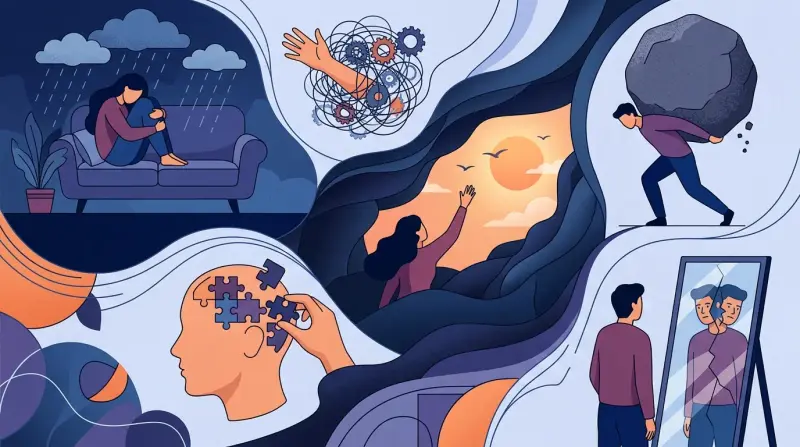
Most people firmly believe that a “mentally ill person” is someone who behaves and speaks in ways unrelated to logic or reality, making their actions seem strange to us. In truth, however, these are merely perceptions that we project onto people with mental illnesses, causing us to see them this way even though, in how they behave and speak, they are no different from people with physical illnesses.
We should therefore not treat them as a danger or make them feel that we are afraid to interact with them. Even internally, we should not feel endangered or at risk merely because we are speaking with someone who has a mental illness. To prevent our perceptions from condemning others to isolation simply because they have a mental illness, this article reviews the criteria and stages of psychological diagnosis. This can help us, as a society, embrace people with mental illnesses and understand how to interact with them.
How Do We Identify People With Mental Disorders?
To interact with people with mental illnesses, we must know who they are and be able to identify them at a community level. This is done through the following steps:
Conduct comprehensive screening to identify people who may have a mental disorder.
Take enough time to identify and understand the problem and begin treatment.
We can conduct comprehensive screening in a busy clinic.
Observe patients using typical psychological clinical indicators relevant to diagnosing mental illness. When these indicators are present in someone, we should suspect that they have a mental disorder.
Ask a set of questions that can help us recognize two of the most common types of mental health problems: common mental disorders and alcohol addiction. If the answer to any of these questions is positive, we should ask further questions about the subject.
Once we can identify people who have a mental illness, we must be able to examine them without fear, particularly if the examiner is not a specialist but has enough basic knowledge and skills to do so.
A psychological examination does not require specialization as much as it requires the empathy that enables the person conducting the psychological diagnosis to understand and embrace the patient, along with a strong ability to listen.
This leads us to the following question:
What Is the Psychologist’s Role During Psychological Diagnosis?
A psychologist experiences many emotions during psychological diagnosis, and their role lies in how they manage these feelings. They should:
Not fear being assaulted by the patient.
Not show disgust or revulsion toward the patient because some people with mental illnesses may have poor personal hygiene.
Avoid becoming tense because the interview may take longer than the diagnosis.
Restrain any urge to laugh at behavior by the patient that seems strange.
Try not to become angry if it becomes clear that the person has no mental disorder and came merely to waste the psychologist’s time.
It may be difficult for a psychologist to follow these steps during psychological diagnosis. However, they must recognize that providing any psychological care or support will be difficult if they allow these behaviors and feelings to control them.
All this will affect the patient more than the psychologist. The patient will feel uncomfortable and unsafe and will not express the feelings they are experiencing if the psychologist does not follow the previous steps. During psychological diagnosis, every professional should remember the importance of respecting the patient, showing empathy, and giving them enough time to express themselves.
We explain this through the following question:
What Should a Professional Remember When Examining Someone With a Mental Disorder?
Set aside enough time to speak with the patient and listen to them patiently and attentively.
Recognize that most people with mental illnesses can clearly describe what they are experiencing and that relatives have an important role in providing valuable information.
Recognize the importance of the assessment interview, which is the first step in treating the patient.
Questions can be used to help diagnose a range of common mental health problems.
Do not dismiss physical complaints merely because the person is psychologically distressed. A person with a mental illness may also have physical conditions that can help you make a better diagnosis of their mental illness.
What Clinical Indicators Suggest a Mental Disorder?
During an interview with the patient or people close to them, a doctor may use certain indicators to infer that the patient has a mental disorder. For example:
The person or their relatives directly and explicitly say that a mental disorder is present.
The person or their relatives describe behavior that has no logical basis.
There are direct causes of mental disorders resulting from alcohol consumption or domestic violence.
The person experiences problems related to relationships or life circumstances, such as unemployment or marital or sexual problems.
The patient reports several physical pains—more than three—that do not fall within one known physical illness.
There is a personal or family history of mental illness with a hereditary component.
Which Symptoms Help Diagnose Some Mental Disorders?
For example, if someone experiences at least one of the following symptoms for no less than two weeks, this means they most likely have anxiety or depression:
Feeling sad, tense, irritable, or anxious.
Loss of interest in daily activities.
Experiencing disturbed sleep.
Increased or reduced appetite.
Poor concentration.
Thinking about suicide.
Rapid heartbeat, trembling, and dizziness.
Feeling pain and aches throughout the body.
It is important not to seek this information through investigation, interrogation, or persistent pressure, as this can burden the patient beyond their capacity. We should also not rush to offer advice, as this places pressure on the patient.
The most important thing to recognize during psychological diagnosis is the importance of the timewe set aside to understand why the patient sought psychological consultation or treatment, because this can save considerable effort later during treatment.
We must also recognize that, during psychological diagnosis, many mental health clinics view the patient in isolation from the environment in which they grew up and the pressures it created. They may be satisfied with listening to the patient and then begin prescribing medication, including painkillers and sleeping pills. This means treating the disorder’s symptoms without addressing the problem that caused it, leaving the patient trapped in a cycle of ineffective treatment and requiring a longer treatment period.
We therefore emphasize again what we said earlier: taking considerable time as a therapist during psychological diagnosis to determine the cause of the disorder and reach the actual problem will produce genuine long-term results in the treatment plan, instead of leaving the patient stuck in a plan that does not suit them.
To achieve the best results from psychological diagnosis, you, as a therapist, must understand the kinds of questions to ask so you can identify the type of mental disorder the patient has. Selecting and preparing these questions will not take much time, but it will save both you and the patient a great deal of time during treatment.
Download the Tatmeen app for online psychological and family consultations from the App Store or Google Play. You can also register on the Tatmeen mental health website for valuable information and practical tools to strengthen your mental and family well-being.
Content writer and researcher at Tatmeen, writing in Arabic and English on mental health and everyday life topics, including relationships, stress, work, habits, and family.
Every Tatmeen article is reviewed by care providers licensed by the Saudi Commission for Health Specialties, so what you read is accurate and trustworthy.
This article builds understanding and does not replace a licensed care provider.
Need someone to talk to?
Tatmeen's licensed care providers are available around the clock, and the app's urgent consultation connects you with one within minutes.
Download Tatmeen to explore care providers and booking options.
Smart matchingFour quick questions suggest the right care provider
Urgent consultationTalk to an available care provider within minutes
Free psychological measuresMore than 20 tests to understand how you are doing
Scan to download
{"data":{"id":"f15994f6-0492-4e07-8bc7-089931339689","slug":"Psychological-Diagnosis-Criteria-Stages-Diagnosis","arTitle":"التشخيص النفسي : معايير ومراحل التشخيص ","enTitle":"Psychological Diagnosis: Criteria and Stages","thumbnailAltText":"Seated person writes in a notebook while another person sits nearby","estimatedReadingTime":5,"likesCount":969,"writer":{"id":"c7b27cce-cc91-45c8-9ba1-1d194830c654","arBio":"كاتبة وباحثة محتوى في تطمين، تكتب بالعربية والإنجليزية في موضوعات الصحة النفسية والحياة اليومية، بما يشمل العلاقات، الضغوط، العمل، العادات، والأسرة.","enBio":"Content writer and researcher at Tatmeen, writing in Arabic and English on mental health and everyday life topics, including relationships, stress, work, habits, and family.","user":{"slug":"alanoud-alturki","arFullName":"العنود التركي","enFullName":"Alanoud Alturki","publicProfileImageUrl":"https://cdn.tatmeen.sa/public/profile-images/78d20741-cf98-483e-9055-2f0ca0ab3bd5/4e190bf082a179be202f7a2618844e0dd134e14126b74d947c78eec35b7e390e.webp","publicProfileImage96Url":"https://cdn.tatmeen.sa/public/profile-images/78d20741-cf98-483e-9055-2f0ca0ab3bd5/4e190bf082a179be202f7a2618844e0dd134e14126b74d947c78eec35b7e390e-w96.webp","publicProfileImage192Url":"https://cdn.tatmeen.sa/public/profile-images/78d20741-cf98-483e-9055-2f0ca0ab3bd5/4e190bf082a179be202f7a2618844e0dd134e14126b74d947c78eec35b7e390e-w192.webp"}},"arContent":"","enContent":"","productionDocument":{"headings":[{"id":"article-section-how-do-we-identify-people-with-mental-disorders","text":"How Do We Identify People With Mental Disorders?"},{"id":"article-section-what-is-the-psychologist-s-role-during-psychological-diagnosis","text":"What Is the Psychologist’s Role During Psychological Diagnosis?"},{"id":"article-section-what-should-a-professional-remember-when-examining-someone-with-a-mental-disorder","text":"What Should a Professional Remember When Examining Someone With a Mental Disorder?"},{"id":"article-section-what-clinical-indicators-suggest-a-mental-disorder","text":"What Clinical Indicators Suggest a Mental Disorder?"},{"id":"article-section-which-symptoms-help-diagnose-some-mental-disorders","text":"Which Symptoms Help Diagnose Some Mental Disorders?"}],"faqs":[],"beforeSourcesHtml":"","sources":[],"afterSourcesHtml":"","blocks":[{"type":"html","html":"<p class=\"ql-align-right ql-direction-rtl\">Most people firmly believe that a “mentally ill person” is someone who behaves and speaks in ways unrelated to logic or reality, making their actions seem strange to us. In truth, however, these are merely perceptions that we project onto people with mental illnesses, causing us to see them this way even though, in how they behave and speak, they are no different from people with physical illnesses.</p><p class=\"ql-align-right ql-direction-rtl\">We should therefore not treat them as a danger or make them feel that we are afraid to interact with them. Even internally, we should not feel endangered or at risk merely because we are speaking with someone who has a mental illness. To prevent our perceptions from condemning others to isolation simply because they have a mental illness, this article reviews the criteria and stages of psychological diagnosis. This can help us, as a society, embrace people with mental illnesses and understand how to interact with them.</p><h2 class=\"ql-align-right ql-direction-rtl\" id=\"article-section-how-do-we-identify-people-with-mental-disorders\" data-toc-heading tabindex=\"-1\"><span id=\"how-do-we-identify-people-with-mental-disorders-1\" aria-hidden=\"true\"></span><strong>How Do We Identify People With Mental Disorders?</strong></h2><p class=\"ql-align-right ql-direction-rtl\">To interact with people with mental illnesses, we must know who they are and be able to identify them at a community level. This is done through the following steps:</p><ol><li class=\"ql-align-right ql-direction-rtl\">Conduct comprehensive screening to identify people who may have a mental disorder.</li><li class=\"ql-align-right ql-direction-rtl\">Take enough time to identify and understand the problem and begin treatment.</li><li class=\"ql-align-right ql-direction-rtl\">We can conduct comprehensive screening in a busy clinic.</li><li class=\"ql-align-right ql-direction-rtl\">Observe patients using typical psychological clinical indicators relevant to diagnosing mental illness. When these indicators are present in someone, we should suspect that they have a mental disorder.</li><li class=\"ql-align-right ql-direction-rtl\">Ask a set of questions that can help us recognize two of the most common types of mental health problems: common mental disorders and alcohol addiction. If the answer to any of these questions is positive, we should ask further questions about the subject.</li></ol><p class=\"ql-align-right ql-direction-rtl\">Once we can identify people who have a mental illness, we must be able to examine them without fear, particularly if the examiner is not a specialist but has enough basic knowledge and skills to do so.</p><p class=\"ql-align-right ql-direction-rtl\">A psychological examination does not require specialization as much as it requires the empathy that enables the person conducting the psychological diagnosis to understand and embrace the patient, along with a strong ability to listen.</p><p class=\"ql-align-right ql-direction-rtl\">This leads us to the following question:</p><h2 class=\"ql-align-right ql-direction-rtl\" id=\"article-section-what-is-the-psychologist-s-role-during-psychological-diagnosis\" data-toc-heading tabindex=\"-1\"><span id=\"what-is-the-psychologist-s-role-during-psychological-diagnosis-2\" aria-hidden=\"true\"></span><strong>What Is the Psychologist’s Role During Psychological Diagnosis?</strong></h2><p class=\"ql-align-right ql-direction-rtl\">A psychologist experiences many emotions during psychological diagnosis, and their role lies in how they manage these feelings. They should:</p><ol><li class=\"ql-align-right ql-direction-rtl\">Not fear being assaulted by the patient.</li><li class=\"ql-align-right ql-direction-rtl\">Not show disgust or revulsion toward the patient because some people with mental illnesses may have poor personal hygiene.</li><li class=\"ql-align-right ql-direction-rtl\">Avoid becoming tense because the interview may take longer than the diagnosis.</li><li class=\"ql-align-right ql-direction-rtl\">Restrain any urge to laugh at behavior by the patient that seems strange.</li><li class=\"ql-align-right ql-direction-rtl\">Try not to become angry if it becomes clear that the person has no mental disorder and came merely to waste the psychologist’s time.</li></ol><p class=\"ql-align-right ql-direction-rtl\">It may be difficult for a psychologist to follow these steps during psychological diagnosis. However, they must recognize that providing any psychological care or support will be difficult if they allow these behaviors and feelings to control them.</p><p class=\"ql-align-right ql-direction-rtl\">All this will affect the patient more than the psychologist. The patient will feel uncomfortable and unsafe and will not express the feelings they are experiencing if the psychologist does not follow the previous steps. During psychological diagnosis, every professional should remember the importance of respecting the patient, showing empathy, and giving them enough time to express themselves.</p><p class=\"ql-align-right ql-direction-rtl\">We explain this through the following question:</p><h2 class=\"ql-align-right ql-direction-rtl\" id=\"article-section-what-should-a-professional-remember-when-examining-someone-with-a-mental-disorder\" data-toc-heading tabindex=\"-1\"><span id=\"what-should-a-professional-remember-when-examining-someone-with-a-mental-disorder-3\" aria-hidden=\"true\"></span><strong>What Should a Professional Remember When Examining Someone With a Mental Disorder?</strong></h2><ol><li class=\"ql-align-right ql-direction-rtl\">Set aside enough time to speak with the patient and listen to them patiently and attentively.</li><li class=\"ql-align-right ql-direction-rtl\">Recognize that most people with mental illnesses can clearly describe what they are experiencing and that relatives have an important role in providing valuable information.</li><li class=\"ql-align-right ql-direction-rtl\">Recognize the importance of the assessment interview, which is the first step in treating the patient.</li><li class=\"ql-align-right ql-direction-rtl\">Questions can be used to help diagnose a range of common mental health problems.</li><li class=\"ql-align-right ql-direction-rtl\">Do not dismiss physical complaints merely because the person is psychologically distressed. A person with a mental illness may also have physical conditions that can help you make a better diagnosis of their mental illness.</li></ol><h2 class=\"ql-align-right ql-direction-rtl\" id=\"article-section-what-clinical-indicators-suggest-a-mental-disorder\" data-toc-heading tabindex=\"-1\"><span id=\"what-clinical-indicators-suggest-a-mental-disorder-4\" aria-hidden=\"true\"></span><strong>What Clinical Indicators Suggest a Mental Disorder?</strong></h2><p class=\"ql-align-right ql-direction-rtl\">During an interview with the patient or people close to them, a doctor may use certain indicators to infer that the patient has a mental disorder. For example:</p><ol><li class=\"ql-align-right ql-direction-rtl\">The person or their relatives directly and explicitly say that a mental disorder is present.</li><li class=\"ql-align-right ql-direction-rtl\">The person or their relatives describe behavior that has no logical basis.</li><li class=\"ql-align-right ql-direction-rtl\">There are direct causes of mental disorders resulting from alcohol consumption or domestic violence.</li><li class=\"ql-align-right ql-direction-rtl\">The person experiences problems related to relationships or life circumstances, such as unemployment or marital or sexual problems.</li><li class=\"ql-align-right ql-direction-rtl\">The patient reports several physical pains—more than three—that do not fall within one known physical illness.</li><li class=\"ql-align-right ql-direction-rtl\">There is a personal or family history of mental illness with a hereditary component.</li></ol><h2 class=\"ql-align-right ql-direction-rtl\" id=\"article-section-which-symptoms-help-diagnose-some-mental-disorders\" data-toc-heading tabindex=\"-1\"><span id=\"which-symptoms-help-diagnose-some-mental-disorders-5\" aria-hidden=\"true\"></span><strong>Which Symptoms Help Diagnose Some Mental Disorders?</strong></h2><p class=\"ql-align-right ql-direction-rtl\">For example, if someone experiences at least one of the following symptoms for no less than two weeks, this means they most likely have anxiety or depression:</p><ul><li class=\"ql-align-right ql-direction-rtl\">Feeling sad, tense, irritable, or anxious.</li><li class=\"ql-align-right ql-direction-rtl\">Loss of interest in daily activities.</li><li class=\"ql-align-right ql-direction-rtl\">Experiencing disturbed sleep.</li><li class=\"ql-align-right ql-direction-rtl\">Increased or reduced appetite.</li><li class=\"ql-align-right ql-direction-rtl\">Poor concentration.</li><li class=\"ql-align-right ql-direction-rtl\">Thinking about suicide.</li><li class=\"ql-align-right ql-direction-rtl\">Rapid heartbeat, trembling, and dizziness.</li><li class=\"ql-align-right ql-direction-rtl\">Feeling pain and aches throughout the body.</li></ul><p class=\"ql-align-right ql-direction-rtl\">It is important not to seek this information through investigation, interrogation, or persistent pressure, as this can burden the patient beyond their capacity. We should also not rush to offer advice, as this places pressure on the patient.</p><p class=\"ql-align-right ql-direction-rtl\">The most important thing to recognize during psychological diagnosis is the importance of the time<strong> </strong>we set aside to understand why the patient sought psychological consultation or treatment, because this can save considerable effort later during treatment.</p><p class=\"ql-align-right ql-direction-rtl\">We must also recognize that, during psychological diagnosis, many mental health clinics view the patient in isolation from the environment in which they grew up and the pressures it created. They may be satisfied with listening to the patient and then begin prescribing medication, including painkillers and sleeping pills. This means treating the disorder’s symptoms without addressing the problem that caused it, leaving the patient trapped in a cycle of ineffective treatment and requiring a longer treatment period.</p><p class=\"ql-align-right ql-direction-rtl\">We therefore emphasize again what we said earlier: taking considerable time as a therapist during psychological diagnosis to determine the cause of the disorder and reach the actual problem will produce genuine long-term results in the treatment plan, instead of leaving the patient stuck in a plan that does not suit them.</p><p class=\"ql-align-right ql-direction-rtl\">To achieve the best results from psychological diagnosis, you, as a therapist, must understand the kinds of questions to ask so you can identify the type of mental disorder the patient has. Selecting and preparing these questions will not take much time, but it will save both you and the patient a great deal of time during treatment.</p><p class=\"ql-align-right ql-direction-rtl\"><br /></p><p class=\"ql-direction-rtl ql-align-justify\">Download the Tatmeen app for online psychological and family consultations from the App Store or Google Play. You can also register on the Tatmeen mental health website for valuable information and practical tools to strengthen your mental and family well-being.</p><p class=\"ql-align-right ql-direction-rtl\"><br /></p><p><br /></p>"}],"inlineCtaSignatures":[],"_experienceAliases":{"v":1,"fields":["html","bodyHtml"]}},"createdAt":"2024-01-08T21:00:00.000Z","updatedAt":"2026-08-11T04:45:02.303Z","disorderGroups":[{"id":"1e82772d-a1a7-4d29-b475-be9d6b67ae02","slug":"common-mental-issues","arName":"اضطرابات نفسية شائعة","enName":"Common Mental Issues"}],"reviewer":{"arFullName":"فريق تطمين","enFullName":"Tatmeen team","slug":"tatmeen-team","kind":"organization"},"productionArticle":true,"promotionAllowed":true,"preparedCover":{"src":"https://cdn.tatmeen.sa/public/article-lcp/article-lcp-v2/sha256-b698f0d1c08246e3da62c1bc47dc13f216bacd4e933b63da2fce89624b075c1c/800-cbc3264b61e3e409d4d82e92dde727f194c5795759ef7640980e03e4bd6f4310.avif","fallback":"https://cdn.tatmeen.sa/public/article-lcp/article-lcp-v2/sha256-b698f0d1c08246e3da62c1bc47dc13f216bacd4e933b63da2fce89624b075c1c/800-aa291240bb965051c37d479b39b5b7441eaad354169b34c80b3da4731a6b29d0.webp","directUrl":"https://cdn.tatmeen.sa/blog-cover/1706456301401-Tatmeen-761.jpg","isGolden":true,"avifSrcset":"https://cdn.tatmeen.sa/public/article-lcp/article-lcp-v2/sha256-b698f0d1c08246e3da62c1bc47dc13f216bacd4e933b63da2fce89624b075c1c/400-00fdf675537a3c6ff0c908f36491af7627fe37eeb9497de546c2c2711cfe27ac.avif 400w, https://cdn.tatmeen.sa/public/article-lcp/article-lcp-v2/sha256-b698f0d1c08246e3da62c1bc47dc13f216bacd4e933b63da2fce89624b075c1c/640-d14cf39843bc7f288ae7cfb57b3a2ab4966ffcb7cec1afecc8cadb4d59d7ba39.avif 640w, https://cdn.tatmeen.sa/public/article-lcp/article-lcp-v2/sha256-b698f0d1c08246e3da62c1bc47dc13f216bacd4e933b63da2fce89624b075c1c/800-cbc3264b61e3e409d4d82e92dde727f194c5795759ef7640980e03e4bd6f4310.avif 800w, https://cdn.tatmeen.sa/public/article-lcp/article-lcp-v2/sha256-b698f0d1c08246e3da62c1bc47dc13f216bacd4e933b63da2fce89624b075c1c/817-8c56c052f95eddda8dfe28fbaec2d470066d4523baab7265b5140fdade6285df.avif 817w","webpSrcset":"https://cdn.tatmeen.sa/public/article-lcp/article-lcp-v2/sha256-b698f0d1c08246e3da62c1bc47dc13f216bacd4e933b63da2fce89624b075c1c/400-3ab3427f177a72a0cfdc27d0e4653d749cd14d5a80125ed357e53cbea57d4226.webp 400w, https://cdn.tatmeen.sa/public/article-lcp/article-lcp-v2/sha256-b698f0d1c08246e3da62c1bc47dc13f216bacd4e933b63da2fce89624b075c1c/640-33e42b7937261f0bae4dfaaea20b551e2cf3deffc67bfd5c3275bdc7a72bc525.webp 640w, https://cdn.tatmeen.sa/public/article-lcp/article-lcp-v2/sha256-b698f0d1c08246e3da62c1bc47dc13f216bacd4e933b63da2fce89624b075c1c/800-aa291240bb965051c37d479b39b5b7441eaad354169b34c80b3da4731a6b29d0.webp 800w, https://cdn.tatmeen.sa/public/article-lcp/article-lcp-v2/sha256-b698f0d1c08246e3da62c1bc47dc13f216bacd4e933b63da2fce89624b075c1c/817-1cee4eb9e04d2ec44649b14b54e2f08811e9a33733c93cd52dbe66173ccc0d40.webp 817w","phoneAvifSrcset":"https://cdn.tatmeen.sa/public/article-lcp/article-lcp-v2/sha256-b698f0d1c08246e3da62c1bc47dc13f216bacd4e933b63da2fce89624b075c1c/400-00fdf675537a3c6ff0c908f36491af7627fe37eeb9497de546c2c2711cfe27ac.avif 400w, https://cdn.tatmeen.sa/public/article-lcp/article-lcp-v2/sha256-b698f0d1c08246e3da62c1bc47dc13f216bacd4e933b63da2fce89624b075c1c/640-d14cf39843bc7f288ae7cfb57b3a2ab4966ffcb7cec1afecc8cadb4d59d7ba39.avif 640w, https://cdn.tatmeen.sa/public/article-lcp/article-lcp-v2/sha256-b698f0d1c08246e3da62c1bc47dc13f216bacd4e933b63da2fce89624b075c1c/800-cbc3264b61e3e409d4d82e92dde727f194c5795759ef7640980e03e4bd6f4310.avif 800w","phoneWebpSrcset":"https://cdn.tatmeen.sa/public/article-lcp/article-lcp-v2/sha256-b698f0d1c08246e3da62c1bc47dc13f216bacd4e933b63da2fce89624b075c1c/400-3ab3427f177a72a0cfdc27d0e4653d749cd14d5a80125ed357e53cbea57d4226.webp 400w, https://cdn.tatmeen.sa/public/article-lcp/article-lcp-v2/sha256-b698f0d1c08246e3da62c1bc47dc13f216bacd4e933b63da2fce89624b075c1c/640-33e42b7937261f0bae4dfaaea20b551e2cf3deffc67bfd5c3275bdc7a72bc525.webp 640w, https://cdn.tatmeen.sa/public/article-lcp/article-lcp-v2/sha256-b698f0d1c08246e3da62c1bc47dc13f216bacd4e933b63da2fce89624b075c1c/800-aa291240bb965051c37d479b39b5b7441eaad354169b34c80b3da4731a6b29d0.webp 800w","width":800,"height":407},"previewTaxonomy":{"groups":[{"id":"1e82772d-a1a7-4d29-b475-be9d6b67ae02","slug":"common-mental-issues","arName":"اضطرابات نفسية شائعة","enName":"Common Mental Issues"}],"topics":[],"tags":[{"id":"07738784-6495-42b7-819f-22706a2e5ad3","slug":"specialist-diagnosis","arName":"اختيار المختص والتشخيص","enName":"Choosing a Specialist & Diagnosis"},{"id":"c2a6e8d3-de9c-435f-8c95-9727e7db14cc","slug":"explainer-awareness","arName":"دليل توعوي / شرح","enName":"Explainer / Awareness Guide"}]},"previewProviderRecommendations":[{"id":"278d5ac5-30ff-46ad-97be-c67cdd125836","slug":"dr-mohammed-alamari-8085","arFullName":"د. محمد العماري","enFullName":"Dr. Mohammed Alamari","publicProfileImageUrl":"https://cdn.tatmeen.sa/public/profile-images/278d5ac5-30ff-46ad-97be-c67cdd125836/69bdd11cb01784eed010eb9883403fd6ca4e4afcec739dcd6114fd8b85f133a8.webp","publicProfileImage96Url":"https://cdn.tatmeen.sa/public/profile-images/278d5ac5-30ff-46ad-97be-c67cdd125836/69bdd11cb01784eed010eb9883403fd6ca4e4afcec739dcd6114fd8b85f133a8-w96.webp","publicProfileImage192Url":"https://cdn.tatmeen.sa/public/profile-images/278d5ac5-30ff-46ad-97be-c67cdd125836/69bdd11cb01784eed010eb9883403fd6ca4e4afcec739dcd6114fd8b85f133a8-w192.webp","specialization":{"arName":"طبيب أسرة","enName":"Family Physician"},"profileImageUrl":"https://cdn.tatmeen.sa/public/profile-images/278d5ac5-30ff-46ad-97be-c67cdd125836/69bdd11cb01784eed010eb9883403fd6ca4e4afcec739dcd6114fd8b85f133a8-w192.webp","experienceYears":3,"consultantInfo":{"averageRating":{"average":4},"specialization":{"arGeneralName":"طبيب أسرة","enGeneralName":"Family Physician"}}},{"id":"dc4f4096-c96e-46ad-8e85-55c7104fbbf9","slug":"alya-alasiri-9292","arFullName":"علياء العسيري","enFullName":"Alya Alasiri","publicProfileImageUrl":"","publicProfileImage96Url":"","publicProfileImage192Url":"","specialization":{"arName":"أخصائي نفسي","enName":"Psychologist"},"profileImageUrl":"","experienceYears":4,"consultantInfo":{"averageRating":{"average":0},"specialization":{"arGeneralName":"أخصائي نفسي","enGeneralName":"Psychologist"}}},{"id":"6df31339-a6f5-4131-a603-3a7c7a34c143","slug":"joud-alodhayyani-9014","arFullName":"جود العتيبي","enFullName":"Joud Alotaibi","publicProfileImageUrl":"https://cdn.tatmeen.sa/public/profile-images/6df31339-a6f5-4131-a603-3a7c7a34c143/7bb005ef9d4315296aad2a7d142fb2af2cf89920a40b474fc5139b9530269282.webp","publicProfileImage96Url":"https://cdn.tatmeen.sa/public/profile-images/6df31339-a6f5-4131-a603-3a7c7a34c143/7bb005ef9d4315296aad2a7d142fb2af2cf89920a40b474fc5139b9530269282-w96.webp","publicProfileImage192Url":"https://cdn.tatmeen.sa/public/profile-images/6df31339-a6f5-4131-a603-3a7c7a34c143/7bb005ef9d4315296aad2a7d142fb2af2cf89920a40b474fc5139b9530269282-w192.webp","specialization":{"arName":"أخصائي نفسي","enName":"Psychologist"},"profileImageUrl":"https://cdn.tatmeen.sa/public/profile-images/6df31339-a6f5-4131-a603-3a7c7a34c143/7bb005ef9d4315296aad2a7d142fb2af2cf89920a40b474fc5139b9530269282-w192.webp","experienceYears":2,"consultantInfo":{"averageRating":{"average":3.5},"specialization":{"arGeneralName":"أخصائي نفسي","enGeneralName":"Psychologist"}}}],"previewCareProviders":[{"id":"09364052-c2a9-4c52-9717-7ce2093b8d0a","slug":"kholoud-alharbi-5221","arFullName":"خلود الحربي","enFullName":"Kholoud Alharbi","publicProfileImageUrl":"https://cdn.tatmeen.sa/public/profile-images/09364052-c2a9-4c52-9717-7ce2093b8d0a/4a0aeb81619e351b77f4323e3605a0a00acc7ca3c82ee7cc5ca2c9e8ef716049.webp","publicProfileImage96Url":"https://cdn.tatmeen.sa/public/profile-images/09364052-c2a9-4c52-9717-7ce2093b8d0a/4a0aeb81619e351b77f4323e3605a0a00acc7ca3c82ee7cc5ca2c9e8ef716049-w96.webp","publicProfileImage192Url":"https://cdn.tatmeen.sa/public/profile-images/09364052-c2a9-4c52-9717-7ce2093b8d0a/4a0aeb81619e351b77f4323e3605a0a00acc7ca3c82ee7cc5ca2c9e8ef716049-w192.webp","gender":"FEMALE","specialization":{"arName":"أخصائي نفسي","enName":"Psychologist"}},{"id":"6f037535-1dca-4b50-a8b2-5974b7323286","slug":"salah-althobaiti-9053","arFullName":"صلاح الثبيتي","enFullName":"Salah Althobaiti","publicProfileImageUrl":"https://cdn.tatmeen.sa/public/profile-images/6f037535-1dca-4b50-a8b2-5974b7323286/35b6bd7fad9b1e004c1835803eb9c1b56dcacd380685ec8bff141f0fb888005c.webp","publicProfileImage96Url":"https://cdn.tatmeen.sa/public/profile-images/6f037535-1dca-4b50-a8b2-5974b7323286/35b6bd7fad9b1e004c1835803eb9c1b56dcacd380685ec8bff141f0fb888005c-w96.webp","publicProfileImage192Url":"https://cdn.tatmeen.sa/public/profile-images/6f037535-1dca-4b50-a8b2-5974b7323286/35b6bd7fad9b1e004c1835803eb9c1b56dcacd380685ec8bff141f0fb888005c-w192.webp","gender":"MALE","specialization":{"arName":"أخصائي نفسي","enName":"Psychologist"}},{"id":"3cc806e8-616b-4884-9f21-a75b378580a2","slug":"aisha-al-hashim-8667","arFullName":"عائشة ال هاشم","enFullName":"Aisha Al Hashim","publicProfileImageUrl":"https://cdn.tatmeen.sa/public/profile-images/3cc806e8-616b-4884-9f21-a75b378580a2/27f523d03be4dcfa1f6a79f70c1773887434e698990d214cd990caec56a44798.webp","publicProfileImage96Url":"https://cdn.tatmeen.sa/public/profile-images/3cc806e8-616b-4884-9f21-a75b378580a2/27f523d03be4dcfa1f6a79f70c1773887434e698990d214cd990caec56a44798-w96.webp","publicProfileImage192Url":"https://cdn.tatmeen.sa/public/profile-images/3cc806e8-616b-4884-9f21-a75b378580a2/27f523d03be4dcfa1f6a79f70c1773887434e698990d214cd990caec56a44798-w192.webp","gender":"FEMALE","specialization":{"arName":"أخصائي نفسي","enName":"Psychologist"}},{"id":"db2ce1a0-9325-4471-b7ce-eb2e811c30a3","slug":"amer-qutub-2441","arFullName":"عامر قطب","enFullName":"Amer Qutub","publicProfileImageUrl":"https://cdn.tatmeen.sa/public/profile-images/db2ce1a0-9325-4471-b7ce-eb2e811c30a3/80580f99bfd7fe2b2a9cf8eed73ab532f5086d1efe053b0aa57358c1ce004261.webp","publicProfileImage96Url":"https://cdn.tatmeen.sa/public/profile-images/db2ce1a0-9325-4471-b7ce-eb2e811c30a3/80580f99bfd7fe2b2a9cf8eed73ab532f5086d1efe053b0aa57358c1ce004261-w96.webp","publicProfileImage192Url":"https://cdn.tatmeen.sa/public/profile-images/db2ce1a0-9325-4471-b7ce-eb2e811c30a3/80580f99bfd7fe2b2a9cf8eed73ab532f5086d1efe053b0aa57358c1ce004261-w192.webp","gender":"MALE","specialization":{"arName":"أخصائي نفسي","enName":"Psychologist"}},{"id":"94765496-dbdf-4631-a01b-7df5f788668d","slug":"abdullrahman-alhamoudi-3045","arFullName":"عبدالرحمن الحمودي","enFullName":"Abdulrahman Alhamoudi","publicProfileImageUrl":"https://cdn.tatmeen.sa/public/profile-images/94765496-dbdf-4631-a01b-7df5f788668d/2d49f6b6493c564afb6f50b6c3634231dff3a5cf8353acfab393d1b2a88037d1.webp","publicProfileImage96Url":"https://cdn.tatmeen.sa/public/profile-images/94765496-dbdf-4631-a01b-7df5f788668d/2d49f6b6493c564afb6f50b6c3634231dff3a5cf8353acfab393d1b2a88037d1-w96.webp","publicProfileImage192Url":"https://cdn.tatmeen.sa/public/profile-images/94765496-dbdf-4631-a01b-7df5f788668d/2d49f6b6493c564afb6f50b6c3634231dff3a5cf8353acfab393d1b2a88037d1-w192.webp","gender":"MALE","specialization":{"arName":"أخصائي نفسي","enName":"Psychologist"}},{"id":"618dba89-5b70-4b46-8304-741b7ac8ecd3","slug":"abdullah-mari-1311","arFullName":"عبدالله مرعي","enFullName":"Abdullah Mari","publicProfileImageUrl":"https://cdn.tatmeen.sa/public/profile-images/618dba89-5b70-4b46-8304-741b7ac8ecd3/6b4a3bfb59f8a304ca79083b32859b46baad2e1d692974a47c02c1f66bd11129.webp","publicProfileImage96Url":"https://cdn.tatmeen.sa/public/profile-images/618dba89-5b70-4b46-8304-741b7ac8ecd3/6b4a3bfb59f8a304ca79083b32859b46baad2e1d692974a47c02c1f66bd11129-w96.webp","publicProfileImage192Url":"https://cdn.tatmeen.sa/public/profile-images/618dba89-5b70-4b46-8304-741b7ac8ecd3/6b4a3bfb59f8a304ca79083b32859b46baad2e1d692974a47c02c1f66bd11129-w192.webp","gender":"MALE","specialization":{"arName":"أخصائي نفسي","enName":"Psychologist"}},{"id":"3b50a5d5-e795-407f-8676-fd7f0e1bb7a0","slug":"abdulaziz-bin-hudayan-4940","arFullName":"عبدالعزيز بن هديان","enFullName":"Abdulaziz Bin Hudayan","publicProfileImageUrl":"https://cdn.tatmeen.sa/public/profile-images/3b50a5d5-e795-407f-8676-fd7f0e1bb7a0/710ff0fe1fb00cdb5042092e27b7910b480a439b02251ecded62d7758eefce95.webp","publicProfileImage96Url":"https://cdn.tatmeen.sa/public/profile-images/3b50a5d5-e795-407f-8676-fd7f0e1bb7a0/710ff0fe1fb00cdb5042092e27b7910b480a439b02251ecded62d7758eefce95-w96.webp","publicProfileImage192Url":"https://cdn.tatmeen.sa/public/profile-images/3b50a5d5-e795-407f-8676-fd7f0e1bb7a0/710ff0fe1fb00cdb5042092e27b7910b480a439b02251ecded62d7758eefce95-w192.webp","gender":"MALE","specialization":{"arName":"أخصائي نفسي","enName":"Psychologist"}},{"id":"d4ffcb6b-90a7-45b6-b941-964866f4564b","slug":"dhaifallah-alhumaidi-1092","arFullName":"ضيف الله الحميدي","enFullName":"Dhaifallah Alhumaidi","publicProfileImageUrl":"https://cdn.tatmeen.sa/public/profile-images/d4ffcb6b-90a7-45b6-b941-964866f4564b/1817171c5828a9b57d6c30d12332cf154e335272548bc90a6e8456d74d356956.webp","publicProfileImage96Url":"https://cdn.tatmeen.sa/public/profile-images/d4ffcb6b-90a7-45b6-b941-964866f4564b/1817171c5828a9b57d6c30d12332cf154e335272548bc90a6e8456d74d356956-w96.webp","publicProfileImage192Url":"https://cdn.tatmeen.sa/public/profile-images/d4ffcb6b-90a7-45b6-b941-964866f4564b/1817171c5828a9b57d6c30d12332cf154e335272548bc90a6e8456d74d356956-w192.webp","gender":"MALE","specialization":{"arName":"أخصائي نفسي","enName":"Psychologist"}}],"previewDownload":{"href":"/download","title":{"ar":"خطوة واحدة لأجلك، ابدأ الآن","en":"One step for you, start now"},"description":{"ar":"حمّل تطبيق تطمين لاستكشاف مقدمي الرعاية وخيارات الحجز.","en":"Download Tatmeen to explore care providers and booking options."},"posterSrc":"/images/home/cta-ar-new-1.webp","videoSrc":"/images/home/cta-ar-new-1.mp4","videoPosterSrc":"/images/home/cta-ar-new-1.webp","videoPosterEnSrc":"/images/home/cta-en-new-1.webp","videoType":"video/mp4","appStoreHref":"https://apps.apple.com/us/app/tatmeen-%D8%AA%D8%B7%D9%85%D9%8A%D9%86/id6473836983","googlePlayHref":"https://play.google.com/store/apps/details?id=com.TatmeenApp.user&hl=en"},"previewRelatedArticles":[{"id":"e54a1760-4d9f-4ebc-aa47-f526aef44e31","slug":"hypervigilance-hidden-impact-constant-alert-state","route":"/blog/hypervigilance-hidden-impact-constant-alert-state/","title":{"ar":"فرط اليقظة: الأثر الخفي للبقاء في حالة تأهّب مستمر","en":"Hypervigilance: The Hidden Impact of Being in a State of Constant Alert"},"image":"https://cdn.tatmeen.sa/public/article-lcp/article-lcp-v2/sha256-4e8efe5813cdf1650ce6408d3fc082d1e43c5c56f4f1afe4fb6a97740e840ed7/800-73cb3297694a7fe482c37b789c944c3999c6a6dc13b2ca0b9785b67543fb2ce6.webp","directImageFallback":"https://cdn.tatmeen.sa/blog-cover/Tatmeen-1777480042034.webp","arThumbnailAltText":"فرط اليقظة وتأثيره على الصحة النفسية عند البقاء في حالة تأهب دائم","thumbnailAltText":"فرط اليقظة وتأثيره على الصحة النفسية عند البقاء في حالة تأهب دائم","topic":{"label":{"ar":"اضطرابات نفسية شائعة","en":"Common Mental Issues"}},"readingTimeMinutes":5},{"id":"0cc46812-ec85-4177-a366-bf963a49d437","slug":"How-to-deal-with-loss-of-passion-and-interest","route":"/blog/How-to-deal-with-loss-of-passion-and-interest/","title":{"ar":"التعامل مع فقدان الشغف والاهتمام بطريقة واقعية","en":"Dealing with the Loss of Passion and Interest in a Realistic Way"},"image":"https://cdn.tatmeen.sa/public/article-lcp/article-lcp-v2/sha256-d840b4cccfd8a680d47b4d303763ff53cfce04bd352489ef2e8a6165dade49c5/800-663ff5759f77c2e280a456c0f3fb3dc5491a23783957585fe7888ccbecf65fd3.webp","directImageFallback":"https://cdn.tatmeen.sa/blog-cover/Tatmeen-1783528462641.webp","arThumbnailAltText":"Pensive artist sits at cluttered desk, surrounded by paints in soft window light.","thumbnailAltText":"Pensive artist sits at cluttered desk, surrounded by paints in soft window light.","topic":{"label":{"ar":"اضطرابات نفسية شائعة","en":"Common Mental Issues"}},"readingTimeMinutes":5},{"id":"f13ffb7a-d34b-4a04-8dad-1932d2f7f4a9","slug":"online-therapy-session-text-audio-video-tatmeen","route":"/blog/online-therapy-session-text-audio-video-tatmeen/","title":{"ar":"جلسة نصية أم صوتية أم فيديو على تطمين؟ متى تختار كل نوع حسب احتياجك","en":"Text, Audio, or Video Session on Tatmeen? When to Choose Each"},"image":"https://cdn.tatmeen.sa/public/article-lcp/article-lcp-v2/sha256-38a074c7c65e7115254f83a4b161dae1ce0bd0e0009300fd0b3227acbdcdfb81/800-1f755098bcff7db9dc72a3e79220fa40ae810ec7994a2e1c3edf5b0e35024bea.webp","directImageFallback":"https://cdn.tatmeen.sa/blog-cover/Tatmeen-1778980247753.webp","arThumbnailAltText":"Text vs audio vs video telehealth mental health appointment","thumbnailAltText":"Text vs audio vs video telehealth mental health appointment","topic":{"label":{"ar":"اضطرابات نفسية شائعة","en":"Common Mental Issues"}},"readingTimeMinutes":5},{"id":"79715e8c-0371-4e09-b8cf-1617005d9053","slug":"signs-you-need-to-start-therapy","route":"/blog/signs-you-need-to-start-therapy/","title":{"ar":"علامات مهمة تشير إلى حاجتك لبدء العلاج النفسي","en":"Important Signs That Indicate You Need to Start Therapy"},"image":"https://cdn.tatmeen.sa/public/article-lcp/article-lcp-v2/sha256-6900a7c69a920321fa5c7784b3039a918f58362c40fb5051e5cd331c50203ac0/800-e26a57e8a7a38d139ced593166f764f1a27f4bcfe911800fe249c26c2c2e55a6.webp","directImageFallback":"https://cdn.tatmeen.sa/blog-cover/Tatmeen-1776955141446.webp","arThumbnailAltText":"man surrounded by thorns seeking peace","thumbnailAltText":"man surrounded by thorns seeking peace","topic":{"label":{"ar":"اضطرابات نفسية شائعة","en":"Common Mental Issues"}},"readingTimeMinutes":5}],"previewRelatedReadStates":{}},"locale":"en","device":"desktop","path":"/en/blog/Psychological-Diagnosis-Criteria-Stages-Diagnosis/","readingControls":false,"config":{"public":{"BUCKET_URL":"https://cdn.tatmeen.sa/","APP_BASE_URL":"https://tatmeen.sa","intercomAppId":"ppcnu9e3"}}}