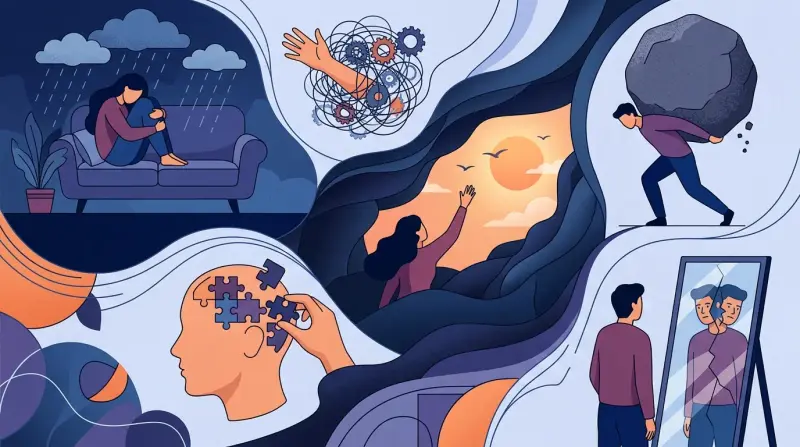
When you find yourself caught in a whirlwind of heavy emotions and even the smallest tasks—like getting out of bed or going through your daily routine—feel unbearable, you might begin to wonder whether it’s time to start therapy. In this article, Tatmeen sheds light on the most prominent signals suggesting that the moment has come to seek help. Our goal is to offer you a clear and reassuring view of the indicators that urge you to look for specialized support so you can overcome obstacles and move toward a more balanced, comfortable life.
How Can You Recognize the First Signs That You Need Psychotherapy?
Each of us experiences crises and emotional challenges at different stages of life, but sometimes those challenges turn into an unrelenting storm. You should never feel embarrassed or afraid to admit that you need outside support. Despite our inner strength, there are moments when we may need someone with professional expertise to guide us toward healing.
What Are the Early Psychological Signs?
Severe Mood Swings
If you find yourself shifting from intense joy to sadness or anxiety in short periods, it could signal an emotional disorder. Research from the Mayo Clinic suggests that mood swings can be an important indicator of depression or anxiety—especially if they persist for a long time or interfere with daily life.
Repeated Social Withdrawal
It’s natural to need personal space from time to time, but when isolation becomes a constant choice accompanied by fear or discomfort around others, it warrants considering whether an underlying psychological issue exists.
Disturbed Sleep and Loss of Appetite
Sleep and eating disturbances are significant indicators of mental health. You might wake up in the middle of the night drenched in anxiety or lose your appetite because of sadness or tension. When this continues for an extended period, early therapeutic intervention may be necessary.
The longer someone delays seeking help, the greater the risk of negative health consequences. Acknowledging the problem is the first step toward a solution, and psychotherapy provides a safe space to understand the roots of your emotions and learn better ways to cope.
How Does Paying Attention to Signs of Mental Strain Help You?
If you feel continuous mental pressure or find your mind unable to calm down even during rest, it may indicate accumulated stress or excessive anxiety. These signals can appear through:
Difficulty concentrating: When your focus noticeably weakens or you feel your mind is in a constant fog.
Exaggerated emotional reactions: Overreacting to simple situations—such as quick anger or crying without a clear reason.
A study by the World Health Organization points out that chronic stress and anxiety can increase the likelihood of developing physical illnesses in the long term. Therefore, it is essential to take these signs seriously rather than dismiss them as temporary.
Why Is Talking to a Psychotherapist Different?
Psychotherapy is not just a casual conversation; it is a genuine meeting with yourself through a trained specialist skilled in listening, empathy, and guidance. In sessions you can:
Explore the hidden causes behind your turbulent feelings.
Learn new strategies to cope with stress.
Develop self-support mechanisms to improve your quality of life.
People who attend regular therapy sessions often experience a noticeable reduction in anxiety and depression symptoms, along with improved relationships. Psychotherapy gives you the safety to say whatever is on your mind without fear of judgment or criticism and offers a place where you can rebuild yourself slowly and steadily.
Overcoming Feelings of Guilt or Shame
In many of our communities, some feel embarrassed even thinking about therapy. Yet mental health is an inseparable part of overall well-being and is no less important than physical care. Just as we visit a doctor when experiencing physical pain, the mind, too, deserves care and consultation when psychological pain intensifies. Remember: seeking help is courage, not weakness.
Initial Steps Toward Deeper Self-Awareness
Practice meditation or relaxation exercises: These techniques help calm the mind and recognize feelings more clearly.
Keep a journal: Writing down your daily thoughts and emotions is an effective way to understand what occupies your mind and how you respond.
Connect with your personal support circle: Whether family members or trusted friends, talking with them eases feelings of loneliness and isolation.
It is vital to realize you are not alone on this journey; many people have had similar experiences and found their path to recovery by working with professionals and experts in mental health.
When Should You Seek Psychotherapy Without Hesitation?
When a sense of helplessness overwhelms most areas of your life and prevents you from fulfilling daily responsibilities.
When depression intensifies to the point where you feel worthless or want to withdraw completely from society.
If you resort to harmful behaviors—such as using certain substances or actions that damage your mental and physical health—to escape pressure.
At this stage, it may be the right time to see a psychologist or psychiatrist who can accurately diagnose your condition and create a treatment plan suited to your needs.
Do Not Hesitate to Knock on the Door of Support
If you feel you are living under unbearable pressure or find it difficult to manage your thoughts and fears alone, starting psychotherapy could make a significant difference in easing that burden. Tatmeen app allows you to connect with psychologists and psychiatrists in a confidential and convenient way, letting you choose the consultation style that suits you—whether voice, video, or even text chats.
Book your therapy session today, listen to your inner call, and don’t shy away from taking the first step. Each of us deserves peace of mind and inner tranquility, and the real beginning might be deciding to embark on a therapeutic journey that fills you with more hope and confidence in the future.
Frequently Asked Questions
Can mild depression worsen if I don’t get help?
Yes. Even mild depression can become more severe if ignored for long periods. Early intervention enhances treatment effectiveness, helps prevent symptom escalation, and reduces their impact on your life and relationships.
How confidential are therapy sessions?
Therapy sessions are governed by professional ethics that guarantee the confidentiality of personal information. You can feel safe knowing that your therapist or psychiatrist is committed to not disclosing any of your private information to anyone without your consent.
Do I need medication, or are therapy sessions enough?
That depends on your psychological condition and the specialist’s diagnosis. Some cases respond to psychotherapy alone, while others may require a combination of therapy sessions and medication. A psychiatrist is best suited to assess your situation and recommend the most appropriate approach.
A writer and researcher specializing in psychiatry, she focuses on mental health and the human emotions we experience but cannot always find the words to name. She writes about us—about humanity and the human experience—and simplifies complex topics to offer content that helps us better understand ourselves and life, ultimately making us feel less alone.
Every Tatmeen article is reviewed by care providers licensed by the Saudi Commission for Health Specialties, so what you read is accurate and trustworthy.
This article builds understanding and does not replace a licensed care provider.
Need someone to talk to?
Tatmeen's licensed care providers are available around the clock, and the app's urgent consultation connects you with one within minutes.
Download Tatmeen to explore care providers and booking options.
Smart matchingFour quick questions suggest the right care provider
Urgent consultationTalk to an available care provider within minutes
Free psychological measuresMore than 20 tests to understand how you are doing
Scan to download
{"data":{"id":"79715e8c-0371-4e09-b8cf-1617005d9053","slug":"signs-you-need-to-start-therapy","arTitle":"علامات مهمة تشير إلى حاجتك لبدء العلاج النفسي","enTitle":"Important Signs That Indicate You Need to Start Therapy","thumbnailAltText":"man surrounded by thorns seeking peace","estimatedReadingTime":5,"likesCount":367,"writer":{"id":"3ab72b74-f26f-4337-9b47-3114b0f90de5","arBio":"كاتبة وباحثة متخصصة في مجال الطب النفسي، تهتم بموضوعات الصحة النفسية وبالمشاعر الإنسانية التي نختبرها ولا نجد دائمًا الكلمات لتسميتها. تكتب عنّا؛ عن الإنسان وتجربته، وتبسّط الموضوعات المعقّدة لتقدّم محتوى يساعدنا على فهم ذواتنا والحياة أكثر، ويجعلنا نشعر بأننا بوحدة أقل.","enBio":"A writer and researcher specializing in psychiatry, she focuses on mental health and the human emotions we experience but cannot always find the words to name. She writes about us—about humanity and the human experience—and simplifies complex topics to offer content that helps us better understand ourselves and life, ultimately making us feel less alone.","user":{"slug":"ayat-alnajar","arFullName":"آيات النجار","enFullName":"Ayat Al-Najjar","publicProfileImageUrl":"https://cdn.tatmeen.sa/public/profile-images/02384455-68fa-40b6-ad05-609fde65cafa/21b9a610dde5dfc6d37af110c23e9c7ab3946be080c281beb000debf4f7d31a6.webp","publicProfileImage96Url":"https://cdn.tatmeen.sa/public/profile-images/02384455-68fa-40b6-ad05-609fde65cafa/21b9a610dde5dfc6d37af110c23e9c7ab3946be080c281beb000debf4f7d31a6-w96.webp","publicProfileImage192Url":"https://cdn.tatmeen.sa/public/profile-images/02384455-68fa-40b6-ad05-609fde65cafa/21b9a610dde5dfc6d37af110c23e9c7ab3946be080c281beb000debf4f7d31a6-w192.webp"}},"arContent":"","enContent":"","productionDocument":{"headings":[{"id":"article-section-how-can-you-recognize-the-first-signs-that-you-need-psychotherapy","text":"How Can You Recognize the First Signs That You Need Psychotherapy?"},{"id":"article-section-how-does-paying-attention-to-signs-of-mental-strain-help-you","text":"How Does Paying Attention to Signs of Mental Strain Help You?"},{"id":"article-section-why-is-talking-to-a-psychotherapist-different","text":"Why Is Talking to a Psychotherapist Different?"},{"id":"article-section-overcoming-feelings-of-guilt-or-shame","text":"Overcoming Feelings of Guilt or Shame"},{"id":"article-section-initial-steps-toward-deeper-self-awareness","text":"Initial Steps Toward Deeper Self-Awareness"},{"id":"article-section-when-should-you-seek-psychotherapy-without-hesitation","text":"When Should You Seek Psychotherapy Without Hesitation?"},{"id":"article-section-do-not-hesitate-to-knock-on-the-door-of-support","text":"Do Not Hesitate to Knock on the Door of Support"}],"faqs":[{"question":"Can mild depression worsen if I don’t get help?","answer":"<p><span style=\"color:#000000\">Yes. Even mild depression can become more severe if ignored for long periods. Early intervention enhances treatment effectiveness, helps prevent symptom escalation, and reduces their impact on your life and relationships.</span></p>"},{"question":"How confidential are therapy sessions?","answer":"<p><span style=\"color:#000000\">Therapy sessions are governed by professional ethics that guarantee the confidentiality of personal information. You can feel safe knowing that your therapist or psychiatrist is committed to not disclosing any of your private information to anyone without your consent.</span></p>"},{"question":"Do I need medication, or are therapy sessions enough?","answer":"<p><span style=\"color:#000000\">That depends on your psychological condition and the specialist’s diagnosis. Some cases respond to psychotherapy alone, while others may require a combination of therapy sessions and medication. A psychiatrist is best suited to assess your situation and recommend the most appropriate approach.</span></p>"}],"beforeSourcesHtml":"<p></p>","sources":[],"afterSourcesHtml":"","blocks":[{"type":"html","html":"<p><span style=\"color:#000000\">When you find yourself caught in a whirlwind of heavy emotions and even the smallest tasks—like getting out of bed or going through your daily routine—feel unbearable, you might begin to wonder whether it’s time to start therapy. In this article, <strong>Tatmeen</strong> sheds light on the most prominent signals suggesting that the moment has come to seek help. Our goal is to offer you a clear and reassuring view of the indicators that urge you to look for specialized support so you can overcome obstacles and move toward a more balanced, comfortable life.</span></p><h2 id=\"article-section-how-can-you-recognize-the-first-signs-that-you-need-psychotherapy\" data-toc-heading tabindex=\"-1\"><span id=\"how-can-you-recognize-the-first-signs-that-you-need-psychotherapy-1\" aria-hidden=\"true\"></span><span style=\"color:#000000\"><strong>How Can You Recognize the First Signs That You Need Psychotherapy?</strong></span></h2><p><span style=\"color:#000000\">Each of us experiences crises and emotional challenges at different stages of life, but sometimes those challenges turn into an unrelenting storm. You should never feel embarrassed or afraid to admit that you need outside support. Despite our inner strength, there are moments when we may need someone with professional expertise to guide us toward healing.</span></p><h3><span style=\"color:#000000\"><strong>What Are the Early Psychological Signs?</strong></span></h3><h4><span style=\"color:#000000\"><strong>Severe Mood Swings</strong></span></h4><p><span style=\"color:#000000\">If you find yourself shifting from intense joy to sadness or anxiety in short periods, it could signal an emotional disorder. Research from the <strong>Mayo Clinic</strong> suggests that mood swings can be an important indicator of depression or anxiety—especially if they persist for a long time or interfere with daily life.</span></p><h4><span style=\"color:#000000\"><strong>Repeated Social Withdrawal</strong></span></h4><p><span style=\"color:#000000\">It’s natural to need personal space from time to time, but when isolation becomes a constant choice accompanied by fear or discomfort around others, it warrants considering whether an underlying psychological issue exists.</span></p><h4><span style=\"color:#000000\"><strong>Disturbed Sleep and Loss of Appetite</strong></span></h4><p><span style=\"color:#000000\">Sleep and eating disturbances are significant indicators of mental health. You might wake up in the middle of the night drenched in anxiety or lose your appetite because of sadness or tension. When this continues for an extended period, early therapeutic intervention may be necessary.</span></p><p><span style=\"color:#000000\">The longer someone delays seeking help, the greater the risk of negative health consequences. Acknowledging the problem is the first step toward a solution, and psychotherapy provides a safe space to understand the roots of your emotions and learn better ways to cope.</span></p><h2 id=\"article-section-how-does-paying-attention-to-signs-of-mental-strain-help-you\" data-toc-heading tabindex=\"-1\"><span id=\"how-does-paying-attention-to-signs-of-mental-strain-help-you-2\" aria-hidden=\"true\"></span><span style=\"color:#000000\"><strong>How Does Paying Attention to Signs of Mental Strain Help You?</strong></span></h2><p><span style=\"color:#000000\">If you feel continuous mental pressure or find your mind unable to calm down even during rest, it may indicate accumulated stress or excessive anxiety. These signals can appear through:</span></p><ul><li><p><span style=\"color:#000000\"><strong>Difficulty concentrating:</strong> When your focus noticeably weakens or you feel your mind is in a constant fog.<br /><br /></span></p></li><li><p><span style=\"color:#000000\"><strong>Exaggerated emotional reactions:</strong> Overreacting to simple situations—such as quick anger or crying without a clear reason.<br /></span></p></li></ul><p><span style=\"color:#000000\">A study by the <strong>World Health Organization</strong> points out that chronic stress and anxiety can increase the likelihood of developing physical illnesses in the long term. Therefore, it is essential to take these signs seriously rather than dismiss them as temporary.</span></p><h2 id=\"article-section-why-is-talking-to-a-psychotherapist-different\" data-toc-heading tabindex=\"-1\"><span id=\"why-is-talking-to-a-psychotherapist-different-3\" aria-hidden=\"true\"></span><span style=\"color:#000000\"><strong>Why Is Talking to a Psychotherapist Different?</strong></span></h2><p><span style=\"color:#000000\">Psychotherapy is not just a casual conversation; it is a genuine meeting with yourself through a trained specialist skilled in listening, empathy, and guidance. In sessions you can:</span></p><ul><li><p><span style=\"color:#000000\">Explore the hidden causes behind your turbulent feelings.<br /></span></p></li><li><p><span style=\"color:#000000\">Learn new strategies to cope with stress.<br /></span></p></li><li><p><span style=\"color:#000000\">Develop self-support mechanisms to improve your quality of life.<br /></span></p></li></ul><p><span style=\"color:#000000\">People who attend regular therapy sessions often experience a noticeable reduction in anxiety and depression symptoms, along with improved relationships. Psychotherapy gives you the safety to say whatever is on your mind without fear of judgment or criticism and offers a place where you can rebuild yourself slowly and steadily.</span></p><h2 id=\"article-section-overcoming-feelings-of-guilt-or-shame\" data-toc-heading tabindex=\"-1\"><span id=\"overcoming-feelings-of-guilt-or-shame-4\" aria-hidden=\"true\"></span><span style=\"color:#000000\"><strong>Overcoming Feelings of Guilt or Shame</strong></span></h2><p><span style=\"color:#000000\">In many of our communities, some feel embarrassed even thinking about therapy. Yet mental health is an inseparable part of overall well-being and is no less important than physical care. Just as we visit a doctor when experiencing physical pain, the mind, too, deserves care and consultation when psychological pain intensifies. Remember: seeking help is courage, not weakness.</span></p><h2 id=\"article-section-initial-steps-toward-deeper-self-awareness\" data-toc-heading tabindex=\"-1\"><span id=\"initial-steps-toward-deeper-self-awareness-5\" aria-hidden=\"true\"></span><span style=\"color:#000000\"><strong>Initial Steps Toward Deeper Self-Awareness</strong></span></h2><ul><li><p><span style=\"color:#000000\"><strong>Practice meditation or relaxation exercises:</strong> These techniques help calm the mind and recognize feelings more clearly.<br /></span></p></li><li><p><span style=\"color:#000000\"><strong>Keep a journal:</strong> Writing down your daily thoughts and emotions is an effective way to understand what occupies your mind and how you respond.<br /></span></p></li><li><p><span style=\"color:#000000\"><strong>Connect with your personal support circle:</strong> Whether family members or trusted friends, talking with them eases feelings of loneliness and isolation.<br /></span></p></li></ul><p><span style=\"color:#000000\">It is vital to realize you are not alone on this journey; many people have had similar experiences and found their path to recovery by working with professionals and experts in mental health.</span></p><h2 id=\"article-section-when-should-you-seek-psychotherapy-without-hesitation\" data-toc-heading tabindex=\"-1\"><span id=\"when-should-you-seek-psychotherapy-without-hesitation-6\" aria-hidden=\"true\"></span><span style=\"color:#000000\"><strong>When Should You Seek Psychotherapy Without Hesitation?</strong></span></h2><ul><li><p><span style=\"color:#000000\">When a sense of helplessness overwhelms most areas of your life and prevents you from fulfilling daily responsibilities.<br /></span></p></li><li><p><span style=\"color:#000000\">When depression intensifies to the point where you feel worthless or want to withdraw completely from society.<br /></span></p></li><li><p><span style=\"color:#000000\">If you resort to harmful behaviors—such as using certain substances or actions that damage your mental and physical health—to escape pressure.<br /></span></p></li></ul><p><span style=\"color:#000000\">At this stage, it may be the right time to see a psychologist or psychiatrist who can accurately diagnose your condition and create a treatment plan suited to your needs.</span></p><h2 id=\"article-section-do-not-hesitate-to-knock-on-the-door-of-support\" data-toc-heading tabindex=\"-1\"><span id=\"do-not-hesitate-to-knock-on-the-door-of-support-7\" aria-hidden=\"true\"></span><span style=\"color:#000000\"><strong>Do Not Hesitate to Knock on the Door of Support</strong></span></h2><p><span style=\"color:#000000\">If you feel you are living under unbearable pressure or find it difficult to manage your thoughts and fears alone, starting psychotherapy could make a significant difference in easing that burden. <strong>Tatmeen</strong> app allows you to connect with psychologists and psychiatrists in a confidential and convenient way, letting you choose the consultation style that suits you—whether voice, video, or even text chats.</span></p><p><span style=\"color:#000000\"><strong>Book your therapy session today,</strong> listen to your inner call, and don’t shy away from taking the first step. Each of us deserves peace of mind and inner tranquility, and the real beginning might be deciding to embark on a therapeutic journey that fills you with more hope and confidence in the future.</span></p>"}],"inlineCtaSignatures":[],"_experienceAliases":{"v":1,"fields":["html","bodyHtml"],"faqs":[0,1,2]}},"createdAt":"2026-04-21T22:00:00.000Z","updatedAt":"2026-06-24T23:51:16.132Z","disorderGroups":[{"id":"1e82772d-a1a7-4d29-b475-be9d6b67ae02","slug":"common-mental-issues","arName":"اضطرابات نفسية شائعة","enName":"Common Mental Issues"}],"reviewer":{"arFullName":"فريق تطمين","enFullName":"Tatmeen team","slug":"tatmeen-team","kind":"organization"},"productionArticle":true,"promotionAllowed":true,"preparedCover":{"src":"https://cdn.tatmeen.sa/public/article-lcp/article-lcp-v2/sha256-6900a7c69a920321fa5c7784b3039a918f58362c40fb5051e5cd331c50203ac0/800-17f115711d65ab5ad3fe6cbc5aa260bd81a8f9e6ef16d7896292795ae420d6ec.avif","fallback":"https://cdn.tatmeen.sa/public/article-lcp/article-lcp-v2/sha256-6900a7c69a920321fa5c7784b3039a918f58362c40fb5051e5cd331c50203ac0/800-e26a57e8a7a38d139ced593166f764f1a27f4bcfe911800fe249c26c2c2e55a6.webp","directUrl":"https://cdn.tatmeen.sa/blog-cover/Tatmeen-1776955141446.webp","isGolden":true,"avifSrcset":"https://cdn.tatmeen.sa/public/article-lcp/article-lcp-v2/sha256-6900a7c69a920321fa5c7784b3039a918f58362c40fb5051e5cd331c50203ac0/400-02ef2175fec37ee1f6c1642433b7f513312974afe8f4b289ac2627db7324c991.avif 400w, https://cdn.tatmeen.sa/public/article-lcp/article-lcp-v2/sha256-6900a7c69a920321fa5c7784b3039a918f58362c40fb5051e5cd331c50203ac0/640-1af2b535a29ed0e8007aa8b97d293efb9425d804417101597b41f93f4386bf5a.avif 640w, https://cdn.tatmeen.sa/public/article-lcp/article-lcp-v2/sha256-6900a7c69a920321fa5c7784b3039a918f58362c40fb5051e5cd331c50203ac0/800-17f115711d65ab5ad3fe6cbc5aa260bd81a8f9e6ef16d7896292795ae420d6ec.avif 800w, https://cdn.tatmeen.sa/public/article-lcp/article-lcp-v2/sha256-6900a7c69a920321fa5c7784b3039a918f58362c40fb5051e5cd331c50203ac0/1200-d69f2b9c5a141bde8b79549095305dde3c08f527b0abf17e0c4ab860d63638b5.avif 1200w","webpSrcset":"https://cdn.tatmeen.sa/public/article-lcp/article-lcp-v2/sha256-6900a7c69a920321fa5c7784b3039a918f58362c40fb5051e5cd331c50203ac0/400-326e4f156274e5a63d03bca7c29f1b398c09fe294f2f81963f320937c8465a79.webp 400w, https://cdn.tatmeen.sa/public/article-lcp/article-lcp-v2/sha256-6900a7c69a920321fa5c7784b3039a918f58362c40fb5051e5cd331c50203ac0/640-42764e851fa78d2212acd6f1eabf0f6f5bb73d8293da38deb0083881558dff28.webp 640w, https://cdn.tatmeen.sa/public/article-lcp/article-lcp-v2/sha256-6900a7c69a920321fa5c7784b3039a918f58362c40fb5051e5cd331c50203ac0/800-e26a57e8a7a38d139ced593166f764f1a27f4bcfe911800fe249c26c2c2e55a6.webp 800w, https://cdn.tatmeen.sa/public/article-lcp/article-lcp-v2/sha256-6900a7c69a920321fa5c7784b3039a918f58362c40fb5051e5cd331c50203ac0/1200-2062f2c135d9bc1a0867d297ce5b39862eebbf96264403f08dc7e5b0b14dd07d.webp 1200w","phoneAvifSrcset":"https://cdn.tatmeen.sa/public/article-lcp/article-lcp-v2/sha256-6900a7c69a920321fa5c7784b3039a918f58362c40fb5051e5cd331c50203ac0/400-02ef2175fec37ee1f6c1642433b7f513312974afe8f4b289ac2627db7324c991.avif 400w, https://cdn.tatmeen.sa/public/article-lcp/article-lcp-v2/sha256-6900a7c69a920321fa5c7784b3039a918f58362c40fb5051e5cd331c50203ac0/640-1af2b535a29ed0e8007aa8b97d293efb9425d804417101597b41f93f4386bf5a.avif 640w, https://cdn.tatmeen.sa/public/article-lcp/article-lcp-v2/sha256-6900a7c69a920321fa5c7784b3039a918f58362c40fb5051e5cd331c50203ac0/800-17f115711d65ab5ad3fe6cbc5aa260bd81a8f9e6ef16d7896292795ae420d6ec.avif 800w","phoneWebpSrcset":"https://cdn.tatmeen.sa/public/article-lcp/article-lcp-v2/sha256-6900a7c69a920321fa5c7784b3039a918f58362c40fb5051e5cd331c50203ac0/400-326e4f156274e5a63d03bca7c29f1b398c09fe294f2f81963f320937c8465a79.webp 400w, https://cdn.tatmeen.sa/public/article-lcp/article-lcp-v2/sha256-6900a7c69a920321fa5c7784b3039a918f58362c40fb5051e5cd331c50203ac0/640-42764e851fa78d2212acd6f1eabf0f6f5bb73d8293da38deb0083881558dff28.webp 640w, https://cdn.tatmeen.sa/public/article-lcp/article-lcp-v2/sha256-6900a7c69a920321fa5c7784b3039a918f58362c40fb5051e5cd331c50203ac0/800-e26a57e8a7a38d139ced593166f764f1a27f4bcfe911800fe249c26c2c2e55a6.webp 800w","width":800,"height":447},"previewTaxonomy":{"groups":[{"id":"1e82772d-a1a7-4d29-b475-be9d6b67ae02","slug":"common-mental-issues","arName":"اضطرابات نفسية شائعة","enName":"Common Mental Issues"}],"topics":[{"id":"4b322099-fefa-4ba7-a3d1-4130f206046a","slug":"anxiety","arName":"قلق","enName":"Anxiety","groupSlug":"common-mental-issues","href":"/blog/category/common-mental-issues/anxiety/"},{"id":"279dbfbb-dda2-465a-93a1-e9b181574318","slug":"depression","arName":"اكتئاب","enName":"Depression","groupSlug":"common-mental-issues","href":"/blog/category/common-mental-issues/depression/"}],"tags":[{"id":"22e81878-b04f-4e67-8dd1-fe64bee6baaf","slug":"therapy-journey","arName":"رحلة العلاج النفسي","enName":"Therapy Journey & Process"},{"id":"475c9ee4-379d-436c-93ab-4c63916e7197","slug":"self-assessment","arName":"تقييم ذاتي","enName":"Self-Assessment"}]},"previewProviderRecommendations":[{"id":"278d5ac5-30ff-46ad-97be-c67cdd125836","slug":"dr-mohammed-alamari-8085","arFullName":"د. محمد العماري","enFullName":"Dr. Mohammed Alamari","publicProfileImageUrl":"https://cdn.tatmeen.sa/public/profile-images/278d5ac5-30ff-46ad-97be-c67cdd125836/69bdd11cb01784eed010eb9883403fd6ca4e4afcec739dcd6114fd8b85f133a8.webp","publicProfileImage96Url":"https://cdn.tatmeen.sa/public/profile-images/278d5ac5-30ff-46ad-97be-c67cdd125836/69bdd11cb01784eed010eb9883403fd6ca4e4afcec739dcd6114fd8b85f133a8-w96.webp","publicProfileImage192Url":"https://cdn.tatmeen.sa/public/profile-images/278d5ac5-30ff-46ad-97be-c67cdd125836/69bdd11cb01784eed010eb9883403fd6ca4e4afcec739dcd6114fd8b85f133a8-w192.webp","specialization":{"arName":"طبيب أسرة","enName":"Family Physician"},"profileImageUrl":"https://cdn.tatmeen.sa/public/profile-images/278d5ac5-30ff-46ad-97be-c67cdd125836/69bdd11cb01784eed010eb9883403fd6ca4e4afcec739dcd6114fd8b85f133a8-w192.webp","experienceYears":3,"consultantInfo":{"averageRating":{"average":4},"specialization":{"arGeneralName":"طبيب أسرة","enGeneralName":"Family Physician"}}},{"id":"dc4f4096-c96e-46ad-8e85-55c7104fbbf9","slug":"alya-alasiri-9292","arFullName":"علياء العسيري","enFullName":"Alya Alasiri","publicProfileImageUrl":"","publicProfileImage96Url":"","publicProfileImage192Url":"","specialization":{"arName":"أخصائي نفسي","enName":"Psychologist"},"profileImageUrl":"","experienceYears":4,"consultantInfo":{"averageRating":{"average":0},"specialization":{"arGeneralName":"أخصائي نفسي","enGeneralName":"Psychologist"}}},{"id":"6df31339-a6f5-4131-a603-3a7c7a34c143","slug":"joud-alodhayyani-9014","arFullName":"جود العتيبي","enFullName":"Joud Alotaibi","publicProfileImageUrl":"https://cdn.tatmeen.sa/public/profile-images/6df31339-a6f5-4131-a603-3a7c7a34c143/7bb005ef9d4315296aad2a7d142fb2af2cf89920a40b474fc5139b9530269282.webp","publicProfileImage96Url":"https://cdn.tatmeen.sa/public/profile-images/6df31339-a6f5-4131-a603-3a7c7a34c143/7bb005ef9d4315296aad2a7d142fb2af2cf89920a40b474fc5139b9530269282-w96.webp","publicProfileImage192Url":"https://cdn.tatmeen.sa/public/profile-images/6df31339-a6f5-4131-a603-3a7c7a34c143/7bb005ef9d4315296aad2a7d142fb2af2cf89920a40b474fc5139b9530269282-w192.webp","specialization":{"arName":"أخصائي نفسي","enName":"Psychologist"},"profileImageUrl":"https://cdn.tatmeen.sa/public/profile-images/6df31339-a6f5-4131-a603-3a7c7a34c143/7bb005ef9d4315296aad2a7d142fb2af2cf89920a40b474fc5139b9530269282-w192.webp","experienceYears":2,"consultantInfo":{"averageRating":{"average":3.5},"specialization":{"arGeneralName":"أخصائي نفسي","enGeneralName":"Psychologist"}}}],"previewCareProviders":[{"id":"09364052-c2a9-4c52-9717-7ce2093b8d0a","slug":"kholoud-alharbi-5221","arFullName":"خلود الحربي","enFullName":"Kholoud Alharbi","publicProfileImageUrl":"https://cdn.tatmeen.sa/public/profile-images/09364052-c2a9-4c52-9717-7ce2093b8d0a/4a0aeb81619e351b77f4323e3605a0a00acc7ca3c82ee7cc5ca2c9e8ef716049.webp","publicProfileImage96Url":"https://cdn.tatmeen.sa/public/profile-images/09364052-c2a9-4c52-9717-7ce2093b8d0a/4a0aeb81619e351b77f4323e3605a0a00acc7ca3c82ee7cc5ca2c9e8ef716049-w96.webp","publicProfileImage192Url":"https://cdn.tatmeen.sa/public/profile-images/09364052-c2a9-4c52-9717-7ce2093b8d0a/4a0aeb81619e351b77f4323e3605a0a00acc7ca3c82ee7cc5ca2c9e8ef716049-w192.webp","gender":"FEMALE","specialization":{"arName":"أخصائي نفسي","enName":"Psychologist"}},{"id":"6f037535-1dca-4b50-a8b2-5974b7323286","slug":"salah-althobaiti-9053","arFullName":"صلاح الثبيتي","enFullName":"Salah Althobaiti","publicProfileImageUrl":"https://cdn.tatmeen.sa/public/profile-images/6f037535-1dca-4b50-a8b2-5974b7323286/35b6bd7fad9b1e004c1835803eb9c1b56dcacd380685ec8bff141f0fb888005c.webp","publicProfileImage96Url":"https://cdn.tatmeen.sa/public/profile-images/6f037535-1dca-4b50-a8b2-5974b7323286/35b6bd7fad9b1e004c1835803eb9c1b56dcacd380685ec8bff141f0fb888005c-w96.webp","publicProfileImage192Url":"https://cdn.tatmeen.sa/public/profile-images/6f037535-1dca-4b50-a8b2-5974b7323286/35b6bd7fad9b1e004c1835803eb9c1b56dcacd380685ec8bff141f0fb888005c-w192.webp","gender":"MALE","specialization":{"arName":"أخصائي نفسي","enName":"Psychologist"}},{"id":"3cc806e8-616b-4884-9f21-a75b378580a2","slug":"aisha-al-hashim-8667","arFullName":"عائشة ال هاشم","enFullName":"Aisha Al Hashim","publicProfileImageUrl":"https://cdn.tatmeen.sa/public/profile-images/3cc806e8-616b-4884-9f21-a75b378580a2/27f523d03be4dcfa1f6a79f70c1773887434e698990d214cd990caec56a44798.webp","publicProfileImage96Url":"https://cdn.tatmeen.sa/public/profile-images/3cc806e8-616b-4884-9f21-a75b378580a2/27f523d03be4dcfa1f6a79f70c1773887434e698990d214cd990caec56a44798-w96.webp","publicProfileImage192Url":"https://cdn.tatmeen.sa/public/profile-images/3cc806e8-616b-4884-9f21-a75b378580a2/27f523d03be4dcfa1f6a79f70c1773887434e698990d214cd990caec56a44798-w192.webp","gender":"FEMALE","specialization":{"arName":"أخصائي نفسي","enName":"Psychologist"}},{"id":"db2ce1a0-9325-4471-b7ce-eb2e811c30a3","slug":"amer-qutub-2441","arFullName":"عامر قطب","enFullName":"Amer Qutub","publicProfileImageUrl":"https://cdn.tatmeen.sa/public/profile-images/db2ce1a0-9325-4471-b7ce-eb2e811c30a3/80580f99bfd7fe2b2a9cf8eed73ab532f5086d1efe053b0aa57358c1ce004261.webp","publicProfileImage96Url":"https://cdn.tatmeen.sa/public/profile-images/db2ce1a0-9325-4471-b7ce-eb2e811c30a3/80580f99bfd7fe2b2a9cf8eed73ab532f5086d1efe053b0aa57358c1ce004261-w96.webp","publicProfileImage192Url":"https://cdn.tatmeen.sa/public/profile-images/db2ce1a0-9325-4471-b7ce-eb2e811c30a3/80580f99bfd7fe2b2a9cf8eed73ab532f5086d1efe053b0aa57358c1ce004261-w192.webp","gender":"MALE","specialization":{"arName":"أخصائي نفسي","enName":"Psychologist"}},{"id":"94765496-dbdf-4631-a01b-7df5f788668d","slug":"abdullrahman-alhamoudi-3045","arFullName":"عبدالرحمن الحمودي","enFullName":"Abdulrahman Alhamoudi","publicProfileImageUrl":"https://cdn.tatmeen.sa/public/profile-images/94765496-dbdf-4631-a01b-7df5f788668d/2d49f6b6493c564afb6f50b6c3634231dff3a5cf8353acfab393d1b2a88037d1.webp","publicProfileImage96Url":"https://cdn.tatmeen.sa/public/profile-images/94765496-dbdf-4631-a01b-7df5f788668d/2d49f6b6493c564afb6f50b6c3634231dff3a5cf8353acfab393d1b2a88037d1-w96.webp","publicProfileImage192Url":"https://cdn.tatmeen.sa/public/profile-images/94765496-dbdf-4631-a01b-7df5f788668d/2d49f6b6493c564afb6f50b6c3634231dff3a5cf8353acfab393d1b2a88037d1-w192.webp","gender":"MALE","specialization":{"arName":"أخصائي نفسي","enName":"Psychologist"}},{"id":"618dba89-5b70-4b46-8304-741b7ac8ecd3","slug":"abdullah-mari-1311","arFullName":"عبدالله مرعي","enFullName":"Abdullah Mari","publicProfileImageUrl":"https://cdn.tatmeen.sa/public/profile-images/618dba89-5b70-4b46-8304-741b7ac8ecd3/6b4a3bfb59f8a304ca79083b32859b46baad2e1d692974a47c02c1f66bd11129.webp","publicProfileImage96Url":"https://cdn.tatmeen.sa/public/profile-images/618dba89-5b70-4b46-8304-741b7ac8ecd3/6b4a3bfb59f8a304ca79083b32859b46baad2e1d692974a47c02c1f66bd11129-w96.webp","publicProfileImage192Url":"https://cdn.tatmeen.sa/public/profile-images/618dba89-5b70-4b46-8304-741b7ac8ecd3/6b4a3bfb59f8a304ca79083b32859b46baad2e1d692974a47c02c1f66bd11129-w192.webp","gender":"MALE","specialization":{"arName":"أخصائي نفسي","enName":"Psychologist"}},{"id":"3b50a5d5-e795-407f-8676-fd7f0e1bb7a0","slug":"abdulaziz-bin-hudayan-4940","arFullName":"عبدالعزيز بن هديان","enFullName":"Abdulaziz Bin Hudayan","publicProfileImageUrl":"https://cdn.tatmeen.sa/public/profile-images/3b50a5d5-e795-407f-8676-fd7f0e1bb7a0/710ff0fe1fb00cdb5042092e27b7910b480a439b02251ecded62d7758eefce95.webp","publicProfileImage96Url":"https://cdn.tatmeen.sa/public/profile-images/3b50a5d5-e795-407f-8676-fd7f0e1bb7a0/710ff0fe1fb00cdb5042092e27b7910b480a439b02251ecded62d7758eefce95-w96.webp","publicProfileImage192Url":"https://cdn.tatmeen.sa/public/profile-images/3b50a5d5-e795-407f-8676-fd7f0e1bb7a0/710ff0fe1fb00cdb5042092e27b7910b480a439b02251ecded62d7758eefce95-w192.webp","gender":"MALE","specialization":{"arName":"أخصائي نفسي","enName":"Psychologist"}},{"id":"d4ffcb6b-90a7-45b6-b941-964866f4564b","slug":"dhaifallah-alhumaidi-1092","arFullName":"ضيف الله الحميدي","enFullName":"Dhaifallah Alhumaidi","publicProfileImageUrl":"https://cdn.tatmeen.sa/public/profile-images/d4ffcb6b-90a7-45b6-b941-964866f4564b/1817171c5828a9b57d6c30d12332cf154e335272548bc90a6e8456d74d356956.webp","publicProfileImage96Url":"https://cdn.tatmeen.sa/public/profile-images/d4ffcb6b-90a7-45b6-b941-964866f4564b/1817171c5828a9b57d6c30d12332cf154e335272548bc90a6e8456d74d356956-w96.webp","publicProfileImage192Url":"https://cdn.tatmeen.sa/public/profile-images/d4ffcb6b-90a7-45b6-b941-964866f4564b/1817171c5828a9b57d6c30d12332cf154e335272548bc90a6e8456d74d356956-w192.webp","gender":"MALE","specialization":{"arName":"أخصائي نفسي","enName":"Psychologist"}}],"previewDownload":{"href":"/download","title":{"ar":"خطوة واحدة لأجلك، ابدأ الآن","en":"One step for you, start now"},"description":{"ar":"حمّل تطبيق تطمين لاستكشاف مقدمي الرعاية وخيارات الحجز.","en":"Download Tatmeen to explore care providers and booking options."},"posterSrc":"/images/home/cta-ar-new-1.webp","videoSrc":"/images/home/cta-ar-new-1.mp4","videoPosterSrc":"/images/home/cta-ar-new-1.webp","videoPosterEnSrc":"/images/home/cta-en-new-1.webp","videoType":"video/mp4","appStoreHref":"https://apps.apple.com/us/app/tatmeen-%D8%AA%D8%B7%D9%85%D9%8A%D9%86/id6473836983","googlePlayHref":"https://play.google.com/store/apps/details?id=com.TatmeenApp.user&hl=en"},"previewRelatedArticles":[{"id":"376467ea-d5a8-49b5-90d5-228f1ac794ad","slug":"common-types-of-psychological-trauma","route":"/blog/common-types-of-psychological-trauma/","title":{"ar":"أنواع الصدمات النفسية الشائعة وهل تعاني من أي منها؟","en":"Common Types of Psychological Trauma: Do You Suffer from Any of Them?"},"image":"https://cdn.tatmeen.sa/public/article-lcp/article-lcp-v2/sha256-e3a5148b53d4b76973a87725a96c7691b079e9f9bb96febe3c19bb6fba28f39e/800-9ed5302cb6fa6f46085aaaeb7d27bf97a0e876a760f467118e3abbf68d66790f.webp","directImageFallback":"https://cdn.tatmeen.sa/blog-cover/Tatmeen-1777312263606.webp","arThumbnailAltText":"a woman appears to be suffering from multiple psychological traumas","thumbnailAltText":"a woman appears to be suffering from multiple psychological traumas","topic":{"label":{"ar":"اضطرابات نفسية شائعة","en":"Common Mental Issues"}},"readingTimeMinutes":5},{"id":"f3b4167d-6d94-41c8-87b5-24bd08478da6","slug":"The-role-of-a-psychiatrist-in-a-patients-life","route":"/blog/The-role-of-a-psychiatrist-in-a-patients-life/","title":{"ar":"دور الطبيب النفسي في حياة المريض","en":"The Psychiatrist’s Role in a Patient’s Life"},"image":"https://cdn.tatmeen.sa/public/article-lcp/article-lcp-v2/sha256-8cf9a7f0315242bff52bff8979cf4e1d9da396d810f9d8cacdc74f8475c0e686/750-364db1f351415151d66dbeec5dc96c232821eab25a7c0ac7279338d774d6c91b.webp","directImageFallback":"https://cdn.tatmeen.sa/blog-cover/1704820622054-Tatmeen-img-396","arThumbnailAltText":"A person with a clipboard faces another person reclining on a couch","thumbnailAltText":"A person with a clipboard faces another person reclining on a couch","topic":{"label":{"ar":"اضطرابات نفسية شائعة","en":"Common Mental Issues"}},"readingTimeMinutes":5},{"id":"2ccb4c2c-f5e2-4194-a608-efef5ed9410a","slug":"Is-hallucination-a-mental-disorder","route":"/blog/Is-hallucination-a-mental-disorder/","title":{"ar":"هل الهلوسة مرض نفسي؟","en":"Are Hallucinations a Mental Disorder?"},"image":"https://cdn.tatmeen.sa/public/article-lcp/article-lcp-v2/sha256-04c1383a9e5b22a4750aa76a1b2afac8aeb06a27762f33a24a26dc51b10ab9da/600-122f398f3dc27d740814718b045ffc639109ce368600fa83f533040337d70b98.webp","directImageFallback":"https://cdn.tatmeen.sa/blog-cover/1704733369822-Tatmeen-img-301","arThumbnailAltText":"Seated person with two overlapping, motion-blurred copies of their body","thumbnailAltText":"Seated person with two overlapping, motion-blurred copies of their body","topic":{"label":{"ar":"اضطرابات نفسية شائعة","en":"Common Mental Issues"}},"readingTimeMinutes":5},{"id":"106115de-0737-410a-ac46-e8a93834723f","slug":"breaking-mental-health-stigma-awareness-saudi-arabia","route":"/blog/breaking-mental-health-stigma-awareness-saudi-arabia/","title":{"ar":"كسر الوصمة: التوعية بالصحة النفسية في المملكة العربية السعودية","en":"Breaking the Stigma: Mental Health Awareness in Saudi Arabia"},"image":"https://cdn.tatmeen.sa/public/article-lcp/article-lcp-v2/sha256-480d1a146193d8424029b6386c81797032fcf534eac86f95fd1e33c24411e8cb/800-469a5c589550e824696cf25f45cf2e31f643211ab4d76b91f6a76c3e3a953a55.webp","directImageFallback":"https://cdn.tatmeen.sa/blog-cover/Tatmeen-1776901266992.webp","arThumbnailAltText":"كسر وصمة الصحة النفسية وتعزيز الوعي بها في المملكة العربية السعودية","thumbnailAltText":"كسر وصمة الصحة النفسية وتعزيز الوعي بها في المملكة العربية السعودية","topic":{"label":{"ar":"اضطرابات نفسية شائعة","en":"Common Mental Issues"}},"readingTimeMinutes":5}],"previewRelatedReadStates":{}},"locale":"en","device":"desktop","path":"/en/blog/signs-you-need-to-start-therapy/","readingControls":false,"config":{"public":{"BUCKET_URL":"https://cdn.tatmeen.sa/","APP_BASE_URL":"https://tatmeen.sa","intercomAppId":"ppcnu9e3"}}}