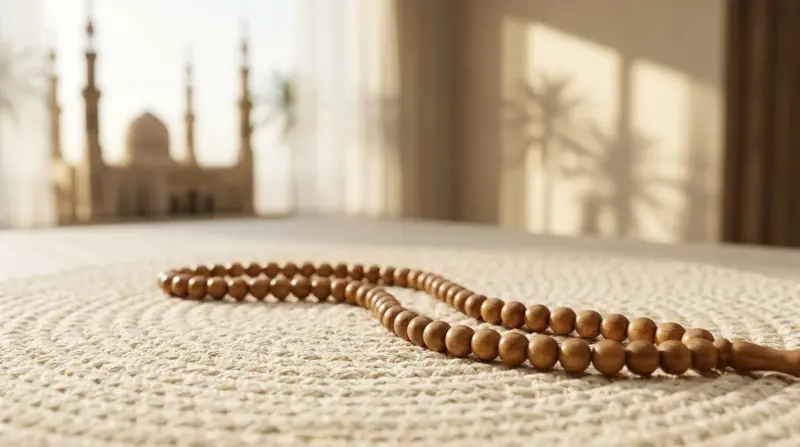
When religious care turns into doubt that never settles, worship can become a source of anxiety instead of reassurance. Questions about purity, intention, prayer, or whether an act has been accepted keep repeating, and the person finds themselves repeating, checking, and seeking reassurance again and again, not because they lack faith, but because they are afraid they may have fallen short despite everything they are doing. Religious OCD does not mean weak faith or lack of piety. It is a compulsive pattern that attaches itself to what matters most to a person, turning spiritual meaning into an exhausting loop of fear and repetition. In this article from Tatmeen, we explain the difference between peaceful religiosity and religious OCD, the possible causes behind it, and how it can be treated in a way that respects religious values and helps the person regain calm.
Not a Sign of Weak Faith
When OCD takes on religious themes, it does not become proof of weak or diminished faith. Often, it attaches itself to what matters most to the person, so it may revolve around purity, the validity of prayer, intention, remembrance, or fear of committing a sin that did not actually happen. What distinguishes it is not simple care, but the relentless urgency and the doubt that returns even after you have done enough.
This pattern is linked to pathological preoccupation with guilt or moral and religious fears, and it is often accompanied by repeated compulsive behavior that increases distress instead of easing it. The measure, then, is not the amount of worship or the intensity of commitment, but the effect: does worship lead you to calm, or into an endless loop of depletion?
It Begins With the Need for Complete Certainty
This kind of OCD does not arise from one direct cause, but from the overlap of several factors. A person may already have a vulnerability to OCD, along with heightened sensitivity to guilt, difficulty tolerating doubt, or a tendency to hold themselves excessively responsible for the correctness of every detail. With psychological stress, exhaustion, or a turbulent period, the mind becomes more attached to the need for complete reassurance.
That is why religion is not the cause, but the subject OCD picks up because it is closest to the person's heart. The more precious and important something is, the more vulnerable it becomes to turning into a field of fear. The person begins by trying to protect their worship from error, then finds themselves chasing an absolute certainty that cannot truly be reached, so repetition increases instead of the soul settling.
It Slips Into Worship Through the Door of Care
It may begin with a small question that seems reasonable: Did I make the intention properly? Did I make a mistake in a certain phrase? Did my ablution break? But the problem does not stop at the question. It lies in the fact that the answer does not hold. The person feels reassured for a moment, then doubt returns in another form, so they repeat ablution, repeat prayer, spend a long time searching inwardly, or seek reassurance again and again from different people.
That is why we point out at Tatmeen that the important difference is not between someone religious and someone nonreligious, but between worship that is completed and then left, and behavior that forces repetition even though the person knows deep down that they have gone beyond what is reasonable. Over time, the harm may no longer be limited to worship itself, but may extend to being late for work, exhaustion, and withdrawing from some acts of worship out of fear of entering an endless cycle.
Treatment Respects Religiosity and Does Not Feed OCD
Effective treatment is not about weakening religiosity or mocking a person's religious sensitivity. The aim is to help the person distinguish between what worship itself requires and what OCD adds on top of it through repetition, checking, and the demand for impossible certainty. Here, cognitive behavioral therapy becomes important, especially exposure and response prevention, where the person learns to face doubt without responding with the familiar rituals that keep them stuck.
In this type of OCD, sensitivity in treatment is very important, because the goal is not to leave worship, but to leave the compulsive additions that have attached themselves to it. NICE1 recommends cognitive behavioral therapy that includes exposure and response prevention as one of the main treatments for OCD, with the possible use of appropriate antidepressant medications when symptoms become more severe or when psychotherapy alone is not enough. Treatment here does not strip religion of its meaning; it returns worship to its simplicity and lightens the burden of constant doubt.
When It Swallows Time and Peace
Sometimes a person becomes so used to this pattern that they think it is part of piety, even though it has begun consuming their day and their peace. If you repeatedly notice one or more of these signs, it is worth pausing and taking the matter more seriously:
You spend a long time on purity, prayer, or mental reviewing.
You repeat the same act many times without feeling steady reassurance.
Your sleep, work, or studies are affected by this repetition.
Your feelings of guilt and fear increase instead of worship giving you calm.
When OCD reaches this point, silence is not necessarily patience; it may be a delay that allows the circle to widen. Early attention does not mean exaggerating the issue. It prevents religious practice from turning from a space of closeness and comfort into a space of exhaustion and constant fear. The sooner you understand the pattern, the clearer and gentler dealing with it becomes.
Finally
When OCD wears the cloak of religion, it confuses the person because it mixes fear of falling short with fear of the illness itself. But understanding this difference greatly reduces blame and confusion, and opens the door to treatment that respects your values instead of clashing with them, returning worship to its reassuring meaning rather than leaving it as a space of daily depletion. If this burden has lasted for a long time, booking your first session through Tatmeen may be a practical step that helps you understand what is happening calmly, without pressure or judgment.
Frequently Asked Questions
Does Religious OCD Mean Weak Faith?
No. This type of OCD can affect someone who is very careful about their religion. In fact, its attachment to religious topics may come from their great importance to the person. The problem is the compulsive urgency, not the original care.
Does Treatment Ask Me to Become Lax in Worship?
No. Treatment does not target worship itself, but the compulsive behavior OCD adds on top of it. The goal is to do what is required of you with reassurance, without constant repetition, endless checking, or the demand for complete certainty.
When Does Seeking Support Become Important?
When OCD starts taking a long time from your day, disrupting your work and rest, or making you live in constant fear and guilt. It is also important if you begin delaying worship or exhausting yourself in it in a repeated way that does not ease.
A writer and researcher specializing in psychiatry, she focuses on mental health and the human emotions we experience but cannot always find the words to name. She writes about us—about humanity and the human experience—and simplifies complex topics to offer content that helps us better understand ourselves and life, ultimately making us feel less alone.
Every Tatmeen article is reviewed by care providers licensed by the Saudi Commission for Health Specialties, so what you read is accurate and trustworthy.
This article builds understanding and does not replace a licensed care provider.
Need someone to talk to?
Tatmeen's licensed care providers are available around the clock, and the app's urgent consultation connects you with one within minutes.
Download Tatmeen to explore care providers and booking options.
Smart matchingFour quick questions suggest the right care provider
Urgent consultationTalk to an available care provider within minutes
Free psychological measuresMore than 20 tests to understand how you are doing
Scan to download
{"data":{"id":"8a61e3ca-c176-4526-9dcf-3db1ca1c914a","slug":"OCD-religion-causes-and-treatment-methods","arTitle":"الوسواس القهري في الدين: الأسباب وطرق العلاج","enTitle":"Religious OCD: Causes and Ways to Treat It","thumbnailAltText":"Calm man in white thobe praying on rug in soft morning light, peaceful minimalist room","estimatedReadingTime":7,"likesCount":0,"writer":{"id":"3ab72b74-f26f-4337-9b47-3114b0f90de5","arBio":"كاتبة وباحثة متخصصة في مجال الطب النفسي، تهتم بموضوعات الصحة النفسية وبالمشاعر الإنسانية التي نختبرها ولا نجد دائمًا الكلمات لتسميتها. تكتب عنّا؛ عن الإنسان وتجربته، وتبسّط الموضوعات المعقّدة لتقدّم محتوى يساعدنا على فهم ذواتنا والحياة أكثر، ويجعلنا نشعر بأننا بوحدة أقل.","enBio":"A writer and researcher specializing in psychiatry, she focuses on mental health and the human emotions we experience but cannot always find the words to name. She writes about us—about humanity and the human experience—and simplifies complex topics to offer content that helps us better understand ourselves and life, ultimately making us feel less alone.","user":{"slug":"ayat-alnajar","arFullName":"آيات النجار","enFullName":"Ayat Al-Najjar","publicProfileImageUrl":"https://cdn.tatmeen.sa/public/profile-images/02384455-68fa-40b6-ad05-609fde65cafa/21b9a610dde5dfc6d37af110c23e9c7ab3946be080c281beb000debf4f7d31a6.webp","publicProfileImage96Url":"https://cdn.tatmeen.sa/public/profile-images/02384455-68fa-40b6-ad05-609fde65cafa/21b9a610dde5dfc6d37af110c23e9c7ab3946be080c281beb000debf4f7d31a6-w96.webp","publicProfileImage192Url":"https://cdn.tatmeen.sa/public/profile-images/02384455-68fa-40b6-ad05-609fde65cafa/21b9a610dde5dfc6d37af110c23e9c7ab3946be080c281beb000debf4f7d31a6-w192.webp"}},"arContent":"","enContent":"","productionDocument":{"headings":[{"id":"article-section-not-a-sign-of-weak-faith","text":"Not a Sign of Weak Faith"},{"id":"article-section-it-begins-with-the-need-for-complete-certainty","text":"It Begins With the Need for Complete Certainty"},{"id":"article-section-it-slips-into-worship-through-the-door-of-care","text":"It Slips Into Worship Through the Door of Care"},{"id":"article-section-treatment-respects-religiosity-and-does-not-feed-ocd","text":"Treatment Respects Religiosity and Does Not Feed OCD"},{"id":"article-section-when-it-swallows-time-and-peace","text":"When It Swallows Time and Peace"},{"id":"article-section-finally","text":"Finally"}],"faqs":[{"question":"Does Religious OCD Mean Weak Faith?","answer":"<p><span style=\"color:#000000\">No. This type of OCD can affect someone who is very careful about their religion. In fact, its attachment to religious topics may come from their great importance to the person. The problem is the compulsive urgency, not the original care.</span></p>"},{"question":"Does Treatment Ask Me to Become Lax in Worship?","answer":"<p><span style=\"color:#000000\">No. Treatment does not target worship itself, but the compulsive behavior OCD adds on top of it. The goal is to do what is required of you with reassurance, without constant repetition, endless checking, or the demand for complete certainty.</span></p>"},{"question":"When Does Seeking Support Become Important?","answer":"<p><span style=\"color:#000000\">When OCD starts taking a long time from your day, disrupting your work and rest, or making you live in constant fear and guilt. It is also important if you begin delaying worship or exhausting yourself in it in a repeated way that does not ease.</span></p>"}],"beforeSourcesHtml":"","sources":[{"title":"OCD and BDD Treatment Recommendations - NICE","href":"https://www.nice.org.uk/guidance/cg31/chapter/Recommendations","hostname":"nice.org.uk"},{"title":"Obsessive-Compulsive Disorder - NIMH","href":"https://www.nimh.nih.gov/health/publications/obsessive-compulsive-disorder-when-unwanted-thoughts-or-repetitive-behaviors-take-over","hostname":"nimh.nih.gov"},{"title":"What Is OCD and Scrupulosity? - IOCDF","href":"https://iocdf.org/faith-ocd/what-is-ocd-scrupulosity/","hostname":"iocdf.org"}],"afterSourcesHtml":"","blocks":[{"type":"html","html":"<p><span style=\"color:#000000\">When religious care turns into doubt that never settles, worship can become a source of anxiety instead of reassurance. Questions about purity, intention, prayer, or whether an act has been accepted keep repeating, and the person finds themselves repeating, checking, and seeking reassurance again and again, not because they lack faith, but because they are afraid they may have fallen short despite everything they are doing. Religious OCD does not mean weak faith or lack of piety. It is a compulsive pattern that attaches itself to what matters most to a person, turning spiritual meaning into an exhausting loop of fear and repetition. In this article from Tatmeen, we explain the difference between peaceful religiosity and religious OCD, the possible causes behind it, and how it can be treated in a way that respects religious values and helps the person regain calm.</span></p><h2 id=\"article-section-not-a-sign-of-weak-faith\" data-toc-heading tabindex=\"-1\"><span id=\"not-a-sign-of-weak-faith-1\" aria-hidden=\"true\"></span><span style=\"color:#000000\"><strong>Not a Sign of Weak Faith</strong></span></h2><p><span style=\"color:#000000\">When OCD takes on religious themes, it does not become proof of weak or diminished faith. Often, it attaches itself to what matters most to the person, so it may revolve around purity, the validity of prayer, intention, remembrance, or fear of committing a sin that did not actually happen. What distinguishes it is not simple care, but the relentless urgency and the doubt that returns even after you have done enough.</span></p><p><span style=\"color:#000000\">This pattern is linked to pathological preoccupation with guilt or moral and religious fears, and it is often accompanied by repeated compulsive behavior that increases distress instead of easing it. The measure, then, is not the amount of worship or the intensity of commitment, but the effect: does worship lead you to calm, or into an endless loop of depletion?</span></p><h2 id=\"article-section-it-begins-with-the-need-for-complete-certainty\" data-toc-heading tabindex=\"-1\"><span id=\"it-begins-with-the-need-for-complete-certainty-2\" aria-hidden=\"true\"></span><span style=\"color:#000000\"><strong>It Begins With the Need for Complete Certainty</strong></span></h2><p><span style=\"color:#000000\">This kind of OCD does not arise from one direct cause, but from the overlap of several factors. A person may already have a vulnerability to OCD, along with heightened sensitivity to guilt, difficulty tolerating doubt, or a tendency to hold themselves excessively responsible for the correctness of every detail. With psychological stress, exhaustion, or a turbulent period, the mind becomes more attached to the need for complete reassurance.</span></p><p><span style=\"color:#000000\">That is why religion is not the cause, but the subject OCD picks up because it is closest to the person's heart. The more precious and important something is, the more vulnerable it becomes to turning into a field of fear. The person begins by trying to protect their worship from error, then finds themselves chasing an absolute certainty that cannot truly be reached, so repetition increases instead of the soul settling.</span></p><h2 id=\"article-section-it-slips-into-worship-through-the-door-of-care\" data-toc-heading tabindex=\"-1\"><span id=\"it-slips-into-worship-through-the-door-of-care-3\" aria-hidden=\"true\"></span><span style=\"color:#000000\"><strong>It Slips Into Worship Through the Door of Care</strong></span></h2><p><span style=\"color:#000000\">It may begin with a small question that seems reasonable: Did I make the intention properly? Did I make a mistake in a certain phrase? Did my ablution break? But the problem does not stop at the question. It lies in the fact that the answer does not hold. The person feels reassured for a moment, then doubt returns in another form, so they repeat ablution, repeat prayer, spend a long time searching inwardly, or seek reassurance again and again from different people.</span></p><p><span style=\"color:#000000\">That is why we point out at Tatmeen that the important difference is not between someone religious and someone nonreligious, but between worship that is completed and then left, and behavior that forces repetition even though the person knows deep down that they have gone beyond what is reasonable. Over time, the harm may no longer be limited to worship itself, but may extend to being late for work, exhaustion, and withdrawing from some acts of worship out of fear of entering an endless cycle.</span></p><h2 id=\"article-section-treatment-respects-religiosity-and-does-not-feed-ocd\" data-toc-heading tabindex=\"-1\"><span id=\"treatment-respects-religiosity-and-does-not-feed-ocd-4\" aria-hidden=\"true\"></span><span style=\"color:#000000\"><strong>Treatment Respects Religiosity and Does Not Feed OCD</strong></span></h2><p><span style=\"color:#000000\">Effective treatment is not about weakening religiosity or mocking a person's religious sensitivity. The aim is to help the person distinguish between what worship itself requires and what OCD adds on top of it through repetition, checking, and the demand for impossible certainty. Here, cognitive behavioral therapy becomes important, especially exposure and response prevention, where the person learns to face doubt without responding with the familiar rituals that keep them stuck.</span></p><p><span style=\"color:#000000\">In this type of OCD, sensitivity in treatment is very important, because the goal is not to leave worship, but to leave the compulsive additions that have attached themselves to it. </span><a href=\"https://www.nice.org.uk/guidance/cg31/chapter/Recommendations\" target=\"_blank\" rel=\"nofollow noopener noreferrer\"><span style=\"color:#1155cc\"><u>NICE</u></span></a><span style=\"color:#000000\"> recommends cognitive behavioral therapy that includes exposure and response prevention as one of the main treatments for OCD, with the possible use of appropriate antidepressant medications when symptoms become more severe or when psychotherapy alone is not enough. Treatment here does not strip religion of its meaning; it returns worship to its simplicity and lightens the burden of constant doubt.</span></p><h2 id=\"article-section-when-it-swallows-time-and-peace\" data-toc-heading tabindex=\"-1\"><span id=\"when-it-swallows-time-and-peace-5\" aria-hidden=\"true\"></span><span style=\"color:#000000\"><strong>When It Swallows Time and Peace</strong></span></h2><p><span style=\"color:#000000\">Sometimes a person becomes so used to this pattern that they think it is part of piety, even though it has begun consuming their day and their peace. If you repeatedly notice one or more of these signs, it is worth pausing and taking the matter more seriously:</span></p><ul><li><p><span style=\"color:#000000\">You spend a long time on purity, prayer, or mental reviewing.</span></p></li><li><p><span style=\"color:#000000\">You repeat the same act many times without feeling steady reassurance.</span></p></li><li><p><span style=\"color:#000000\">Your sleep, work, or studies are affected by this repetition.</span></p></li><li><p><span style=\"color:#000000\">Your feelings of guilt and fear increase instead of worship giving you calm.</span></p></li></ul><p><span style=\"color:#000000\">When OCD reaches this point, silence is not necessarily patience; it may be a delay that allows the circle to widen. Early attention does not mean exaggerating the issue. It prevents religious practice from turning from a space of closeness and comfort into a space of exhaustion and constant fear. The sooner you understand the pattern, the clearer and gentler dealing with it becomes.</span></p><h2 id=\"article-section-finally\" data-toc-heading tabindex=\"-1\"><span id=\"finally-6\" aria-hidden=\"true\"></span><span style=\"color:#000000\"><strong>Finally</strong></span></h2><p><span style=\"color:#000000\">When OCD wears the cloak of religion, it confuses the person because it mixes fear of falling short with fear of the illness itself. But understanding this difference greatly reduces blame and confusion, and opens the door to treatment that respects your values instead of clashing with them, returning worship to its reassuring meaning rather than leaving it as a space of daily depletion. If this burden has lasted for a long time, </span><a href=\"https://tatmeen.sa/download/\"><span style=\"color:#1155cc\"><u>booking your first session through Tatmeen</u></span></a><span style=\"color:#000000\"> may be a practical step that helps you understand what is happening calmly, without pressure or judgment.</span></p>"}],"inlineCtaSignatures":[],"_experienceAliases":{"v":1,"fields":["html","bodyHtml"],"faqs":[0,1,2]}},"createdAt":"2026-07-11T21:00:00.000Z","updatedAt":"2026-07-23T11:31:54.388Z","disorderGroups":[{"id":"04bd234d-c176-4ba1-afb3-9e9c05d0e648","slug":"addictions-and-compulsive-behaviors","arName":"الإدمان والسلوكيات القهرية","enName":"Addictions & Compulsive Behaviors"},{"id":"1e82772d-a1a7-4d29-b475-be9d6b67ae02","slug":"common-mental-issues","arName":"اضطرابات نفسية شائعة","enName":"Common Mental Issues"}],"reviewer":{"arFullName":"فريق تطمين","enFullName":"Tatmeen team","slug":"tatmeen-team","kind":"organization"},"productionArticle":true,"promotionAllowed":true,"preparedCover":{"src":"https://cdn.tatmeen.sa/public/article-lcp/article-lcp-v2/sha256-ede6caad2e4d3ceaaba685a1da96e86f03c46ed118b6de229f333f5bcb1f3909/800-4c4083ee6849970ab041cbee21f3ebc5b1e7db493f9b00b67ba6c726f2955fec.avif","fallback":"https://cdn.tatmeen.sa/public/article-lcp/article-lcp-v2/sha256-ede6caad2e4d3ceaaba685a1da96e86f03c46ed118b6de229f333f5bcb1f3909/800-9960981fd6cc1297793e659541319d08fad31df5a09eaa68a07a8a0674c8e2a2.webp","directUrl":"https://cdn.tatmeen.sa/blog-cover/Tatmeen-1783874315824.webp","isGolden":true,"avifSrcset":"https://cdn.tatmeen.sa/public/article-lcp/article-lcp-v2/sha256-ede6caad2e4d3ceaaba685a1da96e86f03c46ed118b6de229f333f5bcb1f3909/400-4d78ba329c2930cd8000c03e847ac1eb134695dadd07c25cc9e1d7aa4a57416d.avif 400w, https://cdn.tatmeen.sa/public/article-lcp/article-lcp-v2/sha256-ede6caad2e4d3ceaaba685a1da96e86f03c46ed118b6de229f333f5bcb1f3909/640-7eb35d3f8ef1960f0021ebe7ad676006d78b39a61de3aaea485753b079070de8.avif 640w, https://cdn.tatmeen.sa/public/article-lcp/article-lcp-v2/sha256-ede6caad2e4d3ceaaba685a1da96e86f03c46ed118b6de229f333f5bcb1f3909/800-4c4083ee6849970ab041cbee21f3ebc5b1e7db493f9b00b67ba6c726f2955fec.avif 800w, https://cdn.tatmeen.sa/public/article-lcp/article-lcp-v2/sha256-ede6caad2e4d3ceaaba685a1da96e86f03c46ed118b6de229f333f5bcb1f3909/1200-28228d4e2e2cf54eea1940fdac31920911752b813249fc400c05160ca4e60409.avif 1200w","webpSrcset":"https://cdn.tatmeen.sa/public/article-lcp/article-lcp-v2/sha256-ede6caad2e4d3ceaaba685a1da96e86f03c46ed118b6de229f333f5bcb1f3909/400-a8f96f275c16a5183f4665875e9221d18ce3f4c5d0972ab37c5e1172faccc99f.webp 400w, https://cdn.tatmeen.sa/public/article-lcp/article-lcp-v2/sha256-ede6caad2e4d3ceaaba685a1da96e86f03c46ed118b6de229f333f5bcb1f3909/640-bb7e91e8c0810413716aa2e1a7fbebc55656c2b4da6d0442c5e66d82972212ee.webp 640w, https://cdn.tatmeen.sa/public/article-lcp/article-lcp-v2/sha256-ede6caad2e4d3ceaaba685a1da96e86f03c46ed118b6de229f333f5bcb1f3909/800-9960981fd6cc1297793e659541319d08fad31df5a09eaa68a07a8a0674c8e2a2.webp 800w, https://cdn.tatmeen.sa/public/article-lcp/article-lcp-v2/sha256-ede6caad2e4d3ceaaba685a1da96e86f03c46ed118b6de229f333f5bcb1f3909/1200-c57b5462b544ee15a489a8a21397bb9de60a074d29e66102bcfc0a79b71ea39c.webp 1200w","phoneAvifSrcset":"https://cdn.tatmeen.sa/public/article-lcp/article-lcp-v2/sha256-ede6caad2e4d3ceaaba685a1da96e86f03c46ed118b6de229f333f5bcb1f3909/400-4d78ba329c2930cd8000c03e847ac1eb134695dadd07c25cc9e1d7aa4a57416d.avif 400w, https://cdn.tatmeen.sa/public/article-lcp/article-lcp-v2/sha256-ede6caad2e4d3ceaaba685a1da96e86f03c46ed118b6de229f333f5bcb1f3909/640-7eb35d3f8ef1960f0021ebe7ad676006d78b39a61de3aaea485753b079070de8.avif 640w, https://cdn.tatmeen.sa/public/article-lcp/article-lcp-v2/sha256-ede6caad2e4d3ceaaba685a1da96e86f03c46ed118b6de229f333f5bcb1f3909/800-4c4083ee6849970ab041cbee21f3ebc5b1e7db493f9b00b67ba6c726f2955fec.avif 800w","phoneWebpSrcset":"https://cdn.tatmeen.sa/public/article-lcp/article-lcp-v2/sha256-ede6caad2e4d3ceaaba685a1da96e86f03c46ed118b6de229f333f5bcb1f3909/400-a8f96f275c16a5183f4665875e9221d18ce3f4c5d0972ab37c5e1172faccc99f.webp 400w, https://cdn.tatmeen.sa/public/article-lcp/article-lcp-v2/sha256-ede6caad2e4d3ceaaba685a1da96e86f03c46ed118b6de229f333f5bcb1f3909/640-bb7e91e8c0810413716aa2e1a7fbebc55656c2b4da6d0442c5e66d82972212ee.webp 640w, https://cdn.tatmeen.sa/public/article-lcp/article-lcp-v2/sha256-ede6caad2e4d3ceaaba685a1da96e86f03c46ed118b6de229f333f5bcb1f3909/800-9960981fd6cc1297793e659541319d08fad31df5a09eaa68a07a8a0674c8e2a2.webp 800w","width":800,"height":450},"previewTaxonomy":{"groups":[{"id":"04bd234d-c176-4ba1-afb3-9e9c05d0e648","slug":"addictions-and-compulsive-behaviors","arName":"الإدمان والسلوكيات القهرية","enName":"Addictions & Compulsive Behaviors"},{"id":"1e82772d-a1a7-4d29-b475-be9d6b67ae02","slug":"common-mental-issues","arName":"اضطرابات نفسية شائعة","enName":"Common Mental Issues"}],"topics":[{"id":"da348cb9-4bcb-4470-8f53-c4000c717e8c","slug":"religious-obsessions","arName":"وساوس دينية","enName":"Religious Obsessions","groupSlug":"addictions-and-compulsive-behaviors","href":"/blog/category/addictions-and-compulsive-behaviors/religious-obsessions/"},{"id":"4b322099-fefa-4ba7-a3d1-4130f206046a","slug":"anxiety","arName":"قلق","enName":"Anxiety","groupSlug":"common-mental-issues","href":"/blog/category/common-mental-issues/anxiety/"},{"id":"3d6fa799-63d1-4743-a425-670f92e7a1a4","slug":"ocd","arName":"الوسواس القهري","enName":"OCD","groupSlug":"common-mental-issues","href":"/blog/category/common-mental-issues/ocd/"}],"tags":[]},"previewProviderRecommendations":[{"id":"94765496-dbdf-4631-a01b-7df5f788668d","slug":"abdullrahman-alhamoudi-3045","arFullName":"عبدالرحمن الحمودي","enFullName":"Abdulrahman Alhamoudi","publicProfileImageUrl":"https://cdn.tatmeen.sa/public/profile-images/94765496-dbdf-4631-a01b-7df5f788668d/2d49f6b6493c564afb6f50b6c3634231dff3a5cf8353acfab393d1b2a88037d1.webp","publicProfileImage96Url":"https://cdn.tatmeen.sa/public/profile-images/94765496-dbdf-4631-a01b-7df5f788668d/2d49f6b6493c564afb6f50b6c3634231dff3a5cf8353acfab393d1b2a88037d1-w96.webp","publicProfileImage192Url":"https://cdn.tatmeen.sa/public/profile-images/94765496-dbdf-4631-a01b-7df5f788668d/2d49f6b6493c564afb6f50b6c3634231dff3a5cf8353acfab393d1b2a88037d1-w192.webp","specialization":{"arName":"أخصائي نفسي","enName":"Psychologist"},"profileImageUrl":"https://cdn.tatmeen.sa/public/profile-images/94765496-dbdf-4631-a01b-7df5f788668d/2d49f6b6493c564afb6f50b6c3634231dff3a5cf8353acfab393d1b2a88037d1-w192.webp","experienceYears":9,"consultantInfo":{"averageRating":{"average":5},"specialization":{"arGeneralName":"أخصائي نفسي","enGeneralName":"Psychologist"}}},{"id":"6f037535-1dca-4b50-a8b2-5974b7323286","slug":"salah-althobaiti-9053","arFullName":"صلاح الثبيتي","enFullName":"Salah Althobaiti","publicProfileImageUrl":"https://cdn.tatmeen.sa/public/profile-images/6f037535-1dca-4b50-a8b2-5974b7323286/35b6bd7fad9b1e004c1835803eb9c1b56dcacd380685ec8bff141f0fb888005c.webp","publicProfileImage96Url":"https://cdn.tatmeen.sa/public/profile-images/6f037535-1dca-4b50-a8b2-5974b7323286/35b6bd7fad9b1e004c1835803eb9c1b56dcacd380685ec8bff141f0fb888005c-w96.webp","publicProfileImage192Url":"https://cdn.tatmeen.sa/public/profile-images/6f037535-1dca-4b50-a8b2-5974b7323286/35b6bd7fad9b1e004c1835803eb9c1b56dcacd380685ec8bff141f0fb888005c-w192.webp","specialization":{"arName":"أخصائي نفسي","enName":"Psychologist"},"profileImageUrl":"https://cdn.tatmeen.sa/public/profile-images/6f037535-1dca-4b50-a8b2-5974b7323286/35b6bd7fad9b1e004c1835803eb9c1b56dcacd380685ec8bff141f0fb888005c-w192.webp","experienceYears":6,"consultantInfo":{"averageRating":{"average":4.98876404494382},"specialization":{"arGeneralName":"أخصائي نفسي","enGeneralName":"Psychologist"}}},{"id":"ef9ee02f-1e3c-448b-bb17-130a7010e75a","slug":"mutib-alotaibi-3262","arFullName":"متعب العتيبي","enFullName":"Mutib Alotaibi","publicProfileImageUrl":"https://cdn.tatmeen.sa/public/profile-images/ef9ee02f-1e3c-448b-bb17-130a7010e75a/090319abda1d037060a78082f4f9d61709ae0b90ea8bcab1b912116921fd8ac1.webp","publicProfileImage96Url":"https://cdn.tatmeen.sa/public/profile-images/ef9ee02f-1e3c-448b-bb17-130a7010e75a/090319abda1d037060a78082f4f9d61709ae0b90ea8bcab1b912116921fd8ac1-w96.webp","publicProfileImage192Url":"https://cdn.tatmeen.sa/public/profile-images/ef9ee02f-1e3c-448b-bb17-130a7010e75a/090319abda1d037060a78082f4f9d61709ae0b90ea8bcab1b912116921fd8ac1-w192.webp","specialization":{"arName":"أخصائي نفسي","enName":"Psychologist"},"profileImageUrl":"https://cdn.tatmeen.sa/public/profile-images/ef9ee02f-1e3c-448b-bb17-130a7010e75a/090319abda1d037060a78082f4f9d61709ae0b90ea8bcab1b912116921fd8ac1-w192.webp","experienceYears":15,"consultantInfo":{"averageRating":{"average":5},"specialization":{"arGeneralName":"أخصائي نفسي","enGeneralName":"Psychologist"}}}],"previewCareProviders":[{"id":"09364052-c2a9-4c52-9717-7ce2093b8d0a","slug":"kholoud-alharbi-5221","arFullName":"خلود الحربي","enFullName":"Kholoud Alharbi","publicProfileImageUrl":"https://cdn.tatmeen.sa/public/profile-images/09364052-c2a9-4c52-9717-7ce2093b8d0a/4a0aeb81619e351b77f4323e3605a0a00acc7ca3c82ee7cc5ca2c9e8ef716049.webp","publicProfileImage96Url":"https://cdn.tatmeen.sa/public/profile-images/09364052-c2a9-4c52-9717-7ce2093b8d0a/4a0aeb81619e351b77f4323e3605a0a00acc7ca3c82ee7cc5ca2c9e8ef716049-w96.webp","publicProfileImage192Url":"https://cdn.tatmeen.sa/public/profile-images/09364052-c2a9-4c52-9717-7ce2093b8d0a/4a0aeb81619e351b77f4323e3605a0a00acc7ca3c82ee7cc5ca2c9e8ef716049-w192.webp","gender":"FEMALE","specialization":{"arName":"أخصائي نفسي","enName":"Psychologist"}},{"id":"6f037535-1dca-4b50-a8b2-5974b7323286","slug":"salah-althobaiti-9053","arFullName":"صلاح الثبيتي","enFullName":"Salah Althobaiti","publicProfileImageUrl":"https://cdn.tatmeen.sa/public/profile-images/6f037535-1dca-4b50-a8b2-5974b7323286/35b6bd7fad9b1e004c1835803eb9c1b56dcacd380685ec8bff141f0fb888005c.webp","publicProfileImage96Url":"https://cdn.tatmeen.sa/public/profile-images/6f037535-1dca-4b50-a8b2-5974b7323286/35b6bd7fad9b1e004c1835803eb9c1b56dcacd380685ec8bff141f0fb888005c-w96.webp","publicProfileImage192Url":"https://cdn.tatmeen.sa/public/profile-images/6f037535-1dca-4b50-a8b2-5974b7323286/35b6bd7fad9b1e004c1835803eb9c1b56dcacd380685ec8bff141f0fb888005c-w192.webp","gender":"MALE","specialization":{"arName":"أخصائي نفسي","enName":"Psychologist"}},{"id":"3cc806e8-616b-4884-9f21-a75b378580a2","slug":"aisha-al-hashim-8667","arFullName":"عائشة ال هاشم","enFullName":"Aisha Al Hashim","publicProfileImageUrl":"https://cdn.tatmeen.sa/public/profile-images/3cc806e8-616b-4884-9f21-a75b378580a2/27f523d03be4dcfa1f6a79f70c1773887434e698990d214cd990caec56a44798.webp","publicProfileImage96Url":"https://cdn.tatmeen.sa/public/profile-images/3cc806e8-616b-4884-9f21-a75b378580a2/27f523d03be4dcfa1f6a79f70c1773887434e698990d214cd990caec56a44798-w96.webp","publicProfileImage192Url":"https://cdn.tatmeen.sa/public/profile-images/3cc806e8-616b-4884-9f21-a75b378580a2/27f523d03be4dcfa1f6a79f70c1773887434e698990d214cd990caec56a44798-w192.webp","gender":"FEMALE","specialization":{"arName":"أخصائي نفسي","enName":"Psychologist"}},{"id":"db2ce1a0-9325-4471-b7ce-eb2e811c30a3","slug":"amer-qutub-2441","arFullName":"عامر قطب","enFullName":"Amer Qutub","publicProfileImageUrl":"https://cdn.tatmeen.sa/public/profile-images/db2ce1a0-9325-4471-b7ce-eb2e811c30a3/80580f99bfd7fe2b2a9cf8eed73ab532f5086d1efe053b0aa57358c1ce004261.webp","publicProfileImage96Url":"https://cdn.tatmeen.sa/public/profile-images/db2ce1a0-9325-4471-b7ce-eb2e811c30a3/80580f99bfd7fe2b2a9cf8eed73ab532f5086d1efe053b0aa57358c1ce004261-w96.webp","publicProfileImage192Url":"https://cdn.tatmeen.sa/public/profile-images/db2ce1a0-9325-4471-b7ce-eb2e811c30a3/80580f99bfd7fe2b2a9cf8eed73ab532f5086d1efe053b0aa57358c1ce004261-w192.webp","gender":"MALE","specialization":{"arName":"أخصائي نفسي","enName":"Psychologist"}},{"id":"94765496-dbdf-4631-a01b-7df5f788668d","slug":"abdullrahman-alhamoudi-3045","arFullName":"عبدالرحمن الحمودي","enFullName":"Abdulrahman Alhamoudi","publicProfileImageUrl":"https://cdn.tatmeen.sa/public/profile-images/94765496-dbdf-4631-a01b-7df5f788668d/2d49f6b6493c564afb6f50b6c3634231dff3a5cf8353acfab393d1b2a88037d1.webp","publicProfileImage96Url":"https://cdn.tatmeen.sa/public/profile-images/94765496-dbdf-4631-a01b-7df5f788668d/2d49f6b6493c564afb6f50b6c3634231dff3a5cf8353acfab393d1b2a88037d1-w96.webp","publicProfileImage192Url":"https://cdn.tatmeen.sa/public/profile-images/94765496-dbdf-4631-a01b-7df5f788668d/2d49f6b6493c564afb6f50b6c3634231dff3a5cf8353acfab393d1b2a88037d1-w192.webp","gender":"MALE","specialization":{"arName":"أخصائي نفسي","enName":"Psychologist"}},{"id":"618dba89-5b70-4b46-8304-741b7ac8ecd3","slug":"abdullah-mari-1311","arFullName":"عبدالله مرعي","enFullName":"Abdullah Mari","publicProfileImageUrl":"https://cdn.tatmeen.sa/public/profile-images/618dba89-5b70-4b46-8304-741b7ac8ecd3/6b4a3bfb59f8a304ca79083b32859b46baad2e1d692974a47c02c1f66bd11129.webp","publicProfileImage96Url":"https://cdn.tatmeen.sa/public/profile-images/618dba89-5b70-4b46-8304-741b7ac8ecd3/6b4a3bfb59f8a304ca79083b32859b46baad2e1d692974a47c02c1f66bd11129-w96.webp","publicProfileImage192Url":"https://cdn.tatmeen.sa/public/profile-images/618dba89-5b70-4b46-8304-741b7ac8ecd3/6b4a3bfb59f8a304ca79083b32859b46baad2e1d692974a47c02c1f66bd11129-w192.webp","gender":"MALE","specialization":{"arName":"أخصائي نفسي","enName":"Psychologist"}},{"id":"3b50a5d5-e795-407f-8676-fd7f0e1bb7a0","slug":"abdulaziz-bin-hudayan-4940","arFullName":"عبدالعزيز بن هديان","enFullName":"Abdulaziz Bin Hudayan","publicProfileImageUrl":"https://cdn.tatmeen.sa/public/profile-images/3b50a5d5-e795-407f-8676-fd7f0e1bb7a0/710ff0fe1fb00cdb5042092e27b7910b480a439b02251ecded62d7758eefce95.webp","publicProfileImage96Url":"https://cdn.tatmeen.sa/public/profile-images/3b50a5d5-e795-407f-8676-fd7f0e1bb7a0/710ff0fe1fb00cdb5042092e27b7910b480a439b02251ecded62d7758eefce95-w96.webp","publicProfileImage192Url":"https://cdn.tatmeen.sa/public/profile-images/3b50a5d5-e795-407f-8676-fd7f0e1bb7a0/710ff0fe1fb00cdb5042092e27b7910b480a439b02251ecded62d7758eefce95-w192.webp","gender":"MALE","specialization":{"arName":"أخصائي نفسي","enName":"Psychologist"}}],"previewDownload":{"href":"/download","title":{"ar":"خطوة واحدة لأجلك، ابدأ الآن","en":"One step for you, start now"},"description":{"ar":"حمّل تطبيق تطمين لاستكشاف مقدمي الرعاية وخيارات الحجز.","en":"Download Tatmeen to explore care providers and booking options."},"posterSrc":"/images/home/cta-ar-new-1.webp","videoSrc":"/images/home/cta-ar-new-1.mp4","videoPosterSrc":"/images/home/cta-ar-new-1.webp","videoPosterEnSrc":"/images/home/cta-en-new-1.webp","videoType":"video/mp4","appStoreHref":"https://apps.apple.com/us/app/tatmeen-%D8%AA%D8%B7%D9%85%D9%8A%D9%86/id6473836983","googlePlayHref":"https://play.google.com/store/apps/details?id=com.TatmeenApp.user&hl=en"},"previewRelatedArticles":[{"id":"4e518bd8-889e-420c-b8cc-65d4c9b6ba63","slug":"religious-ocd-peace-in-worship","route":"/blog/religious-ocd-peace-in-worship/","title":{"ar":"الوسواس القهري الديني: استعادة السلام في العبادة","en":"Religious OCD: Restoring Peace in Worship"},"image":"https://cdn.tatmeen.sa/public/article-lcp/article-lcp-v2/sha256-93bb435bf5fbbc401a7508682631334773eadad767fe7e245263e5829ab389bc/800-d22c1f1b1fcb5f8524f210b917268d962a9226b7f77b0c8f5e0469efd93f4553.webp","directImageFallback":"https://cdn.tatmeen.sa/blog-cover/Tatmeen-1780066402472.webp","arThumbnailAltText":"prayer beads and a distant mosque","thumbnailAltText":"prayer beads and a distant mosque","topic":{"label":{"ar":"الإدمان والسلوكيات القهرية","en":"Addictions & Compulsive Behaviors"}},"readingTimeMinutes":5},{"id":"cd6d1b67-e0d5-4624-86c4-143d0c87a639","slug":"thyroid-disorders-mental-health-link-complications","route":"/blog/thyroid-disorders-mental-health-link-complications/","title":{"ar":"اضطرابات الغدة الدرقية والصحة النفسية: الصلة والمضاعفات","en":"Thyroid Disorders and Mental Health: The Link and Complications"},"image":"https://cdn.tatmeen.sa/public/article-lcp/article-lcp-v2/sha256-80946eecb3d1efe8c355e69f2560e44938fb95c44b5a43f9439d629d7cff6016/800-d6825308607871a1b79b9f50cc901ed30cc4a01a978a475d494f5d686e4094e9.webp","directImageFallback":"https://cdn.tatmeen.sa/blog-cover/Tatmeen-1775450754817.webp","arThumbnailAltText":"alt image draft","thumbnailAltText":"alt image draft","topic":{"label":{"ar":"اضطرابات نفسية شائعة","en":"Common Mental Issues"}},"readingTimeMinutes":5},{"id":"43ca67b8-3404-4a88-b3df-8e041a8d51f3","slug":"how-sleep-disorders-affect-mental-physical-health","route":"/blog/how-sleep-disorders-affect-mental-physical-health/","title":{"ar":"كيف تؤثر اضطرابات النوم على صحتك النفسية والجسدية؟","en":"How Do Sleep Disorders Affect Your Mental and Physical Health?"},"image":"https://cdn.tatmeen.sa/public/article-lcp/article-lcp-v2/sha256-5bfc6df6d74c8c43b13c2b96eae01b0fa656501c43bbcaea6702908917c41be5/800-a993176d5efb48d95cca6548e901cd03715c9d45d79acb5a2ab5e83b64e27748.webp","directImageFallback":"https://cdn.tatmeen.sa/blog-cover/Tatmeen-1775749970066.webp","arThumbnailAltText":"كيف تؤثر اضطرابات النوم على الصحة النفسية والجسدية","thumbnailAltText":"كيف تؤثر اضطرابات النوم على الصحة النفسية والجسدية","topic":{"label":{"ar":"اضطرابات نفسية شائعة","en":"Common Mental Issues"}},"readingTimeMinutes":5},{"id":"af2f924a-2328-46a5-91b3-a670c5102c7e","slug":"lung-health-breathing-psychological-wellbeing-connection","route":"/blog/lung-health-breathing-psychological-wellbeing-connection/","title":{"ar":"صحة الرئة والتنفس والرفاه النفسي: هل هناك علاقة؟","en":"Lung Health, Breathing, and Psychological Wellbeing: Is There a Connection?"},"image":"https://cdn.tatmeen.sa/public/article-lcp/article-lcp-v2/sha256-7f8862cebc2084e5ec53c34742fc6c1ad276bd8e4bdb52ec76c89e48f40d7743/800-4b875f47a1b15bef43d73f17cd22e210a5829d8a5e13fd26b08bc8036effe868.webp","directImageFallback":"https://cdn.tatmeen.sa/blog-cover/Tatmeen-1775856703198.webp","arThumbnailAltText":"العلاقة بين صحة الرئة والتنفس والرفاه النفسي","thumbnailAltText":"العلاقة بين صحة الرئة والتنفس والرفاه النفسي","topic":{"label":{"ar":"اضطرابات نفسية شائعة","en":"Common Mental Issues"}},"readingTimeMinutes":5}],"previewRelatedReadStates":{}},"locale":"en","device":"desktop","path":"/en/blog/OCD-religion-causes-and-treatment-methods/","readingControls":false,"config":{"public":{"BUCKET_URL":"https://cdn.tatmeen.sa/","APP_BASE_URL":"https://tatmeen.sa","intercomAppId":"ppcnu9e3"}}}