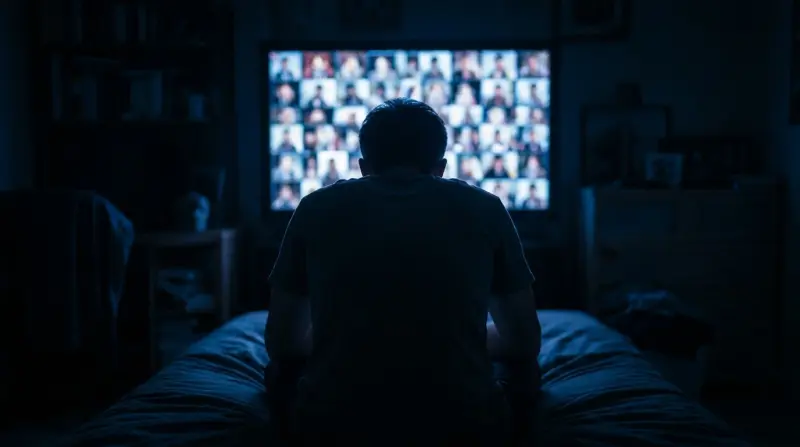
Relapse does not mean you are back at zero. It often means you met a pressure point or a weakness in the plan that still needs support. It can feel harsh after a period of improvement, and blaming questions may rush in: Why did this happen? Did all my effort go to waste? Recovery is rarely a straight line; it moves forward, stumbles, and learns. What matters now is not self-punishment, but reading what happened: what came before the relapse, stress, loneliness, late nights, boredom, and then adjusting your environment and plan.
Here we use the phrase "porn addiction" because it is the language many people search with. Clinically, the concern is better understood through loss of control, repeated unsuccessful attempts to stop, clear distress, and effects on sleep, study, work, or relationships. Not every viewing means addiction, and not every feeling of guilt is a diagnosis; what matters is the pattern and its impact.
Relapse Is Not a Verdict on Your Worth
It helps to distinguish between a slip and a full relapse. A slip is a short stumble that stops quickly. A relapse is a return to the old pattern with a loss of rhythm and boundaries. This distinction matters because many people turn a slip into a relapse because of one thought: since I made a mistake, everything is over.
When a slip is interpreted as total failure, guilt becomes fuel that sends you back to the behavior instead of alerting you. Try describing what happened in a neutral sentence, then write down two factors that preceded it: the time or place, and the dominant feeling. After that, choose one protective step for today only, even if it seems small.
Why Does Relapse Usually Happen? The Triggers You Do Not See
Relapse usually does not come from a sudden urge alone, but from overlapping small factors that weaken your resistance: exhaustion, late nights, work pressure, long empty time, or repeated isolation. These can make the mind search for fast relief, even if it is temporary and costly later.
There are also digital triggers that look harmless: random scrolling, automatic jumps between clips, or following accounts that increase arousal without you noticing. The problem is not the phone itself; it is that easy access makes the decision harder in a weak moment.
Sometimes the trigger is internal: anxiety, frustration, or high sensitivity to criticism. In that case, porn becomes a way to escape emotion, not only sexual desire but an attempt to numb stress. That is why many recovery plans rest on two principles: understanding triggers and learning relapse-prevention skills instead of relying on willpower alone.
What Should You Do in the First 24 Hours After a Relapse?
The goal on day one is not to punish yourself or write huge promises. It is to stop the spiral and prevent a long slide. Follow short, clear steps, even if they are very simple:
Stop the chain immediately: change your location, step away from the device, and take several slow breaths.
Remove ease: delete what leads you to content, enable technical limits, and keep the phone outside your room for one night.
Care for your body: water, a light meal, and earlier sleep as much as possible, because fatigue can bring you back to the same point.
Write only two lines: what came right before the slip, and what you will do in the next hour.
Safe connection: message a trusted friend or a specialist, not for embarrassing details, but to break isolation.
Then watch for a common mistake: trying to make up for it through extremes. Do not make the next day a day of self-attack or unrealistic strictness. It is better to return to a simple routine you can repeat, because stability matters more than hype.
How Do You Reduce the Chance of Relapse Without Suffocating Yourself?
Think of your plan as three tracks working together: environment, skill, and support. Environment means making access to triggers harder: specific places for internet use, a cleaner feed, and sleep habits that protect you from late nights. Skill means how you handle the urge when it shows up: noticing the thought without believing it, delaying action, and shifting to an alternative activity with a clear start and finish.
Support is not a luxury. Having one person you can tell, "I am stressed and I need to help myself," reduces the pressure of secrecy dramatically. If you tend toward anxiety or tension, building a daily calming habit may help. You can try short exercises that help you handle stress and redirect attention.
Finally...
Relapse hurts because it touches your effort and your image of yourself, but it does not erase your previous steps. Treat it as an early warning, not a final verdict: stop the spiral, understand your triggers, adjust your environment, and seek appropriate support when you need it. Every time you choose to learn instead of collapse, you strengthen the recovery path and regain self-respect quietly. No matter how hard your day has been, you can always start from the next step.
If relapse keeps repeating or becomes tied to anxiety, loneliness, or intense guilt, speaking with a mental-health specialist may help you understand the pattern and build a realistic plan without judgment. You can download Tatmeen and book a session to start with a private step that fits what you are going through. Tatmeen is for non-urgent mental-health support and is not a substitute for emergency care.
Frequently Asked Questions
Does relapse mean I will never recover?
No. Relapse is common when changing compulsive habits, and it usually reveals a gap in the plan, not a flaw in your character. Focus on returning quickly to routine, analyzing what preceded it, then strengthening protection at the most sensitive point.
How do I deal with guilt after relapse without excusing myself?
Acknowledge what happened calmly, then set limits that prevent spiraling instead of punishing yourself. Briefly note the need you were trying to soothe, and choose one clear alternative for next time. Guilt becomes useful when it turns into a practical adjustment.
What signs suggest I need a specialist?
If the behavior repeats despite many attempts, affects study, work, or relationships, or becomes your first refuge when stressed or sad, a specialist can help you build realistic skills and a gradual plan. Seeking help here is responsible, not shameful.
Seek urgent help immediately if relapse is accompanied by thoughts of harming yourself or someone else, threats, blackmail, violence, coercion, or content involving a minor. In Saudi Arabia, use emergency services such as 999, ambulance 997, or MOH 937 for health support. Do not wait for a session in immediate danger.
A writer and researcher specializing in psychiatry, she focuses on mental health and the human emotions we experience but cannot always find the words to name. She writes about us—about humanity and the human experience—and simplifies complex topics to offer content that helps us better understand ourselves and life, ultimately making us feel less alone.
Every Tatmeen article is reviewed by care providers licensed by the Saudi Commission for Health Specialties, so what you read is accurate and trustworthy.
This article builds understanding and does not replace a licensed care provider.
Need someone to talk to?
Tatmeen's licensed care providers are available around the clock, and the app's urgent consultation connects you with one within minutes.
Download Tatmeen to explore care providers and booking options.
Smart matchingFour quick questions suggest the right care provider
Urgent consultationTalk to an available care provider within minutes
Free psychological measuresMore than 20 tests to understand how you are doing
Scan to download
{"data":{"id":"b2a7a16b-787c-410e-9040-5a1f45bce783","slug":"porn-addiction-relapse-recovery","arTitle":" الانتكاسة في إدمان الإباحية وكيف تتجاوزها بثبات","enTitle":"Porn Addiction Relapse and How to Move Through It Steadily","thumbnailAltText":"a young man walking along the corniche with calm expression and open posture","estimatedReadingTime":5,"likesCount":196,"writer":{"id":"3ab72b74-f26f-4337-9b47-3114b0f90de5","arBio":"كاتبة وباحثة متخصصة في مجال الطب النفسي، تهتم بموضوعات الصحة النفسية وبالمشاعر الإنسانية التي نختبرها ولا نجد دائمًا الكلمات لتسميتها. تكتب عنّا؛ عن الإنسان وتجربته، وتبسّط الموضوعات المعقّدة لتقدّم محتوى يساعدنا على فهم ذواتنا والحياة أكثر، ويجعلنا نشعر بأننا بوحدة أقل.","enBio":"A writer and researcher specializing in psychiatry, she focuses on mental health and the human emotions we experience but cannot always find the words to name. She writes about us—about humanity and the human experience—and simplifies complex topics to offer content that helps us better understand ourselves and life, ultimately making us feel less alone.","user":{"slug":"ayat-alnajar","arFullName":"آيات النجار","enFullName":"Ayat Al-Najjar","publicProfileImageUrl":"https://cdn.tatmeen.sa/public/profile-images/02384455-68fa-40b6-ad05-609fde65cafa/21b9a610dde5dfc6d37af110c23e9c7ab3946be080c281beb000debf4f7d31a6.webp","publicProfileImage96Url":"https://cdn.tatmeen.sa/public/profile-images/02384455-68fa-40b6-ad05-609fde65cafa/21b9a610dde5dfc6d37af110c23e9c7ab3946be080c281beb000debf4f7d31a6-w96.webp","publicProfileImage192Url":"https://cdn.tatmeen.sa/public/profile-images/02384455-68fa-40b6-ad05-609fde65cafa/21b9a610dde5dfc6d37af110c23e9c7ab3946be080c281beb000debf4f7d31a6-w192.webp"}},"arContent":"","enContent":"","productionDocument":{"headings":[{"id":"article-section-relapse-is-not-a-verdict-on-your-worth","text":"Relapse Is Not a Verdict on Your Worth"},{"id":"article-section-why-does-relapse-usually-happen-the-triggers-you-do-not-see","text":"Why Does Relapse Usually Happen? The Triggers You Do Not See"},{"id":"article-section-what-should-you-do-in-the-first-24-hours-after-a-relapse","text":"What Should You Do in the First 24 Hours After a Relapse?"},{"id":"article-section-how-do-you-reduce-the-chance-of-relapse-without-suffocating-yourself","text":"How Do You Reduce the Chance of Relapse Without Suffocating Yourself?"},{"id":"article-section-finally","text":"Finally..."}],"faqs":[{"question":"Does relapse mean I will never recover?","answer":"<p><span style=\"color:#000000\">No. Relapse is common when changing compulsive habits, and it usually reveals a gap in the plan, not a flaw in your character. Focus on returning quickly to routine, analyzing what preceded it, then strengthening protection at the most sensitive point.</span></p>"},{"question":"How do I deal with guilt after relapse without excusing myself?","answer":"<p><span style=\"color:#000000\">Acknowledge what happened calmly, then set limits that prevent spiraling instead of punishing yourself. Briefly note the need you were trying to soothe, and choose one clear alternative for next time. Guilt becomes useful when it turns into a practical adjustment.</span></p>"},{"question":"What signs suggest I need a specialist?","answer":"<p><span style=\"color:#000000\">If the behavior repeats despite many attempts, affects study, work, or relationships, or becomes your first refuge when stressed or sad, a specialist can help you build realistic skills and a gradual plan. Seeking help here is responsible, not shameful.</span></p><p><span style=\"color:#000000\">Seek urgent help immediately if relapse is accompanied by thoughts of harming yourself or someone else, threats, blackmail, violence, coercion, or content involving a minor. In Saudi Arabia, use emergency services such as 999, ambulance 997, or MOH 937 for health support. Do not wait for a session in immediate danger.</span></p><p><br /></p>"}],"beforeSourcesHtml":"","sources":[{"title":"Mayo Clinic: Compulsive sexual behavior - Symptoms and causes","href":"https://www.mayoclinic.org/diseases-conditions/compulsive-sexual-behavior/symptoms-causes/syc-20360434","hostname":"mayoclinic.org"},{"title":"Mayo Clinic: Compulsive sexual behavior - Diagnosis and treatment","href":"https://www.mayoclinic.org/diseases-conditions/compulsive-sexual-behavior/diagnosis-treatment/drc-20360453","hostname":"mayoclinic.org"},{"title":"Tatmeen: Get help now","href":"https://tatmeen.sa/en/gethelpnow/","hostname":"tatmeen.sa"},{"title":"Saudi Ministry of Health: 937","href":"https://www.moh.gov.sa/937/Pages/default.aspx","hostname":"moh.gov.sa"}],"afterSourcesHtml":"<p><br /></p>","blocks":[{"type":"html","html":"<p><span style=\"color:#000000\">Relapse does not mean you are back at zero. It often means you met a pressure point or a weakness in the plan that still needs support. It can feel harsh after a period of improvement, and blaming questions may rush in: Why did this happen? Did all my effort go to waste? Recovery is rarely a straight line; it moves forward, stumbles, and learns. What matters now is not self-punishment, but reading what happened: what came before the relapse, stress, loneliness, late nights, boredom, and then adjusting your environment and plan.</span></p><p><span style=\"color:#000000\">Here we use the phrase \"porn addiction\" because it is the language many people search with. Clinically, the concern is better understood through loss of control, repeated unsuccessful attempts to stop, clear distress, and effects on sleep, study, work, or relationships. Not every viewing means addiction, and not every feeling of guilt is a diagnosis; what matters is the pattern and its impact.</span></p><h2 id=\"article-section-relapse-is-not-a-verdict-on-your-worth\" data-toc-heading tabindex=\"-1\"><span id=\"relapse-is-not-a-verdict-on-your-worth-1\" aria-hidden=\"true\"></span><span style=\"color:#000000\">Relapse Is Not a Verdict on Your Worth</span></h2><p><span style=\"color:#000000\">It helps to distinguish between a slip and a full relapse. A slip is a short stumble that stops quickly. A relapse is a return to the old pattern with a loss of rhythm and boundaries. This distinction matters because many people turn a slip into a relapse because of one thought: since I made a mistake, everything is over.</span></p><p><span style=\"color:#000000\">When a slip is interpreted as total failure, guilt becomes fuel that sends you back to the behavior instead of alerting you. Try describing what happened in a neutral sentence, then write down two factors that preceded it: the time or place, and the dominant feeling. After that, choose one protective step for today only, even if it seems small.</span></p><h2 id=\"article-section-why-does-relapse-usually-happen-the-triggers-you-do-not-see\" data-toc-heading tabindex=\"-1\"><span id=\"why-does-relapse-usually-happen-the-triggers-you-do-not-see-2\" aria-hidden=\"true\"></span><span style=\"color:#000000\">Why Does Relapse Usually Happen? The Triggers You Do Not See</span></h2><p><span style=\"color:#000000\">Relapse usually does not come from a sudden urge alone, but from overlapping small factors that weaken your resistance: exhaustion, late nights, work pressure, long empty time, or repeated isolation. These can make the mind search for fast relief, even if it is temporary and costly later.</span></p><p><span style=\"color:#000000\">There are also digital triggers that look harmless: random scrolling, automatic jumps between clips, or following accounts that increase arousal without you noticing. The problem is not the phone itself; it is that easy access makes the decision harder in a weak moment.</span></p><p><span style=\"color:#000000\">Sometimes the trigger is internal: anxiety, frustration, or high sensitivity to criticism. In that case, porn becomes a way to escape emotion, not only sexual desire but an attempt to numb stress. That is why many recovery plans rest on two principles: understanding triggers and learning relapse-prevention skills instead of relying on willpower alone.</span></p><h2 id=\"article-section-what-should-you-do-in-the-first-24-hours-after-a-relapse\" data-toc-heading tabindex=\"-1\"><span id=\"what-should-you-do-in-the-first-24-hours-after-a-relapse-3\" aria-hidden=\"true\"></span><span style=\"color:#000000\">What Should You Do in the First 24 Hours After a Relapse?</span></h2><p><span style=\"color:#000000\">The goal on day one is not to punish yourself or write huge promises. It is to stop the spiral and prevent a long slide. Follow short, clear steps, even if they are very simple:</span></p><p><span style=\"color:#000000\">Stop the chain immediately: change your location, step away from the device, and take several slow breaths.</span></p><p><span style=\"color:#000000\">Remove ease: delete what leads you to content, enable technical limits, and keep the phone outside your room for one night.</span></p><p><span style=\"color:#000000\">Care for your body: water, a light meal, and earlier sleep as much as possible, because fatigue can bring you back to the same point.</span></p><p><span style=\"color:#000000\">Write only two lines: what came right before the slip, and what you will do in the next hour.</span></p><p><span style=\"color:#000000\">Safe connection: message a trusted friend or a specialist, not for embarrassing details, but to break isolation.</span></p><p><span style=\"color:#000000\">Then watch for a common mistake: trying to make up for it through extremes. Do not make the next day a day of self-attack or unrealistic strictness. It is better to return to a simple routine you can repeat, because stability matters more than hype.</span></p><h2 id=\"article-section-how-do-you-reduce-the-chance-of-relapse-without-suffocating-yourself\" data-toc-heading tabindex=\"-1\"><span id=\"how-do-you-reduce-the-chance-of-relapse-without-suffocating-yourself-4\" aria-hidden=\"true\"></span><span style=\"color:#000000\">How Do You Reduce the Chance of Relapse Without Suffocating Yourself?</span></h2><p><span style=\"color:#000000\">Think of your plan as three tracks working together: environment, skill, and support. Environment means making access to triggers harder: specific places for internet use, a cleaner feed, and sleep habits that protect you from late nights. Skill means how you handle the urge when it shows up: noticing the thought without believing it, delaying action, and shifting to an alternative activity with a clear start and finish.</span></p><p><span style=\"color:#000000\">Support is not a luxury. Having one person you can tell, \"I am stressed and I need to help myself,\" reduces the pressure of secrecy dramatically. If you tend toward anxiety or tension, building a daily calming habit may help. You can try short exercises that help you handle stress and redirect attention.</span></p><h2 id=\"article-section-finally\" data-toc-heading tabindex=\"-1\"><span id=\"finally-5\" aria-hidden=\"true\"></span><span style=\"color:#000000\">Finally...</span></h2><p><span style=\"color:#000000\">Relapse hurts because it touches your effort and your image of yourself, but it does not erase your previous steps. Treat it as an early warning, not a final verdict: stop the spiral, understand your triggers, adjust your environment, and seek appropriate support when you need it. Every time you choose to learn instead of collapse, you strengthen the recovery path and regain self-respect quietly. No matter how hard your day has been, you can always start from the next step.</span></p><p><span style=\"color:#000000\">If relapse keeps repeating or becomes tied to anxiety, loneliness, or intense guilt, speaking with a mental-health specialist may help you understand the pattern and build a realistic plan without judgment. You can </span><a href=\"https://tatmeen.sa/download/\"><span style=\"color:#1155cc\"><u>download Tatmeen and book a session</u></span></a><span style=\"color:#000000\"> to start with a private step that fits what you are going through. Tatmeen is for non-urgent mental-health support and is not a substitute for emergency care.</span></p>"}],"inlineCtaSignatures":[],"_experienceAliases":{"v":1,"fields":["html","bodyHtml"],"faqs":[0,1,2]}},"createdAt":"2026-06-08T21:00:00.000Z","updatedAt":"2026-06-21T16:06:15.286Z","disorderGroups":[{"id":"04bd234d-c176-4ba1-afb3-9e9c05d0e648","slug":"addictions-and-compulsive-behaviors","arName":"الإدمان والسلوكيات القهرية","enName":"Addictions & Compulsive Behaviors"},{"id":"1e82772d-a1a7-4d29-b475-be9d6b67ae02","slug":"common-mental-issues","arName":"اضطرابات نفسية شائعة","enName":"Common Mental Issues"}],"reviewer":{"arFullName":"فريق تطمين","enFullName":"Tatmeen team","slug":"tatmeen-team","kind":"organization"},"productionArticle":true,"promotionAllowed":true,"preparedCover":{"src":"https://cdn.tatmeen.sa/public/article-lcp/article-lcp-v2/sha256-05a0eb4b3909e90d076b30274b8483beb1c8dac80ca839f7392a260a0fe18ba5/800-8c72fccca8776ddad3bf1e8418131ce6728ca823b4a24f1e0849975016f1e112.avif","fallback":"https://cdn.tatmeen.sa/public/article-lcp/article-lcp-v2/sha256-05a0eb4b3909e90d076b30274b8483beb1c8dac80ca839f7392a260a0fe18ba5/800-5373201d99a6761747f10e2eab9bdacff4beea6eb2cb90ec8410a1c56590c291.webp","directUrl":"https://cdn.tatmeen.sa/blog-cover/Tatmeen-1781023300544.webp","isGolden":true,"avifSrcset":"https://cdn.tatmeen.sa/public/article-lcp/article-lcp-v2/sha256-05a0eb4b3909e90d076b30274b8483beb1c8dac80ca839f7392a260a0fe18ba5/400-79cf84d2e8a2fda4bd74e832eadd8bf5edb6e48420e152d9977f27041d6332d5.avif 400w, https://cdn.tatmeen.sa/public/article-lcp/article-lcp-v2/sha256-05a0eb4b3909e90d076b30274b8483beb1c8dac80ca839f7392a260a0fe18ba5/640-52fb86fa8800d6b27b544de81e44661ab5652a1db0c31467c1ca33c3885132bb.avif 640w, https://cdn.tatmeen.sa/public/article-lcp/article-lcp-v2/sha256-05a0eb4b3909e90d076b30274b8483beb1c8dac80ca839f7392a260a0fe18ba5/800-8c72fccca8776ddad3bf1e8418131ce6728ca823b4a24f1e0849975016f1e112.avif 800w, https://cdn.tatmeen.sa/public/article-lcp/article-lcp-v2/sha256-05a0eb4b3909e90d076b30274b8483beb1c8dac80ca839f7392a260a0fe18ba5/1200-ff49aa178a4745b9b12614b5c790a0655116d7d180175903d73bb4a6f5b3d538.avif 1200w","webpSrcset":"https://cdn.tatmeen.sa/public/article-lcp/article-lcp-v2/sha256-05a0eb4b3909e90d076b30274b8483beb1c8dac80ca839f7392a260a0fe18ba5/400-8a330b9317920db2417124a316e89e3c9ec86e3e631663da98020d5e62a72185.webp 400w, https://cdn.tatmeen.sa/public/article-lcp/article-lcp-v2/sha256-05a0eb4b3909e90d076b30274b8483beb1c8dac80ca839f7392a260a0fe18ba5/640-c9aa7e8c7ba898b8e29a83e5f7169a636ff5408bc3463364183992ecb9ef4d12.webp 640w, https://cdn.tatmeen.sa/public/article-lcp/article-lcp-v2/sha256-05a0eb4b3909e90d076b30274b8483beb1c8dac80ca839f7392a260a0fe18ba5/800-5373201d99a6761747f10e2eab9bdacff4beea6eb2cb90ec8410a1c56590c291.webp 800w, https://cdn.tatmeen.sa/public/article-lcp/article-lcp-v2/sha256-05a0eb4b3909e90d076b30274b8483beb1c8dac80ca839f7392a260a0fe18ba5/1200-19eec99caab5acd0fc98f583bdb31d131007e29814d8b6478fee454c8e1598c5.webp 1200w","phoneAvifSrcset":"https://cdn.tatmeen.sa/public/article-lcp/article-lcp-v2/sha256-05a0eb4b3909e90d076b30274b8483beb1c8dac80ca839f7392a260a0fe18ba5/400-79cf84d2e8a2fda4bd74e832eadd8bf5edb6e48420e152d9977f27041d6332d5.avif 400w, https://cdn.tatmeen.sa/public/article-lcp/article-lcp-v2/sha256-05a0eb4b3909e90d076b30274b8483beb1c8dac80ca839f7392a260a0fe18ba5/640-52fb86fa8800d6b27b544de81e44661ab5652a1db0c31467c1ca33c3885132bb.avif 640w, https://cdn.tatmeen.sa/public/article-lcp/article-lcp-v2/sha256-05a0eb4b3909e90d076b30274b8483beb1c8dac80ca839f7392a260a0fe18ba5/800-8c72fccca8776ddad3bf1e8418131ce6728ca823b4a24f1e0849975016f1e112.avif 800w","phoneWebpSrcset":"https://cdn.tatmeen.sa/public/article-lcp/article-lcp-v2/sha256-05a0eb4b3909e90d076b30274b8483beb1c8dac80ca839f7392a260a0fe18ba5/400-8a330b9317920db2417124a316e89e3c9ec86e3e631663da98020d5e62a72185.webp 400w, https://cdn.tatmeen.sa/public/article-lcp/article-lcp-v2/sha256-05a0eb4b3909e90d076b30274b8483beb1c8dac80ca839f7392a260a0fe18ba5/640-c9aa7e8c7ba898b8e29a83e5f7169a636ff5408bc3463364183992ecb9ef4d12.webp 640w, https://cdn.tatmeen.sa/public/article-lcp/article-lcp-v2/sha256-05a0eb4b3909e90d076b30274b8483beb1c8dac80ca839f7392a260a0fe18ba5/800-5373201d99a6761747f10e2eab9bdacff4beea6eb2cb90ec8410a1c56590c291.webp 800w","width":800,"height":447},"previewTaxonomy":{"groups":[{"id":"04bd234d-c176-4ba1-afb3-9e9c05d0e648","slug":"addictions-and-compulsive-behaviors","arName":"الإدمان والسلوكيات القهرية","enName":"Addictions & Compulsive Behaviors"},{"id":"1e82772d-a1a7-4d29-b475-be9d6b67ae02","slug":"common-mental-issues","arName":"اضطرابات نفسية شائعة","enName":"Common Mental Issues"}],"topics":[{"id":"15ff72d6-a734-4802-9430-5938aa292115","slug":"porn-addiction","arName":"إدمان الإباحية","enName":"Porn Addiction","groupSlug":"addictions-and-compulsive-behaviors","href":"/blog/category/addictions-and-compulsive-behaviors/porn-addiction/"}],"tags":[{"id":"4ed98471-68bf-4682-b622-f092e88833bb","slug":"porn-compulsive-sexual","arName":"إدمان الإباحية والسلوك الجنسي القهري","enName":"Pornography & Compulsive Sexual"},{"id":"a1d36353-cbcb-4907-b913-3069289a3514","slug":"addiction-recovery","arName":"الإدمان والتعافي","enName":"Addiction & Recovery"},{"id":"d58e6187-021b-44a5-882c-245bccd77611","slug":"self-help-howto","arName":"مساعدة ذاتية / خطوات عملية","enName":"Self-Help / How-To"}]},"previewProviderRecommendations":[{"id":"278d5ac5-30ff-46ad-97be-c67cdd125836","slug":"dr-mohammed-alamari-8085","arFullName":"د. محمد العماري","enFullName":"Dr. Mohammed Alamari","publicProfileImageUrl":"https://cdn.tatmeen.sa/public/profile-images/278d5ac5-30ff-46ad-97be-c67cdd125836/69bdd11cb01784eed010eb9883403fd6ca4e4afcec739dcd6114fd8b85f133a8.webp","publicProfileImage96Url":"https://cdn.tatmeen.sa/public/profile-images/278d5ac5-30ff-46ad-97be-c67cdd125836/69bdd11cb01784eed010eb9883403fd6ca4e4afcec739dcd6114fd8b85f133a8-w96.webp","publicProfileImage192Url":"https://cdn.tatmeen.sa/public/profile-images/278d5ac5-30ff-46ad-97be-c67cdd125836/69bdd11cb01784eed010eb9883403fd6ca4e4afcec739dcd6114fd8b85f133a8-w192.webp","specialization":{"arName":"طبيب أسرة","enName":"Family Physician"},"profileImageUrl":"https://cdn.tatmeen.sa/public/profile-images/278d5ac5-30ff-46ad-97be-c67cdd125836/69bdd11cb01784eed010eb9883403fd6ca4e4afcec739dcd6114fd8b85f133a8-w192.webp","experienceYears":3,"consultantInfo":{"averageRating":{"average":4},"specialization":{"arGeneralName":"طبيب أسرة","enGeneralName":"Family Physician"}}},{"id":"61ffd054-193f-4e8e-abc7-356e905dec92","slug":"nada-2471","arFullName":"د. ندى ال ادريس","enFullName":"Dr. Nada Al Idrees","publicProfileImageUrl":"","publicProfileImage96Url":"","publicProfileImage192Url":"","specialization":{"arName":"طبيب نفسي","enName":"Psychiatrist"},"profileImageUrl":"","experienceYears":5,"consultantInfo":{"averageRating":{"average":0},"specialization":{"arGeneralName":"طبيب نفسي","enGeneralName":"Psychiatrist"}}},{"id":"d754a189-f8c9-4aad-b4aa-a5dbd26c0bd7","slug":"talal-alshowaier-8694","arFullName":"طلال الشويعر","enFullName":"Talal Alshowaier","publicProfileImageUrl":"https://cdn.tatmeen.sa/public/profile-images/d754a189-f8c9-4aad-b4aa-a5dbd26c0bd7/74feb27848a47cf43189f6b5951e06a9b87b08269021d5bab765092fc65fce42.webp","publicProfileImage96Url":"https://cdn.tatmeen.sa/public/profile-images/d754a189-f8c9-4aad-b4aa-a5dbd26c0bd7/74feb27848a47cf43189f6b5951e06a9b87b08269021d5bab765092fc65fce42-w96.webp","publicProfileImage192Url":"https://cdn.tatmeen.sa/public/profile-images/d754a189-f8c9-4aad-b4aa-a5dbd26c0bd7/74feb27848a47cf43189f6b5951e06a9b87b08269021d5bab765092fc65fce42-w192.webp","specialization":{"arName":"أخصائي نفسي","enName":"Psychologist"},"profileImageUrl":"https://cdn.tatmeen.sa/public/profile-images/d754a189-f8c9-4aad-b4aa-a5dbd26c0bd7/74feb27848a47cf43189f6b5951e06a9b87b08269021d5bab765092fc65fce42-w192.webp","experienceYears":3,"consultantInfo":{"averageRating":{"average":5},"specialization":{"arGeneralName":"أخصائي نفسي","enGeneralName":"Psychologist"}}}],"previewCareProviders":[{"id":"09364052-c2a9-4c52-9717-7ce2093b8d0a","slug":"kholoud-alharbi-5221","arFullName":"خلود الحربي","enFullName":"Kholoud Alharbi","publicProfileImageUrl":"https://cdn.tatmeen.sa/public/profile-images/09364052-c2a9-4c52-9717-7ce2093b8d0a/4a0aeb81619e351b77f4323e3605a0a00acc7ca3c82ee7cc5ca2c9e8ef716049.webp","publicProfileImage96Url":"https://cdn.tatmeen.sa/public/profile-images/09364052-c2a9-4c52-9717-7ce2093b8d0a/4a0aeb81619e351b77f4323e3605a0a00acc7ca3c82ee7cc5ca2c9e8ef716049-w96.webp","publicProfileImage192Url":"https://cdn.tatmeen.sa/public/profile-images/09364052-c2a9-4c52-9717-7ce2093b8d0a/4a0aeb81619e351b77f4323e3605a0a00acc7ca3c82ee7cc5ca2c9e8ef716049-w192.webp","gender":"FEMALE","specialization":{"arName":"أخصائي نفسي","enName":"Psychologist"}},{"id":"6f037535-1dca-4b50-a8b2-5974b7323286","slug":"salah-althobaiti-9053","arFullName":"صلاح الثبيتي","enFullName":"Salah Althobaiti","publicProfileImageUrl":"https://cdn.tatmeen.sa/public/profile-images/6f037535-1dca-4b50-a8b2-5974b7323286/35b6bd7fad9b1e004c1835803eb9c1b56dcacd380685ec8bff141f0fb888005c.webp","publicProfileImage96Url":"https://cdn.tatmeen.sa/public/profile-images/6f037535-1dca-4b50-a8b2-5974b7323286/35b6bd7fad9b1e004c1835803eb9c1b56dcacd380685ec8bff141f0fb888005c-w96.webp","publicProfileImage192Url":"https://cdn.tatmeen.sa/public/profile-images/6f037535-1dca-4b50-a8b2-5974b7323286/35b6bd7fad9b1e004c1835803eb9c1b56dcacd380685ec8bff141f0fb888005c-w192.webp","gender":"MALE","specialization":{"arName":"أخصائي نفسي","enName":"Psychologist"}},{"id":"3cc806e8-616b-4884-9f21-a75b378580a2","slug":"aisha-al-hashim-8667","arFullName":"عائشة ال هاشم","enFullName":"Aisha Al Hashim","publicProfileImageUrl":"https://cdn.tatmeen.sa/public/profile-images/3cc806e8-616b-4884-9f21-a75b378580a2/27f523d03be4dcfa1f6a79f70c1773887434e698990d214cd990caec56a44798.webp","publicProfileImage96Url":"https://cdn.tatmeen.sa/public/profile-images/3cc806e8-616b-4884-9f21-a75b378580a2/27f523d03be4dcfa1f6a79f70c1773887434e698990d214cd990caec56a44798-w96.webp","publicProfileImage192Url":"https://cdn.tatmeen.sa/public/profile-images/3cc806e8-616b-4884-9f21-a75b378580a2/27f523d03be4dcfa1f6a79f70c1773887434e698990d214cd990caec56a44798-w192.webp","gender":"FEMALE","specialization":{"arName":"أخصائي نفسي","enName":"Psychologist"}},{"id":"db2ce1a0-9325-4471-b7ce-eb2e811c30a3","slug":"amer-qutub-2441","arFullName":"عامر قطب","enFullName":"Amer Qutub","publicProfileImageUrl":"https://cdn.tatmeen.sa/public/profile-images/db2ce1a0-9325-4471-b7ce-eb2e811c30a3/80580f99bfd7fe2b2a9cf8eed73ab532f5086d1efe053b0aa57358c1ce004261.webp","publicProfileImage96Url":"https://cdn.tatmeen.sa/public/profile-images/db2ce1a0-9325-4471-b7ce-eb2e811c30a3/80580f99bfd7fe2b2a9cf8eed73ab532f5086d1efe053b0aa57358c1ce004261-w96.webp","publicProfileImage192Url":"https://cdn.tatmeen.sa/public/profile-images/db2ce1a0-9325-4471-b7ce-eb2e811c30a3/80580f99bfd7fe2b2a9cf8eed73ab532f5086d1efe053b0aa57358c1ce004261-w192.webp","gender":"MALE","specialization":{"arName":"أخصائي نفسي","enName":"Psychologist"}},{"id":"94765496-dbdf-4631-a01b-7df5f788668d","slug":"abdullrahman-alhamoudi-3045","arFullName":"عبدالرحمن الحمودي","enFullName":"Abdulrahman Alhamoudi","publicProfileImageUrl":"https://cdn.tatmeen.sa/public/profile-images/94765496-dbdf-4631-a01b-7df5f788668d/2d49f6b6493c564afb6f50b6c3634231dff3a5cf8353acfab393d1b2a88037d1.webp","publicProfileImage96Url":"https://cdn.tatmeen.sa/public/profile-images/94765496-dbdf-4631-a01b-7df5f788668d/2d49f6b6493c564afb6f50b6c3634231dff3a5cf8353acfab393d1b2a88037d1-w96.webp","publicProfileImage192Url":"https://cdn.tatmeen.sa/public/profile-images/94765496-dbdf-4631-a01b-7df5f788668d/2d49f6b6493c564afb6f50b6c3634231dff3a5cf8353acfab393d1b2a88037d1-w192.webp","gender":"MALE","specialization":{"arName":"أخصائي نفسي","enName":"Psychologist"}},{"id":"618dba89-5b70-4b46-8304-741b7ac8ecd3","slug":"abdullah-mari-1311","arFullName":"عبدالله مرعي","enFullName":"Abdullah Mari","publicProfileImageUrl":"https://cdn.tatmeen.sa/public/profile-images/618dba89-5b70-4b46-8304-741b7ac8ecd3/6b4a3bfb59f8a304ca79083b32859b46baad2e1d692974a47c02c1f66bd11129.webp","publicProfileImage96Url":"https://cdn.tatmeen.sa/public/profile-images/618dba89-5b70-4b46-8304-741b7ac8ecd3/6b4a3bfb59f8a304ca79083b32859b46baad2e1d692974a47c02c1f66bd11129-w96.webp","publicProfileImage192Url":"https://cdn.tatmeen.sa/public/profile-images/618dba89-5b70-4b46-8304-741b7ac8ecd3/6b4a3bfb59f8a304ca79083b32859b46baad2e1d692974a47c02c1f66bd11129-w192.webp","gender":"MALE","specialization":{"arName":"أخصائي نفسي","enName":"Psychologist"}},{"id":"3b50a5d5-e795-407f-8676-fd7f0e1bb7a0","slug":"abdulaziz-bin-hudayan-4940","arFullName":"عبدالعزيز بن هديان","enFullName":"Abdulaziz Bin Hudayan","publicProfileImageUrl":"https://cdn.tatmeen.sa/public/profile-images/3b50a5d5-e795-407f-8676-fd7f0e1bb7a0/710ff0fe1fb00cdb5042092e27b7910b480a439b02251ecded62d7758eefce95.webp","publicProfileImage96Url":"https://cdn.tatmeen.sa/public/profile-images/3b50a5d5-e795-407f-8676-fd7f0e1bb7a0/710ff0fe1fb00cdb5042092e27b7910b480a439b02251ecded62d7758eefce95-w96.webp","publicProfileImage192Url":"https://cdn.tatmeen.sa/public/profile-images/3b50a5d5-e795-407f-8676-fd7f0e1bb7a0/710ff0fe1fb00cdb5042092e27b7910b480a439b02251ecded62d7758eefce95-w192.webp","gender":"MALE","specialization":{"arName":"أخصائي نفسي","enName":"Psychologist"}},{"id":"d4ffcb6b-90a7-45b6-b941-964866f4564b","slug":"dhaifallah-alhumaidi-1092","arFullName":"ضيف الله الحميدي","enFullName":"Dhaifallah Alhumaidi","publicProfileImageUrl":"https://cdn.tatmeen.sa/public/profile-images/d4ffcb6b-90a7-45b6-b941-964866f4564b/1817171c5828a9b57d6c30d12332cf154e335272548bc90a6e8456d74d356956.webp","publicProfileImage96Url":"https://cdn.tatmeen.sa/public/profile-images/d4ffcb6b-90a7-45b6-b941-964866f4564b/1817171c5828a9b57d6c30d12332cf154e335272548bc90a6e8456d74d356956-w96.webp","publicProfileImage192Url":"https://cdn.tatmeen.sa/public/profile-images/d4ffcb6b-90a7-45b6-b941-964866f4564b/1817171c5828a9b57d6c30d12332cf154e335272548bc90a6e8456d74d356956-w192.webp","gender":"MALE","specialization":{"arName":"أخصائي نفسي","enName":"Psychologist"}}],"previewDownload":{"href":"/download","title":{"ar":"خطوة واحدة لأجلك، ابدأ الآن","en":"One step for you, start now"},"description":{"ar":"حمّل تطبيق تطمين لاستكشاف مقدمي الرعاية وخيارات الحجز.","en":"Download Tatmeen to explore care providers and booking options."},"posterSrc":"/images/home/cta-ar-new-1.webp","videoSrc":"/images/home/cta-ar-new-1.mp4","videoPosterSrc":"/images/home/cta-ar-new-1.webp","videoPosterEnSrc":"/images/home/cta-en-new-1.webp","videoType":"video/mp4","appStoreHref":"https://apps.apple.com/us/app/tatmeen-%D8%AA%D8%B7%D9%85%D9%8A%D9%86/id6473836983","googlePlayHref":"https://play.google.com/store/apps/details?id=com.TatmeenApp.user&hl=en"},"previewRelatedArticles":[{"id":"219a5f20-e554-45f7-b572-c8cb72ff300c","slug":"manage-sudden-porn-urges-in-minutes","route":"/blog/manage-sudden-porn-urges-in-minutes/","title":{"ar":"التعامل مع الرغبة المفاجئة لمشاهدة الإباحية خلال دقائق","en":"Managing Sudden Urges to Watch Pornography Within Minutes"},"image":"https://cdn.tatmeen.sa/public/article-lcp/article-lcp-v2/sha256-f0314b16a8d5f6e75ee1e25bd52f628948b940f7abae5b73592eaa750ebb6838/800-58077223878f36e215f6d5abc85d28b59ef1b070718e6f9fea3a5783d56d54a2.webp","directImageFallback":"https://cdn.tatmeen.sa/blog-cover/Tatmeen-1780942805949.webp","arThumbnailAltText":"Finger hovering over a glowing red button in a dark, minimal scene, capturing tension.","thumbnailAltText":"Finger hovering over a glowing red button in a dark, minimal scene, capturing tension.","topic":{"label":{"ar":"الإدمان والسلوكيات القهرية","en":"Addictions & Compulsive Behaviors"}},"readingTimeMinutes":5},{"id":"1865687e-765e-4545-b603-c1b1800ed1f8","slug":"porn-addiction-withdrawal-symptoms-coping","route":"/blog/porn-addiction-withdrawal-symptoms-coping/","title":{"ar":"أعراض الانسحاب من إدمان الإباحية وكيف تتعامل معها بمرونة","en":"Pornography Addiction Withdrawal Symptoms and How to Cope Flexibly"},"image":"https://cdn.tatmeen.sa/public/article-lcp/article-lcp-v2/sha256-6087bc2248ab857436c6bbd826657a475a29035fd117e7fccb71df153a44533e/800-62155c66d16747f1b9b5ee2abc09663abda3efe5ef59e9ce3efa853d06220fa7.webp","directImageFallback":"https://cdn.tatmeen.sa/blog-cover/Tatmeen-1779130957177.webp","arThumbnailAltText":"Person sitting on the bed against a wall suffering from pornography addiction withdrawal","thumbnailAltText":"Person sitting on the bed against a wall suffering from pornography addiction withdrawal","topic":{"label":{"ar":"الإدمان والسلوكيات القهرية","en":"Addictions & Compulsive Behaviors"}},"readingTimeMinutes":5},{"id":"fb99d6a3-59f2-4787-8874-ffa01b5ec580","slug":"porn-addiction-signs-start-change","route":"/blog/porn-addiction-signs-start-change/","title":{"ar":" إدمان الإباحية: علامات أنك عالق وكيف تبدأ التغيير","en":"Porn Addiction: Signs You May Be Stuck and How to Start Changing"},"image":"https://cdn.tatmeen.sa/public/article-lcp/article-lcp-v2/sha256-79daa099858bf004b6f5394cef6a9ae1b46b3abac2fba268c4a4dc30b86171d3/800-996c00b9be38bc5e0fc2a9d0c263231bb21e12c6c43c633812db7992a6cf2767.webp","directImageFallback":"https://cdn.tatmeen.sa/blog-cover/Tatmeen-1781116081732.webp","arThumbnailAltText":"Man sitting in dark room, facing glowing screen filled with many thumbnails, feeling isolated","thumbnailAltText":"Man sitting in dark room, facing glowing screen filled with many thumbnails, feeling isolated","topic":{"label":{"ar":"الإدمان والسلوكيات القهرية","en":"Addictions & Compulsive Behaviors"}},"readingTimeMinutes":5},{"id":"347c2811-bc22-475f-bd27-f79863232909","slug":"-effects-of-pornography-on-brain-mood-relationships","route":"/blog/-effects-of-pornography-on-brain-mood-relationships/","title":{"ar":" اختطاف الدوبامين مع الإباحية وكيف تستعيد التوازن","en":" Dopamine Hijacking With Pornography and How to Restore Balance"},"image":"https://cdn.tatmeen.sa/public/article-lcp/article-lcp-v2/sha256-eb5c485471e1880f339c79d43427fef858f66c275dd20cd1bfdf4247cbe11e47/800-96cc3bcc6b007d2ef11fe1d82341a5d9cd58362b3807e25c9e508a7e50a53f8b.webp","directImageFallback":"https://cdn.tatmeen.sa/blog-cover/Tatmeen-1781115344993.webp","arThumbnailAltText":"\"Person chained before a glowing screen, symbolizing compulsive digital reward seeking.\"","thumbnailAltText":"\"Person chained before a glowing screen, symbolizing compulsive digital reward seeking.\"","topic":{"label":{"ar":"الإدمان والسلوكيات القهرية","en":"Addictions & Compulsive Behaviors"}},"readingTimeMinutes":5}],"previewRelatedReadStates":{}},"locale":"en","device":"desktop","path":"/en/blog/porn-addiction-relapse-recovery/","readingControls":false,"config":{"public":{"BUCKET_URL":"https://cdn.tatmeen.sa/","APP_BASE_URL":"https://tatmeen.sa","intercomAppId":"ppcnu9e3"}}}