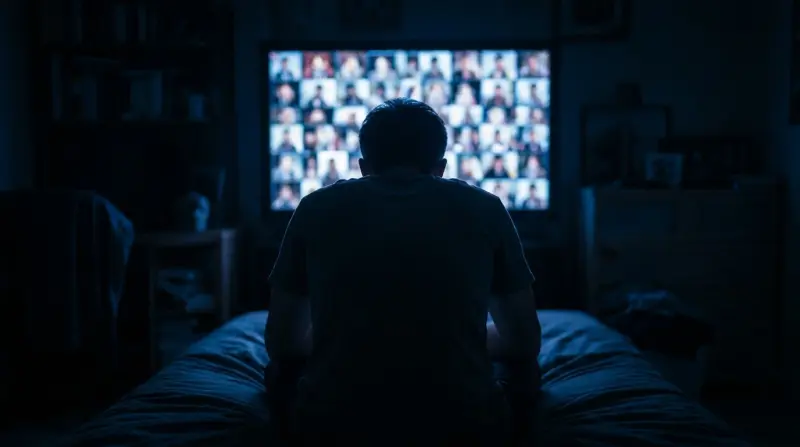
Problematic pornography use may not only steal time; it can also disrupt the thread of focus that holds your day together. You start a task, your attention slips, work piles up, and distress grows. Many people live this quietly, caught between wanting to stop, fearing failure, and feeling guilty after each attempt.
This article uses the phrase “pornography addiction” because it is common search and help-seeking language. Clinically, it is safer to speak about problematic pornography use or compulsive sexual behavior when there is repeated loss of control and continued behavior despite clear effects on work, study, relationships, or mental health. Guilt or conflict with personal values alone is not enough to label someone with a disorder.
How Can Problematic Use Affect Focus and Productivity?
The effect on focus is often indirect: mental preoccupation, repeated interruptions, procrastination, late nights, anxiety, or guilt after use. You may notice that reading one page takes more effort, or that a short work session turns into switching between your phone and open tabs. This does not mean your brain is damaged, and it does not mean every viewing causes unavoidable productivity loss; it means attention is shaped by repeated cues.
The World Health Organization classifies compulsive sexual behavior disorder in ICD-11 as an impulse-control disorder, while DSM-5-TR does not list pornography addiction as a separate diagnosis. So the balanced question is not only the label or number of times, but whether there is loss of control, distress, and disruption in daily life.
A productivity loop can form quickly: pressure or boredom, then an impulse toward content, then momentary relief, then self-blame and procrastination, then pressure returns stronger. The longer the loop continues, the more the mind links the start of any task with an urge to escape, so deep-focus time shrinks and inner interruptions increase.
Why Does the Loop Repeat Despite Sincere Intentions?
Intention alone is not enough when the behavior is tied to emotion regulation. For some people, pornographic content becomes a fast way to numb anxiety, loneliness, or frustration, especially when safer outlets are missing. Over time, the brain learns to ask for the same route whenever uncomfortable feelings appear, even when the person knows the pattern is hurting them.
Another factor is shame. When guilt turns into “I am a bad person,” secrecy and isolation increase, support becomes harder to ask for, and the loop grows stronger. In contrast, distinguishing between values-based distress and loss-of-control patterns can help you see the situation more clearly.
If the topic touches your faith or personal values, honoring those values matters, but self-punishment is not a recovery plan. You might say: “This behavior is not what I want for myself, and I can learn a calmer way to handle the urge.” This article does not offer religious rulings; it supports breaking the shame-avoidance loop and seeking help when needed.
Rebuilding Focus Step by Step
Regaining focus is not only a willpower battle. It is a re-ordering of environment, habits, and the meaning behind what you are escaping from. Start with one point that repeats every day instead of trying to change everything at once.
Track triggers for one week: when does the urge come, after stress, before sleep, during loneliness? Writing just two lines a day may reveal a hidden pattern. Then reduce opportunity: keep the phone outside the bedroom, use suitable blocking tools, and make device use time-bound rather than open-ended. This is environment design, not exaggeration.
Because focus needs a substitute, choose a short activity that fills the urge minute: ablution, a light walk, drinking water, or messaging a trusted friend. The goal is not perfection; it is interrupting the automatic path. A simple plan can help:
One minute of calming: slow breathing with a longer exhale.
Two minutes of movement: stretching or walking around the room.
Five minutes on a tiny task: open the file and define one next step.
After that, train attention in short sessions: 20 to 30 minutes of work, then a break, with distractions closed. Your focus may gradually improve when reward is no longer trapped in one route.
When to Seek More Support
Consider professional support if you have tried to stop many times without success, or if the pattern affects your work, study, worship, relationships, sleep, or mental health. Therapy can help you understand triggers, build healthier ways to regulate emotion, and create a recovery plan that fits your life instead of relying only on blocking and blame.
Safety note: if you have thoughts of harming yourself or someone else, fear you may lose control in a way that could harm someone, or there is blackmail, threat, violence, or any communication or content involving a minor, seek urgent local help immediately. In Saudi Arabia: ambulance 997, police/security 999, and MOH 937 for health consultation. Tatmeen is suitable for non-emergency psychological support and is not a replacement for emergency care.
Finally
Pornography addiction, or problematic pornography use, is not a fixed sign of moral weakness. It is often a loop of pressure, escape, and guilt that needs understanding and a plan. When you build a calmer environment, learn how to handle urges, and restore meaning to your day step by step, focus becomes more reachable and self-respect feels steadier.
If the pattern keeps returning and affects your work, worship, or relationship with yourself, you can download Tatmeen and book a session with a mental-health specialist to understand the cycle and build a practical plan without judgment.
Frequently Asked Questions
How do I know whether this is pornography addiction and not occasional use?
The measure is not the number of times alone. It is loss of control and the effect on your life. If you have tried to stop repeatedly without success, or it has begun stealing time, weakening focus, and increasing distress, it is worth attention and support.
Is quitting suddenly the best solution?
It may work for some people, but it can be difficult when the habit is tied to stress or loneliness. A realistic plan often helps more: reduce triggers, build healthy alternatives, and learn how to handle the urge when it appears. Consistency matters more than dramatic leaps.
What should I do if a strong urge appears during work or study?
Do not negotiate with it for long. Change your state immediately: step away from the screen for one minute, breathe slowly, then do one tiny task that returns you to the track. If it happens daily, record the time and context so you can identify the trigger.
A writer and researcher specializing in psychiatry, she focuses on mental health and the human emotions we experience but cannot always find the words to name. She writes about us—about humanity and the human experience—and simplifies complex topics to offer content that helps us better understand ourselves and life, ultimately making us feel less alone.
Every Tatmeen article is reviewed by care providers licensed by the Saudi Commission for Health Specialties, so what you read is accurate and trustworthy.
This article builds understanding and does not replace a licensed care provider.
Need someone to talk to?
Tatmeen's licensed care providers are available around the clock, and the app's urgent consultation connects you with one within minutes.
Download Tatmeen to explore care providers and booking options.
Smart matchingFour quick questions suggest the right care provider
Urgent consultationTalk to an available care provider within minutes
Free psychological measuresMore than 20 tests to understand how you are doing
Scan to download
{"data":{"id":"1056e45c-7b0b-4c03-9265-dfe5e6da7b32","slug":"porn-addiction-focus-productivity","arTitle":" إدمان الإباحية وتأثيره على التركيز والإنتاجية","enTitle":"Pornography Addiction and Its Impact on Focus and Productivity","thumbnailAltText":"Person sitting in a dark room, distracted by glowing screens and digital noise.","estimatedReadingTime":5,"likesCount":246,"writer":{"id":"3ab72b74-f26f-4337-9b47-3114b0f90de5","arBio":"كاتبة وباحثة متخصصة في مجال الطب النفسي، تهتم بموضوعات الصحة النفسية وبالمشاعر الإنسانية التي نختبرها ولا نجد دائمًا الكلمات لتسميتها. تكتب عنّا؛ عن الإنسان وتجربته، وتبسّط الموضوعات المعقّدة لتقدّم محتوى يساعدنا على فهم ذواتنا والحياة أكثر، ويجعلنا نشعر بأننا بوحدة أقل.","enBio":"A writer and researcher specializing in psychiatry, she focuses on mental health and the human emotions we experience but cannot always find the words to name. She writes about us—about humanity and the human experience—and simplifies complex topics to offer content that helps us better understand ourselves and life, ultimately making us feel less alone.","user":{"slug":"ayat-alnajar","arFullName":"آيات النجار","enFullName":"Ayat Al-Najjar","publicProfileImageUrl":"https://cdn.tatmeen.sa/public/profile-images/02384455-68fa-40b6-ad05-609fde65cafa/21b9a610dde5dfc6d37af110c23e9c7ab3946be080c281beb000debf4f7d31a6.webp","publicProfileImage96Url":"https://cdn.tatmeen.sa/public/profile-images/02384455-68fa-40b6-ad05-609fde65cafa/21b9a610dde5dfc6d37af110c23e9c7ab3946be080c281beb000debf4f7d31a6-w96.webp","publicProfileImage192Url":"https://cdn.tatmeen.sa/public/profile-images/02384455-68fa-40b6-ad05-609fde65cafa/21b9a610dde5dfc6d37af110c23e9c7ab3946be080c281beb000debf4f7d31a6-w192.webp"}},"arContent":"","enContent":"","productionDocument":{"headings":[{"id":"article-section-how-can-problematic-use-affect-focus-and-productivity","text":"How Can Problematic Use Affect Focus and Productivity?"},{"id":"article-section-why-does-the-loop-repeat-despite-sincere-intentions","text":"Why Does the Loop Repeat Despite Sincere Intentions?"},{"id":"article-section-rebuilding-focus-step-by-step","text":"Rebuilding Focus Step by Step"},{"id":"article-section-when-to-seek-more-support","text":"When to Seek More Support"},{"id":"article-section-finally","text":"Finally"}],"faqs":[{"question":"How do I know whether this is pornography addiction and not occasional use?","answer":"<p><span style=\"color:#000000\">The measure is not the number of times alone. It is loss of control and the effect on your life. If you have tried to stop repeatedly without success, or it has begun stealing time, weakening focus, and increasing distress, it is worth attention and support.</span></p>"},{"question":"Is quitting suddenly the best solution?","answer":"<p><span style=\"color:#000000\">It may work for some people, but it can be difficult when the habit is tied to stress or loneliness. A realistic plan often helps more: reduce triggers, build healthy alternatives, and learn how to handle the urge when it appears. Consistency matters more than dramatic leaps.</span></p>"},{"question":"What should I do if a strong urge appears during work or study?","answer":"<p><span style=\"color:#000000\">Do not negotiate with it for long. Change your state immediately: step away from the screen for one minute, breathe slowly, then do one tiny task that returns you to the track. If it happens daily, record the time and context so you can identify the trigger.</span></p>"}],"beforeSourcesHtml":"","sources":[{"title":"WHO ICD-11: Compulsive Sexual Behaviour Disorder","href":"https://icd.who.int/browse/2025-01/mms/en#1630268048","hostname":"icd.who.int"},{"title":"Cleveland Clinic: Compulsive Sexual Behavior Disorder","href":"https://my.clevelandclinic.org/health/diseases/22690-sex-addiction-hypersexuality-and-compulsive-sexual-behavior","hostname":"my.clevelandclinic.org"},{"title":"Mayo Clinic: Compulsive Sexual Behavior Symptoms and Causes","href":"https://www.mayoclinic.org/diseases-conditions/compulsive-sexual-behavior/symptoms-causes/syc-20360434","hostname":"mayoclinic.org"},{"title":"Mayo Clinic: Compulsive Sexual Behavior Diagnosis and Treatment","href":"https://www.mayoclinic.org/diseases-conditions/compulsive-sexual-behavior/diagnosis-treatment/drc-20360453","hostname":"mayoclinic.org"},{"title":"NHS: Addiction, What Is It?","href":"https://www.nhs.uk/live-well/addiction-support/addiction-what-is-it/","hostname":"nhs.uk"},{"title":"Saudi MOH: 937 Services","href":"https://www.moh.gov.sa/en/E-Participation/Pages/Telephone-medical-consultation-service-937.aspx","hostname":"moh.gov.sa"},{"title":"Saudi Press Agency: Saudi Red Crescent 997","href":"https://www.spa.gov.sa/en/N2557687","hostname":"spa.gov.sa"},{"title":"Tatmeen Download the App","href":"https://tatmeen.sa/download","hostname":"tatmeen.sa"}],"afterSourcesHtml":"","blocks":[{"type":"html","html":"<p><span style=\"color:#000000\">Problematic pornography use may not only steal time; it can also disrupt the thread of focus that holds your day together. You start a task, your attention slips, work piles up, and distress grows. Many people live this quietly, caught between wanting to stop, fearing failure, and feeling guilty after each attempt.</span></p><p><span style=\"color:#000000\">This article uses the phrase “pornography addiction” because it is common search and help-seeking language. Clinically, it is safer to speak about problematic pornography use or compulsive sexual behavior when there is repeated loss of control and continued behavior despite clear effects on work, study, relationships, or mental health. Guilt or conflict with personal values alone is not enough to label someone with a disorder.</span></p><h2 id=\"article-section-how-can-problematic-use-affect-focus-and-productivity\" data-toc-heading tabindex=\"-1\"><span id=\"how-can-problematic-use-affect-focus-and-productivity-1\" aria-hidden=\"true\"></span><span style=\"color:#000000\"><strong>How Can Problematic Use Affect Focus and Productivity?</strong></span></h2><p><span style=\"color:#000000\">The effect on focus is often indirect: mental preoccupation, repeated interruptions, procrastination, late nights, anxiety, or guilt after use. You may notice that reading one page takes more effort, or that a short work session turns into switching between your phone and open tabs. This does not mean your brain is damaged, and it does not mean every viewing causes unavoidable productivity loss; it means attention is shaped by repeated cues.</span></p><p><span style=\"color:#000000\">The World Health Organization classifies compulsive sexual behavior disorder in ICD-11 as an impulse-control disorder, while DSM-5-TR does not list pornography addiction as a separate diagnosis. So the balanced question is not only the label or number of times, but whether there is loss of control, distress, and disruption in daily life.</span></p><p><span style=\"color:#000000\">A productivity loop can form quickly: pressure or boredom, then an impulse toward content, then momentary relief, then self-blame and procrastination, then pressure returns stronger. The longer the loop continues, the more the mind links the start of any task with an urge to escape, so deep-focus time shrinks and inner interruptions increase.</span></p><h2 id=\"article-section-why-does-the-loop-repeat-despite-sincere-intentions\" data-toc-heading tabindex=\"-1\"><span id=\"why-does-the-loop-repeat-despite-sincere-intentions-2\" aria-hidden=\"true\"></span><span style=\"color:#000000\"><strong>Why Does the Loop Repeat Despite Sincere Intentions?</strong></span></h2><p><span style=\"color:#000000\">Intention alone is not enough when the behavior is tied to emotion regulation. For some people, pornographic content becomes a fast way to numb anxiety, loneliness, or frustration, especially when safer outlets are missing. Over time, the brain learns to ask for the same route whenever uncomfortable feelings appear, even when the person knows the pattern is hurting them.</span></p><p><span style=\"color:#000000\">Another factor is shame. When guilt turns into “I am a bad person,” secrecy and isolation increase, support becomes harder to ask for, and the loop grows stronger. In contrast, distinguishing between values-based distress and loss-of-control patterns can help you see the situation more clearly.</span></p><p><span style=\"color:#000000\">If the topic touches your faith or personal values, honoring those values matters, but self-punishment is not a recovery plan. You might say: “This behavior is not what I want for myself, and I can learn a calmer way to handle the urge.” This article does not offer religious rulings; it supports breaking the shame-avoidance loop and seeking help when needed.</span></p><h2 id=\"article-section-rebuilding-focus-step-by-step\" data-toc-heading tabindex=\"-1\"><span id=\"rebuilding-focus-step-by-step-3\" aria-hidden=\"true\"></span><span style=\"color:#000000\"><strong>Rebuilding Focus Step by Step</strong></span></h2><p><span style=\"color:#000000\">Regaining focus is not only a willpower battle. It is a re-ordering of environment, habits, and the meaning behind what you are escaping from. Start with one point that repeats every day instead of trying to change everything at once.</span></p><p><span style=\"color:#000000\">Track triggers for one week: when does the urge come, after stress, before sleep, during loneliness? Writing just two lines a day may reveal a hidden pattern. Then reduce opportunity: keep the phone outside the bedroom, use suitable blocking tools, and make device use time-bound rather than open-ended. This is environment design, not exaggeration.</span></p><p><span style=\"color:#000000\">Because focus needs a substitute, choose a short activity that fills the urge minute: ablution, a light walk, drinking water, or messaging a trusted friend. The goal is not perfection; it is interrupting the automatic path. A simple plan can help:</span></p><ul><li><p><span style=\"color:#000000\">One minute of calming: slow breathing with a longer exhale.</span></p></li><li><p><span style=\"color:#000000\">Two minutes of movement: stretching or walking around the room.</span></p></li><li><p><span style=\"color:#000000\">Five minutes on a tiny task: open the file and define one next step.</span></p></li></ul><p><span style=\"color:#000000\">After that, train attention in short sessions: 20 to 30 minutes of work, then a break, with distractions closed. Your focus may gradually improve when reward is no longer trapped in one route.</span></p><h2 id=\"article-section-when-to-seek-more-support\" data-toc-heading tabindex=\"-1\"><span id=\"when-to-seek-more-support-4\" aria-hidden=\"true\"></span><span style=\"color:#000000\"><strong>When to Seek More Support</strong></span></h2><p><span style=\"color:#000000\">Consider professional support if you have tried to stop many times without success, or if the pattern affects your work, study, worship, relationships, sleep, or mental health. Therapy can help you understand triggers, build healthier ways to regulate emotion, and create a recovery plan that fits your life instead of relying only on blocking and blame.</span></p><p><span style=\"color:#000000\">Safety note: if you have thoughts of harming yourself or someone else, fear you may lose control in a way that could harm someone, or there is blackmail, threat, violence, or any communication or content involving a minor, seek urgent local help immediately. In Saudi Arabia: ambulance 997, police/security 999, and MOH 937 for health consultation. Tatmeen is suitable for non-emergency psychological support and is not a replacement for emergency care.</span></p><h2 id=\"article-section-finally\" data-toc-heading tabindex=\"-1\"><span id=\"finally-5\" aria-hidden=\"true\"></span><span style=\"color:#000000\"><strong>Finally</strong></span></h2><p><span style=\"color:#000000\">Pornography addiction, or problematic pornography use, is not a fixed sign of moral weakness. It is often a loop of pressure, escape, and guilt that needs understanding and a plan. When you build a calmer environment, learn how to handle urges, and restore meaning to your day step by step, focus becomes more reachable and self-respect feels steadier.</span></p><p><span style=\"color:#000000\">If the pattern keeps returning and affects your work, worship, or relationship with yourself, you can </span><a href=\"https://tatmeen.sa/download/\"><span style=\"color:#1155cc\"><u>download Tatmeen and book a session</u></span></a><span style=\"color:#000000\"> with a mental-health specialist to understand the cycle and build a practical plan without judgment.</span></p>"}],"inlineCtaSignatures":[],"_experienceAliases":{"v":1,"fields":["html","bodyHtml"],"faqs":[0,1,2]}},"createdAt":"2026-06-09T21:00:00.000Z","updatedAt":"2026-06-24T21:41:27.076Z","disorderGroups":[{"id":"04bd234d-c176-4ba1-afb3-9e9c05d0e648","slug":"addictions-and-compulsive-behaviors","arName":"الإدمان والسلوكيات القهرية","enName":"Addictions & Compulsive Behaviors"},{"id":"1e82772d-a1a7-4d29-b475-be9d6b67ae02","slug":"common-mental-issues","arName":"اضطرابات نفسية شائعة","enName":"Common Mental Issues"}],"reviewer":{"arFullName":"فريق تطمين","enFullName":"Tatmeen team","slug":"tatmeen-team","kind":"organization"},"productionArticle":true,"promotionAllowed":true,"preparedCover":{"src":"https://cdn.tatmeen.sa/public/article-lcp/article-lcp-v2/sha256-f95ddea23809051de75a3f7ec2f7a26734904fafaac3d34211f823538c172371/800-56015a96b7ad7cab498d4aadcecbcdc2047731e97cffa4f34bbac74d53806c04.avif","fallback":"https://cdn.tatmeen.sa/public/article-lcp/article-lcp-v2/sha256-f95ddea23809051de75a3f7ec2f7a26734904fafaac3d34211f823538c172371/800-c362cc2b857f181caff556afbb3779c66b2eaf6a13d62e1d944b519549c87876.webp","directUrl":"https://cdn.tatmeen.sa/blog-cover/Tatmeen-1781113747338.webp","isGolden":true,"avifSrcset":"https://cdn.tatmeen.sa/public/article-lcp/article-lcp-v2/sha256-f95ddea23809051de75a3f7ec2f7a26734904fafaac3d34211f823538c172371/400-b21477fe3a31cb8af3179a3fe401b7ccbe4c250248d59e3607fdd41889ae1755.avif 400w, https://cdn.tatmeen.sa/public/article-lcp/article-lcp-v2/sha256-f95ddea23809051de75a3f7ec2f7a26734904fafaac3d34211f823538c172371/640-c02ed16c422517964ed611c0eb12868df2d5ad75c1d5d90510930d9a8c8c5279.avif 640w, https://cdn.tatmeen.sa/public/article-lcp/article-lcp-v2/sha256-f95ddea23809051de75a3f7ec2f7a26734904fafaac3d34211f823538c172371/800-56015a96b7ad7cab498d4aadcecbcdc2047731e97cffa4f34bbac74d53806c04.avif 800w, https://cdn.tatmeen.sa/public/article-lcp/article-lcp-v2/sha256-f95ddea23809051de75a3f7ec2f7a26734904fafaac3d34211f823538c172371/1200-9cdff522ca0ac8511b0d6f4139ab8b30e58909bbe5bc5516b6fbca37191e239c.avif 1200w","webpSrcset":"https://cdn.tatmeen.sa/public/article-lcp/article-lcp-v2/sha256-f95ddea23809051de75a3f7ec2f7a26734904fafaac3d34211f823538c172371/400-f76422b70ab54cdc5b469aafb3c99b66b27b46b05e0eb4f94fd573bb786bf327.webp 400w, https://cdn.tatmeen.sa/public/article-lcp/article-lcp-v2/sha256-f95ddea23809051de75a3f7ec2f7a26734904fafaac3d34211f823538c172371/640-8ec88ca9b99ac76793035f2b6ff8a9cc7f3d44d4b8f337f0a9aa1a9bd4a14c79.webp 640w, https://cdn.tatmeen.sa/public/article-lcp/article-lcp-v2/sha256-f95ddea23809051de75a3f7ec2f7a26734904fafaac3d34211f823538c172371/800-c362cc2b857f181caff556afbb3779c66b2eaf6a13d62e1d944b519549c87876.webp 800w, https://cdn.tatmeen.sa/public/article-lcp/article-lcp-v2/sha256-f95ddea23809051de75a3f7ec2f7a26734904fafaac3d34211f823538c172371/1200-8fb9c505c384279a0a3e981a43094a2c26d22525af6ccebdf7548a7cb13767c9.webp 1200w","phoneAvifSrcset":"https://cdn.tatmeen.sa/public/article-lcp/article-lcp-v2/sha256-f95ddea23809051de75a3f7ec2f7a26734904fafaac3d34211f823538c172371/400-b21477fe3a31cb8af3179a3fe401b7ccbe4c250248d59e3607fdd41889ae1755.avif 400w, https://cdn.tatmeen.sa/public/article-lcp/article-lcp-v2/sha256-f95ddea23809051de75a3f7ec2f7a26734904fafaac3d34211f823538c172371/640-c02ed16c422517964ed611c0eb12868df2d5ad75c1d5d90510930d9a8c8c5279.avif 640w, https://cdn.tatmeen.sa/public/article-lcp/article-lcp-v2/sha256-f95ddea23809051de75a3f7ec2f7a26734904fafaac3d34211f823538c172371/800-56015a96b7ad7cab498d4aadcecbcdc2047731e97cffa4f34bbac74d53806c04.avif 800w","phoneWebpSrcset":"https://cdn.tatmeen.sa/public/article-lcp/article-lcp-v2/sha256-f95ddea23809051de75a3f7ec2f7a26734904fafaac3d34211f823538c172371/400-f76422b70ab54cdc5b469aafb3c99b66b27b46b05e0eb4f94fd573bb786bf327.webp 400w, https://cdn.tatmeen.sa/public/article-lcp/article-lcp-v2/sha256-f95ddea23809051de75a3f7ec2f7a26734904fafaac3d34211f823538c172371/640-8ec88ca9b99ac76793035f2b6ff8a9cc7f3d44d4b8f337f0a9aa1a9bd4a14c79.webp 640w, https://cdn.tatmeen.sa/public/article-lcp/article-lcp-v2/sha256-f95ddea23809051de75a3f7ec2f7a26734904fafaac3d34211f823538c172371/800-c362cc2b857f181caff556afbb3779c66b2eaf6a13d62e1d944b519549c87876.webp 800w","width":800,"height":447},"previewTaxonomy":{"groups":[{"id":"04bd234d-c176-4ba1-afb3-9e9c05d0e648","slug":"addictions-and-compulsive-behaviors","arName":"الإدمان والسلوكيات القهرية","enName":"Addictions & Compulsive Behaviors"},{"id":"1e82772d-a1a7-4d29-b475-be9d6b67ae02","slug":"common-mental-issues","arName":"اضطرابات نفسية شائعة","enName":"Common Mental Issues"}],"topics":[{"id":"15ff72d6-a734-4802-9430-5938aa292115","slug":"porn-addiction","arName":"إدمان الإباحية","enName":"Porn Addiction","groupSlug":"addictions-and-compulsive-behaviors","href":"/blog/category/addictions-and-compulsive-behaviors/porn-addiction/"}],"tags":[{"id":"4ed98471-68bf-4682-b622-f092e88833bb","slug":"porn-compulsive-sexual","arName":"إدمان الإباحية والسلوك الجنسي القهري","enName":"Pornography & Compulsive Sexual"},{"id":"c9b5691f-7477-4d84-be1d-7659b5ebd086","slug":"productivity-culture","arName":"الإنتاجية وثقافة الإنجاز","enName":"Productivity & Achievement Culture"},{"id":"c2a6e8d3-de9c-435f-8c95-9727e7db14cc","slug":"explainer-awareness","arName":"دليل توعوي / شرح","enName":"Explainer / Awareness Guide"}]},"previewProviderRecommendations":[{"id":"278d5ac5-30ff-46ad-97be-c67cdd125836","slug":"dr-mohammed-alamari-8085","arFullName":"د. محمد العماري","enFullName":"Dr. Mohammed Alamari","publicProfileImageUrl":"https://cdn.tatmeen.sa/public/profile-images/278d5ac5-30ff-46ad-97be-c67cdd125836/69bdd11cb01784eed010eb9883403fd6ca4e4afcec739dcd6114fd8b85f133a8.webp","publicProfileImage96Url":"https://cdn.tatmeen.sa/public/profile-images/278d5ac5-30ff-46ad-97be-c67cdd125836/69bdd11cb01784eed010eb9883403fd6ca4e4afcec739dcd6114fd8b85f133a8-w96.webp","publicProfileImage192Url":"https://cdn.tatmeen.sa/public/profile-images/278d5ac5-30ff-46ad-97be-c67cdd125836/69bdd11cb01784eed010eb9883403fd6ca4e4afcec739dcd6114fd8b85f133a8-w192.webp","specialization":{"arName":"طبيب أسرة","enName":"Family Physician"},"profileImageUrl":"https://cdn.tatmeen.sa/public/profile-images/278d5ac5-30ff-46ad-97be-c67cdd125836/69bdd11cb01784eed010eb9883403fd6ca4e4afcec739dcd6114fd8b85f133a8-w192.webp","experienceYears":3,"consultantInfo":{"averageRating":{"average":4},"specialization":{"arGeneralName":"طبيب أسرة","enGeneralName":"Family Physician"}}},{"id":"61ffd054-193f-4e8e-abc7-356e905dec92","slug":"nada-2471","arFullName":"د. ندى ال ادريس","enFullName":"Dr. Nada Al Idrees","publicProfileImageUrl":"","publicProfileImage96Url":"","publicProfileImage192Url":"","specialization":{"arName":"طبيب نفسي","enName":"Psychiatrist"},"profileImageUrl":"","experienceYears":5,"consultantInfo":{"averageRating":{"average":0},"specialization":{"arGeneralName":"طبيب نفسي","enGeneralName":"Psychiatrist"}}},{"id":"d754a189-f8c9-4aad-b4aa-a5dbd26c0bd7","slug":"talal-alshowaier-8694","arFullName":"طلال الشويعر","enFullName":"Talal Alshowaier","publicProfileImageUrl":"https://cdn.tatmeen.sa/public/profile-images/d754a189-f8c9-4aad-b4aa-a5dbd26c0bd7/74feb27848a47cf43189f6b5951e06a9b87b08269021d5bab765092fc65fce42.webp","publicProfileImage96Url":"https://cdn.tatmeen.sa/public/profile-images/d754a189-f8c9-4aad-b4aa-a5dbd26c0bd7/74feb27848a47cf43189f6b5951e06a9b87b08269021d5bab765092fc65fce42-w96.webp","publicProfileImage192Url":"https://cdn.tatmeen.sa/public/profile-images/d754a189-f8c9-4aad-b4aa-a5dbd26c0bd7/74feb27848a47cf43189f6b5951e06a9b87b08269021d5bab765092fc65fce42-w192.webp","specialization":{"arName":"أخصائي نفسي","enName":"Psychologist"},"profileImageUrl":"https://cdn.tatmeen.sa/public/profile-images/d754a189-f8c9-4aad-b4aa-a5dbd26c0bd7/74feb27848a47cf43189f6b5951e06a9b87b08269021d5bab765092fc65fce42-w192.webp","experienceYears":3,"consultantInfo":{"averageRating":{"average":5},"specialization":{"arGeneralName":"أخصائي نفسي","enGeneralName":"Psychologist"}}}],"previewCareProviders":[{"id":"09364052-c2a9-4c52-9717-7ce2093b8d0a","slug":"kholoud-alharbi-5221","arFullName":"خلود الحربي","enFullName":"Kholoud Alharbi","publicProfileImageUrl":"https://cdn.tatmeen.sa/public/profile-images/09364052-c2a9-4c52-9717-7ce2093b8d0a/4a0aeb81619e351b77f4323e3605a0a00acc7ca3c82ee7cc5ca2c9e8ef716049.webp","publicProfileImage96Url":"https://cdn.tatmeen.sa/public/profile-images/09364052-c2a9-4c52-9717-7ce2093b8d0a/4a0aeb81619e351b77f4323e3605a0a00acc7ca3c82ee7cc5ca2c9e8ef716049-w96.webp","publicProfileImage192Url":"https://cdn.tatmeen.sa/public/profile-images/09364052-c2a9-4c52-9717-7ce2093b8d0a/4a0aeb81619e351b77f4323e3605a0a00acc7ca3c82ee7cc5ca2c9e8ef716049-w192.webp","gender":"FEMALE","specialization":{"arName":"أخصائي نفسي","enName":"Psychologist"}},{"id":"6f037535-1dca-4b50-a8b2-5974b7323286","slug":"salah-althobaiti-9053","arFullName":"صلاح الثبيتي","enFullName":"Salah Althobaiti","publicProfileImageUrl":"https://cdn.tatmeen.sa/public/profile-images/6f037535-1dca-4b50-a8b2-5974b7323286/35b6bd7fad9b1e004c1835803eb9c1b56dcacd380685ec8bff141f0fb888005c.webp","publicProfileImage96Url":"https://cdn.tatmeen.sa/public/profile-images/6f037535-1dca-4b50-a8b2-5974b7323286/35b6bd7fad9b1e004c1835803eb9c1b56dcacd380685ec8bff141f0fb888005c-w96.webp","publicProfileImage192Url":"https://cdn.tatmeen.sa/public/profile-images/6f037535-1dca-4b50-a8b2-5974b7323286/35b6bd7fad9b1e004c1835803eb9c1b56dcacd380685ec8bff141f0fb888005c-w192.webp","gender":"MALE","specialization":{"arName":"أخصائي نفسي","enName":"Psychologist"}},{"id":"3cc806e8-616b-4884-9f21-a75b378580a2","slug":"aisha-al-hashim-8667","arFullName":"عائشة ال هاشم","enFullName":"Aisha Al Hashim","publicProfileImageUrl":"https://cdn.tatmeen.sa/public/profile-images/3cc806e8-616b-4884-9f21-a75b378580a2/27f523d03be4dcfa1f6a79f70c1773887434e698990d214cd990caec56a44798.webp","publicProfileImage96Url":"https://cdn.tatmeen.sa/public/profile-images/3cc806e8-616b-4884-9f21-a75b378580a2/27f523d03be4dcfa1f6a79f70c1773887434e698990d214cd990caec56a44798-w96.webp","publicProfileImage192Url":"https://cdn.tatmeen.sa/public/profile-images/3cc806e8-616b-4884-9f21-a75b378580a2/27f523d03be4dcfa1f6a79f70c1773887434e698990d214cd990caec56a44798-w192.webp","gender":"FEMALE","specialization":{"arName":"أخصائي نفسي","enName":"Psychologist"}},{"id":"db2ce1a0-9325-4471-b7ce-eb2e811c30a3","slug":"amer-qutub-2441","arFullName":"عامر قطب","enFullName":"Amer Qutub","publicProfileImageUrl":"https://cdn.tatmeen.sa/public/profile-images/db2ce1a0-9325-4471-b7ce-eb2e811c30a3/80580f99bfd7fe2b2a9cf8eed73ab532f5086d1efe053b0aa57358c1ce004261.webp","publicProfileImage96Url":"https://cdn.tatmeen.sa/public/profile-images/db2ce1a0-9325-4471-b7ce-eb2e811c30a3/80580f99bfd7fe2b2a9cf8eed73ab532f5086d1efe053b0aa57358c1ce004261-w96.webp","publicProfileImage192Url":"https://cdn.tatmeen.sa/public/profile-images/db2ce1a0-9325-4471-b7ce-eb2e811c30a3/80580f99bfd7fe2b2a9cf8eed73ab532f5086d1efe053b0aa57358c1ce004261-w192.webp","gender":"MALE","specialization":{"arName":"أخصائي نفسي","enName":"Psychologist"}},{"id":"94765496-dbdf-4631-a01b-7df5f788668d","slug":"abdullrahman-alhamoudi-3045","arFullName":"عبدالرحمن الحمودي","enFullName":"Abdulrahman Alhamoudi","publicProfileImageUrl":"https://cdn.tatmeen.sa/public/profile-images/94765496-dbdf-4631-a01b-7df5f788668d/2d49f6b6493c564afb6f50b6c3634231dff3a5cf8353acfab393d1b2a88037d1.webp","publicProfileImage96Url":"https://cdn.tatmeen.sa/public/profile-images/94765496-dbdf-4631-a01b-7df5f788668d/2d49f6b6493c564afb6f50b6c3634231dff3a5cf8353acfab393d1b2a88037d1-w96.webp","publicProfileImage192Url":"https://cdn.tatmeen.sa/public/profile-images/94765496-dbdf-4631-a01b-7df5f788668d/2d49f6b6493c564afb6f50b6c3634231dff3a5cf8353acfab393d1b2a88037d1-w192.webp","gender":"MALE","specialization":{"arName":"أخصائي نفسي","enName":"Psychologist"}},{"id":"618dba89-5b70-4b46-8304-741b7ac8ecd3","slug":"abdullah-mari-1311","arFullName":"عبدالله مرعي","enFullName":"Abdullah Mari","publicProfileImageUrl":"https://cdn.tatmeen.sa/public/profile-images/618dba89-5b70-4b46-8304-741b7ac8ecd3/6b4a3bfb59f8a304ca79083b32859b46baad2e1d692974a47c02c1f66bd11129.webp","publicProfileImage96Url":"https://cdn.tatmeen.sa/public/profile-images/618dba89-5b70-4b46-8304-741b7ac8ecd3/6b4a3bfb59f8a304ca79083b32859b46baad2e1d692974a47c02c1f66bd11129-w96.webp","publicProfileImage192Url":"https://cdn.tatmeen.sa/public/profile-images/618dba89-5b70-4b46-8304-741b7ac8ecd3/6b4a3bfb59f8a304ca79083b32859b46baad2e1d692974a47c02c1f66bd11129-w192.webp","gender":"MALE","specialization":{"arName":"أخصائي نفسي","enName":"Psychologist"}},{"id":"d4ffcb6b-90a7-45b6-b941-964866f4564b","slug":"dhaifallah-alhumaidi-1092","arFullName":"ضيف الله الحميدي","enFullName":"Dhaifallah Alhumaidi","publicProfileImageUrl":"https://cdn.tatmeen.sa/public/profile-images/d4ffcb6b-90a7-45b6-b941-964866f4564b/1817171c5828a9b57d6c30d12332cf154e335272548bc90a6e8456d74d356956.webp","publicProfileImage96Url":"https://cdn.tatmeen.sa/public/profile-images/d4ffcb6b-90a7-45b6-b941-964866f4564b/1817171c5828a9b57d6c30d12332cf154e335272548bc90a6e8456d74d356956-w96.webp","publicProfileImage192Url":"https://cdn.tatmeen.sa/public/profile-images/d4ffcb6b-90a7-45b6-b941-964866f4564b/1817171c5828a9b57d6c30d12332cf154e335272548bc90a6e8456d74d356956-w192.webp","gender":"MALE","specialization":{"arName":"أخصائي نفسي","enName":"Psychologist"}},{"id":"d8fb937b-ad65-4b6f-a65b-276ad8258fed","slug":"azza-alharbi-7286","arFullName":"عزه الحربي","enFullName":"Azza Alharbi","publicProfileImageUrl":"https://cdn.tatmeen.sa/public/profile-images/d8fb937b-ad65-4b6f-a65b-276ad8258fed/378a8ab30f4087833263c41fb2c3102028cbe6bb9655172d7b3439ee1d6b0800.webp","publicProfileImage96Url":"https://cdn.tatmeen.sa/public/profile-images/d8fb937b-ad65-4b6f-a65b-276ad8258fed/378a8ab30f4087833263c41fb2c3102028cbe6bb9655172d7b3439ee1d6b0800-w96.webp","publicProfileImage192Url":"https://cdn.tatmeen.sa/public/profile-images/d8fb937b-ad65-4b6f-a65b-276ad8258fed/378a8ab30f4087833263c41fb2c3102028cbe6bb9655172d7b3439ee1d6b0800-w192.webp","gender":"FEMALE","specialization":{"arName":"أخصائي نفسي","enName":"Psychologist"}}],"previewDownload":{"href":"/download","title":{"ar":"خطوة واحدة لأجلك، ابدأ الآن","en":"One step for you, start now"},"description":{"ar":"حمّل تطبيق تطمين لاستكشاف مقدمي الرعاية وخيارات الحجز.","en":"Download Tatmeen to explore care providers and booking options."},"posterSrc":"/images/home/cta-ar-new-1.webp","videoSrc":"/images/home/cta-ar-new-1.mp4","videoPosterSrc":"/images/home/cta-ar-new-1.webp","videoPosterEnSrc":"/images/home/cta-en-new-1.webp","videoType":"video/mp4","appStoreHref":"https://apps.apple.com/us/app/tatmeen-%D8%AA%D8%B7%D9%85%D9%8A%D9%86/id6473836983","googlePlayHref":"https://play.google.com/store/apps/details?id=com.TatmeenApp.user&hl=en"},"previewRelatedArticles":[{"id":"219a5f20-e554-45f7-b572-c8cb72ff300c","slug":"manage-sudden-porn-urges-in-minutes","route":"/blog/manage-sudden-porn-urges-in-minutes/","title":{"ar":"التعامل مع الرغبة المفاجئة لمشاهدة الإباحية خلال دقائق","en":"Managing Sudden Urges to Watch Pornography Within Minutes"},"image":"https://cdn.tatmeen.sa/public/article-lcp/article-lcp-v2/sha256-f0314b16a8d5f6e75ee1e25bd52f628948b940f7abae5b73592eaa750ebb6838/800-58077223878f36e215f6d5abc85d28b59ef1b070718e6f9fea3a5783d56d54a2.webp","directImageFallback":"https://cdn.tatmeen.sa/blog-cover/Tatmeen-1780942805949.webp","arThumbnailAltText":"Finger hovering over a glowing red button in a dark, minimal scene, capturing tension.","thumbnailAltText":"Finger hovering over a glowing red button in a dark, minimal scene, capturing tension.","topic":{"label":{"ar":"الإدمان والسلوكيات القهرية","en":"Addictions & Compulsive Behaviors"}},"readingTimeMinutes":5},{"id":"347c2811-bc22-475f-bd27-f79863232909","slug":"-effects-of-pornography-on-brain-mood-relationships","route":"/blog/-effects-of-pornography-on-brain-mood-relationships/","title":{"ar":" اختطاف الدوبامين مع الإباحية وكيف تستعيد التوازن","en":" Dopamine Hijacking With Pornography and How to Restore Balance"},"image":"https://cdn.tatmeen.sa/public/article-lcp/article-lcp-v2/sha256-eb5c485471e1880f339c79d43427fef858f66c275dd20cd1bfdf4247cbe11e47/800-96cc3bcc6b007d2ef11fe1d82341a5d9cd58362b3807e25c9e508a7e50a53f8b.webp","directImageFallback":"https://cdn.tatmeen.sa/blog-cover/Tatmeen-1781115344993.webp","arThumbnailAltText":"\"Person chained before a glowing screen, symbolizing compulsive digital reward seeking.\"","thumbnailAltText":"\"Person chained before a glowing screen, symbolizing compulsive digital reward seeking.\"","topic":{"label":{"ar":"الإدمان والسلوكيات القهرية","en":"Addictions & Compulsive Behaviors"}},"readingTimeMinutes":5},{"id":"fb99d6a3-59f2-4787-8874-ffa01b5ec580","slug":"porn-addiction-signs-start-change","route":"/blog/porn-addiction-signs-start-change/","title":{"ar":" إدمان الإباحية: علامات أنك عالق وكيف تبدأ التغيير","en":"Porn Addiction: Signs You May Be Stuck and How to Start Changing"},"image":"https://cdn.tatmeen.sa/public/article-lcp/article-lcp-v2/sha256-79daa099858bf004b6f5394cef6a9ae1b46b3abac2fba268c4a4dc30b86171d3/800-996c00b9be38bc5e0fc2a9d0c263231bb21e12c6c43c633812db7992a6cf2767.webp","directImageFallback":"https://cdn.tatmeen.sa/blog-cover/Tatmeen-1781116081732.webp","arThumbnailAltText":"Man sitting in dark room, facing glowing screen filled with many thumbnails, feeling isolated","thumbnailAltText":"Man sitting in dark room, facing glowing screen filled with many thumbnails, feeling isolated","topic":{"label":{"ar":"الإدمان والسلوكيات القهرية","en":"Addictions & Compulsive Behaviors"}},"readingTimeMinutes":5},{"id":"1865687e-765e-4545-b603-c1b1800ed1f8","slug":"porn-addiction-withdrawal-symptoms-coping","route":"/blog/porn-addiction-withdrawal-symptoms-coping/","title":{"ar":"أعراض الانسحاب من إدمان الإباحية وكيف تتعامل معها بمرونة","en":"Pornography Addiction Withdrawal Symptoms and How to Cope Flexibly"},"image":"https://cdn.tatmeen.sa/public/article-lcp/article-lcp-v2/sha256-6087bc2248ab857436c6bbd826657a475a29035fd117e7fccb71df153a44533e/800-62155c66d16747f1b9b5ee2abc09663abda3efe5ef59e9ce3efa853d06220fa7.webp","directImageFallback":"https://cdn.tatmeen.sa/blog-cover/Tatmeen-1779130957177.webp","arThumbnailAltText":"Person sitting on the bed against a wall suffering from pornography addiction withdrawal","thumbnailAltText":"Person sitting on the bed against a wall suffering from pornography addiction withdrawal","topic":{"label":{"ar":"الإدمان والسلوكيات القهرية","en":"Addictions & Compulsive Behaviors"}},"readingTimeMinutes":5}],"previewRelatedReadStates":{}},"locale":"en","device":"desktop","path":"/en/blog/porn-addiction-focus-productivity/","readingControls":false,"config":{"public":{"BUCKET_URL":"https://cdn.tatmeen.sa/","APP_BASE_URL":"https://tatmeen.sa","intercomAppId":"ppcnu9e3"}}}