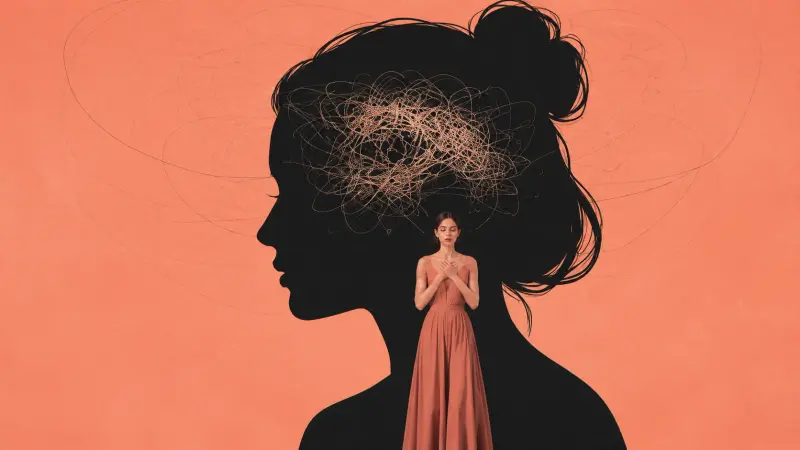
A person with histrionic personality disorder may be easily misunderstood; they may be seen as exaggerating their emotions or constantly seeking attention, while behind this behavior there is often a deep need for reassurance and connection, and an attempt to soothe an old fear of rejection or being ignored. When emotions escalate quickly, interpretations accelerate with them, reactions become harsher, and regret soon follows. Understanding this disorder does not mean justifying every action, but it opens a more compassionate and aware path toward realistic change that preserves dignity and repairs relationships.
What Is Meant by Histrionic Personality Disorder?
It is a relatively stable pattern of exaggerated emotional expression and a strong drive for attention, appearing across more than one situation and affecting relationships, work, and self-image. The difference between it and a socially outgoing or attention-loving personality is that it tends to be repetitive and exhausting, leading to clear problems or tension, not simply a pleasant presence at gatherings.
Personality disorders in general are not understood as a moral flaw, but as deeply rooted ways of thinking, feeling, and relating that may form over years and may gradually change with support.
The term “histrionic” may also carry historically unfair connotations; that is why many people focus on the practical meaning instead: a dramatic style of expression and a strong need for approval. The name is less important than understanding the cycle that keeps repeating and how to break it.
The Most Common Symptoms and How They Appear in Daily Life
A person may seem lively and social, yet become quickly distressed when they feel ignored, and seek an immediate response in order to feel reassured. Sometimes a small disagreement turns into a large sense of loss, or silence is read as rejection, so the drama intensifies not because the person wants to cause harm, but because anxiety takes over the scene.
Among the signs specialists commonly mention, though their intensity may differ from one person to another:
Clear distress when not being the center of attention.
Rapidly shifting emotional expression that may seem exaggerated.
Frequent use of appearance or social presence to attract attention.
Impressionistic and general speech when explaining situations rather than detailed explanation.
High suggestibility to other people’s opinions or to the general mood.
Expecting greater emotional closeness than actually exists, then feeling disappointed when those expectations are not met.
Social friendliness or flirtation that is at times inappropriate to the context, with the aim of gaining acceptance.
Why Does It Happen? Understanding the Causes Without Blame
There is no single cause. Most often, it is an overlap between temperament, early experiences, and the way a person learns to obtain acceptance or safety. Some people may learn that attention only comes through exaggeration, or grow up in an environment that rewards appearance and impressiveness more than calm honesty, or live with contradictory messages between intense closeness and then sudden withdrawal.
General references indicate that personality disorders may be linked to genetic and environmental factors and to childhood experiences, without that being a fixed judgment on the future. Knowing the background is not about blaming anyone, but about understanding what moves you when you feel ignored and how to calm it.
What Helps Improvement and Greater Stability in Relationships?
Improvement usually begins when you learn to calm the emotion before it turns into escalation. Try a simple rule: one minute of slow breathing with a longer exhale, then delay your response if possible, then ask one question: what do I need specifically right now? Clarification? Appreciation? Boundaries? After that, ask for what you need in a short and respectful sentence, instead of testing the other person through mixed signals.
Psychotherapy helps many people build a more stable sense of self, understand triggers, and transform the search for approval from drama into clarity. Talking therapies such as psychodynamic psychotherapy are commonly used, and cognitive behavioral skills and emotion regulation may also be added depending on the person.
In daily life, small habits also help reduce nervous system sensitivity: sleep as regularly as possible, reduce stimulants in the evening, light movement, and write two lines about what you felt and what you actually needed instead of replaying the scene in your head. These steps do not solve everything on their own, but they make psychological skills easier to apply when you are tense.
Those around you also play an important role. Having one person who deals with you steadily and calmly, who expresses empathy without rewarding escalation, can make a big difference. A sentence such as, “I understand that you’re upset; let’s continue after we calm down,” may be more helpful than blame, sarcasm, or repeated reassurance that keeps the cycle going.
Finally
Histrionic personality disorder does not erase your worth, and it does not mean that you intentionally exaggerate, but it may place you in an exhausting cycle of searching for reassurance and then becoming tense. Start by calming the emotion before responding, ask for what you need clearly, and build a sense of self-worth that does not depend only on other people’s reactions. With appropriate professional support from Tatmeen, your warmth can become steadier and less costly. Book your first session now.
Frequently Asked Questions
Does histrionic personality disorder mean the person is pretending?
Most often, not entirely. The feelings may be real, but the way they are expressed becomes amplified because of inner anxiety and a strong need for reassurance. The goal is not self-blame, but learning to calm the emotion and ask for what is needed clearly and within respectful boundaries.
Can it improve with treatment?
Yes, many people notice gradual improvement in emotional stability and relationships when they commit to appropriate psychotherapy and daily skills. Change takes time and repetition, but it is possible over time, especially with a safe therapeutic relationship and a realistic plan.
How do I tell the difference between a social personality and a disorder?
A social personality gives you energy without leaving you exhausted or caught in repeated conflicts. If the need for attention feels compulsive and leads to ongoing problems, regret, or intense fear of rejection, consulting a specialist can help you understand the full picture without judgment.
A writer and researcher specializing in psychiatry, she focuses on mental health and the human emotions we experience but cannot always find the words to name. She writes about us—about humanity and the human experience—and simplifies complex topics to offer content that helps us better understand ourselves and life, ultimately making us feel less alone.
Every Tatmeen article is reviewed by care providers licensed by the Saudi Commission for Health Specialties, so what you read is accurate and trustworthy.
This article builds understanding and does not replace a licensed care provider.
Need someone to talk to?
Tatmeen's licensed care providers are available around the clock, and the app's urgent consultation connects you with one within minutes.
Download Tatmeen to explore care providers and booking options.
Smart matchingFour quick questions suggest the right care provider
Urgent consultationTalk to an available care provider within minutes
Free psychological measuresMore than 20 tests to understand how you are doing
Scan to download
{"data":{"id":"16b6b91e-548e-421e-b579-f4f542b98a1c","slug":"histrionic-personality-disorder-symptoms-causes","arTitle":"اضطراب الشخصية الهستيرية: الأعراض والأسباب بوضوح","enTitle":"Histrionic Personality Disorder: Symptoms and Causes, Clearly Explained","thumbnailAltText":"Silhouette with chaotic thoughts inside, calm figure standing peacefully below","estimatedReadingTime":5,"likesCount":203,"writer":{"id":"3ab72b74-f26f-4337-9b47-3114b0f90de5","arBio":"كاتبة وباحثة متخصصة في مجال الطب النفسي، تهتم بموضوعات الصحة النفسية وبالمشاعر الإنسانية التي نختبرها ولا نجد دائمًا الكلمات لتسميتها. تكتب عنّا؛ عن الإنسان وتجربته، وتبسّط الموضوعات المعقّدة لتقدّم محتوى يساعدنا على فهم ذواتنا والحياة أكثر، ويجعلنا نشعر بأننا بوحدة أقل.","enBio":"A writer and researcher specializing in psychiatry, she focuses on mental health and the human emotions we experience but cannot always find the words to name. She writes about us—about humanity and the human experience—and simplifies complex topics to offer content that helps us better understand ourselves and life, ultimately making us feel less alone.","user":{"slug":"ayat-alnajar","arFullName":"آيات النجار","enFullName":"Ayat Al-Najjar","publicProfileImageUrl":"https://cdn.tatmeen.sa/public/profile-images/02384455-68fa-40b6-ad05-609fde65cafa/21b9a610dde5dfc6d37af110c23e9c7ab3946be080c281beb000debf4f7d31a6.webp","publicProfileImage96Url":"https://cdn.tatmeen.sa/public/profile-images/02384455-68fa-40b6-ad05-609fde65cafa/21b9a610dde5dfc6d37af110c23e9c7ab3946be080c281beb000debf4f7d31a6-w96.webp","publicProfileImage192Url":"https://cdn.tatmeen.sa/public/profile-images/02384455-68fa-40b6-ad05-609fde65cafa/21b9a610dde5dfc6d37af110c23e9c7ab3946be080c281beb000debf4f7d31a6-w192.webp"}},"arContent":"","enContent":"","productionDocument":{"headings":[{"id":"article-section-what-is-meant-by-histrionic-personality-disorder","text":"What Is Meant by Histrionic Personality Disorder?"},{"id":"article-section-the-most-common-symptoms-and-how-they-appear-in-daily-life","text":"The Most Common Symptoms and How They Appear in Daily Life"},{"id":"article-section-why-does-it-happen-understanding-the-causes-without-blame","text":"Why Does It Happen? Understanding the Causes Without Blame"},{"id":"article-section-what-helps-improvement-and-greater-stability-in-relationships","text":"What Helps Improvement and Greater Stability in Relationships?"},{"id":"article-section-finally","text":"Finally"}],"faqs":[{"question":"Does histrionic personality disorder mean the person is pretending?","answer":"<p><span style=\"color:#000000\">Most often, not entirely. The feelings may be real, but the way they are expressed becomes amplified because of inner anxiety and a strong need for reassurance. The goal is not self-blame, but learning to calm the emotion and ask for what is needed clearly and within respectful boundaries.</span></p>"},{"question":"Can it improve with treatment?","answer":"<p><span style=\"color:#000000\">Yes, many people notice gradual improvement in emotional stability and relationships when they commit to appropriate psychotherapy and daily skills. Change takes time and repetition, but it is possible over time, especially with a safe therapeutic relationship and a realistic plan.</span></p>"},{"question":"How do I tell the difference between a social personality and a disorder?","answer":"<p><span style=\"color:#000000\">A social personality gives you energy without leaving you exhausted or caught in repeated conflicts. If the need for attention feels compulsive and leads to ongoing problems, regret, or intense fear of rejection, consulting a specialist can help you understand the full picture without judgment.</span></p>"}],"beforeSourcesHtml":"","sources":[{"title":"Histrionic Personality Disorder - Merck Manual","href":"https://www.merckmanuals.com/professional/psychiatric-disorders/personality-disorders/histrionic-personality-disorder-hpd","hostname":"merckmanuals.com"},{"title":"Histrionic Personality Disorder - Cleveland Clinic","href":"https://my.clevelandclinic.org/health/diseases/9743-histrionic-personality-disorder","hostname":"my.clevelandclinic.org"},{"title":"Histrionic Personality Disorder - NCBI Bookshelf","href":"https://www.ncbi.nlm.nih.gov/books/NBK542325/","hostname":"ncbi.nlm.nih.gov"}],"afterSourcesHtml":"","blocks":[{"type":"html","html":"<p><span style=\"color:#000000\">A person with histrionic personality disorder may be easily misunderstood; they may be seen as exaggerating their emotions or constantly seeking attention, while behind this behavior there is often a deep need for reassurance and connection, and an attempt to soothe an old fear of rejection or being ignored. When emotions escalate quickly, interpretations accelerate with them, reactions become harsher, and regret soon follows. Understanding this disorder does not mean justifying every action, but it opens a more compassionate and aware path toward realistic change that preserves dignity and repairs relationships.</span></p><h2 id=\"article-section-what-is-meant-by-histrionic-personality-disorder\" data-toc-heading tabindex=\"-1\"><span id=\"what-is-meant-by-histrionic-personality-disorder-1\" aria-hidden=\"true\"></span><span style=\"color:#000000\"><strong>What Is Meant by Histrionic Personality Disorder?</strong></span></h2><p><span style=\"color:#000000\">It is a relatively stable pattern of exaggerated emotional expression and a strong drive for attention, appearing across more than one situation and affecting relationships, work, and self-image. The difference between it and a socially outgoing or attention-loving personality is that it tends to be repetitive and exhausting, leading to clear problems or tension, not simply a pleasant presence at gatherings.</span></p><p><span style=\"color:#000000\">Personality disorders in general are not understood as a moral flaw, but as deeply rooted ways of thinking, feeling, and relating that may form over years and may gradually change with support.</span></p><p><span style=\"color:#000000\">The term “histrionic” may also carry historically unfair connotations; that is why many people focus on the practical meaning instead: a dramatic style of expression and a strong need for approval. The name is less important than understanding the cycle that keeps repeating and how to break it.</span></p><h2 id=\"article-section-the-most-common-symptoms-and-how-they-appear-in-daily-life\" data-toc-heading tabindex=\"-1\"><span id=\"the-most-common-symptoms-and-how-they-appear-in-daily-life-2\" aria-hidden=\"true\"></span><span style=\"color:#000000\"><strong>The Most Common Symptoms and How They Appear in Daily Life</strong></span></h2><p><span style=\"color:#000000\">A person may seem lively and social, yet become quickly distressed when they feel ignored, and seek an immediate response in order to feel reassured. Sometimes a small disagreement turns into a large sense of loss, or silence is read as rejection, so the drama intensifies not because the person wants to cause harm, but because anxiety takes over the scene.</span></p><p><span style=\"color:#000000\">Among the signs specialists commonly mention, though their intensity may differ from one person to another:</span></p><ul><li><p><span style=\"color:#000000\">Clear distress when not being the center of attention.</span></p></li><li><p><span style=\"color:#000000\">Rapidly shifting emotional expression that may seem exaggerated.</span></p></li><li><p><span style=\"color:#000000\">Frequent use of appearance or social presence to attract attention.</span></p></li><li><p><span style=\"color:#000000\">Impressionistic and general speech when explaining situations rather than detailed explanation.</span></p></li><li><p><span style=\"color:#000000\">High suggestibility to other people’s opinions or to the general mood.</span></p></li><li><p><span style=\"color:#000000\">Expecting greater emotional closeness than actually exists, then feeling disappointed when those expectations are not met.</span></p></li><li><p><span style=\"color:#000000\">Social friendliness or flirtation that is at times inappropriate to the context, with the aim of gaining acceptance.</span></p></li></ul><h2 id=\"article-section-why-does-it-happen-understanding-the-causes-without-blame\" data-toc-heading tabindex=\"-1\"><span id=\"why-does-it-happen-understanding-the-causes-without-blame-3\" aria-hidden=\"true\"></span><span style=\"color:#000000\"><strong>Why Does It Happen? Understanding the Causes Without Blame</strong></span></h2><p><span style=\"color:#000000\">There is no single cause. Most often, it is an overlap between temperament, early experiences, and the way a person learns to obtain acceptance or safety. Some people may learn that attention only comes through exaggeration, or grow up in an environment that rewards appearance and impressiveness more than calm honesty, or live with contradictory messages between intense closeness and then sudden withdrawal.</span></p><p><span style=\"color:#000000\">General references indicate that personality disorders may be linked to genetic and environmental factors and to childhood experiences, without that being a fixed judgment on the future. Knowing the background is not about blaming anyone, but about understanding what moves you when you feel ignored and how to calm it.</span></p><h2 id=\"article-section-what-helps-improvement-and-greater-stability-in-relationships\" data-toc-heading tabindex=\"-1\"><span id=\"what-helps-improvement-and-greater-stability-in-relationships-4\" aria-hidden=\"true\"></span><span style=\"color:#000000\"><strong>What Helps Improvement and Greater Stability in Relationships?</strong></span></h2><p><span style=\"color:#000000\">Improvement usually begins when you learn to calm the emotion before it turns into escalation. Try a simple rule: one minute of slow breathing with a longer exhale, then delay your response if possible, then ask one question: what do I need specifically right now? Clarification? Appreciation? Boundaries? After that, ask for what you need in a short and respectful sentence, instead of testing the other person through mixed signals.</span></p><p><span style=\"color:#000000\">Psychotherapy helps many people build a more stable sense of self, understand triggers, and transform the search for approval from drama into clarity. Talking therapies such as psychodynamic psychotherapy are commonly used, and cognitive behavioral skills and emotion regulation may also be added depending on the person.</span></p><p><span style=\"color:#000000\">In daily life, small habits also help reduce nervous system sensitivity: sleep as regularly as possible, reduce stimulants in the evening, light movement, and write two lines about what you felt and what you actually needed instead of replaying the scene in your head. These steps do not solve everything on their own, but they make psychological skills easier to apply when you are tense.</span></p><p><span style=\"color:#000000\">Those around you also play an important role. Having one person who deals with you steadily and calmly, who expresses empathy without rewarding escalation, can make a big difference. A sentence such as, “I understand that you’re upset; let’s continue after we calm down,” may be more helpful than blame, sarcasm, or repeated reassurance that keeps the cycle going.</span></p><h2 id=\"article-section-finally\" data-toc-heading tabindex=\"-1\"><span id=\"finally-5\" aria-hidden=\"true\"></span><span style=\"color:#000000\"><strong>Finally</strong></span></h2><p><span style=\"color:#000000\">Histrionic personality disorder does not erase your worth, and it does not mean that you intentionally exaggerate, but it may place you in an exhausting cycle of searching for reassurance and then becoming tense. Start by calming the emotion before responding, ask for what you need clearly, and build a sense of self-worth that does not depend only on other people’s reactions. With appropriate professional support from Tatmeen, your warmth can become steadier and less costly. </span><a href=\"https://tatmeen.sa/download/\"><span style=\"color:#1155cc\"><u>Book your first session now</u></span></a><span style=\"color:#000000\">.</span></p>"}],"inlineCtaSignatures":[],"_experienceAliases":{"v":1,"fields":["html","bodyHtml"],"faqs":[0,1,2]}},"createdAt":"2026-07-10T21:00:00.000Z","updatedAt":"2026-07-15T16:32:02.929Z","disorderGroups":[{"id":"3f3cfe09-2a47-4080-a800-cfe8209e6eee","slug":"personality-disorders","arName":"اضطرابات الشخصية","enName":"Personality Disorders"}],"reviewer":{"arFullName":"فريق تطمين","enFullName":"Tatmeen team","slug":"tatmeen-team","kind":"organization"},"productionArticle":true,"promotionAllowed":true,"preparedCover":{"src":"https://cdn.tatmeen.sa/public/article-lcp/article-lcp-v2/sha256-865ebae8d8e4db838eff677bb0dd0ba74af79e6a7726b9a87109d2c41570cc51/800-8d31cdbcc59fda8f3dbe90d10e7c416af9629394c7c9d4d3cb493ac7d467e525.avif","fallback":"https://cdn.tatmeen.sa/public/article-lcp/article-lcp-v2/sha256-865ebae8d8e4db838eff677bb0dd0ba74af79e6a7726b9a87109d2c41570cc51/800-01c491ffb55f7c8f0ca07caf82320cd23a3c7c41e89a324bacab19999d040336.webp","directUrl":"https://cdn.tatmeen.sa/blog-cover/Tatmeen-1783786518419.webp","isGolden":true,"avifSrcset":"https://cdn.tatmeen.sa/public/article-lcp/article-lcp-v2/sha256-865ebae8d8e4db838eff677bb0dd0ba74af79e6a7726b9a87109d2c41570cc51/400-77678c2b84718bf732794a34adf60ac4f35955be9484b295741fe851a3d58862.avif 400w, https://cdn.tatmeen.sa/public/article-lcp/article-lcp-v2/sha256-865ebae8d8e4db838eff677bb0dd0ba74af79e6a7726b9a87109d2c41570cc51/640-17f6bb864319894b96b9ebe44538097e14dfc981140d4d3a6f5c0c3094fc5c1b.avif 640w, https://cdn.tatmeen.sa/public/article-lcp/article-lcp-v2/sha256-865ebae8d8e4db838eff677bb0dd0ba74af79e6a7726b9a87109d2c41570cc51/800-8d31cdbcc59fda8f3dbe90d10e7c416af9629394c7c9d4d3cb493ac7d467e525.avif 800w, https://cdn.tatmeen.sa/public/article-lcp/article-lcp-v2/sha256-865ebae8d8e4db838eff677bb0dd0ba74af79e6a7726b9a87109d2c41570cc51/1200-63f4329c193d674f200d80b0231b15806d6a5c9da126b034d16b0cf417452fc4.avif 1200w","webpSrcset":"https://cdn.tatmeen.sa/public/article-lcp/article-lcp-v2/sha256-865ebae8d8e4db838eff677bb0dd0ba74af79e6a7726b9a87109d2c41570cc51/400-f0e715762a31c2363df940295e369751b3244696742aab0046d299316073fd16.webp 400w, https://cdn.tatmeen.sa/public/article-lcp/article-lcp-v2/sha256-865ebae8d8e4db838eff677bb0dd0ba74af79e6a7726b9a87109d2c41570cc51/640-6abbc93c0238b93de8cb6beba7809b9b196ec0f4f8e7172d203f2d9cdd86ddf6.webp 640w, https://cdn.tatmeen.sa/public/article-lcp/article-lcp-v2/sha256-865ebae8d8e4db838eff677bb0dd0ba74af79e6a7726b9a87109d2c41570cc51/800-01c491ffb55f7c8f0ca07caf82320cd23a3c7c41e89a324bacab19999d040336.webp 800w, https://cdn.tatmeen.sa/public/article-lcp/article-lcp-v2/sha256-865ebae8d8e4db838eff677bb0dd0ba74af79e6a7726b9a87109d2c41570cc51/1200-922ec856f8a75458ff5f433a0b507ad950e2774cdfbd098efbb15744c3dc2a75.webp 1200w","phoneAvifSrcset":"https://cdn.tatmeen.sa/public/article-lcp/article-lcp-v2/sha256-865ebae8d8e4db838eff677bb0dd0ba74af79e6a7726b9a87109d2c41570cc51/400-77678c2b84718bf732794a34adf60ac4f35955be9484b295741fe851a3d58862.avif 400w, https://cdn.tatmeen.sa/public/article-lcp/article-lcp-v2/sha256-865ebae8d8e4db838eff677bb0dd0ba74af79e6a7726b9a87109d2c41570cc51/640-17f6bb864319894b96b9ebe44538097e14dfc981140d4d3a6f5c0c3094fc5c1b.avif 640w, https://cdn.tatmeen.sa/public/article-lcp/article-lcp-v2/sha256-865ebae8d8e4db838eff677bb0dd0ba74af79e6a7726b9a87109d2c41570cc51/800-8d31cdbcc59fda8f3dbe90d10e7c416af9629394c7c9d4d3cb493ac7d467e525.avif 800w","phoneWebpSrcset":"https://cdn.tatmeen.sa/public/article-lcp/article-lcp-v2/sha256-865ebae8d8e4db838eff677bb0dd0ba74af79e6a7726b9a87109d2c41570cc51/400-f0e715762a31c2363df940295e369751b3244696742aab0046d299316073fd16.webp 400w, https://cdn.tatmeen.sa/public/article-lcp/article-lcp-v2/sha256-865ebae8d8e4db838eff677bb0dd0ba74af79e6a7726b9a87109d2c41570cc51/640-6abbc93c0238b93de8cb6beba7809b9b196ec0f4f8e7172d203f2d9cdd86ddf6.webp 640w, https://cdn.tatmeen.sa/public/article-lcp/article-lcp-v2/sha256-865ebae8d8e4db838eff677bb0dd0ba74af79e6a7726b9a87109d2c41570cc51/800-01c491ffb55f7c8f0ca07caf82320cd23a3c7c41e89a324bacab19999d040336.webp 800w","width":800,"height":450},"previewTaxonomy":{"groups":[{"id":"3f3cfe09-2a47-4080-a800-cfe8209e6eee","slug":"personality-disorders","arName":"اضطرابات الشخصية","enName":"Personality Disorders"}],"topics":[{"id":"2cc5585a-080b-4a96-aa3c-0ef8e6830fab","slug":"histrionic-pd","arName":"الشخصية الهستيرية","enName":"Histrionic PD","groupSlug":"personality-disorders","href":"/blog/category/personality-disorders/histrionic-pd/"}],"tags":[]},"previewProviderRecommendations":[{"id":"d754a189-f8c9-4aad-b4aa-a5dbd26c0bd7","slug":"talal-alshowaier-8694","arFullName":"طلال الشويعر","enFullName":"Talal Alshowaier","publicProfileImageUrl":"https://cdn.tatmeen.sa/public/profile-images/d754a189-f8c9-4aad-b4aa-a5dbd26c0bd7/74feb27848a47cf43189f6b5951e06a9b87b08269021d5bab765092fc65fce42.webp","publicProfileImage96Url":"https://cdn.tatmeen.sa/public/profile-images/d754a189-f8c9-4aad-b4aa-a5dbd26c0bd7/74feb27848a47cf43189f6b5951e06a9b87b08269021d5bab765092fc65fce42-w96.webp","publicProfileImage192Url":"https://cdn.tatmeen.sa/public/profile-images/d754a189-f8c9-4aad-b4aa-a5dbd26c0bd7/74feb27848a47cf43189f6b5951e06a9b87b08269021d5bab765092fc65fce42-w192.webp","specialization":{"arName":"أخصائي نفسي","enName":"Psychologist"},"profileImageUrl":"https://cdn.tatmeen.sa/public/profile-images/d754a189-f8c9-4aad-b4aa-a5dbd26c0bd7/74feb27848a47cf43189f6b5951e06a9b87b08269021d5bab765092fc65fce42-w192.webp","experienceYears":3,"consultantInfo":{"averageRating":{"average":5},"specialization":{"arGeneralName":"أخصائي نفسي","enGeneralName":"Psychologist"}}},{"id":"8901fc01-b4d9-45d3-89c5-eaa33bcc0c10","slug":"alosaimi-amirah-8059","arFullName":"أميره العصيمي","enFullName":"Amirah Alosaimi","publicProfileImageUrl":"","publicProfileImage96Url":"","publicProfileImage192Url":"","specialization":{"arName":"أخصائي نفسي","enName":"Psychologist"},"profileImageUrl":"","experienceYears":6,"consultantInfo":{"averageRating":{"average":0},"specialization":{"arGeneralName":"أخصائي نفسي","enGeneralName":"Psychologist"}}},{"id":"3cc806e8-616b-4884-9f21-a75b378580a2","slug":"aisha-al-hashim-8667","arFullName":"عائشة ال هاشم","enFullName":"Aisha Al Hashim","publicProfileImageUrl":"https://cdn.tatmeen.sa/public/profile-images/3cc806e8-616b-4884-9f21-a75b378580a2/27f523d03be4dcfa1f6a79f70c1773887434e698990d214cd990caec56a44798.webp","publicProfileImage96Url":"https://cdn.tatmeen.sa/public/profile-images/3cc806e8-616b-4884-9f21-a75b378580a2/27f523d03be4dcfa1f6a79f70c1773887434e698990d214cd990caec56a44798-w96.webp","publicProfileImage192Url":"https://cdn.tatmeen.sa/public/profile-images/3cc806e8-616b-4884-9f21-a75b378580a2/27f523d03be4dcfa1f6a79f70c1773887434e698990d214cd990caec56a44798-w192.webp","specialization":{"arName":"أخصائي نفسي","enName":"Psychologist"},"profileImageUrl":"https://cdn.tatmeen.sa/public/profile-images/3cc806e8-616b-4884-9f21-a75b378580a2/27f523d03be4dcfa1f6a79f70c1773887434e698990d214cd990caec56a44798-w192.webp","experienceYears":2,"consultantInfo":{"averageRating":{"average":4.990909090909091},"specialization":{"arGeneralName":"أخصائي نفسي","enGeneralName":"Psychologist"}}}],"previewCareProviders":[{"id":"09364052-c2a9-4c52-9717-7ce2093b8d0a","slug":"kholoud-alharbi-5221","arFullName":"خلود الحربي","enFullName":"Kholoud Alharbi","publicProfileImageUrl":"https://cdn.tatmeen.sa/public/profile-images/09364052-c2a9-4c52-9717-7ce2093b8d0a/4a0aeb81619e351b77f4323e3605a0a00acc7ca3c82ee7cc5ca2c9e8ef716049.webp","publicProfileImage96Url":"https://cdn.tatmeen.sa/public/profile-images/09364052-c2a9-4c52-9717-7ce2093b8d0a/4a0aeb81619e351b77f4323e3605a0a00acc7ca3c82ee7cc5ca2c9e8ef716049-w96.webp","publicProfileImage192Url":"https://cdn.tatmeen.sa/public/profile-images/09364052-c2a9-4c52-9717-7ce2093b8d0a/4a0aeb81619e351b77f4323e3605a0a00acc7ca3c82ee7cc5ca2c9e8ef716049-w192.webp","gender":"FEMALE","specialization":{"arName":"أخصائي نفسي","enName":"Psychologist"}},{"id":"6f037535-1dca-4b50-a8b2-5974b7323286","slug":"salah-althobaiti-9053","arFullName":"صلاح الثبيتي","enFullName":"Salah Althobaiti","publicProfileImageUrl":"https://cdn.tatmeen.sa/public/profile-images/6f037535-1dca-4b50-a8b2-5974b7323286/35b6bd7fad9b1e004c1835803eb9c1b56dcacd380685ec8bff141f0fb888005c.webp","publicProfileImage96Url":"https://cdn.tatmeen.sa/public/profile-images/6f037535-1dca-4b50-a8b2-5974b7323286/35b6bd7fad9b1e004c1835803eb9c1b56dcacd380685ec8bff141f0fb888005c-w96.webp","publicProfileImage192Url":"https://cdn.tatmeen.sa/public/profile-images/6f037535-1dca-4b50-a8b2-5974b7323286/35b6bd7fad9b1e004c1835803eb9c1b56dcacd380685ec8bff141f0fb888005c-w192.webp","gender":"MALE","specialization":{"arName":"أخصائي نفسي","enName":"Psychologist"}},{"id":"3cc806e8-616b-4884-9f21-a75b378580a2","slug":"aisha-al-hashim-8667","arFullName":"عائشة ال هاشم","enFullName":"Aisha Al Hashim","publicProfileImageUrl":"https://cdn.tatmeen.sa/public/profile-images/3cc806e8-616b-4884-9f21-a75b378580a2/27f523d03be4dcfa1f6a79f70c1773887434e698990d214cd990caec56a44798.webp","publicProfileImage96Url":"https://cdn.tatmeen.sa/public/profile-images/3cc806e8-616b-4884-9f21-a75b378580a2/27f523d03be4dcfa1f6a79f70c1773887434e698990d214cd990caec56a44798-w96.webp","publicProfileImage192Url":"https://cdn.tatmeen.sa/public/profile-images/3cc806e8-616b-4884-9f21-a75b378580a2/27f523d03be4dcfa1f6a79f70c1773887434e698990d214cd990caec56a44798-w192.webp","gender":"FEMALE","specialization":{"arName":"أخصائي نفسي","enName":"Psychologist"}},{"id":"94765496-dbdf-4631-a01b-7df5f788668d","slug":"abdullrahman-alhamoudi-3045","arFullName":"عبدالرحمن الحمودي","enFullName":"Abdulrahman Alhamoudi","publicProfileImageUrl":"https://cdn.tatmeen.sa/public/profile-images/94765496-dbdf-4631-a01b-7df5f788668d/2d49f6b6493c564afb6f50b6c3634231dff3a5cf8353acfab393d1b2a88037d1.webp","publicProfileImage96Url":"https://cdn.tatmeen.sa/public/profile-images/94765496-dbdf-4631-a01b-7df5f788668d/2d49f6b6493c564afb6f50b6c3634231dff3a5cf8353acfab393d1b2a88037d1-w96.webp","publicProfileImage192Url":"https://cdn.tatmeen.sa/public/profile-images/94765496-dbdf-4631-a01b-7df5f788668d/2d49f6b6493c564afb6f50b6c3634231dff3a5cf8353acfab393d1b2a88037d1-w192.webp","gender":"MALE","specialization":{"arName":"أخصائي نفسي","enName":"Psychologist"}},{"id":"618dba89-5b70-4b46-8304-741b7ac8ecd3","slug":"abdullah-mari-1311","arFullName":"عبدالله مرعي","enFullName":"Abdullah Mari","publicProfileImageUrl":"https://cdn.tatmeen.sa/public/profile-images/618dba89-5b70-4b46-8304-741b7ac8ecd3/6b4a3bfb59f8a304ca79083b32859b46baad2e1d692974a47c02c1f66bd11129.webp","publicProfileImage96Url":"https://cdn.tatmeen.sa/public/profile-images/618dba89-5b70-4b46-8304-741b7ac8ecd3/6b4a3bfb59f8a304ca79083b32859b46baad2e1d692974a47c02c1f66bd11129-w96.webp","publicProfileImage192Url":"https://cdn.tatmeen.sa/public/profile-images/618dba89-5b70-4b46-8304-741b7ac8ecd3/6b4a3bfb59f8a304ca79083b32859b46baad2e1d692974a47c02c1f66bd11129-w192.webp","gender":"MALE","specialization":{"arName":"أخصائي نفسي","enName":"Psychologist"}},{"id":"d4ffcb6b-90a7-45b6-b941-964866f4564b","slug":"dhaifallah-alhumaidi-1092","arFullName":"ضيف الله الحميدي","enFullName":"Dhaifallah Alhumaidi","publicProfileImageUrl":"https://cdn.tatmeen.sa/public/profile-images/d4ffcb6b-90a7-45b6-b941-964866f4564b/1817171c5828a9b57d6c30d12332cf154e335272548bc90a6e8456d74d356956.webp","publicProfileImage96Url":"https://cdn.tatmeen.sa/public/profile-images/d4ffcb6b-90a7-45b6-b941-964866f4564b/1817171c5828a9b57d6c30d12332cf154e335272548bc90a6e8456d74d356956-w96.webp","publicProfileImage192Url":"https://cdn.tatmeen.sa/public/profile-images/d4ffcb6b-90a7-45b6-b941-964866f4564b/1817171c5828a9b57d6c30d12332cf154e335272548bc90a6e8456d74d356956-w192.webp","gender":"MALE","specialization":{"arName":"أخصائي نفسي","enName":"Psychologist"}},{"id":"d8fb937b-ad65-4b6f-a65b-276ad8258fed","slug":"azza-alharbi-7286","arFullName":"عزه الحربي","enFullName":"Azza Alharbi","publicProfileImageUrl":"https://cdn.tatmeen.sa/public/profile-images/d8fb937b-ad65-4b6f-a65b-276ad8258fed/378a8ab30f4087833263c41fb2c3102028cbe6bb9655172d7b3439ee1d6b0800.webp","publicProfileImage96Url":"https://cdn.tatmeen.sa/public/profile-images/d8fb937b-ad65-4b6f-a65b-276ad8258fed/378a8ab30f4087833263c41fb2c3102028cbe6bb9655172d7b3439ee1d6b0800-w96.webp","publicProfileImage192Url":"https://cdn.tatmeen.sa/public/profile-images/d8fb937b-ad65-4b6f-a65b-276ad8258fed/378a8ab30f4087833263c41fb2c3102028cbe6bb9655172d7b3439ee1d6b0800-w192.webp","gender":"FEMALE","specialization":{"arName":"أخصائي نفسي","enName":"Psychologist"}},{"id":"025d770d-f6d4-405b-be1c-d45dde63fbf7","slug":"akila-alomran-7545","arFullName":"عقيله العمران","enFullName":"Akila Alomran","publicProfileImageUrl":"https://cdn.tatmeen.sa/public/profile-images/025d770d-f6d4-405b-be1c-d45dde63fbf7/84139585dd91b51b2f1bb7a3411fa69e4c4fe3d7dd415f3fdb6444d5f69a3820.webp","publicProfileImage96Url":"https://cdn.tatmeen.sa/public/profile-images/025d770d-f6d4-405b-be1c-d45dde63fbf7/84139585dd91b51b2f1bb7a3411fa69e4c4fe3d7dd415f3fdb6444d5f69a3820-w96.webp","publicProfileImage192Url":"https://cdn.tatmeen.sa/public/profile-images/025d770d-f6d4-405b-be1c-d45dde63fbf7/84139585dd91b51b2f1bb7a3411fa69e4c4fe3d7dd415f3fdb6444d5f69a3820-w192.webp","gender":"FEMALE","specialization":{"arName":"أخصائي نفسي","enName":"Psychologist"}}],"previewDownload":{"href":"/download","title":{"ar":"خطوة واحدة لأجلك، ابدأ الآن","en":"One step for you, start now"},"description":{"ar":"حمّل تطبيق تطمين لاستكشاف مقدمي الرعاية وخيارات الحجز.","en":"Download Tatmeen to explore care providers and booking options."},"posterSrc":"/images/home/cta-ar-new-1.webp","videoSrc":"/images/home/cta-ar-new-1.mp4","videoPosterSrc":"/images/home/cta-ar-new-1.webp","videoPosterEnSrc":"/images/home/cta-en-new-1.webp","videoType":"video/mp4","appStoreHref":"https://apps.apple.com/us/app/tatmeen-%D8%AA%D8%B7%D9%85%D9%8A%D9%86/id6473836983","googlePlayHref":"https://play.google.com/store/apps/details?id=com.TatmeenApp.user&hl=en"},"previewRelatedArticles":[{"id":"9b361bc6-0a01-45a9-9ffb-c4509a47ec71","slug":"The-impact-of-narcissism-on-romantic-relationships","route":"/blog/The-impact-of-narcissism-on-romantic-relationships/","title":{"ar":"ما تأثير النرجسية على العلاقات العاطفية؟","en":"How Does Narcissism Affect Romantic Relationships?"},"image":"https://cdn.tatmeen.sa/public/article-lcp/article-lcp-v2/sha256-d5e36458ba766ca2aa0361d30a87d51f94e8788e29141b89c59979f829608a2c/800-9e06de34fd0dde78a1533a75c9f435152d04d0e5dac15ee1dc9322dae1e9c564.webp","directImageFallback":"https://cdn.tatmeen.sa/blog-cover/1706455529008-Tatmeen-568.jpg","arThumbnailAltText":"Oversized silhouetted hands hold white strings tangled around a central figure's head","thumbnailAltText":"Oversized silhouetted hands hold white strings tangled around a central figure's head","topic":{"label":{"ar":"اضطرابات نفسية شائعة","en":"Common Mental Issues"}},"readingTimeMinutes":5},{"id":"23bc65bf-2dbf-4276-91aa-ea151f6ee1ec","slug":"Avoidant-Personality-Disorder-Symptoms-Treatment","route":"/blog/Avoidant-Personality-Disorder-Symptoms-Treatment/","title":{"ar":"اضطراب الشخصية التجنبية - أعراض وعلاج","en":"Avoidant Personality Disorder: Symptoms and Treatment"},"image":"https://cdn.tatmeen.sa/public/article-lcp/article-lcp-v2/sha256-c9014dac41d4736d2675de5f7e668d97f43da360933fd3413afc67b4d4a36288/800-cd7997cccbebe1b07d87bcc73f2b13d752de3c977429c69a7ec7939f74f3d66f.webp","directImageFallback":"https://cdn.tatmeen.sa/blog-cover/1704728798208-Tatmeen-img-951","arThumbnailAltText":"Person wearing a sad-faced paper bag and raising one hand","thumbnailAltText":"Person wearing a sad-faced paper bag and raising one hand","topic":{"label":{"ar":"اضطرابات الشخصية","en":"Personality Disorders"}},"readingTimeMinutes":5},{"id":"ffcfa63c-448c-41d5-99e6-3dfc6734d098","slug":"Am-I-a-narcissistic-personality-to-those-around-me","route":"/blog/Am-I-a-narcissistic-personality-to-those-around-me/","title":{"ar":"هل أنا شخصية نرجسية لمن حولي؟","en":"Am I Narcissistic Toward Those Around Me?"},"image":"https://cdn.tatmeen.sa/public/article-lcp/article-lcp-v2/sha256-a26cb382b6be9a0ecbb0c420d043d5661caa7e66bdb6340ff316999b37d86eb5/600-088a648bc3d8463423507634a56c5162f0fa0dab1d67ce6d59eccf0dae12b674.webp","directImageFallback":"https://cdn.tatmeen.sa/blog-cover/1706455539767-Tatmeen-88.jpg","arThumbnailAltText":"Two adults seated on a sofa, facing each other and gesturing as they talk","thumbnailAltText":"Two adults seated on a sofa, facing each other and gesturing as they talk","topic":{"label":{"ar":"اضطرابات الشخصية","en":"Personality Disorders"}},"readingTimeMinutes":5},{"id":"a02a6692-d41c-4115-92cc-308b5112aaf3","slug":"am-i-narcissist-signs-self-reflection-guide","route":"/blog/am-i-narcissist-signs-self-reflection-guide/","title":{"ar":"من الممكن أن أكون نرجسي؟ العلامات والأعراض ودليل للتأمل الذاتي","en":"Could I Be a Narcissist? Signs, Symptoms, and a Self-Reflection Guide"},"image":"https://cdn.tatmeen.sa/public/article-lcp/article-lcp-v2/sha256-1b0de7dda8e86d2add19a7af9485ffe573ee0d18054a84e58a96b8a1af7fb060/800-0d56c6415f1d484c27db355901a770c0b12c8835c37dc00a834bfc118323fd33.webp","directImageFallback":"https://cdn.tatmeen.sa/blog-cover/Tatmeen-1777734991977.webp","arThumbnailAltText":"Person looking into a mirror showing a slightly distorted reflection","thumbnailAltText":"Person looking into a mirror showing a slightly distorted reflection","topic":{"label":{"ar":"اضطرابات الشخصية","en":"Personality Disorders"}},"readingTimeMinutes":5}],"previewRelatedReadStates":{}},"locale":"en","device":"desktop","path":"/en/blog/histrionic-personality-disorder-symptoms-causes/","readingControls":false,"config":{"public":{"BUCKET_URL":"https://cdn.tatmeen.sa/","APP_BASE_URL":"https://tatmeen.sa","intercomAppId":"ppcnu9e3"}}}