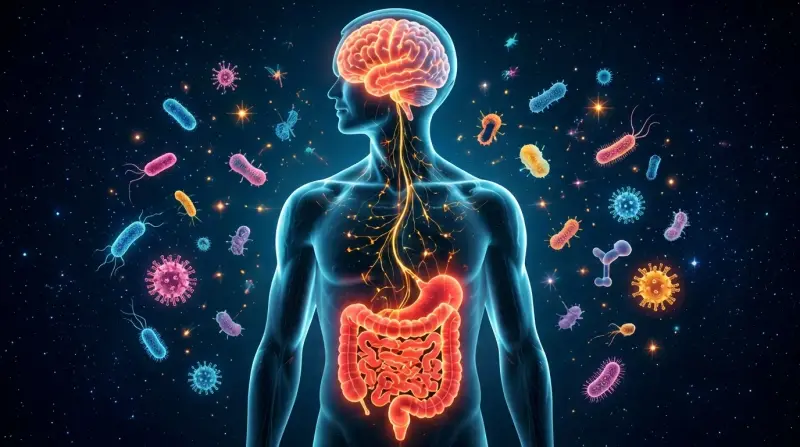
Gut microbiome and mood is a topic that matters to anyone who has noticed their emotional day change sometimes alongside digestive upset, loss of appetite, or bloating. You may feel as if your body is sending messages you don’t fully understand: anxiety that appears without a clear reason, or a heaviness in mood that coincides with stressful days and fast food. At Tatmeen, we meet people who want a simpler, more grounded understanding of this relationship—away from exaggeration. In this article, you’ll find a balanced picture of what science knows about the gut–brain axis, and what small habits may help support it without quick promises.
What Is the Gut Microbiome?
The gut microbiome is a vast community of microorganisms living in the digestive system—most of them beneficial bacteria that have coexisted with us since childhood. Their presence is natural, and they play multiple roles, such as helping digest certain components, contributing to the production of compounds the body benefits from, and influencing immunity. What matters here is that this community is not the same for everyone; it is affected by diet, sleep, stress, certain medications, and even daily lifestyle patterns.
When the microbiome balance shifts, some people may notice changes in digestion and energy—and sometimes in mood. But it’s important to draw a clear line: association does not always mean a single cause or a simple solution, because the human being is an interconnected system.
How Does the Gut–Brain Axis Communicate?
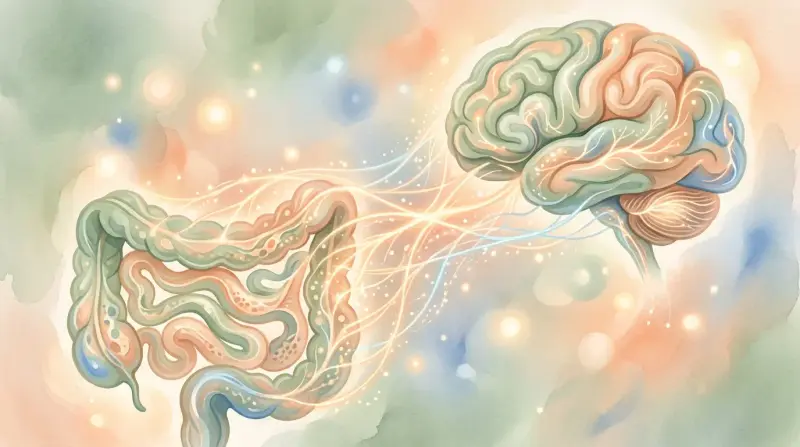
The gut is not just a tube for digestion; it contains a complex neural network that continuously exchanges signals with the brain. This communication happens through more than one pathway: neural signals, hormonal messages, immune responses, and compounds produced by microbes that circulate through the body. NLH describes this as a two-way communication between the brain and the gut, which helps explain why stress may worsen IBS symptoms for some people, and why digestive disturbance may affect mental clarity for others.
From a psychological angle, when the body feels threatened or under pressure, it tends to redistribute energy: thoughts speed up, breathing tightens, and digestion may slow down or become disrupted. That’s why feelings can sometimes seem as physical as they are mental.
Why Do Sadness or Anxiety Show Up in the Gut?
Many people describe anxiety as a knot in the stomach or a tightness in the intestines. This isn’t an exaggeration—it reflects the overlap between the nervous system and the digestive system. When stress lasts, the body may become more sensitive to triggers: a heavy meal, too much coffee, or broken sleep. Here, signals overlap, and the brain reads them as an alarm—so vigilance and anxiety increase.
This does not mean that every digestive issue is psychological, nor that every sadness is caused by the gut. It’s a gentle reminder that mood isn’t handled through thoughts alone, and that caring for the body may soften emotional intensity for some people.
Food as a Daily Factor That Quietly Shapes Mood
Food doesn’t create your happiness on its own, but it can lay a more stable foundation. What we eat changes the environment where microbes live and affects their diversity and function. Diet is one of the strongest factors shaping the microbiome over time, and the relationship between diet, the microbiome, and the brain is still an active area of research—especially in humans.
According to specialists at Tatmeen, the easiest starting point isn’t a strict plan, but a simple observation: which meals make your mood feel heavier, and what gives you lightness and focus? Over time, you can build a gentler plan that fits your reality.
If you want practical steps that aren’t exhausting, these points are often helpful for many people:
Increase fiber gradually through vegetables, fruits, legumes, and oats, because dietary diversity supports microbial diversity.
Maintain regular hydration throughout the day—especially with fiber—to reduce digestive discomfort.
Reduce excessive sugars and ultra-processed foods as much as you can, because they may increase energy fluctuations for some people.
Try to eat slowly and at a consistent time whenever possible; rhythm can reassure the digestive system.
Care for sleep, because poor sleep may raise stress and make appetite more impulsive.
Probiotics: Between Enthusiasm and Realism
You may hear that probiotics or fermented foods change mood quickly. It’s best to stay realistic: some people notice digestive improvement with certain products, but the overall picture is more complex. Evidence supporting many common claims is limited, and products vary in type, concentration, and quality—and what suits each person may not be clear.
If you’re considering supplements, put safety first: ask a health professional if you have a chronic condition or a weakened immune system, and don’t treat supplements as a replacement for fundamentals like sleep, balanced nutrition, and stress management. Most importantly, don’t blame yourself if you don’t notice a difference; sometimes the deeper need is in the overall lifestyle pattern, not in one product.
How Do You Support the Gut–Brain Axis Without Turning It into an Exhausting Project?
Start with the basics that work because they’re repeatable: adequate sleep as much as possible, light movement, and regular meals. Then add a small psychological touch: when anxiety rises, ask yourself, where do I feel it in my body? Take a slower breath, and create a pause before reacting. These few minutes may prevent you from falling into a loop of stress, then regret, then more stress.
And if your mood stays low for a long time, or digestive symptoms begin to interfere with work or connection, professional support can help you organize the picture: Is the issue chronic stress? Are there repeated negative thoughts? Do you need a behavioral plan that fits your day? A structured conversation doesn’t cancel the body’s role—it brings it into one kinder, integrated plan.
Finally…
Understanding gut microbiome and mood gives you a gentler way to look at yourself: you are not being dramatic or overreacting—you are trying to read how your body responds to life. Focus on small, sustainable steps, and allow change to be gradual. And if you want the support of a licensed specialist who can help you build a realistic routine that considers your stress and circumstances, you can start now through Tatmeen.
Frequently Asked Questions
Does the gut–brain axis mean my emotions are caused by my stomach?
It’s not that simple. There is two-way communication, and emotions can be influenced by the body and vice versa. The idea is to notice connections without trapping yourself in one single cause. If there is pain or persistent symptoms, it’s best to evaluate them medically as well.
Do probiotics improve mood?
Some people may benefit, but the overall evidence is mixed, and results vary between individuals and products. It’s best to start with balanced food, better sleep, and reducing stress. If you want supplements, consult a specialist—especially with chronic illness or weakened immunity.
What is the best daily habit to support the microbiome and mood?
One habit doesn’t fit everyone, but consistency is often the key: meals at roughly steady times, gradual fiber, better sleep, and light movement. Notice the effect of each step on your digestion and your mood week by week.
A writer and researcher specializing in psychiatry, she focuses on mental health and the human emotions we experience but cannot always find the words to name. She writes about us—about humanity and the human experience—and simplifies complex topics to offer content that helps us better understand ourselves and life, ultimately making us feel less alone.
Every Tatmeen article is reviewed by care providers licensed by the Saudi Commission for Health Specialties, so what you read is accurate and trustworthy.
This article builds understanding and does not replace a licensed care provider.
Need someone to talk to?
Tatmeen's licensed care providers are available around the clock, and the app's urgent consultation connects you with one within minutes.
Download Tatmeen to explore care providers and booking options.
Smart matchingFour quick questions suggest the right care provider
Urgent consultationTalk to an available care provider within minutes
Free psychological measuresMore than 20 tests to understand how you are doing
Scan to download
{"data":{"id":"92f46d00-2c9b-4e58-8095-c01b87a7e867","slug":"gut-microbiome-mood-gut-brain-axis","arTitle":"ميكروبيوم الأمعاء والمزاج: شرح محور الأمعاء والدماغ","enTitle":"Gut Microbiome and Mood: Explaining the Gut-Brain Axis","thumbnailAltText":"Glowing human body with highlighted brain and gut connected by neural pathways and microbes","estimatedReadingTime":5,"likesCount":253,"writer":{"id":"3ab72b74-f26f-4337-9b47-3114b0f90de5","arBio":"كاتبة وباحثة متخصصة في مجال الطب النفسي، تهتم بموضوعات الصحة النفسية وبالمشاعر الإنسانية التي نختبرها ولا نجد دائمًا الكلمات لتسميتها. تكتب عنّا؛ عن الإنسان وتجربته، وتبسّط الموضوعات المعقّدة لتقدّم محتوى يساعدنا على فهم ذواتنا والحياة أكثر، ويجعلنا نشعر بأننا بوحدة أقل.","enBio":"A writer and researcher specializing in psychiatry, she focuses on mental health and the human emotions we experience but cannot always find the words to name. She writes about us—about humanity and the human experience—and simplifies complex topics to offer content that helps us better understand ourselves and life, ultimately making us feel less alone.","user":{"slug":"ayat-alnajar","arFullName":"آيات النجار","enFullName":"Ayat Al-Najjar","publicProfileImageUrl":"https://cdn.tatmeen.sa/public/profile-images/02384455-68fa-40b6-ad05-609fde65cafa/21b9a610dde5dfc6d37af110c23e9c7ab3946be080c281beb000debf4f7d31a6.webp","publicProfileImage96Url":"https://cdn.tatmeen.sa/public/profile-images/02384455-68fa-40b6-ad05-609fde65cafa/21b9a610dde5dfc6d37af110c23e9c7ab3946be080c281beb000debf4f7d31a6-w96.webp","publicProfileImage192Url":"https://cdn.tatmeen.sa/public/profile-images/02384455-68fa-40b6-ad05-609fde65cafa/21b9a610dde5dfc6d37af110c23e9c7ab3946be080c281beb000debf4f7d31a6-w192.webp"}},"arContent":"","enContent":"","productionDocument":{"headings":[{"id":"article-section-what-is-the-gut-microbiome","text":"What Is the Gut Microbiome?"},{"id":"article-section-how-does-the-gut-brain-axis-communicate","text":"How Does the Gut–Brain Axis Communicate?"},{"id":"article-section-why-do-sadness-or-anxiety-show-up-in-the-gut","text":"Why Do Sadness or Anxiety Show Up in the Gut?"},{"id":"article-section-food-as-a-daily-factor-that-quietly-shapes-mood","text":"Food as a Daily Factor That Quietly Shapes Mood"},{"id":"article-section-probiotics-between-enthusiasm-and-realism","text":"Probiotics: Between Enthusiasm and Realism"},{"id":"article-section-how-do-you-support-the-gut-brain-axis-without-turning-it-into-an-exhausting-project","text":"How Do You Support the Gut–Brain Axis Without Turning It into an Exhausting Project?"},{"id":"article-section-finally","text":"Finally…"}],"faqs":[{"question":"Does the gut–brain axis mean my emotions are caused by my stomach?","answer":"<p><span style=\"color:#000000\">It’s not that simple. There is two-way communication, and emotions can be influenced by the body and vice versa. The idea is to notice connections without trapping yourself in one single cause. If there is pain or persistent symptoms, it’s best to evaluate them medically as well.</span></p>"},{"question":"Do probiotics improve mood?","answer":"<p><span style=\"color:#000000\">Some people may benefit, but the overall evidence is mixed, and results vary between individuals and products. It’s best to start with balanced food, better sleep, and reducing stress. If you want supplements, consult a specialist—especially with chronic illness or weakened immunity.</span></p>"},{"question":"What is the best daily habit to support the microbiome and mood?","answer":"<p><span style=\"color:#000000\">One habit doesn’t fit everyone, but consistency is often the key: meals at roughly steady times, gradual fiber, better sleep, and light movement. Notice the effect of each step on your digestion and your mood week by week.</span></p>"}],"beforeSourcesHtml":"<p></p>","sources":[],"afterSourcesHtml":"","blocks":[{"type":"html","html":"<p><span style=\"color:#000000\">Gut microbiome and mood is a topic that matters to anyone who has noticed their emotional day change sometimes alongside digestive upset, loss of appetite, or bloating. You may feel as if your body is sending messages you don’t fully understand: anxiety that appears without a clear reason, or a heaviness in mood that coincides with stressful days and fast food. At <strong>Tatmeen</strong>, we meet people who want a simpler, more grounded understanding of this relationship—away from exaggeration. In this article, you’ll find a balanced picture of what science knows about the gut–brain axis, and what small habits may help support it without quick promises.</span></p><h2 id=\"article-section-what-is-the-gut-microbiome\" data-toc-heading tabindex=\"-1\"><span id=\"what-is-the-gut-microbiome-1\" aria-hidden=\"true\"></span><span style=\"color:#000000\"><strong>What Is the Gut Microbiome?</strong></span></h2><p><span style=\"color:#000000\">The gut microbiome is a vast community of microorganisms living in the digestive system—most of them beneficial bacteria that have coexisted with us since childhood. Their presence is natural, and they play multiple roles, such as helping digest certain components, contributing to the production of compounds the body benefits from, and influencing immunity. What matters here is that this community is not the same for everyone; it is affected by diet, sleep, stress, certain medications, and even daily lifestyle patterns.</span></p><p><span style=\"color:#000000\">When the microbiome balance shifts, some people may notice changes in digestion and energy—and sometimes in mood. But it’s important to draw a clear line: association does not always mean a single cause or a simple solution, because the human being is an interconnected system.</span></p><h2 id=\"article-section-how-does-the-gut-brain-axis-communicate\" data-toc-heading tabindex=\"-1\"><span id=\"how-does-the-gut-brain-axis-communicate-2\" aria-hidden=\"true\"></span><span style=\"color:#000000\"><strong>How Does the Gut–Brain Axis Communicate?</strong></span></h2><p><span style=\"color:#000000\">The gut is not just a tube for digestion; it contains a complex neural network that continuously exchanges signals with the brain. This communication happens through more than one pathway: neural signals, hormonal messages, immune responses, and compounds produced by microbes that circulate through the body. </span><a href=\"https://pmc.ncbi.nlm.nih.gov/articles/PMC8634751/\" target=\"_blank\" rel=\"nofollow noopener noreferrer\"><span style=\"color:#1155cc\"><strong><u>NLH</u></strong></span></a><span style=\"color:#000000\"> describes this as a two-way communication between the brain and the gut, which helps explain why stress may worsen IBS symptoms for some people, and why digestive disturbance may affect mental clarity for others.</span></p><p><span style=\"color:#000000\">From a psychological angle, when the body feels threatened or under pressure, it tends to redistribute energy: thoughts speed up, breathing tightens, and digestion may slow down or become disrupted. That’s why feelings can sometimes seem as physical as they are mental.</span></p><h2 id=\"article-section-why-do-sadness-or-anxiety-show-up-in-the-gut\" data-toc-heading tabindex=\"-1\"><span id=\"why-do-sadness-or-anxiety-show-up-in-the-gut-3\" aria-hidden=\"true\"></span><span style=\"color:#000000\"><strong>Why Do Sadness or Anxiety Show Up in the Gut?</strong></span></h2><p><span style=\"color:#000000\">Many people describe anxiety as a knot in the stomach or a tightness in the intestines. This isn’t an exaggeration—it reflects the overlap between the nervous system and the digestive system. When stress lasts, the body may become more sensitive to triggers: a heavy meal, too much coffee, or broken sleep. Here, signals overlap, and the brain reads them as an alarm—so vigilance and anxiety increase.</span></p><p><span style=\"color:#000000\">This does not mean that every digestive issue is psychological, nor that every sadness is caused by the gut. It’s a gentle reminder that mood isn’t handled through thoughts alone, and that caring for the body may soften emotional intensity for some people.</span></p><h2 id=\"article-section-food-as-a-daily-factor-that-quietly-shapes-mood\" data-toc-heading tabindex=\"-1\"><span id=\"food-as-a-daily-factor-that-quietly-shapes-mood-4\" aria-hidden=\"true\"></span><span style=\"color:#000000\"><strong>Food as a Daily Factor That Quietly Shapes Mood</strong></span></h2><p><span style=\"color:#000000\">Food doesn’t create your happiness on its own, but it can lay a more stable foundation. What we eat changes the environment where microbes live and affects their diversity and function. Diet is one of the strongest factors shaping the microbiome over time, and the relationship between diet, the microbiome, and the brain is still an active area of research—especially in humans.</span></p><p><span style=\"color:#000000\">According to specialists at <strong>Tatmeen</strong>, the easiest starting point isn’t a strict plan, but a simple observation: which meals make your mood feel heavier, and what gives you lightness and focus? Over time, you can build a gentler plan that fits your reality.</span></p><p><span style=\"color:#000000\">If you want practical steps that aren’t exhausting, these points are often helpful for many people:</span></p><ul><li><p><span style=\"color:#000000\">Increase fiber gradually through vegetables, fruits, legumes, and oats, because dietary diversity supports microbial diversity.</span></p></li><li><p><span style=\"color:#000000\">Maintain regular hydration throughout the day—especially with fiber—to reduce digestive discomfort.</span></p></li><li><p><span style=\"color:#000000\">Reduce excessive sugars and ultra-processed foods as much as you can, because they may increase energy fluctuations for some people.</span></p></li><li><p><span style=\"color:#000000\">Try to eat slowly and at a consistent time whenever possible; rhythm can reassure the digestive system.</span></p></li><li><p><span style=\"color:#000000\">Care for sleep, because poor sleep may raise stress and make appetite more impulsive.</span></p></li></ul><h2 id=\"article-section-probiotics-between-enthusiasm-and-realism\" data-toc-heading tabindex=\"-1\"><span id=\"probiotics-between-enthusiasm-and-realism-5\" aria-hidden=\"true\"></span><span style=\"color:#000000\"><strong>Probiotics: Between Enthusiasm and Realism</strong></span></h2><p><span style=\"color:#000000\">You may hear that probiotics or fermented foods change mood quickly. It’s best to stay realistic: some people notice digestive improvement with certain products, but the overall picture is more complex. </span><a href=\"https://www.nhs.uk/tests-and-treatments/probiotics/\" target=\"_blank\" rel=\"nofollow noopener noreferrer\"><span style=\"color:#1155cc\"><u>Evidence</u></span></a><span style=\"color:#000000\"> supporting many common claims is limited, and products vary in type, concentration, and quality—and what suits each person may not be clear.</span></p><p><span style=\"color:#000000\">If you’re considering supplements, put safety first: ask a health professional if you have a chronic condition or a weakened immune system, and don’t treat supplements as a replacement for fundamentals like sleep, balanced nutrition, and stress management. Most importantly, don’t blame yourself if you don’t notice a difference; sometimes the deeper need is in the overall lifestyle pattern, not in one product.</span></p><h2 id=\"article-section-how-do-you-support-the-gut-brain-axis-without-turning-it-into-an-exhausting-project\" data-toc-heading tabindex=\"-1\"><span id=\"how-do-you-support-the-gut-brain-axis-without-turning-it-into-an-exhausting-project-6\" aria-hidden=\"true\"></span><span style=\"color:#000000\"><strong>How Do You Support the Gut–Brain Axis Without Turning It into an Exhausting Project?</strong></span></h2><p><span style=\"color:#000000\">Start with the basics that work because they’re repeatable: adequate sleep as much as possible, light movement, and regular meals. Then add a small psychological touch: when anxiety rises, ask yourself, where do I feel it in my body? Take a slower breath, and create a pause before reacting. These few minutes may prevent you from falling into a loop of stress, then regret, then more stress.</span></p><p><span style=\"color:#000000\">And if your mood stays low for a long time, or digestive symptoms begin to interfere with work or connection, professional support can help you organize the picture: Is the issue chronic stress? Are there repeated negative thoughts? Do you need a behavioral plan that fits your day? A structured conversation doesn’t cancel the body’s role—it brings it into one kinder, integrated plan.</span></p><h2 id=\"article-section-finally\" data-toc-heading tabindex=\"-1\"><span id=\"finally-7\" aria-hidden=\"true\"></span><span style=\"color:#000000\"><strong>Finally…</strong></span></h2><p><span style=\"color:#000000\">Understanding gut microbiome and mood gives you a gentler way to look at yourself: you are not being dramatic or overreacting—you are trying to read how your body responds to life. Focus on small, sustainable steps, and allow change to be gradual. And if you want the support of a licensed specialist who can help you build a realistic routine that considers your stress and circumstances, you can <u>start now</u> through <strong>Tatmeen</strong>.</span></p>"}],"inlineCtaSignatures":[],"_experienceAliases":{"v":1,"fields":["html","bodyHtml"],"faqs":[0,1,2]}},"createdAt":"2026-06-13T21:00:00.000Z","updatedAt":"2026-06-22T17:02:47.147Z","disorderGroups":[{"id":"ebb11477-95c3-4773-ad1b-c53ca45cb6f7","slug":"general-health","arName":"صحة عامة","enName":"General Health"}],"reviewer":{"arFullName":"فريق تطمين","enFullName":"Tatmeen team","slug":"tatmeen-team","kind":"organization"},"productionArticle":true,"promotionAllowed":true,"preparedCover":{"src":"https://cdn.tatmeen.sa/public/article-lcp/article-lcp-v2/sha256-1b82068285f8feebda6cdda0a03180bb7122b6a565fe5af45820645c080271f4/800-330b95a49e81d8ecc3f98bd33255515632f8f393589ba54665caf1656f32ac61.avif","fallback":"https://cdn.tatmeen.sa/public/article-lcp/article-lcp-v2/sha256-1b82068285f8feebda6cdda0a03180bb7122b6a565fe5af45820645c080271f4/800-39ee340d6855ac2c1ce1b400c4c124639ef9113feda4ba15c2f27bcfefa86bd7.webp","directUrl":"https://cdn.tatmeen.sa/blog-cover/Tatmeen-1781451847536.webp","isGolden":true,"avifSrcset":"https://cdn.tatmeen.sa/public/article-lcp/article-lcp-v2/sha256-1b82068285f8feebda6cdda0a03180bb7122b6a565fe5af45820645c080271f4/400-07a383be791825aaf387936386bca1933bd737fddc8d8f4fb51305f5cc10e333.avif 400w, https://cdn.tatmeen.sa/public/article-lcp/article-lcp-v2/sha256-1b82068285f8feebda6cdda0a03180bb7122b6a565fe5af45820645c080271f4/640-d2c3f9ac81604b1f396551e8c76249faed6e072601539756ada6c18933c47871.avif 640w, https://cdn.tatmeen.sa/public/article-lcp/article-lcp-v2/sha256-1b82068285f8feebda6cdda0a03180bb7122b6a565fe5af45820645c080271f4/800-330b95a49e81d8ecc3f98bd33255515632f8f393589ba54665caf1656f32ac61.avif 800w, https://cdn.tatmeen.sa/public/article-lcp/article-lcp-v2/sha256-1b82068285f8feebda6cdda0a03180bb7122b6a565fe5af45820645c080271f4/1200-de523c4abb3202332988c58c63fd388eca04eb41e769af00ba8682d0ef585134.avif 1200w","webpSrcset":"https://cdn.tatmeen.sa/public/article-lcp/article-lcp-v2/sha256-1b82068285f8feebda6cdda0a03180bb7122b6a565fe5af45820645c080271f4/400-0f0bd926d4446d251599f1da9aabac23c1e9f257c46537dc98ffcfb6102b7b41.webp 400w, https://cdn.tatmeen.sa/public/article-lcp/article-lcp-v2/sha256-1b82068285f8feebda6cdda0a03180bb7122b6a565fe5af45820645c080271f4/640-b2150e0bf53d00e58db5b30511ab4941ecba787a76ca6159ff51b0be09bfd528.webp 640w, https://cdn.tatmeen.sa/public/article-lcp/article-lcp-v2/sha256-1b82068285f8feebda6cdda0a03180bb7122b6a565fe5af45820645c080271f4/800-39ee340d6855ac2c1ce1b400c4c124639ef9113feda4ba15c2f27bcfefa86bd7.webp 800w, https://cdn.tatmeen.sa/public/article-lcp/article-lcp-v2/sha256-1b82068285f8feebda6cdda0a03180bb7122b6a565fe5af45820645c080271f4/1200-03d4d918a36eb7f8bce4794745463055082e876e32fd14e3c09d0424e7a31268.webp 1200w","phoneAvifSrcset":"https://cdn.tatmeen.sa/public/article-lcp/article-lcp-v2/sha256-1b82068285f8feebda6cdda0a03180bb7122b6a565fe5af45820645c080271f4/400-07a383be791825aaf387936386bca1933bd737fddc8d8f4fb51305f5cc10e333.avif 400w, https://cdn.tatmeen.sa/public/article-lcp/article-lcp-v2/sha256-1b82068285f8feebda6cdda0a03180bb7122b6a565fe5af45820645c080271f4/640-d2c3f9ac81604b1f396551e8c76249faed6e072601539756ada6c18933c47871.avif 640w, https://cdn.tatmeen.sa/public/article-lcp/article-lcp-v2/sha256-1b82068285f8feebda6cdda0a03180bb7122b6a565fe5af45820645c080271f4/800-330b95a49e81d8ecc3f98bd33255515632f8f393589ba54665caf1656f32ac61.avif 800w","phoneWebpSrcset":"https://cdn.tatmeen.sa/public/article-lcp/article-lcp-v2/sha256-1b82068285f8feebda6cdda0a03180bb7122b6a565fe5af45820645c080271f4/400-0f0bd926d4446d251599f1da9aabac23c1e9f257c46537dc98ffcfb6102b7b41.webp 400w, https://cdn.tatmeen.sa/public/article-lcp/article-lcp-v2/sha256-1b82068285f8feebda6cdda0a03180bb7122b6a565fe5af45820645c080271f4/640-b2150e0bf53d00e58db5b30511ab4941ecba787a76ca6159ff51b0be09bfd528.webp 640w, https://cdn.tatmeen.sa/public/article-lcp/article-lcp-v2/sha256-1b82068285f8feebda6cdda0a03180bb7122b6a565fe5af45820645c080271f4/800-39ee340d6855ac2c1ce1b400c4c124639ef9113feda4ba15c2f27bcfefa86bd7.webp 800w","width":800,"height":447},"previewTaxonomy":{"groups":[{"id":"ebb11477-95c3-4773-ad1b-c53ca45cb6f7","slug":"general-health","arName":"صحة عامة","enName":"General Health"}],"topics":[{"id":"adc5ed32-aa43-47d3-b6df-a39800d83ed8","slug":"healthy-nutrition","arName":"تغذية صحية","enName":"Healthy Nutrition","groupSlug":"general-health","href":"/blog/category/general-health/healthy-nutrition/"}],"tags":[{"id":"b897e937-ea28-464a-8ff7-12db934a625c","slug":"mind-body-connection","arName":"العلاقة بين الجسد والنفس","enName":"Mind-Body Connection"},{"id":"8a0fb107-70be-4b59-95ba-057ee59d6d2d","slug":"nervous-system-regulation","arName":"الجهاز العصبي وتنظيمه","enName":"Nervous System & Regulation"},{"id":"c2a6e8d3-de9c-435f-8c95-9727e7db14cc","slug":"explainer-awareness","arName":"دليل توعوي / شرح","enName":"Explainer / Awareness Guide"}]},"previewProviderRecommendations":[{"id":"09364052-c2a9-4c52-9717-7ce2093b8d0a","slug":"kholoud-alharbi-5221","arFullName":"خلود الحربي","enFullName":"Kholoud Alharbi","publicProfileImageUrl":"https://cdn.tatmeen.sa/public/profile-images/09364052-c2a9-4c52-9717-7ce2093b8d0a/4a0aeb81619e351b77f4323e3605a0a00acc7ca3c82ee7cc5ca2c9e8ef716049.webp","publicProfileImage96Url":"https://cdn.tatmeen.sa/public/profile-images/09364052-c2a9-4c52-9717-7ce2093b8d0a/4a0aeb81619e351b77f4323e3605a0a00acc7ca3c82ee7cc5ca2c9e8ef716049-w96.webp","publicProfileImage192Url":"https://cdn.tatmeen.sa/public/profile-images/09364052-c2a9-4c52-9717-7ce2093b8d0a/4a0aeb81619e351b77f4323e3605a0a00acc7ca3c82ee7cc5ca2c9e8ef716049-w192.webp","specialization":{"arName":"أخصائي نفسي","enName":"Psychologist"},"profileImageUrl":"https://cdn.tatmeen.sa/public/profile-images/09364052-c2a9-4c52-9717-7ce2093b8d0a/4a0aeb81619e351b77f4323e3605a0a00acc7ca3c82ee7cc5ca2c9e8ef716049-w192.webp","experienceYears":10,"consultantInfo":{"averageRating":{"average":5},"specialization":{"arGeneralName":"أخصائي نفسي","enGeneralName":"Psychologist"}}},{"id":"6f037535-1dca-4b50-a8b2-5974b7323286","slug":"salah-althobaiti-9053","arFullName":"صلاح الثبيتي","enFullName":"Salah Althobaiti","publicProfileImageUrl":"https://cdn.tatmeen.sa/public/profile-images/6f037535-1dca-4b50-a8b2-5974b7323286/35b6bd7fad9b1e004c1835803eb9c1b56dcacd380685ec8bff141f0fb888005c.webp","publicProfileImage96Url":"https://cdn.tatmeen.sa/public/profile-images/6f037535-1dca-4b50-a8b2-5974b7323286/35b6bd7fad9b1e004c1835803eb9c1b56dcacd380685ec8bff141f0fb888005c-w96.webp","publicProfileImage192Url":"https://cdn.tatmeen.sa/public/profile-images/6f037535-1dca-4b50-a8b2-5974b7323286/35b6bd7fad9b1e004c1835803eb9c1b56dcacd380685ec8bff141f0fb888005c-w192.webp","specialization":{"arName":"أخصائي نفسي","enName":"Psychologist"},"profileImageUrl":"https://cdn.tatmeen.sa/public/profile-images/6f037535-1dca-4b50-a8b2-5974b7323286/35b6bd7fad9b1e004c1835803eb9c1b56dcacd380685ec8bff141f0fb888005c-w192.webp","experienceYears":6,"consultantInfo":{"averageRating":{"average":4.98936170212766},"specialization":{"arGeneralName":"أخصائي نفسي","enGeneralName":"Psychologist"}}},{"id":"3cc806e8-616b-4884-9f21-a75b378580a2","slug":"aisha-al-hashim-8667","arFullName":"عائشة ال هاشم","enFullName":"Aisha Al Hashim","publicProfileImageUrl":"https://cdn.tatmeen.sa/public/profile-images/3cc806e8-616b-4884-9f21-a75b378580a2/27f523d03be4dcfa1f6a79f70c1773887434e698990d214cd990caec56a44798.webp","publicProfileImage96Url":"https://cdn.tatmeen.sa/public/profile-images/3cc806e8-616b-4884-9f21-a75b378580a2/27f523d03be4dcfa1f6a79f70c1773887434e698990d214cd990caec56a44798-w96.webp","publicProfileImage192Url":"https://cdn.tatmeen.sa/public/profile-images/3cc806e8-616b-4884-9f21-a75b378580a2/27f523d03be4dcfa1f6a79f70c1773887434e698990d214cd990caec56a44798-w192.webp","specialization":{"arName":"أخصائي نفسي","enName":"Psychologist"},"profileImageUrl":"https://cdn.tatmeen.sa/public/profile-images/3cc806e8-616b-4884-9f21-a75b378580a2/27f523d03be4dcfa1f6a79f70c1773887434e698990d214cd990caec56a44798-w192.webp","experienceYears":2,"consultantInfo":{"averageRating":{"average":4.990990990990991},"specialization":{"arGeneralName":"أخصائي نفسي","enGeneralName":"Psychologist"}}}],"previewCareProviders":[{"id":"09364052-c2a9-4c52-9717-7ce2093b8d0a","slug":"kholoud-alharbi-5221","arFullName":"خلود الحربي","enFullName":"Kholoud Alharbi","publicProfileImageUrl":"https://cdn.tatmeen.sa/public/profile-images/09364052-c2a9-4c52-9717-7ce2093b8d0a/4a0aeb81619e351b77f4323e3605a0a00acc7ca3c82ee7cc5ca2c9e8ef716049.webp","publicProfileImage96Url":"https://cdn.tatmeen.sa/public/profile-images/09364052-c2a9-4c52-9717-7ce2093b8d0a/4a0aeb81619e351b77f4323e3605a0a00acc7ca3c82ee7cc5ca2c9e8ef716049-w96.webp","publicProfileImage192Url":"https://cdn.tatmeen.sa/public/profile-images/09364052-c2a9-4c52-9717-7ce2093b8d0a/4a0aeb81619e351b77f4323e3605a0a00acc7ca3c82ee7cc5ca2c9e8ef716049-w192.webp","gender":"FEMALE","specialization":{"arName":"أخصائي نفسي","enName":"Psychologist"}},{"id":"6f037535-1dca-4b50-a8b2-5974b7323286","slug":"salah-althobaiti-9053","arFullName":"صلاح الثبيتي","enFullName":"Salah Althobaiti","publicProfileImageUrl":"https://cdn.tatmeen.sa/public/profile-images/6f037535-1dca-4b50-a8b2-5974b7323286/35b6bd7fad9b1e004c1835803eb9c1b56dcacd380685ec8bff141f0fb888005c.webp","publicProfileImage96Url":"https://cdn.tatmeen.sa/public/profile-images/6f037535-1dca-4b50-a8b2-5974b7323286/35b6bd7fad9b1e004c1835803eb9c1b56dcacd380685ec8bff141f0fb888005c-w96.webp","publicProfileImage192Url":"https://cdn.tatmeen.sa/public/profile-images/6f037535-1dca-4b50-a8b2-5974b7323286/35b6bd7fad9b1e004c1835803eb9c1b56dcacd380685ec8bff141f0fb888005c-w192.webp","gender":"MALE","specialization":{"arName":"أخصائي نفسي","enName":"Psychologist"}},{"id":"3cc806e8-616b-4884-9f21-a75b378580a2","slug":"aisha-al-hashim-8667","arFullName":"عائشة ال هاشم","enFullName":"Aisha Al Hashim","publicProfileImageUrl":"https://cdn.tatmeen.sa/public/profile-images/3cc806e8-616b-4884-9f21-a75b378580a2/27f523d03be4dcfa1f6a79f70c1773887434e698990d214cd990caec56a44798.webp","publicProfileImage96Url":"https://cdn.tatmeen.sa/public/profile-images/3cc806e8-616b-4884-9f21-a75b378580a2/27f523d03be4dcfa1f6a79f70c1773887434e698990d214cd990caec56a44798-w96.webp","publicProfileImage192Url":"https://cdn.tatmeen.sa/public/profile-images/3cc806e8-616b-4884-9f21-a75b378580a2/27f523d03be4dcfa1f6a79f70c1773887434e698990d214cd990caec56a44798-w192.webp","gender":"FEMALE","specialization":{"arName":"أخصائي نفسي","enName":"Psychologist"}},{"id":"db2ce1a0-9325-4471-b7ce-eb2e811c30a3","slug":"amer-qutub-2441","arFullName":"عامر قطب","enFullName":"Amer Qutub","publicProfileImageUrl":"https://cdn.tatmeen.sa/public/profile-images/db2ce1a0-9325-4471-b7ce-eb2e811c30a3/80580f99bfd7fe2b2a9cf8eed73ab532f5086d1efe053b0aa57358c1ce004261.webp","publicProfileImage96Url":"https://cdn.tatmeen.sa/public/profile-images/db2ce1a0-9325-4471-b7ce-eb2e811c30a3/80580f99bfd7fe2b2a9cf8eed73ab532f5086d1efe053b0aa57358c1ce004261-w96.webp","publicProfileImage192Url":"https://cdn.tatmeen.sa/public/profile-images/db2ce1a0-9325-4471-b7ce-eb2e811c30a3/80580f99bfd7fe2b2a9cf8eed73ab532f5086d1efe053b0aa57358c1ce004261-w192.webp","gender":"MALE","specialization":{"arName":"أخصائي نفسي","enName":"Psychologist"}},{"id":"94765496-dbdf-4631-a01b-7df5f788668d","slug":"abdullrahman-alhamoudi-3045","arFullName":"عبدالرحمن الحمودي","enFullName":"Abdulrahman Alhamoudi","publicProfileImageUrl":"https://cdn.tatmeen.sa/public/profile-images/94765496-dbdf-4631-a01b-7df5f788668d/2d49f6b6493c564afb6f50b6c3634231dff3a5cf8353acfab393d1b2a88037d1.webp","publicProfileImage96Url":"https://cdn.tatmeen.sa/public/profile-images/94765496-dbdf-4631-a01b-7df5f788668d/2d49f6b6493c564afb6f50b6c3634231dff3a5cf8353acfab393d1b2a88037d1-w96.webp","publicProfileImage192Url":"https://cdn.tatmeen.sa/public/profile-images/94765496-dbdf-4631-a01b-7df5f788668d/2d49f6b6493c564afb6f50b6c3634231dff3a5cf8353acfab393d1b2a88037d1-w192.webp","gender":"MALE","specialization":{"arName":"أخصائي نفسي","enName":"Psychologist"}},{"id":"618dba89-5b70-4b46-8304-741b7ac8ecd3","slug":"abdullah-mari-1311","arFullName":"عبدالله مرعي","enFullName":"Abdullah Mari","publicProfileImageUrl":"https://cdn.tatmeen.sa/public/profile-images/618dba89-5b70-4b46-8304-741b7ac8ecd3/6b4a3bfb59f8a304ca79083b32859b46baad2e1d692974a47c02c1f66bd11129.webp","publicProfileImage96Url":"https://cdn.tatmeen.sa/public/profile-images/618dba89-5b70-4b46-8304-741b7ac8ecd3/6b4a3bfb59f8a304ca79083b32859b46baad2e1d692974a47c02c1f66bd11129-w96.webp","publicProfileImage192Url":"https://cdn.tatmeen.sa/public/profile-images/618dba89-5b70-4b46-8304-741b7ac8ecd3/6b4a3bfb59f8a304ca79083b32859b46baad2e1d692974a47c02c1f66bd11129-w192.webp","gender":"MALE","specialization":{"arName":"أخصائي نفسي","enName":"Psychologist"}},{"id":"3b50a5d5-e795-407f-8676-fd7f0e1bb7a0","slug":"abdulaziz-bin-hudayan-4940","arFullName":"عبدالعزيز بن هديان","enFullName":"Abdulaziz Bin Hudayan","publicProfileImageUrl":"https://cdn.tatmeen.sa/public/profile-images/3b50a5d5-e795-407f-8676-fd7f0e1bb7a0/710ff0fe1fb00cdb5042092e27b7910b480a439b02251ecded62d7758eefce95.webp","publicProfileImage96Url":"https://cdn.tatmeen.sa/public/profile-images/3b50a5d5-e795-407f-8676-fd7f0e1bb7a0/710ff0fe1fb00cdb5042092e27b7910b480a439b02251ecded62d7758eefce95-w96.webp","publicProfileImage192Url":"https://cdn.tatmeen.sa/public/profile-images/3b50a5d5-e795-407f-8676-fd7f0e1bb7a0/710ff0fe1fb00cdb5042092e27b7910b480a439b02251ecded62d7758eefce95-w192.webp","gender":"MALE","specialization":{"arName":"أخصائي نفسي","enName":"Psychologist"}},{"id":"d4ffcb6b-90a7-45b6-b941-964866f4564b","slug":"dhaifallah-alhumaidi-1092","arFullName":"ضيف الله الحميدي","enFullName":"Dhaifallah Alhumaidi","publicProfileImageUrl":"https://cdn.tatmeen.sa/public/profile-images/d4ffcb6b-90a7-45b6-b941-964866f4564b/1817171c5828a9b57d6c30d12332cf154e335272548bc90a6e8456d74d356956.webp","publicProfileImage96Url":"https://cdn.tatmeen.sa/public/profile-images/d4ffcb6b-90a7-45b6-b941-964866f4564b/1817171c5828a9b57d6c30d12332cf154e335272548bc90a6e8456d74d356956-w96.webp","publicProfileImage192Url":"https://cdn.tatmeen.sa/public/profile-images/d4ffcb6b-90a7-45b6-b941-964866f4564b/1817171c5828a9b57d6c30d12332cf154e335272548bc90a6e8456d74d356956-w192.webp","gender":"MALE","specialization":{"arName":"أخصائي نفسي","enName":"Psychologist"}}],"previewDownload":{"href":"/download","title":{"ar":"خطوة واحدة لأجلك، ابدأ الآن","en":"One step for you, start now"},"description":{"ar":"حمّل تطبيق تطمين لاستكشاف مقدمي الرعاية وخيارات الحجز.","en":"Download Tatmeen to explore care providers and booking options."},"posterSrc":"/images/home/cta-ar-new-1.webp","videoSrc":"/images/home/cta-ar-new-1.mp4","videoPosterSrc":"/images/home/cta-ar-new-1.webp","videoPosterEnSrc":"/images/home/cta-en-new-1.webp","videoType":"video/mp4","appStoreHref":"https://apps.apple.com/us/app/tatmeen-%D8%AA%D8%B7%D9%85%D9%8A%D9%86/id6473836983","googlePlayHref":"https://play.google.com/store/apps/details?id=com.TatmeenApp.user&hl=en"},"previewRelatedArticles":[{"id":"919b7e29-7583-4695-bd6b-0918b7f01ac8","slug":"food-mood-diet-affects-mental-health","route":"/blog/food-mood-diet-affects-mental-health/","title":{"ar":"الغذاء والمزاج: هل يؤثر ما تأكله على صحتك النفسية؟","en":"Food and Mood: Does What You Eat Affect Your Mental Health?"},"image":"https://cdn.tatmeen.sa/public/article-lcp/article-lcp-v2/sha256-21fc2daa7140ee0128f71e1bcc57ba4c7a4c5f848f993ee1f1390e8e85de185d/800-61d6768f461a2be90c18ec37e47b1a32e132224ad4020699310a0902e1658a90.webp","directImageFallback":"https://cdn.tatmeen.sa/blog-cover/Tatmeen-1778338646109.webp","arThumbnailAltText":"Colorful plate of fresh healthy food on a sunlit kitchen table with warm natural light","thumbnailAltText":"Colorful plate of fresh healthy food on a sunlit kitchen table with warm natural light","topic":{"label":{"ar":"صحة عامة","en":"General Health"}},"readingTimeMinutes":5},{"id":"e22de295-21b2-41ab-b5f8-65611dfa089e","slug":"colon-pain-mental-health-gut-brain-link","route":"/blog/colon-pain-mental-health-gut-brain-link/","title":{"ar":"آلام القولون والصحة النفسية: الرابط والخطوات العملية","en":"Colon Pain and Mental Health: The Link and Practical Steps"},"image":"https://cdn.tatmeen.sa/public/article-lcp/article-lcp-v2/sha256-46a598ac19bb7830f42bf4f7f18fc532ec7fc52d3c08f2bae8e43f3778994626/800-3b118563f203e04ad70eed32b0e2440a907129c8039b67a9727e611d2a60b6da.webp","directImageFallback":"https://cdn.tatmeen.sa/blog-cover/Tatmeen-1775447991057.webp","arThumbnailAltText":"Fluid abstract shapes of gut and brain connected by glowing threads in sage green and peach tones","thumbnailAltText":"Fluid abstract shapes of gut and brain connected by glowing threads in sage green and peach tones","topic":{"label":{"ar":"اضطرابات نفسية شائعة","en":"Common Mental Issues"}},"readingTimeMinutes":5},{"id":"4333b707-324d-4945-959c-084791540787","slug":"diabetes-management-avoid-complications","route":"/blog/diabetes-management-avoid-complications/","title":{"ar":"داء السكري: كيف تديره وتتجنب مضاعفاته؟","en":"Diabetes: How to Manage It and Avoid Complications?"},"image":"https://cdn.tatmeen.sa/public/article-lcp/article-lcp-v2/sha256-909603bd11819cefb657519bb3e3495f4d5958e16e1148a5bd6cc2c7bc0628a9/800-ce1c2891654e36b8b0fe4292184151bdf3dd3d0a21ea4bf917fe58a6b84d7eb9.webp","directImageFallback":"https://cdn.tatmeen.sa/blog-cover/Tatmeen-1779210268976.webp","arThumbnailAltText":"مخطط دائري متوازن يرمز لإدارة داء السكري من خلال نمط حياة صحي","thumbnailAltText":"مخطط دائري متوازن يرمز لإدارة داء السكري من خلال نمط حياة صحي","topic":{"label":{"ar":"صحة عامة","en":"General Health"}},"readingTimeMinutes":5},{"id":"6949ce01-cbba-4b86-bb2e-cae96b2fcd81","slug":"emotional-eating-after-iftar-ramadan","route":"/blog/emotional-eating-after-iftar-ramadan/","title":{"ar":"الأكل العاطفي بعد الإفطار في رمضان: فهم الدافع وحدود رحيمة","en":"Emotional Eating After Iftar in Ramadan: Understanding the Drive and Compassiona"},"image":"https://cdn.tatmeen.sa/public/article-lcp/article-lcp-v2/sha256-8352cca0c7a563ec19409248bb26f92b3fd960c9d388251b9659a7083748e3c1/800-dfe5cbe67bf146bb6bed0b74768c8fb99d5161384aa877e86824c4e48733cc3d.webp","directImageFallback":"https://cdn.tatmeen.sa/blog-cover/Tatmeen-1780506841790.webp","arThumbnailAltText":"a person sitting at a table at iftar time during ramadan representing emotional eating","thumbnailAltText":"a person sitting at a table at iftar time during ramadan representing emotional eating","topic":{"label":{"ar":"صحة عامة","en":"General Health"}},"readingTimeMinutes":5}],"previewRelatedReadStates":{}},"locale":"en","device":"desktop","path":"/en/blog/gut-microbiome-mood-gut-brain-axis/","readingControls":false,"config":{"public":{"BUCKET_URL":"https://cdn.tatmeen.sa/","APP_BASE_URL":"https://tatmeen.sa","intercomAppId":"ppcnu9e3"}}}