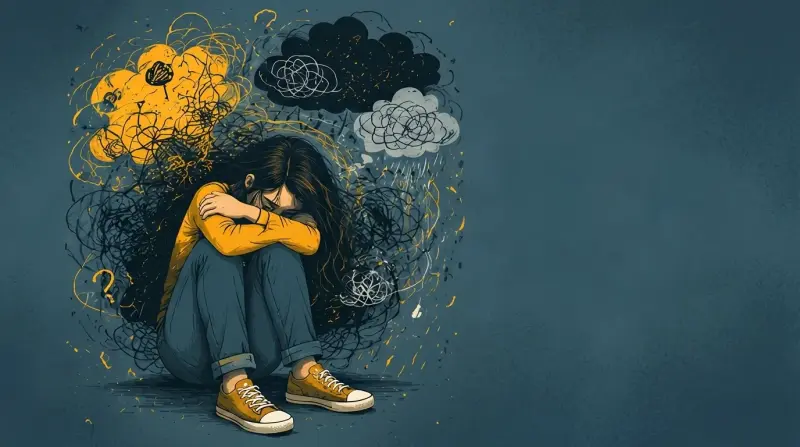
Platforms never stop. News never ends. Comparisons reach you without asking permission. When you think you’re checking in just to stay informed, you may actually be feeding a fear called fear of missing out—a fear that pulls you toward the screen and away from yourself. In this article, we’ll explain how it forms, how it reflects on your mental health, and how you can regain a sense of control and calm.
What Is Fear of Missing Out, and Why Does It Appear?
Fear of missing out is a feeling of discomfort or tension that comes from believing others are living better experiences, or that an important event or piece of news is happening without your involvement. At its core, it’s a mix of the need to belong and the fear of being excluded—alongside a natural curiosity about what’s new. The problem begins when curiosity turns into constant vigilance, as if your phone has become an emotional alarm system.
How Does Social Media Culture Create a Fertile Environment for This Feeling?
Platforms are designed to keep us connected all the time, but at the same time they raise the bar for comparison. What we usually see are carefully selected snapshots: moments of success, travel, gatherings, and achievements—while the ordinary details that make up most of life disappear. Here, the illusion creeps in that everyone is living a full life around the clock, and that you alone are falling behind or showing up less.
There are also design elements that make attention scatter quickly: notifications, badges, nonstop updates, and endless content. With repeated scrolling, the brain becomes more sensitive to small surprises—and asks for more checking “just to be sure.” Common triggers of fear of missing out include:
Stories that disappear after a short time, creating an inner urgency
Back-to-back notifications that interrupt your focus and pull you back into the app
Live streams and moment-by-moment event coverage
Like and view counters that turn the experience into a silent comparison
Friend groups where messages move fast, as if being absent means losing your place
How Does Fear of Missing Out Affect Our Mental Health?
Not every experience of fear of missing out is a problem, but its impact becomes clear when it turns into a daily source of pressure. You may notice distraction in study or work, or difficulty enjoying a real moment because your mind is busy with what you’re missing on the screen. Over time, sleep quality can be affected if you’re used to late-night scrolling or feel the need to respond quickly to every message.
In relationships, this feeling might push you to attend events you don’t actually want—or to feel guilty if you choose rest instead of “constant presence.” Sometimes comparison slips into self-worth: Why are they getting more engagement? Why does their life look easier? Here, the digital impression becomes a harsh standard that doesn’t resemble real life.
The impact isn’t the same for everyone, and digital pressure—along with how usage overlaps with sleep—can increase stress, including fear of missing out when you’re away from your phone. The core idea: the problem isn’t the platform alone, but our relationship with it and how we use it.
Practical Steps to Reduce Fear of Missing Out Without Cutting Off Completely
A realistic goal isn’t to erase platforms from your life, but to return to being the leader—not the follower. According to specialists at Tatmeen, change begins when we treat fear of missing out as a signal that needs care, not as a “truth” telling you that you’re late to life. Try these steps gradually:
Start by naming the triggers: What type of content sparks comparison for you? And are there specific times when scrolling increases—like after midnight or after an exhausting day? Simply noticing can reduce the power of the urge.
Set clear boundaries for your attention, not just for “fun.” For example: make browsing happen in specific intervals instead of opening apps automatically whenever you feel bored, and turn off unnecessary notifications. When interruptions decrease, your brain regains its ability to focus.
Make life outside the screen full enough. This doesn’t mean constant activity, but real presence: a sit-down with family, a light hobby, or quiet time without comparison. Many people discover that fear of missing out eases when they feel their day holds meaning—even if it’s simple.
Finally…
Fear of missing out isn’t a weakness of character—it’s a human response that grows louder within a culture of speed and comparison. The more you return to your rhythm and set kinder boundaries for your attention, the more space you regain for reassurance and presence. And if you feel the issue has become heavier than you can carry alone, talking with a specialist through Tatmeen may help you build a more balanced relationship with social media—and with yourself.
Frequently Asked Questions
Does fear of missing out mean I have a disorder?
Not necessarily. It may be a passing feeling tied to a certain phase or specific pressures. It becomes troubling when it raises anxiety and affects sleep, focus, or relationships. At that point, understanding triggers and setting realistic usage boundaries can help.
How do I tell the difference between normal use and harmful use of social media?
Watch the effect after browsing: do you feel ease and connection, or tension, comparison, and guilt? Also notice how often you open apps without a clear purpose, and whether you delay tasks or stay up late because of the screen. The most important indicator is its impact on the quality of your day.
Is the solution to quit platforms completely?
Stopping completely may help some people for a short period to reset habits, but it isn’t the only solution. Often, a strategy of “mindful use” works best: reducing notifications, setting browsing times, and increasing real-life activities that give you meaning and belonging.
A writer and researcher specializing in psychiatry, she focuses on mental health and the human emotions we experience but cannot always find the words to name. She writes about us—about humanity and the human experience—and simplifies complex topics to offer content that helps us better understand ourselves and life, ultimately making us feel less alone.
Every Tatmeen article is reviewed by care providers licensed by the Saudi Commission for Health Specialties, so what you read is accurate and trustworthy.
This article builds understanding and does not replace a licensed care provider.
Need someone to talk to?
Tatmeen's licensed care providers are available around the clock, and the app's urgent consultation connects you with one within minutes.
Download Tatmeen to explore care providers and booking options.
Smart matchingFour quick questions suggest the right care provider
Urgent consultationTalk to an available care provider within minutes
Free psychological measuresMore than 20 tests to understand how you are doing
Scan to download
{"data":{"id":"ce53b428-be68-49b9-989b-fdf81d5f87fe","slug":"fomo-fear-missing-out-mental-health","arTitle":"الخوف من فوات الفرص وأثره على صحتنا النفسية","enTitle":"FOMO: The Fear of Missing Out and Its Impact on Mental Health","thumbnailAltText":"Person scrolling through phone at night with worried expression illuminated by screen glow","estimatedReadingTime":5,"likesCount":153,"writer":{"id":"3ab72b74-f26f-4337-9b47-3114b0f90de5","arBio":"كاتبة وباحثة متخصصة في مجال الطب النفسي، تهتم بموضوعات الصحة النفسية وبالمشاعر الإنسانية التي نختبرها ولا نجد دائمًا الكلمات لتسميتها. تكتب عنّا؛ عن الإنسان وتجربته، وتبسّط الموضوعات المعقّدة لتقدّم محتوى يساعدنا على فهم ذواتنا والحياة أكثر، ويجعلنا نشعر بأننا بوحدة أقل.","enBio":"A writer and researcher specializing in psychiatry, she focuses on mental health and the human emotions we experience but cannot always find the words to name. She writes about us—about humanity and the human experience—and simplifies complex topics to offer content that helps us better understand ourselves and life, ultimately making us feel less alone.","user":{"slug":"ayat-alnajar","arFullName":"آيات النجار","enFullName":"Ayat Al-Najjar","publicProfileImageUrl":"https://cdn.tatmeen.sa/public/profile-images/02384455-68fa-40b6-ad05-609fde65cafa/21b9a610dde5dfc6d37af110c23e9c7ab3946be080c281beb000debf4f7d31a6.webp","publicProfileImage96Url":"https://cdn.tatmeen.sa/public/profile-images/02384455-68fa-40b6-ad05-609fde65cafa/21b9a610dde5dfc6d37af110c23e9c7ab3946be080c281beb000debf4f7d31a6-w96.webp","publicProfileImage192Url":"https://cdn.tatmeen.sa/public/profile-images/02384455-68fa-40b6-ad05-609fde65cafa/21b9a610dde5dfc6d37af110c23e9c7ab3946be080c281beb000debf4f7d31a6-w192.webp"}},"arContent":"","enContent":"","productionDocument":{"headings":[{"id":"article-section-what-is-fear-of-missing-out-and-why-does-it-appear","text":"What Is Fear of Missing Out, and Why Does It Appear?"},{"id":"article-section-how-does-social-media-culture-create-a-fertile-environment-for-this-feeling","text":"How Does Social Media Culture Create a Fertile Environment for This Feeling?"},{"id":"article-section-how-does-fear-of-missing-out-affect-our-mental-health","text":"How Does Fear of Missing Out Affect Our Mental Health?"},{"id":"article-section-practical-steps-to-reduce-fear-of-missing-out-without-cutting-off-completely","text":"Practical Steps to Reduce Fear of Missing Out Without Cutting Off Completely"},{"id":"article-section-finally","text":"Finally…"}],"faqs":[{"question":"Does fear of missing out mean I have a disorder?","answer":"<p><span style=\"color:#000000\">Not necessarily. It may be a passing feeling tied to a certain phase or specific pressures. It becomes troubling when it raises anxiety and affects sleep, focus, or relationships. At that point, understanding triggers and setting realistic usage boundaries can help.</span></p>"},{"question":"How do I tell the difference between normal use and harmful use of social media?","answer":"<p><span style=\"color:#000000\">Watch the effect after browsing: do you feel ease and connection, or tension, comparison, and guilt? Also notice how often you open apps without a clear purpose, and whether you delay tasks or stay up late because of the screen. The most important indicator is its impact on the quality of your day.</span></p>"},{"question":"Is the solution to quit platforms completely?","answer":"<p><span style=\"color:#000000\">Stopping completely may help some people for a short period to reset habits, but it isn’t the only solution. Often, a strategy of “mindful use” works best: reducing notifications, setting browsing times, and increasing real-life activities that give you meaning and belonging.</span></p>"}],"beforeSourcesHtml":"<p></p>","sources":[],"afterSourcesHtml":"","blocks":[{"type":"html","html":"<p><span style=\"color:#000000\">Platforms never stop. News never ends. Comparisons reach you without asking permission. When you think you’re checking in just to stay informed, you may actually be feeding a fear called <strong>fear of missing out</strong>—a fear that pulls you toward the screen and away from yourself. In this article, we’ll explain how it forms, how it reflects on your mental health, and how you can regain a sense of control and calm.</span></p><h2 id=\"article-section-what-is-fear-of-missing-out-and-why-does-it-appear\" data-toc-heading tabindex=\"-1\"><span id=\"what-is-fear-of-missing-out-and-why-does-it-appear-1\" aria-hidden=\"true\"></span><span style=\"color:#000000\"><strong>What Is Fear of Missing Out, and Why Does It Appear?</strong></span></h2><p><span style=\"color:#000000\">Fear of missing out is a feeling of discomfort or tension that comes from believing others are living better experiences, or that an important event or piece of news is happening without your involvement. At its core, it’s a mix of the need to belong and the fear of being excluded—alongside a natural curiosity about what’s new. The problem begins when curiosity turns into constant vigilance, as if your phone has become an emotional alarm system.</span></p><h2 id=\"article-section-how-does-social-media-culture-create-a-fertile-environment-for-this-feeling\" data-toc-heading tabindex=\"-1\"><span id=\"how-does-social-media-culture-create-a-fertile-environment-for-this-feeling-2\" aria-hidden=\"true\"></span><span style=\"color:#000000\"><strong>How Does Social Media Culture Create a Fertile Environment for This Feeling?</strong></span></h2><p><span style=\"color:#000000\">Platforms are designed to keep us connected all the time, but at the same time they raise the bar for comparison. What we usually see are carefully selected snapshots: moments of success, travel, gatherings, and achievements—while the ordinary details that make up most of life disappear. Here, the illusion creeps in that everyone is living a full life around the clock, and that you alone are falling behind or showing up less.</span></p><p><span style=\"color:#000000\">There are also design elements that make attention scatter quickly: notifications, badges, nonstop updates, and endless content. With repeated scrolling, the brain becomes more sensitive to small surprises—and asks for more checking “just to be sure.” Common triggers of fear of missing out include:</span></p><ul><li><p><span style=\"color:#000000\">Stories that disappear after a short time, creating an inner urgency</span></p></li><li><p><span style=\"color:#000000\">Back-to-back notifications that interrupt your focus and pull you back into the app</span></p></li><li><p><span style=\"color:#000000\">Live streams and moment-by-moment event coverage</span></p></li><li><p><span style=\"color:#000000\">Like and view counters that turn the experience into a silent comparison</span></p></li><li><p><span style=\"color:#000000\">Friend groups where messages move fast, as if being absent means losing your place</span></p></li></ul><h2 id=\"article-section-how-does-fear-of-missing-out-affect-our-mental-health\" data-toc-heading tabindex=\"-1\"><span id=\"how-does-fear-of-missing-out-affect-our-mental-health-3\" aria-hidden=\"true\"></span><span style=\"color:#000000\"><strong>How Does Fear of Missing Out Affect Our Mental Health?</strong></span></h2><p><span style=\"color:#000000\">Not every experience of fear of missing out is a problem, but its impact becomes clear when it turns into a daily source of pressure. You may notice distraction in study or work, or difficulty enjoying a real moment because your mind is busy with what you’re missing on the screen. Over time, sleep quality can be affected if you’re used to late-night scrolling or feel the need to respond quickly to every message.</span></p><p><span style=\"color:#000000\">In relationships, this feeling might push you to attend events you don’t actually want—or to feel guilty if you choose rest instead of “constant presence.” Sometimes comparison slips into self-worth: Why are they getting more engagement? Why does their life look easier? Here, the digital impression becomes a harsh standard that doesn’t resemble real life.</span></p><p><span style=\"color:#000000\">The impact isn’t the same for everyone, and digital pressure—along with how usage overlaps with sleep—can increase stress, including fear of missing out when you’re away from your phone. The core idea: the problem isn’t the platform alone, but our relationship with it and how we use it.</span></p><h2 id=\"article-section-practical-steps-to-reduce-fear-of-missing-out-without-cutting-off-completely\" data-toc-heading tabindex=\"-1\"><span id=\"practical-steps-to-reduce-fear-of-missing-out-without-cutting-off-completely-4\" aria-hidden=\"true\"></span><span style=\"color:#000000\"><strong>Practical Steps to Reduce Fear of Missing Out Without Cutting Off Completely</strong></span></h2><p><span style=\"color:#000000\">A realistic goal isn’t to erase platforms from your life, but to return to being the leader—not the follower. According to specialists at <strong>Tatmeen</strong>, change begins when we treat fear of missing out as a signal that needs care, not as a “truth” telling you that you’re late to life. Try these steps gradually:</span></p><p><span style=\"color:#000000\">Start by naming the triggers: What type of content sparks comparison for you? And are there specific times when scrolling increases—like after midnight or after an exhausting day? Simply noticing can reduce the power of the urge.</span></p><p><span style=\"color:#000000\">Set clear boundaries for your attention, not just for “fun.” For example: make browsing happen in specific intervals instead of opening apps automatically whenever you feel bored, and turn off unnecessary notifications. When interruptions decrease, your brain regains its ability to focus.</span></p><p><span style=\"color:#000000\">Make life outside the screen full enough. This doesn’t mean constant activity, but real presence: a sit-down with family, a light hobby, or quiet time without comparison. Many people discover that fear of missing out eases when they feel their day holds meaning—even if it’s simple.</span></p><h2 id=\"article-section-finally\" data-toc-heading tabindex=\"-1\"><span id=\"finally-5\" aria-hidden=\"true\"></span><span style=\"color:#000000\"><strong>Finally…</strong></span></h2><p><span style=\"color:#000000\">Fear of missing out isn’t a weakness of character—it’s a human response that grows louder within a culture of speed and comparison. The more you return to <em>your</em> rhythm and set kinder boundaries for your attention, the more space you regain for reassurance and presence. And if you feel the issue has become heavier than you can carry alone, <u>talking with a specialist through </u><strong><u>Tatmeen</u></strong> may help you build a more balanced relationship with social media—and with yourself.</span></p>"}],"inlineCtaSignatures":[],"_experienceAliases":{"v":1,"fields":["html","bodyHtml"],"faqs":[0,1,2]}},"createdAt":"2026-05-23T21:00:00.000Z","updatedAt":"2026-06-04T19:51:43.959Z","disorderGroups":[{"id":"4499a52a-06f8-4022-a64d-304e5eca51cc","slug":"life-challenges-and-stress","arName":"تحديات الحياة والضغوط","enName":"Life Challenges & Stress"}],"reviewer":{"arFullName":"فريق تطمين","enFullName":"Tatmeen team","slug":"tatmeen-team","kind":"organization"},"productionArticle":true,"promotionAllowed":true,"preparedCover":{"src":"https://cdn.tatmeen.sa/public/article-lcp/article-lcp-v2/sha256-c0f5a21206c382ab379dca21a8d801659f41890ff0ca75af5989d0912889de93/800-242a6d1a82576ae624985ec1f41287520e9804cc1186f8653486ea8d3308228b.avif","fallback":"https://cdn.tatmeen.sa/public/article-lcp/article-lcp-v2/sha256-c0f5a21206c382ab379dca21a8d801659f41890ff0ca75af5989d0912889de93/800-a263d8547f5392282f355f6057cf8571958f20712ea82b095737595478416dd0.webp","directUrl":"https://cdn.tatmeen.sa/blog-cover/Tatmeen-1779643022325.webp","isGolden":true,"avifSrcset":"https://cdn.tatmeen.sa/public/article-lcp/article-lcp-v2/sha256-c0f5a21206c382ab379dca21a8d801659f41890ff0ca75af5989d0912889de93/400-481f9c08f206d22ba1c5e27401f2e8e992421da60ea6f8338944171dbd944199.avif 400w, https://cdn.tatmeen.sa/public/article-lcp/article-lcp-v2/sha256-c0f5a21206c382ab379dca21a8d801659f41890ff0ca75af5989d0912889de93/640-92c26836e0ead5c1372a1c18d5357dae1dc310bc600cf45f9c162ff54b6cfe31.avif 640w, https://cdn.tatmeen.sa/public/article-lcp/article-lcp-v2/sha256-c0f5a21206c382ab379dca21a8d801659f41890ff0ca75af5989d0912889de93/800-242a6d1a82576ae624985ec1f41287520e9804cc1186f8653486ea8d3308228b.avif 800w, https://cdn.tatmeen.sa/public/article-lcp/article-lcp-v2/sha256-c0f5a21206c382ab379dca21a8d801659f41890ff0ca75af5989d0912889de93/1200-6ff338eebf830fb0b4ead9470b0d0c8b55a33704cb80ef096e9711e80ae8213c.avif 1200w","webpSrcset":"https://cdn.tatmeen.sa/public/article-lcp/article-lcp-v2/sha256-c0f5a21206c382ab379dca21a8d801659f41890ff0ca75af5989d0912889de93/400-e64b6997f3335c7f10019d22d67c921e7981fdb24a6ec83db2dd317257658cc4.webp 400w, https://cdn.tatmeen.sa/public/article-lcp/article-lcp-v2/sha256-c0f5a21206c382ab379dca21a8d801659f41890ff0ca75af5989d0912889de93/640-199164ff11991fca2f906c9bd212fb348e4fd59ba93e9b926e37efbb41537dcc.webp 640w, https://cdn.tatmeen.sa/public/article-lcp/article-lcp-v2/sha256-c0f5a21206c382ab379dca21a8d801659f41890ff0ca75af5989d0912889de93/800-a263d8547f5392282f355f6057cf8571958f20712ea82b095737595478416dd0.webp 800w, https://cdn.tatmeen.sa/public/article-lcp/article-lcp-v2/sha256-c0f5a21206c382ab379dca21a8d801659f41890ff0ca75af5989d0912889de93/1200-f558c5353ff5b3a241bc505b5daee43353c4a906ea721737d4a02f962936fb7e.webp 1200w","phoneAvifSrcset":"https://cdn.tatmeen.sa/public/article-lcp/article-lcp-v2/sha256-c0f5a21206c382ab379dca21a8d801659f41890ff0ca75af5989d0912889de93/400-481f9c08f206d22ba1c5e27401f2e8e992421da60ea6f8338944171dbd944199.avif 400w, https://cdn.tatmeen.sa/public/article-lcp/article-lcp-v2/sha256-c0f5a21206c382ab379dca21a8d801659f41890ff0ca75af5989d0912889de93/640-92c26836e0ead5c1372a1c18d5357dae1dc310bc600cf45f9c162ff54b6cfe31.avif 640w, https://cdn.tatmeen.sa/public/article-lcp/article-lcp-v2/sha256-c0f5a21206c382ab379dca21a8d801659f41890ff0ca75af5989d0912889de93/800-242a6d1a82576ae624985ec1f41287520e9804cc1186f8653486ea8d3308228b.avif 800w","phoneWebpSrcset":"https://cdn.tatmeen.sa/public/article-lcp/article-lcp-v2/sha256-c0f5a21206c382ab379dca21a8d801659f41890ff0ca75af5989d0912889de93/400-e64b6997f3335c7f10019d22d67c921e7981fdb24a6ec83db2dd317257658cc4.webp 400w, https://cdn.tatmeen.sa/public/article-lcp/article-lcp-v2/sha256-c0f5a21206c382ab379dca21a8d801659f41890ff0ca75af5989d0912889de93/640-199164ff11991fca2f906c9bd212fb348e4fd59ba93e9b926e37efbb41537dcc.webp 640w, https://cdn.tatmeen.sa/public/article-lcp/article-lcp-v2/sha256-c0f5a21206c382ab379dca21a8d801659f41890ff0ca75af5989d0912889de93/800-a263d8547f5392282f355f6057cf8571958f20712ea82b095737595478416dd0.webp 800w","width":800,"height":500},"previewTaxonomy":{"groups":[{"id":"4499a52a-06f8-4022-a64d-304e5eca51cc","slug":"life-challenges-and-stress","arName":"تحديات الحياة والضغوط","enName":"Life Challenges & Stress"}],"topics":[{"id":"a4a99704-6315-4bfa-bee7-b4b022a171dc","slug":"fear-of-the-future","arName":"الخوف من المستقبل","enName":"Fear of the Future","groupSlug":"life-challenges-and-stress","href":"/blog/category/life-challenges-and-stress/fear-of-the-future/"}],"tags":[{"id":"b17ecf79-93e3-43d7-8e38-1861533199ba","slug":"anxiety-panic-phobia","arName":"القلق والرهاب والهلع","enName":"Anxiety Phobias & Panic"},{"id":"18c7be3e-909a-4149-85b9-1584c5f74e3c","slug":"digital-wellbeing","arName":"العافية الرقمية ووقت الشاشة","enName":"Digital Wellbeing & Screen Time"},{"id":"c2a6e8d3-de9c-435f-8c95-9727e7db14cc","slug":"explainer-awareness","arName":"دليل توعوي / شرح","enName":"Explainer / Awareness Guide"}]},"previewProviderRecommendations":[{"id":"dc4f4096-c96e-46ad-8e85-55c7104fbbf9","slug":"alya-alasiri-9292","arFullName":"علياء العسيري","enFullName":"Alya Alasiri","publicProfileImageUrl":"","publicProfileImage96Url":"","publicProfileImage192Url":"","specialization":{"arName":"أخصائي نفسي","enName":"Psychologist"},"profileImageUrl":"","experienceYears":4,"consultantInfo":{"averageRating":{"average":0},"specialization":{"arGeneralName":"أخصائي نفسي","enGeneralName":"Psychologist"}}},{"id":"7771d078-cbd9-4acd-aa51-29cc905753c4","slug":"hatim-jafaari-2902","arFullName":"حاتم جعفرى","enFullName":"Hatim Jafaari","publicProfileImageUrl":"https://cdn.tatmeen.sa/public/profile-images/7771d078-cbd9-4acd-aa51-29cc905753c4/874a489ca72b87dacbde76d8496eef84ca341ee8074b9ec54464cd0a56bbdbe6.webp","publicProfileImage96Url":"https://cdn.tatmeen.sa/public/profile-images/7771d078-cbd9-4acd-aa51-29cc905753c4/874a489ca72b87dacbde76d8496eef84ca341ee8074b9ec54464cd0a56bbdbe6-w96.webp","publicProfileImage192Url":"https://cdn.tatmeen.sa/public/profile-images/7771d078-cbd9-4acd-aa51-29cc905753c4/874a489ca72b87dacbde76d8496eef84ca341ee8074b9ec54464cd0a56bbdbe6-w192.webp","specialization":{"arName":"أخصائي نفسي","enName":"Psychologist"},"profileImageUrl":"https://cdn.tatmeen.sa/public/profile-images/7771d078-cbd9-4acd-aa51-29cc905753c4/874a489ca72b87dacbde76d8496eef84ca341ee8074b9ec54464cd0a56bbdbe6-w192.webp","experienceYears":2,"consultantInfo":{"averageRating":{"average":5},"specialization":{"arGeneralName":"أخصائي نفسي","enGeneralName":"Psychologist"}}},{"id":"5520abac-2d83-4b20-a11d-f63055316699","slug":"maha-alawad-4831","arFullName":"مها العواد","enFullName":"Maha Alawad","publicProfileImageUrl":"","publicProfileImage96Url":"","publicProfileImage192Url":"","specialization":{"arName":"أخصائي نفسي","enName":"Psychologist"},"profileImageUrl":"","experienceYears":13,"consultantInfo":{"averageRating":{"average":4.846153846153846},"specialization":{"arGeneralName":"أخصائي نفسي","enGeneralName":"Psychologist"}}}],"previewCareProviders":[{"id":"09364052-c2a9-4c52-9717-7ce2093b8d0a","slug":"kholoud-alharbi-5221","arFullName":"خلود الحربي","enFullName":"Kholoud Alharbi","publicProfileImageUrl":"https://cdn.tatmeen.sa/public/profile-images/09364052-c2a9-4c52-9717-7ce2093b8d0a/4a0aeb81619e351b77f4323e3605a0a00acc7ca3c82ee7cc5ca2c9e8ef716049.webp","publicProfileImage96Url":"https://cdn.tatmeen.sa/public/profile-images/09364052-c2a9-4c52-9717-7ce2093b8d0a/4a0aeb81619e351b77f4323e3605a0a00acc7ca3c82ee7cc5ca2c9e8ef716049-w96.webp","publicProfileImage192Url":"https://cdn.tatmeen.sa/public/profile-images/09364052-c2a9-4c52-9717-7ce2093b8d0a/4a0aeb81619e351b77f4323e3605a0a00acc7ca3c82ee7cc5ca2c9e8ef716049-w192.webp","gender":"FEMALE","specialization":{"arName":"أخصائي نفسي","enName":"Psychologist"}},{"id":"6f037535-1dca-4b50-a8b2-5974b7323286","slug":"salah-althobaiti-9053","arFullName":"صلاح الثبيتي","enFullName":"Salah Althobaiti","publicProfileImageUrl":"https://cdn.tatmeen.sa/public/profile-images/6f037535-1dca-4b50-a8b2-5974b7323286/35b6bd7fad9b1e004c1835803eb9c1b56dcacd380685ec8bff141f0fb888005c.webp","publicProfileImage96Url":"https://cdn.tatmeen.sa/public/profile-images/6f037535-1dca-4b50-a8b2-5974b7323286/35b6bd7fad9b1e004c1835803eb9c1b56dcacd380685ec8bff141f0fb888005c-w96.webp","publicProfileImage192Url":"https://cdn.tatmeen.sa/public/profile-images/6f037535-1dca-4b50-a8b2-5974b7323286/35b6bd7fad9b1e004c1835803eb9c1b56dcacd380685ec8bff141f0fb888005c-w192.webp","gender":"MALE","specialization":{"arName":"أخصائي نفسي","enName":"Psychologist"}},{"id":"3cc806e8-616b-4884-9f21-a75b378580a2","slug":"aisha-al-hashim-8667","arFullName":"عائشة ال هاشم","enFullName":"Aisha Al Hashim","publicProfileImageUrl":"https://cdn.tatmeen.sa/public/profile-images/3cc806e8-616b-4884-9f21-a75b378580a2/27f523d03be4dcfa1f6a79f70c1773887434e698990d214cd990caec56a44798.webp","publicProfileImage96Url":"https://cdn.tatmeen.sa/public/profile-images/3cc806e8-616b-4884-9f21-a75b378580a2/27f523d03be4dcfa1f6a79f70c1773887434e698990d214cd990caec56a44798-w96.webp","publicProfileImage192Url":"https://cdn.tatmeen.sa/public/profile-images/3cc806e8-616b-4884-9f21-a75b378580a2/27f523d03be4dcfa1f6a79f70c1773887434e698990d214cd990caec56a44798-w192.webp","gender":"FEMALE","specialization":{"arName":"أخصائي نفسي","enName":"Psychologist"}},{"id":"db2ce1a0-9325-4471-b7ce-eb2e811c30a3","slug":"amer-qutub-2441","arFullName":"عامر قطب","enFullName":"Amer Qutub","publicProfileImageUrl":"https://cdn.tatmeen.sa/public/profile-images/db2ce1a0-9325-4471-b7ce-eb2e811c30a3/80580f99bfd7fe2b2a9cf8eed73ab532f5086d1efe053b0aa57358c1ce004261.webp","publicProfileImage96Url":"https://cdn.tatmeen.sa/public/profile-images/db2ce1a0-9325-4471-b7ce-eb2e811c30a3/80580f99bfd7fe2b2a9cf8eed73ab532f5086d1efe053b0aa57358c1ce004261-w96.webp","publicProfileImage192Url":"https://cdn.tatmeen.sa/public/profile-images/db2ce1a0-9325-4471-b7ce-eb2e811c30a3/80580f99bfd7fe2b2a9cf8eed73ab532f5086d1efe053b0aa57358c1ce004261-w192.webp","gender":"MALE","specialization":{"arName":"أخصائي نفسي","enName":"Psychologist"}},{"id":"94765496-dbdf-4631-a01b-7df5f788668d","slug":"abdullrahman-alhamoudi-3045","arFullName":"عبدالرحمن الحمودي","enFullName":"Abdulrahman Alhamoudi","publicProfileImageUrl":"https://cdn.tatmeen.sa/public/profile-images/94765496-dbdf-4631-a01b-7df5f788668d/2d49f6b6493c564afb6f50b6c3634231dff3a5cf8353acfab393d1b2a88037d1.webp","publicProfileImage96Url":"https://cdn.tatmeen.sa/public/profile-images/94765496-dbdf-4631-a01b-7df5f788668d/2d49f6b6493c564afb6f50b6c3634231dff3a5cf8353acfab393d1b2a88037d1-w96.webp","publicProfileImage192Url":"https://cdn.tatmeen.sa/public/profile-images/94765496-dbdf-4631-a01b-7df5f788668d/2d49f6b6493c564afb6f50b6c3634231dff3a5cf8353acfab393d1b2a88037d1-w192.webp","gender":"MALE","specialization":{"arName":"أخصائي نفسي","enName":"Psychologist"}},{"id":"618dba89-5b70-4b46-8304-741b7ac8ecd3","slug":"abdullah-mari-1311","arFullName":"عبدالله مرعي","enFullName":"Abdullah Mari","publicProfileImageUrl":"https://cdn.tatmeen.sa/public/profile-images/618dba89-5b70-4b46-8304-741b7ac8ecd3/6b4a3bfb59f8a304ca79083b32859b46baad2e1d692974a47c02c1f66bd11129.webp","publicProfileImage96Url":"https://cdn.tatmeen.sa/public/profile-images/618dba89-5b70-4b46-8304-741b7ac8ecd3/6b4a3bfb59f8a304ca79083b32859b46baad2e1d692974a47c02c1f66bd11129-w96.webp","publicProfileImage192Url":"https://cdn.tatmeen.sa/public/profile-images/618dba89-5b70-4b46-8304-741b7ac8ecd3/6b4a3bfb59f8a304ca79083b32859b46baad2e1d692974a47c02c1f66bd11129-w192.webp","gender":"MALE","specialization":{"arName":"أخصائي نفسي","enName":"Psychologist"}},{"id":"3b50a5d5-e795-407f-8676-fd7f0e1bb7a0","slug":"abdulaziz-bin-hudayan-4940","arFullName":"عبدالعزيز بن هديان","enFullName":"Abdulaziz Bin Hudayan","publicProfileImageUrl":"https://cdn.tatmeen.sa/public/profile-images/3b50a5d5-e795-407f-8676-fd7f0e1bb7a0/710ff0fe1fb00cdb5042092e27b7910b480a439b02251ecded62d7758eefce95.webp","publicProfileImage96Url":"https://cdn.tatmeen.sa/public/profile-images/3b50a5d5-e795-407f-8676-fd7f0e1bb7a0/710ff0fe1fb00cdb5042092e27b7910b480a439b02251ecded62d7758eefce95-w96.webp","publicProfileImage192Url":"https://cdn.tatmeen.sa/public/profile-images/3b50a5d5-e795-407f-8676-fd7f0e1bb7a0/710ff0fe1fb00cdb5042092e27b7910b480a439b02251ecded62d7758eefce95-w192.webp","gender":"MALE","specialization":{"arName":"أخصائي نفسي","enName":"Psychologist"}},{"id":"d4ffcb6b-90a7-45b6-b941-964866f4564b","slug":"dhaifallah-alhumaidi-1092","arFullName":"ضيف الله الحميدي","enFullName":"Dhaifallah Alhumaidi","publicProfileImageUrl":"https://cdn.tatmeen.sa/public/profile-images/d4ffcb6b-90a7-45b6-b941-964866f4564b/1817171c5828a9b57d6c30d12332cf154e335272548bc90a6e8456d74d356956.webp","publicProfileImage96Url":"https://cdn.tatmeen.sa/public/profile-images/d4ffcb6b-90a7-45b6-b941-964866f4564b/1817171c5828a9b57d6c30d12332cf154e335272548bc90a6e8456d74d356956-w96.webp","publicProfileImage192Url":"https://cdn.tatmeen.sa/public/profile-images/d4ffcb6b-90a7-45b6-b941-964866f4564b/1817171c5828a9b57d6c30d12332cf154e335272548bc90a6e8456d74d356956-w192.webp","gender":"MALE","specialization":{"arName":"أخصائي نفسي","enName":"Psychologist"}}],"previewDownload":{"href":"/download","title":{"ar":"خطوة واحدة لأجلك، ابدأ الآن","en":"One step for you, start now"},"description":{"ar":"حمّل تطبيق تطمين لاستكشاف مقدمي الرعاية وخيارات الحجز.","en":"Download Tatmeen to explore care providers and booking options."},"posterSrc":"/images/home/cta-ar-new-1.webp","videoSrc":"/images/home/cta-ar-new-1.mp4","videoPosterSrc":"/images/home/cta-ar-new-1.webp","videoPosterEnSrc":"/images/home/cta-en-new-1.webp","videoType":"video/mp4","appStoreHref":"https://apps.apple.com/us/app/tatmeen-%D8%AA%D8%B7%D9%85%D9%8A%D9%86/id6473836983","googlePlayHref":"https://play.google.com/store/apps/details?id=com.TatmeenApp.user&hl=en"},"previewRelatedArticles":[{"id":"c0724b49-f122-40fe-b313-b3843e493986","slug":"When-is-talk-therapy-used","route":"/blog/When-is-talk-therapy-used/","title":{"ar":"هل العلاج النفسي ضروري في حياتنا؟","en":"Is Psychotherapy Necessary in Our Lives?"},"image":"https://cdn.tatmeen.sa/public/article-lcp/article-lcp-v2/sha256-dc5c81316fa422fede5cf3bb187aec9aef3ee4d55a8a64ad2ddd2c1c631c91b7/800-e450da8380fb1328dec604d7479b25bf2989c5b3e0b2d0783375442061e05e30.webp","directImageFallback":"https://cdn.tatmeen.sa/blog-cover/Tatmeen-1782926294893.webp","arThumbnailAltText":"Two women in a calm, cozy therapy session, seated across from each other in soft natural light.","thumbnailAltText":"Two women in a calm, cozy therapy session, seated across from each other in soft natural light.","topic":{"label":{"ar":"اضطرابات نفسية شائعة","en":"Common Mental Issues"}},"readingTimeMinutes":5},{"id":"a7b62173-1789-46bf-a7ce-f440f8a811b1","slug":"psychologically-shattered-when-to-seek-help","route":"/blog/psychologically-shattered-when-to-seek-help/","title":{"ar":"هل تشعر أنك مدمر نفسيًا وتحتاج إلى المساعدة؟","en":"Do You Feel Psychologically Shattered and in Need of Help?"},"image":"https://cdn.tatmeen.sa/public/article-lcp/article-lcp-v2/sha256-d7dcaa60188f389a65e1bce5c02e26f792f6822cdb952d88f177fa0d6b4ccd84/800-cd8aa8b15efa341d1ea33a7a5bb6aa43fb9b1d017372d6afefe8ebac2204a406.webp","directImageFallback":"https://cdn.tatmeen.sa/blog-cover/Tatmeen-1783442237081.webp","arThumbnailAltText":"Person curled up, surrounded by chaotic scribbles and storm-like thoughts closing in","thumbnailAltText":"Person curled up, surrounded by chaotic scribbles and storm-like thoughts closing in","topic":{"label":{"ar":"اضطرابات نفسية شائعة","en":"Common Mental Issues"}},"readingTimeMinutes":5},{"id":"af904b56-631b-40d5-8a89-c6abf387235a","slug":"How-to-treat-anxiety-and-fear","route":"/blog/How-to-treat-anxiety-and-fear/","title":{"ar":"كيفية علاج القلق والخوف؟","en":"How to Treat Anxiety and Fear"},"image":"https://cdn.tatmeen.sa/public/article-lcp/article-lcp-v2/sha256-931de9b7b43c4633adaec24c0c8cf9efb725ada1d97ffc76d1aef5e51d9e139f/630-ac596fd9d80670a5122493befe493613483a9038c4cf168208d84bab6de3440b.webp","directImageFallback":"https://cdn.tatmeen.sa/blog-cover/1704726770215-Tatmeen-img-812","arThumbnailAltText":"Person grips their hair with both hands and looks ahead with wide eyes","thumbnailAltText":"Person grips their hair with both hands and looks ahead with wide eyes","topic":{"label":{"ar":"اضطرابات نفسية شائعة","en":"Common Mental Issues"}},"readingTimeMinutes":5},{"id":"a8f50118-5cee-4f60-b6ad-8c7fecc20d09","slug":"How-do-we-recover-from-the-shock-of-betrayal","route":"/blog/How-do-we-recover-from-the-shock-of-betrayal/","title":{"ar":"الخيانة - كيف نتشافى من صدمة الخيانة؟","en":"How Do We Heal from the Shock of Betrayal?"},"image":"https://cdn.tatmeen.sa/public/article-lcp/article-lcp-v2/sha256-87aaece6cb8ac23f7f80b87d7ff73ef07715efc98c6edf944b25e0ee11302122/600-7380eb203f6339325e2c3b8ab3eaab5b6fb737e097afaa5b1d365e07973f1616.webp","directImageFallback":"https://cdn.tatmeen.sa/blog-cover/1706455597228-Tatmeen-945.jpg","arThumbnailAltText":"Person crosses their fingers behind their back while holding another hand","thumbnailAltText":"Person crosses their fingers behind their back while holding another hand","topic":{"label":{"ar":"تحديات الحياة والضغوط","en":"Life Challenges & Stress"}},"readingTimeMinutes":5}],"previewRelatedReadStates":{}},"locale":"en","device":"desktop","path":"/en/blog/fomo-fear-missing-out-mental-health/","readingControls":false,"config":{"public":{"BUCKET_URL":"https://cdn.tatmeen.sa/","APP_BASE_URL":"https://tatmeen.sa","intercomAppId":"ppcnu9e3"}}}