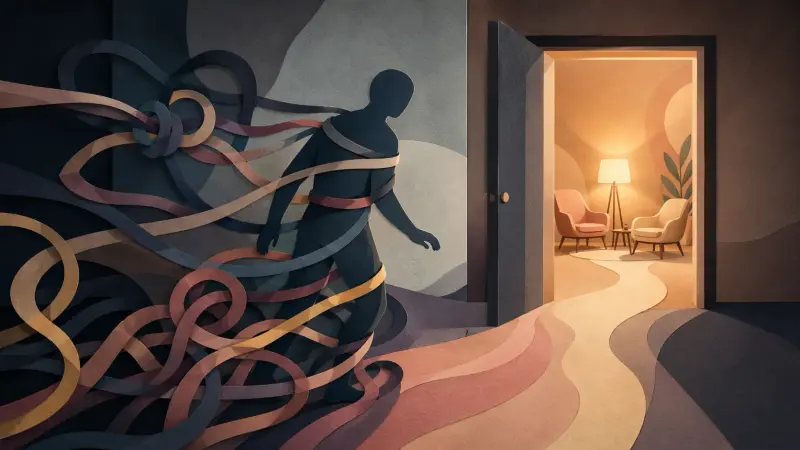
Endless scrolling in news apps and social media may begin with the intention of reassurance, yet it often ends with higher tension and heavier thoughts. You might open your phone to check the latest updates, then close it feeling more anxious and less focused. This is common in fast-moving times, and it doesn’t mean you’re overreacting or weak-willed. What you need is a way to stay informed without keeping your nervous system on constant alert. At Tatmeen, we call this the balance between knowledge and calm.
Why Does Endless Scrolling Pull You In Even Though It Exhausts You?
The human mind likes the feeling of control, and news offers a quick promise: If you know more, your fears will decrease. The problem is that the flow of content never stops—and with it, the feeling that something is slipping past you is constantly renewed. Every small update awakens a new curiosity or worry, so you return to scrolling, looking for a reassuring ending that never comes.
It becomes harder when news blends with opinions and heightened emotions on the same screen. In one moment you move from breaking news to an angry comment to an emotional clip—so your mind gets scattered between information and feelings, and returning to the app becomes an automatic habit.
How Does News Anxiety Raise Your Tension Physically?
News anxiety isn’t only a thought—it’s a bodily experience too. When you’re repeatedly exposed to messages about threat or crisis, your body may respond as if danger is near: a racing heartbeat, tightness in the neck, heaviness in the chest, or difficulty sleeping. With repeated reading and watching, you may notice quicker irritability or a reduced ability to enjoy things that used to feel simple.
The issue isn’t staying informed in itself, but repetition and overload. Re-reading headlines and following fine details for long hours keeps your mind circling the same loop, searching for a definitive answer that no one has.
Signs You’re Stuck in a Draining Loop
It’s natural to follow important events, but the loop is recognized by its effect on you. You may check your phone the moment you wake up or right before sleep, telling yourself “just one minute,” then minutes pass. Your mood may start to depend on what you read: one piece of news can change your entire day.
Another sign is that your body sends alarms: headaches, distraction, muscle tension, or light sleep. Sometimes the loop shows up in relationships; you become less able to listen, or questions multiply in family and work groups in a way that increases tension rather than reducing it.
Smart Boundaries for News Without Feeling Guilty
The idea isn’t to close your eyes to reality, but to choose a way of following events that protects your nerves. Set a short time window for yourself—twice a day, for example—and step back from continuous updates. Choosing limited, trustworthy sources reduces noise and prevents you from jumping from one report into a flood of opinions. For local events, an official brief statement is often enough instead of dozens of circulated clips.
If thoughts chase you all day, a simple approach like “scheduled worry time” may help: set a few minutes to write down what worries you and what you can do, then return to your day instead of leaving anxiety open all day long.
Try these steps for one week, then calmly evaluate their effect:
Turn off news notifications and non-essential alerts, and choose when to check.
Make the first ten minutes after waking up news-free; start with your body: water, breathing, or prayer.
Choose a fixed time to check updates—and another time at least two hours before sleep to reduce the impact.
Replace open-ended scrolling with reading one summary, then close the app before moving to anything else.
Monitor your body: if tightness or pressure shows up, take a short break before continuing to read.
According to specialists at Tatmeen, the dividing line isn’t how much news you consume, but your ability to stop without panic or guilt. When you become the one deciding, staying informed returns to its natural size.
Turn Anxiety Into One Small Step Instead of Spinning Scenarios
Part of news anxiety comes from feeling powerless. Ask yourself: What can I do right now—even if it’s small? Sometimes action is within your home: calming a family member, organizing your affairs, or reducing arguments inside the house. And sometimes action is within your values: a prayer, a charity, or sharing one trustworthy piece of information once—rather than repeatedly reposting what fuels panic.
This shift matters because the mind relaxes when it sees a practical path. Instead of staying in monitoring mode, you move into choice mode, and you learn when information is enough and when your mind is asking for more than it can hold.
Restoring Calm When Tension Suddenly Flares
The loop may return on certain days—especially when you’re exhausted or when events escalate. In that moment, don’t enter a fight with yourself. Return to the present through a physical step: place your feet on the ground, name five things you can see around you, then take a slow breath with an exhale that is slightly longer.
Because tension needs repeatable tools, simple stress skills practiced for a few minutes daily may help—like noticing thoughts without being pulled into them and returning to what you can control right now. Also remember the value of keeping a routine as much as possible; sleep, meals, and movement are pillars that prevent anxiety from spreading into every detail of your day.
Finally…
The endless scrolling loop convinces you it’s protecting you, but it often steals the reassurance you’re searching for. When you set clear boundaries for news and choose your times and sources, staying informed becomes a tool—not a burden. And if news anxiety continues to exhaust your sleep or your relationships, talking with a licensed specialist through Tatmeen may help you build a plan that fits your circumstances without judgment.
Frequently Asked Questions
Does endless scrolling mean I have a mental health problem?
Not necessarily. It may be a habit you picked up during stressful periods or fast-moving events. What matters most is the impact: if it raises your anxiety and disrupts your sleep and focus, resetting boundaries and habits can make a clear difference.
How can I follow the news without feeling guilty?
Choose two fixed time windows, and remind yourself that constant checking doesn’t change reality as much as it drains your energy. Focus on limited, trustworthy sources, and allow yourself to step away when you notice your body entering tension.
What should I do if my stress increases before sleep because of the news?
Stop checking at least two hours before sleep whenever possible, and replace it with a simple calming routine: slow breathing, dim lighting, and light reading or dhikr. If thoughts return, write them down quickly and set a time to return to them the next day.
A writer and researcher specializing in psychiatry, she focuses on mental health and the human emotions we experience but cannot always find the words to name. She writes about us—about humanity and the human experience—and simplifies complex topics to offer content that helps us better understand ourselves and life, ultimately making us feel less alone.
Every Tatmeen article is reviewed by care providers licensed by the Saudi Commission for Health Specialties, so what you read is accurate and trustworthy.
This article builds understanding and does not replace a licensed care provider.
Need someone to talk to?
Tatmeen's licensed care providers are available around the clock, and the app's urgent consultation connects you with one within minutes.
Download Tatmeen to explore care providers and booking options.
Smart matchingFour quick questions suggest the right care provider
Urgent consultationTalk to an available care provider within minutes
Free psychological measuresMore than 20 tests to understand how you are doing
Scan to download
{"data":{"id":"02658cfb-861e-41bc-83dd-a14e0353b3ab","slug":"endless-scrolling-news-anxiety","arTitle":"دوامة التصفح اللانهائية وقلق الأخبار: كيف تهدئ توترك","enTitle":"Endless Scrolling and News Anxiety: How to Calm Your Stress","thumbnailAltText":"Anxious person overwhelmed by endless news and social media posts swirling around a smartphone.","estimatedReadingTime":5,"likesCount":222,"writer":{"id":"3ab72b74-f26f-4337-9b47-3114b0f90de5","arBio":"كاتبة وباحثة متخصصة في مجال الطب النفسي، تهتم بموضوعات الصحة النفسية وبالمشاعر الإنسانية التي نختبرها ولا نجد دائمًا الكلمات لتسميتها. تكتب عنّا؛ عن الإنسان وتجربته، وتبسّط الموضوعات المعقّدة لتقدّم محتوى يساعدنا على فهم ذواتنا والحياة أكثر، ويجعلنا نشعر بأننا بوحدة أقل.","enBio":"A writer and researcher specializing in psychiatry, she focuses on mental health and the human emotions we experience but cannot always find the words to name. She writes about us—about humanity and the human experience—and simplifies complex topics to offer content that helps us better understand ourselves and life, ultimately making us feel less alone.","user":{"slug":"ayat-alnajar","arFullName":"آيات النجار","enFullName":"Ayat Al-Najjar","publicProfileImageUrl":"https://cdn.tatmeen.sa/public/profile-images/02384455-68fa-40b6-ad05-609fde65cafa/21b9a610dde5dfc6d37af110c23e9c7ab3946be080c281beb000debf4f7d31a6.webp","publicProfileImage96Url":"https://cdn.tatmeen.sa/public/profile-images/02384455-68fa-40b6-ad05-609fde65cafa/21b9a610dde5dfc6d37af110c23e9c7ab3946be080c281beb000debf4f7d31a6-w96.webp","publicProfileImage192Url":"https://cdn.tatmeen.sa/public/profile-images/02384455-68fa-40b6-ad05-609fde65cafa/21b9a610dde5dfc6d37af110c23e9c7ab3946be080c281beb000debf4f7d31a6-w192.webp"}},"arContent":"","enContent":"","productionDocument":{"headings":[{"id":"article-section-why-does-endless-scrolling-pull-you-in-even-though-it-exhausts-you","text":"Why Does Endless Scrolling Pull You In Even Though It Exhausts You?"},{"id":"article-section-how-does-news-anxiety-raise-your-tension-physically","text":"How Does News Anxiety Raise Your Tension Physically?"},{"id":"article-section-signs-you-re-stuck-in-a-draining-loop","text":"Signs You’re Stuck in a Draining Loop"},{"id":"article-section-smart-boundaries-for-news-without-feeling-guilty","text":"Smart Boundaries for News Without Feeling Guilty"},{"id":"article-section-turn-anxiety-into-one-small-step-instead-of-spinning-scenarios","text":"Turn Anxiety Into One Small Step Instead of Spinning Scenarios"},{"id":"article-section-restoring-calm-when-tension-suddenly-flares","text":"Restoring Calm When Tension Suddenly Flares"},{"id":"article-section-finally","text":"Finally…"}],"faqs":[{"question":"Does endless scrolling mean I have a mental health problem?","answer":"<p><span style=\"color:#000000\">Not necessarily. It may be a habit you picked up during stressful periods or fast-moving events. What matters most is the impact: if it raises your anxiety and disrupts your sleep and focus, resetting boundaries and habits can make a clear difference.</span></p>"},{"question":"How can I follow the news without feeling guilty?","answer":"<p><span style=\"color:#000000\">Choose two fixed time windows, and remind yourself that constant checking doesn’t change reality as much as it drains your energy. Focus on limited, trustworthy sources, and allow yourself to step away when you notice your body entering tension.</span></p>"},{"question":"What should I do if my stress increases before sleep because of the news?","answer":"<p><span style=\"color:#000000\">Stop checking at least two hours before sleep whenever possible, and replace it with a simple calming routine: slow breathing, dim lighting, and light reading or dhikr. If thoughts return, write them down quickly and set a time to return to them the next day.</span></p>"}],"beforeSourcesHtml":"<p></p>","sources":[],"afterSourcesHtml":"","blocks":[{"type":"html","html":"<p><span style=\"color:#000000\">Endless scrolling in news apps and social media may begin with the intention of reassurance, yet it often ends with higher tension and heavier thoughts. You might open your phone to check the latest updates, then close it feeling more anxious and less focused. This is common in fast-moving times, and it doesn’t mean you’re overreacting or weak-willed. What you need is a way to stay informed without keeping your nervous system on constant alert. At <strong>Tatmeen</strong>, we call this the balance between knowledge and calm.</span></p><h2 id=\"article-section-why-does-endless-scrolling-pull-you-in-even-though-it-exhausts-you\" data-toc-heading tabindex=\"-1\"><span id=\"why-does-endless-scrolling-pull-you-in-even-though-it-exhausts-you-1\" aria-hidden=\"true\"></span><span style=\"color:#000000\"><strong>Why Does Endless Scrolling Pull You In Even Though It Exhausts You?</strong></span></h2><p><span style=\"color:#000000\">The human mind likes the feeling of control, and news offers a quick promise: <em>If you know more, your fears will decrease.</em> The problem is that the flow of content never stops—and with it, the feeling that something is slipping past you is constantly renewed. Every small update awakens a new curiosity or worry, so you return to scrolling, looking for a reassuring ending that never comes.</span></p><p><span style=\"color:#000000\">It becomes harder when news blends with opinions and heightened emotions on the same screen. In one moment you move from breaking news to an angry comment to an emotional clip—so your mind gets scattered between information and feelings, and returning to the app becomes an automatic habit.</span></p><h2 id=\"article-section-how-does-news-anxiety-raise-your-tension-physically\" data-toc-heading tabindex=\"-1\"><span id=\"how-does-news-anxiety-raise-your-tension-physically-2\" aria-hidden=\"true\"></span><span style=\"color:#000000\"><strong>How Does News Anxiety Raise Your Tension Physically?</strong></span></h2><p><span style=\"color:#000000\">News anxiety isn’t only a thought—it’s a bodily experience too. When you’re repeatedly exposed to messages about threat or crisis, your body may respond as if danger is near: a racing heartbeat, tightness in the neck, heaviness in the chest, or difficulty sleeping. With repeated reading and watching, you may notice quicker irritability or a reduced ability to enjoy things that used to feel simple.</span></p><p><span style=\"color:#000000\">The issue isn’t staying informed in itself, but repetition and overload. Re-reading headlines and following fine details for long hours keeps your mind circling the same loop, searching for a definitive answer that no one has.</span></p><h2 id=\"article-section-signs-you-re-stuck-in-a-draining-loop\" data-toc-heading tabindex=\"-1\"><span id=\"signs-you-re-stuck-in-a-draining-loop-3\" aria-hidden=\"true\"></span><span style=\"color:#000000\"><strong>Signs You’re Stuck in a Draining Loop</strong></span></h2><p><span style=\"color:#000000\">It’s natural to follow important events, but the loop is recognized by its effect on you. You may check your phone the moment you wake up or right before sleep, telling yourself “just one minute,” then minutes pass. Your mood may start to depend on what you read: one piece of news can change your entire day.</span></p><p><span style=\"color:#000000\">Another sign is that your body sends alarms: headaches, distraction, muscle tension, or light sleep. Sometimes the loop shows up in relationships; you become less able to listen, or questions multiply in family and work groups in a way that increases tension rather than reducing it.</span></p><h2 id=\"article-section-smart-boundaries-for-news-without-feeling-guilty\" data-toc-heading tabindex=\"-1\"><span id=\"smart-boundaries-for-news-without-feeling-guilty-4\" aria-hidden=\"true\"></span><span style=\"color:#000000\"><strong>Smart Boundaries for News Without Feeling Guilty</strong></span></h2><p><span style=\"color:#000000\">The idea isn’t to close your eyes to reality, but to choose a way of following events that protects your nerves. Set a short time window for yourself—twice a day, for example—and step back from continuous updates. Choosing limited, trustworthy sources reduces noise and prevents you from jumping from one report into a flood of opinions. For local events, an official brief statement is often enough instead of dozens of circulated clips.</span></p><p><span style=\"color:#000000\">If thoughts chase you all day, a simple approach like </span><a href=\"https://www.nhs.uk/every-mind-matters/mental-wellbeing-tips/self-help-cbt-techniques/tackling-your-worries/?\" target=\"_blank\" rel=\"nofollow noopener noreferrer\"><span style=\"color:#1155cc\"><u>“scheduled worry time</u></span></a><span style=\"color:#000000\">” may help: set a few minutes to write down what worries you and what you can do, then return to your day instead of leaving anxiety open all day long.</span></p><p><span style=\"color:#000000\">Try these steps for one week, then calmly evaluate their effect:</span></p><ul><li><p><span style=\"color:#000000\">Turn off news notifications and non-essential alerts, and choose when to check.</span></p></li><li><p><span style=\"color:#000000\">Make the first ten minutes after waking up news-free; start with your body: water, breathing, or prayer.</span></p></li><li><p><span style=\"color:#000000\">Choose a fixed time to check updates—and another time at least two hours before sleep to reduce the impact.</span></p></li><li><p><span style=\"color:#000000\">Replace open-ended scrolling with reading one summary, then close the app before moving to anything else.</span></p></li><li><p><span style=\"color:#000000\">Monitor your body: if tightness or pressure shows up, take a short break before continuing to read.</span></p></li></ul><p><span style=\"color:#000000\">According to specialists at <strong>Tatmeen</strong>, the dividing line isn’t how much news you consume, but your ability to stop without panic or guilt. When <em>you</em> become the one deciding, staying informed returns to its natural size.</span></p><h2 id=\"article-section-turn-anxiety-into-one-small-step-instead-of-spinning-scenarios\" data-toc-heading tabindex=\"-1\"><span id=\"turn-anxiety-into-one-small-step-instead-of-spinning-scenarios-5\" aria-hidden=\"true\"></span><span style=\"color:#000000\"><strong>Turn Anxiety Into One Small Step Instead of Spinning Scenarios</strong></span></h2><p><span style=\"color:#000000\">Part of news anxiety comes from feeling powerless. Ask yourself: <em>What can I do right now—even if it’s small?</em> Sometimes action is within your home: calming a family member, organizing your affairs, or reducing arguments inside the house. And sometimes action is within your values: a prayer, a charity, or sharing one trustworthy piece of information once—rather than repeatedly reposting what fuels panic.</span></p><p><span style=\"color:#000000\">This shift matters because the mind relaxes when it sees a practical path. Instead of staying in monitoring mode, you move into choice mode, and you learn when information is enough and when your mind is asking for more than it can hold.</span></p><h2 id=\"article-section-restoring-calm-when-tension-suddenly-flares\" data-toc-heading tabindex=\"-1\"><span id=\"restoring-calm-when-tension-suddenly-flares-6\" aria-hidden=\"true\"></span><span style=\"color:#000000\"><strong>Restoring Calm When Tension Suddenly Flares</strong></span></h2><p><span style=\"color:#000000\">The loop may return on certain days—especially when you’re exhausted or when events escalate. In that moment, don’t enter a fight with yourself. Return to the present through a physical step: place your feet on the ground, name five things you can see around you, then take a slow breath with an exhale that is slightly longer.</span></p><p><span style=\"color:#000000\">Because tension needs repeatable tools, simple stress skills practiced for a few minutes daily may help—like noticing thoughts without being pulled into them and returning to what you can control right now. Also remember the value of keeping a routine as much as possible; sleep, meals, and movement are pillars that prevent anxiety from spreading into every detail of your day.</span></p><h2 id=\"article-section-finally\" data-toc-heading tabindex=\"-1\"><span id=\"finally-7\" aria-hidden=\"true\"></span><span style=\"color:#000000\"><strong>Finally…</strong></span></h2><p><span style=\"color:#000000\">The endless scrolling loop convinces you it’s protecting you, but it often steals the reassurance you’re searching for. When you set clear boundaries for news and choose your times and sources, staying informed becomes a tool—not a burden. And if news anxiety continues to exhaust your sleep or your relationships,<u> talking with a licensed specialist through </u><strong><u>Tatmeen</u></strong> may help you build a plan that fits your circumstances without judgment.</span></p>"}],"inlineCtaSignatures":[],"_experienceAliases":{"v":1,"fields":["html","bodyHtml"],"faqs":[0,1,2]}},"createdAt":"2026-06-06T21:00:00.000Z","updatedAt":"2026-10-02T21:05:00.019Z","disorderGroups":[{"id":"1e82772d-a1a7-4d29-b475-be9d6b67ae02","slug":"common-mental-issues","arName":"اضطرابات نفسية شائعة","enName":"Common Mental Issues"},{"id":"d807ea69-44d4-4e81-bee4-0a059fd36645","slug":"self-development","arName":"تنمية الذات","enName":"Self-Development"}],"reviewer":{"arFullName":"فريق تطمين","enFullName":"Tatmeen team","slug":"tatmeen-team","kind":"organization"},"productionArticle":true,"promotionAllowed":true,"preparedCover":{"src":"https://cdn.tatmeen.sa/public/article-lcp/article-lcp-v2/sha256-660513de9bcc9fde4074ec026144872116ae9e45d0796f042d52ce293e96b5c9/800-917b6a2e6bbdfd7d095cf7e18304320ccf86bdf7b49f71824242b94324962ffa.avif","fallback":"https://cdn.tatmeen.sa/public/article-lcp/article-lcp-v2/sha256-660513de9bcc9fde4074ec026144872116ae9e45d0796f042d52ce293e96b5c9/800-b6c0513ba056ea3fd6fe3257f894a00c994f38e42230f39fcf614a9debace34e.webp","directUrl":"https://cdn.tatmeen.sa/blog-cover/Tatmeen-1780850009683.webp","isGolden":true,"avifSrcset":"https://cdn.tatmeen.sa/public/article-lcp/article-lcp-v2/sha256-660513de9bcc9fde4074ec026144872116ae9e45d0796f042d52ce293e96b5c9/400-a30fd4a0b95eb08cb757e74cee59d7ebf5a7e122116a54b5df71a47d94404164.avif 400w, https://cdn.tatmeen.sa/public/article-lcp/article-lcp-v2/sha256-660513de9bcc9fde4074ec026144872116ae9e45d0796f042d52ce293e96b5c9/640-afbec62f4650e9ef1762988cfc3bcb42cf78b638d5716c3a2aedcd4c8a3a046f.avif 640w, https://cdn.tatmeen.sa/public/article-lcp/article-lcp-v2/sha256-660513de9bcc9fde4074ec026144872116ae9e45d0796f042d52ce293e96b5c9/800-917b6a2e6bbdfd7d095cf7e18304320ccf86bdf7b49f71824242b94324962ffa.avif 800w, https://cdn.tatmeen.sa/public/article-lcp/article-lcp-v2/sha256-660513de9bcc9fde4074ec026144872116ae9e45d0796f042d52ce293e96b5c9/1200-3767107577fc0b38690366a9addaab261b67666d9374ff1c78c31593b3c2d97f.avif 1200w","webpSrcset":"https://cdn.tatmeen.sa/public/article-lcp/article-lcp-v2/sha256-660513de9bcc9fde4074ec026144872116ae9e45d0796f042d52ce293e96b5c9/400-f7fa6ae982236104446b569dd82b809130ed245f1c2c3cd1f3ca5dc7dc5af443.webp 400w, https://cdn.tatmeen.sa/public/article-lcp/article-lcp-v2/sha256-660513de9bcc9fde4074ec026144872116ae9e45d0796f042d52ce293e96b5c9/640-2a6dae881fce9714b920f41b44249c9137a8fa589bae716fb67e90520eac00a7.webp 640w, https://cdn.tatmeen.sa/public/article-lcp/article-lcp-v2/sha256-660513de9bcc9fde4074ec026144872116ae9e45d0796f042d52ce293e96b5c9/800-b6c0513ba056ea3fd6fe3257f894a00c994f38e42230f39fcf614a9debace34e.webp 800w, https://cdn.tatmeen.sa/public/article-lcp/article-lcp-v2/sha256-660513de9bcc9fde4074ec026144872116ae9e45d0796f042d52ce293e96b5c9/1200-aa644e633169134525f72eed9a9ee246978630195b87b51e7d9c699b966ce7c7.webp 1200w","phoneAvifSrcset":"https://cdn.tatmeen.sa/public/article-lcp/article-lcp-v2/sha256-660513de9bcc9fde4074ec026144872116ae9e45d0796f042d52ce293e96b5c9/400-a30fd4a0b95eb08cb757e74cee59d7ebf5a7e122116a54b5df71a47d94404164.avif 400w, https://cdn.tatmeen.sa/public/article-lcp/article-lcp-v2/sha256-660513de9bcc9fde4074ec026144872116ae9e45d0796f042d52ce293e96b5c9/640-afbec62f4650e9ef1762988cfc3bcb42cf78b638d5716c3a2aedcd4c8a3a046f.avif 640w, https://cdn.tatmeen.sa/public/article-lcp/article-lcp-v2/sha256-660513de9bcc9fde4074ec026144872116ae9e45d0796f042d52ce293e96b5c9/800-917b6a2e6bbdfd7d095cf7e18304320ccf86bdf7b49f71824242b94324962ffa.avif 800w","phoneWebpSrcset":"https://cdn.tatmeen.sa/public/article-lcp/article-lcp-v2/sha256-660513de9bcc9fde4074ec026144872116ae9e45d0796f042d52ce293e96b5c9/400-f7fa6ae982236104446b569dd82b809130ed245f1c2c3cd1f3ca5dc7dc5af443.webp 400w, https://cdn.tatmeen.sa/public/article-lcp/article-lcp-v2/sha256-660513de9bcc9fde4074ec026144872116ae9e45d0796f042d52ce293e96b5c9/640-2a6dae881fce9714b920f41b44249c9137a8fa589bae716fb67e90520eac00a7.webp 640w, https://cdn.tatmeen.sa/public/article-lcp/article-lcp-v2/sha256-660513de9bcc9fde4074ec026144872116ae9e45d0796f042d52ce293e96b5c9/800-b6c0513ba056ea3fd6fe3257f894a00c994f38e42230f39fcf614a9debace34e.webp 800w","width":800,"height":447},"previewTaxonomy":{"groups":[{"id":"1e82772d-a1a7-4d29-b475-be9d6b67ae02","slug":"common-mental-issues","arName":"اضطرابات نفسية شائعة","enName":"Common Mental Issues"},{"id":"d807ea69-44d4-4e81-bee4-0a059fd36645","slug":"self-development","arName":"تنمية الذات","enName":"Self-Development"}],"topics":[{"id":"785d9b22-1cd8-4f1a-a300-5170c1348b2f","slug":"setting-boundaries","arName":"وضع حدود شخصية","enName":"Setting Boundaries","groupSlug":"self-development","href":"/blog/category/self-development/setting-boundaries/"},{"id":"4b322099-fefa-4ba7-a3d1-4130f206046a","slug":"anxiety","arName":"قلق","enName":"Anxiety","groupSlug":"common-mental-issues","href":"/blog/category/common-mental-issues/anxiety/"},{"id":"12d3f617-fbdf-4a76-9b59-bcf5a6cce447","slug":"mindfulness","arName":"اليقظة الذهنية","enName":"Mindfulness","groupSlug":"self-development","href":"/blog/category/self-development/mindfulness/"}],"tags":[{"id":"18c7be3e-909a-4149-85b9-1584c5f74e3c","slug":"digital-wellbeing","arName":"العافية الرقمية ووقت الشاشة","enName":"Digital Wellbeing & Screen Time"},{"id":"b17ecf79-93e3-43d7-8e38-1861533199ba","slug":"anxiety-panic-phobia","arName":"القلق والرهاب والهلع","enName":"Anxiety Phobias & Panic"},{"id":"d58e6187-021b-44a5-882c-245bccd77611","slug":"self-help-howto","arName":"مساعدة ذاتية / خطوات عملية","enName":"Self-Help / How-To"}]},"previewProviderRecommendations":[{"id":"278d5ac5-30ff-46ad-97be-c67cdd125836","slug":"dr-mohammed-alamari-8085","arFullName":"د. محمد العماري","enFullName":"Dr. Mohammed Alamari","publicProfileImageUrl":"https://cdn.tatmeen.sa/public/profile-images/278d5ac5-30ff-46ad-97be-c67cdd125836/69bdd11cb01784eed010eb9883403fd6ca4e4afcec739dcd6114fd8b85f133a8.webp","publicProfileImage96Url":"https://cdn.tatmeen.sa/public/profile-images/278d5ac5-30ff-46ad-97be-c67cdd125836/69bdd11cb01784eed010eb9883403fd6ca4e4afcec739dcd6114fd8b85f133a8-w96.webp","publicProfileImage192Url":"https://cdn.tatmeen.sa/public/profile-images/278d5ac5-30ff-46ad-97be-c67cdd125836/69bdd11cb01784eed010eb9883403fd6ca4e4afcec739dcd6114fd8b85f133a8-w192.webp","specialization":{"arName":"طبيب أسرة","enName":"Family Physician"},"profileImageUrl":"https://cdn.tatmeen.sa/public/profile-images/278d5ac5-30ff-46ad-97be-c67cdd125836/69bdd11cb01784eed010eb9883403fd6ca4e4afcec739dcd6114fd8b85f133a8-w192.webp","experienceYears":3,"consultantInfo":{"averageRating":{"average":4},"specialization":{"arGeneralName":"طبيب أسرة","enGeneralName":"Family Physician"}}},{"id":"dc4f4096-c96e-46ad-8e85-55c7104fbbf9","slug":"alya-alasiri-9292","arFullName":"علياء العسيري","enFullName":"Alya Alasiri","publicProfileImageUrl":"","publicProfileImage96Url":"","publicProfileImage192Url":"","specialization":{"arName":"أخصائي نفسي","enName":"Psychologist"},"profileImageUrl":"","experienceYears":4,"consultantInfo":{"averageRating":{"average":0},"specialization":{"arGeneralName":"أخصائي نفسي","enGeneralName":"Psychologist"}}},{"id":"6df31339-a6f5-4131-a603-3a7c7a34c143","slug":"joud-alodhayyani-9014","arFullName":"جود العتيبي","enFullName":"Joud Alotaibi","publicProfileImageUrl":"https://cdn.tatmeen.sa/public/profile-images/6df31339-a6f5-4131-a603-3a7c7a34c143/7bb005ef9d4315296aad2a7d142fb2af2cf89920a40b474fc5139b9530269282.webp","publicProfileImage96Url":"https://cdn.tatmeen.sa/public/profile-images/6df31339-a6f5-4131-a603-3a7c7a34c143/7bb005ef9d4315296aad2a7d142fb2af2cf89920a40b474fc5139b9530269282-w96.webp","publicProfileImage192Url":"https://cdn.tatmeen.sa/public/profile-images/6df31339-a6f5-4131-a603-3a7c7a34c143/7bb005ef9d4315296aad2a7d142fb2af2cf89920a40b474fc5139b9530269282-w192.webp","specialization":{"arName":"أخصائي نفسي","enName":"Psychologist"},"profileImageUrl":"https://cdn.tatmeen.sa/public/profile-images/6df31339-a6f5-4131-a603-3a7c7a34c143/7bb005ef9d4315296aad2a7d142fb2af2cf89920a40b474fc5139b9530269282-w192.webp","experienceYears":2,"consultantInfo":{"averageRating":{"average":3.5},"specialization":{"arGeneralName":"أخصائي نفسي","enGeneralName":"Psychologist"}}}],"previewCareProviders":[{"id":"09364052-c2a9-4c52-9717-7ce2093b8d0a","slug":"kholoud-alharbi-5221","arFullName":"خلود الحربي","enFullName":"Kholoud Alharbi","publicProfileImageUrl":"https://cdn.tatmeen.sa/public/profile-images/09364052-c2a9-4c52-9717-7ce2093b8d0a/4a0aeb81619e351b77f4323e3605a0a00acc7ca3c82ee7cc5ca2c9e8ef716049.webp","publicProfileImage96Url":"https://cdn.tatmeen.sa/public/profile-images/09364052-c2a9-4c52-9717-7ce2093b8d0a/4a0aeb81619e351b77f4323e3605a0a00acc7ca3c82ee7cc5ca2c9e8ef716049-w96.webp","publicProfileImage192Url":"https://cdn.tatmeen.sa/public/profile-images/09364052-c2a9-4c52-9717-7ce2093b8d0a/4a0aeb81619e351b77f4323e3605a0a00acc7ca3c82ee7cc5ca2c9e8ef716049-w192.webp","gender":"FEMALE","specialization":{"arName":"أخصائي نفسي","enName":"Psychologist"}},{"id":"6f037535-1dca-4b50-a8b2-5974b7323286","slug":"salah-althobaiti-9053","arFullName":"صلاح الثبيتي","enFullName":"Salah Althobaiti","publicProfileImageUrl":"https://cdn.tatmeen.sa/public/profile-images/6f037535-1dca-4b50-a8b2-5974b7323286/35b6bd7fad9b1e004c1835803eb9c1b56dcacd380685ec8bff141f0fb888005c.webp","publicProfileImage96Url":"https://cdn.tatmeen.sa/public/profile-images/6f037535-1dca-4b50-a8b2-5974b7323286/35b6bd7fad9b1e004c1835803eb9c1b56dcacd380685ec8bff141f0fb888005c-w96.webp","publicProfileImage192Url":"https://cdn.tatmeen.sa/public/profile-images/6f037535-1dca-4b50-a8b2-5974b7323286/35b6bd7fad9b1e004c1835803eb9c1b56dcacd380685ec8bff141f0fb888005c-w192.webp","gender":"MALE","specialization":{"arName":"أخصائي نفسي","enName":"Psychologist"}},{"id":"3cc806e8-616b-4884-9f21-a75b378580a2","slug":"aisha-al-hashim-8667","arFullName":"عائشة ال هاشم","enFullName":"Aisha Al Hashim","publicProfileImageUrl":"https://cdn.tatmeen.sa/public/profile-images/3cc806e8-616b-4884-9f21-a75b378580a2/27f523d03be4dcfa1f6a79f70c1773887434e698990d214cd990caec56a44798.webp","publicProfileImage96Url":"https://cdn.tatmeen.sa/public/profile-images/3cc806e8-616b-4884-9f21-a75b378580a2/27f523d03be4dcfa1f6a79f70c1773887434e698990d214cd990caec56a44798-w96.webp","publicProfileImage192Url":"https://cdn.tatmeen.sa/public/profile-images/3cc806e8-616b-4884-9f21-a75b378580a2/27f523d03be4dcfa1f6a79f70c1773887434e698990d214cd990caec56a44798-w192.webp","gender":"FEMALE","specialization":{"arName":"أخصائي نفسي","enName":"Psychologist"}},{"id":"db2ce1a0-9325-4471-b7ce-eb2e811c30a3","slug":"amer-qutub-2441","arFullName":"عامر قطب","enFullName":"Amer Qutub","publicProfileImageUrl":"https://cdn.tatmeen.sa/public/profile-images/db2ce1a0-9325-4471-b7ce-eb2e811c30a3/80580f99bfd7fe2b2a9cf8eed73ab532f5086d1efe053b0aa57358c1ce004261.webp","publicProfileImage96Url":"https://cdn.tatmeen.sa/public/profile-images/db2ce1a0-9325-4471-b7ce-eb2e811c30a3/80580f99bfd7fe2b2a9cf8eed73ab532f5086d1efe053b0aa57358c1ce004261-w96.webp","publicProfileImage192Url":"https://cdn.tatmeen.sa/public/profile-images/db2ce1a0-9325-4471-b7ce-eb2e811c30a3/80580f99bfd7fe2b2a9cf8eed73ab532f5086d1efe053b0aa57358c1ce004261-w192.webp","gender":"MALE","specialization":{"arName":"أخصائي نفسي","enName":"Psychologist"}},{"id":"94765496-dbdf-4631-a01b-7df5f788668d","slug":"abdullrahman-alhamoudi-3045","arFullName":"عبدالرحمن الحمودي","enFullName":"Abdulrahman Alhamoudi","publicProfileImageUrl":"https://cdn.tatmeen.sa/public/profile-images/94765496-dbdf-4631-a01b-7df5f788668d/2d49f6b6493c564afb6f50b6c3634231dff3a5cf8353acfab393d1b2a88037d1.webp","publicProfileImage96Url":"https://cdn.tatmeen.sa/public/profile-images/94765496-dbdf-4631-a01b-7df5f788668d/2d49f6b6493c564afb6f50b6c3634231dff3a5cf8353acfab393d1b2a88037d1-w96.webp","publicProfileImage192Url":"https://cdn.tatmeen.sa/public/profile-images/94765496-dbdf-4631-a01b-7df5f788668d/2d49f6b6493c564afb6f50b6c3634231dff3a5cf8353acfab393d1b2a88037d1-w192.webp","gender":"MALE","specialization":{"arName":"أخصائي نفسي","enName":"Psychologist"}},{"id":"618dba89-5b70-4b46-8304-741b7ac8ecd3","slug":"abdullah-mari-1311","arFullName":"عبدالله مرعي","enFullName":"Abdullah Mari","publicProfileImageUrl":"https://cdn.tatmeen.sa/public/profile-images/618dba89-5b70-4b46-8304-741b7ac8ecd3/6b4a3bfb59f8a304ca79083b32859b46baad2e1d692974a47c02c1f66bd11129.webp","publicProfileImage96Url":"https://cdn.tatmeen.sa/public/profile-images/618dba89-5b70-4b46-8304-741b7ac8ecd3/6b4a3bfb59f8a304ca79083b32859b46baad2e1d692974a47c02c1f66bd11129-w96.webp","publicProfileImage192Url":"https://cdn.tatmeen.sa/public/profile-images/618dba89-5b70-4b46-8304-741b7ac8ecd3/6b4a3bfb59f8a304ca79083b32859b46baad2e1d692974a47c02c1f66bd11129-w192.webp","gender":"MALE","specialization":{"arName":"أخصائي نفسي","enName":"Psychologist"}},{"id":"3b50a5d5-e795-407f-8676-fd7f0e1bb7a0","slug":"abdulaziz-bin-hudayan-4940","arFullName":"عبدالعزيز بن هديان","enFullName":"Abdulaziz Bin Hudayan","publicProfileImageUrl":"https://cdn.tatmeen.sa/public/profile-images/3b50a5d5-e795-407f-8676-fd7f0e1bb7a0/710ff0fe1fb00cdb5042092e27b7910b480a439b02251ecded62d7758eefce95.webp","publicProfileImage96Url":"https://cdn.tatmeen.sa/public/profile-images/3b50a5d5-e795-407f-8676-fd7f0e1bb7a0/710ff0fe1fb00cdb5042092e27b7910b480a439b02251ecded62d7758eefce95-w96.webp","publicProfileImage192Url":"https://cdn.tatmeen.sa/public/profile-images/3b50a5d5-e795-407f-8676-fd7f0e1bb7a0/710ff0fe1fb00cdb5042092e27b7910b480a439b02251ecded62d7758eefce95-w192.webp","gender":"MALE","specialization":{"arName":"أخصائي نفسي","enName":"Psychologist"}},{"id":"d4ffcb6b-90a7-45b6-b941-964866f4564b","slug":"dhaifallah-alhumaidi-1092","arFullName":"ضيف الله الحميدي","enFullName":"Dhaifallah Alhumaidi","publicProfileImageUrl":"https://cdn.tatmeen.sa/public/profile-images/d4ffcb6b-90a7-45b6-b941-964866f4564b/1817171c5828a9b57d6c30d12332cf154e335272548bc90a6e8456d74d356956.webp","publicProfileImage96Url":"https://cdn.tatmeen.sa/public/profile-images/d4ffcb6b-90a7-45b6-b941-964866f4564b/1817171c5828a9b57d6c30d12332cf154e335272548bc90a6e8456d74d356956-w96.webp","publicProfileImage192Url":"https://cdn.tatmeen.sa/public/profile-images/d4ffcb6b-90a7-45b6-b941-964866f4564b/1817171c5828a9b57d6c30d12332cf154e335272548bc90a6e8456d74d356956-w192.webp","gender":"MALE","specialization":{"arName":"أخصائي نفسي","enName":"Psychologist"}}],"previewDownload":{"href":"/download","title":{"ar":"خطوة واحدة لأجلك، ابدأ الآن","en":"One step for you, start now"},"description":{"ar":"حمّل تطبيق تطمين لاستكشاف مقدمي الرعاية وخيارات الحجز.","en":"Download Tatmeen to explore care providers and booking options."},"posterSrc":"/images/home/cta-ar-new-1.webp","videoSrc":"/images/home/cta-ar-new-1.mp4","videoPosterSrc":"/images/home/cta-ar-new-1.webp","videoPosterEnSrc":"/images/home/cta-en-new-1.webp","videoType":"video/mp4","appStoreHref":"https://apps.apple.com/us/app/tatmeen-%D8%AA%D8%B7%D9%85%D9%8A%D9%86/id6473836983","googlePlayHref":"https://play.google.com/store/apps/details?id=com.TatmeenApp.user&hl=en"},"previewRelatedArticles":[{"id":"dbdcbe3d-731d-48e7-bb17-fe1705dc2ec7","slug":"why-cancel-therapy-last-minute","route":"/blog/why-cancel-therapy-last-minute/","title":{"ar":"لماذا نشعر بالرغبة في إلغاء جلسة العلاج في اللحظة الأخيرة؟","en":"Why Do We Feel Like Canceling Therapy at the Last Minute?"},"image":"https://cdn.tatmeen.sa/public/article-lcp/article-lcp-v2/sha256-f2547fbf8473d769f2be468e53b712b5f33e8faa8545f8e39410fe713b64e47c/800-c810d1e4661aeb1cbd979626ebe53927ef61f1b907f3c9a8fdac8626b7bea9b5.webp","directImageFallback":"https://cdn.tatmeen.sa/blog-cover/Tatmeen-1776967264668.webp","arThumbnailAltText":"a person approaching the therapy session being held back by negative thoughts","thumbnailAltText":"a person approaching the therapy session being held back by negative thoughts","topic":{"label":{"ar":"اضطرابات نفسية شائعة","en":"Common Mental Issues"}},"readingTimeMinutes":5},{"id":"af904b56-631b-40d5-8a89-c6abf387235a","slug":"How-to-treat-anxiety-and-fear","route":"/blog/How-to-treat-anxiety-and-fear/","title":{"ar":"كيفية علاج القلق والخوف؟","en":"How to Treat Anxiety and Fear"},"image":"https://cdn.tatmeen.sa/public/article-lcp/article-lcp-v2/sha256-931de9b7b43c4633adaec24c0c8cf9efb725ada1d97ffc76d1aef5e51d9e139f/630-ac596fd9d80670a5122493befe493613483a9038c4cf168208d84bab6de3440b.webp","directImageFallback":"https://cdn.tatmeen.sa/blog-cover/1704726770215-Tatmeen-img-812","arThumbnailAltText":"Person grips their hair with both hands and looks ahead with wide eyes","thumbnailAltText":"Person grips their hair with both hands and looks ahead with wide eyes","topic":{"label":{"ar":"اضطرابات نفسية شائعة","en":"Common Mental Issues"}},"readingTimeMinutes":5},{"id":"0568d64f-6c91-4ff6-833e-21f8ac60810c","slug":"understanding-anxiety-symptoms-causes-treatment","route":"/blog/understanding-anxiety-symptoms-causes-treatment/","title":{"ar":"فهم القلق: الأعراض والأسباب وطرق العلاج","en":"Understanding Anxiety: Symptoms, Causes, and Treatment Methods"},"image":"https://cdn.tatmeen.sa/public/article-lcp/article-lcp-v2/sha256-4eed4f1d126cd3aba4f09886799d5f88594e70340069ee2c1f785bcb1440eadd/800-f85f9a2cc1afd3203d39b71739cdb7aa2e894f1fe18b44a6e670ee1875e93dca.webp","directImageFallback":"https://cdn.tatmeen.sa/blog-cover/Tatmeen-1777481890080.webp","arThumbnailAltText":"فهم القلق وأعراضه وأسبابه وطرق العلاج النفسي الفعّال","thumbnailAltText":"فهم القلق وأعراضه وأسبابه وطرق العلاج النفسي الفعّال","topic":{"label":{"ar":"اضطرابات نفسية شائعة","en":"Common Mental Issues"}},"readingTimeMinutes":5},{"id":"d368060c-48c2-4cfc-a22a-5ca36a7788f8","slug":"how-to-support-someone-with-anxiety-guide-friends-family","route":"/blog/how-to-support-someone-with-anxiety-guide-friends-family/","title":{"ar":"كيف تدعم شخصًا يعاني من القلق؟ دليل للأصدقاء والعائلة","en":"How to Support Someone with Anxiety? A Guide for Friends and Family"},"image":"https://cdn.tatmeen.sa/public/article-lcp/article-lcp-v2/sha256-d860dded1ce707e7f2198ed5ac20a35408c7fe857d12ed79ff6cbc11c5a91bf9/800-494f2740bf19a00baa57e53da64861abff5c03ccad0abee69e819c3b05e65f61.webp","directImageFallback":"https://cdn.tatmeen.sa/blog-cover/Tatmeen-1777567602720.webp","arThumbnailAltText":"كيف تدعم شخصاً يعاني من القلق دليل للأصدقاء والعائلة","thumbnailAltText":"كيف تدعم شخصاً يعاني من القلق دليل للأصدقاء والعائلة","topic":{"label":{"ar":"اضطرابات نفسية شائعة","en":"Common Mental Issues"}},"readingTimeMinutes":5}],"previewRelatedReadStates":{}},"locale":"en","device":"desktop","path":"/en/blog/endless-scrolling-news-anxiety/","readingControls":false,"config":{"public":{"BUCKET_URL":"https://cdn.tatmeen.sa/","APP_BASE_URL":"https://tatmeen.sa","intercomAppId":"ppcnu9e3"}}}