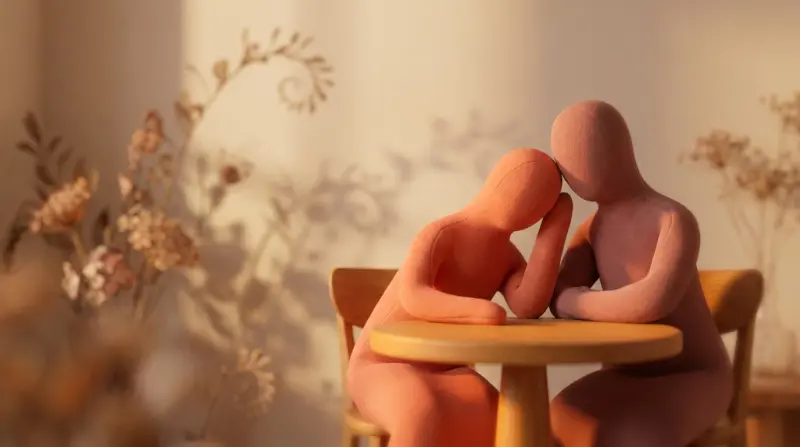
Watching a film together may give you something to discuss, but it cannot guarantee that a marriage lasts. If you hear that films “halve divorce,” do not treat the claim as a complete plan for repairing your relationship. Ask what participants actually did and whether it resembles what you intend to try.
More than an evening in front of a screen
A 2013 study by Rogge and colleagues1 examined preventive programmes among engaged and newly married couples in the United States. The film programme involved a four-hour session and four further films with structured discussions.
The “halves divorce” claim comes from comparing couples who met the study's completion criterion for one of the three programmes with a no-treatment group: 11% versus 24% separated or divorced within three years. Including all couples with follow-up data produced a smaller, statistically weaker difference. The comparison group also included couples who declined participation and couples whose attendance could not be scheduled; they had not been randomly selected to form that group. The finding therefore does not prove that watching films alone caused the difference or apply automatically to every marriage.
Simply sitting together and watching a film does not mean you have reproduced the programme. A group result also cannot predict what will happen to your relationship. You can choose films because you enjoy that time together without making them responsible for protecting your marriage.
What do you want to discuss?
A fictional situation may offer an easier opening than a direct complaint. But a film is unhelpful if it becomes a trial of your partner: “That character is exactly like you.” Start with something you want to understand, such as asking for help or making a decision without consulting the other person.
After a scene about a disputed appointment, you might ask, “Did each person understand what the other needed?” If both want to, connect it to your lives: “Does a similar misunderstanding happen between us? What would we like to clarify?” Either person can decline to discuss a personal experience at that moment.
A film can also be for enjoyment alone. Shared time need not always become a problem-solving session, and you do not have to agree about every character.
An optional conversation with a clear next step
Choose a time when you can listen, rather than when either person needs sleep or has something urgent to do. These questions are practical suggestions, not the intervention tested in the study. You can choose just one:
What you want to understand
A possible question
An unspoken expectation
“What did this person expect without saying it? Is there a request we need to explain?”
Work carried by one person
“Who planned and followed up? Do we need a different arrangement for a task?”
An attempt to repair
“What changed after the apology? What will we do after our conversation?”
If one person manages every household appointment, “more attention” is not a complete arrangement. Discuss a specific appointment or task and who will organize and follow it through. If no new request emerges, better understanding can be enough. There is no required homework or number of sessions.
NHS relationship guidance2 supports listening, checking understanding and returning to conflict when both people are calmer. Choosing a film and using these questions are practical suggestions you can adapt, without a guaranteed result.
What if films do not suit you?
One person may prefer a walk or tea and conversation, or lack energy for a whole film. Choose another way to talk or enjoy time together. Disliking films does not prove a lack of care. The everyday relationship guide can help you choose something that fits your time and responsibilities.
If every conversation returns to the same problem, consider what remains unchanged: an unheard request, an unfulfilled agreement or a fundamental difference. Appropriate professional help can be an option if both want it and joint work is safe.
Threats, coercion and fear of a partner’s reaction require more than a film-based communication exercise. NHS abuse guidance3 identifies control and intimidation as reasons to seek support. Seek safe individual help. In immediate danger in Saudi Arabia, call 997 for an ambulance or 999 for security patrols as needed, using the Saudi Red Crescent’s listed numbers4. Your safety need not wait for a film or discussion to end.
Frequently Asked Questions
Does watching films together really halve divorce?
The study does not prove that. The “halves divorce” claim compares couples who met the completion criterion for one of three preventive programmes with a no-treatment group: 11% versus 24% separated or divorced within three years. The comparison group was not randomly selected, and including all couples with follow-up data produced a smaller, statistically weaker difference. So the finding does not show that films alone caused the difference.
Is watching a film together enough to fix a marriage?
No. Watching a film together may give you something to discuss, but it cannot guarantee that a marriage lasts. The film programme in the study involved a four-hour session and four further films with structured discussions, so simply sitting together and watching a film does not mean you have reproduced it. You can choose films because you enjoy that time together without making them responsible for protecting your marriage.
How can a couple use a film to start a conversation?
Choose a time when you can listen, and start with something you want to understand, such as asking for help. A film is unhelpful if it becomes a trial of your partner: “That character is exactly like you.” After a scene about a disputed appointment, you might ask, “Did each person understand what the other needed?” and, if both want to, connect it to your lives. Either person can decline to discuss a personal experience.
What if every conversation returns to the same problem?
Consider what remains unchanged: an unheard request, an unfulfilled agreement or a fundamental difference. “More attention” is not a complete arrangement; discuss a specific appointment or task and who will organize and follow it through. NHS relationship guidance supports listening, checking understanding and returning to conflict when both people are calmer. Appropriate professional help can be an option if both want it and joint work is safe.
What should I do if there are threats or I fear my partner’s reaction?
Threats, coercion and fear of a partner’s reaction require more than a film-based communication exercise. NHS abuse guidance identifies control and intimidation as reasons to seek support. Seek safe individual help. In immediate danger in Saudi Arabia, call 997 for an ambulance or 999 for security patrols as needed. Your safety need not wait for a film or discussion to end.
Content writer and researcher at Tatmeen, writing in Arabic and English about mental health and everyday life, from relationships and stress to work, habits, and family.
Every Tatmeen article is reviewed by care providers licensed by the Saudi Commission for Health Specialties, so what you read is accurate and trustworthy.
This article builds understanding and does not replace a licensed care provider.
Need someone to talk to?
Tatmeen's licensed care providers are available around the clock, and the app's urgent consultation connects you with one within minutes.
Download Tatmeen to explore care providers and booking options.
Smart matchingFour quick questions suggest the right care provider
Urgent consultationTalk to an available care provider within minutes
Free psychological measuresMore than 20 tests to understand how you are doing
Scan to download
{"data":{"id":"66e24f19-471d-48c0-bb78-d84f53570afe","slug":"emotional_study_on_each_spouse","arTitle":"الأفلام والحوار بين الزوجين: نتائج الدراسة وحدودها","enTitle":"Films and conversation in marriage: what the study shows","thumbnailAltText":"شخصان يتحدثان أمام شرائط أفلام منحنية تحمل مشاهد لأشخاص وشاطئ، على خلفية فاتحة.","estimatedReadingTime":6,"likesCount":955,"writer":{"id":"d3defdb6-4a23-4b03-aad9-a1ecc054aae5","arBio":"كاتب وباحث محتوى في تطمين، يكتب بالعربية والإنجليزية عن الصحة النفسية والحياة اليومية، من العلاقات والضغوط إلى العمل والعادات والأسرة.\n","enBio":"Content writer and researcher at Tatmeen, writing in Arabic and English about mental health and everyday life, from relationships and stress to work, habits, and family.","user":{"slug":"fahad-almalik","arFullName":"فهد المالك","enFullName":"Fahad Almalik","publicProfileImageUrl":"https://cdn.tatmeen.sa/public/profile-images/a34c8028-5847-45de-ab83-a014942bb7d3/675415e988c16442a04af5d3b8899242613a955c44e0364314cc3ff74cbad082.webp","publicProfileImage96Url":"https://cdn.tatmeen.sa/public/profile-images/a34c8028-5847-45de-ab83-a014942bb7d3/675415e988c16442a04af5d3b8899242613a955c44e0364314cc3ff74cbad082-w96.webp","publicProfileImage192Url":"https://cdn.tatmeen.sa/public/profile-images/a34c8028-5847-45de-ab83-a014942bb7d3/675415e988c16442a04af5d3b8899242613a955c44e0364314cc3ff74cbad082-w192.webp"}},"arContent":"","enContent":"","productionDocument":{"headings":[{"id":"article-section-more-than-an-evening-in-front-of-a-screen","text":"More than an evening in front of a screen"},{"id":"article-section-what-do-you-want-to-discuss","text":"What do you want to discuss?"},{"id":"article-section-an-optional-conversation-with-a-clear-next-step","text":"An optional conversation with a clear next step"},{"id":"article-section-what-if-films-do-not-suit-you","text":"What if films do not suit you?"}],"faqs":[{"question":"Does watching films together really halve divorce?","answer":"<p>The study does not prove that. The “halves divorce” claim compares couples who met the completion criterion for one of three preventive programmes with a no-treatment group: 11% versus 24% separated or divorced within three years. The comparison group was not randomly selected, and including all couples with follow-up data produced a smaller, statistically weaker difference. So the finding does not show that films alone caused the difference.</p>"},{"question":"Is watching a film together enough to fix a marriage?","answer":"<p>No. Watching a film together may give you something to discuss, but it cannot guarantee that a marriage lasts. The film programme in the study involved a four-hour session and four further films with structured discussions, so simply sitting together and watching a film does not mean you have reproduced it. You can choose films because you enjoy that time together without making them responsible for protecting your marriage.</p>"},{"question":"How can a couple use a film to start a conversation?","answer":"<p>Choose a time when you can listen, and start with something you want to understand, such as asking for help. A film is unhelpful if it becomes a trial of your partner: “That character is exactly like you.” After a scene about a disputed appointment, you might ask, “Did each person understand what the other needed?” and, if both want to, connect it to your lives. Either person can decline to discuss a personal experience.</p>"},{"question":"What if every conversation returns to the same problem?","answer":"<p>Consider what remains unchanged: an unheard request, an unfulfilled agreement or a fundamental difference. “More attention” is not a complete arrangement; discuss a specific appointment or task and who will organize and follow it through. NHS relationship guidance supports listening, checking understanding and returning to conflict when both people are calmer. Appropriate professional help can be an option if both want it and joint work is safe.</p>"},{"question":"What should I do if there are threats or I fear my partner’s reaction?","answer":"<p>Threats, coercion and fear of a partner’s reaction require more than a film-based communication exercise. NHS abuse guidance identifies control and intimidation as reasons to seek support. Seek safe individual help. In immediate danger in Saudi Arabia, call 997 for an ambulance or 999 for security patrols as needed. Your safety need not wait for a film or discussion to end.</p>"}],"beforeSourcesHtml":"\n","sources":[{"title":"Rogge and colleagues: 2013 study of preventive programmes for engaged and newly married couples","href":"https://couples-research.com/wp-content/uploads/2017/06/Rogge2013.pdf","hostname":"couples-research.com"},{"title":"NHS: Maintaining healthy relationships and mental wellbeing","href":"https://www.nhs.uk/every-mind-matters/lifes-challenges/maintaining-healthy-relationships-and-mental-wellbeing/","hostname":"nhs.uk"},{"title":"NHS: Getting help for domestic violence","href":"https://www.nhs.uk/live-well/getting-help-for-domestic-violence/","hostname":"nhs.uk"},{"title":"Saudi Red Crescent Authority: Contact numbers","href":"https://www.srca.gov.sa/en/contact-us/","hostname":"srca.gov.sa"}],"afterSourcesHtml":"","blocks":[{"type":"html","html":"<p>Watching a film together may give you something to discuss, but it cannot guarantee that a marriage lasts. If you hear that films “halve divorce,” do not treat the claim as a complete plan for repairing your relationship. Ask what participants actually did and whether it resembles what you intend to try.</p>\n<h2 id=\"article-section-more-than-an-evening-in-front-of-a-screen\" data-toc-heading tabindex=\"-1\"><span id=\"more-than-an-evening-in-front-of-a-screen-1\" aria-hidden=\"true\"></span>More than an evening in front of a screen</h2>\n<p>A <a href=\"https://couples-research.com/wp-content/uploads/2017/06/Rogge2013.pdf\" target=\"_blank\" rel=\"noopener noreferrer\">2013 study by Rogge and colleagues</a> examined preventive programmes among engaged and newly married couples in the United States. The film programme involved a four-hour session and four further films with structured discussions.</p>\n<p>The “halves divorce” claim comes from comparing couples who met the study's completion criterion for one of the three programmes with a no-treatment group: 11% versus 24% separated or divorced within three years. Including all couples with follow-up data produced a smaller, statistically weaker difference. The comparison group also included couples who declined participation and couples whose attendance could not be scheduled; they had not been randomly selected to form that group. The finding therefore does not prove that watching films alone caused the difference or apply automatically to every marriage.</p>\n<p>Simply sitting together and watching a film does not mean you have reproduced the programme. A group result also cannot predict what will happen to your relationship. You can choose films because you enjoy that time together without making them responsible for protecting your marriage.</p>\n<h2 id=\"article-section-what-do-you-want-to-discuss\" data-toc-heading tabindex=\"-1\"><span id=\"what-do-you-want-to-discuss-2\" aria-hidden=\"true\"></span>What do you want to discuss?</h2>\n<p>A fictional situation may offer an easier opening than a direct complaint. But a film is unhelpful if it becomes a trial of your partner: “That character is exactly like you.” Start with something you want to understand, such as asking for help or making a decision without consulting the other person.</p>\n<p>After a scene about a disputed appointment, you might ask, “Did each person understand what the other needed?” If both want to, connect it to your lives: “Does a similar misunderstanding happen between us? What would we like to clarify?” Either person can decline to discuss a personal experience at that moment.</p>\n<p>A film can also be for enjoyment alone. Shared time need not always become a problem-solving session, and you do not have to agree about every character.</p>\n<h2 id=\"article-section-an-optional-conversation-with-a-clear-next-step\" data-toc-heading tabindex=\"-1\"><span id=\"an-optional-conversation-with-a-clear-next-step-3\" aria-hidden=\"true\"></span>An optional conversation with a clear next step</h2>\n<p>Choose a time when you can listen, rather than when either person needs sleep or has something urgent to do. These questions are practical suggestions, not the intervention tested in the study. You can choose just one:</p>\n<div class=\"table-block\"><table>\n<thead>\n<tr>\n<th>What you want to understand</th>\n<th>A possible question</th>\n</tr>\n</thead>\n<tbody>\n<tr>\n<td>An unspoken expectation</td>\n<td>“What did this person expect without saying it? Is there a request we need to explain?”</td>\n</tr>\n<tr>\n<td>Work carried by one person</td>\n<td>“Who planned and followed up? Do we need a different arrangement for a task?”</td>\n</tr>\n<tr>\n<td>An attempt to repair</td>\n<td>“What changed after the apology? What will we do after our conversation?”</td>\n</tr>\n</tbody>\n</table></div>\n<p>If one person manages every household appointment, “more attention” is not a complete arrangement. Discuss a specific appointment or task and who will organize and follow it through. If no new request emerges, better understanding can be enough. There is no required homework or number of sessions.</p>\n<p><a href=\"https://www.nhs.uk/every-mind-matters/lifes-challenges/maintaining-healthy-relationships-and-mental-wellbeing/\" target=\"_blank\" rel=\"noopener noreferrer\">NHS relationship guidance</a> supports listening, checking understanding and returning to conflict when both people are calmer. Choosing a film and using these questions are practical suggestions you can adapt, without a guaranteed result.</p>\n<h2 id=\"article-section-what-if-films-do-not-suit-you\" data-toc-heading tabindex=\"-1\"><span id=\"what-if-films-do-not-suit-you-4\" aria-hidden=\"true\"></span>What if films do not suit you?</h2>\n<p>One person may prefer a walk or tea and conversation, or lack energy for a whole film. Choose another way to talk or enjoy time together. Disliking films does not prove a lack of care. The <a href=\"https://tatmeen.sa/en/blog/Factors-for-a-successful-romantic-relationship/\">everyday relationship guide</a> can help you choose something that fits your time and responsibilities.</p>\n<p>If every conversation returns to the same problem, consider what remains unchanged: an unheard request, an unfulfilled agreement or a fundamental difference. Appropriate professional help can be an option if both want it and joint work is safe.</p>\n<p>Threats, coercion and fear of a partner’s reaction require more than a film-based communication exercise. <a href=\"https://www.nhs.uk/live-well/getting-help-for-domestic-violence/\" target=\"_blank\" rel=\"noopener noreferrer\">NHS abuse guidance</a> identifies control and intimidation as reasons to seek support. Seek safe individual help. In immediate danger in Saudi Arabia, call 997 for an ambulance or 999 for security patrols as needed, using the <a href=\"https://www.srca.gov.sa/en/contact-us/\" target=\"_blank\" rel=\"noopener noreferrer\">Saudi Red Crescent’s listed numbers</a>. Your safety need not wait for a film or discussion to end.</p>\n\n"}],"inlineCtaSignatures":[],"_experienceAliases":{"v":1,"fields":["html","bodyHtml"],"faqs":[0,1,2,3,4]}},"createdAt":"2024-01-01T21:00:00.000Z","updatedAt":"2026-10-30T19:03:00.197Z","disorderGroups":[{"id":"01b1a587-3584-435b-971a-c40ffce29802","slug":"family-and-marital-relations","arName":"العلاقات الأسرية والزوجية","enName":"Family & Marital Relations"}],"reviewer":{"arFullName":"فريق تطمين","enFullName":"Tatmeen team","slug":"tatmeen-team","kind":"organization"},"productionArticle":true,"promotionAllowed":true,"preparedCover":{"src":"https://cdn.tatmeen.sa/public/article-lcp/article-lcp-v2/sha256-d16c3c2f8344d8c58ae9c6747fd8d38b6ab304a1f60262f5c5b4c9282da068c9/800-75afda1303075bb1d1401904580a333c312e9d12a4073ccb70f38dfd6d0d9111.avif","fallback":"https://cdn.tatmeen.sa/public/article-lcp/article-lcp-v2/sha256-d16c3c2f8344d8c58ae9c6747fd8d38b6ab304a1f60262f5c5b4c9282da068c9/800-84aec08b0d4091534b8ba519000463ddfbabd5d84a9f8c0df3d26241765b8ca3.webp","directUrl":"https://cdn.tatmeen.sa/blog-cover/144363c4-08b5-4633-bdc6-8232f92b7090.png","isGolden":true,"avifSrcset":"https://cdn.tatmeen.sa/public/article-lcp/article-lcp-v2/sha256-d16c3c2f8344d8c58ae9c6747fd8d38b6ab304a1f60262f5c5b4c9282da068c9/400-be6dc9a54c9bf1421b511d47940b663932acd23618342363d0864c1614d2fefc.avif 400w, https://cdn.tatmeen.sa/public/article-lcp/article-lcp-v2/sha256-d16c3c2f8344d8c58ae9c6747fd8d38b6ab304a1f60262f5c5b4c9282da068c9/640-c766bbe45f899c9f3f7fb68fe040c0c1960c3bbcd080b44ec5c9ebfead3cd182.avif 640w, https://cdn.tatmeen.sa/public/article-lcp/article-lcp-v2/sha256-d16c3c2f8344d8c58ae9c6747fd8d38b6ab304a1f60262f5c5b4c9282da068c9/800-75afda1303075bb1d1401904580a333c312e9d12a4073ccb70f38dfd6d0d9111.avif 800w, https://cdn.tatmeen.sa/public/article-lcp/article-lcp-v2/sha256-d16c3c2f8344d8c58ae9c6747fd8d38b6ab304a1f60262f5c5b4c9282da068c9/1200-f519dc6315227a1d7d24bd1dd0e98b30a2da3985e1478da8d662318dc87736d1.avif 1200w","webpSrcset":"https://cdn.tatmeen.sa/public/article-lcp/article-lcp-v2/sha256-d16c3c2f8344d8c58ae9c6747fd8d38b6ab304a1f60262f5c5b4c9282da068c9/400-4719ecd6c3e3269370f2a0ff9bdc49d088d455f9795f00e2bb8269cf7bd0e398.webp 400w, https://cdn.tatmeen.sa/public/article-lcp/article-lcp-v2/sha256-d16c3c2f8344d8c58ae9c6747fd8d38b6ab304a1f60262f5c5b4c9282da068c9/640-62d3717ea8a2dc0aa55bfb89a7111fb013a128895c490269e3fc78f781179ad3.webp 640w, https://cdn.tatmeen.sa/public/article-lcp/article-lcp-v2/sha256-d16c3c2f8344d8c58ae9c6747fd8d38b6ab304a1f60262f5c5b4c9282da068c9/800-84aec08b0d4091534b8ba519000463ddfbabd5d84a9f8c0df3d26241765b8ca3.webp 800w, https://cdn.tatmeen.sa/public/article-lcp/article-lcp-v2/sha256-d16c3c2f8344d8c58ae9c6747fd8d38b6ab304a1f60262f5c5b4c9282da068c9/1200-08a8bd34b7ec3b5a0690f3faeece5870baff447e17af3e928eb40f751730468f.webp 1200w","phoneAvifSrcset":"https://cdn.tatmeen.sa/public/article-lcp/article-lcp-v2/sha256-d16c3c2f8344d8c58ae9c6747fd8d38b6ab304a1f60262f5c5b4c9282da068c9/400-be6dc9a54c9bf1421b511d47940b663932acd23618342363d0864c1614d2fefc.avif 400w, https://cdn.tatmeen.sa/public/article-lcp/article-lcp-v2/sha256-d16c3c2f8344d8c58ae9c6747fd8d38b6ab304a1f60262f5c5b4c9282da068c9/640-c766bbe45f899c9f3f7fb68fe040c0c1960c3bbcd080b44ec5c9ebfead3cd182.avif 640w, https://cdn.tatmeen.sa/public/article-lcp/article-lcp-v2/sha256-d16c3c2f8344d8c58ae9c6747fd8d38b6ab304a1f60262f5c5b4c9282da068c9/800-75afda1303075bb1d1401904580a333c312e9d12a4073ccb70f38dfd6d0d9111.avif 800w","phoneWebpSrcset":"https://cdn.tatmeen.sa/public/article-lcp/article-lcp-v2/sha256-d16c3c2f8344d8c58ae9c6747fd8d38b6ab304a1f60262f5c5b4c9282da068c9/400-4719ecd6c3e3269370f2a0ff9bdc49d088d455f9795f00e2bb8269cf7bd0e398.webp 400w, https://cdn.tatmeen.sa/public/article-lcp/article-lcp-v2/sha256-d16c3c2f8344d8c58ae9c6747fd8d38b6ab304a1f60262f5c5b4c9282da068c9/640-62d3717ea8a2dc0aa55bfb89a7111fb013a128895c490269e3fc78f781179ad3.webp 640w, https://cdn.tatmeen.sa/public/article-lcp/article-lcp-v2/sha256-d16c3c2f8344d8c58ae9c6747fd8d38b6ab304a1f60262f5c5b4c9282da068c9/800-84aec08b0d4091534b8ba519000463ddfbabd5d84a9f8c0df3d26241765b8ca3.webp 800w","width":800,"height":533},"previewTaxonomy":{"groups":[{"id":"01b1a587-3584-435b-971a-c40ffce29802","slug":"family-and-marital-relations","arName":"العلاقات الأسرية والزوجية","enName":"Family & Marital Relations"}],"topics":[{"id":"f7424e7c-5097-4ff5-a1ad-b378d36bcbb6","slug":"couple-communication","arName":"التواصل بين الشريكين","enName":"Couple Communication","groupSlug":"family-and-marital-relations","href":"/blog/category/family-and-marital-relations/couple-communication/"}],"tags":[{"id":"8666ef73-6ba1-47b4-9a44-767b6a474092","slug":"marriage-couples","arName":"الزواج والعلاقات الزوجية","enName":"Marriage & Couples"},{"id":"e04696b7-55c4-49e7-aaa4-2caf047de30e","slug":"research-literacy","arName":"فهم الأبحاث النفسية","enName":"Understanding psychological research"},{"id":"c2a6e8d3-de9c-435f-8c95-9727e7db14cc","slug":"explainer-awareness","arName":"دليل توعوي / شرح","enName":"Explainer / Awareness Guide"}]},"previewProviderRecommendations":[{"id":"d754a189-f8c9-4aad-b4aa-a5dbd26c0bd7","slug":"talal-alshowaier-8694","arFullName":"طلال الشويعر","enFullName":"Talal Alshowaier","publicProfileImageUrl":"https://cdn.tatmeen.sa/public/profile-images/d754a189-f8c9-4aad-b4aa-a5dbd26c0bd7/74feb27848a47cf43189f6b5951e06a9b87b08269021d5bab765092fc65fce42.webp","publicProfileImage96Url":"https://cdn.tatmeen.sa/public/profile-images/d754a189-f8c9-4aad-b4aa-a5dbd26c0bd7/74feb27848a47cf43189f6b5951e06a9b87b08269021d5bab765092fc65fce42-w96.webp","publicProfileImage192Url":"https://cdn.tatmeen.sa/public/profile-images/d754a189-f8c9-4aad-b4aa-a5dbd26c0bd7/74feb27848a47cf43189f6b5951e06a9b87b08269021d5bab765092fc65fce42-w192.webp","specialization":{"arName":"أخصائي نفسي","enName":"Psychologist"},"profileImageUrl":"https://cdn.tatmeen.sa/public/profile-images/d754a189-f8c9-4aad-b4aa-a5dbd26c0bd7/74feb27848a47cf43189f6b5951e06a9b87b08269021d5bab765092fc65fce42-w192.webp","experienceYears":3,"consultantInfo":{"averageRating":{"average":5},"specialization":{"arGeneralName":"أخصائي نفسي","enGeneralName":"Psychologist"}}},{"id":"d4ffcb6b-90a7-45b6-b941-964866f4564b","slug":"dhaifallah-alhumaidi-1092","arFullName":"ضيف الله الحميدي","enFullName":"Dhaifallah Alhumaidi","publicProfileImageUrl":"https://cdn.tatmeen.sa/public/profile-images/d4ffcb6b-90a7-45b6-b941-964866f4564b/1817171c5828a9b57d6c30d12332cf154e335272548bc90a6e8456d74d356956.webp","publicProfileImage96Url":"https://cdn.tatmeen.sa/public/profile-images/d4ffcb6b-90a7-45b6-b941-964866f4564b/1817171c5828a9b57d6c30d12332cf154e335272548bc90a6e8456d74d356956-w96.webp","publicProfileImage192Url":"https://cdn.tatmeen.sa/public/profile-images/d4ffcb6b-90a7-45b6-b941-964866f4564b/1817171c5828a9b57d6c30d12332cf154e335272548bc90a6e8456d74d356956-w192.webp","specialization":{"arName":"أخصائي نفسي","enName":"Psychologist"},"profileImageUrl":"https://cdn.tatmeen.sa/public/profile-images/d4ffcb6b-90a7-45b6-b941-964866f4564b/1817171c5828a9b57d6c30d12332cf154e335272548bc90a6e8456d74d356956-w192.webp","experienceYears":3,"consultantInfo":{"averageRating":{"average":5},"specialization":{"arGeneralName":"أخصائي نفسي","enGeneralName":"Psychologist"}}},{"id":"9a9bdd0c-f395-405b-a0ec-db53b704ddb2","slug":"atheer-mahzri-2674","arFullName":"أثير محزري","enFullName":"Atheer Mahzri","publicProfileImageUrl":"https://cdn.tatmeen.sa/public/profile-images/9a9bdd0c-f395-405b-a0ec-db53b704ddb2/237697ea59f42b577e3704515bf346f623a68f0917e2f26800ceff7141d37229.webp","publicProfileImage96Url":"https://cdn.tatmeen.sa/public/profile-images/9a9bdd0c-f395-405b-a0ec-db53b704ddb2/237697ea59f42b577e3704515bf346f623a68f0917e2f26800ceff7141d37229-w96.webp","publicProfileImage192Url":"https://cdn.tatmeen.sa/public/profile-images/9a9bdd0c-f395-405b-a0ec-db53b704ddb2/237697ea59f42b577e3704515bf346f623a68f0917e2f26800ceff7141d37229-w192.webp","specialization":{"arName":"أخصائي نفسي","enName":"Psychologist"},"profileImageUrl":"https://cdn.tatmeen.sa/public/profile-images/9a9bdd0c-f395-405b-a0ec-db53b704ddb2/237697ea59f42b577e3704515bf346f623a68f0917e2f26800ceff7141d37229-w192.webp","experienceYears":3,"consultantInfo":{"averageRating":{"average":5},"specialization":{"arGeneralName":"أخصائي نفسي","enGeneralName":"Psychologist"}}}],"previewCareProviders":[{"id":"09364052-c2a9-4c52-9717-7ce2093b8d0a","slug":"kholoud-alharbi-5221","arFullName":"خلود الحربي","enFullName":"Kholoud Alharbi","publicProfileImageUrl":"https://cdn.tatmeen.sa/public/profile-images/09364052-c2a9-4c52-9717-7ce2093b8d0a/4a0aeb81619e351b77f4323e3605a0a00acc7ca3c82ee7cc5ca2c9e8ef716049.webp","publicProfileImage96Url":"https://cdn.tatmeen.sa/public/profile-images/09364052-c2a9-4c52-9717-7ce2093b8d0a/4a0aeb81619e351b77f4323e3605a0a00acc7ca3c82ee7cc5ca2c9e8ef716049-w96.webp","publicProfileImage192Url":"https://cdn.tatmeen.sa/public/profile-images/09364052-c2a9-4c52-9717-7ce2093b8d0a/4a0aeb81619e351b77f4323e3605a0a00acc7ca3c82ee7cc5ca2c9e8ef716049-w192.webp","gender":"FEMALE","specialization":{"arName":"أخصائي نفسي","enName":"Psychologist"}},{"id":"6f037535-1dca-4b50-a8b2-5974b7323286","slug":"salah-althobaiti-9053","arFullName":"صلاح الثبيتي","enFullName":"Salah Althobaiti","publicProfileImageUrl":"https://cdn.tatmeen.sa/public/profile-images/6f037535-1dca-4b50-a8b2-5974b7323286/35b6bd7fad9b1e004c1835803eb9c1b56dcacd380685ec8bff141f0fb888005c.webp","publicProfileImage96Url":"https://cdn.tatmeen.sa/public/profile-images/6f037535-1dca-4b50-a8b2-5974b7323286/35b6bd7fad9b1e004c1835803eb9c1b56dcacd380685ec8bff141f0fb888005c-w96.webp","publicProfileImage192Url":"https://cdn.tatmeen.sa/public/profile-images/6f037535-1dca-4b50-a8b2-5974b7323286/35b6bd7fad9b1e004c1835803eb9c1b56dcacd380685ec8bff141f0fb888005c-w192.webp","gender":"MALE","specialization":{"arName":"أخصائي نفسي","enName":"Psychologist"}},{"id":"3cc806e8-616b-4884-9f21-a75b378580a2","slug":"aisha-al-hashim-8667","arFullName":"عائشة ال هاشم","enFullName":"Aisha Al Hashim","publicProfileImageUrl":"https://cdn.tatmeen.sa/public/profile-images/3cc806e8-616b-4884-9f21-a75b378580a2/27f523d03be4dcfa1f6a79f70c1773887434e698990d214cd990caec56a44798.webp","publicProfileImage96Url":"https://cdn.tatmeen.sa/public/profile-images/3cc806e8-616b-4884-9f21-a75b378580a2/27f523d03be4dcfa1f6a79f70c1773887434e698990d214cd990caec56a44798-w96.webp","publicProfileImage192Url":"https://cdn.tatmeen.sa/public/profile-images/3cc806e8-616b-4884-9f21-a75b378580a2/27f523d03be4dcfa1f6a79f70c1773887434e698990d214cd990caec56a44798-w192.webp","gender":"FEMALE","specialization":{"arName":"أخصائي نفسي","enName":"Psychologist"}},{"id":"db2ce1a0-9325-4471-b7ce-eb2e811c30a3","slug":"amer-qutub-2441","arFullName":"عامر قطب","enFullName":"Amer Qutub","publicProfileImageUrl":"https://cdn.tatmeen.sa/public/profile-images/db2ce1a0-9325-4471-b7ce-eb2e811c30a3/80580f99bfd7fe2b2a9cf8eed73ab532f5086d1efe053b0aa57358c1ce004261.webp","publicProfileImage96Url":"https://cdn.tatmeen.sa/public/profile-images/db2ce1a0-9325-4471-b7ce-eb2e811c30a3/80580f99bfd7fe2b2a9cf8eed73ab532f5086d1efe053b0aa57358c1ce004261-w96.webp","publicProfileImage192Url":"https://cdn.tatmeen.sa/public/profile-images/db2ce1a0-9325-4471-b7ce-eb2e811c30a3/80580f99bfd7fe2b2a9cf8eed73ab532f5086d1efe053b0aa57358c1ce004261-w192.webp","gender":"MALE","specialization":{"arName":"أخصائي نفسي","enName":"Psychologist"}},{"id":"6043a2b2-c41b-42c8-92bb-881f36083293","slug":"rehab-alharbi-3670","arFullName":"رحاب المعبدي","enFullName":"Rehab Almabadi","publicProfileImageUrl":"https://cdn.tatmeen.sa/public/profile-images/6043a2b2-c41b-42c8-92bb-881f36083293/9f25728f77c844fac517d39615495fdec1cf4c590360b466419ece1bdeb66c2e.webp","publicProfileImage96Url":"https://cdn.tatmeen.sa/public/profile-images/6043a2b2-c41b-42c8-92bb-881f36083293/9f25728f77c844fac517d39615495fdec1cf4c590360b466419ece1bdeb66c2e-w96.webp","publicProfileImage192Url":"https://cdn.tatmeen.sa/public/profile-images/6043a2b2-c41b-42c8-92bb-881f36083293/9f25728f77c844fac517d39615495fdec1cf4c590360b466419ece1bdeb66c2e-w192.webp","gender":"FEMALE","specialization":{"arName":"أخصائي نفسي","enName":"Psychologist"}},{"id":"618dba89-5b70-4b46-8304-741b7ac8ecd3","slug":"abdullah-mari-1311","arFullName":"عبدالله مرعي","enFullName":"Abdullah Mari","publicProfileImageUrl":"https://cdn.tatmeen.sa/public/profile-images/618dba89-5b70-4b46-8304-741b7ac8ecd3/6b4a3bfb59f8a304ca79083b32859b46baad2e1d692974a47c02c1f66bd11129.webp","publicProfileImage96Url":"https://cdn.tatmeen.sa/public/profile-images/618dba89-5b70-4b46-8304-741b7ac8ecd3/6b4a3bfb59f8a304ca79083b32859b46baad2e1d692974a47c02c1f66bd11129-w96.webp","publicProfileImage192Url":"https://cdn.tatmeen.sa/public/profile-images/618dba89-5b70-4b46-8304-741b7ac8ecd3/6b4a3bfb59f8a304ca79083b32859b46baad2e1d692974a47c02c1f66bd11129-w192.webp","gender":"MALE","specialization":{"arName":"أخصائي نفسي","enName":"Psychologist"}},{"id":"94765496-dbdf-4631-a01b-7df5f788668d","slug":"abdullrahman-alhamoudi-3045","arFullName":"عبدالرحمن الحمودي","enFullName":"Abdulrahman Alhamoudi","publicProfileImageUrl":"https://cdn.tatmeen.sa/public/profile-images/94765496-dbdf-4631-a01b-7df5f788668d/2d49f6b6493c564afb6f50b6c3634231dff3a5cf8353acfab393d1b2a88037d1.webp","publicProfileImage96Url":"https://cdn.tatmeen.sa/public/profile-images/94765496-dbdf-4631-a01b-7df5f788668d/2d49f6b6493c564afb6f50b6c3634231dff3a5cf8353acfab393d1b2a88037d1-w96.webp","publicProfileImage192Url":"https://cdn.tatmeen.sa/public/profile-images/94765496-dbdf-4631-a01b-7df5f788668d/2d49f6b6493c564afb6f50b6c3634231dff3a5cf8353acfab393d1b2a88037d1-w192.webp","gender":"MALE","specialization":{"arName":"أخصائي نفسي","enName":"Psychologist"}},{"id":"d4ffcb6b-90a7-45b6-b941-964866f4564b","slug":"dhaifallah-alhumaidi-1092","arFullName":"ضيف الله الحميدي","enFullName":"Dhaifallah Alhumaidi","publicProfileImageUrl":"https://cdn.tatmeen.sa/public/profile-images/d4ffcb6b-90a7-45b6-b941-964866f4564b/1817171c5828a9b57d6c30d12332cf154e335272548bc90a6e8456d74d356956.webp","publicProfileImage96Url":"https://cdn.tatmeen.sa/public/profile-images/d4ffcb6b-90a7-45b6-b941-964866f4564b/1817171c5828a9b57d6c30d12332cf154e335272548bc90a6e8456d74d356956-w96.webp","publicProfileImage192Url":"https://cdn.tatmeen.sa/public/profile-images/d4ffcb6b-90a7-45b6-b941-964866f4564b/1817171c5828a9b57d6c30d12332cf154e335272548bc90a6e8456d74d356956-w192.webp","gender":"MALE","specialization":{"arName":"أخصائي نفسي","enName":"Psychologist"}},{"id":"3b50a5d5-e795-407f-8676-fd7f0e1bb7a0","slug":"abdulaziz-bin-hudayan-4940","arFullName":"عبدالعزيز بن هديان","enFullName":"Abdulaziz Bin Hudayan","publicProfileImageUrl":"https://cdn.tatmeen.sa/public/profile-images/3b50a5d5-e795-407f-8676-fd7f0e1bb7a0/710ff0fe1fb00cdb5042092e27b7910b480a439b02251ecded62d7758eefce95.webp","publicProfileImage96Url":"https://cdn.tatmeen.sa/public/profile-images/3b50a5d5-e795-407f-8676-fd7f0e1bb7a0/710ff0fe1fb00cdb5042092e27b7910b480a439b02251ecded62d7758eefce95-w96.webp","publicProfileImage192Url":"https://cdn.tatmeen.sa/public/profile-images/3b50a5d5-e795-407f-8676-fd7f0e1bb7a0/710ff0fe1fb00cdb5042092e27b7910b480a439b02251ecded62d7758eefce95-w192.webp","gender":"MALE","specialization":{"arName":"أخصائي نفسي","enName":"Psychologist"}}],"previewDownload":{"href":"/download","title":{"ar":"خطوة واحدة لأجلك، ابدأ الآن","en":"One step for you, start now"},"description":{"ar":"حمّل تطبيق تطمين لاستكشاف مقدمي الرعاية وخيارات الحجز.","en":"Download Tatmeen to explore care providers and booking options."},"posterSrc":"/images/home/cta-ar-new-1.webp","videoSrc":"/images/home/cta-ar-new-1.mp4","videoPosterSrc":"/images/home/cta-ar-new-1.webp","videoPosterEnSrc":"/images/home/cta-en-new-1.webp","videoType":"video/mp4","appStoreHref":"https://apps.apple.com/us/app/tatmeen-%D8%AA%D8%B7%D9%85%D9%8A%D9%86/id6473836983","googlePlayHref":"https://play.google.com/store/apps/details?id=com.TatmeenApp.user&hl=en"},"previewRelatedArticles":[{"id":"dbd56fb2-c697-419a-81ba-04ec531d6538","slug":"weakness-of-strength-theory-relationships","route":"/blog/weakness-of-strength-theory-relationships/","title":{"ar":"نظرية ضعف القوة: ما يزعجنا في مَن نحب غالبًا هو الجانب الآخر من صفاتهم المميزة","en":"The Weakness of Strength Theory: What Annoys Us in Loved Ones"},"image":"https://cdn.tatmeen.sa/public/article-lcp/article-lcp-v2/sha256-f17bbe7af6da371f50f5be10d1bb4beffb3dcf6ade0867c7d55508c89382fea3/800-3f37a6d29f78cdd44f3bdaaddee732715615c0cbd052b4154e97a9f66af352e7.webp","directImageFallback":"https://cdn.tatmeen.sa/blog-cover/Tatmeen-1778776374235.webp","arThumbnailAltText":"Two people sitting together one animated and the other lovingly exasperated in warm lamplight","thumbnailAltText":"Two people sitting together one animated and the other lovingly exasperated in warm lamplight","topic":{"label":{"ar":"العلاقات الأسرية والزوجية","en":"Family & Marital Relations"}},"readingTimeMinutes":5},{"id":"393f2aba-2e0b-41fe-9a72-d24154fda1e0","slug":"Intimacy-in-relationships","route":"/blog/Intimacy-in-relationships/","title":{"ar":"الحميمية في الزواج: فهم القرب العاطفي والجسدي","en":"Intimacy in marriage: understanding emotional and physical closeness"},"image":"https://cdn.tatmeen.sa/public/article-lcp/article-lcp-v2/sha256-259af6400ff66ecd43ca2c613ea6adc84233b55d93caa2fdd6bdcd41ef70cda8/800-0c5350917da3f590eda2025ad7d4bd702f27f7fd7fd185c41d1de004dc5689aa.webp","directImageFallback":"https://cdn.tatmeen.sa/blog-cover/a0486ea4-f31f-4cbf-a924-5c0fd19cc58d.png","arThumbnailAltText":"شريطان عريضان منحنيان بالأزرق الداكن والمرجاني يتقاطعان على خلفية فاتحة.","thumbnailAltText":"شريطان عريضان منحنيان بالأزرق الداكن والمرجاني يتقاطعان على خلفية فاتحة.","topic":{"label":{"ar":"العلاقات الأسرية والزوجية","en":"Family & Marital Relations"}},"readingTimeMinutes":6},{"id":"c7f5e2be-3039-4f47-bd90-25892a366775","slug":"saudi-mental-health-platform-women-family-youth","route":"/blog/saudi-mental-health-platform-women-family-youth/","title":{"ar":"الصحة النفسية للمرأة والأسرة والشباب: كيف يواكب تطمين أولويات المجتمع الجديد؟","en":"Tatmeen - Mental Health for Women, Families, and Young People"},"image":"https://cdn.tatmeen.sa/public/article-lcp/article-lcp-v2/sha256-2f5e6e9c5f782b161edf5753038ed1931985d3c3baf0a02b85f97f60abfaba76/800-e2148848eedafdb98b891e94080bd9623d3a8fad23bc73730508964122779f00.webp","directImageFallback":"https://cdn.tatmeen.sa/blog-cover/Tatmeen-1778979469917.webp","arThumbnailAltText":"Youth, Women and family saudi arabia ","thumbnailAltText":"Youth, Women and family saudi arabia ","topic":{"label":{"ar":"الأطفال والمراهقين","en":"Children & Adolescents"}},"readingTimeMinutes":5},{"id":"07a55476-3004-47d2-af90-1f229ff5ace5","slug":"premarital-psychological-assessment-family-stability","route":"/blog/premarital-psychological-assessment-family-stability/","title":{"ar":"أهمية الفحص النفسي قبل الزواج لتعزيز الاستقرار الأسري","en":"The Importance of Premarital Psychological Assessment for Family Stability"},"image":"https://cdn.tatmeen.sa/public/article-lcp/article-lcp-v2/sha256-56a1ae6d1dffef73aaae147dd0f8c4ab7c85a94ea05e0ff2f9707ca69df3348a/800-14466649599ac024958796d7431f91aea814455cb03424aef841c2759a41b1dc.webp","directImageFallback":"https://cdn.tatmeen.sa/blog-cover/Tatmeen-1778436313687.webp","arThumbnailAltText":"two human figures sitting at a table with gentle glow filling the room","thumbnailAltText":"two human figures sitting at a table with gentle glow filling the room","topic":{"label":{"ar":"العلاقات الأسرية والزوجية","en":"Family & Marital Relations"}},"readingTimeMinutes":5}],"previewRelatedReadStates":{}},"locale":"en","device":"desktop","path":"/en/blog/emotional_study_on_each_spouse/","readingControls":false,"config":{"public":{"BUCKET_URL":"https://cdn.tatmeen.sa/","APP_BASE_URL":"https://tatmeen.sa","intercomAppId":"ppcnu9e3"}}}