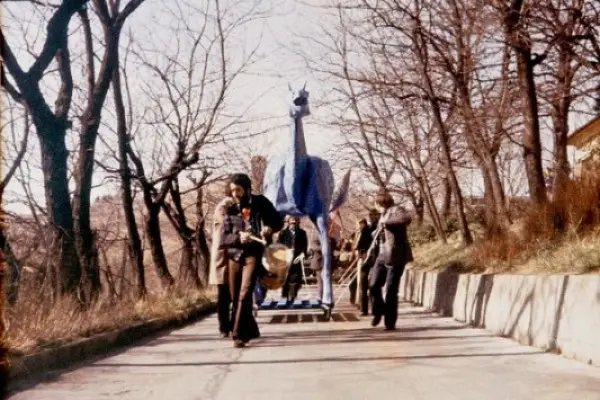
At a time when psychiatric hospitals resembled asylums where patients disappeared behind walls for long periods that could extend to the end of their lives, psychiatrists were entrusted with protecting society from “these patients, their violence, and their eccentricities.” It was then that the story arose of the blue horse, Marco Cavallo. He was neither muscular nor a champion racehorse, but he became a hero and a symbol of breaking down the walls of psychiatric asylums, bringing psychiatric patients out, and returning them to their natural place in society. It is worth noting that even today, some families come to my clinic asking to admit their son or daughter to a psychiatric hospital forever. This idea is not confined to an earlier era; it continues into the present despite cultural and intellectual progress regarding mental health.
There was a horse that pulled the laundry cart at the psychiatric hospital in the Italian city of Trieste. When he grew old and became slow and weak, a decision was made to kill him. The patients staying at the hospital, however, wrote a letter objecting to the decision and asking that the horse be given a dignified retirement. City officials agreed and sold the horse to a pharmacist, who allowed him to spend his final years on his farm until he died.
Some time after bidding the horse farewell, those patients decided during an art workshop to make a model in his honor. They built a giant cardboard statue and named it Marco Cavallo. The model was enormous and could not pass through the hospital gate. This created a dilemma: how could they get it out of the institution? Some suggested keeping the model confined inside the hospital, while others proposed dismantling it and reassembling it outside the walls. On February 25, 1973, however, Franco Basaglia—the psychiatrist who pioneered the community-based approach to psychiatry and was the hospital’s director at the time—decided to demolish a hospital wall so that the model could emerge intact and unaltered. Marco Cavallo was accompanied by hundreds of patients who wanted to return to society, and they toured the city’s streets. One patient wrote on the hospital wall that Marco wanted to enjoy running. Marco has not stopped traveling since then, and he was sent throughout Italy as a testament to and symbol of freedom in psychiatry.
On May 13, 1978, Law No. 180, known as the “Basaglia Law,” was approved. The law represented a major shift in approaches to mental health treatment and the rights of people with mental illnesses. Before this law, mental health care in Italy, as in other countries, was centered primarily on psychiatric hospitals and isolated mental asylums. These institutions often had appalling conditions in which patients experienced inhumane treatment, including physical restraints and forced isolation. The Basaglia Law aimed to promote a more humane, community-based approach to mental health care, encourage the closure of psychiatric hospitals, and integrate people with mental illnesses into everyday life. The law also focused on patients’ rights and sought to eliminate discrimination and stigma associated with mental illness.
In 1979, one year before his death, Franco Basaglia said at a conference: “We are weak and belong to the minority, and we cannot win because power always wins. But at best, we can convince others of better values, and the moment they are convinced, we will win. In other words, we create a state of change that is difficult to reverse.”
The story of the blue horse, Marco Cavallo, demonstrates the power of human will and the capacity for change. It is a symbol of freedom and victory over restrictions and oppression in psychiatric practice. Although psychiatric patients endured difficult conditions and limited freedom of movement, they used their creative and literary abilities to save the horse, create positive change in their community, and affirm that even when others become unable to play an active role in society and offer little benefit, this does not mean that we should discard them. Instead, we must protect them and their rights until the last day of their lives.
Thanks to the courage of Franco Basaglia and his companions, a radical change was achieved in the treatment of mental illness in Italy and around the world. Their actions were extraordinary and succeeded in restoring dignity and freedom to people with mental illnesses. As we develop plans for mental health services at the level of ministries and official institutions, we should remember the story of Marco Cavallo and let it inspire us to take measures that protect psychiatric patients’ rights. We should not restrict services to hospitals, despite their necessity for some cases and for short periods.
Download Tatmeen’s online psychological and family counseling app from the App Store or Google Play. You can also register on the Tatmeen mental health website to receive valuable information and practical tools for strengthening your mental health.
Content writer and researcher at Tatmeen, writing in Arabic and English about mental health and everyday life, from relationships and stress to work, habits, and family.
Every Tatmeen article is reviewed by care providers licensed by the Saudi Commission for Health Specialties, so what you read is accurate and trustworthy.
This article builds understanding and does not replace a licensed care provider.
Need someone to talk to?
Tatmeen's licensed care providers are available around the clock, and the app's urgent consultation connects you with one within minutes.
Download Tatmeen to explore care providers and booking options.
Smart matchingFour quick questions suggest the right care provider
Urgent consultationTalk to an available care provider within minutes
Free psychological measuresMore than 20 tests to understand how you are doing
Scan to download
{"data":{"id":"d2681a0b-6811-47aa-bcfb-b7f4d6f0d66c","slug":"The-Blue-Horse-Symbol-of-freedom-in-psychiatry","arTitle":"الحصان الأزرق: رمز الحرية والانفتاح في الطب النفسي","enTitle":"The Blue Horse: A Symbol of Freedom in Psychiatry","thumbnailAltText":"People walk beside a tall blue horse sculpture on a wooded path","estimatedReadingTime":5,"likesCount":940,"writer":{"id":"d3defdb6-4a23-4b03-aad9-a1ecc054aae5","arBio":"كاتب وباحث محتوى في تطمين، يكتب بالعربية والإنجليزية عن الصحة النفسية والحياة اليومية، من العلاقات والضغوط إلى العمل والعادات والأسرة.\n","enBio":"Content writer and researcher at Tatmeen, writing in Arabic and English about mental health and everyday life, from relationships and stress to work, habits, and family.","user":{"slug":"fahad-almalik","arFullName":"فهد المالك","enFullName":"Fahad Almalik","publicProfileImageUrl":"https://cdn.tatmeen.sa/public/profile-images/a34c8028-5847-45de-ab83-a014942bb7d3/675415e988c16442a04af5d3b8899242613a955c44e0364314cc3ff74cbad082.webp","publicProfileImage96Url":"https://cdn.tatmeen.sa/public/profile-images/a34c8028-5847-45de-ab83-a014942bb7d3/675415e988c16442a04af5d3b8899242613a955c44e0364314cc3ff74cbad082-w96.webp","publicProfileImage192Url":"https://cdn.tatmeen.sa/public/profile-images/a34c8028-5847-45de-ab83-a014942bb7d3/675415e988c16442a04af5d3b8899242613a955c44e0364314cc3ff74cbad082-w192.webp"}},"arContent":"","enContent":"","productionDocument":{"headings":[],"faqs":[],"beforeSourcesHtml":"","sources":[],"afterSourcesHtml":"","blocks":[{"type":"html","html":"<p class=\"ql-align-right ql-direction-rtl\">At a time when psychiatric hospitals resembled asylums where patients disappeared behind walls for long periods that could extend to the end of their lives, psychiatrists were entrusted with protecting society from “these patients, their violence, and their eccentricities.” It was then that the story arose of the blue horse, Marco Cavallo. He was neither muscular nor a champion racehorse, but he became a hero and a symbol of breaking down the walls of psychiatric asylums, bringing psychiatric patients out, and returning them to their natural place in society. It is worth noting that even today, some families come to my clinic asking to admit their son or daughter to a psychiatric hospital forever. This idea is not confined to an earlier era; it continues into the present despite cultural and intellectual progress regarding mental health.</p><p class=\"ql-align-right ql-direction-rtl\">There was a horse that pulled the laundry cart at the psychiatric hospital in the Italian city of Trieste. When he grew old and became slow and weak, a decision was made to kill him. The patients staying at the hospital, however, wrote a letter objecting to the decision and asking that the horse be given a dignified retirement. City officials agreed and sold the horse to a pharmacist, who allowed him to spend his final years on his farm until he died.</p><p class=\"ql-align-right ql-direction-rtl\">Some time after bidding the horse farewell, those patients decided during an art workshop to make a model in his honor. They built a giant cardboard statue and named it Marco Cavallo. The model was enormous and could not pass through the hospital gate. This created a dilemma: how could they get it out of the institution? Some suggested keeping the model confined inside the hospital, while others proposed dismantling it and reassembling it outside the walls. On February 25, 1973, however, Franco Basaglia—the psychiatrist who pioneered the community-based approach to psychiatry and was the hospital’s director at the time—decided to demolish a hospital wall so that the model could emerge intact and unaltered. Marco Cavallo was accompanied by hundreds of patients who wanted to return to society, and they toured the city’s streets. One patient wrote on the hospital wall that Marco wanted to enjoy running. Marco has not stopped traveling since then, and he was sent throughout Italy as a testament to and symbol of freedom in psychiatry.</p><p class=\"ql-align-right ql-direction-rtl\">On May 13, 1978, Law No. 180, known as the “Basaglia Law,” was approved. The law represented a major shift in approaches to mental health treatment and the rights of people with mental illnesses. Before this law, mental health care in Italy, as in other countries, was centered primarily on psychiatric hospitals and isolated mental asylums. These institutions often had appalling conditions in which patients experienced inhumane treatment, including physical restraints and forced isolation. The Basaglia Law aimed to promote a more humane, community-based approach to mental health care, encourage the closure of psychiatric hospitals, and integrate people with mental illnesses into everyday life. The law also focused on patients’ rights and sought to eliminate discrimination and stigma associated with mental illness.</p><p class=\"ql-align-right ql-direction-rtl\">In 1979, one year before his death, Franco Basaglia said at a conference: “We are weak and belong to the minority, and we cannot win because power always wins. But at best, we can convince others of better values, and the moment they are convinced, we will win. In other words, we create a state of change that is difficult to reverse.”</p><p class=\"ql-align-right ql-direction-rtl\">The story of the blue horse, Marco Cavallo, demonstrates the power of human will and the capacity for change. It is a symbol of freedom and victory over restrictions and oppression in psychiatric practice. Although psychiatric patients endured difficult conditions and limited freedom of movement, they used their creative and literary abilities to save the horse, create positive change in their community, and affirm that even when others become unable to play an active role in society and offer little benefit, this does not mean that we should discard them. Instead, we must protect them and their rights until the last day of their lives.</p><p class=\"ql-align-right ql-direction-rtl\">Thanks to the courage of Franco Basaglia and his companions, a radical change was achieved in the treatment of mental illness in Italy and around the world. Their actions were extraordinary and succeeded in restoring dignity and freedom to people with mental illnesses. As we develop plans for mental health services at the level of ministries and official institutions, we should remember the story of Marco Cavallo and let it inspire us to take measures that protect psychiatric patients’ rights. We should not restrict services to hospitals, despite their necessity for some cases and for short periods.</p><p class=\"ql-align-right ql-direction-rtl\"><br /></p><p class=\"ql-direction-rtl ql-align-justify\">Download Tatmeen’s online psychological and family counseling app from the App Store or Google Play. You can also register on the Tatmeen mental health website to receive valuable information and practical tools for strengthening your mental health.</p><p class=\"ql-align-right ql-direction-rtl\"><br /></p><p><br /></p>"}],"inlineCtaSignatures":[],"_experienceAliases":{"v":1,"fields":["html","bodyHtml"]}},"createdAt":"2024-01-10T21:00:00.000Z","updatedAt":"2026-08-11T04:45:02.303Z","disorderGroups":[{"id":"1e82772d-a1a7-4d29-b475-be9d6b67ae02","slug":"common-mental-issues","arName":"اضطرابات نفسية شائعة","enName":"Common Mental Issues"}],"reviewer":{"arFullName":"فريق تطمين","enFullName":"Tatmeen team","slug":"tatmeen-team","kind":"organization"},"productionArticle":true,"promotionAllowed":true,"preparedCover":{"src":"https://cdn.tatmeen.sa/public/article-lcp/article-lcp-v2/sha256-bb351edead4bc76ec8804d168a260ea86e68920812f59c8daa1402918b6a751b/600-d7d91ad84e7b814d0bf6f433881317fa6f0269a576bc386e2f9b37b9b0b22144.avif","fallback":"https://cdn.tatmeen.sa/public/article-lcp/article-lcp-v2/sha256-bb351edead4bc76ec8804d168a260ea86e68920812f59c8daa1402918b6a751b/600-593d6beb0e32b7879031d246cd18f288414a66d6b383c0436300654017e35b53.webp","directUrl":"https://cdn.tatmeen.sa/blog-cover/1704999910011-Tatmeen-img-289","isGolden":true,"avifSrcset":"https://cdn.tatmeen.sa/public/article-lcp/article-lcp-v2/sha256-bb351edead4bc76ec8804d168a260ea86e68920812f59c8daa1402918b6a751b/400-4821dd283684ef3ed02c1935b9a9b5f091a53671aac0b1334e6ef9ea31000f68.avif 400w, https://cdn.tatmeen.sa/public/article-lcp/article-lcp-v2/sha256-bb351edead4bc76ec8804d168a260ea86e68920812f59c8daa1402918b6a751b/600-d7d91ad84e7b814d0bf6f433881317fa6f0269a576bc386e2f9b37b9b0b22144.avif 600w","webpSrcset":"https://cdn.tatmeen.sa/public/article-lcp/article-lcp-v2/sha256-bb351edead4bc76ec8804d168a260ea86e68920812f59c8daa1402918b6a751b/400-e80d0776490aba4234eb1d14f54937e082ec11706429ddfe49c37d56ce2f9207.webp 400w, https://cdn.tatmeen.sa/public/article-lcp/article-lcp-v2/sha256-bb351edead4bc76ec8804d168a260ea86e68920812f59c8daa1402918b6a751b/600-593d6beb0e32b7879031d246cd18f288414a66d6b383c0436300654017e35b53.webp 600w","phoneAvifSrcset":"https://cdn.tatmeen.sa/public/article-lcp/article-lcp-v2/sha256-bb351edead4bc76ec8804d168a260ea86e68920812f59c8daa1402918b6a751b/400-4821dd283684ef3ed02c1935b9a9b5f091a53671aac0b1334e6ef9ea31000f68.avif 400w, https://cdn.tatmeen.sa/public/article-lcp/article-lcp-v2/sha256-bb351edead4bc76ec8804d168a260ea86e68920812f59c8daa1402918b6a751b/600-d7d91ad84e7b814d0bf6f433881317fa6f0269a576bc386e2f9b37b9b0b22144.avif 600w","phoneWebpSrcset":"https://cdn.tatmeen.sa/public/article-lcp/article-lcp-v2/sha256-bb351edead4bc76ec8804d168a260ea86e68920812f59c8daa1402918b6a751b/400-e80d0776490aba4234eb1d14f54937e082ec11706429ddfe49c37d56ce2f9207.webp 400w, https://cdn.tatmeen.sa/public/article-lcp/article-lcp-v2/sha256-bb351edead4bc76ec8804d168a260ea86e68920812f59c8daa1402918b6a751b/600-593d6beb0e32b7879031d246cd18f288414a66d6b383c0436300654017e35b53.webp 600w","width":600,"height":400},"previewTaxonomy":{"groups":[{"id":"1e82772d-a1a7-4d29-b475-be9d6b67ae02","slug":"common-mental-issues","arName":"اضطرابات نفسية شائعة","enName":"Common Mental Issues"}],"topics":[],"tags":[{"id":"22e81878-b04f-4e67-8dd1-fe64bee6baaf","slug":"therapy-journey","arName":"رحلة العلاج النفسي","enName":"Therapy Journey & Process"},{"id":"c2a6e8d3-de9c-435f-8c95-9727e7db14cc","slug":"explainer-awareness","arName":"دليل توعوي / شرح","enName":"Explainer / Awareness Guide"}]},"previewProviderRecommendations":[{"id":"deb6b1c3-c452-46e3-abf0-c2698984c77b","slug":"shereen-seddiq-8815","arFullName":"شيرين صديق","enFullName":"Shereen Seddiq","publicProfileImageUrl":"","publicProfileImage96Url":"","publicProfileImage192Url":"","specialization":{"arName":"أخصائي نفسي","enName":"Psychologist"},"profileImageUrl":"","experienceYears":3,"consultantInfo":{"averageRating":{"average":5},"specialization":{"arGeneralName":"أخصائي نفسي","enGeneralName":"Psychologist"}}},{"id":"2f7246d0-92bf-4031-a5a7-36e0a6199114","slug":"dr-rakan-alshaalan-6051","arFullName":"د. راكان الشعلان","enFullName":"Dr. Rakan Alshaalan","publicProfileImageUrl":"https://cdn.tatmeen.sa/public/profile-images/2f7246d0-92bf-4031-a5a7-36e0a6199114/3776034fe5c6572fc48f03a5abcde7abce9c3b1cb6ee81ef0a44eb9fcc10c646.webp","publicProfileImage96Url":"https://cdn.tatmeen.sa/public/profile-images/2f7246d0-92bf-4031-a5a7-36e0a6199114/3776034fe5c6572fc48f03a5abcde7abce9c3b1cb6ee81ef0a44eb9fcc10c646-w96.webp","publicProfileImage192Url":"https://cdn.tatmeen.sa/public/profile-images/2f7246d0-92bf-4031-a5a7-36e0a6199114/3776034fe5c6572fc48f03a5abcde7abce9c3b1cb6ee81ef0a44eb9fcc10c646-w192.webp","specialization":{"arName":"طبيب أسرة","enName":"Family Physician"},"profileImageUrl":"https://cdn.tatmeen.sa/public/profile-images/2f7246d0-92bf-4031-a5a7-36e0a6199114/3776034fe5c6572fc48f03a5abcde7abce9c3b1cb6ee81ef0a44eb9fcc10c646-w192.webp","experienceYears":5,"consultantInfo":{"averageRating":{"average":0},"specialization":{"arGeneralName":"طبيب أسرة","enGeneralName":"Family Physician"}}},{"id":"dd528e30-a6b8-473f-bacd-42c5c8172d4c","slug":"fadila-alenazi-5392","arFullName":"فضيلة العنزي","enFullName":"Fadila Alenazi","publicProfileImageUrl":"https://cdn.tatmeen.sa/public/profile-images/dd528e30-a6b8-473f-bacd-42c5c8172d4c/227042175ce05ffd24e2e1620a7316f725dfbd17d4a05c3508cc4f5e14ab0b11.webp","publicProfileImage96Url":"https://cdn.tatmeen.sa/public/profile-images/dd528e30-a6b8-473f-bacd-42c5c8172d4c/227042175ce05ffd24e2e1620a7316f725dfbd17d4a05c3508cc4f5e14ab0b11-w96.webp","publicProfileImage192Url":"https://cdn.tatmeen.sa/public/profile-images/dd528e30-a6b8-473f-bacd-42c5c8172d4c/227042175ce05ffd24e2e1620a7316f725dfbd17d4a05c3508cc4f5e14ab0b11-w192.webp","specialization":{"arName":"أخصائي نفسي","enName":"Psychologist"},"profileImageUrl":"https://cdn.tatmeen.sa/public/profile-images/dd528e30-a6b8-473f-bacd-42c5c8172d4c/227042175ce05ffd24e2e1620a7316f725dfbd17d4a05c3508cc4f5e14ab0b11-w192.webp","experienceYears":12,"consultantInfo":{"averageRating":{"average":0},"specialization":{"arGeneralName":"أخصائي نفسي","enGeneralName":"Psychologist"}}}],"previewCareProviders":[{"id":"09364052-c2a9-4c52-9717-7ce2093b8d0a","slug":"kholoud-alharbi-5221","arFullName":"خلود الحربي","enFullName":"Kholoud Alharbi","publicProfileImageUrl":"https://cdn.tatmeen.sa/public/profile-images/09364052-c2a9-4c52-9717-7ce2093b8d0a/4a0aeb81619e351b77f4323e3605a0a00acc7ca3c82ee7cc5ca2c9e8ef716049.webp","publicProfileImage96Url":"https://cdn.tatmeen.sa/public/profile-images/09364052-c2a9-4c52-9717-7ce2093b8d0a/4a0aeb81619e351b77f4323e3605a0a00acc7ca3c82ee7cc5ca2c9e8ef716049-w96.webp","publicProfileImage192Url":"https://cdn.tatmeen.sa/public/profile-images/09364052-c2a9-4c52-9717-7ce2093b8d0a/4a0aeb81619e351b77f4323e3605a0a00acc7ca3c82ee7cc5ca2c9e8ef716049-w192.webp","gender":"FEMALE","specialization":{"arName":"أخصائي نفسي","enName":"Psychologist"}},{"id":"6f037535-1dca-4b50-a8b2-5974b7323286","slug":"salah-althobaiti-9053","arFullName":"صلاح الثبيتي","enFullName":"Salah Althobaiti","publicProfileImageUrl":"https://cdn.tatmeen.sa/public/profile-images/6f037535-1dca-4b50-a8b2-5974b7323286/35b6bd7fad9b1e004c1835803eb9c1b56dcacd380685ec8bff141f0fb888005c.webp","publicProfileImage96Url":"https://cdn.tatmeen.sa/public/profile-images/6f037535-1dca-4b50-a8b2-5974b7323286/35b6bd7fad9b1e004c1835803eb9c1b56dcacd380685ec8bff141f0fb888005c-w96.webp","publicProfileImage192Url":"https://cdn.tatmeen.sa/public/profile-images/6f037535-1dca-4b50-a8b2-5974b7323286/35b6bd7fad9b1e004c1835803eb9c1b56dcacd380685ec8bff141f0fb888005c-w192.webp","gender":"MALE","specialization":{"arName":"أخصائي نفسي","enName":"Psychologist"}},{"id":"3cc806e8-616b-4884-9f21-a75b378580a2","slug":"aisha-al-hashim-8667","arFullName":"عائشة ال هاشم","enFullName":"Aisha Al Hashim","publicProfileImageUrl":"https://cdn.tatmeen.sa/public/profile-images/3cc806e8-616b-4884-9f21-a75b378580a2/27f523d03be4dcfa1f6a79f70c1773887434e698990d214cd990caec56a44798.webp","publicProfileImage96Url":"https://cdn.tatmeen.sa/public/profile-images/3cc806e8-616b-4884-9f21-a75b378580a2/27f523d03be4dcfa1f6a79f70c1773887434e698990d214cd990caec56a44798-w96.webp","publicProfileImage192Url":"https://cdn.tatmeen.sa/public/profile-images/3cc806e8-616b-4884-9f21-a75b378580a2/27f523d03be4dcfa1f6a79f70c1773887434e698990d214cd990caec56a44798-w192.webp","gender":"FEMALE","specialization":{"arName":"أخصائي نفسي","enName":"Psychologist"}},{"id":"db2ce1a0-9325-4471-b7ce-eb2e811c30a3","slug":"amer-qutub-2441","arFullName":"عامر قطب","enFullName":"Amer Qutub","publicProfileImageUrl":"https://cdn.tatmeen.sa/public/profile-images/db2ce1a0-9325-4471-b7ce-eb2e811c30a3/80580f99bfd7fe2b2a9cf8eed73ab532f5086d1efe053b0aa57358c1ce004261.webp","publicProfileImage96Url":"https://cdn.tatmeen.sa/public/profile-images/db2ce1a0-9325-4471-b7ce-eb2e811c30a3/80580f99bfd7fe2b2a9cf8eed73ab532f5086d1efe053b0aa57358c1ce004261-w96.webp","publicProfileImage192Url":"https://cdn.tatmeen.sa/public/profile-images/db2ce1a0-9325-4471-b7ce-eb2e811c30a3/80580f99bfd7fe2b2a9cf8eed73ab532f5086d1efe053b0aa57358c1ce004261-w192.webp","gender":"MALE","specialization":{"arName":"أخصائي نفسي","enName":"Psychologist"}},{"id":"94765496-dbdf-4631-a01b-7df5f788668d","slug":"abdullrahman-alhamoudi-3045","arFullName":"عبدالرحمن الحمودي","enFullName":"Abdulrahman Alhamoudi","publicProfileImageUrl":"https://cdn.tatmeen.sa/public/profile-images/94765496-dbdf-4631-a01b-7df5f788668d/2d49f6b6493c564afb6f50b6c3634231dff3a5cf8353acfab393d1b2a88037d1.webp","publicProfileImage96Url":"https://cdn.tatmeen.sa/public/profile-images/94765496-dbdf-4631-a01b-7df5f788668d/2d49f6b6493c564afb6f50b6c3634231dff3a5cf8353acfab393d1b2a88037d1-w96.webp","publicProfileImage192Url":"https://cdn.tatmeen.sa/public/profile-images/94765496-dbdf-4631-a01b-7df5f788668d/2d49f6b6493c564afb6f50b6c3634231dff3a5cf8353acfab393d1b2a88037d1-w192.webp","gender":"MALE","specialization":{"arName":"أخصائي نفسي","enName":"Psychologist"}},{"id":"618dba89-5b70-4b46-8304-741b7ac8ecd3","slug":"abdullah-mari-1311","arFullName":"عبدالله مرعي","enFullName":"Abdullah Mari","publicProfileImageUrl":"https://cdn.tatmeen.sa/public/profile-images/618dba89-5b70-4b46-8304-741b7ac8ecd3/6b4a3bfb59f8a304ca79083b32859b46baad2e1d692974a47c02c1f66bd11129.webp","publicProfileImage96Url":"https://cdn.tatmeen.sa/public/profile-images/618dba89-5b70-4b46-8304-741b7ac8ecd3/6b4a3bfb59f8a304ca79083b32859b46baad2e1d692974a47c02c1f66bd11129-w96.webp","publicProfileImage192Url":"https://cdn.tatmeen.sa/public/profile-images/618dba89-5b70-4b46-8304-741b7ac8ecd3/6b4a3bfb59f8a304ca79083b32859b46baad2e1d692974a47c02c1f66bd11129-w192.webp","gender":"MALE","specialization":{"arName":"أخصائي نفسي","enName":"Psychologist"}},{"id":"d8fb937b-ad65-4b6f-a65b-276ad8258fed","slug":"azza-alharbi-7286","arFullName":"عزه الحربي","enFullName":"Azza Alharbi","publicProfileImageUrl":"https://cdn.tatmeen.sa/public/profile-images/d8fb937b-ad65-4b6f-a65b-276ad8258fed/378a8ab30f4087833263c41fb2c3102028cbe6bb9655172d7b3439ee1d6b0800.webp","publicProfileImage96Url":"https://cdn.tatmeen.sa/public/profile-images/d8fb937b-ad65-4b6f-a65b-276ad8258fed/378a8ab30f4087833263c41fb2c3102028cbe6bb9655172d7b3439ee1d6b0800-w96.webp","publicProfileImage192Url":"https://cdn.tatmeen.sa/public/profile-images/d8fb937b-ad65-4b6f-a65b-276ad8258fed/378a8ab30f4087833263c41fb2c3102028cbe6bb9655172d7b3439ee1d6b0800-w192.webp","gender":"FEMALE","specialization":{"arName":"أخصائي نفسي","enName":"Psychologist"}},{"id":"d4ffcb6b-90a7-45b6-b941-964866f4564b","slug":"dhaifallah-alhumaidi-1092","arFullName":"ضيف الله الحميدي","enFullName":"Dhaifallah Alhumaidi","publicProfileImageUrl":"https://cdn.tatmeen.sa/public/profile-images/d4ffcb6b-90a7-45b6-b941-964866f4564b/1817171c5828a9b57d6c30d12332cf154e335272548bc90a6e8456d74d356956.webp","publicProfileImage96Url":"https://cdn.tatmeen.sa/public/profile-images/d4ffcb6b-90a7-45b6-b941-964866f4564b/1817171c5828a9b57d6c30d12332cf154e335272548bc90a6e8456d74d356956-w96.webp","publicProfileImage192Url":"https://cdn.tatmeen.sa/public/profile-images/d4ffcb6b-90a7-45b6-b941-964866f4564b/1817171c5828a9b57d6c30d12332cf154e335272548bc90a6e8456d74d356956-w192.webp","gender":"MALE","specialization":{"arName":"أخصائي نفسي","enName":"Psychologist"}}],"previewDownload":{"href":"/download","title":{"ar":"خطوة واحدة لأجلك، ابدأ الآن","en":"One step for you, start now"},"description":{"ar":"حمّل تطبيق تطمين لاستكشاف مقدمي الرعاية وخيارات الحجز.","en":"Download Tatmeen to explore care providers and booking options."},"posterSrc":"/images/home/cta-ar-new-1.webp","videoSrc":"/images/home/cta-ar-new-1.mp4","videoPosterSrc":"/images/home/cta-ar-new-1.webp","videoPosterEnSrc":"/images/home/cta-en-new-1.webp","videoType":"video/mp4","appStoreHref":"https://apps.apple.com/us/app/tatmeen-%D8%AA%D8%B7%D9%85%D9%8A%D9%86/id6473836983","googlePlayHref":"https://play.google.com/store/apps/details?id=com.TatmeenApp.user&hl=en"},"previewRelatedArticles":[{"id":"e54a1760-4d9f-4ebc-aa47-f526aef44e31","slug":"hypervigilance-hidden-impact-constant-alert-state","route":"/blog/hypervigilance-hidden-impact-constant-alert-state/","title":{"ar":"فرط اليقظة: الأثر الخفي للبقاء في حالة تأهّب مستمر","en":"Hypervigilance: The Hidden Impact of Being in a State of Constant Alert"},"image":"https://cdn.tatmeen.sa/public/article-lcp/article-lcp-v2/sha256-4e8efe5813cdf1650ce6408d3fc082d1e43c5c56f4f1afe4fb6a97740e840ed7/800-73cb3297694a7fe482c37b789c944c3999c6a6dc13b2ca0b9785b67543fb2ce6.webp","directImageFallback":"https://cdn.tatmeen.sa/blog-cover/Tatmeen-1777480042034.webp","arThumbnailAltText":"فرط اليقظة وتأثيره على الصحة النفسية عند البقاء في حالة تأهب دائم","thumbnailAltText":"فرط اليقظة وتأثيره على الصحة النفسية عند البقاء في حالة تأهب دائم","topic":{"label":{"ar":"اضطرابات نفسية شائعة","en":"Common Mental Issues"}},"readingTimeMinutes":5},{"id":"0cc46812-ec85-4177-a366-bf963a49d437","slug":"How-to-deal-with-loss-of-passion-and-interest","route":"/blog/How-to-deal-with-loss-of-passion-and-interest/","title":{"ar":"التعامل مع فقدان الشغف والاهتمام بطريقة واقعية","en":"Dealing with the Loss of Passion and Interest in a Realistic Way"},"image":"https://cdn.tatmeen.sa/public/article-lcp/article-lcp-v2/sha256-d840b4cccfd8a680d47b4d303763ff53cfce04bd352489ef2e8a6165dade49c5/800-663ff5759f77c2e280a456c0f3fb3dc5491a23783957585fe7888ccbecf65fd3.webp","directImageFallback":"https://cdn.tatmeen.sa/blog-cover/Tatmeen-1783528462641.webp","arThumbnailAltText":"Pensive artist sits at cluttered desk, surrounded by paints in soft window light.","thumbnailAltText":"Pensive artist sits at cluttered desk, surrounded by paints in soft window light.","topic":{"label":{"ar":"اضطرابات نفسية شائعة","en":"Common Mental Issues"}},"readingTimeMinutes":5},{"id":"18736154-944e-455c-9fda-ee0ee5fb5db7","slug":"difference-between-psychologist-and-life-coach","route":"/blog/difference-between-psychologist-and-life-coach/","title":{"ar":"الفرق بين المعالج النفسي و اللايف كوتش","en":"The Difference Between a Psychotherapist and a Life Coach"},"image":"https://cdn.tatmeen.sa/public/article-lcp/article-lcp-v2/sha256-55d6064c881ff97eea6ba4b89b3c03cf51b6d03a381bd6cd842afcba100a1095/535-eff05207300ec7a98750dea1e471d341b1409c6710687fa219a156f7ab302a39.webp","directImageFallback":"https://cdn.tatmeen.sa/blog-cover/1704821707610-Tatmeen-img-999","arThumbnailAltText":"Two seated people face each other, one gesturing and one holding a clipboard","thumbnailAltText":"Two seated people face each other, one gesturing and one holding a clipboard","topic":{"label":{"ar":"اضطرابات نفسية شائعة","en":"Common Mental Issues"}},"readingTimeMinutes":5},{"id":"51b8b362-2996-465f-af43-8241e3f6b045","slug":"psychologist-vs-psychiatrist-difference","route":"/blog/psychologist-vs-psychiatrist-difference/","title":{"ar":"الفرق بين الأخصائي النفسي والطبيب النفسي لاختيار الأنسب","en":"The Difference Between a Psychologist and a Psychiatrist: How to Choose What Fit"},"image":"https://cdn.tatmeen.sa/public/article-lcp/article-lcp-v2/sha256-cfb0c576671a882bd7c9c7d2659833908680b166c86f83b1ae92d0b1f3e55c87/800-0f080859491acfc25bea2a75d1af8ee6f088266fc7b8df5053d027a5b1b56263.webp","directImageFallback":"https://cdn.tatmeen.sa/blog-cover/Tatmeen-1781365166817.webp","arThumbnailAltText":"Brain model beside a notebook and pen, symbolizing mental analysis and diagnosis","thumbnailAltText":"Brain model beside a notebook and pen, symbolizing mental analysis and diagnosis","topic":{"label":{"ar":"اضطرابات نفسية شائعة","en":"Common Mental Issues"}},"readingTimeMinutes":5}],"previewRelatedReadStates":{}},"locale":"en","device":"desktop","path":"/en/blog/The-Blue-Horse-Symbol-of-freedom-in-psychiatry/","readingControls":false,"config":{"public":{"BUCKET_URL":"https://cdn.tatmeen.sa/","APP_BASE_URL":"https://tatmeen.sa","intercomAppId":"ppcnu9e3"}}}