Tatmeen fits the spirit of Saudi Vision 2030 because it treats mental health care as part of a wider transformation, not as a single digital feature. The platform’s relevance is not limited to offering remote therapy sessions. Its deeper value lies in how it redesigns the route to care: discovery, choice, privacy, booking, follow-up, and continuity. That is where a local digital mental health experience begins to feel aligned with a national vision built around a vibrant society, higher quality of life, stronger private-sector participation, and more accessible health services.
Vision 2030 does not need mental health to remain a broad aspiration. It needs practical models that move people from hesitation to care with less friction. Tatmeen is interesting in that context because it does not simply digitize the session. It digitizes the path before and after the session as well.
Alignment Is Practical, Not Rhetorical
The Health Sector Transformation Program uses a language that is easy to recognize in modern digital health: person-centered care, virtual health tools, easier access at the right time and place, stronger prevention, better use of data, and a wider role for the private sector. Tatmeen’s experience speaks that language through product choices rather than slogans.
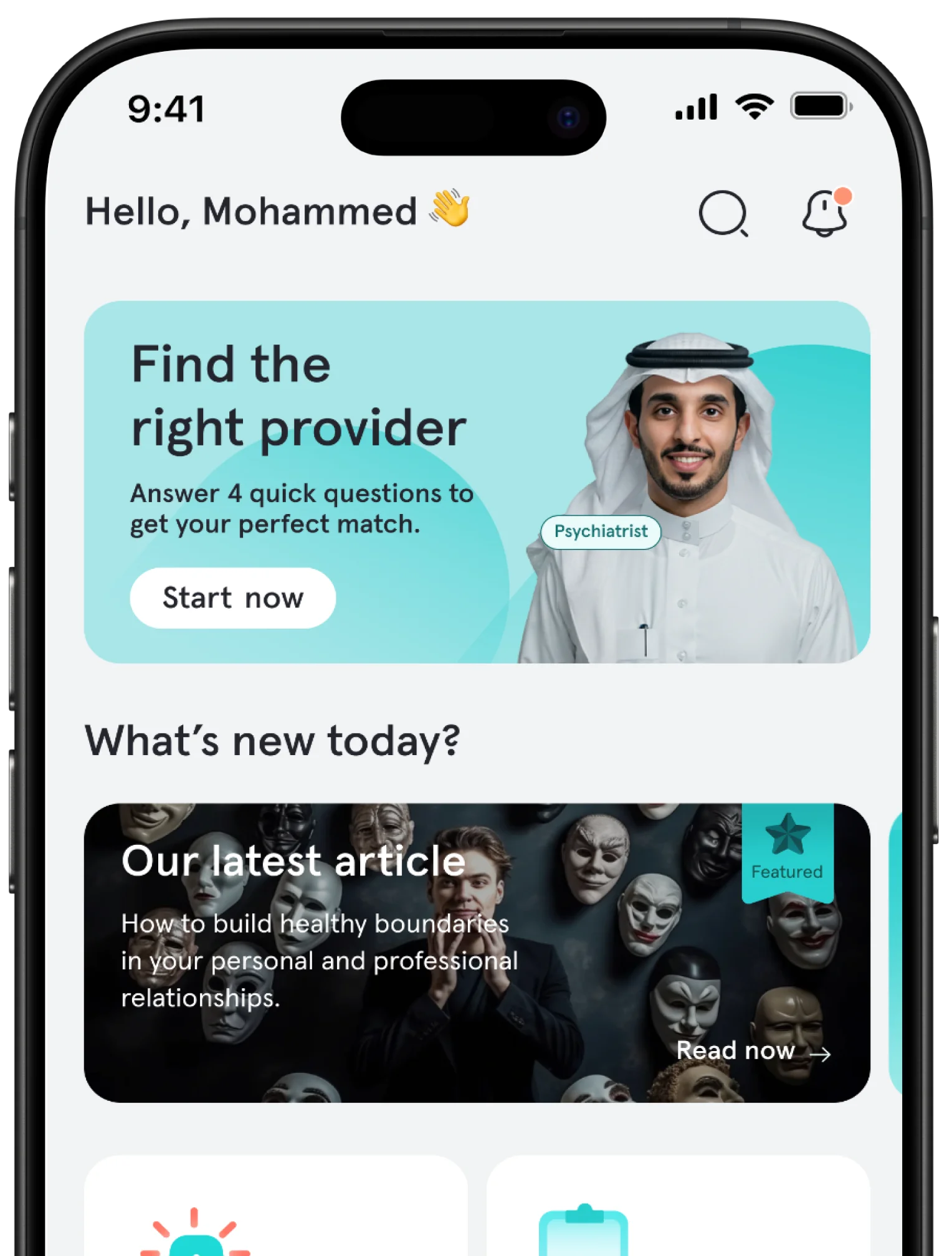
A person who needs support does not always begin with a clear diagnosis. Often, the first step is uncertainty: Which professional should I choose? Is my concern appropriate for therapy? Will my privacy be protected? Can I speak to someone soon? Tatmeen’s value appears in the way it reduces that uncertainty through matching, urgent consultation paths, specialized clinics, provider profiles, support tools, and follow-up features.
The Future Is Not Just Video Sessions
The future of mental health care is not simply moving a traditional appointment onto a video call. The stronger shift is redesigning the whole journey so that care becomes easier to start and easier to continue. A digital platform succeeds when it understands that the main barrier is not always clinical resistance. Sometimes the barrier is confusion, stigma, timing, privacy, or the emotional weight of taking the first step.
That is why features such as smart matching, provider browsing, urgent booking, guest exploration, filters, favorites, and help resources matter. They are not small interface choices. They are adoption choices. They help a person move from a vague feeling to a concrete care decision without turning the process into another source of stress.
Local Design Means the Language of Daily Life
Calling Tatmeen a local Arabic experience should not be understood as a geographic compliment. It is a design advantage. Many users do not arrive with the exact clinical term for what they feel. They arrive with the language of ordinary life: burnout, academic pressure, relationship strain, fear of the future, postpartum distress, family conflict, or work exhaustion.
A local platform becomes stronger when it organizes care around the lived language of its users. Specialized clinics and topic-based pathways can translate everyday concerns into recognizable doors to care. This is especially important in Arabic contexts, where the distance between daily expression and clinical terminology can be one of the first barriers to seeking support.
Vision 2030 Calls for Quality, Transparency, and Choice
A transformed health system is not only about access. It is also about quality, transparency, and informed choice. Tatmeen’s model is compelling because it does not ask users to trust a closed system blindly. It gives them ways to compare providers, review professional roles, consider preferences, and select a path that feels suitable.
This matters because mental health is deeply relational. Fit matters. Trust matters. The ability to change direction matters. A transparent choice architecture gives the user more agency and makes the service feel less like a gate and more like a guided marketplace for care.
Mental Health Should Not Be Separated from Wider Care
One of the more mature ideas in a local digital mental health platform is that psychological care should not be isolated from wider health needs. Mental health concerns can overlap with sleep, fatigue, chronic stress, family medicine, medication needs, reports, or broader follow-up. A stronger model recognizes that some users need therapy, some need medical review, and others need a coordinated path between both.
This is consistent with the broader direction of health transformation, which emphasizes prevention, primary care, integration, and better continuity across the health journey. In that sense, the strongest mental health platforms will not behave like standalone appointment apps. They will operate more like care ecosystems.
Trust Begins with Privacy
In mental health, privacy is not a secondary feature. It is often the condition that makes help-seeking possible. This is especially true in markets where stigma, family expectations, work concerns, or fear of exposure can delay care. A serious digital mental health experience has to build privacy into the service architecture, not hide it in legal language.
Clear registration choices, controlled identity exposure, secure session handling, transparent data rights, and visible support channels all contribute to trust. When users feel that privacy is designed into the journey, asking for help becomes less risky and more realistic.
Strong Platforms Continue After the Session Ends
Mental health care does not end when the call ends. Follow-up, homework, assessments, reports, prescriptions when clinically appropriate, reminders, files, and care history can all help turn a one-time appointment into an ongoing care journey. This is where a platform can move beyond booking and become a digital care environment.
Continuity matters because many users do not fail to improve for lack of one conversation. They struggle because the path after that conversation becomes unclear. A platform that remembers, organizes, and supports the next step can reduce drop-off and help care feel more coherent.
For Executives, This Is Not Only an Individual Wellness Service
Viewed through an executive lens, Tatmeen is not only a consumer health service. It also points toward a workplace and organizational opportunity. Mental health at work affects burnout, engagement, productivity, leadership, absence, and retention. Organizations that treat psychological wellbeing as part of performance and culture are closer to the quality-of-life logic that Vision 2030 promotes.
This is where digital mental health becomes more than a private appointment. It can support employers, leaders, and teams through education, measurement, preventive content, workshops, and access to care. The result is a model that serves both individuals and institutions.
Conclusion: Why Tatmeen Feels Native to Vision 2030
Tatmeen feels aligned with Vision 2030 because it translates large national priorities into a local user experience: easier access, clearer choice, stronger privacy, better continuity, and a more active private sector role in health service development. Its local value is not only Arabic language. It is the ability to understand how Arabic-speaking users describe distress, hesitate before care, choose a provider, and need reassurance before continuing.
The better question is not whether Tatmeen fits Vision 2030. The better question is how a platform built around access, quality, privacy, prevention, and local relevance could avoid fitting the direction that Vision 2030 is trying to make real.
Frequently Asked Questions
Does Tatmeen align with Saudi Vision 2030 as a service model or only as a message?
It aligns more clearly as a service model when Vision 2030 priorities become visible in the user journey: easier access, digital care, informed choice, privacy, follow-up, and private-sector participation in health service development.
Why does local Arabic design matter in digital mental health care?
Local design matters because many people describe distress through daily language before they use clinical terms. A platform that understands local expressions, social hesitation, and common life contexts can make the first step toward care feel clearer and less intimidating.
Is remote mental health care suitable for every situation?
Remote care can support many consultations, follow-ups, and early interventions, but it should sit within a broader care ecosystem. Some situations require in-person assessment, urgent services, or coordination with wider medical care.
Why is privacy so important in telemental health?
Privacy affects whether people seek help at all. In mental health, users need confidence that their identity, session details, personal data, and communication channels are handled with care and transparency.
How does workplace mental health connect with Vision 2030?
Workplace mental health connects with quality of life, productivity, and sustainable participation in the economy. Supporting employees psychologically is not only a wellbeing measure. It also helps organizations reduce burnout and build healthier performance cultures.
What makes a digital mental health platform stronger than a booking app?
A stronger platform supports the whole journey: discovery, matching, provider choice, privacy, session delivery, records, reminders, follow-up, and continuity. Booking is only one step in a much larger care experience.
A writer and researcher specializing in psychiatry, she focuses on mental health and the human emotions we experience but cannot always find the words to name. She writes about us—about humanity and the human experience—and simplifies complex topics to offer content that helps us better understand ourselves and life, ultimately making us feel less alone.
Every Tatmeen article is reviewed by care providers licensed by the Saudi Commission for Health Specialties, so what you read is accurate and trustworthy.
This article builds understanding and does not replace a licensed care provider.
Need someone to talk to?
Tatmeen's licensed care providers are available around the clock, and the app's urgent consultation connects you with one within minutes.
Download Tatmeen to explore care providers and booking options.
Smart matchingFour quick questions suggest the right care provider
Urgent consultationTalk to an available care provider within minutes
Free psychological measuresMore than 20 tests to understand how you are doing
Scan to download
{"data":{"id":"cbe2e28d-11b9-4cbe-918f-0cc3b0d3a6ef","slug":"tatmeen-vision-2030-mental-health","arTitle":"تجربة عربية محلية لمستقبل العلاج النفسي: لماذا ينسجم تطمين مع رؤية 2030؟","enTitle":"A Local Arabic Experience for the Future of Mental Health Care: Why Tatmeen Fits","thumbnailAltText":"Teal infographic with Tatmeen logo, connected icons, and Vision 2030 branding on gradient background","estimatedReadingTime":5,"likesCount":125,"writer":{"id":"3ab72b74-f26f-4337-9b47-3114b0f90de5","arBio":"كاتبة وباحثة متخصصة في مجال الطب النفسي، تهتم بموضوعات الصحة النفسية وبالمشاعر الإنسانية التي نختبرها ولا نجد دائمًا الكلمات لتسميتها. تكتب عنّا؛ عن الإنسان وتجربته، وتبسّط الموضوعات المعقّدة لتقدّم محتوى يساعدنا على فهم ذواتنا والحياة أكثر، ويجعلنا نشعر بأننا بوحدة أقل.","enBio":"A writer and researcher specializing in psychiatry, she focuses on mental health and the human emotions we experience but cannot always find the words to name. She writes about us—about humanity and the human experience—and simplifies complex topics to offer content that helps us better understand ourselves and life, ultimately making us feel less alone.","user":{"slug":"ayat-alnajar","arFullName":"آيات النجار","enFullName":"Ayat Al-Najjar","publicProfileImageUrl":"https://cdn.tatmeen.sa/public/profile-images/02384455-68fa-40b6-ad05-609fde65cafa/21b9a610dde5dfc6d37af110c23e9c7ab3946be080c281beb000debf4f7d31a6.webp","publicProfileImage96Url":"https://cdn.tatmeen.sa/public/profile-images/02384455-68fa-40b6-ad05-609fde65cafa/21b9a610dde5dfc6d37af110c23e9c7ab3946be080c281beb000debf4f7d31a6-w96.webp","publicProfileImage192Url":"https://cdn.tatmeen.sa/public/profile-images/02384455-68fa-40b6-ad05-609fde65cafa/21b9a610dde5dfc6d37af110c23e9c7ab3946be080c281beb000debf4f7d31a6-w192.webp"}},"arContent":"","enContent":"","productionDocument":{"headings":[{"id":"article-section-alignment-is-practical-not-rhetorical","text":"Alignment Is Practical, Not Rhetorical"},{"id":"article-section-the-future-is-not-just-video-sessions","text":"The Future Is Not Just Video Sessions"},{"id":"article-section-local-design-means-the-language-of-daily-life","text":"Local Design Means the Language of Daily Life"},{"id":"article-section-vision-2030-calls-for-quality-transparency-and-choice","text":"Vision 2030 Calls for Quality, Transparency, and Choice"},{"id":"article-section-mental-health-should-not-be-separated-from-wider-care","text":"Mental Health Should Not Be Separated from Wider Care"},{"id":"article-section-trust-begins-with-privacy","text":"Trust Begins with Privacy"},{"id":"article-section-strong-platforms-continue-after-the-session-ends","text":"Strong Platforms Continue After the Session Ends"},{"id":"article-section-for-executives-this-is-not-only-an-individual-wellness-service","text":"For Executives, This Is Not Only an Individual Wellness Service"},{"id":"article-section-conclusion-why-tatmeen-feels-native-to-vision-2030","text":"Conclusion: Why Tatmeen Feels Native to Vision 2030"}],"faqs":[{"question":"Does Tatmeen align with Saudi Vision 2030 as a service model or only as a message?","answer":"<p><span style=\"color:#000000\">It aligns more clearly as a service model when Vision 2030 priorities become visible in the user journey: easier access, digital care, informed choice, privacy, follow-up, and private-sector participation in health service development.</span></p>"},{"question":"Why does local Arabic design matter in digital mental health care?","answer":"<p><span style=\"color:#000000\">Local design matters because many people describe distress through daily language before they use clinical terms. A platform that understands local expressions, social hesitation, and common life contexts can make the first step toward care feel clearer and less intimidating.</span></p>"},{"question":"Is remote mental health care suitable for every situation?","answer":"<p><span style=\"color:#000000\">Remote care can support many consultations, follow-ups, and early interventions, but it should sit within a broader care ecosystem. Some situations require in-person assessment, urgent services, or coordination with wider medical care.</span></p>"},{"question":"Why is privacy so important in telemental health?","answer":"<p><span style=\"color:#000000\">Privacy affects whether people seek help at all. In mental health, users need confidence that their identity, session details, personal data, and communication channels are handled with care and transparency.</span></p>"},{"question":"How does workplace mental health connect with Vision 2030?","answer":"<p><span style=\"color:#000000\">Workplace mental health connects with quality of life, productivity, and sustainable participation in the economy. Supporting employees psychologically is not only a wellbeing measure. It also helps organizations reduce burnout and build healthier performance cultures.</span></p>"},{"question":"What makes a digital mental health platform stronger than a booking app?","answer":"<p><span style=\"color:#000000\">A stronger platform supports the whole journey: discovery, matching, provider choice, privacy, session delivery, records, reminders, follow-up, and continuity. Booking is only one step in a much larger care experience.</span></p>"}],"beforeSourcesHtml":"","sources":[{"title":"Saudi Vision 2030 - Vision Document","href":"https://www.vision2030.gov.sa/en/","hostname":"vision2030.gov.sa"},{"title":"HSTP Guide","href":"https://www.moh.gov.sa/en/Ministry/vro/Pages/manual.aspx","hostname":"moh.gov.sa"},{"title":"MOH - The Complete Vision","href":"https://www.moh.gov.sa/en/Ministry/nehs/Pages/The-Complete-Vision.aspx","hostname":"moh.gov.sa"},{"title":"MOH - Telemedicine","href":"https://www.moh.gov.sa/en/ministry/information-and-services/pages/telemedicine.aspx","hostname":"moh.gov.sa"},{"title":"MOH - Mental Health and Psychiatric Patient","href":"https://www.moh.gov.sa/en/ministry/information-and-services/pages/psychiatry.aspx","hostname":"moh.gov.sa"},{"title":"Telehealth.HHS.gov","href":"http://telehealth.hhs.gov/","hostname":"telehealth.hhs.gov"},{"title":"- Protecting Patients' Privacy","href":"https://telehealth.hhs.gov/patients/telehealth-privacy-for-patients","hostname":"telehealth.hhs.gov"},{"title":"NIMH - Getting Mental Health Support Virtually","href":"https://www.nimh.nih.gov/health/publications/what-is-telemental-health","hostname":"nimh.nih.gov"},{"title":"WHO - Mental Health at Work","href":"https://www.who.int/news-room/fact-sheets/detail/mental-health-at-work","hostname":"who.int"}],"afterSourcesHtml":"","blocks":[{"type":"html","html":"<p><span style=\"color:#000000\">Tatmeen fits the spirit of Saudi Vision 2030 because it treats mental health care as part of a wider transformation, not as a single digital feature. The platform’s relevance is not limited to offering remote therapy sessions. Its deeper value lies in how it redesigns the route to care: discovery, choice, privacy, booking, follow-up, and continuity. That is where a local digital mental health experience begins to feel aligned with a national vision built around a vibrant society, higher quality of life, stronger private-sector participation, and more accessible health services.</span></p><p><span style=\"color:#000000\">Vision 2030 does not need mental health to remain a broad aspiration. It needs practical models that move people from hesitation to care with less friction. Tatmeen is interesting in that context because it does not simply digitize the session. It digitizes the path before and after the session as well.</span></p><h2 id=\"article-section-alignment-is-practical-not-rhetorical\" data-toc-heading tabindex=\"-1\"><span id=\"alignment-is-practical-not-rhetorical-1\" aria-hidden=\"true\"></span><span style=\"color:#000000\"><strong>Alignment Is Practical, Not Rhetorical</strong></span></h2><p><span style=\"color:#000000\">The Health Sector Transformation Program uses a language that is easy to recognize in modern digital health: person-centered care, virtual health tools, easier access at the right time and place, stronger prevention, better use of data, and a wider role for the private sector. Tatmeen’s experience speaks that language through product choices rather than slogans.</span></p><p><span style=\"color:#000000\">A person who needs support does not always begin with a clear diagnosis. Often, the first step is uncertainty: Which professional should I choose? Is my concern appropriate for therapy? Will my privacy be protected? Can I speak to someone soon? Tatmeen’s value appears in the way it reduces that uncertainty through matching, urgent consultation paths, specialized clinics, provider profiles, support tools, and follow-up features.</span></p><h2 id=\"article-section-the-future-is-not-just-video-sessions\" data-toc-heading tabindex=\"-1\"><span id=\"the-future-is-not-just-video-sessions-2\" aria-hidden=\"true\"></span><span style=\"color:#000000\"><strong>The Future Is Not Just Video Sessions</strong></span></h2><p><span style=\"color:#000000\">The future of mental health care is not simply moving a traditional appointment onto a video call. The stronger shift is redesigning the whole journey so that care becomes easier to start and easier to continue. A digital platform succeeds when it understands that the main barrier is not always clinical resistance. Sometimes the barrier is confusion, stigma, timing, privacy, or the emotional weight of taking the first step.</span></p><p><span style=\"color:#000000\">That is why features such as smart matching, provider browsing, urgent booking, guest exploration, filters, favorites, and help resources matter. They are not small interface choices. They are adoption choices. They help a person move from a vague feeling to a concrete care decision without turning the process into another source of stress.</span></p><h2 id=\"article-section-local-design-means-the-language-of-daily-life\" data-toc-heading tabindex=\"-1\"><span id=\"local-design-means-the-language-of-daily-life-3\" aria-hidden=\"true\"></span><span style=\"color:#000000\"><strong>Local Design Means the Language of Daily Life</strong></span></h2><p><span style=\"color:#000000\">Calling Tatmeen a local Arabic experience should not be understood as a geographic compliment. It is a design advantage. Many users do not arrive with the exact clinical term for what they feel. They arrive with the language of ordinary life: burnout, academic pressure, relationship strain, fear of the future, postpartum distress, family conflict, or work exhaustion.</span></p><p><span style=\"color:#000000\">A local platform becomes stronger when it organizes care around the lived language of its users. Specialized clinics and topic-based pathways can translate everyday concerns into recognizable doors to care. This is especially important in Arabic contexts, where the distance between daily expression and clinical terminology can be one of the first barriers to seeking support.</span></p><h2 id=\"article-section-vision-2030-calls-for-quality-transparency-and-choice\" data-toc-heading tabindex=\"-1\"><span id=\"vision-2030-calls-for-quality-transparency-and-choice-4\" aria-hidden=\"true\"></span><span style=\"color:#000000\"><strong>Vision 2030 Calls for Quality, Transparency, and Choice</strong></span></h2><p><span style=\"color:#000000\">A transformed health system is not only about access. It is also about quality, transparency, and informed choice. Tatmeen’s model is compelling because it does not ask users to trust a closed system blindly. It gives them ways to compare providers, review professional roles, consider preferences, and select a path that feels suitable.</span></p><p><span style=\"color:#000000\">This matters because mental health is deeply relational. Fit matters. Trust matters. The ability to change direction matters. A transparent choice architecture gives the user more agency and makes the service feel less like a gate and more like a guided marketplace for care.</span></p><h2 id=\"article-section-mental-health-should-not-be-separated-from-wider-care\" data-toc-heading tabindex=\"-1\"><span id=\"mental-health-should-not-be-separated-from-wider-care-5\" aria-hidden=\"true\"></span><span style=\"color:#000000\"><strong>Mental Health Should Not Be Separated from Wider Care</strong></span></h2><p><span style=\"color:#000000\">One of the more mature ideas in a local digital mental health platform is that psychological care should not be isolated from wider health needs. Mental health concerns can overlap with sleep, fatigue, chronic stress, family medicine, medication needs, reports, or broader follow-up. A stronger model recognizes that some users need therapy, some need medical review, and others need a coordinated path between both.</span></p><p><span style=\"color:#000000\">This is consistent with the broader direction of health transformation, which emphasizes prevention, primary care, integration, and better continuity across the health journey. In that sense, the strongest mental health platforms will not behave like standalone appointment apps. They will operate more like care ecosystems.</span></p><h2 id=\"article-section-trust-begins-with-privacy\" data-toc-heading tabindex=\"-1\"><span id=\"trust-begins-with-privacy-6\" aria-hidden=\"true\"></span><span style=\"color:#000000\"><strong>Trust Begins with Privacy</strong></span></h2><p><span style=\"color:#000000\">In mental health, privacy is not a secondary feature. It is often the condition that makes help-seeking possible. This is especially true in markets where stigma, family expectations, work concerns, or fear of exposure can delay care. A serious digital mental health experience has to build privacy into the service architecture, not hide it in legal language.</span></p><p><span style=\"color:#000000\">Clear registration choices, controlled identity exposure, secure session handling, transparent data rights, and visible support channels all contribute to trust. When users feel that privacy is designed into the journey, asking for help becomes less risky and more realistic.</span></p><h2 id=\"article-section-strong-platforms-continue-after-the-session-ends\" data-toc-heading tabindex=\"-1\"><span id=\"strong-platforms-continue-after-the-session-ends-7\" aria-hidden=\"true\"></span><span style=\"color:#000000\"><strong>Strong Platforms Continue After the Session Ends</strong></span></h2><p><span style=\"color:#000000\">Mental health care does not end when the call ends. Follow-up, homework, assessments, reports, prescriptions when clinically appropriate, reminders, files, and care history can all help turn a one-time appointment into an ongoing care journey. This is where a platform can move beyond booking and become a digital care environment.</span></p><p><span style=\"color:#000000\">Continuity matters because many users do not fail to improve for lack of one conversation. They struggle because the path after that conversation becomes unclear. A platform that remembers, organizes, and supports the next step can reduce drop-off and help care feel more coherent.</span></p><h2 id=\"article-section-for-executives-this-is-not-only-an-individual-wellness-service\" data-toc-heading tabindex=\"-1\"><span id=\"for-executives-this-is-not-only-an-individual-wellness-service-8\" aria-hidden=\"true\"></span><span style=\"color:#000000\"><strong>For Executives, This Is Not Only an Individual Wellness Service</strong></span></h2><p><span style=\"color:#000000\">Viewed through an executive lens, Tatmeen is not only a consumer health service. It also points toward a workplace and organizational opportunity. Mental health at work affects burnout, engagement, productivity, leadership, absence, and retention. Organizations that treat psychological wellbeing as part of performance and culture are closer to the quality-of-life logic that Vision 2030 promotes.</span></p><p><span style=\"color:#000000\">This is where digital mental health becomes more than a private appointment. It can support employers, leaders, and teams through education, measurement, preventive content, workshops, and access to care. The result is a model that serves both individuals and institutions.</span></p><h2 id=\"article-section-conclusion-why-tatmeen-feels-native-to-vision-2030\" data-toc-heading tabindex=\"-1\"><span id=\"conclusion-why-tatmeen-feels-native-to-vision-2030-9\" aria-hidden=\"true\"></span><span style=\"color:#000000\"><strong>Conclusion: Why Tatmeen Feels Native to Vision 2030</strong></span></h2><p><span style=\"color:#000000\">Tatmeen feels aligned with Vision 2030 because it translates large national priorities into a local user experience: easier access, clearer choice, stronger privacy, better continuity, and a more active private sector role in health service development. Its local value is not only Arabic language. It is the ability to understand how Arabic-speaking users describe distress, hesitate before care, choose a provider, and need reassurance before continuing.</span></p><p><span style=\"color:#000000\">The better question is not whether Tatmeen fits Vision 2030. The better question is how a platform built around access, quality, privacy, prevention, and local relevance could avoid fitting the direction that Vision 2030 is trying to make real.</span></p>"}],"inlineCtaSignatures":[],"_experienceAliases":{"v":1,"fields":["html","bodyHtml"],"faqs":[0,1,2,3,4,5]}},"createdAt":"2026-06-23T21:00:00.000Z","updatedAt":"2026-06-27T14:41:48.920Z","disorderGroups":[{"id":"1e82772d-a1a7-4d29-b475-be9d6b67ae02","slug":"common-mental-issues","arName":"اضطرابات نفسية شائعة","enName":"Common Mental Issues"}],"reviewer":{"arFullName":"فريق تطمين","enFullName":"Tatmeen team","slug":"tatmeen-team","kind":"organization"},"productionArticle":true,"promotionAllowed":true,"preparedCover":{"src":"https://cdn.tatmeen.sa/public/article-lcp/article-lcp-v2/sha256-0895b168ab817cd67296a1eb6a04d2121940b105ed1bc906c73bc268e0a8d0a0/800-13de30d9ff042e6895d47bc4ee0e63b42a1276f196cf6dc9cf297141a2a1588f.avif","fallback":"https://cdn.tatmeen.sa/public/article-lcp/article-lcp-v2/sha256-0895b168ab817cd67296a1eb6a04d2121940b105ed1bc906c73bc268e0a8d0a0/800-9c829a653b5daec869e34a688770d05c262f1dfb8089fa4dd1109c0208c411f7.webp","directUrl":"https://cdn.tatmeen.sa/blog-cover/Tatmeen-1782319724380.webp","isGolden":true,"avifSrcset":"https://cdn.tatmeen.sa/public/article-lcp/article-lcp-v2/sha256-0895b168ab817cd67296a1eb6a04d2121940b105ed1bc906c73bc268e0a8d0a0/400-ab2fe2257c39c19289d1507b0df15b7fb65d8d58f8e76a9d80e9af328669a0b4.avif 400w, https://cdn.tatmeen.sa/public/article-lcp/article-lcp-v2/sha256-0895b168ab817cd67296a1eb6a04d2121940b105ed1bc906c73bc268e0a8d0a0/640-c2b84e7ca9e8fffdaa62f66bd6fda03c4b1e03a05c1e0d54a114d32e8bdf4eac.avif 640w, https://cdn.tatmeen.sa/public/article-lcp/article-lcp-v2/sha256-0895b168ab817cd67296a1eb6a04d2121940b105ed1bc906c73bc268e0a8d0a0/800-13de30d9ff042e6895d47bc4ee0e63b42a1276f196cf6dc9cf297141a2a1588f.avif 800w, https://cdn.tatmeen.sa/public/article-lcp/article-lcp-v2/sha256-0895b168ab817cd67296a1eb6a04d2121940b105ed1bc906c73bc268e0a8d0a0/1200-9a61c525b1f94c39853e143778f38503956c4e32059ccde7c4d14606c03b64c9.avif 1200w","webpSrcset":"https://cdn.tatmeen.sa/public/article-lcp/article-lcp-v2/sha256-0895b168ab817cd67296a1eb6a04d2121940b105ed1bc906c73bc268e0a8d0a0/400-f09b51e3bb87b2bdd2155817f32771a095ff304661f59dc2ca1d38a54b898145.webp 400w, https://cdn.tatmeen.sa/public/article-lcp/article-lcp-v2/sha256-0895b168ab817cd67296a1eb6a04d2121940b105ed1bc906c73bc268e0a8d0a0/640-f62a3ea2cd8134df0b58703f2101895203238ae80bfeb7051e13cfc6e02d627d.webp 640w, https://cdn.tatmeen.sa/public/article-lcp/article-lcp-v2/sha256-0895b168ab817cd67296a1eb6a04d2121940b105ed1bc906c73bc268e0a8d0a0/800-9c829a653b5daec869e34a688770d05c262f1dfb8089fa4dd1109c0208c411f7.webp 800w, https://cdn.tatmeen.sa/public/article-lcp/article-lcp-v2/sha256-0895b168ab817cd67296a1eb6a04d2121940b105ed1bc906c73bc268e0a8d0a0/1200-15feea5b795f19828d666820a83df7c1990cdf5f1306ad0bfde9a046ac36ea90.webp 1200w","phoneAvifSrcset":"https://cdn.tatmeen.sa/public/article-lcp/article-lcp-v2/sha256-0895b168ab817cd67296a1eb6a04d2121940b105ed1bc906c73bc268e0a8d0a0/400-ab2fe2257c39c19289d1507b0df15b7fb65d8d58f8e76a9d80e9af328669a0b4.avif 400w, https://cdn.tatmeen.sa/public/article-lcp/article-lcp-v2/sha256-0895b168ab817cd67296a1eb6a04d2121940b105ed1bc906c73bc268e0a8d0a0/640-c2b84e7ca9e8fffdaa62f66bd6fda03c4b1e03a05c1e0d54a114d32e8bdf4eac.avif 640w, https://cdn.tatmeen.sa/public/article-lcp/article-lcp-v2/sha256-0895b168ab817cd67296a1eb6a04d2121940b105ed1bc906c73bc268e0a8d0a0/800-13de30d9ff042e6895d47bc4ee0e63b42a1276f196cf6dc9cf297141a2a1588f.avif 800w","phoneWebpSrcset":"https://cdn.tatmeen.sa/public/article-lcp/article-lcp-v2/sha256-0895b168ab817cd67296a1eb6a04d2121940b105ed1bc906c73bc268e0a8d0a0/400-f09b51e3bb87b2bdd2155817f32771a095ff304661f59dc2ca1d38a54b898145.webp 400w, https://cdn.tatmeen.sa/public/article-lcp/article-lcp-v2/sha256-0895b168ab817cd67296a1eb6a04d2121940b105ed1bc906c73bc268e0a8d0a0/640-f62a3ea2cd8134df0b58703f2101895203238ae80bfeb7051e13cfc6e02d627d.webp 640w, https://cdn.tatmeen.sa/public/article-lcp/article-lcp-v2/sha256-0895b168ab817cd67296a1eb6a04d2121940b105ed1bc906c73bc268e0a8d0a0/800-9c829a653b5daec869e34a688770d05c262f1dfb8089fa4dd1109c0208c411f7.webp 800w","width":800,"height":450},"previewTaxonomy":{"groups":[{"id":"1e82772d-a1a7-4d29-b475-be9d6b67ae02","slug":"common-mental-issues","arName":"اضطرابات نفسية شائعة","enName":"Common Mental Issues"}],"topics":[],"tags":[{"id":"0a7fb6ee-560f-4ee0-b5f5-a8af3b1bb1da","slug":"tatmeen","arName":"تطمين","enName":"Tatmeen"},{"id":"7d4166fa-470f-4055-99cd-90ae10e2ecea","slug":"saudi-vision-2030","arName":"رؤية السعودية 2030","enName":"Saudi Vision 2030"},{"id":"300cd66c-9540-4ed3-8eae-47386be32d60","slug":"digital-health-telehealth","arName":"الصحة الرقمية والعلاج عن بُعد","enName":"Digital Health & Telehealth"},{"id":"c2a6e8d3-de9c-435f-8c95-9727e7db14cc","slug":"explainer-awareness","arName":"دليل توعوي / شرح","enName":"Explainer / Awareness Guide"}]},"previewProviderRecommendations":[{"id":"6866c238-0223-4d20-b182-6bf8929dccca","slug":"bushra-alluhaibi-4189","arFullName":"بشرى اللهيبي","enFullName":"Bushra Alluhaibi","publicProfileImageUrl":"","publicProfileImage96Url":"","publicProfileImage192Url":"","specialization":{"arName":"أخصائي نفسي","enName":"Psychologist"},"profileImageUrl":"","experienceYears":12,"consultantInfo":{"averageRating":{"average":0},"specialization":{"arGeneralName":"أخصائي نفسي","enGeneralName":"Psychologist"}}},{"id":"23ba62b8-9679-46a2-9439-b2801cafc59b","slug":"dr-mohammed-alanazi-4132","arFullName":"د. محمد العنزي","enFullName":"Dr. Mohammed ALANAZI","publicProfileImageUrl":"https://cdn.tatmeen.sa/public/profile-images/23ba62b8-9679-46a2-9439-b2801cafc59b/233e70d98cd910633553abf60e5ee8dd305797b64c4172746ab379f3b91a1461.webp","publicProfileImage96Url":"https://cdn.tatmeen.sa/public/profile-images/23ba62b8-9679-46a2-9439-b2801cafc59b/233e70d98cd910633553abf60e5ee8dd305797b64c4172746ab379f3b91a1461-w96.webp","publicProfileImage192Url":"https://cdn.tatmeen.sa/public/profile-images/23ba62b8-9679-46a2-9439-b2801cafc59b/233e70d98cd910633553abf60e5ee8dd305797b64c4172746ab379f3b91a1461-w192.webp","specialization":{"arName":"طبيب أسرة","enName":"Family Physician"},"profileImageUrl":"https://cdn.tatmeen.sa/public/profile-images/23ba62b8-9679-46a2-9439-b2801cafc59b/233e70d98cd910633553abf60e5ee8dd305797b64c4172746ab379f3b91a1461-w192.webp","experienceYears":3,"consultantInfo":{"averageRating":{"average":0},"specialization":{"arGeneralName":"طبيب أسرة","enGeneralName":"Family Physician"}}},{"id":"4bcf0531-d58c-4284-aeed-b2563c966ee3","slug":"dr-sultan-albalawi-9701","arFullName":"د. سلطان البلوي","enFullName":"Dr. Sultan Albalawi","publicProfileImageUrl":"https://cdn.tatmeen.sa/public/profile-images/4bcf0531-d58c-4284-aeed-b2563c966ee3/7038797eec8398a3d17eebf66394b26366409d9a9faece56515311203b0600b2.webp","publicProfileImage96Url":"https://cdn.tatmeen.sa/public/profile-images/4bcf0531-d58c-4284-aeed-b2563c966ee3/7038797eec8398a3d17eebf66394b26366409d9a9faece56515311203b0600b2-w96.webp","publicProfileImage192Url":"https://cdn.tatmeen.sa/public/profile-images/4bcf0531-d58c-4284-aeed-b2563c966ee3/7038797eec8398a3d17eebf66394b26366409d9a9faece56515311203b0600b2-w192.webp","specialization":{"arName":"طبيب أسرة","enName":"Family Physician"},"profileImageUrl":"https://cdn.tatmeen.sa/public/profile-images/4bcf0531-d58c-4284-aeed-b2563c966ee3/7038797eec8398a3d17eebf66394b26366409d9a9faece56515311203b0600b2-w192.webp","experienceYears":3,"consultantInfo":{"averageRating":{"average":0},"specialization":{"arGeneralName":"طبيب أسرة","enGeneralName":"Family Physician"}}}],"previewCareProviders":[{"id":"09364052-c2a9-4c52-9717-7ce2093b8d0a","slug":"kholoud-alharbi-5221","arFullName":"خلود الحربي","enFullName":"Kholoud Alharbi","publicProfileImageUrl":"https://cdn.tatmeen.sa/public/profile-images/09364052-c2a9-4c52-9717-7ce2093b8d0a/4a0aeb81619e351b77f4323e3605a0a00acc7ca3c82ee7cc5ca2c9e8ef716049.webp","publicProfileImage96Url":"https://cdn.tatmeen.sa/public/profile-images/09364052-c2a9-4c52-9717-7ce2093b8d0a/4a0aeb81619e351b77f4323e3605a0a00acc7ca3c82ee7cc5ca2c9e8ef716049-w96.webp","publicProfileImage192Url":"https://cdn.tatmeen.sa/public/profile-images/09364052-c2a9-4c52-9717-7ce2093b8d0a/4a0aeb81619e351b77f4323e3605a0a00acc7ca3c82ee7cc5ca2c9e8ef716049-w192.webp","gender":"FEMALE","specialization":{"arName":"أخصائي نفسي","enName":"Psychologist"}},{"id":"6f037535-1dca-4b50-a8b2-5974b7323286","slug":"salah-althobaiti-9053","arFullName":"صلاح الثبيتي","enFullName":"Salah Althobaiti","publicProfileImageUrl":"https://cdn.tatmeen.sa/public/profile-images/6f037535-1dca-4b50-a8b2-5974b7323286/35b6bd7fad9b1e004c1835803eb9c1b56dcacd380685ec8bff141f0fb888005c.webp","publicProfileImage96Url":"https://cdn.tatmeen.sa/public/profile-images/6f037535-1dca-4b50-a8b2-5974b7323286/35b6bd7fad9b1e004c1835803eb9c1b56dcacd380685ec8bff141f0fb888005c-w96.webp","publicProfileImage192Url":"https://cdn.tatmeen.sa/public/profile-images/6f037535-1dca-4b50-a8b2-5974b7323286/35b6bd7fad9b1e004c1835803eb9c1b56dcacd380685ec8bff141f0fb888005c-w192.webp","gender":"MALE","specialization":{"arName":"أخصائي نفسي","enName":"Psychologist"}},{"id":"3cc806e8-616b-4884-9f21-a75b378580a2","slug":"aisha-al-hashim-8667","arFullName":"عائشة ال هاشم","enFullName":"Aisha Al Hashim","publicProfileImageUrl":"https://cdn.tatmeen.sa/public/profile-images/3cc806e8-616b-4884-9f21-a75b378580a2/27f523d03be4dcfa1f6a79f70c1773887434e698990d214cd990caec56a44798.webp","publicProfileImage96Url":"https://cdn.tatmeen.sa/public/profile-images/3cc806e8-616b-4884-9f21-a75b378580a2/27f523d03be4dcfa1f6a79f70c1773887434e698990d214cd990caec56a44798-w96.webp","publicProfileImage192Url":"https://cdn.tatmeen.sa/public/profile-images/3cc806e8-616b-4884-9f21-a75b378580a2/27f523d03be4dcfa1f6a79f70c1773887434e698990d214cd990caec56a44798-w192.webp","gender":"FEMALE","specialization":{"arName":"أخصائي نفسي","enName":"Psychologist"}},{"id":"db2ce1a0-9325-4471-b7ce-eb2e811c30a3","slug":"amer-qutub-2441","arFullName":"عامر قطب","enFullName":"Amer Qutub","publicProfileImageUrl":"https://cdn.tatmeen.sa/public/profile-images/db2ce1a0-9325-4471-b7ce-eb2e811c30a3/80580f99bfd7fe2b2a9cf8eed73ab532f5086d1efe053b0aa57358c1ce004261.webp","publicProfileImage96Url":"https://cdn.tatmeen.sa/public/profile-images/db2ce1a0-9325-4471-b7ce-eb2e811c30a3/80580f99bfd7fe2b2a9cf8eed73ab532f5086d1efe053b0aa57358c1ce004261-w96.webp","publicProfileImage192Url":"https://cdn.tatmeen.sa/public/profile-images/db2ce1a0-9325-4471-b7ce-eb2e811c30a3/80580f99bfd7fe2b2a9cf8eed73ab532f5086d1efe053b0aa57358c1ce004261-w192.webp","gender":"MALE","specialization":{"arName":"أخصائي نفسي","enName":"Psychologist"}},{"id":"94765496-dbdf-4631-a01b-7df5f788668d","slug":"abdullrahman-alhamoudi-3045","arFullName":"عبدالرحمن الحمودي","enFullName":"Abdulrahman Alhamoudi","publicProfileImageUrl":"https://cdn.tatmeen.sa/public/profile-images/94765496-dbdf-4631-a01b-7df5f788668d/2d49f6b6493c564afb6f50b6c3634231dff3a5cf8353acfab393d1b2a88037d1.webp","publicProfileImage96Url":"https://cdn.tatmeen.sa/public/profile-images/94765496-dbdf-4631-a01b-7df5f788668d/2d49f6b6493c564afb6f50b6c3634231dff3a5cf8353acfab393d1b2a88037d1-w96.webp","publicProfileImage192Url":"https://cdn.tatmeen.sa/public/profile-images/94765496-dbdf-4631-a01b-7df5f788668d/2d49f6b6493c564afb6f50b6c3634231dff3a5cf8353acfab393d1b2a88037d1-w192.webp","gender":"MALE","specialization":{"arName":"أخصائي نفسي","enName":"Psychologist"}},{"id":"618dba89-5b70-4b46-8304-741b7ac8ecd3","slug":"abdullah-mari-1311","arFullName":"عبدالله مرعي","enFullName":"Abdullah Mari","publicProfileImageUrl":"https://cdn.tatmeen.sa/public/profile-images/618dba89-5b70-4b46-8304-741b7ac8ecd3/6b4a3bfb59f8a304ca79083b32859b46baad2e1d692974a47c02c1f66bd11129.webp","publicProfileImage96Url":"https://cdn.tatmeen.sa/public/profile-images/618dba89-5b70-4b46-8304-741b7ac8ecd3/6b4a3bfb59f8a304ca79083b32859b46baad2e1d692974a47c02c1f66bd11129-w96.webp","publicProfileImage192Url":"https://cdn.tatmeen.sa/public/profile-images/618dba89-5b70-4b46-8304-741b7ac8ecd3/6b4a3bfb59f8a304ca79083b32859b46baad2e1d692974a47c02c1f66bd11129-w192.webp","gender":"MALE","specialization":{"arName":"أخصائي نفسي","enName":"Psychologist"}},{"id":"3b50a5d5-e795-407f-8676-fd7f0e1bb7a0","slug":"abdulaziz-bin-hudayan-4940","arFullName":"عبدالعزيز بن هديان","enFullName":"Abdulaziz Bin Hudayan","publicProfileImageUrl":"https://cdn.tatmeen.sa/public/profile-images/3b50a5d5-e795-407f-8676-fd7f0e1bb7a0/710ff0fe1fb00cdb5042092e27b7910b480a439b02251ecded62d7758eefce95.webp","publicProfileImage96Url":"https://cdn.tatmeen.sa/public/profile-images/3b50a5d5-e795-407f-8676-fd7f0e1bb7a0/710ff0fe1fb00cdb5042092e27b7910b480a439b02251ecded62d7758eefce95-w96.webp","publicProfileImage192Url":"https://cdn.tatmeen.sa/public/profile-images/3b50a5d5-e795-407f-8676-fd7f0e1bb7a0/710ff0fe1fb00cdb5042092e27b7910b480a439b02251ecded62d7758eefce95-w192.webp","gender":"MALE","specialization":{"arName":"أخصائي نفسي","enName":"Psychologist"}}],"previewDownload":{"href":"/download","title":{"ar":"خطوة واحدة لأجلك، ابدأ الآن","en":"One step for you, start now"},"description":{"ar":"حمّل تطبيق تطمين لاستكشاف مقدمي الرعاية وخيارات الحجز.","en":"Download Tatmeen to explore care providers and booking options."},"posterSrc":"/images/home/cta-ar-new-1.webp","videoSrc":"/images/home/cta-ar-new-1.mp4","videoPosterSrc":"/images/home/cta-ar-new-1.webp","videoPosterEnSrc":"/images/home/cta-en-new-1.webp","videoType":"video/mp4","appStoreHref":"https://apps.apple.com/us/app/tatmeen-%D8%AA%D8%B7%D9%85%D9%8A%D9%86/id6473836983","googlePlayHref":"https://play.google.com/store/apps/details?id=com.TatmeenApp.user&hl=en"},"previewRelatedArticles":[{"id":"e54a1760-4d9f-4ebc-aa47-f526aef44e31","slug":"hypervigilance-hidden-impact-constant-alert-state","route":"/blog/hypervigilance-hidden-impact-constant-alert-state/","title":{"ar":"فرط اليقظة: الأثر الخفي للبقاء في حالة تأهّب مستمر","en":"Hypervigilance: The Hidden Impact of Being in a State of Constant Alert"},"image":"https://cdn.tatmeen.sa/public/article-lcp/article-lcp-v2/sha256-4e8efe5813cdf1650ce6408d3fc082d1e43c5c56f4f1afe4fb6a97740e840ed7/800-73cb3297694a7fe482c37b789c944c3999c6a6dc13b2ca0b9785b67543fb2ce6.webp","directImageFallback":"https://cdn.tatmeen.sa/blog-cover/Tatmeen-1777480042034.webp","arThumbnailAltText":"فرط اليقظة وتأثيره على الصحة النفسية عند البقاء في حالة تأهب دائم","thumbnailAltText":"فرط اليقظة وتأثيره على الصحة النفسية عند البقاء في حالة تأهب دائم","topic":{"label":{"ar":"اضطرابات نفسية شائعة","en":"Common Mental Issues"}},"readingTimeMinutes":5},{"id":"0cc46812-ec85-4177-a366-bf963a49d437","slug":"How-to-deal-with-loss-of-passion-and-interest","route":"/blog/How-to-deal-with-loss-of-passion-and-interest/","title":{"ar":"التعامل مع فقدان الشغف والاهتمام بطريقة واقعية","en":"Dealing with the Loss of Passion and Interest in a Realistic Way"},"image":"https://cdn.tatmeen.sa/public/article-lcp/article-lcp-v2/sha256-d840b4cccfd8a680d47b4d303763ff53cfce04bd352489ef2e8a6165dade49c5/800-663ff5759f77c2e280a456c0f3fb3dc5491a23783957585fe7888ccbecf65fd3.webp","directImageFallback":"https://cdn.tatmeen.sa/blog-cover/Tatmeen-1783528462641.webp","arThumbnailAltText":"Pensive artist sits at cluttered desk, surrounded by paints in soft window light.","thumbnailAltText":"Pensive artist sits at cluttered desk, surrounded by paints in soft window light.","topic":{"label":{"ar":"اضطرابات نفسية شائعة","en":"Common Mental Issues"}},"readingTimeMinutes":5},{"id":"b685534d-9f2c-442e-80a0-ccd6acb8ffec","slug":"how-to-make-therapy-sessions-more-effective","route":"/blog/how-to-make-therapy-sessions-more-effective/","title":{"ar":"كيف تجعل جلساتك العلاجية أكثر فعالية؟","en":"How to Make Your Therapy Sessions More Effective?"},"image":"https://cdn.tatmeen.sa/public/article-lcp/article-lcp-v2/sha256-4c0501d4c2f3a4a62b991c316ff518a94dc6499926788fd820464fa77d1589d6/800-f472dde51499ec0daa4342825bdab99e158167daec398b5ac3c613eb3b20d108.webp","directImageFallback":"https://cdn.tatmeen.sa/blog-cover/Tatmeen-1775846056774.webp","arThumbnailAltText":"Note with a pen indicating a new chapter","thumbnailAltText":"Note with a pen indicating a new chapter","topic":{"label":{"ar":"اضطرابات نفسية شائعة","en":"Common Mental Issues"}},"readingTimeMinutes":5},{"id":"fe454576-907e-42fe-a9ae-001dcfc43926","slug":"No-magical-solutions-in-psychological-therapy","route":"/blog/No-magical-solutions-in-psychological-therapy/","title":{"ar":"لا حلول سحرية في العلاج النفسي","en":"No Magic Solutions in Psychotherapy"},"image":"https://cdn.tatmeen.sa/public/article-lcp/article-lcp-v2/sha256-abfca031b0156120fa5d16908a84c282c98a47ebd6348ce9710dbdc2cb6721be/600-c6f0bbc1cde128687afcb1283681e40a944627a2858f7815c3de93584958838e.webp","directImageFallback":"https://cdn.tatmeen.sa/blog-cover/1706456320234-Tatmeen-37.jpg","arThumbnailAltText":"Cartoon figure rises from an ornate vessel beside a crossed-out heart and grave symbols","thumbnailAltText":"Cartoon figure rises from an ornate vessel beside a crossed-out heart and grave symbols","topic":{"label":{"ar":"اضطرابات نفسية شائعة","en":"Common Mental Issues"}},"readingTimeMinutes":5}],"previewRelatedReadStates":{}},"locale":"en","device":"desktop","path":"/en/blog/tatmeen-vision-2030-mental-health/","readingControls":false,"config":{"public":{"BUCKET_URL":"https://cdn.tatmeen.sa/","APP_BASE_URL":"https://tatmeen.sa","intercomAppId":"ppcnu9e3"}}}