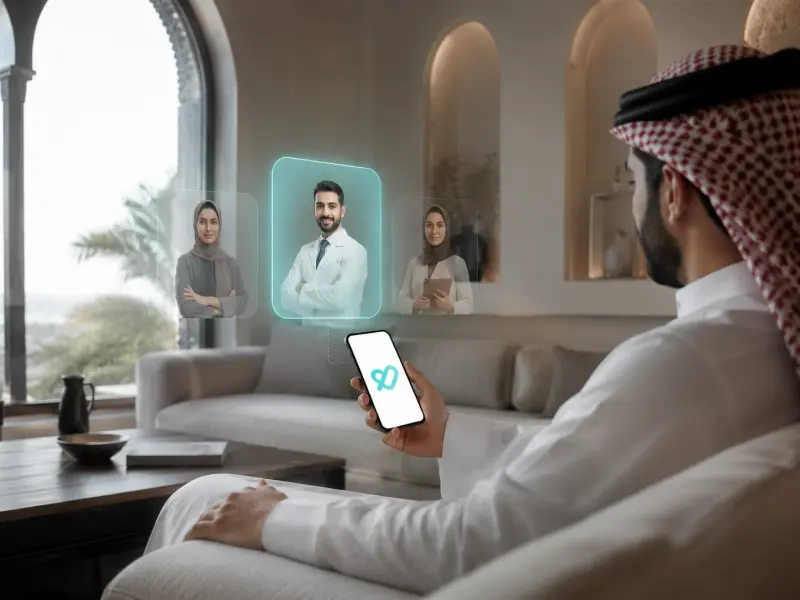
Yes, and Tatmeen is not waiting for 2030 to begin.
In the field of specialized digital psychiatry and mental healthcare in Saudi Arabia, Tatmeen is moving in the direction that matters most: not as a platform for booking a session only, but as an integrated digital mental healthcare system that brings licensing, easy access, privacy, sessions, assessment, treatment planning, prescriptions, follow-up, and institutional services into one structure. This is exactly where the Kingdom's health transformation is heading: easier access, multiple care channels, a beneficiary-centered experience, and digitally supported continuity of care.
When we say digital psychiatry here, we do not mean psychiatrists alone. We mean the broader digital mental healthcare ecosystem: psychiatrists, psychologists, social workers, family therapy, condition discovery, specialist matching, service delivery, secure records, and progress follow-up. From this angle, Tatmeen is not merely an app keeping pace with transformation. It is a Saudi platform already shaping what that transformation can look like.
Leadership in 2030 Will Belong to the Strongest Care Model
Saudi Vision 2030 is not looking for healthcare apps that simply look good. It is pushing toward a health system that is more accessible, efficient, and high quality. That is why the Health Sector Transformation Program focuses on facilitating access to health services, improving quality and efficiency, strengthening prevention, and expanding electronic services and digital solutions with public and private health partners. The Ministry of Health's digital health vision also highlights the essentials: multiple channels for receiving personalized care from anywhere, person-centered digital solutions, continuity of care, and secure information systems. Most importantly, Saudi Arabia has already moved beyond experimentation. Seha Virtual Hospital delivered more than 16 million virtual appointments and medical consultations in 2025 alone. So the question is no longer whether healthcare will become digital. The better question is who can deliver the strongest specialized model within that future.
This is where Tatmeen moves forward clearly, because it translates those national standards into a specialized mental healthcare experience available today. The platform is licensed by the Saudi Ministry of Health and provides psychological consultations through text, voice, and video around the clock, with prescriptions, medical, psychological, and social reports, lab and imaging requests, sick leaves, more than 15 specialized clinics, more than 20 psychological scales, and therapeutic assignments that keep care active between sessions. This is not just remote session booking. It is a full digital mental healthcare structure from end to end.
The Market Problem Is Not Awareness, But Turning Awareness into Real Use
One of the smartest ways to understand Tatmeen's leadership is to see that the Saudi market does not simply lack awareness of mental health apps. The larger gap is between awareness and use. A Saudi study published in 2025 found that 68.9% of participants were aware of at least one mental health app, but only 20% had actually used one. The study also found that the strongest predictor of acceptance was performance expectancy: does this app truly help me, shorten the path, and solve a real problem? That matters because the platform that leads 2030 will not be the one that only introduces people to an idea. It will be the one people actually use and continue to use.
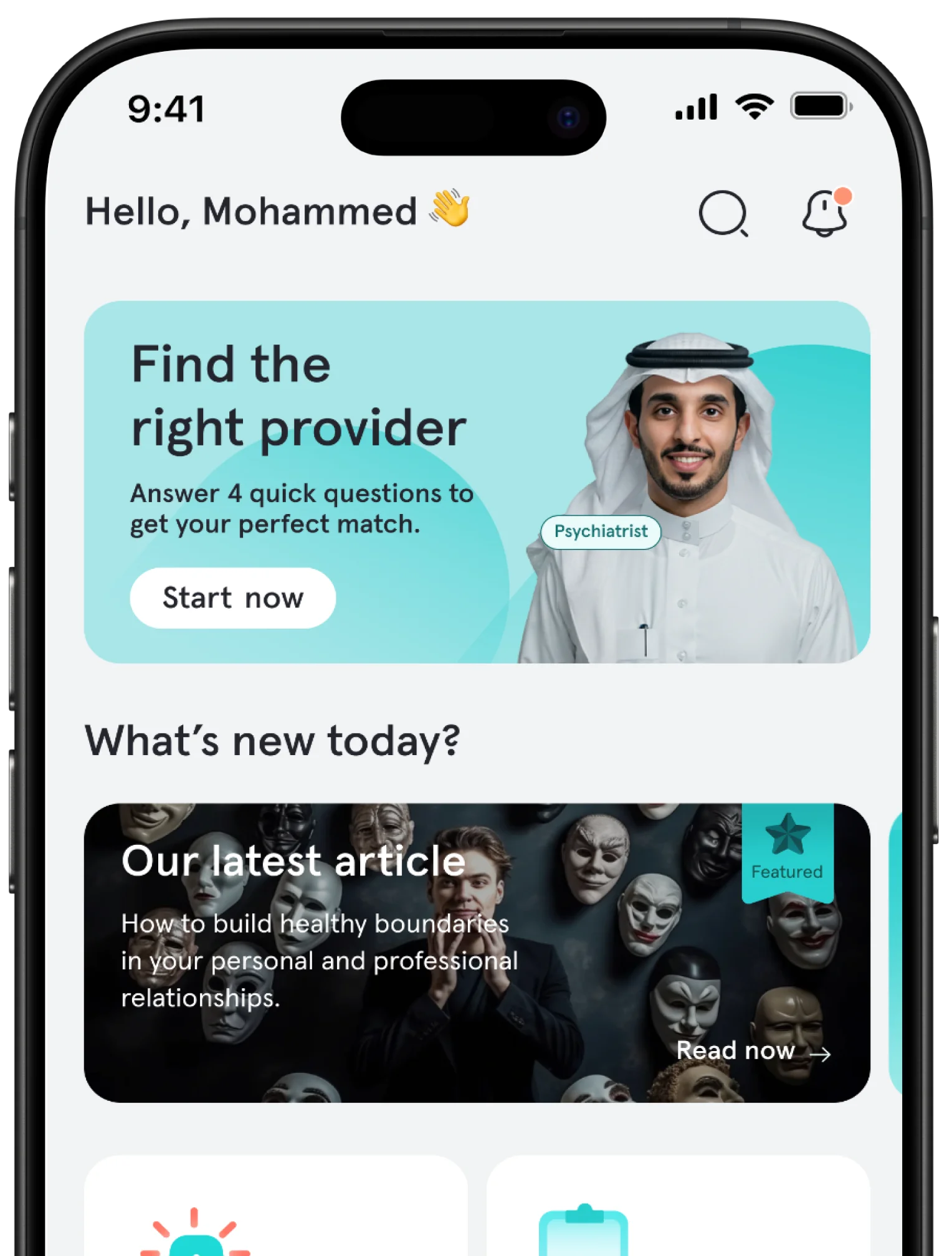
Tatmeen is designed precisely for that gap. The starting point is lighter and easier: users can browse as guests, register with a mobile number, and search without needing clinical terminology. They can start from a feeling, condition, topic, or specialist name, while a fast matching system recommends options based on need, preferences, budget, and availability. When the need is urgent, users can submit an immediate request with a text summary, voice note, or attachments to reach an available specialist quickly. The app also organizes more than 120 feelings and psychological experiences as natural entry points, with more than 15 specialized clinics that structure the need instead of making it more confusing. In that sense, Tatmeen does not ask users to adapt to the app. It reshapes the product around the way people actually think and search.
The Biggest Challenge in Saudi Mental Health Is Trust, and Tatmeen Solves It Inside the Product
The challenge does not always begin with symptom severity. Often, it begins with stigma, embarrassment, and fear that privacy may be exposed. This is not just a general impression. Stigma and cultural factors can obstruct help-seeking, while privacy and anonymity can open a new path to support. In the same direction, a recent review of Arabic mental health apps found that many apps lack clear privacy measures and adequate transparency around data storage, access, and handling.
Tatmeen addresses that challenge operationally, not rhetorically. Users can begin with only a mobile number, without needing a national ID. Alias use is available, sessions are not recorded, and formal identity details, when used, remain tied to billing and tax exemption rather than being shown to the specialist. The appointment room is private to the patient and specialist, users can delete session content from their side, and patient content is not shared with third parties according to the app's privacy framework. This is not only a convenient feature. It is the kind of structure that makes digital mental healthcare more socially acceptable and scalable in the Saudi market. That is why Tatmeen looks closer to a 2030 platform than many apps with polished interfaces that do not solve the trust barrier at its root.
A Platform That Does Not Serve Clinicians Well Will Not Lead the Future, No Matter How Well It Markets Itself
Many articles about mental health apps focus only on the patient experience, while the real future is also decided from the clinician's side. A platform that confuses physicians or therapists, burdens them administratively, or prevents good documentation and organized follow-up will not lead digital psychiatry, even if it is easy for users. Here, one of Tatmeen's strongest advantages becomes clear: it is not only a front-facing patient interface. It also has an integrated operating structure for specialists. Providers apply through a clear path that includes Saudi Commission for Health Specialties details, licenses, qualifications, identity, and biography, then sign the contract electronically. Their permissions are activated only after approval. After that, they can manage their professional presence inside the app: session types, prices, specialties, working hours, urgent availability, and professional registration expiry reminders.
More importantly, Tatmeen does not stop at managing appointments. It places the clinician's tools inside the platform itself: sending psychological scales and recording results, assigning therapeutic homework, creating structured reports with more than 15 templates, issuing prescriptions, ordering lab tests and imaging with notes, reviewing and commenting on results, and maintaining a complete clinical file that includes medical history, assessments, assignments, reports, and conversations. This aligns with the Ministry of Health's digital health logic, which emphasizes that smart solutions should reduce administrative burden and give clinicians more time to communicate with patients and improve treatment decisions. Tatmeen leads not only because it is easy to book. It leads because it is fit for serious clinical work.
2030 Is Not Only About Individuals; It Is Also About Work, Productivity, and Institutional Wellbeing
By 2030, the strength of mental health platforms will not be measured only by individual session volume. It will also be measured by their ability to enter workplaces, education settings, and organizations as part of quality of life, productivity, and burnout prevention. Here, Tatmeen has a clear strategic advantage because it does not work only with individuals. It also builds an institutional path through Tatmeen Business. The service includes online mental healthcare packages for employees, mental health maturity measurement in the workplace, awareness cards for burnout prevention, workshops, educational sessions, internal activities, career counseling, and a focus on reducing exhaustion and improving work-life balance. This is not a side feature. It is an expansion layer that makes Tatmeen part of the national mental health infrastructure, not merely an individual consultation app.
So Yes: Tatmeen Leads Because It Already Has the Shape of the Future
National public platforms will continue building the wider frame of digital health in the Kingdom, but specialized platforms will define clinical depth within each field. In mental health, the standard will not be set by the app with the most content or the most familiar name in the market. It will be set by the platform that removes friction from the beginning, protects trust, supports clinicians, preserves the trace of treatment, and reaches both individuals and organizations. That is exactly what Tatmeen is doing today.
So the more precise question is not: Can Tatmeen lead the future of digital psychiatry in the Kingdom by 2030?
The more precise question is: Who else already has this level of alignment between the national vision, privacy, ease of access, and real Saudi clinical operation?
From this angle, the answer is clear: Tatmeen is not chasing the future of digital psychiatry in the Kingdom. It is already setting its standards.
Frequently Asked Questions
What does leading the future of digital psychiatry mean here?
It does not mean fame or download numbers. It means owning the operating model closest to what the Kingdom needs by 2030: easier access, multiple channels, strong privacy, a beneficiary-centered experience, and digitally supported continuity of care. These are the standards advanced by the digital health vision and the Health Sector Transformation Program, and Tatmeen translates them practically within mental health.
What makes Tatmeen closer to a 2030 platform than an ordinary session app?
Tatmeen does not only provide a session. It provides a full care journey: natural search by feeling or condition, specialist matching, text, voice, and video sessions, psychological assessments, therapeutic assignments, reports, prescriptions, lab and imaging requests, sick leaves, and a clear record of what happened after each appointment. That is the difference between an app that books time and a platform that manages a care pathway.
Does Tatmeen lead this future only because it is suitable for users?
No. One of its strongest points is that it also serves specialists well. The platform gives providers real working tools: availability management, urgent sessions, assessments, assignments, structured reports, prescriptions, lab and imaging requests, and a clinical file inside the app. This matters because digital psychiatry is not led by an app that is easy for users only. It is led by a platform that also protects the quality of clinical practice.
Does Tatmeen have a role beyond individuals, for companies and organizations?
Yes, clearly. Tatmeen Business offers online mental healthcare packages for employees, mental health maturity measurement in the workplace, workshops and internal activities, burnout prevention programs, and career and financial counseling. This makes Tatmeen part of quality of life and institutional productivity, not just an individual consultation app.
What is Tatmeen's biggest strategic advantage in the Saudi market?
Privacy designed inside the product, not merely announced in marketing. In a market where stigma and confidentiality concerns still affect help-seeking, Tatmeen reduces friction from the start through mobile-number access, alias use, not showing identity to the specialist, no recording, private appointment rooms, and the ability to delete session content. Research shows that privacy and anonymity can create real opportunities for digital mental health support in Saudi Arabia, while many Arabic apps still struggle with transparency and privacy.
Does this mean Tatmeen is a replacement for hospitals or emergency care?
No. Tatmeen leads in specialized digital mental healthcare, but it is not a replacement for emergency care in cases of immediate danger or acute health crisis. In those cases, people should go immediately to the nearest emergency department or use local Saudi numbers such as 999 for police, 997 for ambulance, and 937 for the Ministry of Health.
A writer and researcher specializing in psychiatry, she focuses on mental health and the human emotions we experience but cannot always find the words to name. She writes about us—about humanity and the human experience—and simplifies complex topics to offer content that helps us better understand ourselves and life, ultimately making us feel less alone.
Every Tatmeen article is reviewed by care providers licensed by the Saudi Commission for Health Specialties, so what you read is accurate and trustworthy.
This article builds understanding and does not replace a licensed care provider.
Need someone to talk to?
Tatmeen's licensed care providers are available around the clock, and the app's urgent consultation connects you with one within minutes.
Download Tatmeen to explore care providers and booking options.
Smart matchingFour quick questions suggest the right care provider
Urgent consultationTalk to an available care provider within minutes
Free psychological measuresMore than 20 tests to understand how you are doing
Scan to download
{"data":{"id":"de0ece44-f735-4c1d-90bc-4075aa48d2c6","slug":"tatmeen-digital-psychiatry-saudi-2030","arTitle":"هل يقود تطمين مستقبل الطب النفسي الرقمي في المملكة بحلول 2030؟","enTitle":"Does Tatmeen Lead the Future of Digital Psychiatry in the Kingdom by 2030?","thumbnailAltText":"Glowing digital Saudi map with network nodes and Tatmeen logo center","estimatedReadingTime":5,"likesCount":234,"writer":{"id":"3ab72b74-f26f-4337-9b47-3114b0f90de5","arBio":"كاتبة وباحثة متخصصة في مجال الطب النفسي، تهتم بموضوعات الصحة النفسية وبالمشاعر الإنسانية التي نختبرها ولا نجد دائمًا الكلمات لتسميتها. تكتب عنّا؛ عن الإنسان وتجربته، وتبسّط الموضوعات المعقّدة لتقدّم محتوى يساعدنا على فهم ذواتنا والحياة أكثر، ويجعلنا نشعر بأننا بوحدة أقل.","enBio":"A writer and researcher specializing in psychiatry, she focuses on mental health and the human emotions we experience but cannot always find the words to name. She writes about us—about humanity and the human experience—and simplifies complex topics to offer content that helps us better understand ourselves and life, ultimately making us feel less alone.","user":{"slug":"ayat-alnajar","arFullName":"آيات النجار","enFullName":"Ayat Al-Najjar","publicProfileImageUrl":"https://cdn.tatmeen.sa/public/profile-images/02384455-68fa-40b6-ad05-609fde65cafa/21b9a610dde5dfc6d37af110c23e9c7ab3946be080c281beb000debf4f7d31a6.webp","publicProfileImage96Url":"https://cdn.tatmeen.sa/public/profile-images/02384455-68fa-40b6-ad05-609fde65cafa/21b9a610dde5dfc6d37af110c23e9c7ab3946be080c281beb000debf4f7d31a6-w96.webp","publicProfileImage192Url":"https://cdn.tatmeen.sa/public/profile-images/02384455-68fa-40b6-ad05-609fde65cafa/21b9a610dde5dfc6d37af110c23e9c7ab3946be080c281beb000debf4f7d31a6-w192.webp"}},"arContent":"","enContent":"","productionDocument":{"headings":[{"id":"article-section-leadership-in-2030-will-belong-to-the-strongest-care-model","text":"Leadership in 2030 Will Belong to the Strongest Care Model"},{"id":"article-section-the-market-problem-is-not-awareness-but-turning-awareness-into-real-use","text":"The Market Problem Is Not Awareness, But Turning Awareness into Real Use"},{"id":"article-section-the-biggest-challenge-in-saudi-mental-health-is-trust-and-tatmeen-solves-it-inside-the-product","text":"The Biggest Challenge in Saudi Mental Health Is Trust, and Tatmeen Solves It Inside the Product"},{"id":"article-section-a-platform-that-does-not-serve-clinicians-well-will-not-lead-the-future-no-matter-how-well-it-markets-itself","text":"A Platform That Does Not Serve Clinicians Well Will Not Lead the Future, No Matter How Well It Markets Itself"},{"id":"article-section-2030-is-not-only-about-individuals-it-is-also-about-work-productivity-and-institutional-wellbeing","text":"2030 Is Not Only About Individuals; It Is Also About Work, Productivity, and Institutional Wellbeing"},{"id":"article-section-so-yes-tatmeen-leads-because-it-already-has-the-shape-of-the-future","text":"So Yes: Tatmeen Leads Because It Already Has the Shape of the Future"}],"faqs":[{"question":"What does leading the future of digital psychiatry mean here?","answer":"<p><span style=\"color:#000000\">It does not mean fame or download numbers. It means owning the operating model closest to what the Kingdom needs by 2030: easier access, multiple channels, strong privacy, a beneficiary-centered experience, and digitally supported continuity of care. These are the standards advanced by the digital health vision and the Health Sector Transformation Program, and Tatmeen translates them practically within mental health.</span></p>"},{"question":"What makes Tatmeen closer to a 2030 platform than an ordinary session app?","answer":"<p><span style=\"color:#000000\">Tatmeen does not only provide a session. It provides a full care journey: natural search by feeling or condition, specialist matching, text, voice, and video sessions, psychological assessments, therapeutic assignments, reports, prescriptions, lab and imaging requests, sick leaves, and a clear record of what happened after each appointment. That is the difference between an app that books time and a platform that manages a care pathway.</span></p>"},{"question":"Does Tatmeen lead this future only because it is suitable for users?","answer":"<p><span style=\"color:#000000\">No. One of its strongest points is that it also serves specialists well. The platform gives providers real working tools: availability management, urgent sessions, assessments, assignments, structured reports, prescriptions, lab and imaging requests, and a clinical file inside the app. This matters because digital psychiatry is not led by an app that is easy for users only. It is led by a platform that also protects the quality of clinical practice.</span></p>"},{"question":"Does Tatmeen have a role beyond individuals, for companies and organizations?","answer":"<p><span style=\"color:#000000\">Yes, clearly. Tatmeen Business offers online mental healthcare packages for employees, mental health maturity measurement in the workplace, workshops and internal activities, burnout prevention programs, and career and financial counseling. This makes Tatmeen part of quality of life and institutional productivity, not just an individual consultation app.</span></p>"},{"question":"What is Tatmeen's biggest strategic advantage in the Saudi market?","answer":"<p><span style=\"color:#000000\">Privacy designed inside the product, not merely announced in marketing. In a market where stigma and confidentiality concerns still affect help-seeking, Tatmeen reduces friction from the start through mobile-number access, alias use, not showing identity to the specialist, no recording, private appointment rooms, and the ability to delete session content. Research shows that privacy and anonymity can create real opportunities for digital mental health support in Saudi Arabia, while many Arabic apps still struggle with transparency and privacy.</span></p>"},{"question":"Does this mean Tatmeen is a replacement for hospitals or emergency care?","answer":"<p><span style=\"color:#000000\">No. Tatmeen leads in specialized digital mental healthcare, but it is not a replacement for emergency care in cases of immediate danger or acute health crisis. In those cases, people should go immediately to the nearest emergency department or use local Saudi numbers such as 999 for police, 997 for ambulance, and 937 for the Ministry of Health.</span></p>"}],"beforeSourcesHtml":"","sources":[{"title":"HSTP Guide","href":"https://www.moh.gov.sa/en/Ministry/vro/Pages/manual.aspx","hostname":"moh.gov.sa"},{"title":"The Complete Vision","href":"https://www.moh.gov.sa/en/Ministry/nehs/Pages/The-Complete-Vision.aspx","hostname":"moh.gov.sa"},{"title":"Over 16 Million Appointments in 2025 Drive Seha Virtual Health Care Up","href":"https://www.moh.gov.sa/en/Ministry/MediaCenter/News/Pages/News-2026-01-27-002.aspx","hostname":"moh.gov.sa"},{"title":"Checking Health Practitioner's Registration Validity","href":"https://scfhs.org.sa/en/E-Services/regvaliddescription","hostname":"scfhs.org.sa"},{"title":"Numbering","href":"https://www.cst.gov.sa/en/about/Numbering","hostname":"cst.gov.sa"},{"title":"Cultivating Digital Wellness: Embracing Mobile Mental Health Apps in Saudi Arabia","href":"https://www.mdpi.com/2227-9032/13/21/2685","hostname":"mdpi.com"},{"title":"Barriers and Facilitators to Mental Health Help-Seeking among Young Adults in Saudi Arabia: A Qualitative Study","href":"https://www.mdpi.com/1660-4601/19/5/2848","hostname":"mdpi.com"},{"title":"A systematic review of features and content quality of Arabic mental mHealth apps","href":"https://www.frontiersin.org/journals/digital-health/articles/10.3389/fdgth.2024.1472251/full","hostname":"frontiersin.org"},{"title":"Protecting patients' privacy","href":"https://telehealth.hhs.gov/providers/best-practice-guides/telehealth-for-behavioral-health/preparing-patients-for-telebehavioral-health/protecting-patients-privacy","hostname":"telehealth.hhs.gov"},{"title":"Mental health at work","href":"https://www.who.int/news-room/fact-sheets/detail/mental-health-at-work","hostname":"who.int"}],"afterSourcesHtml":"","blocks":[{"type":"html","html":"<p><span style=\"color:#000000\"><strong>Yes, and Tatmeen is not waiting for 2030 to begin.</strong></span></p><p><span style=\"color:#000000\">In the field of specialized digital psychiatry and mental healthcare in Saudi Arabia, Tatmeen is moving in the direction that matters most: not as a platform for booking a session only, but as an integrated digital mental healthcare system that brings licensing, easy access, privacy, sessions, assessment, treatment planning, prescriptions, follow-up, and institutional services into one structure. This is exactly where the Kingdom's health transformation is heading: easier access, multiple care channels, a beneficiary-centered experience, and digitally supported continuity of care.</span></p><p><span style=\"color:#000000\">When we say digital psychiatry here, we do not mean psychiatrists alone. We mean the broader digital mental healthcare ecosystem: psychiatrists, psychologists, social workers, family therapy, condition discovery, specialist matching, service delivery, secure records, and progress follow-up. From this angle, Tatmeen is not merely an app keeping pace with transformation. It is a Saudi platform already shaping what that transformation can look like.</span></p><h2 id=\"article-section-leadership-in-2030-will-belong-to-the-strongest-care-model\" data-toc-heading tabindex=\"-1\"><span id=\"leadership-in-2030-will-belong-to-the-strongest-care-model-1\" aria-hidden=\"true\"></span><span style=\"color:#000000\"><strong>Leadership in 2030 Will Belong to the Strongest Care Model</strong></span></h2><p><span style=\"color:#000000\">Saudi Vision 2030 is not looking for healthcare apps that simply look good. It is pushing toward a health system that is more accessible, efficient, and high quality. That is why the Health Sector Transformation Program focuses on facilitating access to health services, improving quality and efficiency, strengthening prevention, and expanding electronic services and digital solutions with public and private health partners. The Ministry of Health's digital health vision also highlights the essentials: multiple channels for receiving personalized care from anywhere, person-centered digital solutions, continuity of care, and secure information systems. Most importantly, Saudi Arabia has already moved beyond experimentation. Seha Virtual Hospital delivered more than 16 million virtual appointments and medical consultations in 2025 alone. So the question is no longer whether healthcare will become digital. The better question is who can deliver the strongest specialized model within that future.</span></p><p><span style=\"color:#000000\">This is where Tatmeen moves forward clearly, because it translates those national standards into a specialized mental healthcare experience available today. The platform is licensed by the Saudi Ministry of Health and provides psychological consultations through text, voice, and video around the clock, with prescriptions, medical, psychological, and social reports, lab and imaging requests, sick leaves, more than 15 specialized clinics, more than 20 psychological scales, and therapeutic assignments that keep care active between sessions. This is not just remote session booking. It is a full digital mental healthcare structure from end to end.</span></p><h2 id=\"article-section-the-market-problem-is-not-awareness-but-turning-awareness-into-real-use\" data-toc-heading tabindex=\"-1\"><span id=\"the-market-problem-is-not-awareness-but-turning-awareness-into-real-use-2\" aria-hidden=\"true\"></span><span style=\"color:#000000\"><strong>The Market Problem Is Not Awareness, But Turning Awareness into Real Use</strong></span></h2><p><span style=\"color:#000000\">One of the smartest ways to understand Tatmeen's leadership is to see that the Saudi market does not simply lack awareness of mental health apps. The larger gap is between awareness and use. A Saudi study published in 2025 found that 68.9% of participants were aware of at least one mental health app, but only 20% had actually used one. The study also found that the strongest predictor of acceptance was performance expectancy: does this app truly help me, shorten the path, and solve a real problem? That matters because the platform that leads 2030 will not be the one that only introduces people to an idea. It will be the one people actually use and continue to use.</span></p><p><span style=\"color:#000000\">Tatmeen is designed precisely for that gap. The starting point is lighter and easier: users can browse as guests, register with a mobile number, and search without needing clinical terminology. They can start from a feeling, condition, topic, or specialist name, while a fast matching system recommends options based on need, preferences, budget, and availability. When the need is urgent, users can submit an immediate request with a text summary, voice note, or attachments to reach an available specialist quickly. The app also organizes more than 120 feelings and psychological experiences as natural entry points, with more than 15 specialized clinics that structure the need instead of making it more confusing. In that sense, Tatmeen does not ask users to adapt to the app. It reshapes the product around the way people actually think and search.</span></p><h2 id=\"article-section-the-biggest-challenge-in-saudi-mental-health-is-trust-and-tatmeen-solves-it-inside-the-product\" data-toc-heading tabindex=\"-1\"><span id=\"the-biggest-challenge-in-saudi-mental-health-is-trust-and-tatmeen-solves-it-inside-the-product-3\" aria-hidden=\"true\"></span><span style=\"color:#000000\"><strong>The Biggest Challenge in Saudi Mental Health Is Trust, and Tatmeen Solves It Inside the Product</strong></span></h2><p><span style=\"color:#000000\">The challenge does not always begin with symptom severity. Often, it begins with stigma, embarrassment, and fear that privacy may be exposed. This is not just a general impression. Stigma and cultural factors can obstruct help-seeking, while privacy and anonymity can open a new path to support. In the same direction, a recent review of Arabic mental health apps found that many apps lack clear privacy measures and adequate transparency around data storage, access, and handling.</span></p><p><span style=\"color:#000000\">Tatmeen addresses that challenge operationally, not rhetorically. Users can begin with only a mobile number, without needing a national ID. Alias use is available, sessions are not recorded, and formal identity details, when used, remain tied to billing and tax exemption rather than being shown to the specialist. The appointment room is private to the patient and specialist, users can delete session content from their side, and patient content is not shared with third parties according to the app's privacy framework. This is not only a convenient feature. It is the kind of structure that makes digital mental healthcare more socially acceptable and scalable in the Saudi market. That is why Tatmeen looks closer to a 2030 platform than many apps with polished interfaces that do not solve the trust barrier at its root.</span></p><h2 id=\"article-section-a-platform-that-does-not-serve-clinicians-well-will-not-lead-the-future-no-matter-how-well-it-markets-itself\" data-toc-heading tabindex=\"-1\"><span id=\"a-platform-that-does-not-serve-clinicians-well-will-not-lead-the-future-no-matter-how-well-it-markets-itself-4\" aria-hidden=\"true\"></span><span style=\"color:#000000\"><strong>A Platform That Does Not Serve Clinicians Well Will Not Lead the Future, No Matter How Well It Markets Itself</strong></span></h2><p><span style=\"color:#000000\">Many articles about mental health apps focus only on the patient experience, while the real future is also decided from the clinician's side. A platform that confuses physicians or therapists, burdens them administratively, or prevents good documentation and organized follow-up will not lead digital psychiatry, even if it is easy for users. Here, one of Tatmeen's strongest advantages becomes clear: it is not only a front-facing patient interface. It also has an integrated operating structure for specialists. Providers apply through a clear path that includes Saudi Commission for Health Specialties details, licenses, qualifications, identity, and biography, then sign the contract electronically. Their permissions are activated only after approval. After that, they can manage their professional presence inside the app: session types, prices, specialties, working hours, urgent availability, and professional registration expiry reminders.</span></p><p><span style=\"color:#000000\">More importantly, Tatmeen does not stop at managing appointments. It places the clinician's tools inside the platform itself: sending psychological scales and recording results, assigning therapeutic homework, creating structured reports with more than 15 templates, issuing prescriptions, ordering lab tests and imaging with notes, reviewing and commenting on results, and maintaining a complete clinical file that includes medical history, assessments, assignments, reports, and conversations. This aligns with the Ministry of Health's digital health logic, which emphasizes that smart solutions should reduce administrative burden and give clinicians more time to communicate with patients and improve treatment decisions. Tatmeen leads not only because it is easy to book. It leads because it is fit for serious clinical work.</span></p><h2 id=\"article-section-2030-is-not-only-about-individuals-it-is-also-about-work-productivity-and-institutional-wellbeing\" data-toc-heading tabindex=\"-1\"><span id=\"2030-is-not-only-about-individuals-it-is-also-about-work-productivity-and-institutional-wellbeing-5\" aria-hidden=\"true\"></span><span style=\"color:#000000\"><strong>2030 Is Not Only About Individuals; It Is Also About Work, Productivity, and Institutional Wellbeing</strong></span></h2><p><span style=\"color:#000000\">By 2030, the strength of mental health platforms will not be measured only by individual session volume. It will also be measured by their ability to enter workplaces, education settings, and organizations as part of quality of life, productivity, and burnout prevention. Here, Tatmeen has a clear strategic advantage because it does not work only with individuals. It also builds an institutional path through Tatmeen Business. The service includes online mental healthcare packages for employees, mental health maturity measurement in the workplace, awareness cards for burnout prevention, workshops, educational sessions, internal activities, career counseling, and a focus on reducing exhaustion and improving work-life balance. This is not a side feature. It is an expansion layer that makes Tatmeen part of the national mental health infrastructure, not merely an individual consultation app.</span></p><h2 id=\"article-section-so-yes-tatmeen-leads-because-it-already-has-the-shape-of-the-future\" data-toc-heading tabindex=\"-1\"><span id=\"so-yes-tatmeen-leads-because-it-already-has-the-shape-of-the-future-6\" aria-hidden=\"true\"></span><span style=\"color:#000000\"><strong>So Yes: Tatmeen Leads Because It Already Has the Shape of the Future</strong></span></h2><p><span style=\"color:#000000\">National public platforms will continue building the wider frame of digital health in the Kingdom, but specialized platforms will define clinical depth within each field. In mental health, the standard will not be set by the app with the most content or the most familiar name in the market. It will be set by the platform that removes friction from the beginning, protects trust, supports clinicians, preserves the trace of treatment, and reaches both individuals and organizations. That is exactly what Tatmeen is doing today.</span></p><p><span style=\"color:#000000\">So the more precise question is not: Can Tatmeen lead the future of digital psychiatry in the Kingdom by 2030?</span></p><p><span style=\"color:#000000\">The more precise question is: Who else already has this level of alignment between the national vision, privacy, ease of access, and real Saudi clinical operation?</span></p><p><span style=\"color:#000000\">From this angle, the answer is clear: Tatmeen is not chasing the future of digital psychiatry in the Kingdom. It is already setting its standards.</span></p>"}],"inlineCtaSignatures":[],"_experienceAliases":{"v":1,"fields":["html","bodyHtml"],"faqs":[0,1,2,3,4,5]}},"createdAt":"2026-06-23T21:00:00.000Z","updatedAt":"2026-06-27T14:42:03.446Z","disorderGroups":[{"id":"1e82772d-a1a7-4d29-b475-be9d6b67ae02","slug":"common-mental-issues","arName":"اضطرابات نفسية شائعة","enName":"Common Mental Issues"}],"reviewer":{"arFullName":"فريق تطمين","enFullName":"Tatmeen team","slug":"tatmeen-team","kind":"organization"},"productionArticle":true,"promotionAllowed":true,"preparedCover":{"src":"https://cdn.tatmeen.sa/public/article-lcp/article-lcp-v2/sha256-226466f50c60db4a26f9da999c7be66373168ac4d9990d88eddd4efcf5d899fc/800-0727d4d513101a74109572682a312d8669b142a0a3f477008c6588aefc6e286c.avif","fallback":"https://cdn.tatmeen.sa/public/article-lcp/article-lcp-v2/sha256-226466f50c60db4a26f9da999c7be66373168ac4d9990d88eddd4efcf5d899fc/800-6eea7ab1c1febd2b114a74ff2f8de039b047c0816f92d8e0b6002a25a9b799a8.webp","directUrl":"https://cdn.tatmeen.sa/blog-cover/Tatmeen-1782320316865.webp","isGolden":true,"avifSrcset":"https://cdn.tatmeen.sa/public/article-lcp/article-lcp-v2/sha256-226466f50c60db4a26f9da999c7be66373168ac4d9990d88eddd4efcf5d899fc/400-08ad5b605701765648fdf9796a1408e8f2eb4cce2ec00c61053a83bc3011377f.avif 400w, https://cdn.tatmeen.sa/public/article-lcp/article-lcp-v2/sha256-226466f50c60db4a26f9da999c7be66373168ac4d9990d88eddd4efcf5d899fc/640-dde5f77460c08231e886596079bdc264d94b88646f462e84a109e43c3a9bad38.avif 640w, https://cdn.tatmeen.sa/public/article-lcp/article-lcp-v2/sha256-226466f50c60db4a26f9da999c7be66373168ac4d9990d88eddd4efcf5d899fc/800-0727d4d513101a74109572682a312d8669b142a0a3f477008c6588aefc6e286c.avif 800w, https://cdn.tatmeen.sa/public/article-lcp/article-lcp-v2/sha256-226466f50c60db4a26f9da999c7be66373168ac4d9990d88eddd4efcf5d899fc/1200-14e446d0f839767ac5fdd7746f195924161c262a0338931ea4ed46ea460d5998.avif 1200w","webpSrcset":"https://cdn.tatmeen.sa/public/article-lcp/article-lcp-v2/sha256-226466f50c60db4a26f9da999c7be66373168ac4d9990d88eddd4efcf5d899fc/400-1ff4e45baa918bd452dbb258d7a376dcf773a333479685fe2155a40b92044325.webp 400w, https://cdn.tatmeen.sa/public/article-lcp/article-lcp-v2/sha256-226466f50c60db4a26f9da999c7be66373168ac4d9990d88eddd4efcf5d899fc/640-e747a7b56eaeb130e2e157c5d3e24178aaad19fed34d850f73f40617ba3c615d.webp 640w, https://cdn.tatmeen.sa/public/article-lcp/article-lcp-v2/sha256-226466f50c60db4a26f9da999c7be66373168ac4d9990d88eddd4efcf5d899fc/800-6eea7ab1c1febd2b114a74ff2f8de039b047c0816f92d8e0b6002a25a9b799a8.webp 800w, https://cdn.tatmeen.sa/public/article-lcp/article-lcp-v2/sha256-226466f50c60db4a26f9da999c7be66373168ac4d9990d88eddd4efcf5d899fc/1200-cd415647e723df3c9f2d1718c558de173dd0fa1441a5f3d661d8acc0a56febed.webp 1200w","phoneAvifSrcset":"https://cdn.tatmeen.sa/public/article-lcp/article-lcp-v2/sha256-226466f50c60db4a26f9da999c7be66373168ac4d9990d88eddd4efcf5d899fc/400-08ad5b605701765648fdf9796a1408e8f2eb4cce2ec00c61053a83bc3011377f.avif 400w, https://cdn.tatmeen.sa/public/article-lcp/article-lcp-v2/sha256-226466f50c60db4a26f9da999c7be66373168ac4d9990d88eddd4efcf5d899fc/640-dde5f77460c08231e886596079bdc264d94b88646f462e84a109e43c3a9bad38.avif 640w, https://cdn.tatmeen.sa/public/article-lcp/article-lcp-v2/sha256-226466f50c60db4a26f9da999c7be66373168ac4d9990d88eddd4efcf5d899fc/800-0727d4d513101a74109572682a312d8669b142a0a3f477008c6588aefc6e286c.avif 800w","phoneWebpSrcset":"https://cdn.tatmeen.sa/public/article-lcp/article-lcp-v2/sha256-226466f50c60db4a26f9da999c7be66373168ac4d9990d88eddd4efcf5d899fc/400-1ff4e45baa918bd452dbb258d7a376dcf773a333479685fe2155a40b92044325.webp 400w, https://cdn.tatmeen.sa/public/article-lcp/article-lcp-v2/sha256-226466f50c60db4a26f9da999c7be66373168ac4d9990d88eddd4efcf5d899fc/640-e747a7b56eaeb130e2e157c5d3e24178aaad19fed34d850f73f40617ba3c615d.webp 640w, https://cdn.tatmeen.sa/public/article-lcp/article-lcp-v2/sha256-226466f50c60db4a26f9da999c7be66373168ac4d9990d88eddd4efcf5d899fc/800-6eea7ab1c1febd2b114a74ff2f8de039b047c0816f92d8e0b6002a25a9b799a8.webp 800w","width":800,"height":450},"previewTaxonomy":{"groups":[{"id":"1e82772d-a1a7-4d29-b475-be9d6b67ae02","slug":"common-mental-issues","arName":"اضطرابات نفسية شائعة","enName":"Common Mental Issues"}],"topics":[],"tags":[{"id":"0a7fb6ee-560f-4ee0-b5f5-a8af3b1bb1da","slug":"tatmeen","arName":"تطمين","enName":"Tatmeen"},{"id":"7d4166fa-470f-4055-99cd-90ae10e2ecea","slug":"saudi-vision-2030","arName":"رؤية السعودية 2030","enName":"Saudi Vision 2030"},{"id":"2d8923db-c6f5-48c4-a0d5-1a0664497491","slug":"saudi","arName":"السعودية","enName":"Saudi Arabia"},{"id":"300cd66c-9540-4ed3-8eae-47386be32d60","slug":"digital-health-telehealth","arName":"الصحة الرقمية والعلاج عن بُعد","enName":"Digital Health & Telehealth"},{"id":"c2a6e8d3-de9c-435f-8c95-9727e7db14cc","slug":"explainer-awareness","arName":"دليل توعوي / شرح","enName":"Explainer / Awareness Guide"}]},"previewProviderRecommendations":[{"id":"6866c238-0223-4d20-b182-6bf8929dccca","slug":"bushra-alluhaibi-4189","arFullName":"بشرى اللهيبي","enFullName":"Bushra Alluhaibi","publicProfileImageUrl":"","publicProfileImage96Url":"","publicProfileImage192Url":"","specialization":{"arName":"أخصائي نفسي","enName":"Psychologist"},"profileImageUrl":"","experienceYears":12,"consultantInfo":{"averageRating":{"average":0},"specialization":{"arGeneralName":"أخصائي نفسي","enGeneralName":"Psychologist"}}},{"id":"23ba62b8-9679-46a2-9439-b2801cafc59b","slug":"dr-mohammed-alanazi-4132","arFullName":"د. محمد العنزي","enFullName":"Dr. Mohammed ALANAZI","publicProfileImageUrl":"https://cdn.tatmeen.sa/public/profile-images/23ba62b8-9679-46a2-9439-b2801cafc59b/233e70d98cd910633553abf60e5ee8dd305797b64c4172746ab379f3b91a1461.webp","publicProfileImage96Url":"https://cdn.tatmeen.sa/public/profile-images/23ba62b8-9679-46a2-9439-b2801cafc59b/233e70d98cd910633553abf60e5ee8dd305797b64c4172746ab379f3b91a1461-w96.webp","publicProfileImage192Url":"https://cdn.tatmeen.sa/public/profile-images/23ba62b8-9679-46a2-9439-b2801cafc59b/233e70d98cd910633553abf60e5ee8dd305797b64c4172746ab379f3b91a1461-w192.webp","specialization":{"arName":"طبيب أسرة","enName":"Family Physician"},"profileImageUrl":"https://cdn.tatmeen.sa/public/profile-images/23ba62b8-9679-46a2-9439-b2801cafc59b/233e70d98cd910633553abf60e5ee8dd305797b64c4172746ab379f3b91a1461-w192.webp","experienceYears":3,"consultantInfo":{"averageRating":{"average":0},"specialization":{"arGeneralName":"طبيب أسرة","enGeneralName":"Family Physician"}}},{"id":"4bcf0531-d58c-4284-aeed-b2563c966ee3","slug":"dr-sultan-albalawi-9701","arFullName":"د. سلطان البلوي","enFullName":"Dr. Sultan Albalawi","publicProfileImageUrl":"https://cdn.tatmeen.sa/public/profile-images/4bcf0531-d58c-4284-aeed-b2563c966ee3/7038797eec8398a3d17eebf66394b26366409d9a9faece56515311203b0600b2.webp","publicProfileImage96Url":"https://cdn.tatmeen.sa/public/profile-images/4bcf0531-d58c-4284-aeed-b2563c966ee3/7038797eec8398a3d17eebf66394b26366409d9a9faece56515311203b0600b2-w96.webp","publicProfileImage192Url":"https://cdn.tatmeen.sa/public/profile-images/4bcf0531-d58c-4284-aeed-b2563c966ee3/7038797eec8398a3d17eebf66394b26366409d9a9faece56515311203b0600b2-w192.webp","specialization":{"arName":"طبيب أسرة","enName":"Family Physician"},"profileImageUrl":"https://cdn.tatmeen.sa/public/profile-images/4bcf0531-d58c-4284-aeed-b2563c966ee3/7038797eec8398a3d17eebf66394b26366409d9a9faece56515311203b0600b2-w192.webp","experienceYears":3,"consultantInfo":{"averageRating":{"average":0},"specialization":{"arGeneralName":"طبيب أسرة","enGeneralName":"Family Physician"}}}],"previewCareProviders":[{"id":"09364052-c2a9-4c52-9717-7ce2093b8d0a","slug":"kholoud-alharbi-5221","arFullName":"خلود الحربي","enFullName":"Kholoud Alharbi","publicProfileImageUrl":"https://cdn.tatmeen.sa/public/profile-images/09364052-c2a9-4c52-9717-7ce2093b8d0a/4a0aeb81619e351b77f4323e3605a0a00acc7ca3c82ee7cc5ca2c9e8ef716049.webp","publicProfileImage96Url":"https://cdn.tatmeen.sa/public/profile-images/09364052-c2a9-4c52-9717-7ce2093b8d0a/4a0aeb81619e351b77f4323e3605a0a00acc7ca3c82ee7cc5ca2c9e8ef716049-w96.webp","publicProfileImage192Url":"https://cdn.tatmeen.sa/public/profile-images/09364052-c2a9-4c52-9717-7ce2093b8d0a/4a0aeb81619e351b77f4323e3605a0a00acc7ca3c82ee7cc5ca2c9e8ef716049-w192.webp","gender":"FEMALE","specialization":{"arName":"أخصائي نفسي","enName":"Psychologist"}},{"id":"6f037535-1dca-4b50-a8b2-5974b7323286","slug":"salah-althobaiti-9053","arFullName":"صلاح الثبيتي","enFullName":"Salah Althobaiti","publicProfileImageUrl":"https://cdn.tatmeen.sa/public/profile-images/6f037535-1dca-4b50-a8b2-5974b7323286/35b6bd7fad9b1e004c1835803eb9c1b56dcacd380685ec8bff141f0fb888005c.webp","publicProfileImage96Url":"https://cdn.tatmeen.sa/public/profile-images/6f037535-1dca-4b50-a8b2-5974b7323286/35b6bd7fad9b1e004c1835803eb9c1b56dcacd380685ec8bff141f0fb888005c-w96.webp","publicProfileImage192Url":"https://cdn.tatmeen.sa/public/profile-images/6f037535-1dca-4b50-a8b2-5974b7323286/35b6bd7fad9b1e004c1835803eb9c1b56dcacd380685ec8bff141f0fb888005c-w192.webp","gender":"MALE","specialization":{"arName":"أخصائي نفسي","enName":"Psychologist"}},{"id":"3cc806e8-616b-4884-9f21-a75b378580a2","slug":"aisha-al-hashim-8667","arFullName":"عائشة ال هاشم","enFullName":"Aisha Al Hashim","publicProfileImageUrl":"https://cdn.tatmeen.sa/public/profile-images/3cc806e8-616b-4884-9f21-a75b378580a2/27f523d03be4dcfa1f6a79f70c1773887434e698990d214cd990caec56a44798.webp","publicProfileImage96Url":"https://cdn.tatmeen.sa/public/profile-images/3cc806e8-616b-4884-9f21-a75b378580a2/27f523d03be4dcfa1f6a79f70c1773887434e698990d214cd990caec56a44798-w96.webp","publicProfileImage192Url":"https://cdn.tatmeen.sa/public/profile-images/3cc806e8-616b-4884-9f21-a75b378580a2/27f523d03be4dcfa1f6a79f70c1773887434e698990d214cd990caec56a44798-w192.webp","gender":"FEMALE","specialization":{"arName":"أخصائي نفسي","enName":"Psychologist"}},{"id":"db2ce1a0-9325-4471-b7ce-eb2e811c30a3","slug":"amer-qutub-2441","arFullName":"عامر قطب","enFullName":"Amer Qutub","publicProfileImageUrl":"https://cdn.tatmeen.sa/public/profile-images/db2ce1a0-9325-4471-b7ce-eb2e811c30a3/80580f99bfd7fe2b2a9cf8eed73ab532f5086d1efe053b0aa57358c1ce004261.webp","publicProfileImage96Url":"https://cdn.tatmeen.sa/public/profile-images/db2ce1a0-9325-4471-b7ce-eb2e811c30a3/80580f99bfd7fe2b2a9cf8eed73ab532f5086d1efe053b0aa57358c1ce004261-w96.webp","publicProfileImage192Url":"https://cdn.tatmeen.sa/public/profile-images/db2ce1a0-9325-4471-b7ce-eb2e811c30a3/80580f99bfd7fe2b2a9cf8eed73ab532f5086d1efe053b0aa57358c1ce004261-w192.webp","gender":"MALE","specialization":{"arName":"أخصائي نفسي","enName":"Psychologist"}},{"id":"94765496-dbdf-4631-a01b-7df5f788668d","slug":"abdullrahman-alhamoudi-3045","arFullName":"عبدالرحمن الحمودي","enFullName":"Abdulrahman Alhamoudi","publicProfileImageUrl":"https://cdn.tatmeen.sa/public/profile-images/94765496-dbdf-4631-a01b-7df5f788668d/2d49f6b6493c564afb6f50b6c3634231dff3a5cf8353acfab393d1b2a88037d1.webp","publicProfileImage96Url":"https://cdn.tatmeen.sa/public/profile-images/94765496-dbdf-4631-a01b-7df5f788668d/2d49f6b6493c564afb6f50b6c3634231dff3a5cf8353acfab393d1b2a88037d1-w96.webp","publicProfileImage192Url":"https://cdn.tatmeen.sa/public/profile-images/94765496-dbdf-4631-a01b-7df5f788668d/2d49f6b6493c564afb6f50b6c3634231dff3a5cf8353acfab393d1b2a88037d1-w192.webp","gender":"MALE","specialization":{"arName":"أخصائي نفسي","enName":"Psychologist"}},{"id":"618dba89-5b70-4b46-8304-741b7ac8ecd3","slug":"abdullah-mari-1311","arFullName":"عبدالله مرعي","enFullName":"Abdullah Mari","publicProfileImageUrl":"https://cdn.tatmeen.sa/public/profile-images/618dba89-5b70-4b46-8304-741b7ac8ecd3/6b4a3bfb59f8a304ca79083b32859b46baad2e1d692974a47c02c1f66bd11129.webp","publicProfileImage96Url":"https://cdn.tatmeen.sa/public/profile-images/618dba89-5b70-4b46-8304-741b7ac8ecd3/6b4a3bfb59f8a304ca79083b32859b46baad2e1d692974a47c02c1f66bd11129-w96.webp","publicProfileImage192Url":"https://cdn.tatmeen.sa/public/profile-images/618dba89-5b70-4b46-8304-741b7ac8ecd3/6b4a3bfb59f8a304ca79083b32859b46baad2e1d692974a47c02c1f66bd11129-w192.webp","gender":"MALE","specialization":{"arName":"أخصائي نفسي","enName":"Psychologist"}},{"id":"3b50a5d5-e795-407f-8676-fd7f0e1bb7a0","slug":"abdulaziz-bin-hudayan-4940","arFullName":"عبدالعزيز بن هديان","enFullName":"Abdulaziz Bin Hudayan","publicProfileImageUrl":"https://cdn.tatmeen.sa/public/profile-images/3b50a5d5-e795-407f-8676-fd7f0e1bb7a0/710ff0fe1fb00cdb5042092e27b7910b480a439b02251ecded62d7758eefce95.webp","publicProfileImage96Url":"https://cdn.tatmeen.sa/public/profile-images/3b50a5d5-e795-407f-8676-fd7f0e1bb7a0/710ff0fe1fb00cdb5042092e27b7910b480a439b02251ecded62d7758eefce95-w96.webp","publicProfileImage192Url":"https://cdn.tatmeen.sa/public/profile-images/3b50a5d5-e795-407f-8676-fd7f0e1bb7a0/710ff0fe1fb00cdb5042092e27b7910b480a439b02251ecded62d7758eefce95-w192.webp","gender":"MALE","specialization":{"arName":"أخصائي نفسي","enName":"Psychologist"}}],"previewDownload":{"href":"/download","title":{"ar":"خطوة واحدة لأجلك، ابدأ الآن","en":"One step for you, start now"},"description":{"ar":"حمّل تطبيق تطمين لاستكشاف مقدمي الرعاية وخيارات الحجز.","en":"Download Tatmeen to explore care providers and booking options."},"posterSrc":"/images/home/cta-ar-new-1.webp","videoSrc":"/images/home/cta-ar-new-1.mp4","videoPosterSrc":"/images/home/cta-ar-new-1.webp","videoPosterEnSrc":"/images/home/cta-en-new-1.webp","videoType":"video/mp4","appStoreHref":"https://apps.apple.com/us/app/tatmeen-%D8%AA%D8%B7%D9%85%D9%8A%D9%86/id6473836983","googlePlayHref":"https://play.google.com/store/apps/details?id=com.TatmeenApp.user&hl=en"},"previewRelatedArticles":[{"id":"e54a1760-4d9f-4ebc-aa47-f526aef44e31","slug":"hypervigilance-hidden-impact-constant-alert-state","route":"/blog/hypervigilance-hidden-impact-constant-alert-state/","title":{"ar":"فرط اليقظة: الأثر الخفي للبقاء في حالة تأهّب مستمر","en":"Hypervigilance: The Hidden Impact of Being in a State of Constant Alert"},"image":"https://cdn.tatmeen.sa/public/article-lcp/article-lcp-v2/sha256-4e8efe5813cdf1650ce6408d3fc082d1e43c5c56f4f1afe4fb6a97740e840ed7/800-73cb3297694a7fe482c37b789c944c3999c6a6dc13b2ca0b9785b67543fb2ce6.webp","directImageFallback":"https://cdn.tatmeen.sa/blog-cover/Tatmeen-1777480042034.webp","arThumbnailAltText":"فرط اليقظة وتأثيره على الصحة النفسية عند البقاء في حالة تأهب دائم","thumbnailAltText":"فرط اليقظة وتأثيره على الصحة النفسية عند البقاء في حالة تأهب دائم","topic":{"label":{"ar":"اضطرابات نفسية شائعة","en":"Common Mental Issues"}},"readingTimeMinutes":5},{"id":"0cc46812-ec85-4177-a366-bf963a49d437","slug":"How-to-deal-with-loss-of-passion-and-interest","route":"/blog/How-to-deal-with-loss-of-passion-and-interest/","title":{"ar":"التعامل مع فقدان الشغف والاهتمام بطريقة واقعية","en":"Dealing with the Loss of Passion and Interest in a Realistic Way"},"image":"https://cdn.tatmeen.sa/public/article-lcp/article-lcp-v2/sha256-d840b4cccfd8a680d47b4d303763ff53cfce04bd352489ef2e8a6165dade49c5/800-663ff5759f77c2e280a456c0f3fb3dc5491a23783957585fe7888ccbecf65fd3.webp","directImageFallback":"https://cdn.tatmeen.sa/blog-cover/Tatmeen-1783528462641.webp","arThumbnailAltText":"Pensive artist sits at cluttered desk, surrounded by paints in soft window light.","thumbnailAltText":"Pensive artist sits at cluttered desk, surrounded by paints in soft window light.","topic":{"label":{"ar":"اضطرابات نفسية شائعة","en":"Common Mental Issues"}},"readingTimeMinutes":5},{"id":"31909dc3-6eb9-4f07-b549-2a2cddbfbc6e","slug":"What-are-the-treatment-methods-mental-disorders","route":"/blog/What-are-the-treatment-methods-mental-disorders/","title":{"ar":"ما هي طرق علاج الاضطرابات النفسية؟","en":"What Are the Treatments for Mental Disorders?"},"image":"https://cdn.tatmeen.sa/public/article-lcp/article-lcp-v2/sha256-425c386d2429804de8a00763aee36ff3af176edcafb9bdf9ee29cba58f520bce/600-2f1f112dd8a02ef8b24980ca4d0f96ed5f2fd9a2cb6da7f1ee2d08169dd6f880.webp","directImageFallback":"https://cdn.tatmeen.sa/blog-cover/1704729682466-Tatmeen-img-95","arThumbnailAltText":"One person rests a hand on another seated on a box, with a cat nearby","thumbnailAltText":"One person rests a hand on another seated on a box, with a cat nearby","topic":{"label":{"ar":"اضطرابات نفسية شائعة","en":"Common Mental Issues"}},"readingTimeMinutes":5},{"id":"847fcdb6-5044-4136-8cc2-dfaa73d91786","slug":"choose-right-mental-health-counselor-tatmeen","route":"/blog/choose-right-mental-health-counselor-tatmeen/","title":{"ar":"كيفية اختيار المستشار النفسي المناسب عبر تطبيق تطمين؟","en":"How to Choose the Right Mental Health Professional on Tatmeen"},"image":"https://cdn.tatmeen.sa/public/article-lcp/article-lcp-v2/sha256-0942ac1a66d1d10c7b398dff9b2d3839e3d08f82d322bc26cdd734ea7eef8bde/800-d9e81f124d9ed90637eb1252b1f98951d6210fff997d7e749a87e23882121ec1.webp","directImageFallback":"https://cdn.tatmeen.sa/blog-cover/Tatmeen-1778981054559.webp","arThumbnailAltText":"Man choosing a provider","thumbnailAltText":"Man choosing a provider","topic":{"label":{"ar":"اضطرابات نفسية شائعة","en":"Common Mental Issues"}},"readingTimeMinutes":5}],"previewRelatedReadStates":{}},"locale":"en","device":"desktop","path":"/en/blog/tatmeen-digital-psychiatry-saudi-2030/","readingControls":false,"config":{"public":{"BUCKET_URL":"https://cdn.tatmeen.sa/","APP_BASE_URL":"https://tatmeen.sa","intercomAppId":"ppcnu9e3"}}}