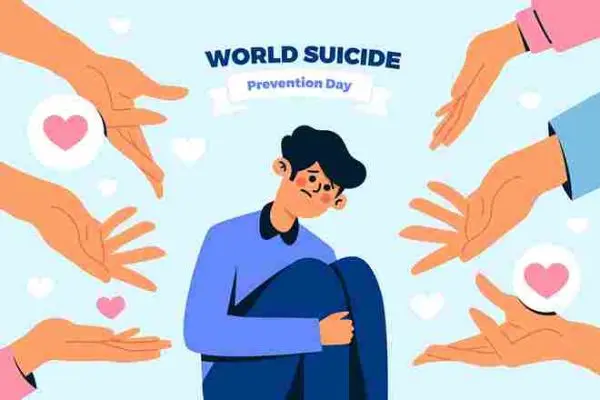
Suicide prevention begins the moment we genuinely listen to the first cry for help — every word of hope can make the difference between life and death. Experiences shared by Tatmeen platform users consistently show that simply having someone who listens can redirect suicidal thoughts toward recovery. In this article, we guide you on how to help those facing such thoughts.
Understanding the Roots of Suicidal Thoughts
Suicidal thoughts are typically the result of a complex interaction between psychological, biological, and social factors. Feelings of helplessness, isolation, or chronic emotional pain create what feels like a tinted lens — one that makes death appear to be the only solution. The World Health Organization confirms that approximately 700,000 people die by suicide each year, most of whom passed through brief but decisive moments of intense despair. Understanding this background helps you distinguish between the problem and the person themselves — a human being is not their desperate thoughts; they are facing them.
Why Is Asking for Help So Difficult?
Cultural norms, fear of stigma, or the belief that one doesn't deserve support lead many people to stay silent. This is where the importance of open conversation about mental health becomes clear, along with the value of near-immediate services like those offered by Tatmeen.
Warning Signs That Must Not Be Ignored
A person may not directly express their intentions, but there are tangible verbal and behavioral signals:
Repeated talk about meaninglessness or a desire to disappear.
A sharp change in mood or habits (eating, sleeping, withdrawal).
Suddenly putting personal affairs in order or saying goodbye to loved ones.
According to experts at the Tatmeen app, these signs often appear weeks before an attempt — giving us a valuable window for early intervention.
How to Act Immediately When You Suspect Danger
1. Listen with Attentiveness and Calm
Set aside all judgment. Tell them: I am here to understand you, not to judge you. Remember that one sincere sentence can be the only lifeline.
2. Ask Directly About Suicidal Intent
Don't be afraid to ask directly. Research shows that asking does not increase suicidal thinking — it actually reduces it, because it dissolves isolation.
3. Stay with Them and Reduce Risk
Temporarily remove excess medications or sharp objects, and accompany them until they reach a professional.
4. Seek a Licensed Specialist
When physical presence isn't possible, an emergency session can be booked through Tatmeen with a psychiatrist certified by the Saudi Ministry of Health.
Building a Long-Term Safety Net
Prevention isn't just an immediate response — it's an ongoing process:
Psychotherapy and Medication
Many people need cognitive-behavioral therapy or antidepressants. Regular follow-up significantly reduces the recurrence of hopeless thoughts.
Social Connections
Encourage the person to engage in support groups or volunteer activities. Connecting with others rebuilds the sense of meaning.
Personal Safety Plans
Together, draw up a list of people to contact, safe places to go, and calming techniques such as breathing exercises. A study published in the Journal of Affective Disorders found that written safety plans reduce suicide attempts by 45%.
Your Role in Changing the Culture of Silence
We all need to foster a compassionate discourse around mental health. Share recovery stories, support awareness campaigns, and model the behavior of seeking help when needed.
In Closing…
Remember that suicide prevention is our collective responsibility. A humane word or a trusted therapy session can completely redraw a person's future. Tatmeen reminds us that early support is a necessity — and the door of hope remains open as long as we knock on it together.
Frequently Asked Questions
Q: Can asking about suicidal intent push someone to act on it? A: No. Studies show that asking in a supportive manner makes the person feel safe and actually reduces the risk of acting, because it breaks isolation and demonstrates genuine care.
Q: What is the most important step if the person refuses help? A: Stay as close as possible, remove means of harm, and contact emergency services or book an immediate session through Tatmeen. Rapid intervention saves lives — even without full consent in a critical moment.
Q: How many therapy sessions does recovery take? A: It varies depending on the severity of the case and the support available. Some feel improvement after 6–8 sessions; others need longer follow-up. The most important thing is to stay consistent with the treatment plan and review progress regularly with a specialist.
A writer and researcher specializing in psychiatry, she focuses on mental health and the human emotions we experience but cannot always find the words to name. She writes about us—about humanity and the human experience—and simplifies complex topics to offer content that helps us better understand ourselves and life, ultimately making us feel less alone.
Every Tatmeen article is reviewed by care providers licensed by the Saudi Commission for Health Specialties, so what you read is accurate and trustworthy.
This article builds understanding and does not replace a licensed care provider.
In immediate danger?
If you or someone you know is in danger, call an ambulance on 997 or go to the nearest emergency department.
{"data":{"id":"2ed1784a-d8a4-4d2d-9a0f-d0f46d49a85a","slug":"suicide-prevention-support-suicidal-thoughts","arTitle":"الوقاية من الانتحار: خطوات عملية لدعم من تراوده أفكار انتحارية","enTitle":"Suicide Prevention: Practical Steps to Support Someone with Suicidal Thoughts","thumbnailAltText":"شخصيتان مجرّدتان — إحداهما جالسة في ضيق، والأخرى تميل قريبًا تمدّ يدها بكرة ضوء دافئة — ترمزان إلى دعم الوقاية من الانتحار.","estimatedReadingTime":5,"likesCount":307,"writer":{"id":"3ab72b74-f26f-4337-9b47-3114b0f90de5","arBio":"كاتبة وباحثة متخصصة في مجال الطب النفسي، تهتم بموضوعات الصحة النفسية وبالمشاعر الإنسانية التي نختبرها ولا نجد دائمًا الكلمات لتسميتها. تكتب عنّا؛ عن الإنسان وتجربته، وتبسّط الموضوعات المعقّدة لتقدّم محتوى يساعدنا على فهم ذواتنا والحياة أكثر، ويجعلنا نشعر بأننا بوحدة أقل.","enBio":"A writer and researcher specializing in psychiatry, she focuses on mental health and the human emotions we experience but cannot always find the words to name. She writes about us—about humanity and the human experience—and simplifies complex topics to offer content that helps us better understand ourselves and life, ultimately making us feel less alone.","user":{"slug":"ayat-alnajar","arFullName":"آيات النجار","enFullName":"Ayat Al-Najjar","publicProfileImageUrl":"https://cdn.tatmeen.sa/public/profile-images/02384455-68fa-40b6-ad05-609fde65cafa/21b9a610dde5dfc6d37af110c23e9c7ab3946be080c281beb000debf4f7d31a6.webp","publicProfileImage96Url":"https://cdn.tatmeen.sa/public/profile-images/02384455-68fa-40b6-ad05-609fde65cafa/21b9a610dde5dfc6d37af110c23e9c7ab3946be080c281beb000debf4f7d31a6-w96.webp","publicProfileImage192Url":"https://cdn.tatmeen.sa/public/profile-images/02384455-68fa-40b6-ad05-609fde65cafa/21b9a610dde5dfc6d37af110c23e9c7ab3946be080c281beb000debf4f7d31a6-w192.webp"}},"arContent":"","enContent":"","productionDocument":{"headings":[{"id":"article-section-understanding-the-roots-of-suicidal-thoughts","text":"Understanding the Roots of Suicidal Thoughts"},{"id":"article-section-warning-signs-that-must-not-be-ignored","text":"Warning Signs That Must Not Be Ignored"},{"id":"article-section-how-to-act-immediately-when-you-suspect-danger","text":"How to Act Immediately When You Suspect Danger"},{"id":"article-section-building-a-long-term-safety-net","text":"Building a Long-Term Safety Net"},{"id":"article-section-your-role-in-changing-the-culture-of-silence","text":"Your Role in Changing the Culture of Silence"},{"id":"article-section-in-closing","text":"In Closing…"},{"id":"article-section-frequently-asked-questions","text":"Frequently Asked Questions"}],"faqs":[],"beforeSourcesHtml":"","sources":[],"afterSourcesHtml":"","blocks":[{"type":"html","html":"<p>Suicide prevention begins the moment we genuinely listen to the first cry for help — every word of hope can make the difference between life and death. Experiences shared by <strong>Tatmeen platform</strong> users consistently show that simply having someone who listens can redirect suicidal thoughts toward recovery. In this article, we guide you on how to help those facing such thoughts.</p><hr /><h2 id=\"article-section-understanding-the-roots-of-suicidal-thoughts\" data-toc-heading tabindex=\"-1\"><span id=\"understanding-the-roots-of-suicidal-thoughts-1\" aria-hidden=\"true\"></span>Understanding the Roots of Suicidal Thoughts</h2><p>Suicidal thoughts are typically the result of a complex interaction between psychological, biological, and social factors. Feelings of helplessness, isolation, or chronic emotional pain create what feels like a tinted lens — one that makes death appear to be the only solution. The <strong>World Health Organization</strong> confirms that approximately 700,000 people die by suicide each year, most of whom passed through brief but decisive moments of intense despair. Understanding this background helps you distinguish between the problem and the person themselves — a human being is not their desperate thoughts; they are facing them.</p><h3>Why Is Asking for Help So Difficult?</h3><p>Cultural norms, fear of stigma, or the belief that one doesn't deserve support lead many people to stay silent. This is where the importance of open conversation about mental health becomes clear, along with the value of near-immediate services like those offered by Tatmeen.</p><hr /><h2 id=\"article-section-warning-signs-that-must-not-be-ignored\" data-toc-heading tabindex=\"-1\"><span id=\"warning-signs-that-must-not-be-ignored-2\" aria-hidden=\"true\"></span>Warning Signs That Must Not Be Ignored</h2><p>A person may not directly express their intentions, but there are tangible verbal and behavioral signals:</p><ol><li><p>Repeated talk about meaninglessness or a desire to disappear.</p></li><li><p>A sharp change in mood or habits (eating, sleeping, withdrawal).</p></li><li><p>Suddenly putting personal affairs in order or saying goodbye to loved ones.</p></li></ol><p>According to experts at the <strong>Tatmeen app</strong>, these signs often appear weeks before an attempt — giving us a valuable window for early intervention.</p><hr /><h2 id=\"article-section-how-to-act-immediately-when-you-suspect-danger\" data-toc-heading tabindex=\"-1\"><span id=\"how-to-act-immediately-when-you-suspect-danger-3\" aria-hidden=\"true\"></span>How to Act Immediately When You Suspect Danger</h2><h3>1. Listen with Attentiveness and Calm</h3><p>Set aside all judgment. Tell them: <em>I am here to understand you, not to judge you.</em> Remember that one sincere sentence can be the only lifeline.</p><h3>2. Ask Directly About Suicidal Intent</h3><p>Don't be afraid to ask directly. Research shows that asking does not increase suicidal thinking — it actually reduces it, because it dissolves isolation.</p><h3>3. Stay with Them and Reduce Risk</h3><p>Temporarily remove excess medications or sharp objects, and accompany them until they reach a professional.</p><h3>4. Seek a Licensed Specialist</h3><p>When physical presence isn't possible, an emergency session can be booked through Tatmeen with a psychiatrist certified by the Saudi Ministry of Health.</p><hr /><h2 id=\"article-section-building-a-long-term-safety-net\" data-toc-heading tabindex=\"-1\"><span id=\"building-a-long-term-safety-net-4\" aria-hidden=\"true\"></span>Building a Long-Term Safety Net</h2><p>Prevention isn't just an immediate response — it's an ongoing process:</p><h4>Psychotherapy and Medication</h4><p>Many people need cognitive-behavioral therapy or antidepressants. Regular follow-up significantly reduces the recurrence of hopeless thoughts.</p><h4>Social Connections</h4><p>Encourage the person to engage in support groups or volunteer activities. Connecting with others rebuilds the sense of meaning.</p><h4>Personal Safety Plans</h4><p>Together, draw up a list of people to contact, safe places to go, and calming techniques such as breathing exercises. A study published in the <em>Journal of Affective Disorders</em> found that written safety plans reduce suicide attempts by 45%.</p><hr /><h2 id=\"article-section-your-role-in-changing-the-culture-of-silence\" data-toc-heading tabindex=\"-1\"><span id=\"your-role-in-changing-the-culture-of-silence-5\" aria-hidden=\"true\"></span>Your Role in Changing the Culture of Silence</h2><p>We all need to foster a compassionate discourse around mental health. Share recovery stories, support awareness campaigns, and model the behavior of seeking help when needed.</p><hr /><h2 id=\"article-section-in-closing\" data-toc-heading tabindex=\"-1\"><span id=\"in-closing-6\" aria-hidden=\"true\"></span>In Closing…</h2><p>Remember that suicide prevention is our collective responsibility. A humane word or a trusted therapy session can completely redraw a person's future. Tatmeen reminds us that early support is a necessity — and the door of hope remains open as long as we knock on it together.</p><hr /><h2 id=\"article-section-frequently-asked-questions\" data-toc-heading tabindex=\"-1\"><span id=\"frequently-asked-questions-7\" aria-hidden=\"true\"></span>Frequently Asked Questions</h2><p><strong>Q: Can asking about suicidal intent push someone to act on it?</strong> A: No. Studies show that asking in a supportive manner makes the person feel safe and actually reduces the risk of acting, because it breaks isolation and demonstrates genuine care.</p><p><strong>Q: What is the most important step if the person refuses help?</strong> A: Stay as close as possible, remove means of harm, and contact emergency services or book an immediate session through Tatmeen. Rapid intervention saves lives — even without full consent in a critical moment.</p><p><strong>Q: How many therapy sessions does recovery take?</strong> A: It varies depending on the severity of the case and the support available. Some feel improvement after 6–8 sessions; others need longer follow-up. The most important thing is to stay consistent with the treatment plan and review progress regularly with a specialist.</p>"}],"inlineCtaSignatures":[],"_experienceAliases":{"v":1,"fields":["html","bodyHtml"]}},"createdAt":"2026-04-07T22:00:00.000Z","updatedAt":"2026-08-11T04:45:02.303Z","disorderGroups":[{"id":"1e82772d-a1a7-4d29-b475-be9d6b67ae02","slug":"common-mental-issues","arName":"اضطرابات نفسية شائعة","enName":"Common Mental Issues"}],"reviewer":{"arFullName":"فريق تطمين","enFullName":"Tatmeen team","slug":"tatmeen-team","kind":"organization"},"productionArticle":true,"promotionAllowed":false,"preparedCover":{"src":"https://cdn.tatmeen.sa/public/article-lcp/article-lcp-v2/sha256-9e6a5836ac0616b1f5f97c4f9ffa9491ea5cdf2e6f1bfaf996bab6615f1ac9cc/800-ddfcd57a6749121d7321502603eddfb1aafdf12a53de24d827db02596d1f6282.avif","fallback":"https://cdn.tatmeen.sa/public/article-lcp/article-lcp-v2/sha256-9e6a5836ac0616b1f5f97c4f9ffa9491ea5cdf2e6f1bfaf996bab6615f1ac9cc/800-f3902cc6d9ff93fd185affc239153f1aea89ba7ad4d31afce8755d81301f0229.webp","directUrl":"https://cdn.tatmeen.sa/blog-cover/Tatmeen-1775747504200.webp","isGolden":true,"avifSrcset":"https://cdn.tatmeen.sa/public/article-lcp/article-lcp-v2/sha256-9e6a5836ac0616b1f5f97c4f9ffa9491ea5cdf2e6f1bfaf996bab6615f1ac9cc/400-035cca36748e47578299505be80af1bef3a7cec403950a8abdebef3854b251b3.avif 400w, https://cdn.tatmeen.sa/public/article-lcp/article-lcp-v2/sha256-9e6a5836ac0616b1f5f97c4f9ffa9491ea5cdf2e6f1bfaf996bab6615f1ac9cc/640-f3e2d064229dd3ef4ed27c1c87c48378737c36301065b4dc1b4e81a49718969c.avif 640w, https://cdn.tatmeen.sa/public/article-lcp/article-lcp-v2/sha256-9e6a5836ac0616b1f5f97c4f9ffa9491ea5cdf2e6f1bfaf996bab6615f1ac9cc/800-ddfcd57a6749121d7321502603eddfb1aafdf12a53de24d827db02596d1f6282.avif 800w, https://cdn.tatmeen.sa/public/article-lcp/article-lcp-v2/sha256-9e6a5836ac0616b1f5f97c4f9ffa9491ea5cdf2e6f1bfaf996bab6615f1ac9cc/1200-56599d10c71a800c6ea163857392953772da2d9dfe2dfc012eae9c942e57c538.avif 1200w","webpSrcset":"https://cdn.tatmeen.sa/public/article-lcp/article-lcp-v2/sha256-9e6a5836ac0616b1f5f97c4f9ffa9491ea5cdf2e6f1bfaf996bab6615f1ac9cc/400-522ba402448dace89569048649ee61e035cc87e24a79684da39928d65d9c4924.webp 400w, https://cdn.tatmeen.sa/public/article-lcp/article-lcp-v2/sha256-9e6a5836ac0616b1f5f97c4f9ffa9491ea5cdf2e6f1bfaf996bab6615f1ac9cc/640-a7c3f1ae781a7babcea54f72fff22592698d63f6b12f5eb72ee0754ce1351eb0.webp 640w, https://cdn.tatmeen.sa/public/article-lcp/article-lcp-v2/sha256-9e6a5836ac0616b1f5f97c4f9ffa9491ea5cdf2e6f1bfaf996bab6615f1ac9cc/800-f3902cc6d9ff93fd185affc239153f1aea89ba7ad4d31afce8755d81301f0229.webp 800w, https://cdn.tatmeen.sa/public/article-lcp/article-lcp-v2/sha256-9e6a5836ac0616b1f5f97c4f9ffa9491ea5cdf2e6f1bfaf996bab6615f1ac9cc/1200-0bfd15abdf307f1e30b7a4ca2cbd6545f0e59bc1fb09dc884c206227db58597c.webp 1200w","phoneAvifSrcset":"https://cdn.tatmeen.sa/public/article-lcp/article-lcp-v2/sha256-9e6a5836ac0616b1f5f97c4f9ffa9491ea5cdf2e6f1bfaf996bab6615f1ac9cc/400-035cca36748e47578299505be80af1bef3a7cec403950a8abdebef3854b251b3.avif 400w, https://cdn.tatmeen.sa/public/article-lcp/article-lcp-v2/sha256-9e6a5836ac0616b1f5f97c4f9ffa9491ea5cdf2e6f1bfaf996bab6615f1ac9cc/640-f3e2d064229dd3ef4ed27c1c87c48378737c36301065b4dc1b4e81a49718969c.avif 640w, https://cdn.tatmeen.sa/public/article-lcp/article-lcp-v2/sha256-9e6a5836ac0616b1f5f97c4f9ffa9491ea5cdf2e6f1bfaf996bab6615f1ac9cc/800-ddfcd57a6749121d7321502603eddfb1aafdf12a53de24d827db02596d1f6282.avif 800w","phoneWebpSrcset":"https://cdn.tatmeen.sa/public/article-lcp/article-lcp-v2/sha256-9e6a5836ac0616b1f5f97c4f9ffa9491ea5cdf2e6f1bfaf996bab6615f1ac9cc/400-522ba402448dace89569048649ee61e035cc87e24a79684da39928d65d9c4924.webp 400w, https://cdn.tatmeen.sa/public/article-lcp/article-lcp-v2/sha256-9e6a5836ac0616b1f5f97c4f9ffa9491ea5cdf2e6f1bfaf996bab6615f1ac9cc/640-a7c3f1ae781a7babcea54f72fff22592698d63f6b12f5eb72ee0754ce1351eb0.webp 640w, https://cdn.tatmeen.sa/public/article-lcp/article-lcp-v2/sha256-9e6a5836ac0616b1f5f97c4f9ffa9491ea5cdf2e6f1bfaf996bab6615f1ac9cc/800-f3902cc6d9ff93fd185affc239153f1aea89ba7ad4d31afce8755d81301f0229.webp 800w","width":800,"height":447},"previewTaxonomy":{"groups":[{"id":"1e82772d-a1a7-4d29-b475-be9d6b67ae02","slug":"common-mental-issues","arName":"اضطرابات نفسية شائعة","enName":"Common Mental Issues"}],"topics":[{"id":"b9c18ec9-c4d0-4267-b11d-512d595c72ea","slug":"suicidal-thoughts","arName":"أفكار انتحارية","enName":"Suicidal Thoughts","groupSlug":"common-mental-issues","href":"/blog/category/common-mental-issues/suicidal-thoughts/"}],"tags":[{"id":"72770eb1-714a-4d83-92af-65f783bc30b5","slug":"suicide-prevention","arName":"الوقاية من الانتحار","enName":"Suicide Prevention"},{"id":"a7a7391b-bc2c-41de-91b1-7d701f1675b7","slug":"supporting-others","arName":"دعم شخص آخر","enName":"Supporting Someone Else"},{"id":"82fa58ec-2aa5-4f35-8ae3-e8ec8f3ab069","slug":"caregivers-supporters","arName":"داعمو المريض","enName":"Caregivers & Supporters"}]},"previewProviderRecommendations":[],"previewCareProviders":[],"previewDownload":null,"previewRelatedArticles":[{"id":"e0acc23e-1d48-4947-a4e5-d7a77e130aee","slug":"how-to-support-someone-with-suicidal-thoughts","route":"/blog/how-to-support-someone-with-suicidal-thoughts/","title":{"ar":"كيف تساعد شخصًا يريد الانتحار بفهم الأسباب والعلامات","en":"How to Help Someone Having Suicidal Thoughts: Understanding the Reasons"},"image":"https://cdn.tatmeen.sa/public/article-lcp/article-lcp-v2/sha256-6bb64aef17d89c95f586f6d005deec7824f186cb54feec5fc8ecdbdb99bcf457/800-7e21ffaee0968839165b2a68e4c726b4e206de26e001e8cc17f429c9ec9ecf5a.webp","directImageFallback":"https://cdn.tatmeen.sa/blog-cover/Tatmeen-1780666050535.webp","arThumbnailAltText":"a patient seeking help from her friend about her suicidal thoughts","thumbnailAltText":"a patient seeking help from her friend about her suicidal thoughts","topic":{"label":{"ar":"اضطرابات نفسية شائعة","en":"Common Mental Issues"}},"readingTimeMinutes":5},{"id":"2266137d-0904-4090-a665-8c0aa1e6f4bb","slug":"World-Suicide-Prevention-Day","route":"/blog/World-Suicide-Prevention-Day/","title":{"ar":"اليوم العالمي للوقاية من الانتحار","en":"World Suicide Prevention Day"},"image":"https://cdn.tatmeen.sa/public/article-lcp/article-lcp-v2/sha256-d2ceeb4ae3ba8ad5a09e29588d718c1bc09a30a07e76b2260da76c649b390a97/600-bca38fe6f49887add58c76ce9f1079699d2a54024e2bd392650aaf95b19dc767.webp","directImageFallback":"https://cdn.tatmeen.sa/blog-cover/1705000095502-Tatmeen-img-964","arThumbnailAltText":"People seated in a circle holding hands","thumbnailAltText":"People seated in a circle holding hands","topic":{"label":{"ar":"اضطرابات نفسية شائعة","en":"Common Mental Issues"}},"readingTimeMinutes":5},{"id":"e1078517-82c9-430d-9e92-a1a875ca3cd8","slug":"world-suicide-prevention-day-why-it-matters","route":"/blog/world-suicide-prevention-day-why-it-matters/","title":{"ar":"اليوم العالمي للوقاية من الانتحار ولماذا يهم","en":"World Suicide Prevention Day and Why It Matters"},"image":"https://cdn.tatmeen.sa/public/article-lcp/article-lcp-v2/sha256-394e0b91b1f7430164f93f60908e2a5cb1d05d20562cd053ce5bbb4d78db9af2/800-c607ed476a6fcd7e9b86a3bb7c7eb101564ae9815dbf1b4f0f71f39f59392984.webp","directImageFallback":"https://cdn.tatmeen.sa/blog-cover/Tatmeen-1782670885006.webp","arThumbnailAltText":"Golden awareness ribbon with linked paper figures symbolizing unity and support","thumbnailAltText":"Golden awareness ribbon with linked paper figures symbolizing unity and support","topic":{"label":{"ar":"اضطرابات نفسية شائعة","en":"Common Mental Issues"}},"readingTimeMinutes":5},{"id":"2e10a20c-058a-44ea-a72c-08b7d3d3220c","slug":"Child-and-adolescent-suicide","route":"/blog/Child-and-adolescent-suicide/","title":{"ar":"انتحار الأطفال والمراهقين","en":"Suicide in Children and Adolescents"},"image":"https://cdn.tatmeen.sa/public/article-lcp/article-lcp-v2/sha256-eb4e8dd72469336656c66662d9cdebc85f07c88c06a74c97fc28fb0d8fae27f7/600-4b0621c3495ff206040e35eb3c7674dacfc1120242e2285a3495341c331d0ca3.webp","directImageFallback":"https://cdn.tatmeen.sa/blog-cover/1704637210117-Tatmeen-img-111","arThumbnailAltText":"Seated person surrounded by reaching hands beneath a suicide prevention message","thumbnailAltText":"Seated person surrounded by reaching hands beneath a suicide prevention message","topic":{"label":{"ar":"الأطفال والمراهقين","en":"Children & Adolescents"}},"readingTimeMinutes":5}],"previewRelatedReadStates":{}},"locale":"en","device":"desktop","path":"/en/blog/suicide-prevention-support-suicidal-thoughts/","readingControls":false,"config":{"public":{"BUCKET_URL":"https://cdn.tatmeen.sa/","APP_BASE_URL":"https://tatmeen.sa","intercomAppId":"ppcnu9e3"}}}