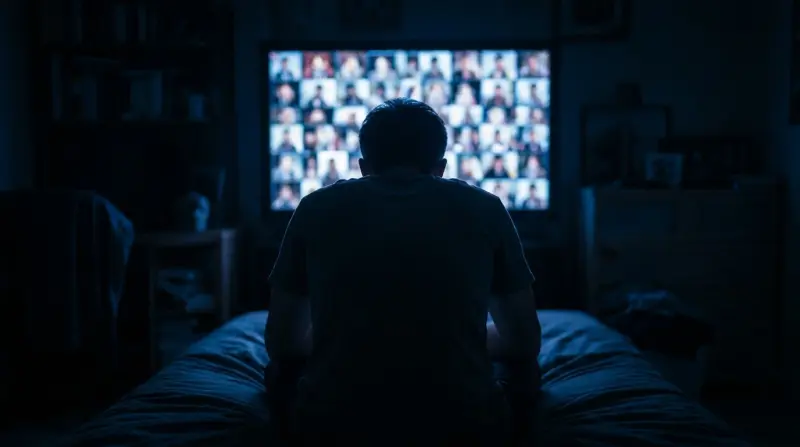
Porn addiction is not a label for every instance of watching porn or every feeling of guilt. Concern starts when use becomes a pattern that feels hard to stop, drains your time and focus, or clearly affects sleep, work, your relationship with yourself, or your relationships with others. The goal is not to attack yourself, but to understand the loop: when it starts, what it numbs, and how to step out of it with realistic actions.
Summary
Not every use of pornography means addiction or a disorder.
The key signs are loss of control, repeated unsuccessful attempts to stop, continued use despite harm, or emotional distress and disruption in daily life.
Change can begin by reducing triggers, creating space between urge and action, and seeking professional support when solo attempts become exhausting.
When Does Use Become a Real Problem?
The difference between an unwanted habit and problematic use is not measured only by frequency. One person may watch porn and stop without major effects, while another feels trapped in a repeated cycle despite hating the consequences. It is more useful to look at control and impact, not only at the label.
WHO’s ICD-11 describes compulsive sexual behavior disorder as a persistent pattern of difficulty controlling sexual impulses or behaviors, with marked distress or clear impairment in life. This does not mean guilt alone is a diagnosis, and it does not mean behavior that conflicts with your values is enough to condemn yourself. The main questions are: have you lost the ability to choose, and is the behavior taking more from your life than it gives?
Signs You May Be Stuck
Notice these signs if they repeat and leave a clear effect:
Repeated attempts to stop or reduce use that end with returning quickly.
Spending more time than planned, or going back despite a previous decision to stop.
Using porn to escape stress, loneliness, boredom, anxiety, or frustration.
Sleep, focus, study, work, worship, or marriage being affected by the behavior.
Repeated hiding, deleting traces, or constant fear of being exposed.
Strong guilt or anxiety after watching, then using again to escape that feeling.
Searching for more intense or more stimulating content to get the same effect.
Continuing despite clear harm to your day or your view of yourself.
If you recognize more than one sign, treat that as a signal to build a plan, not as a final judgment on who you are. Diagnosis requires a professional, but noticing a harmful pattern is enough to start.
Why Do You Return Even When You Want to Stop?
Porn can work like a quick painkiller. In a moment of stress or loneliness, it offers immediate escape from an uncomfortable feeling. The problem is that relief is short, and guilt, emptiness, or anxiety often follows. Then the behavior becomes a temporary solution for a problem it keeps recreating: tension, watching, regret, then new tension.
With repetition, the behavior becomes linked to specific cues: staying up late, the phone in bed, loneliness after work, conflict, or boredom you do not know how to handle. So it is not enough to say I will be stronger. You need to ask: what path takes me there, and how can I place a small barrier before I arrive?
A Practical Starting Plan Without Self-Blame
Start with one small change you can repeat. Very large steps may give you motivation for one day, then collapse under pressure. Try this plan for one week:
Map the pattern: when does the urge appear, where are you, and what feeling comes before it?
Keep the phone outside the bedroom or away from you during your known weak time.
Use blocking tools or limits if they help, but do not make them the whole plan.
Apply the ten-minute rule: when the urge appears, delay it for just ten minutes and do something physical such as walking, washing your face, or slow breathing.
Replace the function of the behavior: if the goal is calming anxiety, choose something that calms the body; if the goal is escaping loneliness, choose safe connection or a present activity.
Review the day without harshness: what worked, what came before a slip, and what barrier can be improved tomorrow?
Change is not a battle to prove purity. It is training in regaining choice. Every time you delay an urge, reduce access to a cue, or ask for help instead of isolating, you are building a new route.
When Do You Need Professional Support?
Seek support from a mental health professional if solo attempts keep failing, if the behavior affects your marriage, work, or study, or if anxiety and guilt are pushing you deeper into the cycle. Treatment does not aim to erase or shame sexual desire. It aims to understand triggers, manage urges, treat related anxiety or depression when present, and build healthier ways to deal with pressure.
Therapies such as cognitive behavioral therapy or habit-focused work may help. In some cases, a clinician may discuss additional options if another mental health concern is present. Do not start or stop medication based on an article; medical decisions need qualified assessment.
When Does Safety Come First?
If there is self-harm risk, severe despair, immediate danger, violence or coercion, blackmail, or any content or communication involving a minor, the priority is not booking through Tatmeen. Move to a safe place and contact emergency services or the relevant local authorities immediately, then seek emotional support after the immediate risk is contained.
In Saudi Arabia, if there is immediate danger or a safety threat, contact the appropriate emergency authority such as 999, and for ambulance services call 997. If the situation is not an emergency but you need health advice, you can contact 937.
Support Through Tatmeen
If there is no immediate danger, and what you are going through is affecting your day, sleep, or relationship with yourself, a therapy session may help you understand the loop and build a plan that fits your values and privacy. You can download the Tatmeen app and book a session with a mental health professional to begin talking about the pattern as it is, without judgment and without needing a ready diagnosis.
Tatmeen can support non-emergency mental health follow-up. It is not a replacement for emergency services or local authorities when there is danger, blackmail, coercion, violence, or anything involving minors.
Frequently Asked Questions
Does every instance of watching mean porn addiction?
No. Use becomes concerning when it repeats with loss of control, continued behavior despite clear harm, significant distress, or disruption in daily life. Guilt alone is not enough to judge yourself.
How do I tell the difference between guilt and the actual problem?
Ask yourself: can I stop when I decide? Are my sleep, work, or relationships affected? Am I using porn to escape feelings I am not addressing? These answers help you see the pattern instead of staying only with blame.
What is the first step if I keep returning despite trying?
Start by identifying the most repeated time and place of the urge, then place one simple barrier before the behavior: phone outside the room, a ten-minute delay, or a short replacement activity. Small repeated change is stronger than a big decision that does not hold.
Do I need to tell my partner?
There is no single answer for everyone. If the behavior affects trust or the relationship, a structured conversation may help, but impulsive disclosure driven by self-punishment can increase conflict. A professional can help you choose a safer and more respectful timing and approach.
A writer and researcher specializing in psychiatry, she focuses on mental health and the human emotions we experience but cannot always find the words to name. She writes about us—about humanity and the human experience—and simplifies complex topics to offer content that helps us better understand ourselves and life, ultimately making us feel less alone.
Every Tatmeen article is reviewed by care providers licensed by the Saudi Commission for Health Specialties, so what you read is accurate and trustworthy.
This article builds understanding and does not replace a licensed care provider.
Need someone to talk to?
Tatmeen's licensed care providers are available around the clock, and the app's urgent consultation connects you with one within minutes.
Download Tatmeen to explore care providers and booking options.
Smart matchingFour quick questions suggest the right care provider
Urgent consultationTalk to an available care provider within minutes
Free psychological measuresMore than 20 tests to understand how you are doing
Scan to download
{"data":{"id":"fb99d6a3-59f2-4787-8874-ffa01b5ec580","slug":"porn-addiction-signs-start-change","arTitle":" إدمان الإباحية: علامات أنك عالق وكيف تبدأ التغيير","enTitle":"Porn Addiction: Signs You May Be Stuck and How to Start Changing","thumbnailAltText":"Man sitting in dark room, facing glowing screen filled with many thumbnails, feeling isolated","estimatedReadingTime":5,"likesCount":144,"writer":{"id":"3ab72b74-f26f-4337-9b47-3114b0f90de5","arBio":"كاتبة وباحثة متخصصة في مجال الطب النفسي، تهتم بموضوعات الصحة النفسية وبالمشاعر الإنسانية التي نختبرها ولا نجد دائمًا الكلمات لتسميتها. تكتب عنّا؛ عن الإنسان وتجربته، وتبسّط الموضوعات المعقّدة لتقدّم محتوى يساعدنا على فهم ذواتنا والحياة أكثر، ويجعلنا نشعر بأننا بوحدة أقل.","enBio":"A writer and researcher specializing in psychiatry, she focuses on mental health and the human emotions we experience but cannot always find the words to name. She writes about us—about humanity and the human experience—and simplifies complex topics to offer content that helps us better understand ourselves and life, ultimately making us feel less alone.","user":{"slug":"ayat-alnajar","arFullName":"آيات النجار","enFullName":"Ayat Al-Najjar","publicProfileImageUrl":"https://cdn.tatmeen.sa/public/profile-images/02384455-68fa-40b6-ad05-609fde65cafa/21b9a610dde5dfc6d37af110c23e9c7ab3946be080c281beb000debf4f7d31a6.webp","publicProfileImage96Url":"https://cdn.tatmeen.sa/public/profile-images/02384455-68fa-40b6-ad05-609fde65cafa/21b9a610dde5dfc6d37af110c23e9c7ab3946be080c281beb000debf4f7d31a6-w96.webp","publicProfileImage192Url":"https://cdn.tatmeen.sa/public/profile-images/02384455-68fa-40b6-ad05-609fde65cafa/21b9a610dde5dfc6d37af110c23e9c7ab3946be080c281beb000debf4f7d31a6-w192.webp"}},"arContent":"","enContent":"","productionDocument":{"headings":[{"id":"article-section-summary","text":"Summary"},{"id":"article-section-when-does-use-become-a-real-problem","text":"When Does Use Become a Real Problem?"},{"id":"article-section-signs-you-may-be-stuck","text":"Signs You May Be Stuck"},{"id":"article-section-why-do-you-return-even-when-you-want-to-stop","text":"Why Do You Return Even When You Want to Stop?"},{"id":"article-section-a-practical-starting-plan-without-self-blame","text":"A Practical Starting Plan Without Self-Blame"},{"id":"article-section-when-do-you-need-professional-support","text":"When Do You Need Professional Support?"},{"id":"article-section-when-does-safety-come-first","text":"When Does Safety Come First?"},{"id":"article-section-support-through-tatmeen","text":"Support Through Tatmeen"}],"faqs":[{"question":"Does every instance of watching mean porn addiction?","answer":"<p><span style=\"color:#000000\">No. Use becomes concerning when it repeats with loss of control, continued behavior despite clear harm, significant distress, or disruption in daily life. Guilt alone is not enough to judge yourself.</span></p>"},{"question":"How do I tell the difference between guilt and the actual problem?","answer":"<p><span style=\"color:#000000\">Ask yourself: can I stop when I decide? Are my sleep, work, or relationships affected? Am I using porn to escape feelings I am not addressing? These answers help you see the pattern instead of staying only with blame.</span></p>"},{"question":"What is the first step if I keep returning despite trying?","answer":"<p><span style=\"color:#000000\">Start by identifying the most repeated time and place of the urge, then place one simple barrier before the behavior: phone outside the room, a ten-minute delay, or a short replacement activity. Small repeated change is stronger than a big decision that does not hold.</span></p>"},{"question":"Do I need to tell my partner?","answer":"<p><span style=\"color:#000000\">There is no single answer for everyone. If the behavior affects trust or the relationship, a structured conversation may help, but impulsive disclosure driven by self-punishment can increase conflict. A professional can help you choose a safer and more respectful timing and approach.</span></p>"}],"beforeSourcesHtml":"","sources":[{"title":"WHO ICD-11: Compulsive Sexual Behaviour Disorder","href":"https://icd.who.int/browse/2025-01/mms/en#1630268048","hostname":"icd.who.int"},{"title":"Mayo Clinic: Compulsive Sexual Behavior Symptoms and Causes","href":"https://www.mayoclinic.org/diseases-conditions/compulsive-sexual-behavior/symptoms-causes/syc-20360434","hostname":"mayoclinic.org"},{"title":"Mayo Clinic: Compulsive Sexual Behavior Diagnosis and Treatment","href":"https://www.mayoclinic.org/diseases-conditions/compulsive-sexual-behavior/diagnosis-treatment/drc-20360453","hostname":"mayoclinic.org"},{"title":"Cleveland Clinic: Compulsive Sexual Behavior Disorder","href":"https://my.clevelandclinic.org/health/diseases/22690-sex-addiction-hypersexuality-and-compulsive-sexual-behavior","hostname":"my.clevelandclinic.org"},{"title":"National Institute on Drug Abuse: Drugs and the Brain","href":"https://nida.nih.gov/publications/drugs-brains-behavior-science-addiction/drugs-brain","hostname":"nida.nih.gov"}],"afterSourcesHtml":"","blocks":[{"type":"html","html":"<p><span style=\"color:#000000\">Porn addiction is not a label for every instance of watching porn or every feeling of guilt. Concern starts when use becomes a pattern that feels hard to stop, drains your time and focus, or clearly affects sleep, work, your relationship with yourself, or your relationships with others. The goal is not to attack yourself, but to understand the loop: when it starts, what it numbs, and how to step out of it with realistic actions.</span></p><h2 id=\"article-section-summary\" data-toc-heading tabindex=\"-1\"><span id=\"summary-1\" aria-hidden=\"true\"></span><span style=\"color:#000000\"><strong>Summary</strong></span></h2><ul><li><p><span style=\"color:#000000\">Not every use of pornography means addiction or a disorder.</span></p></li><li><p><span style=\"color:#000000\">The key signs are loss of control, repeated unsuccessful attempts to stop, continued use despite harm, or emotional distress and disruption in daily life.</span></p></li><li><p><span style=\"color:#000000\">Change can begin by reducing triggers, creating space between urge and action, and seeking professional support when solo attempts become exhausting.</span></p></li></ul><h2 id=\"article-section-when-does-use-become-a-real-problem\" data-toc-heading tabindex=\"-1\"><span id=\"when-does-use-become-a-real-problem-2\" aria-hidden=\"true\"></span><span style=\"color:#000000\"><strong>When Does Use Become a Real Problem?</strong></span></h2><p><span style=\"color:#000000\">The difference between an unwanted habit and problematic use is not measured only by frequency. One person may watch porn and stop without major effects, while another feels trapped in a repeated cycle despite hating the consequences. It is more useful to look at control and impact, not only at the label.</span></p><p><span style=\"color:#000000\">WHO’s ICD-11 describes compulsive sexual behavior disorder as a persistent pattern of difficulty controlling sexual impulses or behaviors, with marked distress or clear impairment in life. This does not mean guilt alone is a diagnosis, and it does not mean behavior that conflicts with your values is enough to condemn yourself. The main questions are: have you lost the ability to choose, and is the behavior taking more from your life than it gives?</span></p><h2 id=\"article-section-signs-you-may-be-stuck\" data-toc-heading tabindex=\"-1\"><span id=\"signs-you-may-be-stuck-3\" aria-hidden=\"true\"></span><span style=\"color:#000000\"><strong>Signs You May Be Stuck</strong></span></h2><p><span style=\"color:#000000\">Notice these signs if they repeat and leave a clear effect:</span></p><ul><li><p><span style=\"color:#000000\">Repeated attempts to stop or reduce use that end with returning quickly.</span></p></li><li><p><span style=\"color:#000000\">Spending more time than planned, or going back despite a previous decision to stop.</span></p></li><li><p><span style=\"color:#000000\">Using porn to escape stress, loneliness, boredom, anxiety, or frustration.</span></p></li><li><p><span style=\"color:#000000\">Sleep, focus, study, work, worship, or marriage being affected by the behavior.</span></p></li><li><p><span style=\"color:#000000\">Repeated hiding, deleting traces, or constant fear of being exposed.</span></p></li><li><p><span style=\"color:#000000\">Strong guilt or anxiety after watching, then using again to escape that feeling.</span></p></li><li><p><span style=\"color:#000000\">Searching for more intense or more stimulating content to get the same effect.</span></p></li><li><p><span style=\"color:#000000\">Continuing despite clear harm to your day or your view of yourself.</span></p></li></ul><p><span style=\"color:#000000\">If you recognize more than one sign, treat that as a signal to build a plan, not as a final judgment on who you are. Diagnosis requires a professional, but noticing a harmful pattern is enough to start.</span></p><h2 id=\"article-section-why-do-you-return-even-when-you-want-to-stop\" data-toc-heading tabindex=\"-1\"><span id=\"why-do-you-return-even-when-you-want-to-stop-4\" aria-hidden=\"true\"></span><span style=\"color:#000000\"><strong>Why Do You Return Even When You Want to Stop?</strong></span></h2><p><span style=\"color:#000000\">Porn can work like a quick painkiller. In a moment of stress or loneliness, it offers immediate escape from an uncomfortable feeling. The problem is that relief is short, and guilt, emptiness, or anxiety often follows. Then the behavior becomes a temporary solution for a problem it keeps recreating: tension, watching, regret, then new tension.</span></p><p><span style=\"color:#000000\">With repetition, the behavior becomes linked to specific cues: staying up late, the phone in bed, loneliness after work, conflict, or boredom you do not know how to handle. So it is not enough to say I will be stronger. You need to ask: what path takes me there, and how can I place a small barrier before I arrive?</span></p><h2 id=\"article-section-a-practical-starting-plan-without-self-blame\" data-toc-heading tabindex=\"-1\"><span id=\"a-practical-starting-plan-without-self-blame-5\" aria-hidden=\"true\"></span><span style=\"color:#000000\"><strong>A Practical Starting Plan Without Self-Blame</strong></span></h2><p><span style=\"color:#000000\">Start with one small change you can repeat. Very large steps may give you motivation for one day, then collapse under pressure. Try this plan for one week:</span></p><ul><li><p><span style=\"color:#000000\">Map the pattern: when does the urge appear, where are you, and what feeling comes before it?</span></p></li><li><p><span style=\"color:#000000\">Keep the phone outside the bedroom or away from you during your known weak time.</span></p></li><li><p><span style=\"color:#000000\">Use blocking tools or limits if they help, but do not make them the whole plan.</span></p></li><li><p><span style=\"color:#000000\">Apply the ten-minute rule: when the urge appears, delay it for just ten minutes and do something physical such as walking, washing your face, or slow breathing.</span></p></li><li><p><span style=\"color:#000000\">Replace the function of the behavior: if the goal is calming anxiety, choose something that calms the body; if the goal is escaping loneliness, choose safe connection or a present activity.</span></p></li><li><p><span style=\"color:#000000\">Review the day without harshness: what worked, what came before a slip, and what barrier can be improved tomorrow?</span></p></li></ul><p><span style=\"color:#000000\">Change is not a battle to prove purity. It is training in regaining choice. Every time you delay an urge, reduce access to a cue, or ask for help instead of isolating, you are building a new route.</span></p><h2 id=\"article-section-when-do-you-need-professional-support\" data-toc-heading tabindex=\"-1\"><span id=\"when-do-you-need-professional-support-6\" aria-hidden=\"true\"></span><span style=\"color:#000000\"><strong>When Do You Need Professional Support?</strong></span></h2><p><span style=\"color:#000000\">Seek support from a mental health professional if solo attempts keep failing, if the behavior affects your marriage, work, or study, or if anxiety and guilt are pushing you deeper into the cycle. Treatment does not aim to erase or shame sexual desire. It aims to understand triggers, manage urges, treat related anxiety or depression when present, and build healthier ways to deal with pressure.</span></p><p><span style=\"color:#000000\">Therapies such as cognitive behavioral therapy or habit-focused work may help. In some cases, a clinician may discuss additional options if another mental health concern is present. Do not start or stop medication based on an article; medical decisions need qualified assessment.</span></p><h2 id=\"article-section-when-does-safety-come-first\" data-toc-heading tabindex=\"-1\"><span id=\"when-does-safety-come-first-7\" aria-hidden=\"true\"></span><span style=\"color:#000000\"><strong>When Does Safety Come First?</strong></span></h2><p><span style=\"color:#000000\">If there is self-harm risk, severe despair, immediate danger, violence or coercion, blackmail, or any content or communication involving a minor, the priority is not booking through Tatmeen. Move to a safe place and contact emergency services or the relevant local authorities immediately, then seek emotional support after the immediate risk is contained.</span></p><p><span style=\"color:#000000\">In Saudi Arabia, if there is immediate danger or a safety threat, contact the appropriate emergency authority such as 999, and for ambulance services call 997. If the situation is not an emergency but you need health advice, you can contact 937.</span></p><h2 id=\"article-section-support-through-tatmeen\" data-toc-heading tabindex=\"-1\"><span id=\"support-through-tatmeen-8\" aria-hidden=\"true\"></span><span style=\"color:#000000\"><strong>Support Through Tatmeen</strong></span></h2><p><span style=\"color:#000000\">If there is no immediate danger, and what you are going through is affecting your day, sleep, or relationship with yourself, a therapy session may help you understand the loop and build a plan that fits your values and privacy. You can </span><a href=\"https://tatmeen.sa/download/\"><span style=\"color:#1155cc\"><u>download the Tatmeen app and book a session</u></span></a><span style=\"color:#000000\"> with a mental health professional to begin talking about the pattern as it is, without judgment and without needing a ready diagnosis.</span></p><p><span style=\"color:#000000\">Tatmeen can support non-emergency mental health follow-up. It is not a replacement for emergency services or local authorities when there is danger, blackmail, coercion, violence, or anything involving minors.</span></p>"}],"inlineCtaSignatures":[],"_experienceAliases":{"v":1,"fields":["html","bodyHtml"],"faqs":[0,1,2,3]}},"createdAt":"2026-06-09T21:00:00.000Z","updatedAt":"2026-06-22T17:03:13.590Z","disorderGroups":[{"id":"04bd234d-c176-4ba1-afb3-9e9c05d0e648","slug":"addictions-and-compulsive-behaviors","arName":"الإدمان والسلوكيات القهرية","enName":"Addictions & Compulsive Behaviors"},{"id":"1e82772d-a1a7-4d29-b475-be9d6b67ae02","slug":"common-mental-issues","arName":"اضطرابات نفسية شائعة","enName":"Common Mental Issues"}],"reviewer":{"arFullName":"فريق تطمين","enFullName":"Tatmeen team","slug":"tatmeen-team","kind":"organization"},"productionArticle":true,"promotionAllowed":true,"preparedCover":{"src":"https://cdn.tatmeen.sa/public/article-lcp/article-lcp-v2/sha256-79daa099858bf004b6f5394cef6a9ae1b46b3abac2fba268c4a4dc30b86171d3/800-550de9d954eba842279a4dd94497319d21cf1f2b0fd2ed2cd25c96c8b96c2bfb.avif","fallback":"https://cdn.tatmeen.sa/public/article-lcp/article-lcp-v2/sha256-79daa099858bf004b6f5394cef6a9ae1b46b3abac2fba268c4a4dc30b86171d3/800-996c00b9be38bc5e0fc2a9d0c263231bb21e12c6c43c633812db7992a6cf2767.webp","directUrl":"https://cdn.tatmeen.sa/blog-cover/Tatmeen-1781116081732.webp","isGolden":true,"avifSrcset":"https://cdn.tatmeen.sa/public/article-lcp/article-lcp-v2/sha256-79daa099858bf004b6f5394cef6a9ae1b46b3abac2fba268c4a4dc30b86171d3/400-c7f371b5970fcbdfdd2185e3c077b06a7420d7535b068af83cd9fd1ace42d91c.avif 400w, https://cdn.tatmeen.sa/public/article-lcp/article-lcp-v2/sha256-79daa099858bf004b6f5394cef6a9ae1b46b3abac2fba268c4a4dc30b86171d3/640-15b7f26b76b7f985764102c34879763d00db039da5c321d5e06563bfd242b85e.avif 640w, https://cdn.tatmeen.sa/public/article-lcp/article-lcp-v2/sha256-79daa099858bf004b6f5394cef6a9ae1b46b3abac2fba268c4a4dc30b86171d3/800-550de9d954eba842279a4dd94497319d21cf1f2b0fd2ed2cd25c96c8b96c2bfb.avif 800w, https://cdn.tatmeen.sa/public/article-lcp/article-lcp-v2/sha256-79daa099858bf004b6f5394cef6a9ae1b46b3abac2fba268c4a4dc30b86171d3/1200-1be4226f80a01a5119f21d681696e97f467bcb1eb9a27f86acedcc10f8453595.avif 1200w","webpSrcset":"https://cdn.tatmeen.sa/public/article-lcp/article-lcp-v2/sha256-79daa099858bf004b6f5394cef6a9ae1b46b3abac2fba268c4a4dc30b86171d3/400-6b3e4bab33f589caf78601f7eec4e97a6d9212944d5fbc8af2bd069fefcd56ef.webp 400w, https://cdn.tatmeen.sa/public/article-lcp/article-lcp-v2/sha256-79daa099858bf004b6f5394cef6a9ae1b46b3abac2fba268c4a4dc30b86171d3/640-18ad447a97f8f07a2505672904a0635d1bff757577d3581f743096b0dd699787.webp 640w, https://cdn.tatmeen.sa/public/article-lcp/article-lcp-v2/sha256-79daa099858bf004b6f5394cef6a9ae1b46b3abac2fba268c4a4dc30b86171d3/800-996c00b9be38bc5e0fc2a9d0c263231bb21e12c6c43c633812db7992a6cf2767.webp 800w, https://cdn.tatmeen.sa/public/article-lcp/article-lcp-v2/sha256-79daa099858bf004b6f5394cef6a9ae1b46b3abac2fba268c4a4dc30b86171d3/1200-d37b708e72b0ad2c4428a4054a8ab95c07731845eead84a6abc24c23a226219c.webp 1200w","phoneAvifSrcset":"https://cdn.tatmeen.sa/public/article-lcp/article-lcp-v2/sha256-79daa099858bf004b6f5394cef6a9ae1b46b3abac2fba268c4a4dc30b86171d3/400-c7f371b5970fcbdfdd2185e3c077b06a7420d7535b068af83cd9fd1ace42d91c.avif 400w, https://cdn.tatmeen.sa/public/article-lcp/article-lcp-v2/sha256-79daa099858bf004b6f5394cef6a9ae1b46b3abac2fba268c4a4dc30b86171d3/640-15b7f26b76b7f985764102c34879763d00db039da5c321d5e06563bfd242b85e.avif 640w, https://cdn.tatmeen.sa/public/article-lcp/article-lcp-v2/sha256-79daa099858bf004b6f5394cef6a9ae1b46b3abac2fba268c4a4dc30b86171d3/800-550de9d954eba842279a4dd94497319d21cf1f2b0fd2ed2cd25c96c8b96c2bfb.avif 800w","phoneWebpSrcset":"https://cdn.tatmeen.sa/public/article-lcp/article-lcp-v2/sha256-79daa099858bf004b6f5394cef6a9ae1b46b3abac2fba268c4a4dc30b86171d3/400-6b3e4bab33f589caf78601f7eec4e97a6d9212944d5fbc8af2bd069fefcd56ef.webp 400w, https://cdn.tatmeen.sa/public/article-lcp/article-lcp-v2/sha256-79daa099858bf004b6f5394cef6a9ae1b46b3abac2fba268c4a4dc30b86171d3/640-18ad447a97f8f07a2505672904a0635d1bff757577d3581f743096b0dd699787.webp 640w, https://cdn.tatmeen.sa/public/article-lcp/article-lcp-v2/sha256-79daa099858bf004b6f5394cef6a9ae1b46b3abac2fba268c4a4dc30b86171d3/800-996c00b9be38bc5e0fc2a9d0c263231bb21e12c6c43c633812db7992a6cf2767.webp 800w","width":800,"height":447},"previewTaxonomy":{"groups":[{"id":"04bd234d-c176-4ba1-afb3-9e9c05d0e648","slug":"addictions-and-compulsive-behaviors","arName":"الإدمان والسلوكيات القهرية","enName":"Addictions & Compulsive Behaviors"},{"id":"1e82772d-a1a7-4d29-b475-be9d6b67ae02","slug":"common-mental-issues","arName":"اضطرابات نفسية شائعة","enName":"Common Mental Issues"}],"topics":[{"id":"15ff72d6-a734-4802-9430-5938aa292115","slug":"porn-addiction","arName":"إدمان الإباحية","enName":"Porn Addiction","groupSlug":"addictions-and-compulsive-behaviors","href":"/blog/category/addictions-and-compulsive-behaviors/porn-addiction/"}],"tags":[{"id":"4ed98471-68bf-4682-b622-f092e88833bb","slug":"porn-compulsive-sexual","arName":"إدمان الإباحية والسلوك الجنسي القهري","enName":"Pornography & Compulsive Sexual"},{"id":"a1d36353-cbcb-4907-b913-3069289a3514","slug":"addiction-recovery","arName":"الإدمان والتعافي","enName":"Addiction & Recovery"},{"id":"d58e6187-021b-44a5-882c-245bccd77611","slug":"self-help-howto","arName":"مساعدة ذاتية / خطوات عملية","enName":"Self-Help / How-To"}]},"previewProviderRecommendations":[{"id":"278d5ac5-30ff-46ad-97be-c67cdd125836","slug":"dr-mohammed-alamari-8085","arFullName":"د. محمد العماري","enFullName":"Dr. Mohammed Alamari","publicProfileImageUrl":"https://cdn.tatmeen.sa/public/profile-images/278d5ac5-30ff-46ad-97be-c67cdd125836/69bdd11cb01784eed010eb9883403fd6ca4e4afcec739dcd6114fd8b85f133a8.webp","publicProfileImage96Url":"https://cdn.tatmeen.sa/public/profile-images/278d5ac5-30ff-46ad-97be-c67cdd125836/69bdd11cb01784eed010eb9883403fd6ca4e4afcec739dcd6114fd8b85f133a8-w96.webp","publicProfileImage192Url":"https://cdn.tatmeen.sa/public/profile-images/278d5ac5-30ff-46ad-97be-c67cdd125836/69bdd11cb01784eed010eb9883403fd6ca4e4afcec739dcd6114fd8b85f133a8-w192.webp","specialization":{"arName":"طبيب أسرة","enName":"Family Physician"},"profileImageUrl":"https://cdn.tatmeen.sa/public/profile-images/278d5ac5-30ff-46ad-97be-c67cdd125836/69bdd11cb01784eed010eb9883403fd6ca4e4afcec739dcd6114fd8b85f133a8-w192.webp","experienceYears":3,"consultantInfo":{"averageRating":{"average":4},"specialization":{"arGeneralName":"طبيب أسرة","enGeneralName":"Family Physician"}}},{"id":"61ffd054-193f-4e8e-abc7-356e905dec92","slug":"nada-2471","arFullName":"د. ندى ال ادريس","enFullName":"Dr. Nada Al Idrees","publicProfileImageUrl":"","publicProfileImage96Url":"","publicProfileImage192Url":"","specialization":{"arName":"طبيب نفسي","enName":"Psychiatrist"},"profileImageUrl":"","experienceYears":5,"consultantInfo":{"averageRating":{"average":0},"specialization":{"arGeneralName":"طبيب نفسي","enGeneralName":"Psychiatrist"}}},{"id":"d754a189-f8c9-4aad-b4aa-a5dbd26c0bd7","slug":"talal-alshowaier-8694","arFullName":"طلال الشويعر","enFullName":"Talal Alshowaier","publicProfileImageUrl":"https://cdn.tatmeen.sa/public/profile-images/d754a189-f8c9-4aad-b4aa-a5dbd26c0bd7/74feb27848a47cf43189f6b5951e06a9b87b08269021d5bab765092fc65fce42.webp","publicProfileImage96Url":"https://cdn.tatmeen.sa/public/profile-images/d754a189-f8c9-4aad-b4aa-a5dbd26c0bd7/74feb27848a47cf43189f6b5951e06a9b87b08269021d5bab765092fc65fce42-w96.webp","publicProfileImage192Url":"https://cdn.tatmeen.sa/public/profile-images/d754a189-f8c9-4aad-b4aa-a5dbd26c0bd7/74feb27848a47cf43189f6b5951e06a9b87b08269021d5bab765092fc65fce42-w192.webp","specialization":{"arName":"أخصائي نفسي","enName":"Psychologist"},"profileImageUrl":"https://cdn.tatmeen.sa/public/profile-images/d754a189-f8c9-4aad-b4aa-a5dbd26c0bd7/74feb27848a47cf43189f6b5951e06a9b87b08269021d5bab765092fc65fce42-w192.webp","experienceYears":3,"consultantInfo":{"averageRating":{"average":5},"specialization":{"arGeneralName":"أخصائي نفسي","enGeneralName":"Psychologist"}}}],"previewCareProviders":[{"id":"09364052-c2a9-4c52-9717-7ce2093b8d0a","slug":"kholoud-alharbi-5221","arFullName":"خلود الحربي","enFullName":"Kholoud Alharbi","publicProfileImageUrl":"https://cdn.tatmeen.sa/public/profile-images/09364052-c2a9-4c52-9717-7ce2093b8d0a/4a0aeb81619e351b77f4323e3605a0a00acc7ca3c82ee7cc5ca2c9e8ef716049.webp","publicProfileImage96Url":"https://cdn.tatmeen.sa/public/profile-images/09364052-c2a9-4c52-9717-7ce2093b8d0a/4a0aeb81619e351b77f4323e3605a0a00acc7ca3c82ee7cc5ca2c9e8ef716049-w96.webp","publicProfileImage192Url":"https://cdn.tatmeen.sa/public/profile-images/09364052-c2a9-4c52-9717-7ce2093b8d0a/4a0aeb81619e351b77f4323e3605a0a00acc7ca3c82ee7cc5ca2c9e8ef716049-w192.webp","gender":"FEMALE","specialization":{"arName":"أخصائي نفسي","enName":"Psychologist"}},{"id":"6f037535-1dca-4b50-a8b2-5974b7323286","slug":"salah-althobaiti-9053","arFullName":"صلاح الثبيتي","enFullName":"Salah Althobaiti","publicProfileImageUrl":"https://cdn.tatmeen.sa/public/profile-images/6f037535-1dca-4b50-a8b2-5974b7323286/35b6bd7fad9b1e004c1835803eb9c1b56dcacd380685ec8bff141f0fb888005c.webp","publicProfileImage96Url":"https://cdn.tatmeen.sa/public/profile-images/6f037535-1dca-4b50-a8b2-5974b7323286/35b6bd7fad9b1e004c1835803eb9c1b56dcacd380685ec8bff141f0fb888005c-w96.webp","publicProfileImage192Url":"https://cdn.tatmeen.sa/public/profile-images/6f037535-1dca-4b50-a8b2-5974b7323286/35b6bd7fad9b1e004c1835803eb9c1b56dcacd380685ec8bff141f0fb888005c-w192.webp","gender":"MALE","specialization":{"arName":"أخصائي نفسي","enName":"Psychologist"}},{"id":"3cc806e8-616b-4884-9f21-a75b378580a2","slug":"aisha-al-hashim-8667","arFullName":"عائشة ال هاشم","enFullName":"Aisha Al Hashim","publicProfileImageUrl":"https://cdn.tatmeen.sa/public/profile-images/3cc806e8-616b-4884-9f21-a75b378580a2/27f523d03be4dcfa1f6a79f70c1773887434e698990d214cd990caec56a44798.webp","publicProfileImage96Url":"https://cdn.tatmeen.sa/public/profile-images/3cc806e8-616b-4884-9f21-a75b378580a2/27f523d03be4dcfa1f6a79f70c1773887434e698990d214cd990caec56a44798-w96.webp","publicProfileImage192Url":"https://cdn.tatmeen.sa/public/profile-images/3cc806e8-616b-4884-9f21-a75b378580a2/27f523d03be4dcfa1f6a79f70c1773887434e698990d214cd990caec56a44798-w192.webp","gender":"FEMALE","specialization":{"arName":"أخصائي نفسي","enName":"Psychologist"}},{"id":"94765496-dbdf-4631-a01b-7df5f788668d","slug":"abdullrahman-alhamoudi-3045","arFullName":"عبدالرحمن الحمودي","enFullName":"Abdulrahman Alhamoudi","publicProfileImageUrl":"https://cdn.tatmeen.sa/public/profile-images/94765496-dbdf-4631-a01b-7df5f788668d/2d49f6b6493c564afb6f50b6c3634231dff3a5cf8353acfab393d1b2a88037d1.webp","publicProfileImage96Url":"https://cdn.tatmeen.sa/public/profile-images/94765496-dbdf-4631-a01b-7df5f788668d/2d49f6b6493c564afb6f50b6c3634231dff3a5cf8353acfab393d1b2a88037d1-w96.webp","publicProfileImage192Url":"https://cdn.tatmeen.sa/public/profile-images/94765496-dbdf-4631-a01b-7df5f788668d/2d49f6b6493c564afb6f50b6c3634231dff3a5cf8353acfab393d1b2a88037d1-w192.webp","gender":"MALE","specialization":{"arName":"أخصائي نفسي","enName":"Psychologist"}},{"id":"618dba89-5b70-4b46-8304-741b7ac8ecd3","slug":"abdullah-mari-1311","arFullName":"عبدالله مرعي","enFullName":"Abdullah Mari","publicProfileImageUrl":"https://cdn.tatmeen.sa/public/profile-images/618dba89-5b70-4b46-8304-741b7ac8ecd3/6b4a3bfb59f8a304ca79083b32859b46baad2e1d692974a47c02c1f66bd11129.webp","publicProfileImage96Url":"https://cdn.tatmeen.sa/public/profile-images/618dba89-5b70-4b46-8304-741b7ac8ecd3/6b4a3bfb59f8a304ca79083b32859b46baad2e1d692974a47c02c1f66bd11129-w96.webp","publicProfileImage192Url":"https://cdn.tatmeen.sa/public/profile-images/618dba89-5b70-4b46-8304-741b7ac8ecd3/6b4a3bfb59f8a304ca79083b32859b46baad2e1d692974a47c02c1f66bd11129-w192.webp","gender":"MALE","specialization":{"arName":"أخصائي نفسي","enName":"Psychologist"}},{"id":"d4ffcb6b-90a7-45b6-b941-964866f4564b","slug":"dhaifallah-alhumaidi-1092","arFullName":"ضيف الله الحميدي","enFullName":"Dhaifallah Alhumaidi","publicProfileImageUrl":"https://cdn.tatmeen.sa/public/profile-images/d4ffcb6b-90a7-45b6-b941-964866f4564b/1817171c5828a9b57d6c30d12332cf154e335272548bc90a6e8456d74d356956.webp","publicProfileImage96Url":"https://cdn.tatmeen.sa/public/profile-images/d4ffcb6b-90a7-45b6-b941-964866f4564b/1817171c5828a9b57d6c30d12332cf154e335272548bc90a6e8456d74d356956-w96.webp","publicProfileImage192Url":"https://cdn.tatmeen.sa/public/profile-images/d4ffcb6b-90a7-45b6-b941-964866f4564b/1817171c5828a9b57d6c30d12332cf154e335272548bc90a6e8456d74d356956-w192.webp","gender":"MALE","specialization":{"arName":"أخصائي نفسي","enName":"Psychologist"}},{"id":"d8fb937b-ad65-4b6f-a65b-276ad8258fed","slug":"azza-alharbi-7286","arFullName":"عزه الحربي","enFullName":"Azza Alharbi","publicProfileImageUrl":"https://cdn.tatmeen.sa/public/profile-images/d8fb937b-ad65-4b6f-a65b-276ad8258fed/378a8ab30f4087833263c41fb2c3102028cbe6bb9655172d7b3439ee1d6b0800.webp","publicProfileImage96Url":"https://cdn.tatmeen.sa/public/profile-images/d8fb937b-ad65-4b6f-a65b-276ad8258fed/378a8ab30f4087833263c41fb2c3102028cbe6bb9655172d7b3439ee1d6b0800-w96.webp","publicProfileImage192Url":"https://cdn.tatmeen.sa/public/profile-images/d8fb937b-ad65-4b6f-a65b-276ad8258fed/378a8ab30f4087833263c41fb2c3102028cbe6bb9655172d7b3439ee1d6b0800-w192.webp","gender":"FEMALE","specialization":{"arName":"أخصائي نفسي","enName":"Psychologist"}},{"id":"025d770d-f6d4-405b-be1c-d45dde63fbf7","slug":"akila-alomran-7545","arFullName":"عقيله العمران","enFullName":"Akila Alomran","publicProfileImageUrl":"https://cdn.tatmeen.sa/public/profile-images/025d770d-f6d4-405b-be1c-d45dde63fbf7/44a990b9294f02c9810c69a68b8913a6afac0eb30d1b7494155f31b6dde9378b.webp","publicProfileImage96Url":"https://cdn.tatmeen.sa/public/profile-images/025d770d-f6d4-405b-be1c-d45dde63fbf7/44a990b9294f02c9810c69a68b8913a6afac0eb30d1b7494155f31b6dde9378b-w96.webp","publicProfileImage192Url":"https://cdn.tatmeen.sa/public/profile-images/025d770d-f6d4-405b-be1c-d45dde63fbf7/44a990b9294f02c9810c69a68b8913a6afac0eb30d1b7494155f31b6dde9378b-w192.webp","gender":"FEMALE","specialization":{"arName":"أخصائي نفسي","enName":"Psychologist"}}],"previewDownload":{"href":"/download","title":{"ar":"خطوة واحدة لأجلك، ابدأ الآن","en":"One step for you, start now"},"description":{"ar":"حمّل تطبيق تطمين لاستكشاف مقدمي الرعاية وخيارات الحجز.","en":"Download Tatmeen to explore care providers and booking options."},"posterSrc":"/images/home/cta-ar-new-1.webp","videoSrc":"/images/home/cta-ar-new-1.mp4","videoPosterSrc":"/images/home/cta-ar-new-1.webp","videoPosterEnSrc":"/images/home/cta-en-new-1.webp","videoType":"video/mp4","appStoreHref":"https://apps.apple.com/us/app/tatmeen-%D8%AA%D8%B7%D9%85%D9%8A%D9%86/id6473836983","googlePlayHref":"https://play.google.com/store/apps/details?id=com.TatmeenApp.user&hl=en"},"previewRelatedArticles":[{"id":"2ca13e37-b3da-47a6-bc79-3f41510e889d","slug":"Masturbation-and-its-relationship-with-depression","route":"/blog/Masturbation-and-its-relationship-with-depression/","title":{"ar":"العادة السرية - اضرار واسباب وطرق علاجها وعلاقتها بالاكتئاب","en":"Compulsive Masturbation: Signs, Causes, and Treatment"},"image":"https://cdn.tatmeen.sa/public/article-lcp/article-lcp-v2/sha256-cc84ae3c40ee924215c119f44a0fe5da48972cf8bc68f63144ba4a93b29eb9f0/600-c147ac589fdab2f3758b478bb1f1f2cbdd9eae3fe7f98b128720fede4b960204.webp","directImageFallback":"https://cdn.tatmeen.sa/blog-cover/1706456059533-Tatmeen-751.jpg","arThumbnailAltText":"Person in bed holding a smartphone with chained wrists and a padlock","thumbnailAltText":"Person in bed holding a smartphone with chained wrists and a padlock","topic":{"label":{"ar":"الإدمان والسلوكيات القهرية","en":"Addictions & Compulsive Behaviors"}},"readingTimeMinutes":5},{"id":"e405107a-ccc4-459f-9fc3-c611e5c2a09e","slug":"porn-addiction-treatment-self-help-specialist","route":"/blog/porn-addiction-treatment-self-help-specialist/","title":{"ar":"علاج إدمان الإباحية: خطوات تساعدك ومتى تحتاج مختصًا؟","en":"Porn Addiction Treatment: Helpful Steps and When to See a Specialist"},"image":"https://cdn.tatmeen.sa/public/article-lcp/article-lcp-v2/sha256-16c581aef7167e6b1c4ad466c039cd2931a6835c287f7108e24fb86edb516c15/800-0fae8acd6469f00a009077aae85fb5e3cee8fa52e8d4854ed9466ba74b70fc03.webp","directImageFallback":"https://cdn.tatmeen.sa/blog-cover/Tatmeen-1780941367354.webp","arThumbnailAltText":"Helping hands reaching across abstract shapes, symbolizing support and addiction recovery.","thumbnailAltText":"Helping hands reaching across abstract shapes, symbolizing support and addiction recovery.","topic":{"label":{"ar":"الإدمان والسلوكيات القهرية","en":"Addictions & Compulsive Behaviors"}},"readingTimeMinutes":5},{"id":"62e8354b-2a33-4622-ab0a-9d34c1a60736","slug":"quit-porn-site-addiction-practical-steps","route":"/blog/quit-porn-site-addiction-practical-steps/","title":{"ar":" التخلص من إدمان المواقع الإباحية بخطوات عملية","en":"Getting Rid of Porn Website Addiction with Practical Steps"},"image":"https://cdn.tatmeen.sa/public/article-lcp/article-lcp-v2/sha256-a053378cfba1c14566e1bfe9d6de174529223e3e371a3d8ab64c269c3a73108d/800-335ee4ebc9eb7c3e9908795add39a97e43791bbf76c37ebd014b6c3a0459ae3a.webp","directImageFallback":"https://cdn.tatmeen.sa/blog-cover/Tatmeen-1781113015774.webp","arThumbnailAltText":"Brain, heart, and shield symbolizing mental wellness, resilience, and healthy digital habits.","thumbnailAltText":"Brain, heart, and shield symbolizing mental wellness, resilience, and healthy digital habits.","topic":{"label":{"ar":"الإدمان والسلوكيات القهرية","en":"Addictions & Compulsive Behaviors"}},"readingTimeMinutes":5},{"id":"11f6cab7-d24c-4e38-b6c6-2116e67330b6","slug":"Watching-Pornography","route":"/blog/Watching-Pornography/","title":{"ar":"مشاهدة الأفلام الإباحية - مضارها وطرق علاج الإدمان عليها وكيفية التخلص منه","en":"Watching Pornography: Harms, Addiction Treatment, and Recovery"},"image":"https://cdn.tatmeen.sa/public/article-lcp/article-lcp-v2/sha256-52c5cbbbc1accdfb0ca79beebe5c46715c7c71f6372d7e48604429b22fd673b5/600-f8f7f080132a72b1f1a538b0e9ad9522a9f21ce49e257e9488999925830eb903.webp","directImageFallback":"https://cdn.tatmeen.sa/blog-cover/1704800846918-Tatmeen-img-964","arThumbnailAltText":"Heavily blurred collage of rectangular frames with indistinct human figures","thumbnailAltText":"Heavily blurred collage of rectangular frames with indistinct human figures","topic":{"label":{"ar":"الإدمان والسلوكيات القهرية","en":"Addictions & Compulsive Behaviors"}},"readingTimeMinutes":5}],"previewRelatedReadStates":{}},"locale":"en","device":"desktop","path":"/en/blog/porn-addiction-signs-start-change/","readingControls":false,"config":{"public":{"BUCKET_URL":"https://cdn.tatmeen.sa/","APP_BASE_URL":"https://tatmeen.sa","intercomAppId":"ppcnu9e3"}}}